
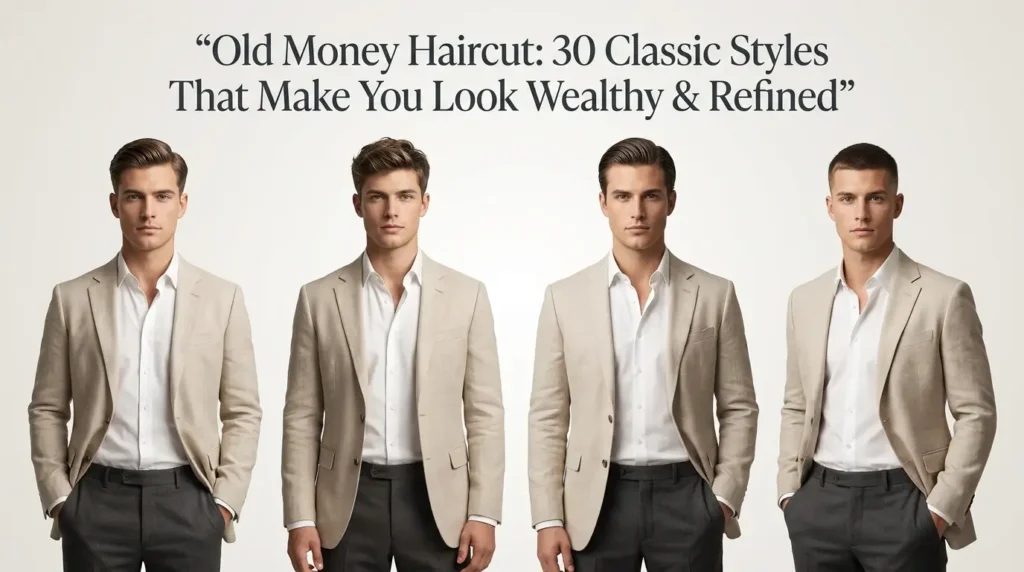
An old money haircut is a clean, classic, and precisely structured men’s hairstyle that projects quiet wealth, timeless sophistication, and effortless confidence, without chasing trends or relying on heavy styling.
Think about it this way. You walk into a job interview Monday morning. You pick up your kids from school Tuesday afternoon. You sit down at a nice restaurant Friday night. Your haircut looks right in every single room. That is old money style.
This is not about spending $200 at a barbershop. It is about choosing a cut that looks expensive because of its shape, its balance, and its finish, not because of how much product you dump into it.
Old money hairstyles share three defining traits:
- Clean lines: precise edges, tidy neckline, neat sideburns
- Balanced proportions: the cut matches your head shape, density, and face
- Natural finish: touchable, not stiff; polished, not shellacked
These styles come directly from Ivy League campus culture, East Coast prep school traditions, and the grooming standards of generational wealth. They have survived every trend cycle since the 1940s because they work. Always have. Always will.
The broader quiet luxury movement in men’s fashion, led by brands like Brunello Cucinelli, Loro Piana, and The Row, has pushed understated grooming back to the top of style conversations. Barbers across the United States report increasing demand for scissor-cut, low-taper, natural-finish styles over high-contrast fades.
This guide gives you 30 specific old money haircuts, exact barber instructions for each one, face shape matching, hair type guidance, product recommendations, beard pairings, styling tutorials, and maintenance schedules. Everything you need to look like quiet wealth walked into the room.
30 Best Old Money Hairstyles for Men
These 30 old money haircuts cover every hair type, face shape, length preference, and lifestyle. Each one includes exactly what to tell your barber and how to style it at home.
Use the barber instructions word-for-word at your next appointment. Bring a reference photo on your phone as backup.
1. The Classic Side Part
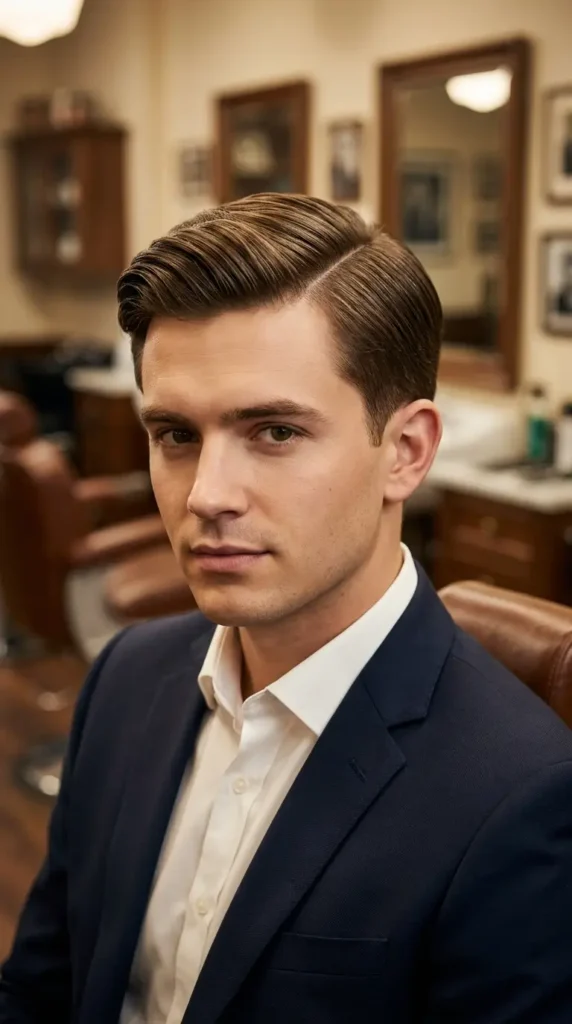
The classic side part is the foundation of old money grooming. A clean division along the natural part line with medium length on top and tapered sides. It projects quiet authority in every professional and social setting without any adjustment needed.
What to Tell Your Barber:
- Scissor cut on top, 3-4 inches of length
- Low taper on sides and back, scissor-over-comb blending
- Follow the natural part line, no razor line
- Tapered neckline, clean around the ears
Best For:
- Face shapes: Oval, square, heart
- Hair types: Straight, wavy
- Hair density: Medium to thick
How to Style: Apply a pea-sized amount of light pomade or styling cream to damp hair. Comb into the natural part with a fine-tooth comb. Blow-dry on low heat, directing the hair to the side. Finish with fingers for touchable, natural movement.
Hold: Light-medium | Finish: Low shine
2. The Ivy League Cut
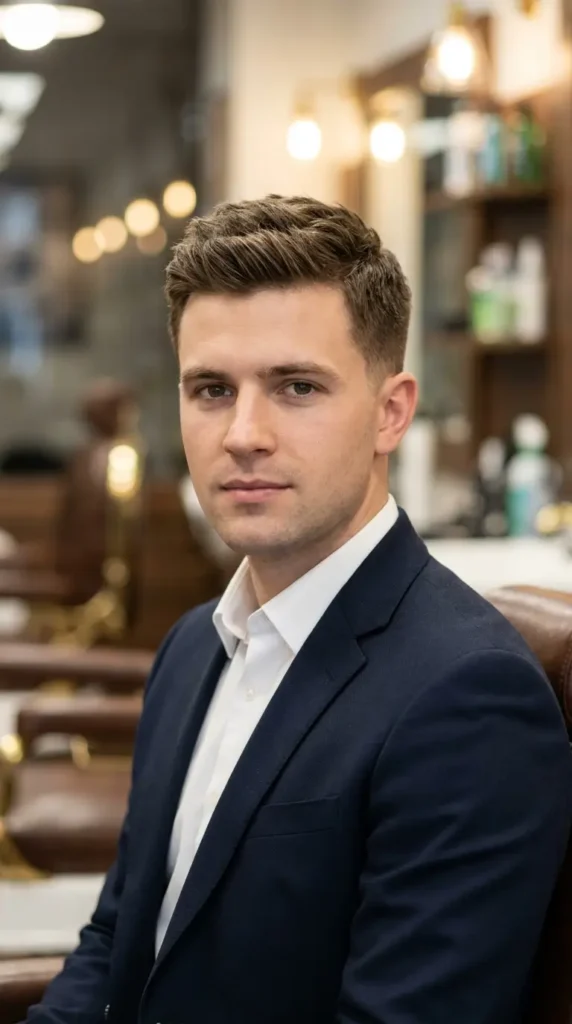
The Ivy League is the quintessential old money haircut, born from East Coast prep school culture and still the default choice for men who want to look sharp without visible effort. Short, tapered sides with enough length on top to sweep slightly to one side.
The Ivy League cut originated at Harvard, Yale, and Princeton in the 1940s and 1950s, where students adopted short, disciplined haircuts that reflected academic seriousness and social standing. It has remained a barbershop staple for over 80 years because it flatters virtually every face shape.
What to Tell Your Barber:
- Short scissor-cut top, approximately 1.5-2.5 inches
- Tapered sides blending from a #3 or #4 guard to scissor length
- Soft blend, no hard lines or disconnections
- Natural tapered neckline
Best For:
- Face shapes: All (universally flattering)
- Hair types: Straight, wavy
- Hair density: All, particularly effective for fine or thinning hair
How to Style: Work a small amount of matte paste through towel-dried hair. Use fingers to direct the hair slightly to one side. No blow-dryer needed, air dry works perfectly for this cut.
Hold: Light | Finish: Matte/natural
3. The Gentleman’s Taper
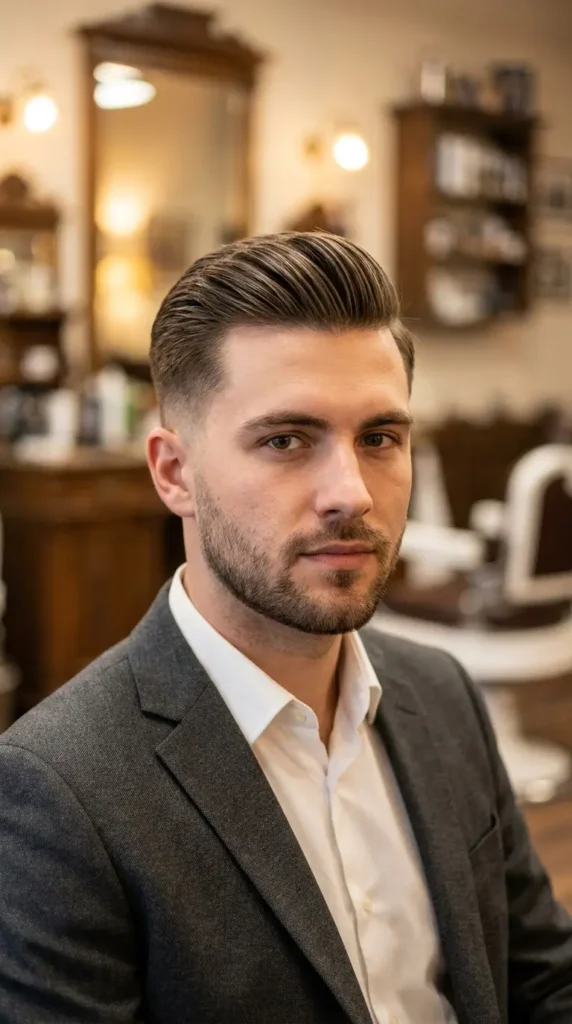
A refined, medium-length style with neatly tapered sides and a longer top that can be combed back or swept to the side. This is the haircut worn by men in finance, law, and consulting, industries where grooming directly signals competence and status.
What to Tell Your Barber:
- 3-4 inches on top, scissor cut with light layering
- Low taper on sides, gradual blend into the crown
- Clean ears, tapered neckline
- Keep enough length to comb back or part to either side
Best For:
- Face shapes: Oval, oblong, diamond
- Hair types: Straight, wavy
- Hair density: Medium to thick
How to Style: Blow-dry with a round brush for controlled volume. Apply styling cream and comb gently to the side or back. Finish with fingers for natural movement. The round brush lift at the roots is what separates this from a flat, lifeless style.
Hold: Medium | Finish: Natural/low shine
4. The Princeton Cut
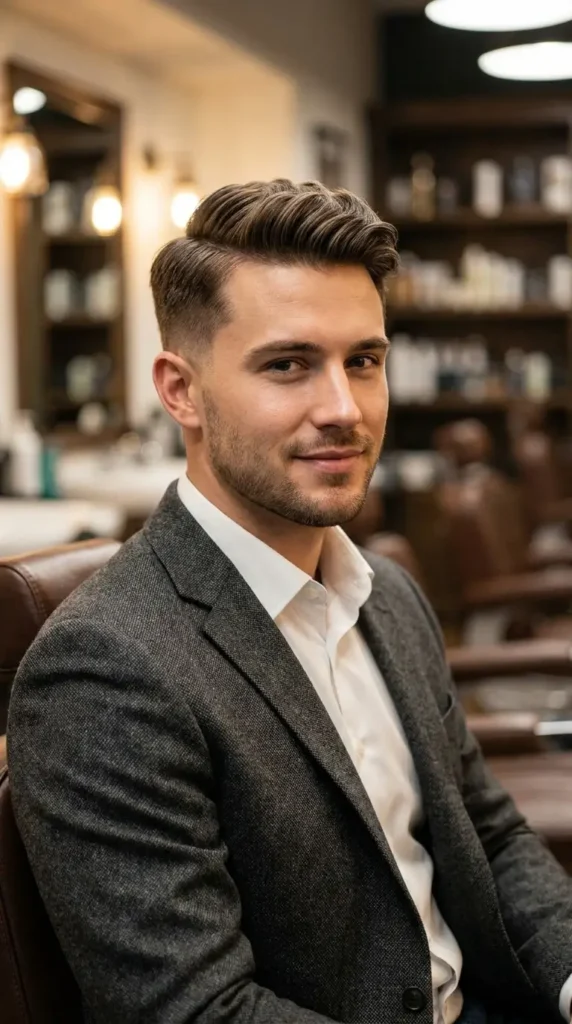
A sharper, more structured version of the Ivy League with a clearly defined part and slightly more length on top. The Princeton cut is polished enough for courtroom presentations and relaxed enough for weekend brunch.
What to Tell Your Barber:
- Short top with defined natural part, 2-3 inches
- Low taper on sides and back
- Clean neckline, no weight buildup around the ears
- Scissor-finished edges throughout
Best For:
- Face shapes: Oval, heart, square
- Hair types: Straight, fine to medium wave
- Hair density: All
How to Style: Comb hair to one side while damp. Apply a light cream for subtle hold. Allow to air dry or blow-dry on low heat for added direction.
Hold: Light | Finish: Natural
5. The Executive Contour
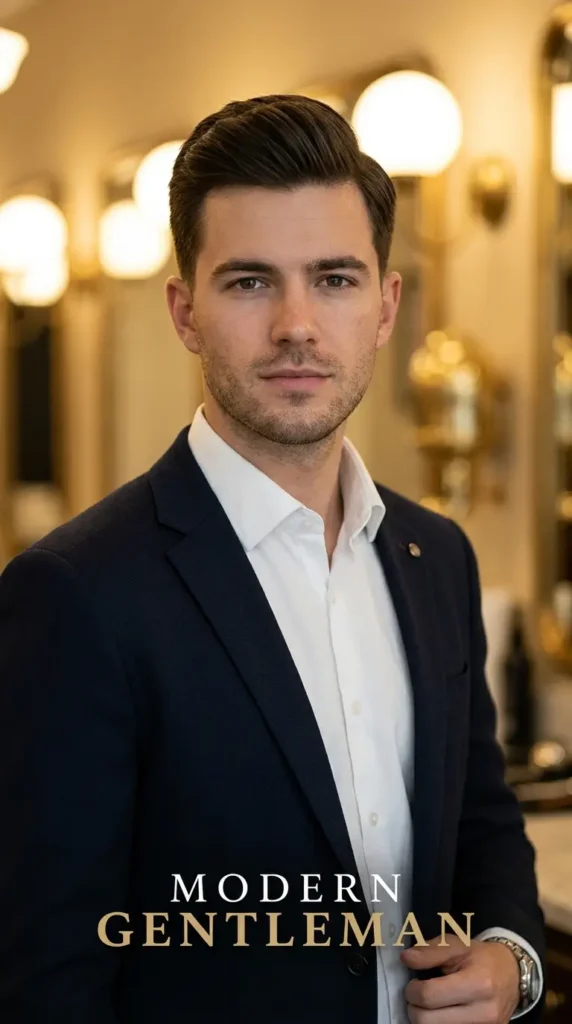
The executive contour is the boardroom standard. A side-parted style with precise tapering that creates a clean, authoritative silhouette. You see this on C-suite executives, senior partners at law firms, and men who lead rooms without raising their voice.
What to Tell Your Barber:
- Natural side part with scissor-cut top, 3-4 inches
- Low taper around ears, blending into the back
- Clean weight line, no bulk at the crown
- Squared or tapered neckline (your preference)
Best For:
- Face shapes: Oval, square, oblong
- Hair types: Straight, wavy
- Hair density: Medium to thick
How to Style: Blow-dry backward with a round brush for smooth volume. Apply pomade for controlled shine. Comb into the part and set the shape with the cold-shot button on your blow-dryer.
Hold: Medium | Finish: Low shine
6. The Classic Slick Back
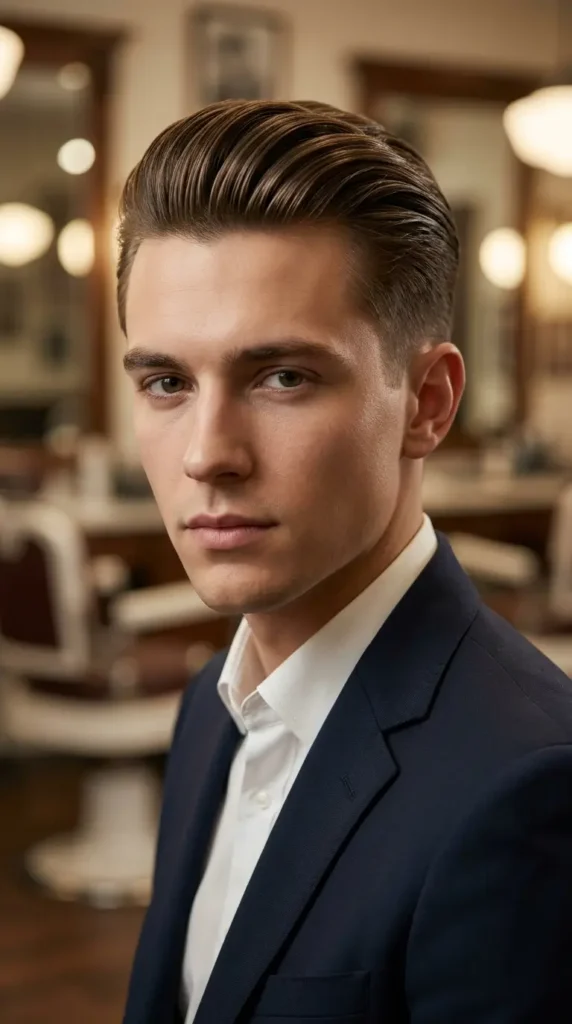
All hair combed smoothly away from the face with no part. Clean, confident, and unmistakably powerful. The classic slick back carries the kind of authority associated with JFK, Paul Newman, and every man who ever looked like he owned the building he walked into.
What to Tell Your Barber:
- Medium length on top, 4-5 inches minimum
- Scissor-blended sides, gradually shorter toward the ears
- Tapered neckline
- No undercut, sides should blend naturally into the top length
Best For:
- Face shapes: Oval, square, diamond
- Hair types: Straight, wavy (Type 1-2A)
- Hair density: Medium to thick
How to Style: Apply pomade or styling cream to damp hair. Comb straight back with a fine-tooth comb. Blow-dry backward for volume and hold. The key: use enough product for control but not so much that it looks wet. Controlled shine, not drenched.
Hold: Medium-high | Finish: Low-medium shine
7. The Classic Comb Over
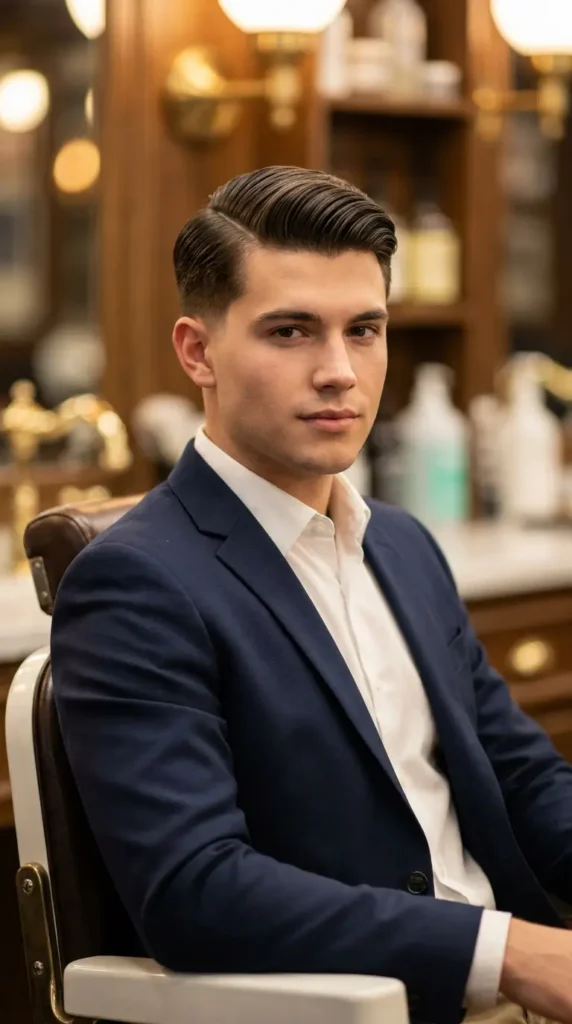
A longer top swept to one side with soft blending into the sides. Not the caricature version. The refined, natural comb over worn by well-dressed men for over a century. The key distinction: natural volume at the parting, not flat, glued-down hair.
What to Tell Your Barber:
- 3-5 inches on top with side direction
- Low taper, soft blending into the crown
- No hard part, follow the natural growth pattern
- Light layering to reduce bulk if hair is thick
Best For:
- Face shapes: Round (adds height), oval, heart
- Hair types: Straight, wavy
- Hair density: All, particularly good for thinning hair when volume is built at the part
How to Style: Blow-dry while brushing hair to one side with a round brush. Apply light pomade and comb gently. Add slight lift at the root with your fingers for natural volume that lasts all day.
Hold: Light-medium | Finish: Natural/low shine
8. The French Crop
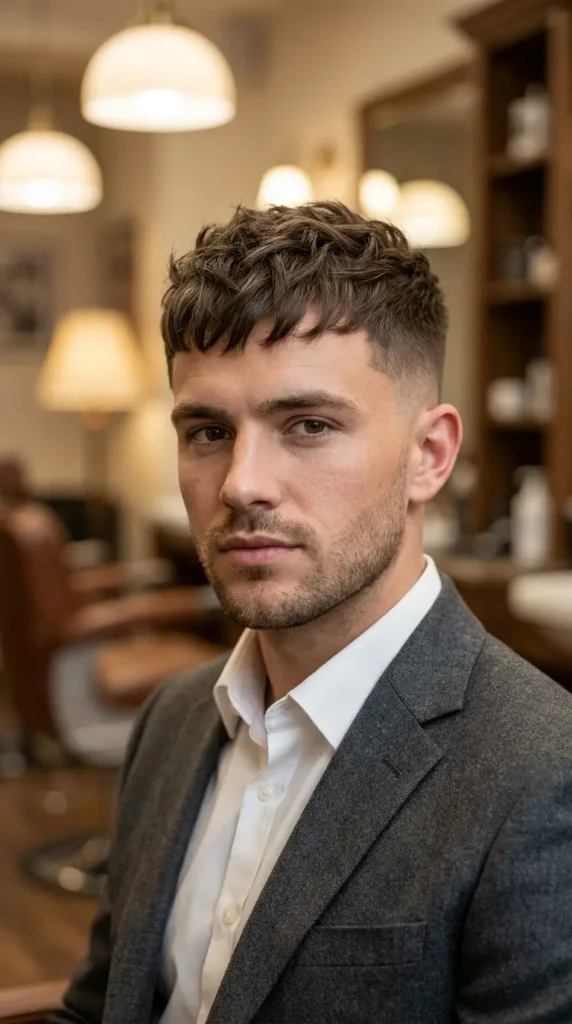
Short, efficient, and intentional. The French crop has a textured top and a blunt or soft fringe at the front. This is old money’s answer to low-maintenance living. It requires almost no styling and still looks clean, deliberate, and expensive.
What to Tell Your Barber:
- Short textured top, 1-2 inches
- Soft fringe at the front, cut blunt or slightly textured
- Low taper on sides
- Clean ears and tapered neckline
Best For:
- Face shapes: Oval, square, heart
- Hair types: All, works exceptionally well with thick hair
- Hair density: Medium to thick (also disguises high foreheads)
How to Style: Apply texture clay to dry hair. Push hair forward with your fingers. Done. No blow-dryer, no comb, no mirror time.
Hold: Medium | Finish: Matte
9. The Caesar Cut
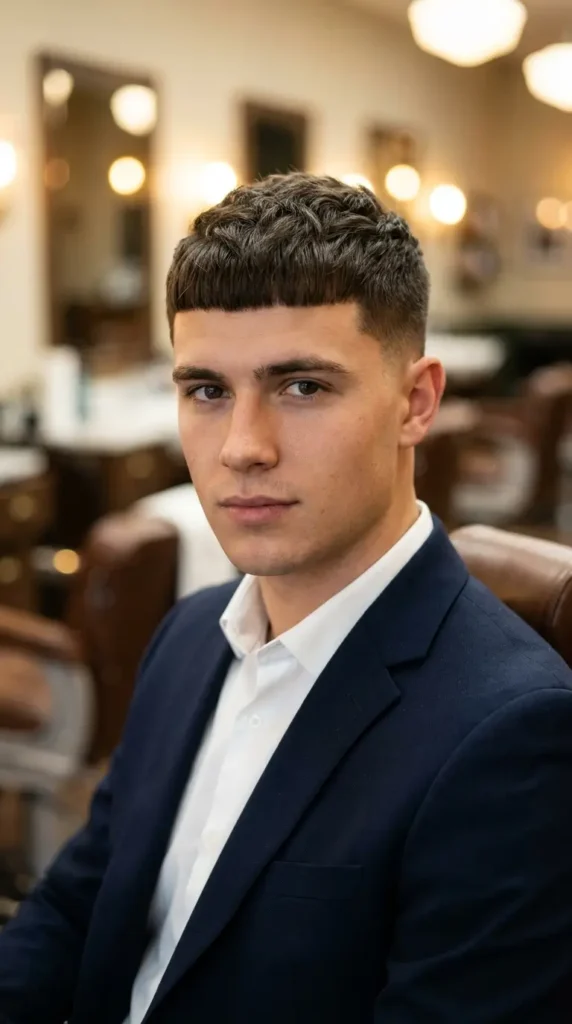
Short, uniform length with a forward-styled fringe. The Caesar cut is named after Julius Caesar and still relevant today because it flatters men with thinning temples, high foreheads, and receding hairlines better than almost any other classic style.
What to Tell Your Barber:
- Short layered top, 0.5-1.5 inches
- Forward fringe, straight across
- Tapered sides and back
- Soft edges, no hard lines
Best For:
- Face shapes: Oval, round, square
- Hair types: Straight, wavy, curly
- Hair density: All, excellent for thinning hair and receding hairlines
How to Style: Rub styling cream through damp hair. Brush forward with your fingers and shape the fringe. Air dry or quick blow-dry on low heat.
Hold: Light | Finish: Natural
10. The Low Taper Fade
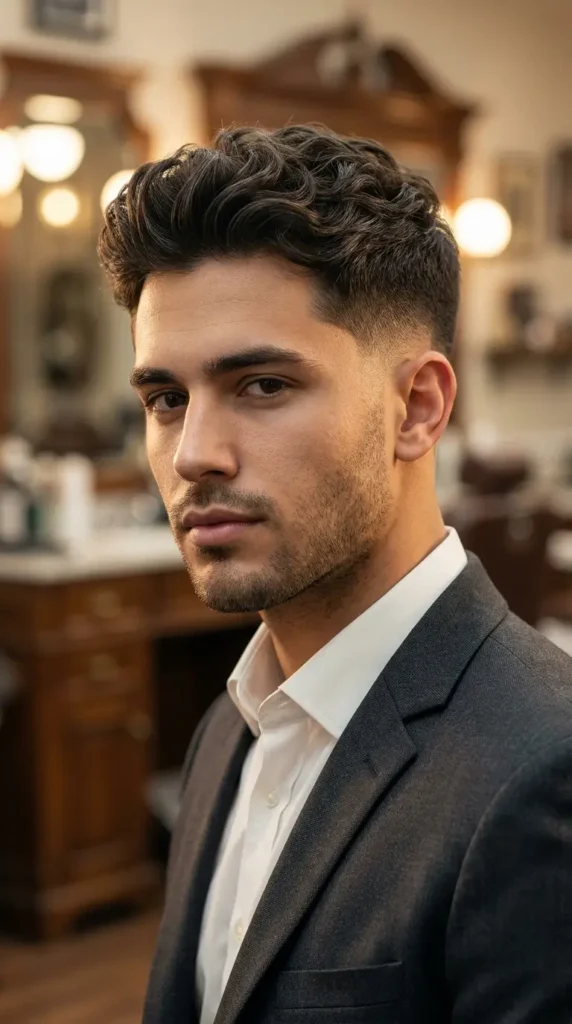
The low taper fade is the only fade style that genuinely belongs in old money grooming. The fade begins just above the ear and neckline, subtle enough to maintain class while adding a modern edge that keeps the style from looking dated.
What to Tell Your Barber:
- Low fade starting above the ear, blending from a #1 or #1.5 guard
- Scissor-cut top, 2-4 inches depending on desired style
- No skin exposure, the fade should graduate to very short, not bald
- Natural or tapered neckline
Understanding Fade Heights for Old Money:
- Low fade: Subtle, refined, old money appropriate. The transition is barely noticeable.
- Mid fade: Moderate contrast. Acceptable for younger men in casual settings but reads slightly trendy.
- High fade: Maximum contrast. Firmly in new money territory. Requires biweekly barber visits.
If you are unsure which level of fade suits you, our guide on low fade vs high fade breaks down the differences in detail.
Best For:
- Face shapes: All
- Hair types: All
- Hair density: All
How to Style: Depends entirely on the top length. Pair the low fade with any top style in this guide, side part, textured top, slick back, or Ivy League.
11. The Crew Cut
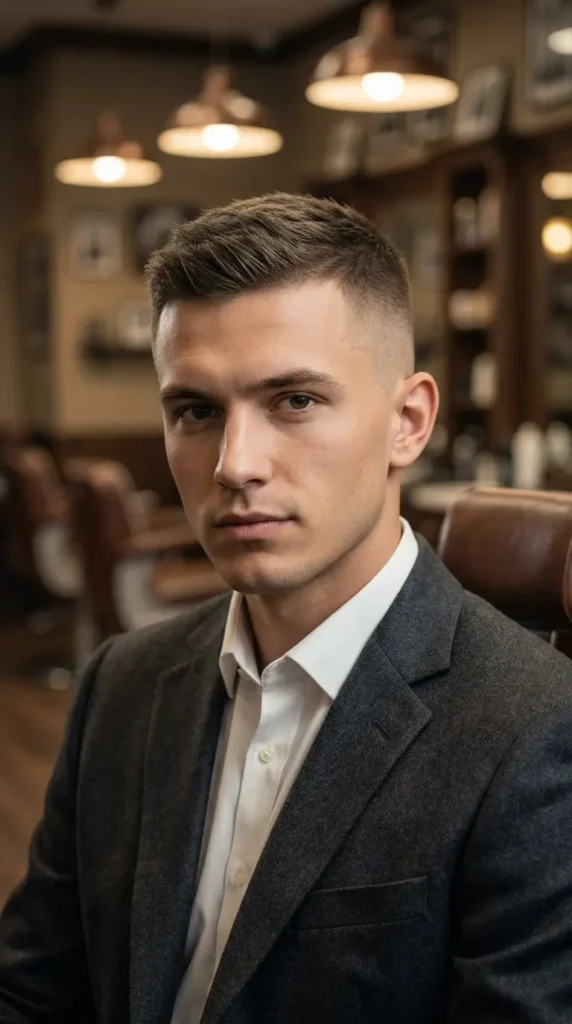
Short, masculine, and absolutely zero-fuss. The crew cut is the most low-maintenance old money haircut you can get. It looks sharp from the barber’s chair and still looks sharp 4 weeks later. Military officers, athletes, and business professionals have relied on this cut for decades because it simply never fails.
What to Tell Your Barber:
- Slightly longer on top than the sides
- Soft blending between lengths
- Low taper around ears and neckline
- No skin fade, keep it soft
Best For:
- Face shapes: Oval, square
- Hair types: All
- Hair density: All, especially effective for thinning hair
How to Style: Touch of matte paste. Run your hands through. That is the entire routine. No blow-dryer. No comb. Under 60 seconds.
Hold: Light | Finish: Matte
Barber Tip: If you want the absolute easiest old money haircut to maintain, the crew cut wins. Trim every 4-5 weeks, less than one minute of styling per day, and it looks sharp on every man regardless of age, hair type, or profession.
12. The Tapered Crew Cut
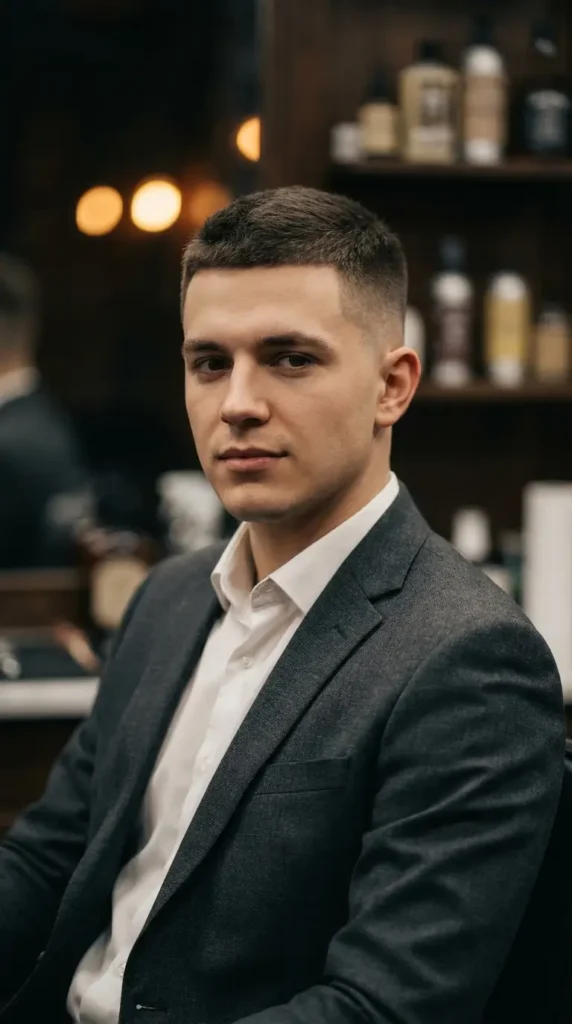
Think of this as the polished upgrade to the basic crew cut. The tapering is more intentional, the edges are more defined, and the overall shape reads “deliberate choice” rather than “whatever is easy.” Same low maintenance, higher sophistication. Understanding the difference between a taper vs fade helps you communicate exactly what you want.
What to Tell Your Barber:
- Crew cut length on top
- Tapered sides and neckline with careful blending
- Soft transition between top and side lengths
- Clean perimeter, ears, sideburns, neckline all crisp
Best For:
- Face shapes: Oval, square, round
- Hair types: All
- Hair density: All
How to Style: A pea-sized amount of styling cream keeps it neat without stiffness. Shape with your palms. That is it.
Hold: Light | Finish: Natural
13. The Classic Pompadour
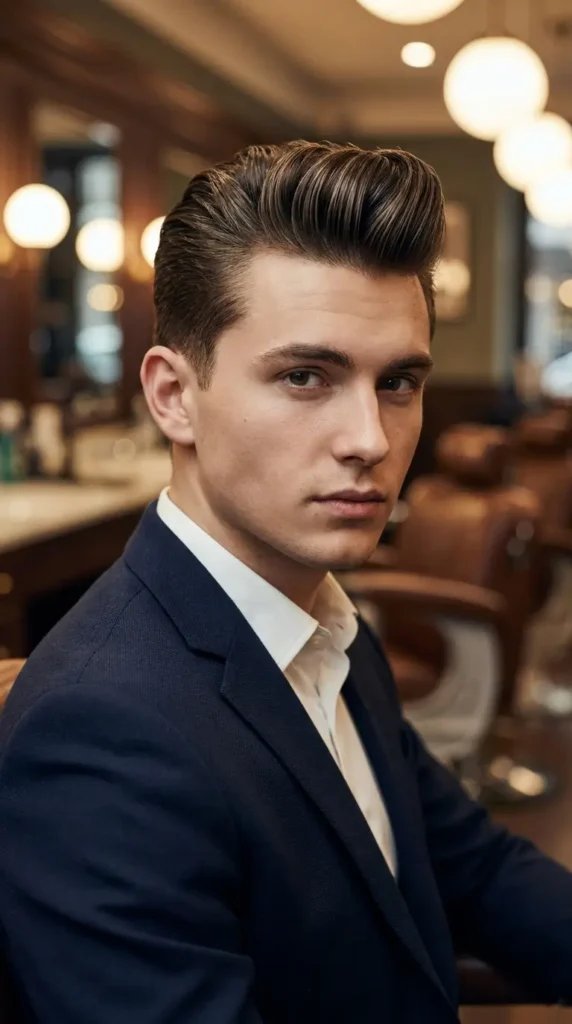
Volume swept back and up from the face, tapered sides, confident silhouette. The old money pompadour is NOT the rockabilly version with 4 inches of height and heavy shine. It is a moderate-height, natural-finish pompadour that Cary Grant made famous in the 1950s and 1960s.
What to Tell Your Barber:
- 4-5 inches on top (minimum for pompadour height)
- Scissor-blended sides, tapered gradually
- Leave weight in the top for volume
- Tapered neckline
Best For:
- Face shapes: Oval, oblong (the height balances a longer face)
- Hair types: Straight, wavy
- Hair density: Medium to thick (thin hair struggles to hold pompadour shape)
How to Style: Blow-dry upward at the roots using a round brush. Guide the hair back and slightly upward as it dries. Finish with molding paste for shape and texture powder at the roots for invisible height that lasts.
Hold: Medium-high | Finish: Natural/matte
14. The Textured Ivy League
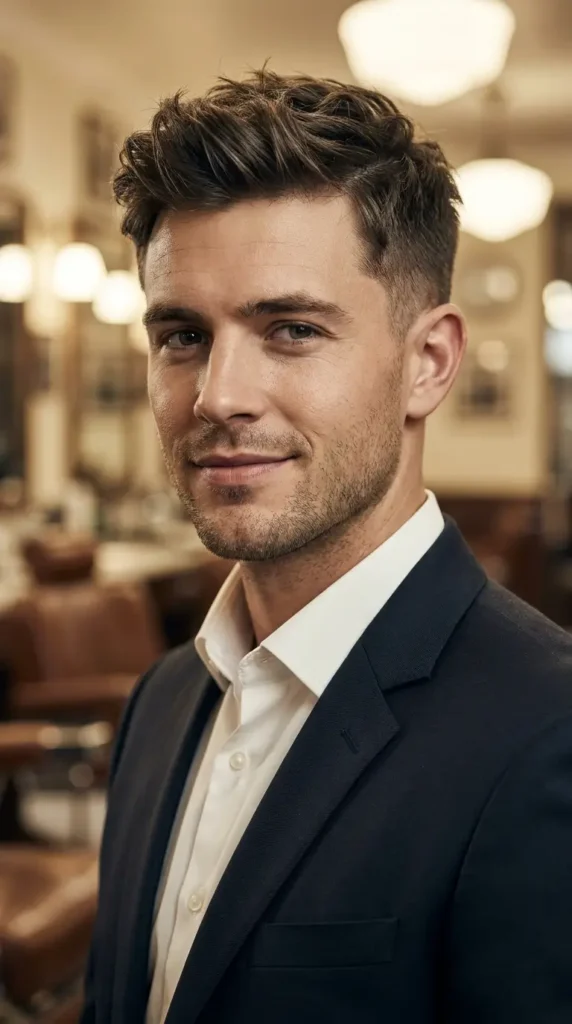
The standard Ivy League, but with scissor texture added on top for thicker hair types. This prevents the cut from looking too flat, too rigid, or too helmet-like on men with dense hair. The added texture creates movement and makes the style look effortless rather than forced.
What to Tell Your Barber:
- Ivy League base shape
- Point cutting or scissor texturizing on top for movement
- Tapered sides
- Standard tapered neckline
Best For:
- Face shapes: All
- Hair types: Straight (thick), wavy
- Hair density: Thick (this is specifically designed for dense hair)
How to Style: Work matte paste into dry hair for separation and texture. Use fingers, not a comb, the point is natural movement, not uniformity.
Hold: Light-medium | Finish: Matte
15. The Classic Quiff
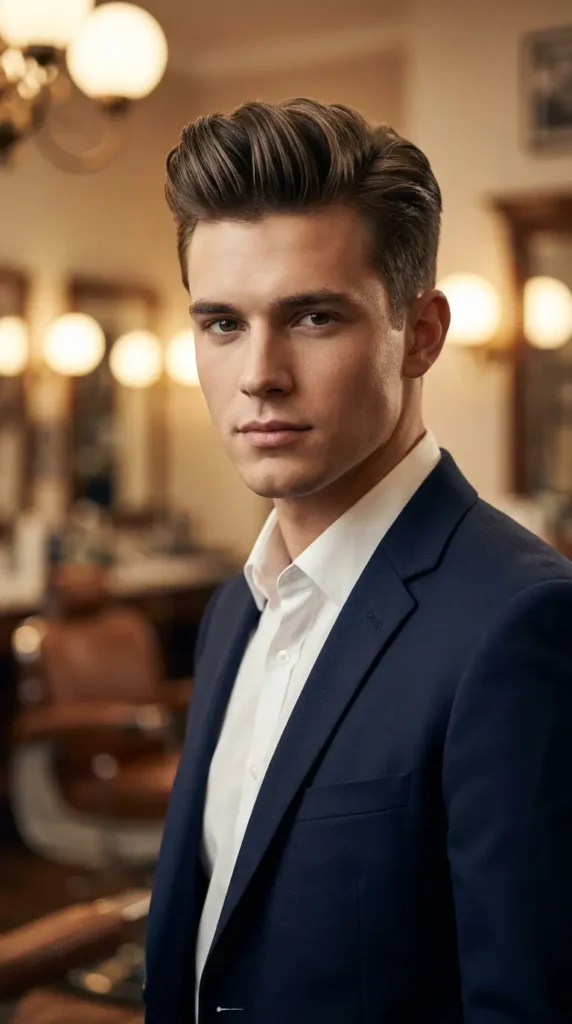
A shorter, more structured cousin of the pompadour. The classic textured quiff lifts at the front and falls slightly back, while the sides stay clean and tapered. More contemporary than a traditional side part, but still within old money boundaries when the finish stays natural and the height stays moderate.
What to Tell Your Barber:
- 3-4 inches at the front, shorter toward the crown
- Tapered sides, scissor-blended
- Enough contrast to create visual lift at the front
- Clean neckline and ears
Best For:
- Face shapes: Oval, diamond, heart
- Hair types: Straight, wavy
- Hair density: Medium to thick
How to Style: Blow-dry the front upward using a round brush. Apply molding paste for flexible hold that allows movement. The quiff should look lifted, not shellacked into place.
Hold: Medium | Finish: Natural
16. The Short Back and Sides
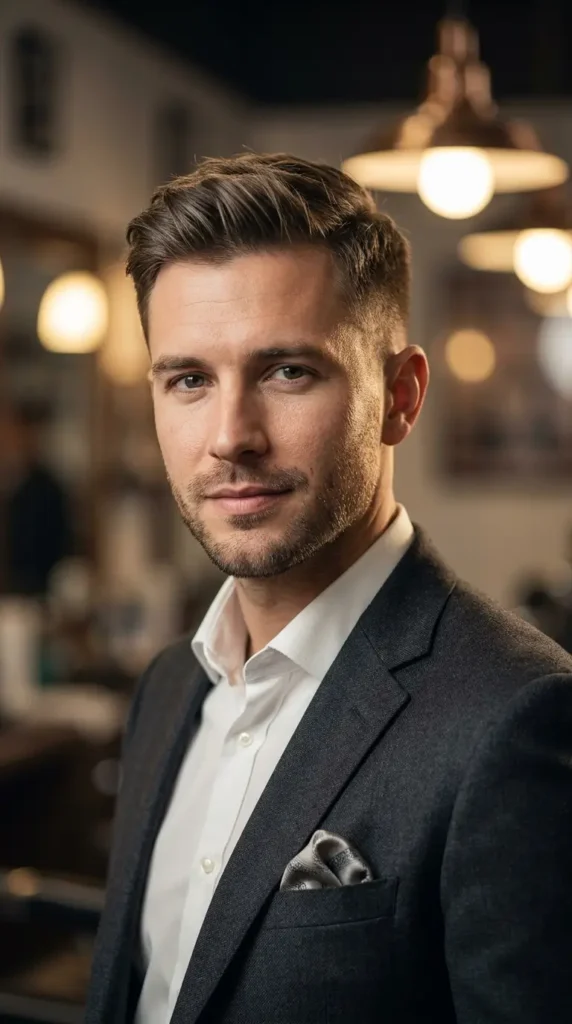
The most traditional gentleman’s cut in barbering history. Barbers have given this cut for over a hundred years because it works on nearly everyone. Scissor-cut top with short, tapered back and sides. No trend, no statement, just quiet, reliable polish.
What to Tell Your Barber:
- Scissor cut on top with light layering
- Short back and sides, gradual taper
- Natural taper at the neckline
- Clean sideburns
Best For:
- Face shapes: All
- Hair types: Straight, wavy
- Hair density: All
How to Style: Dry with a brush, add a small amount of matte paste. Shape with your fingers. Ready in under 3 minutes.
Hold: Light | Finish: Matte/natural
17. The Side Sweep
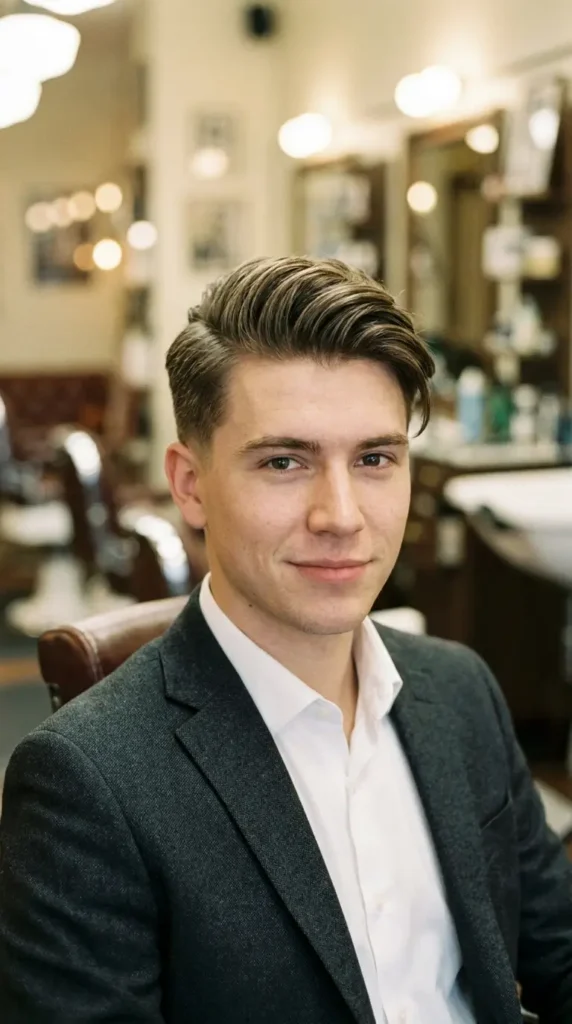
Medium length on top swept to one side with gentle volume and movement. More relaxed than a strict side part, with a softer, more flowing finish. The kind of hair that looks like you ran your hand through it once and walked out the door looking polished.
What to Tell Your Barber:
- Medium length on top, 3-4 inches
- Tapered sides
- Enough length to sweep naturally to one side
- Soft layering for movement
Best For:
- Face shapes: Oval, round (the directional sweep adds asymmetry that slims)
- Hair types: Straight, wavy
- Hair density: Medium to thick
How to Style: Blow-dry lightly while guiding hair sideways with your fingers. Apply styling cream for touchable hold. No comb needed, the slightly imperfect finish is the point.
Hold: Light | Finish: Natural
18. The Regulation Cut
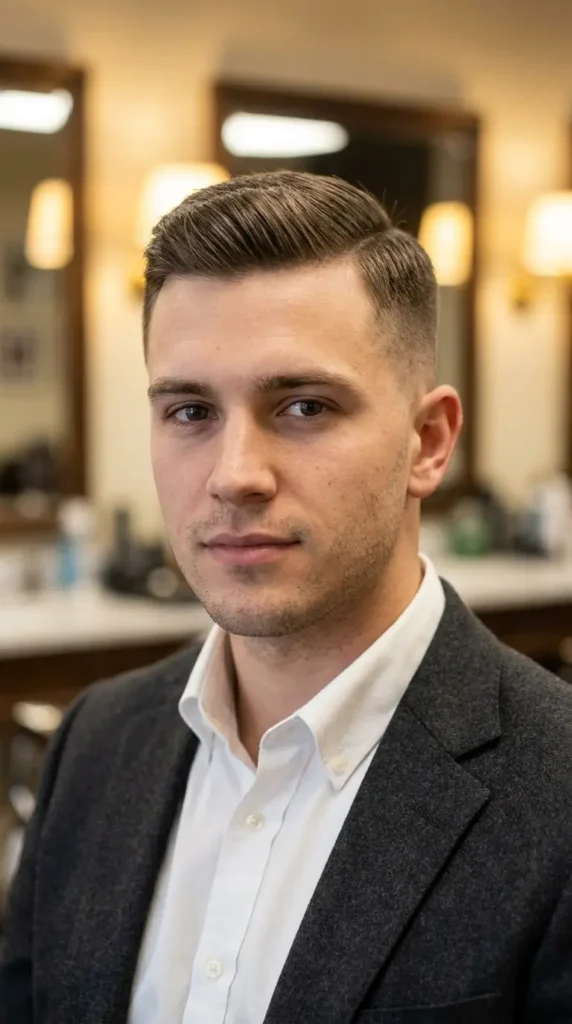
Military in origin, impeccable in execution. A neat side part with short tapered sides that projects discipline and structure. This is the haircut worn by officers, not because of regulation, but because it looks commanding without being loud.
What to Tell Your Barber:
- Defined side part
- Short tapered sides with smooth blend
- Top just long enough to part cleanly, 2-3 inches
- Squared or natural neckline
Best For:
- Face shapes: Square, oval
- Hair types: Straight, wavy
- Hair density: All
How to Style: Blow-dry into the part while guiding with a comb. Apply pomade for light control and clean definition. Set with cold air from the dryer.
Hold: Medium | Finish: Low shine
19. The Curtain Cut
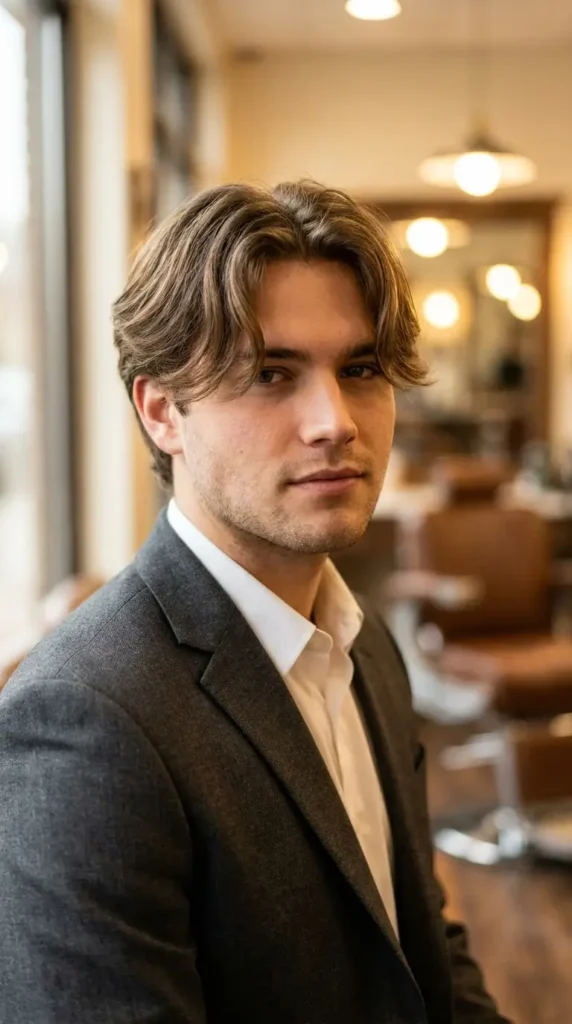
A middle part with face-framing pieces that fall softly to each side. The old money adaptation of curtain bangs keeps everything neat, well-trimmed, and controlled, nothing shaggy, nothing grunge. This is old money for men who want personality in their grooming without crossing into trendy territory.
What to Tell Your Barber:
- Medium layers, 4-5 inches at the front
- Soft middle part, not razor-sharp
- Tapered sides below the layers
- Light texturizing for movement
Best For:
- Face shapes: Oval, oblong, diamond
- Hair types: Straight, wavy
- Hair density: Medium (thick hair can look too heavy in curtains unless properly layered)
How to Style: Blow-dry while guiding hair outward from the center part. Apply styling cream lightly through the front pieces for control and softness. The hair should frame the face, not flop into the eyes.
Hold: Light | Finish: Natural
20. The Bro Flow
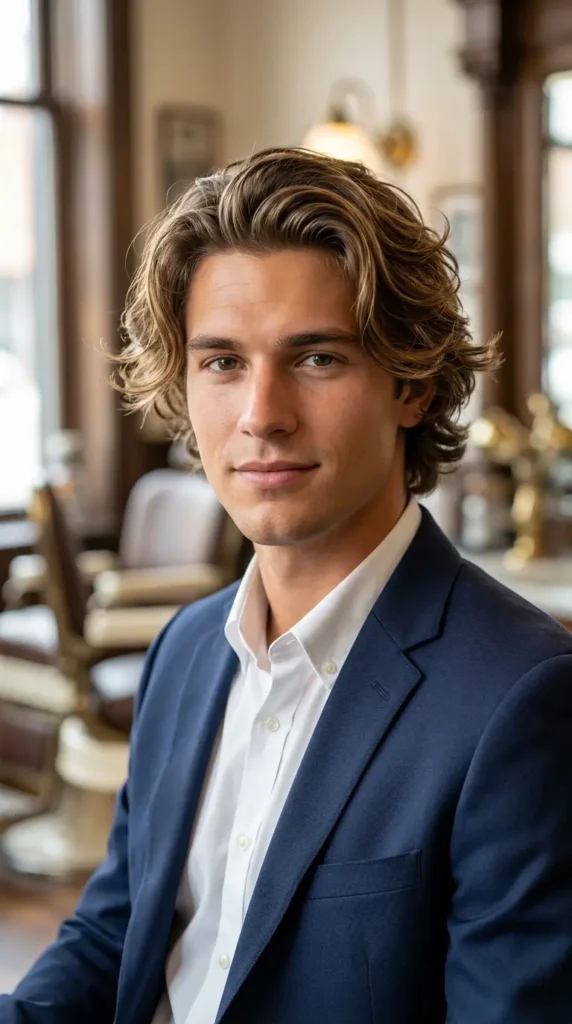
Medium-to-long hair that flows naturally backward with relaxed movement. The bro flow requires regular trims every 3-4 weeks to stay controlled. The old money version avoids messy surf-style chaos and maintains polished structure at the perimeter.
What to Tell Your Barber:
- Medium layered length, 4-6 inches
- Tapered edges, not blunt
- Clean neckline
- Light layering for natural movement and flow
Best For:
- Face shapes: Oval, diamond
- Hair types: Wavy (ideal, natural wave creates built-in flow), straight (possible but requires more styling)
- Hair density: Medium to thick
How to Style: Apply leave-in conditioner for softness and frizz control. Push hair back with your hands. Blow-dry on low if needed for direction. The bro flow should look effortless, which means regular trims are non-negotiable for preventing unkempt overgrowth.
Hold: Light | Finish: Natural
21. The Layered Medium Cut
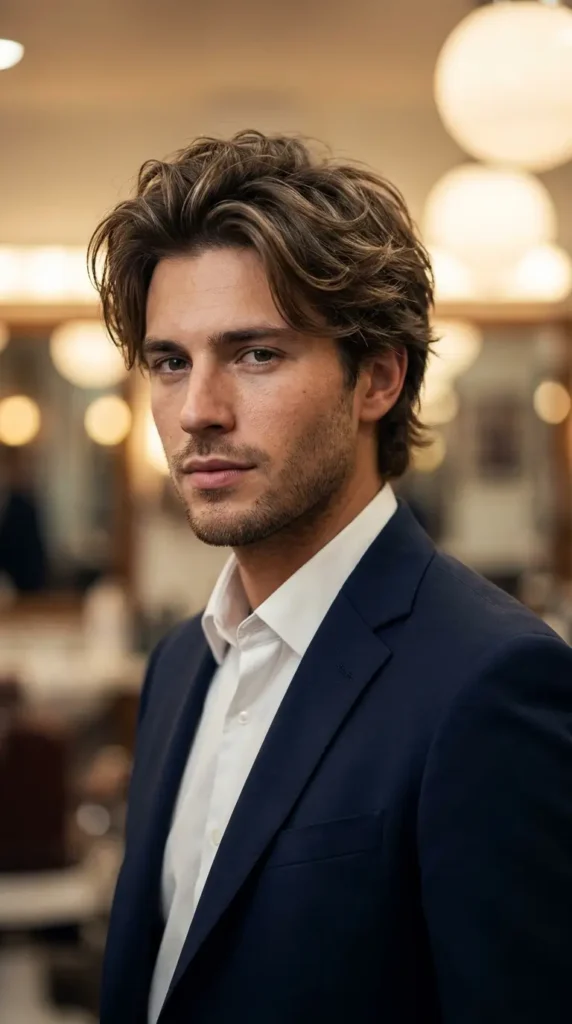
Medium length with stacked layers throughout for volume, movement, and versatility. Can be combed back, parted, or swept, making it one of the most adaptable old money cuts available. Gregory Peck wore a version of this for decades.
What to Tell Your Barber:
- Medium length throughout, 3-5 inches
- Stacked layers for natural volume
- Blended sides, slightly shorter than top
- Tapered neckline
Best For:
- Face shapes: All
- Hair types: Straight, wavy
- Hair density: Medium to thick
How to Style: Blow-dry with a brush to lift roots. Shape with styling cream. The layers do most of the work, your job is minimal guidance with your fingers.
Hold: Light-medium | Finish: Natural
22. The Scissor Taper
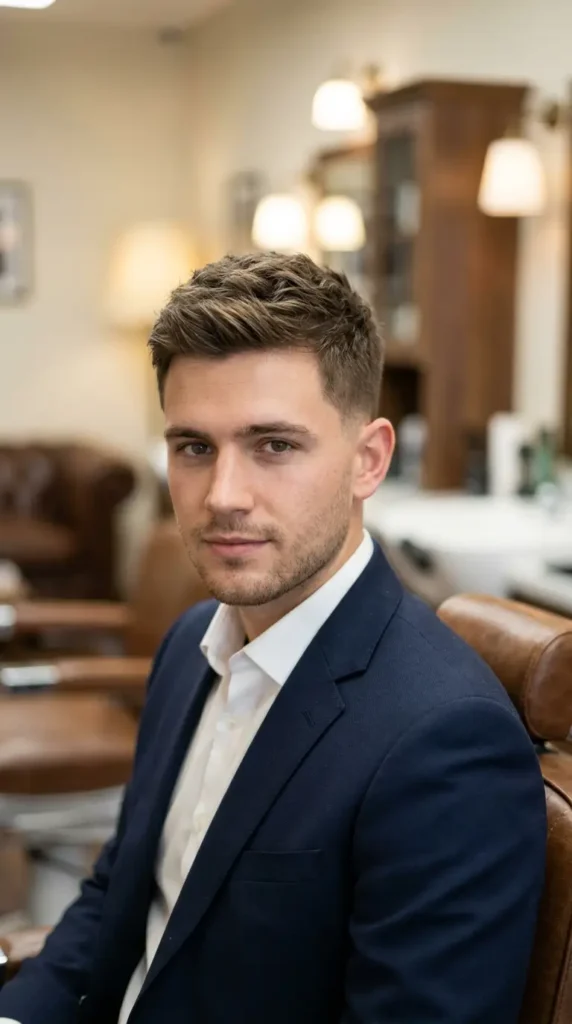
The entire haircut done with scissors only, no clippers touch your head. This produces the softest graduation, the most natural blending, and the most invisible barbering. It is the most traditionally old money technique because it creates a cut that looks like your hair simply grows perfectly. If you want to understand how this differs from clipper-based approaches, the distinction between low taper vs mid taper offers useful context.
What to Tell Your Barber:
- Full scissor cut, no clippers
- Gradual taper using scissor-over-comb technique
- Natural blending throughout
- Soft, natural neckline
Best For:
- Face shapes: All
- Hair types: Straight, wavy
- Hair density: All
How to Style: Whatever the top style dictates. The scissor taper is a technique choice, not a style choice, it works under any of the top styles in this guide.
Hold/Finish: Varies by top style
23. The Collegiate Cut
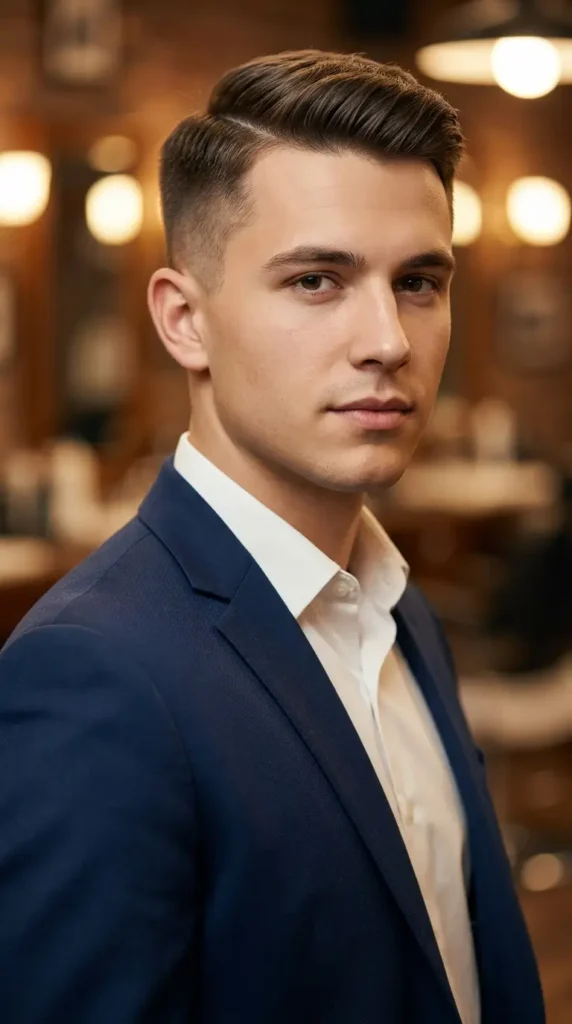
Clean, youthful, and scholarly. A slightly more volumed version of the Ivy League designed for younger men, college students, and recent graduates. It signals ambition and maturity without looking like you are trying to be older than you are.
What to Tell Your Barber:
- Short-to-medium top, 2-3 inches with slight volume
- Tapered sides with soft blend
- Natural, relaxed shape, not rigidly parted
- Tapered neckline
Best For:
- Face shapes: All
- Hair types: Straight, wavy
- Hair density: All
How to Style: Blow-dry with gentle lift at the front. Apply molding paste for shape and light hold. Brush the front slightly upward or to one side.
Hold: Light | Finish: Natural
24. The Businessman Haircut
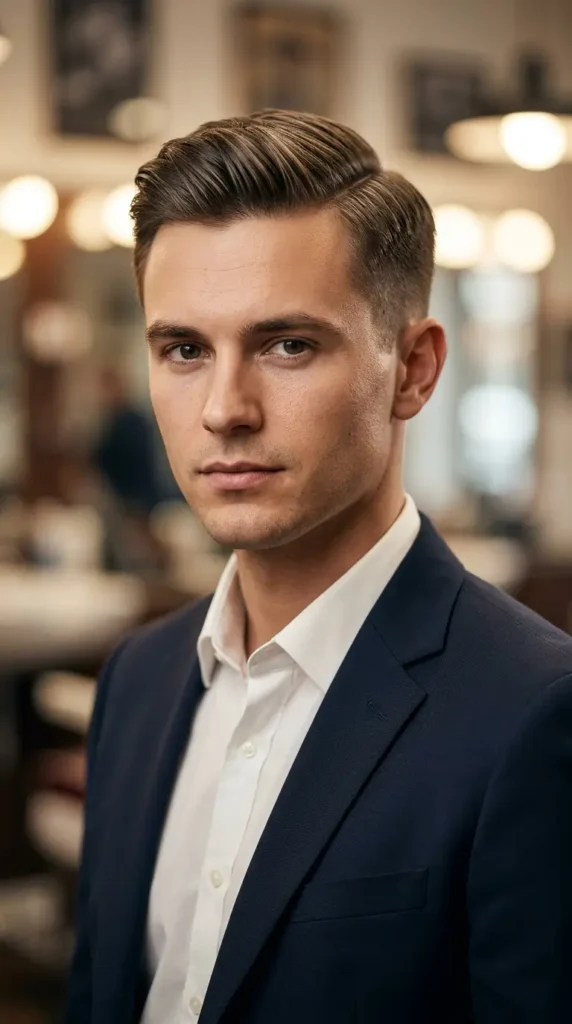
A structured side part with clean tapering specifically calibrated for corporate environments. This haircut says “senior associate” or “vice president” without a single word. Clean enough for a board meeting, relaxed enough for after-work drinks.
What to Tell Your Barber:
- Defined side part with 3-4 inches on top
- Short tapered sides with smooth blend
- No trendy elements, no hard part, no skin fade
- Squared or tapered neckline (industry-dependent, finance tends squared, creative tends tapered)
Best For:
- Face shapes: Oval, square, oblong
- Hair types: Straight, wavy
- Hair density: Medium to thick
How to Style: Blow-dry into the part. Apply pomade for a polished, controlled finish. Comb neatly to one side. The finish should look professional under fluorescent office lighting, no excessive shine.
Hold: Medium | Finish: Low shine
25. The Brushed Back
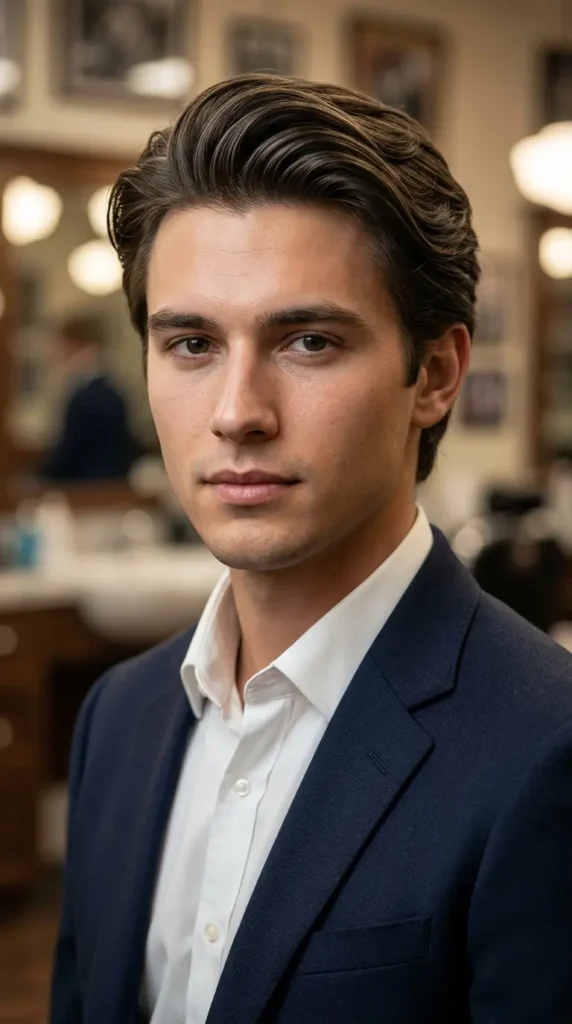
All hair directed away from the face without a defined part. More relaxed than a slick back because visible texture and volume remain. Paul Newman wore this for decades, it projects quiet confidence from your 30s through your 70s. For more variations of this direction, our guide to slicked back haircuts explores the full spectrum.
What to Tell Your Barber:
- Medium-to-long top, 3-5 inches
- Scissor-blended sides, tapered gradually
- No undercut
- Tapered neckline
Best For:
- Face shapes: Oval, square, diamond
- Hair types: Straight, wavy
- Hair density: Medium to thick
How to Style: Blow-dry backward while lifting with your fingers. Apply styling cream and brush hair back with moderate tension. The texture should still be visible, this is not a slick back. You want to see individual strands and natural movement.
Hold: Light-medium | Finish: Natural
26. The Textured Fringe
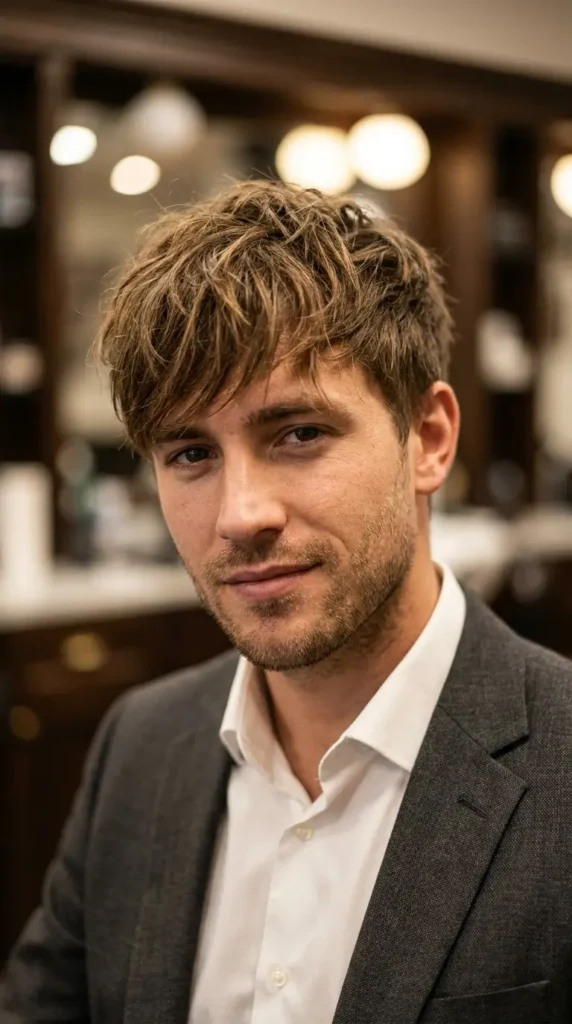
Short sides with a textured, forward-falling fringe. More youthful and casual than the French crop, but equally clean. The old money version keeps the fringe subtle, well-trimmed, and intentional, not falling into your eyes.
What to Tell Your Barber:
- Short textured top, 1.5-2.5 inches
- Soft textured fringe at the front
- Low taper on sides
- Tapered neckline
Best For:
- Face shapes: Round, oval, heart (the fringe disguises big foreheads and adds structure to round faces)
- Hair types: Straight, wavy
- Hair density: Medium to thick
How to Style: Apply texture clay and push hair forward with your fingers. Arrange the fringe so it falls naturally without obscuring your eyebrows.
Hold: Medium | Finish: Matte
27. The 80/20 Part
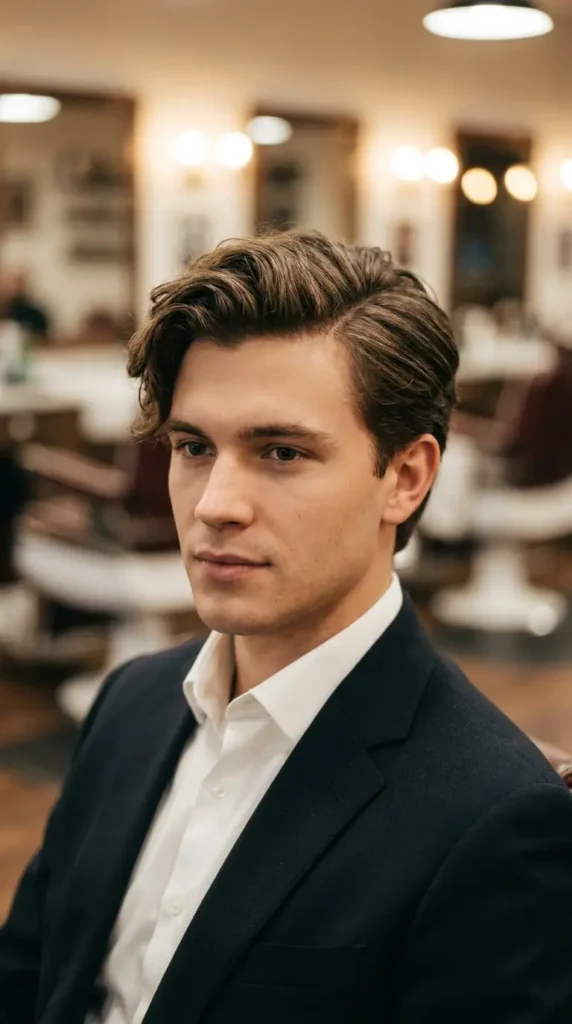
A deep side part where approximately 80% of the hair sweeps to one side. More dramatic than a standard side part but still refined at medium length with a natural finish. The asymmetry creates visual interest while the classic technique keeps it squarely in old money territory.
What to Tell Your Barber:
- Deep part on the heavy side, 3-4 inches on top
- Shorter minority side, 1-2 inches
- Low taper, soft blending
- Clean ears and neckline
Best For:
- Face shapes: Oval, heart
- Hair types: Straight, wavy
- Hair density: Medium to thick
How to Style: Blow-dry in the direction of the part. Apply styling cream for control and smooth the heavy side with your palm. Tuck the minority side close.
Hold: Light-medium | Finish: Natural/low shine
28. The Old Money Wolf Cut
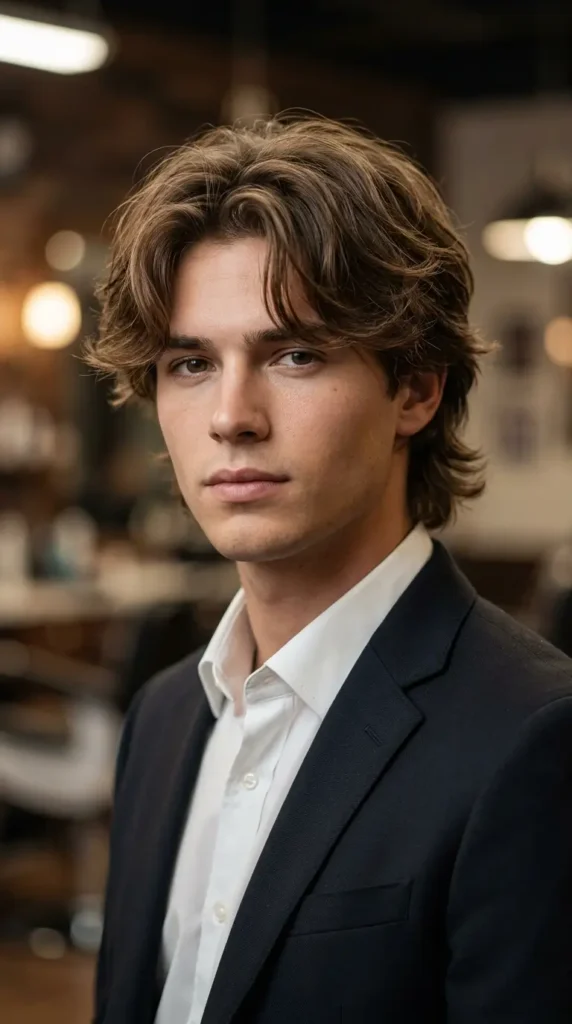
A layered, medium-length style with more texture and movement than traditional old money cuts. The old money adaptation removes the shaggy, unkempt quality of the standard wolf cut and replaces it with structured layers, clean edges, and a polished finish that still carries personality.
What to Tell Your Barber:
- Heavy layering throughout, 3-5 inches
- Volume at the crown, lighter at the perimeter
- Clean tapered edges, NOT grown-out looking
- Tapered neckline
Best For:
- Face shapes: Oval, diamond
- Hair types: Wavy, curly (texture enhances the layering)
- Hair density: Medium to thick
How to Style: Apply sea salt spray to damp hair. Blow-dry with your fingers, scrunching slightly for texture. Finish with light styling cream to control flyaways while maintaining movement.
Hold: Light | Finish: Natural/textured
29. The Tailored Buzz Cut
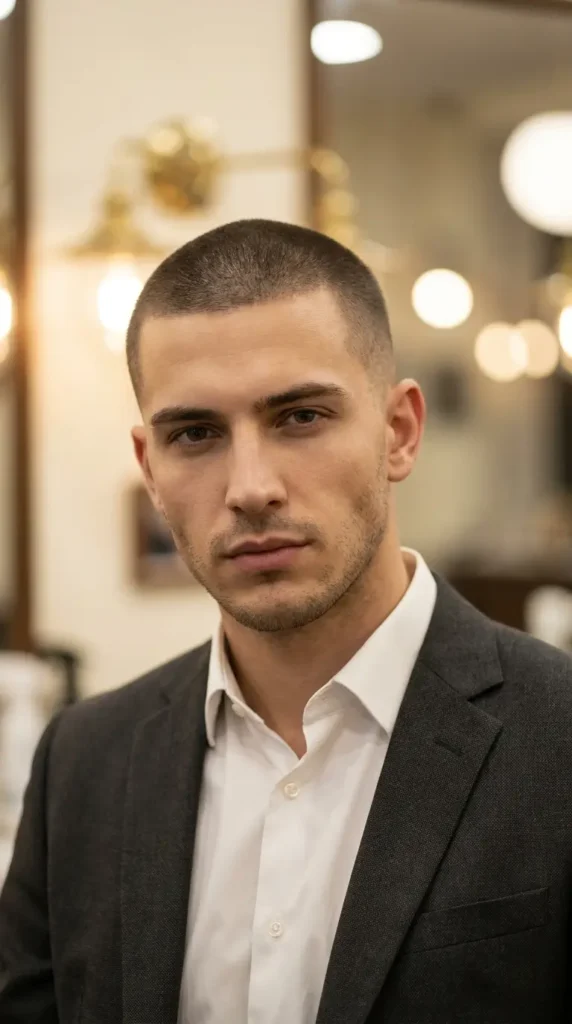
A short, even cut with carefully shaped edges and a tapered neckline. When done properly, the buzz cut looks powerful and intentional, not lazy, not military-basic. It is the ultimate “my grooming is so together I do not even need hair to prove it” move.
What to Tell Your Barber:
- Even buzz, slightly longer on top than sides (#3 or #4 on top, #2 on sides)
- Tapered neckline, not blocked, not high
- Clean edges around temples and sideburns
- Shape the hairline if needed
Best For:
- Face shapes: Oval, square (strong jawlines amplify the buzz cut’s power)
- Hair types: All
- Hair density: All, particularly strong for thinning hair and receding hairlines
How to Style: Maintain with regular trims every 3-4 weeks. Keep the scalp moisturized and protected from sun exposure. That is the entire maintenance routine.
Hold: N/A | Finish: N/A
30. The Old Money Flow
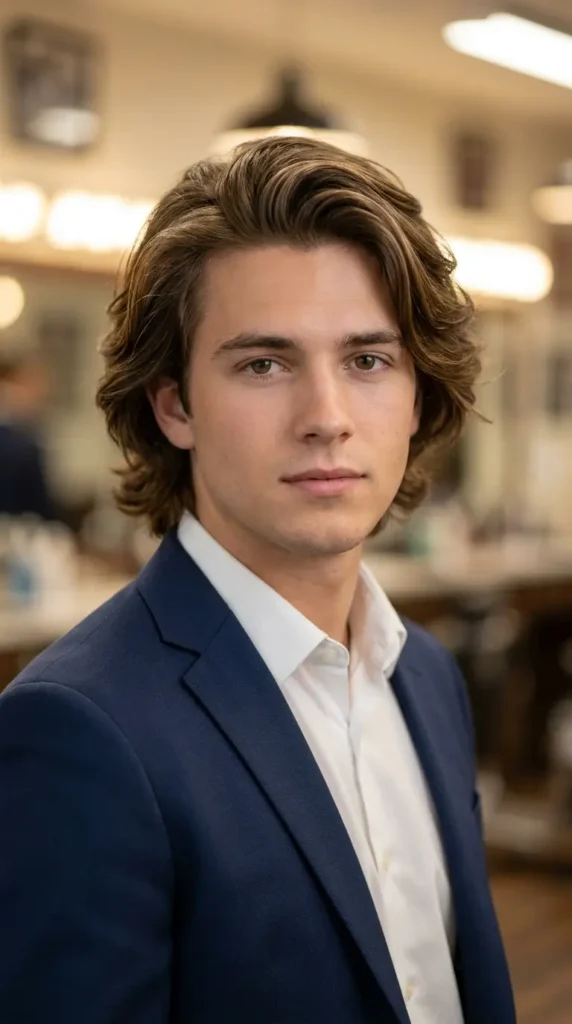
Longer, swept-back hair with natural wave and controlled movement. The most maintenance-intensive style on this list, but it delivers the most “Kennedy compound on a Sunday afternoon” energy when executed correctly. For men considering long haircuts, this is the polished way to do it.
What to Tell Your Barber:
- Longer length throughout, 5-7 inches on top
- Layered for movement and natural fall
- Tapered edges, never blunt, never squared
- Regular trims every 3-4 weeks to prevent the fine line between “polished flow” and “needs a haircut”
Best For:
- Face shapes: Oval, oblong
- Hair types: Wavy (ideal, straight requires constant blow-drying for direction)
- Hair density: Medium to thick
How to Style: Blow-dry backward with your fingers for direction and volume. Apply styling cream for control and light hold. On second-day hair, use sea salt spray to refresh texture. The flow must always look intentional, never neglected.
Hold: Light | Finish: Natural
What Makes a Haircut “Old Money”? 7 Rules of Wealthy-Looking Hair
Old money haircuts follow 7 specific principles that separate quietly wealthy grooming from trend-dependent styles. Understanding these rules prevents bad decisions at the barber’s chair every single time.
Rule 1: Scissor Work Over Clippers
Old money cuts prioritize scissor-cut tops and scissor-over-comb blending on the sides. Scissors create natural movement, soft edges, and a finish that looks like your hair just grows this way. Clippers create uniformity and hard transitions. That is why a full-scissor cut always reads more expensive than a clipper fade, even when the clipper fade costs more.
Rule 2: Low Contrast Over High Contrast
Skin fades, hard part lines, and dramatic disconnections might look sharp on day one. But they scream “I just left the barber.” Old money hair never announces itself. A low taper or soft blend reads sophisticated because the transition between lengths is barely visible. High contrast reads nightclub. Low contrast reads country club.
Rule 3: Natural Finish Over Product-Heavy Styling
The goal is touchable, natural movement, not a lacquered helmet of hairspray. Matte or low-shine finishes win every time. If someone can see your product from across the room, you have used too much. Old money hair looks like it requires zero effort, even when it takes 4 minutes with a blow-dryer.
Rule 4: The Cut Must Match Your Head Shape, Hairline, and Density
A side part on the wrong face shape looks forced. A pompadour on thin hair looks desperate. Old money grooming is about fit, the exact same way a bespoke suit is about fit. Your barber should assess your head shape, hairline, density, cowlicks, and natural growth direction before cutting a single strand.
Rule 5: It Must Look Good at Week 3
Here is the real test. If your haircut looks terrible two weeks after the trim, it is not an old money cut. These styles grow out gracefully because they rely on shape and technique, not on the precision of a fresh fade. A classic side part at week 3 looks like a slightly relaxed version of itself. A skin fade at week 3 looks like neglect.
Rule 6: Shine Is a Tool, Not the Default
A slight healthy sheen suits slick backs and side parts. It adds polish. But too much shine makes you look like you fell face-first into a vat of cooking oil. Controlled shine on naturally healthy hair beats artificial gloss from heavy pomade every single day of the week.
Rule 7: It Must Work in Every Room You Enter
If you need to restyle your hair for different situations, the cut is too specific. Old money hair looks appropriate at a client meeting at 9 AM, a casual lunch at noon, your kid’s soccer game at 4 PM, and dinner at 8 PM, all without touching it. That versatility comes from timeless structure, not situational styling.
Key Point: The easiest way to identify an old money haircut is the “decade test.” If the style would have looked equally appropriate in 1965, 1995, and 2026, it qualifies. If it only works in one era, it is a trend, not a classic.
Old Money Haircuts vs. New Money Haircuts: What Is the Difference?
Old money haircuts prioritize timelessness, subtlety, and natural movement. New money haircuts chase trends, high contrast, and attention. The distinction shows immediately to anyone paying attention.
| Element | Old Money | New Money |
|---|---|---|
| Sides | Low taper, scissor blend | Skin fade, high fade, hard part |
| Top | Natural volume, 3-5 inches | Extreme length or extreme shortness |
| Finish | Matte, low shine, natural | High gloss, wet look |
| Styling time | 3-5 minutes | 15-20 minutes |
| Product amount | Pea-sized, one product | Multiple heavy products |
| Grow-out period | Looks good 3-4 weeks | Needs touch-up within 1-2 weeks |
| Cultural signal | Quiet confidence, inherited taste | “Look at what I just got” energy |
| Trend dependency | None, works across decades | Lasts 1-2 seasons |
The core difference is intent. Old money haircuts are designed to never be the loudest thing about you. They make your suit fit better, your watch look sharper, and your presence feel more authoritative, all without anyone being able to point to the hair and say “that’s what’s different.”
New money haircuts are designed to be noticed first. Neither approach is wrong. But if quiet confidence, professional versatility, and timeless refinement are your goals, old money wins.
How to Choose the Right Old Money Haircut for Your Face Shape
The right old money haircut balances your face shape by adding volume where your proportions need width and reducing weight where they need length. Matching style to face shape eliminates the majority of bad haircut decisions before they happen.
Oval Face
The most versatile face shape. Almost every old money haircut works on an oval face because the proportions are already balanced. Best options include side part, Ivy League, slick back, pompadour, and brushed back. The only caution: avoid excessive height that elongates an already well-proportioned face.
Round Face
The goal is adding height and angular structure to create the illusion of length. Best options include pompadour, quiff, brushed back, side part with root volume, and textured fringe. Avoid curtain cuts and middle parts that add width at ear level. Keep the sides short and tight while building volume on top.
Square Face
The goal is softening angular features while maintaining masculine structure. Best options include textured styles, side sweep, layered medium cut, and classic taper with soft edges. The square jaw is an asset, slightly softer texture on top complements it without competing.
Oblong / Rectangle Face
The goal is adding width and avoiding excessive height. Best options include French crop, Caesar, side sweep, and curtain cut. Avoid pompadours, quiffs, and anything that adds significant height. These elongate an already long face further.
Heart Face
The goal is balancing a wider forehead with a narrower chin. Best options include side part, fringe styles, textured Ivy League, and curtain cut. Avoid full slick backs that expose the widest part of the forehead. Styles with some forehead coverage create visual balance.
Diamond Face
The goal is balancing a narrow forehead and chin with wider cheekbones. Best options include side sweep, brushed back, classic quiff, and medium layered cut. Add volume at the top and slight width at the forehead area to balance the widest point at the cheeks.
Quick Tip: If you are unsure of your face shape, take a front-facing photo in natural light and trace the outline of your jawline, cheekbones, and forehead. The widest point determines your category. Or simply ask your barber, experienced barbers identify face shapes within seconds.
Best Old Money Haircuts by Hair Type
Your natural hair texture determines which old money haircuts hold their shape effortlessly and which ones fight you every morning. Working with your hair type, not against it, saves time and produces better results.
Straight Hair (Type 1)
Straight hair holds clean parts, slick backs, and combed styles effortlessly. That is its natural advantage. Best styles include classic side part, slick back, comb over, Ivy League, executive contour, and Princeton cut.
The challenge with straight hair is flatness. Without intervention, it can look lifeless.
The solution: blow-dry with a round brush for lift at the roots, and use lightweight volumizing products like sea salt spray as a pre-styler.
Wavy Hair (Type 2)
Wavy hair has built-in movement and texture that makes old money cuts look effortlessly elegant. It is arguably the ideal hair type for this aesthetic because the wave creates natural visual interest without any product.
Best styles include bro flow, brushed back, old money flow, textured Ivy League, layered cuts, and side sweep. The natural wave does most of the styling work for you.
The challenge is frizz in humidity. The solution: styling cream or light pomade controls the wave pattern without eliminating the movement that makes it look expensive.
Curly Hair (Type 3)
Curly hair has natural volume, unique texture, and visual interest that can absolutely look old money, when the edges are clean and the shape is intentional. Men with curly hair and a low taper fade can achieve a refined old money look when the top curls are well-defined and the taper stays subtle.
Best styles include tapered crew cut, textured top with tapered sides, controlled curly fringe, and layered medium cut. The key principle: let the natural curl pattern be visible. Old money on curly hair means well-maintained, defined curls with clean tapered edges, not straightened, not flattened, not fighting nature.
The solution for managing curly old money styles: leave-in conditioner for definition, a diffuser attachment for controlled drying, and avoidance of heavy product that weighs curls down.
Fine or Thin Hair
Best styles for thin hair include crew cut, Ivy League, French crop, Caesar, and Princeton cut. Shorter styles avoid exposing thin areas while maintaining fullness.
Products that help: texture powder at the roots for invisible volume, matte paste for the illusion of density. Avoid long styles that reveal the scalp and heavy products that flatten what little volume exists.
Thick or Coarse Hair
Best styles for thick hair include textured Ivy League, layered cuts, pompadour, brushed back, and old money flow. These styles use the natural bulk as an advantage rather than fighting against it.
Ask your barber to thin or texturize to reduce bulk. Use styling cream or clay to control weight. Avoid very short cuts that look overly dense, and never let thickness grow unchecked between trims, it crosses from “full” to “unruly” fast.
Old Money Haircuts by Age
Old money haircuts work at every age, but the optimal style shifts as your face matures, your professional environment evolves, and your hair density changes.
Teens and High School (14-18)
Best styles for teens include Ivy League, textured fringe, French crop, clean crew cut, and curtain cut. These comply with school dress codes, require minimal styling, and look age-appropriate without trying to look too “adult.”
Product advice for teens: light matte paste or styling cream only. Avoid heavy pomades on young hair, they are unnecessary and can clog pores on oil-prone adolescent scalps.
College and University (18-24)
Best styles for college-age men include side part, bro flow, old money flow, textured Ivy League, curtain cut, and quiff. These allow more personal expression while maintaining the polished look that separates you on campus and at internship interviews.
At this age, old money grooming signals maturity and ambition to professors, recruiters, and peers. It sets you apart from every other guy who rolls out of bed without touching his hair.
Young Professionals (25-35)
Best styles for young professionals include classic side part, executive contour, gentleman’s taper, slick back, and Princeton cut. These project competence, reliability, and professional polish, exactly what early career advancement demands.
Research from Princeton University demonstrates that people form first impressions within 100 milliseconds of seeing a face, and hairstyle is among the first features processed during that initial judgment.
Established Professionals and Mature Men (35+)
Best styles for mature men include executive contour, classic side part, gentleman’s taper, classic comb over, and tailored buzz cut. Clean, structured cuts complement gray hair, thinning, and facial maturity rather than fighting against them.
Here is the truth: old money haircuts actually look BETTER on mature men. The classic aesthetic aligns with the natural authority that comes with age, experience, and confidence. Gray hair with an old money cut is one of the most distinguished looks in men’s grooming. Embrace the gray. Do not color it. That is the old money way.
How to Ask Your Barber for an Old Money Haircut
Getting the old money haircut you want requires clear communication. These exact phrases, reference strategies, and technical terms ensure you walk out with the right cut every time.
Bring a Reference Photo (and a Backup)
Show your barber 2-3 photos of the exact style from different angles. Photos communicate length, shape, texture, and finish more effectively than any verbal description. Use front-facing, side-profile, and back-view images for complete reference.
Save photos on your phone before arriving. Do not waste appointment time searching.
Use These Exact Phrases
These specific instructions communicate old money style to any competent barber:
- “Scissor cut on top, no clippers”: Requests softer, more natural finish
- “Low taper on the sides”: Gradual blend starting near the ears
- “Follow my natural part line”: Part placed where hair naturally separates
- “Blend the weight line”: Smooth transition between top and side lengths
- “Tapered neckline”: Gradual fade to nothing at the neck (most old money appropriate)
- “Finger-length on top”: Approximately 3-4 inches
- “Point cut the ends for movement”: Texturizing technique for natural finish
- “No hard part”: Avoid razor-shaved part line
- “Keep it touchable”: Communicates the natural old money finish goal
- “I want it to grow out well”: Signals you want shape-based cutting, not fade-dependent
Clipper Guard Reference
| Guard | Length | Old Money Usage |
|---|---|---|
| #1 | 3mm (1/8 inch) | Very bottom of a low fade only |
| #2 | 6mm (1/4 inch) | Low fade blend zone |
| #3 | 10mm (3/8 inch) | Standard old money side length |
| #4 | 13mm (1/2 inch) | Longer side option for conservative taper |
| #5-8 | 16-25mm | Top blending for very short styles |
What to Avoid Saying
- “Give me a skin fade”, new money territory
- “Hard part”, too sharp, too trendy, too high-maintenance
- “Make it look like [current celebrity]”, trend-dependent, not timeless
- “Surprise me”, never relinquish control of the outcome
Pro Tip: Find one barber who understands your style and stay with them. Old money grooming is about consistency. The same barber learns your growth patterns, cowlicks, and preferences over time, producing progressively better results at every appointment.
How to Style an Old Money Haircut at Home: Step by Step
Styling an old money haircut takes 3-5 minutes and requires one or two products. This step-by-step process works for every classic style in this guide.
Step 1: Wash and Prep
Shampoo 2-3 times per week with a sulfate-free shampoo. Daily washing strips the natural oils that give old money hair its healthy sheen. Condition after every wash for softness and manageability. Towel-dry until hair is damp, not dripping, not dry. Comb into your natural part while damp.
The American Academy of Dermatology recommends washing hair no more than 2-3 times per week for most hair types, as over-washing removes protective natural oils that contribute to hair health and natural shine.
Step 2: Apply Pre-Styler If Needed
For extra volume, spray roots with sea salt spray before blow-drying. For frizz control, apply a small amount of leave-in conditioner or argan oil to mid-lengths and ends. For most old money styles, skip this step entirely. One product at the end is enough.
Step 3: Blow-Dry for Shape and Direction
Use a blow-dryer with a nozzle attachment for directed airflow. Dry hair in the direction you want it to fall, backward for slick backs, sideways for side parts, forward for crops and fringes.
For volume: lift hair and dry against the natural growth direction at the roots. For smoothness: dry with the grain, following the natural fall pattern.
Use medium heat, not high. The American Academy of Dermatology recommends holding a blow-dryer at least 6 inches from the scalp to prevent heat damage.
Finish with a 5-second cold shot to lock the shape in place.
Step 4: Apply Product and Finish
Choose your product based on style type:
| Style Type | Best Product | Amount |
|---|---|---|
| Side part, comb over | Light pomade or styling cream | Pea-sized |
| Slick back, brushed back | Medium-hold pomade | Dime-sized |
| Textured styles (crop, Ivy League) | Matte paste or texture clay | Pea-sized |
| Volume styles (quiff, pompadour) | Molding paste + texture powder at roots | Small amounts of each |
| Natural styles (crew cut, buzz) | Matte paste or nothing | Fingertip amount |
Application technique: rub product between your palms until evenly distributed. Work through hair from back to front. Shape with fingers or comb. Resist the urge to add more.
Step 5: The 30-Second Check
Look at your hair from the front, both sides, and back using a hand mirror. Smooth any flyaways with damp fingertips. Confirm the part is clean and the neckline looks tidy. If it looks effortless, you did it right. If it looks “done,” you used too much product.
The Golden Rule of Old Money Styling: If someone can tell you are wearing product, you have used too much. The goal is for people to think your hair just naturally grows this way.
Old Money Haircut with Beard: Best Combinations
An old money haircut paired with the right beard style creates the most distinguished version of masculine grooming, but the wrong combination undermines both elements instantly. If you already wear a buzz cut with beard, the same pairing principles apply to any old money style.
Rules for Old Money Beard Pairing
Keep the beard as clean and intentional as the haircut. No scraggly edges, no undefined neckline. The beard neckline must be defined, shaved or trimmed below the jawline. Cheek lines should be natural or lightly shaped. Never razor-sharp geometric cheek lines, that reads new money. Beard length should be proportional to hair length.
Best Beard Styles for Old Money Haircuts
| Beard Style | Best Paired With | Why |
|---|---|---|
| Designer stubble (1-3mm) | Any old money haircut | Most versatile, adds maturity without bulk |
| Short boxed beard (5-10mm) | Side part, executive contour, slick back | Structured enough to match polished hair |
| Medium beard (10-20mm) | Bro flow, old money flow, brushed back | Balances longer hair with facial weight |
| Mustache only | Crew cut, tailored buzz, Princeton | Vintage old money, extremely distinguished |
| Clean shaven | Any old money haircut | The default old money choice for maximum polish |
Beard Grooming
Apply beard oil daily for softness and subtle healthy shine. Trim weekly with a precision trimmer to maintain shape. Brush daily with a boar bristle brush to distribute oils and train direction. Keep the beard neckline sharp, a messy beard neckline ruins even a perfect haircut.
The test: if your beard looks groomed enough to match your haircut’s level of polish, the combination works. If the beard looks like it belongs to a different person than the hair, something needs to change.
Old Money Haircut with Glasses: Frame and Hair Pairing
Glasses and an old money haircut interact directly. The frame shape must complement the hair silhouette for the overall impression to feel cohesive.
| Frame Style | Best Old Money Haircuts | Why |
|---|---|---|
| Round frames | Side part, slick back, brushed back | Angular hair balances round frames |
| Rectangular frames | Textured styles, layered cuts, quiff | Soft hair texture balances hard frame edges |
| Aviator frames | Bro flow, old money flow, classic taper | Both share relaxed, confident energy |
| Clubmaster / browline | Ivy League, Princeton, executive contour | Academic glasses + academic haircuts = natural match |
| Rimless / minimalist | Any old money haircut | Invisible frames let the haircut be the focal point |
Old money frames follow the same philosophy as old money haircuts: classic shapes, quality materials, understated branding. Avoid oversized logos, neon colors, and extreme shapes.
Best Products for Old Money Hairstyles
Old money hairstyles require specific product categories, each serving a distinct purpose. Using the wrong product type ruins the natural, effortless finish.
Pomade (Water-Based)
Purpose: Controlled shine, smooth hold, classic finishes Best for: Side parts, slick backs, comb overs, executive contour Hold: Medium to high Finish: Low to medium shine Application: Small amount through damp hair, comb into shape Old money rule: Always choose water-based pomade. It washes out easily and does not create heavy buildup. Oil-based pomade accumulates, attracts dirt, and makes hair look greasy over time.
Styling Cream
Purpose: Natural hold, flexibility, touchable finish Best for: Most old money styles, the single most versatile product for this aesthetic Hold: Light to medium Finish: Natural / low shine Application: Pea-sized amount through damp or dry hair, shaped with fingers
Matte Paste
Purpose: Texture, separation, natural-looking hold with zero shine Best for: Crew cuts, textured Ivy League, French crop, any short or textured style Hold: Medium Finish: Matte Application: Small amount rubbed between palms, worked through dry hair
Texture Clay
Purpose: Strong matte hold with structure and volume Best for: French crop, textured fringe, quiff, pompadour matte version Hold: Medium to high Finish: Matte Application: Warm between palms, apply to dry or slightly damp hair
Sea Salt Spray
Purpose: Pre-styling volume, texture, grip for blow-drying Best for: Bro flow, old money flow, layered styles, wavy hair enhancement Hold: Light Finish: Matte, textured Application: Spray onto damp roots before blow-drying
Texture Powder
Purpose: Invisible root volume, grip, density illusion for fine hair Best for: Thin or fine hair, pompadour height, quiff lift, any style needing invisible volume Hold: Light (adds grip without traditional “hold”) Finish: Completely invisible Application: Dust onto dry roots, work in with fingers
How to Maintain an Old Money Haircut Between Trims
An old money haircut maintains its shape for 3-5 weeks between barber visits when you follow these practices consistently.
Trim Every 3-5 Weeks
The schedule depends on your style:
- 3 weeks for fades, short crops, and buzz cuts
- 4 weeks for medium-length classic styles (side part, Ivy League, taper)
- 5 weeks maximum for longer styles (bro flow, old money flow)
If your neckline looks messy, you have waited too long. Period.
Wash Correctly
Shampoo 2-3 times per week, not daily. Daily shampooing strips the natural oils that give old money hair its characteristic healthy sheen. Condition after every wash. Use a clarifying shampoo once every 2 weeks to remove product buildup and reset the scalp.
Brush or Comb Daily
Two minutes of brushing with a boar bristle brush distributes natural oils from root to tip and trains your hair to fall in the right direction. Combing before bed helps the morning styling fall into place faster. This single habit separates the consistently well-groomed from the occasionally well-groomed.
Protect from Heat Damage
Always use a nozzle attachment for directed airflow. Maintain 6+ inches between the dryer and your scalp. Use medium heat, finish with the cold shot. If you blow-dry daily, consider applying a heat protectant spray before styling.
Manage Between-Trim Growth
Use product to control areas that grow out first, usually behind the ears and at the neckline. Trim sideburns at home with a small electric trimmer if they grow unruly between appointments. But never attempt to trim your own neckline. That is the fastest way to ruin a good haircut.
Old Money Haircut Inspiration: Style Icons Who Defined the Look
The old money haircut did not emerge from social media. It has been worn by iconic men for nearly a century. Studying their grooming reveals exactly why these styles endure.
Cary Grant: The Definitive Side Part
Clean, precise side part with controlled volume. Polished but never stiff. Cary Grant defined the standard for refined men’s grooming throughout the 1940s, 1950s, and 1960s. His hair always looked like it just happened to fall perfectly, the ultimate old money quality.
JFK: The Political Power Cut
Thick, slightly wavy hair swept to one side with natural volume. Kennedy embodied old money literally: Ivy League educated, generational wealth, effortless style. His haircut became the template for American political grooming that persists to this day.
Paul Newman: The Effortless Brush Back
Medium-length hair brushed casually backward. Newman never looked like he spent time on his hair. That is what made it work. He proved the brushed back style projects quiet confidence from your 30s through your 70s.
Gregory Peck: The Structured Gentleman
Clean, structured side part with impeccable grooming. His performance in To Kill a Mockingbird (1962) established the visual template for the well-groomed gentleman in American culture. The simple haircut amplified the authority of his tailored clothing.
Every one of these men wore variations of the same 3-4 base styles: side part, brushed back, and gentleman’s taper. They did not chase trends. They perfected classics. That is the essence of old money grooming.
Old Money Haircut Trends in 2026
Old money haircuts in 2026 emphasize texture, relaxed movement, and subtle tapering over the rigid, product-heavy styles of previous years. The trend direction moves toward even more natural finishes.
What is current:
- Textured finishes over slicked finishes, matte and natural products dominating over high-shine pomade
- Soft taper replacing the hard fade, barbers reporting increased demand for scissors-only sides
- Longer top lengths, the 3-5 inch range on top becoming standard, allowing more versatile styling options
- Quiet luxury influence, the fashion industry’s shift toward understated brands extending directly into grooming choices
- Old money on textured hair, growing representation of curly and coily hair in the old money aesthetic as it expands beyond traditionally Eurocentric presentation
- The invisible-product look, lightweight styling creams designed to be undetectable, supporting the illusion of naturally perfect hair
The irony of old money haircut “trends” is that the styles themselves never change. The side part, the taper, and the brushed back have been the same for 80 years. What shifts is how much product, how much contrast, and how much visible effort the finish reveals. In 2026, the answer is: less of all three.
Frequently Asked Questions
What Is an Old Money Haircut?
An old money haircut is a classic, well-structured men’s hairstyle that prioritizes clean lines, natural movement, balanced proportions, and a polished finish over trends or extreme styling. Common examples include the side part, Ivy League cut, gentleman’s taper, and classic slick back. The defining quality is timelessness: these cuts look equally appropriate whether worn in 1960 or 2026.
What Are Old Money Hairstyles?
Old money hairstyles are a group of classic, well-groomed men’s haircuts, such as the side part, Ivy League cut, gentleman’s taper, and slick back, that prioritize clean structure, natural texture, and understated polish over trendy or high-maintenance styling. The look is meant to feel timeless rather than seasonal.
How Do You Style Your Hair Old Money Style?
Wash your hair 2-3 times a week and towel-dry until damp, not soaking. Blow-dry in the direction you want the hair to fall, using a round brush for volume if needed. Finish with a small, pea-sized amount of one product, styling cream, pomade, or matte paste depending on the cut. The result should look touchable and natural, never stiff, wet-looking, or overly shiny.
Which Haircut Looks Rich?
The classic side part and the gentleman’s taper are widely considered the haircuts that read as the most “expensive.” Their low-contrast tapering, scissor-cut edges, and natural finish signal quiet confidence rather than a fresh trip to the barber, which is exactly the effect old money grooming is going for.
What Hair Type Suits an Old Money Haircut Best?
Straight and wavy hair hold classic old money shapes, like the side part and slick back, most easily with minimal styling. That said, thick, curly, and even thinning hair can all look equally old money when the cut is tailored to the texture: curly hair with a tapered crew cut, thinning hair with a French crop, and thick hair with a textured Ivy League.
What Do I Tell My Barber for an Old Money Haircut?
Ask for a scissor-cut top with a low taper on the sides, following your natural part line, with a tapered neckline. Bring 2-3 reference photos from different angles. Use phrases like “keep it touchable,” “no hard lines,” and “I want it to grow out well.” These communicate the old money philosophy clearly.
Are Old Money Haircuts High Maintenance?
No. Most old money haircuts require 3-5 minutes of daily styling with a single product. They hold their shape naturally because they rely on cutting technique rather than product dependency. The only real maintenance commitment is a trim every 3-5 weeks to keep the edges sharp.
What Products Work Best for Old Money Hair?
Styling cream is the most versatile option, it provides light-medium hold with a natural finish. For slick styles, use water-based pomade. For textured styles, use matte paste or texture clay. The universal rule: if someone can see your product, you have used too much.
Can Curly Hair Look Old Money?
Yes. Old money on curly hair means well-defined, well-maintained curls with clean tapered edges and intentional shape. Styles like the tapered crew cut, controlled curly fringe, and layered medium cut work exceptionally well. Use leave-in conditioner for definition and avoid heavy products that weigh curls down.
What Face Shape Is Best for Old Money Haircuts?
Oval faces are the most versatile, but every face shape has ideal old money styles. Round faces benefit from height-adding cuts like the pompadour and quiff. Square faces suit textured styles that soften angles. Heart faces work with side parts and fringe styles. The key is matching the cut to your proportions.
Do Old Money Haircuts Work for Thinning Hair?
Yes, many old money styles are ideal for thinning hair. The crew cut, Caesar cut, French crop, Ivy League, and Princeton cut all work well because they maintain structure without requiring volume. Texture powder at the roots adds invisible density, and shorter styles avoid exposing thin areas.
Can Teenagers Wear Old Money Haircuts?
Absolutely. The Ivy League, textured fringe, French crop, crew cut, and curtain cut are all age-appropriate for teens. These styles comply with most school dress codes while looking significantly more polished than typical teenage haircuts.
How Often Should I Trim an Old Money Haircut?
Every 3-5 weeks, depending on the style. Short styles like the crew cut and buzz cut can stretch to 5 weeks. Medium styles like the side part and Ivy League need trimming every 3-4 weeks. Longer styles like the bro flow and old money flow require trims every 3 weeks to prevent crossing into unkempt territory.
Is the Old Money Haircut Still Trending in 2026?
Yes, and it is accelerating. The broader quiet luxury movement in fashion has made understated, classic grooming more relevant than ever. Barbers across the United States and Europe report increased demand for scissor-cut, low-taper, natural-finish styles over high-contrast fades. The old money aesthetic shows no signs of slowing because it is not actually a trend, it is a return to permanent style principles.
Final Thought
Old money hair is not a single haircut. It is a grooming philosophy. Clean over complicated. Timeless over trendy. Effortless over obvious.
Pick a style from this guide that matches your face shape, hair type, and lifestyle. Bring a reference photo to your barber. Use one product, applied lightly. Get trimmed every 3-5 weeks.
That is the entire system. No complexity. No chasing trends every season. Just a haircut that makes you look like you have always had your life together, because the best style never announces itself.