
If you have an oval face, you have hit the genetic jackpot. Seriously. While guys with round faces worry about looking chubby and guys with square faces stress about looking too blocky, you can sit back and relax. Your face shape is considered the most versatile and balanced of all male face shapes.
Here is the truth: an oval face is defined by proportions. Your face length is about one and a half times its width, your forehead is slightly wider than your jawline, and your chin has a soft, rounded curve rather than a sharp angle. This natural symmetry means almost any short haircut will work for you.
But “almost any haircut” is not helpful when you are standing in front of the mirror with decision paralysis.
That is why we built this guide. We are not just throwing 30 haircut names at you. We are giving you the why behind each cut, the barber script to ask for it correctly, and the styling cheat code to make it look great every single day.
Let’s find your next look.
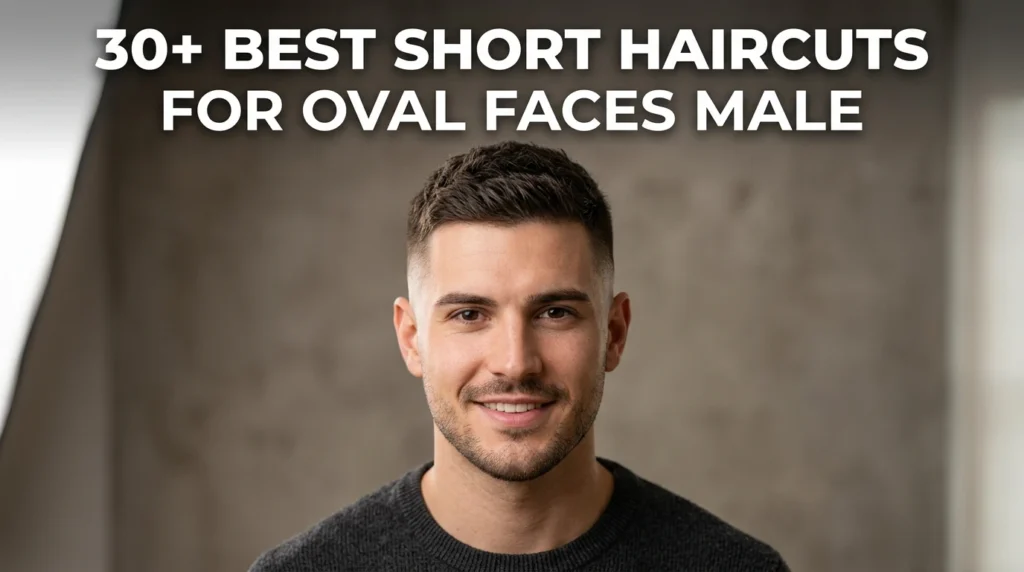
30+ Best Short Haircuts for Oval Faces Male
These are the cuts for the guy who values efficiency. They look sharp, clean, and require almost zero daily effort.
1. The Buzz Cut
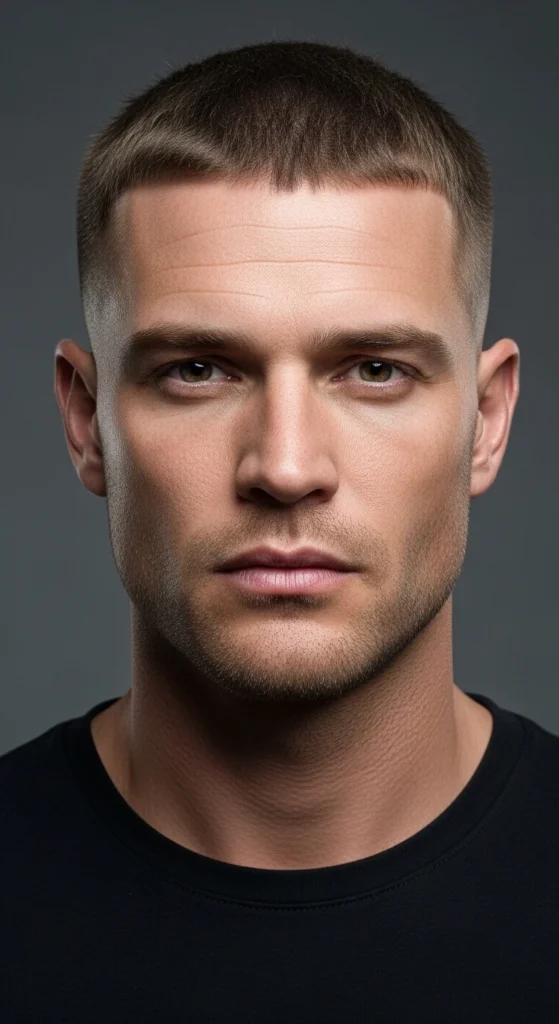
This is the ultimate low-maintenance style. It is uniform in length all over, exposing the natural shape of your skull.
- Oval Face Synergy: Men with oval faces are the best candidates for a buzz cut. Because your head shape is naturally balanced, the buzz cut reveals your bone structure without exposing any awkward flat spots or asymmetrical curves.
- Forehead Consideration: This cut actually reduces the visual weight of a high forehead, making it a surprisingly good option if that is a concern.
- Barber Script: “I’d like a classic buzz cut. Let’s do a #3 guard on top and fade it down to a #1 on the sides. Keep the neckline natural.”
- Styling Tip: You don’t style a buzz cut, but you do need to maintain the skin. Use a matte moisturizer on your scalp daily to prevent dryness and shine.
- Maintenance Level: Very Low (Touch up every 2 weeks).
2. The Burr Cut
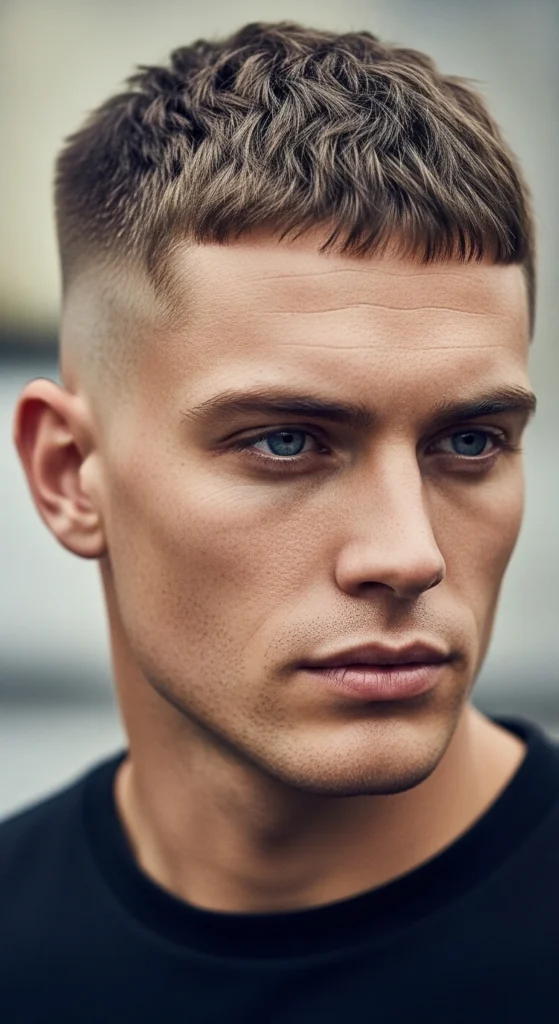
Think of this as the buzz cut’s slightly edgier cousin. It is similar in length but cut with a bit more texture on top to add depth.
- Oval Face Synergy: Perfect for men with thick hair. The texture prevents the “porcupine” effect that sometimes happens with a uniform buzz on dense hair.
- Barber Script: “I want a burr cut. Keep it tight on the sides with a low fade, and add a little texture on top so it’s not completely flat.”
- Styling Tip: Towel dry your hair and you are done. If you want a hint of definition, rub a tiny amount of matte clay between your palms and lightly graze the top.
3. The Induction Cut (The “Military” Shave)
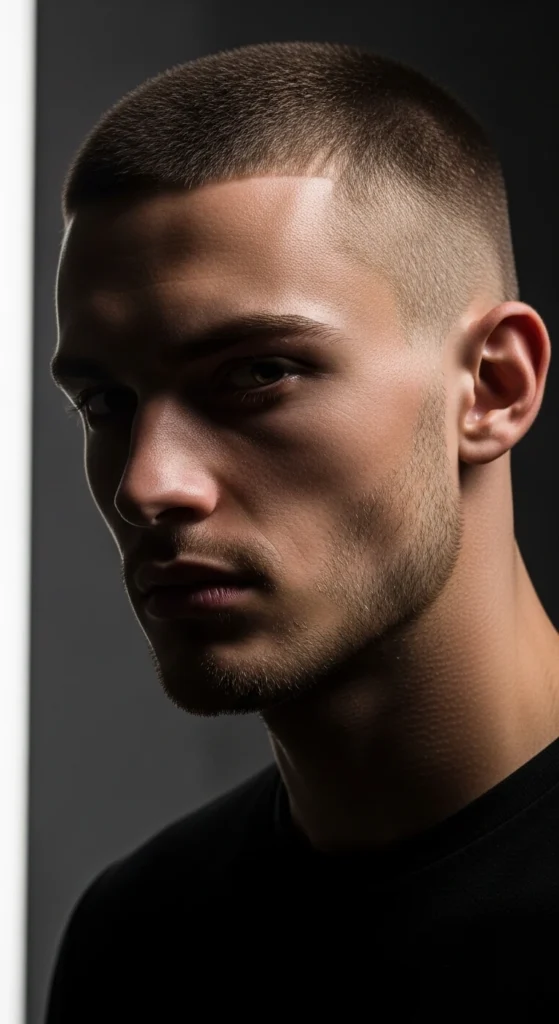
This is the shortest you can go before reaching for a razor. It uses no guard or a #0 guard, leaving just a shadow of hair.
- Oval Face Synergy: This cut puts 100% of the focus on your facial features and head shape. Since oval faces are symmetrical, this is a power move that exudes confidence.
- Barber Script: “Induction cut. Zero guard all over, skin fade on the sides.”
- Important Note: If you have never gone this short before, know that every mole, scar, and bump on your scalp will be visible. It is a bold, confident look.
4. The Crew Cut
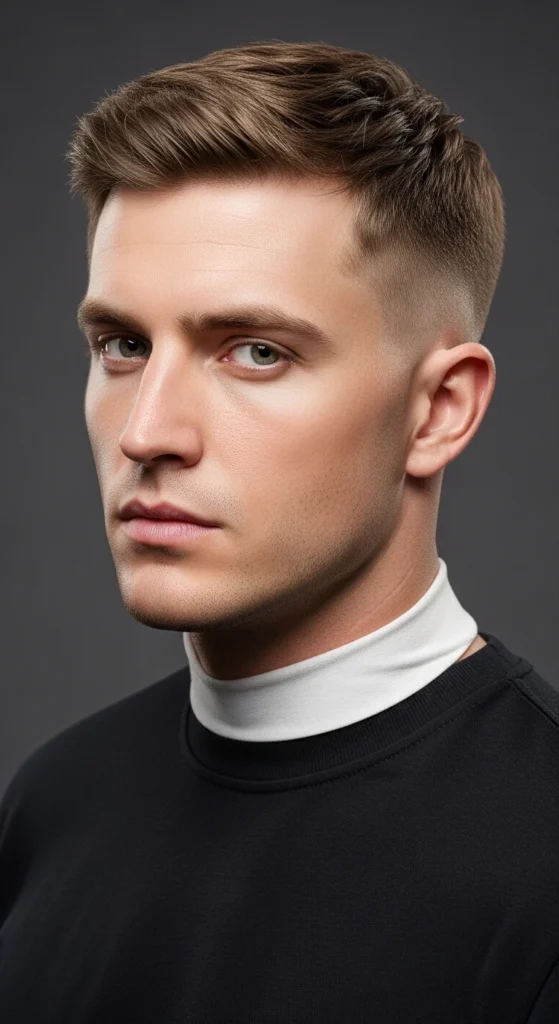
The crew cut is the Swiss Army knife of men’s hair. It is short on the sides and back, with slightly more length on top that tapers toward the front. It balances the forehead and jawline perfectly.
- Oval Face Synergy: The slight length on top adds just enough structure to frame your face without elongating it.
- Barber Script: “Classic crew cut. I want a #4 on top blended into a #2 on the sides. Keep the front slightly longer so I have something to work with.”
- Styling Tip: Apply a small amount of light clay to damp hair. Brush it forward and slightly up. The goal is neat, not messy.
5. The High and Tight
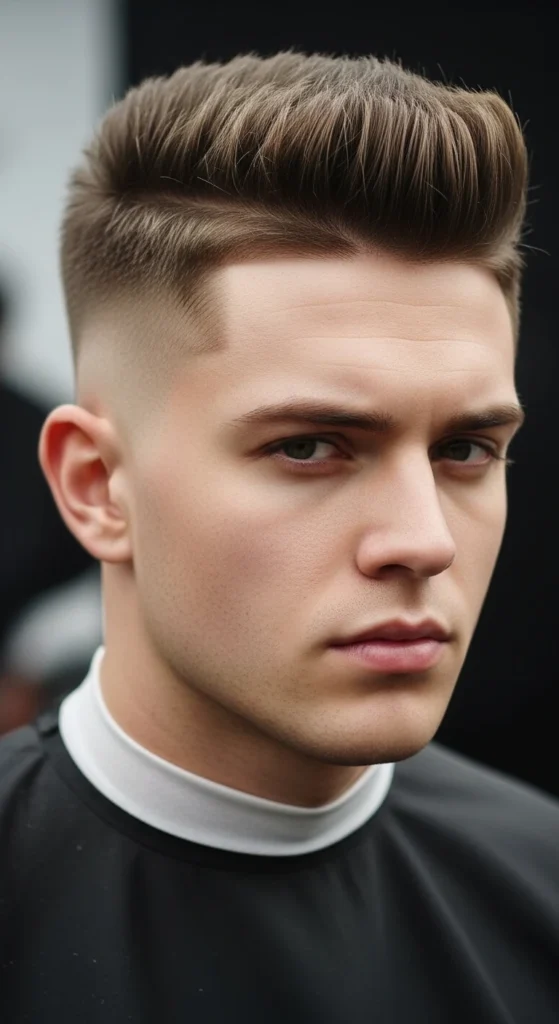
Made famous by the military, this cut features faded sides that go very high up the head, meeting a short, cropped top. The 2026 version is less severe, allowing for a bit more texture on top.
- Oval Face Synergy: This cut draws attention straight to the bone structure and eyes. It is sharp, disciplined, and makes your jaw look stronger.
- Barber Script: “High and tight, but modern. I want a high fade on the sides, but leave about an inch on top so I can add a little texture. Keep the blend smooth.”
- Styling Tip: Use a matte pomade on dry hair. Push the top up and slightly forward. You want it to look structured, not slicked flat.
6. The Short Caesar Cut
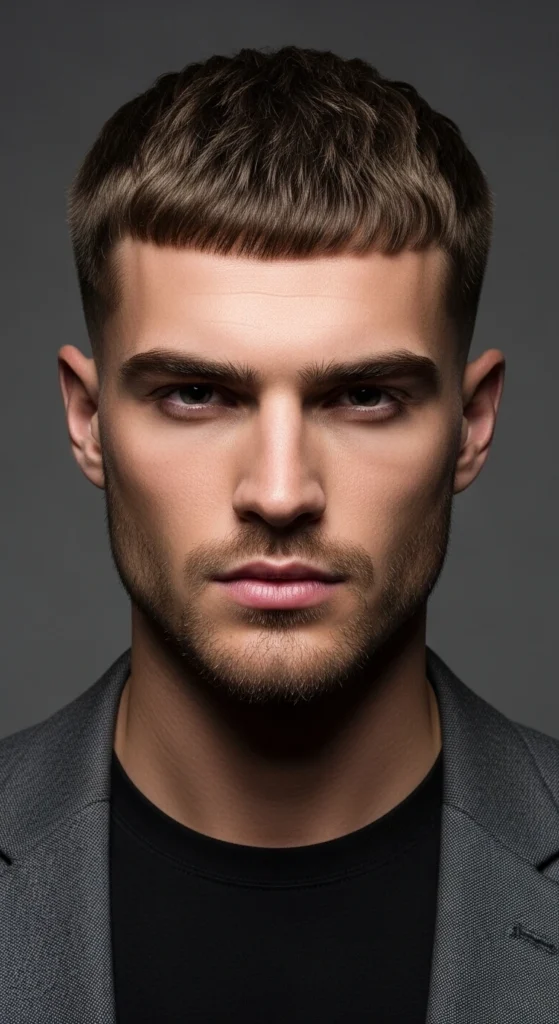
This classic cut features a short, horizontal fringe brushed forward. It is tidy, masculine, and has been cool since the Roman Empire.
- Oval Face Synergy: The Caesar cut is excellent for balancing a longer forehead or disguising a maturing hairline. The forward fringe creates a clean line that anchors the face.
- Barber Script: “Short Caesar cut. I want it textured on top, not a blunt bowl. Keep the fringe short, right at the hairline. Low taper on the sides.”
- Styling Tip: Work a small dab of styling cream through damp hair and comb it forward. Use your fingers to break up the fringe into small, piecey sections so it doesn’t look like a helmet.
7. The Shadow Fade Crop
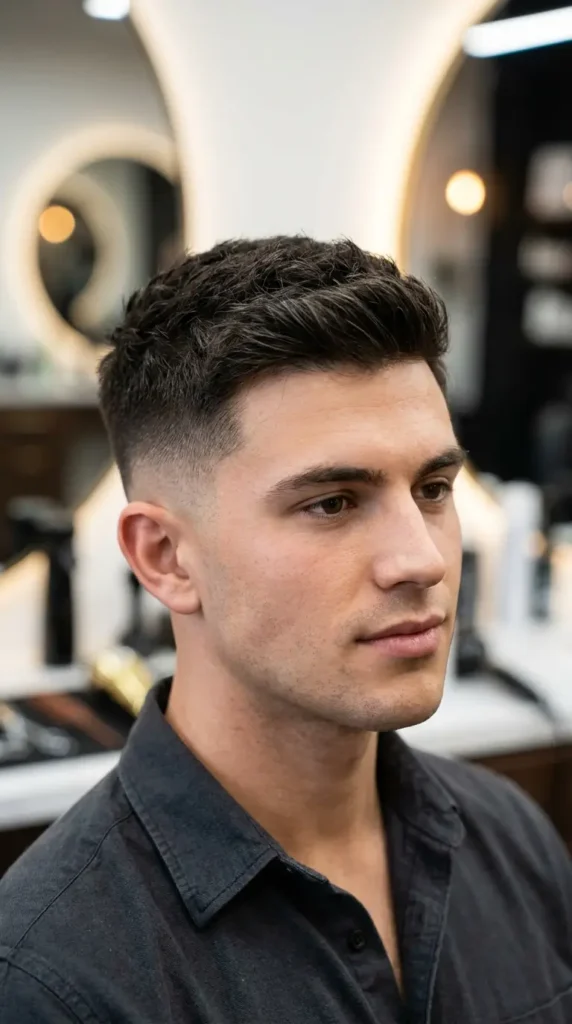
The shadow fade crop is the minimalist’s answer to wanting a modern edge without any effort. It uses a very subtle, blended fade that creates a soft “shadow” effect around the sides and back.
Oval Face Synergy: The gentle fade keeps the sides clean without adding harsh contrast, preserving the natural balance of an oval face perfectly.
Barber Script: “Shadow fade crop. I want a very soft, blended fade on the sides, nothing dramatic. Keep the top short, about an inch, with a little texture. The blend should look like a shadow, not a hard line.”
Styling Tip: Towel dry and go. If you want definition, rub a pea-sized amount of matte clay between your palms and lightly press it into the top. Done in 60 seconds.
Maintenance Level: Very Low (Touch up every 3 weeks).
8. The Short Taper Cut
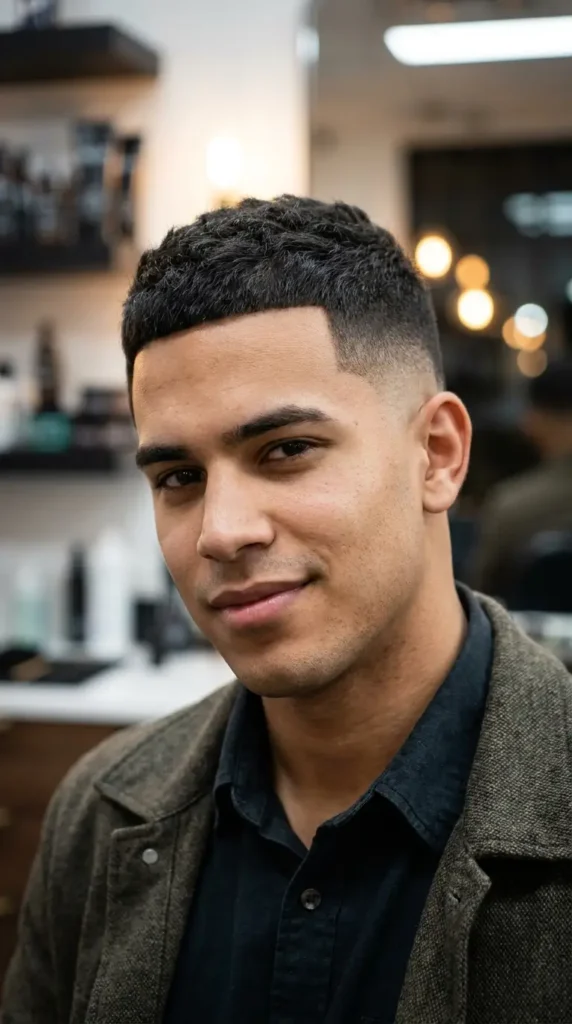
This is the quiet, understated classic that never goes out of style. Hair gradually shortens from top to sides with no dramatic fade, just a clean, natural taper that looks effortlessly groomed.
Oval Face Synergy: The soft taper follows the natural contour of the head, making an oval face look sharp and well-groomed without any aggressive styling.
Barber Script: “Short taper cut. Keep the top around a #4, and taper the sides and back naturally, no skin fade, just a clean gradual blend. I want it to look neat, not severe.”
Styling Tip: A light styling cream on damp hair is all you need. Comb or finger-comb into place and air dry. Zero effort, clean result.
Maintenance Level: Very Low (Touch up every 3-4 weeks).
9. The Butch Cut
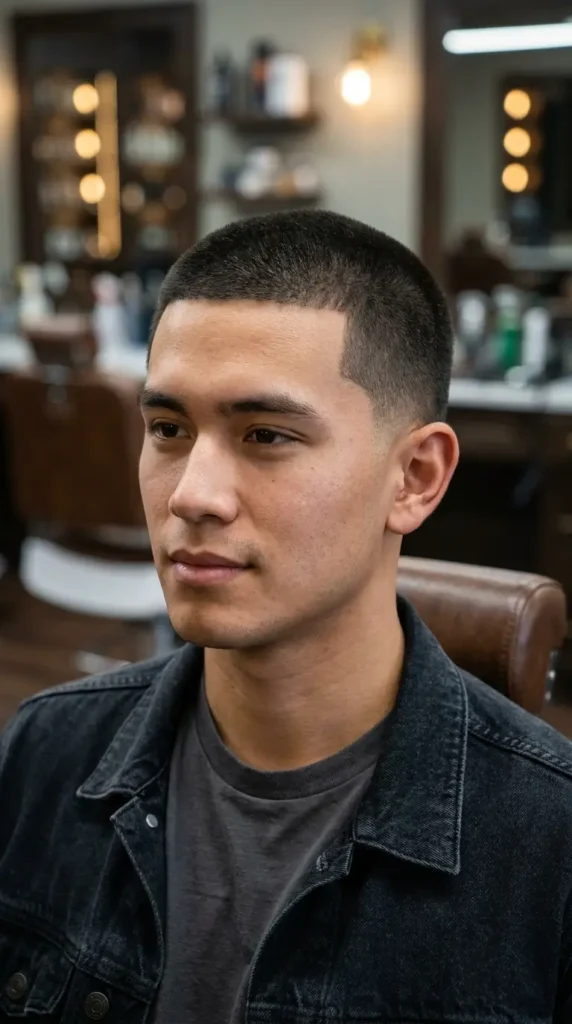
The butch cut sits between a buzz cut and a crew cut, uniform length all over but slightly longer than a buzz, giving the hair just enough presence to look intentional without requiring any styling.
Oval Face Synergy: Like the buzz cut, the butch cut fully exposes your balanced skull shape. The extra length softens the look slightly, making it ideal for men who find a full buzz too severe.
Forehead Consideration: The even length across the top creates a clean horizontal line that reduces the visual emphasis on forehead height.
Barber Script: “Butch cut. I want a #4 or #5 guard all over, with a slight taper at the neckline and around the ears. Keep the top even, not faded.”
Styling Tip: No styling required. A daily scalp moisturizer keeps the skin healthy and adds a subtle natural sheen that looks clean and fresh.
Maintenance Level: Very Low (Touch up every 2-3 weeks).
10. The Tapered Afro (Short)
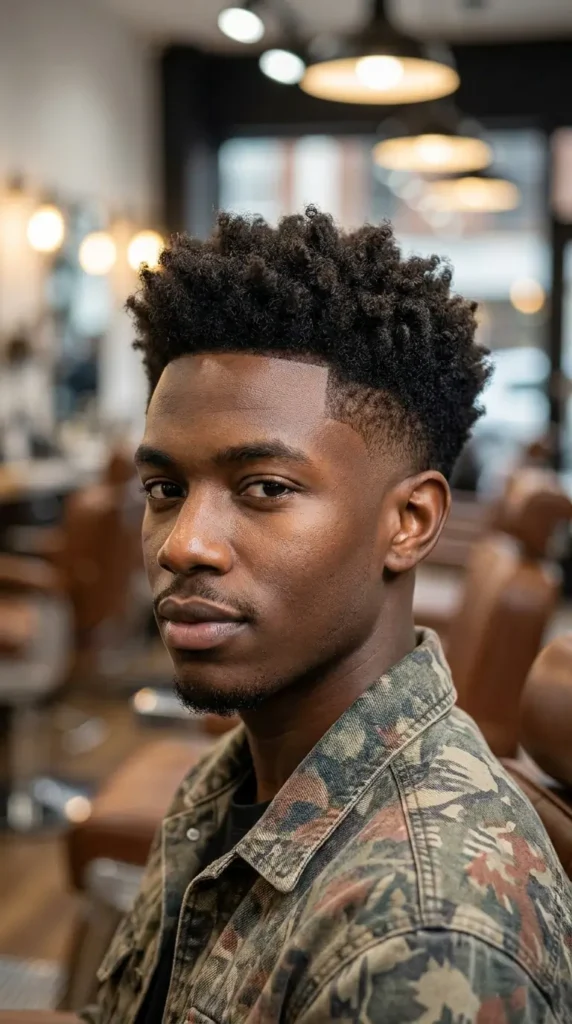
For men with naturally coily or curly hair, the short tapered afro is the ultimate minimalist cut. The hair is left in its natural texture on top while the sides are cleanly tapered close to the head.
Oval Face Synergy: The rounded shape of a short tapered afro mirrors and complements the soft curves of an oval face. The taper keeps the width proportional, preventing the style from adding too much horizontal volume.
Barber Script: “Short tapered afro. Keep the top natural, just shape it round and even. Taper the sides close, down to about a #1 at the bottom, blended naturally. Clean up the neckline and edges.”
Styling Tip: Apply a light curl-defining cream or moisturizing lotion to damp hair. Use your hands to scrunch and shape the natural curl pattern. Pick it out lightly once dry for volume.
Maintenance Level: Low (Shape up every 2-3 weeks, daily moisturizing recommended).
11. The Short Disconnected Cut
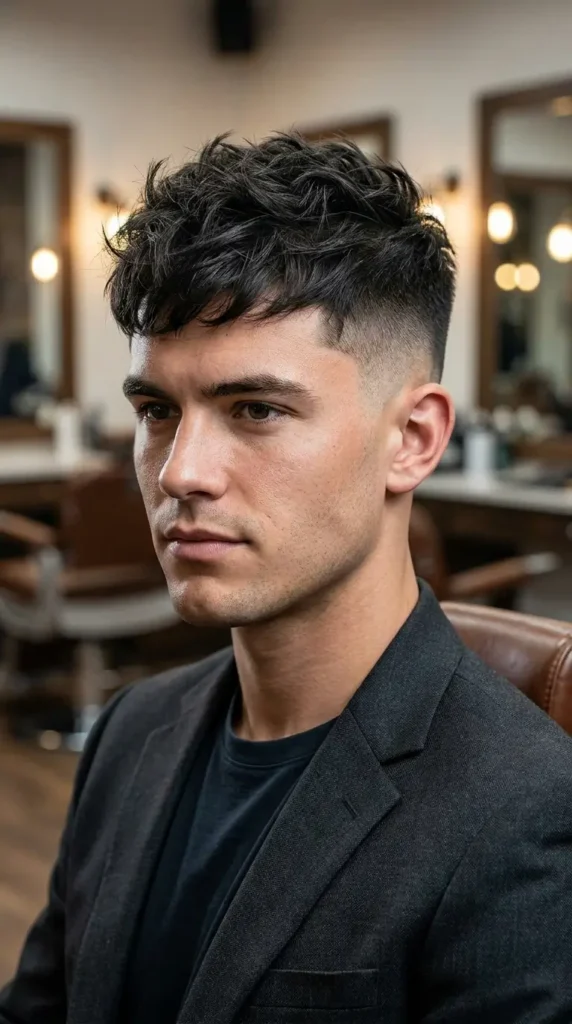
This is a modern minimalist cut where the top and sides are distinct but both kept very short, no blending, no fade. Just a clean, sharp line where the two lengths meet. Bold simplicity at its finest.
Oval Face Synergy: The sharp disconnected line adds a geometric structure that contrasts beautifully with the soft curves of an oval face. It looks intentional and confident without requiring any daily effort.
Barber Script: “Short disconnected cut. Keep the top at a #3 or #4, and cut the sides short at a #1, but don’t blend them. I want a clean, defined line where they meet. No fade.”
Styling Tip: The disconnect does all the work. Run a tiny bit of matte clay over the top on dry hair for a hint of texture. The sharp line speaks for itself.
Maintenance Level: Low-Medium (Touch up every 2-3 weeks to keep the disconnected line crisp).
12. The Ivy League Cut
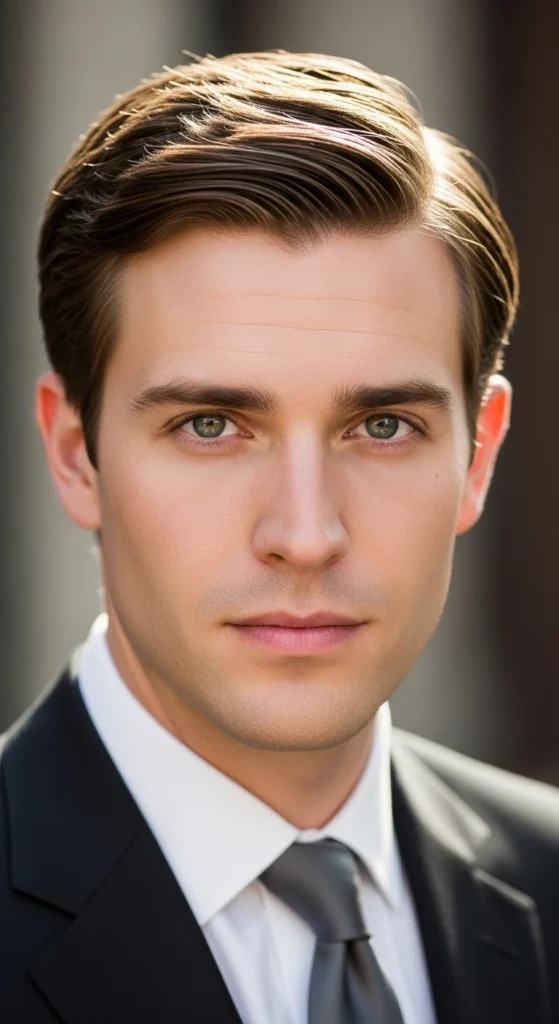
Also known as the Harvard or Princeton clip, this is the crew cut’s smarter older brother. The top is left long enough to part on the side and sweep over neatly. It transitions smoothly from formal to casual.
- Oval Face Synergy: The side part adds a structured line that enhances the natural symmetry of an oval face. It looks deliberate and well-groomed.
- Barber Script: “Ivy League cut. Leave enough length on top to part it to the side. Taper the sides and back, not a fade. Keep it professional.”
- Styling Tip: Apply a light pomade to damp hair. Create a clean side part with a fine-tooth comb and sweep the top over. You can wear it neat or loosen it up with your fingers for a more modern feel.
13. The Side Part Fade
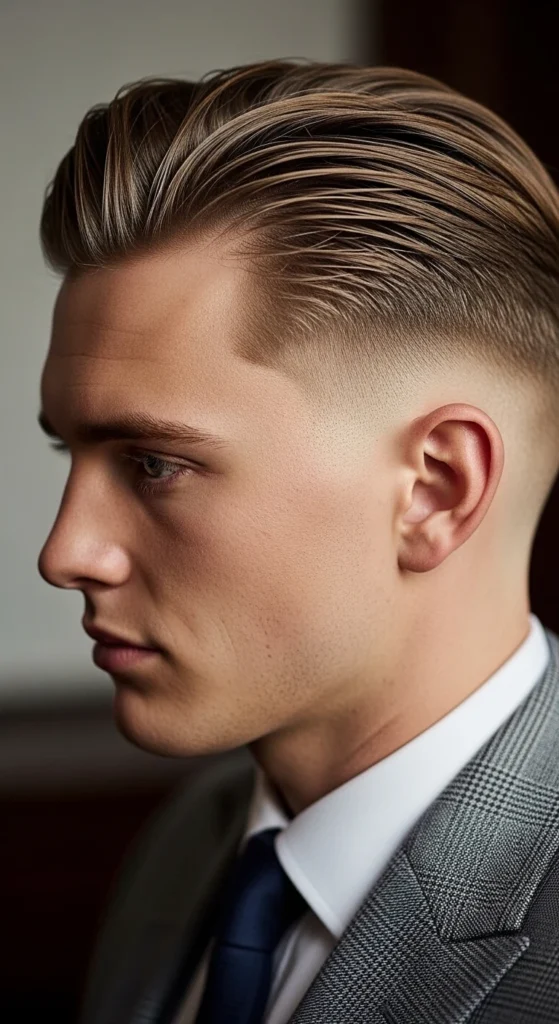
This is the modern evolution of the classic business cut. It combines the clean structure of a side part with the fresh contrast of a fade on the sides.
- Oval Face Synergy: The fade keeps the sides tight, which prevents the face from looking too wide, while the side part adds definition and height.
- Barber Script: “I want a side part with a mid fade. Keep the top long enough to comb over, about two to three inches. Blend the fade smoothly into the part.”
- Styling Tip: This is where a good pomade shines. Work it through damp hair and comb into place. The part should be crisp, and the hair should have a healthy, natural sheen.
14. The Short Comb Over
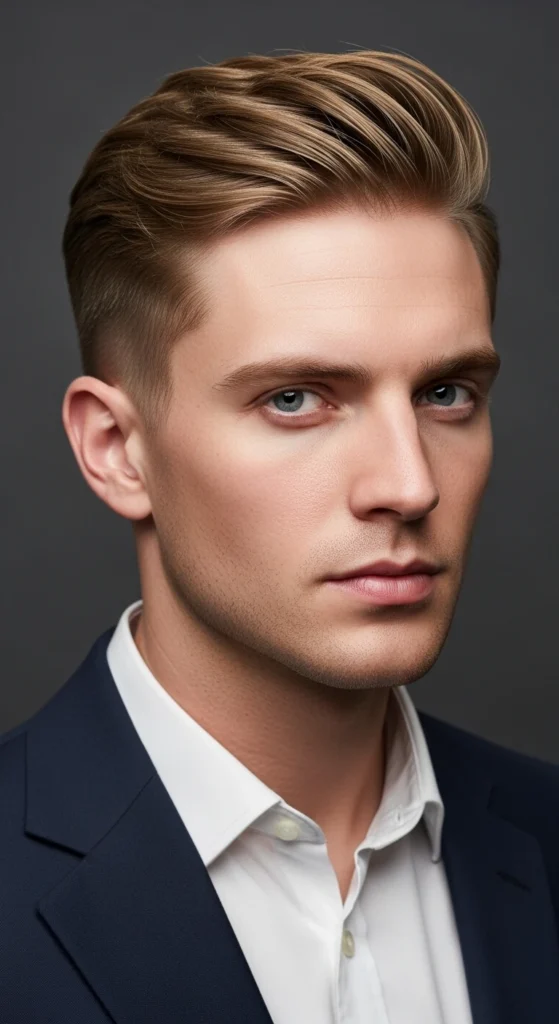
Don’t let the name fool you. This isn’t about hiding bald spots. The modern comb over is a stylish, textured sweep of hair from one side to the other. It is a refined look that works for all ages.
- Oval Face Synergy: The horizontal movement of the hair adds width to the upper portion of the face, creating a very masculine, proportional silhouette.
- Barber Script: “Short comb over with a low fade. I want the top textured so it doesn’t look stiff. The sweep should look natural, not glued down.”
- Styling Tip: Blow-dry hair in the direction you want it to sweep using a round brush for volume. Finish with a light cream or matte clay to hold the shape without stiffness.
15. The Short Slick Back
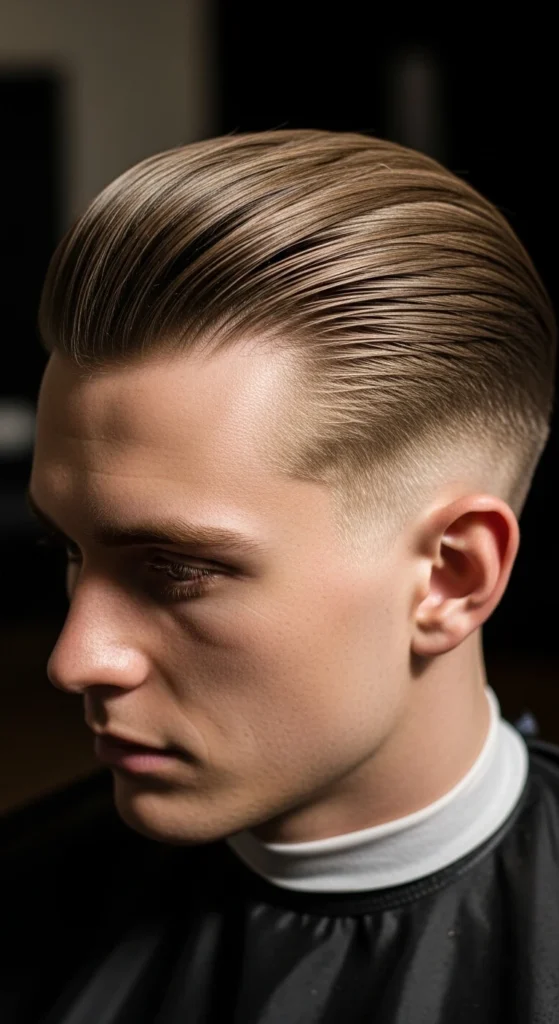
This is the epitome of cool confidence. It takes the hair off the forehead and directs it straight back. It is sleek, classic, and undeniably masculine.
- Oval Face Synergy: This style highlights the entire face. Because an oval face is balanced, you can pull off this “open” look without appearing harsh or severe.
- Barber Script: “Short slick back. I want a low to mid taper on the sides, with the top left long enough to push back, around three inches. Keep the transition blended.”
- Styling Tip: Apply a medium-hold pomade to damp hair and comb it straight back. For a more modern, relaxed version (often called a “loose slick back”), use a matte clay and push it back with your fingers instead of a comb, allowing some natural separation.
16. The Textured Crop (French Crop)
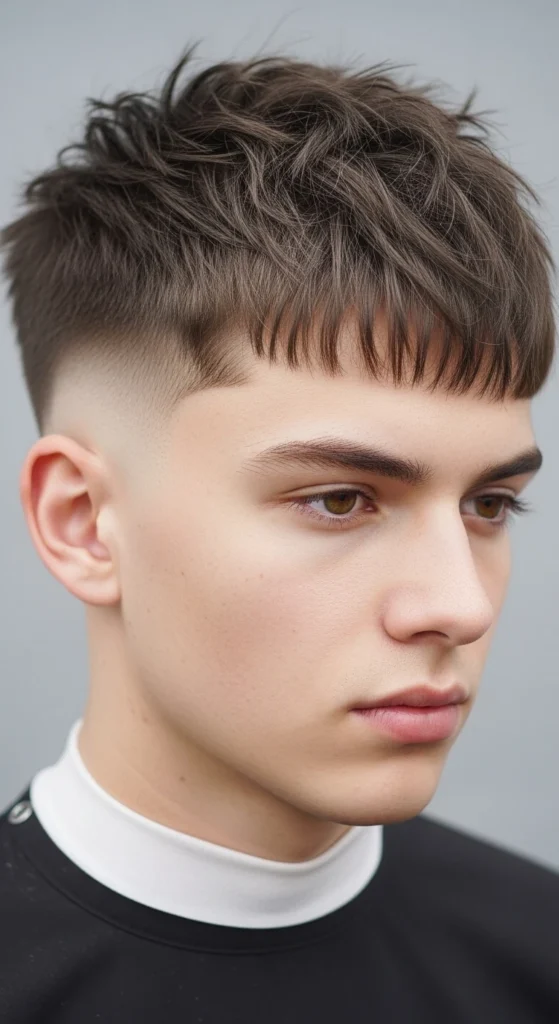
This is arguably the most popular men’s haircut of the decade, and it is not slowing down. It features short, faded sides with a choppy, layered top that is styled forward. It hides cowlicks and thinning better than almost any other short style.
- Oval Face Synergy: The short fringe helps balance a longer forehead, while the texture on top adds width and density, enhancing the face’s natural proportions.
- Barber Script: “Textured crop. I want a mid fade on the sides, with a choppy, layered top that falls forward. Keep the fringe textured and jagged, not a straight line.”
- Styling Tip: This is the perfect cut for texture powder or sea salt spray. Apply to dry hair, then use your fingers to pinch and twist small sections of hair, creating a messy, piecey look.
17. The Messy Fringe
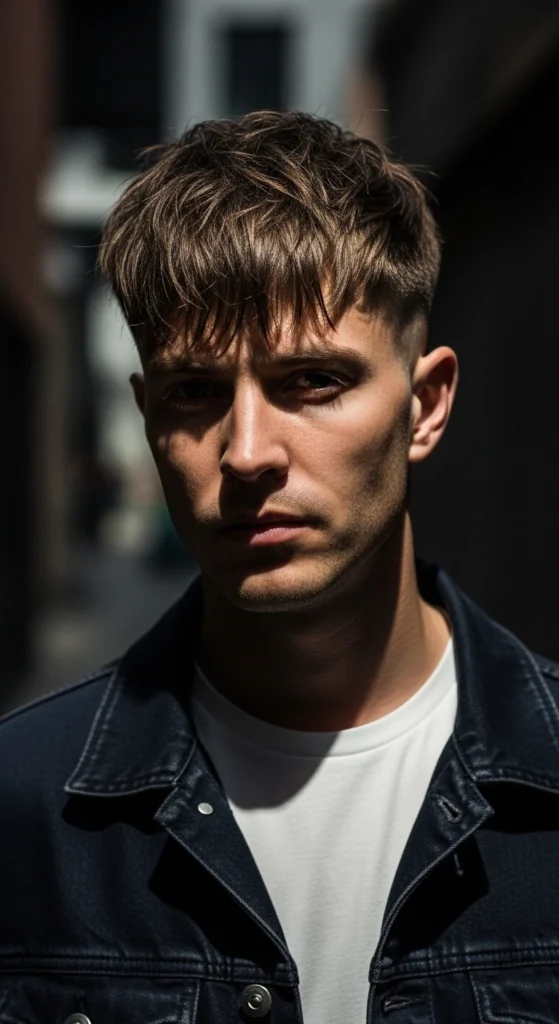
Similar to the textured crop, but with a longer, more relaxed fringe that can be swept to the side or worn down. It has a casual, “I just rolled out of bed and look this good” vibe.
- Oval Face Synergy: The fringe softens the forehead and draws attention to the eyes.
- Barber Script: “Messy fringe with a low fade. Keep the top long enough to move, about three inches, and cut it with lots of texture so I can wear it messy.”
- Styling Tip: Apply a matte clay or paste to damp hair. Blow-dry it forward using your fingers to create random movement. Once dry, add a tiny bit more product to define the ends.
18. The Brushed-Up Look
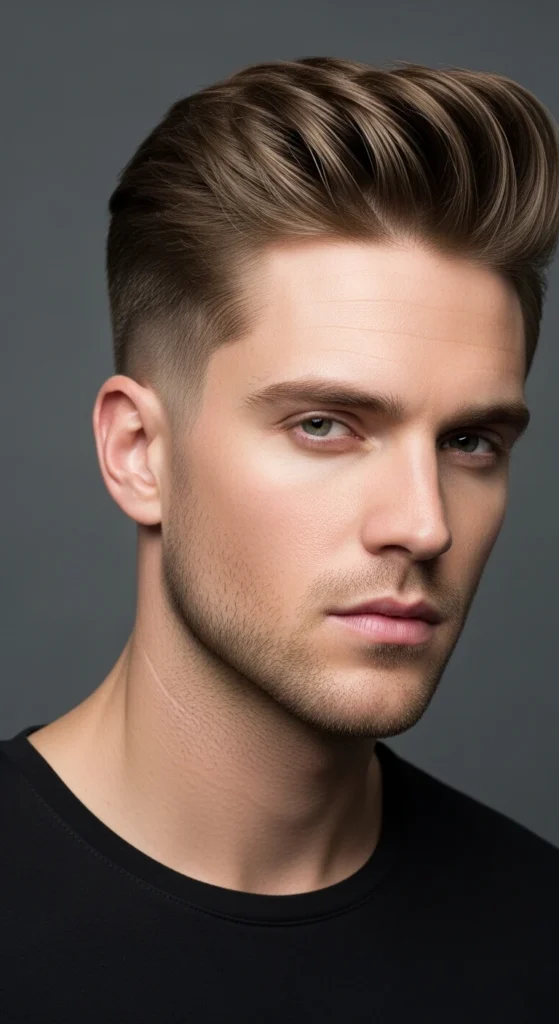
This style is all about lifting the hair up and slightly back from the forehead. It creates a nice vertical line that frames the face beautifully. It’s a relaxed addition for men seeking casual refinement.
- Oval Face Synergy: The vertical lift adds structure without adding bulk, which is ideal for keeping the face’s natural balance in check.
- Barber Script: “I want a style that brushes up and back. Keep the sides short with a fade, and leave about two to three inches on top, cut with texture so it doesn’t just flop over.”
- Styling Tip: Use a hairdryer and a vented brush to push the hair up and back from the roots. Finish with a matte styling cream to keep it in place without looking wet or stiff.
19. The Short Quiff
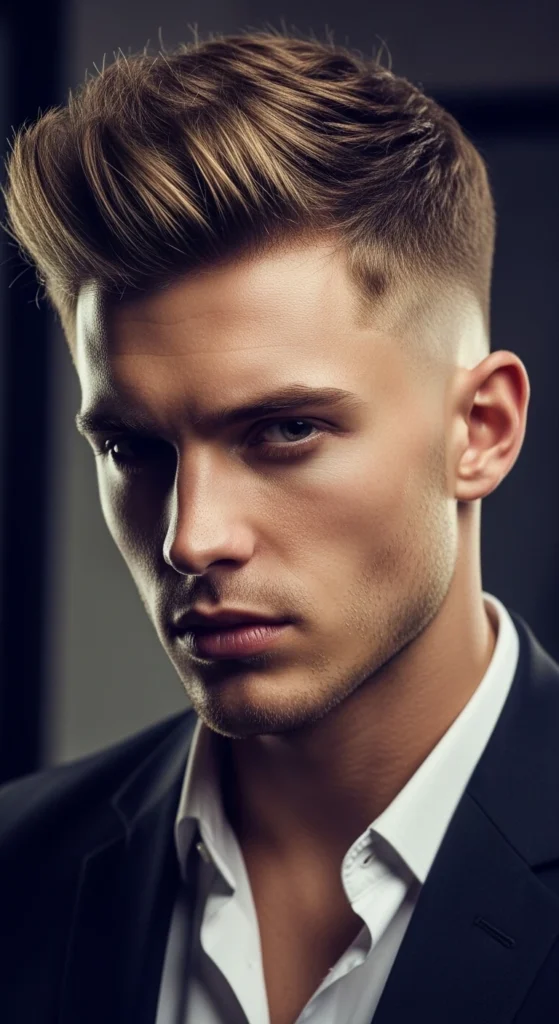
The quiff is the pompadour’s more casual, modern cousin. It features volume at the front that is styled up and back, but with a messier, more textured finish.
- Oval Face Synergy: The lift at the front adds a stylish focal point that complements the balanced proportions of an oval face.
- Barber Script: “Short quiff. I want a low or mid fade on the sides, with enough length on top to get some height in the front. Make sure the top is heavily textured.”
- Styling Tip: Blow-dry the front section of your hair straight up and slightly back using a round brush. This creates the volume. Then, use a matte clay to piece it out and give it that messy, defined look.
20. The Short Pompadour
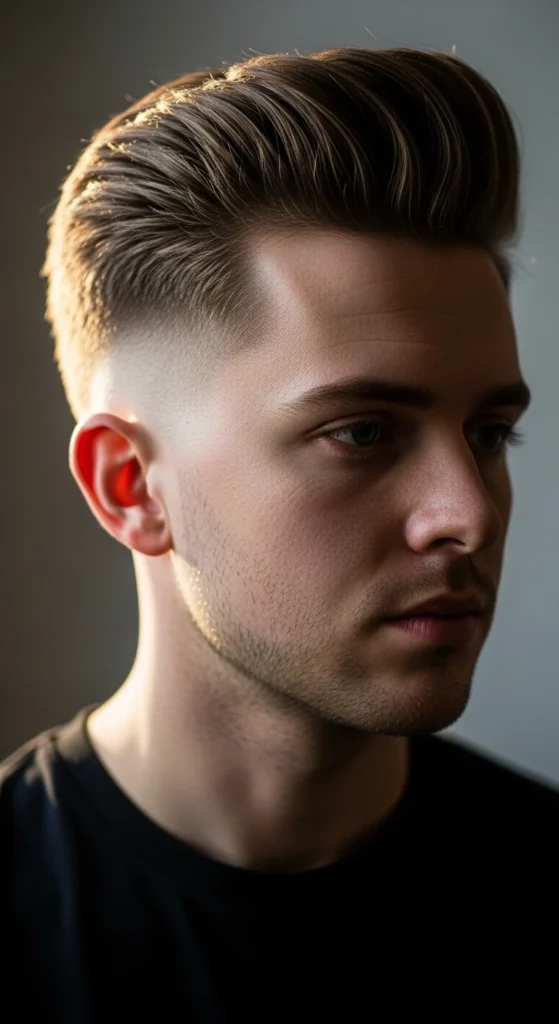
The pompadour is a classic for a reason. It is elegant, stylish, and adds a touch of old-school Hollywood glamour. The key for an oval face is to keep the sides tight and the height moderate.
- Oval Face Synergy: Adds gentle height without elongating the face. The tapered sides keep the proportion perfect.
- Barber Script: “Short, modern pompadour. I want a skin fade or high fade on the sides, with volume on top that I can sweep up and back. Don’t leave it so long that it flops over.”
- Styling Tip: Apply a volumizing mousse to damp hair. Blow-dry the top section straight up and back with a large round brush. Finish with a medium-hold pomade for a classic sheen or a matte clay for a more contemporary finish.
21. The Flat Top
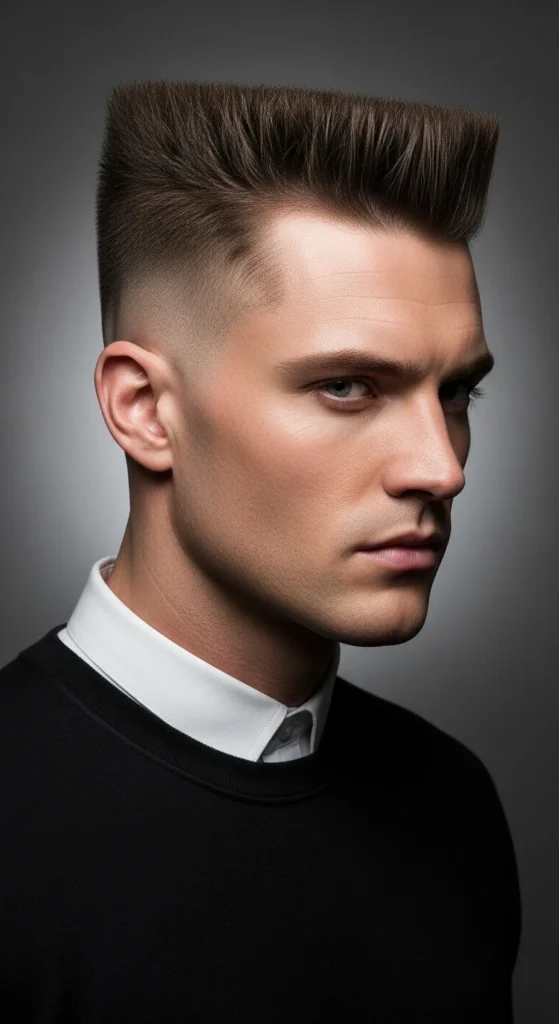
This is a structured, architectural cut where the hair on top is styled to stand upright and is cut perfectly flat. It is a bold, distinctive choice that exudes confidence.
- Oval Face Synergy: The square, upright shape adds a strong, angular contrast to the soft curves of an oval face. It works best for men with thick or coarse hair.
- Barber Script: “Flat top. I want the sides high and tight, and the top cut level and flat. Keep the corners sharp.”
- Important Note: This is a high-maintenance cut that requires a skilled barber and regular trims (every 2 weeks) to keep its shape.
22. The Mini Faux Hawk
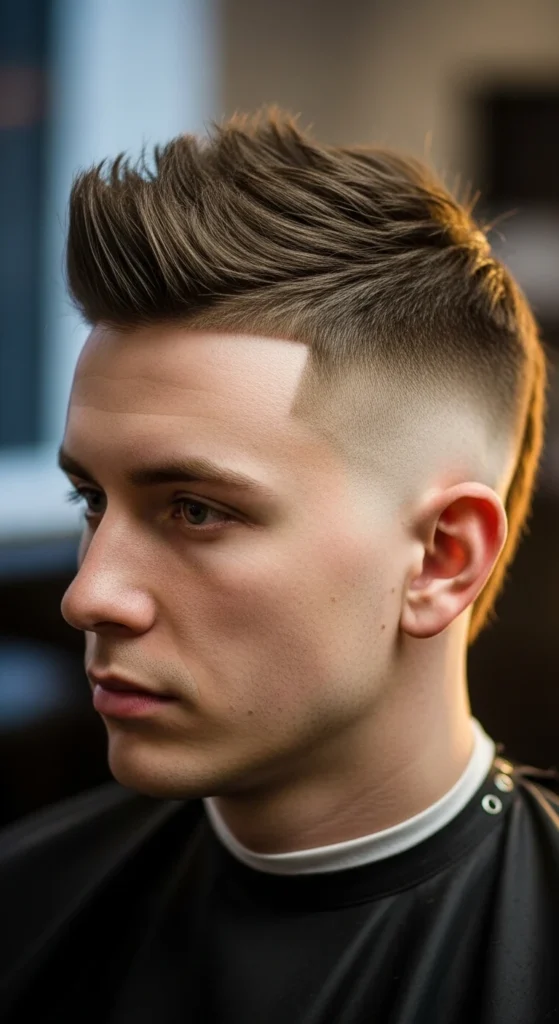
For men who want a subtle edge without going full punk rock, the mini faux hawk is the answer. It features a slightly longer strip of hair down the center of the head that tapers off toward the back, with faded sides.
- Oval Face Synergy: The central ridge creates a vertical line that adds height without making the face look long, thanks to the contrast with the short, faded sides.
- Barber Script: “Mini faux hawk. I want a mid or high fade on the sides, with the top left longer in the middle. Keep it subtle, not too extreme.”
- Styling Tip: Use a strong-hold clay or paste. Work it through dry hair and pinch the center section upward to create the “hawk” shape. The key is to keep it textured and piecey, not spiky and stiff.
23. The Undercut
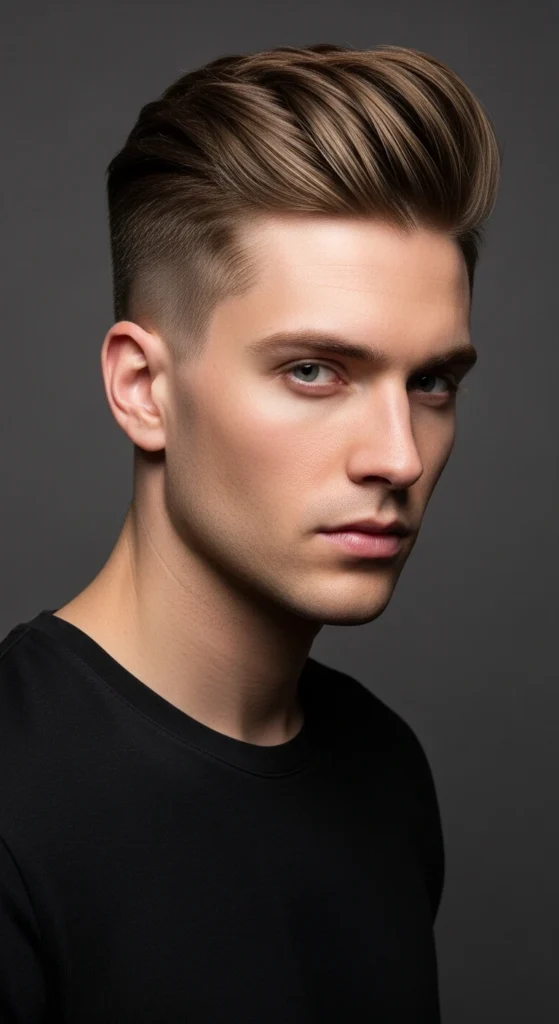
The undercut is defined by a stark contrast: very short or shaved sides with a much longer top. It’s a bold, modern look that puts all the focus on the style of the top.
- Oval Face Synergy: The sharp contrast highlights the symmetry of an oval face and allows for a wide variety of styling options on top, from slicking it back to creating a messy, textured pomp.
- Barber Script: “Undercut. I want the sides disconnected, meaning no blend. Shave them to a #1 or #2, and leave the top long, about four to five inches. Keep the line clean where they meet.”
- Styling Tip: Your product choice depends entirely on what you do with the top. Pomade for slicking back, clay for a messy pomp, or even just a cream for a natural, swept-over look.
24. The Taper Fade
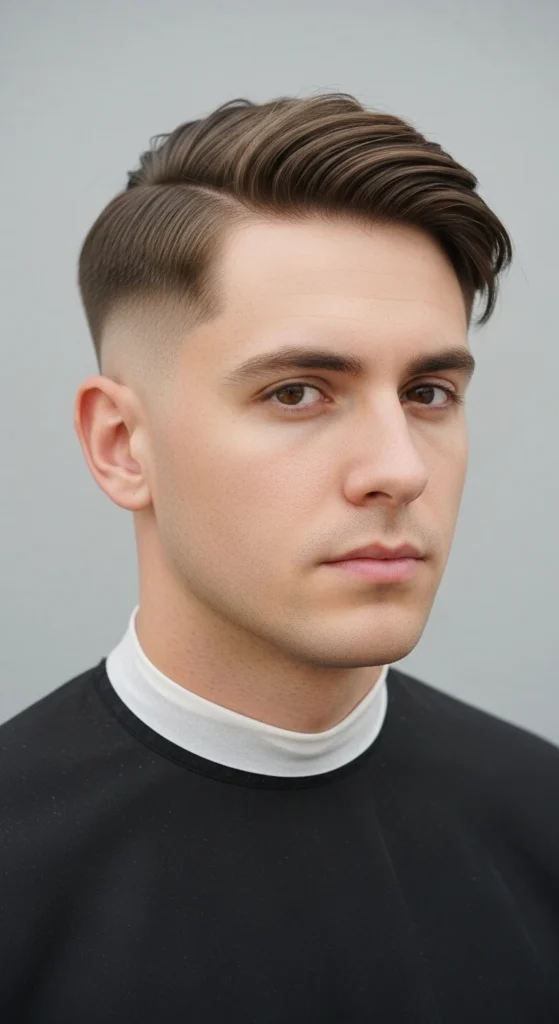
This is the “safe” fade. It is clean, professional, and subtle. The hair gradually shortens but doesn’t disappear. It softens angles and delivers a sleek, contemporary finish.
- Oval Face Synergy: Keeps the face visually balanced without creating a harsh contrast.
- Barber Script: “Classic taper. Keep it neat around the ears and neck.”
25. The Low Taper Fade
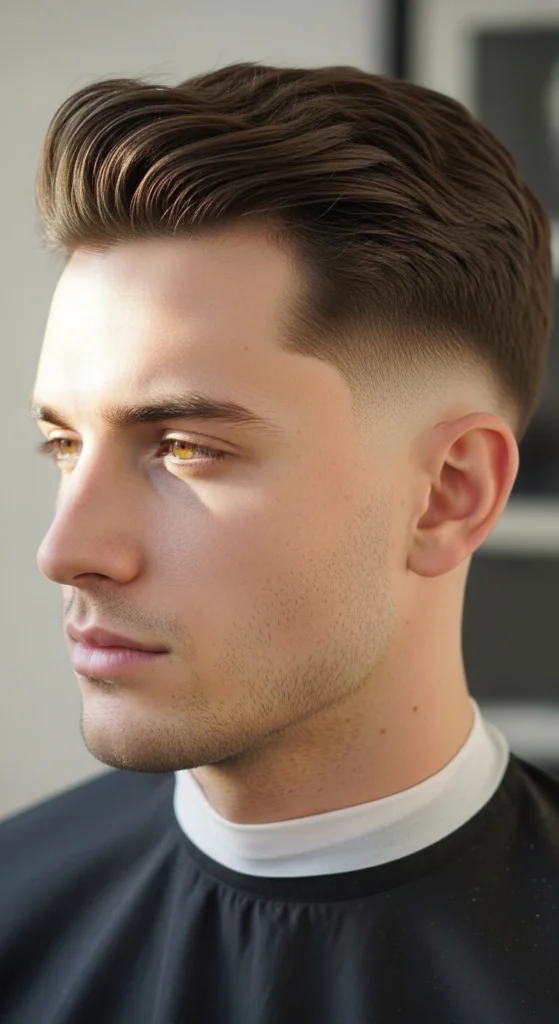
The fade begins just above the ear and curves down around the back. It’s a subtle, clean look perfect for professional settings. The precision in the hairline complements facial symmetry perfectly.
- Oval Face Synergy: Maintains a natural head shape while cleaning up the edges. It’s one of the neatest short haircuts for oval faces male.
- Barber Script: “Low taper fade. Start the blend right above my ears. Keep it soft and natural.”
26. The Mid Fade Crop
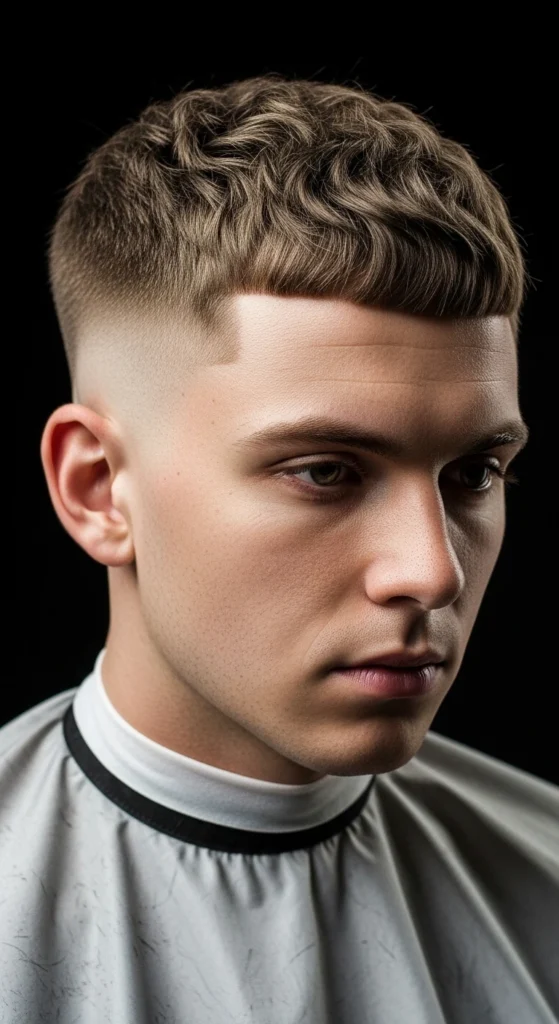
The fade starts halfway up the head, around the temples. This is the most popular and versatile fade. It’s modern without being extreme.
- Oval Face Synergy: Creates a balanced contrast that frames the face nicely. A favorite that combines modern styling with practical grooming.
- Barber Script: “Mid fade crop. Fade starting at the temples. Textured top.”
27. The High Fade with Textured Top
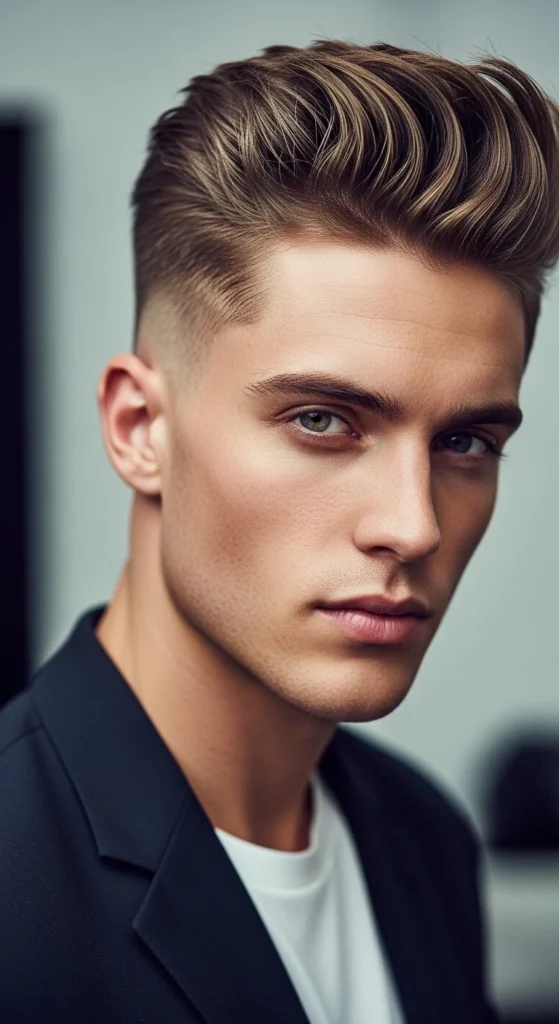
The fade starts high, near the parietal ridge (the curve of your head), creating a bold, high-contrast look. It’s a standout that offers depth and shape.
- Oval Face Synergy: Pairs perfectly with thick hair and adds a sharp, edgy dimension to an otherwise balanced face.
- Barber Script: “High fade. Take it up to the temples. Keep the top long enough to style with texture.”
28. The Skin Fade (The Razor Fade)
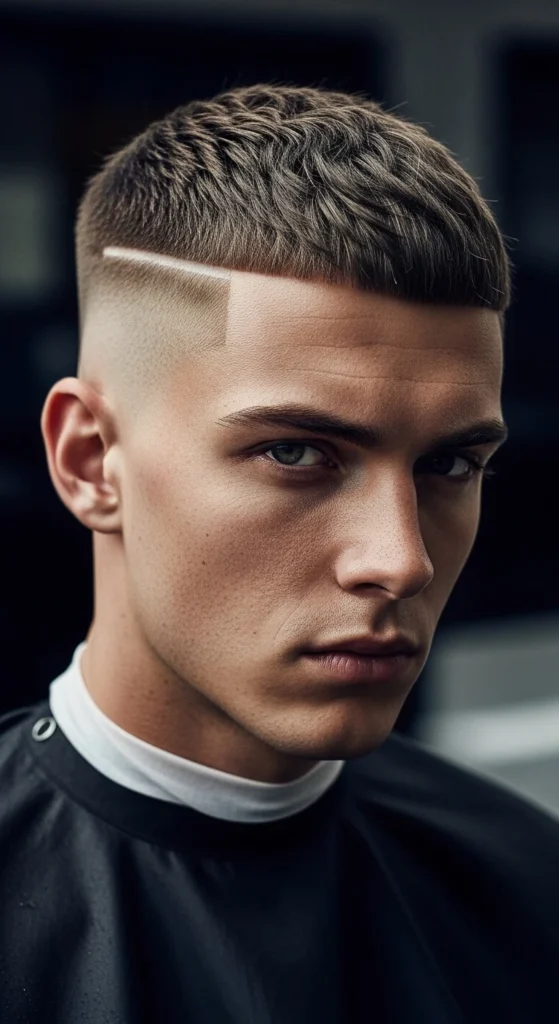
This is the boldest fade. The hair is shaved down to the skin using a foil shaver or straight razor. It creates a sharp, clean, and highly defined look that is a favorite for men who want a modern, edgy aesthetic.
- Oval Face Synergy: The skin fade sharpens the overall shape and emphasizes the jawline. It requires maintenance every 2-3 weeks to keep the contrast looking fresh.
- Barber Script: “Skin fade. I want it bald at the bottom, blended up. Keep the line sharp.”
29. The Modern Mullet
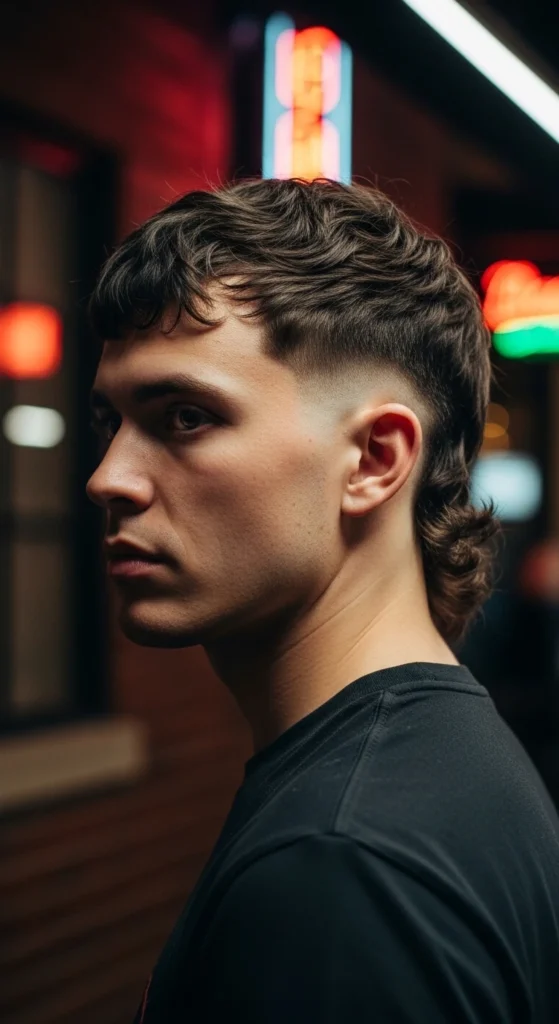
The mullet is back, but it’s more refined. The modern version is less “business in the front, party in the back” and more “textured and stylish all around.” The short top and sides flatter an oval face.
- Barber Script: “Modern mullet. I want a textured crop on top and faded sides, with the back left longer, down to my neck. Keep the blend seamless, not disconnected.”
30. The Modern Wolf Cut
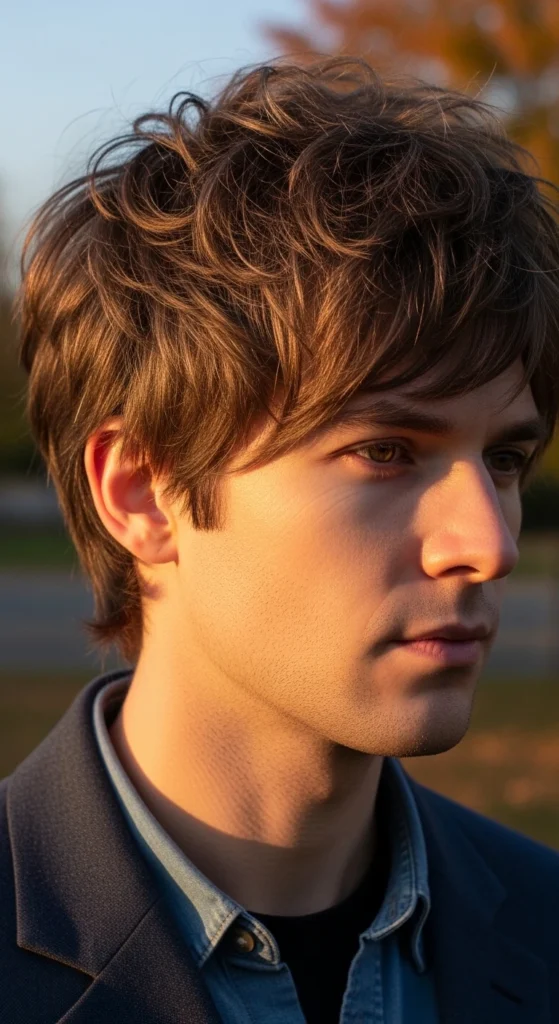
A cousin to the mullet, the wolf cut features shaggy, layered volume on top and at the crown that tapers into a more streamlined shape. The shorter sides balance the roundness of an oval face.
- Barber Script: “Wolf cut. I want lots of choppy, shaggy layers on top and around the crown, with the sides and back shorter and more fitted. Think ‘messy and textured’.”
31. The Man Bun with Short Sides
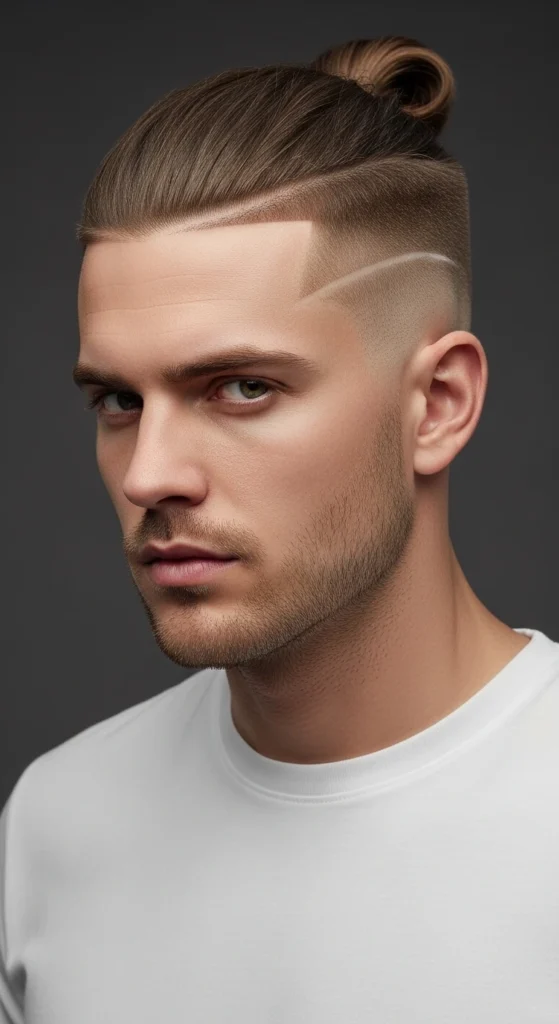
For men with longer hair on top, pairing a man bun with a fade or undercut keeps the look modern and structured. It prevents the style from overwhelming an oval face.
- Barber Script: “Man bun with an undercut. I’m growing the top out to tie it back, so I need the sides faded tight. Keep the line clean.”
Do You Actually Have an Oval Face? (The 2-Minute Verification)
Before we dive into the haircuts, let’s make sure we are working with the right canvas. Many guys think they have an oval face when they actually have an oblong or rectangle face. The haircut advice changes dramatically based on this distinction.
The Quick Measurement Method
Grab a soft tape measure and stand in front of a mirror. You are going to measure four key points:
- Forehead Width: Measure across the widest part of your forehead, usually halfway between your eyebrows and hairline.
- Cheekbone Width: Measure across the highest point of your cheekbones, right below the outer corner of each eye.
- Jawline Width: Measure from the tip of your chin to the angle of your jaw, then double that number.
- Face Length: Measure from the center of your hairline down to the tip of your chin.
The Oval Face Checklist
You likely have an oval face if:
- Your face length is the largest measurement, and it is roughly one and a half times the width of your cheekbones.
- Your forehead measurement is slightly wider than your jawline measurement.
- Your jawline is softly curved, not sharp or angular like a square face.
Crucial Distinction: Oval vs. Oblong
This is a detail most guides miss. An oblong face is noticeably longer than it is wide, with a longer forehead and a more pronounced chin. If your face length is significantly more than 1.5x your width, you lean oblong. For oblong faces, you want to avoid adding too much height on top. Keep reading. We will note which cuts to approach with caution if you are on the longer side.
3 Short Styles to Approach with Caution (If You Have an Oval Face)
This is the section that builds trust and shows we understand the boundaries of the topic. Even with a versatile face shape, some choices can disrupt your natural balance.
1. Heavy, Blunt Bangs (The “Bowl Cut” Effect)
- Why Caution: A thick, straight-across fringe cuts your face in half horizontally. It hides your forehead and makes an oval face look shorter and rounder than it actually is. It also looks juvenile and dated.
- Alternative: Opt for a textured, choppy fringe (like the Textured Crop) or an angled, side-swept fringe instead.
2. Excessive Width at the Sides
- Why Caution: An oval face is all about vertical balance. Adding extreme volume or leaving the sides very long and bulky (think a 1970s afro or a grown-out shag without shape) adds horizontal width that disrupts this harmony.
- Alternative: Keep sides neat with a taper or fade. This maintains the clean, elongated silhouette that flatters your face.
3. The Ultra-Wet, Shellacked Slick Back (With a Receding Hairline)
- Why Caution: If you have a mature hairline, slicking your hair straight back with a high-shine, stiff gel acts like a spotlight on your temples. It highlights thinning areas and creates a harsh, severe look.
- Alternative: Use a matte clay for a textured, messy look that sweeps hair forward or to the side. Texture diffuses light and conceals density issues far better than a shiny, glued-down style.
Barber Script: How to Ask for These Cuts (And Actually Get Them)
This is the number one reason guys leave the barbershop unhappy. They see a picture, they point, and they say, “Give me that.” But they don’t know the language to confirm the details. Here is your translator.
The Language of Length: Understanding Clipper Guard Numbers
A clipper guard is a plastic attachment that fits over the blade and determines how much hair is left. The number corresponds to eighths of an inch.
| Guard Number | Length (Inches) | Length (mm) | Visual Result |
|---|---|---|---|
| #0 | 1/16″ | 1.5 mm | Nearly bald, skin-close shadow |
| #1 | 1/8″ | 3 mm | Very short stubble, scalp visible |
| #2 | 1/4″ | 6 mm | Short, clean coverage |
| #3 | 3/8″ | 10 mm | Neat, classic short length |
| #4 | 1/2″ | 13 mm | Classic crew cut territory |
| #5 | 5/8″ | 16 mm | Medium-short with shape |
The Language of Blending: “Taper” vs. “Fade”
- Taper: “I want the hair to gradually get shorter toward my neck and ears, but I don’t want to see skin.” (Professional, subtle).
- Fade: “I want the hair to blend down to the skin.” (Modern, sharp).
The Language of Texture: “Point Cutting” vs. “Thinning Shears”
- Point Cutting: “Cut into the ends with the scissors pointing up to make it look choppy and piecey.”
- Thinning Shears: “Remove some of the bulk and weight from my thick hair so it lays flatter.”
Styling Arsenal: The Only 4 Products You Need (And How to Use Them)
Using the right product is 80% of the battle. Here is the simple guide to choosing yours based on your haircut.
| Product Type | Best For | Finish | The Vibe | How to Use |
|---|---|---|---|---|
| Matte Clay / Paste | Textured Crops, Quiffs, Messy Fringes | Natural, dry, touchable | “I woke up like this” | Rub between palms, work into dry hair for texture and separation. |
| Pomade | Side Parts, Slick Backs, Pompadours | Shine, sleek, controlled | “I mean business” | Apply to damp hair and comb into place. Use a light hold for flexibility, strong hold for all-day structure. |
| Sea Salt Spray | Adding volume and beachy texture to fine/thin hair | Matte, gritty | “I just got back from the beach” | Spritz onto damp hair, scrunch with your hands, and let it air dry or blow-dry for volume. Great as a pre-styler. |
| Styling Cream / Lotion | Caesar Cuts, Comb Overs, Brushed-Up styles | Natural, low shine, soft hold | “I’m polished, not stiff” | Work through damp hair to provide light control and reduce frizz while keeping hair pliable. |
Pro Tip: Always use a heat protectant spray before blow-drying. It’s like sunscreen for your hair, it prevents damage and keeps your hair looking healthy.
Maintenance and Grooming: Keeping That “Fresh Cut” Look
You got the perfect cut. Now, keep it looking sharp until your next appointment.
- Trim Cycle: Short cuts require maintenance every 3 to 4 weeks to keep fades looking crisp and shapes defined. A grown-out fade loses its impact quickly.
- The Neckline Trick: Clean up the stray hairs on the back of your neck with a detail trimmer between barber visits. It instantly makes your haircut look a week fresher.
- Washing Frequency: Men with thick or oily hair can wash daily or every other day. Men with fine or dry hair should wash 2-3 times a week to preserve natural oils.
How to Use This Guide: Pick Your Vibe
Scrolling through 30 haircuts can feel like scrolling through Netflix. You spend 45 minutes browsing and end up watching The Office again.
To fix that, we grouped these short haircuts for oval faces male into five distinct categories. Find the one that matches your lifestyle and personality.
- The Minimalist: You want to wake up, maybe run your hand through your hair, and walk out the door.
- The Professional: You need a sharp, office-ready look that commands respect without screaming for attention.
- The Texture King: You want that modern, effortless, “I woke up like this” look that does well on Instagram.
- The Bold and Voluminous: You like a little height and drama. You want a style with personality.
- The Fade Fundamentals: You want to understand the foundation of modern barbering so you can customize any cut.
Conclusion
Having an oval face is a true gift. It gives you the freedom to experiment with nearly any short hairstyle, from a disciplined buzz cut to a trendy textured crop. The key is not just picking a style from a picture, but understanding why it works for your specific face shape.
Whether you choose to highlight your symmetry with a clean crew cut, add edge with a skin fade, or embrace modern texture with a French crop, these 30+ short haircuts for oval faces male are guaranteed to give you a sharper, more confident look.
Save your top three favorites. Walk into your next barber appointment armed with the right terminology. And get ready for your best haircut yet.
FAQs
Q: Is short hair actually good for an oval face male?
A: Yes, absolutely. Short hair is excellent for oval faces because it enhances the face’s natural symmetry and highlights the jawline and cheekbones without hiding them behind long hair. Every cut in this guide, from a buzz cut to a textured crop, is designed to work with your natural proportions.
Q: What is the best short haircut for an oval face?
Top picks:
- Crew cut: clean and classic
- Textured quiff: adds style without bulk
- French crop: modern and sharp
- Buzz cut: works perfectly on oval faces
- Side part: looks very polished
Q: What is the #1 best short haircut for an oval face?
A: While personal preference matters, the Textured Crop with a Mid Fade is widely considered the most versatile and modern choice for 2026. It works for almost all hair types, ages, and style preferences. For men who prefer zero styling, the Buzz Cut or Butch Cut are equally strong choices.
Q: Is an oval face attractive?
Yes, it’s considered the most attractive and balanced face shape. High cheekbones, a slightly narrower jaw, and balanced width-to-length ratio make it universally appealing. Most modeling standards consider oval the ideal face shape.
Q: Is a barber cut good for an oval face?
Yes, a professionally barbered short cut is one of the best choices for an oval face, precisely because it lets a barber shape the sides and top with precision that DIY styling can’t match. Cuts like the crew cut, taper fade, and textured crop all depend on clean, deliberate blending, which is something only a barber with clippers and shears can execute properly. If you’re choosing between growing hair out and getting it professionally cut short, an oval face gets more visual benefit from the latter.
Q: What clipper guard should I ask for to get a classic short cut?
A: For a timeless, professional short cut that isn’t too severe, ask your barber for a #3 or #4 guard on top, faded down to a #1 or #2 on the sides. This keeps the look clean and sharp. For an even softer result, ask for a Short Taper Cut using a #4 on top with a natural taper, no skin fade needed.
Q: Can I pull off a buzz cut if I have an oval face and thick hair?
A: Yes. Men with oval faces are the ideal candidates for a buzz cut because the balanced shape of their skull is fully revealed. Thick hair actually makes a buzz cut look better because it provides dense, even coverage. If a full buzz feels too severe, try the Butch Cut, same ease, slightly more length.
Q: What to avoid with an oval face?
- Too much volume on sides: makes face look round
- Very long straight hair with no layers: can make face look longer
- Heavy blunt fringes: hides your best feature (forehead balance)
- Overly tight slicked-back styles: can make head look elongated
Q: Do oval faces look better with shorter or longer hair?
Honestly, both work, which is the advantage of an oval face. But short to medium hair tends to show off the face shape best. Long hair can sometimes make the face appear longer than it is, while short hair highlights the natural balance.
Q: How do I know if my face is truly oval?
A: Your face length should be roughly 1.5 times its width. Your forehead should be slightly wider than your jawline, and your jaw should have a soft, rounded curve rather than a sharp angle. See the “2-Minute Verification” section above for a full measurement guide. If your face is significantly longer than 1.5x its width, you may lean oblong, check the notes on cuts to approach with caution throughout this guide.
Q: How often should I trim a minimalist short cut to keep it looking sharp?
A: Most minimalist cuts need a touch-up every 2 to 4 weeks depending on the style. Buzz cuts and butch cuts need trimming every 2 to 3 weeks to maintain their shape. Taper cuts and shadow fades can go 3 to 4 weeks before looking overgrown. The Short Disconnected Cut needs the most frequent upkeep, every 2 weeks, to keep the defining line crisp and intentional.