
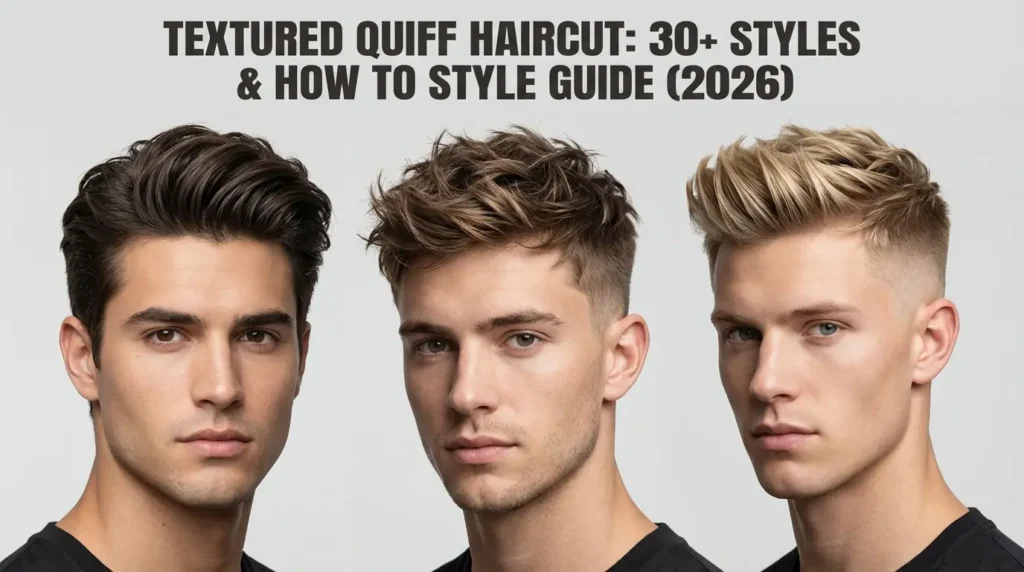
A textured quiff is one of those haircuts every barber gets asked for at least once a week, but very few clients actually know how to describe it. Short back and sides. Longer hair on top, brushed up and slightly back. The part that separates it from a plain old quiff is the finish: instead of that slicked, glassy look, the top is cut and styled to look broken up, “piecey,” almost undone. It sits somewhere between a pompadour and a textured crop: not as stiff as one, not as flat as the other.
Key Features of a Textured Quiff
- Volume at the front: The fringe does most of the work, lifted up and swept back.
- Texture & Separation: Strands should look defined, not glued together in one block.
- Matte Finish: Clay, paste, or powder, a shiny gel completely kills the look.
- Short Sides: A fade or taper gives the top something to contrast against.
30 Best Textured Quiff Haircut Styles (Choose Your Look)
We’ve grouped these by length, side finish, and hair type so you can land on the exact version that suits you.
Most Searched Variations (Core Styles)
1. Textured Quiff (Classic Modern)
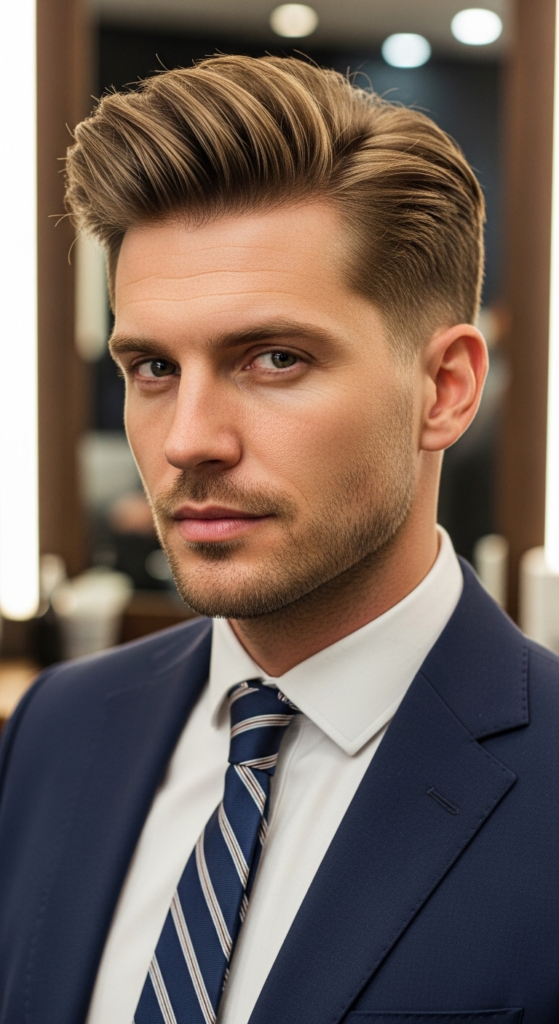
The one most guys picture when they hear “textured quiff.” Roughly 3 inches on top, tapered sides, finished with a matte clay. Nothing extreme about it, it just works, in an office or on a weekend.
2. Messy Textured Quiff
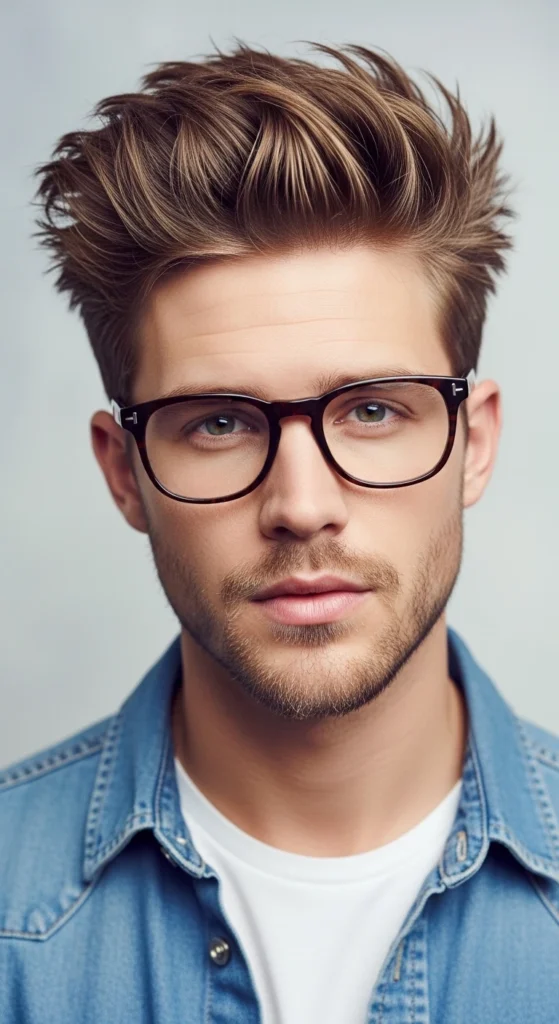
Choppier layers, a more tousled finish. This is the go-to for thick hair that needs weight taken out of it. Sea salt spray first, then texture powder for extra grip.
3. Short Textured Quiff
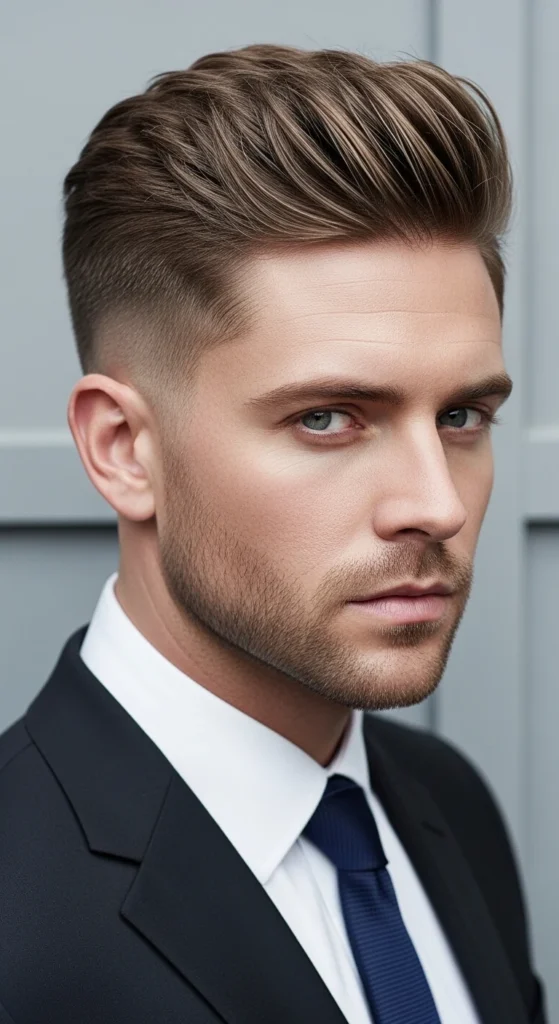
Kept around 1.5 to 2 inches on top, just enough to spike or lift at the front, short enough that you can style it in under a minute. Good pick if you’re always rushing out the door.
4. Medium Length Textured Quiff
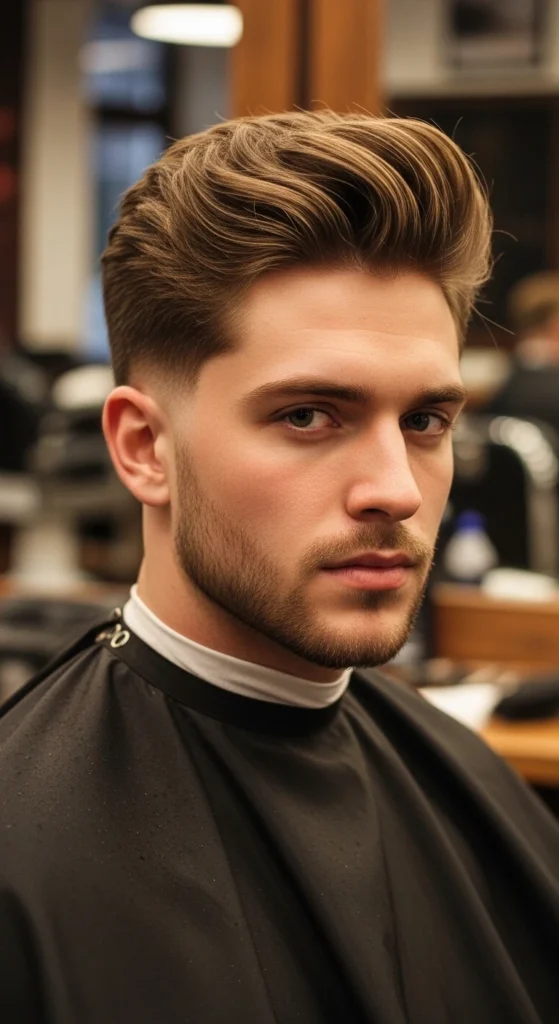
The sweet spot, 2.5 to 4 inches. Gives you real volume and flow, but you’ll need a blow-dryer most mornings to hold the height through the day.
5. Long Textured Quiff
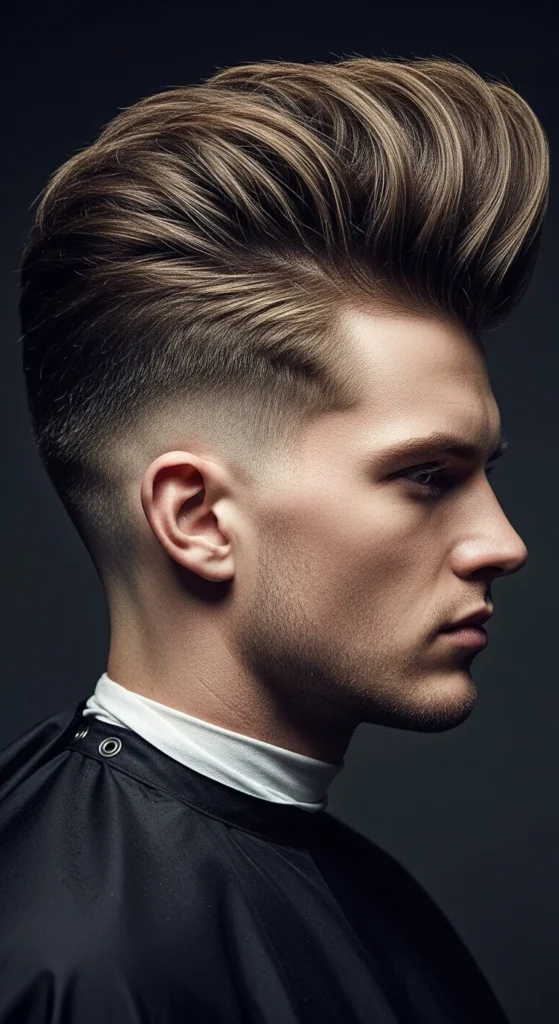
For guys who want the dramatic version, 4 to 5+ inches on top. It takes a strong-hold product and a bit of blow-drying skill, otherwise it flops by midday.
Fade & Side Options (High-Intent Cluster)
6. Textured Quiff with Low Fade
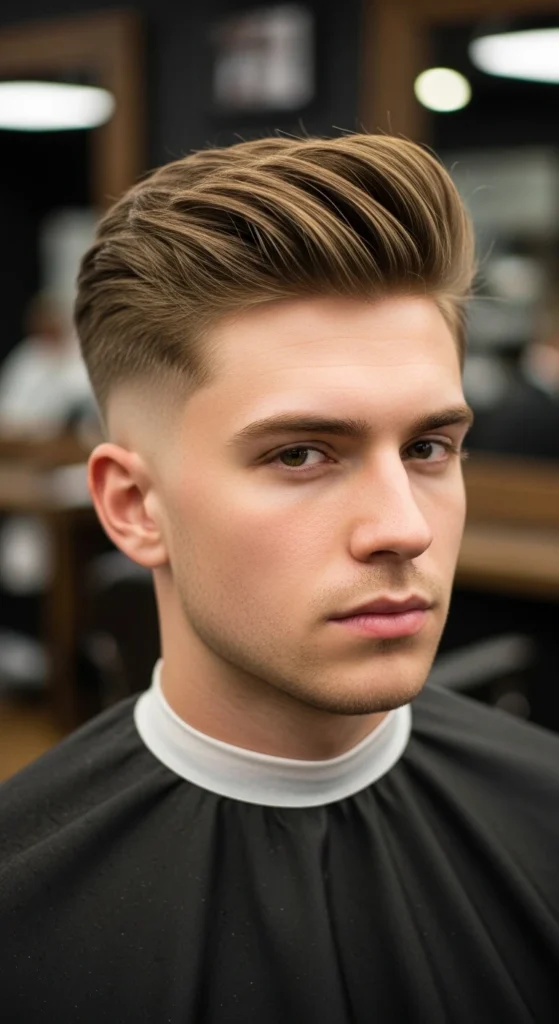
Fade starts just above the ears. Subtle, easy to wear at work, and the safest starting point if you’ve never had a fade before.
7. Textured Quiff with Mid Fade
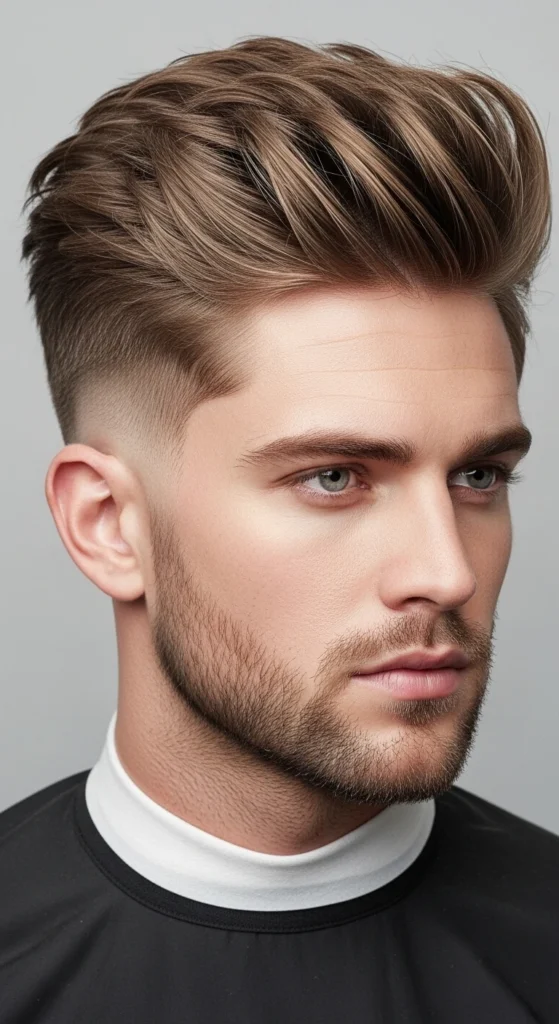
Fade begins around temple height. A good middle ground between “safe” and “statement,” this is the shape a lot of guys ask for after seeing Mason Mount.
8. Textured Quiff with High Fade
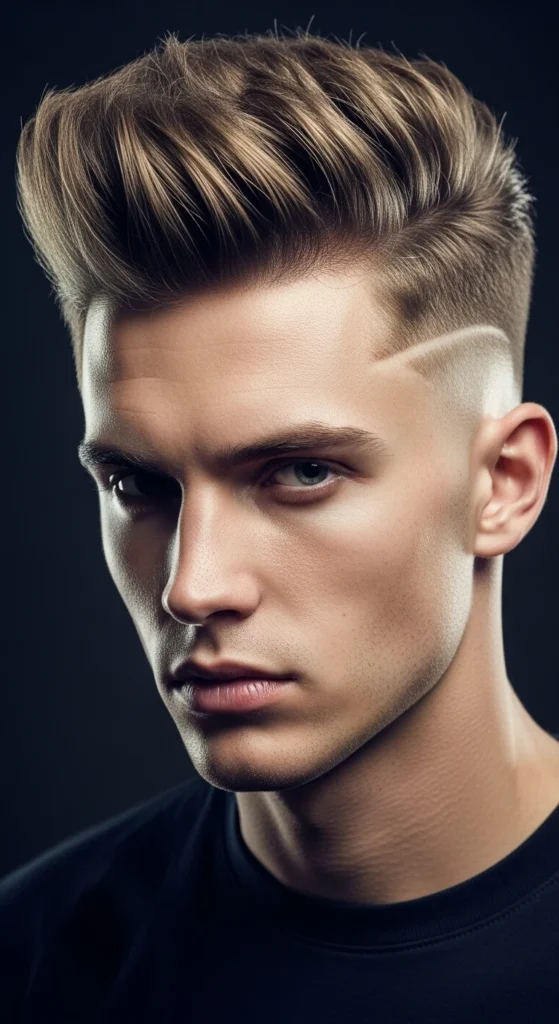
Fade starts near the top corner of the head, so the contrast is bold. Works especially well on round faces since it visually slims the sides.
9. Textured Quiff with Skin Fade / High Bald Fade
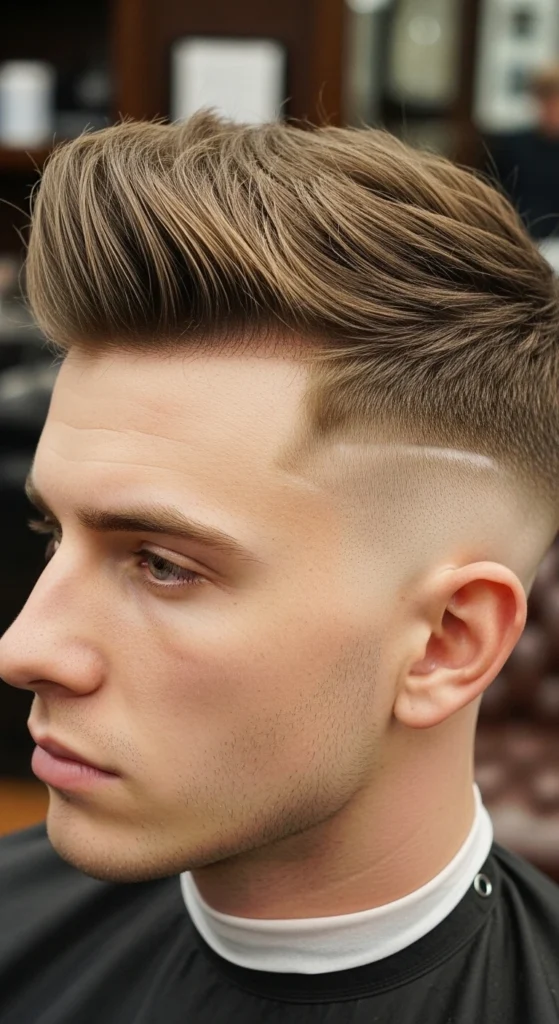
Sides shaved down to skin. Sharp and high-contrast, but be ready for barber visits every 1 to 2 weeks or the blend grows out fast.
10. Textured Quiff with Taper Fade (Most “Office-Safe”)
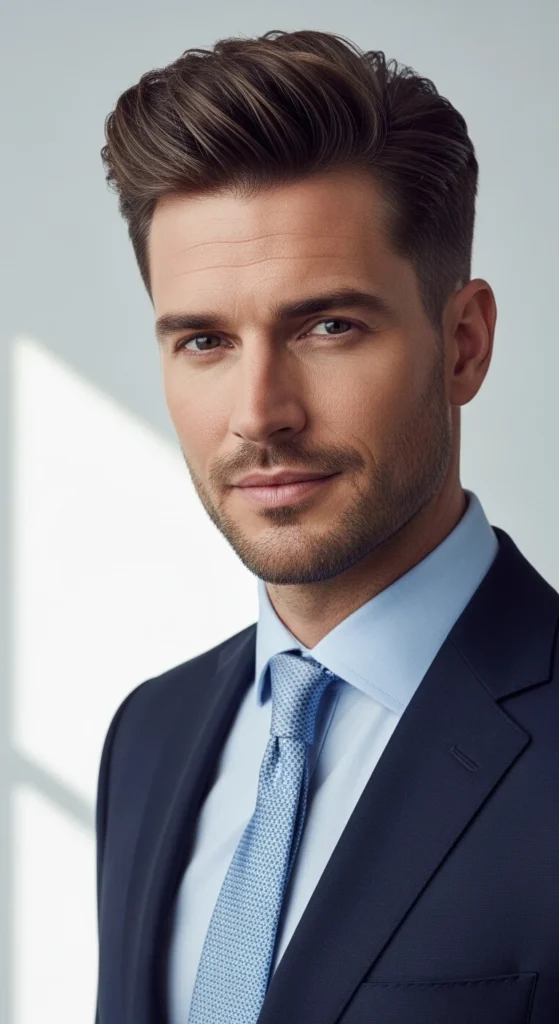
Not a skin fade, just a natural graduation at the sideburns and neckline. Grows out gracefully, which makes it the easiest option for conservative workplaces.
11. Textured Quiff No Fade (Scissor Cut / Natural Sides)
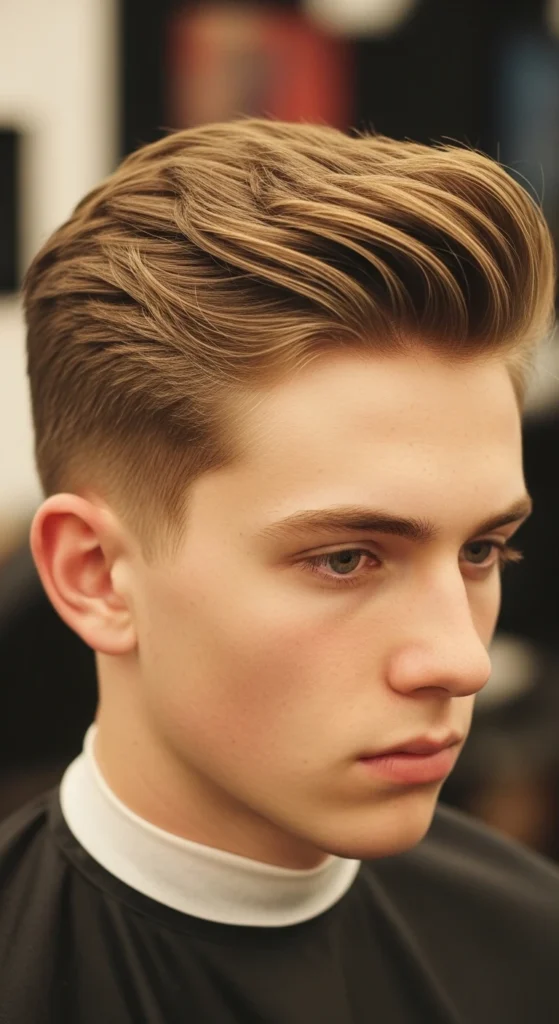
Sides cut with scissors instead of clippers. Softer, more “gentlemanly” look, hair tucks behind the ears rather than being buzzed away.
Hair Type Versions (Personalization)
12. Textured Quiff for Straight Hair
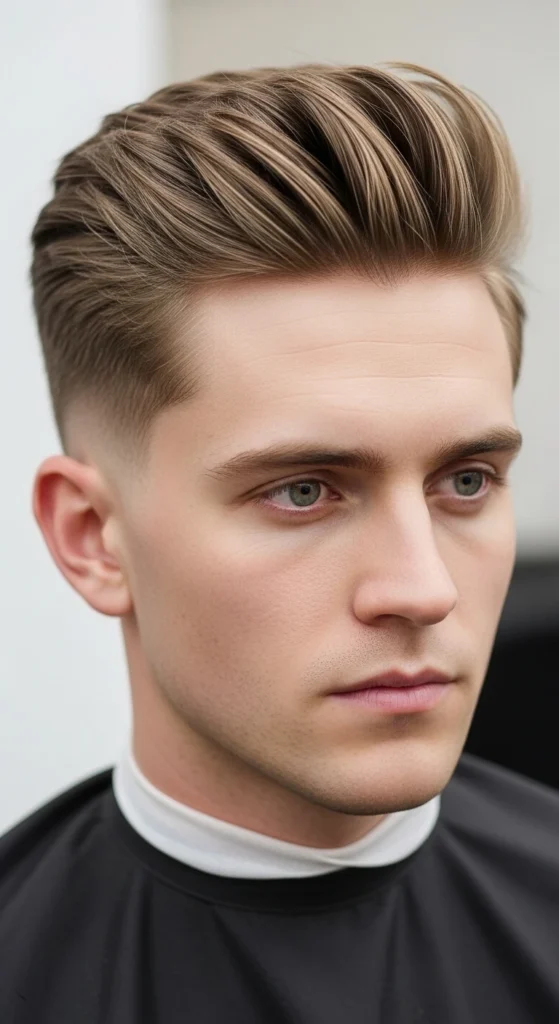
Straight hair tends to fall flat, so this version leans hard on point-cutting to fake texture where none exists naturally. Sea salt spray helps the grip too.
13. Textured Wavy Quiff
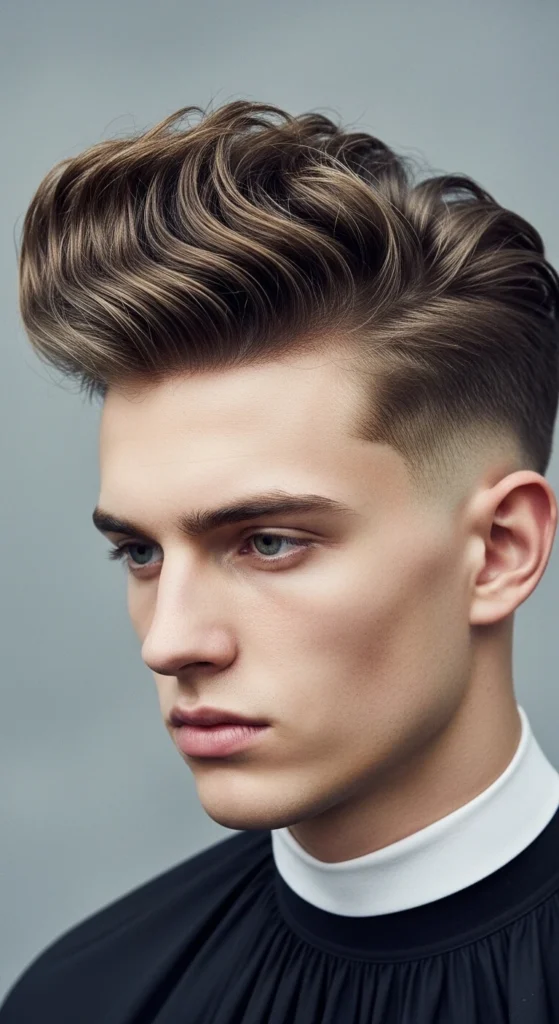
Wavy hair already moves on its own, so this one’s easier to style, you’re mostly just guiding the waves up and back rather than fighting them.
14. Textured Quiff for Curly Hair
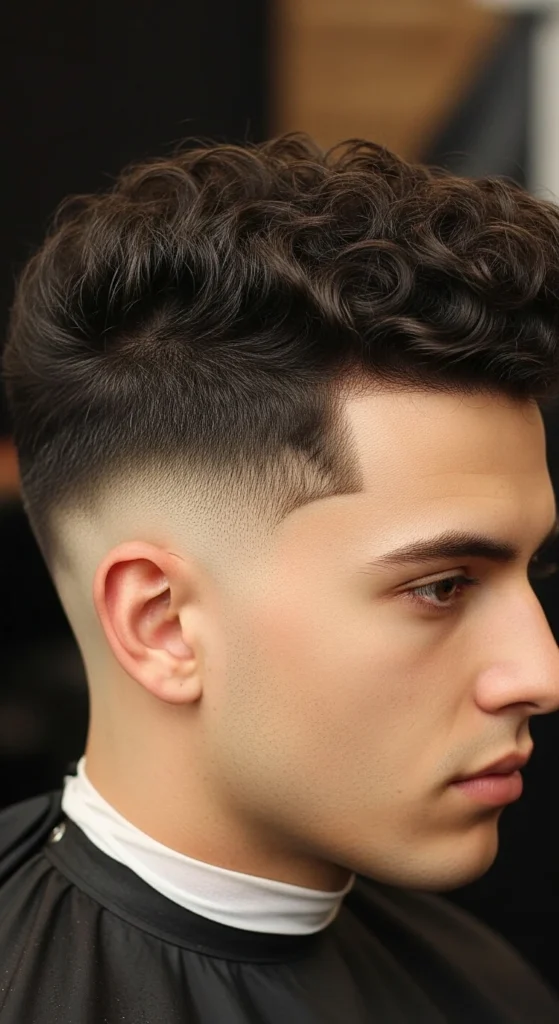
Curls bring their own volume, so keep the sides tight to avoid a “mushroom” silhouette. Diffuse or air-dry to keep the curl pattern defined instead of frizzy.
15. Thick Textured Quiff (Debulking)
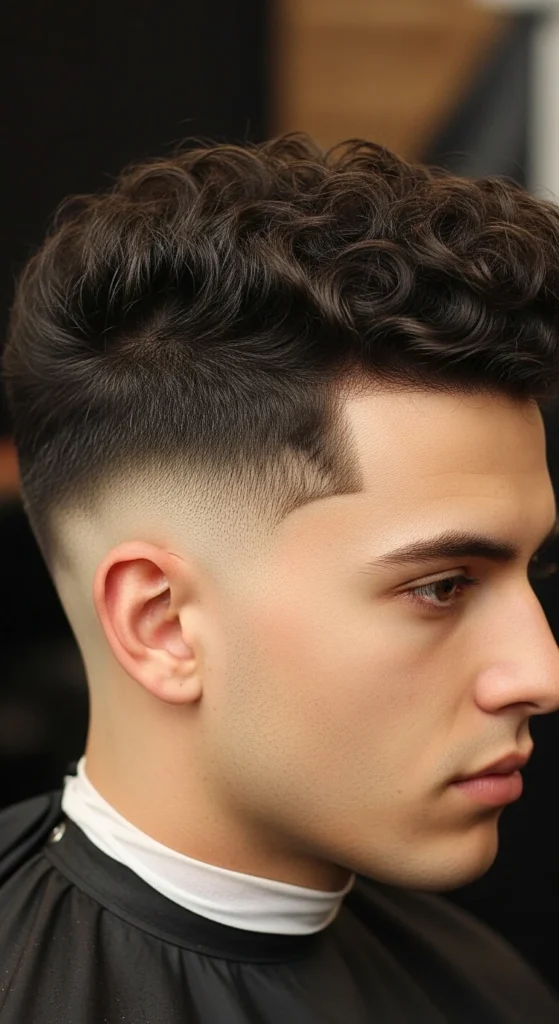
Thick hair is heavy, and heavy hair falls. Your barber needs to thin out the interior with slice cutting or thinning shears before it’ll actually stand up.
16. Textured Quiff for Fine/Thin Hair
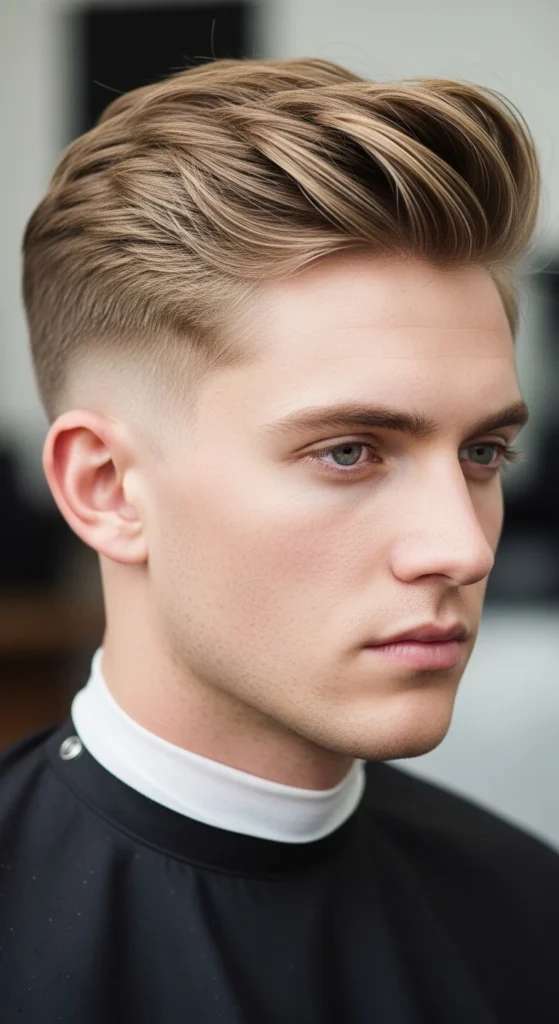
Kept short, this hides scalp visibility while the added height creates the illusion of density. Stick to lightweight texture powder or mousse, heavy clay just weighs fine hair down.
Ethnicity / Regional Intent
17. Asian Textured Quiff (Dense Straight Hair)
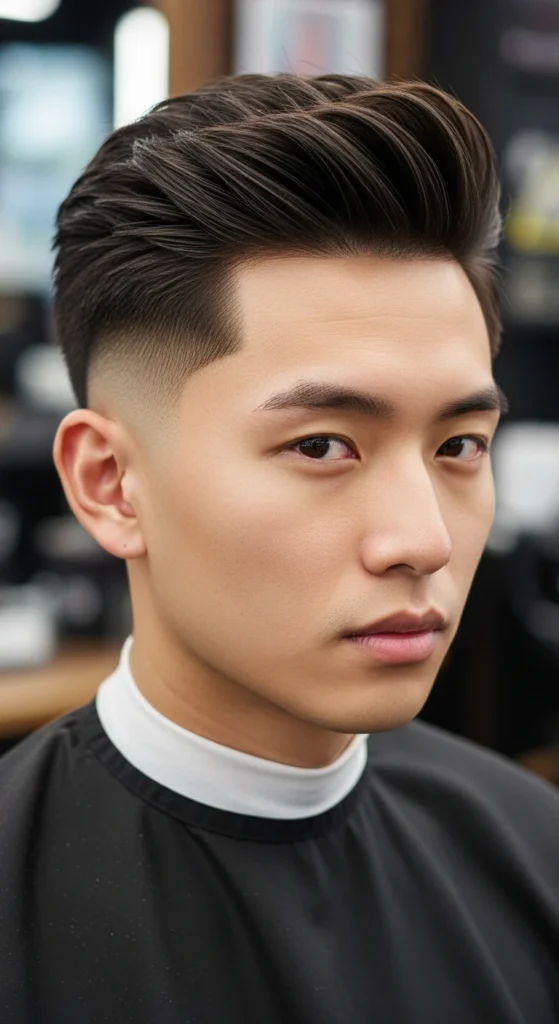
Asian hair often grows thick and straight, and tends to stick out at the sides. An undercut or high fade keeps that under control, while heavy texturizing on top brings the movement.
Hybrid / Edgy Variations
18. Textured Quiff Undercut (Disconnected)
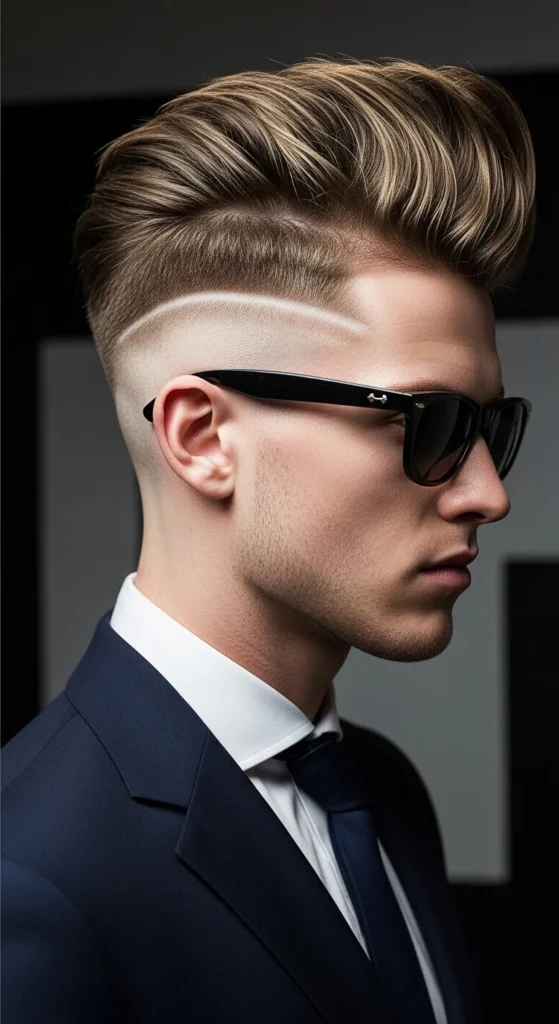
No blend at all, just a hard line between shaved sides and the long top. Bold, easy to maintain yourself between barber visits.
19. Textured Quiff with Side Part / Hard Part
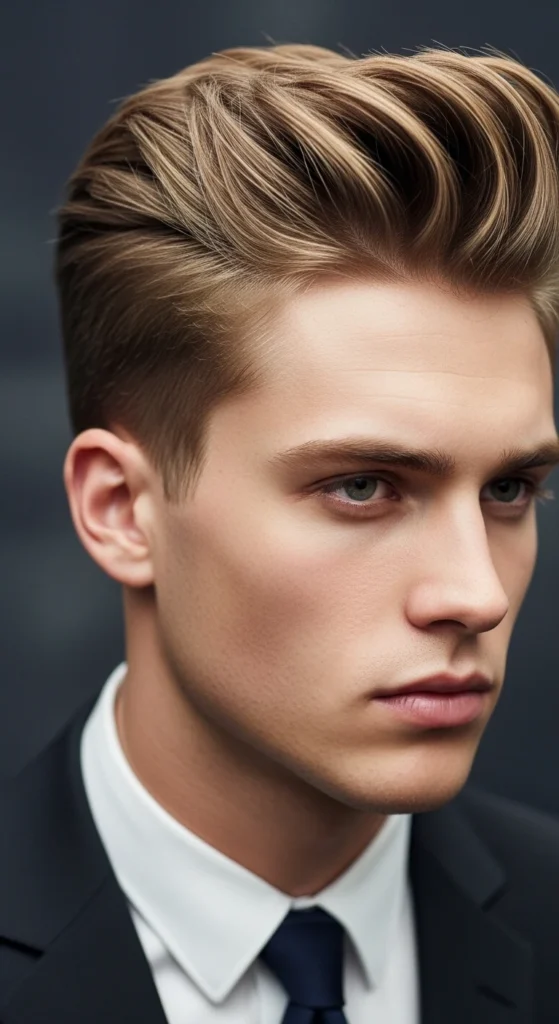
Messy volume up top, but a razored part line keeps it grounded. A nice hybrid of “just woke up” and “actually put effort in.”
20. Textured Spiky Quiff
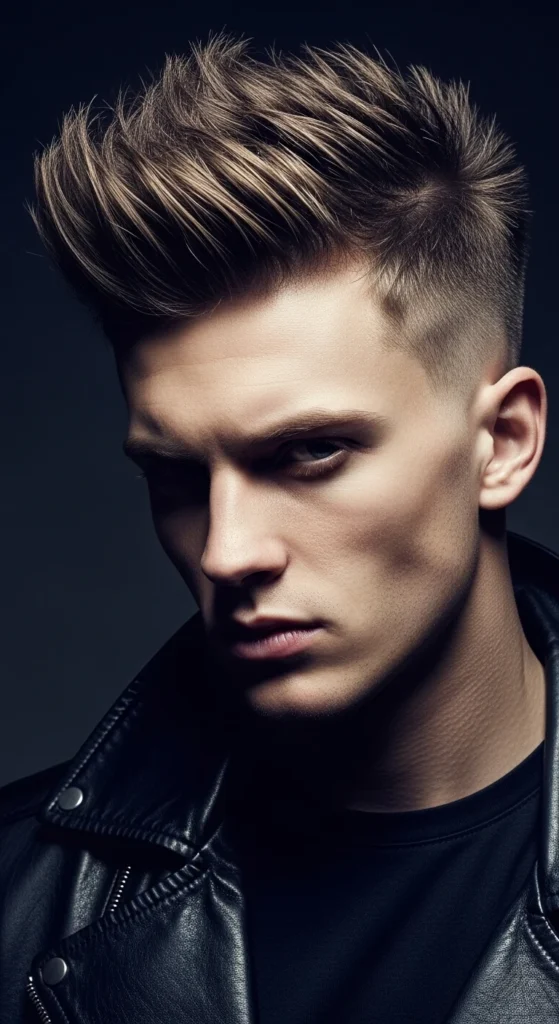
Shorter and sharper, pointing straight up rather than back. Younger, more energetic take on the shape.
21. Textured Forward Quiff
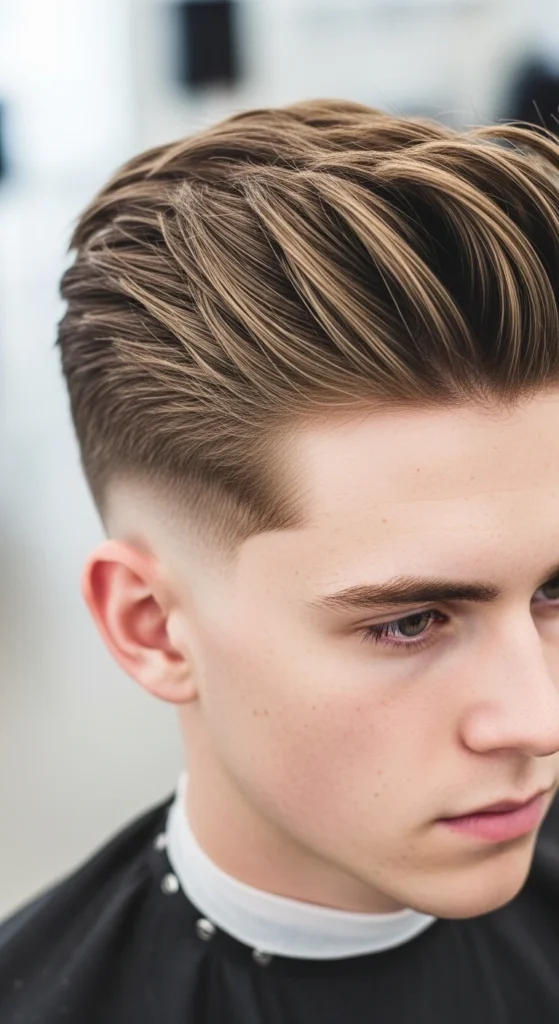
Most of the hair pushed forward, with just the very front flipped up. Sits somewhere between a crop and a quiff.
22. Textured Quiff Mohawk
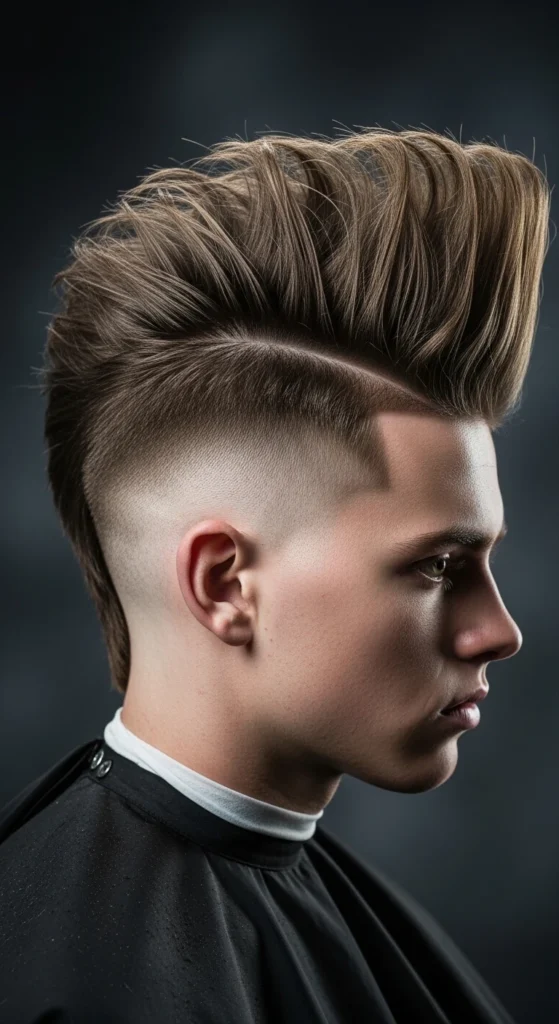
Sides shaved very high, leaving a textured strip down the middle. Punk-leaning, not for anyone who wants to blend in.
23. Textured Quiff Mullet (Trend Hybrid)
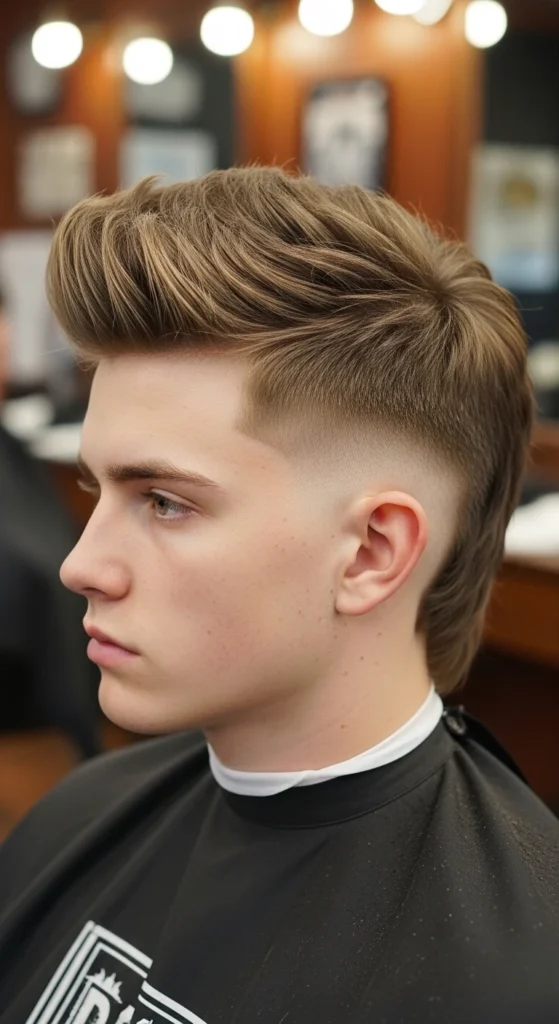
Short and textured up front, longer and flowing at the back, the “modern mullet” trend that’s kept growing through 2025 to 2026.
24. Textured Quiff with Beard
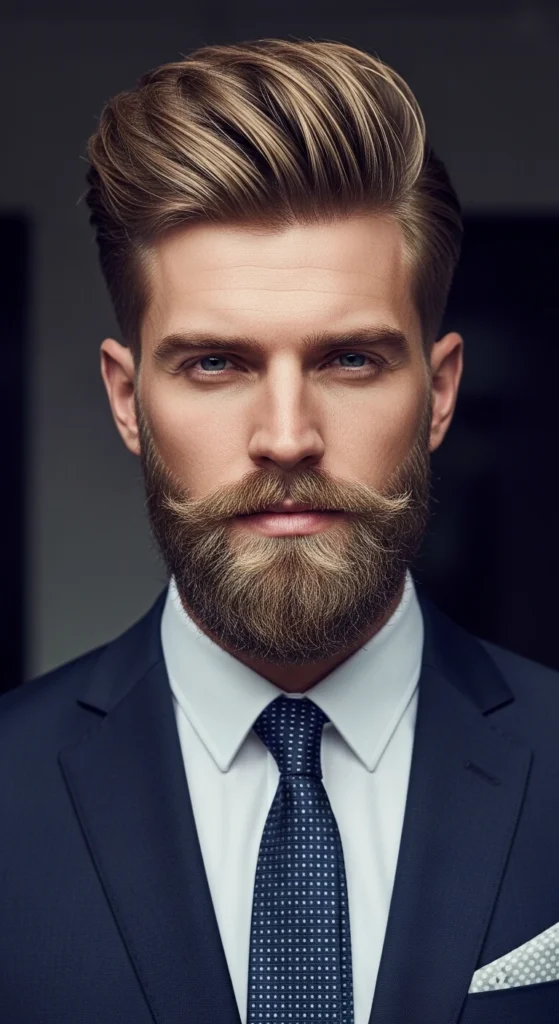
A faded beard connecting into faded sides pulls the whole look together: clean, masculine, no weak points.
More Textured Quiff Variations to Try
25. Textured Quiff with Drop Fade

Instead of a straight fade line, the fade curves down behind the ear, leaving a bit more length at the back of the neck. It softens the usual sharp fade shape and pairs well with round or oval faces.
26. Textured Quiff for Coily / Afro Hair
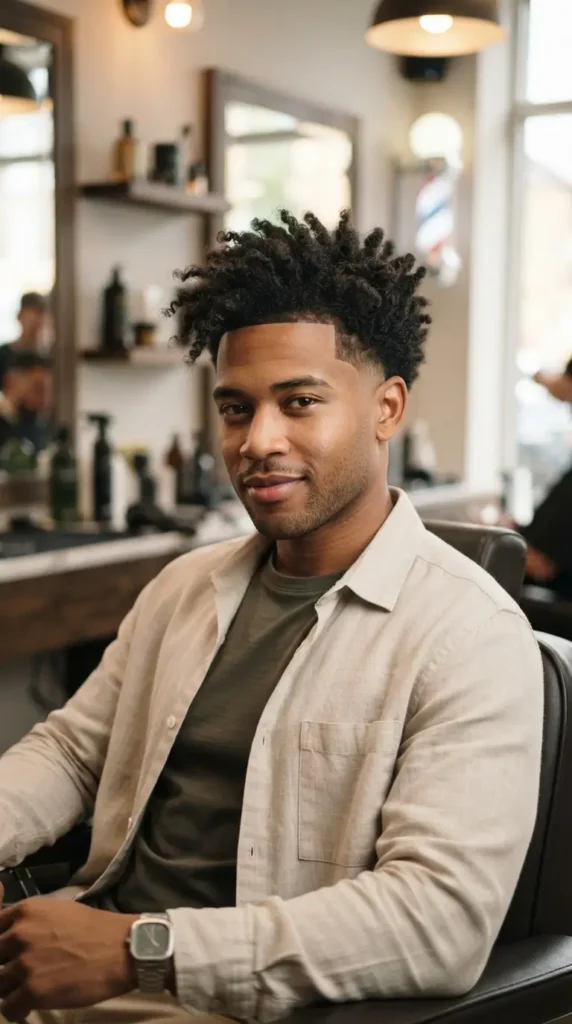
On coily hair, the natural volume already does half the work of a quiff. Keep the sides low or tapered, twist small sections on top with a matte cream, and let the natural curl pattern create the texture instead of fighting it with heat.
27. Comb-Over Textured Quiff
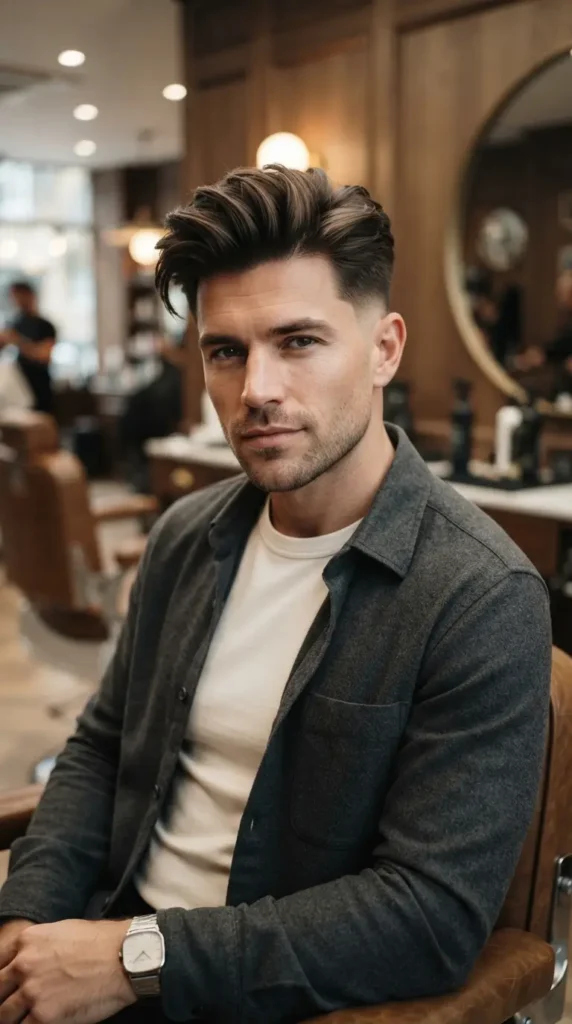
A side-swept take on the quiff, hair is directed sideways and slightly up rather than straight back. Lower-maintenance than a full quiff since there’s less lift to hold through the day.
28. Textured Quiff for Teens & Boys

Same shape, shorter length and a lighter fade, easier for parents to maintain and school-appropriate. Check our teenage boys haircuts guide for more age-specific options.
29. Salt-and-Pepper Textured Quiff (Mature Men)
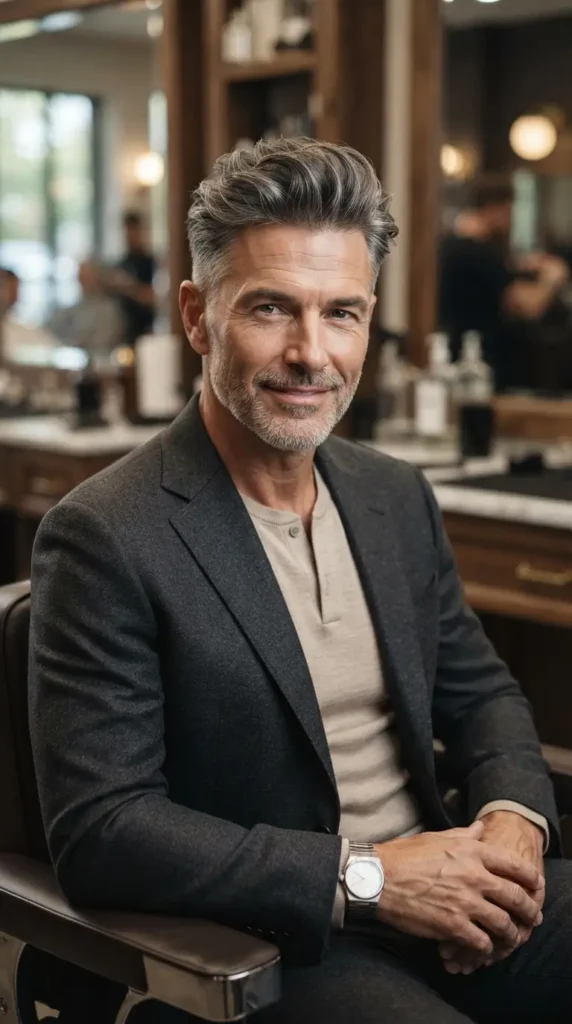
Grey and natural hair colour actually help this cut, the mixed tones add visual texture on their own. A slightly shorter top and a taper, rather than a skin fade, tends to look more natural at this age.
30. Textured Quiff with Hard Part / Line-Up Design

A crisp, razored line separates the fade from the top, sometimes with a shaved design cut into it. Popular in barbershop culture, and it makes the whole cut look sharper for longer between visits.
Textured Quiff vs Quiff vs Pompadour vs Textured Crop (Don’t Get the Wrong Cut)
These four get mixed up constantly. Here’s the quick way to tell them apart.
Difference Between Quiff and Textured Quiff
Same shape: short sides, long top styled up. The difference is entirely in the finish. A classic quiff leans on pomade for a smooth, clean look. A textured quiff uses matte product and texturizing techniques to look rougher and more current.
Textured Quiff or Pompadour?
- Pompadour: Sleeker, rounder shape, styled further back over the crown, usually with some shine.
- Textured Quiff: More relaxed, forward-to-up fringe motion, jagged rather than “perfect.”
Textured Crop or Quiff?
- Textured Crop (French Crop): Fringe styled forward, onto the forehead.
- Textured Quiff: Fringe styled up and back, away from the forehead.
| Feature | Textured Quiff | Classic Quiff | Pompadour | Textured Crop |
| Fringe Direction | Up & Back | Up & Back | Back & Round | Forward / Down |
| Finish | Matte / Dry | Natural / Low Shine | Shine / Sleek | Matte / Dry |
| Texture | High (Piecey) | Medium | Low (Smooth) | High (Choppy) |
| Vibe | Modern / Relaxed | Classic / Sharp | Retro / Formal | Edgy / Urban |
Why the Textured Quiff Is Popular in 2026
It solves the one problem long-on-top haircuts always run into: looking “too done.” Neat enough for the office, casual enough for the weekend, and it works whether your hair is thick, thin, straight, or curly. The height also flatters round faces while the texture takes the edge off square jaws. David Beckham gets credit as the style’s unofficial godfather, with Zayn Malik and Mason Mount keeping the messy, matte look in rotation on social media.
Which Haircut Suits Me? (Quiff Suitability Guide)
Best Face Shapes for a Textured Quiff
- Oval: Ideal, pretty much any variation works.
- Square: Excellent, the height plays well with a strong jawline.
- Round: Highly recommended. Vertical volume elongates the face; pair with a high or skin fade for the strongest slimming effect.
- Triangle: Good, width at the temples balances a wider jaw.
- Heart: Good, volume on top balances a narrower chin.
Textured Quiff for Receding Hairline: Can you still wear one? Yes, but with a couple of adjustments.
- Avoid: Slicking hair back tight, it exposes the recession.
- Do: Go messy. Push hair slightly forward at the corners to cover the temples, then lift only the center fringe. Matte product cuts down scalp shine.
Lifestyle + Maintenance Fit
- Styling Time: 3 to 8 minutes a day, blow-dry included.
- Barber Visits: Every 2 to 3 weeks for fades, 4 to 6 weeks for a taper or scissor cut.
How to Ask Your Barber for a Textured Quiff (Exact Words)
“Short on sides, long on top” gets you a generic haircut, not this one. Be specific.
Exact Script (Copy/Paste):
“I’d like a textured quiff. Keep about [3 inches] on top, slightly longer at the fringe so I can sweep it back. Add plenty of texture with point cutting, I want it piecey and messy, not a neat pompadour. For the sides, give me a [low/mid/high skin fade / taper fade]. Blend the sides into the top, no disconnection unless I ask for an undercut.”
Measurements & Guard Guidance
| Category | Details |
|---|---|
| Top Length | 2.5 to 4 inches (shorter means easier styling, longer means more drama) |
| Sides | #0 (skin), #0.5, #1, or #2, depending on how tight you want the fade |
| Key Phrase | “Remove the heavy weight line,” keeps the shape from looking boxy |
Reference Photo Strategy: Bring three photos: front, side (to show the fade), and back. David Beckham, Zayn Malik, and Mason Mount are all instantly recognizable references for this cut.
How to Style a Textured Quiff (Step-by-Step)
The result is 80% blow-dry, 20% product. Skip the blow-dry and the whole thing falls flat by lunchtime.
- Damp Hair: Start towel-dried, not soaking.
- Pre-Styler: Sea salt spray or a pea-sized bit of mousse. This is what gives the hair grip before heat goes near it.
- The Blow-Dry Method:
- Use a vent brush or just your fingers.
- Dry the sides flat, down.
- Dry the top up and back, pulling from the roots with tension while the heat hits it.
- Cold Shot: Once it’s dry and voluminous, hit it with cool air to lock the shape.
- Product Application:
- Dime-sized amount of matte clay or paste.
- Emulsify between your palms until it disappears.
- Apply back-to-front first to coat the roots, then front-to-back.
- Texture & Pinch: Rake through with your fingers. Pinch small sections at the fringe for that separated look.
- Lock It: Optional, a light mist of hairspray for all-day hold.
Best Products for a Textured Quiff (By Outcome)
Stick to matte. Wet gels and high-shine pomades work against everything this cut is going for.
Texture Clay (Matte, Strong Hold)
Best for thick or stubborn hair and messier styles. High hold, zero shine, gritty finish. Try Hanz de Fuko Claymation or BluMaan Cavalier Clay.
Matte Paste / Molding Paste
Better suited to medium or fine hair, and wavy textures. Medium hold, natural finish, easy to rework through the day. Kevin Murphy Rough Rider is a solid pick.
Sea Salt Spray (Pre-Styler)
Good for fine or thin hair that needs volume, or straight hair that needs some grit before styling begins.
Texture Powder (Root Lift)
For instant volume and fixing flat spots, especially on fine hair. Extreme matte finish, apply right at the roots.
Styling Cream
Best for curly or longer quiffs. Soft hold, low frizz, a bit of healthy shine.
Maintenance: How Often to Cut a Textured Quiff
- Skin Fade / Bald Fade: Every 1 to 2 weeks.
- Low / Mid / High Fade: Every 2 to 3 weeks.
- Taper / Scissor Cut: Every 3 to 5 weeks.
- Top Length: Every 4 to 6 weeks, ask your barber to re-texturize if it starts feeling heavy.
Daily Care:
- Skip daily shampoo, it creates fluff and frizz. Two or three washes a week is enough.
- Dry shampoo or texture powder on off-days keeps the volume refreshed.
How to Cut a Textured Quiff (At-Home / DIY Overview)
Fades are genuinely hard to do on yourself, proceed carefully.
Tools Needed:
- Clippers with guards (#0 to #8).
- Barber scissors and thinning shears.
- A front mirror and a hand mirror.
High-Level Steps:
- Sectioning: Separate the top (horseshoe section) from the sides.
- Sides: Clipper-fade or taper the sides upward, flicking the clipper out as you reach the parietal ridge to blend it.
- Top: Cut to your target length (say, 3 inches) using scissors, pulling hair straight up.
- Fringe: Leave the very front section a touch longer than the crown.
- Texturizing: Point-cut or use thinning shears on the top to remove weight and break it into choppy layers. This step is what actually makes it “textured.”
Frequently Asked Questions
What is a textured quiff haircut?
A textured quiff haircut is a men’s style with short, faded or tapered sides and a voluminous top that’s styled upward and back. Unlike a classic quiff, the top is cut and styled with a messy, matte finish and visibly separated strands rather than a smooth, slicked look.
What is a messy quiff?
A messy quiff is a looser take on the textured quiff, deliberately undone rather than combed into place. Matte clay and finger-styling give it that rugged, casual finish.
What to tell a barber for a textured quiff?
Ask for: “Short back and sides (name your fade), keep length on top (2 to 3 inches), and add plenty of texture with point-cutting so it doesn’t look heavy or blocky. I want it styled messy and up.”
Textured quiff or pompadour, what’s better?
Go with a textured quiff for a modern, low-shine, versatile look that works with casual outfits. Go with a pompadour if you want something more vintage, slick, and formal.
Can I get a textured quiff with short hair?
Yes, ask for a short textured quiff. You’ll want at least 1.5 to 2 inches on top to get the lift; anything shorter turns into a spiky crew cut instead.
Is a quiff good for a round face?
Yes, it’s one of the better options for round faces. The vertical height elongates the face and makes it look more balanced, especially when paired with a high fade to keep the sides tight.
Is a textured quiff good for a receding hairline?
It can work well. Avoid lifting the quiff too high or tight, go messy instead, and push hair slightly forward at the temples before lifting the center fringe. This hides the recession points while keeping the quiff shape.
How do I keep a textured quiff from falling flat?
Skipping the blow-dry is the most common reason it falls flat, heat at the roots is what actually sets the volume. Use a lightweight pre-styler like sea salt spray for grip, finish with a cold air shot, and stay away from heavy, oil-based pomades.
Is a quiff high or low maintenance?
It sits in the medium range. Daily styling only takes 3 to 8 minutes once you’ve got the blow-dry routine down, but the haircut itself needs regular barber visits, every 1 to 2 weeks for a skin fade, or every 4 to 6 weeks if you’re keeping it to a soft taper.
Textured quiff with low fade vs taper fade, what’s the difference?
A low fade exposes skin just above the ear and neckline for a sharper look, while a taper fade leaves some length around the ears and neck instead, so it looks more natural and grows out softer.
Conclusion
The textured quiff has stayed one of the most requested men’s haircuts through 2026 for a simple reason: it works everywhere, on almost any hair type, without looking overdone. Whether you go sharp with a skin fade or keep it soft with a scissor-cut taper, the texture is what makes it. Get the blow-dry right, grab a matte clay, and the rest takes care of itself.