
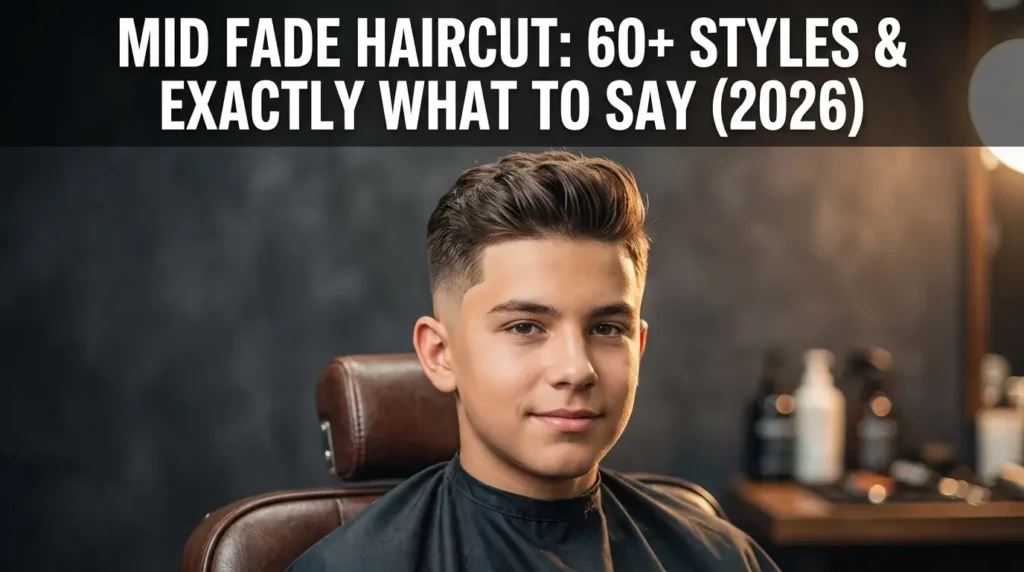
Walk into almost any barbershop and say “just give me a fade,” and there’s a good chance the barber reaches for a #2 guard and starts at your temple. That’s the mid fade haircut in action. It’s become the unofficial default fade in most shops because it doesn’t force a decision the way a low fade or a high fade does. It just works.
Quick answer: A mid fade haircut starts roughly halfway up the side of your head, right at temple level, and blends down toward the ear and neckline. It sits between the subtlety of a low fade and the drama of a high fade.
Mid Fade at a Glance
| Detail | What to Know |
|---|---|
| Starting height | Temple level, roughly 1-2 inches above the ear |
| Contrast | Moderate, more defined than a low fade, softer than a high fade |
| Guard to request | Usually starts around a #2 or #3, blends down from there |
| Touch-up window | 2-3 weeks for most versions |
| Who it suits | Nearly everyone, it’s the safest “give me something modern” request |
50+ Mid Fade Haircuts to Show Your Barber
Once you’ve settled on the height, the real decision is what happens on top. A mid fade is really just a foundation, everything below is about pairing it with the right hair type, top style, or finish.
Matching a Mid Fade to Your Hair Type
1. Curly Hair
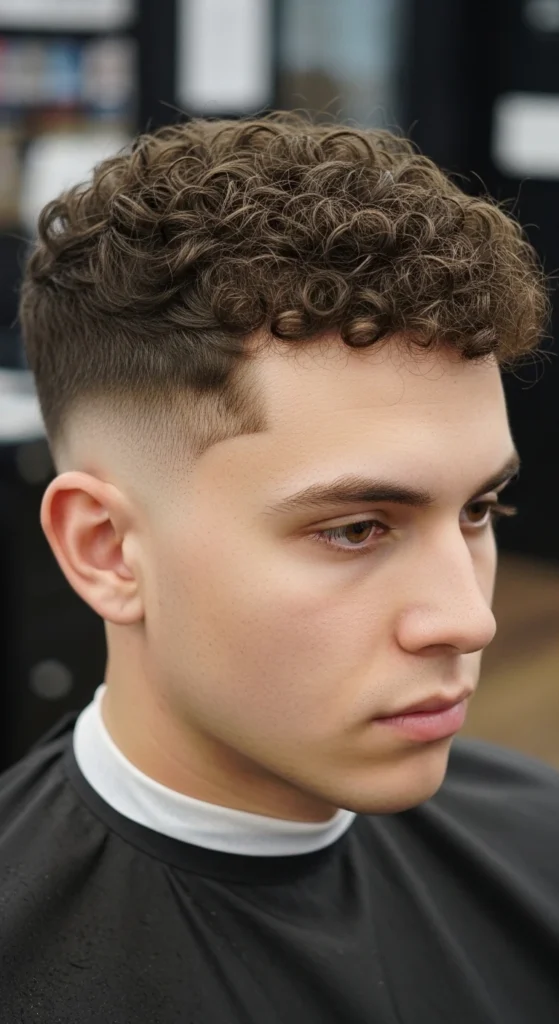
Curls thrive against a clean mid fade because the contrast does most of the work for you. A curl cream applied to damp hair, then diffused on low heat, keeps the pattern defined without flattening it.
2. Straight Hair
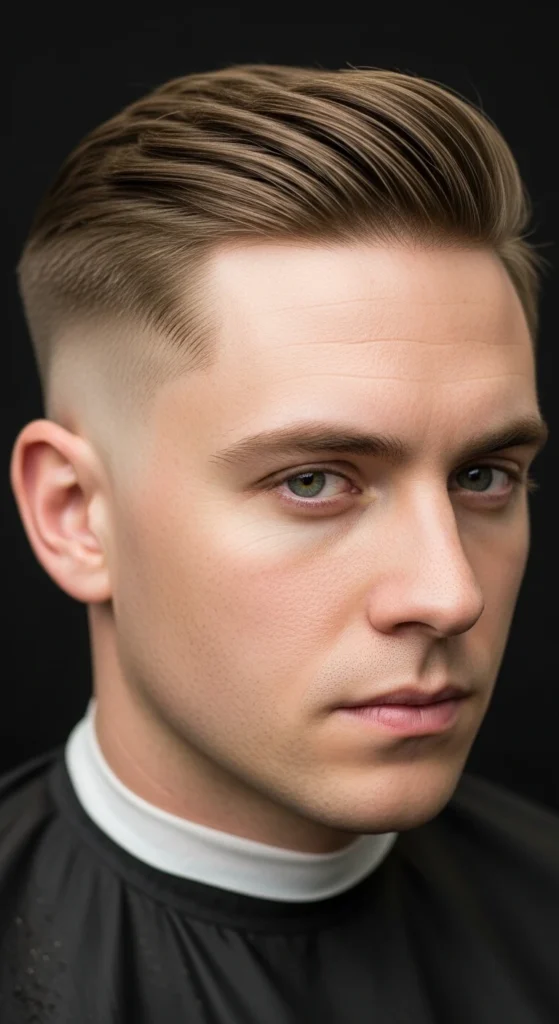
Nothing hides a sloppy blend line like straight hair, it shows everything. That’s actually an advantage if your barber is skilled, since a mid fade on straight hair looks razor-crisp with almost no effort to maintain.
3. Wavy Hair
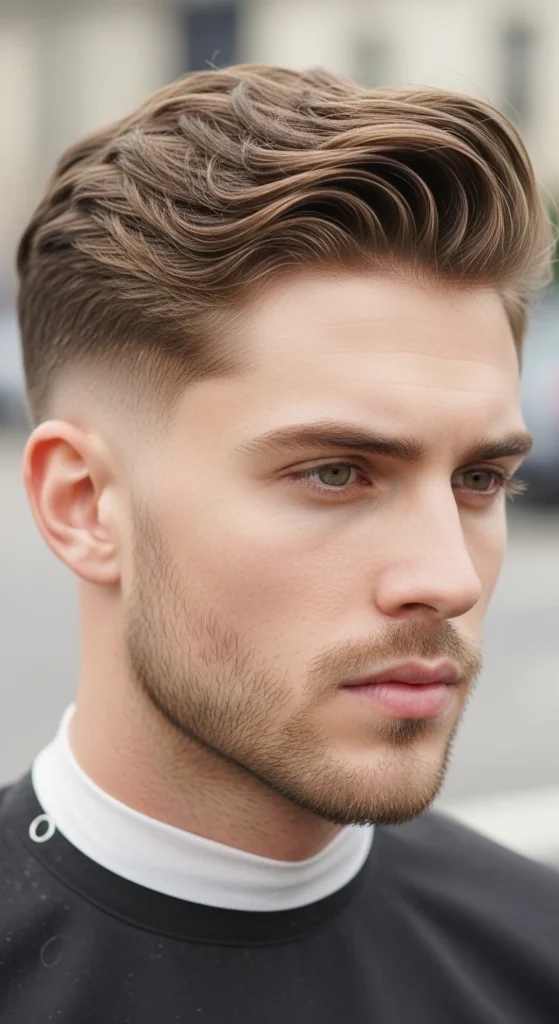
Waves need very little help. Keep the sides tight with a mid fade and let a light cream bring out the natural roll on top, without weighing it down into straight strands.
4. Thick Hair
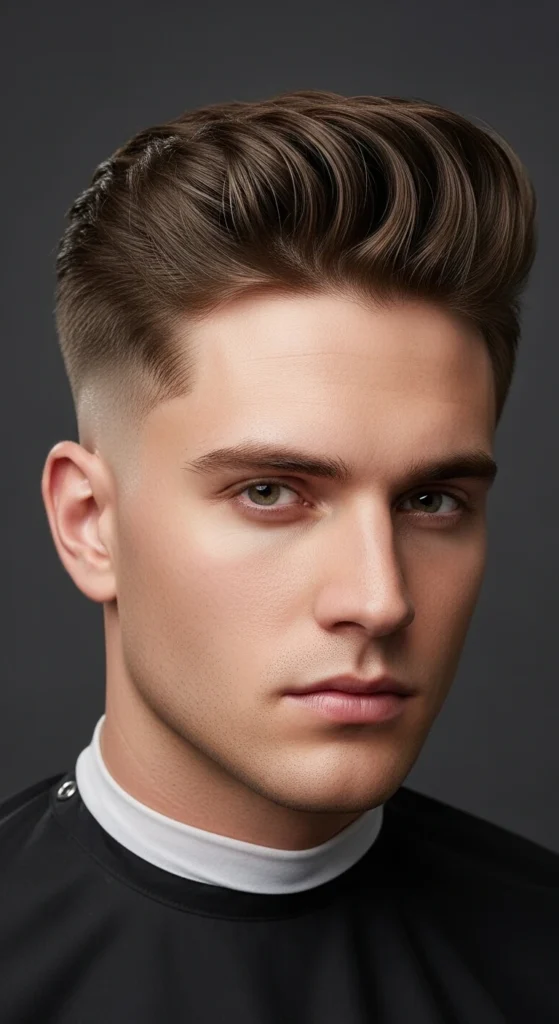
Thick hair carries a lot of weight on the sides. A mid fade thins that bulk out while leaving enough density on top to shape into almost any silhouette.
5. Thin Hair
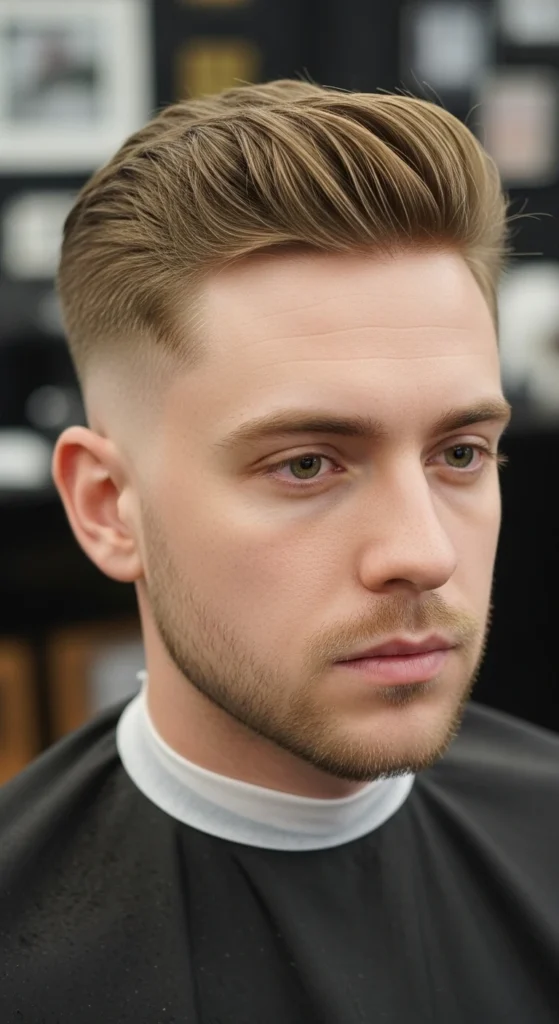
Thin hair benefits from the optical trick a mid fade creates: tight sides make whatever’s left on top read as fuller by comparison. Pair it with a lightweight volumizer for extra lift.
6. Coily Hair
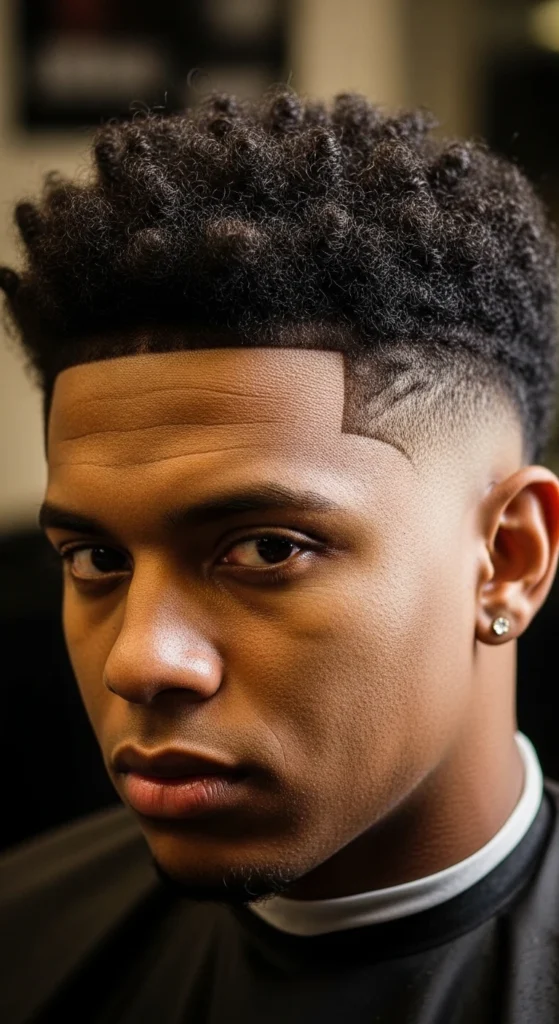
Tight coils and a mid fade create one of the sharpest contrasts in barbering. The clean sides act almost like a frame around the texture on top.
7. Afro-Textured Hair
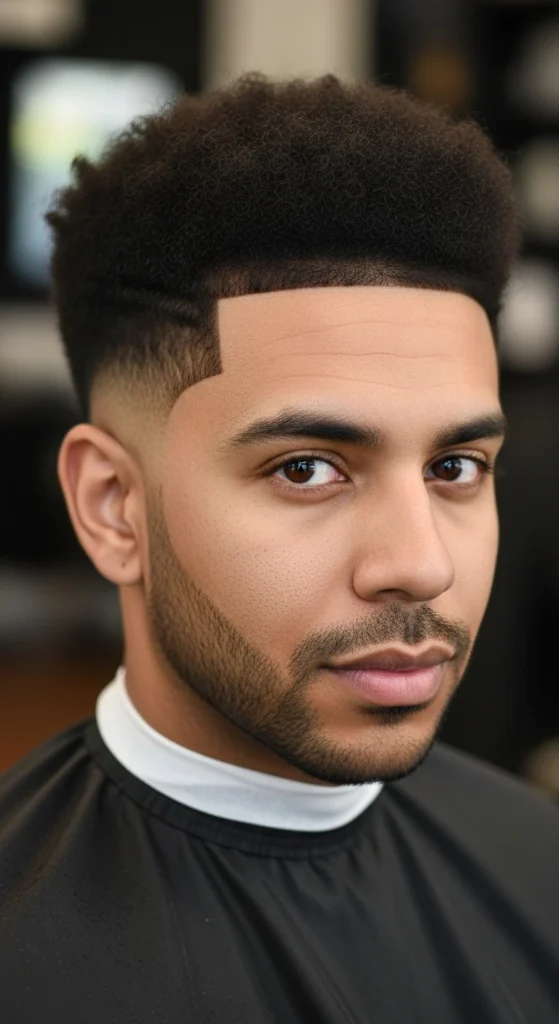
Rather than fighting natural volume, a mid fade gives it structure. The sides stay disciplined so the afro on top can do whatever it wants.
Pairing a Mid Fade With a Top Style
8. Slick Back
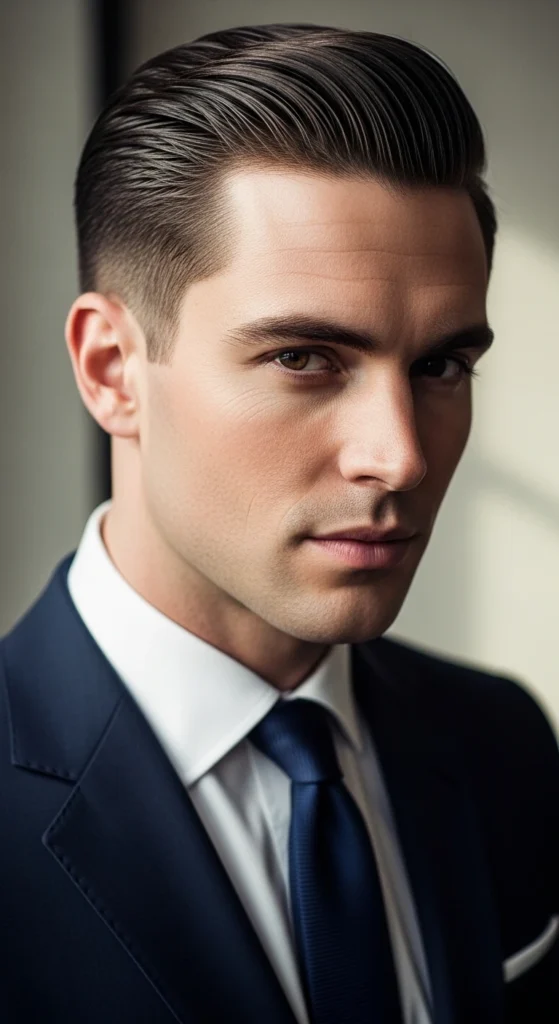
Comb the top straight back with a pomade for shine, or a matte cream if you’d rather skip the gloss. Either way, the mid fade underneath keeps it from looking heavy.
9. Comb Over
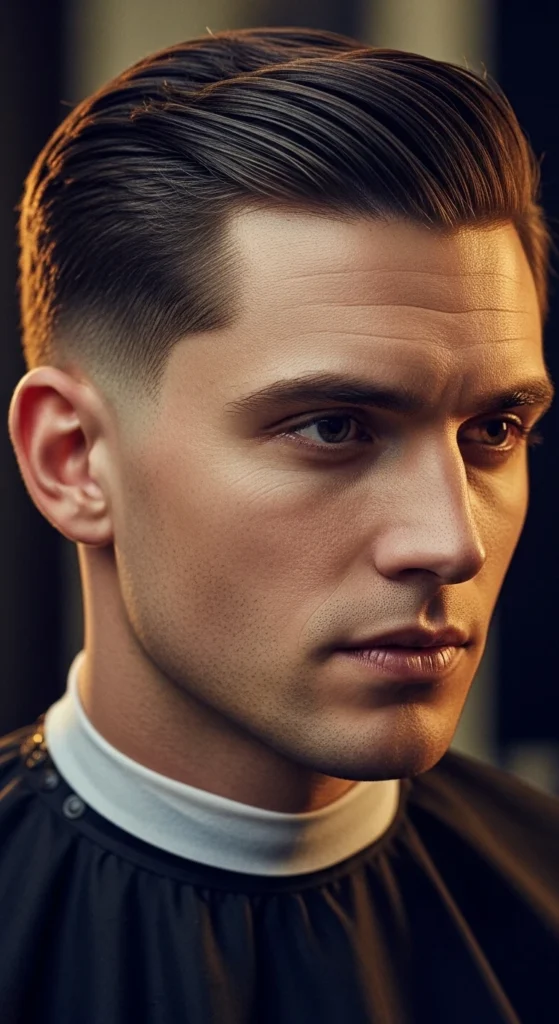
A comb over paired with a mid fade and a hard part reads sharp without trying too hard. It’s one of the more office-friendly combinations on this list.
10. Textured Fringe
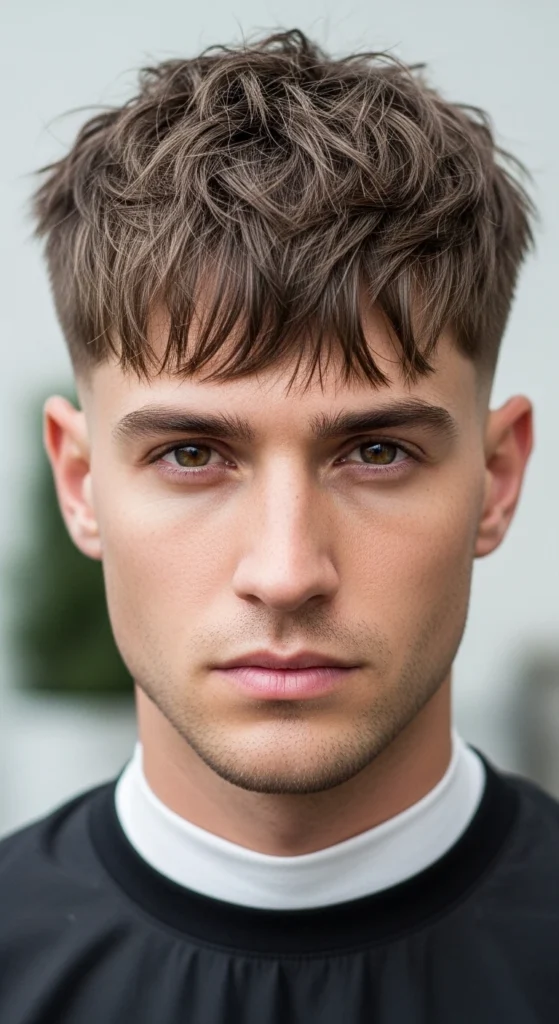
Choppy layers falling forward, paired with tight sides, give off a deliberately undone look. Works especially well if your hair already has some natural texture to exaggerate.
11. French Crop
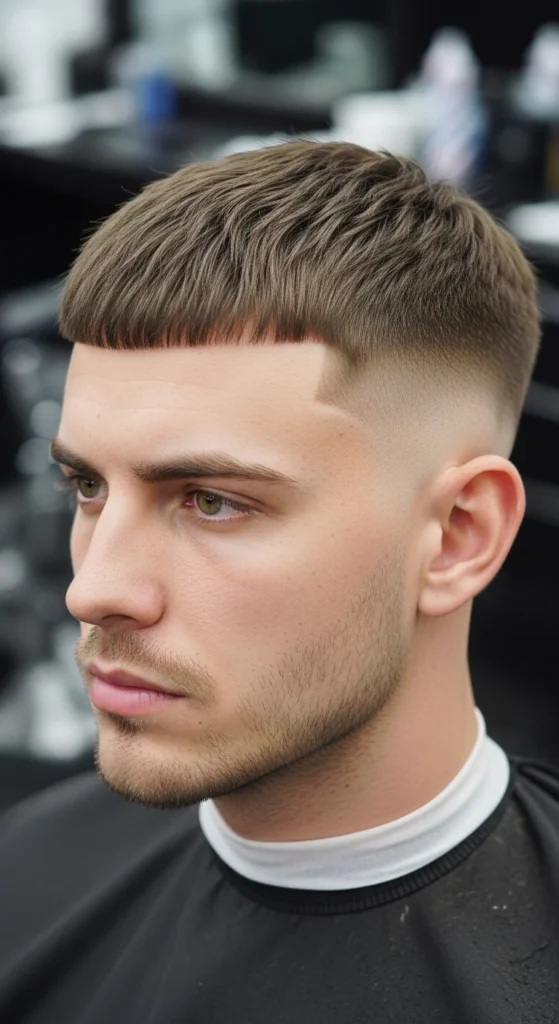
Short on top, forward-styled fringe, mid fade on the sides. It’s about as low-maintenance as a “styled” haircut gets.
12. Quiff
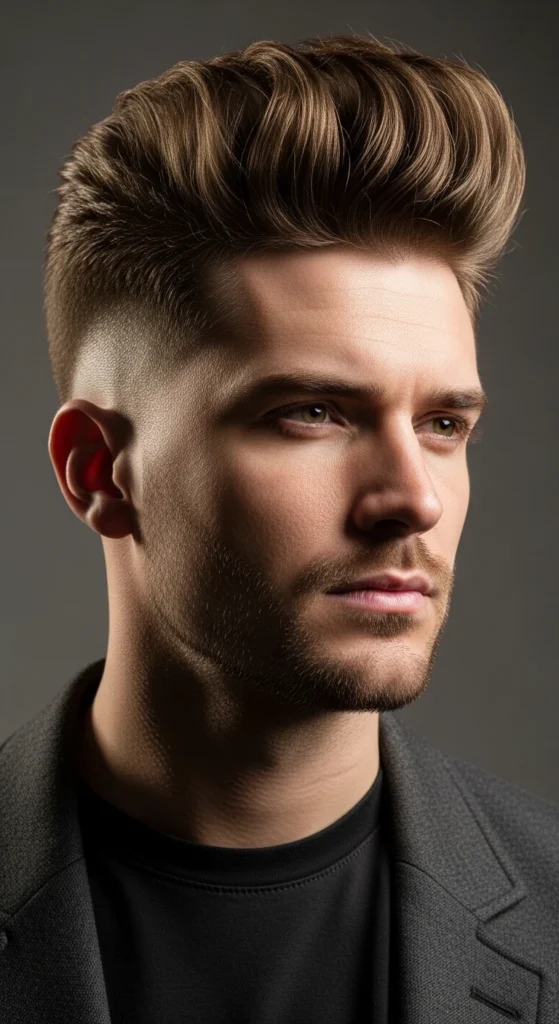
A textured quiff needs lift at the front, which means a blow dryer and round brush during styling. The mid fade balances that height so it doesn’t look top-heavy.
13. Pompadour
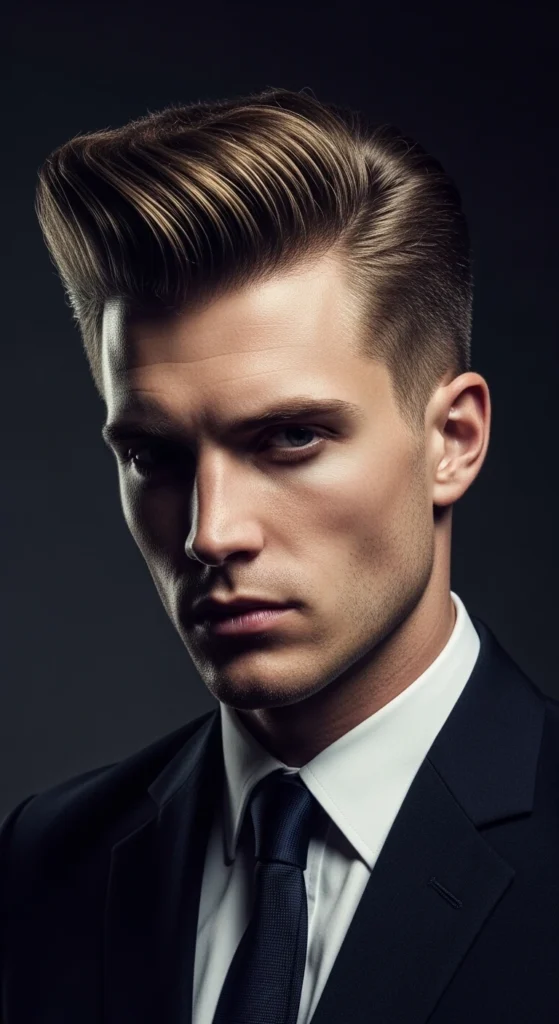
Swept up and back, this is the retro option. The mid fade underneath is what pulls it out of “vintage costume” territory and into something wearable today.
14. Buzz Cut
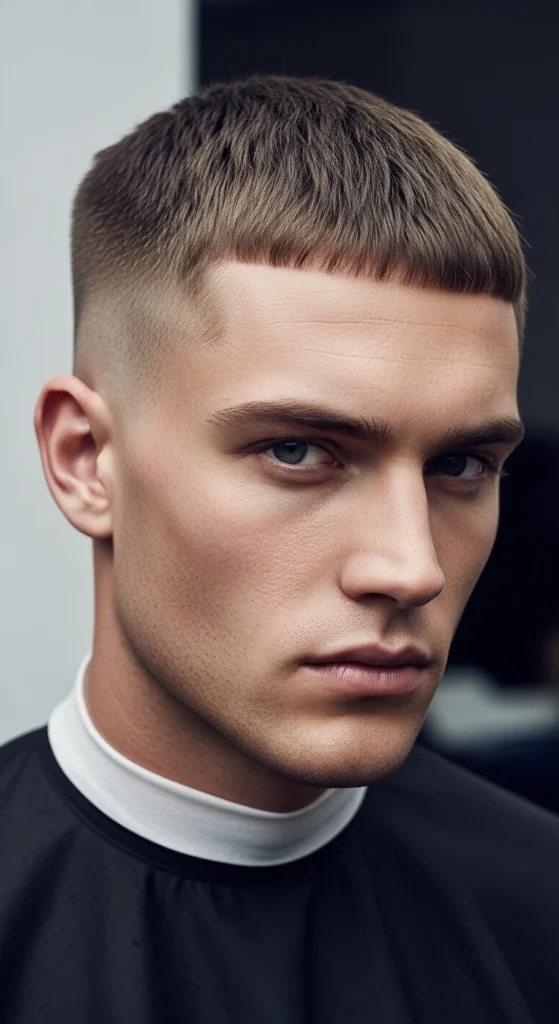
Even a buzz cut benefits from the fade line, it turns a flat, uniform cut into something with a bit more shape.
15. Crew Cut
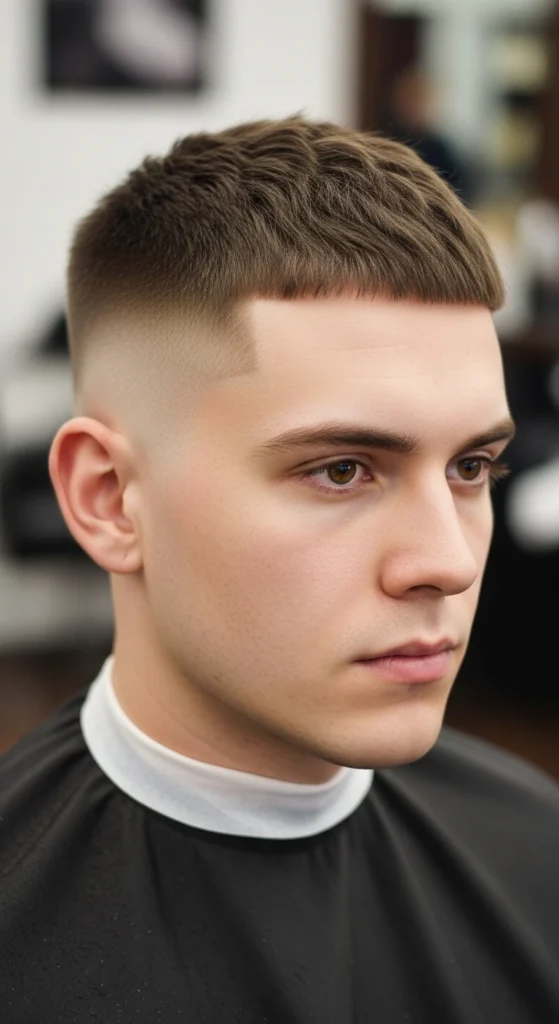
The crew cut was already low-maintenance. Adding a mid fade just sharpens the edges without changing how easy it is to manage.
16. Mohawk
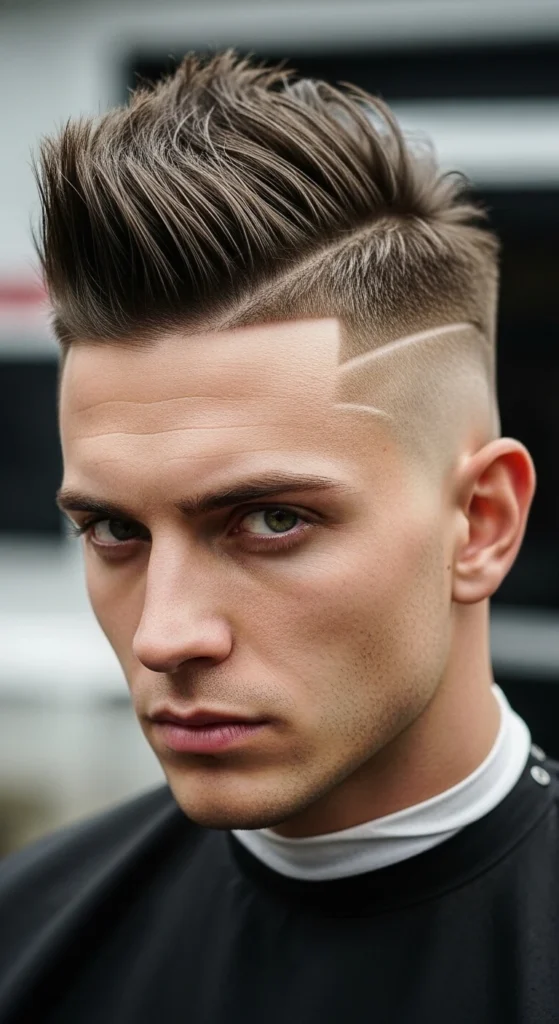
The strip of length down the center does most of the talking, but the mid fade on the sides is what keeps the whole thing from looking dated.
17. Faux Hawk
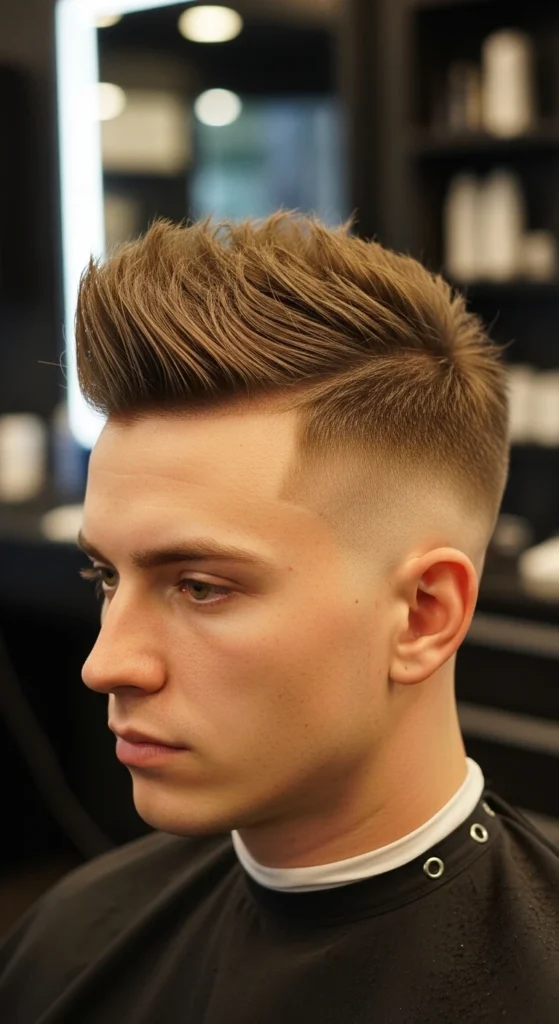
All the attitude of a mohawk, none of the commitment. Sides taper into a mid fade while the center gets styled up.
18. Mullet
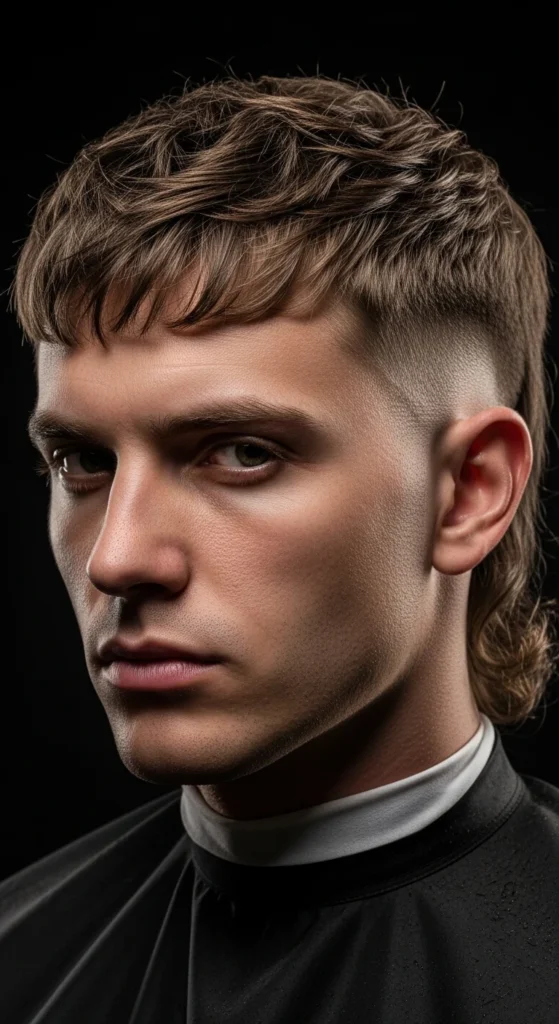
The modern mullet leans on a tight mid fade to keep the front and sides looking intentional, so the length in back reads as a style choice, not an accident.
19. Side Part
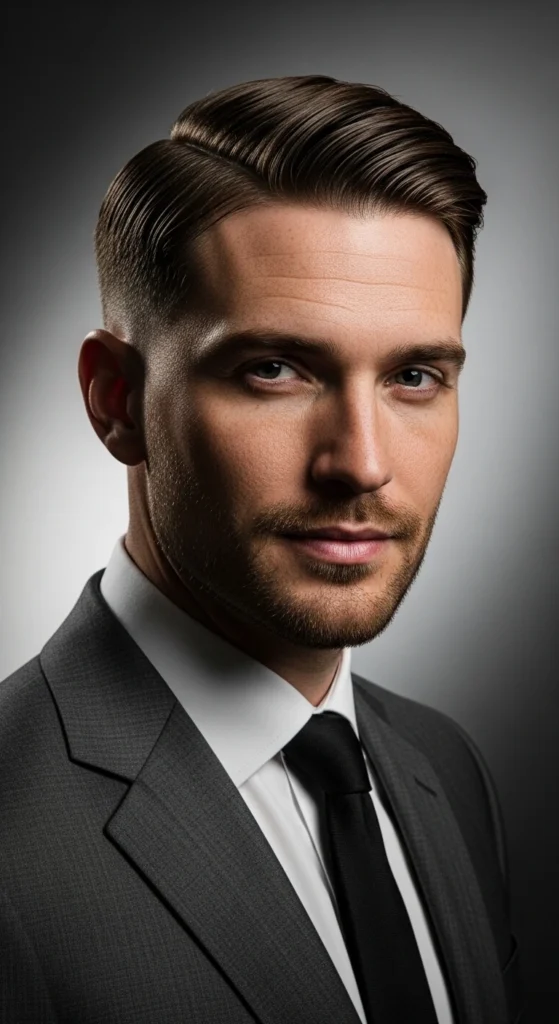
A classic side part gets an update when the sides are tight instead of tapered gently, it reads more current without losing the formal edge.
20. Messy Fringe
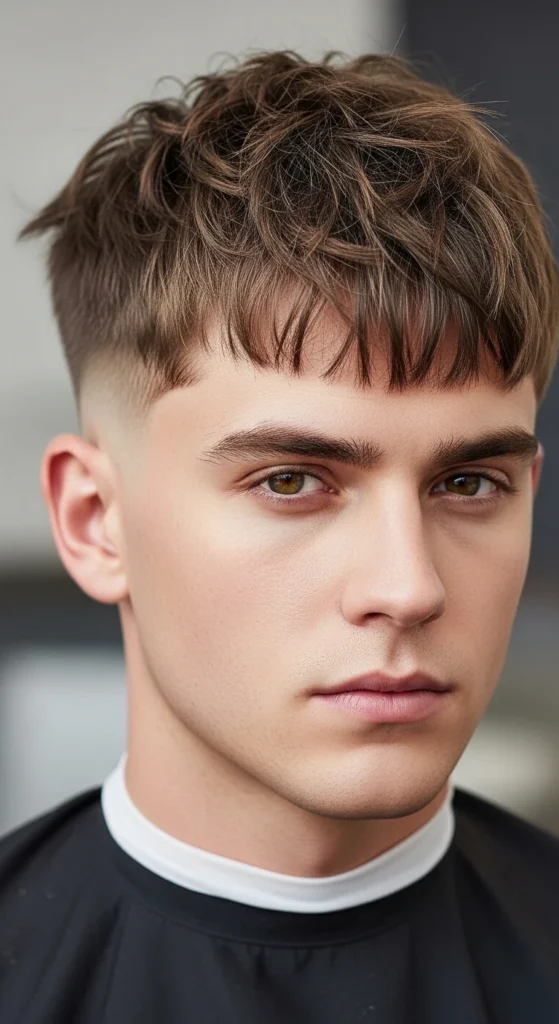
Loose, forward-falling fringe against clean sides. The kind of style that looks like zero effort but usually takes a bit of product to get right.
21. Caesar Cut
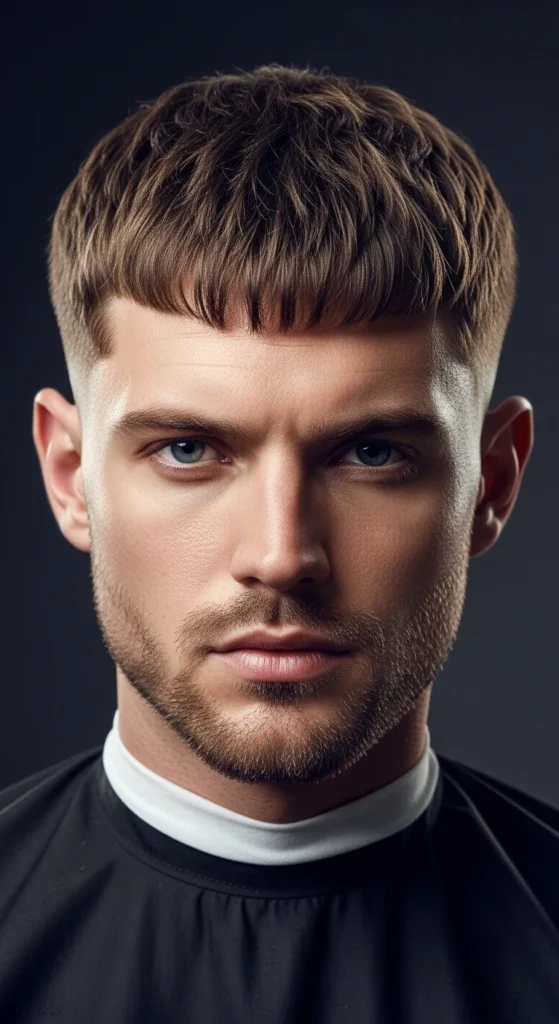
Short, horizontal bangs and a mid fade on the sides. About as easy to maintain as haircuts get.
22. Man Bun
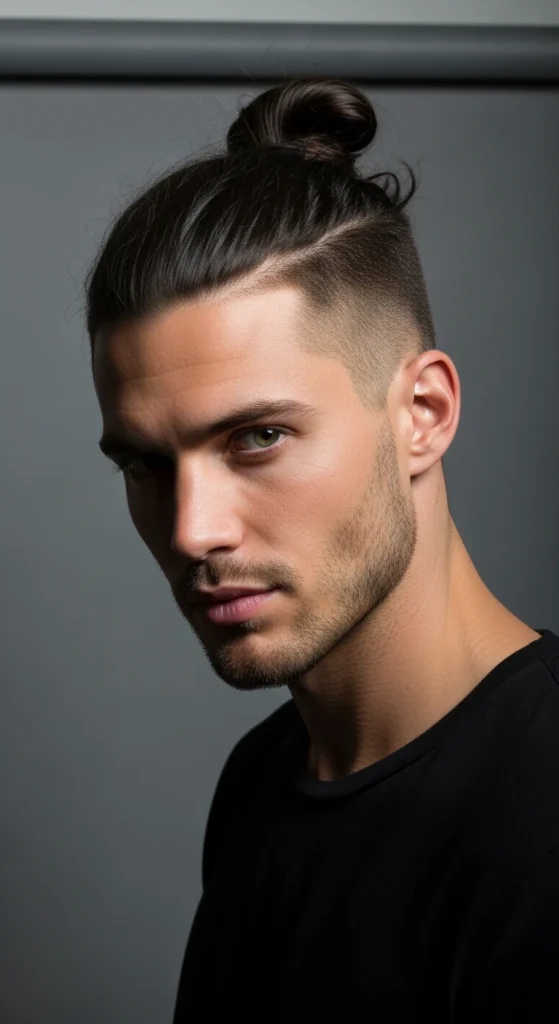
Long on top, tied back, tight on the sides. The fade keeps the whole look from reading unkempt while the length grows out.
23. Curtain Bangs
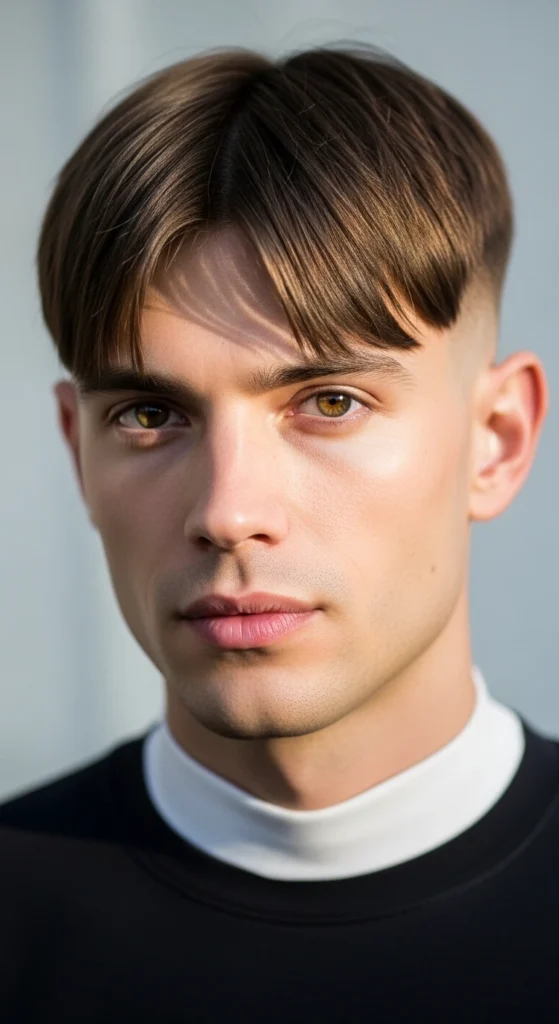
Parted down the middle, framing the face on both sides. Popular right now thanks to K-pop styling, and it pairs cleanly with a mid fade underneath.
24. Curtain Haircut
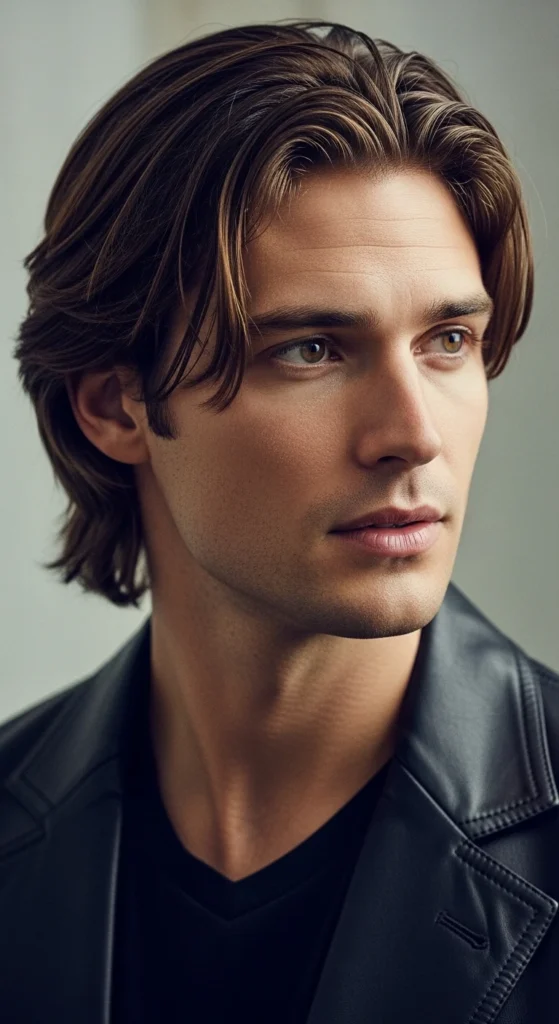
The full curtain haircut, longer layers parted centrally, gets a cleaner base with a mid fade on the sides instead of just letting hair grow out unstructured.
25. Bro Flow
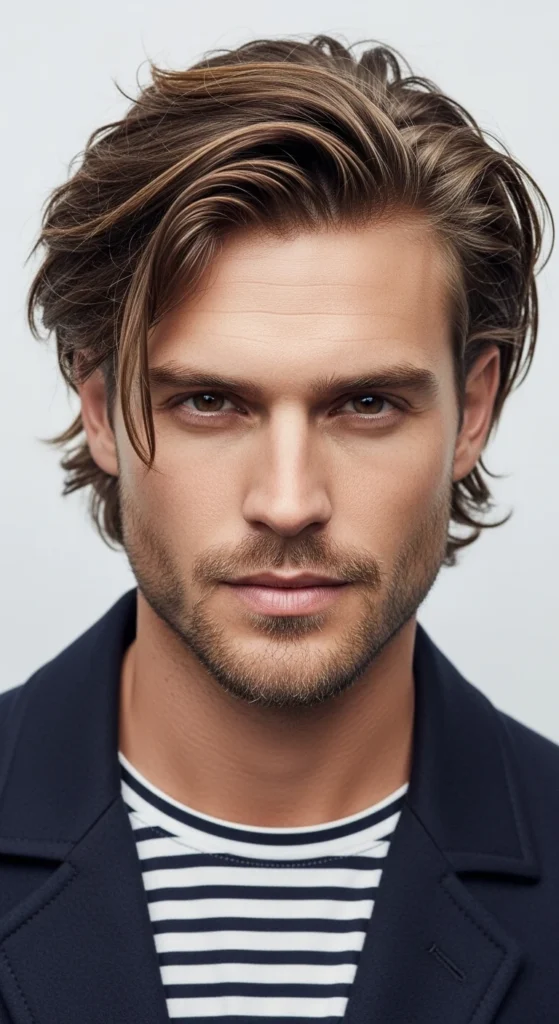
Medium length, brushed back naturally. The fade is what separates “intentional bro flow” from “just haven’t cut it in a while.”
26. Wolf Cut
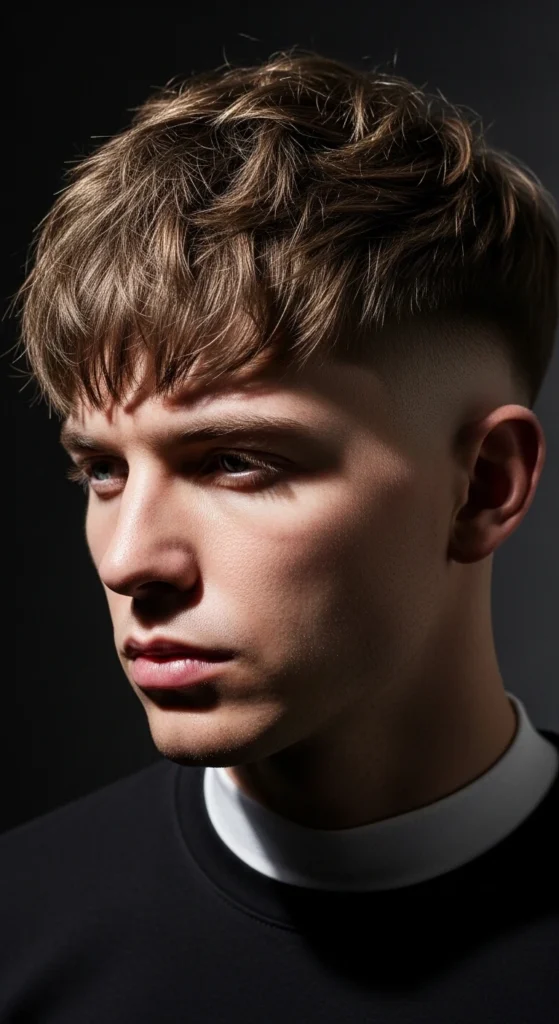
Shaggy, layered, deliberately messy on top, but the mid fade on the sides gives it just enough discipline to look styled rather than overgrown.
27. Ivy League
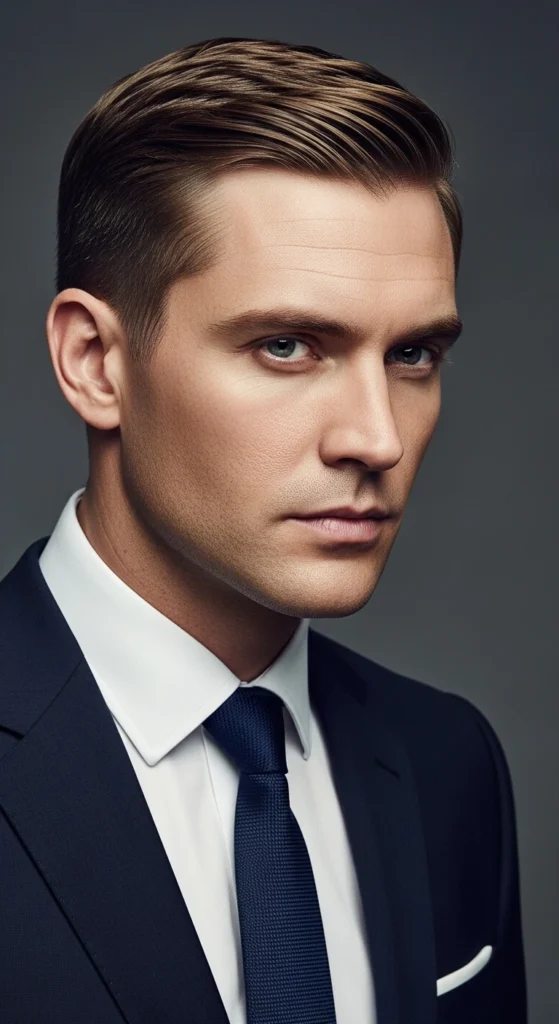
Preppy by design, but a mid fade on the sides brings it into 2026 without losing the academic polish it’s known for.
28. Two Block
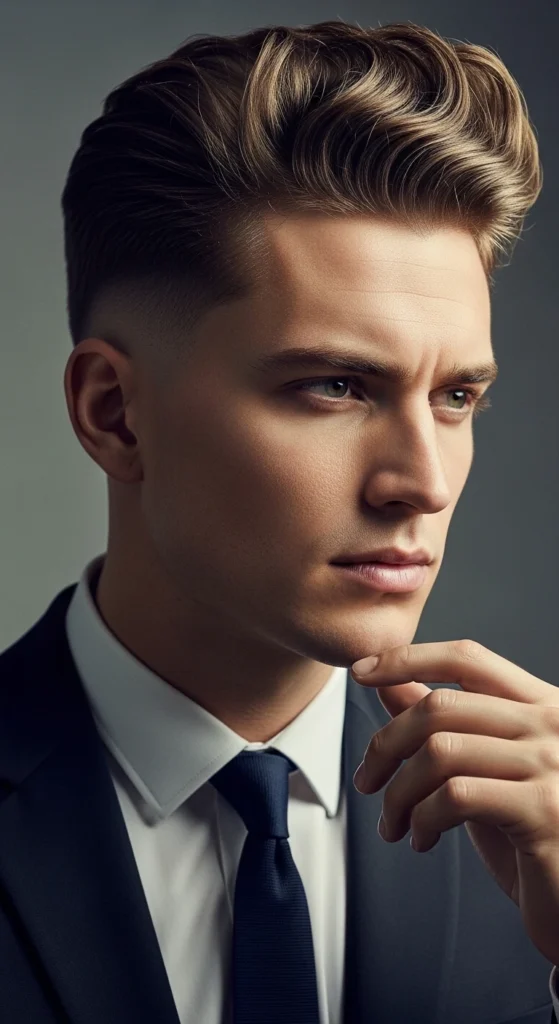
Borrowed from Korean street style, the top stays long and disconnected from short, faded sides. A mid fade gives that disconnect a cleaner starting line.
29. High and Tight
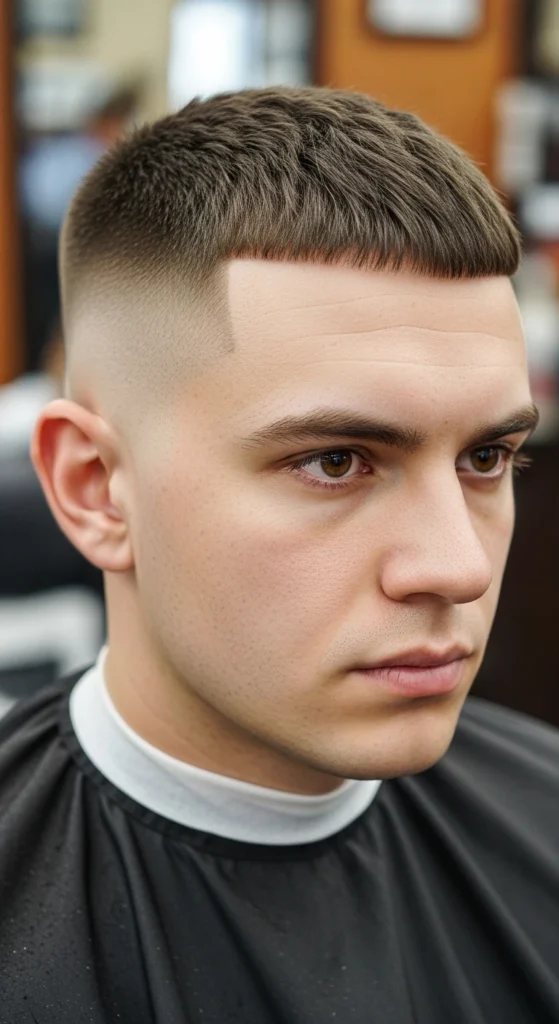
Military-inspired but softened a little when the fade sits at mid height instead of higher up. Still disciplined, just not as severe.
30. Textured Crop
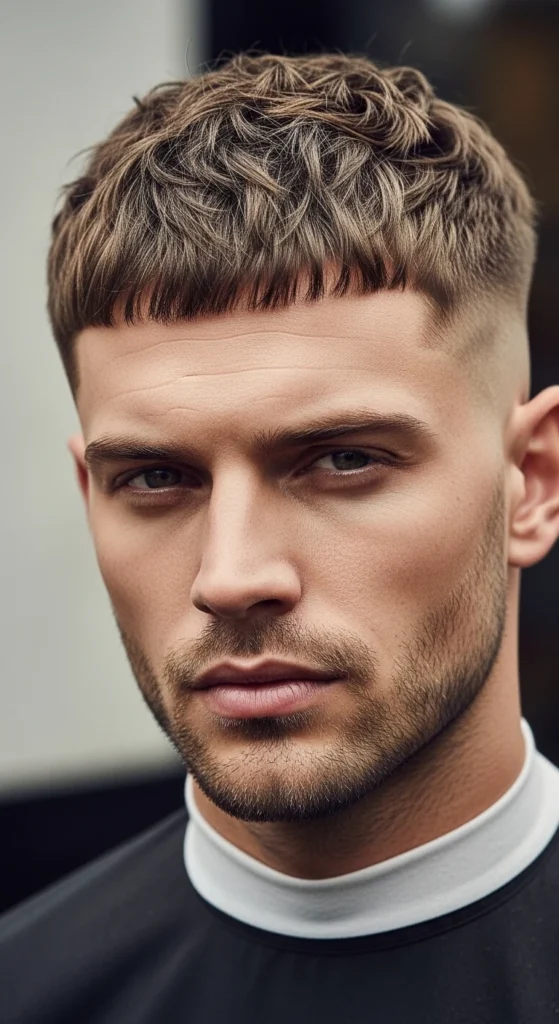
Choppy, cropped, low-effort on top. The kind of style that looks the same on day one and day ten with almost no styling required.
31. Layered Cut
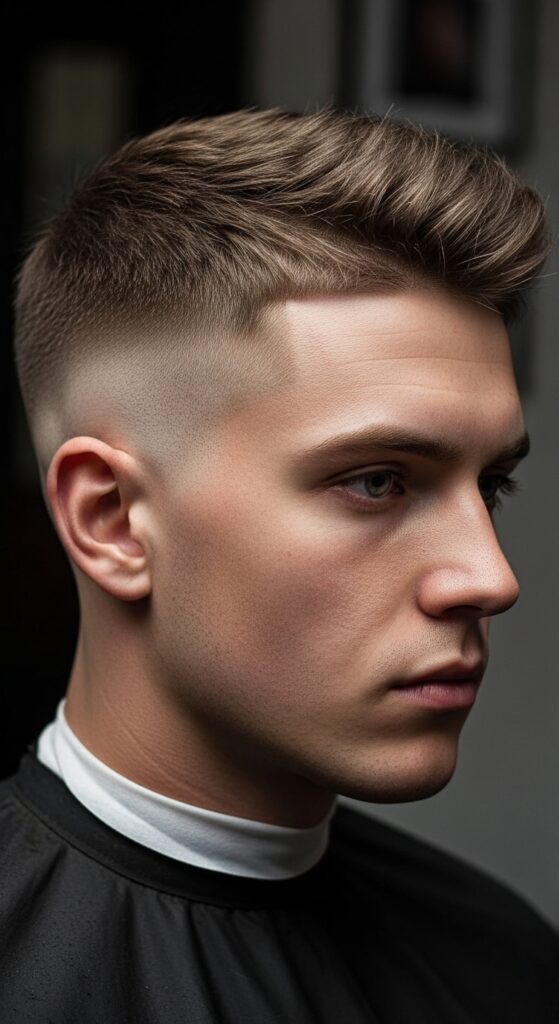
Layered tops add movement without adding bulk, and a mid fade keeps the sides from competing with that movement.
32. Blowout
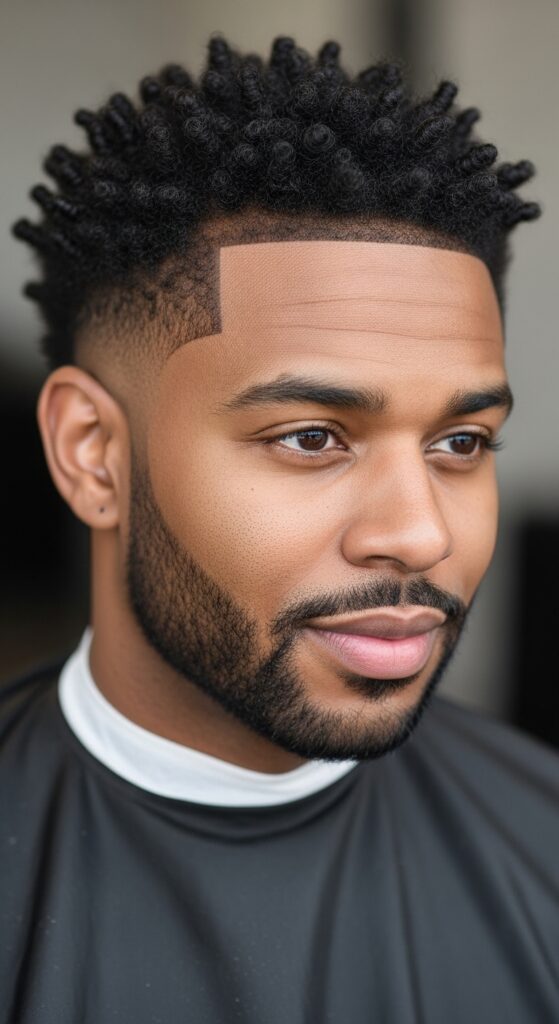
Voluminous, blown-out top against tight, buzzed sides. High energy, and a favorite request at barbershops that specialize in fades.
33. Spiky Hair
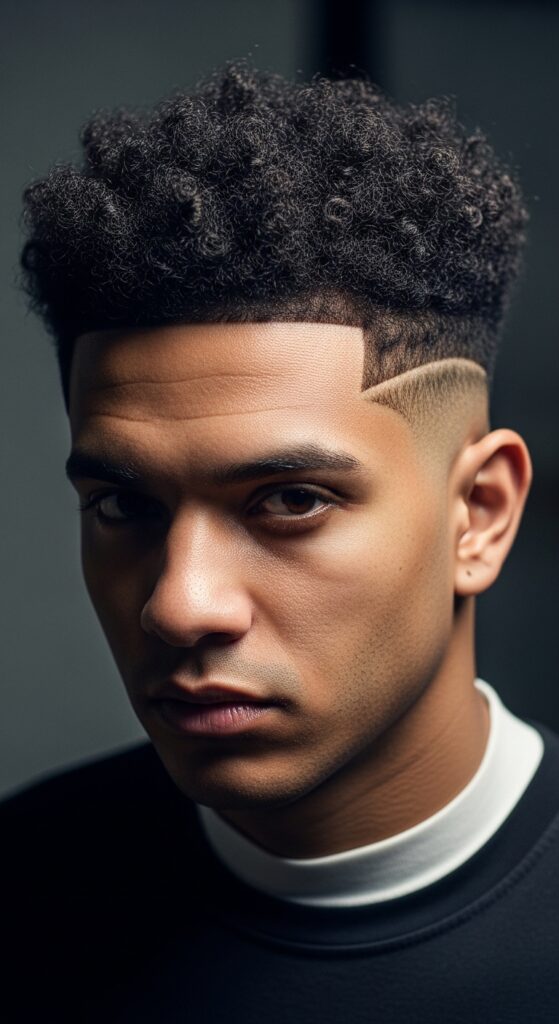
Defined spikes held with a strong wax or gel, sitting on top of a clean mid fade. A younger, energetic look overall.
34. Brush Back
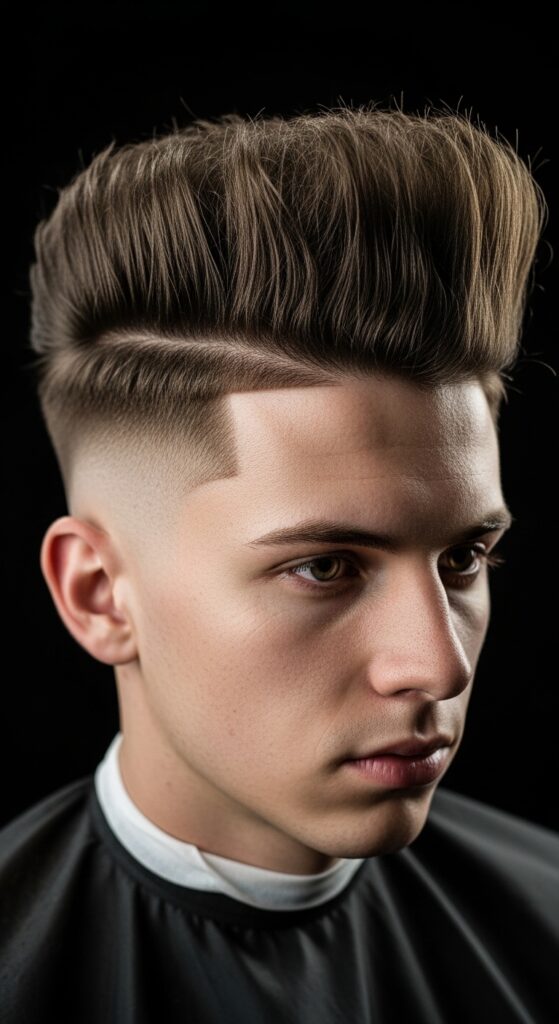
Medium hold, brushed back off the forehead. Less shiny than a slick back, more polished than letting it fall naturally.
35. Comb Back
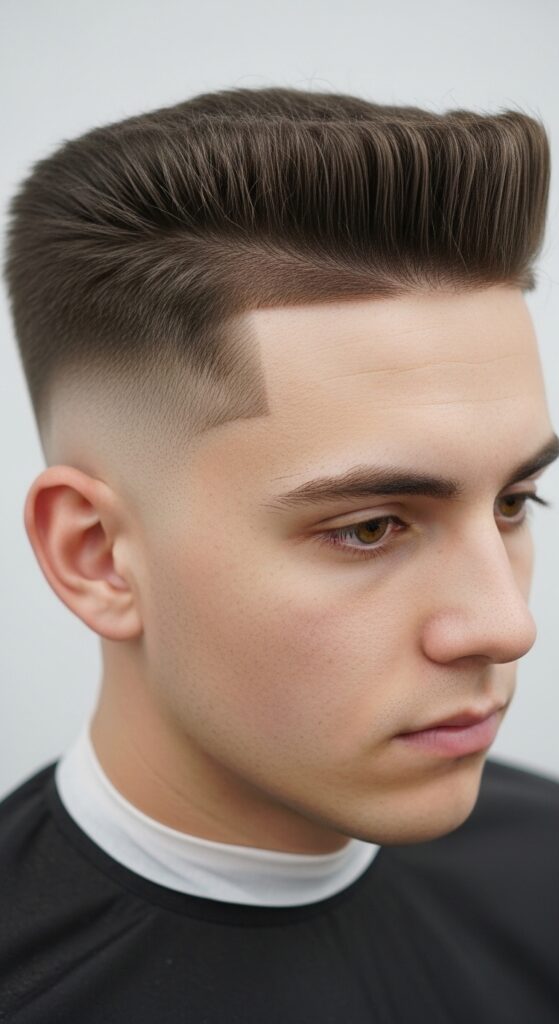
A looser cousin of the slick back, more texture, less shine. The mid fade keeps it structured underneath.
36. Flat Top
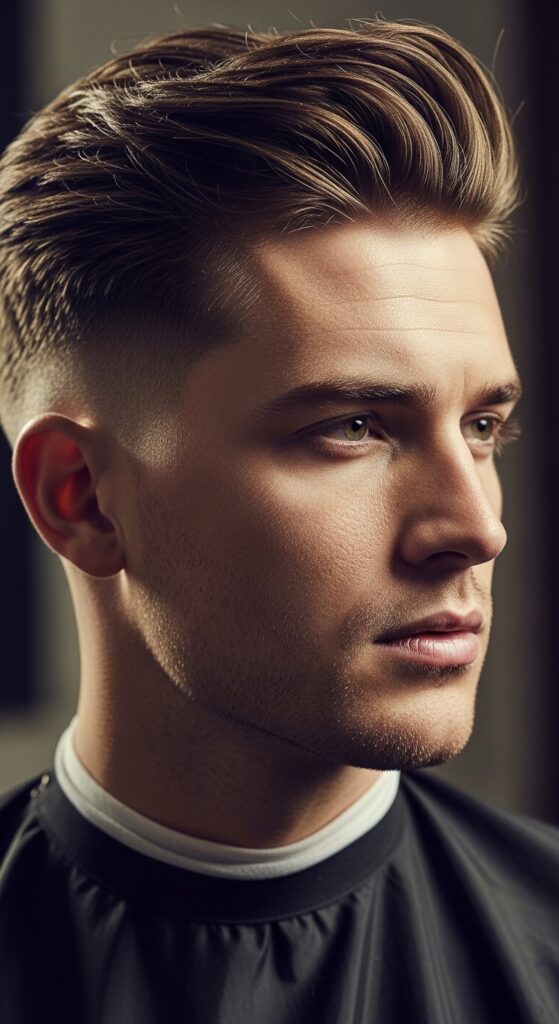
A retro shape that’s been resurfacing lately. Cut flat and squared on top, faded clean on the sides.
37. High Top
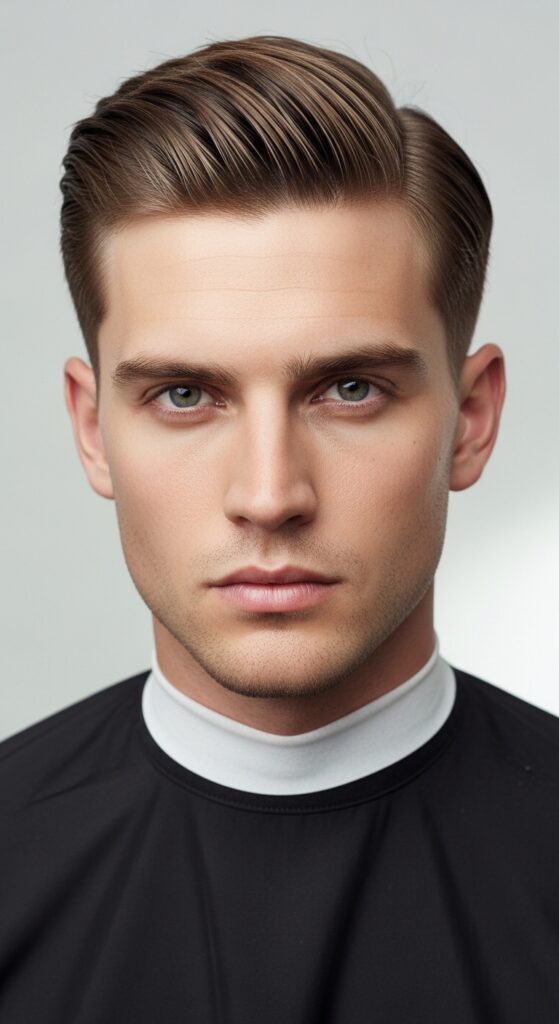
Maximum height on top, tight sides underneath. Rooted in urban barbering culture and still turns heads today.
38. Twist Out
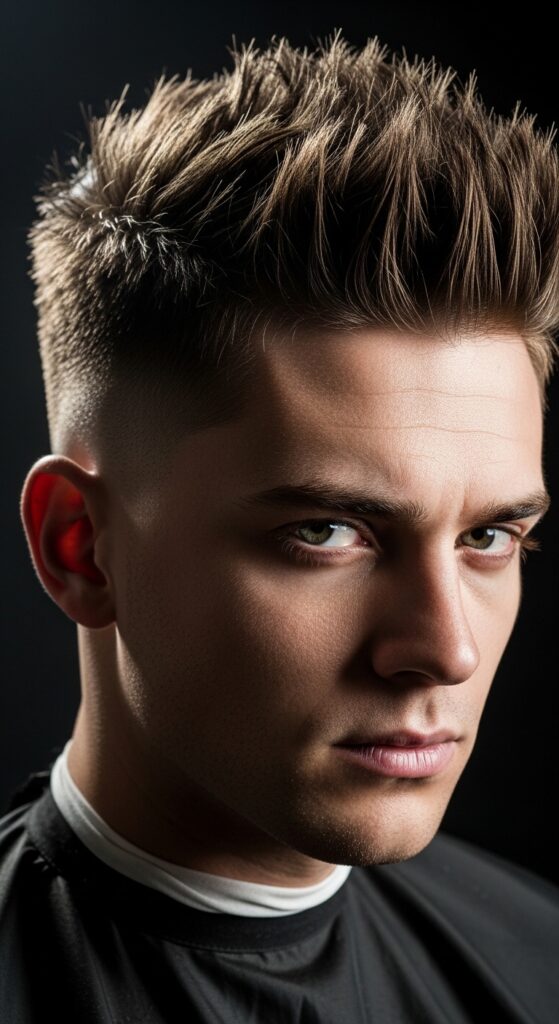
Defined twists on top, sharp sides underneath. One of the better ways to show off natural texture without sacrificing structure.
39. Finger Coils
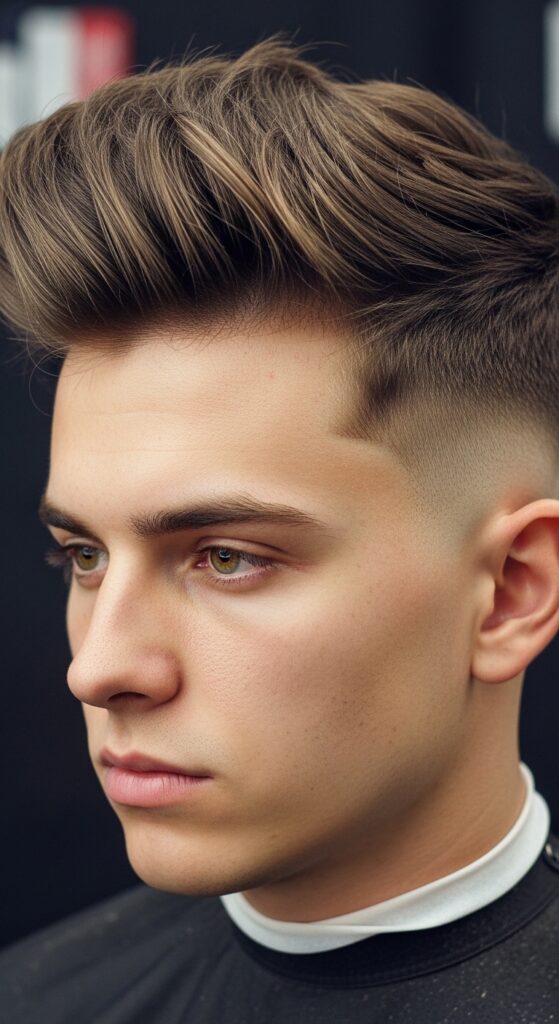
Precisely shaped coils on top, contrasted against a clean mid fade. Detailed work that photographs well.
Mid Fade by Finish Type
Not every mid fade ends the same way. How far it goes changes the entire personality of the cut.
40. Mid Skin Fade
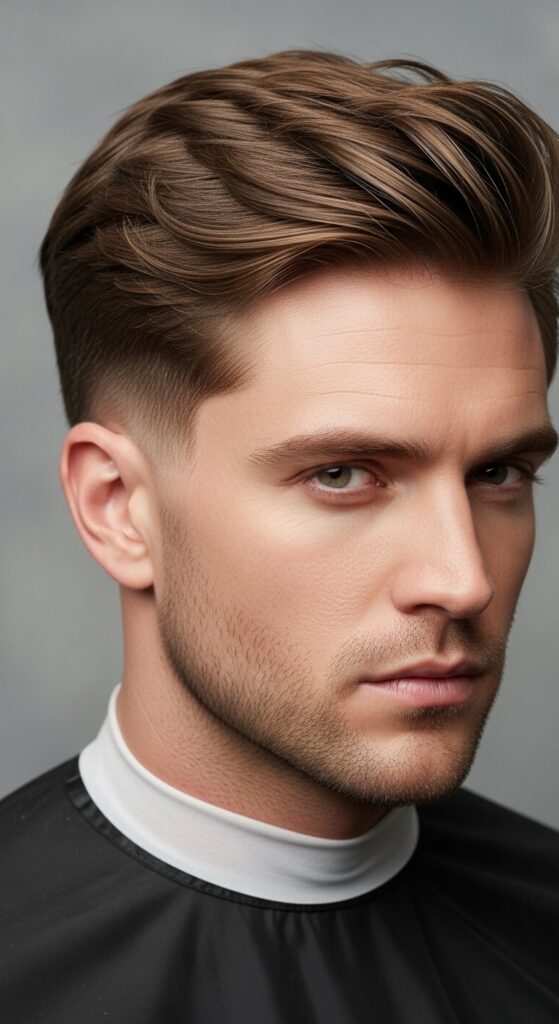
Goes all the way down to bare skin at the bottom. This is the version most people picture when they hear “mid fade,” sharp, modern, and unmistakable.
41. Mid Drop Fade
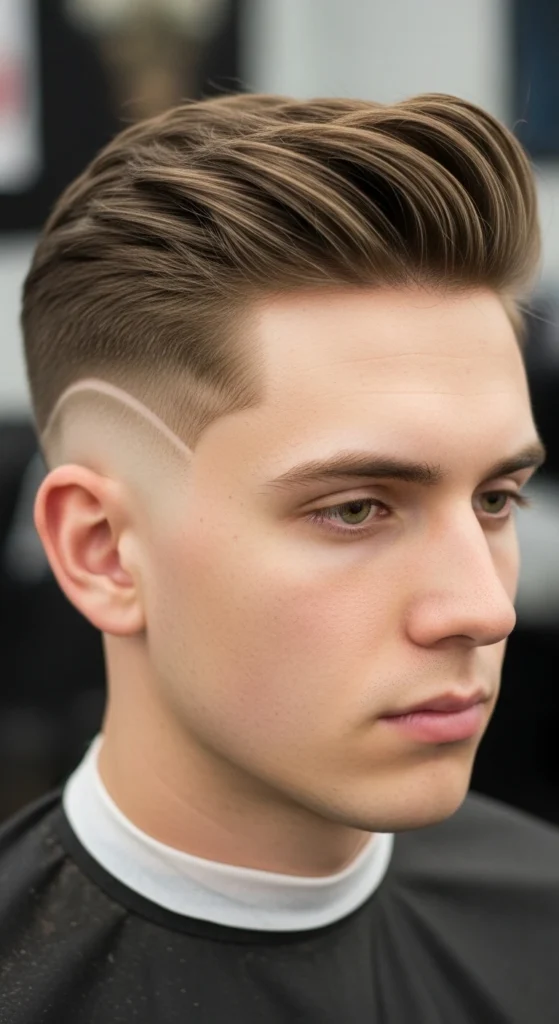
Instead of a straight line, the fade curves downward behind the ear, following the natural shape of your head. Adds a subtle sense of dimension.
42. Mid Burst Fade
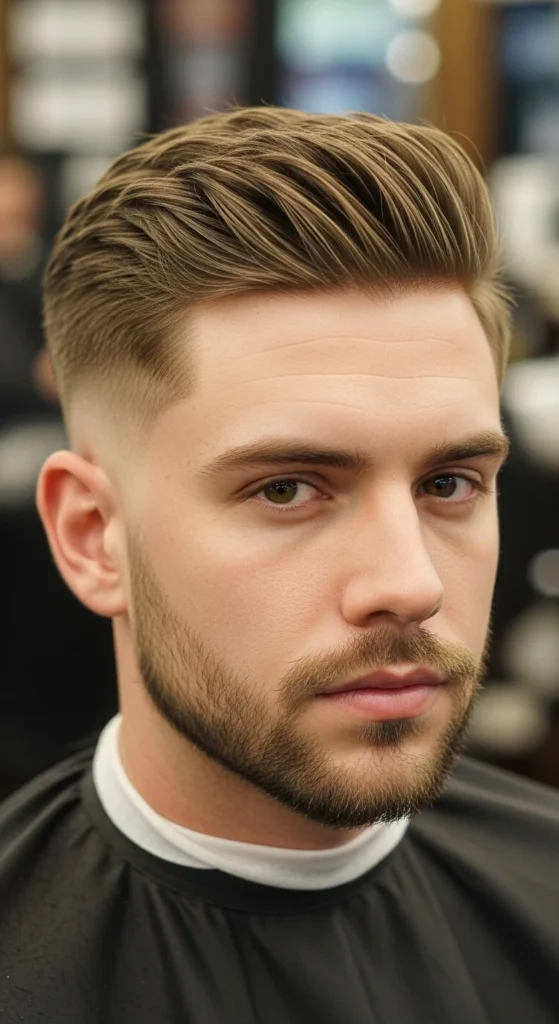
Fans out around the ear in a semicircle. A common pairing with mohawks and curly tops for something a little different.
43. Mid Temp Fade
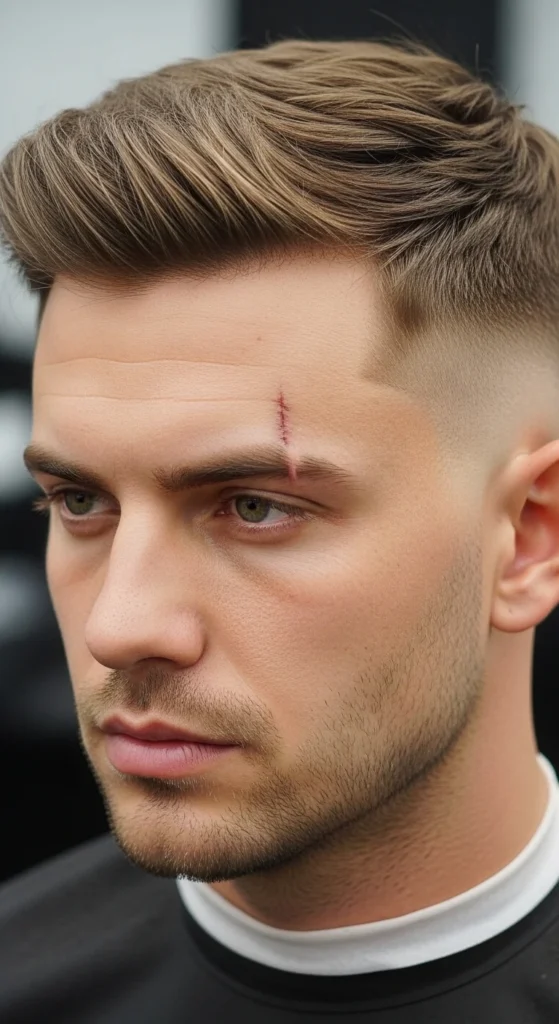
Concentrated purely around the temples rather than sweeping across the whole side. Subtle, clean, and easy to overlook until you notice how sharp it looks.
44. Mid Taper Fade
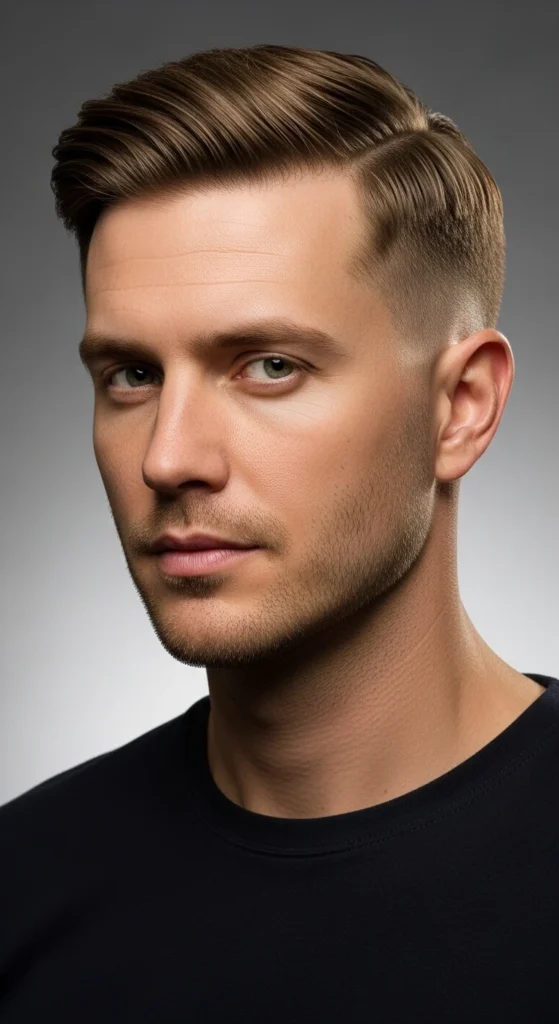
Never reaches skin, so the transition is softer than a skin fade. For the full breakdown of how this compares, see our mid taper fade guide.
45. Mid Shadow Fade
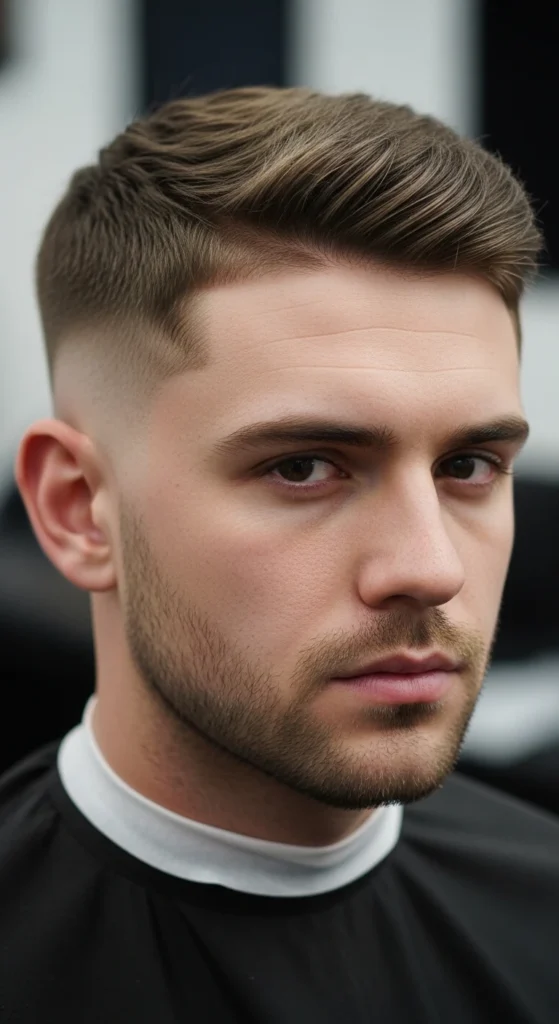
A faint hint of hair remains even at the shortest point, so it never fully bares the scalp. A quieter, more understated finish.
46. Mid Bald Fade
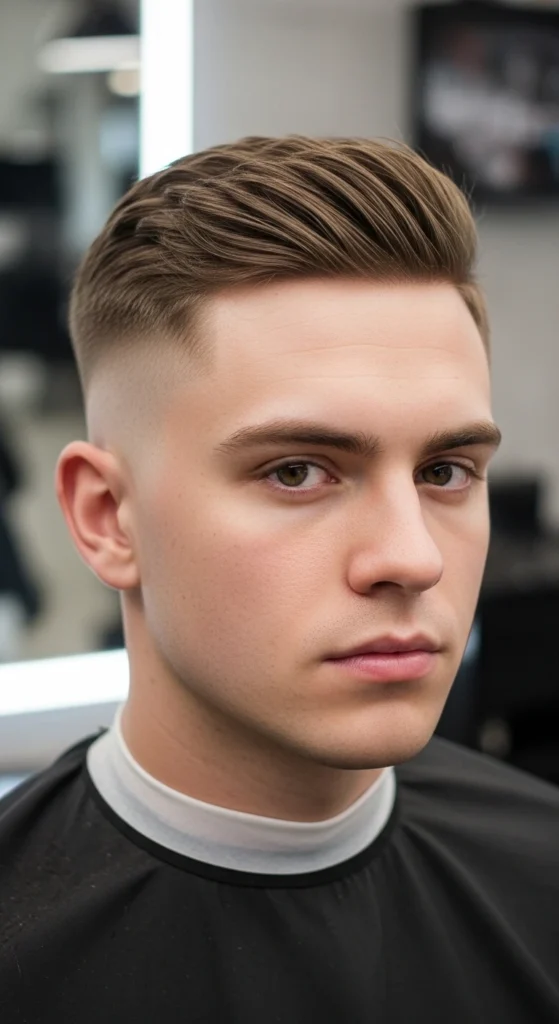
The most extreme version of the bunch, sides buzzed completely down. Bold, sharp, and unapologetic.
Mid Fade for Different Life Stages
47. For Black Men
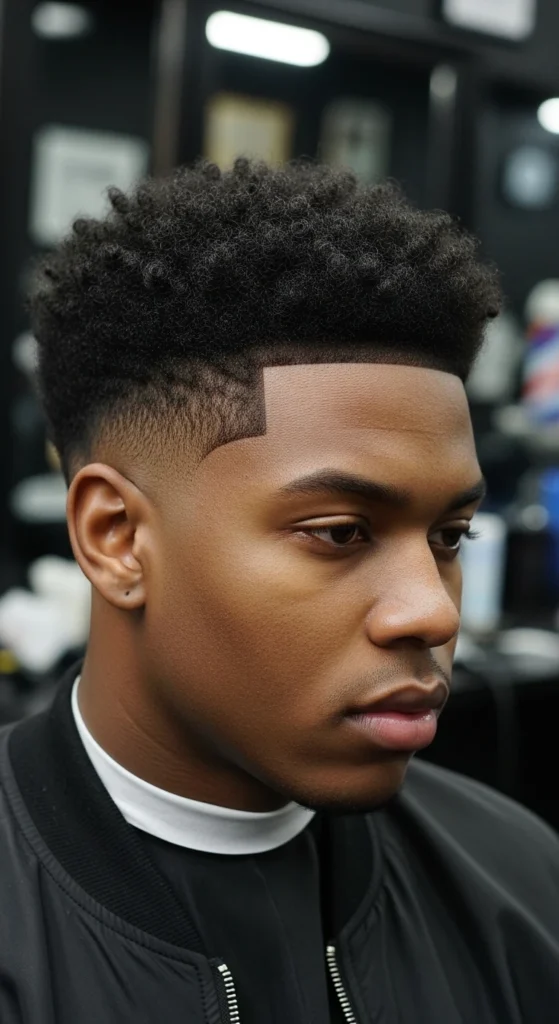
Often paired with waves, line-ups, or a shaved design for extra detail. Built to work with tight coils and textured hair rather than against them.
48. For Asian Hair
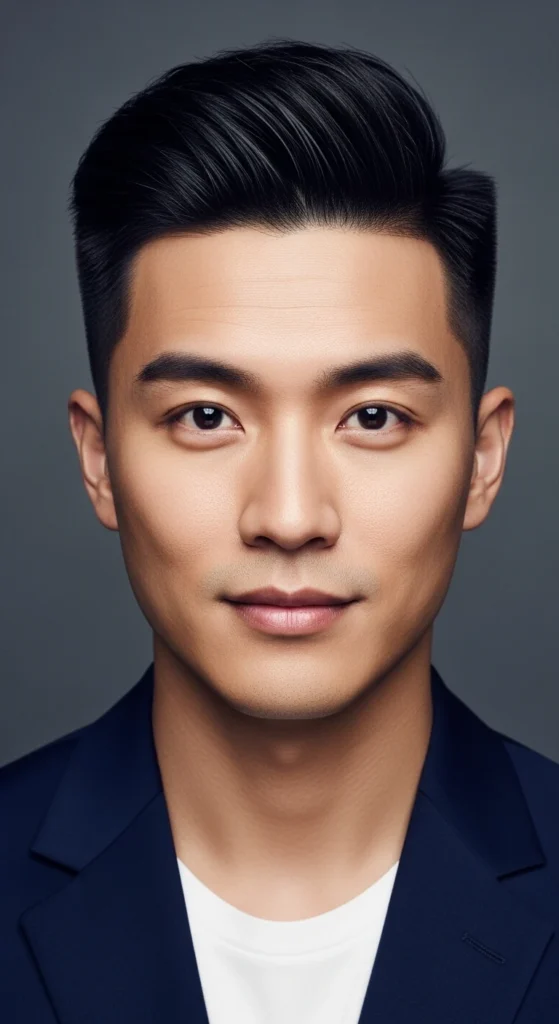
Thick, straight hair takes the fade line especially well, since there’s less texture to blur the edge. Reduces bulk on the sides while keeping fullness on top.
49. For Kids and Boys
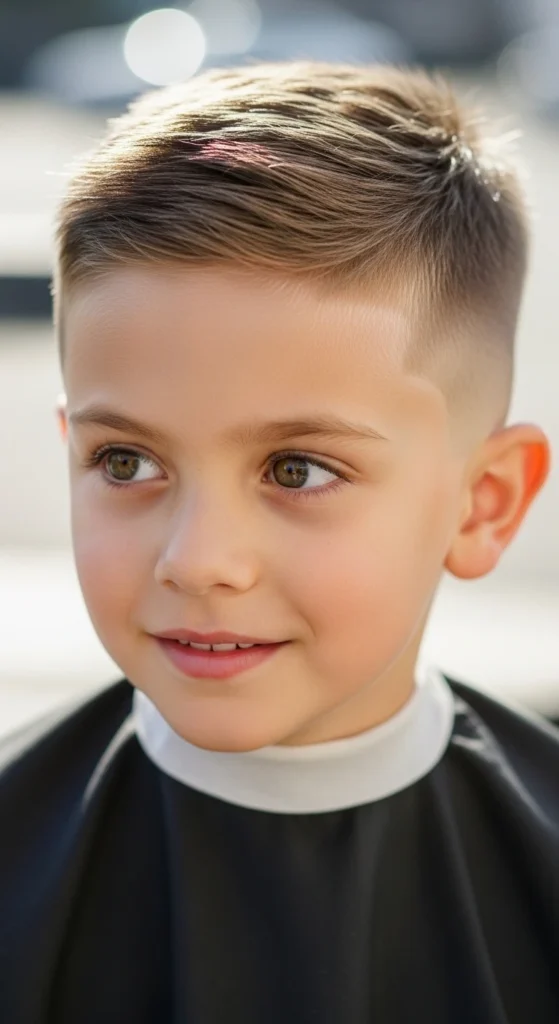
Practical for parents, since it grows out reasonably well between school haircuts and still looks tidy in the meantime.
50. For Teenagers
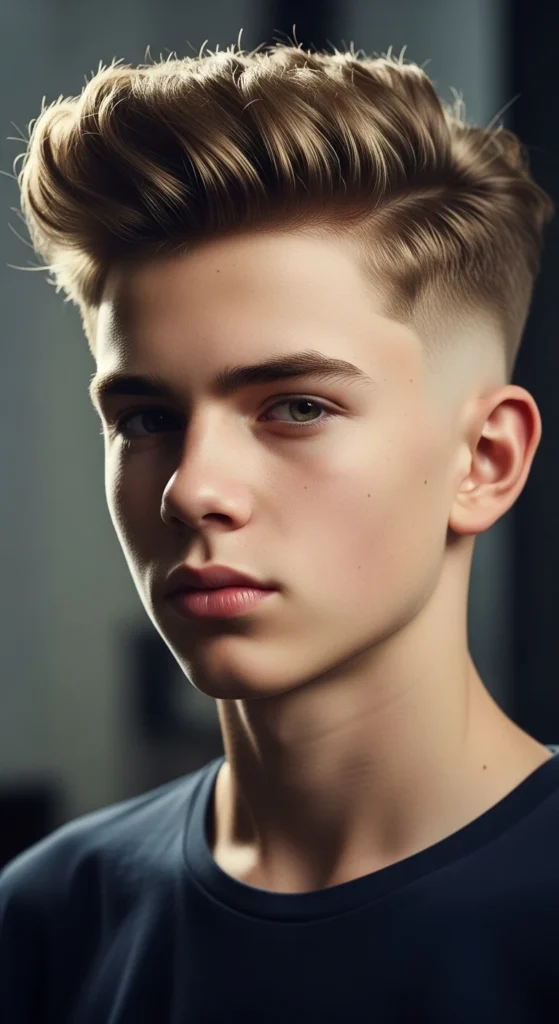
Pairs well with spikes, textured tops, or a simple hair design if a teen wants to stand out a little more.
51. For Mature Men
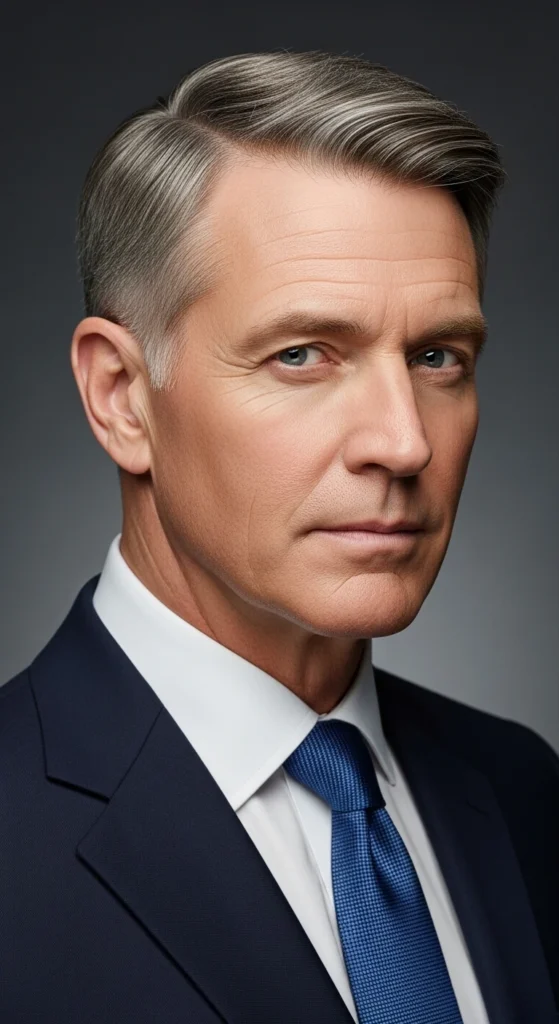
A more conservative taper version reads distinguished rather than trend-chasing, without looking dated either.
Mid Fade With a Design Cut In
52. Line Design
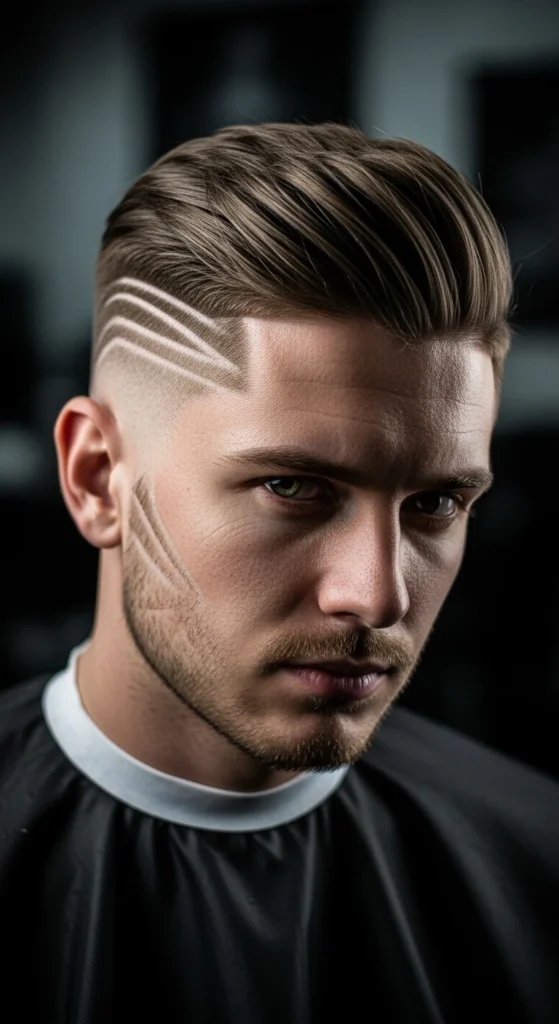
Straight lines, curves, or lightning bolts shaved into the fade itself. A way to personalize an otherwise standard cut.
53. Hard Part
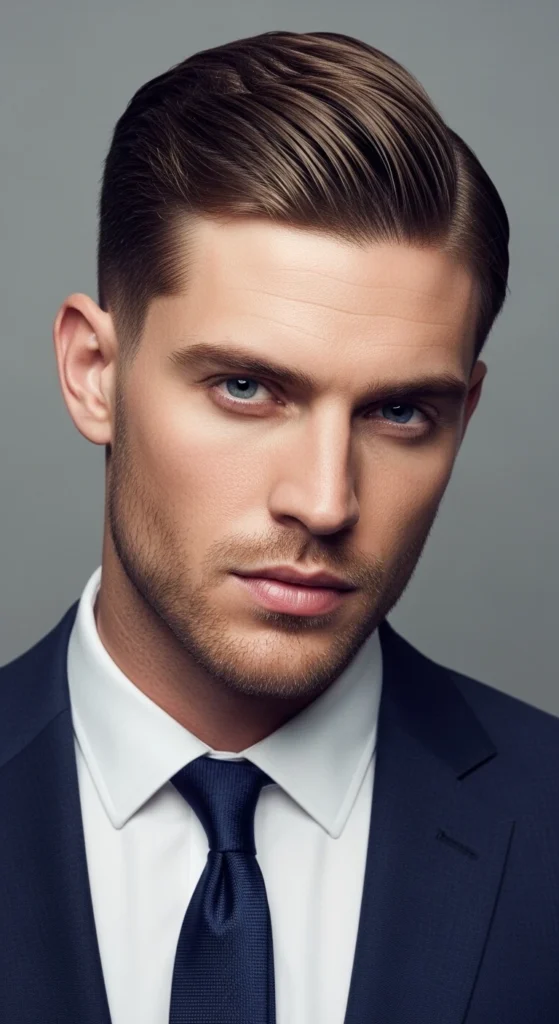
A shaved line emphasizes wherever the part naturally falls, giving the whole cut a sharper, more deliberate finish.
54. V-Shape Back
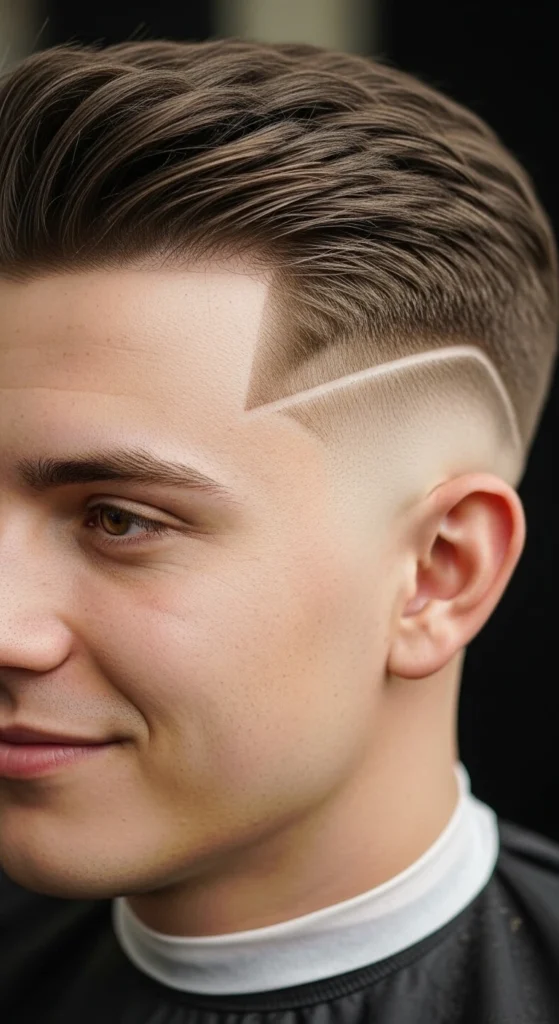
A small detail at the nape that most people won’t notice head-on, but it’s a nice finishing touch from behind.
55. Lightning Bolt
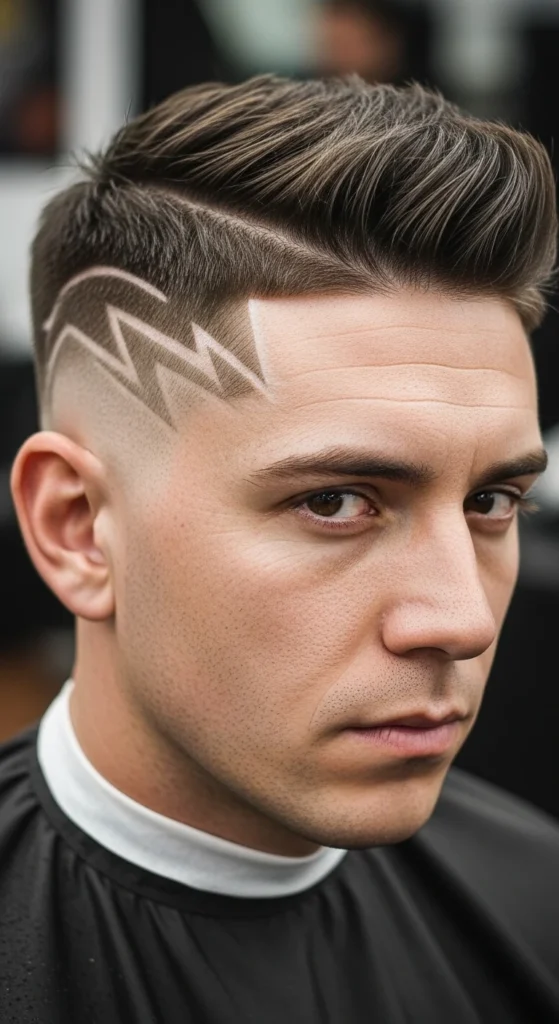
A quick way to add personality without redesigning the whole cut. Popular with a younger, sportier crowd.
56. Star Design
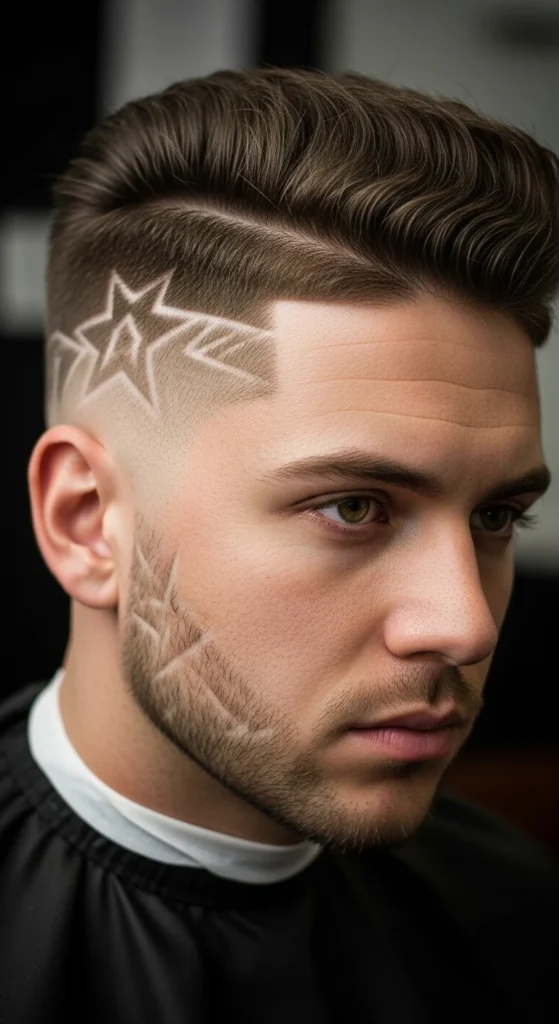
Can be as subtle or as bold as you want, small and tucked near the temple, or large and impossible to miss.
57. Cross Design
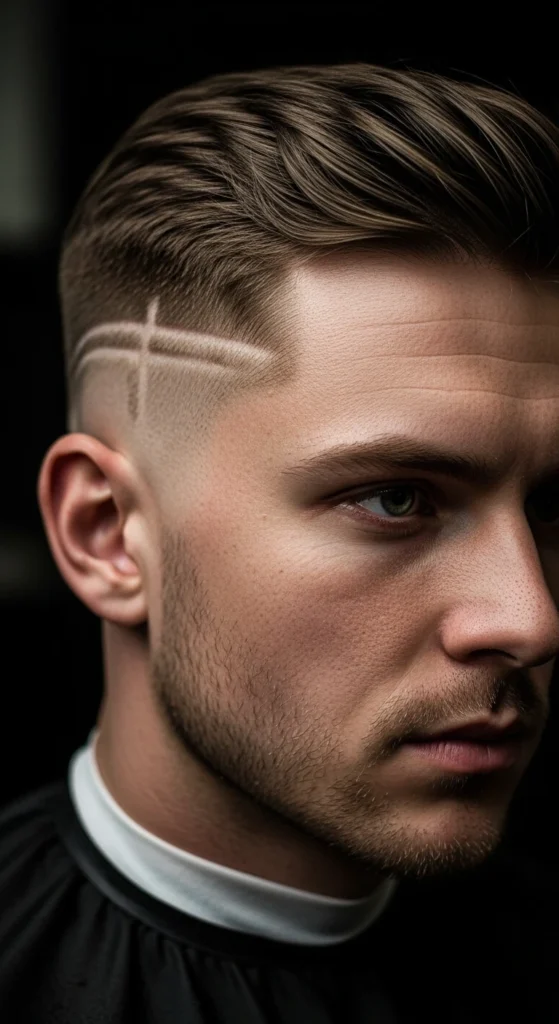
Often chosen for its personal meaning as much as its look, a small but distinctive detail in the fade.
Mid Fade and Facial Hair
58. Disconnected Beard
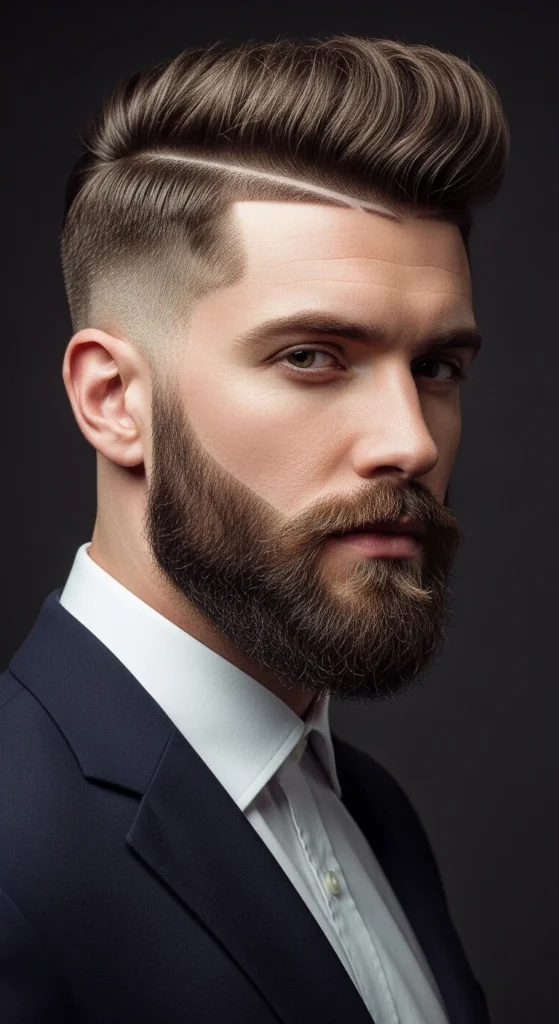
A clear break between the fade and the beard line reads deliberate rather than accidental, sharp on both fronts.
59. Blended Beard
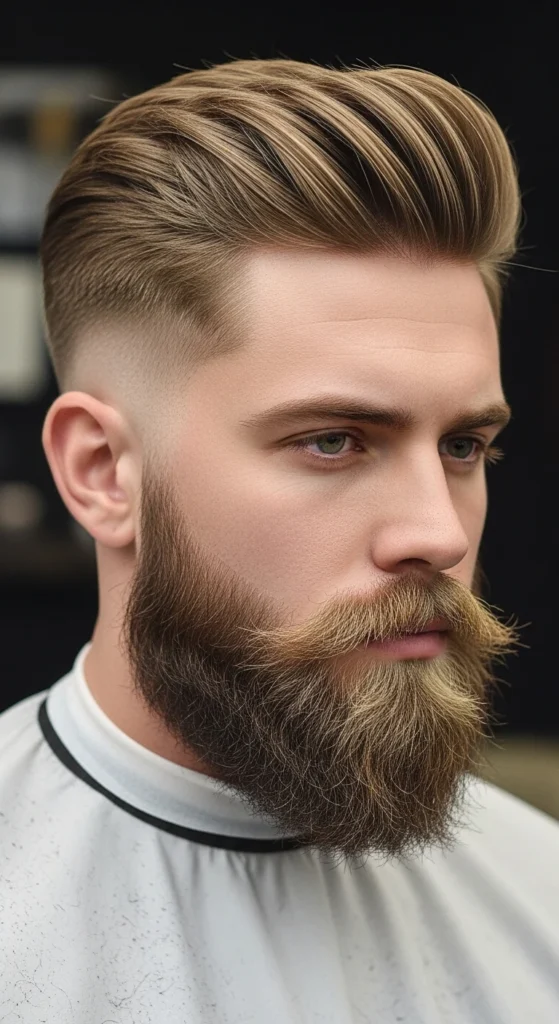
No visible line where the fade meets the beard. For more on getting this blend right, see our buzz cut with beard guide.
60. Full Beard
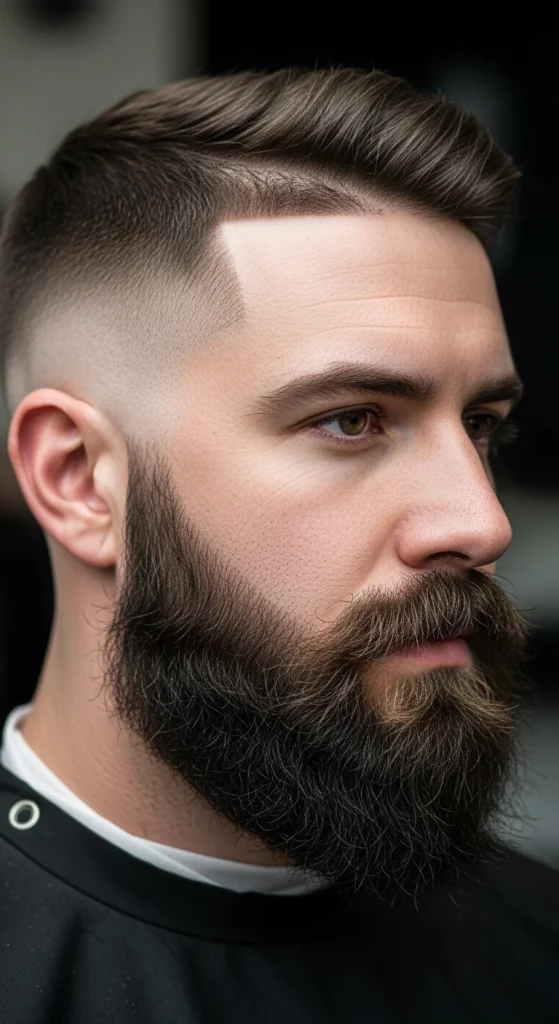
Tight sides against a full beard is one of the more masculine combinations you can ask for.
61. Stubble
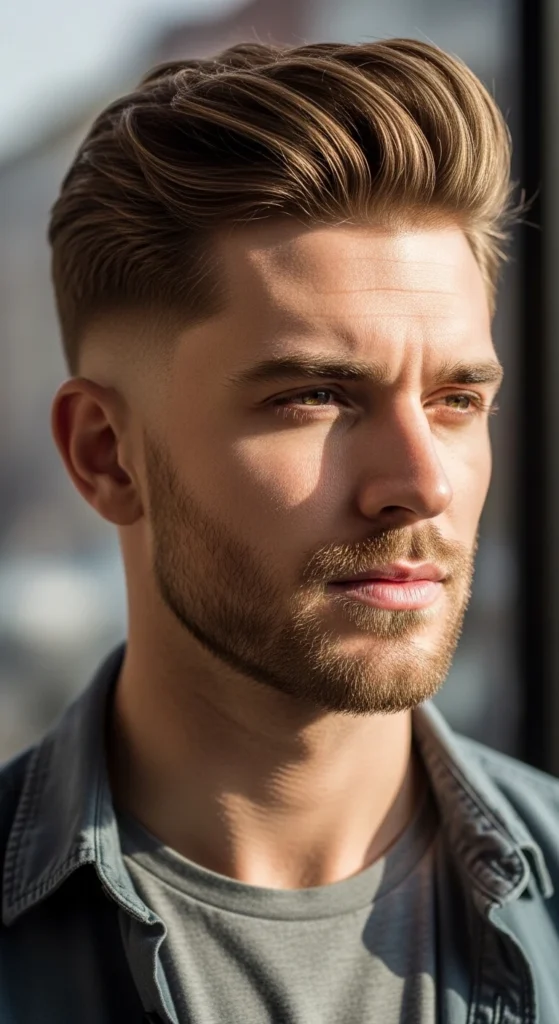
Low-effort, still looks put together. Suits both casual weekends and the office.
62. Goatee
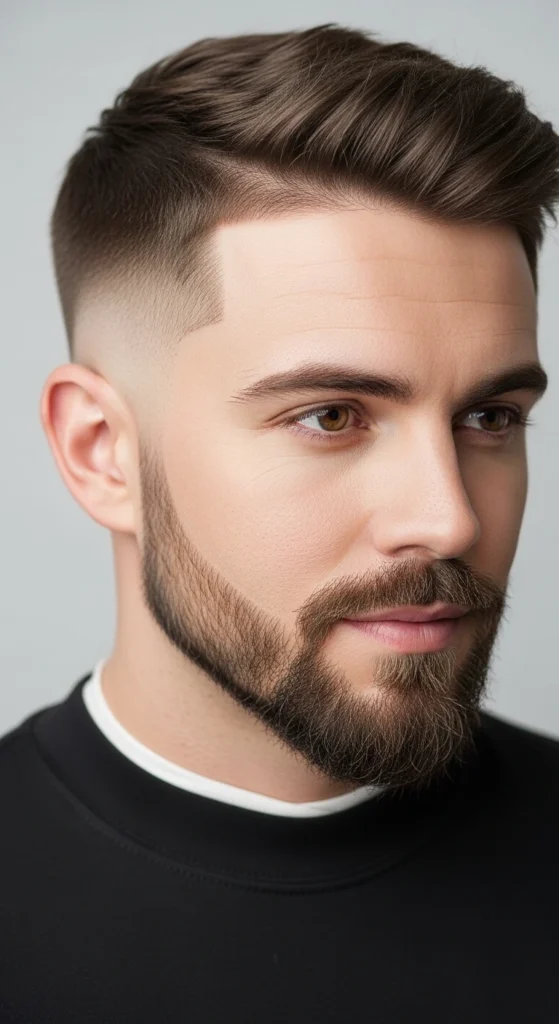
Focused facial hair around the mouth and chin draws attention to the jawline, and pairs naturally with clean sides.
Where the Line Actually Falls
Forget the anatomy jargon for a second. Stand sideways in front of a mirror and picture your head split into thirds, from your ear up to the crown. A low fade lives in the bottom third. A high fade lives in the top third. A mid fade sits exactly in the middle third, roughly level with the corner of your eyebrow when you trace a line back toward your ear.
That’s the visual test most barbers actually use, even if they never say it out loud. If your barber starts clipping noticeably above your eyebrow line, you’re heading toward a high fade. Below it, you’re drifting toward a low fade.
Mid Fade or Mid Taper, Not the Same Request
This mix-up sends more people home unhappy than almost any other fade confusion.
Ask for a mid fade and the barber will take the sides down to skin or close to it at the bottom. Ask for a mid taper fade and the hair gets progressively shorter but never fully disappears, there’s always some length left even at the tightest point.
Pro Tip: Not sure which one you want? Ask for a mid taper first. It’s easier to go shorter at your next visit than to grow a skin fade back out.
How the Three Heights Stack Up
| Fade Type | Starts At | Feels Like | Grows Out |
|---|---|---|---|
| Low Fade | Just above the ear | Understated, corporate-safe | Slowly, forgiving between cuts |
| Mid Fade | Eyebrow-level on the temple | Balanced, the “default” request | Moderate, 2-3 weeks |
| High Fade | Near the parietal ridge | Bold, statement-making | Fast, needs frequent upkeep |
Which One Fits You?
Lean low if:
- This is your first time asking for any kind of fade
- Your workplace skews conservative
- You’d rather stretch time between cuts than chase a sharp line
Lean mid if:
- You want one haircut that works for both the office and the weekend
- You have a round or square face and want a bit of added length
- You’re not sure what you want yet, this is the safest bet
Lean high if:
- You want the top of your head to be the main event
- Your hair is thick or curly and needs the extra contrast for shape
- You don’t mind more frequent barbershop trips
The Five Ways a Mid Fade Can End
Height is only half the equation. Where the fade stops matters just as much.
Skin
Tapers all the way to bare skin. The crispest, most photogenic version, but also the one that needs the most upkeep, every 1-2 weeks to stay sharp.
Drop
Instead of a straight horizontal line, the fade curves down behind the ear. Adds dimension and pairs particularly well with mullets or anything with length in the back.
Burst
Fans out in a semicircle around the ear rather than running straight across. A favorite with mohawks and curly tops for something a bit more unusual.
Temple-only
Instead of sweeping across the whole side of the head, the fade stays concentrated right at the temple. Subtle enough that people notice the effect before they notice the technique.
Taper
Never reaches skin. Softer, slower to show regrowth, and generally the safer choice if you’re getting a fade for a formal event and don’t want an obviously “fresh cut” look.
Key Point: How you finish the fade changes your maintenance schedule more than the height does. Skin finishes need visits every 1-2 weeks. Taper finishes can stretch to 3-4.
Matching the Cut to Your Face
Round
Go for height on top, quiffs, pompadours, textured crops, since a mid fade already trims the width off the sides. Skip low fades here; extra hair on the sides only adds back the width you’re trying to lose.
Oval
You have the easiest job of anyone reading this. Almost every variation on this page will suit you. Pick based on lifestyle, not face shape.
Square
Soften things with texture on top rather than sharp, geometric styling. A textured fringe or wavy top works better here than anything too structured.
Heart-Shaped
Build volume at the crown to balance a wider forehead against a narrower chin. Avoid adding extra width right at the temples, it exaggerates the forehead instead of balancing it.
Long or Oblong
Resist the urge to add height. A mid fade with moderate top length reads better than a high fade with a tall silhouette, which only stretches the face further. Side parts and comb overs are safer bets here.
Tip: A photo does more than a description ever will. Bring 2-3 references showing your face shape before you sit down.
Sitting in the Chair: What to Actually Say
Most disappointing haircuts come down to vague instructions, not bad barbers. Here’s a script that removes the guesswork:
“I want a mid fade, starting at temple level, about level with my eyebrow. Take it down to skin at the bottom [or: keep some length, I want a taper, not a full fade]. On top, leave [describe length or use a guard number]. Neckline squared off, not rounded.”
That single sentence covers height, finish, top length, and neckline, the four things that actually determine how the cut turns out.
Common Mistakes People Make Asking for This Cut
- Saying “medium fade” instead of “mid fade.” They sound similar but aren’t standard terminology. Stick with “mid.”
- Not specifying skin vs. taper. This is the single biggest source of miscommunication. Always clarify.
- Forgetting to mention the neckline. Barbers default to whatever they think looks best, which isn’t always what you’d choose.
- Assuming your barber remembers last time. Even regulars benefit from a quick reminder, hair grows differently between visits.
Guard Numbers, Translated
| Guard | Length | Where It’s Used |
|---|---|---|
| 0 / Skin | 0mm | Bottom edge of a skin fade |
| 0.5 | 1.5mm | Blending between zero and the first real guard |
| 1 | 3mm | Lower portion of the fade |
| 1.5 | 4.5mm | Transition zone |
| 2 | 6mm | Where most mid fades begin |
| 3 | 10mm | Upper blend area |
| 4+ | 13mm+ | Top length for shorter styles |
Fact: Ask ten barbers what guard they’d start a mid fade with, and most will say #2. It’s the industry default for a reason, enough coverage to still look intentional, short enough to blend cleanly.
Keeping It Sharp Between Visits
Prep and Product
Start with towel-dried hair, damp but not soaked. If you’re blow-drying, a heat protectant goes on first. Work product through from roots to ends: focus on the roots for volume, the mid-lengths for texture. A little goes a long way, you can always add more, but you can’t take it back out.
Shaping It
Medium heat only, high heat just damages hair over time for no real styling benefit. Lifting the roots while drying builds volume. Following your part with a brush keeps things sleek. For quiffs and pompadours, wrap the front section around a round brush and pull up and back while applying heat.
Product Cheat Sheet
| Goal | Reach For |
|---|---|
| Natural texture | Matte clay or texture powder |
| Sleek and shiny | Pomade or styling cream |
| Maximum volume | Mousse or volumizing spray, applied at the roots |
| Curl definition | Curl cream or leave-in conditioner, scrunched in damp |
| Wave enhancement | Sea salt spray |
| Strong hold | Gel or strong-hold pomade |
How Long Before You Need a Touch-Up
| Finish | Visit Every |
|---|---|
| Skin | 1-2 weeks |
| Taper | 2-3 weeks |
| Drop | 2-3 weeks |
| With a design shaved in | Weekly, the lines blur fast |
Signs You’re Overdue
- A visible line of regrowth at the bottom edge
- Sides that look fuzzy rather than crisp
- The top starting to overpower the fade proportionally
- Any shaved design losing its definition
Money-Saving Tip: Most shops offer a cheaper “fade-only” touch-up between full cuts. Ask about it instead of paying full price every visit.
FAQs
What exactly makes a fade “mid”?
It’s purely about height. If the blend starts roughly level with your eyebrow when traced back to the side of your head, that’s mid. Higher than that, it’s a high fade. Lower, it’s a low fade.
Mid fade or mid taper, which should I ask for?
Mid fade goes down to skin at the bottom. Mid taper keeps some length throughout and never fully bares the scalp. If you’re unsure, taper is the safer, more reversible choice.
Does this work for a round face?
Yes, arguably better than most other fade heights. Trimming the sides reduces perceived width, and pairing it with height on top (a quiff, textured crop) elongates the face further.
How long does the sharpness actually last?
Around 2-3 weeks before it starts softening. Skin finishes fade faster, taper finishes hold their shape longer.
Will it work with curly hair?
Very well. The contrast between clean sides and textured curls is one of the more popular combinations barbers cut, and curly hair actually makes the blend look more seamless in some cases.
What’s the fastest way to explain what I want?
One sentence covering four things: height (“mid, at eyebrow level”), finish (“skin” or “taper”), top length, and neckline preference. That alone eliminates most miscommunication.
Is it appropriate for a formal workplace?
Generally yes, especially the taper finish. Skin finishes can look a touch more casual depending on your office, when in doubt, taper reads more conservative.
What guard should I mention?
Most barbers start around a #2 or #3 and blend down from there. You don’t need to know the exact numbers, just knowing the starting point helps.
What should I budget for one?
Typically $25-$50 at a standard shop in the US, more at higher-end barbers. Touch-ups between full cuts usually run cheaper, often $15-$25.
How is this different from a high fade?
Purely the starting height. High fades begin further up, near the widest part of the head, and remove more hair overall, creating a bolder, more dramatic contrast.
Can I keep it looking decent between barber visits on my own?
Small touch-ups, cleaning up the neckline or a stray edge, are doable with a trimmer at home. The actual blend itself is harder to maintain yourself and is best left to a barber.
Conclusion
A mid fade earns its popularity honestly. It doesn’t force you into a corporate-safe low fade or commit you to the upkeep of a high fade, it just sits at the height that works with almost any face shape, hair type, and lifestyle. That’s exactly why it’s become the go-to answer when someone says “surprise me” in the barber’s chair.
The real trick isn’t picking a style from the 60+ options above, it’s walking in with the right words. Say “mid fade,” name your finish (skin or taper), give a top length, and mention your neckline. That one sentence does more for your haircut than any photo ever will, though bringing one certainly doesn’t hurt.
If you’re still weighing your options, start conservative. A mid taper fade is easy to take shorter at your next visit, but hard to grow back if you go too aggressive the first time. Once you know how your hair behaves with a fade in the mix, you can push the height or the finish in whichever direction suits you.