
Finding the right slick back haircuts can feel overwhelming. You’ve probably seen the look on celebrities, athletes, and maybe that one guy at the gym who always seems put together. But here’s the thing most guides won’t tell you: the slick back isn’t just one haircut. It’s a whole family of styles, and the version that works for your best friend might look completely wrong on you.
That’s exactly why we built this guide.
We’ve gathered 35 distinct slicked back variations, organized them by hair type, face shape, and lifestyle, and included the exact words to tell your barber. By the time you finish reading, you’ll know exactly which photo to show at your next appointment.
Let’s find your slick back.
What Is a Slick Back Haircut?s
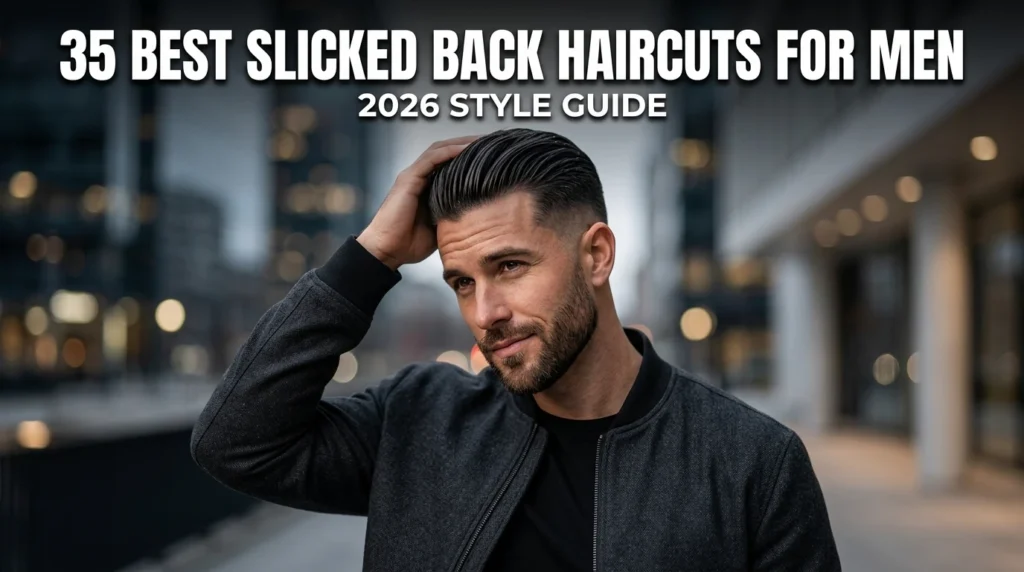
A slick back haircut does exactly what the name promises. You take the hair on top of your head and comb it straight back, away from your forehead. The result is clean, smooth, and confident.
Unlike a pompadour haircut that piles height at the front, or a comb over fade that uses a side part to sweep hair across, the slick back keeps things simple. Everything flows in one direction — backward.
The style has serious history behind it. Hollywood icons like Marlon Brando and James Dean made the slick back famous in the 1950s. Later, Wall Street traders in the 1980s adopted it as their power look. Today, you’ll spot variations on everyone from David Beckham to Timothée Chalamet.
What makes the slick back special is how it works across different settings. You can wear it to a board meeting, a first date, or a weekend barbecue. The key is picking the right variation for you.
How to Choose the Right Slick Back for You
Before we dive into the 35 styles, let’s figure out which ones will actually work for your specific situation. This is the step most guys skip — and it’s exactly why some walk out of the barbershop disappointed.
Match the Style to Your Hair Type
Your hair type is the biggest factor in which slick back you should choose. Here’s the honest breakdown:
Straight Hair: You’ve got the ideal canvas. Straight hair lays flat naturally, which means you can pull off the sleekest, shiniest versions. The Classic Slick Back, Wet Look, and Pompadour variations are all in your wheelhouse. Pomade with a medium to high shine will be your best friend.
Wavy Hair: Don’t fight your waves — work with them. Wavy hair gives you natural texture and volume that straight-haired guys need products to create. The textured crop approach, Messy Slick Back, and Flow styles will look amazing on you. A matte clay or sea salt spray lets your natural wave pattern show while keeping everything directed backward.
Curly Hair: Yes, you can absolutely rock a slick back. The trick is having enough length. Curls need about 4 to 6 inches to reach backward smoothly. Use a curl-defining cream first, then a light-hold gel to direct everything back. Skip the fine-tooth comb — use your fingers or a wide-tooth comb instead. Your result will have personality that straight-haired guys can only dream of.
Thick Hair: You’ve got volume to spare, which means styles with contrast work brilliantly. The Undercut, High Fade, and Pompadour variations take advantage of your density. Strong-hold pomade or clay will keep everything in place all day.
Fine or Thin Hair: You need styles that don’t expose your scalp. A Short Slick Back with a taper keeps things proportional. Volume powder at the roots before styling adds lift. Lightweight creams work better than heavy pomades, which can weigh fine hair down and make it look greasy.
Match the Style to Your Face Shape
The right slick back can make your face look more balanced. The wrong one can throw everything off. Here’s what works for each face shape:
Oval Face: Lucky you. An oval face is the most balanced shape, which means almost any slick back variation will look good. You can experiment freely. The only thing to watch is extreme height, which can make your face appear longer than it is.
Round Face: Your goal is to add height and keep the sides clean. This elongates your face visually. High Fade Slick Backs, Pompadours, and styles with volume at the crown are your best bets. Avoid wide, bulky sides that add width.
Square Face: You’ve got a strong, angular jawline — show it off. Clean fades, Undercuts, and defined styles highlight your bone structure. The Wet Look and Classic Slick Back look especially sharp on square faces.
Rectangular or Oblong Face: You want to avoid adding height, which can stretch your face further. Textured, Messy Slick Backs and side part versions work well. Keep some width on the sides rather than going for super-tight fades.
Heart Face: A wider forehead and narrower chin define your shape. Styles with texture and volume in the mid-length range balance your proportions. Curtain haircuts, Textured Slick Backs, and Medium-Length Flow styles soften the forehead while adding fullness where you need it.
Diamond Face: Narrow forehead and jaw with wider cheekbones. You can wear most slick backs well. The Messy Slick Back, Wavy Slick Back, and styles with a bit of texture across the top complement your natural bone structure.
Consider Your Lifestyle and Maintenance Tolerance
Some slick backs need a barber visit every two weeks. Others can go a month or more. Be honest about how much effort you’re willing to put in.
If you want a wash-and-go situation, stick with Tapers, Scissor Cuts, and Messy or Textured versions. These grow out gracefully and don’t need constant maintenance.
If you’re willing to visit the barber every 1 to 2 weeks, skin fades, High Fades, and Undercuts give you that crisp, just-got-a-haircut look all the time.
Your daily styling routine matters too. A Pompadour Slick Back might need 15 minutes of blow-drying and product work every morning. A Messy Slick Back can be done in 3 minutes with one product and your fingers.
35 Best Slicked Back Haircuts for Guys
Here’s the complete menu. Each style includes who it works best for, how much maintenance it needs, and a quick styling tip you can use tomorrow morning.
1. The Classic Slick Back
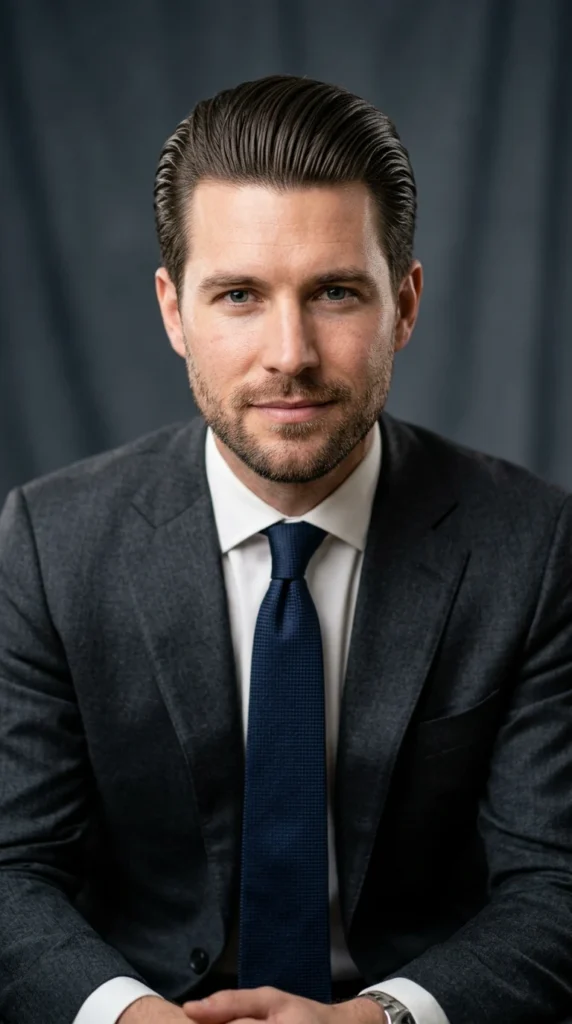
This is the original. Hair is brushed straight back from the forehead with a uniform, polished finish. No part, no texture, just smooth flow. This is what Marlon Brando made famous in the 1950s, and it still works today.
The Classic Slick Back asks for 3 to 5 inches on top with scissor-cut sides that sit close to the head without being shaved. It’s clean, masculine, and timeless.
Best For: Straight to slightly wavy hair. Oval, square, and rectangular faces. Professional settings, formal events, date nights.
Maintenance Level: Medium. Daily styling is required, but fade touch-ups aren’t needed.
Styling Tip: Apply a medium-hold pomade to damp hair, comb straight back with a fine-tooth comb, and finish with a cool shot from your blow-dryer to lock everything in place.
2. Slick Back with Low Fade
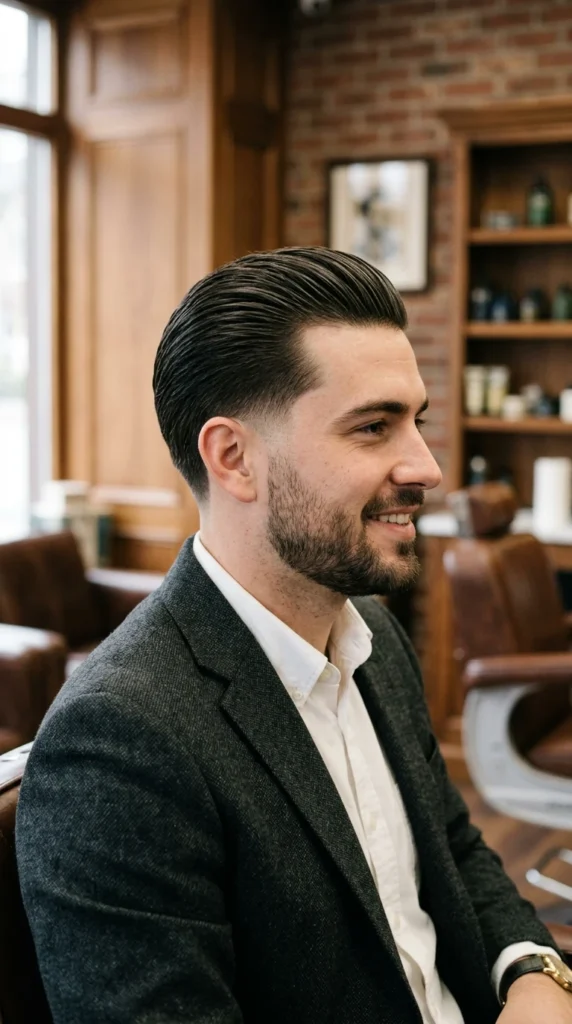
The low fade starts just above the ear and drops subtly toward the neckline. It’s the most conservative fade — noticeable but never aggressive. This makes it perfect for offices, courtrooms, and anywhere you want to look sharp without screaming for attention. If you’re unsure how this compares to a higher fade, check out this guide on low fade vs high fade for a full breakdown.
Best For: All hair types. Round and oval faces. Professional and business casual settings.
Maintenance Level: Medium. Fade refresh every 3 to 4 weeks.
Styling Tip: A water-based pomade gives you hold and shine without making the faded sections look heavy or greasy.
3. Slick Back with Mid Fade
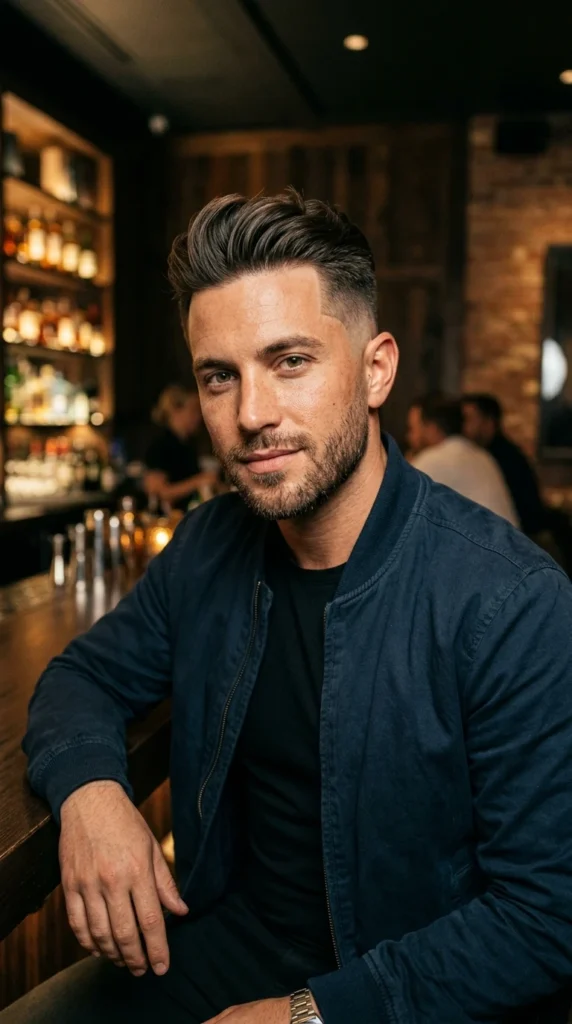
The mid fade starts around the temples and creates balanced contrast between the slicked top and faded sides. This is the most versatile fade height — it works for virtually every face shape and every setting. For more inspiration, explore the full mid fade guide.
Best For: All hair types. All face shapes, especially heart and diamond. Any setting from office to weekend.
Maintenance Level: Medium. Refresh every 2 to 3 weeks.
Styling Tip: Use a vent brush while blow-drying to create volume at the crown before slicking everything back. This gives your mid fade dimension from every angle.
4. Slick Back with High Fade
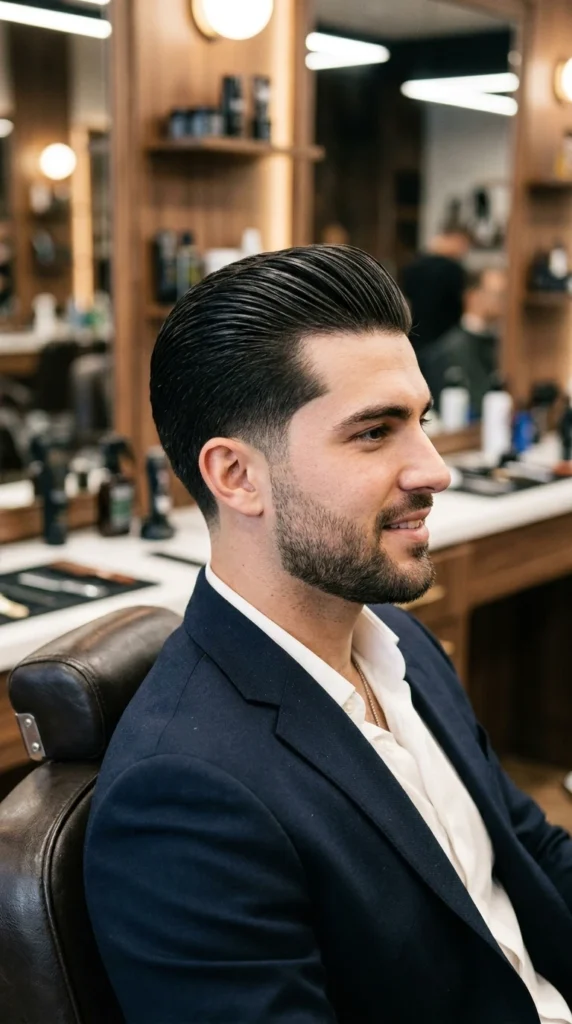
The high fade starts near the top of the temples and drops dramatically. The contrast is bold and unmistakable. This style draws eyes upward and creates a sharp, fashion-forward silhouette.
The high fade works best when you have thick, straight hair on top. The stark difference between the almost-bare sides and the full top creates impact that a low fade simply can’t match. If you have curly hair and are considering this look, see the dedicated guide on high fade curly hair.
Best For: Thick, straight hair. Oval and rectangular faces. Nightlife, creative workplaces, fashion-forward settings.
Maintenance Level: High. Fade refresh every 1 to 2 weeks.
Styling Tip: Strong-hold pomade is non-negotiable. The high contrast demands that the top stays perfectly in place. Any looseness ruins the effect.
5. Slick Back with Skin Fade
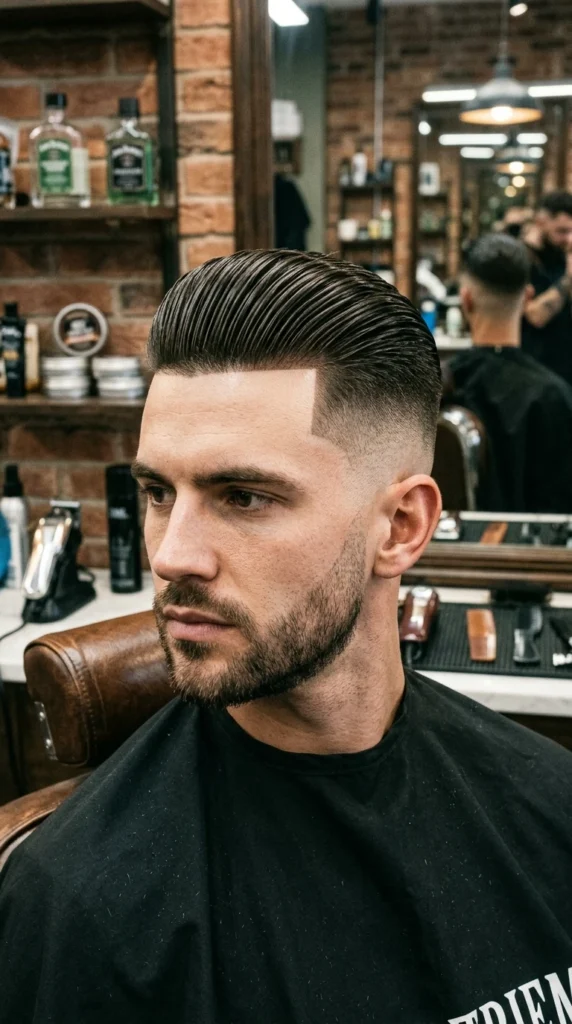
Also called a bald fade, this takes the sides down to the skin. The result is maximum contrast — bare scalp graduating into long, slicked hair on top. This is the boldest fade option available. Learn more about this technique in the complete skin fade guide.
Men who choose the skin fade are making a deliberate style choice. It commands attention and shows you’re willing to maintain your look with discipline.
Best For: Thick, darker hair that creates visible contrast. Oval and square faces. Statement-making settings, nightlife, creative fields.
Maintenance Level: Very high. Weekly barber visits keep the skin fade crisp.
Styling Tip: Pair with a matte clay for a modern, textured finish, or high-shine pomade for old-school drama. Both work — it depends on your personal style.
6. Slick Back with Taper

A taper gradually reduces hair length from the top down to the neckline without ever shaving to the skin. Compared to a fade, it’s softer, more natural, and more conservative. This is what your grandfather might have called “a proper haircut.” If you’re unsure about the difference between these two techniques, this taper vs fade comparison explains it clearly.
The taper works beautifully for men who want a refined look that doesn’t scream “I spend an hour on my hair.”
Best For: All hair types, medium to thick density. All face shapes, especially round and heart. Professional and conservative settings.
Maintenance Level: Low to medium. Refresh every 3 to 4 weeks.
Styling Tip: Styling cream gives you the flexible, natural-looking hold that matches the taper’s soft personality.
7. Slick Back with Low Taper
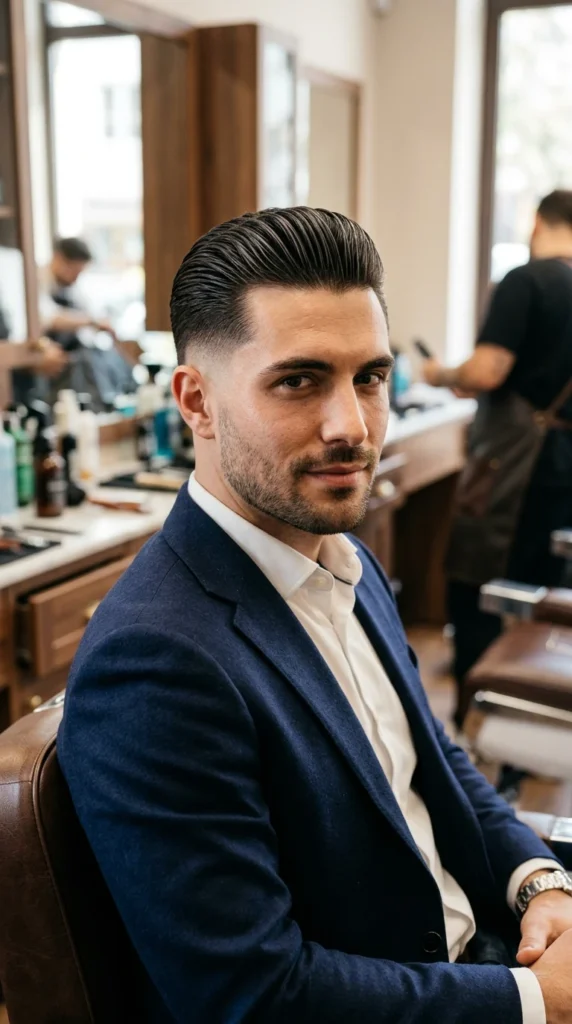
The low taper is even more subtle than the standard version. The graduation starts low on the head, just above the ears, and the transition is nearly invisible. Most people won’t notice you got a haircut — they’ll just notice you look good. For a detailed breakdown of this technique, see the complete low taper fade guide.
This is an excellent choice for men in traditional offices or anyone who wants a slick back without the obvious barbering.
Best For: All hair types. Oval, diamond, and square faces. Business professional and everyday settings.
Maintenance Level: Low. Refresh every 3 to 4 weeks.
Styling Tip: A light styling cream applied to damp hair keeps things looking natural and intentional without obvious product shine.
8. Slick Back with Mid Taper
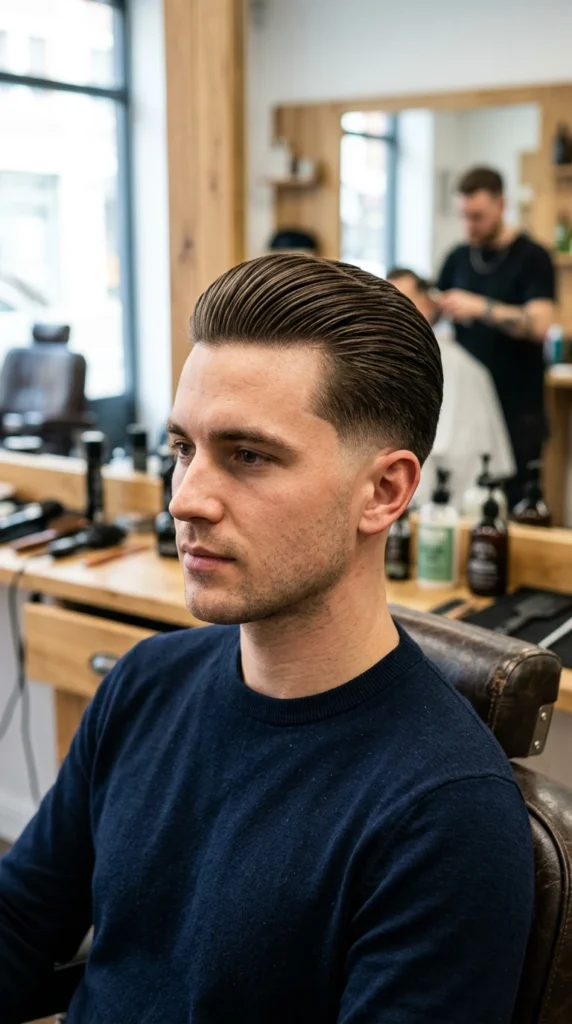
The mid taper blends at the midpoint of the head, giving you more definition than a low taper but less drama than a fade. It’s the Goldilocks option — just right for most men. See the full mid taper fade guide for more inspiration.
Best For: Medium-thickness hair. Oval and round faces. Professional and smart casual settings.
Maintenance Level: Medium. Refresh every 3 weeks.
Styling Tip: Molding paste provides hold and a touch of texture that matches the mid taper’s gradual blend.
9. Slick Back with High Taper
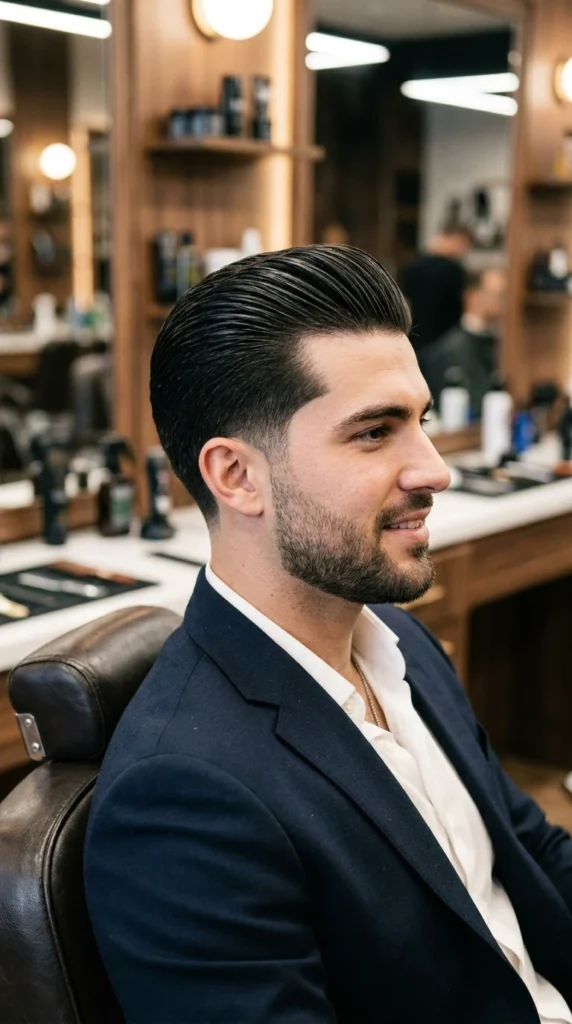
This taper starts higher on the head, creating a more noticeable transition. It’s cleaner than a low taper but still more conservative than a fade. Think of it as the high fade’s more refined cousin. For more on this technique, check the high taper fade guide.
Best For: Straight, thick hair. Square and oval faces. Business and event settings.
Maintenance Level: Medium. Refresh every 2 to 3 weeks.
Styling Tip: Apply strong-hold pomade from roots to ends. The higher taper means your slicked top is the undisputed focal point.
10. Slick Back Undercut
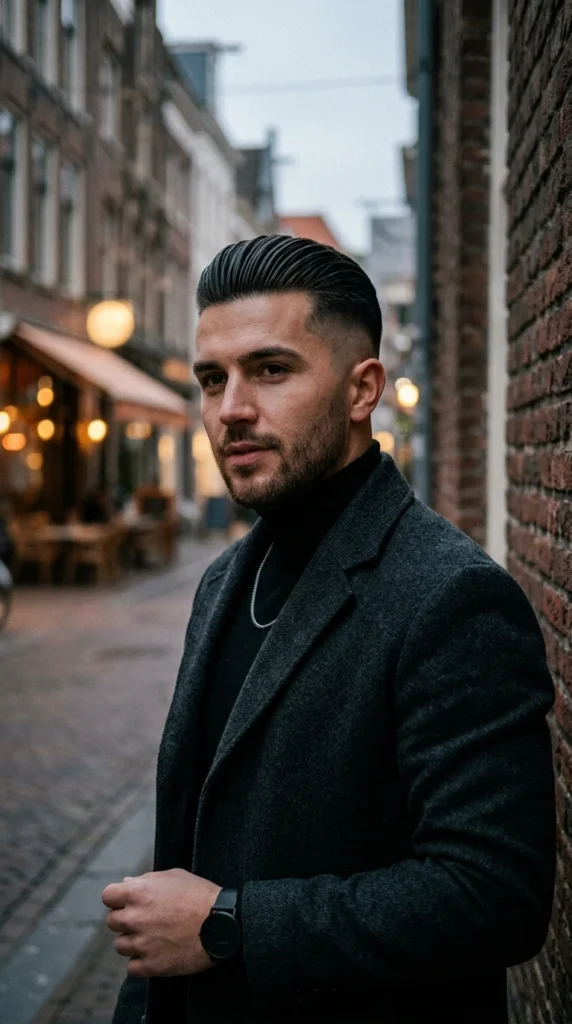
The undercut is all about contrast. The sides are buzzed short or shaved with no blend into the longer top. Where a fade transitions gradually, the undercut draws a clear line. The top exists in its own world, slicked back and disconnected from everything below.
This is the haircut that Cillian Murphy’s character made iconic in Peaky Blinders. It’s bold, architectural, and unapologetic.
Best For: Thick, straight hair. Square, oval, and diamond faces. Fashion-forward, creative, and nightlife settings.
Maintenance Level: High. The undercut needs frequent clipper maintenance to keep the disconnection sharp.
Styling Tip: High-hold pomade or gel is essential. The disconnection means your top hair must stay perfectly structured. Any drooping ruins the entire effect.
11. Slick Back with Burst Fade
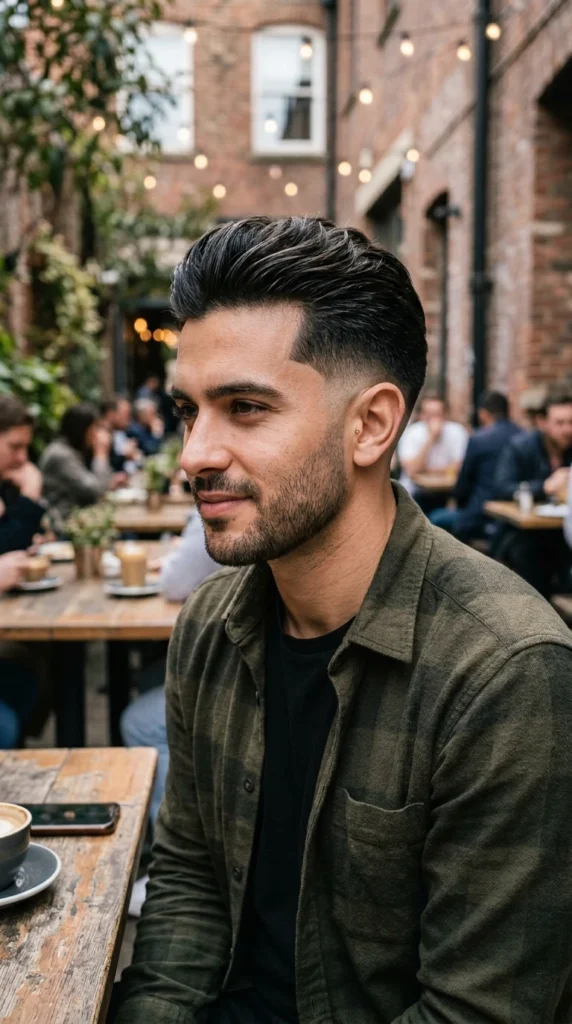
The burst fade curves around the ear in a semicircle, dropping lower at the back. From the side, it creates a distinctive rounded shape that regular fades don’t achieve. Paired with a slick back, it adds architectural interest to your profile. Dive deeper into this technique with the full burst fade guide.
Best For: Medium-length hair. Oval and diamond faces. Trendy and creative settings.
Maintenance Level: Medium to high. The curved fade requires a barber who knows what they’re doing.
Styling Tip: Texture powder at the crown adds lift that visually matches the rounded fade shape below.
12. Slick Back with Drop Fade
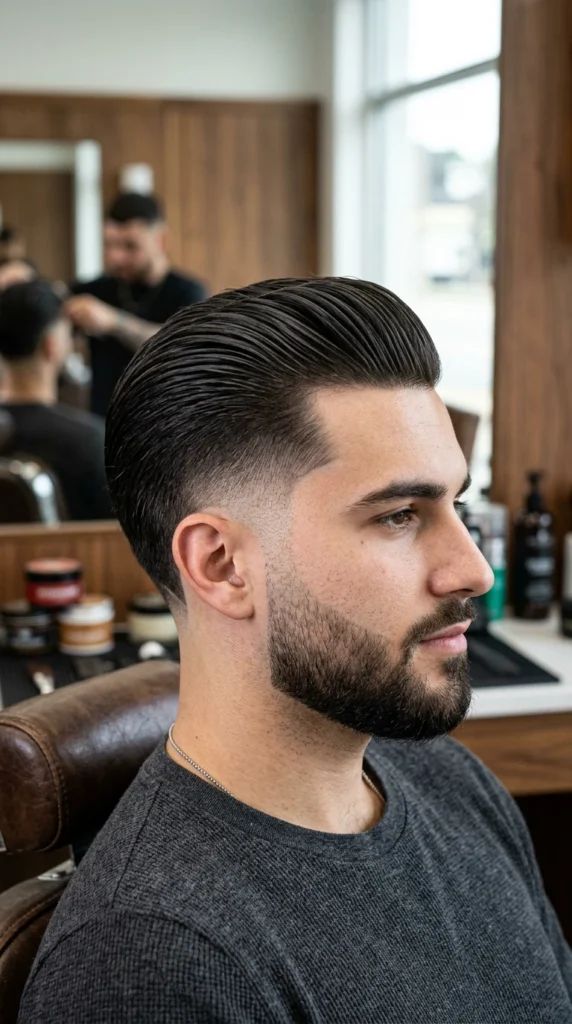
The drop fade follows the natural curve of your head, dipping lower behind the ear before rising again at the back. This creates an elegant, tailored silhouette from every angle. It’s sophisticated without being flashy. For a complete breakdown, see the drop fade guide.
Best For: All hair types with medium length. All face shapes. Sophisticated evening events and smart casual settings.
Maintenance Level: Medium. Refresh every 2 to 3 weeks.
Styling Tip: A water-based pomade lets your natural head shape guide the flow. The drop fade works with your anatomy, not against it.
13. Messy Slick Back

This is the intentional departure from perfection. Instead of combing every strand flat, you push your hair back loosely with your fingers. Texture, movement, and a bit of chaos are the point. It looks effortless even though it takes a few minutes of deliberate work. For a similar textured approach, see the messy fringe guide.
The messy slick back is forgiving. If a strand falls out of place, it’s part of the look. This makes it ideal for guys who want style without stress.
Best For: Wavy, textured, or slightly curly hair. All face shapes. Casual, creative, and weekend settings.
Maintenance Level: Low. Imperfection is the design.
Styling Tip: Matte clay or texture paste worked through damp hair with your fingers. Do not touch a comb. The moment you comb, you’ve left messy territory.
14. Textured Slick Back
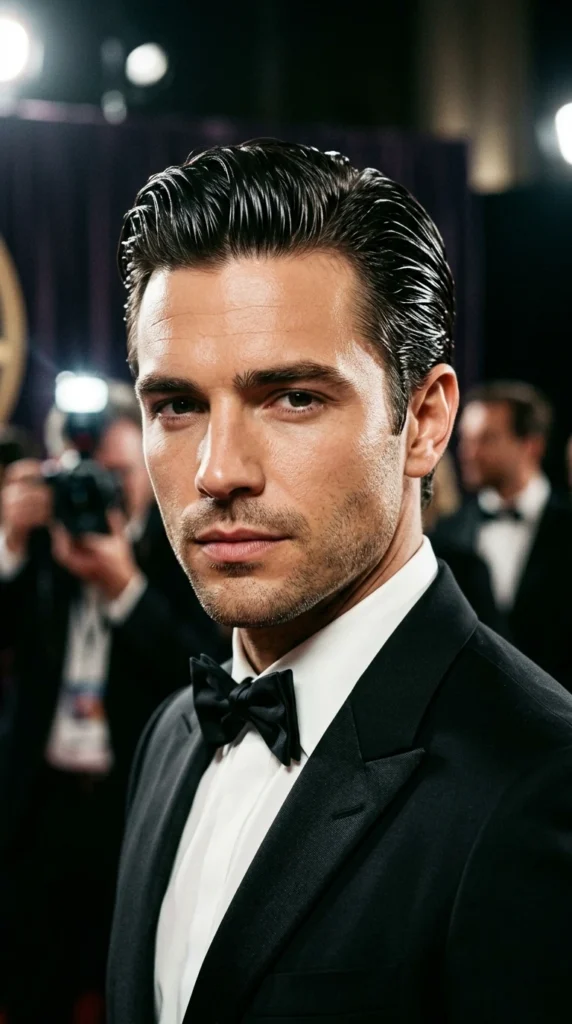
The textured slick back is the messy version’s more deliberate sibling. Your barber cuts texture layers into the top, creating visible separation between strands. When styled back, those layers catch light differently, giving your hair dimension that flat slick backs don’t have. For more on this approach, check the textured fringe and textured quiff guides.
Best For: Medium to thick hair with natural texture. All face shapes. Casual, creative, and smart casual settings.
Maintenance Level: Medium.
Styling Tip: Ask your barber specifically for “texture layers on top.” Style with fiber cream for definition and separation without shine.
15. Wet Look Slick Back

High shine, maximum drama. The wet look slick back looks like you just stepped out of the shower — in the best way possible. This is red carpet territory, a style that announces you made an effort and want people to notice.
The wet look works best with straight, dark hair where the gloss is most visible. It pairs beautifully with a tuxedo or sharp suit.
Best For: Straight, dark hair. Oval and square faces. Formal events, evening functions, fashion settings.
Maintenance Level: Medium. Product-heavy, so thorough washing is required daily.
Styling Tip: Use high-shine pomade or gel sparingly. A little goes a long way, and too much reads as greasy rather than sleek. Start with a pea-sized amount and add only if needed.
16. Slick Back Flow
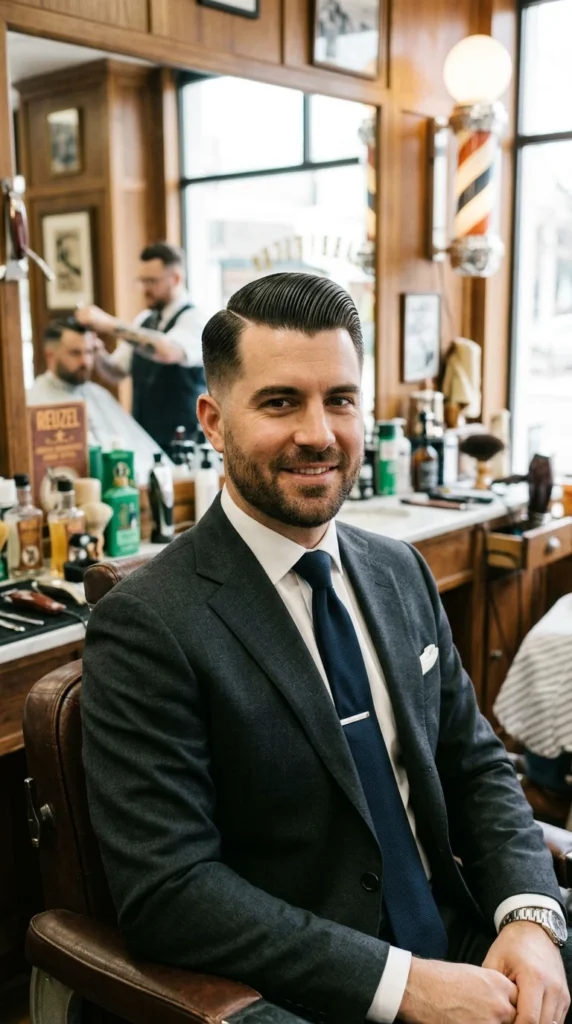
The flow is all about movement. Medium to longer hair is brushed back but allowed to fall with natural body and sway. It’s polished without being stiff, controlled without looking controlled. Think of a hockey player’s hair after he takes off his helmet — that’s the vibe. This look is closely related to the bro flow style.
Best For: Wavy or straight hair with 4 to 6 inches of length. Oval and heart faces. Casual, outdoor, and lifestyle settings.
Maintenance Level: Low to medium.
Styling Tip: Sea salt spray on damp hair, blow-dry with your fingers (not a brush), and let the natural wave pattern do its thing. The less you overthink it, the better it looks.
17. Slick Back with Side Part
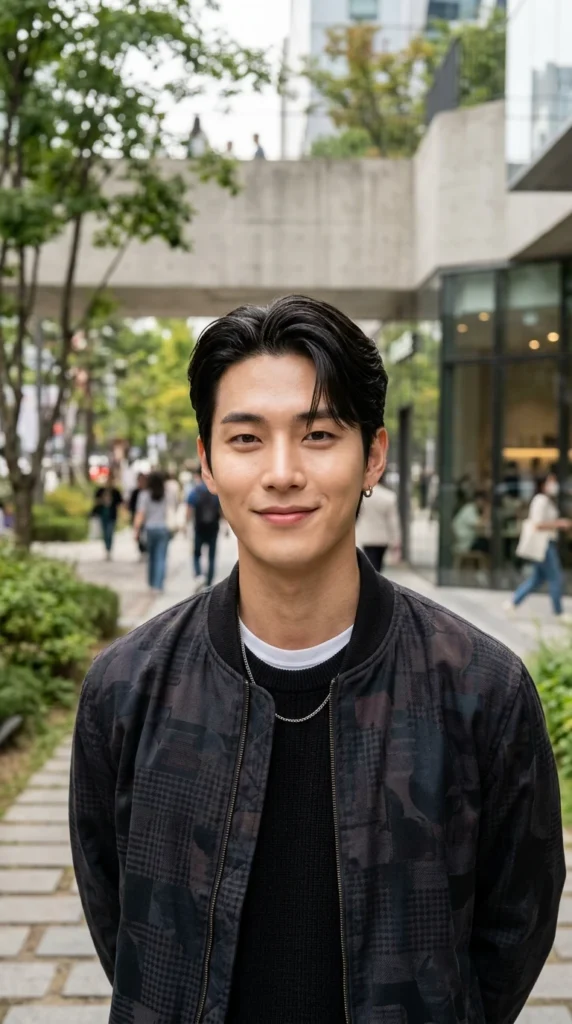
Adding a defined side part to your slick back introduces precision and structure. Instead of sweeping everything straight back, a clean line separates the top, and hair moves backward and slightly across. This channels old-school barbershop elegance.
The side part slick back reads as more conservative and traditional than the straight-back version. It’s perfect for men who want classic polish.
Best For: Straight or slightly wavy hair. Oval, square, and rectangular faces. Professional, formal, and business settings.
Maintenance Level: Medium. The part requires daily maintenance to stay sharp.
Styling Tip: Have your barber create a razor part for maximum definition. Medium-hold pomade keeps the part visible all day.
18. Slick Back with Middle Part
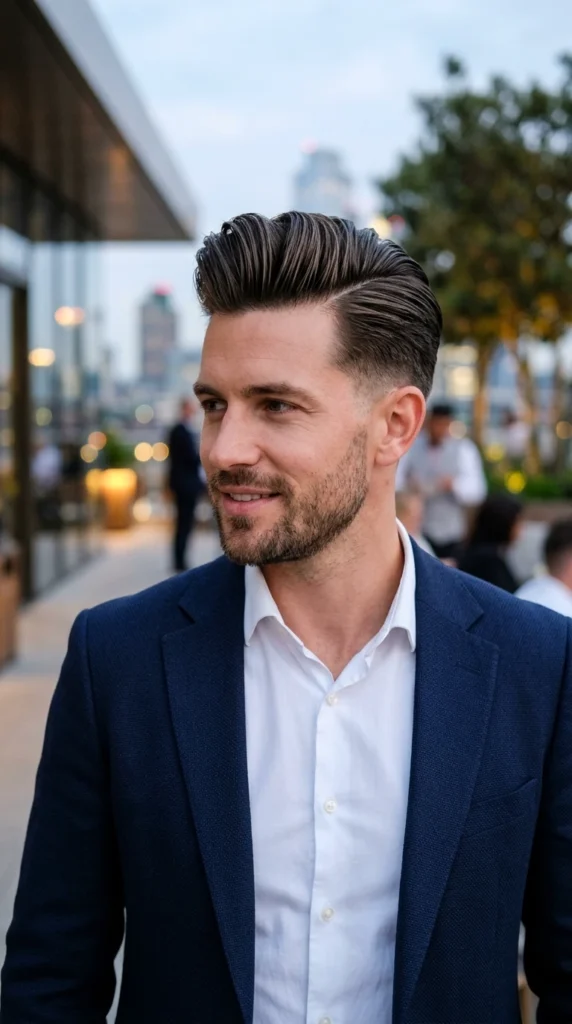
The middle part slick back — sometimes called curtains — splits hair down the center and sweeps both sides backward. This 90s-inspired look has returned in a major way, driven by K-pop, TikTok, and a general nostalgia for the decade. This style connects closely with the curtain haircut and middle part guides.
The result is symmetrical, soft, and unexpectedly modern.
Best For: Straight or wavy hair with medium length. Oval and heart faces. Trendy, creative, and casual settings.
Maintenance Level: Medium.
Styling Tip: Blow-dry outward from the center part to create lift on both sides. A light styling cream keeps the wings defined without making them stiff.
19. Slick Back Comb Over
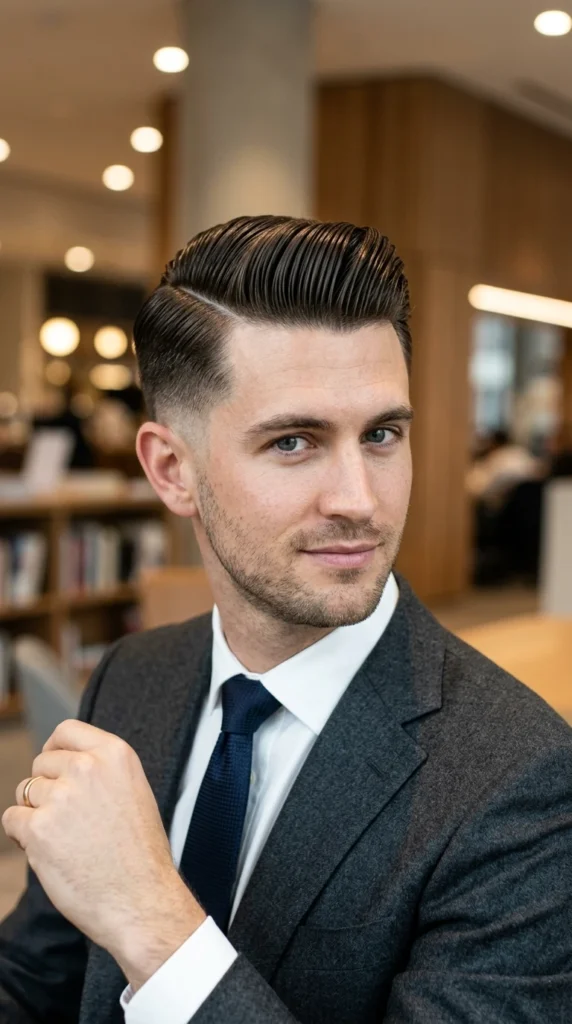
This hybrid takes the slick back’s backward flow and adds the comb over fade‘s side part and volume. Hair is swept up and over, creating a glossy ridge that adds height and drama. It’s more structured than a classic slick back but less extreme than a full pompadour.
Best For: Straight, thick hair. Square and oval faces. Professional and formal settings.
Maintenance Level: Medium to high. The part and volume both need daily attention.
Styling Tip: A round brush and blow-dryer at the front section create the signature lift. Pomade locks in the gloss.
20. Slick Back Pompadour
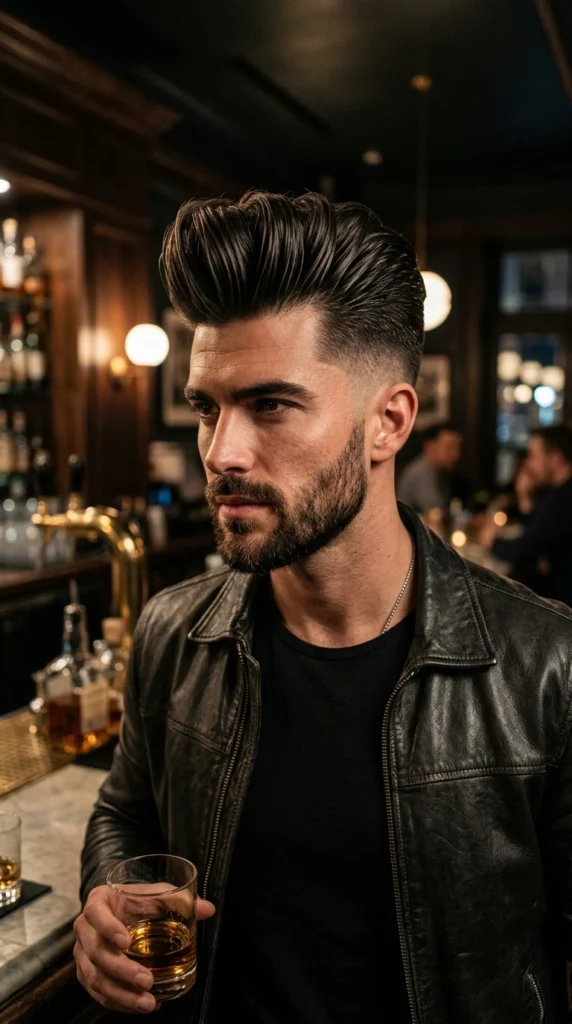
This is the boldest member of the slick back family. The pompadour haircut adds dramatic height at the front and crown while maintaining the backward flow. It’s unapologetic, voluminous, and commands attention.
The pompadour requires commitment. You’ll need a blow-dryer, a round brush, strong-hold product, and at least 10 to 15 minutes every morning. But the payoff is a style that instantly sets you apart.
Best For: Thick hair with natural body. Round and heart faces where height adds balance. Formal, event, and fashion settings.
Maintenance Level: High. Significant daily styling time required.
Styling Tip: Invest in a quality round brush. Blow-dry the front section upward and backward in sections, then apply strong-hold pomade. Finish with hairspray to lock the height.
21. Slick Back Quiff
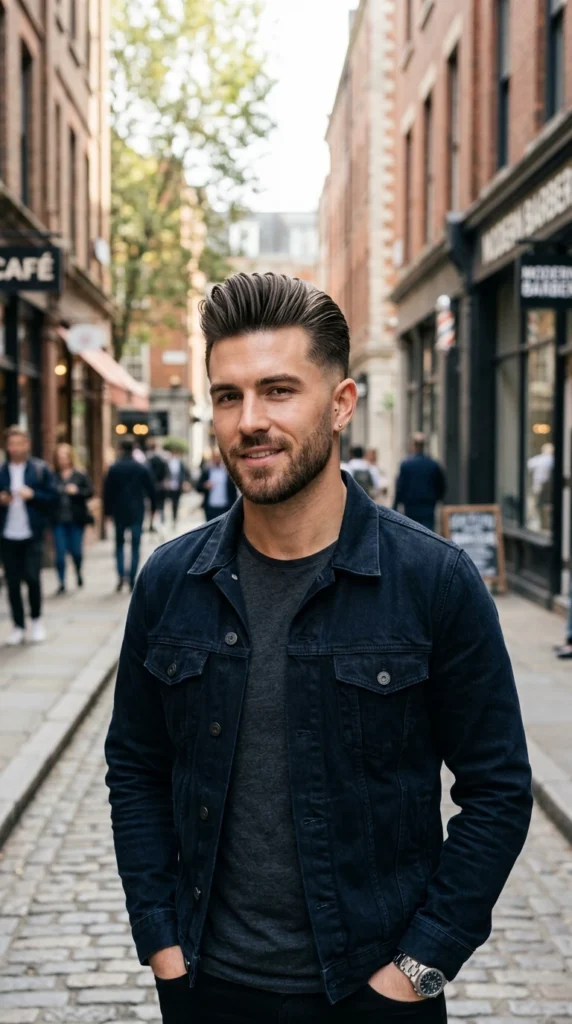
The quiff focuses the pompadour’s volume at the very front. The fringe is lifted up and back, while the rest of the hair stays relatively flat in a classic slick back. This gives you height and impact without the full commitment of a pompadour. For a textured take, see the textured quiff guide.
Best For: Straight, thick hair. Round and oval faces. Smart casual and nightlife settings.
Maintenance Level: Medium to high.
Styling Tip: Texture powder applied directly to the roots of your fringe before blow-drying creates the foundational lift. Everything else builds from there.
22. Short Slick Back
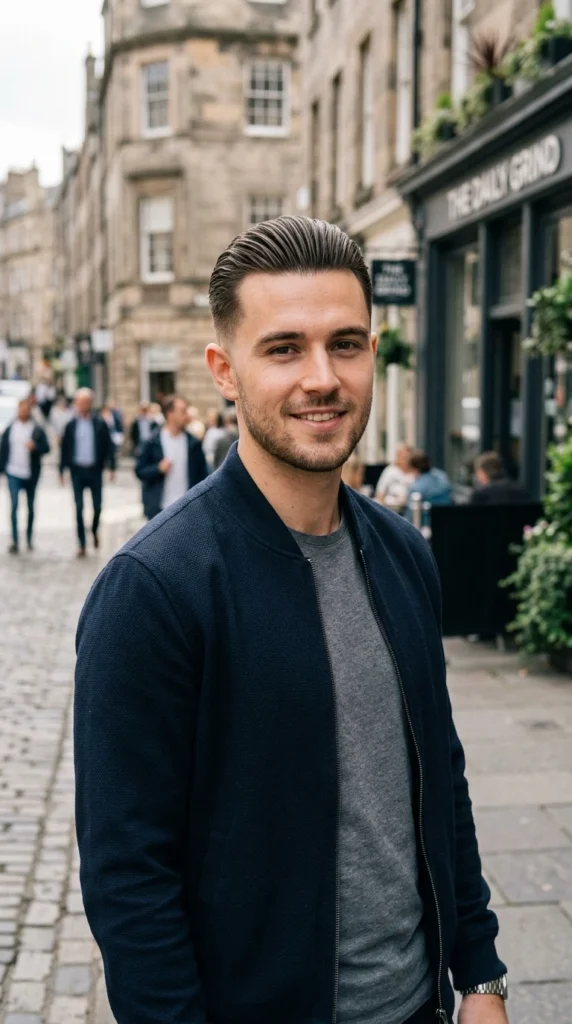
You do not need shoulder-length hair to wear a slick back. A short slick back works with just 2 to 3 inches on top, especially when paired with close, clean sides. This is practical, low-maintenance, and suitable for almost any setting.
This variation is especially good for men with thinning hair or receding hairlines. The shorter length and backward direction minimize the appearance of density loss while still looking intentional and sharp. For another short, low-maintenance option, see the crew cut guide.
Best For: All hair types, especially fine or thinning hair. All face shapes, especially round. Everyday and professional settings.
Maintenance Level: Low.
Styling Tip: Use a light-hold pomade and your fingers. Shorter hair needs far less product — a dime-sized amount is usually enough.
23. Medium Length Slick Back

This is the sweet spot for most guys. With 3 to 5 inches on top, you have enough length to slick back smoothly but not so much that you’re fighting your hair every morning. Tapered or faded sides keep everything looking deliberate.
Best For: All hair types. All face shapes. Any setting.
Maintenance Level: Medium.
Styling Tip: Molding paste gives you hold that lasts without stiffness. Your hair will stay in place but still move naturally.
24. Long Slick Back

For men who’ve committed to growing their hair out. Six or more inches of length creates a dramatic, flowing slick back that moves as you move. The weight of long hair helps it stay back naturally, but you’ll need the right products to keep it controlled. For more long-hair inspiration, see the man bun and layered haircuts for men guides.
This style requires patience. Hair grows roughly half an inch per month, so getting from a short cut to here can take a year or more. Regular trims to remove split ends are essential even while you’re growing it out.
Best For: Straight or wavy hair. Oval, rectangular, and square faces. Creative, lifestyle, and event settings.
Maintenance Level: High. Conditioning, careful washing, and trims every 6 to 8 weeks are needed.
Styling Tip: Use lightweight styling cream or natural oil. Heavy pomade on long hair looks greasy and weighs everything down. Let your hair’s natural weight do most of the work.
25. Slick Back with Beard
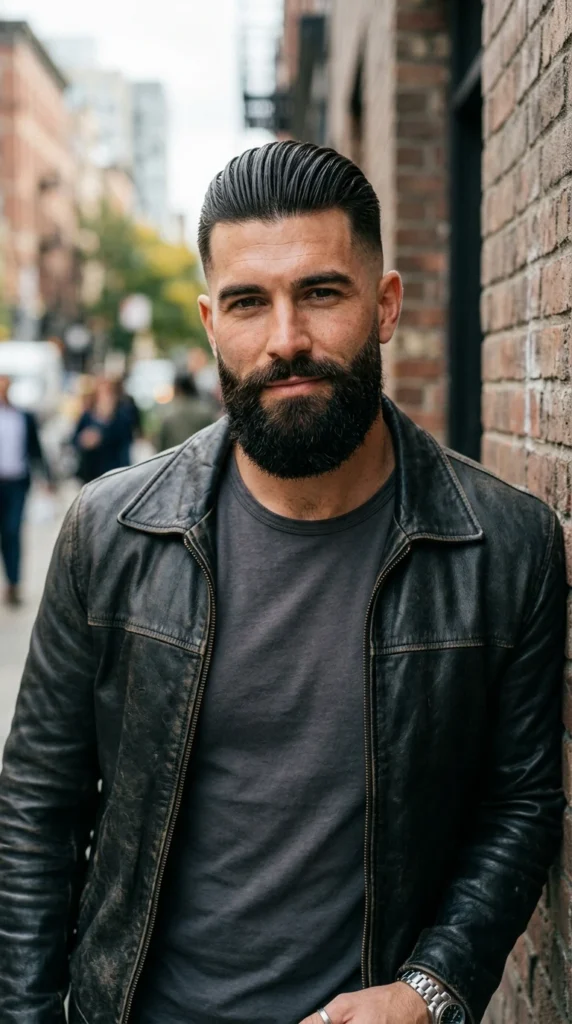
The combination of a clean, polished hairstyle and rugged facial hair is one of the most balanced looks a man can wear. The slick back provides sharpness up top while the beard adds texture and masculinity below. For more on pairing haircuts with facial hair, see the buzz cut with beard guide.
The key to making this work is the transition zone. Your sideburns should graduate smoothly into your beard. Ask your barber to blend them intentionally rather than leaving a harsh line.
Best For: Men who can grow a beard. Angular, square, and oval faces. All settings.
Maintenance Level: Medium to high. You’re maintaining both a hairstyle and a beard.
Styling Tip: Beard oil is not optional. It keeps facial hair soft, reduces itch, and prevents the beard from looking scraggly next to your polished hairstyle.
26. Slick Back Man Bun
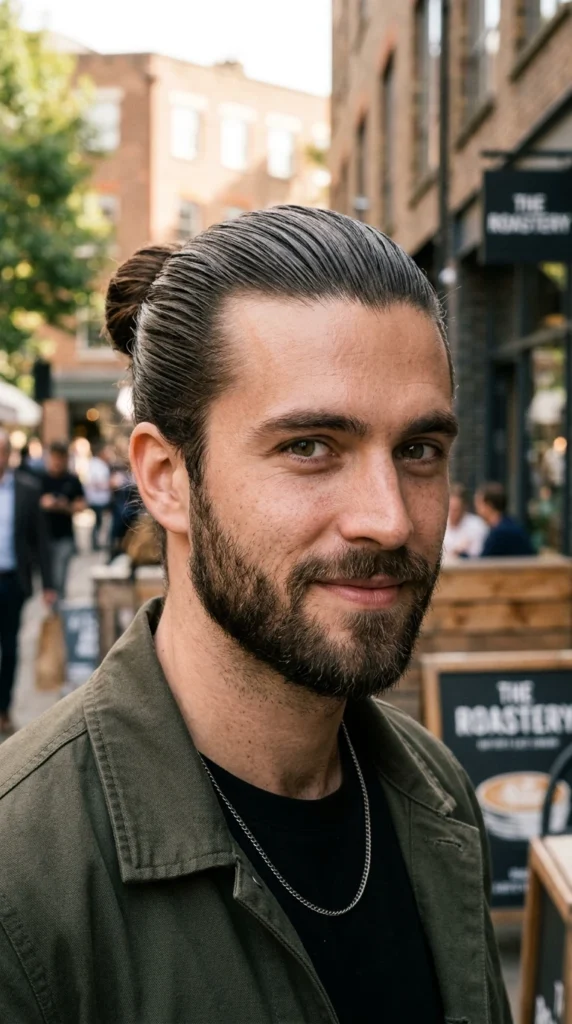
This style bridges the gap between long hair and practicality. The front and top are slicked back smoothly and gathered into a bun at the crown or back of the head. It keeps hair out of your face while maintaining a groomed, intentional look. See the full man bun guide for more variations.
Best For: Hair 6 or more inches long. Oval and square faces. Creative and active lifestyles.
Maintenance Level: Medium. Conditioning plus styling.
Styling Tip: Apply styling cream to the front sections before gathering into the bun. Use a hair tie that matches your hair color — not a bright elastic.
27. Slick Back with Braids
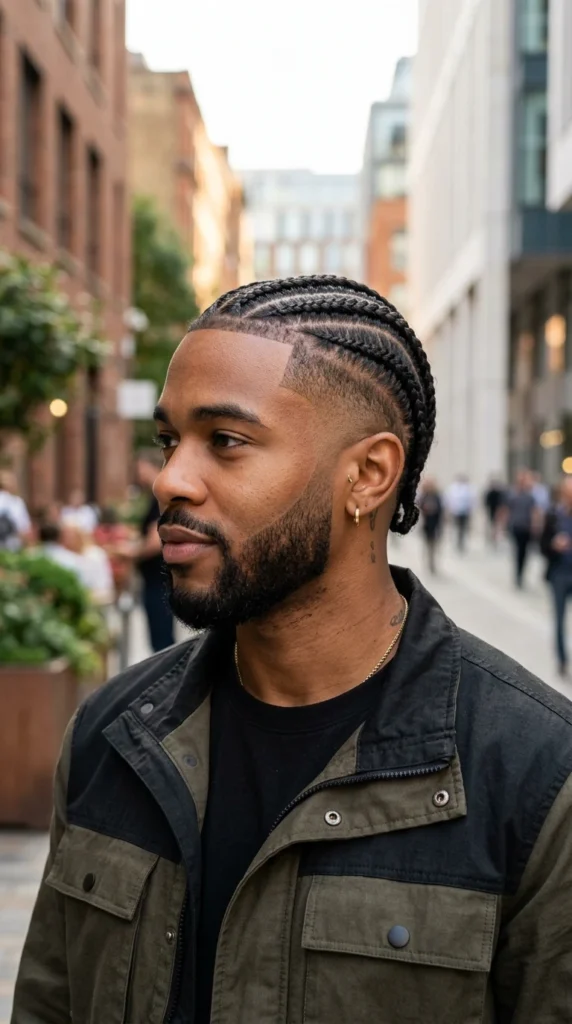
Braided slick backs offer structure and detail. The hair on top is braided tightly and directed backward, while the sides are kept close with a fade or taper. This style is intricate, eye-catching, and deeply rooted in cultural tradition.
Best For: Thick, textured hair. Oval and square faces. Statement-making and creative settings.
Maintenance Level: High. Braids require regular maintenance to stay neat.
Styling Tip: Argan oil keeps braids hydrated and shiny. Texture clay at the base maintains hold without creating frizz.
28. Slick Back Curly Hair
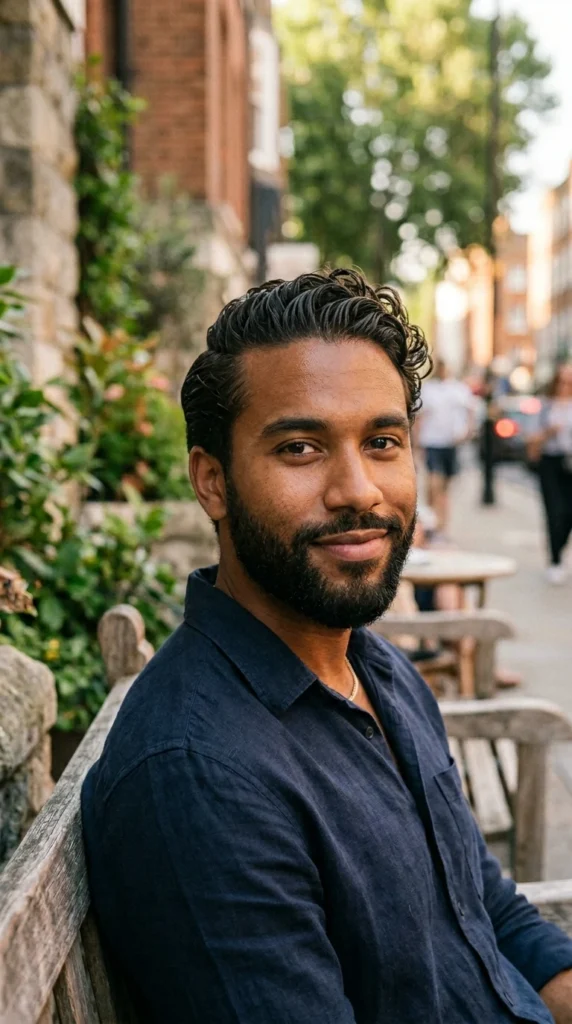
Curly-haired men can absolutely wear a slick back — but the approach is different. You’re not trying to straighten your curls. You’re directing them backward while keeping their natural pattern intact. The result has personality and texture that straight hair simply cannot replicate. For more on combining fades with curls, see the low taper fade curly hair and high fade curly hair guides.
The key is length. Curls need more length to reach backward than straight hair does. Plan for at least 4 to 6 inches of curly length on top.
Best For: Naturally curly hair, medium to long. All face shapes.
Maintenance Level: Medium. Curl care plus styling.
Styling Tip: Curl-defining cream comes first to define your pattern. Then use a light-hold gel to direct everything back. Never use a fine-tooth comb — fingers or a wide-tooth comb only.
29. Wavy Slick Back
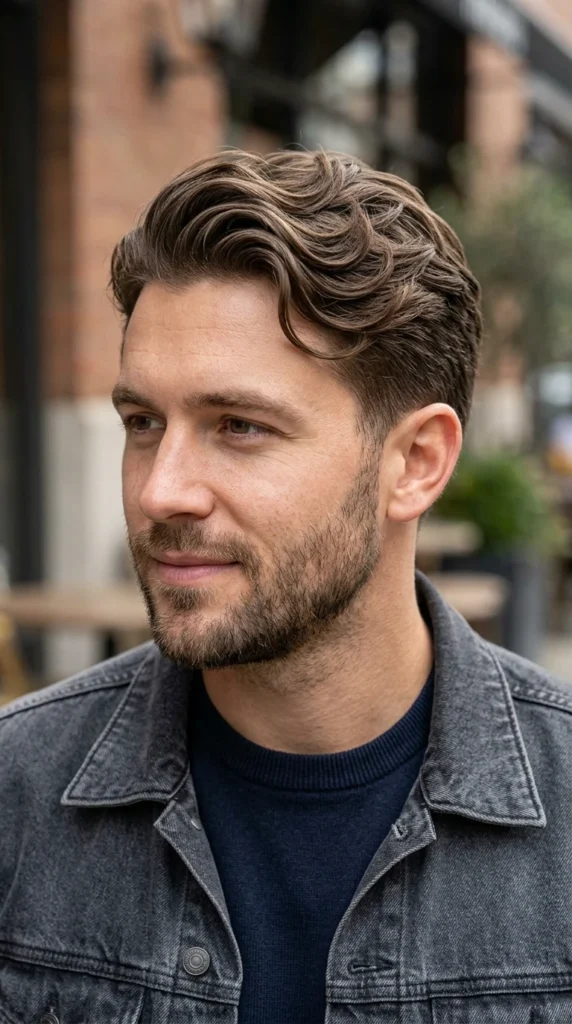
Wavy hair might be the best-kept secret of the slick back world. Your natural waves provide built-in volume and texture that straight-haired guys need multiple products to fake. Embrace them.
The wavy slick back works with your hair’s natural movement rather than fighting it.
Best For: Naturally wavy hair. All face shapes, especially angular ones that benefit from softening. Casual and smart casual settings.
Maintenance Level: Low to medium.
Styling Tip: Sea salt spray enhances your natural wave. Lightweight pomade applied with fingers keeps everything directed backward without flattening the texture.
30. Slick Back Straight Hair
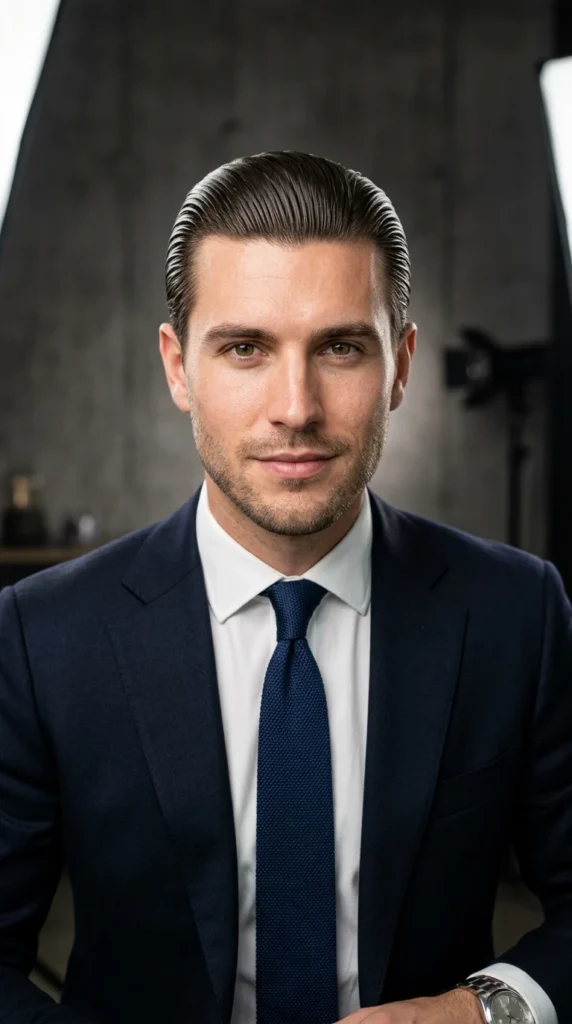
This is the traditional canvas for the slick back. Straight hair allows for maximum sleekness, the sharpest lines, and the highest possible shine. If you have straight hair and want the classic Hollywood look, the tools are already in your hands.
Best For: Straight hair. Oval and square faces. Professional, formal, and classic settings.
Maintenance Level: Medium.
Styling Tip: Pomade with natural shine applied to damp hair, combed through with a fine-tooth comb, and set with a cool-shot blow-dryer. This formula hasn’t changed in decades because it works perfectly.
31. Slick Back Mohawk
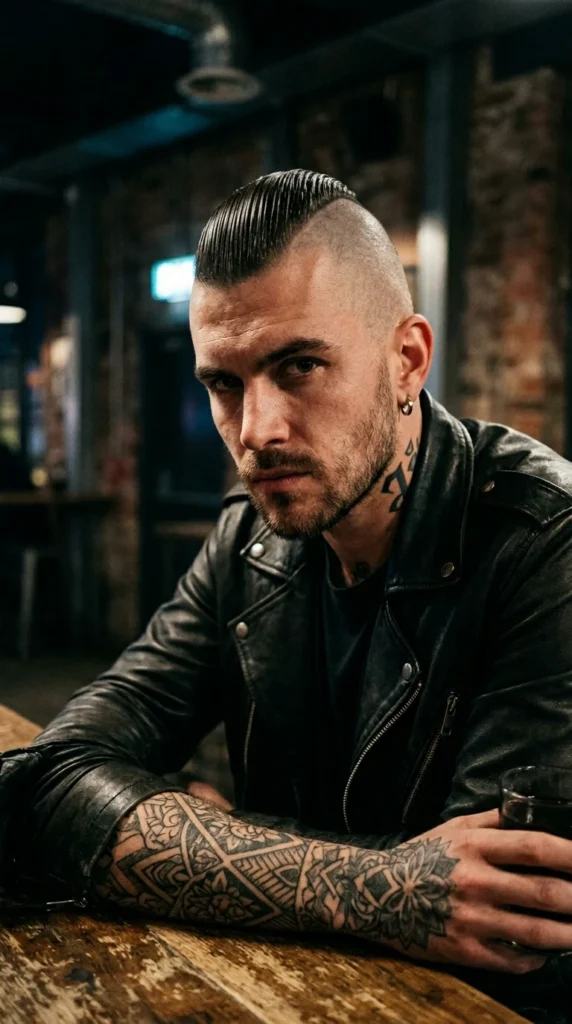
An edgy hybrid for men who want to stand out. The sides are shaved or faded tight while a wider central strip of longer hair is styled backward instead of standing up. The slick back direction brings sophistication to the mohawk’s punk DNA. If you like this bold approach, check the faux hawk guide for a less extreme alternative.
Best For: Thick hair. Oval and diamond faces. Nightlife, concerts, and alternative settings.
Maintenance Level: High. Frequent side shaving needed.
Styling Tip: Texture clay for grip and volume, followed by a light hairspray. You want hold without the helmet-head stiffness that makes mohawks look fake.
32. Slick Back Mullet
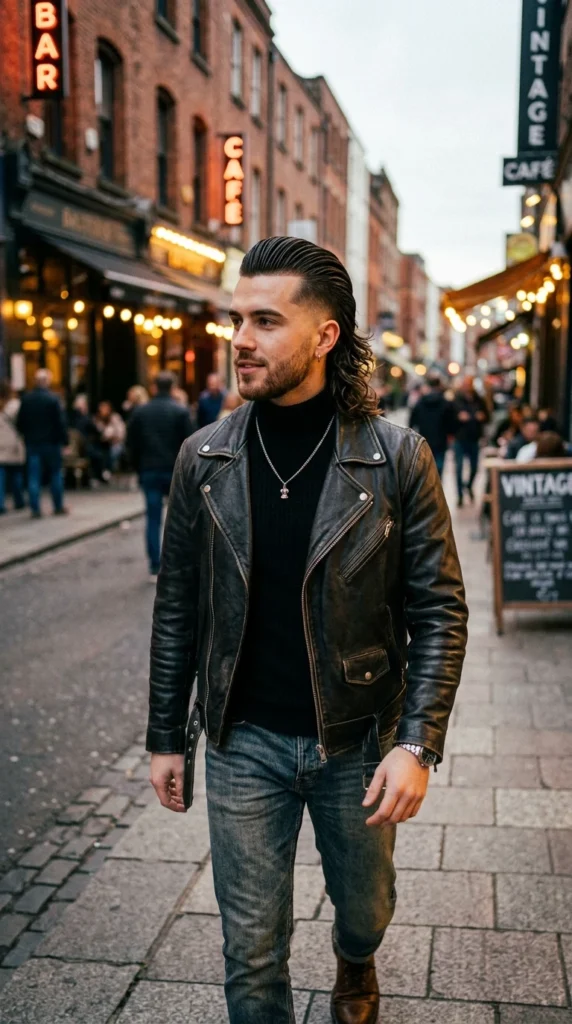
The mullet’s comeback is real, and the slicked version merges retro attitude with modern polish. The front and top are slicked back cleanly while length is kept at the back. The contrast between the polished front and the free-flowing rear creates a look that’s genuinely unique. For more mullet variations, see the modern mullet guide.
Best For: Thick, wavy or straight hair. Oval and square faces. Trendy, alternative, and festival settings.
Maintenance Level: Medium. Top styling plus back maintenance.
Styling Tip: Styling cream on the front and top sections keeps them controlled. Let the back do its own thing with a light leave-in conditioner.
33. Modern Slick Back
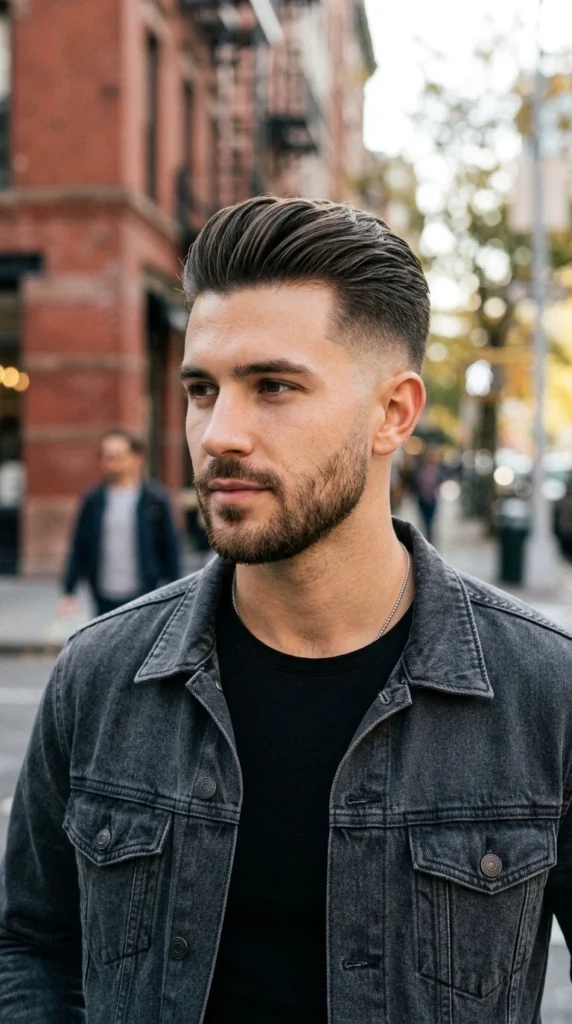
The modern slick back updates the classic with a matte or natural finish instead of high shine. It often pairs with a fade and incorporates subtle texture rather than strict uniformity. This is the slick back for guys who want the confidence of the style without looking like they stepped out of a 1950s movie.
Best For: All hair types. All face shapes. Modern workplaces, casual settings, events.
Maintenance Level: Medium.
Styling Tip: Reach for matte clay or fiber cream instead of shiny pomade. Blow-dry for direction, then work product through with your fingers for a natural finish.
34. The Italian Slick Back
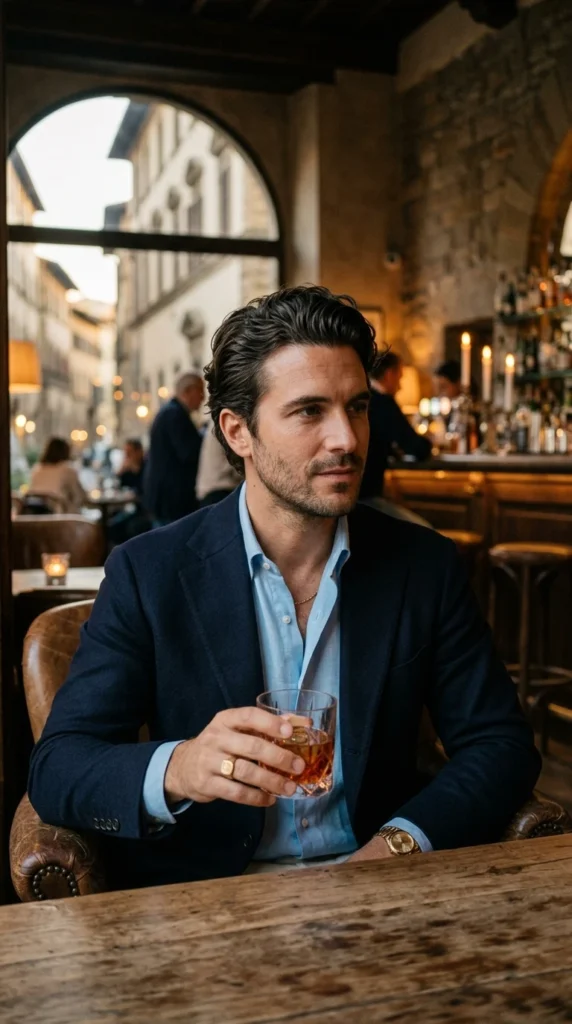
A specific cultural interpretation known for smooth volume and effortless polish. Think Mediterranean elegance — hair with natural body, styled back with enough lift to look intentional but not overworked. The Italian slick back looks like you were born with good hair and simply pointed it in the right direction.
Best For: Thick, wavy or straight hair. Oval and square faces. Social, evening, and lifestyle settings.
Maintenance Level: Medium to high.
Styling Tip: Blow-dry for volume first, then apply molding paste for structure that still moves. The look should feel relaxed, even if it took work.
35. The Korean Slick Back
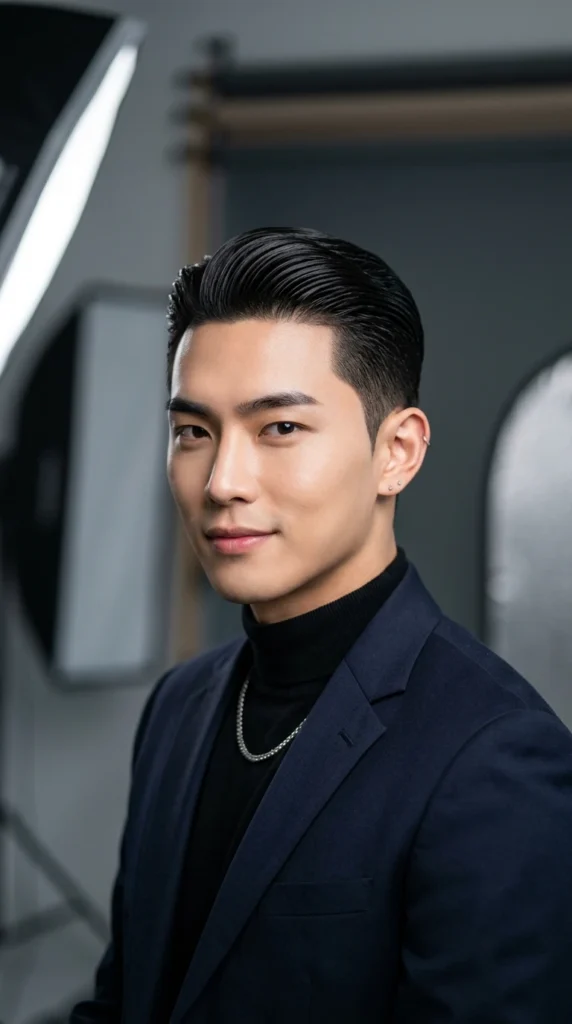
Popularized by K-pop idols and K-drama actors, this interpretation emphasizes precision and polish. Hair is sleek, shiny, and perfectly controlled. The lines are sharp, and the overall effect is clean almost to the point of being architectural. This style shares DNA with the two-block haircut popular in Korean fashion.
The Korean slick back typically pairs with a low fade or clean taper and uses high-shine water-based pomade for its signature glossy finish.
Best For: Straight, dark hair. Oval and heart faces. Trendy, fashion-forward, and young professional settings.
Maintenance Level: Medium.
Styling Tip: A fine-tooth comb and high-shine water-based pomade are your essential tools. Apply to damp hair and comb with patience — the precision is the point.
Slick Back Versus Other Popular Haircuts
Sometimes you’re choosing between two styles. Here’s how the slick back stacks up against its closest competitors.
Slick Back Versus Comb Over
The slick back sends hair straight backward with no part. The comb over fade uses a defined side part and sweeps hair across and back.
Choose the slick back when you want a bolder, more streamlined look. Choose the comb over when you want traditional barbershop precision with more conservative energy. Both look great — it’s about the vibe you want to project.
Slick Back Versus Side Part
A side part introduces a clear line of separation in the hair. The slick back avoids any part entirely, flowing uniformly backward.
The side part reads as more structured and office-ready. The slick back reads as more confident and fashion-aware. If you work in a conservative industry, the side part might be the safer choice for weekdays. The slick back can be your weekend upgrade.
Slick Back Versus Pompadour
The pompadour haircut prioritizes dramatic height at the front. Hair is lifted up and back with significant volume. The slick back keeps hair closer to the head with more emphasis on the backward flow than the upward lift.
Pompadours take more time, more product, and more maintenance. Slick backs are generally easier to achieve and wear. Choose the pompadour if you love volume and don’t mind the morning routine. Choose the slick back if you want sleek sophistication with less effort.
How to Ask Your Barber for a Slick Back Haircut
Walking into a barbershop without the right words leads to confusion. Here’s how to communicate exactly what you want.
Use Clear Terminology
Don’t just say “slick back.” Be specific about what you want on top, on the sides, and at the back. Here are phrases that work:
For the top: “Keep 3 to 5 inches on top” or “Leave enough length that I can slick it back with product.”
For the sides: “Give me a low fade starting above the ears” or “I want a taper — don’t take it down to the skin.” If you need clarity on the difference, brush up on taper vs fade.
For texture: “Add texture layers on top so it’s not completely flat” or “Keep it classic and smooth — no texture.”
For the crown: “Don’t take too much weight off the crown. I need it to hold the slick back.”
The difference between a fade and a taper matters. A fade usually blends down to the skin. A taper keeps more length near the bottom. Know which you want before you sit in the chair.
Bring Reference Photos
Words help. Photos seal the deal. Show your barber exactly the style you want from at least two angles if possible.
Choose photos of men who have similar hair type and face shape to yours. Showing a picture of someone with thick curly hair when yours is fine and straight creates confusion. Point to specific details: “I like this fade height” or “I want this amount of volume on top.”
Avoid These Common Mistakes
Being vague leads to unpredictable results. “Just clean it up” or “short on the sides” means something different to every barber.
Not bringing a photo leaves everything to interpretation. Even if you describe the cut perfectly, your barber’s mental image might not match yours.
Not speaking up mid-cut is a missed opportunity. If something looks wrong while the barber is working, say so immediately. A good barber wants your feedback.
Using the wrong terms can send the cut in the wrong direction. If you’re not sure whether you want a fade or a taper, describe what you want visually rather than guessing at terminology.
How to Style a Slick Back — Step by Step
You’ve got the haircut. Now here’s exactly how to style it every morning.
Step 1: Start with Clean, Damp Hair
Wash your hair with a gentle shampoo to remove yesterday’s product. Towel-dry until damp, not soaking wet. Product distributes most evenly on damp hair, and damp hair is easier to direct than soaking wet or completely dry hair.
If you’re using heat, apply a heat protectant spray first.
Step 2: Apply a Pre-Styler
A pre-styler creates the foundation for everything that follows. Sea salt spray adds texture and grip. Volumizing mousse gives fine hair body before you even start blow-drying. For a similar pre-styling approach on a different look, see the styling section in the blowout taper guide.
Work your pre-styler evenly from roots to ends. This step prevents flatness later in the day.
Step 3: Blow-Dry for Direction and Volume
Set your blow-dryer to medium heat. Direct the air backward, following the direction you want your hair to go.
For volume: Lift at the roots with your fingers or a vent brush while drying. For sleekness: Use a brush to guide hair straight back with even tension. When you’ve got the shape you want, hit the cool shot button. The cold air sets your hair in position and adds natural shine.
Step 4: Apply Your Main Styling Product
The product you choose depends on the finish you want. Pomade gives you classic shine and flexible hold. Clay gives you a matte finish with strong, reworkable hold. Cream gives you a natural look with light control. Gel gives you maximum hold and a wet finish.
Start with a pea-sized amount rubbed between your palms. Work it through your hair from roots to ends. You can always add more — you can’t take it out without washing and starting over.
Step 5: Comb, Shape, and Finish
For sleek and classic: Use a fine-tooth comb to direct everything perfectly backward.
For modern and textured: Use your fingers to push hair back while keeping separation between strands.
Finish with a light mist of hairspray for all-day control, a dusting of texture powder for volume, or a few drops of argan oil for shine on dry ends.
How to Maintain Your Slick Back Haircut
A great haircut needs upkeep. Here’s what to expect.
Barber Visit Schedule
Fades need attention every 2 to 3 weeks to stay crisp. Tapers and scissor cuts can stretch to 3 or 4 weeks between visits. Long slick backs need trims every 6 to 8 weeks to remove split ends while preserving length.
Daily Routine
Mornings: Dampen your hair slightly, apply product, comb or finger-style back, blow-dry, and finish with spray or oil as needed.
Midday: A small dab of product on your fingertips can tame flyaways. Keep a comb at your desk or in your car.
Evenings: Wash product out thoroughly. Sleeping with product in your hair leads to buildup on your scalp and pillow.
Hair Health Essentials
Use a clarifying shampoo once a week to remove accumulated product. Follow with a hydrating conditioner, since styling products can dry out your hair over time. Avoid washing every single day — 2 to 3 times per week is plenty for most hair types. Overwashing strips natural oils that keep your hair healthy.
Product buildup is the number one enemy of a good slick back. When product accumulates on your scalp, your hair gets greasy faster, looks limp, and can even start flaking. Regular clarifying prevents all of this.
Best Products for Slick Back Hair
The right products make or break your slick back. Here’s what to look for by category.
Pomade
Pomade is the classic choice for a reason. Water-based versions offer strong hold and wash out easily. Oil-based versions provide maximum shine and last all day. The choice comes down to your preferred finish and washing routine.
Top picks: Suavecito Firme Hold offers a moderate shine with easy washout. UPPERCUT DELUXE delivers strong hold with high shine for that classic look.
Clay
Clay products give a matte finish that looks modern and natural. They’re ideal for textured, messy, or relaxed slick backs where you don’t want obvious product shine. Clay also absorbs excess oil throughout the day.
Top pick: Slick Gorilla Clay Pomade provides firm hold with a true matte finish that stays reworkable all day.
Styling Cream
Styling cream is the lightweight option. It controls frizz, adds a touch of hold, and leaves hair looking natural rather than styled. This is the best choice for men with fine hair or anyone who wants a subtle finish.
Top pick: L’Oréal Paris Elnett Slick Back Styling Cream gives brushable hold with polished shine and frizz control without stiffness.
Sea Salt Spray, Texture Powder, and Finishing Products
Sea salt spray adds pre-styling texture and grip. Texture powder provides instant lift at the roots, especially helpful for fine or flat hair. Hairspray locks everything in place for all-day control. Argan oil adds final shine and tames dry ends.
Frequently Asked Questions
How long does my hair need to be for a slick back?
At least 3 to 5 inches on top for a classic slick back. Shorter variations (2 to 3 inches) can work for a “short slick back” style. If you’re comparing different short styles, the Caesar cut and crew cut guides offer alternatives that require less length.
Can I slick back curly or wavy hair?
Yes. Wavy hair adds natural texture and volume. Curly hair requires sufficient length and curl-defining products, but the result is distinctive and stylish. The fluffy hair boy guide covers texture-enhancing techniques that translate well to slick backs.
What face shape suits a slick back best?
Oval, square, and heart-shaped faces are ideal. However, with the right fade height and volume adjustment, any face shape can wear a variation of the slick back.
How do I prevent my slick back from looking greasy?
Use product sparingly — start with a pea-sized amount and add more if needed. Avoid applying directly to the scalp. Opt for matte products (clay, paste) if shine is a concern. Clarify weekly.
What’s the difference between a slick back undercut and a slick back fade?
An undercut has sharp, disconnected contrast between shaved sides and long top. A fade blends gradually for a softer transition. For a deeper dive into fade types, see the mid fade guide.
How often should I wash my hair with a slick back?
2 to 3 times per week is recommended. Overwashing strips natural oils. Use clarifying shampoo once weekly to remove product buildup.
Can I get a slick back with thinning hair or a receding hairline?
Absolutely. A shorter slick back (2 to 3 inches on top) with a taper is flattering for thinning hair. The backward direction draws attention away from the hairline. The Caesar cut is another excellent option specifically designed to conceal thinning.
How do I maintain my slick back throughout the day?
Carry a small amount of product for touch-ups. A comb and travel-size pomade or wax stick can refresh the style in minutes. Avoid touching your hair excessively.
Final Takeaway
The slick back is timeless, versatile, and accessible — when matched correctly to your hair type, face shape, and lifestyle. This guide’s 35 variations provide a complete menu. The best slick back for you is the one that fits YOUR unique attributes, not just the one that looks best on a celebrity or model. Choose your variation, bring a photo to your barber, and invest in the right product. The result is a confident, polished look that never goes out of style.