


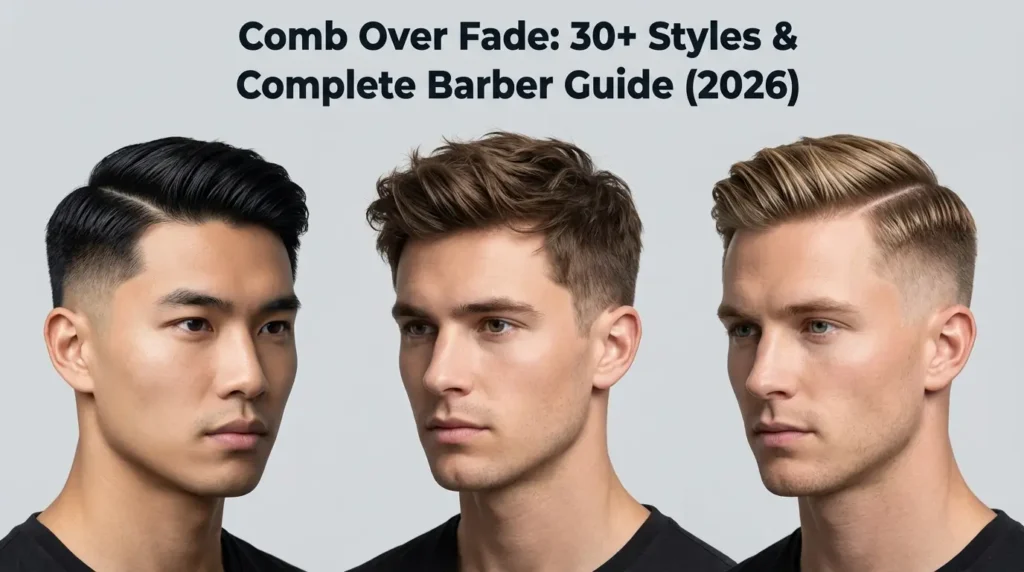
A Comb Over Fade is a men’s haircut that features faded or tapered sides blended from short to long, combined with longer hair on top that is parted and swept to one side.
The magic lies in the contrast. The fade provides a clean, modern silhouette that sharpens your jawline and profile. The comb over top offers length, volume, and styling versatility, allowing you to slick it back for a wedding or texture it up for the weekend.
To understand this cut, you need to know its two main components:
- The Fade: The back and sides are cut with clippers, gradually blending from very short (often skin) at the bottom to longer hair as it moves up the head.
- The Comb Over: The top section (typically 2–4 inches) is left long enough to be combed or swept to one side.
Expert Insight: “A fade is technically one of the hardest cuts in the game. But when it’s done well, it’s the best. The gradient effect, where hair seamlessly transitions from skin to length, is what separates a $20 cut from a $50 cut.”
35 Best Comb Over Fade Haircuts for Men
From the boardroom to the bar, there is a variation for every man.
1. Classic Comb Over Fade
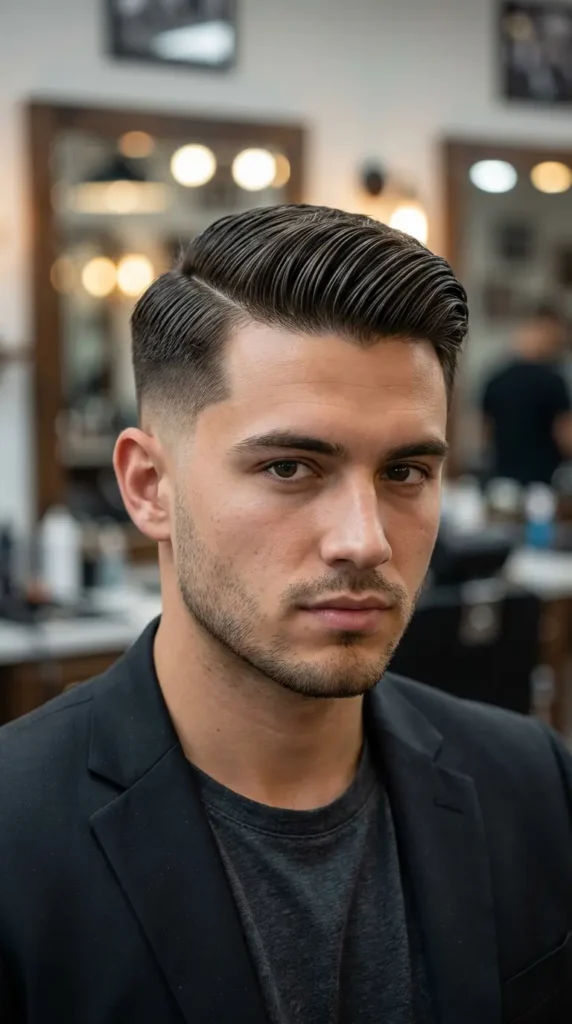
The gold standard. Features a clean fade (usually mid-level) with a neat, parted top. Styled with styling cream for a natural shine. It’s timeless and works with a suit or a t-shirt.
2. Slick Comb Over Fade
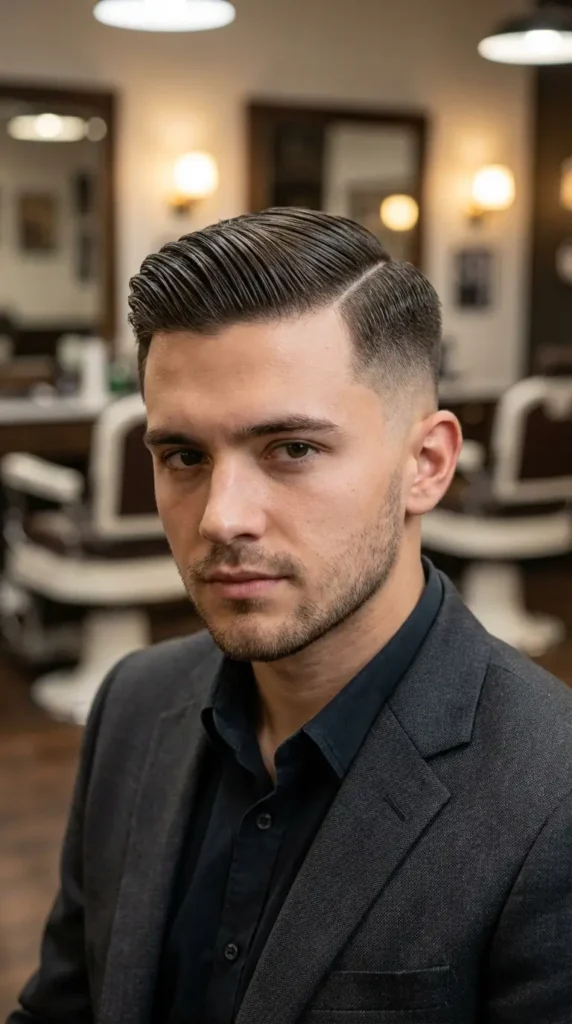
High-shine, sculpted perfection. Uses water-based pomade or gel to slick the hair tightly to the side, closely related to a full slick back. Ideal for weddings, formal events, or guys who love the retro 1950s aesthetic.
3. Classy Comb Over
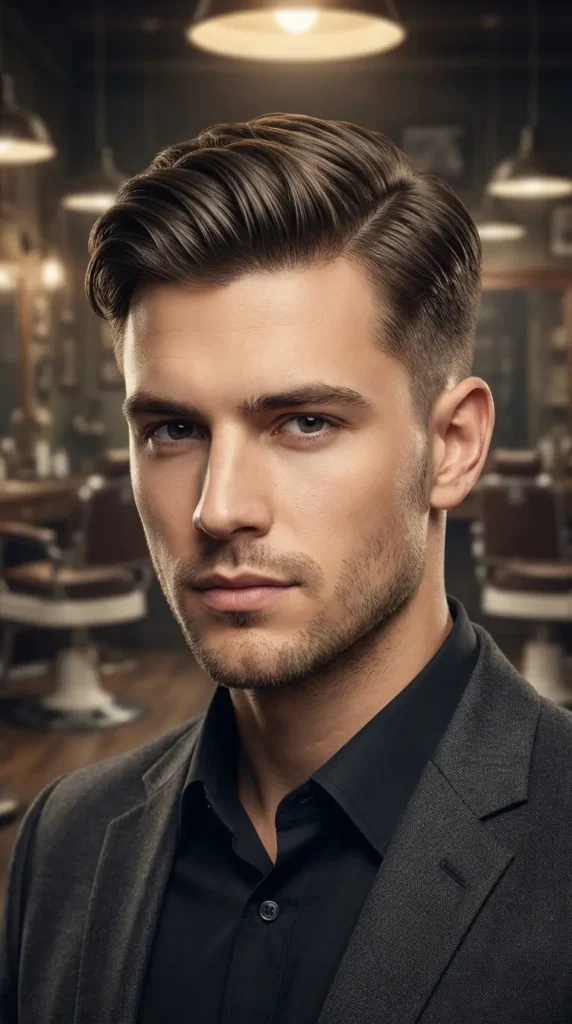
A softer take on the classic. Uses a mid-to-low taper fade with a textured side sweep. Styled with sea salt spray and medium-hold pomade for a refined but not rigid look.
4. Modern Comb Over Fade
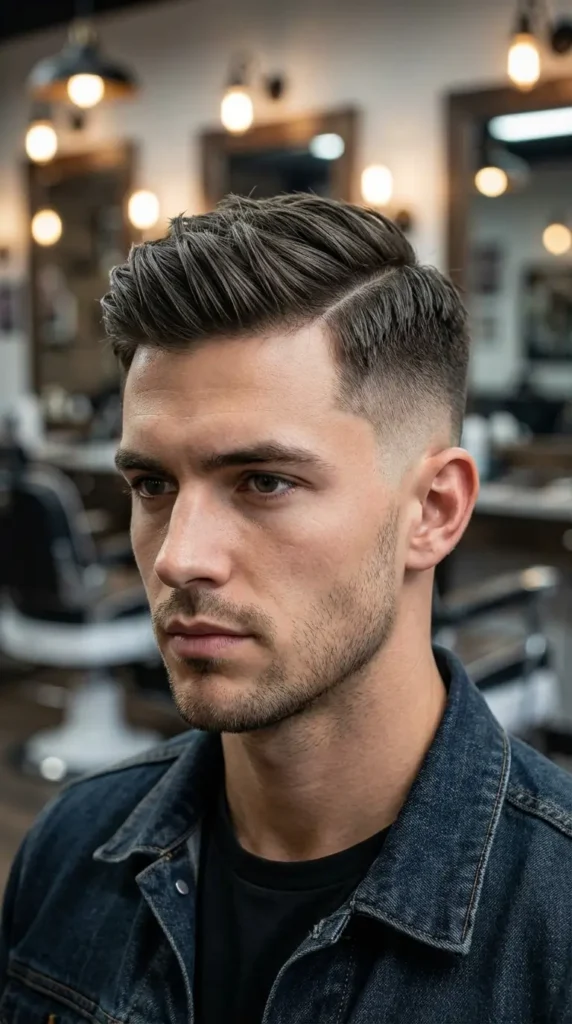
Less definition, more movement. The part line is there but not razor-sharp. The sides are faded, but the top has texture. Best styled with matte clay or paste.
5. Textured Comb Over
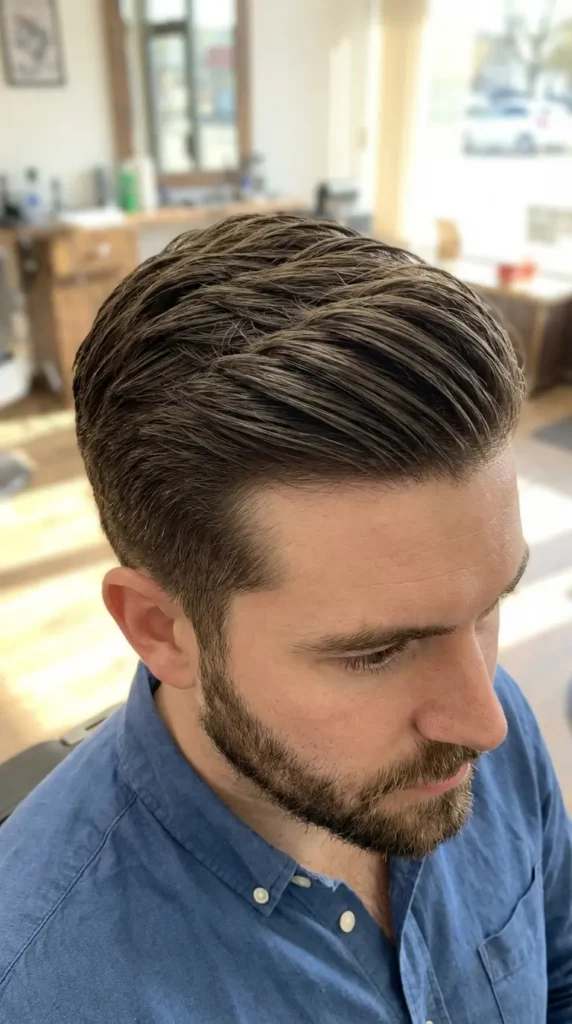
The “messy” version. Layers are cut into the top to create dimension. Instead of a slick comb, you use your fingers to rake the hair over. Great for thick hair that needs weight removed.
6. Messy Comb Over
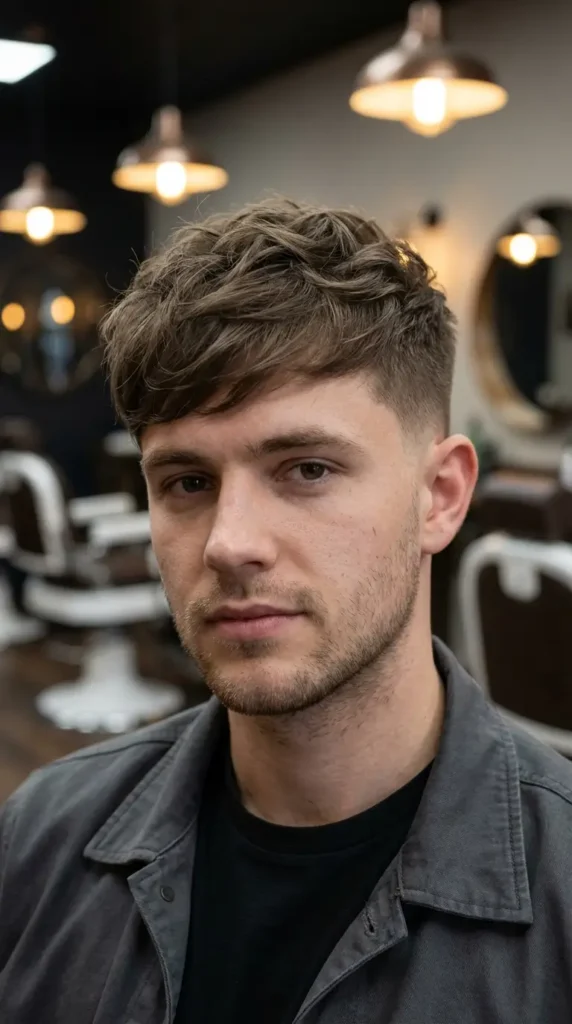
Casual and relaxed. The hair is swept across loosely. Uses texture powder for lift at the roots. Perfect for the guy who wants to look stylish without looking like he spent an hour in the mirror.
7. Comb Over Low Fade
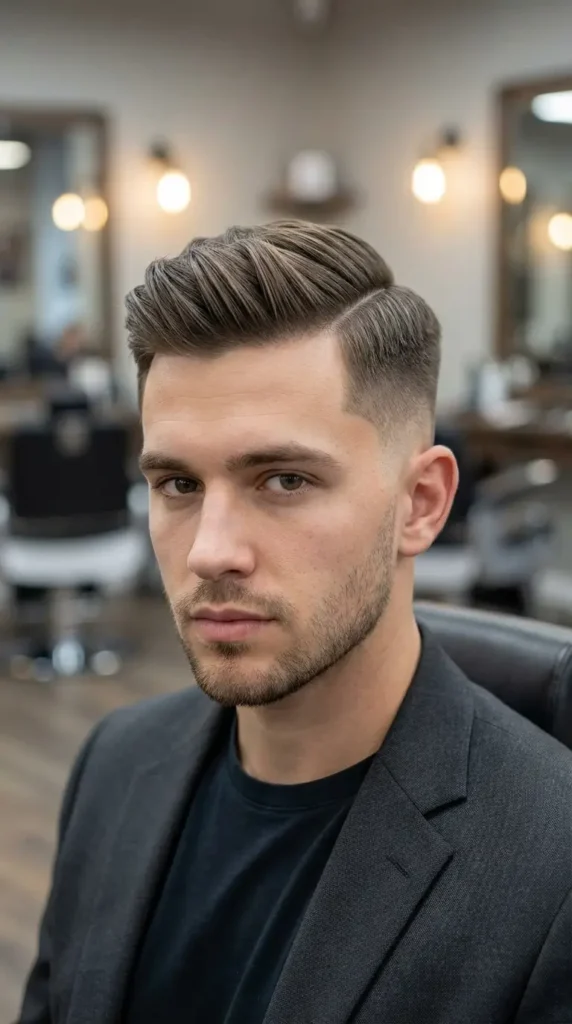
The fade starts just above the ear. This maintains more weight on the sides, making it a great choice for professional environments or men with longer faces.
8. Comb Over Mid Fade (Most Popular)
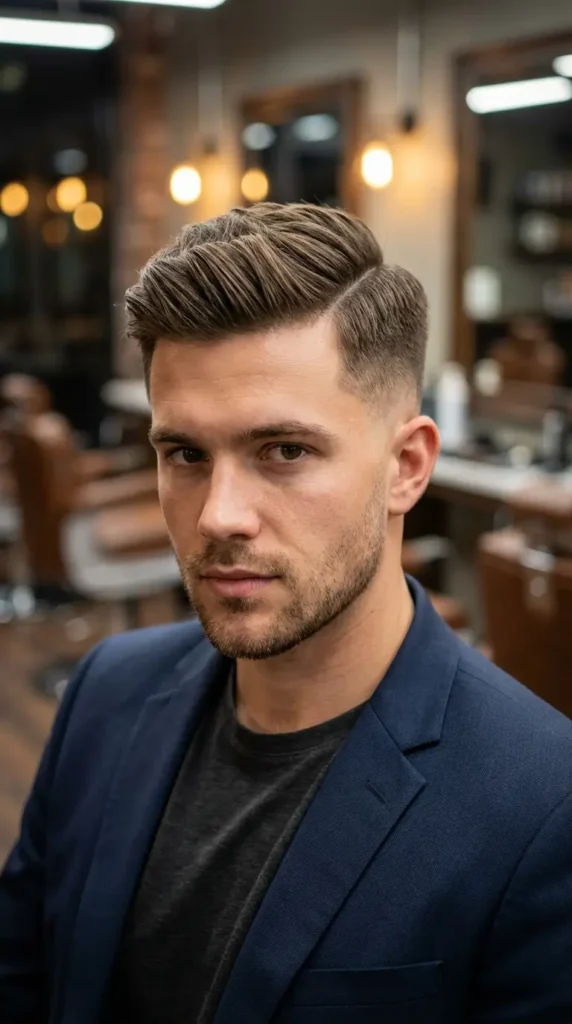
The balanced choice. The fade transitions at the temple level. It’s clean enough to be modern but not as aggressive as a high fade. Works for 90% of men.
9. Comb Over High Fade
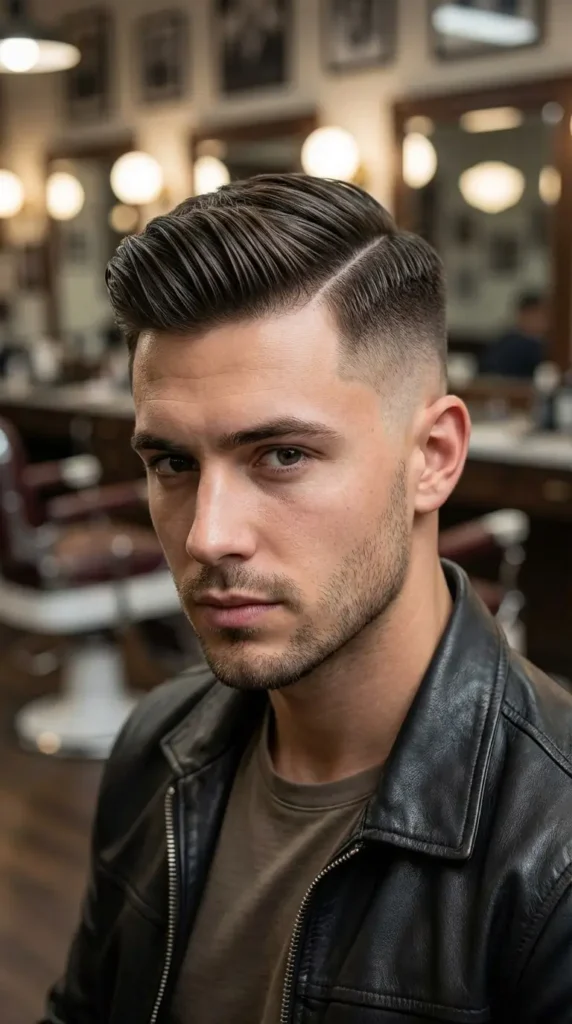
Bold and high-contrast. The fade starts high, leaving only the top section long. This emphasizes volume and height, making it excellent for round faces.
10. Comb Over Skin Fade
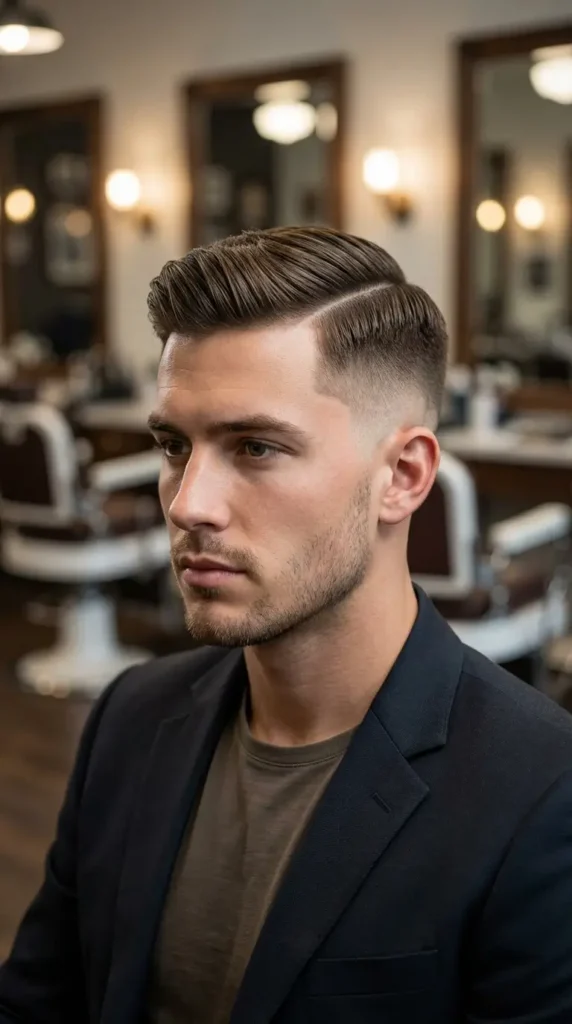
Fades down to bare skin for the sharpest look available. See our full skin fade guide for maintenance tips and variations.
11. Hard Part Comb Over Fade
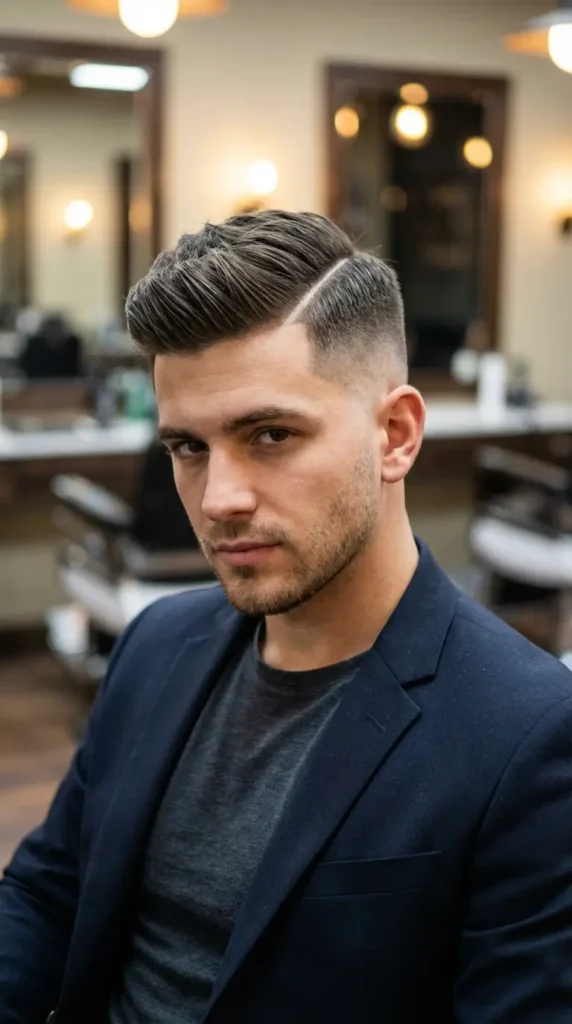
A razor line is shaved into the scalp to define the part. It creates a bold, unmissable line. Warning: It grows out quickly and needs touch-ups every week.
12. Comb Over Undercut
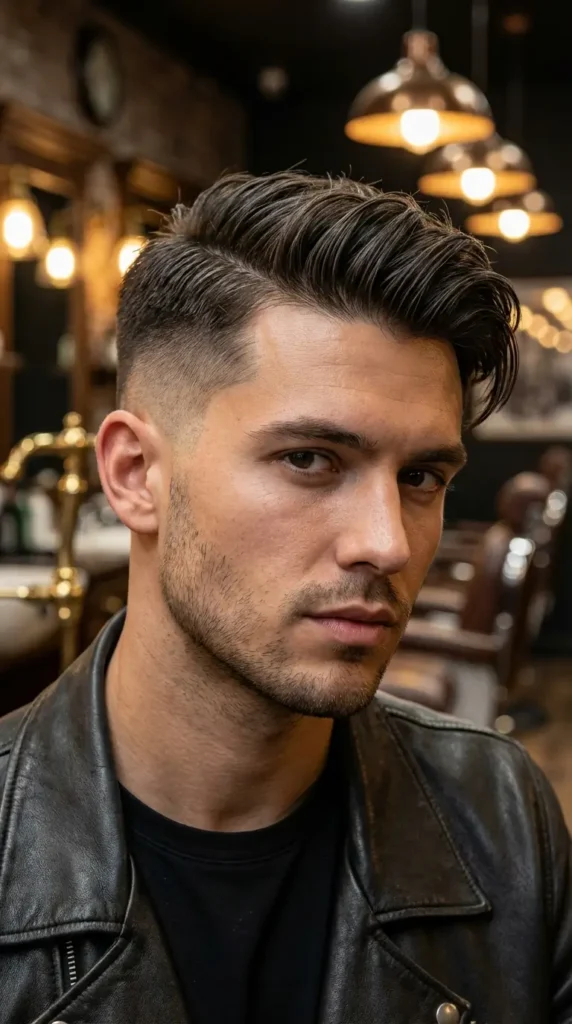
Disconnected sides with no blending. The long top “hangs” over the short sides. A high-contrast, fashion-forward statement for confident wearers.
13. Drop Fade Comb Over
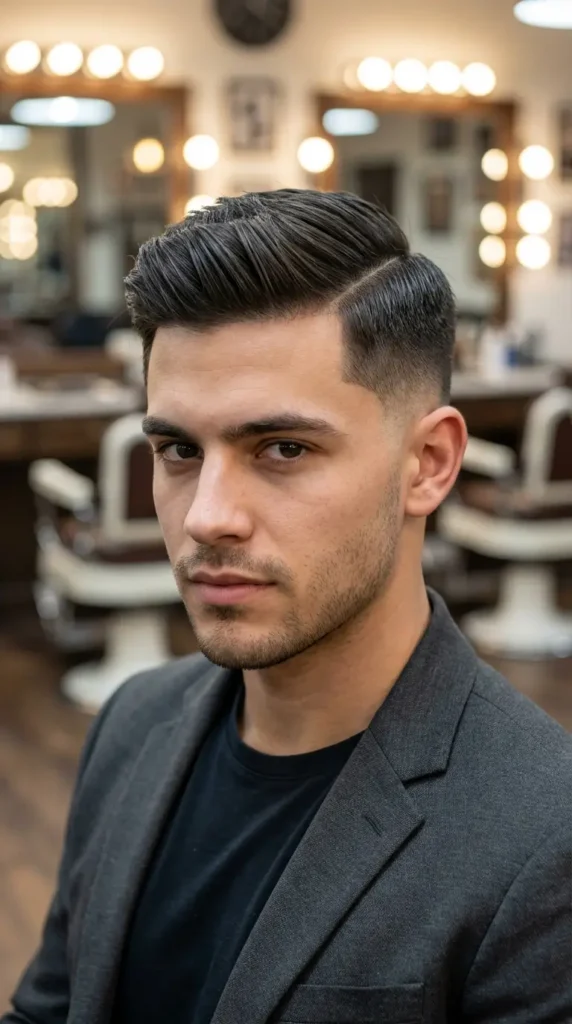
The fade line curves downward behind the ear, following the shape of the skull for a unique profile. Full breakdown in our drop fade guide.
14. Burst Fade Comb Over
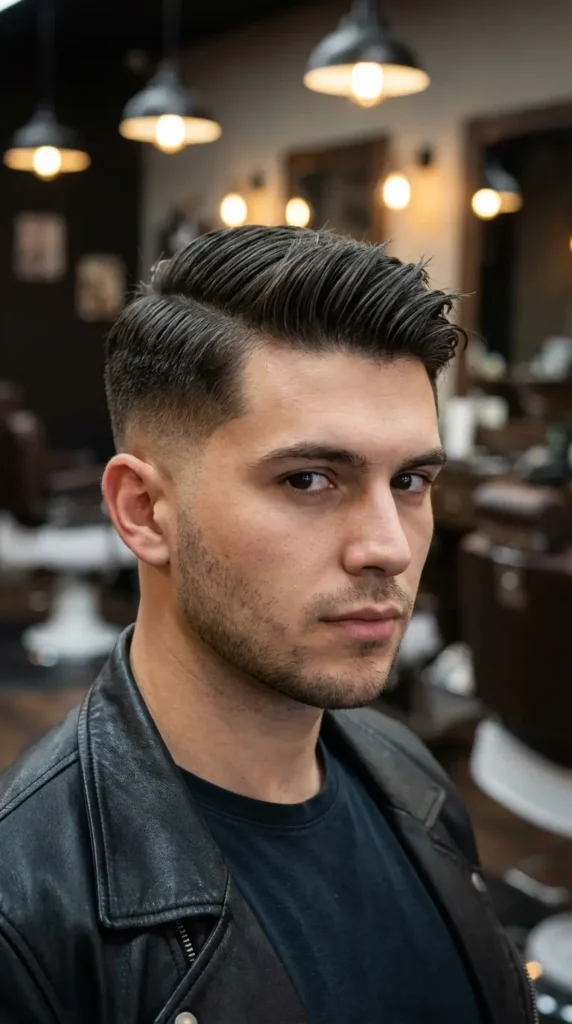
A rounded fade around the ear, leaving more bulk at the back for a creative twist. More angles in our burst fade guide.
15. Short Comb Over Fade
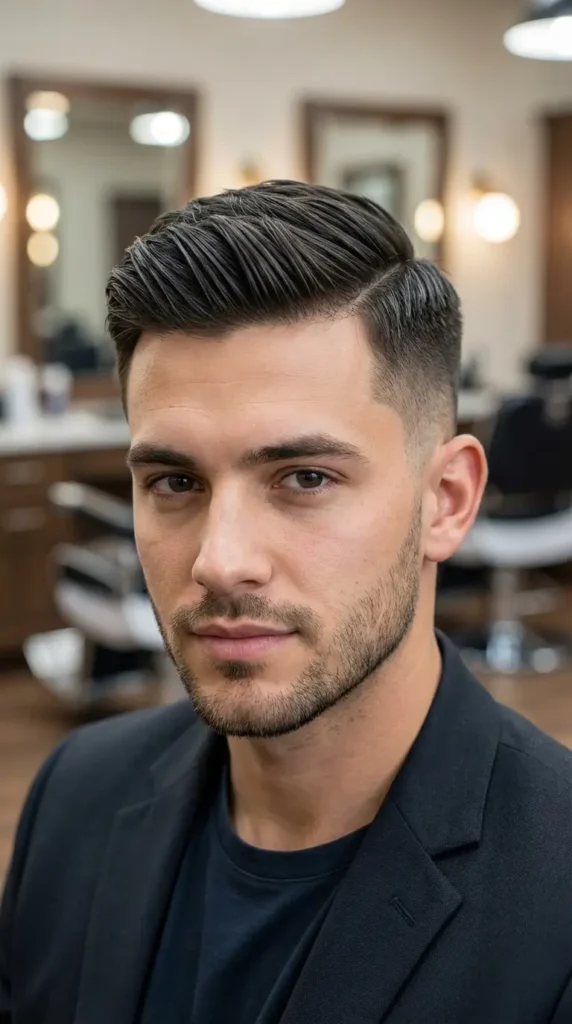
Top is kept around 2–3 inches. Easy to style, quick to dry. The perfect low-maintenance option for busy mornings.
16. Long Comb Over Fade
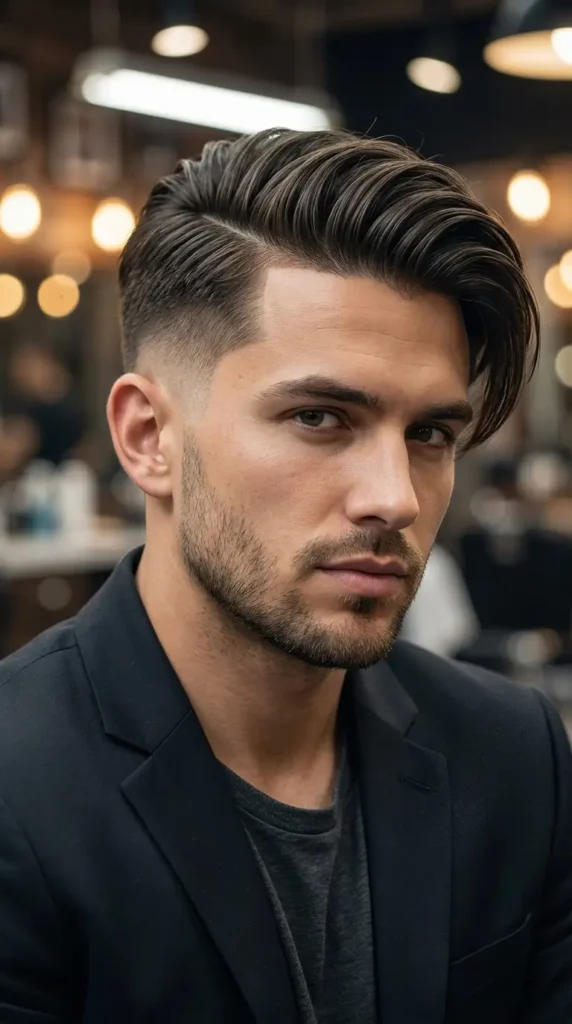
Extra length (4+ inches) for dramatic flow and volume. Can be styled as a pompadour or slick back. Requires more product and blow-drying time.
17. Medium Comb Over
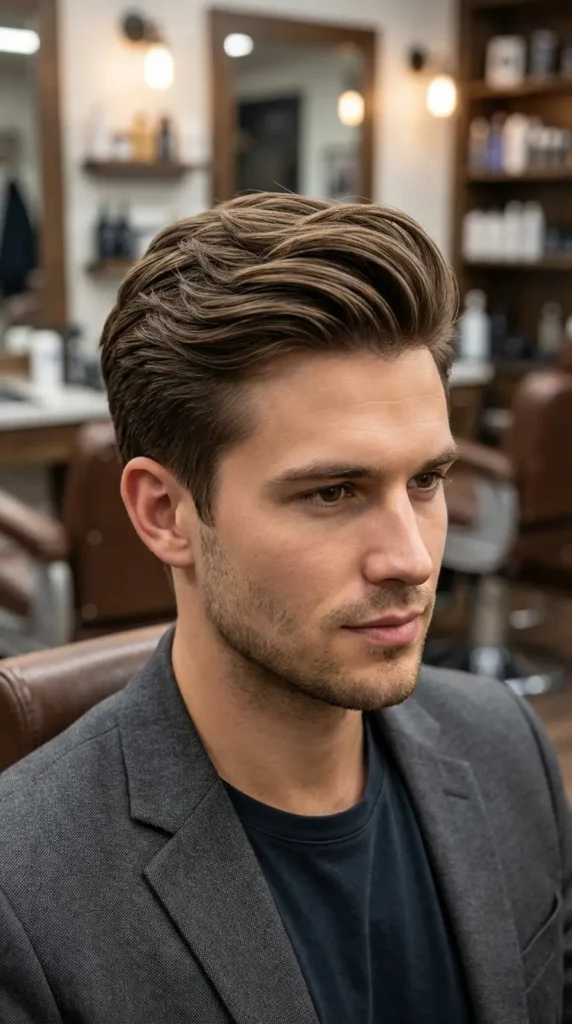
The sweet spot. Long enough to have flow, short enough to manage easily. The most versatile length for switching styles.
18. Curly Hair Comb Over Fade
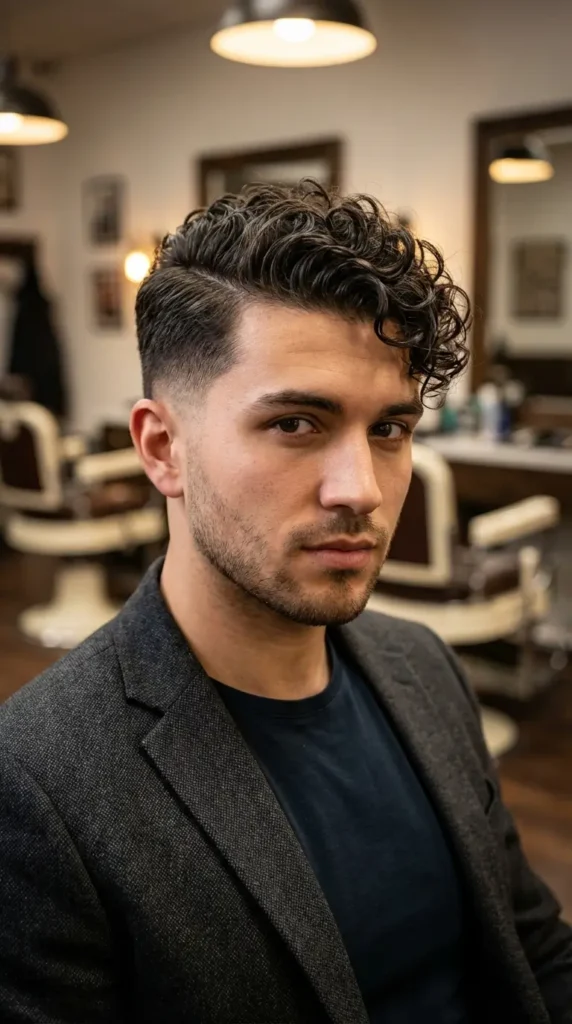
Don’t fight the curls—embrace them. Fade the sides to clean up the profile, but let the curls on top do their thing. Use curl cream and argan oil to define ringlets without frizz.
19. Wavy Hair Comb Over
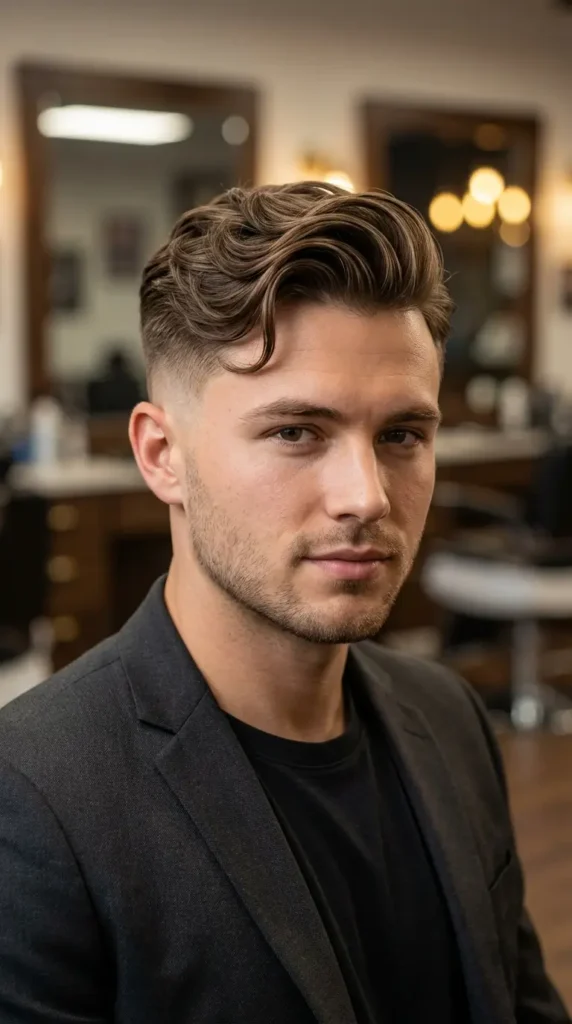
Natural waves add incredible volume and movement. A clean fade sharpens the edges while the waves provide texture. Use sea salt spray to enhance the wave pattern.
20. Straight Hair Comb Over
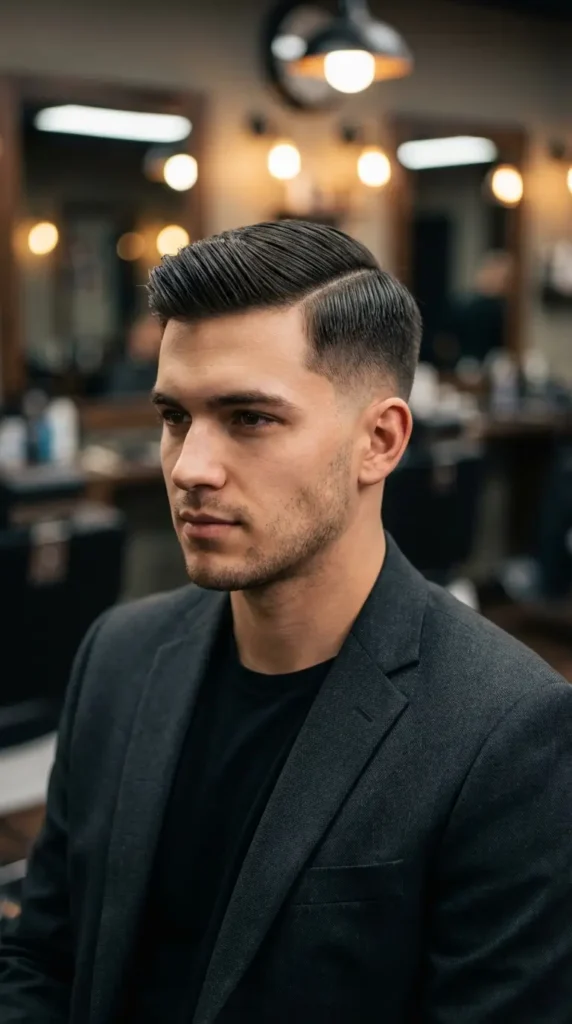
Straight hair creates the sharpest, most geometric comb overs. Clean lines and precise parts are easy to achieve. Use pomade for shine or clay for a matte finish.
21. Comb Over Pompadour
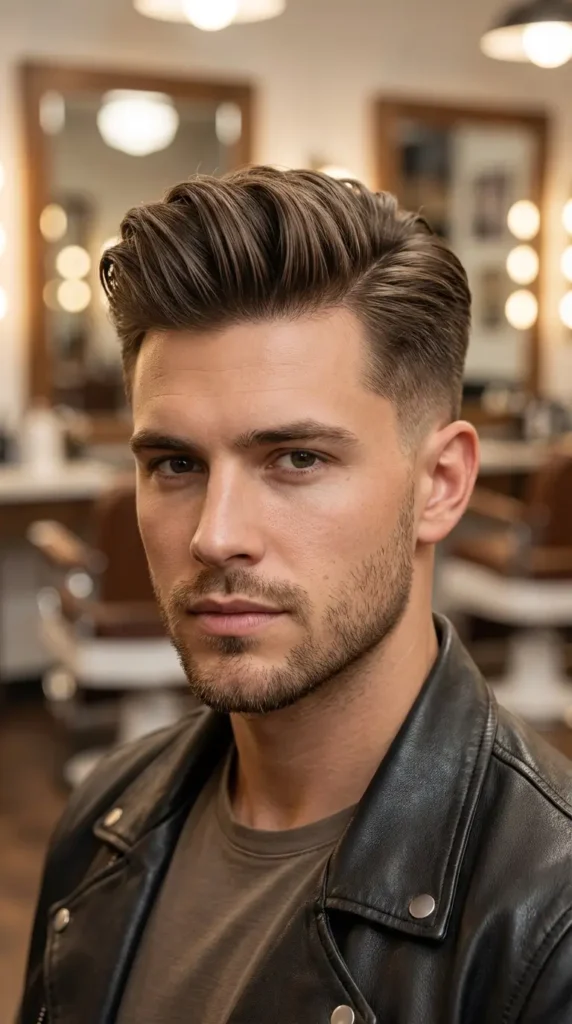
Volume at the front, swept back and to the side. Combines the height of a pomp with the direction of a comb over. Requires a blow dryer and molding paste.
22. Comb Over Quiff
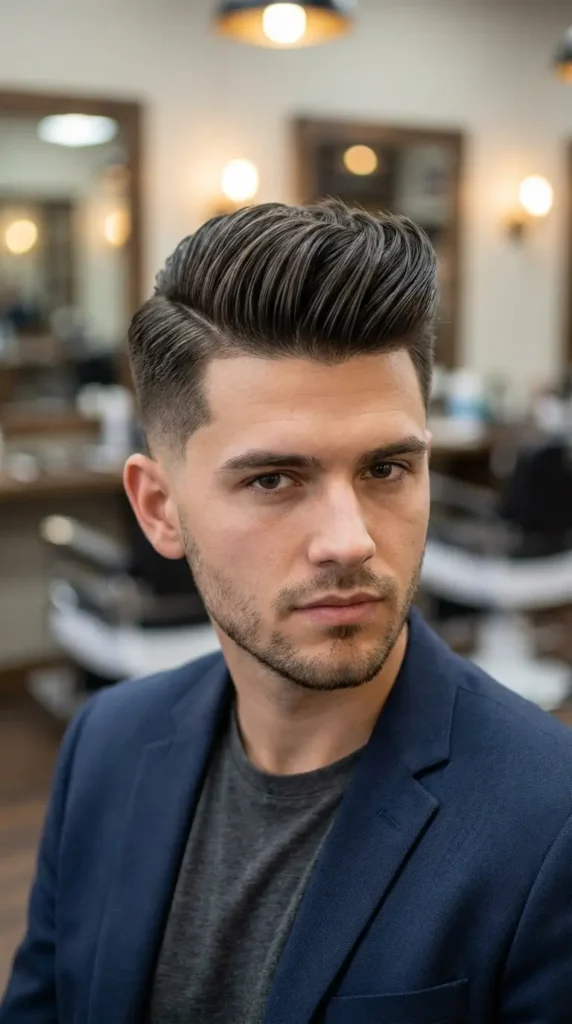
The front is lifted for height, while the rest is combed over. Great for round faces as it adds vertical dimension.
23. Comb Over Mohawk
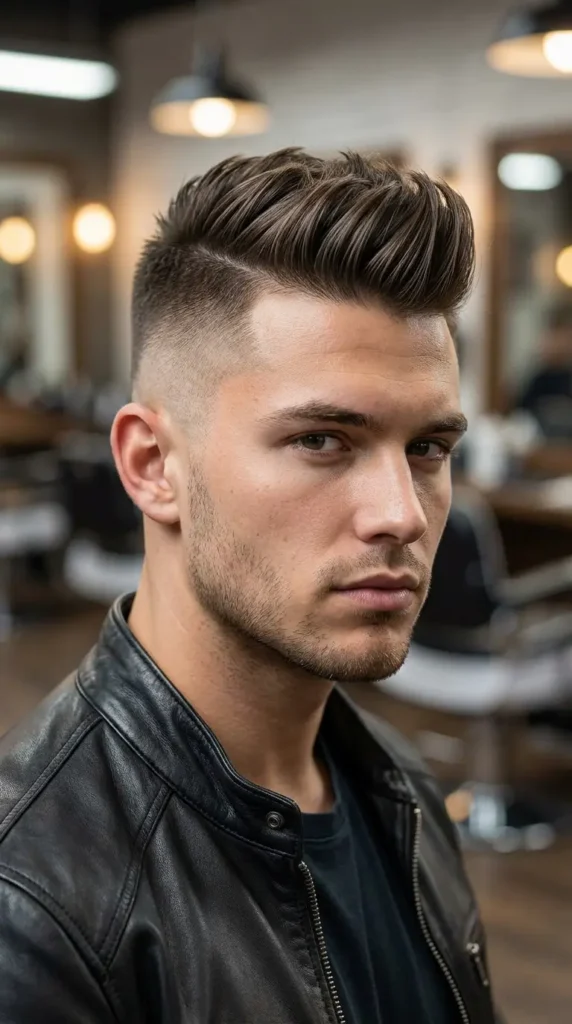
Edgy faded sides with a voluminous center flow. A bold hybrid that merges punk rock with barber precision.
24. Comb Over Mullet
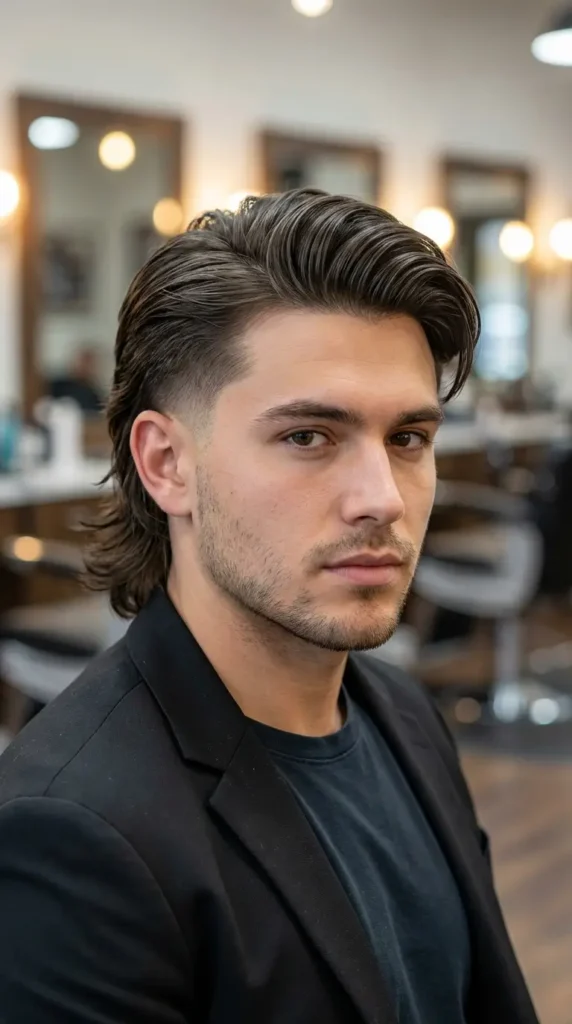
Business in the front, party in the back. A vintage revival style combining a clean comb over front with length at the nape.
25. Military Comb Over Fade
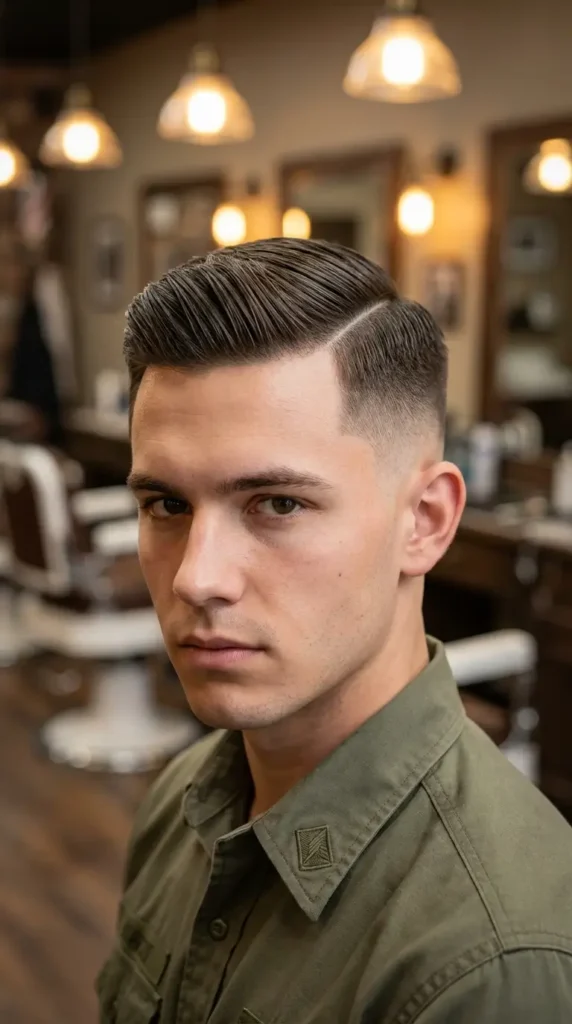
High and tight precision. A high fade with a short, disciplined top. Sharp, commanding, and very low maintenance.
26. Comb Over with Beard

The ultimate masculine combo. A smooth, side-swept top paired with a full, groomed beard. The fade acts as a bridge, separating the hair from the beard (if using a skin fade) or blending them (if using a taper). Key: Keep both maintained; a messy beard ruins a clean fade.
27. Comb Over Taper Fade
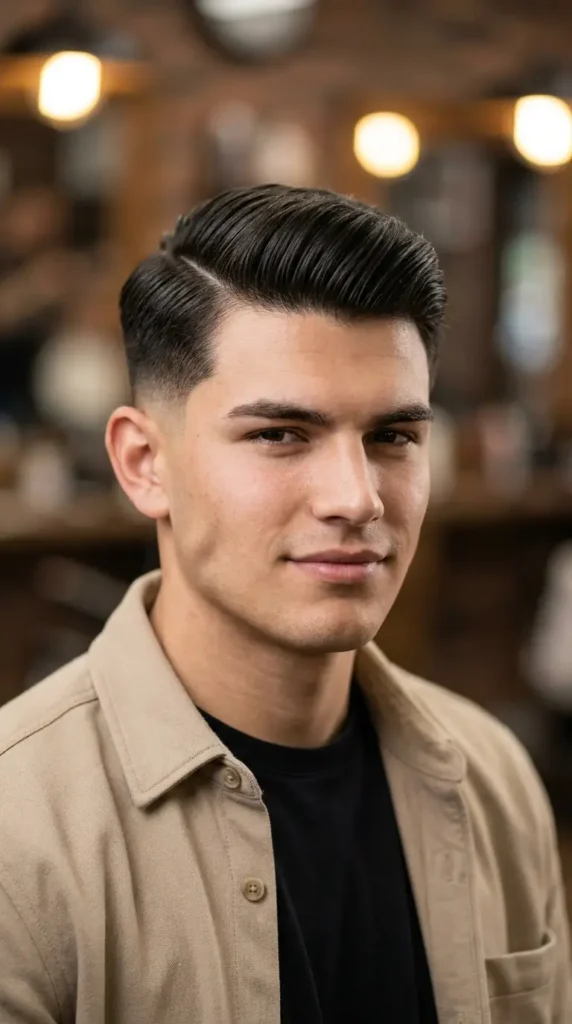
Clean, conservative, and professional. The taper fades gradually without reaching skin, perfect for office environments or men who want a subtle, grown-out-friendly look.
28. Disconnected Comb Over
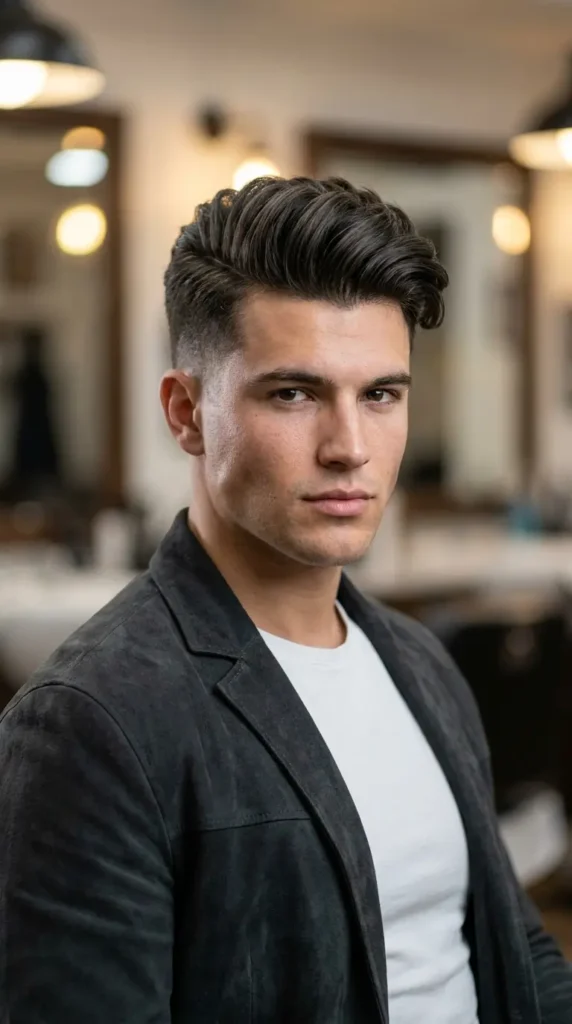
No blending between the top and sides. A sharp, visible line where the long top meets the short sides. High contrast, high fashion, and guaranteed to turn heads.
29. Comb Over with Temple Fade
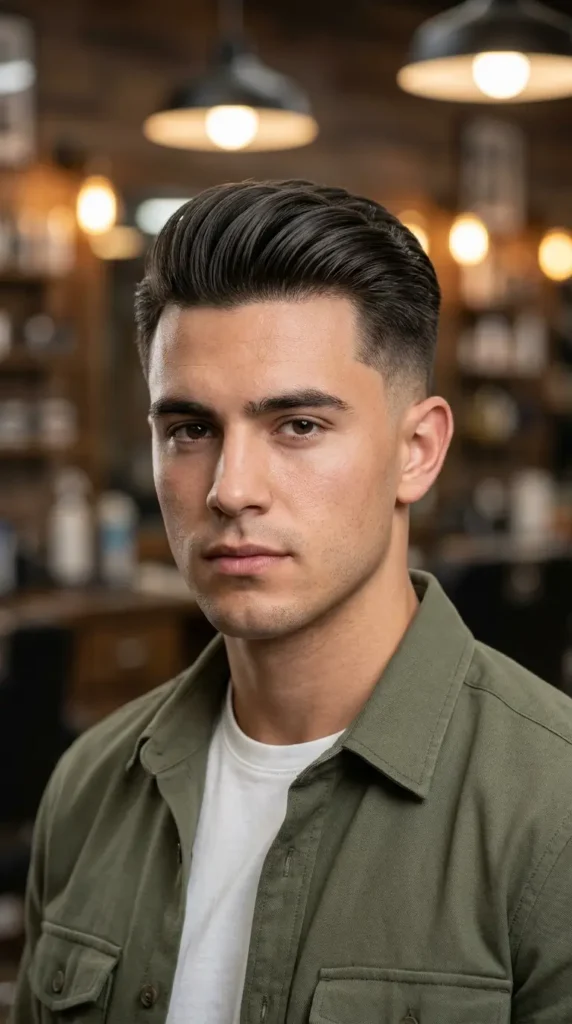
The fade is concentrated around the temples only, leaving the rest of the sides slightly longer. A subtle, detailed look that suits men who want precision without going too short.
30. Comb Over Caesar
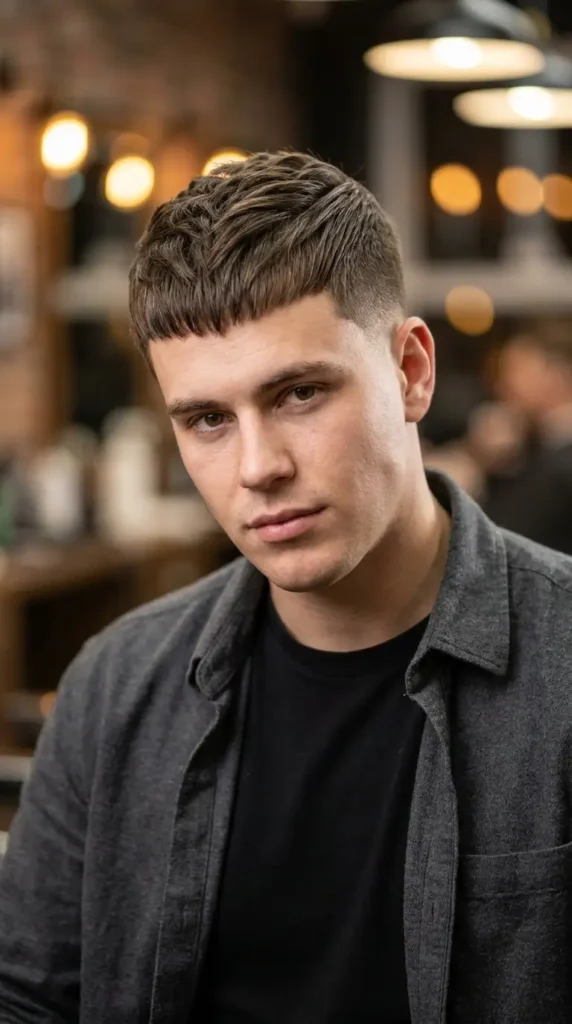
The top is cut short and uniform with a blunt, forward-sitting fringe, but styled to one side rather than straight forward. A unique hybrid that combines the structure of a Caesar cut with the direction of a comb over.
31. Comb Over with Design
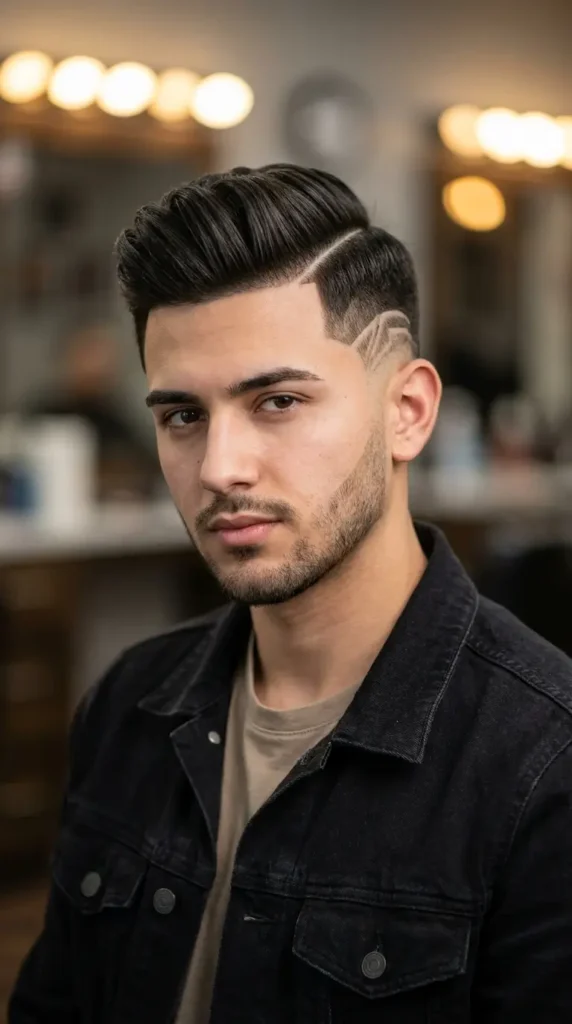
A creative barber line or geometric design shaved into the fade, adding a bold personal touch to the classic comb over. The design sits on the side of the head and creates a unique signature look.
32. Comb Over Fade with Curly Top
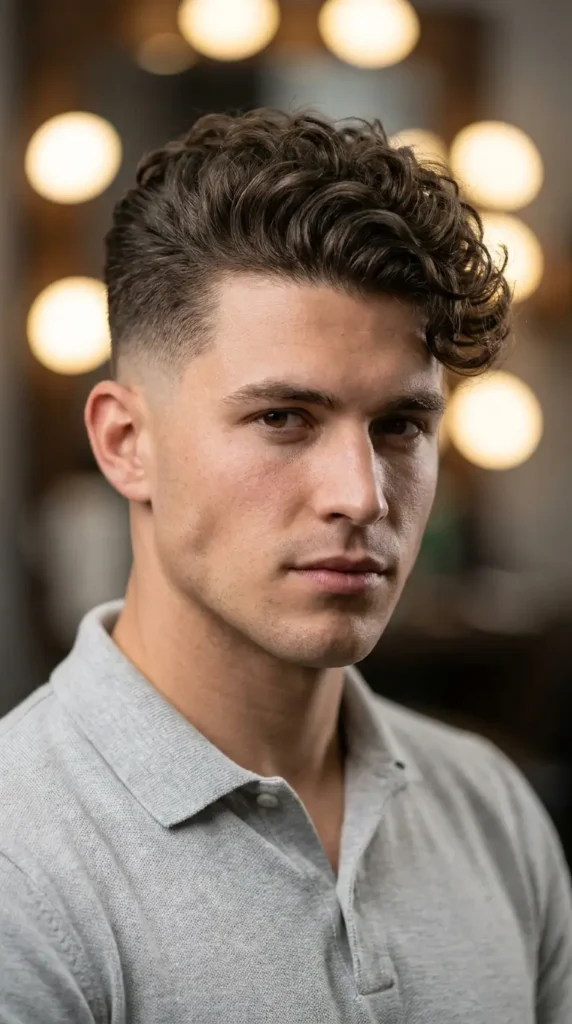
Natural curls left long on top while the sides are faded clean. The curls provide built-in volume and texture that a straight comb over simply cannot replicate, and they sweep naturally to one side with minimal product.
33. Gentleman’s Comb Over Fade

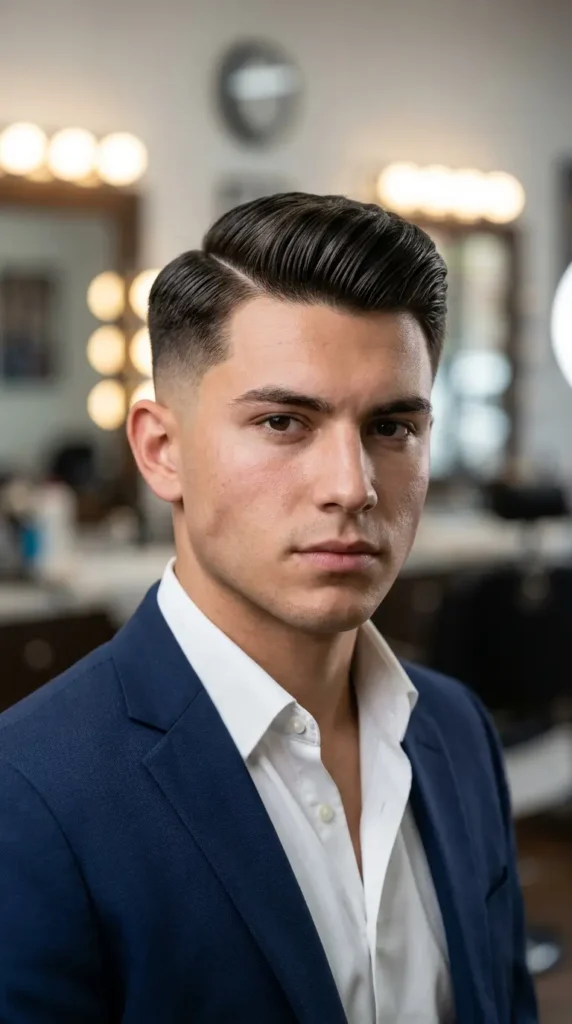
The most refined cut in this entire guide. Clean low fade, natural part, medium-hold pomade. This is the comb over that works in a courtroom, a boardroom, or a black-tie event without changing a single thing.
34. Ivy League Comb Over Fade
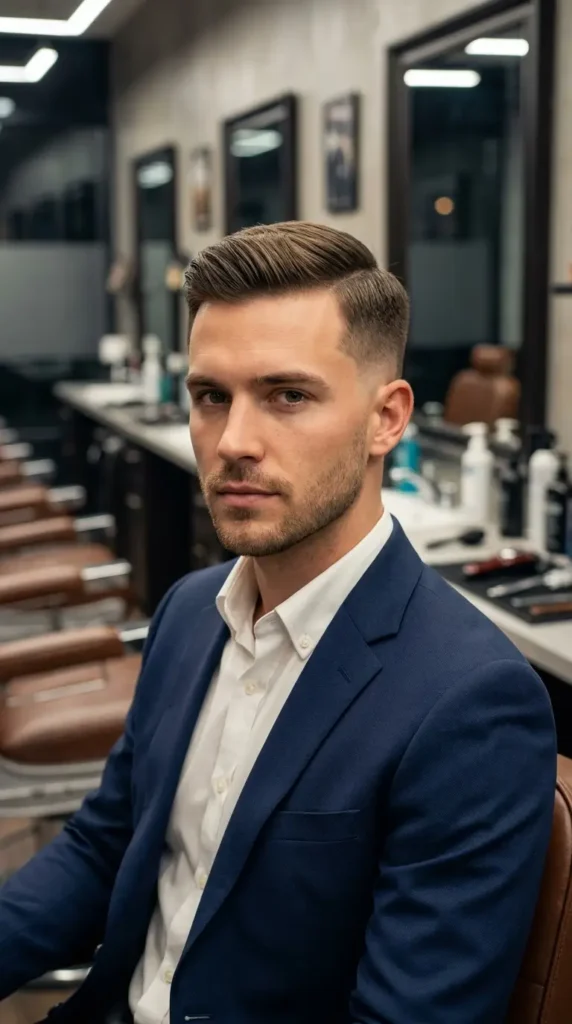
The academic classic updated for 2026, slightly shorter on top than a standard comb over. Full details, lengths, and styling steps in our dedicated Ivy League haircut guide.
35. Old School Comb Over Fade
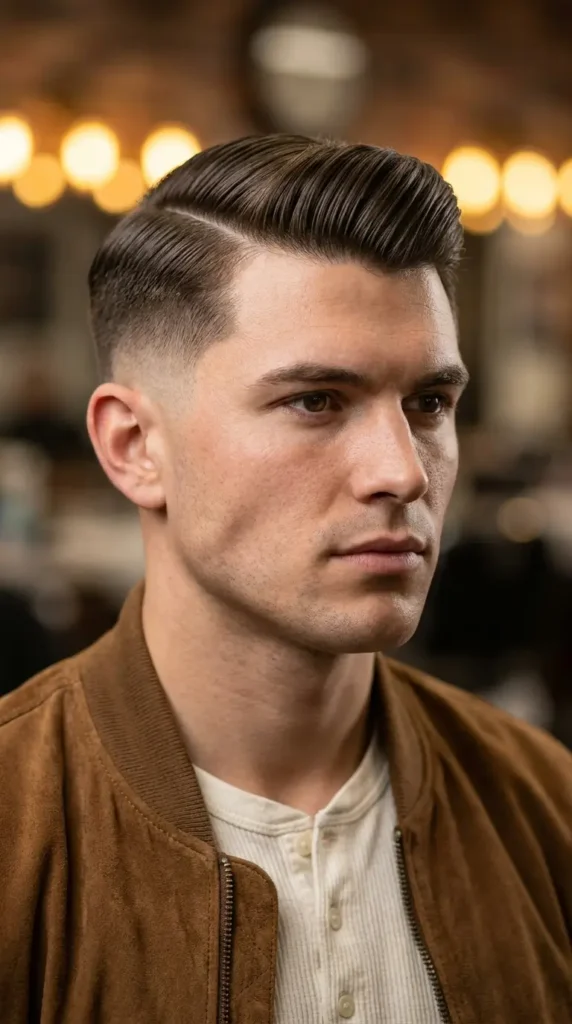
1950s barbershop energy with a modern fade underneath. High-shine pomade. Precise part. Every strand in place. This is the cut that Mad Men made famous, updated with a clean mid fade to keep it sharp and contemporary.
Comb Over vs Side Part: The Key Distinction
Many guys use these terms interchangeably, but they are different. Quick comparison below; for a deep dive on the side part specifically, see our side part guide.
| Feature | Comb Over | Side Part |
| Parting | Swept across, softer division | Defined line, distinct separation |
| Finish | More casual, natural flow | More structured, polished |
| Styling | Finger-styled or loosely combed | Precisely combed with hard line |
| Best For | Everyday versatility | Formal/professional settings |
As the experts at Uppercut Deluxe explain: “A Comb Over is a more casual approach where the hair is swept to the side, whereas a Side Part has a distinct separation between the longer and short section.”
The Modern Comb Over: Reclaiming the Style
For years, “comb over” meant one thing: a bad attempt to hide balding. But thanks to the Mad Men influence and the revival of traditional barbering, the term has been reclaimed. Today, it’s a symbol of intentional style. Stars like Cristiano Ronaldo, Justin Timberlake, and David Beckham have all rocked variations of this cut, proving it’s as versatile on the soccer pitch as it is on the red carpet.
Understanding Fade Types: The Foundation of Your Cut
The biggest mistake guys make is asking for “a fade” without specifying which kind. The fade determines the entire vibe of your haircut.
The Fade Spectrum Explained
| Fade Type | Description | Best For |
| Taper Fade | Gradual blend, no skin showing at all | Conservative settings, natural grow-out |
| Low Fade | Starts just above the ear | Subtle contrast, longer/triangular faces |
| Mid Fade | Starts at temple level | Balanced look, most versatile option |
| High Fade | Starts high on the head | Maximum contrast, round faces |
| Skin Fade (Bald Fade) | Fades all the way to bare skin | Ultra-clean, high maintenance |
| Drop Fade | Curves down behind the ear | Unique silhouette, frames face naturally |
| Burst Fade | Rounded arc around the ear | Creative, mohawk-adjacent styles |
Barber Rule of Thumb: “Never fade above the occipital bone (that lump in the back of your head) unless you’re doing a high fade. If you go above this on a standard cut, it disrupts the head shape.”
Which Fade Height for Your Face Shape?
Your face shape dictates your fade height. Choosing correctly balances your features.
| Face Shape | Recommended Fade | Why? |
| Round/Circular | High Fade or Skin Fade | Removes width from sides, elongating the face |
| Long/Rectangular | Low Fade | Prevents the face from looking even longer |
| Oval | Any Variation | The most versatile face shape—you can pull off anything |
| Square | Mid Fade | Keeps the silhouette balanced without softening your jawline |
| Heart | Low to Mid Fade | Keeps some weight on sides to balance wider forehead |
Taper vs Fade: Which One for Your Comb Over
In short: a taper keeps hair at the hairline, while a fade lets it disappear into the skin. If you work in a conservative office, pair your comb over with a taper. If you want a sharper, more modern look, pair it with a fade. For the full breakdown of the differences, see our dedicated taper vs fade guide.
Is a Comb Over Good for Thinning Hair?
This is the question many guys are afraid to ask. The answer is: Yes, but you have to do it right.
The Honest Truth
The old-school “combover” (long strands plastered over a bald spot) looks terrible. It draws more attention to the hair loss.
How to Make It Work (If You’re Thinning)
- Keep it Shorter: Long, thin hair looks stringy. Short, thin hair looks denser. Keep the top around 1–2 inches.
- Add Texture: Use matte products like texture powder or clay. Shine products (gel/pomade) reflect light off the scalp, highlighting bald spots. Matte products absorb light, making hair look thicker.
- Choose the Right Fade: A tighter fade on the sides draws the eye away from the receding hairline and makes the top look fuller by comparison.
- Know When to Fold: If the hairline is severely receding (think “Mr. Burns”), a comb over won’t hide it. In that case, a Buzz Cut Fade or Caesar Cut is a stronger, more confident choice.
How to Ask Your Barber for a Comb Over Fade
Walking into the shop confident means walking out with a great cut. Use this script.
Step 1:
“I want a comb over fade.” (Or “Comb over with a [low/mid/high] fade” if you know your preference)
Step 2:
“For the sides, start with a [#0 / #1 / #2] guard and fade up.” (See guard guide below)
Step 3:
“Leave about [2–3 inches] on top.” (Enough to comb over, but not so long it flops)
Step 4:
“I part my hair on the [left/right] side.”
Step 5:
“I want a [hard part / natural part].” (Hard part = shaved line; Natural part = combed)
Guard Number Reference Guide
| Guard | Length (mm) | Length (inches) | Result |
| #0 | 0.5mm | 1/64″ | Skin fade starting point (stubble) |
| #1 | 3mm | 1/8″ | Very short fade |
| #2 | 6mm | 1/4″ | Standard business fade |
| #3 | 10mm | 3/8″ | Longer transition |
| #4 | 13mm | 1/2″ | Top of head starting point |
Hard Part vs. Natural Part: Making the Decision
- Hard Part: A line shaved into your scalp with a razor. Looks razor-sharp and ultra-defined. Con: Grows out in 7–10 days and can look messy if not maintained.
- Natural Part: You find your hair’s natural separation and comb it. Looks softer and professional. Pro: Zero maintenance; grows out naturally.
How to Style a Comb Over Fade at Home
You’ve got the cut, now you need the skills. Here is the barber-approved routine.
Step 1: Wash and Prep
Start with clean, towel-dried hair. It should be damp, not dripping. Clean hair absorbs product evenly.
Step 2: Apply Pre-Styler (The Secret Step)
Most guys skip this, but it’s crucial.
- For Volume: Spray Sea Salt Spray or apply Volumizing Mousse to damp hair. This creates the “grit” and lift you need.
- For Control: Apply a small amount of Styling Cream to tame flyaways.
Step 3: Blow-Dry for Shape
Don’t just air dry!
- Use medium heat, high speed.
- Use a brush to direct the hair in the direction of the comb over.
- Blow-dry until 90% dry. This “trains” the hair to stay in place all day.
Step 4: Find and Define Your Part
Locate your natural part (where the hair splits). Use a fine-tooth comb to create a crisp line. Comb the short side down, and the long side across.
Step 5: Apply Finishing Product
- For Slick/Polished: Use Pomade. Rub between palms, work through, and comb into place.
- For Textured/Matte: Use Clay or Paste. Rub between palms, work through roots to tips, and use fingers to rake the hair into place for a natural look.
Step 6: Set and Refine
Use your comb for final shaping. Check the back in the mirror. Finish with a quick blast of hairspray if you have a long day ahead.
Total Time: 5–8 minutes.
Best Products for Comb Over Styles
Your product determines your finish. Choose wisely.
By Desired Finish
| Finish Type | Product | Hold Level | Best For |
| High Shine (Slick) | Pomade | Strong | Formal events, classic Mad Men look |
| Matte (Textured) | Clay / Paste | Medium-Strong | Everyday office, modern texture |
| Natural (Light) | Styling Cream | Light-Medium | Casual weekends, low effort |
| Volume (Pre-Styler) | Sea Salt Spray | Light | Fine/thin hair, adding beachy grit |
| Instant Lift | Texture Powder | Light | Root volume, quick fixes |
Product Selection by Hair Type
- Thick/Coarse Hair: Needs Strong Hold Clay to control weight.
- Fine/Thin Hair: Needs Texture Powder or Sea Salt Spray to add volume. Avoid heavy pomades.
- Curly Hair: Needs Curl Cream or Argan Oil to define curls.
- Straight Hair: Versatile, use Pomade for shine or Clay for texture.
What to Avoid:
- Heavy Gel: It flakes, crunches, and looks dated (think middle school).
- Too Much Product: Less is more. You can always add, but you can’t remove without washing.
How to Maintain a Comb Over Fade
A fade looks incredible on day one, but it grows out fast. Here is the reality of maintenance.
Trim Schedule by Fade Type
| Fade Type | Touch-Up Frequency | Why? |
| Skin Fade | Every 7–10 days | Stubble destroys the “skin” look quickly |
| High Fade | Every 2 weeks | Contrast softens fast |
| Mid Fade | Every 2–3 weeks | The balanced choice |
| Low Fade / Taper | Every 3–4 weeks | Grows out the most gracefully |
| Hard Part | Every 1–2 weeks | The line fills in quickly |
Barber Reality Check: “A skin fade really only looks ‘fresh’ for about three days. After that, the stubble kicks in. If you can’t visit the barber every two weeks, stick to a taper or low fade.”
Home Maintenance Between Cuts
- Neckline: Use a trimmer to clean up neck hair.
- Edges: Use a razor carefully around the ears (if you’re skilled).
- Don’t: Try to touch up the fade blend yourself. Leave that to the pros.
Common Comb Over Fade Mistakes to Avoid
Even a great fade can be undone by a poorly executed comb over. Watch out for these common errors.
- Fighting Your Cowlick: If your hair naturally wants to part on the right, forcing a left part all day is a losing battle. Work with your natural growth pattern, not against it.
- Skipping the Blow-Dry: Air-drying leaves hair flat and directionless. The blow-dry step is what actually trains the comb over to hold its shape through the day, not just the product.
- Letting the Fade Grow Out Unevenly: A comb over fade lives or dies by the contrast between the top and sides. Once the fade softens past recognition, the whole style loses its shape, even if the top still looks fine.
- Over-Applying Product on the First Try: A dime-sized amount is plenty for most styles. Guys new to comb overs often overload the hair, which looks greasy rather than styled.
- Ignoring Face Shape: Walking in and asking for “whatever’s trending” without factoring in your face shape is the single biggest reason a comb over fade doesn’t land the way it does in the reference photo.
Comb Over Fade by Age: Does It Still Work?
One question barbers hear constantly: is this a young guy’s haircut? Not at all, the comb over fade simply shifts emphasis as you age.
- 20s: This is where the bolder variations shine: high fades, hard parts, disconnected styles. Hair is typically at its thickest, so there’s more room to experiment.
- 30s–40s: The gentleman’s comb over fade and low taper versions tend to work best here, professional, low-drama, and easy to maintain around a busy schedule.
- 50s and beyond: If thinning has started, lean into the shorter, textured variations with matte product. A tight, well-maintained fade on the sides draws attention away from a receding line better than length ever will.
Frequently Asked Questions
What is a comb-over fade?
A comb over fade is a men’s haircut that combines faded or tapered sides with a longer top that is parted and swept to one side. The fade creates a clean, graduated look on the sides, while the comb over adds sophisticated styling on top. It is one of the most versatile and popular men’s haircuts today.
What fade looks best with a comb over?
The mid fade is the most versatile choice for most men. For round faces, a high fade or skin fade helps elongate the face. For longer faces, a low fade prevents further elongation. Skin fades provide maximum contrast but require more maintenance.
Is a comb-over good for thinning hair?
It depends. A short, textured comb-over styled with matte products (like clay or powder) can effectively minimize the appearance of thinning. However, long, slicked-back comb-overs often emphasize thinning and should be avoided. For significant hair loss, a buzz cut or Caesar cut is often a better option.
What is the difference between a comb over and a side part?
A comb over generally refers to sweeping the hair casually to one side, often with a softer or more natural division. A side part features a distinct, defined line separating the longer top from the shorter sides. The comb over feels more relaxed, while the side part is more structured and formal.
How do I ask my barber for a comb-over fade?
Specify three things:
(1) Fade height (low, mid, high, or skin)
(2) Top length (usually 2–3 inches)
(3) Part preference (natural or hard part).
Example: “I’d like a mid fade on the sides, about 3 inches on top, styled with a natural part on the left.”
What products should I use for a comb-over fade?
- For Shine: Pomade or Gel.
- For Texture: Clay or Paste.
- For Natural Finish: Styling Cream.
- For Volume: Sea Salt Spray (as a pre-styler). Choose your product based on the finish you want—matte for a modern look, shine for a classic vibe.
How often should I get a comb over fade trimmed?
- Skin Fades: Every 7–10 days.
- High Fades: Every 2 weeks.
- Mid Fades: Every 2–3 weeks.
- Low Fades/Tapers: Every 3–4 weeks. Hard parts typically need touch-ups every 1–2 weeks to remain crisp.
Do comb overs look good?
Yes. The modern comb over fade is one of the most popular and flattering men’s haircuts. It works across almost all face shapes, hair types, and professional settings. The key is choosing the right fade height and styling product for your specific features.
What is the 7-day haircut rule?
The “7-day rule” refers to how quickly skin fades begin showing growth. After about 7 days, stubble appears, and the ultra-clean fade line begins to soften. This is why skin fades are considered high-maintenance cuts.
What’s better, a fade or a taper?
Fades are shorter, typically blending down to the skin, creating sharper contrast and a trendier look. Tapers leave some hair length at the hairline and do not expose the scalp, providing a more subtle, conservative transition. Fades are bolder; tapers are more traditional and grow out more gracefully.
Can I do a comb over fade myself at home without a barber?
Styling it yourself day-to-day is easy once you know your part and product routine. Cutting it yourself is not recommended. Blending a fade evenly requires clippers, guards, and practice, and a botched fade takes weeks to grow out. Get the cut from a barber, then take over the daily styling.
Does a comb over fade work with glasses?
Yes, and it often works better than longer, heavier styles. Because the sides are faded down, glasses sit cleanly against the head without hair bulking up around the temples. A mid or low fade tends to pair best with thicker frames, while a high fade suits thinner, minimal frames.
How much does a comb over fade cost at a barbershop?
Pricing varies by region and shop tier, but expect to pay more than a basic buzz cut. The fade blend takes extra time and skill, so many barbers price it as a premium service. Ask specifically for a “comb over fade” quote when booking, since some shops price it differently from a standard fade.
Conclusion
The comb over fade is not one haircut. It is thirty-two.
Short or long. Slick or textured. Skin fade or taper. Hard part or natural part. Every variation serves a different man, a different occasion, and a different face shape.
That is the power of this cut. It has survived every decade of modern barbering because it adapts. The slick 1950s version. The Mad Men boardroom version. The modern textured version that dominates Instagram right now. Same bones. Different finish.
Here is the formula that never changes.
Clean fade on the sides. Enough length on top to sweep across. The right product for the finish you want. That is it.
Your action plan is simple.
Pick your fade height based on your face shape: high for round faces, low for longer faces, mid for everyone else.
Decide your finish: pomade for shine, clay for matte, styling cream for natural. Pick one and master it.
Walk in with the barber script from this guide. Show a photo. Be specific about your fade height, top length, and part preference.
Then maintain it. A skin fade needs a touch-up every seven to ten days. A mid fade every two to three weeks. A taper every three to four weeks. Skip the schedule and the cut loses its impact.
One final point.
The comb over has been worn by Cristiano Ronaldo, David Beckham, and Justin Timberlake. It works in boardrooms and on football pitches. It suits thinning hair and thick hair. It works on curls, waves, and straight hair.
There is a version of this cut for you. You have just found it.