
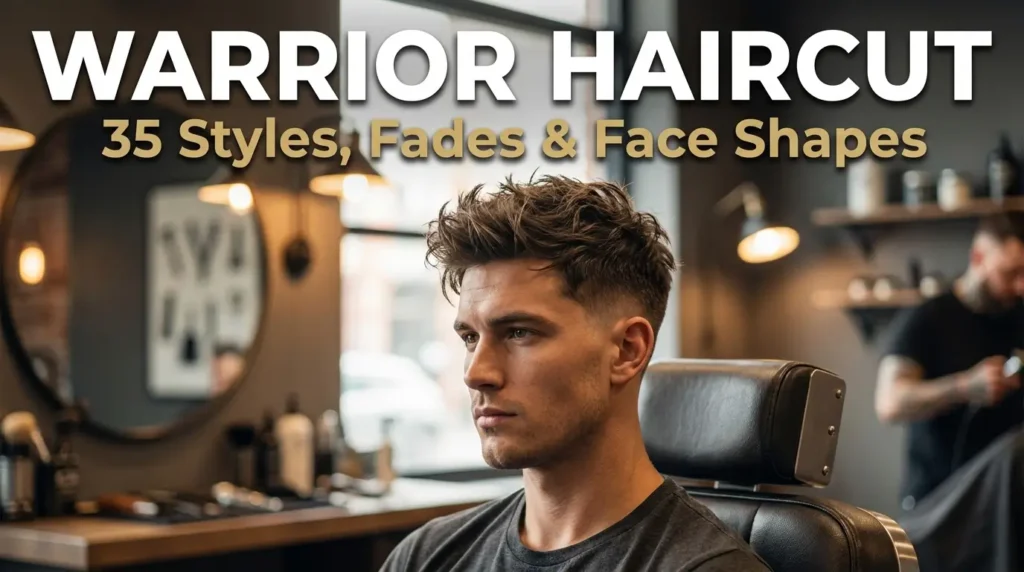
The warrior haircut is a textured men’s cut defined by a heavily layered top, typically three to five inches, shaped through point cutting to create peaks, valleys, and internal movement. It’s paired with tapered or faded sides that frame the face without overwhelming it. The finish is always matte, always slightly undone, and always intentional.
The style traces back to the 90s grunge aesthetic. Most people know it from Brad Pitt’s Tyler Durden look in Fight Club. Austin Butler brought a cleaner, more wearable version to the red carpet recently, and that modern interpretation is what most men are now asking for in the chair.
What separates a warrior cut from a textured crop or a disconnected undercut is the relationship between movement and structure. The sides give shape. The top does whatever it wants, within reason.
35 Warrior Haircut Styles and Variations
There is no single warrior cut. The right version depends on your hair type, how much time you’ll spend styling, how much contrast you want between the top and sides, and your face shape. Here are all 35 variations barbers cut regularly.
Length and Structure Variations
1. Short Warrior Haircut
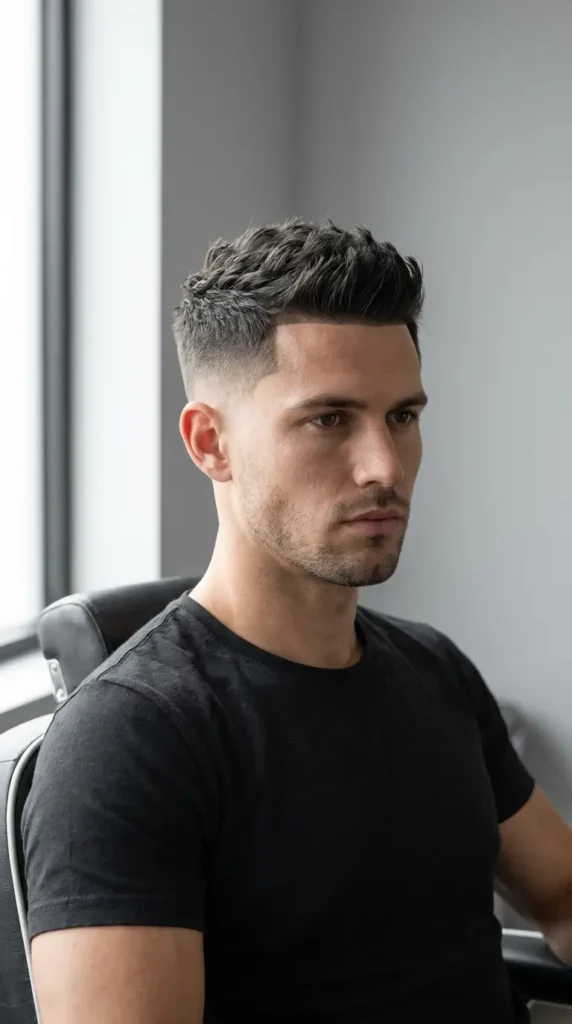
The short warrior keeps two to three inches on top, enough for point-cut texture and separation, not enough for flow or wave. The sides run tight: a mid fade or skin fade creates sharp contrast against the cropped textured top.
Best for: Men who want the warrior look without the length commitment. Works well on thick or medium-density hair. Suits square and oval face shapes particularly well. Also a strong option for teenage boys who want low daily maintenance. Daily styling: three to five minutes.
2. Modern Warrior Haircut
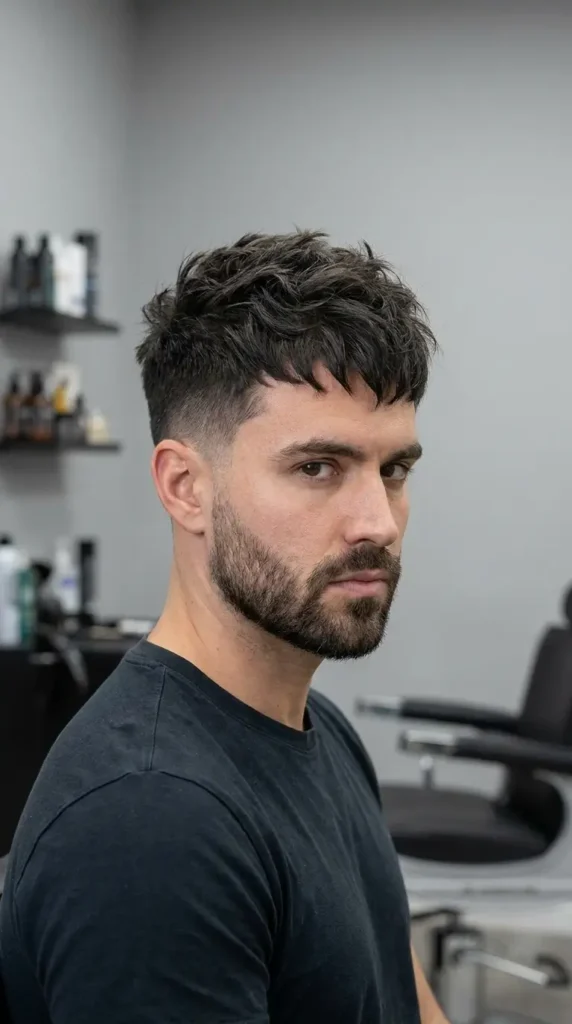
The modern version runs three to four inches on top with blended sides, either a low taper or a scissor taper, and a choppy fringe that sits just above the brow. It’s the most office-appropriate warrior variation and the most forgiving to grow out.
Best for: Men who need the cut to carry from a work environment into evenings. Straight and wavy hair types. All face shapes with minor fringe adjustments for length.
3. Long Warrior Haircut
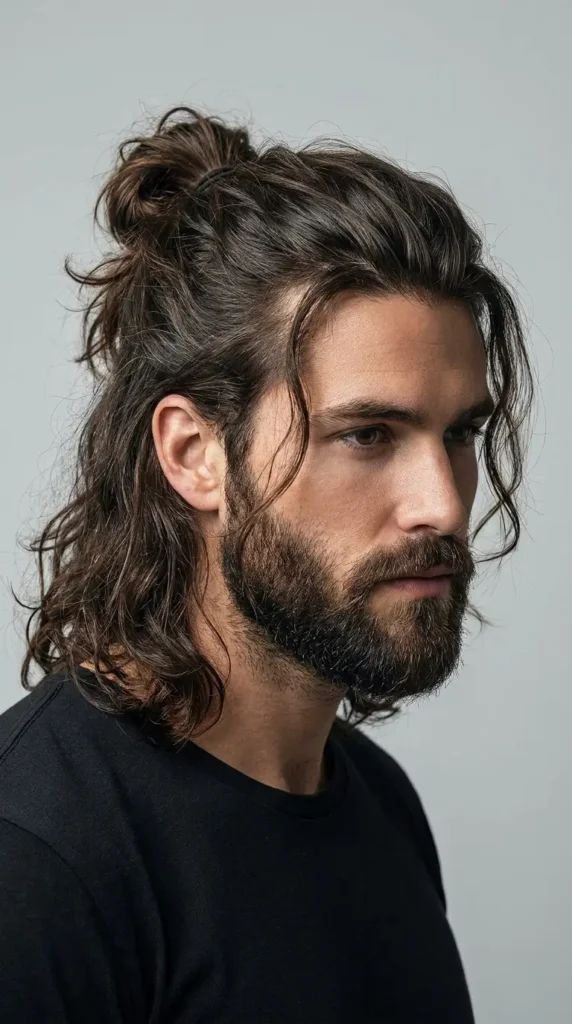
Four to six inches on top, lightly faded or scissor-tapered sides, and a back that flows rather than ends. This version has the most movement and the most styling flexibility, but it also takes the longest to maintain and requires the most morning effort. Pairs well with ideas from our long haircuts for men guide.
Best for: Men growing their hair out who want structure through the transition. Thick and wavy hair. Expect seven to ten minutes of daily styling.
4. Warrior Crop Haircut

The warrior crop sits at the border between a warrior cut and a textured French crop. The top is short and textured, the fringe sits forward, and the sides are tight. It carries the warrior aesthetic on a more conservative frame.
Best for: Men who want a hint of edge on an otherwise conservative cut. Fine or thinning hair, since shorter length distributes density more evenly and conceals thinner areas better than a longer top.
5. Warrior Fringe Haircut
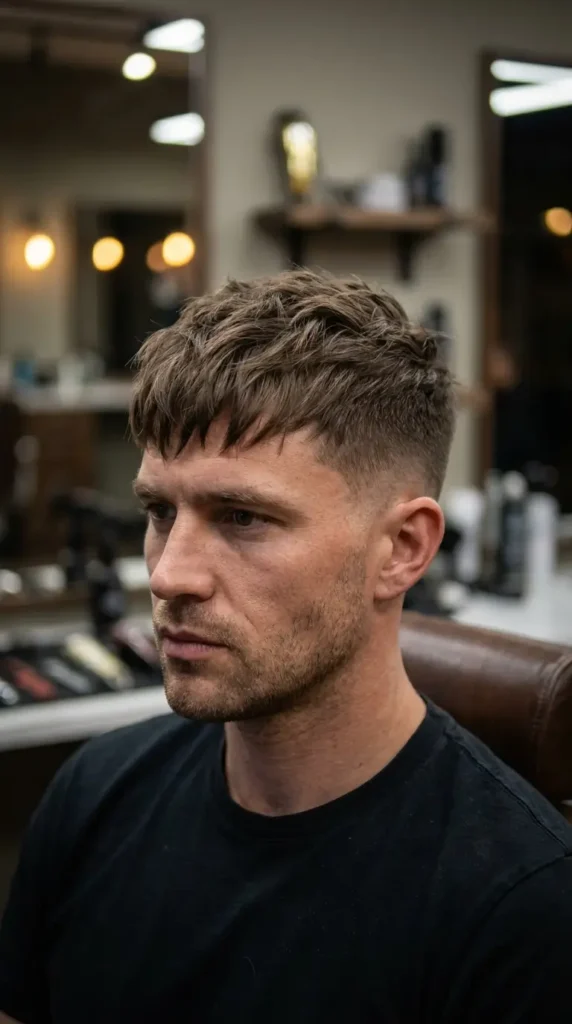
All the length and point-cutting of a standard warrior top, but the front section is left slightly longer and pushed forward into a deliberate fringe rather than an all-over textured mess. Closer in spirit to a textured fringe or messy fringe than the standard warrior silhouette.
Best for: Men who want the warrior texture but a more defined front shape. Straight and wavy hair.
Fade and Taper Variations
6. Warrior Cut with Low Taper
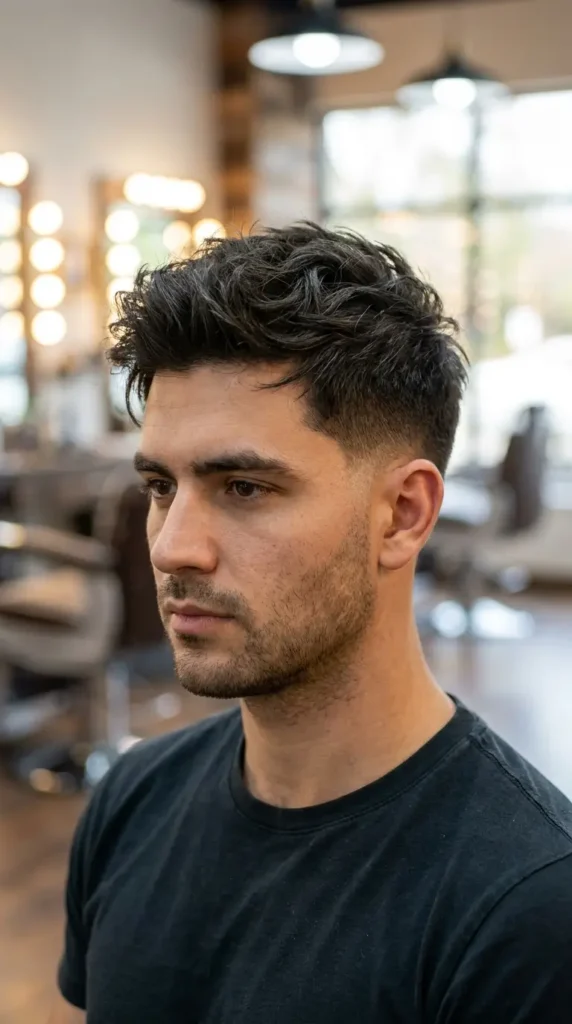
The low taper warrior is the entry point. The sides reduce gradually from the ear down, maintaining weight through the parietal ridge and blending into the textured top without a visible line. It reads masculine and structured without reading aggressive. See our full low taper fade guide for side-treatment detail.
Best for: First-time warrior cut clients. Men with rounder faces who need controlled side weight. Works on all hair types, including many low taper fade styles favored by Hispanic and Mexican clients.
7. Warrior Cut with Mid Fade
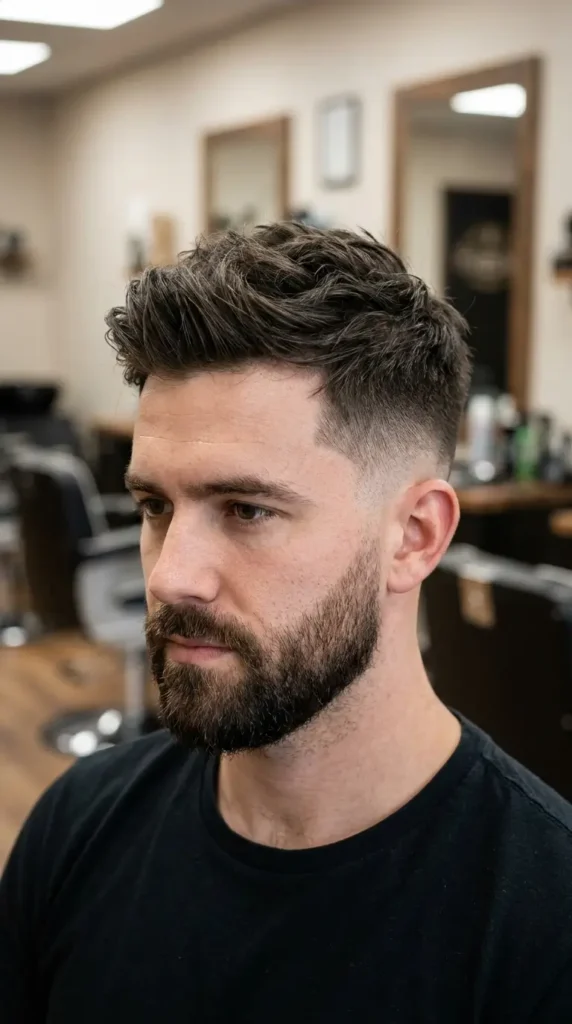
A middle-ground contrast level: the fade starts around the temple rather than the ear, giving more definition than a low taper without the boldness of a high fade. Full breakdown in our mid fade and mid taper fade guides.
Best for: Men who want visible contrast for everyday wear without a stark line. Most face shapes.
8. Warrior Cut with High Fade
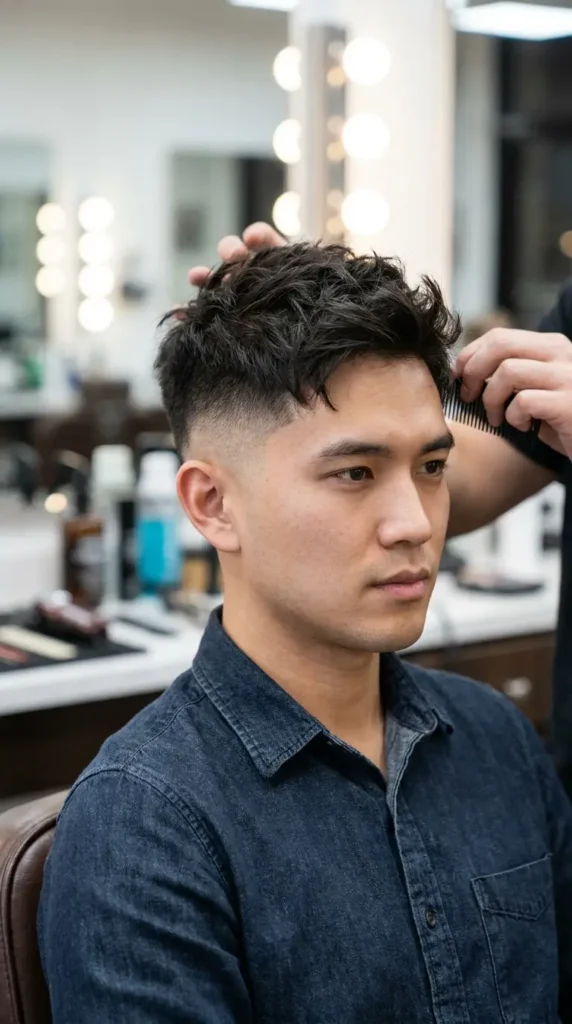
The fade starts higher on the head, close to the parietal ridge, for maximum contrast against the textured top. A skilled barber never fades above the parietal ridge on a warrior cut, since that height turns it into a standard undercut. See high taper fade and our 50 high fade styles roundup.
Best for: Men who want a bold, sharp finish. Thick hair handles this contrast best.
9. Warrior Skin Fade Haircut
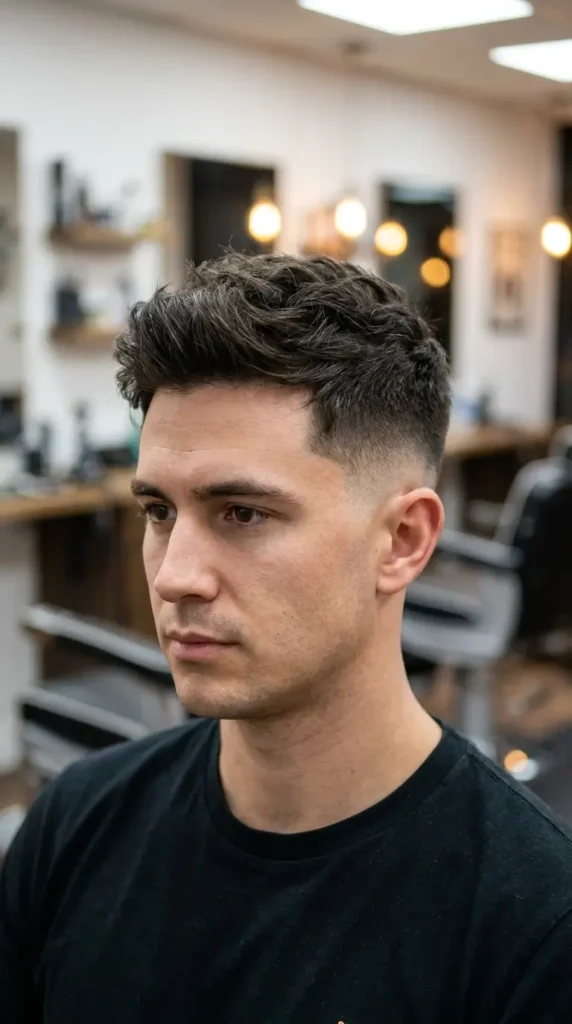
The most extreme taper option: sides fade to bare skin, leaving the textured top as the sole focal point. Full technique breakdown in our skin fade guide.
Best for: Men who want maximum contrast and don’t mind rebooking every three to four weeks to keep the line crisp.
10. Warrior Burst Fade Haircut
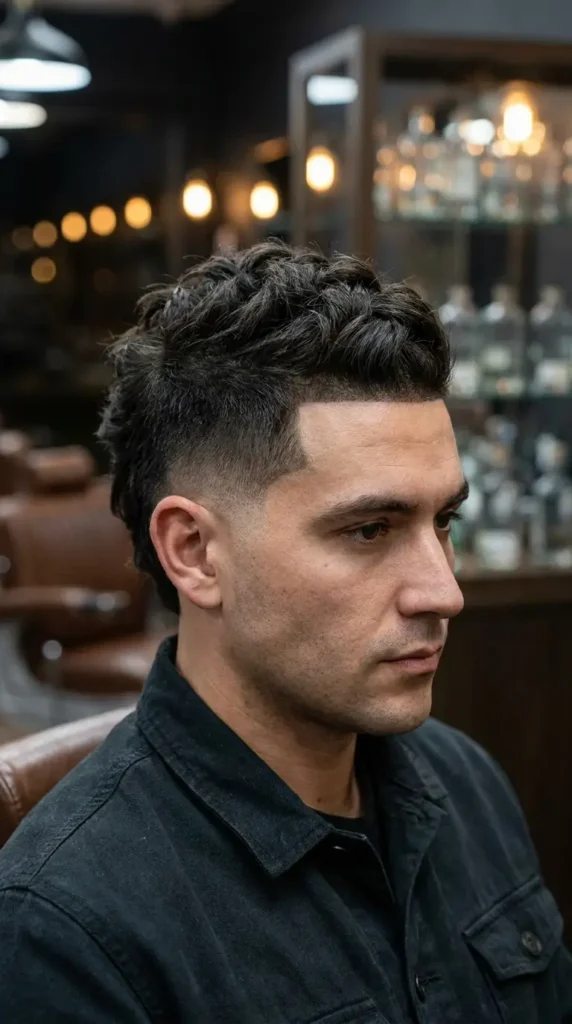
The fade curves around the ear in a semicircle instead of running in a straight line down the side, leaving more length at the back. See our burst fade guide for the full shape breakdown.
Best for: Men who want a warrior top with a rounder, softer side profile.
11. Warrior Drop Fade Haircut
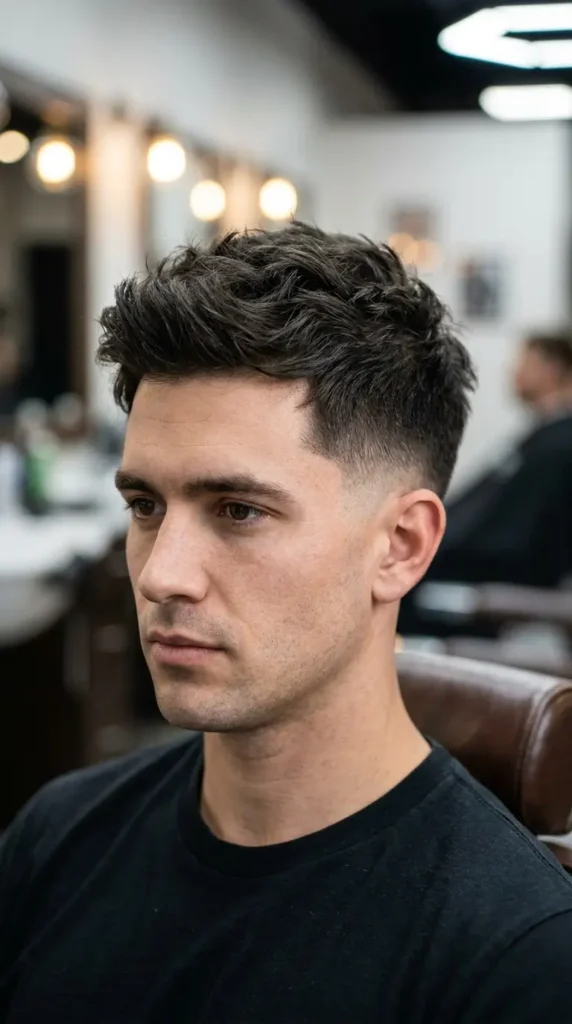
The fade line drops lower behind the ear, following the natural curve of the skull rather than a straight taper. Adds a subtle sculpted look beneath the warrior top. Details in our drop fade guide.
Best for: Men with round or oval head shapes who want extra definition at the back.
12. Warrior Blowout Taper Haircut
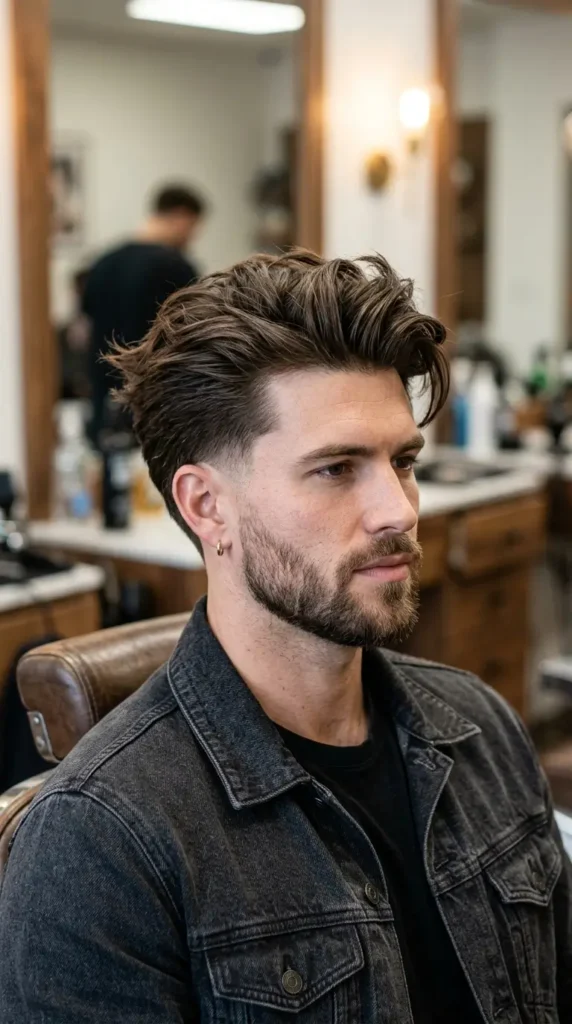
The sides taper tight at the bottom and flare out slightly near the top, pushing extra volume into the warrior’s textured peaks. See blowout taper fade and blowout taper for the side technique.
Best for: Thick, coarse hair that holds volume well.
13. Warrior High and Tight
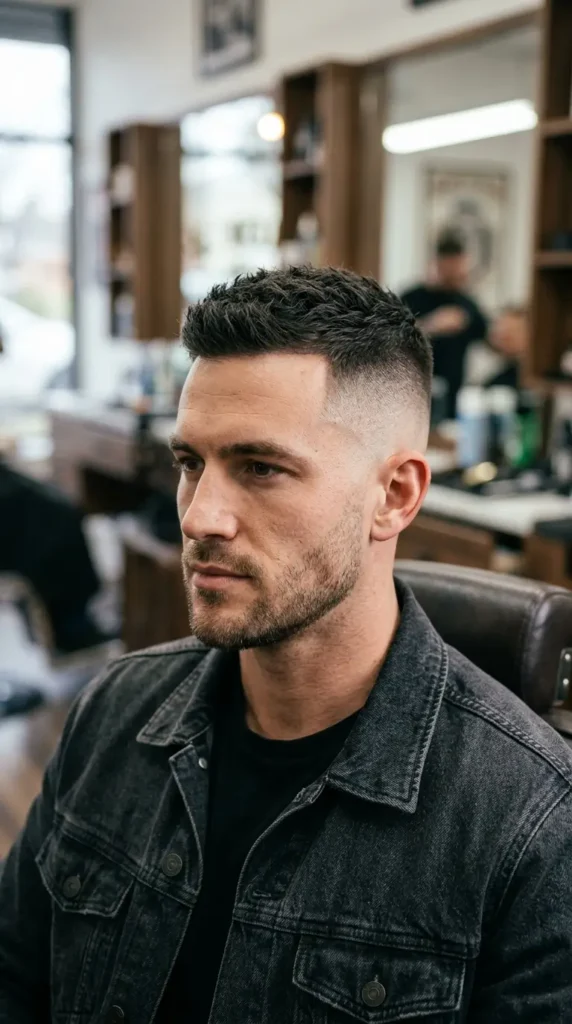
A shorter, tighter take: the sides run very close, closer than a standard fade, while the top keeps just enough length for point-cut texture. See our high and tight guide for the classic version this borrows from.
Best for: Men who want an athletic, low-maintenance base with a hint of warrior texture on top.
14. Warrior Comb Over Fade
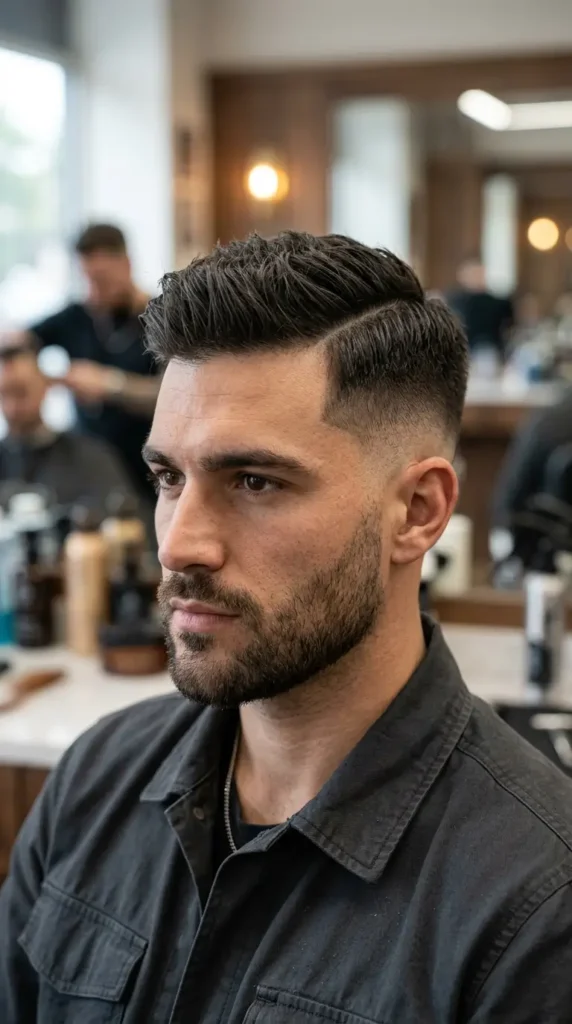
Instead of an all-directional messy top, the length is combed to one side over a faded base, giving the warrior texture a more directional, groomed finish. Full guide: comb over fade.
Best for: Men who want warrior texture but a cleaner, more polished silhouette for the office.
Hair Type Variations
15. Warrior Haircut for Curly Hair
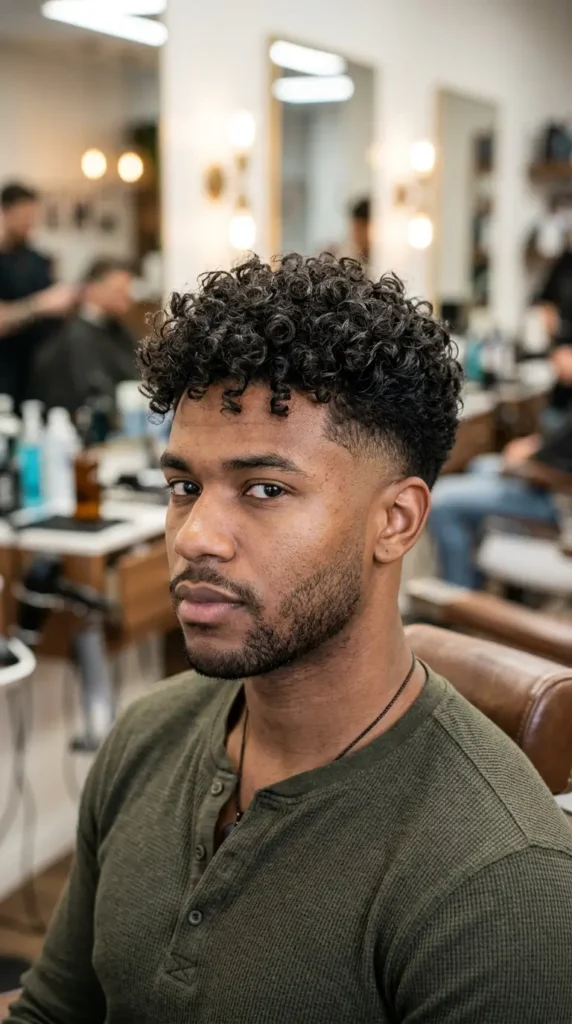
Curly hair changes the game. Shrinkage means the top needs more length than you think, barbers working with natural curls typically leave an extra half-inch to one inch to account for it. The sides stay controlled while the top retains its curl definition and natural volume. See our low taper fade for curly hair and high fade for curly hair guides for side pairing.
Best for: Men with natural curls who want the warrior silhouette without flattening their texture. Styling uses curl cream or a leave-in conditioner rather than clay, which dries curls out.
16. Warrior Haircut for Coily Hair
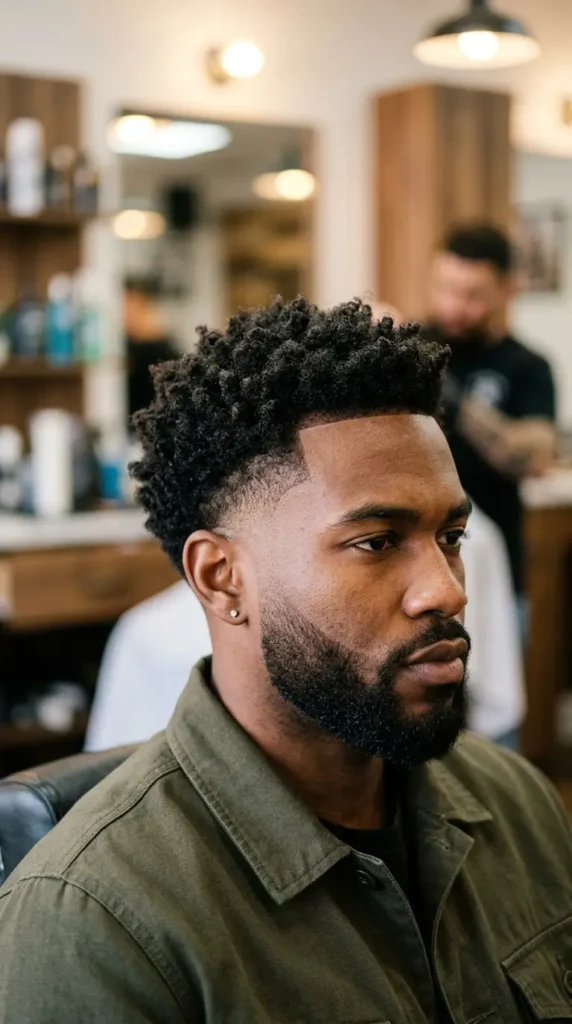
Coily hair holds the warrior’s peaks-and-valleys texture naturally, with the least product dependence of any hair type. Moisture-first styling keeps definition without buildup. If you’re considering length options beyond the warrior cut, our starter locs guide covers a related path for coily hair.
Best for: Men with coily hair who want volume and shape with minimal daily effort.
17. Warrior Haircut for Straight Hair
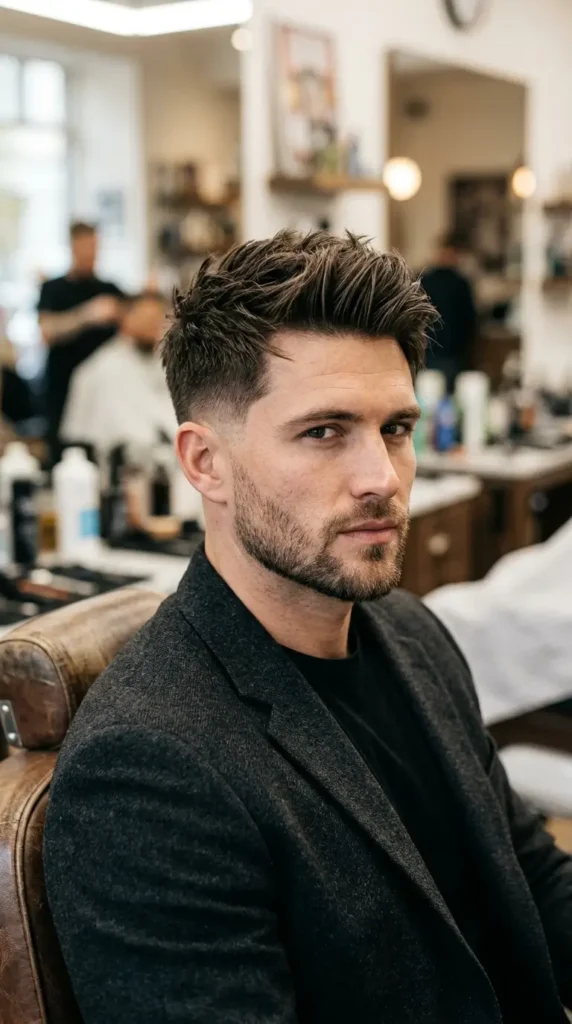
Straight hair has density but lacks natural texture. Product does the work that curl and wave do for other hair types. A sea salt spray before drying builds grip. A strong matte clay after drying holds the peaks in place.
Best for: Men with straight fine-to-medium hair willing to spend five to seven minutes on product and blow-drying. Without both, straight hair falls flat by mid-morning.
18. Warrior Haircut for Wavy Hair
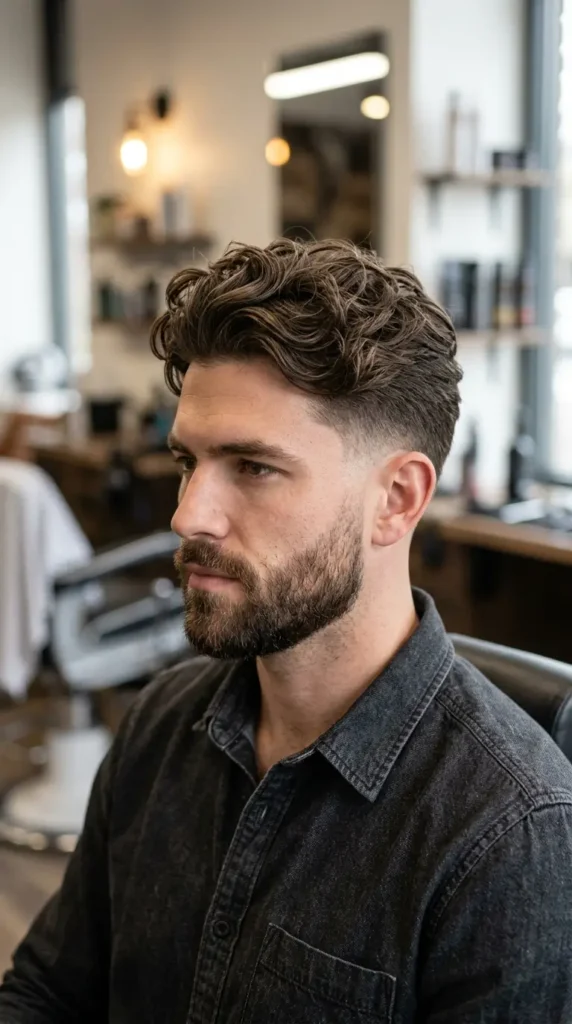
Wavy hair does much of the warrior cut’s work on its own. Natural wave pattern creates movement without heavy product, so the styling routine is the lightest of any hair type. More wave-specific ideas in our wavy hairstyles guide.
Best for: Men with natural waves who want a low-effort version of the warrior texture.
19. Warrior Haircut for Thick Hair
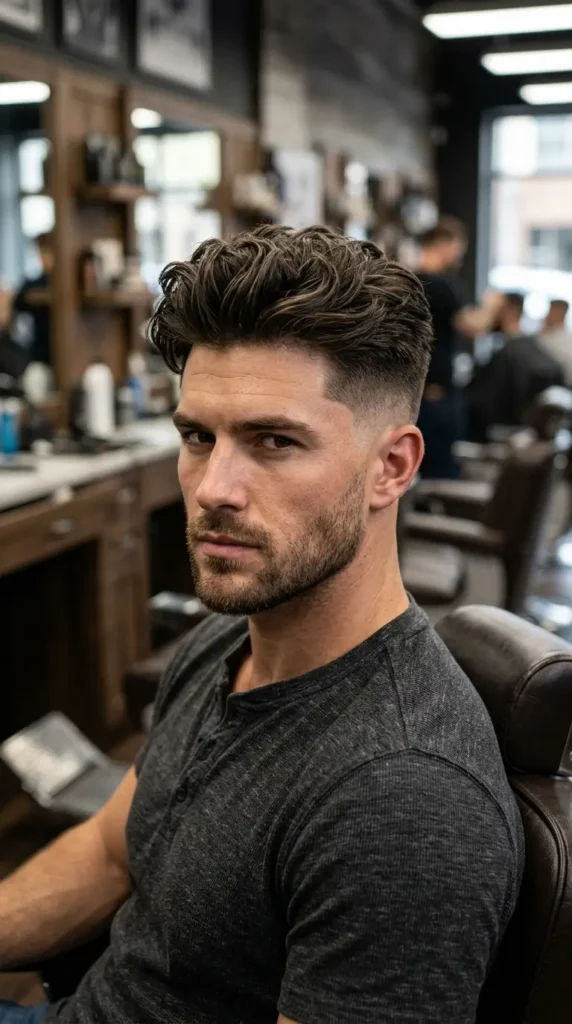
Thick hair can carry the boldest fades and the most volume on top without looking overdone. Thinning scissors are rarely needed, but when the bulk prevents movement, light texturizing helps. See our thick hair guide for more pairing options.
Best for: Men with dense hair who want a warrior fade with strong contrast.
20. Warrior Haircut for Fine or Thin Hair
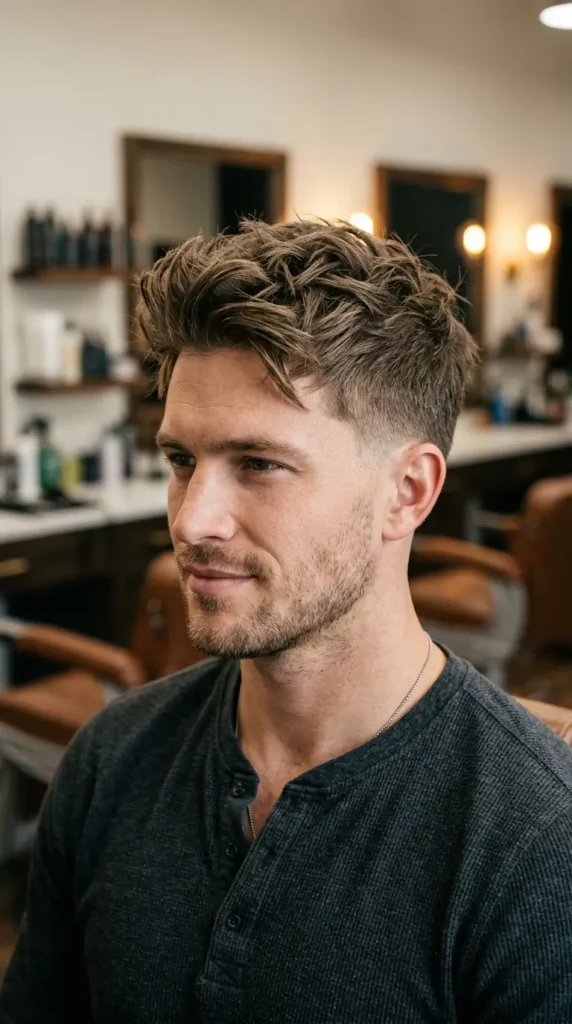
Fine hair needs support, not just product. Root-lifting mousse before drying and texture powder at the roots after prevent the top from collapsing by midday. Full guidance in our thin hair guide.
Best for: Men with fine or thinning strands who still want visible texture on top.
Hybrid Warrior Styles
21. Warrior Quiff Hybrid
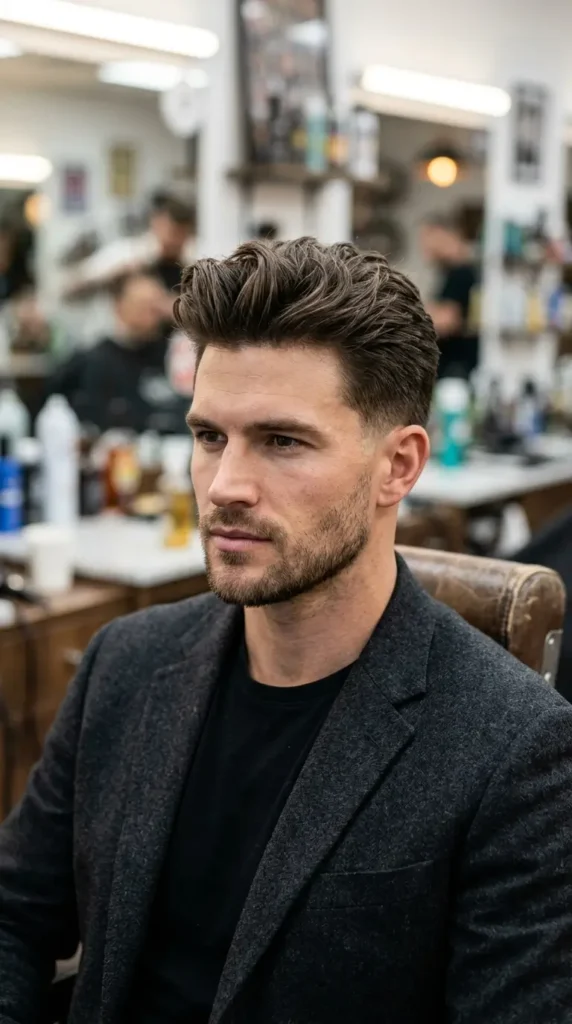
Borrows the quiff’s forward lift and structure at the front while keeping the warrior’s point-cut texture through the crown. More controlled than a standard warrior, more textured than a standard quiff. See our textured quiff guide.
Best for: Men who want a warrior top with a defined front lift rather than an all-directional finish.
22. Warrior Pompadour Hybrid
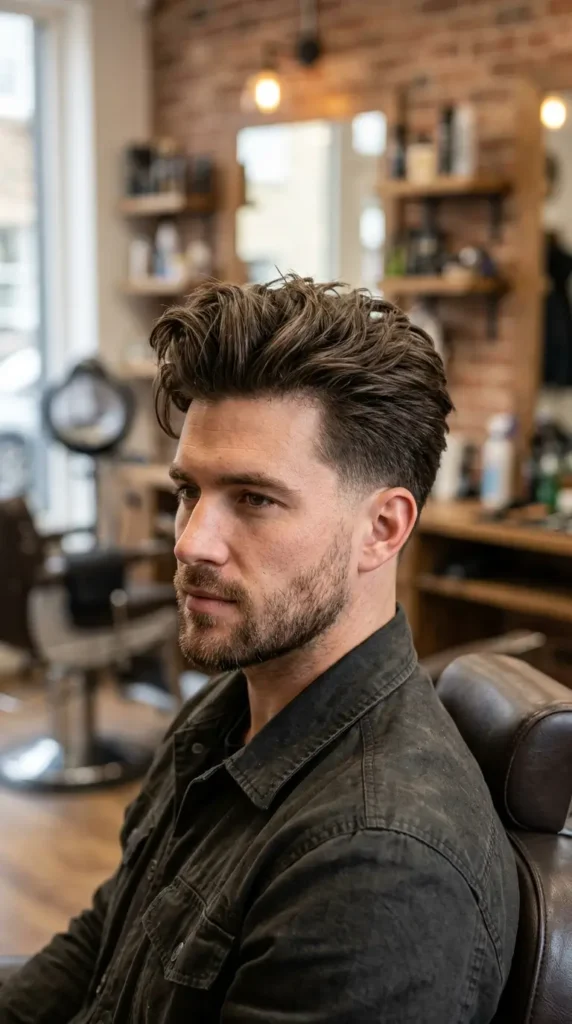
Combines the warrior’s textured, layered top with the height and sweep-back shape of a pompadour. Needs a stronger hold product than the standard warrior to keep the lift through the day. Full technique in our pompadour haircut guide.
Best for: Men who want warrior texture with more formal shape and height.
23. Warrior Faux Hawk Hybrid
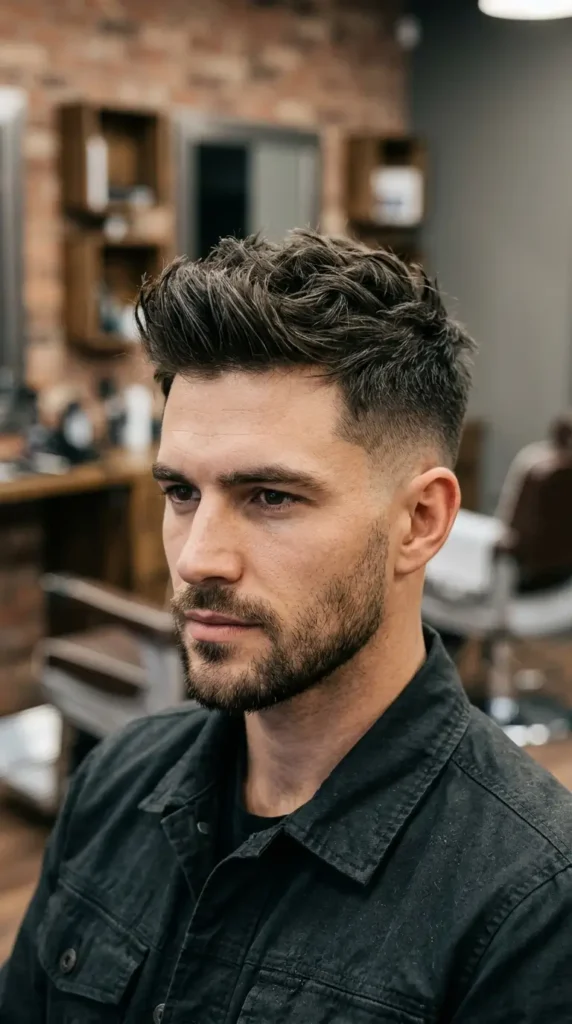
Sides are cut tighter than a standard warrior, and the top’s texture is concentrated through the center, building toward a subtle ridge without going full mohawk. See our faux hawk guide.
Best for: Men who want a bolder, more directional version of the warrior silhouette.
24. Warrior Mullet
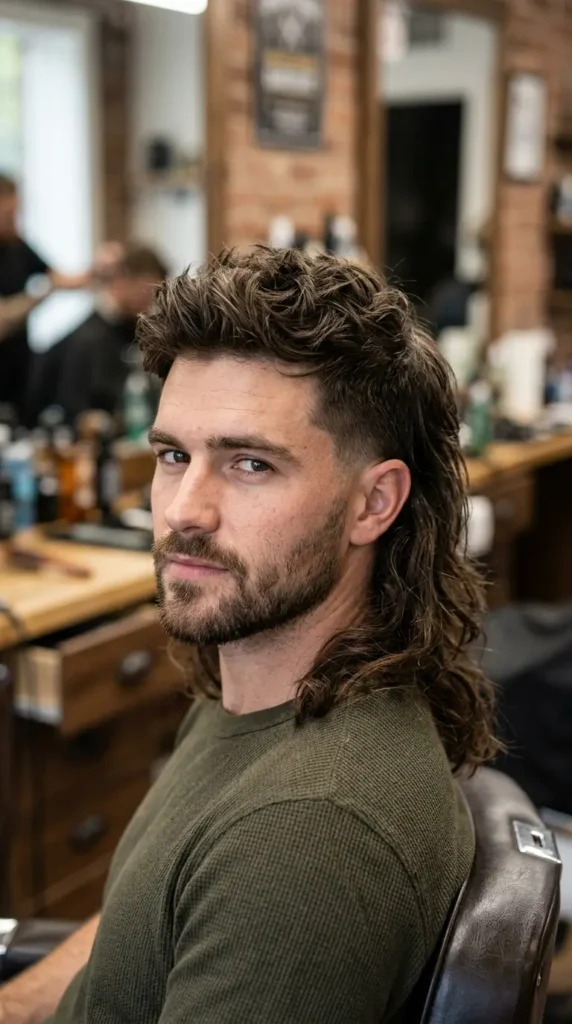
Keeps the warrior’s textured, point-cut top and tapered sides up front, while letting the back grow long and layered. One of the boldest variations on this list. Compare it with our modern mullet guide.
Best for: Men who already wear a mullet and want to add texture and movement to the front section.
25. Warrior Wolf Cut
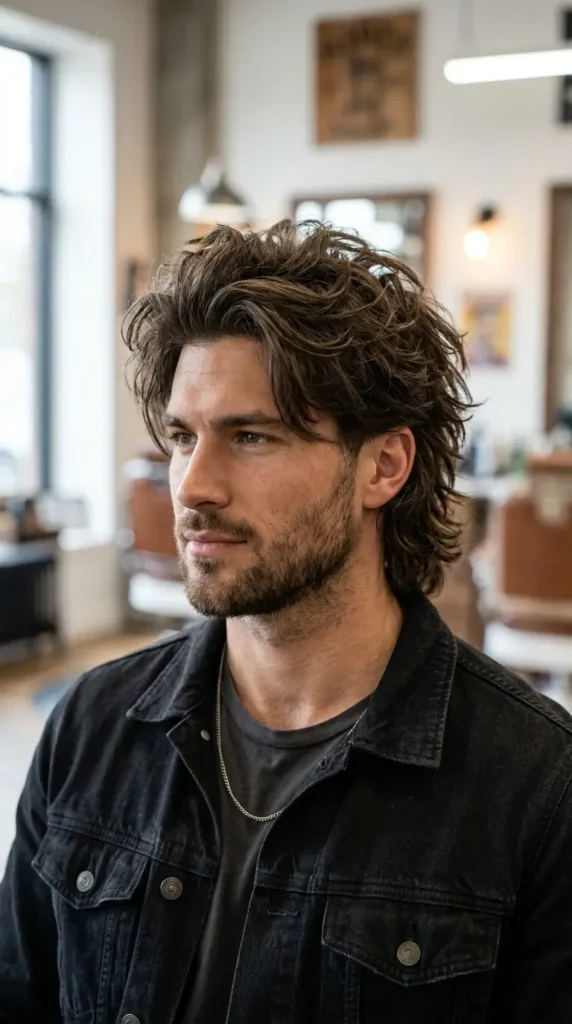
Heavier layering throughout, including through the mid-lengths and back, for a shaggier, more voluminous finish than the standard warrior. Full comparison in our wolf cut guide.
Best for: Men with medium-to-long hair who want maximum texture and volume, not just on top.
26. Warrior Two Block Hybrid
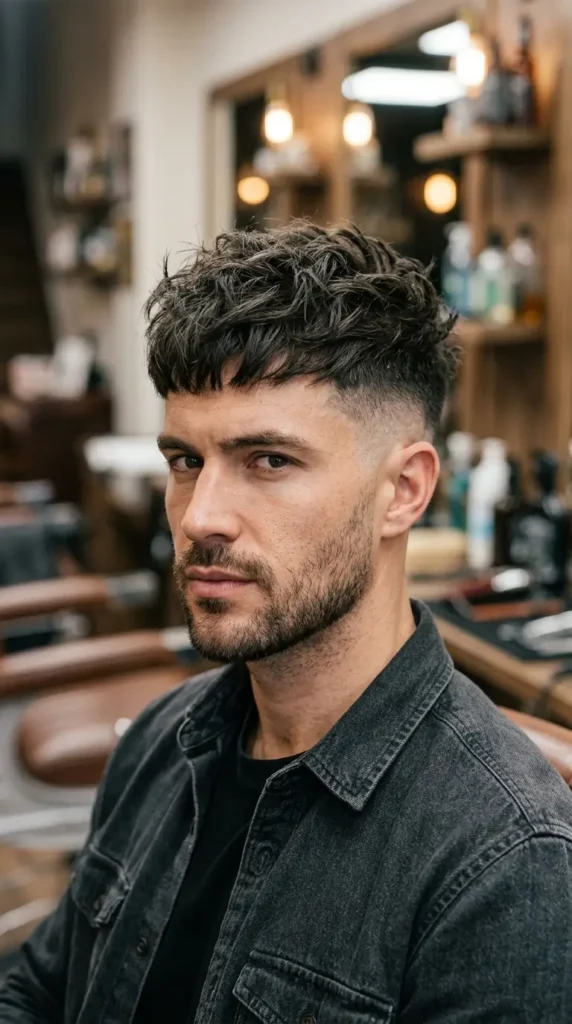
Borrows the two block haircut’s disconnected side treatment, sides buzzed short and separate from a longer, heavier top, then applies warrior-style point cutting to that top section. See our two block haircut guide.
Best for: Men who want the warrior’s textured top with a completely disconnected, K-pop-influenced side treatment. Also worth browsing our Korean haircuts and short haircuts for Asian men guides.
Styling and Part Variations
27. Warrior Side Part
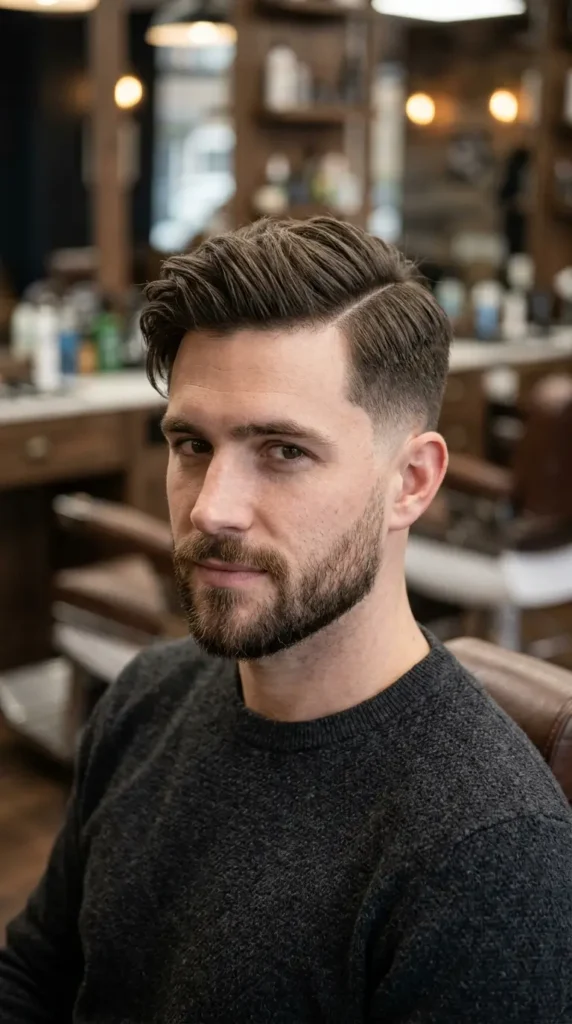
A hard or soft part is cut into the side of the textured top, giving the otherwise messy silhouette one clean, deliberate line. See our side part guide.
Best for: Men who want a slightly more formal warrior for client-facing work.
28. Warrior Middle Part
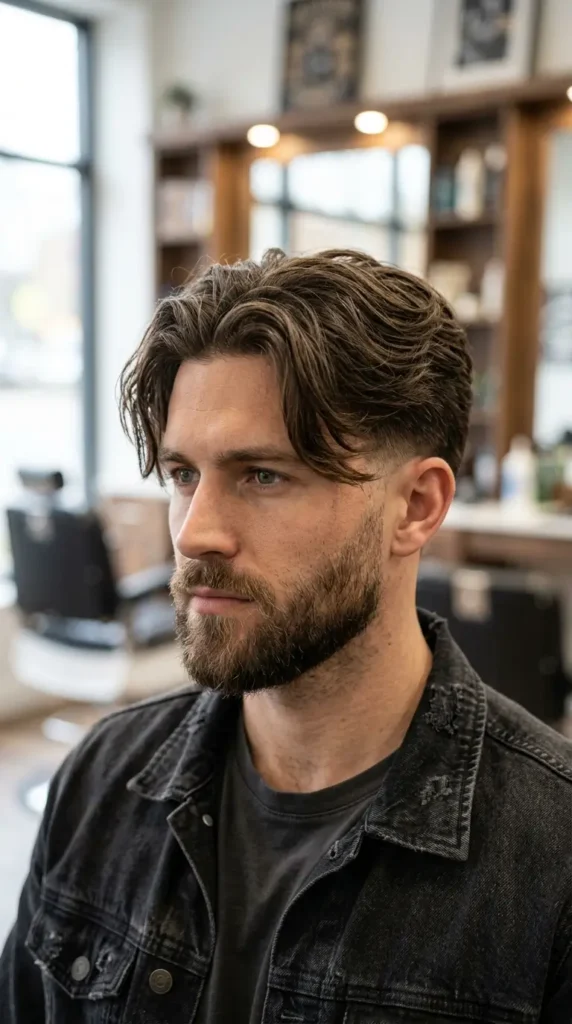
The top is point-cut and layered as usual, then styled with a center part instead of an all-directional finish. A trend-forward take on the warrior silhouette. Full guide: middle part haircuts.
Best for: Men with straight to wavy hair who want a currently trending finish.
29. Warrior Slicked Back
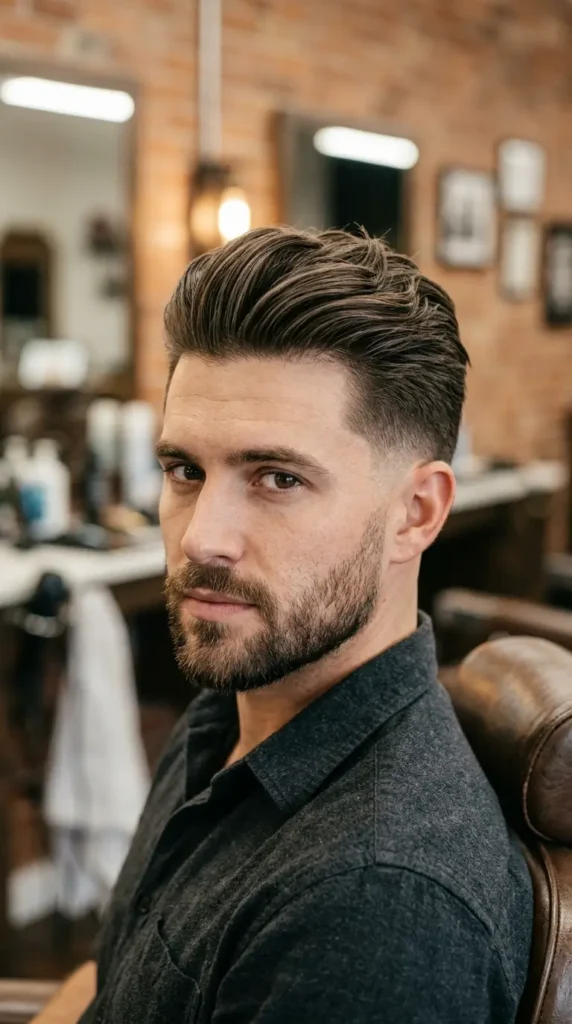
Product-heavy finish: the textured top is pushed straight back instead of left messy, trading the undone look for a sleeker one while keeping the point-cut layering underneath.
Best for: Men who want the warrior cut’s layering but a formal, event-ready finish. Fits the aesthetic in our old money hairstyles guide too.
30. Warrior Man Bun Hybrid

For the long warrior variation, the top and crown length can be tied back into a small bun while the point-cut layers frame the face at the front and sides. See our man bun guide.
Best for: Men growing out the long warrior who want it off their face on workout or work days.
31. Warrior Bro Flow
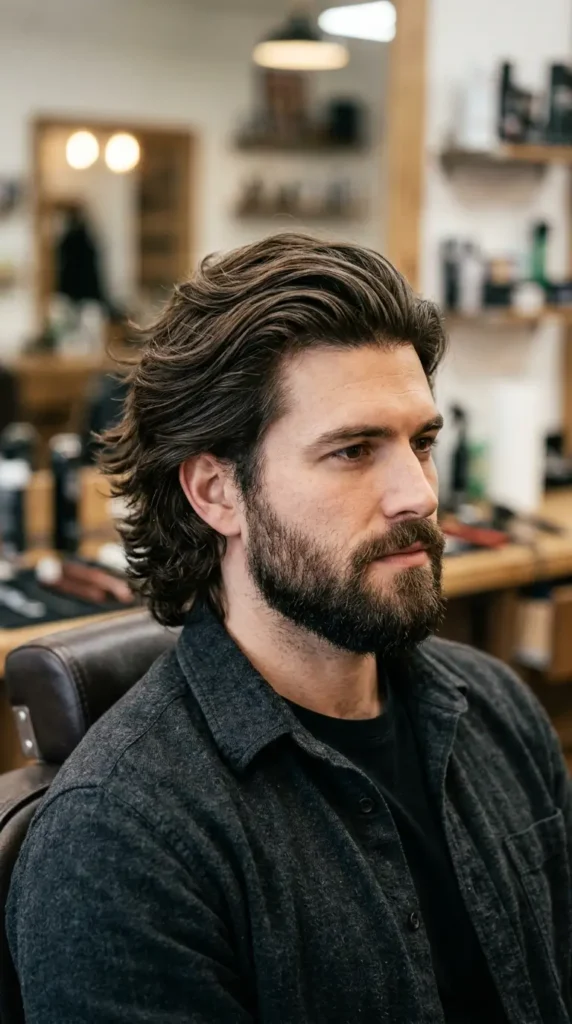
Longer, looser, and less structured than the standard warrior, letting the top flow back naturally with minimal product rather than being point-cut into peaks. See our bro flow guide.
Best for: Men who want warrior-adjacent length with a more relaxed, surf-inspired finish. Also worth a look: our surfer hairstyles guide.
Face Shape and Special Case Variations
32. Warrior Cut for Round Faces
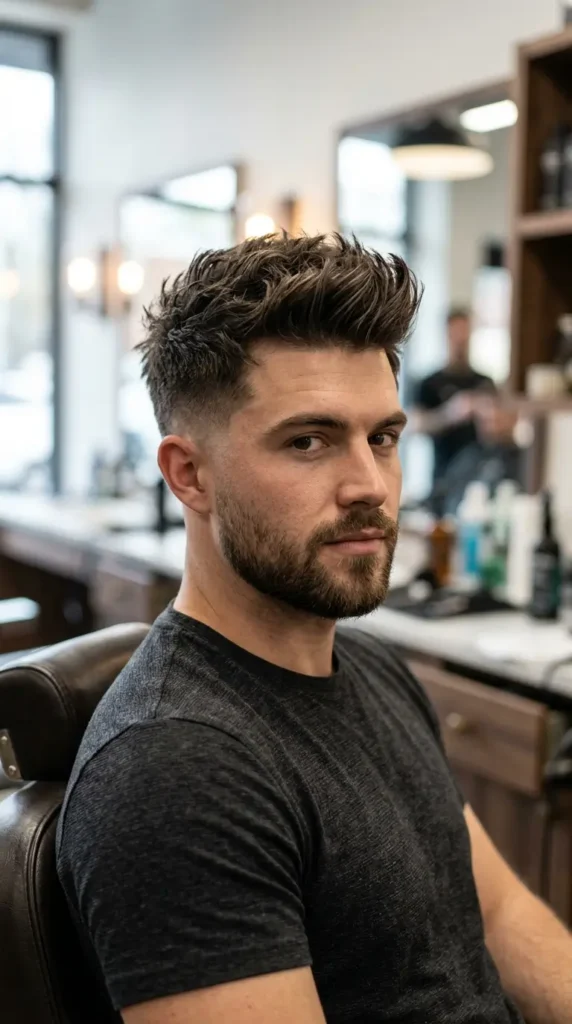
Height through the top and a low taper rather than a high fade keep the silhouette elongated instead of widening the face further. Full breakdown in our round face haircuts guide.
Best for: Round faces that need vertical lift, not side volume.
33. Warrior Cut for Oval Faces
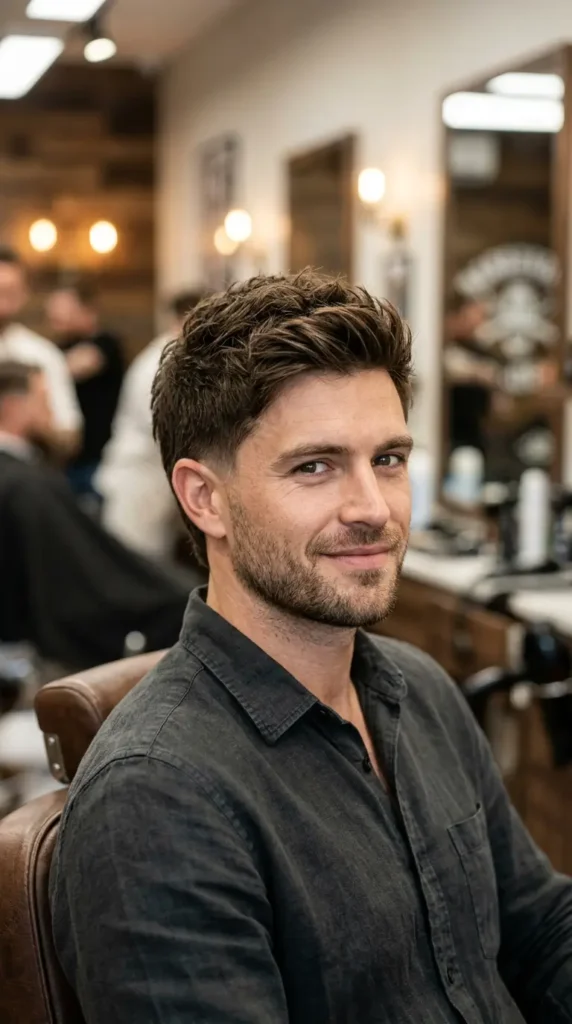
Oval faces can wear almost any warrior variation without adjustment, since the proportions already balance most top lengths and side treatments. See our short haircuts for oval faces guide for more options.
Best for: Men who want the freedom to choose based on hair type and lifestyle rather than face-shape correction.
34. Warrior Cut for Diamond Faces
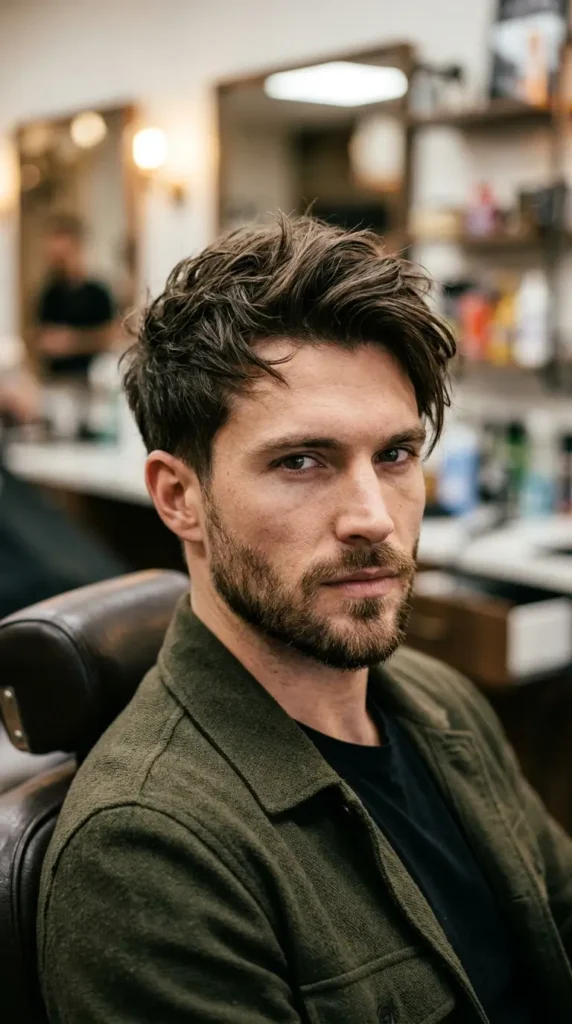
A short warrior or warrior crop with moderate top volume softens a diamond face’s angular cheekbones without adding width at the jaw. Full guide: diamond face shape hairstyles.
Best for: Angular faces that want the warrior’s texture without emphasizing the cheekbone width.
35. Warrior Cut for Receding Hairlines and Big Foreheads
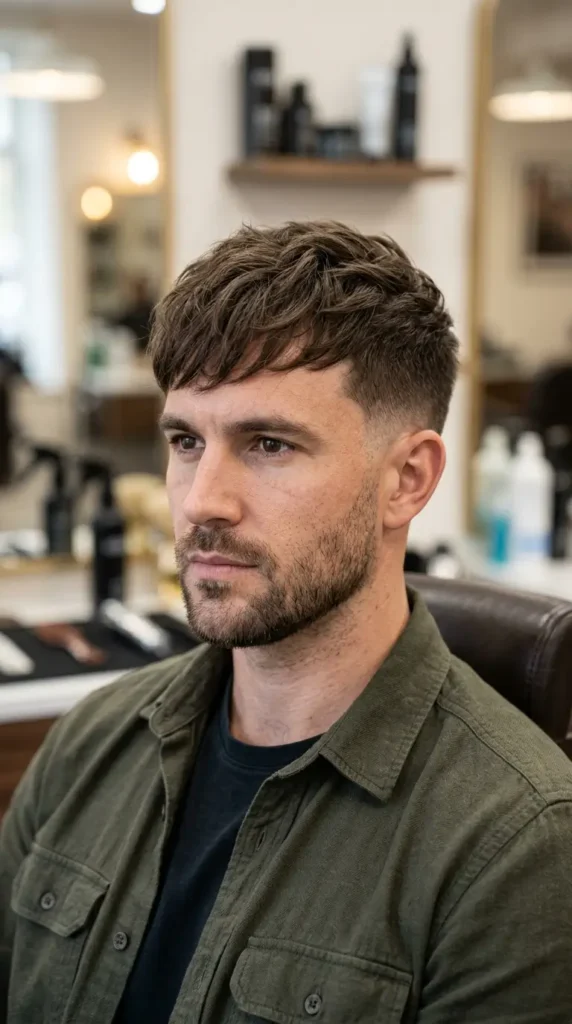
Volume on top draws the eye upward, and a textured finish adds the appearance of density. The warrior crop is the strongest option here, since shorter length spreads existing hair more evenly. A low taper keeps focus on the top instead of a receding temple.
Best for: Men managing a receding hairline or a larger forehead who still want the warrior’s textured top.
If your hair is under two inches on top, you’re not ready for a warrior cut yet. Ask your barber for a transitional style, perhaps starting from a buzz cut or crew cut base, and a grow-in plan across two or three visits.
How Does a Warrior Haircut Compare to Similar Styles?
| Style | Top Length | Side Treatment | Finish | Daily Styling | Rebook Interval | Office-Ready? |
|---|---|---|---|---|---|---|
| Warrior cut | 3–5 inches | Taper or fade | Matte, messy, lived-in | 5–10 min | 3–8 weeks | Yes (modern version) |
| Textured crop | 1.5–3 inches | Short fade or taper | Matte, flat or slight lift | 2–4 min | 4–6 weeks | Yes |
| Disconnected undercut | 4–7 inches | Hard line, no blend | Slicked or loose | 5–10 min | 4–6 weeks | Depends on setting |
| Messy fringe | 3–5 inches | Soft taper | Soft, parted, relaxed | 3–5 min | 5–7 weeks | Yes |
| Textured quiff | 3–5 inches | Fade or taper | Structured, slight shine acceptable | 5–8 min | 4–5 weeks | Yes |
The warrior cut has more movement and less structure than a quiff, more length and texture than a crop, and a softer side treatment than a disconnected undercut. If you want controlled and sharp, look at the quiff or undercut. If you want a completely different low-maintenance direction, our military haircuts guide covers the opposite end of the spectrum. If you want effortless and bold, the warrior is the right call. To understand the taper and fade terminology used throughout this guide, see our taper vs. fade, low taper vs. mid taper, and low fade vs. high fade comparisons.
What to Tell Your Barber
The most common reason a warrior cut misses is a vague ask. “Textured and messy” tells a barber almost nothing. Here is what to say instead.
Tell your barber:
- “I want a warrior cut: point-cut and textured on top, tapered or faded sides.”
- Specify length: “Keep three to four inches on top” for a standard version, or “Two inches, still textured” for the short warrior.
- Specify the side: “Low taper, blended” for a softer finish, or “Mid fade with some disconnection” for stronger contrast.
- Specify the finish: “Matte and messy, no shine, no stiffness, nothing combed.”
- Bring two or three reference images, not one. A barber reading multiple photos spots what you’re drawn to. One photo tells them to copy a specific head of hair that may be nothing like yours.
What a good barber asks you back:
- What does your hair do when you wake up? This tells the barber your natural texture baseline, the starting point, not the product-created version.
- How many minutes will you spend styling each morning? This determines how much the cut can rely on styling effort vs. how much it needs to work on its own.
- What environment do you wear it in? The gap between a corporate office and a creative studio changes how soft or sharp the sides need to be.
A good warrior cut starts with a dry assessment before the cape goes on. A skilled barber looks at your natural fall, density, hairline, and any cowlicks that will affect how the top sits, and sets the cut plan in the first five minutes. Nothing should be improvised.
How a Skilled Barber Cuts a Warrior Haircut
Here is exactly what should happen in the chair.
- Dry assessment. The barber checks natural fall, density distribution, cowlick placement, and hairline shape. This sets the guide length and side treatment before water touches the hair.
- Sectioning. A horseshoe section isolates the top from the sides. The two zones are cut independently so each gets the right treatment.
- Side treatment. Scissor-over-comb for a soft masculine taper, no harsh lines, weight retained through the parietal ridge. Clipper fade for clients who want stronger contrast. A warrior cut should never fade above the parietal ridge; that height turns it into a standard undercut.
- Top cutting. A central guide is established at the agreed length. The hair is elevated to 90 degrees for soft layering throughout. The sections nearest the apex are over-directed slightly to leave the fringe a fraction longer than the crown, creating the forward fall that defines the warrior silhouette.
- Point cutting. Every section on top is point-cut. Scissors enter at an angle, not straight across, creating irregular tip lengths that separate and move instead of sitting flat. This is where the peaks and valleys come from.
- Texturizing. The barber slide-cuts through the mid-shaft to remove internal bulk without disturbing the tips. Thinning scissors are rarely used on a warrior cut, since they distribute weight reduction evenly, which flattens the texture point cutting builds. The main exception is very dense hair with bulk that prevents the top from moving at all.
- Connection and cleanup. The top blends into the sides. Corners are softened. The neckline is cleaned. Then comes a wash, a finger blow-dry for lift, and a finish of matte clay or paste, with a walkthrough of the exact steps to repeat at home the next morning.
How to Style a Warrior Cut Haircut at Home
The warrior cut takes product and two hands. It does not take a brush, a comb, or more than ten minutes.
- Start with towel-dried damp hair, not soaking wet, not bone dry.
- Apply a sea salt spray or texturizing spray from roots to ends. This builds the grip that holds messy texture in place.
- Rough-dry with a blow dryer on medium heat. Use your fingers. Lift at the roots and push the top in the direction you want it to fall. No brush.
- Once the hair is 90% dry, take a fingertip-sized amount of matte clay or paste. Warm it between your palms and work through the top, twisting and separating pieces.
- For extra root lift on fine hair, press a small pinch of texture powder into the roots only.
- Leave it alone. The warrior cut does not improve with more touching.
| Hair Type | Pre-Dry Product | Finishing Product | Notes |
|---|---|---|---|
| Straight fine | Volumizing mousse | Texture powder + light paste | Needs lift support or the top collapses by noon |
| Straight thick | Sea salt spray | Strong matte clay | Needs control, not volume; thick hair has plenty |
| Wavy | Sea salt spray | Medium-hold paste | Natural texture does most of the work |
| Curly | Leave-in conditioner or curl cream | Light curl cream | Define the curl, don’t fight it; matte clay dries curls out |
| Coily | Moisturizing leave-in | Lightweight styling cream | Moisture first, hold second |
Honest limit: If your morning routine is wash-and-go with zero product, the warrior cut will not work for you. Every version needs at least three minutes of product and finger-styling to look right. A textured crop gives you a similar edge with half the effort.
Warrior Cut Maintenance: Rebook Schedule, Cost, and Grow-Out
| Variation | Rebook Interval | Why |
|---|---|---|
| Warrior fade (skin or mid) | Every 3–4 weeks | Fade grows out visibly; loses contrast fast |
| Warrior low taper | Every 4–5 weeks | Taper is more forgiving; shape holds longer |
| Short warrior cut | Every 4–5 weeks | Short top loses shape as it grows |
| Modern warrior / longer version | Every 6–8 weeks | Longer top absorbs growth; point-cut layers grow out gradually |
Appointment time:
- First warrior cut (restyle): 45–60 minutes, including consultation and styling walkthrough.
- Maintenance cut: 30–40 minutes.
Typical pricing:
- Warrior cut restyle (first visit): roughly $40–$75 at most barbershops, depending on region and shop tier.
- Maintenance cut: roughly $25–$50 per visit after that.
Ask whether the price includes a consultation, wash, blow-dry, and a styling walkthrough. Shops that skip the walkthrough tend to produce a cut you can’t replicate at home.
Grow-out: The modern warrior and longer variations grow out cleanly. By week six without a trim, the top has more length and movement, not a bad thing. By week ten, the side treatment starts to look unintentional. The fade version is less forgiving. Without a rebook by week four, it reads grown-out rather than relaxed.
If you want to grow the warrior cut into longer hair, tell your barber at your next visit. A good one will guide the grow-in so there’s always a stage that looks deliberate, not abandoned.
Honest limit: A warrior fade is the highest-maintenance version. If you won’t rebook every three to four weeks, choose a scissor taper or low taper instead. It holds its shape longer and costs less per year in chair time.
Real-World Examples
Fine, straight hair: A modern warrior with a low taper and four inches on top can work well even on fine, straight hair, as long as the styling routine includes root-lifting mousse before drying and texture powder after. Without that step, the top collapses by midday.
Curly hair, round face: Curly hair and a round face aren’t a mismatch for the warrior cut, despite what some barbers assume. A curly warrior with a low taper, an extra inch of length on top to account for shrinkage, and more weight through the sides balances the face shape while keeping the curl pattern intact.
Frequently Asked Questions
What is a warrior haircut?
The warrior haircut is a textured men’s cut with a heavily layered, point-cut top, typically three to five inches, and tapered or faded sides. The finish is matte and deliberately messy. It’s defined by movement and separation on top rather than length or polish.
How many warrior haircut styles are there?
There are 35 distinct warrior variations, grouped by length, fade or taper type, hair type, hybrid styling, part, and face shape. The right one depends on your hair texture, styling time, and how much contrast you want between the top and sides.
How long does my hair need to be for a warrior haircut?
The short warrior cut needs at least two inches on top. The standard version needs three to four inches. The longer warrior variation needs four to six. If you’re not there yet, ask for a transitional style and a grow-in plan to get you ready.
What should I tell my barber for a warrior cut?
Say “warrior cut” by name, then give three specifics: the top length you want (two inches for the short version, three to four for standard, four to six for long), the side treatment (low taper for soft, mid or high fade for contrast), and the finish (matte and messy, no shine, nothing combed). Bring two or three reference photos so the barber can see the range you’re drawn to, not just copy one head of hair.
Is a warrior cut high maintenance?
It depends on the variation. A warrior fade needs rebooking every three to four weeks and daily product plus finger-styling. A warrior with a low taper is more forgiving, holding its shape for four to five weeks with the same five to ten minutes of daily styling. None of the variations are wash-and-go; all need at least a few minutes of product work each morning.
Is a warrior cut good for straight hair?
Yes, but it depends more on product than on hair type. Straight hair has density but no natural texture, so a sea salt spray before drying and a strong matte clay after are what hold the peaks in place. Skip either step and straight hair falls flat by mid-morning. Fine straight hair also benefits from a volumizing mousse for root lift.
Does the warrior haircut work for a round face?
Yes, with the right variation. Keep height through the top and avoid excessive volume on the sides. A low taper works better than a high fade for round faces because it controls side width rather than emphasizing it. The modern warrior is the most flattering version for this face shape.
How much does a warrior haircut cost?
Most barbershops charge $40–$75 for a first-time restyle and $25–$50 for maintenance cuts. Pricing depends on region, shop tier, and whether the visit includes a consultation, wash, blow-dry, and styling walkthrough.
How is a warrior haircut different from a textured crop?
The warrior cut runs longer on top, three to five inches versus one and a half to three for a crop, and creates stronger peaks-and-valleys texture through point cutting. A crop is shorter, flatter, and more uniform. The warrior has more movement; the crop has more structure.
Can I get a warrior haircut with curly or coily hair?
Yes. The barber adjusts the top length to account for shrinkage and layers the curls for definition rather than trying to straighten the texture. The silhouette is the same; the technique and products are different. Avoid any barber who tells you curly hair can’t hold a warrior cut.
What’s the best warrior haircut for beginners?
The warrior cut with a low taper is the easiest entry point. It’s forgiving on grow-out, works on nearly all hair types and face shapes, and requires less rebooking discipline than a skin fade or burst fade version.
Conclusion
The warrior cut works because it separates two decisions that most men bundle together: how much contrast you want on the sides, and how much texture and length you want on top. Thirty-five variations exist precisely because those two choices, layered with hair type and face shape, produce very different results from the same basic technique.
Start with the honest questions before you sit in the chair: how much time will you actually spend styling each morning, and what environment do you wear this in day to day? A low taper warrior answers both questions safely for almost anyone. A skin fade or burst fade version answers them only if you’re committed to a three-to-four-week rebook cycle and daily product.
Whichever variation you choose, the cut only works with the right products and five to ten minutes of finger-styling. Skip that step and even the best-cut warrior top falls flat by midday.