
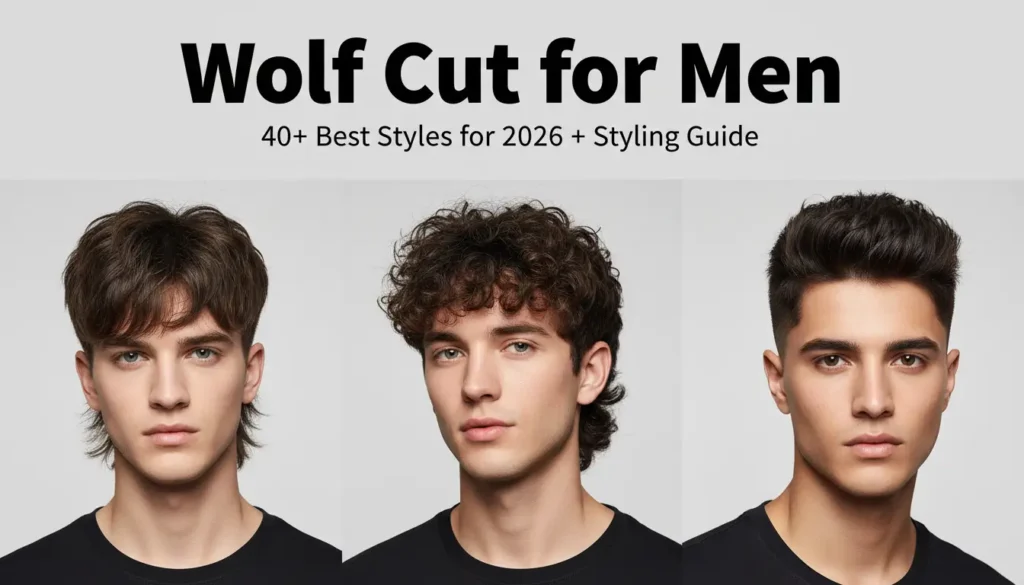
The wolf cut takes two older styles, the mullet and the shag, and mashes them into one. Choppy layers pile up at the crown, then the hair runs longer and feathered toward the back. The whole thing reads as textured and a little wild without looking unkempt.
It came out of South Korea originally. K-pop idols wore it first, then TikTok got hold of it during lockdown when everyone was cutting their own hair, and it never really went away after that.
Works on straight, wavy, and curly hair. Flatters most face shapes too. Below are 42 wolf cut hairstyle variations, how to describe them to your barber, and how to keep one looking good once you have it.
What Is a Wolf Cut Hairstyle?
Picture the short-front, long-back logic of a mullet, then run it through the soft, feathered layering of a 70s shag. That combination is the wolf cut.
A few things define it:
- Short, choppy layers at the crown, this is where the volume and lift come from
- Longer, feathered layers at the back and sides, flowing down toward the nape
- Face-framing pieces that add some definition around the front
- A lived-in, slightly messy finish, it’s supposed to look undone
The name comes from the resemblance to a wolf’s mane, wild but not out of control. It looks like more effort than it actually takes to maintain.
Where It Came From
The style picked up momentum in South Korea around 2020, worn first by K-pop stars and actors in Korean dramas. Then the pandemic hit, people started cutting their own hair, and DIY versions spread fast on TikTok.
By 2021 it had gone global. Timothée Chalamet and Billie Eilish both wore variations of it, and it’s stayed one of the most requested cuts in barbershops since.
Why Men Keep Asking For It
- Works with whatever texture you already have
- Doesn’t demand much daily styling
- Holds up even on lazy days
- Flatters nearly every face shape
- Endless room to customize
42 Best Wolf Cut Hairstyles for Men
Each style below covers who it suits, how to style it, and the general vibe it gives off.
Classic Wolf Cut Styles to Start With:
1. Classic Wolf Cut
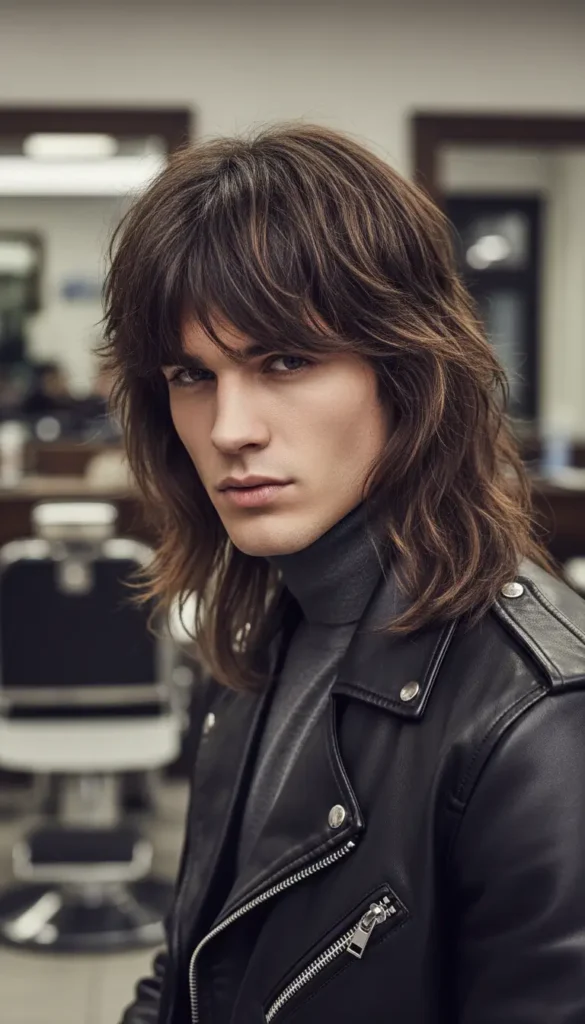
This is the baseline version, roughly half shag, half mullet. Heavy layering builds up at the crown for volume, then the hair lengthens gradually toward the back with soft, feathered ends. Nothing exaggerated, just the core wolf cut shape.
- Best for: Thick or wavy hair
- Face shape: Oval, diamond, or heart
- How to style: Dry with your fingers to lift the roots, add texture spray, finish with styling cream
- Vibe: Cool without looking like you tried
2. Full Wolf Cut
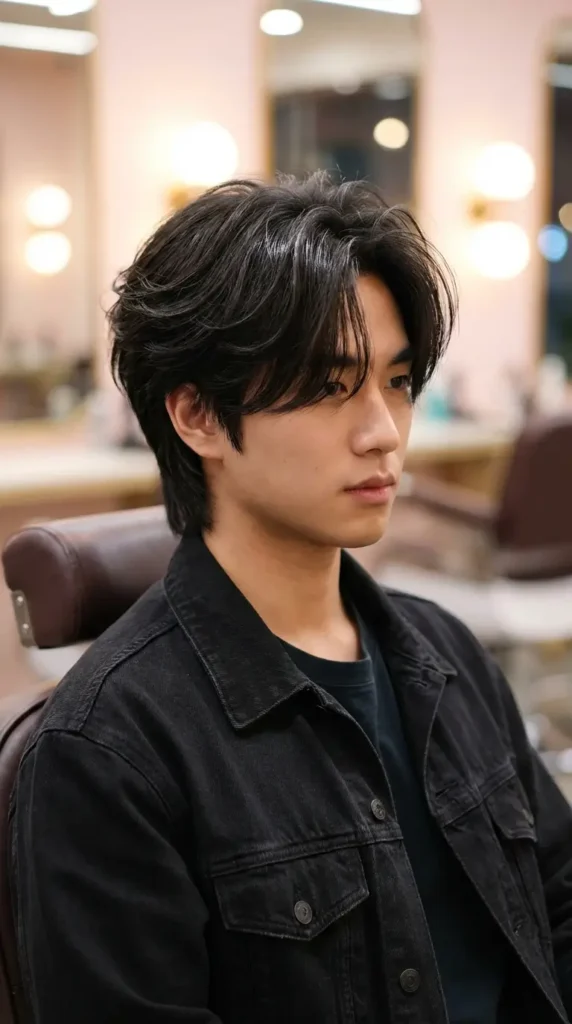
The maximalist version. Heavy layering runs through the entire head instead of just the crown, so you get dense volume up top and wispier strands falling toward the neck. It’s a lot, on purpose.
- Best for: Thick or wavy hair
- Face shape: Angular faces, square or diamond
- How to style: Sea salt spray on damp hair, blow dry while scrunching, texture clay to finish
- Vibe: Bold, borderline rebellious
3. Layered Wolf Cut
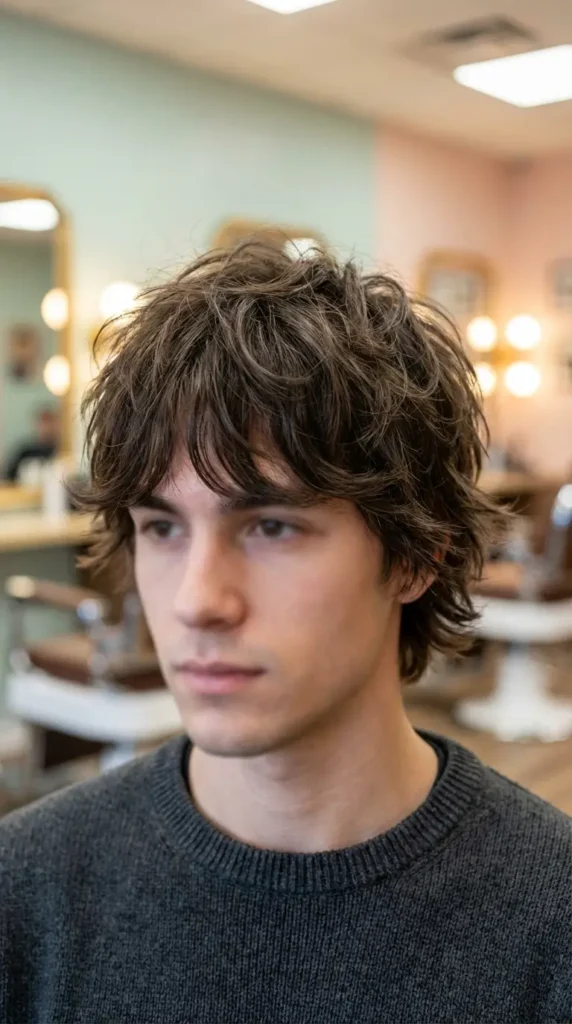
A cleaner take. Layers stack through the crown, sides, and nape in a more deliberate way, giving lift and flow without the chaos of the fuller versions. Reads as polished enough for a Monday and loose enough for a Saturday.
- Best for: All hair types
- Face shape: Oval, diamond, triangle
- How to style: Round brush while blow drying, texturizing clay for grip, leave-in conditioner on the ends
- Vibe: Undone on purpose, works for the office too
By Length:
4. Short Wolf Cut
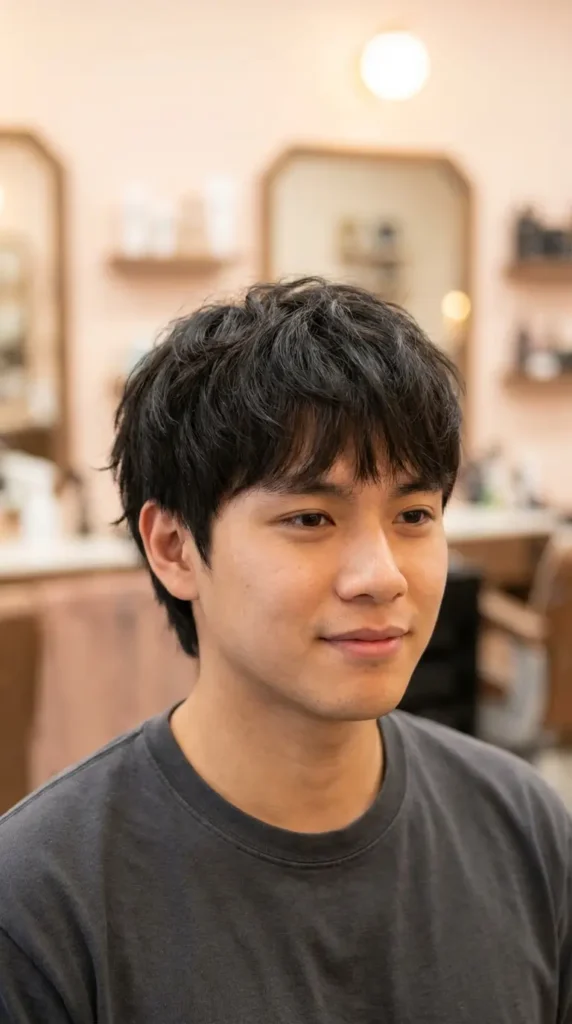
Good entry point if you’re not ready to commit to length. Layers stay cropped on top, feathered just above the neckline, giving you the texture without much daily upkeep.
- Best for: Straight or wavy hair
- Face shape: Round or square, the vertical layering elongates the face
- How to style: Texture powder at the roots, matte clay or wax through the ends
- Vibe: Low effort, still edgy
5. Medium Wolf Cut
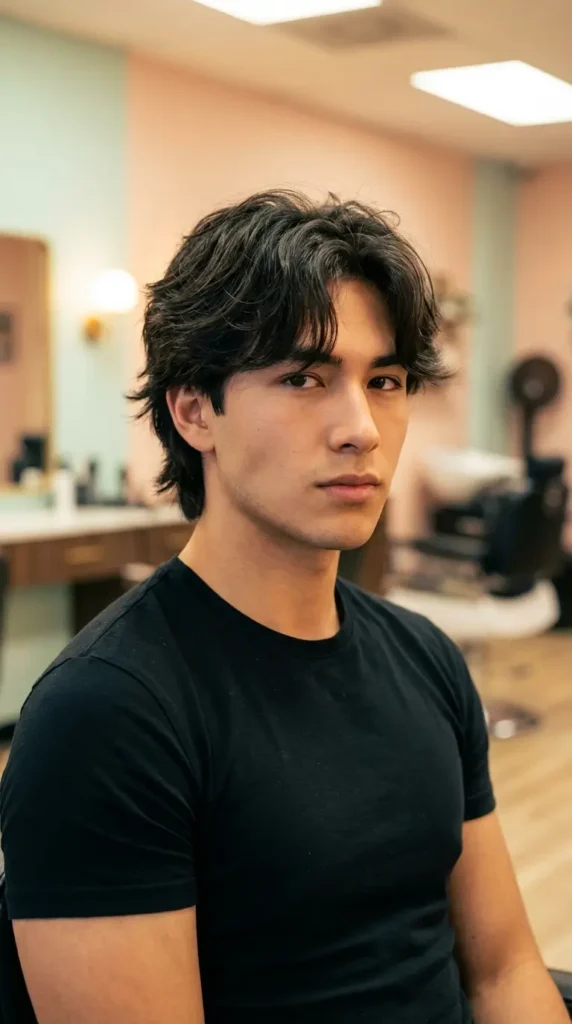
The one most guys default to. Enough length for the layers to actually show movement, but still manageable day to day. Sides frame the face without needing much intervention.
- Best for: All hair types
- Face shape: All face shapes
- How to style: Round brush blow dry for volume, molding paste to shape, light-hold hairspray to set
- Vibe: Flexible, dress it up or down
6. Long Wolf Cut
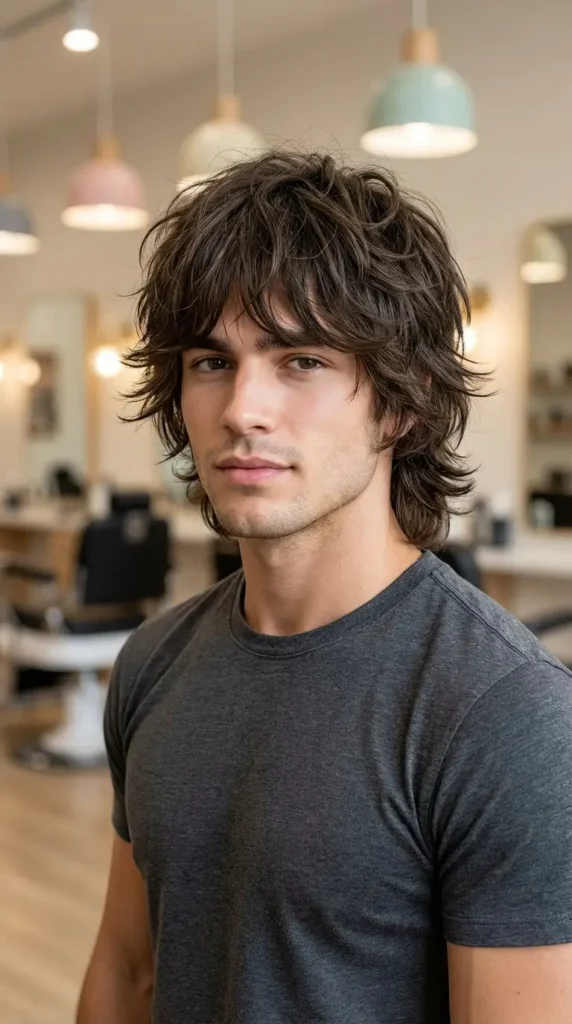
Full commitment. Hair runs past the shoulders with heavy, choppy layers the whole way down. Every movement of your head shows off the layering, which is the whole point.
- Best for: Thick, wavy, or curly hair
- Face shape: Oval or oblong
- How to style: Argan oil to smooth the ends, sea salt spray for bounce, air dry or diffuse
- Maintenance: Trim every 8 to 10 weeks
- Vibe: Dramatic, rock-and-roll energy
7. Mini Wolf Cut (Pup Cut)
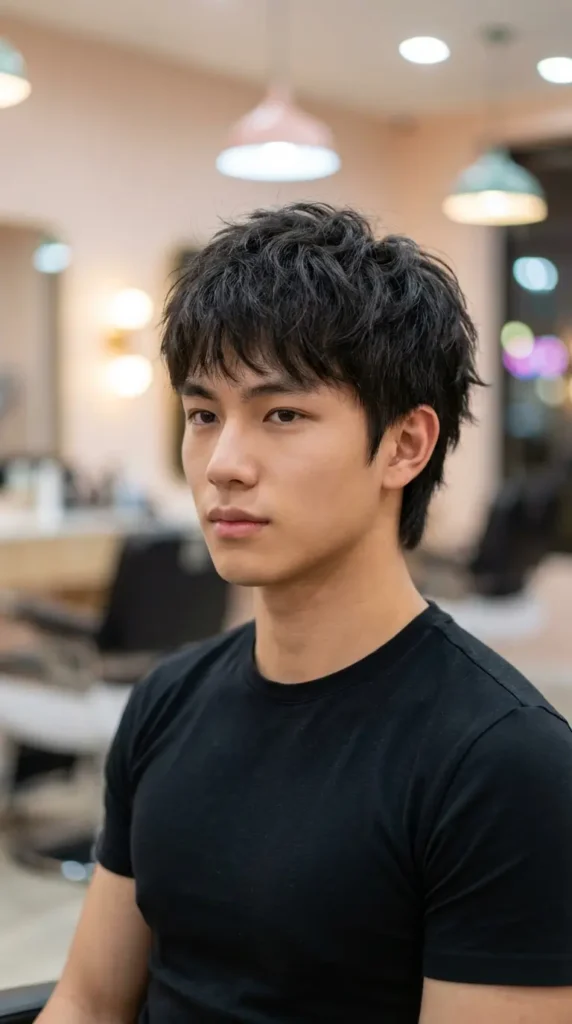
Sometimes called the pup cut, this is the smallest hint of the trend you can get away with. Layers stay short and close, texture is present but understated, which makes it the safest option for stricter workplaces.
- Best for: Fine hair
- Face shape: All face shapes
- How to style: Texture powder at the roots, that’s really it
- Vibe: Subtle, still has personality
By Hair Type:
8. Wolf Cut for Straight Hair
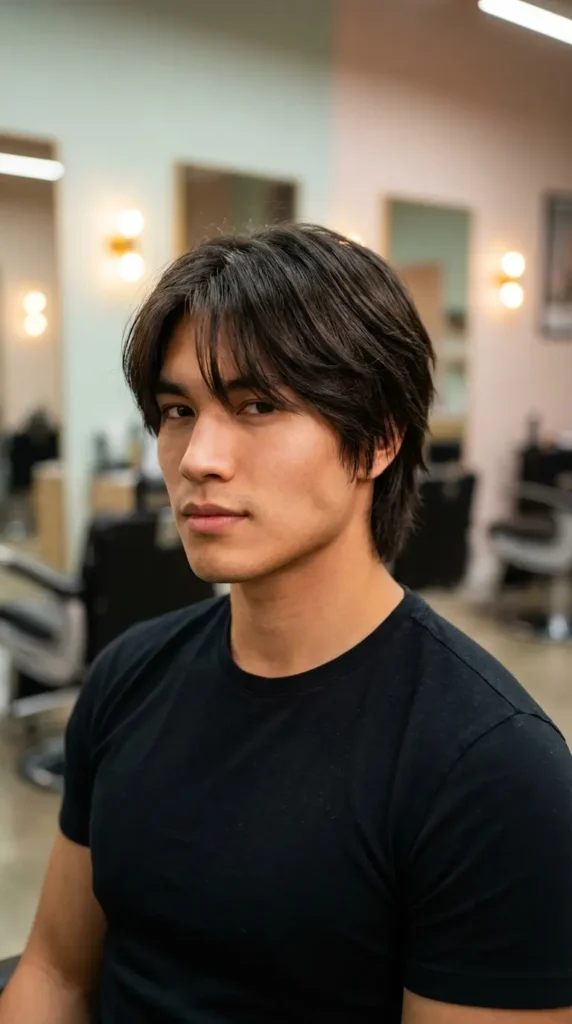
Straight hair tends to fall flat without help, and this cut fixes that. Razor cutting adds movement that scissor work alone can’t, short layers near the crown lift things up, and the longer back keeps you out of helmet-hair territory.
- Best for: Straight or fine hair
- Face shape: All face shapes
- How to style: Texturizing spray on damp hair, blow dry against the growth direction for lift, finish with sea salt spray
- Vibe: Structured but not stiff
9. Wolf Cut for Wavy Hair
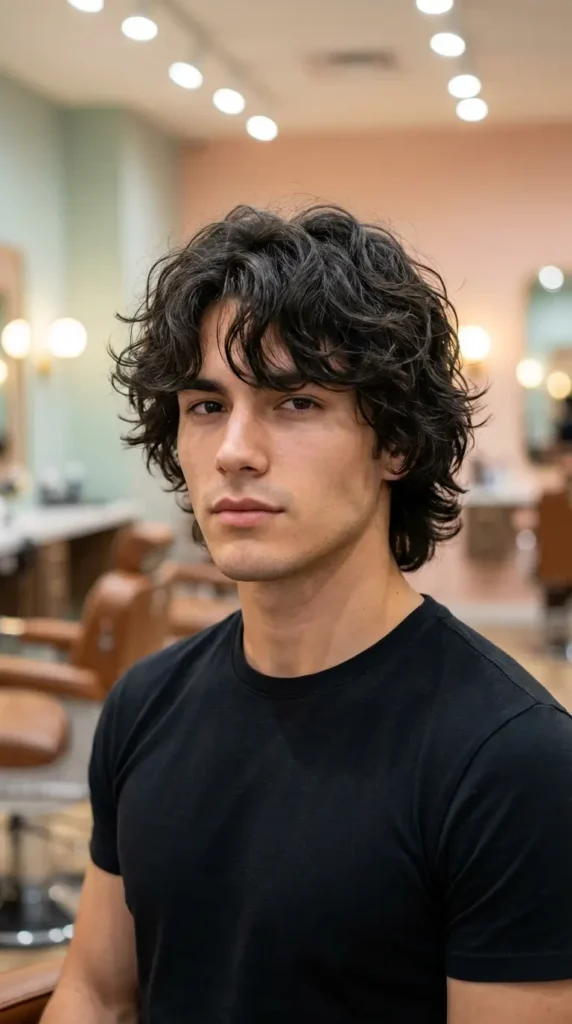
Wavy hair barely needs convincing here, the natural texture does most of the styling work on its own. The layers work with the wave pattern instead of fighting it.
- Best for: 2A to 2C wavy hair
- Face shape: All face shapes
- How to style: Sea salt spray on damp hair, scrunch gently, air dry for a beachy finish
- Vibe: Looks effortless because it mostly is
10. Curly Wolf Cut
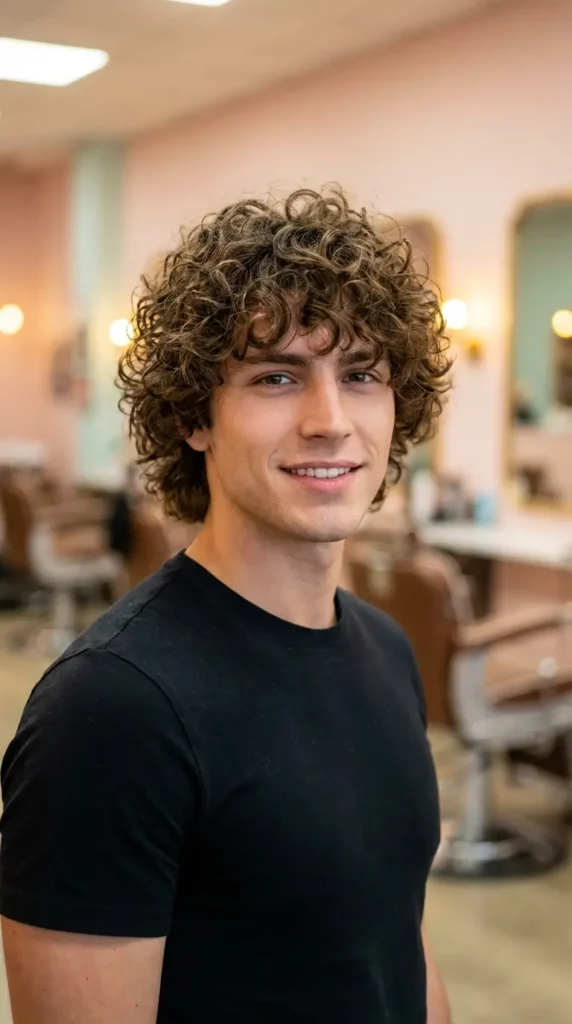
Proper layering is what makes this work on curly hair. Shorter layers at the crown stop the triangle shape that curly cuts sometimes fall into, while tapered sides keep the overall bulk in check.
- Best for: 3A to 3C curly hair
- Face shape: Oval or round
- How to style: Curl-enhancing cream on wet hair, diffuse on low heat, finish with argan oil to fight frizz
- Tip: Let curls air dry partway before you diffuse for better shape
- Vibe: Bouncy, full of personality
11. Wolf Cut for Thick Hair
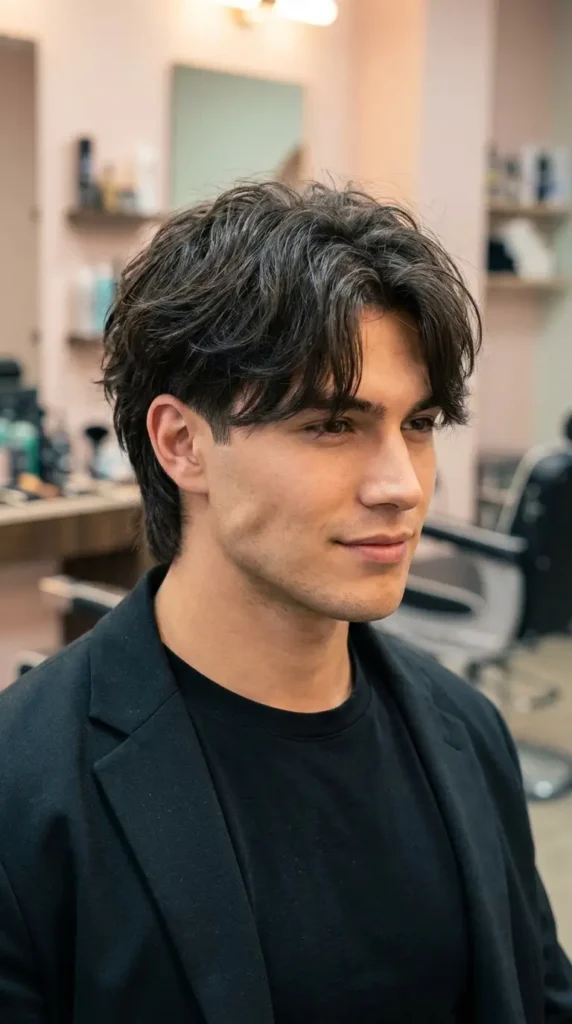
Thick hair has volume to spare, the trick is shaping it so it doesn’t turn into a mass on top of your head. Heavy layering removes bulk while keeping the fullness, so it moves instead of just sitting there.
- Best for: Thick or coarse hair
- Face shape: All face shapes
- How to style: Texture clay through the mid-lengths and ends, blow dry with fingers for lift
- Ask your barber for: Thinning shears to cut bulk without losing the shape
- Vibe: Full without feeling heavy
12. Wolf Cut for Thin or Fine Hair
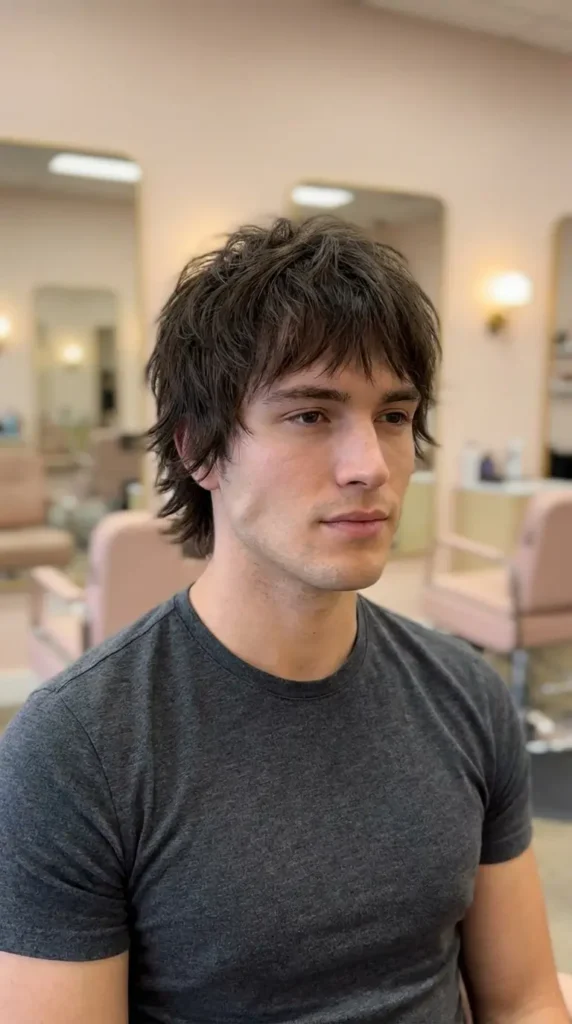
Strategic layering is doing a lot of work here, creating the illusion of density that thin hair doesn’t naturally have. Shorter layers add height, and root-lifting products do the rest.
- Best for: Fine or thin hair
- Face shape: Oval or heart
- How to style: Volumizing mousse on damp roots, blow dry upward, texture powder to finish
- Vibe: Looks fuller than it actually is
Cultural and Aesthetic Variations:
13. Korean Wolf Cut
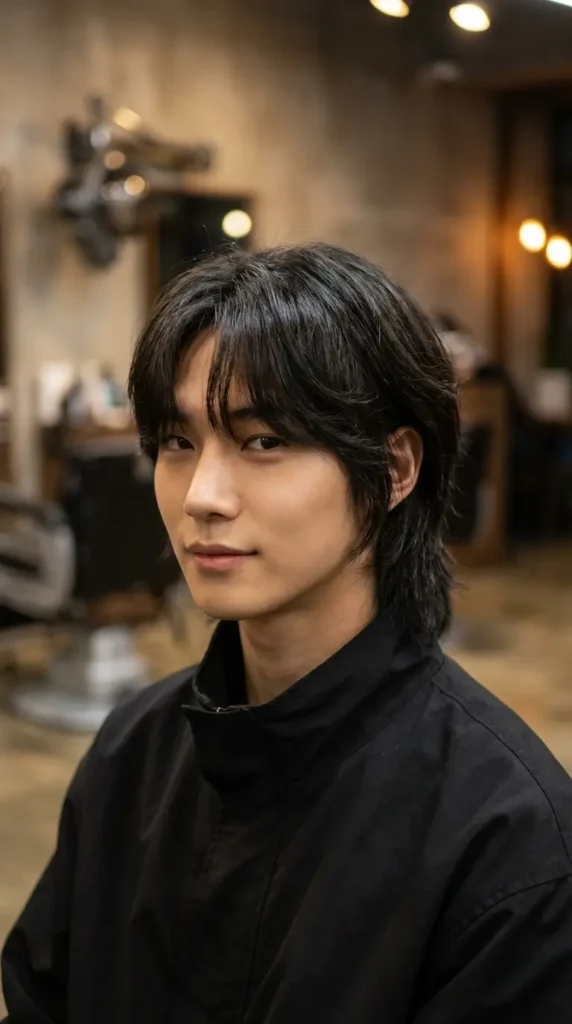
Softer and more polished than the Western take, this is closer to the K-pop idol version. Layers stay airy around the face and the crown volume is kept refined rather than wild.
- Best for: Straight or wavy hair
- Face shape: Oval or slim faces
- How to style: Round brush blow dry for smoothness, styling cream to shape, argan oil for shine
- Vibe: Looks like you have a stylist on call
14. Japanese Wolf Cut
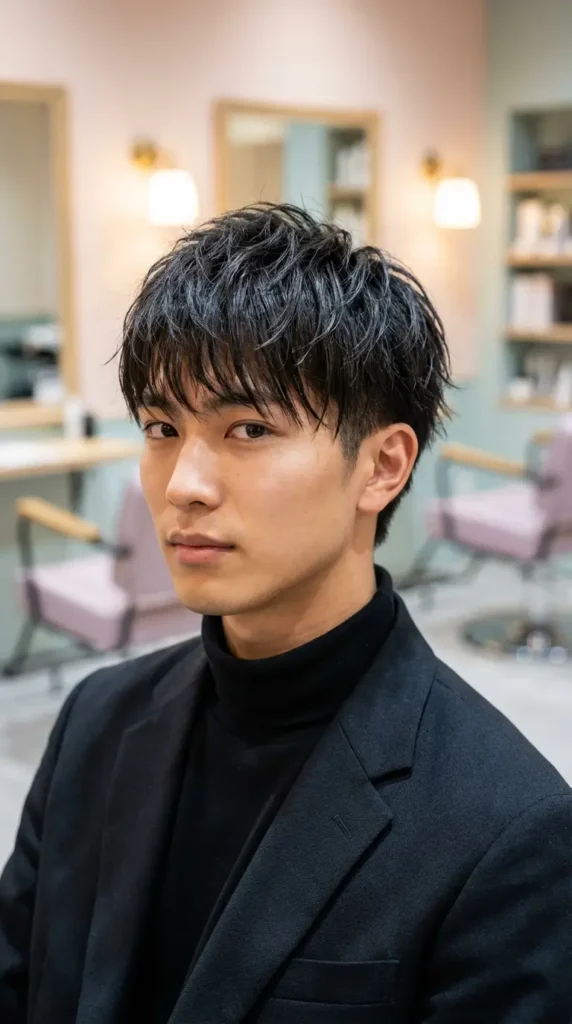
Sharper edges than the Korean version, pulling more from anime and J-rock styling. The crown layers flip outward with clear intent rather than falling naturally.
- Best for: Straight hair
- Face shape: Angular faces
- How to style: Hair wax for texture, flat iron to flip the ends, light hairspray to hold
- Vibe: Deliberate, almost illustrated
15. Asian Wolf Cut
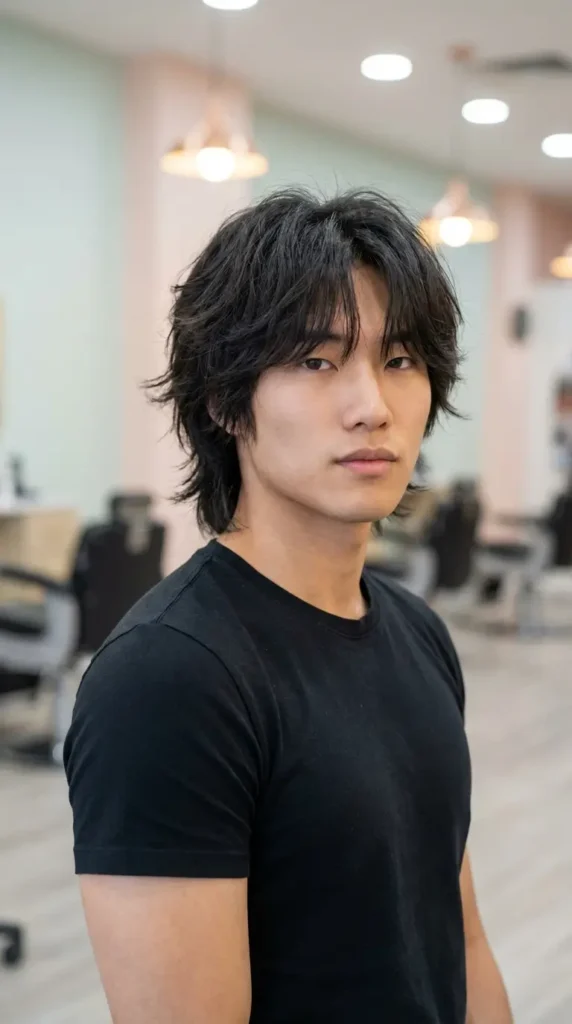
A middle ground between the Korean and Japanese takes, built around the textures common in Asian hair. Expect curtain bangs, airy layering, and a finish that looks natural rather than overworked.
- Best for: Straight or wavy Asian hair textures
- Face shape: Oval, heart, round
- How to style: Light pomade for subtle definition, air dry, minimal product
- Vibe: Current without losing a natural feel
16. 90s Wolf Cut
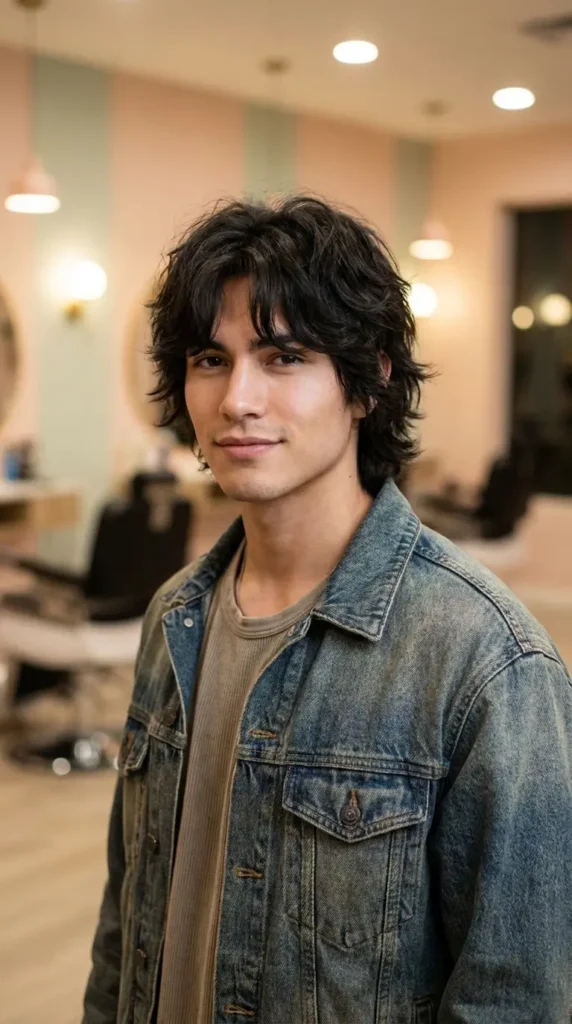
Pure grunge throwback. Messy layers, a loose fringe, nothing polished about it. The less put-together it looks, the more it’s working.
- Best for: All hair types
- Face shape: All face shapes
- How to style: Sea salt spray for grit, finger-tousle while drying, skip the finishing product entirely
- Vibe: Like you stepped out of a 90s concert crowd
17. E-Boy Wolf Cut
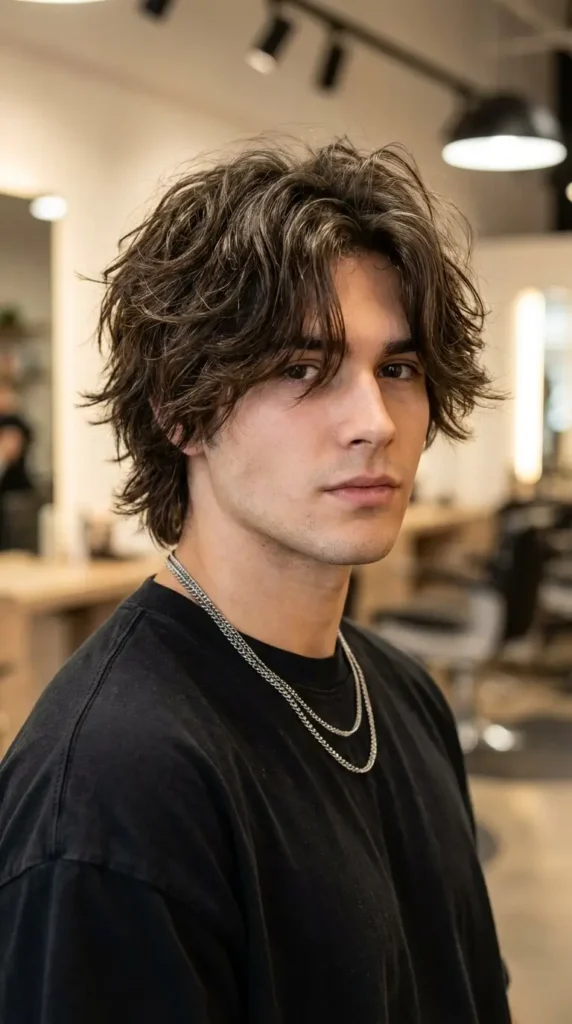
TikTok’s version of the wolf cut. Middle part, face-framing pieces, built for camera angles as much as anything else. Curtain bangs are non-negotiable here.
- Best for: Medium-length hair
- Face shape: Oval, heart, diamond
- How to style: Matte clay for texture without shine, center part with a fine comb
- Vibe: Internet-native, camera ready
With Bangs and Fringe:
18. Wolf Cut with Curtain Bangs
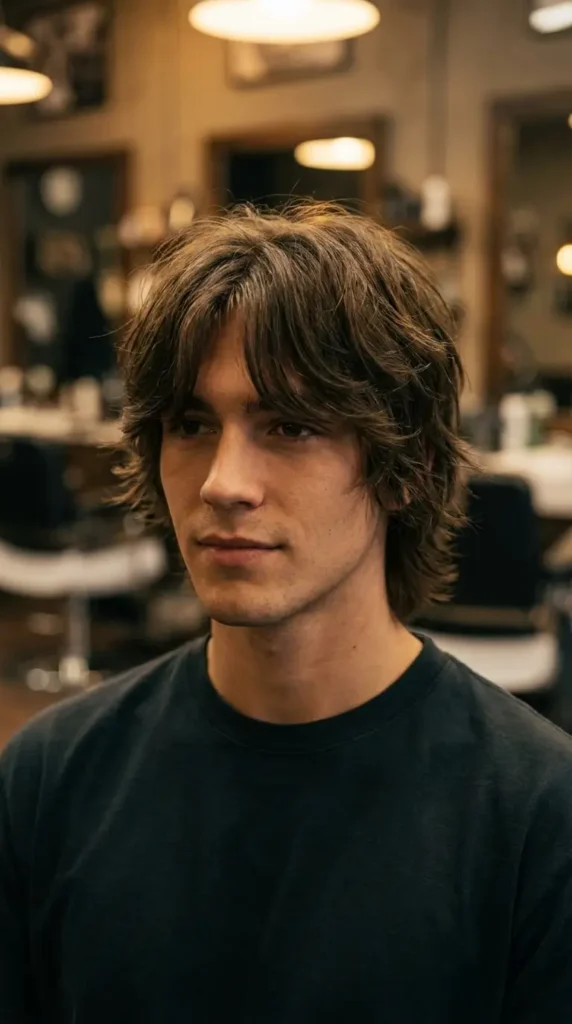
Adding curtain bangs softens the whole look considerably. The fringe parts and sweeps to each side, blending into the layered sides and taking some of the edge off sharper features.
- Best for: Wavy or thick hair
- Face shape: Rectangular or square, bangs soften a strong jawline
- How to style: Round brush the bangs while blow drying, styling cream for softness
- Vibe: Edgy with a romantic edge to it
19. Middle Part Wolf Cut
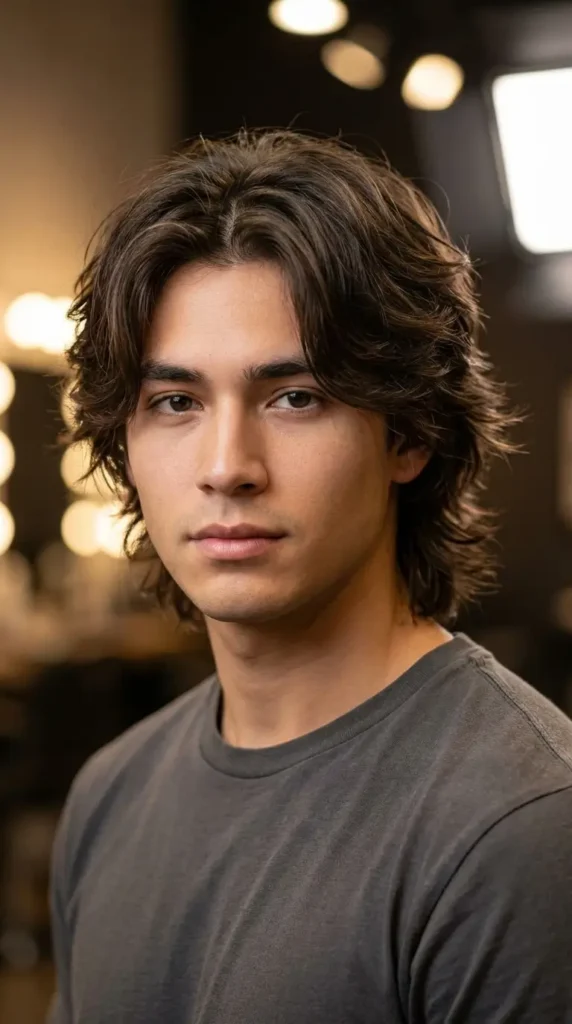
Symmetry is the whole idea. A clean center part frames the face evenly while fluffy sides carry the texture. Photographs well because everything lines up.
- Best for: All hair types
- Face shape: Oval, heart, diamond
- How to style: Styling cream to keep bounce, wide-tooth comb for the part, argan oil on the ends
- Vibe: Balanced, looks intentional
20. Wolf Cut with Side-Swept Bangs
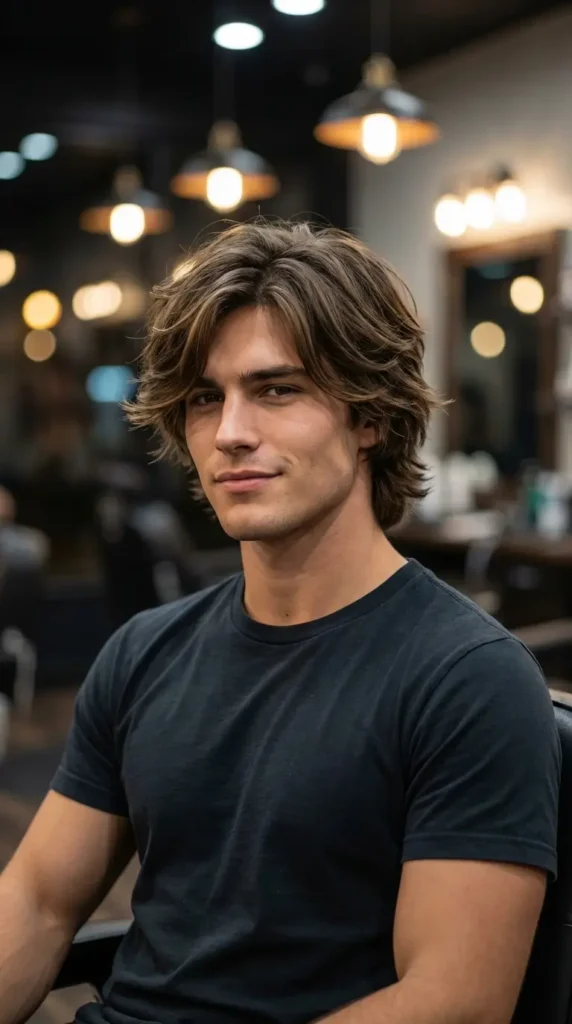
More structured than curtain bangs but still relaxed overall. The fringe sweeps in one direction, which draws attention up toward the eyes and breaks up angular features.
- Best for: Straight or wavy hair
- Face shape: Square or rectangular
- How to style: Pomade for direction, blow dry toward the sweep, light hairspray to hold
- Vibe: Sophisticated with a bit of edge
21. Wolf Cut with Heavy Fringe
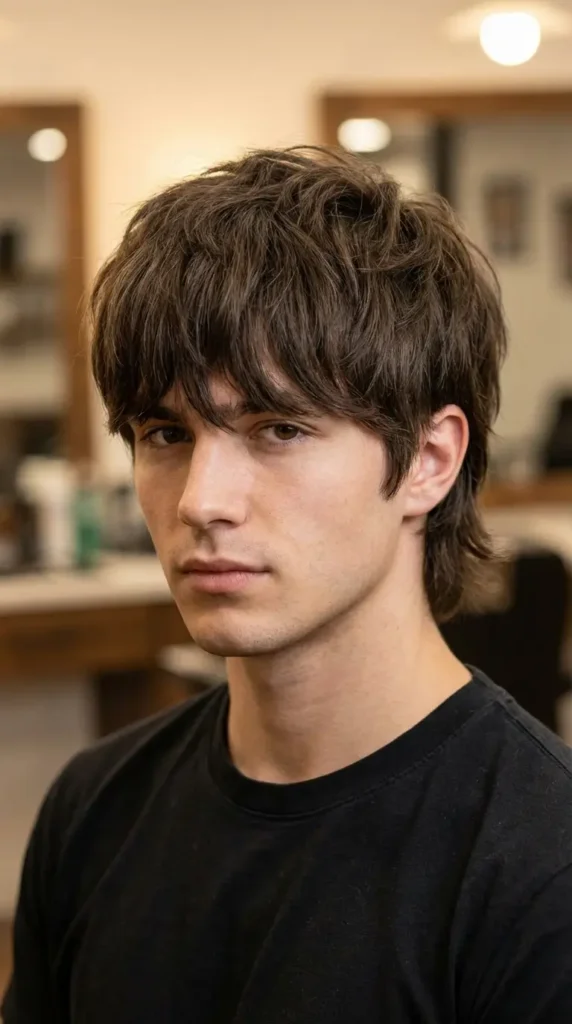
Dense, brow-grazing bangs that don’t try to blend in. Works especially well if you have a high forehead or an oblong face, since the fringe visually shortens things.
- Best for: All hair types
- Face shape: High foreheads, oblong faces
- How to style: Molding paste for texture, flat iron for smoothness, texture powder at the roots
- Vibe: Hard to miss
Hybrid and Fade Combinations:
22. Wolf Cut Mullet
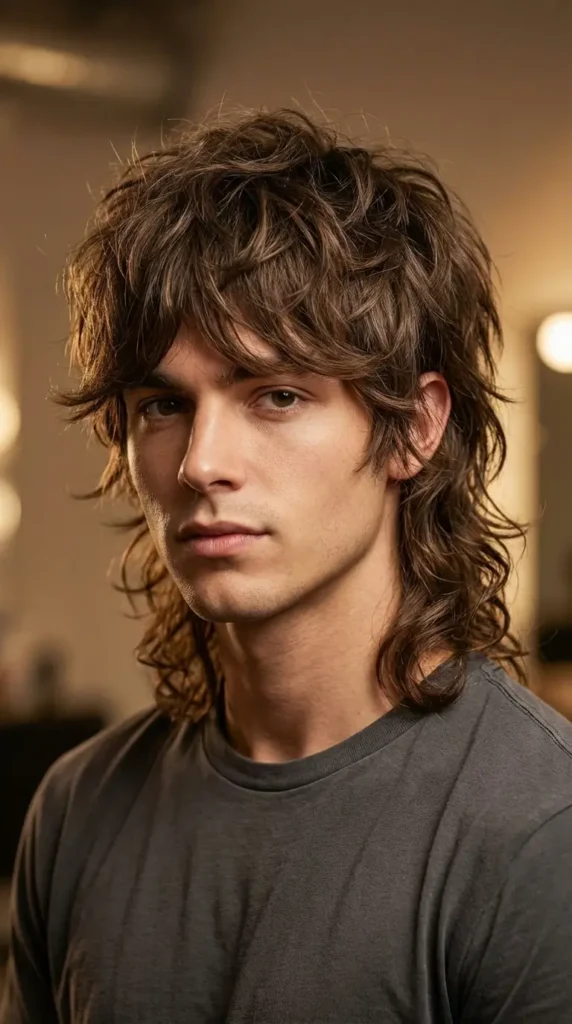
This one leans hard into the mullet side of the family tree. Short, choppy layers up top, long feathered length at the back, and none of the restraint of the softer wolf cut versions.
- Best for: Thick or wavy hair
- Face shape: Oval or square
- How to style: Texture clay on top, matte pomade through the back, finger-shape while drying
- Vibe: A mullet that got a glow-up
23. Wolf Cut Fade
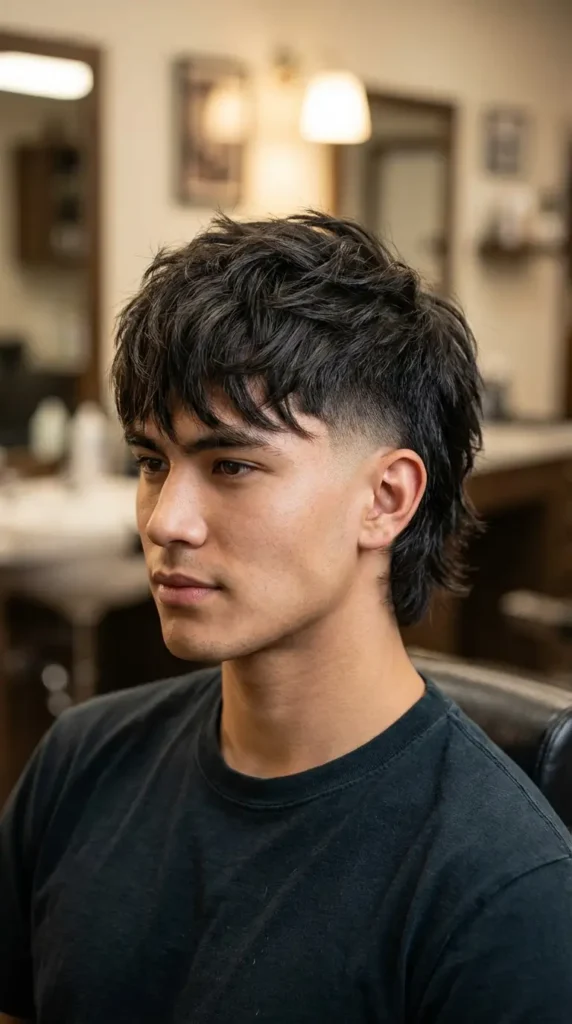
A clean skin fade on the sides meets textured chaos up top. The contrast is the whole appeal here, sharp lines against wild layering.
- Best for: All hair types
- Face shape: Round or diamond, the fade adds definition
- How to style: Texture powder at the roots, pomade or molding paste through the top
- Vibe: Sharp meets wild
24. Wolf Cut with Taper
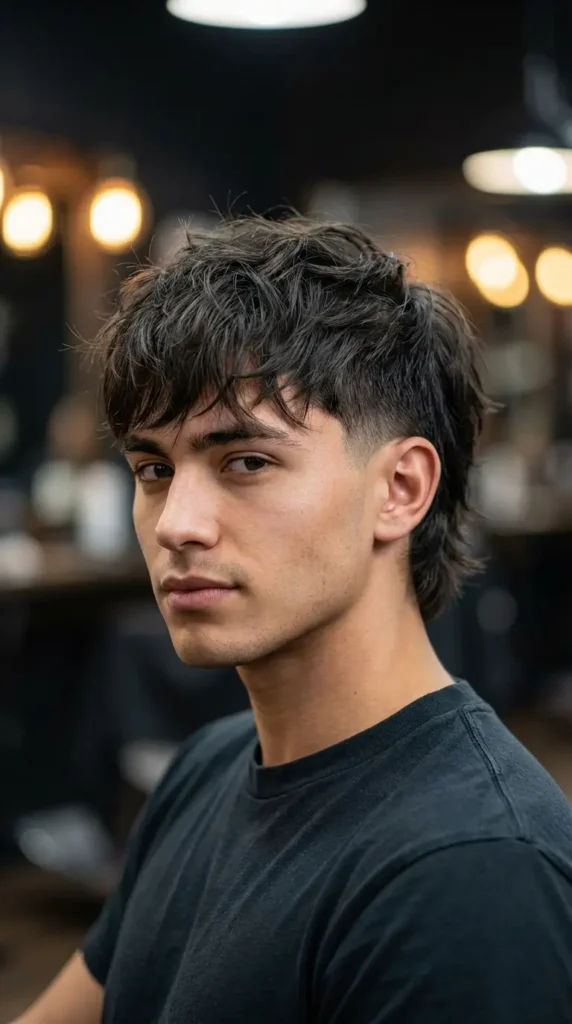
Less dramatic than a full fade, just enough tapering at the sides to create clean lines without hard contrast. Good option if a skin fade feels like too much for your workplace.
- Best for: All hair types
- Face shape: All face shapes
- How to style: Styling cream for natural texture, light hairspray to hold
- Vibe: Understated but still has an edge
25. Wolf Cut with Undercut
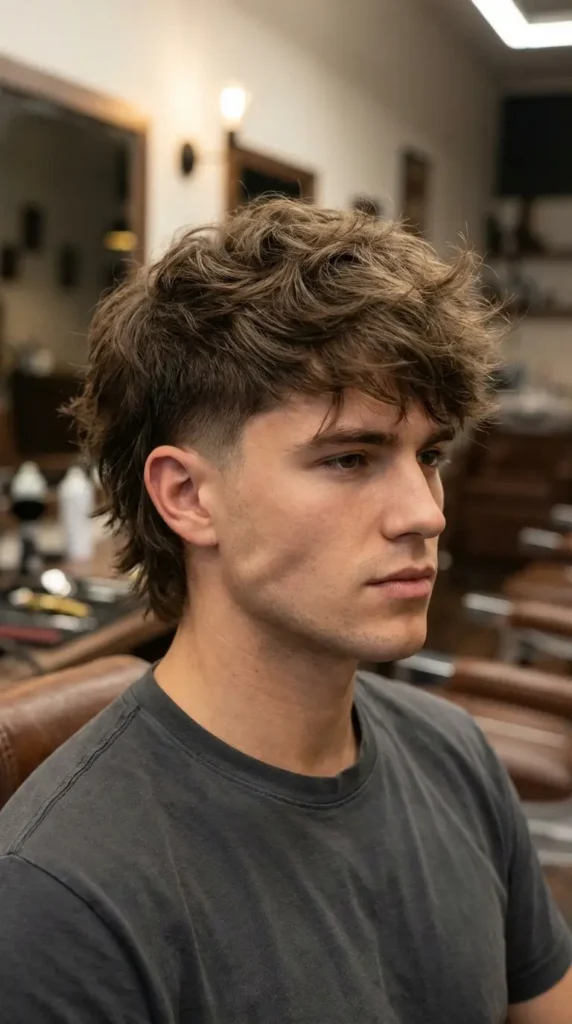
Maximum contrast. Sides shaved or cropped close, top left voluminous and textured. The disconnect between the two is what makes it interesting.
- Best for: Thick hair
- Face shape: Angular faces
- How to style: Strong-hold clay for the top, blow dry for volume
- Vibe: Not blending into any crowd
26. Wolf Cut Mohawk
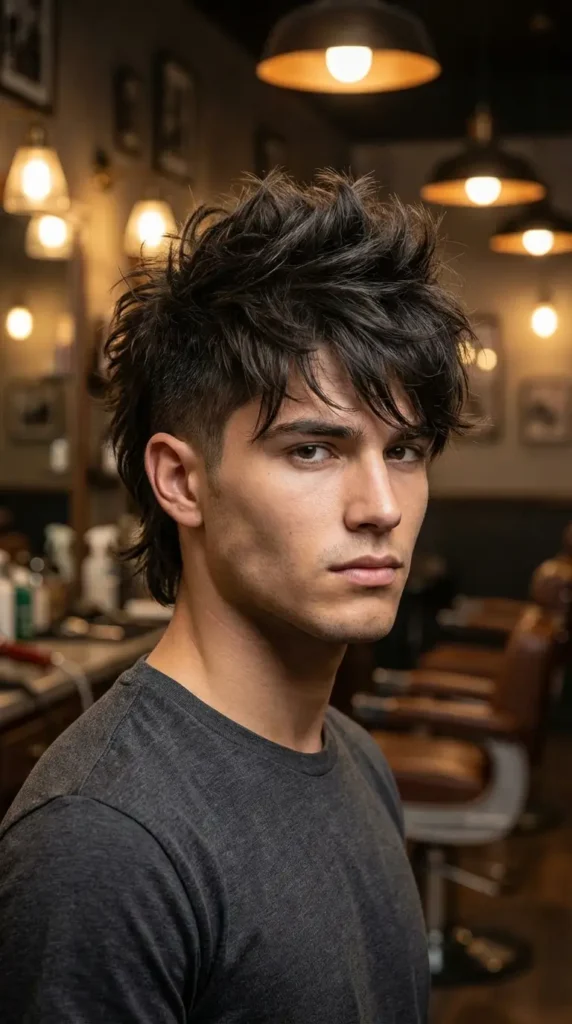
Punk edge meets wolf cut texture. Faded sides frame a voluminous, textured strip running down the center. Not a subtle look by any measure.
- Best for: Wavy or thick hair
- Face shape: Oval or angular
- How to style: Volumizing mousse for height, texture clay for definition
- Vibe: Frontman energy
27. Low Taper Wolf Cut
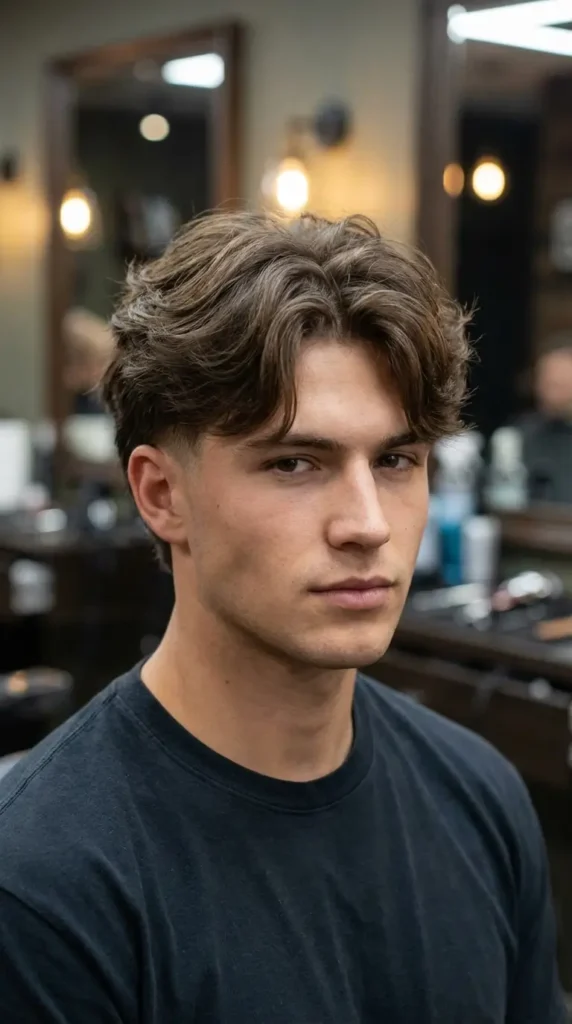
Minimal tapering at the neckline just to clean up the outline. The natural flow of the cut stays intact, this just tidies the edges.
- Best for: All hair types
- Face shape: All face shapes
- How to style: Light pomade, finger-style for movement
- Vibe: Quietly confident
28. Mid Taper Wolf Cut
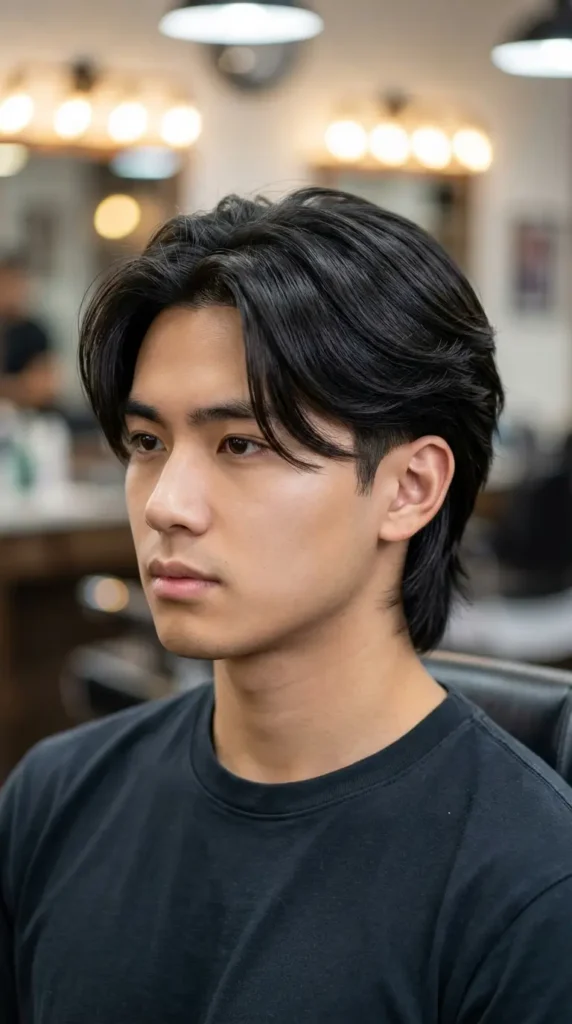
Sits between neat and wild. Tapering around the ears keeps the outline clean while the top is left alone to do its own thing.
- Best for: Thick hair
- Face shape: Round or square
- How to style: Texture clay for separation, finger-style the top
- Vibe: Controlled where it counts
Texture and Finish Variations:
29. Shaggy Wolf Cut
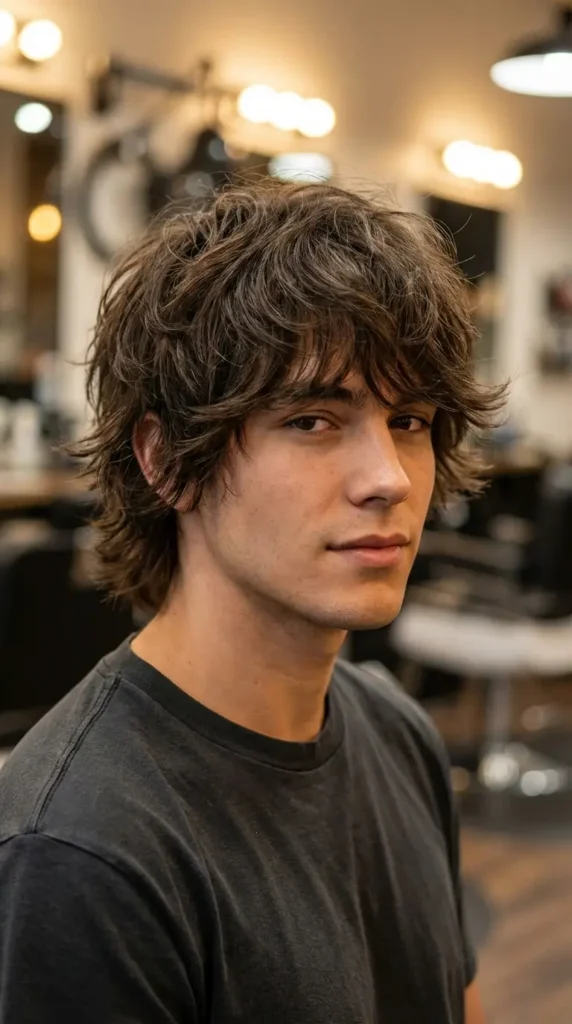
Leans all the way into the shag side of the equation. Heavy feathering, choppy flipped layers, a finish that feels pulled from the 70s but still reads current.
- Best for: Wavy or curly hair
- Face shape: Oval or heart
- How to style: Sea salt spray for grit, scrunch while air drying
- Vibe: Vintage rock energy
30. Messy Wolf Cut
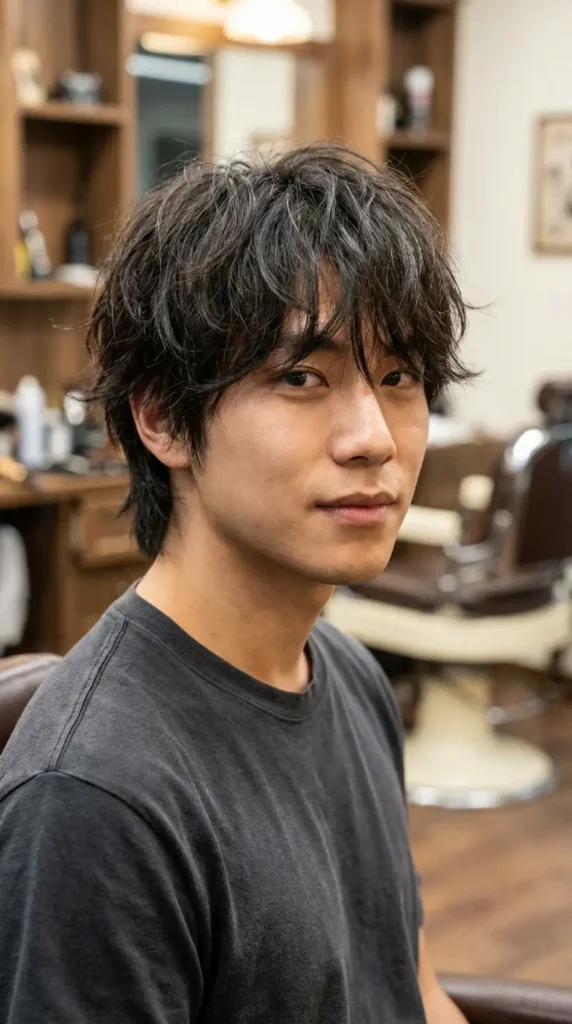
Chaos, but intentional chaos. Heavy layering at the crown, everything tousled rather than smoothed down. Looks like you rolled out of bed and it worked out anyway.
- Best for: Wavy or curly hair
- Face shape: Round, oval, or oblong
- How to style: Texture spray on dry hair, finger-tousle aggressively
- Vibe: Too relaxed to care, in a good way
31. Textured Wolf Cut
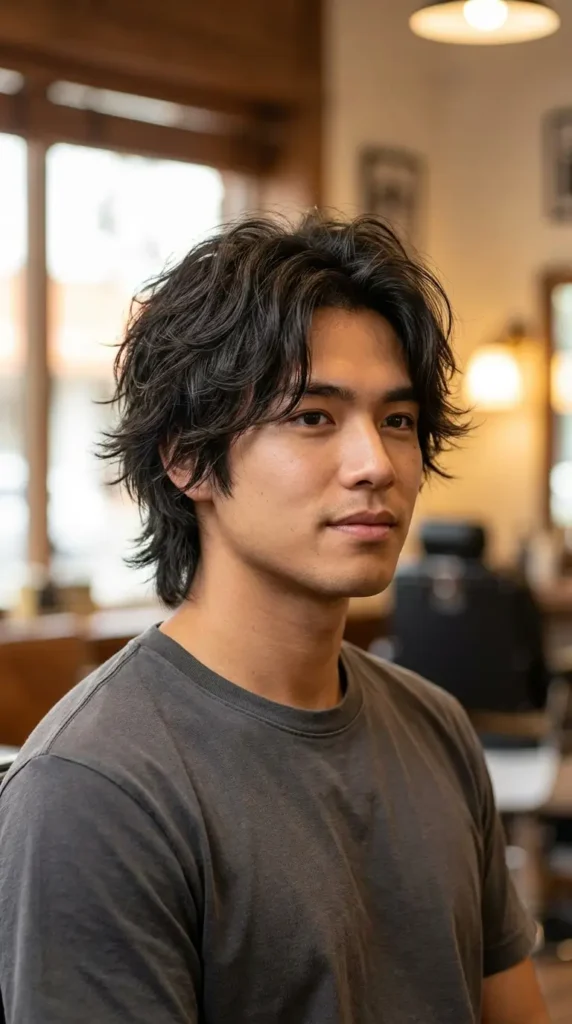
Focused on movement and separation more than anything else. Choppy layering gives each section of hair its own definition instead of blending together.
- Best for: Straight or wavy hair
- Face shape: Oval or heart
- How to style: Texturizing spray throughout, texture clay for control
- Vibe: Good from every angle
32. Fluffy Wolf Cut
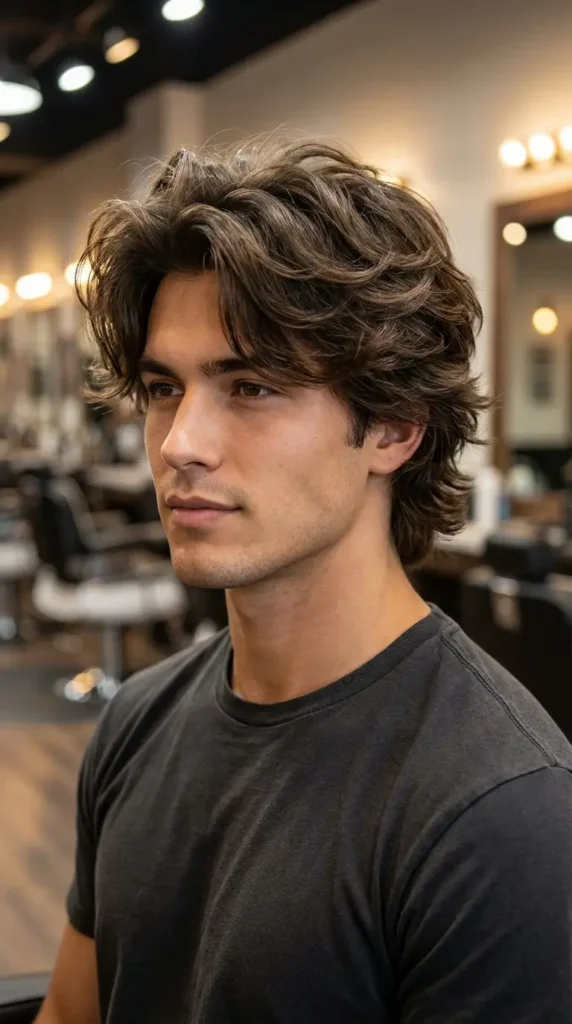
Soft and airy rather than sharp. Layers build lift around the crown and sides without any stiffness, giving it an almost cloud-like quality.
- Best for: Fine or medium hair
- Face shape: Oval or diamond
- How to style: Volumizing mousse at the roots, diffuse while scrunching
- Vibe: Soft but still shaped
33. Soft Wolf Cut
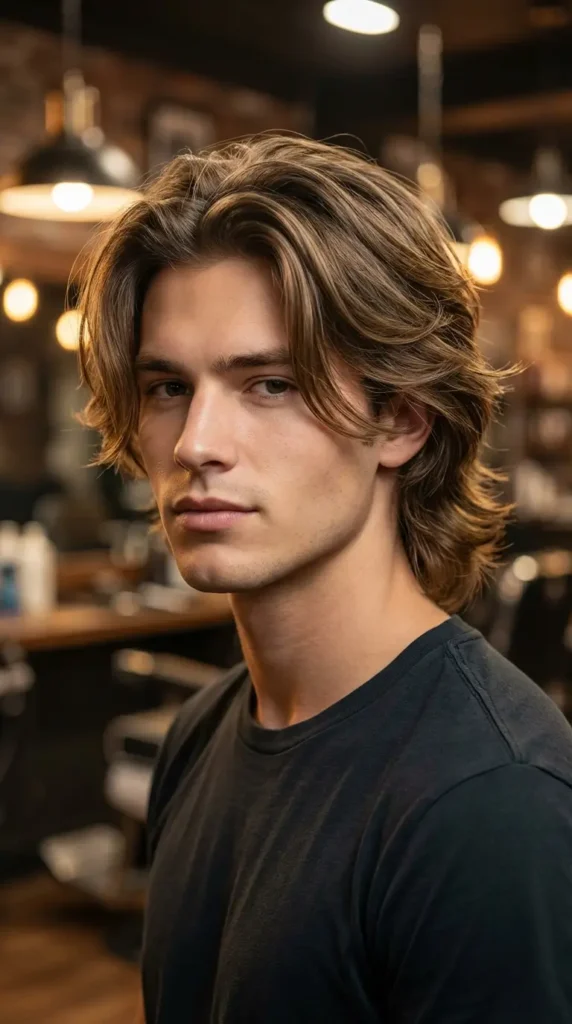
The gentlest version on this list. Layers blend smoothly into each other with almost no choppiness, so it reads more relaxed than edgy.
- Best for: All hair types
- Face shape: All face shapes
- How to style: Argan oil for smoothness, air dry
- Vibe: Polished without trying hard
34. Choppy Wolf Cut
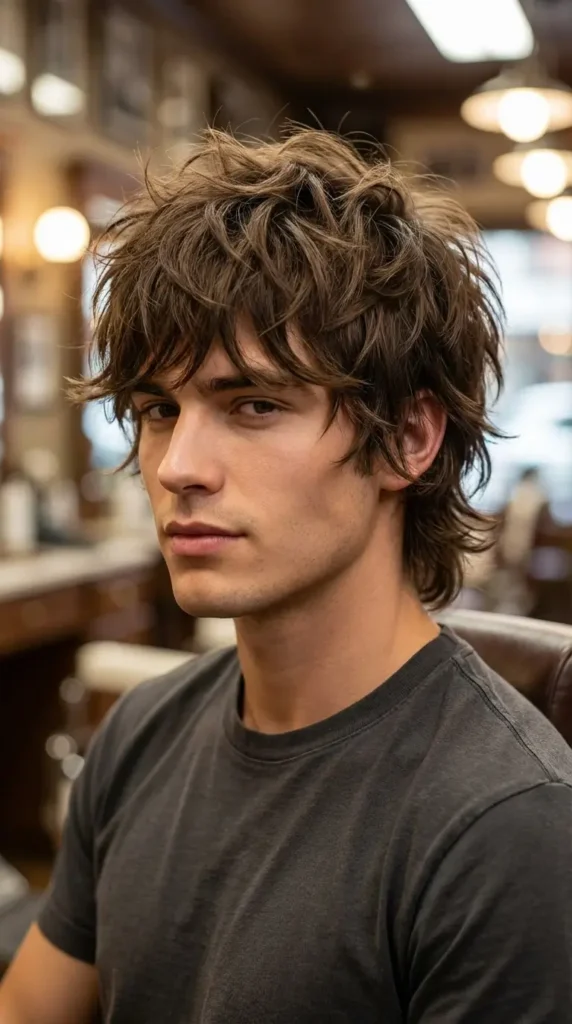
The most aggressive texture on the list. Uneven layers, deliberate roughness, nothing smoothed over. It doesn’t try to look neat.
- Best for: Thick hair
- Face shape: Oval, round, or angular
- How to style: Texture clay for definition, point-cutting for extra roughness
- Vibe: The wolf cut turned all the way up
Color and Statement Styles:
35. Blonde Wolf Cut
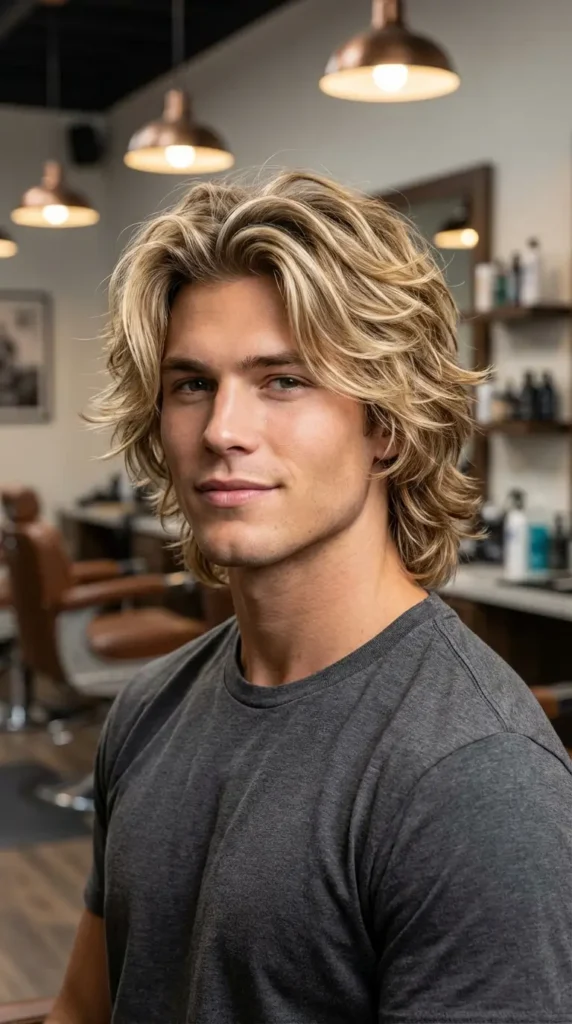
Lighter hair shows off the layering more clearly than dark hair does. Every feathered piece and layer break becomes more visible.
- Best for: All hair types
- Face shape: Square, oval, or heart
- How to style: Purple shampoo to keep tones cool, texture spray for movement
- Maintenance: Color touch-ups every 4 to 6 weeks
- Vibe: Beachy meets rock star
36. Two-Toned Wolf Cut
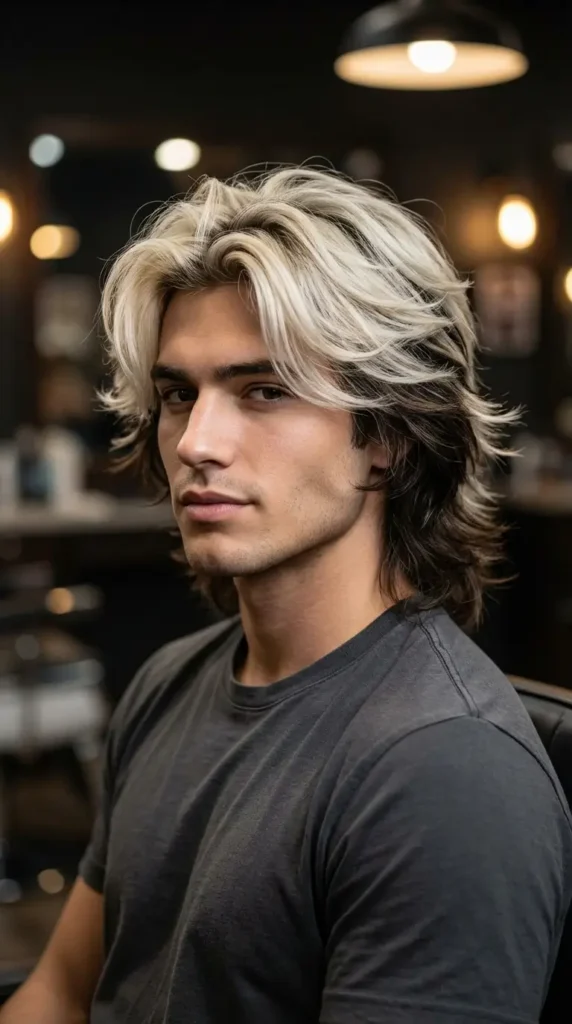
Contrasting colors, dark roots against light ends or black against platinum, used to make the layering pop visually. The color does a lot of the work here.
- Best for: Thick hair
- Face shape: All face shapes
- How to style: Color-safe products only, texture clay for definition
- Vibe: Loud, wearable art
37. Wolf Cut with Highlights
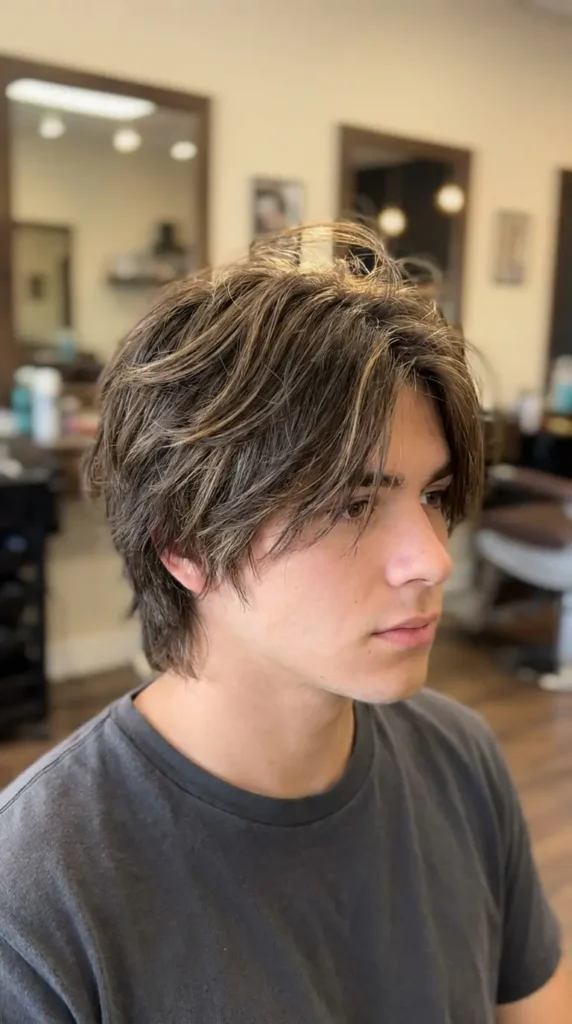
A lighter commitment than a full color change. Strategic highlight placement just makes the existing layers more visible without redoing your whole color.
- Best for: All hair types
- Face shape: All face shapes
- How to style: Color-protecting styling cream, light texture products
- Vibe: Your natural look, just turned up slightly
Unique variations worth knowing:
38. No-Mullet Wolf Cut
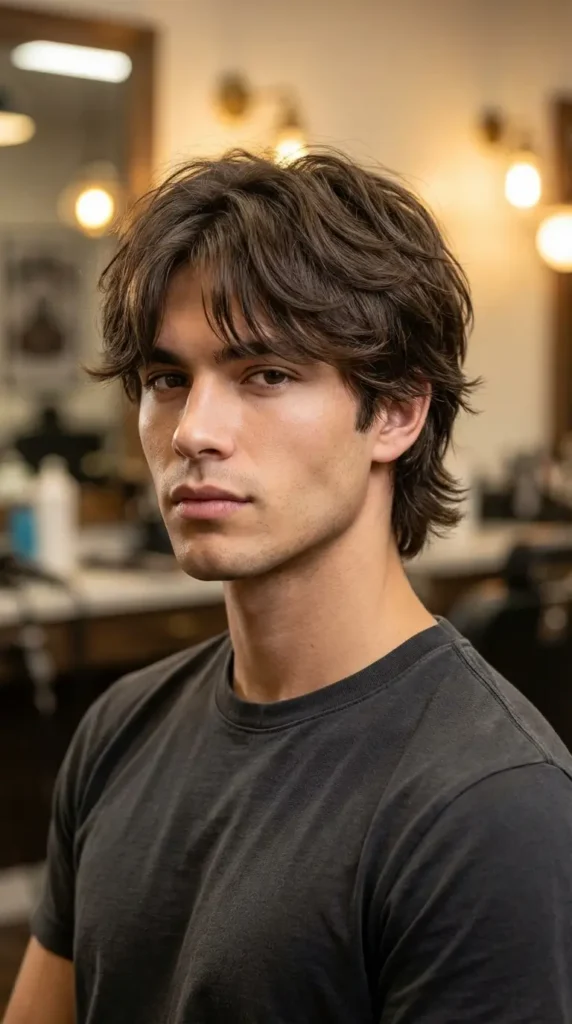
For guys who want the texture but not the extended back length. You still get the choppy layers and volume, just without the dramatic length contrast.
- Best for: Professional settings
- Face shape: All face shapes
- How to style: Styling cream for shape, tapered finish for neatness
- Vibe: Office-friendly, still has edge
39. Jellyfish Wolf Cut
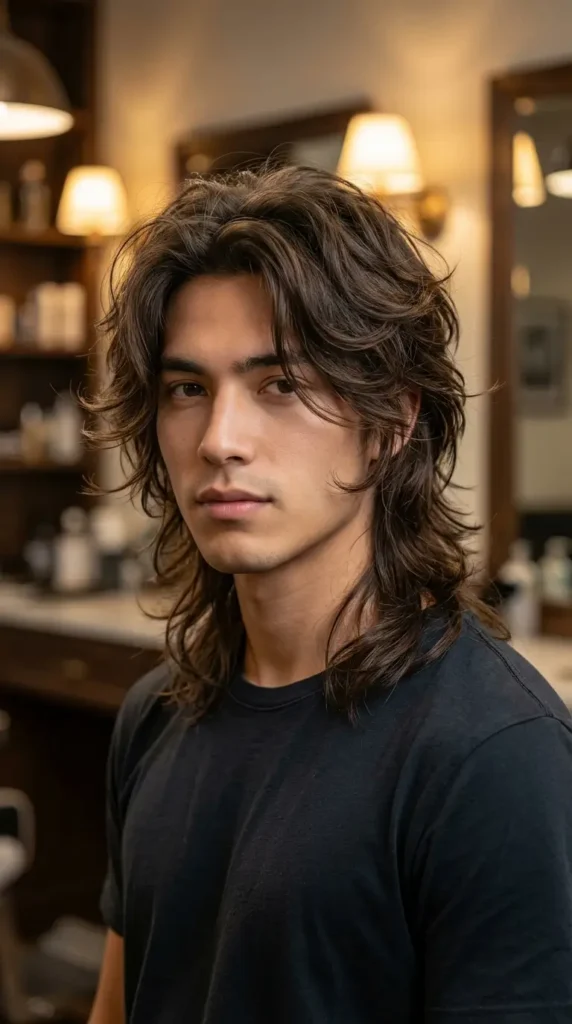
Genuinely unusual. Short crown layers sit above a separate long underlayer that flows on its own, similar to the way a jellyfish trails its tentacles. Not for everyone, but memorable.
- Best for: Thick hair, bold personalities
- Face shape: Oval, heart, or diamond
- How to style: Texture clay for the top, molding paste for the underlayer
- Vibe: Conversation starter, guaranteed
40. Bowl Wolf Cut
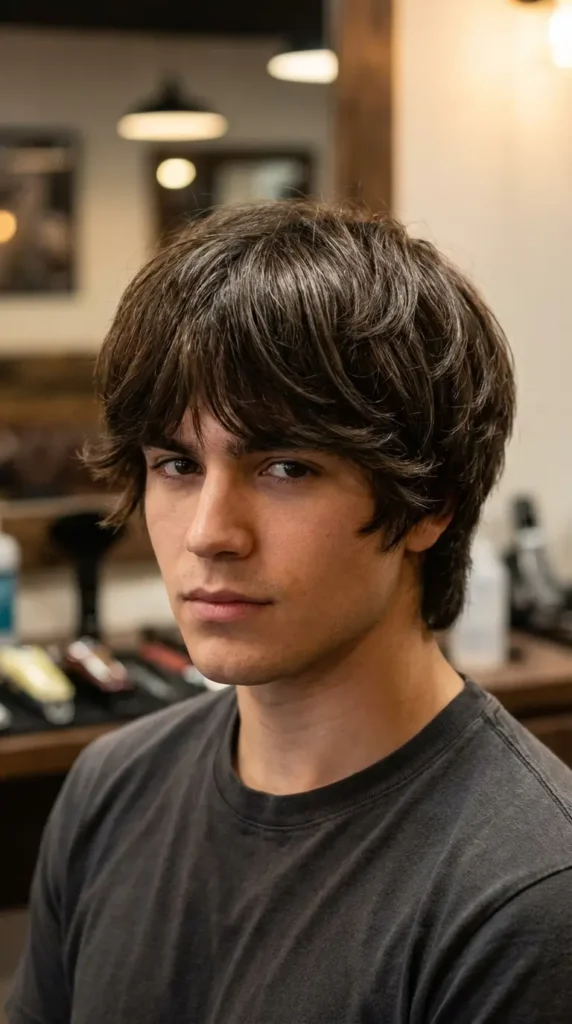
Bowl-cut shaping meets wolf texture. A rounded crown shape with wispy, flowing layers underneath, popular in K-pop circles for its playful look.
- Best for: Straight or fine hair
- Face shape: Oval or round
- How to style: Light wax for shape, minimal product
- Vibe: Youthful and a bit playful
41. Spiky Wolf Cut
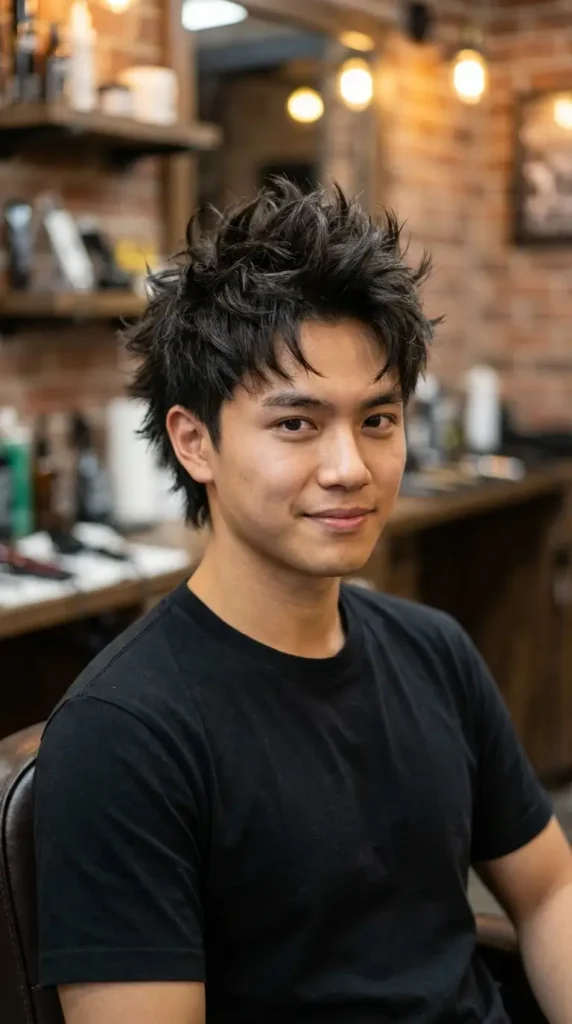
90s spikes updated with wolf cut texture. The crown points upward while the back keeps its natural flow, an odd but working combination of two different decades.
- Best for: Thick or straight hair
- Face shape: Oval or heart
- How to style: Strong-hold gel for spikes, texture powder at the roots
- Vibe: Retro with a current twist
42. Wolf Cut with Beard
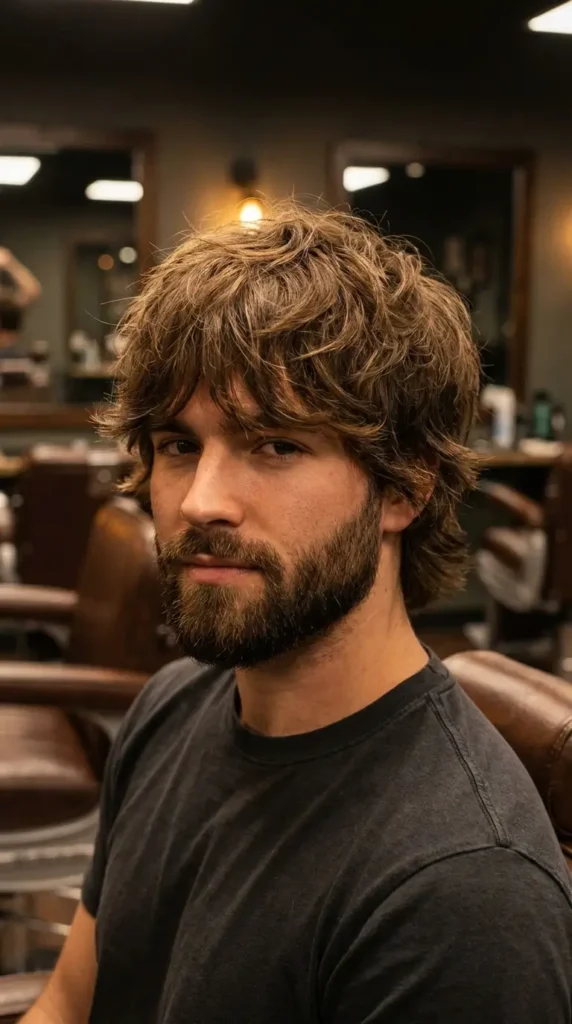
Textured hair on top, groomed beard below. The combination balances out the wildness of the cut with something more deliberate on the lower half of the face.
- Best for: All face shapes
- Face shape: Works especially well on round faces, the beard adds definition
- How to style: Hair clay for the cut, beard balm for the facial hair
- Vibe: Rugged, still put together
Wolf Cut vs Other Hairstyles
These get confused often enough that a direct comparison helps.
Wolf Cut vs Mullet
| Feature | Wolf Cut | Mullet |
|---|---|---|
| Layers | Heavy throughout | Minimal layering |
| Sides | Textured, blended | Short or shaved |
| Texture | Messy, lived-in | Structured contrast |
| Overall vibe | Contemporary, edgy | Retro, rebellious |
| Maintenance | Low to medium | Low |
Bottom line, wolf cuts are messier and rely on heavier layering. Mullets keep a cleaner, more structured contrast between the short and long sections. See the full breakdown in our modern mullet guide.
Wolf Cut vs Shag
| Feature | Wolf Cut | Shag |
|---|---|---|
| Layers | More dramatic contrast | Softer, blended |
| Back length | Longer, mullet-influenced | Even throughout |
| Volume | Crown-focused | Evenly distributed |
| Overall vibe | Edgier, wilder | Softer, vintage |
Bottom line, wolf cuts carry more attitude, shags stay softer and more vintage-leaning.
Wolf Cut vs Jellyfish Cut
The jellyfish cut disconnects on purpose, a short top sitting clearly apart from a long underlayer. Wolf cuts blend the lengths together more, jellyfish cuts keep them deliberately separate.
Choosing the Right Wolf Cut for Your Face Shape
Face shape is the biggest factor in which variation actually flatters you.
Wolf Cut for Round Face
Goal: Add vertical length
Best styles: Classic wolf cut with crown volume, layered wolf cut, short wolf cut, wolf cut with taper or fade
Tips: Keep volume at the crown rather than the sides, let longer top layers draw the eye upward, avoid extra width at the cheekbones
Wolf Cut for Oval Face
Goal: Nothing to correct, most variations work
Best styles: Any wolf cut variation
Tips: Use this as a chance to experiment with bangs, length, and texture
Wolf Cut for Square Face
Goal: Soften strong jawlines
Best styles: Wolf cut with curtain bangs, soft wolf cut, wavy wolf cut
Tips: Wispy layers soften angles better than blunt cuts, avoid harsh clean lines
Wolf Cut for Heart Face
Goal: Balance a wider forehead against a narrower chin
Best styles: Curly wolf cut, wolf cut with heavy fringe, medium wolf cut
Tips: Keep the heaviest layers around chin level, use bangs to minimize forehead width, avoid piling volume at the crown
Wolf Cut for Oblong or Rectangular Face
Goal: Add width, reduce visual length
Best styles: Wolf cut with curtain bangs or heavy fringe, full wolf cut with side volume, shaggy wolf cut
Tips: Bangs shorten the face visually, side volume adds width, keep height at the crown minimal
Wolf Cut for Diamond Face
Goal: Balance cheekbones against the forehead and chin
Best styles: Classic wolf cut, textured wolf cut, middle part wolf cut
Tips: Face-framing layers highlight the cheekbones well, keep layering balanced rather than heavy in one spot
How to Ask Your Barber for a Wolf Cut
Clear communication is most of the battle here.
Bring Reference Photos
Save 3 to 5 photos before your appointment, ideally showing front, side, and back views, and pick people with hair texture close to yours. A wolf cut on curly hair looks different from one on straight hair, so match the reference to your own texture.
Use the Right Terminology
- “Choppy layers at the crown” for volume up top
- “Longer, feathered layers at the back” for that signature flow
- “Face-framing texture” for pieces around the face
- “Point cutting for wispy ends” for soft, textured tips
- “Razor cutting for softness” for extra movement on straight hair
Also specify fade versus taper versus natural sides, your desired length, and whether you want bangs.
Communicate Your Preferences
Tell your barber how much effort you’re realistically willing to put in daily. “Low-maintenance” gets you a different cut than “I’m fine styling it every morning,” and mentioning a professional workplace will keep them from going too dramatic with the length or contrast.
Listen to Your Barber
They know what your specific texture can and can’t do, and which variation actually suits your face shape. Their suggestions are usually worth taking seriously.
How to Style a Wolf Cut, Step by Step
Step 1: Wash and Prep
Use a lightweight shampoo and conditioner, towel dry until damp but not dripping, then detangle with a wide-tooth comb. Skip washing daily, wolf cuts actually look better with a bit of natural oil in the hair, so every 2 to 3 days is plenty.
Step 2: Apply a Pre-Styler
| Hair Type | Best Pre-Styler |
|---|---|
| Straight or fine | Volumizing mousse |
| Wavy | Sea salt spray |
| Curly | Curl-enhancing cream |
| Thick | Texture spray |
Apply to damp hair, focus on the mid-lengths and ends, and don’t overload it. Less goes further than you’d think.
Step 3: Blow Dry for Shape
Medium heat, low speed, lifting at the roots with your fingers or a round brush. Curly hair should go through a diffuser instead. Stop while it’s still slightly damp rather than drying it out completely, then finish with a blast of cool air to set the shape.
Step 4: Apply a Finishing Product
| Desired Finish | Best Product |
|---|---|
| Matte, textured | Texture clay or matte pomade |
| Natural, soft | Styling cream |
| Defined, separated | Molding paste |
| Lightweight lift | Texture powder |
Warm the product between your palms first, work it through the mid-lengths and ends, and scrunch for texture. You can always add more, so start light.
Step 5: Final Touches
Tilt your head forward and give it a gentle shake from the roots, this is sometimes called the wolf shake and it adds natural volume without extra product. A light-hold hairspray is optional if you need it to last all day, but don’t overdo it, the whole point is that it moves.
Maintaining a Wolf Cut
Trim Schedule
| Wolf Cut Length | Trim Frequency |
|---|---|
| Short wolf cut | Every 4 to 6 weeks |
| Medium wolf cut | Every 6 to 8 weeks |
| Long wolf cut | Every 8 to 10 weeks |
What to tell your barber: “just a shape-up,” “maintain the layers,” or “keep the length, clean up the shape,” depending on what you actually need.
Daily Care
Mornings, brush through to separate the layers and touch up with dry shampoo if needed between washes. On wash days, don’t over-wash (2 to 3 times a week is enough), use leave-in conditioner on dry ends, and deep condition weekly if your hair runs dry or curly.
The Growth Phase
Months 1 and 2, keep the sides trimmed and let the top grow, expect it to look a bit uneven, that’s normal. Months 3 and 4, light layers start getting added at the crown and the shape begins forming. Months 5 and 6, the full wolf cut becomes achievable and it’s time to refine. Tell your barber your growth goals early so they can trim strategically along the way.
Best Products for Styling a Wolf Cut
| Product | Best For | How to Use |
|---|---|---|
| Sea salt spray | Wavy texture, beachy finish | Spray on damp hair, scrunch, air dry |
| Texture spray | All hair types, lightweight volume | Spray on dry hair at the roots |
| Texture clay | Definition, matte hold | Work through mid-lengths and ends |
| Texture powder | Root lift, fine hair | Apply at the roots, massage in |
| Molding paste | Flexible shaping | Warm in hands, distribute evenly |
| Styling cream | Soft hold, frizz control | Apply to damp hair |
| Volumizing mousse | Fine or thin hair | Apply to damp roots |
| Matte pomade | Natural finish, medium hold | Work through styled hair |
| Argan oil | Dry ends, shine | A few drops on the ends only |
| Light-hold hairspray | Locking the style | Light mist from a distance |
| Curl-enhancing cream | Curly hair definition | Apply to wet curls, scrunch |
| Leave-in conditioner | Dry or damaged hair | Apply to damp ends |
Start with one pre-styler (sea salt spray or mousse) and one finishing product (texture clay or styling cream), then build from there as needed.
Frequently Asked Questions
What exactly is a wolf cut?
It combines a mullet and a shag: choppy layers at the crown for volume, longer feathered hair at the back and sides. The finish is textured and intentionally a bit messy rather than sharply defined.
Which wolf cut is best?
There’s no single best version, it depends on your hair type and how much styling effort you’re up for. For low maintenance, the short wolf cut or mini wolf cut work well. If you want something bold, the full wolf cut or wolf cut mullet stand out most. The medium wolf cut is the safe default since it suits nearly any hair type and face shape.
Is a wolf cut good for men?
Yes. The layering adds movement and dimension, it flatters most face shapes, and it works for both casual and, in its subtler variations, professional settings.
Is a wolfcut the same as a mullet?
No. A mullet has minimal layering with a clean, structured line between the short front and long back. A wolf cut layers heavily throughout the whole head, which gives it a messier, more textured finish. They share the short-front, long-back concept, but the wolf cut is shaggier and less defined.
What face shape suits a wolf cut best?
Most face shapes handle it well with the right variation. Oval faces are the most flexible, round faces benefit from crown volume and longer layers, and square faces look good with curtain bangs and softer texture.
Is wolf cut ok for straight hair?
Yes, and straight hair arguably needs the layering more than other textures. Razor cutting and texturizing products create movement that scissors alone can’t manage, so mention that specifically when you’re at the barbershop.
Is a wolf cut high-maintenance?
Not really. It’s designed to look effortlessly messy, so minimal daily styling is fine. Regular trims to keep the layers defined are the main upkeep.
How long does my hair need to be for a wolf cut?
At least 3 to 4 inches on top for a short version. Medium length, around 5 to 7 inches, works for most variations. Longer versions need 8 inches or more.
Can I get a wolf cut with thin hair?
Yes. Strategic layering creates the illusion of thickness, shorter layers on top add volume, and texture powder at the roots boosts the lift further.
How do I ask my barber for a wolf cut?
Bring reference photos from the front, side, and back. Ask for “choppy layers at the crown” and “longer, feathered layers at the back,” and be specific about the length and whether you want bangs.
How often should I trim my wolf cut?
Every 6 to 8 weeks for most versions. Short cuts need trims every 4 to 6 weeks, longer versions can stretch to 8 or 10 weeks.
Can I style a wolf cut without heat?
Yes. Air drying works well, especially on wavy or curly hair. Apply your pre-styler, scrunch, and let it dry naturally. Heat just speeds things up and adds extra volume.
Are wolf cuts still in style?
Yes. It’s remained one of the most requested men’s hairstyles since the trend picked up around 2020, largely because it adapts to so many hair types and doesn’t demand much daily upkeep.
Final Thoughts
The wolf cut works because it doesn’t ask you to pick a lane. Sharp with a fade, soft with curtain bangs, or full commitment with the mullet version, the underlying idea stays the same: heavy layering up top, longer texture flowing back.
Pick a variation from the list, bring a photo to your next barber visit, and be specific about the length and layering you want. From there it’s mostly regular trims and letting the cut do the work it’s designed to do.
This guide is updated regularly to reflect current trends and styling techniques. For the best results, talk to a barber who can customize the cut to your hair type, face shape, and lifestyle.