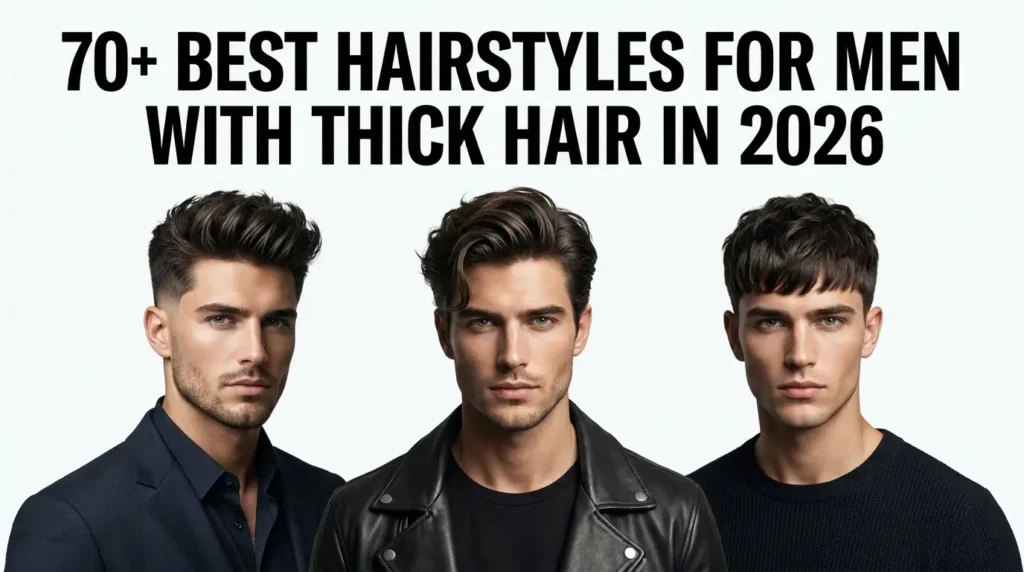
Thick hair in men means having a high number of hair strands per square centimeter (density) combined with wider individual hair fibers (diameter). When hair strand diameter measures above 70 microns, it’s classified as thick or coarse, compared to fine hair at 50 microns or less.
You can identify thick hair through simple tests. If you can’t easily see your scalp when looking straight into a mirror, you likely have thick hair. Roll a single strand between your fingers, if you can distinctly feel it, your strands are thick. Pull your hair into a ponytail, if the circumference is larger than a quarter, your density is high.
Thick hair typically features a medulla, the innermost structural layer of the hair shaft, which is often absent in fine hair. This extra internal structure gives thick hair its characteristic strength, resilience, and ability to hold shape.
While thick hair looks naturally full and healthy, it comes with real challenges. It feels heavy, takes significantly longer to dry, absorbs more product, and can become frizzy or bulky without proper cutting technique. The sides tend to puff outward, creating a “mushroom” or “helmet” shape that frustrates most thick-haired men.
The good news: with proper layering, texturizing, and the right styling approach, thick hair becomes incredibly versatile and easier to manage than most men realize.
70+ Best Hairstyles for Men With Thick Hair
1. Crew Cut
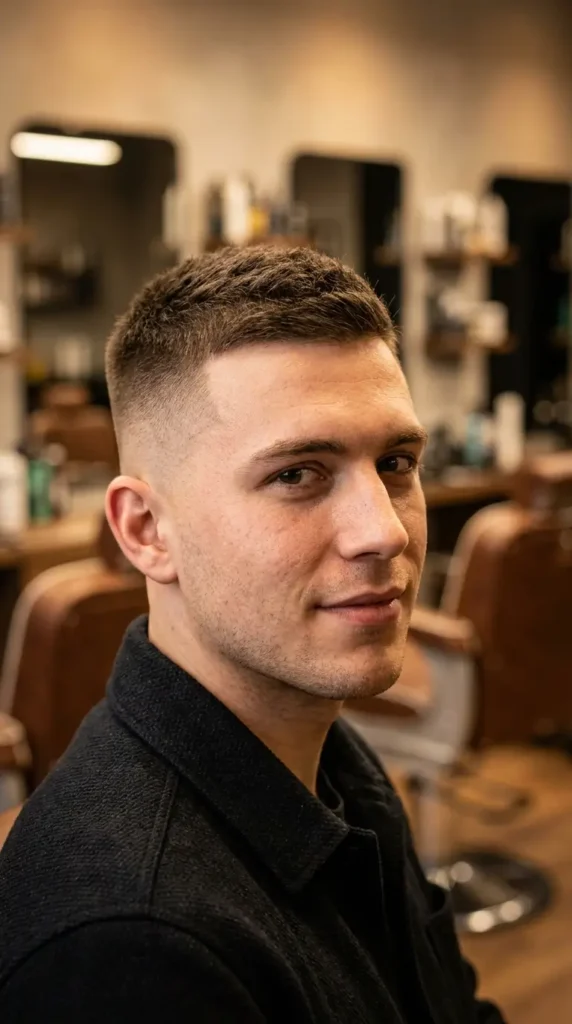
The crew cut is one of the cleanest, most universally flattering short styles for thick hair. Hair stays short on top (1-2 inches) with a gradual taper on sides and back, creating a neat, structured shape with zero puffiness.
Why it works: The taper removes bulk from sides while short top length prevents heaviness. Thick hair’s density creates natural volume on top that fine hair simply can’t achieve.
Best for: Oval and round faces, straight or wavy texture, active lifestyles, professional settings.
2. Buzz Cut With Fade
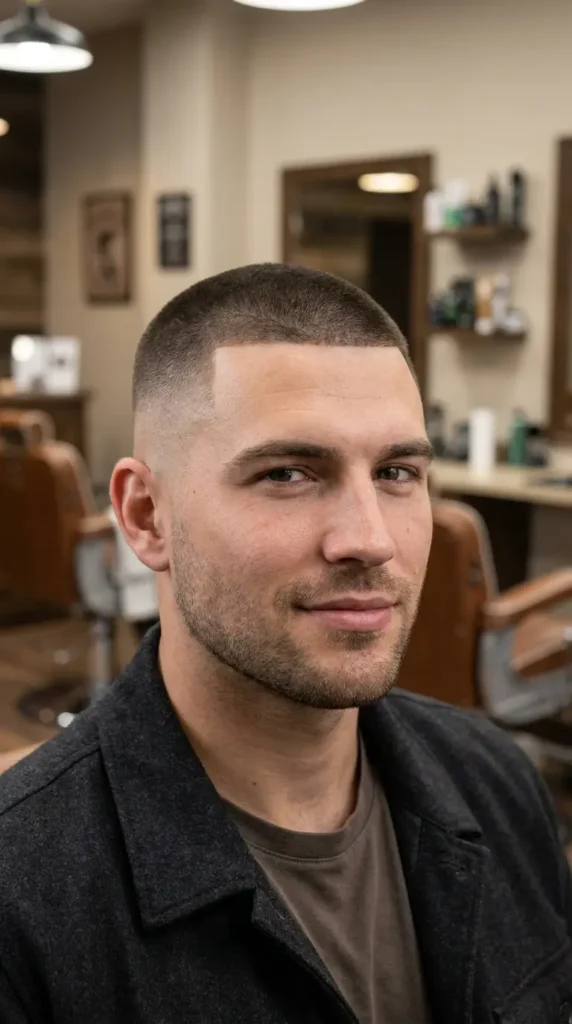
The buzz cut with fade strips thick hair to its most manageable form while the fade adds sharp, modern contrast. Top stays uniform (#2-#4 guard) while sides blend to skin or near-skin.
Why it works: Eliminates bulk entirely. Thick hair’s density ensures an even, full appearance, unlike fine hair which can look patchy at short lengths.
Best for: All face shapes, coarse and dense textures, zero daily styling, hot climates, active lifestyles. For a bolder look, try the buzz cut with beard combination.
3. Textured Crop
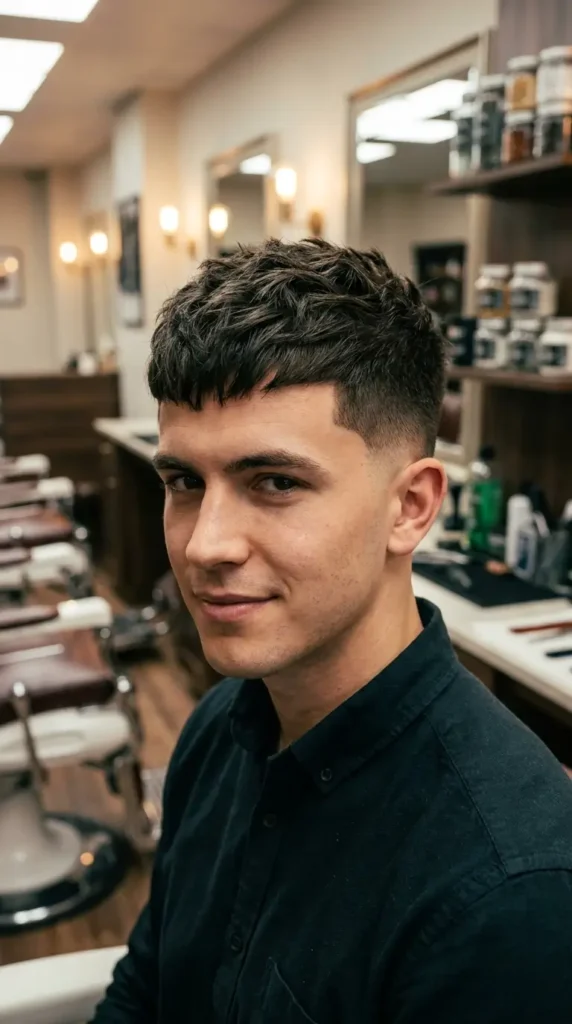
The textured crop features short, choppy layers on top with faded or tapered sides. Uneven, piece-y lengths create movement and prevent thick hair looking like a solid block.
Why it works: Choppy layering removes internal weight while short length keeps everything controlled. Thick hair’s density creates a naturally full, defined top.
Best for: Square and diamond faces, straight or wavy texture, modern look with minimal effort.
4. French Crop
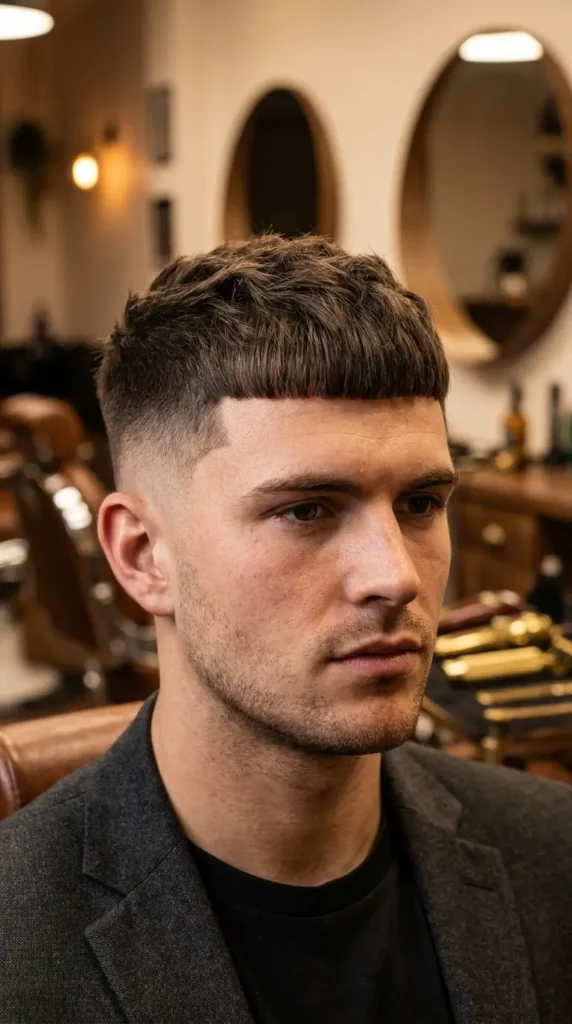
The French crop has a textured top with a straight blunt fringe sitting just above the eyebrows, with faded or tapered sides.
Why it works: Short length prevents bulk while thick hair makes the fringe look full and deliberate, something fine hair struggles to pull off.
Best for: Heart-shaped and angular faces, straight and wavy textures. See our fringe hairstyles for men collection for more inspiration.
5. Ivy League Cut
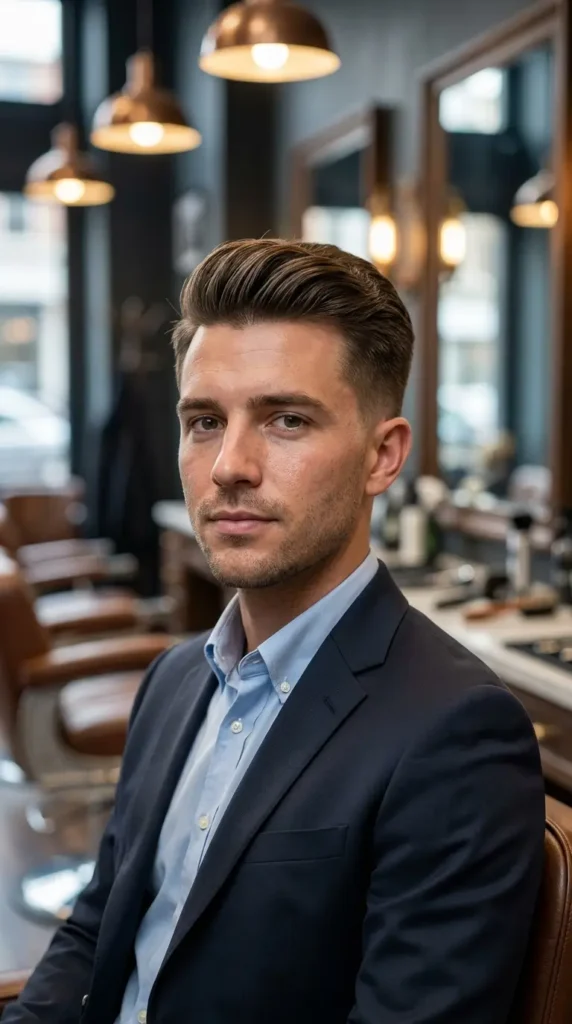
The Ivy League is essentially a longer crew cut, just long enough on top to part to one side. Polished, professional, and classic.
Why it works: Thick hair gives the Ivy League its signature fullness on top. Tapered sides manage bulk while keeping a natural, grown-up shape.
Best for: All face shapes (especially oval), straight thick hair, professional environments.
6. Caesar Cut
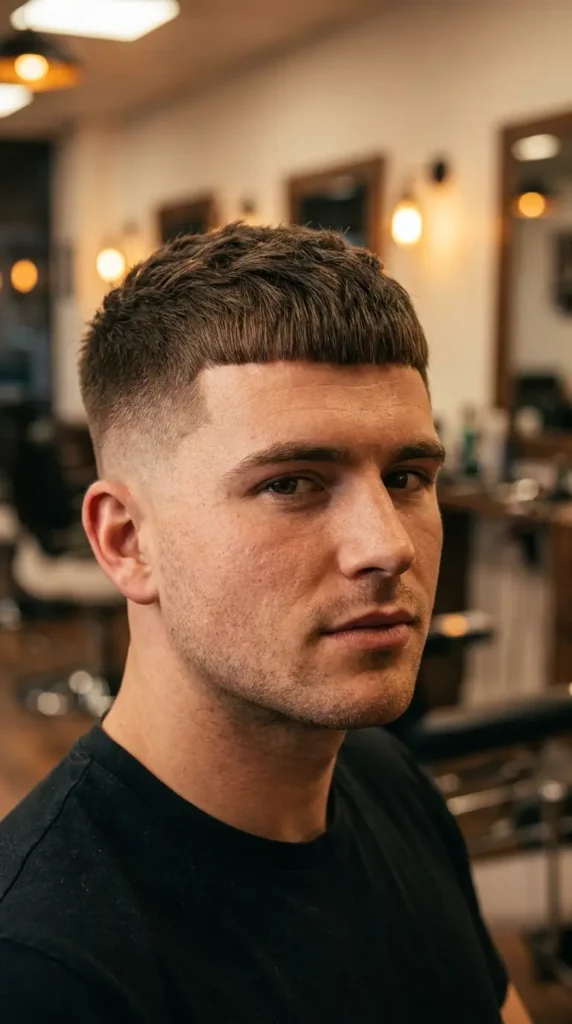
The Caesar cut keeps everything short and uniform with a straight horizontal fringe at the front, one of the oldest styles still worn today.
Why it works: Uniform short length controls bulk everywhere simultaneously. Nothing is long enough to puff, ever.
Best for: Round and oval faces, coarse thick hair, early hairline recession (see our hairstyles for receding hairline guide), extremely low-maintenance preference.
7. High and Tight
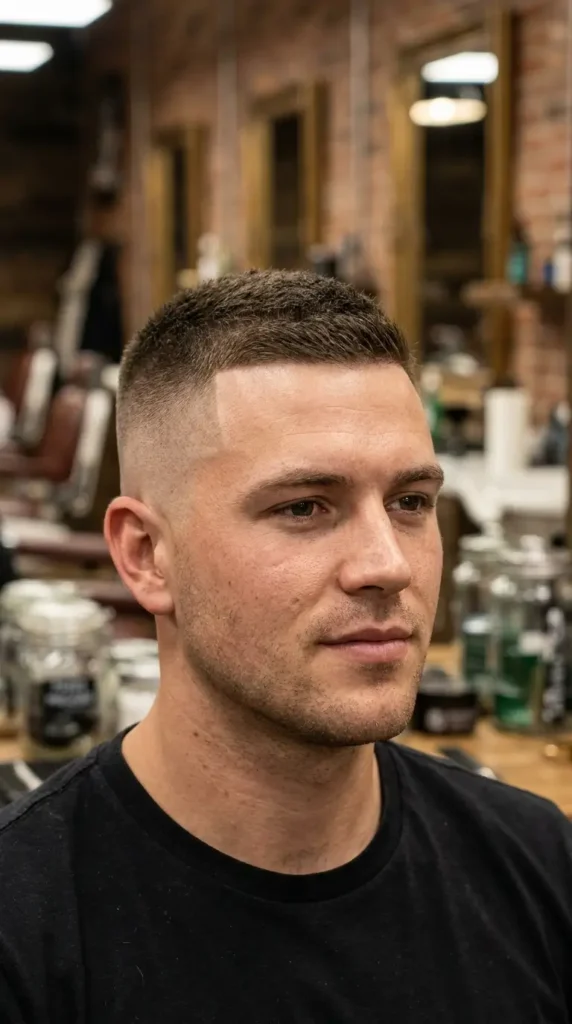
The high and tight is military-inspired, almost buzzed sides with slightly longer hair only on the very top. For more options see our military haircuts guide.
Why it works: Maximum bulk removal on sides with zero puffiness. Thick hair’s density makes the top look full and strong.
Best for: All face shapes, heavy/dense/coarse thick hair, active lifestyles, men who hate styling.
8. Short Textured Quiff
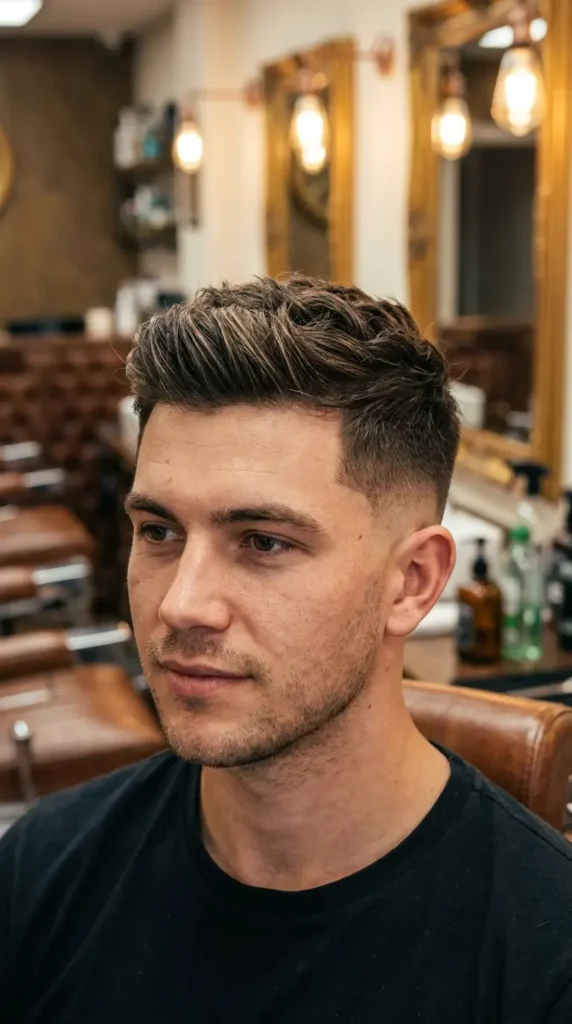
Faded or tapered sides with 3-4 inches on top styled upward and slightly back. Texture keeps it natural rather than rigid. See our textured quiff guide for full breakdown.
Why it works: Thick hair naturally holds height all day without collapsing, no heavy product needed.
Best for: Round and oval faces, straight and wavy textures, stylish but manageable daily look.
9. Short Pompadour
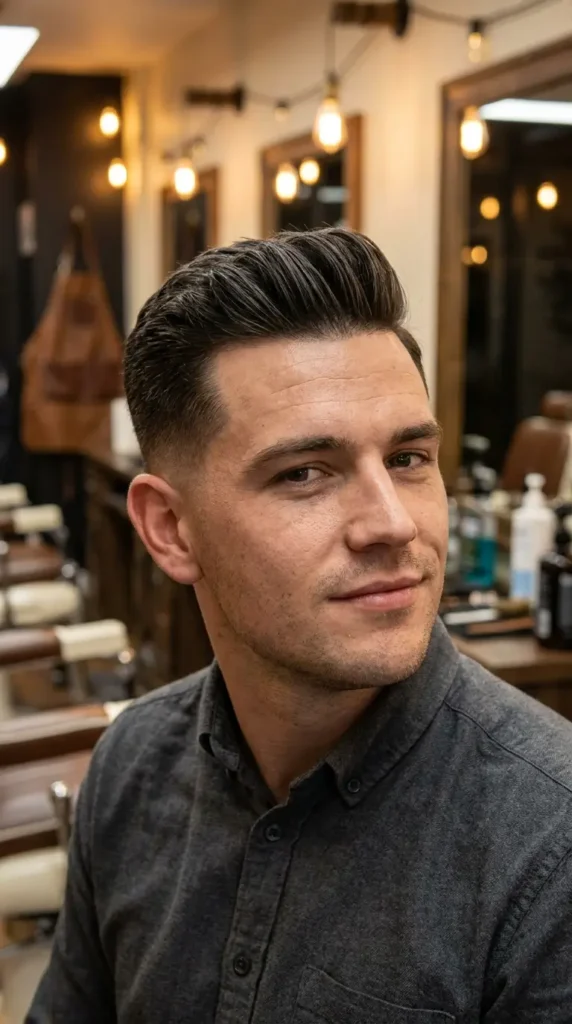
Modern version of the classic, 3-4 inches on top swept upward and back, faded sides for contrast.
Why it works: Thick hair’s natural density holds pompadour height all day without excessive product.
Best for: Oval and rectangular faces, straight thick hair, bold yet short style.
10. Short Spiky Crop
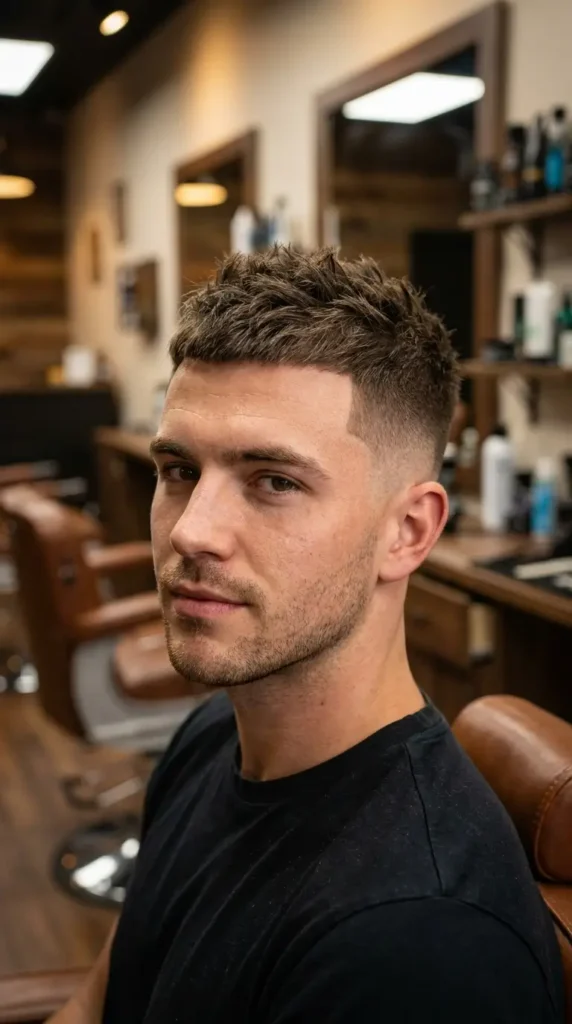
Choppy lengths styled upward for deliberate spiky texture. Short faded sides. Energetic and youthful. See our spiky haircuts guide for more options.
Why it works: Thick strands naturally stand upright and hold spiky shapes fine hair simply can’t maintain.
Best for: Square and oval faces, straight thick hair, younger men, casual settings.
11. Brush Up
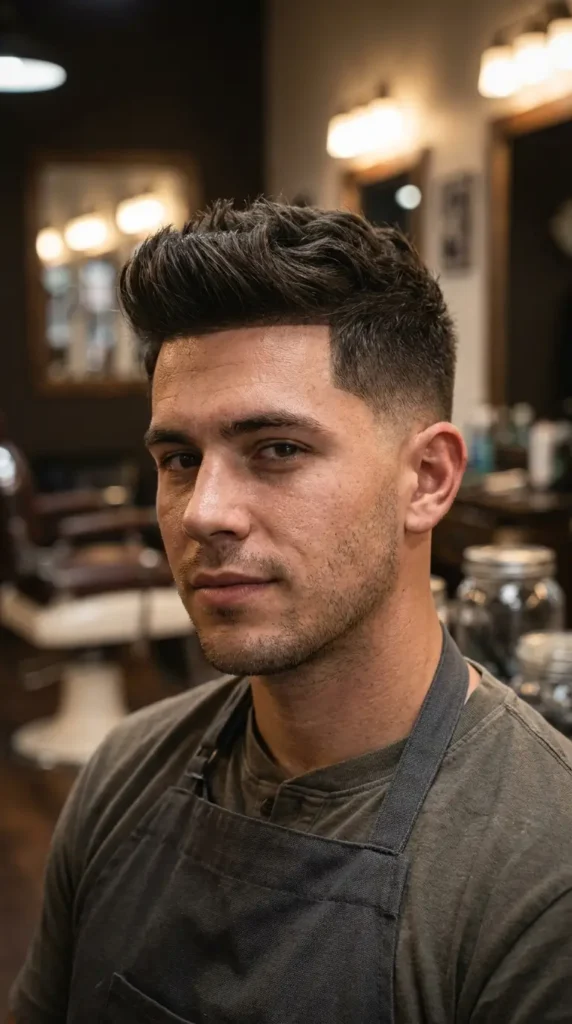
All hair on top lifted straight upward from roots creating a tall, vertical shape with clean short sides.
Why it works: Nearly impossible without thick hair, density and strand strength hold the upward shape firmly without collapsing.
Best for: Round and oval faces, straight thick hair, bold personalities, younger men.
12. Temple Fade
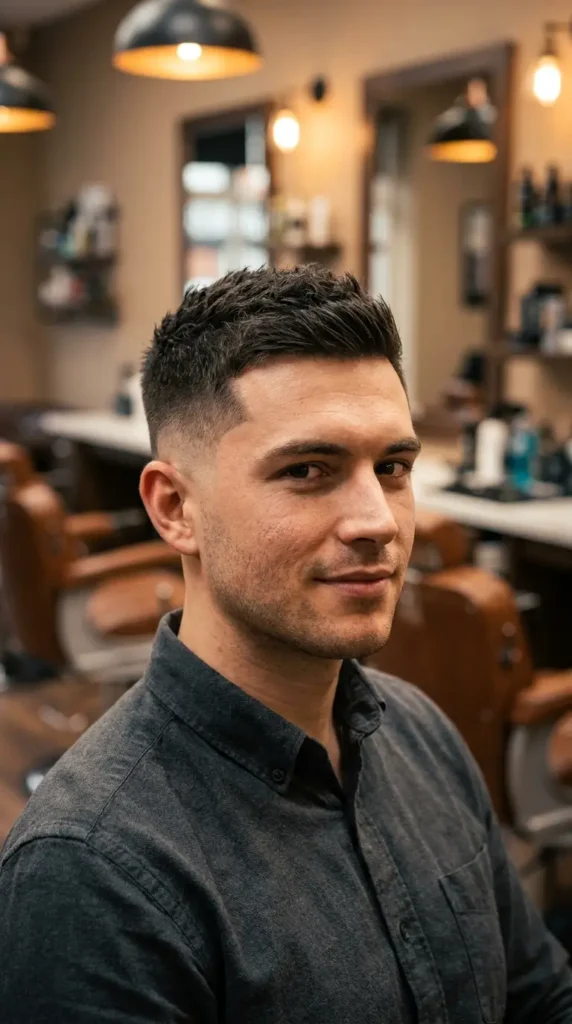
A subtle fade only around the temples and sideburns. Everything else stays at natural length, the most conservative fade option.
Why it works: Thick hair puffs most at temples, a temple fade spot-targets exactly these problem areas without changing your overall style.
Best for: All face shapes, all textures, professional environments, men wanting minimal change.
13. Classic Pompadour
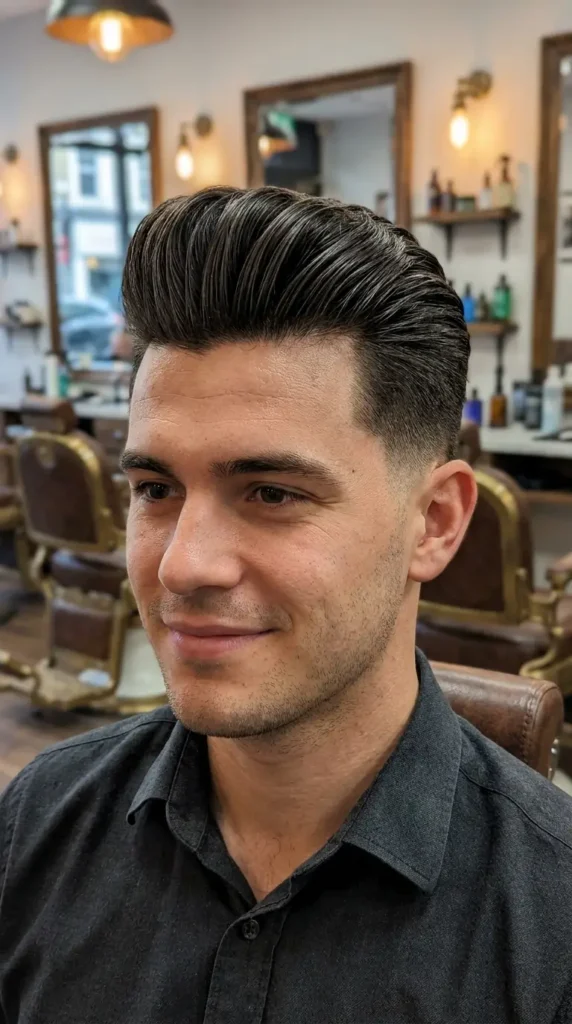
Longer hair swept dramatically upward and backward from forehead. Bold, voluminous, and iconic. Sides faded or tapered for contrast.
Why it works: Thick hair is the ideal foundation for a pompadour, density resists collapse all day. Fine hair needs heavy product for what thick hair does naturally.
Best for: Oval and rectangular faces, straight thick hair, confident and bold aesthetic.
14. Textured Quiff
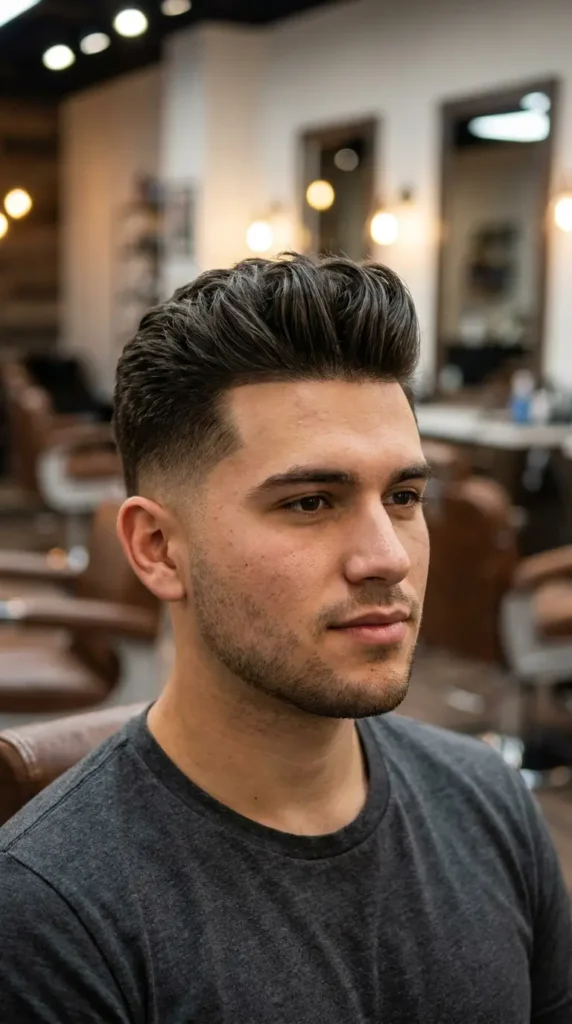
Medium-length top with choppy, tousled texture styled forward and upward. Tapered or faded sides.
Why it works: Thick hair creates natural height while texturizing prevents the heavy, blocky look. Looks effortlessly cool even slightly grown out.
Best for: All face shapes, wavy and straight textures, modern everyday style.
15. Modern Side Part
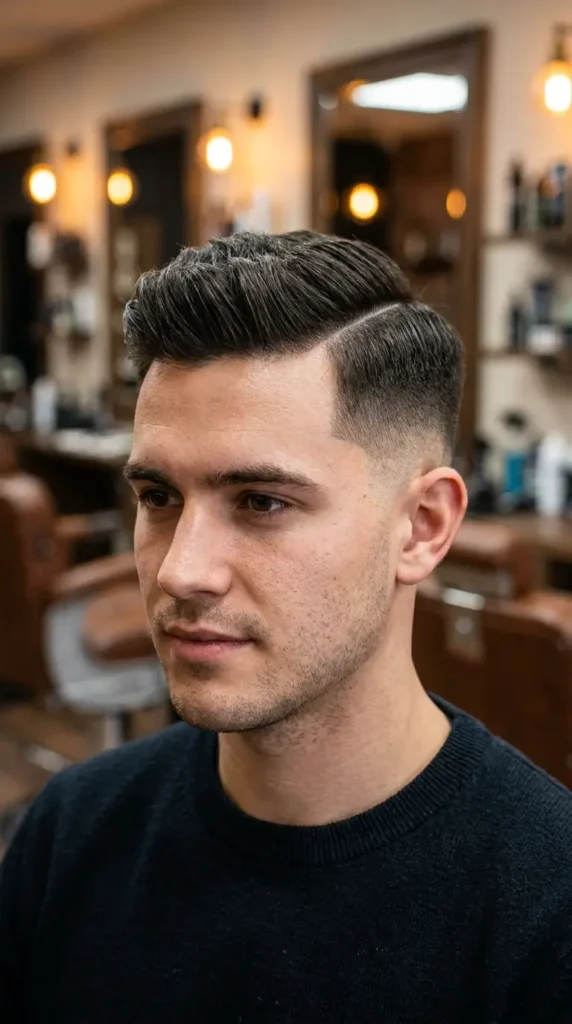
Clean defined part separating longer top from tapered sides. Hair swept neatly to one side. See our side part guide for every variation.
Why it works: Thick hair holds the part in place all day without spreading or flattening, looks intentional and well-groomed.
Best for: All face shapes, straight and wavy textures, professional and formal settings.
16. Comb Over
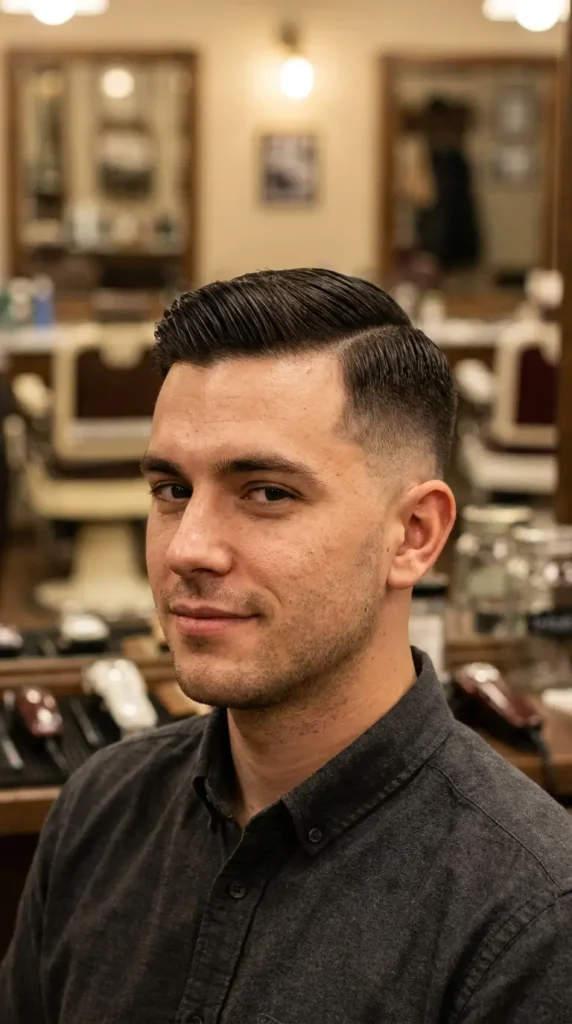
Medium-length hair swept smoothly to one side, paired with a fade or taper for a sharp contemporary look. See our comb over fade guide for more.
Why it works: Thick hair creates a smooth, substantial sweep that holds shape all day with minimal product.
Best for: Oval and square faces, straight thick hair, polished professional appearance.
17. Slick Back
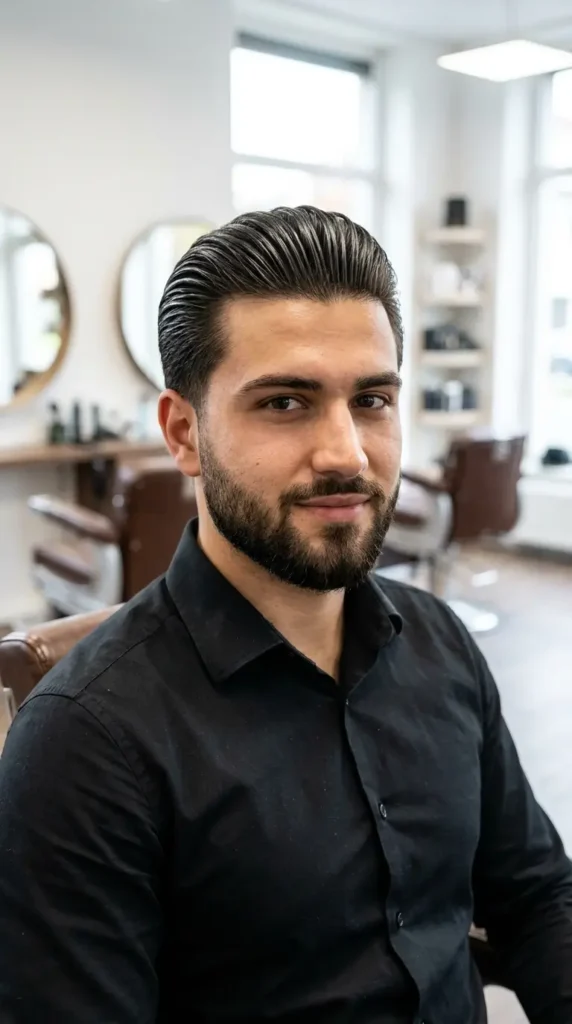
All top hair combed smoothly backward with tapered or faded sides. Clean, minimal, confident. See our slicked back haircuts guide for all variations.
Why it works: Thick hair’s natural weight holds the backward direction all day with minimal product.
Best for: Oval, square, and diamond faces, straight thick hair, formal events, date nights.
18. Curtain Cut
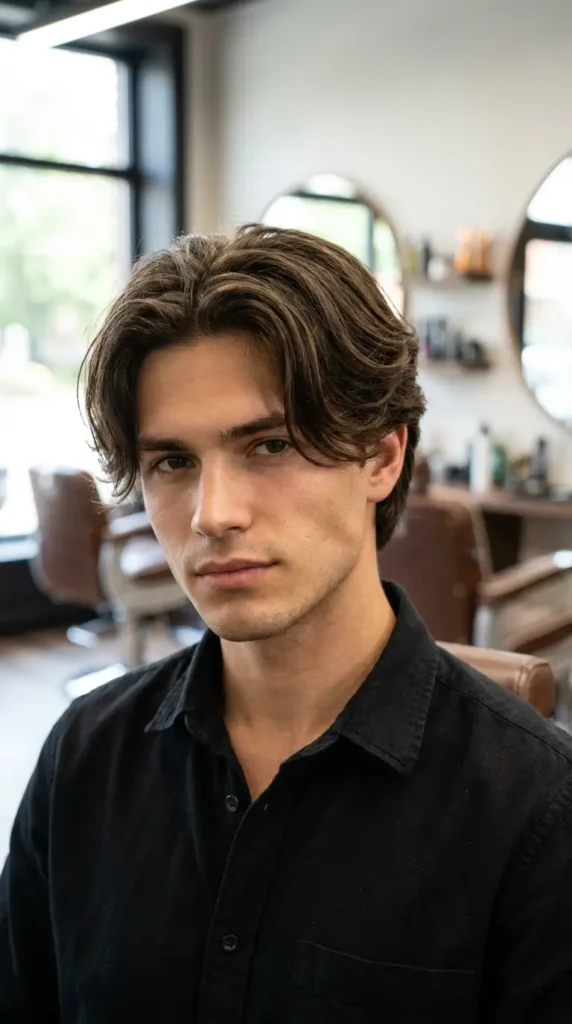
Hair parted down the middle with face-framing layers falling to both sides. See our curtain bangs and middle part haircuts guides for more options.
Why it works: Middle part divides bulk evenly while layers prevent triangular puffiness on each side.
Best for: Oval, heart, and diamond faces, wavy and straight textures, casual and creative settings.
19. Bro Flow
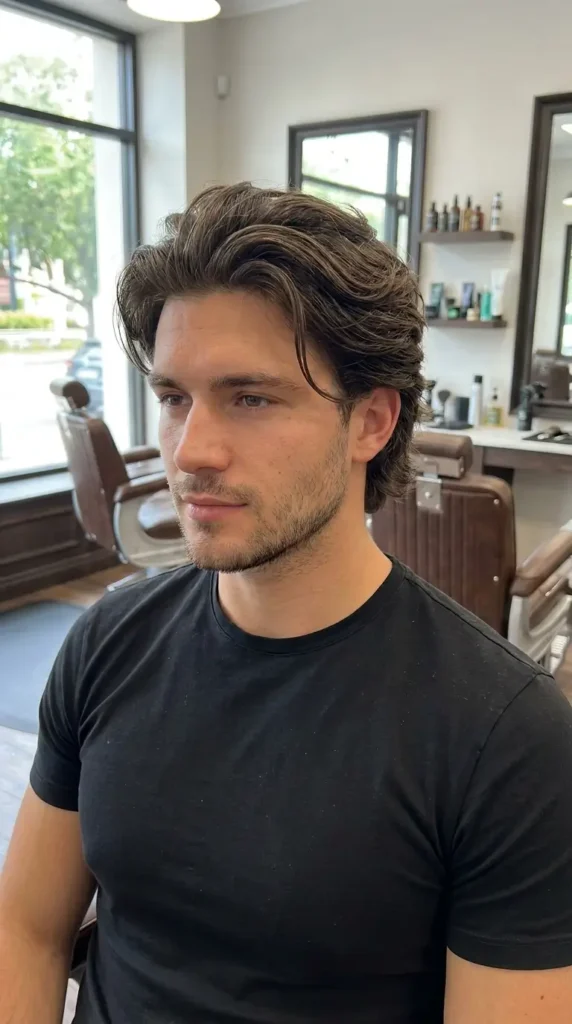
Relaxed medium-to-long style that sweeps back naturally or tucks behind ears. No precise styling needed. See our bro flow guide for more.
Why it works: Thick hair’s natural weight flows backward without sticking out, one of the few styles where heaviness is a pure advantage.
Best for: Oval and heart faces, wavy and straight textures, casual lifestyles, men growing hair out.
20. Medium Layered Cut
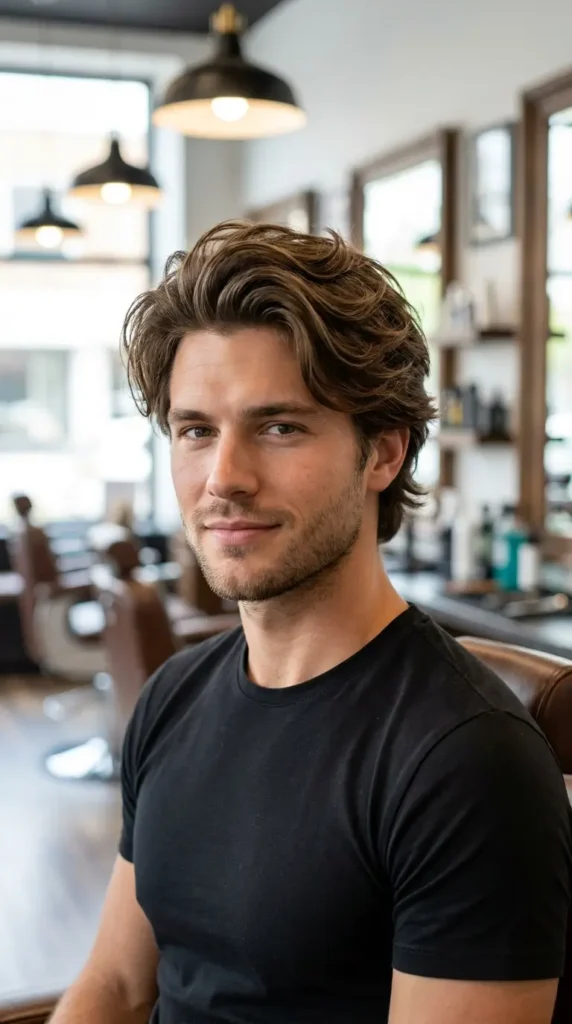
Multiple layers throughout medium-length hair remove weight while adding movement and dimension. See our layered haircuts for men guide for all variations.
Why it works: Layering reduces perceived bulk by 30-40% without changing visible length, the most effective technique for thick hair at medium lengths.
Best for: All face shapes, straight and wavy textures, versatile between casual and professional.
21. Messy Waves
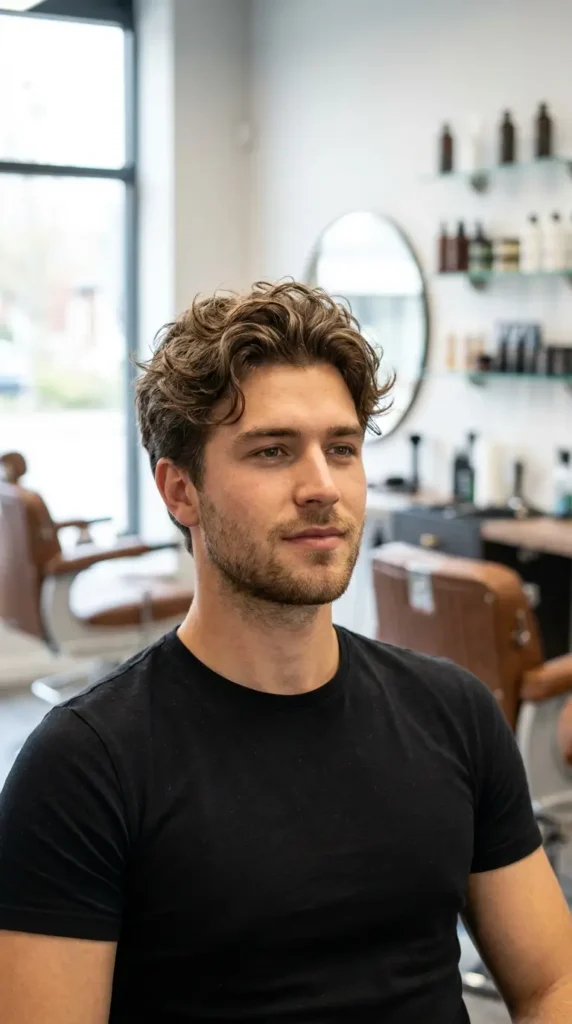
Medium-length wavy hair left deliberately tousled and undone. See our short messy hairstyles collection for more inspiration.
Why it works: Thick wavy hair looks intentionally full and tousled, not limp or stringy like fine wavy hair.
Best for: Oval and square faces, naturally wavy thick hair, casual settings, minimal fuss.
22. Medium Shag
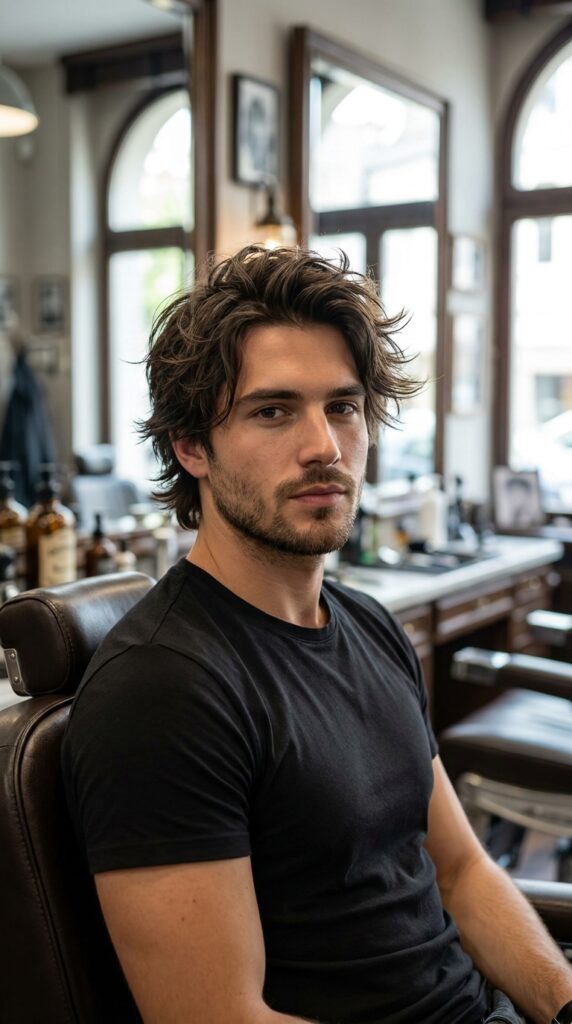
Heavy layering throughout medium-length hair creates choppy, uneven lengths with strong volume at the crown. Retro-inspired but very modern.
Why it works: Aggressive layering transforms heavy density into light, bouncy texture with natural lift, no blow-drying needed.
Best for: Oval and heart faces, wavy and curly textures, creative and trend-forward men.
23. Two Block
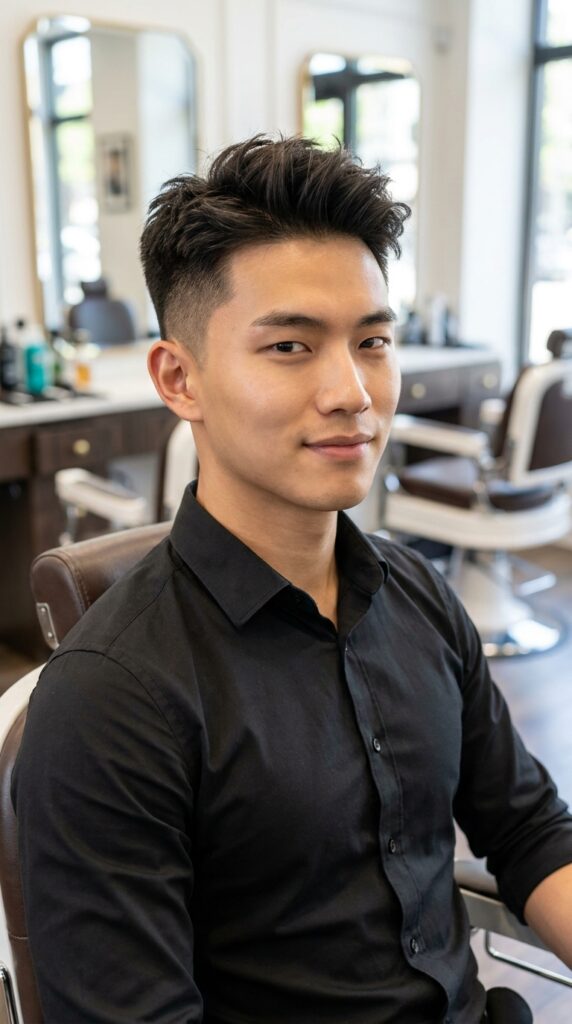
Popular Korean style with sharp disconnect between short sides and fuller longer top. See our Korean haircuts for men guide for more.
Why it works: Thick hair creates dramatically full top that contrasts beautifully against sharp short sides.
Best for: Oval and heart faces, straight thick hair, younger men, K-pop inspired aesthetics.
24. Brushed Back
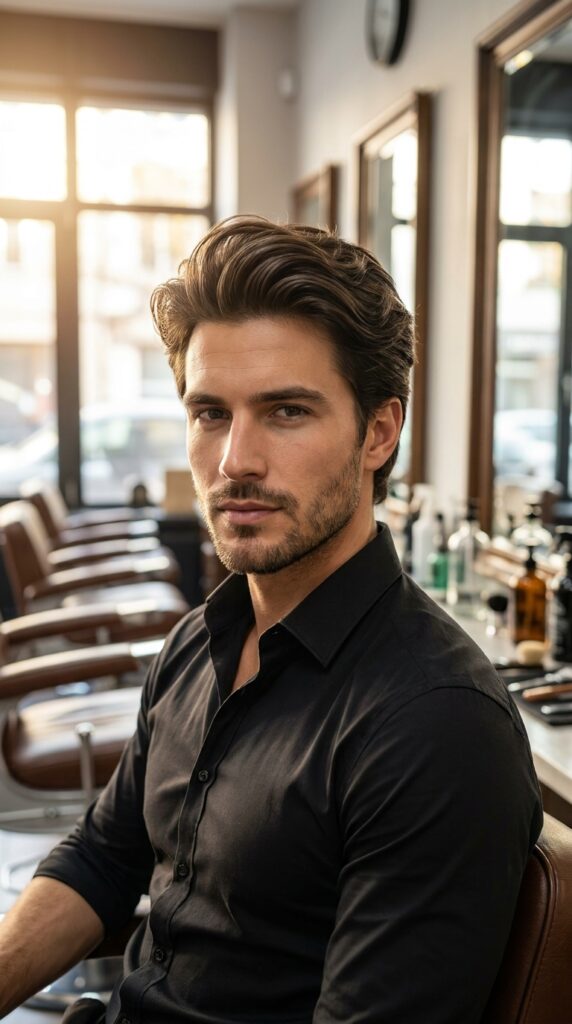
Medium-length hair swept backward smoothly, like a slick back but with more texture and less shine. More natural, less greased.
Why it works: Thick hair’s natural weight maintains backward direction with only light product needed.
Best for: All face shapes, straight and wavy textures, professional environments, date nights.
25. Blowout Taper
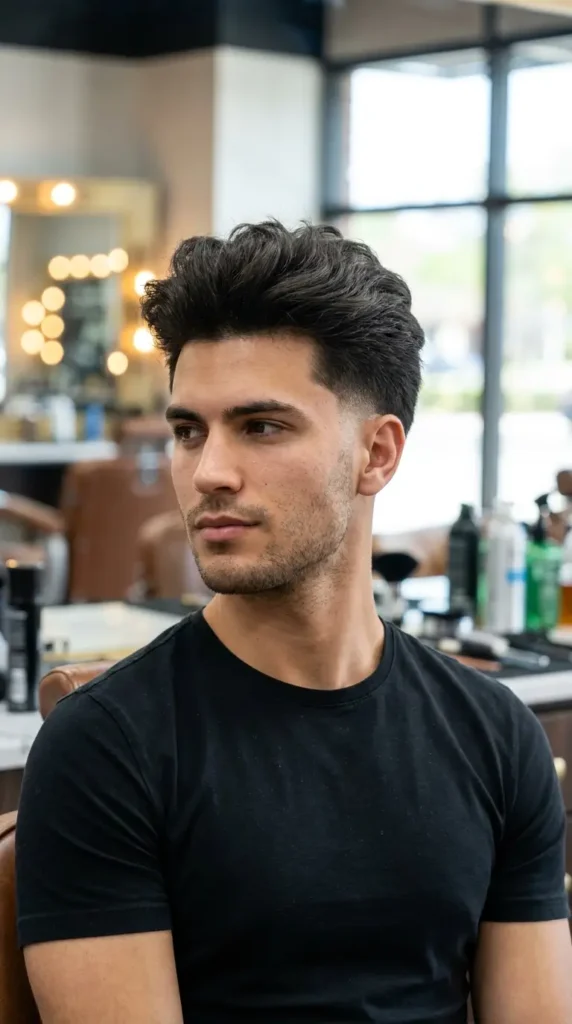
Rounded volume created by blow-drying upward and backward with a round brush, paired with clean tapered sides. See our blowout taper fade guide for the fade variation.
Why it works: Thick hair holds the rounded, lifted blowout shape all day without deflating by midday.
Best for: Oval and round faces, straight and wavy textures, maximum volume without hard structure.
26. Shoulder-Length Layers
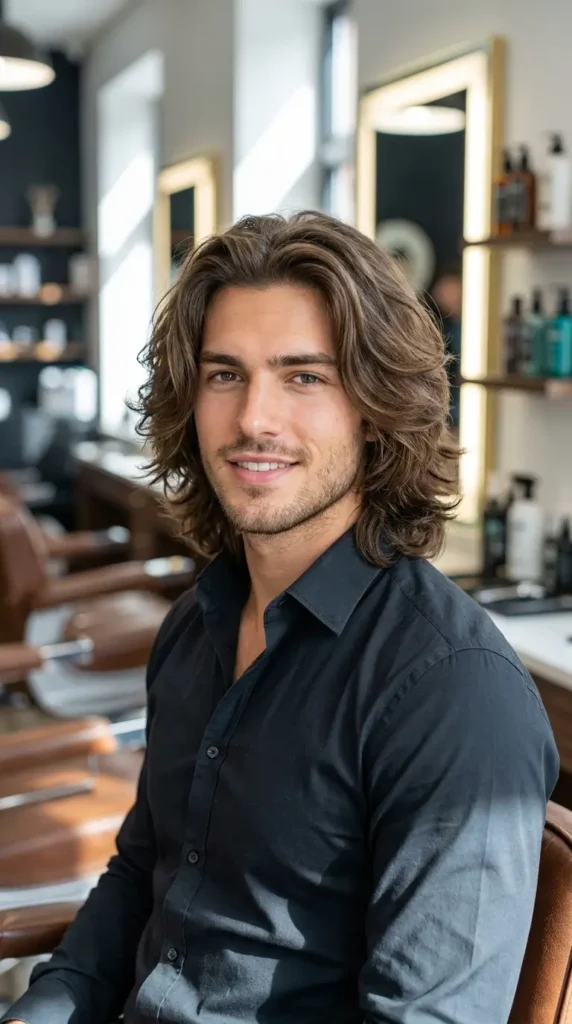
Hair grown to shoulder length with graduated layers throughout to prevent triangular puffiness and add movement.
Why it works: Without layers, shoulder-length thick hair forms a heavy pyramid shape. Layers eliminate this by reducing weight at ends while keeping mid-length fullness.
Best for: Oval and diamond faces, wavy and straight textures, creative professionals, men committed to regular conditioning.
27. Man Bun
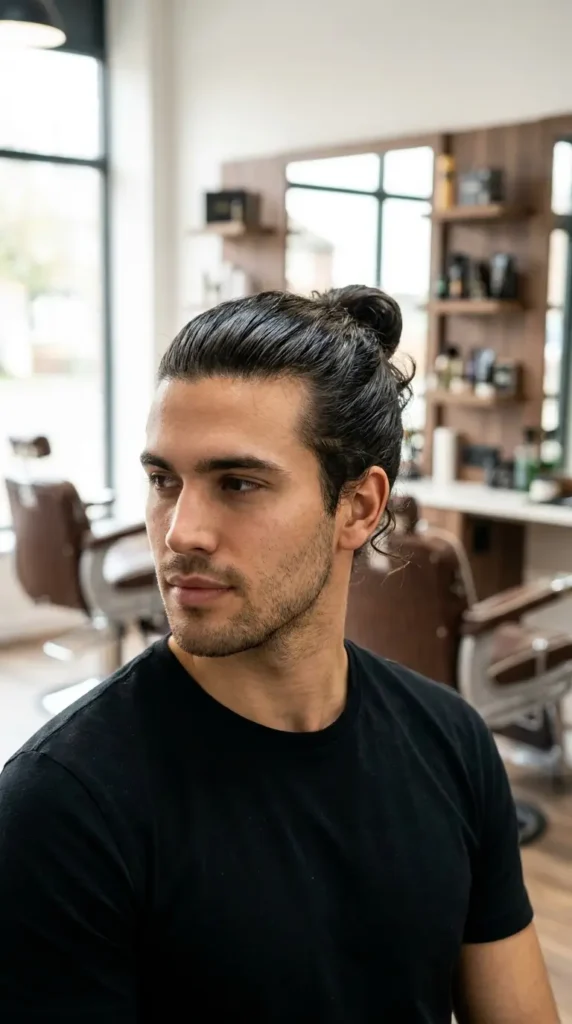
Longer hair pulled back and secured in a bun. Practical, versatile, and shows off thick hair’s volume when worn down. See our man bun guide for styling tips.
Why it works: Thick hair creates a substantial, full bun, not the thin, wispy version men with fine hair often get.
Best for: All face shapes, all thick hair textures, men wanting both styled and practical from the same length.
28. Long Wavy Layers
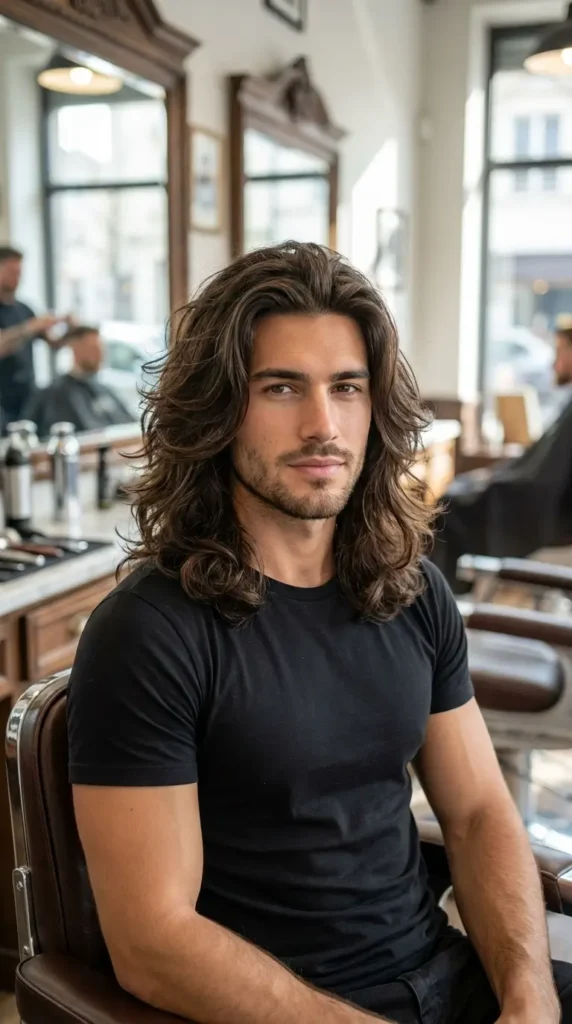
Long hair with natural waves enhanced by strategic layering for cascading movement rather than a heavy single mass.
Why it works: Wavy thick hair at length is the most versatile combination, waves create natural movement while layers enhance definition and reduce weight.
Best for: Oval and heart faces, naturally wavy thick hair, relaxed and creative lifestyles.
29. Viking Hairstyle
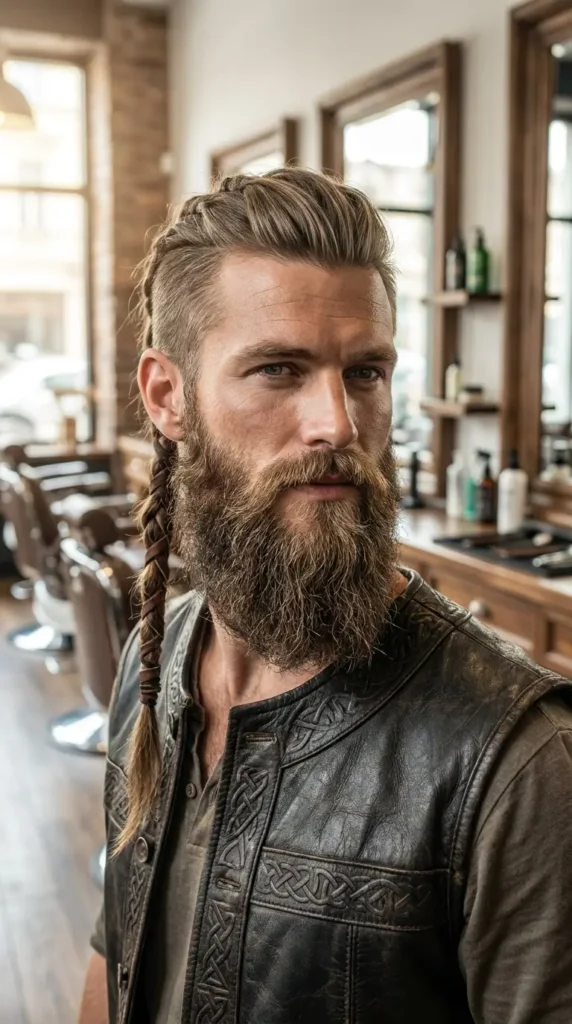
Long, bold hair paired with undercut sides, styled with braids, twists, or pulled-back sections. Rugged and dramatic. See our undercut guide for the base style.
Why it works: Viking styles demand density and strength, exactly what thick hair delivers. Whether braided or worn loose, thick hair creates the substantial warrior-like appearance this style requires.
Best for: All face shapes (especially angular and square), straight and wavy textures, bold personalities, men fully committed to long hair maintenance.
30. Samurai Bun / Top Knot
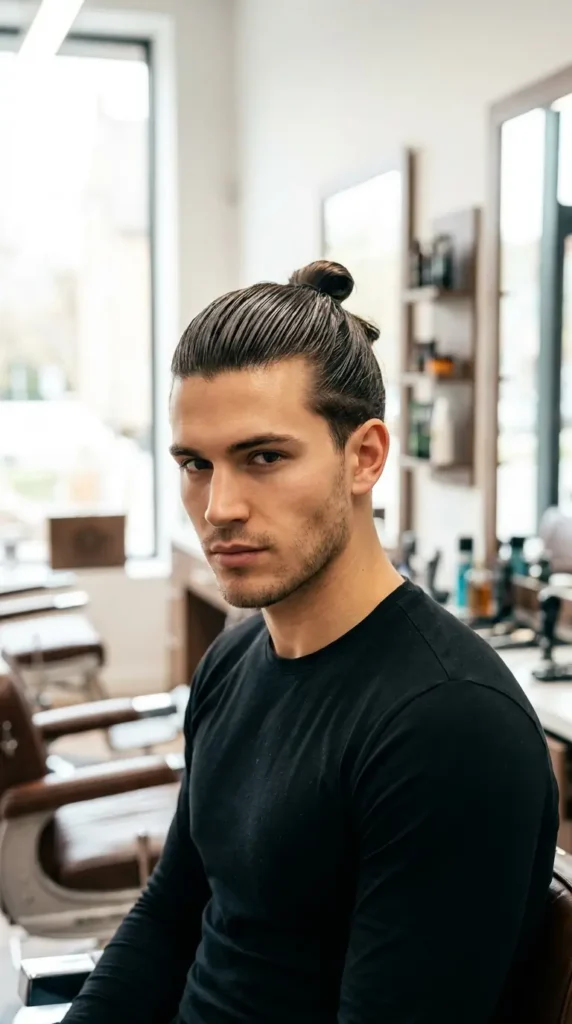
Hair gathered into a tight bun at the crown, often with faded sides for dramatic contrast.
Why it works: Thick hair creates a full, round knot with real presence, thin hair looks wispy here.
Best for: Oval, square, and diamond faces, bold personalities.
31. Surfer Hairstyle
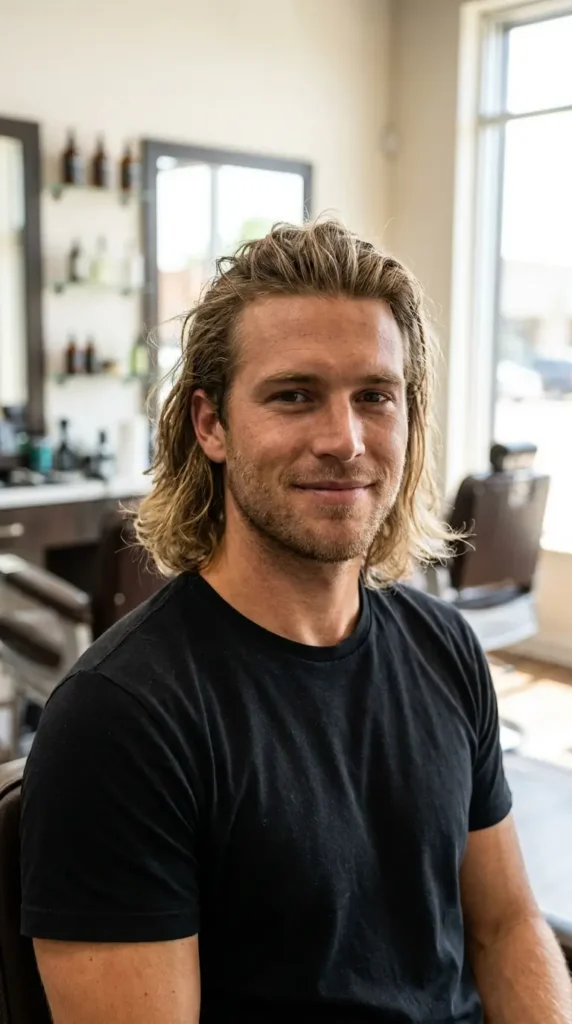
Relaxed medium-to-long tousled waves, intentionally undone and beachy. See our surfer hairstyle guide for more.
Why it works: Thick hair holds tousled wave shape all day without deflating.
Best for: Oval and heart faces, naturally wavy thick hair, casual lifestyles.
32. Ponytail
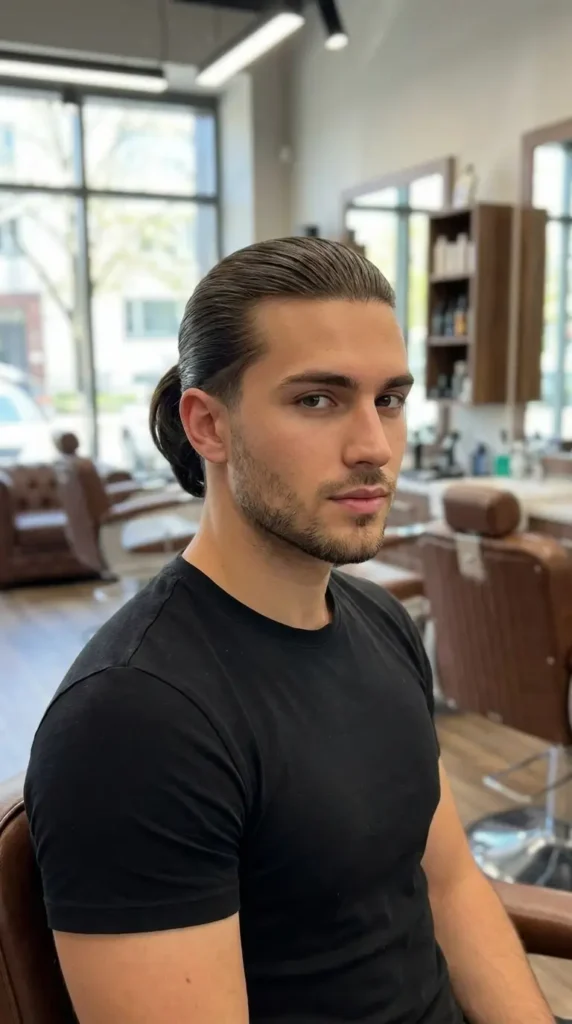
Long thick hair pulled back and secured at mid-back. Simple, practical, clean.
Why it works: A thick ponytail is full and substantial, not the thin, stringy version fine hair produces.
Best for: All face shapes, all textures, active lifestyles, gym-goers.
33. Rockstar / Rugged Long Hair
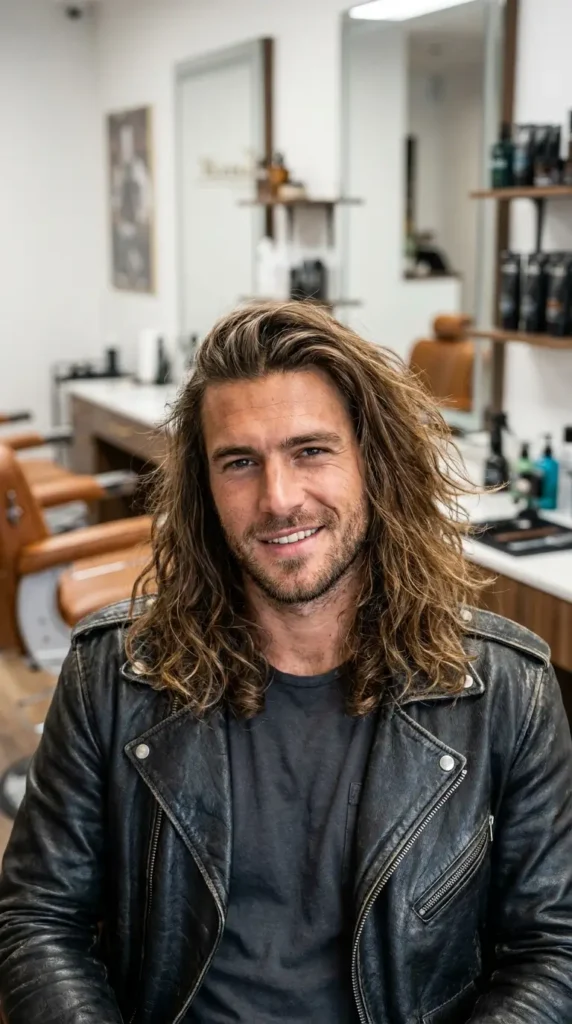
Long, choppy, intentionally messy hair worn loose with heavy texture and volume.
Why it works: Thick hair naturally creates the wild, full-bodied look this style demands. Choppier layers mean more energy and movement.
Best for: Oval and rectangular faces, wavy and straight textures, bold creative personalities.
34. Low Fade
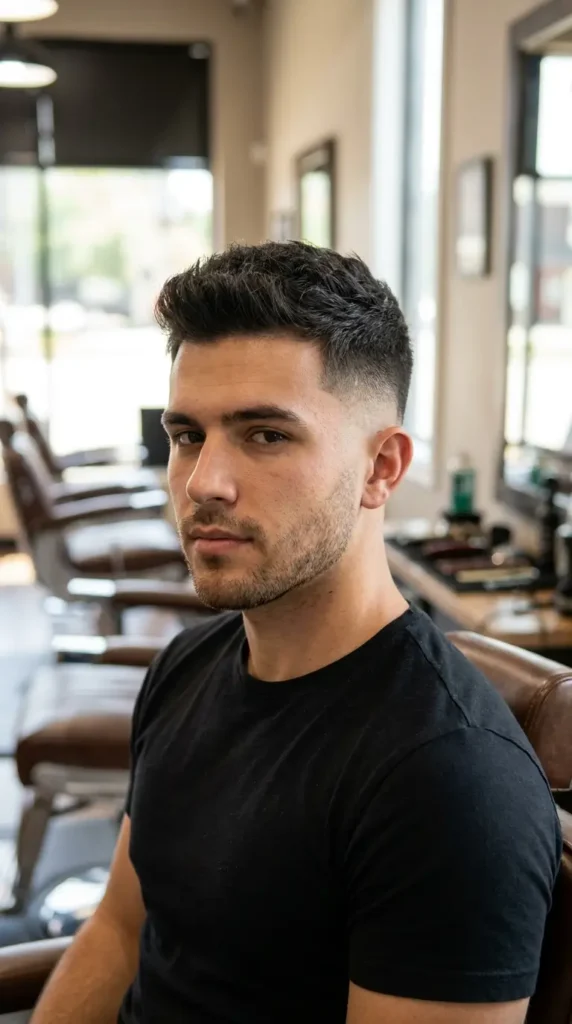
Fade begins just above the ear, subtle but significantly cleaner than untouched sides. See our low fade vs high fade guide.
Why it works: Removes bulk in the puffiest zone while keeping enough hair to look natural and professional.
Best for: All face shapes, all textures, professional environments, conservative settings.
35. Mid Fade
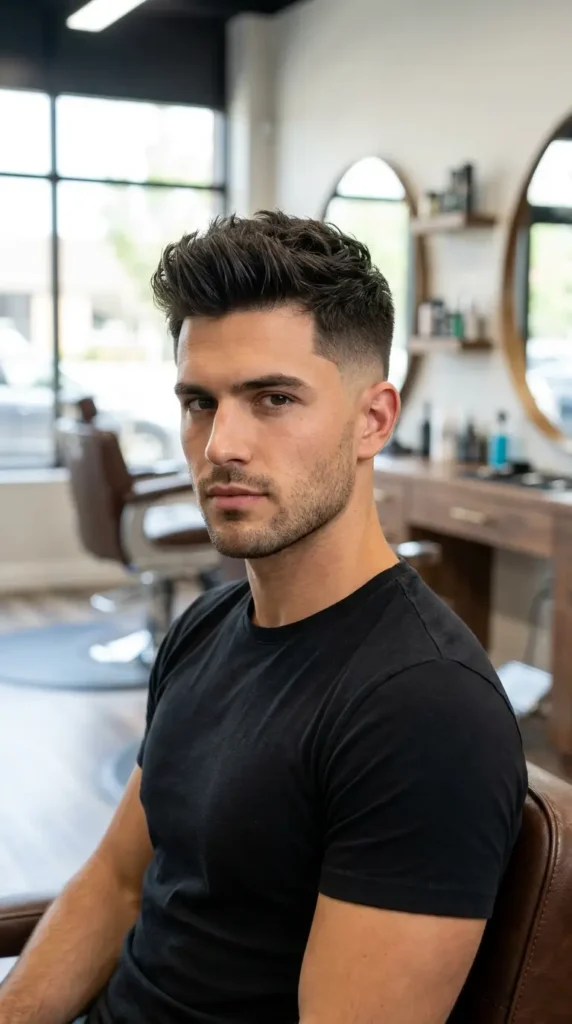
Fade starts halfway up the head, the most popular fade height. See our mid fade guide for all variations.
Why it works: Best balance between bulk removal and visual impact. Clean contrast without looking extreme.
Best for: All face shapes, all textures, versatile for professional and casual settings.
36. High Fade
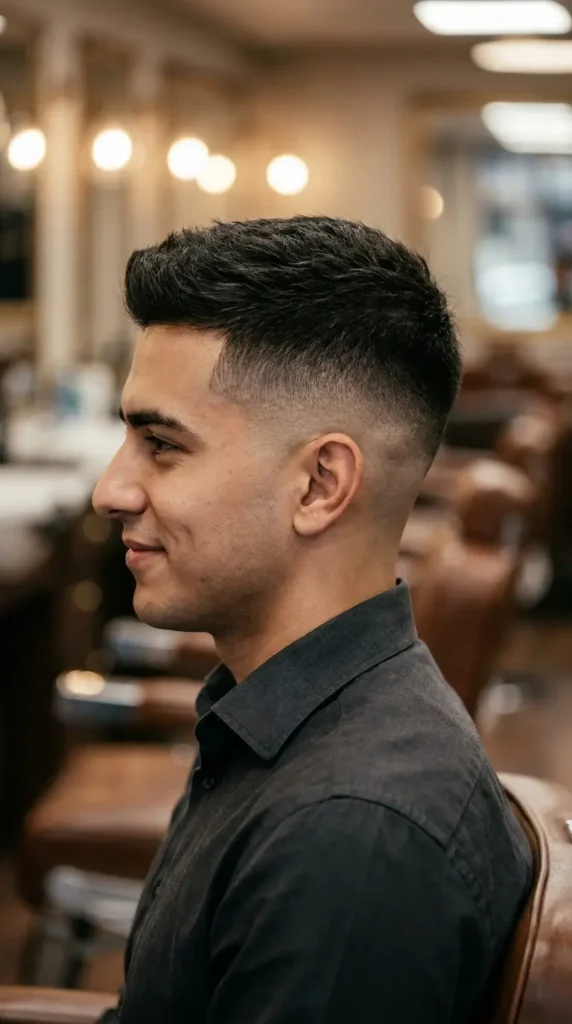
Fade begins at or above temples, dramatic contrast, maximum volume on top. See our high taper fade guide.
Why it works: Maximum bulk removal on sides. Strongest possible contrast between dense top and clean sides.
Best for: Round and oval faces, bold personalities, statement cuts.
37. Skin Fade
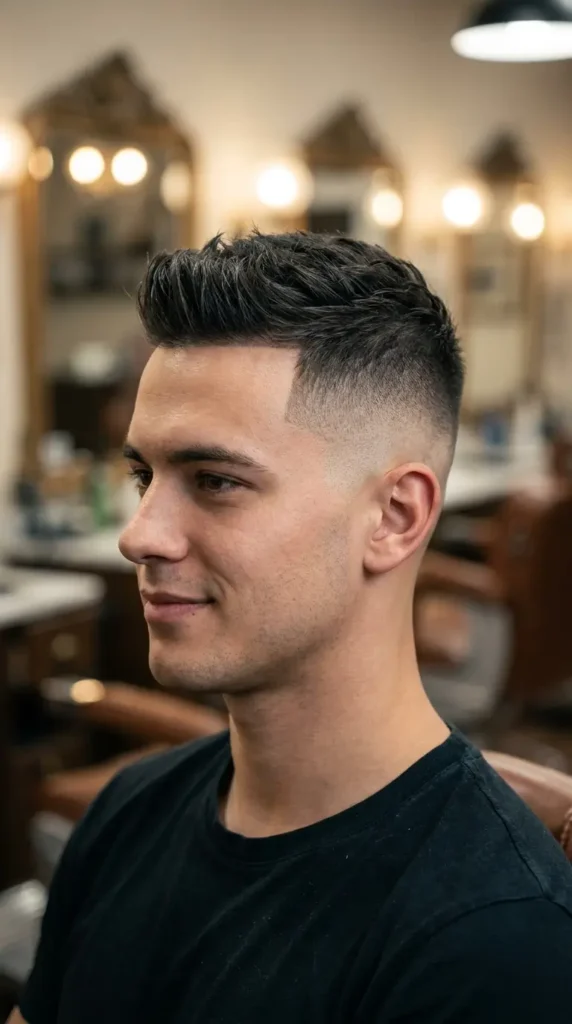
Seamless blend from longer top down to completely bare skin on sides. The sharpest, most dramatic fade option. See our skin fade guide.
Why it works: Complete bulk elimination. Zero puffiness, impossible when there’s no hair to puff.
Best for: All face shapes, all textures, sharpest possible contrast, fashion-forward settings.
38. Burst Fade
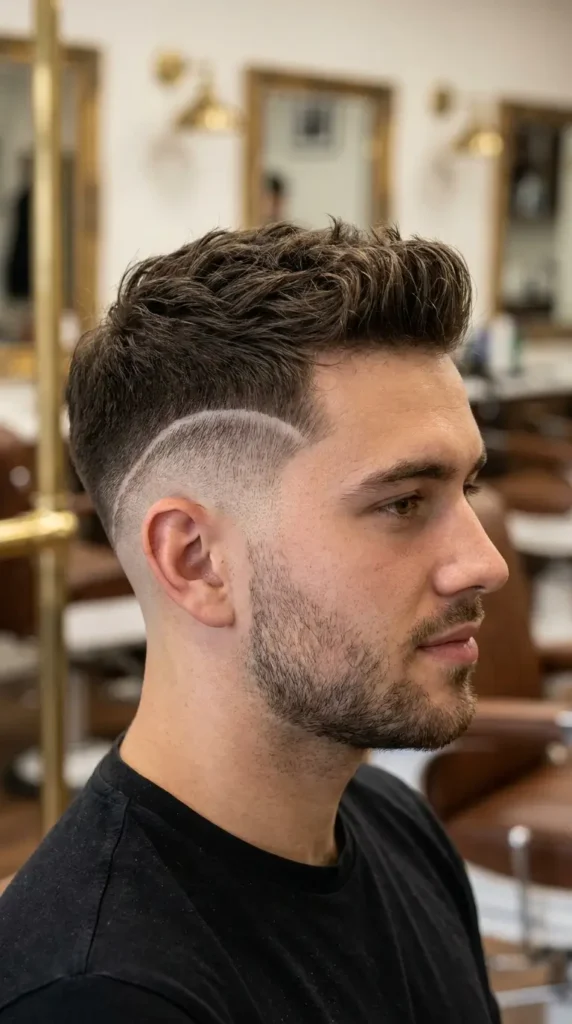
Fade curves around the ear in a rounded arc rather than straight across. Works especially well with mohawks, mullets, and textured tops. See our burst fade guide.
Why it works: Curved shape removes bulk specifically around the ear area where thick hair puffs most.
Best for: Oval and diamond faces, trend-forward styles, men wanting something different.
39. Drop Fade
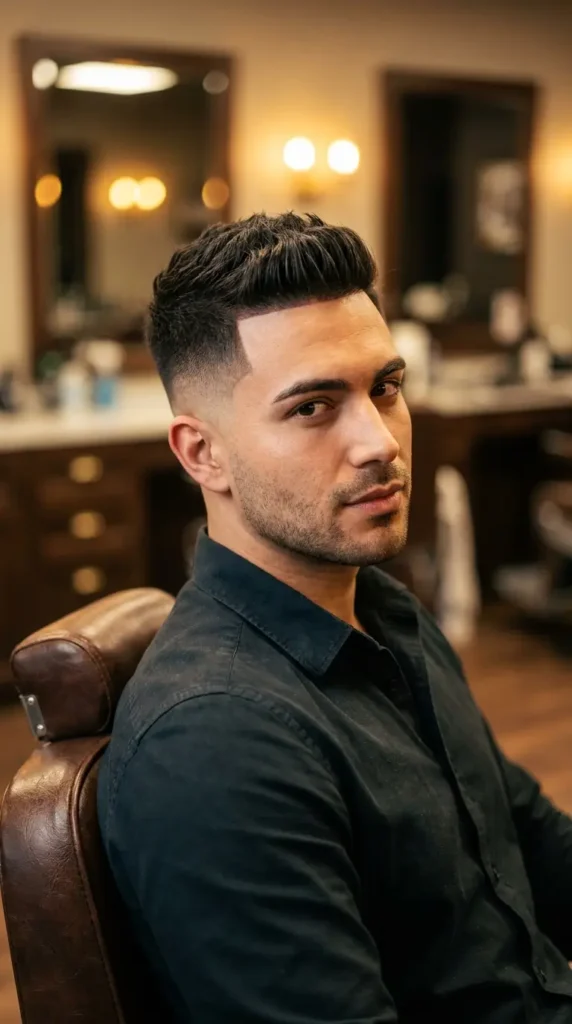
Fade “drops” lower behind the ear following the hairline’s natural curve. See our drop fade guide.
Why it works: Natural-looking transition that manages bulk while complementing the skull’s shape. Prevents “flat back” look.
Best for: All face shapes, all textures, modern fade with natural flow.
40. Shadow Fade
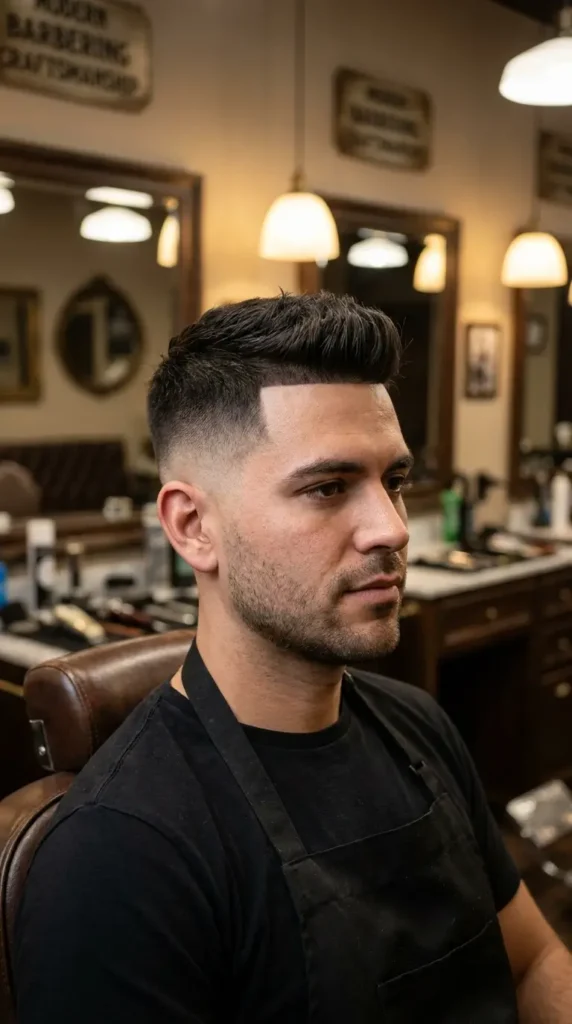
Soft, gradual fade that never reaches full skin, shortest point still has a “shadow” of hair. Most conservative fade option.
Why it works: Removes bulk gradually without dramatic skin contrast. Grows out more gracefully than skin fades.
Best for: All face shapes, corporate environments, conservative professional settings.
41. Taper Fade
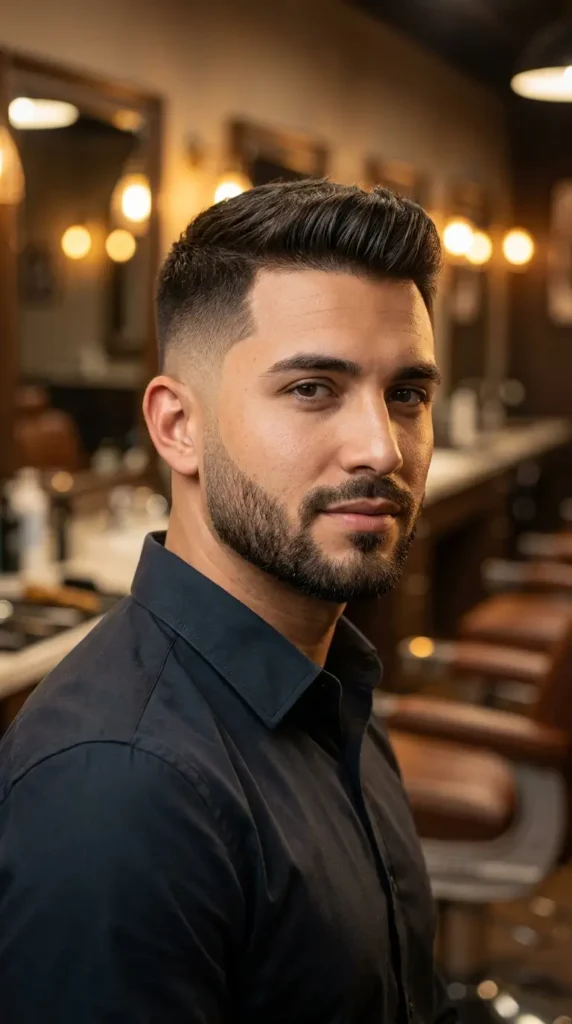
Hybrid between taper and fade, gradual length reduction with a faded section near neckline and ears. See our taper vs fade guide.
Why it works: Combines naturalness of a taper with crispness of a fade. Versatile for both professional and casual settings.
Best for: All face shapes, all textures, best option if undecided between taper and fade.
42. Temple Fade
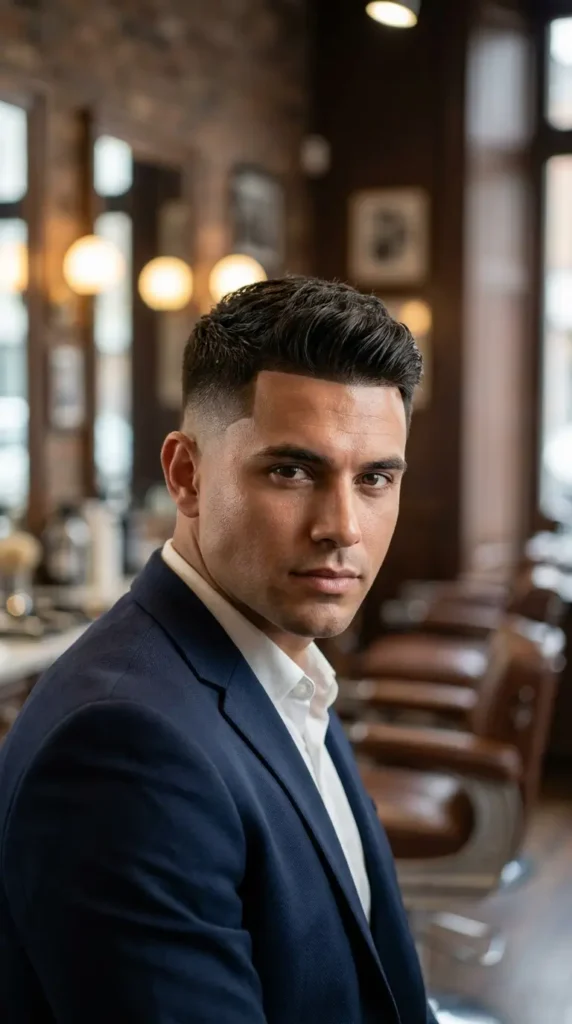
Minimal fade only around temples and sideburns, most subtle option available.
Why it works: Targets thick hair’s most common puffiness zone without committing to a full side fade.
Best for: All face shapes, extremely conservative settings, men wanting just a cleanup.
43. Classic Taper
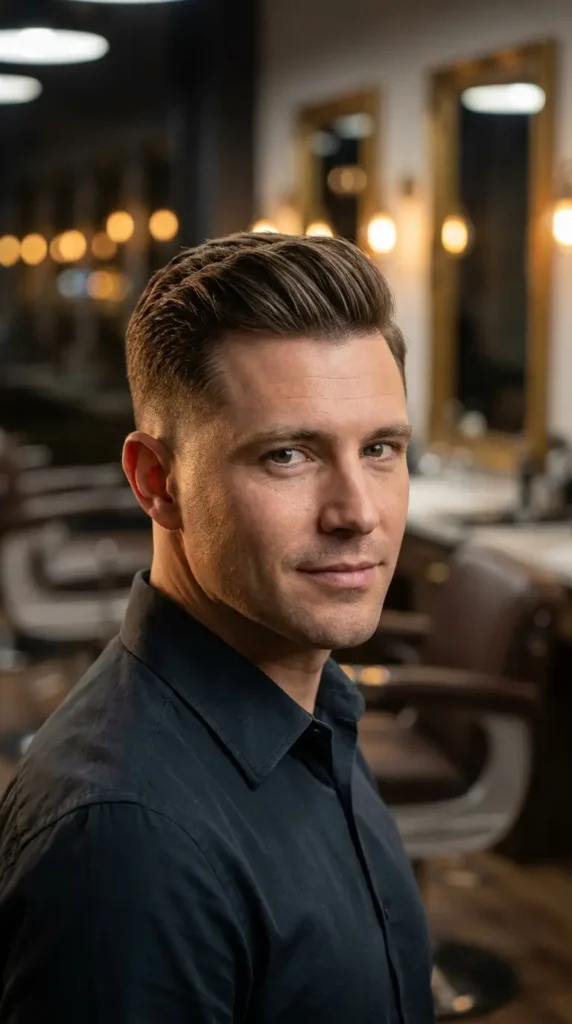
Traditional scissor taper, hair gradually shortens from top to bottom, never reaching skin.
Why it works: Scissor precision gives barber exact control over density removal. Grows out gracefully.
Best for: All face shapes, professional settings, men over 30, conservative workplaces.
44. Low Taper
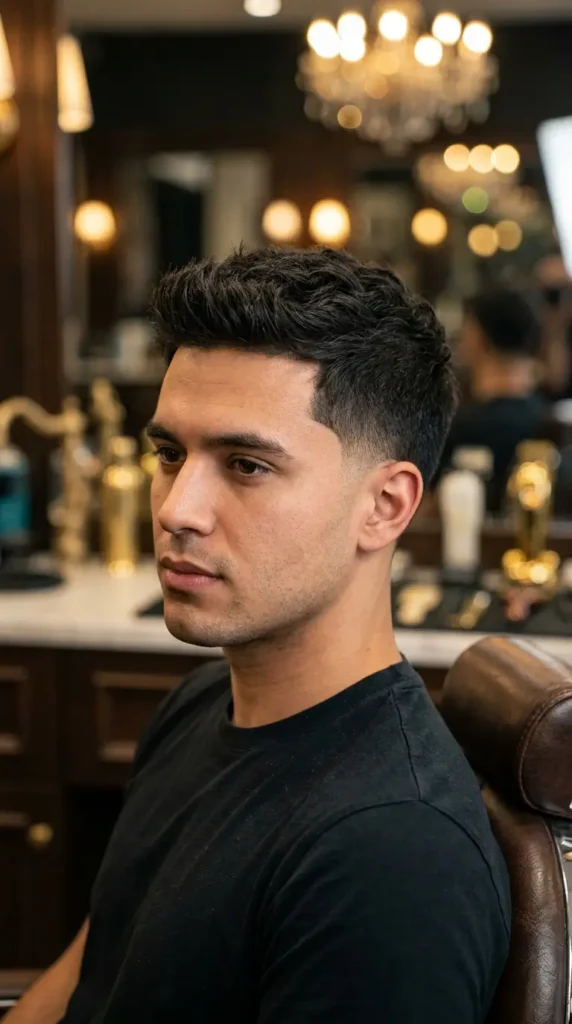
Taper begins low just above the ears, minimal visual change but significantly reduces puffiness. See our low taper fade guide.
Why it works: Addresses exact zone where thick hair creates most bulk while barely noticeable at conversational distance.
Best for: All face shapes, conservative environments, job interviews.
45. High Taper
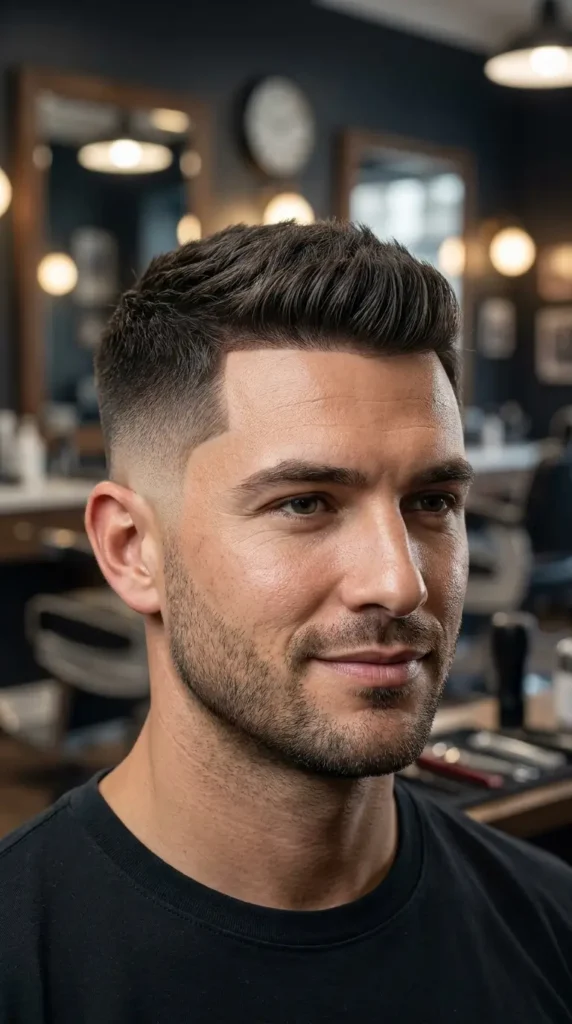
Taper starts at temple line, more visible contrast without going to skin. See our high taper fade guide.
Why it works: Removes more bulk than low/mid taper while maintaining conservative, professional appearance.
Best for: All face shapes, especially round faces needing elongation, modern professional environments.
46. Textured Taper
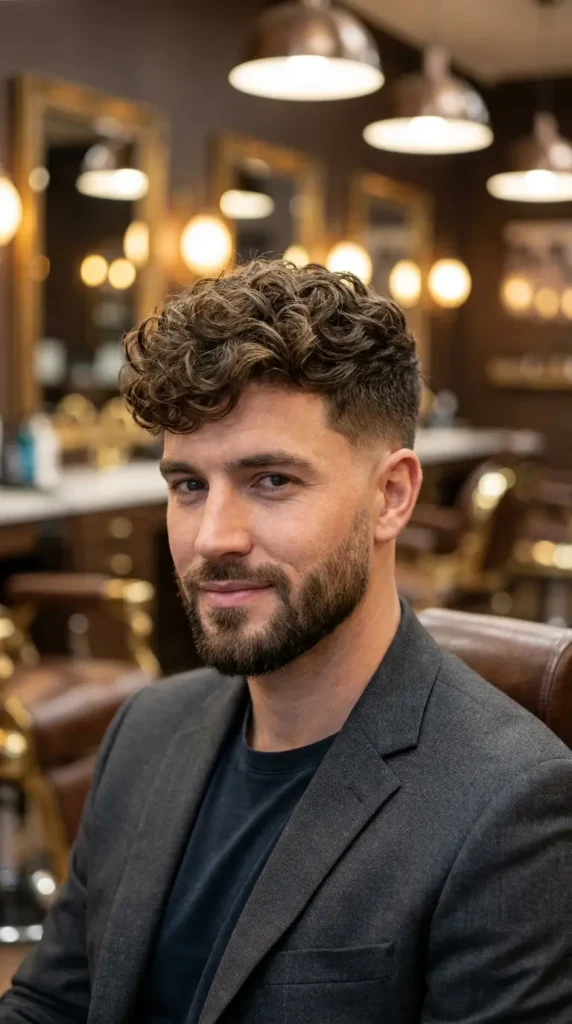
Gradual taper on sides combined with choppy, piece-y texture on top for movement.
Why it works: Taper manages side bulk while textured top prevents the heavy, block-like appearance thick hair defaults to.
Best for: All face shapes, wavy and straight textures, modern professionals.
47. Taper With Side Part
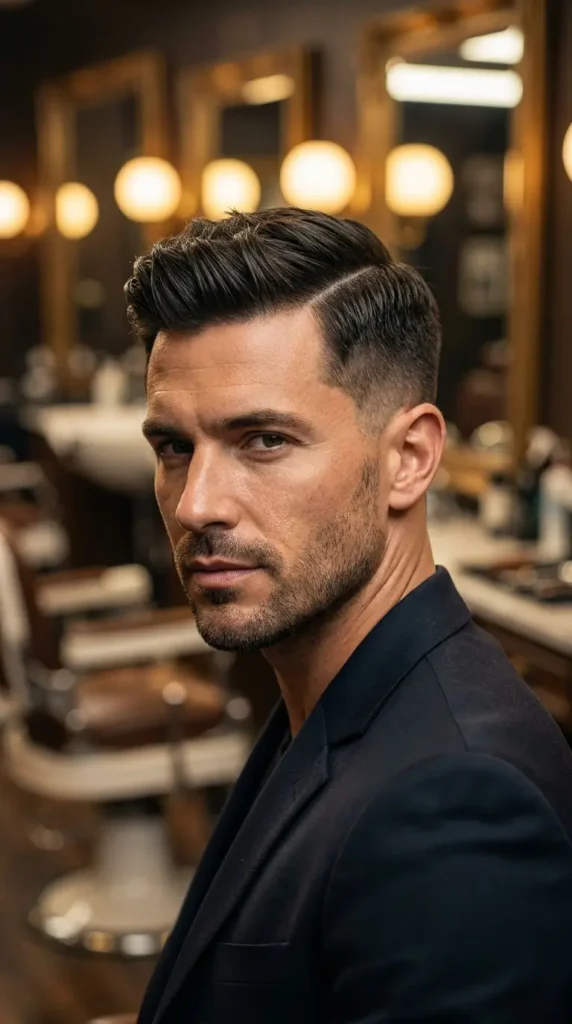
Clean tapered sides paired with a defined part and swept top, most universally professional combination.
Why it works: Taper controls bulk professionally while thick hair keeps the part line defined all day.
Best for: All face shapes, straight and wavy textures, corporate settings, formal events, job interviews.
48. Choppy Fringe
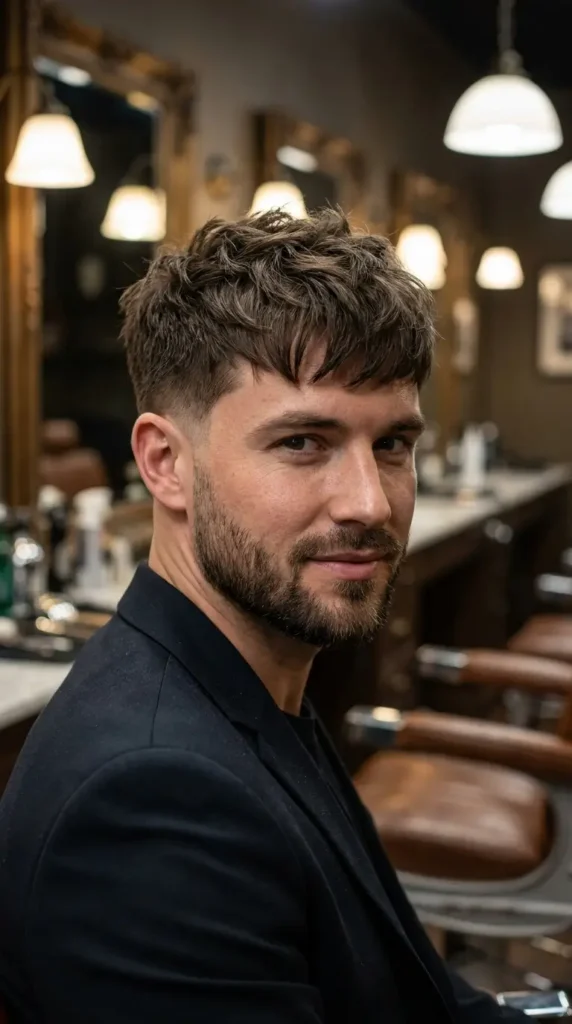
Bold fringe cut into uneven, deliberately choppy pieces across the forehead with short clean sides. See our fringe hairstyles collection.
Why it works: Thick hair creates a full, substantial fringe with body and definition in every piece.
Best for: Heart and diamond faces, straight and wavy textures, youthful trend-forward settings.
49. Angular Fringe
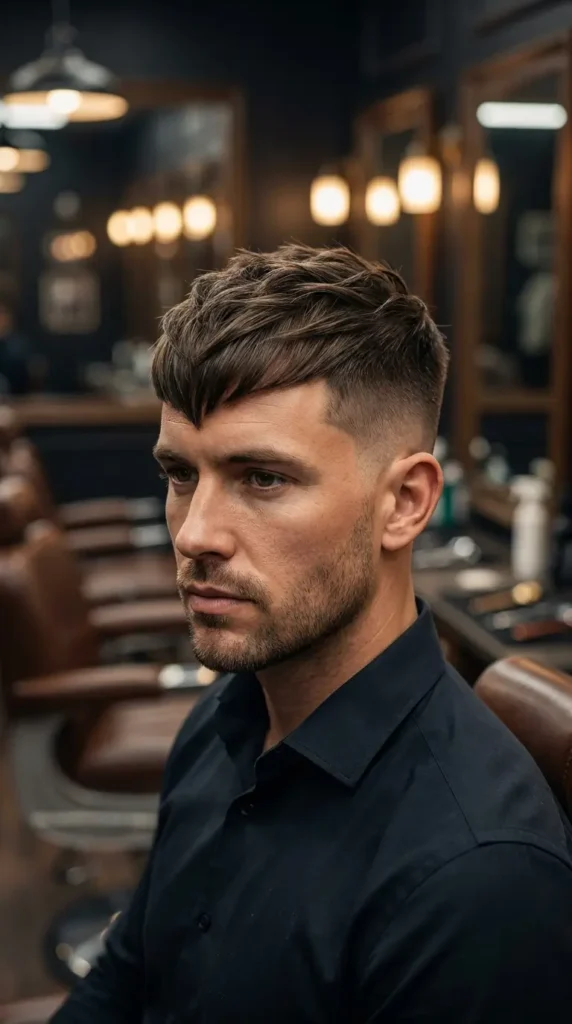
Fringe cut at a sharp diagonal angle, longer one side, shorter the other. Modern and asymmetric.
Why it works: Thick hair holds the angular shape firmly all day, density prevents the diagonal line from falling limp.
Best for: Oval and rectangular faces, straight thick hair, fashion-forward settings.
50. Textured Fringe
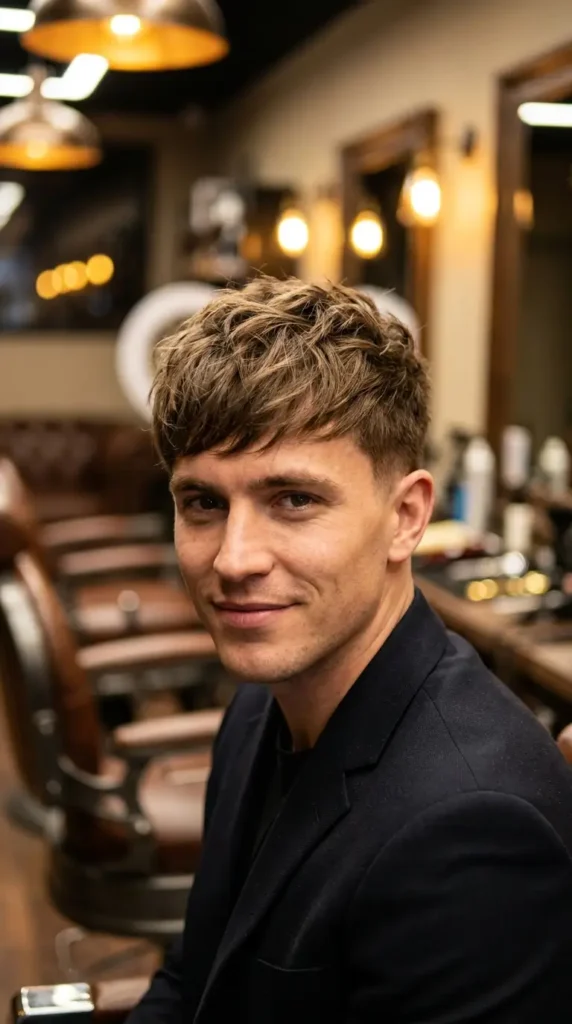
Soft, layered fringe with deliberate movement and separation, between angular and messy. See our textured fringe guide.
Why it works: Layering within fringe removes enough weight to fall naturally without becoming a heavy curtain.
Best for: All face shapes, straight and wavy textures, relaxed fringe without “trying too hard” look.
51. Wolf Cut
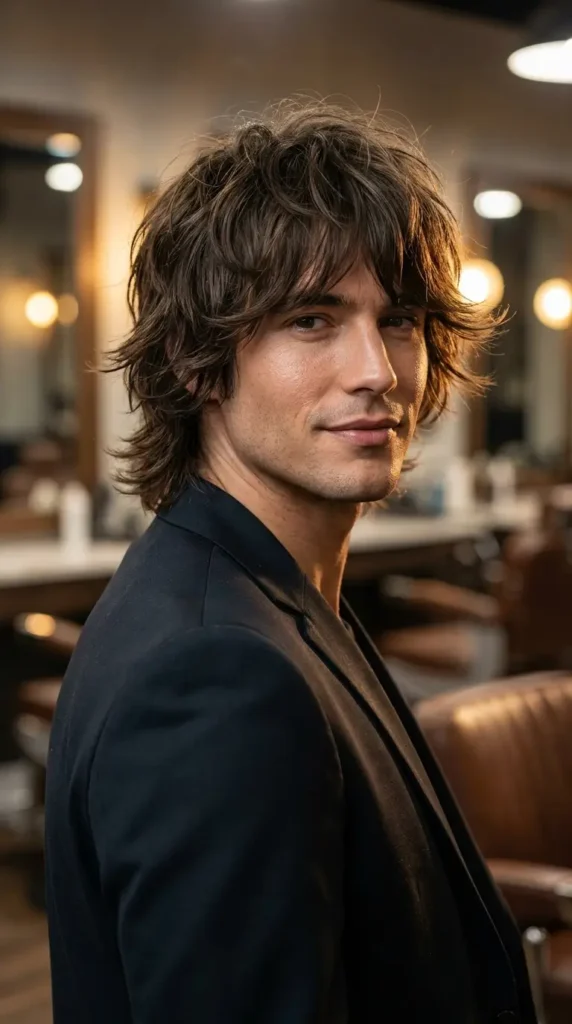
Heavy layers at crown with longer pieces around face and neck, shag meets mullet. See our wolf cut guide.
Why it works: Aggressive layering transforms bulk into wild, intentional energy. Natural density creates lift without blow-drying.
Best for: Oval and heart faces, wavy and curly textures, teens and 20s, bold creative personalities.
52. Messy Textured Layers
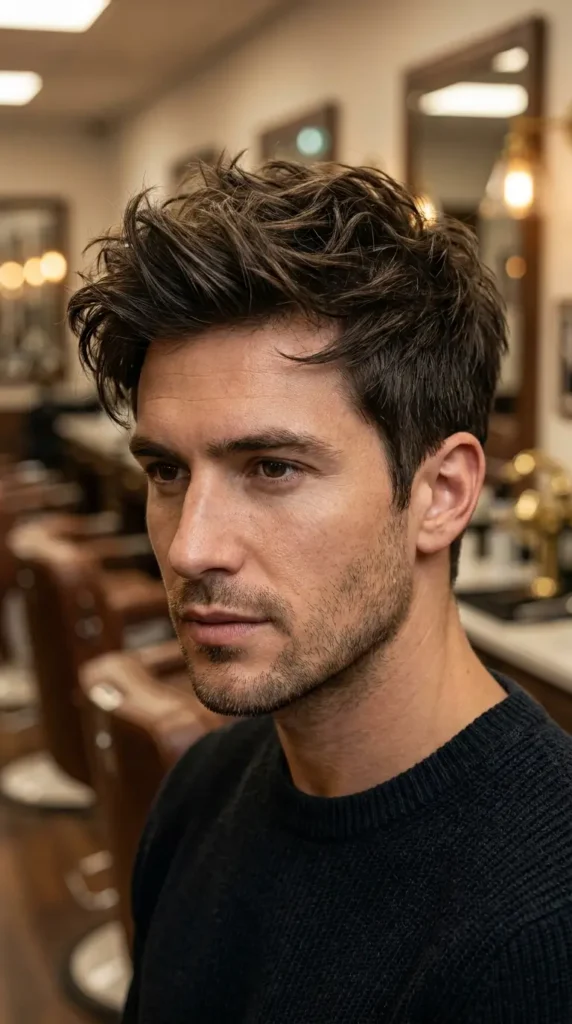
Medium-length deliberately unstructured layers, intentionally tousled and effortlessly cool. See our scruffy hairstyles guide.
Why it works: Thick hair holds messy shapes beautifully, looks full and deliberate, not limp or stringy.
Best for: Oval and square faces, wavy and straight textures, casual lifestyles, “no-effort” aesthetic.
53. Choppy Layered Cut
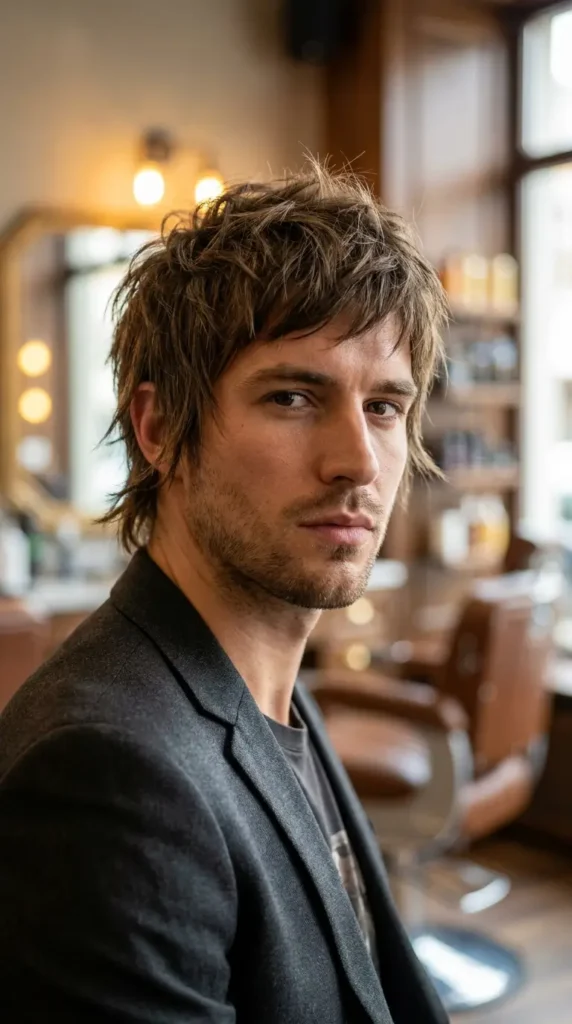
More aggressive version of messy layers, bigger length variations creating stronger visual texture and separation.
Why it works: Maximum bulk reduction while maintaining a styled appearance. Best option for extremely dense, heavy thick hair.
Best for: All face shapes, straight and wavy textures, very heavy/dense thick hair.
54. Modern Mullet
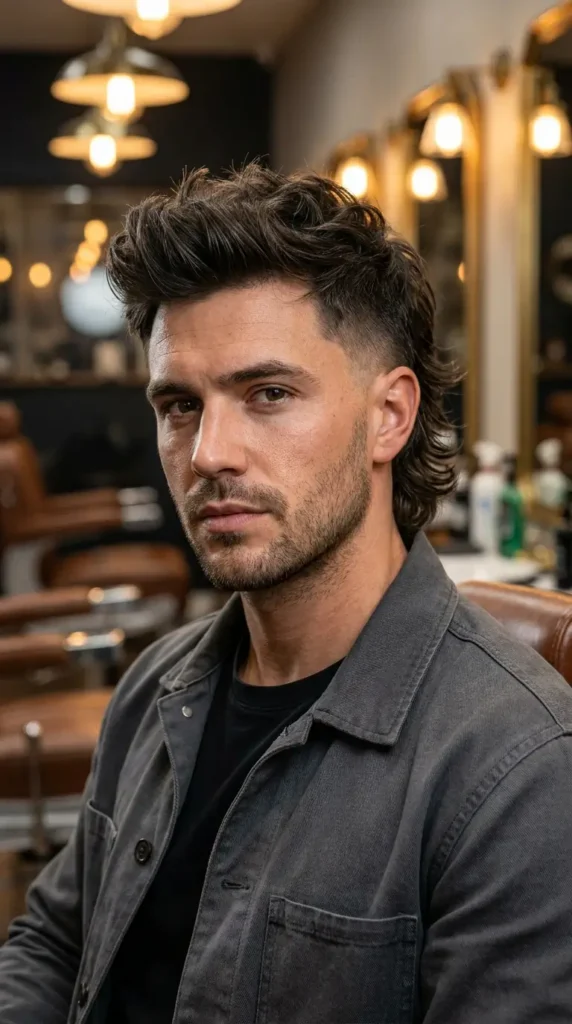
Short textured top and faded sides with intentionally longer hair at back, cleaner and more intentional than the 80s original. See our modern mullet guide.
Why it works: Faded sides eliminate bulk while longer back uses thick hair’s density for a full, substantial tail section.
Best for: Oval and angular faces, wavy and straight textures, teens and 20s, bold trend-forward personalities.
55. Curly Taper Fade
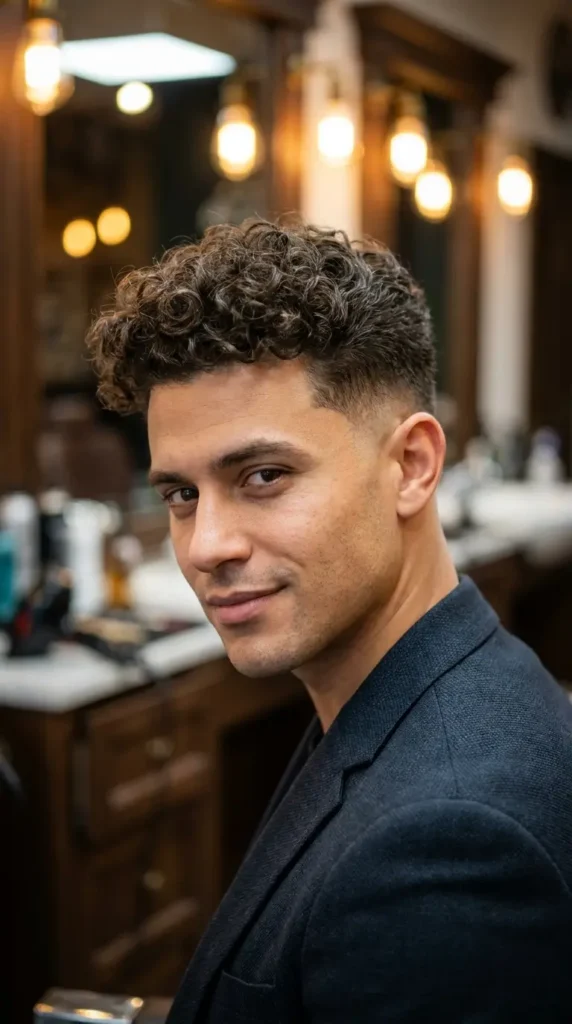
Tapered clean sides with longer top showcasing natural curls. See our low taper fade curly hair guide.
Why it works: Taper removes bulk from sides where curls puff widest while preserving curl beauty on top.
Best for: Oval and round faces, tight and medium curl patterns, defined curls with clean frame.
56. Afro Fade
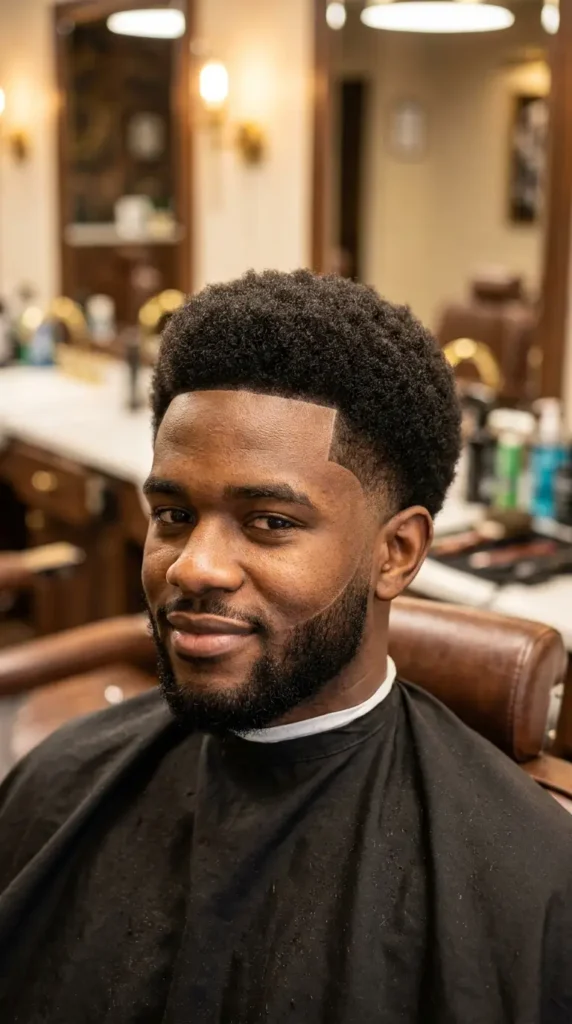
Full, round afro on top paired with faded sides for clean modern contrast.
Why it works: Thick curly hair naturally grows upward creating required height and roundness. Fade removes widest growth while top expresses full natural volume.
Best for: Round and oval faces, tight coil patterns, men celebrating natural texture.
57. Curly Shag
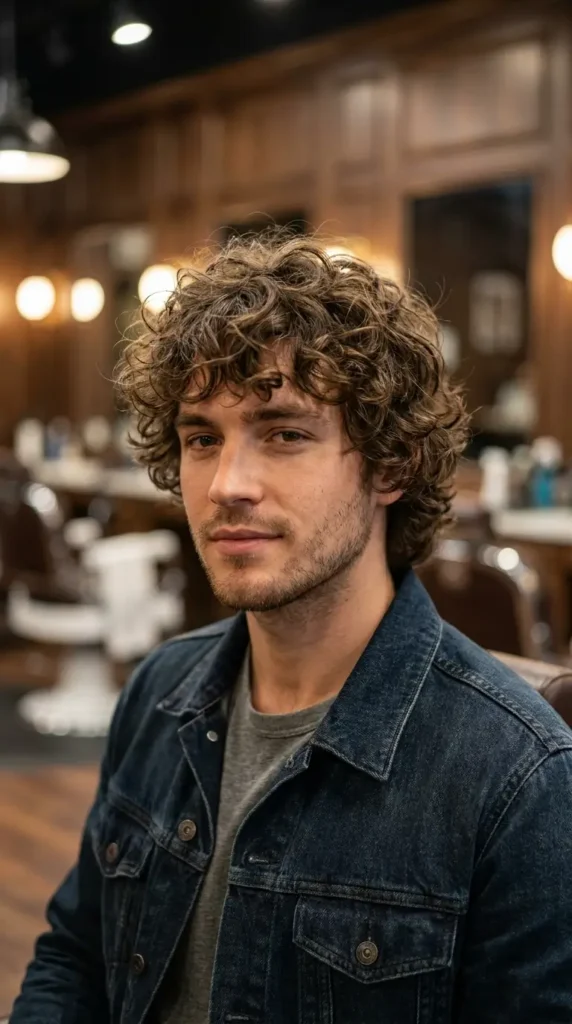
Layered curls at medium length, shorter at crown, longer around face. Relaxed, bouncy, retro-modern.
Why it works: Layering creates dimension and prevents the heavy dense mass thick curls form when left one length.
Best for: Oval and heart faces, medium curl patterns, relaxed yet intentional curly look.
58. Curly Undercut
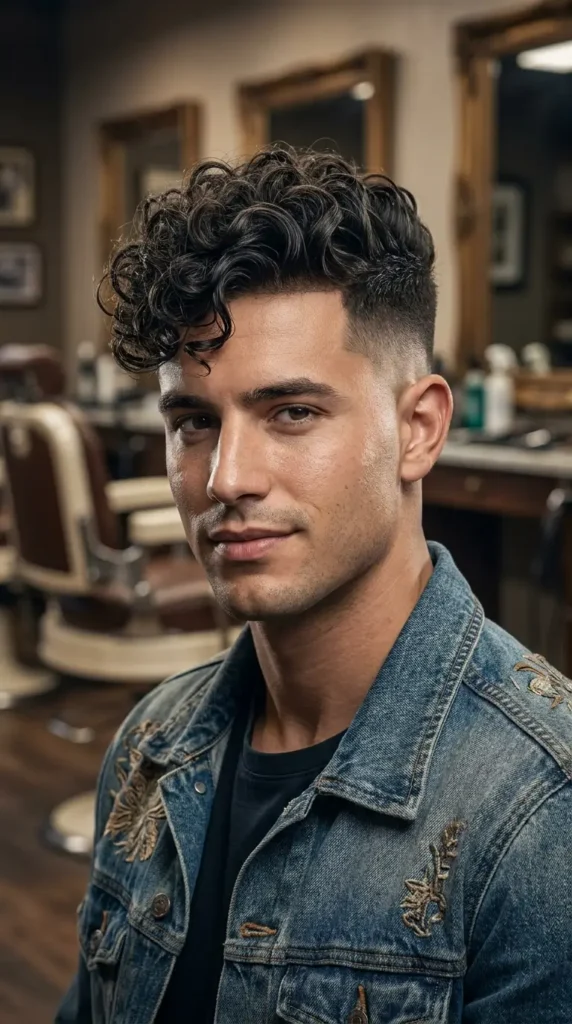
Buzzed or faded sides with full mound of curls on top. Dramatic length contrast makes curls the star.
Why it works: Complete side bulk elimination while full top showcases curl pattern at maximum density.
Best for: All face shapes, all curl patterns, bold personalities.
59. Short Curly Crop
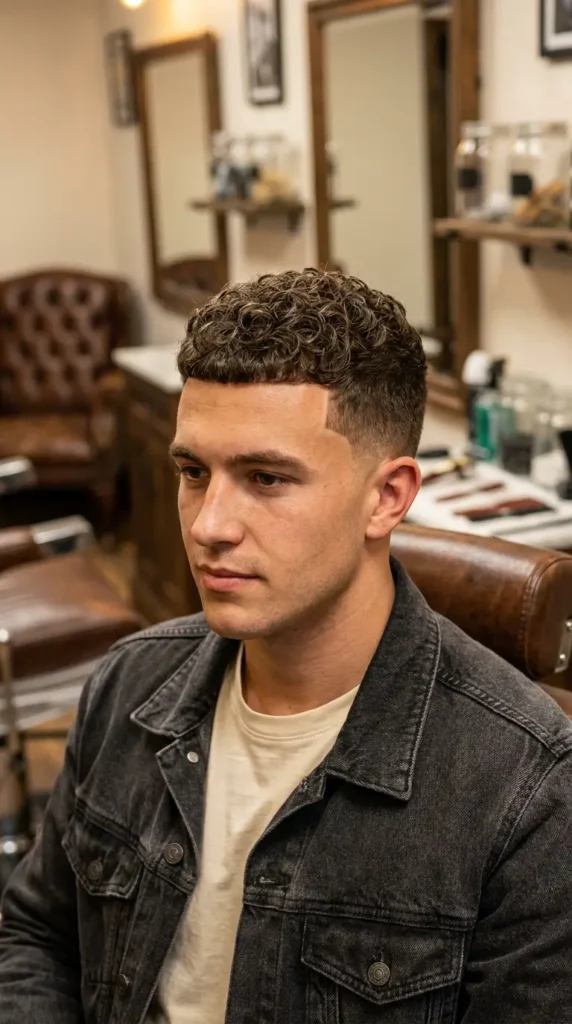
Tight close-cut curls on top with tapered or faded sides. Lowest-maintenance curly option.
Why it works: Keeps curls controlled at minimal length while thick density ensures top looks full, not patchy.
Best for: All face shapes, tight curl patterns, coarse thick hair, active lifestyles.
60. Tapered Afro
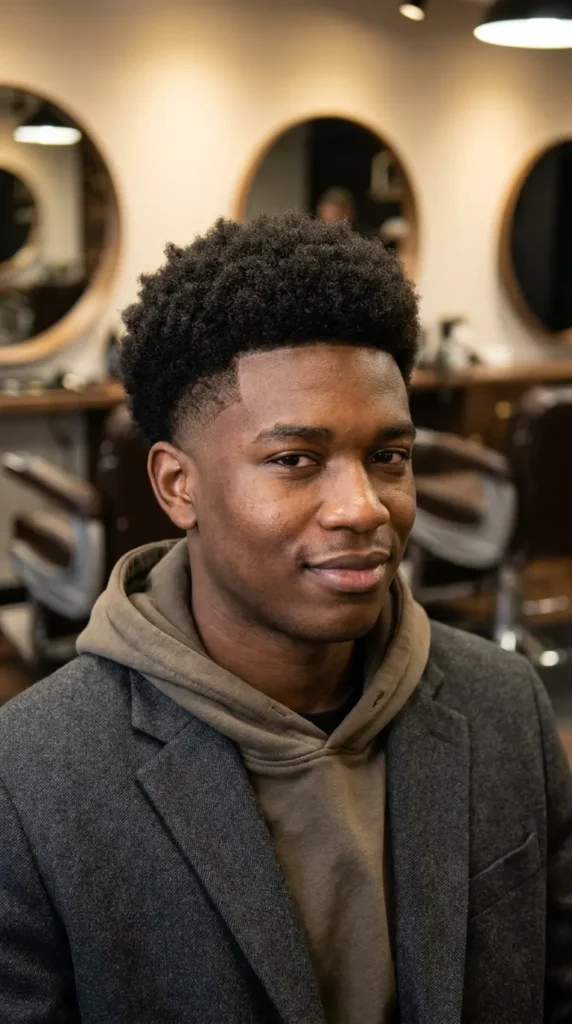
Natural afro shape gradually tapering shorter toward neckline, structured silhouette with natural height.
Why it works: Taper adds intentionality and polish to thick curly hair’s impressive natural volume.
Best for: Oval and angular faces, tight coil patterns, natural yet groomed appearance.
61. Surfer Waves
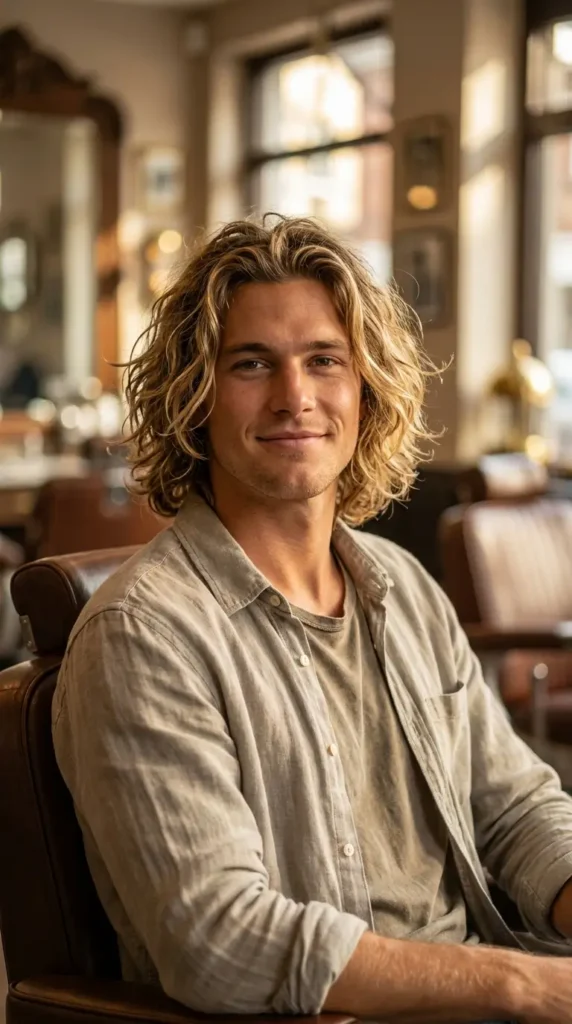
Medium-to-long wavy hair enhanced by sea salt spray, tousled, beachy, deliberately undone.
Why it works: Thick strands hold wave definition all day. The style thick wavy hair was literally made for.
Best for: Oval and heart faces, natural wave patterns, casual lifestyles.
62. Wavy Quiff
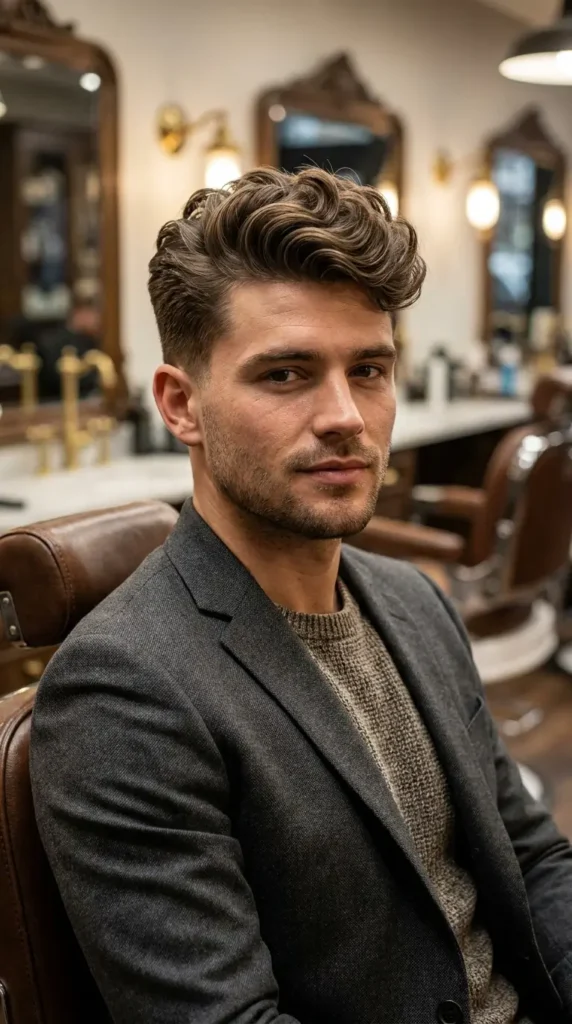
Front lifted upward with natural wave pattern adding texture and character to the quiff shape.
Why it works: Wave creates natural texture without product while thick density provides the lift.
Best for: Round and oval faces, men wanting height with natural texture.
63. Messy Wavy Layers
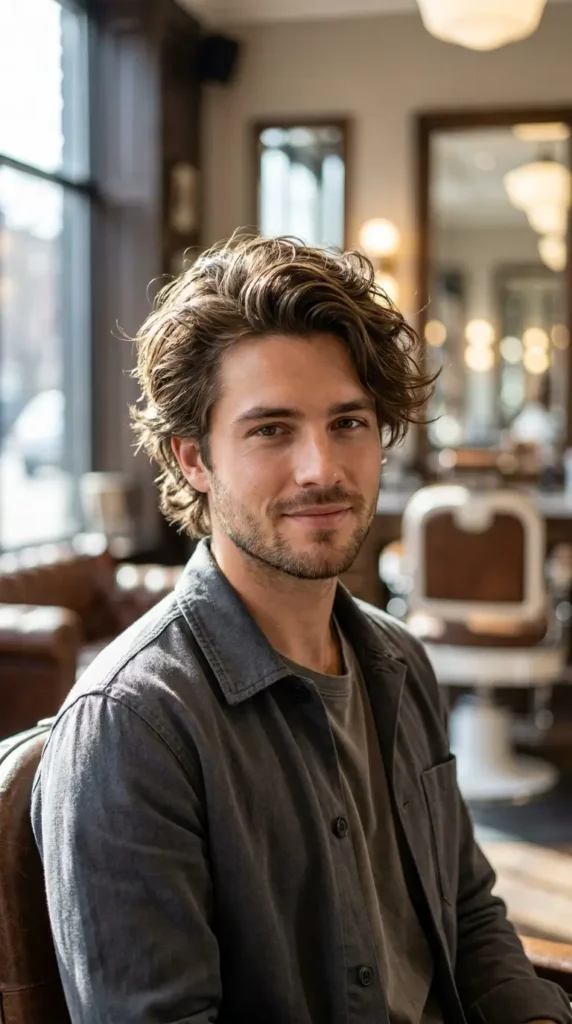
Medium length layers that enhance natural wave, tousled and intentionally un-fussed.
Why it works: Layers release wave pattern from compression weight. Thick wavy hair springs to life with movement it couldn’t express before.
Best for: All face shapes, natural wave patterns, low-effort preference.
64. Textured Side Sweep
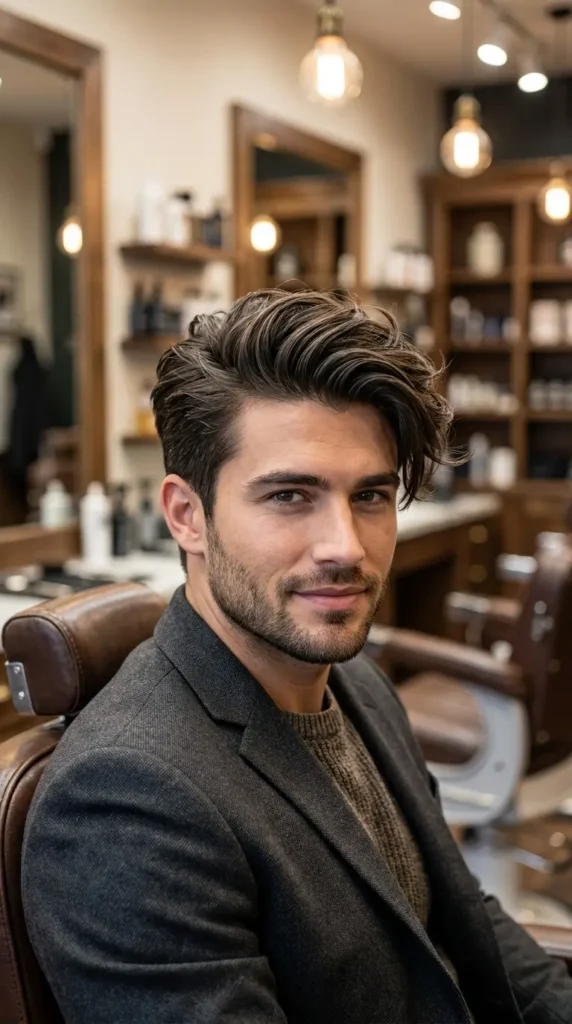
Medium wavy hair swept to one side with natural texture showing. Clean tapered sides, professional but with personality.
Why it works: Wave creates natural visual interest while thickness holds swept direction all day.
Best for: All face shapes, office settings, wavy textures.
65. Long Wavy Flow
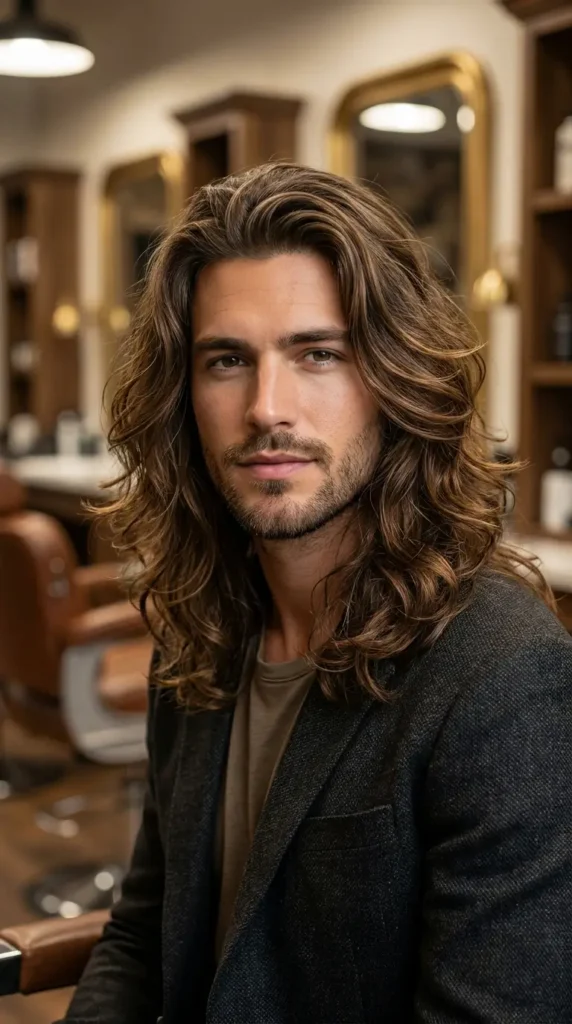
Grown-out wavy hair at or below chin length with long layers for movement.
Why it works: At longer lengths wave pattern creates beautiful cascading movement. Thick density ensures full, healthy appearance.
Best for: Oval and heart faces, men committed to growing out, relaxed lifestyles.
66. Low Taper Fade (2026’s Most Requested)
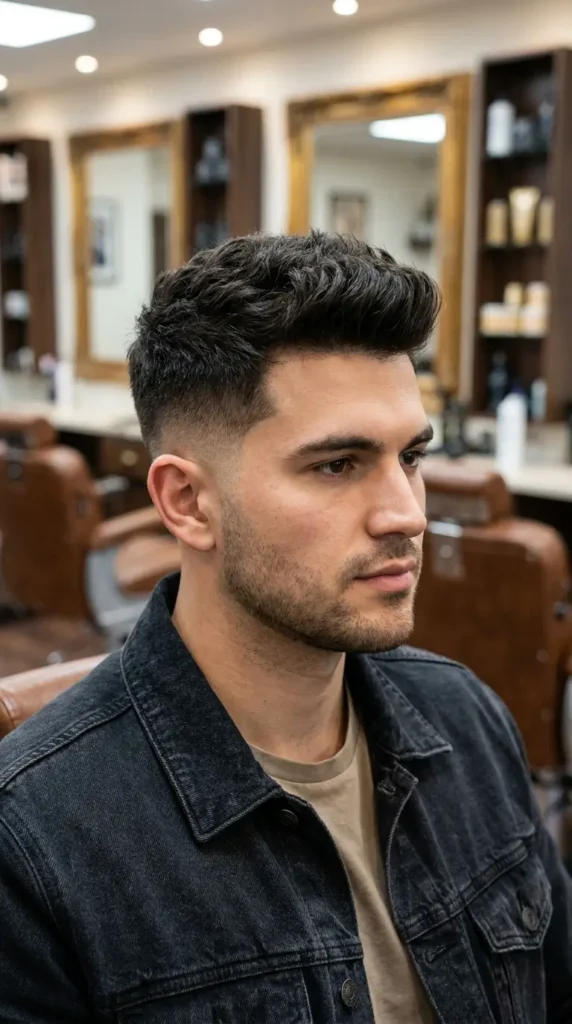
The single most requested men’s haircut globally in 2025-2026. A subtle, low-starting taper that blends into a soft fade near the neckline. Clean, versatile, and works on absolutely every face shape and hair texture.
Why it’s trending for thick hair: It solves the universal thick hair problem (side bulk) with the least dramatic, most versatile approach. Looks professional and casual. Works with curly, wavy, or straight thick hair.
How to style: Any top style works, that’s the point. The low taper fade is a “base” that pairs with quiffs, crops, parts, and natural texture.
67. Textured Crop With Burst Fade
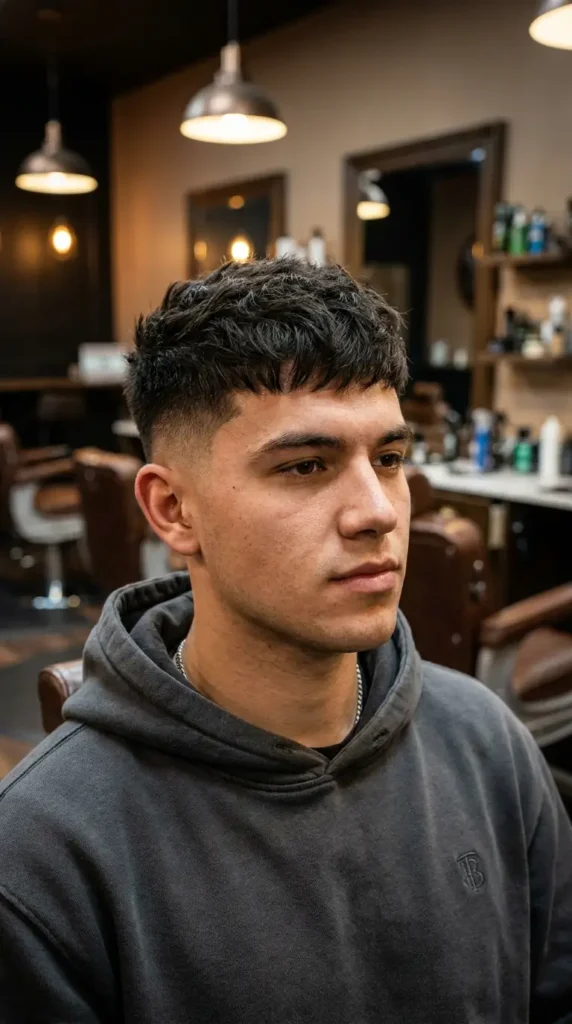
The textured crop paired with a rounded burst fade around the ears. Creates a modern, youthful combination of texture on top and curved clean lines on the sides.
Why it’s trending for thick hair: The burst fade is visually interesting, different from straight fades everyone’s used to, while the textured top shows off thick hair’s density. It photographs well, important in the social media age.
How to style: Texture clay on top, pinch for separation. Sides are self-maintaining.
68. Wolf Cut (Still Going Strong)
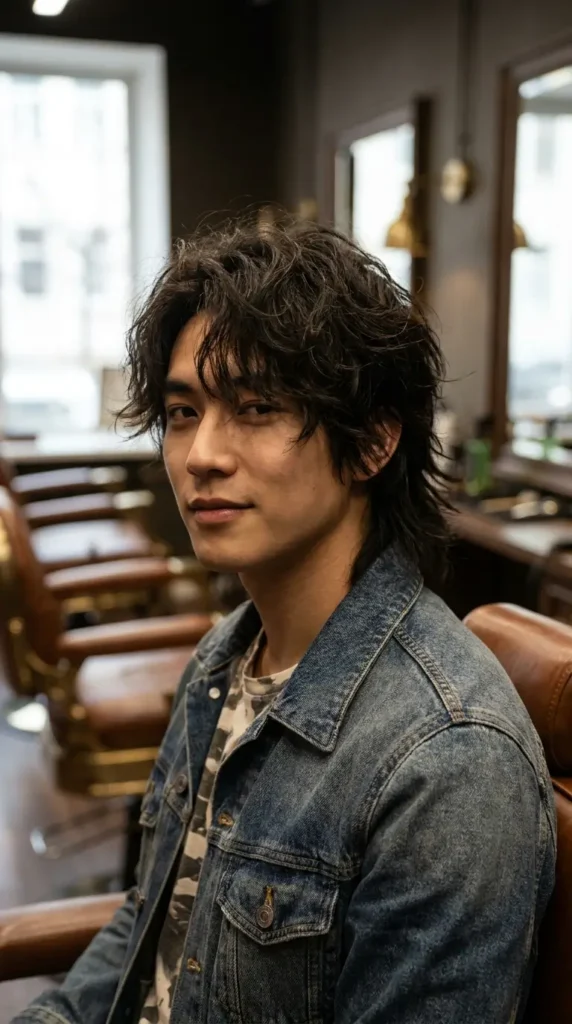
The wolf cut continues its multi-year trend status into 2026, the layered shag-mullet hybrid that celebrates volume and effortless texture.
Why it’s trending for thick hair: It’s one of the only trending cuts that requires less maintenance, not more. Thick hair’s natural density creates the exact volume this style demands without any blow-drying.
How to style: Sea salt spray. Air-dry. That’s it.
69. Fluffy Textured Top
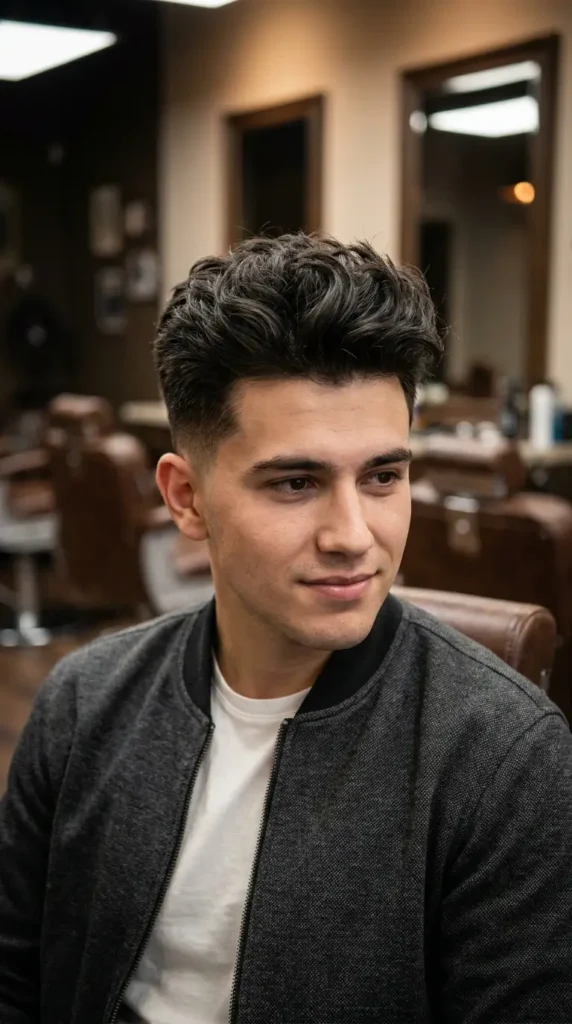
A volume-forward style where the top is blow-dried upward and left soft, airy, and “fluffy,” no product, no defined shape, just natural thick-hair volume on display. Gen Z made this mainstream. Our fluffy hair guide covers this style in complete detail.
Why it’s trending for thick hair: It literally celebrates thick hair’s natural volume as the style itself. No product required, just a blow-dryer and the genetics you already have. It’s the ultimate “my hair IS the style” approach.
How to style: Blow-dry upward from the roots on medium heat. Use fingers to lift. Stop. No product. Takes 3-4 minutes.
70. Burst Fade Mullet
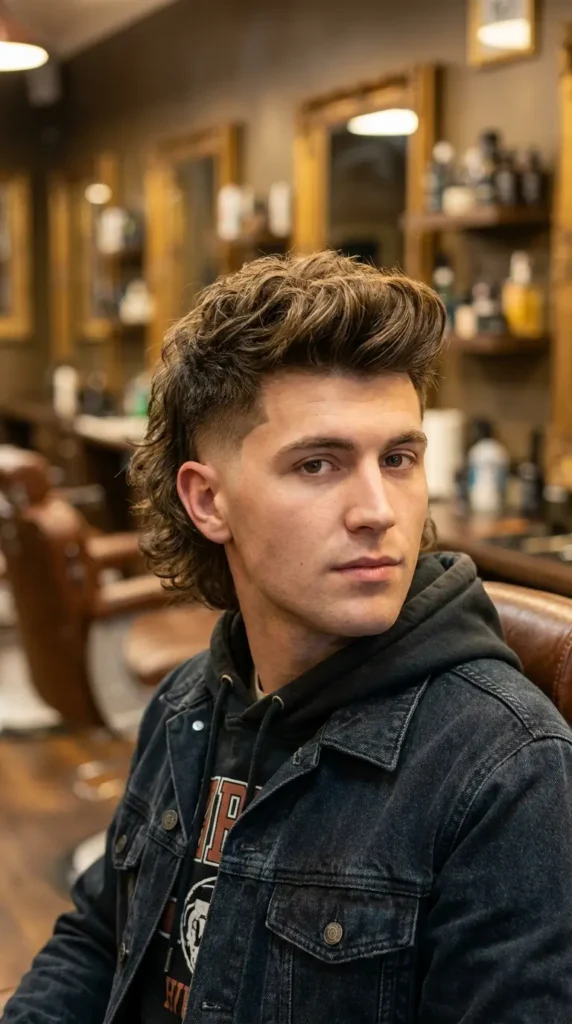
The modern mullet combined with a curved burst fade on the sides. Edgy, bold, and distinctly 2025-2026. Not for everyone, but for those who pull it off, it’s a statement.
Why it’s trending for thick hair: Maximum visual contrast. Full, textured mullet in the back, curved clean sides, styled textured top. Thick hair makes the back section look substantial and intentional rather than thin or scraggly.
How to style: Texture clay on top and through the back for definition and movement.
71. Korean Two-Block (2026 Update)
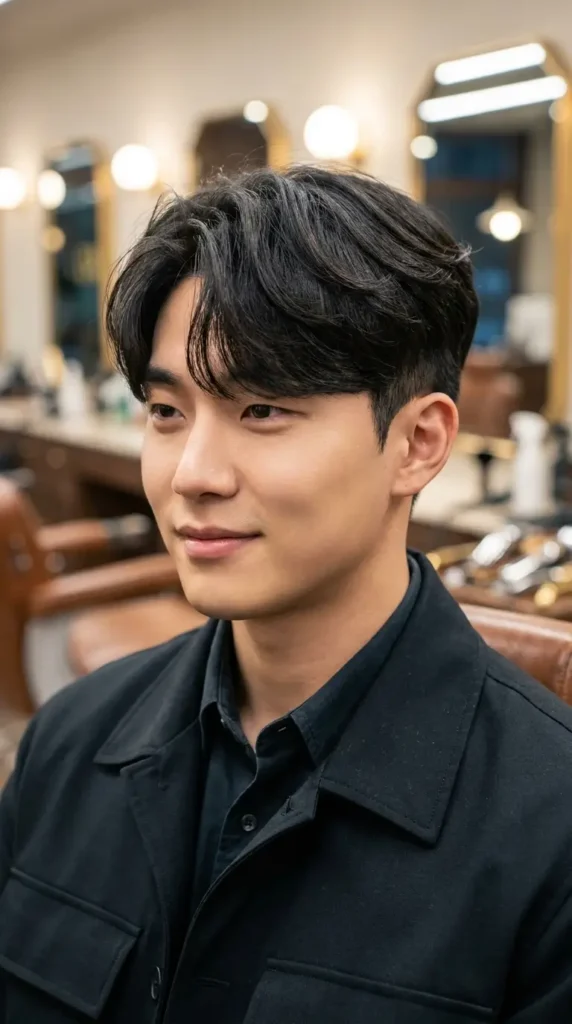
The two block remains huge in 2026 with slight evolutions, slightly longer tops, more textured, and paired with softer disconnects rather than harsh lines.
Why it’s trending for thick hair: Straight thick hair (common in East Asian men) creates the perfect sharp contrast between the full top and disconnected short sides. The style was essentially designed for thick, straight hair. For more Asian hair options, see our short Asian male haircuts guide.
How to style: Blow-dry top with slight lift. Apply styling cream for soft hold and natural movement.
72. Edgar Cut (Youth Trend)
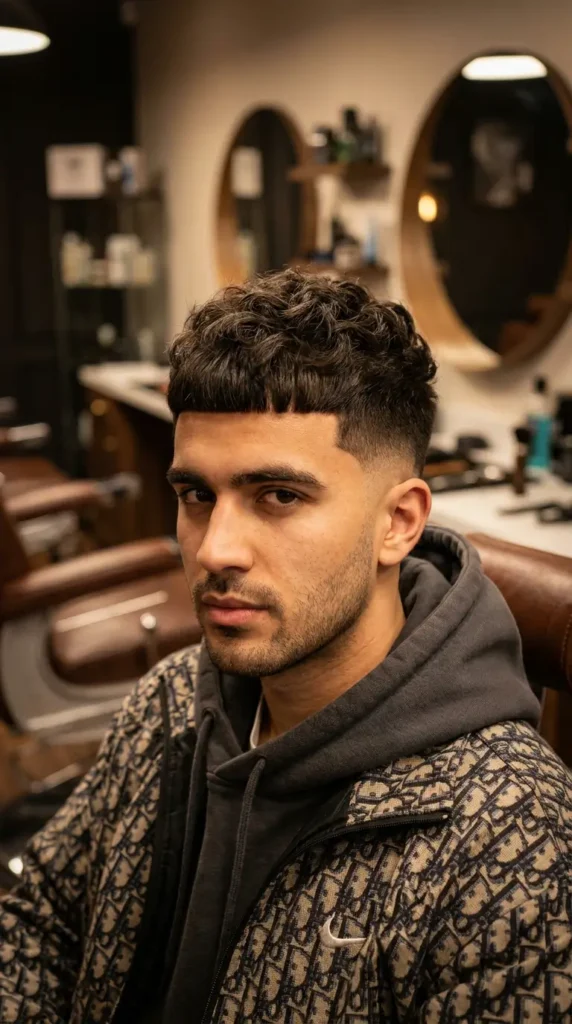
The Edgar cut features a straight, blunt line across the forehead with faded or tapered sides. It’s bold, geometric, and hugely popular among younger men and teens, especially those with thick, straight hair.
Why it’s trending for thick hair: The blunt front line requires density to look sharp and intentional. Thick hair creates a solid, defined fringe line that fine hair simply can’t replicate. The fade eliminates all side bulk while the strong front line makes a statement.
How to Choose the Right Hairstyle for Thick Hair
By Face Shape
- Oval: Most versatile, almost any style works
- Round: Need height on top, shorter sides. Try quiffs, high fades, pompadours
- Square: Softer textures on top. Try textured crops, messy layers, side-swept styles
- Heart/Diamond: Balance wide forehead. Try curtain cuts, side parts, fringes
- Rectangular/Long: Avoid extra height. Try French crops, textured fringes
By Hair Texture
- Straight: Add layers to avoid helmet look. Try pompadours, slick backs
- Wavy: Show off movement. Try bro flows, surfer cuts, messy layers
- Curly: Keep moisture, fade sides. Try curly crops, tapered afros
- Coarse: Use heavier products. Try crew cuts, Caesar cuts, buzz fades
By Maintenance Level
- 2-3 mins: Buzz cuts, crew cuts, short crops
- 5 mins: Textured quiffs, French crops, tapers
- 8-10 mins: Pompadours, slick backs, blowouts
By Age
- Teens-20s: Wolf cuts, burst fades, messy fringes
- Mid 20s-30s: Quiffs, tapers, bro flows
- 30s-40s: Side parts, executive tapers, low fades
- 40s+: Ivy League, gentleman cuts, low tapers
How to Ask Your Barber for a Thick Hair Haircut
1. Describe Your Problems First
Before showing any style, tell your barber what bothers you:
- “My sides get puffy after few days”
- “Hair feels heavy and loses shape quickly”
- “Can’t control bulk without lots of product”
2. Bring Multiple Reference Photos
Show 2-3 photos, front, side, and back view. Find men with similar hair thickness. Point out exactly what you like about each photo.
Pro tip: Save a photo of your own best haircut ever, it instantly shows what works for your head shape.
3. Use These Key Phrases
- “Remove weight but keep volume on top”
- “Texturize rather than thin”
- “Point-cut the top for movement”
- “Blend the sides clean, no puffing”
- “Keep length but reduce internal bulk”
4. Ask These Two Questions Before They Start
- “How often do I need to come back?”
- “How much daily styling does this need?”
If you can’t blow-dry daily, say it upfront. If you can’t visit every 2 weeks, say that too. A good barber adjusts the cut to fit your real lifestyle.
How to Style Thick Hair Daily
Step 1: Wash Smart
Wash only 2-3 times per week with sulfate-free shampoo. On off days, rinse with water or use dry shampoo at roots. Always condition mid-lengths and ends every wash.
Step 2: Towel-Dry Correctly
Never rub, gently squeeze and blot with microfiber towel. Remove 60-70% moisture only. Hair should be damp, not dripping.
Step 3: Apply Pre-Styler to Damp Hair
Choose based on your style:
- Sea salt spray, for textured/beachy looks
- Mousse, for lift and volume
- Leave-in conditioner, for long or curly hair
- Heat protectant, if blow-drying
Step 4: Blow-Dry With Direction
Just 3-5 minutes makes a huge difference:
- Point nozzle in direction you want hair to sit
- Use medium heat only
- Lift roots with fingers or round brush
- Finish with a 10-second cool air blast to set style
Step 5: Apply Finishing Product
Apply to 90-100% dry hair. Start with a pea-sized amount only:
- Matte clay, textured/separated looks
- Pomade, sleek polished styles
- Styling cream, natural everyday hold
Key point: Thick hair needs less product than you think. Always start small and build up gradually.
Step 6: Shape and Finish
- Textured styles: pinch and separate with fingers
- Sleek styles: smooth with flat palms
- Messy styles: tousle and scrunch
- Quiffs: lift front, press into shape
For flyaways, press a tiny amount of styling cream lightly over the surface.
Best Products for Men With Thick Hair
- Texture/Matte Clay: Best for crops, quiffs, and textured styles. Matte finish, strong hold. Use pea-sized amount on dry hair.
- Sea Salt Spray: Best for wavy hair. Enhances natural waves. Spray on damp hair, scrunch, and air-dry.
- Styling Cream: Best all-rounder. Controls frizz, light hold, works on all lengths. Apply to damp or dry hair.
- Water-Based Pomade: Best for slick backs and formal styles. Avoid oil-based, too hard to wash out of thick hair.
- Volumizing Mousse: Best for lift and height. Apply to damp roots, blow-dry upward immediately.
- Leave-In Conditioner: Best for long or curly thick hair. Apply to mid-lengths and ends only, never roots.
- Dry Shampoo: Best for between-wash days. Absorbs oil, extends style life. Spray at roots only.
- Hair Oil: Best for coarse or dry thick hair. Use only 2-3 drops on ends. Never on roots.
Common Mistakes to Avoid With Thick Hair
Avoiding these mistakes will save you time, frustration, and bad hair days.
- Skip Layers: Blunt cuts make thick hair puff outward. Always ask for internal weight removal or texturizing.
- Heavy Products: Waxes and oil pomades weigh hair down. Use lightweight products only.
- Overwashing: Wash 2-3 times weekly max. Daily washing causes dryness and frizz.
- Ignoring Sides: Don’t just focus on top. Sides need fading, tapering, or texturizing too.
- Aggressive Thinning: Random thinning causes choppy regrowth. Ask for strategic point-cutting instead.
- Fighting Your Texture: Work with your natural texture, not against it. Saves time and prevents damage.
- Copying Fine Hair Styles: What looks sleek on fine hair looks bulky on thick hair. Always find references with similar hair density.
Conclusion
Thick hair isn’t a problem, it’s an advantage. The same density that frustrates you in the morning is what holds a quiff all day and fills a pompadour effortlessly.
The key is working with your thickness:
- Choose layered, textured, or faded cuts
- Use lightweight products only
- Find a barber who understands thick hair
- Embrace your natural texture, don’t fight it
Pick the style that matches your face shape, texture, and maintenance commitment. Then give it one full growth cycle before judging.
The right cut doesn’t fight your thick hair, it uses it.
Frequently Asked Questions
What is the best haircut for men with thick hair?
Textured crops, layered cuts, taper fades, and quiffs work best for thick hair, they control bulk while keeping natural volume. The right choice depends on your face shape, hair texture, and daily styling time.
Is short hair or long hair better for thick hair?
Neither is better, short hair means less effort and no puffiness, long hair offers more versatility but needs more maintenance. Choose based on your lifestyle.
What short haircut is best for thick hair?
The crew cut, buzz cut with fade, and textured crop are the strongest short options for thick hair. All three remove bulk from the sides through tapering or fading while keeping the top short enough that density can’t turn into puffiness. The textured crop is the best pick if you want a bit more style with minimal effort, while the crew cut and buzz cut with fade are the most reliable for a completely low-maintenance routine.
How to style thick hair?
Wash 2 to 3 times a week, towel-dry until damp, apply a lightweight pre-styler like sea salt spray or mousse, blow-dry with direction using medium heat while lifting the roots, then finish with a small amount of matte clay, pomade, or styling cream once the hair is fully dry. The full step-by-step routine is covered above in this guide.
How often should men with thick hair get a haircut?
- Skin fades: every 1.5-2 weeks
- Short cuts: every 3-4 weeks
- Medium styles: every 4-5 weeks
- Long styles: every 8-12 weeks
How do I stop my thick hair from getting puffy on the sides?
Ask your barber for layering and texturizing on the sides. Use a fade or taper. Blow-dry downward on medium heat. Apply lightweight clay or cream. Never air-dry without product.
What products should I use for thick hair?
Texture clay, styling cream, sea salt spray, and water-based pomade. Avoid heavy waxes and oil-based products.
Should I thin my thick hair?
No, ask for point-cutting or texturizing instead. Thinning shears create choppy regrowth within 2-3 weeks.
How to style without a blow-dryer?
Apply sea salt spray or styling cream to damp hair, shape with fingers, and air-dry without touching. Best cuts for air-drying: textured crops, wolf cuts, surfer styles.
Is thick hair harder to manage?
No, just different. The right cut plus lightweight products means thick hair holds style better and longer than fine hair.
What’s the best low-maintenance cut for thick hair?
Buzz cut, crew cut, textured crop, or Caesar cut. Under 2 minutes of daily styling.
How often should I wash thick hair?
2-3 times per week with sulfate-free shampoo. Use dry shampoo on off days.
Can thick hair look good long?
Absolutely, thick hair creates fullness fine hair can’t achieve. Requires consistent layering and conditioning.
What should I tell my barber?
“I have thick hair that puffs on the sides and feels heavy.” Then add: desired length, style, maintenance level, and reference photos.
How do I reduce frizz?
Condition every wash, blot with a microfiber towel, apply styling cream or hair oil to the ends, avoid high heat, and sleep on a silk pillowcase.
What’s trending for thick hair in 2026?
Low taper fade, textured crops with burst fades, fluffy blow-dried tops, wolf cuts, burst fade mullets, and Korean two-block cuts.