
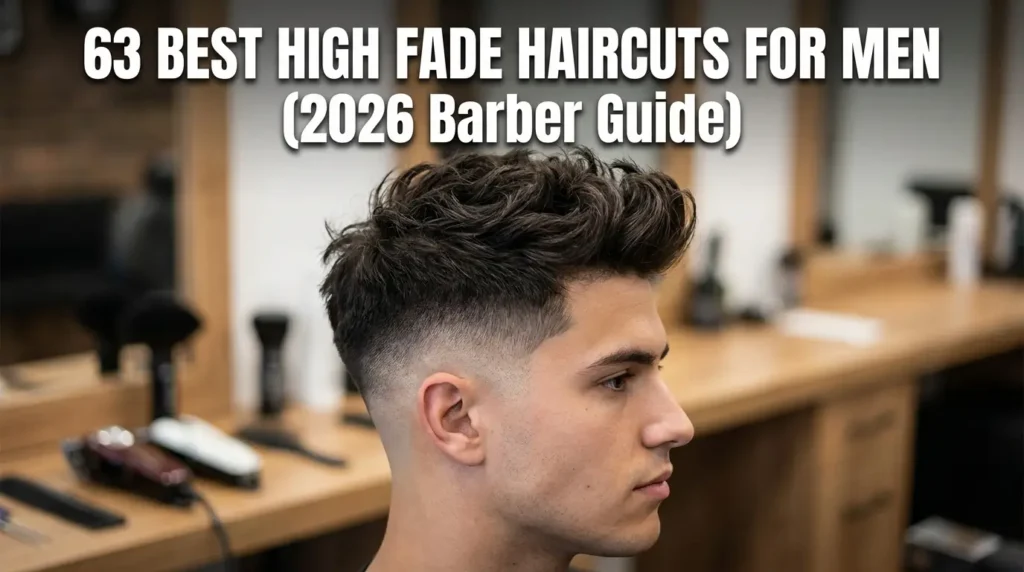
A high fade haircut is a graduated cut where the hair transitions from its shortest length at the temples and nape to its longest blended point at the parietal ridge. The “high” describes where the blending begins, much higher on the head compared to mid fades or low fades. High fade haircuts for men are especially popular because they create a sharp, clean, and modern appearance that works with many different styles.
Here is the important thing most people get wrong: the fade only describes the sides and back. What defines your actual look is the top, whether that is a quiff, a slick back, a crew cut, or a French crop. Think of the fade as the frame and the top as the picture.
The gradient moves through multiple clipper guard lengths, from a #0 (skin) or #0.5 at the base, progressing upward through #1, #1.5, and #2 until it blends into the top length. A skilled barber creates this transition so smoothly that you cannot see where one length ends and the next begins.
Key Anatomy of a High Fade
Understanding head anatomy helps you communicate clearly with your barber:
- Parietal ridge: The widest point of the skull, roughly 2 inches above the ear. This is where a high fade’s longest blended point begins.
- Temple area: The flat section beside the forehead and above the ear. The fade reaches its shortest point here.
- Nape: The back of the neck below the occipital bone. Faded to match the temple length.
- Occipital bone: The bony bump at the back of the skull. Barbers use this as a reference point when blending the back section.
- Crown: The top of the head where the styled hair begins. This is where the fade ends and the top style takes over.
Key Point: The higher the fade starts, the more skin is exposed, and the more dramatic the contrast appears. A high fade is the boldest and most striking of all fade types because it leaves the least amount of graduated hair on the sides.
63 Best High Fade Haircuts for Men
The following 63 high fade haircut styles are organized with individual headings so you can quickly find the exact combination that matches your hair type, length preference, and personal aesthetic. Each style includes what you need, who it suits, and how to achieve it.
1. High Fade with Classic Pompadour
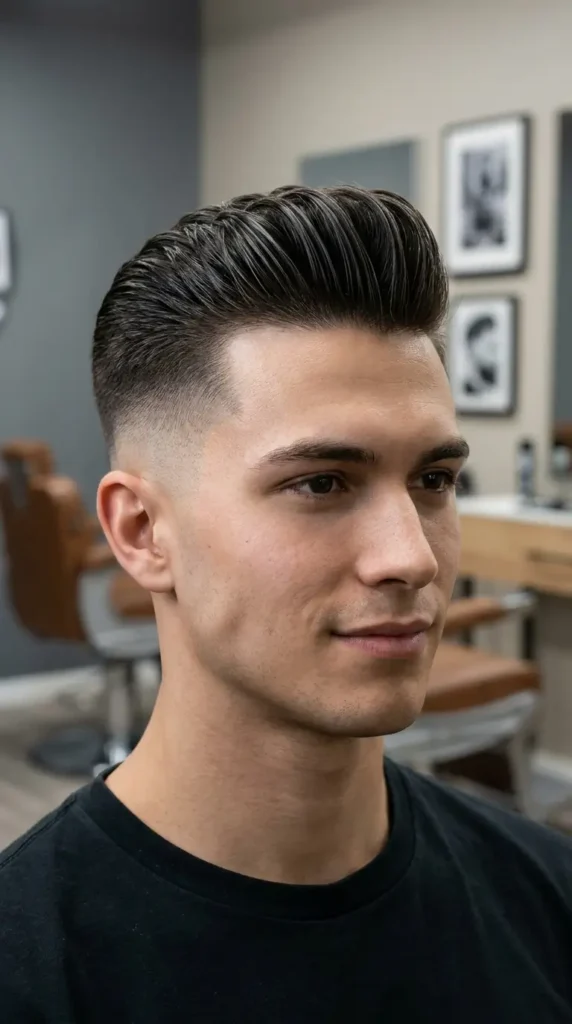
A high fade with classic pompadour sweeps all the top hair upward and backward from the forehead, creating a voluminous, rounded shape that sits high above the faded sides. This style dates back to the 1950s and remains one of the most requested combinations in barbershops across the United States.
What you need: 4–6 inches on top, blow dryer, round brush, strong-hold pomade Who it suits: Oval, round, and square face shapes Styling time: 5–7 minutes daily Celebrity reference: David Beckham
2. High Fade with Textured Pompadour
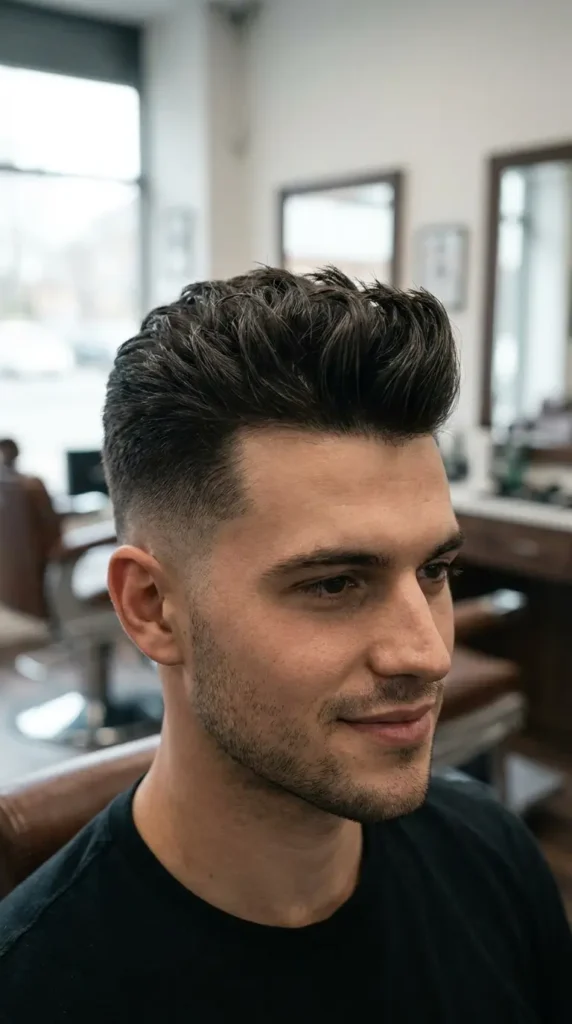
A high fade with textured pompadour adds choppy, piece-y movement to the classic swept-back shape. Rather than a smooth, polished surface, the texture creates a modern, lived-in finish that feels less formal and more approachable.
What you need: 4–5 inches on top, blow dryer, matte clay or fiber paste Who it suits: All face shapes, especially men who want the pompadour shape without the formal look Styling time: 4–5 minutes daily
3. High Fade with Short Pompadour
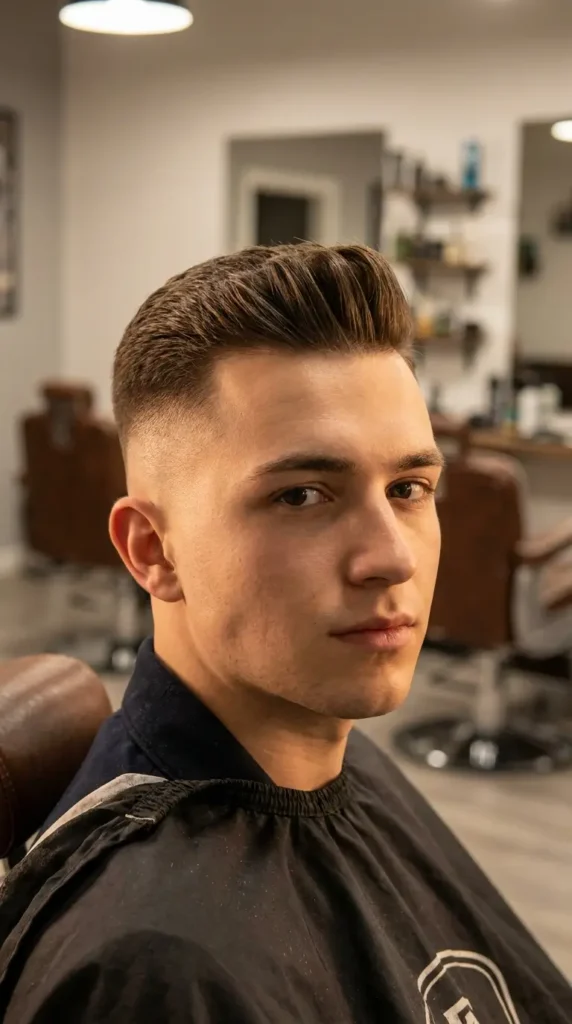
A high fade with short pompadour keeps the top at 2–3 inches, creating a subtle upward lift at the front without the dramatic height of a full pompadour. This is the office-friendly version: structured enough to look intentional, short enough to require minimal effort.
What you need: 2–3 inches on top, medium-hold pomade or wax Who it suits: Men who want volume without drama; excellent for professional settings Styling time: 2–3 minutes daily
4. High Fade with Messy Pompadour
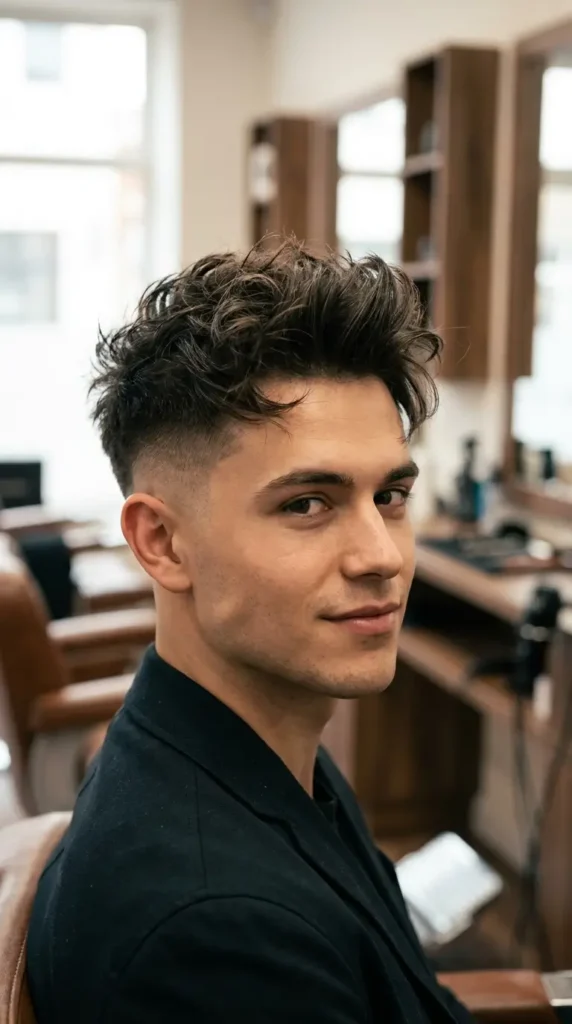
A high fade with messy pompadour creates the upward, backward sweep but leaves the surface intentionally imperfect: strands separate, texture shows, and the overall effect is casual rather than sculpted.
What you need: 4–5 inches on top, sea salt spray for pre-styling, light-hold clay for shape Who it suits: All face shapes, ideal for casual daily wear Styling time: 3–4 minutes daily
5. High Fade with Classic Quiff
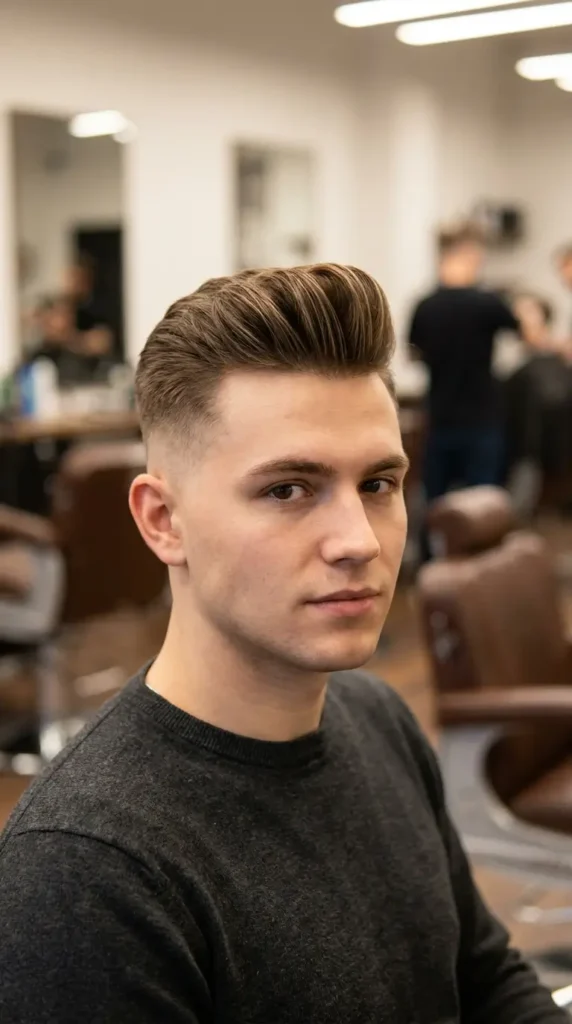
A high fade with classic quiff lifts the front hair upward and slightly forward, creating volume at the forehead that tapers shorter toward the crown. The quiff is shorter and more relaxed than a pompadour, making it one of the most practical everyday high fade styles.
What you need: 3–5 inches on top, blow dryer for lift, matte clay for hold Who it suits: All face shapes; universally flattering because it adds height without excess Styling time: 3–4 minutes daily
6. High Fade with Textured Quiff
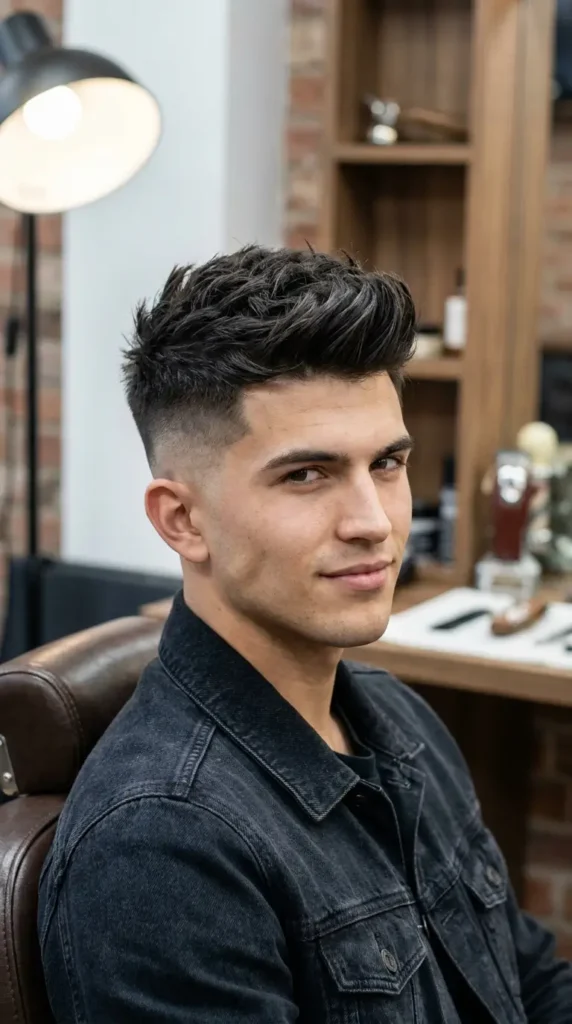
A high fade with textured quiff breaks up the surface of the lifted front section into separated, defined pieces. The texture adds visual interest and creates a casual, modern finish that looks effortlessly styled.
What you need: 3–4 inches on top, matte clay applied to dry hair for maximum texture Who it suits: All face shapes, particularly good for thick hair that holds texture naturally Styling time: 2–3 minutes daily
7. High Fade with Curly Quiff
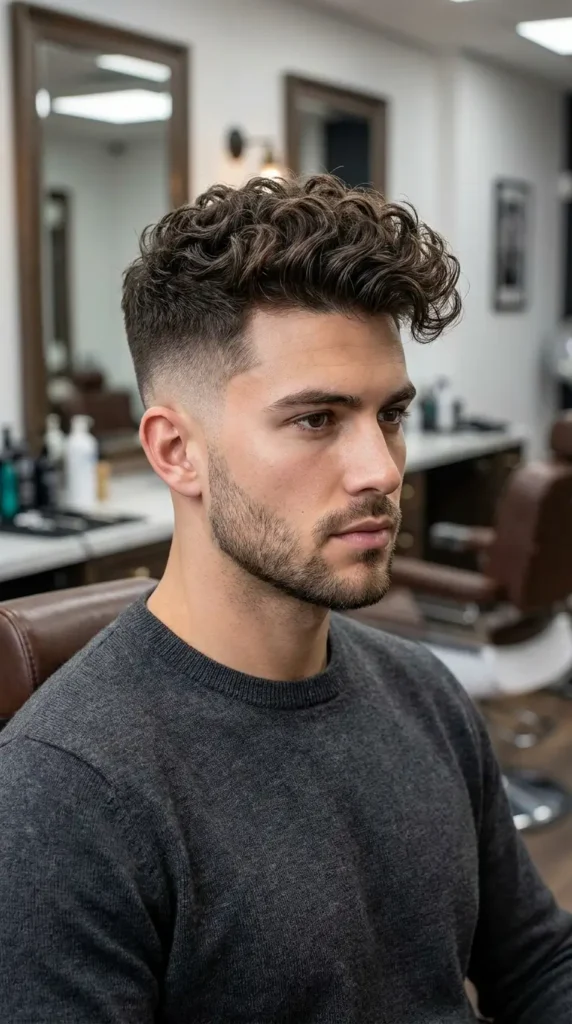
A high fade with curly quiff allows natural curl pattern to create the volume and lift at the front rather than relying on a blow dryer. The curls provide built-in texture and height that straight-haired quiffs require product and heat to achieve.
What you need: 3–4 inches of curly hair on top, lightweight curl cream, diffuser attachment optional Who it suits: Men with Type 2B–3B curl patterns Styling time: 1–2 minutes (curls do the work)
8. High Fade with Side-Swept Quiff
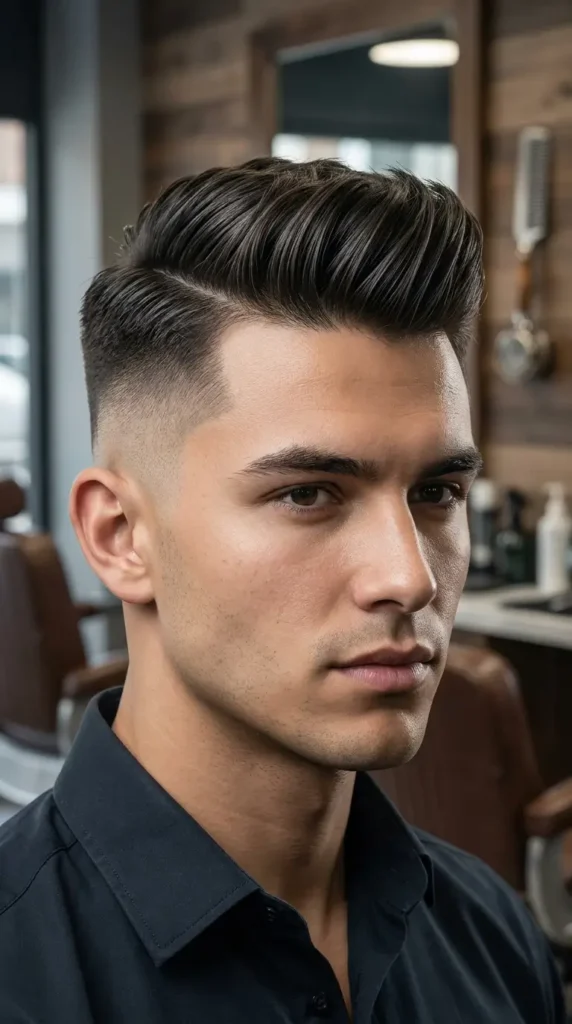
A high fade with side-swept quiff directs the lifted front section to one side rather than straight back, creating an asymmetrical shape that adds dimension and movement to the overall silhouette.
What you need: 3–5 inches on top, blow dryer directed to one side, medium-hold wax Who it suits: Oval and diamond face shapes (the asymmetry flatters angular features) Styling time: 3–4 minutes daily
9. High Fade with Classic Slick Back
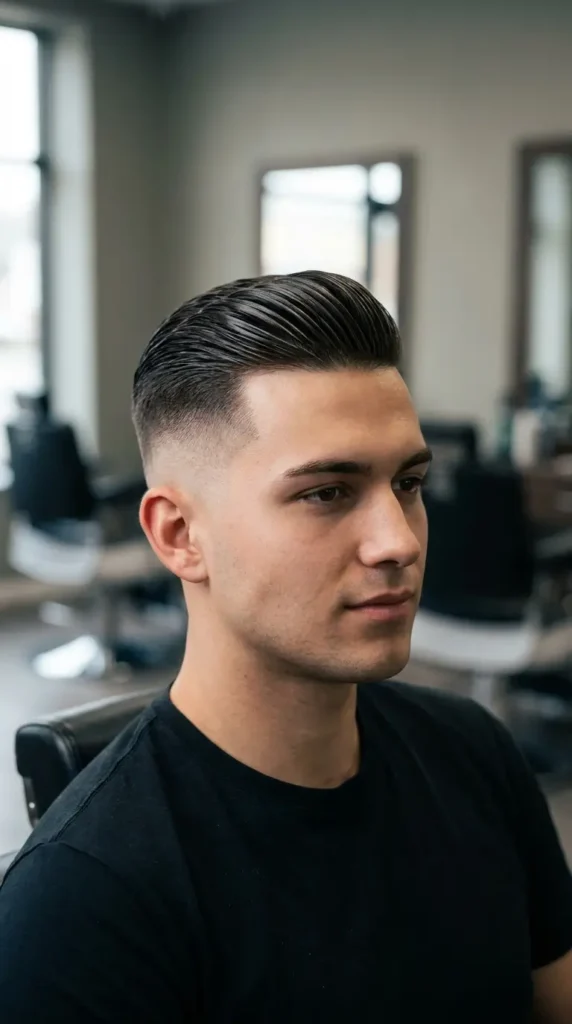
A high fade with classic slick back combs all the top hair smoothly backward from the forehead, laying it flat against the scalp with a glossy, polished finish. The faded sides add modern sharpness to this traditionally formal style.
What you need: 3–5 inches on top, oil-based pomade for high shine, fine-tooth comb Who it suits: Oval, square, and diamond face shapes; opens up the entire face Styling time: 3–4 minutes daily
10. High Fade with Textured Slick Back
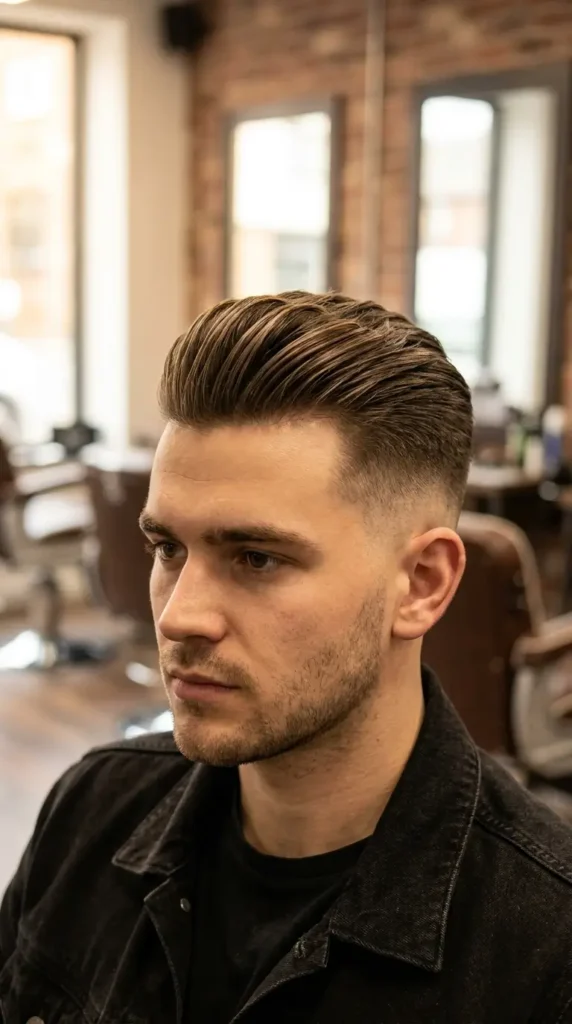
A high fade with textured slick back sweeps the hair backward but leaves visible finger-combed texture and separation in the surface. The finish is matte rather than glossy, creating a more relaxed interpretation of the classic slick back.
What you need: 3–5 inches on top, matte clay or fiber paste, fingers rather than comb Who it suits: All face shapes; the texture makes it more casual and approachable Styling time: 2–3 minutes daily
11. High Fade with Wet-Look Slick Back
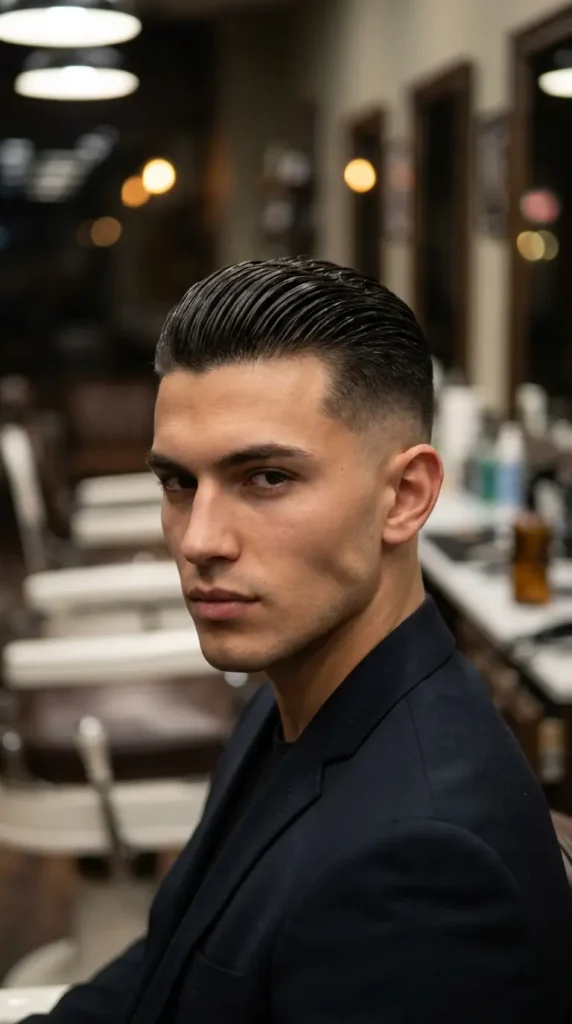
A high fade with wet-look slick back creates a high-shine, magazine-cover appearance where the hair appears permanently damp and sculpted. The glossy top against the bare faded sides produces maximum visual contrast.
What you need: 3–5 inches on top, strong-hold gel or oil-based pomade, fine-tooth comb Who it suits: Formal occasions: weddings, galas, photoshoots Styling time: 3–4 minutes daily
12. High Fade with Loose Slick Back
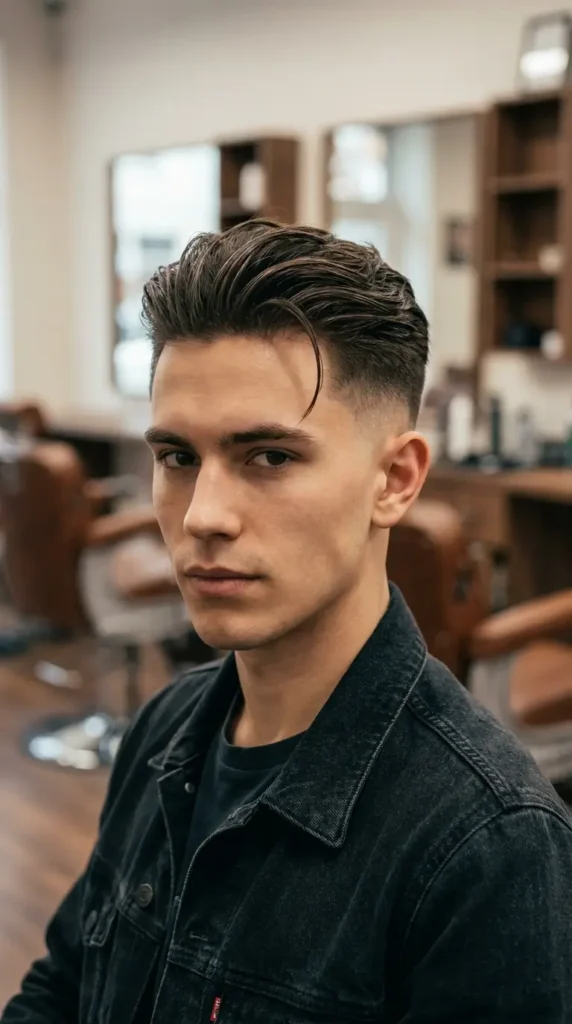
A high fade with loose slick back directs the hair backward without pressing it tightly against the scalp. The hair has natural movement and slight volume rather than a flat, compressed appearance.
What you need: 3–5 inches on top, water-based pomade (reshapeable), blow dryer backward Who it suits: Men who want the direction of a slick back without the stiff, formal feel Styling time: 3–4 minutes daily
13. High Fade with Classic Comb Over
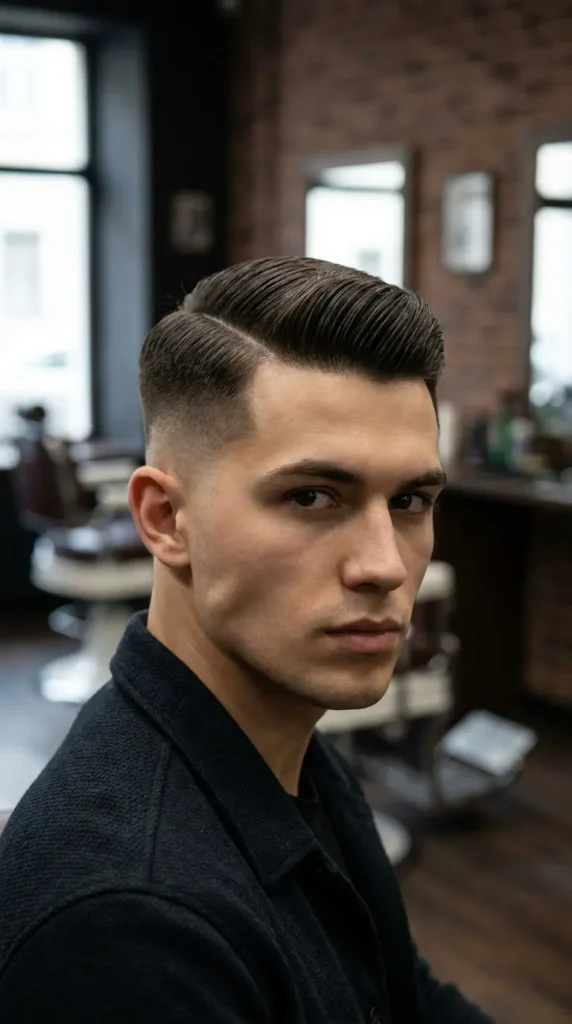
A high fade with classic comb over parts the hair on one side and sweeps it across to the other, creating a structured, directional look. The natural or hard part defines where the hair separates.
What you need: 2–4 inches on top, medium-hold pomade, comb Who it suits: All face shapes; one of the most professional high fade combinations available Styling time: 2–3 minutes daily
14. High Fade with Hard Part Comb Over
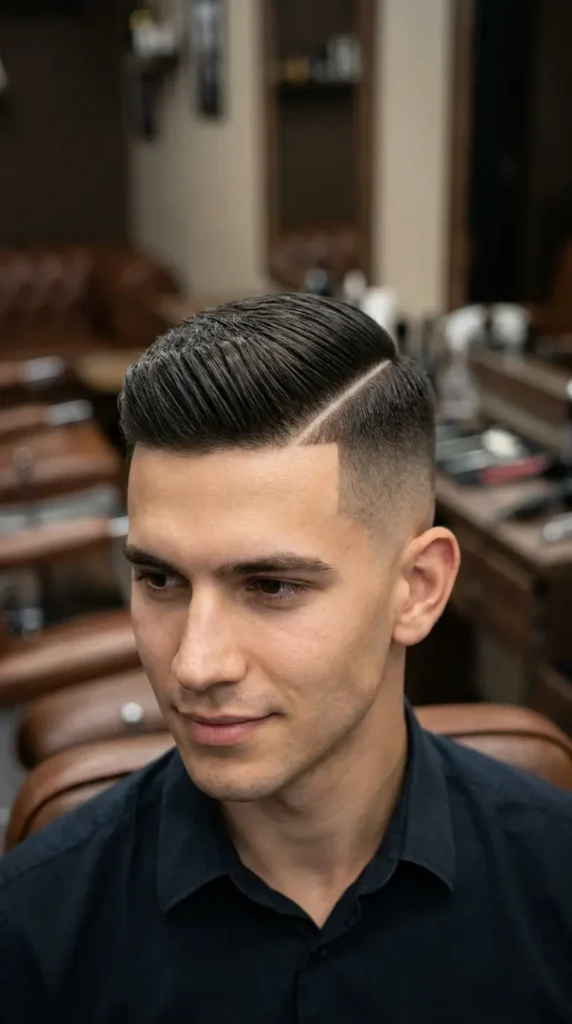
A high fade with hard part comb over adds a razor-shaved line along the parting, creating a crisp, architectural definition between the combed section and the faded side. The hard part eliminates ambiguity; the direction is deliberate and bold.
What you need: 2–4 inches on top, razor-cut part line (done by barber), medium-hold pomade Who it suits: Men who want maximum definition; excellent for round faces Celebrity reference: Cristiano Ronaldo Styling time: 2–3 minutes daily
15. High Fade with Textured Comb Over
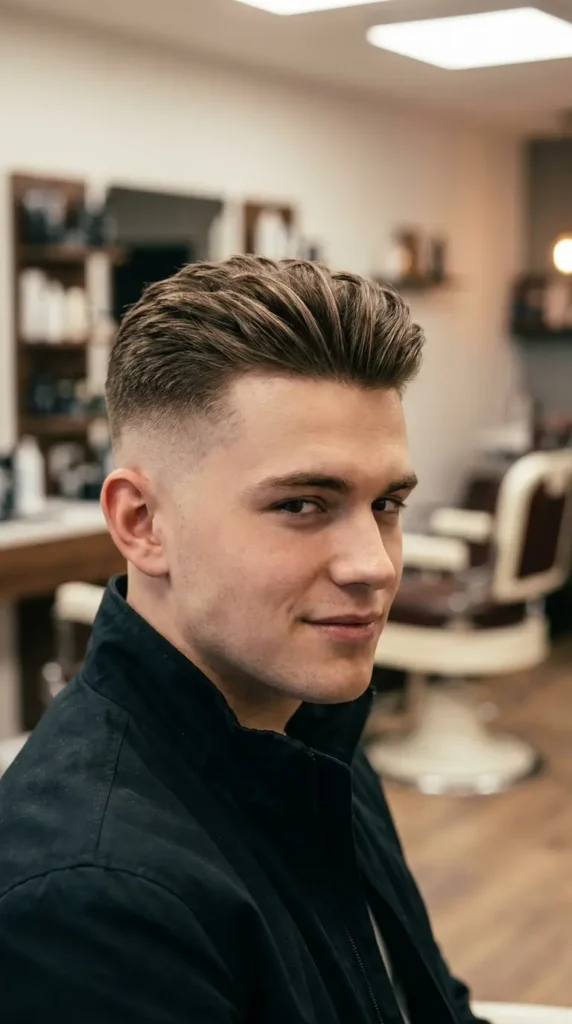
A high fade with textured comb over maintains the directional sweep but adds choppy, piece-y movement throughout the surface. The result is less formal than a classic comb over but still structured.
What you need: 2–4 inches on top, matte clay, fingers for placement Who it suits: All face shapes; bridges the gap between formal and casual Styling time: 2–3 minutes daily
16. High Fade with Voluminous Comb Over
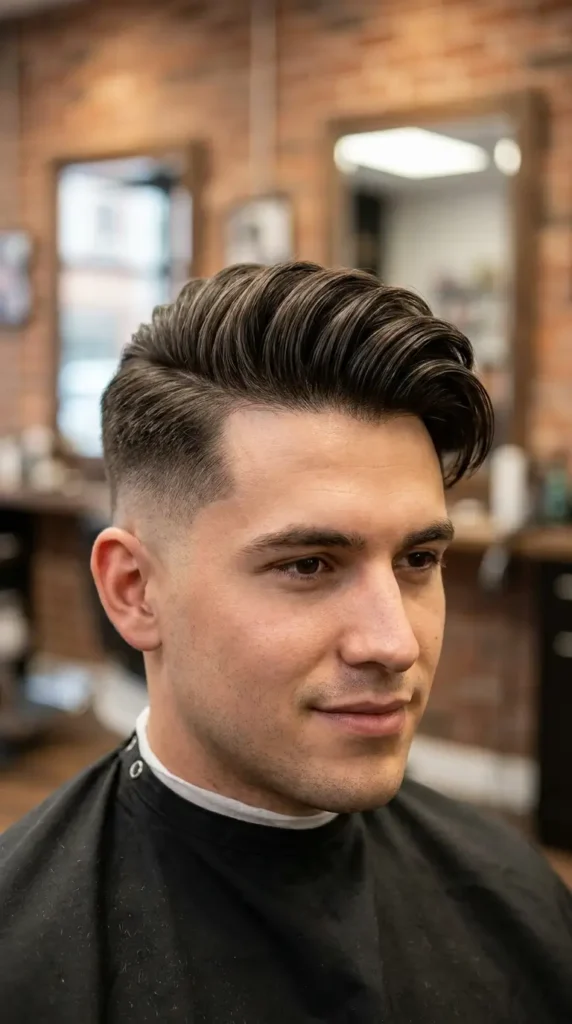
A high fade with voluminous comb over uses blow-drying to create significant lift and body in the swept-over section. The top appears thick, full, and dimensional rather than flat against the head.
What you need: 3–5 inches on top, blow dryer directed sideways, volumizing mousse, medium-hold wax Who it suits: Men with thin or fine hair who want the appearance of density Styling time: 4–5 minutes daily
17. High Fade with Classic French Crop
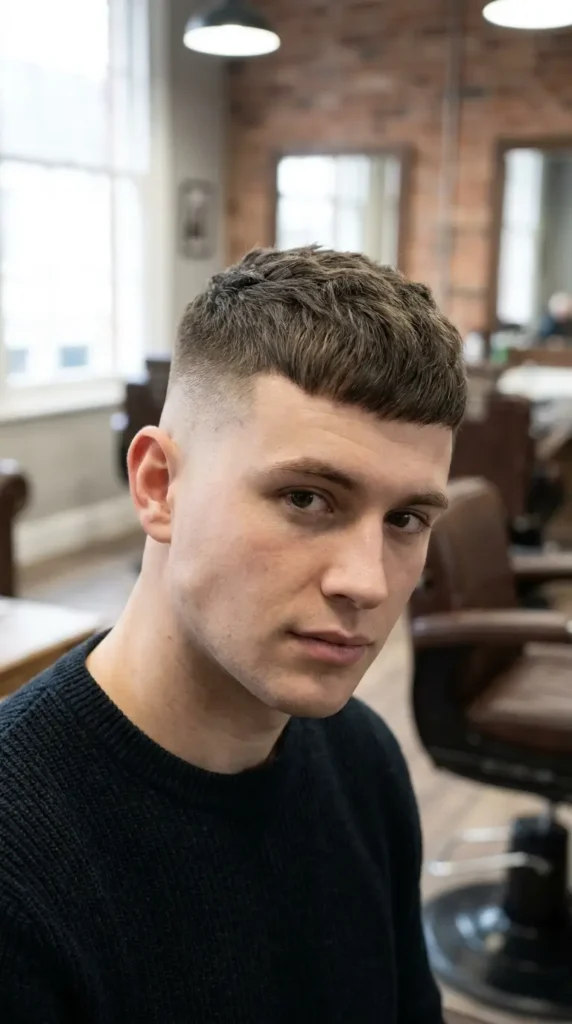
A high fade with classic French crop keeps the top short and uniform with a blunt fringe that falls forward across the forehead. This is one of the lowest-maintenance high fade combinations; most men can achieve this look with zero styling product.
What you need: 1–3 inches on top, optional matte clay for texture (or no product at all) Who it suits: Heart and oblong face shapes (the fringe visually shortens a long face) Styling time: 0–1 minutes daily
18. High Fade with Textured Crop
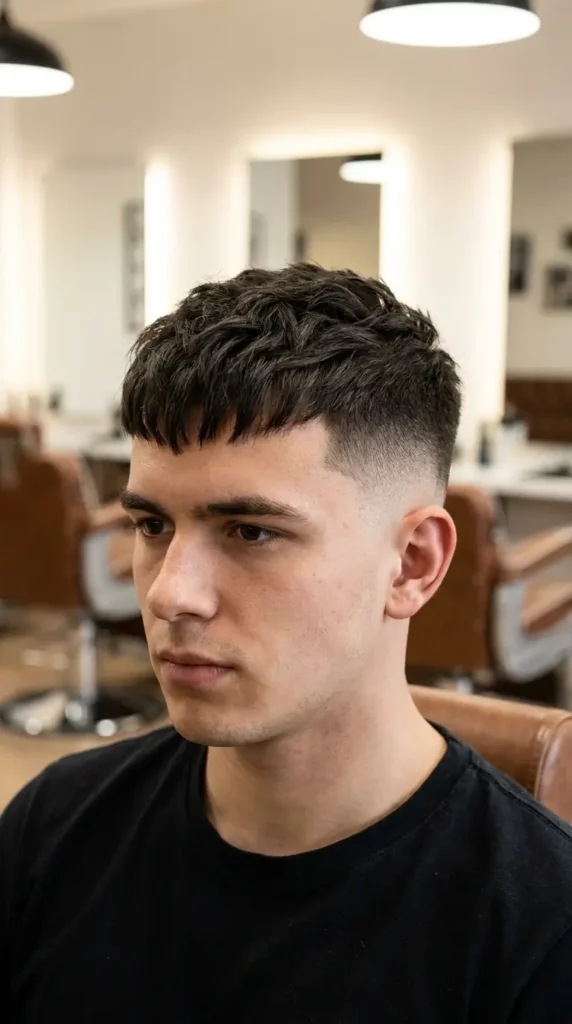
A high fade with textured crop adds choppy layering throughout the top section, creating visible movement and separation in the short forward-falling hair. This style gained massive popularity after the television series Peaky Blinders showcased similar cuts.
What you need: 1.5–3 inches on top, matte clay worked through dry hair for separation Who it suits: All face shapes; universally flattering and extremely easy to maintain Styling time: 1–2 minutes daily
19. High Fade with Choppy Fringe Crop
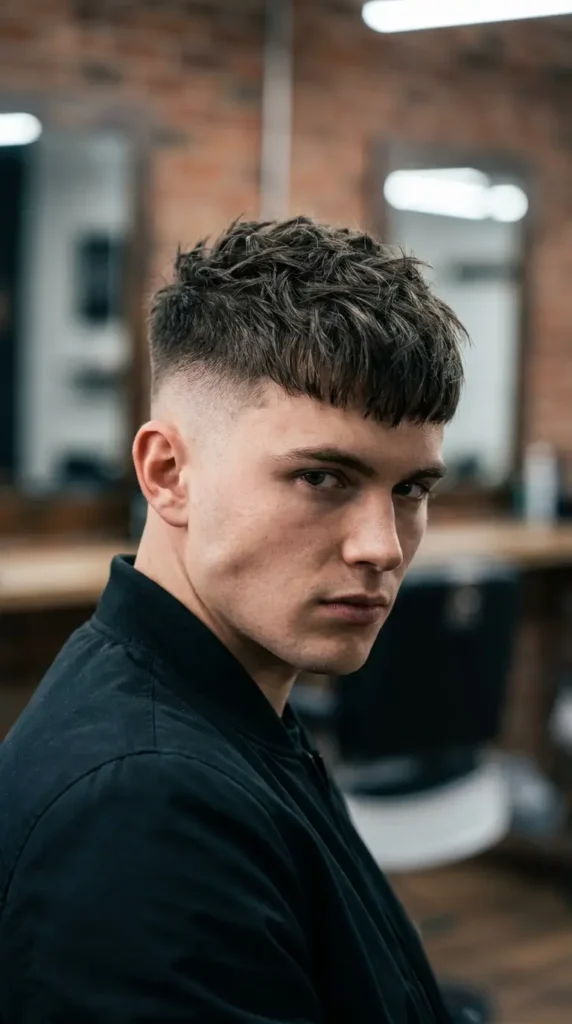
A high fade with choppy fringe crop cuts the front fringe into uneven, jagged lengths rather than a straight-across line. The irregular fringe adds edginess and visual interest to an otherwise simple short style.
What you need: 1.5–3 inches on top, light-hold clay or paste for texture Who it suits: Men who want more personality than a basic crop without adding length Styling time: 1–2 minutes daily
20. High Fade with Long Fringe Crop
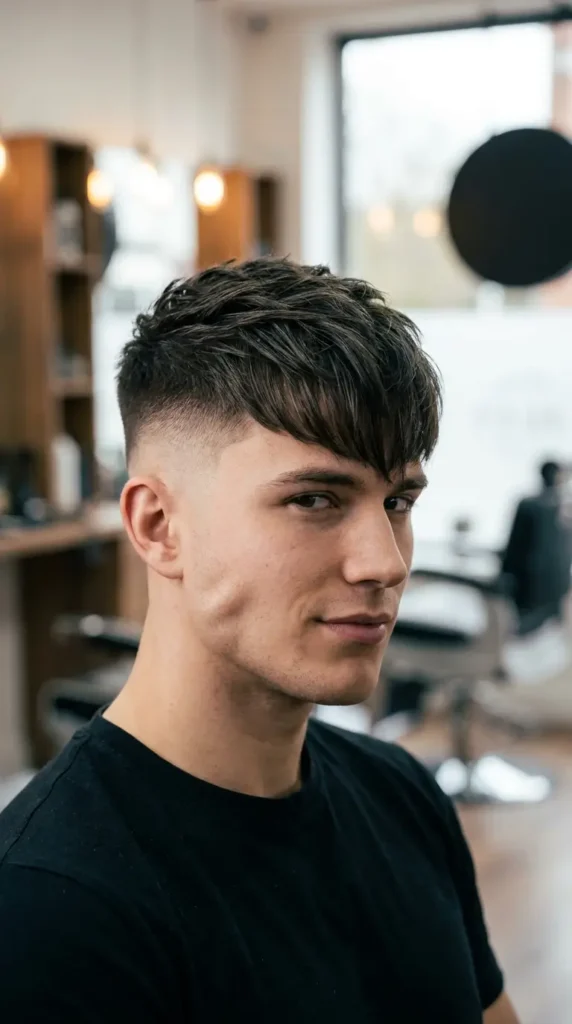
A high fade with long fringe crop extends the front section to 3–4 inches while keeping the back of the top short. The longer fringe can be worn forward across the forehead or swept to one side.
What you need: 3–4 inches at the front, 1–2 inches at the back, matte clay for direction Who it suits: Heart and oblong faces (covers the forehead and shortens the face visually) Styling time: 1–2 minutes daily
21. High Fade with Classic Crew Cut
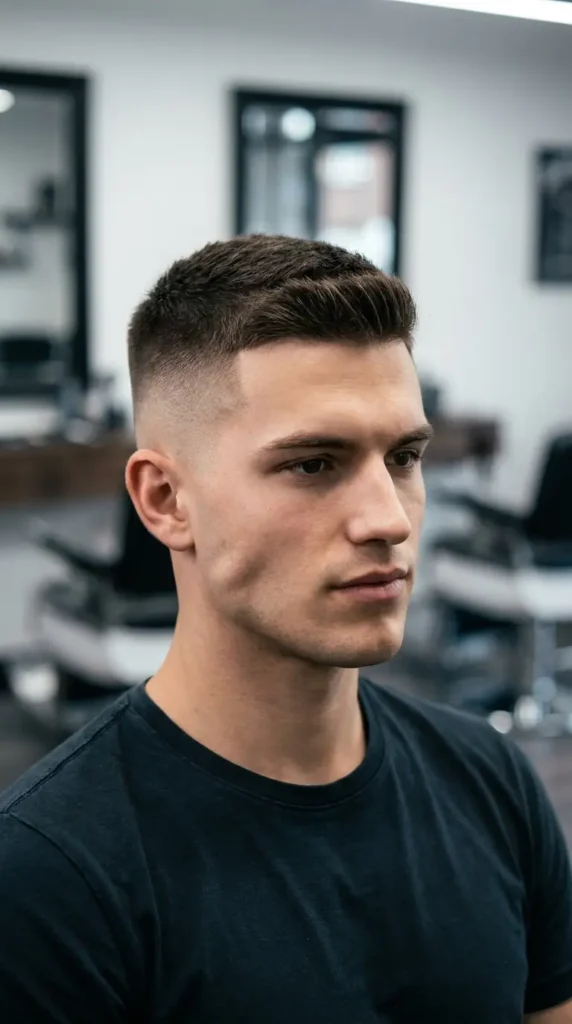
A high fade with classic crew cut keeps the top short (0.5–2 inches), tapered slightly from front to back. The crew cut originated in the military and remains one of the most universally appropriate and low-maintenance men’s haircuts.
What you need: No product required (optional light wax for slight texture) Who it suits: Every face shape; the safest, most conservative high fade option Styling time: 0 minutes daily
22. High Fade with Textured Crew Cut
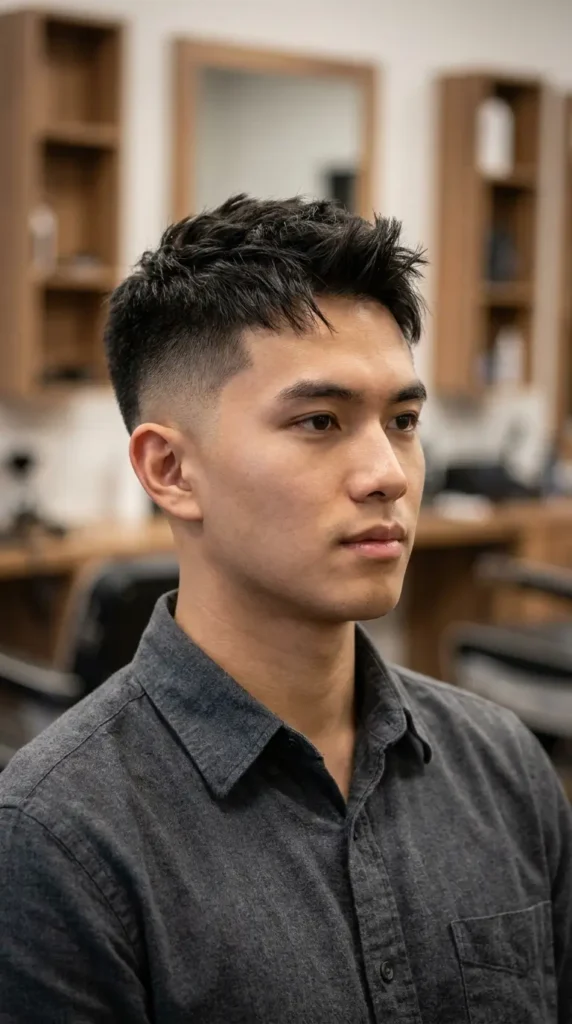
A high fade with textured crew cut adds subtle finger-styled movement to the short top rather than leaving it lying flat. The texture is minimal but prevents the cut from looking overly military or institutional.
What you need: 1–2 inches on top, small amount of matte clay Who it suits: Men who want crew cut simplicity with slightly more personality Styling time: 1 minute daily
23. High Fade with Ivy League
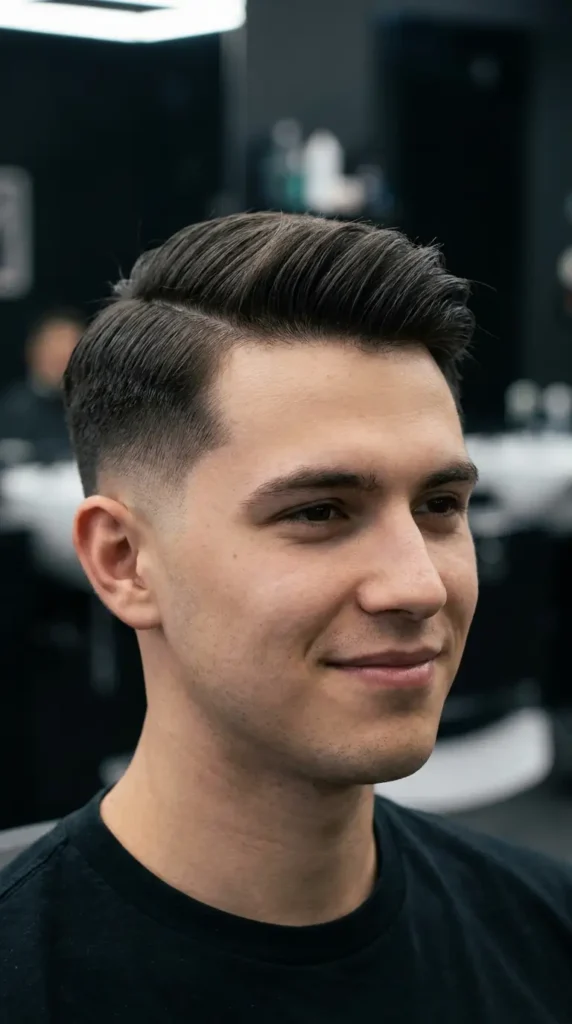
A high fade with Ivy League is an extended crew cut: slightly longer on top (2–3 inches) with enough length to part or brush to one side. Named after the preppy style associated with Ivy League universities, this cut bridges the gap between crew cut simplicity and comb over structure.
What you need: 2–3 inches on top, light pomade or wax, comb Who it suits: Professional environments, men who want length without commitment Styling time: 1–2 minutes daily
24. High Fade with Buzz Cut
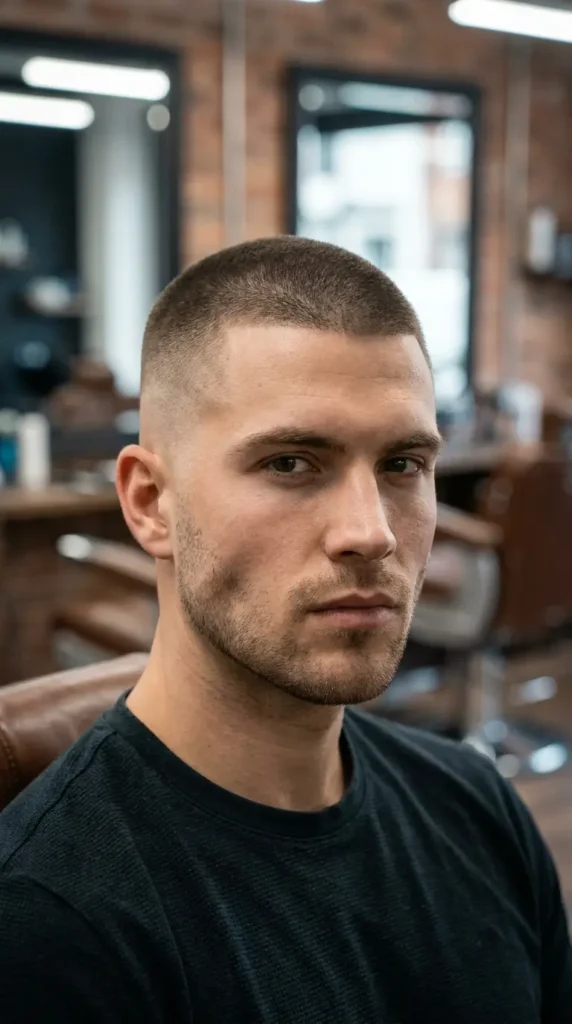
A high fade with buzz cut uses a single clipper guard (#2–#4) across the entire top while the sides are faded from skin upward. The contrast is subtle but present, creating dimension that a uniform buzz lacks.
What you need: Zero styling product, zero daily effort Who it suits: Men with strong facial features, receding hairlines, active lifestyles, or those wanting absolute minimum maintenance Styling time: 0 minutes daily
25. High Fade with Buzz Cut and Line-Up
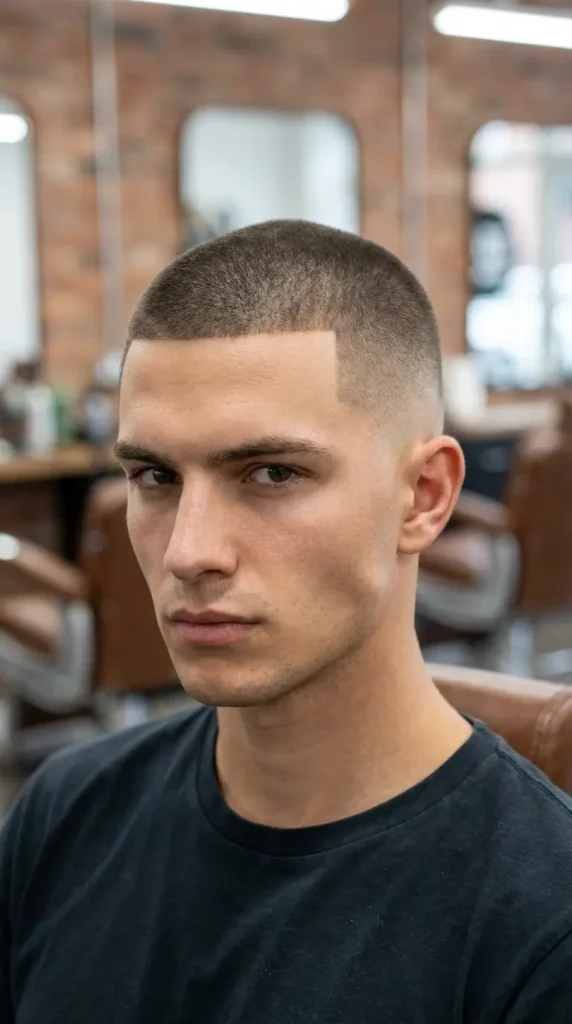
A high fade with buzz cut and line-up adds razor-sharpened geometric edges at the hairline, transforming the basic buzz into a deliberate, styled look. The line-up frames the face with precision that separates this from a simple all-over clip.
What you need: Zero product; the line-up does all the work Who it suits: All face shapes; the line-up provides the structure that a plain buzz cut lacks Celebrity reference: Drake Styling time: 0 minutes daily
26. High Fade with Induction Buzz
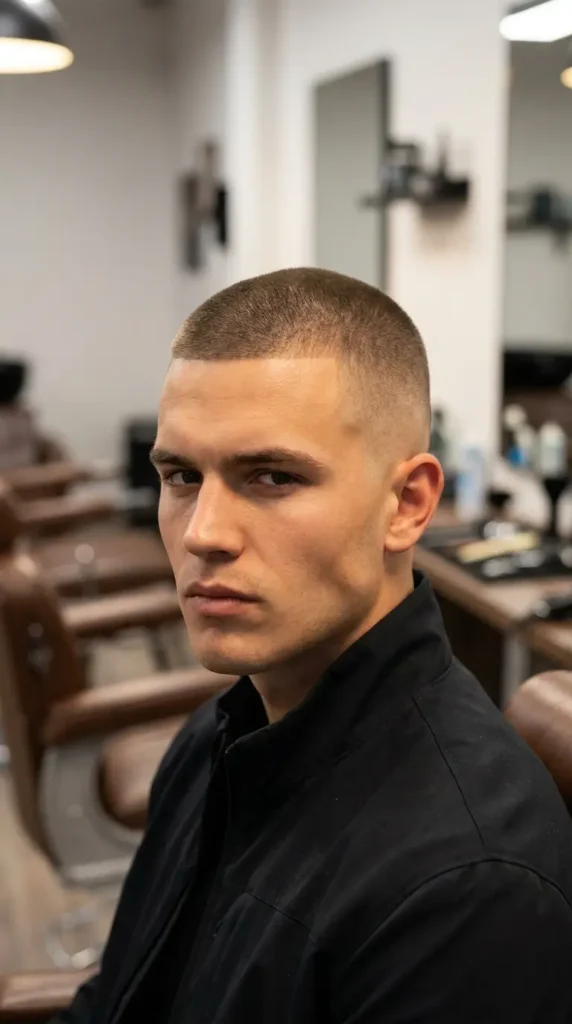
A high fade with induction buzz takes the top to its shortest possible clipper length (#1 or #0.5 guard), barely longer than the highest point of the fade. The contrast is extremely subtle: the sides are skin, the top is shadow-length.
What you need: Zero product, zero effort; the most minimal haircut possible while still having a fade Who it suits: Military personnel, athletes, men who want absolute zero maintenance Styling time: 0 minutes daily
27. High Fade with Natural Side Part
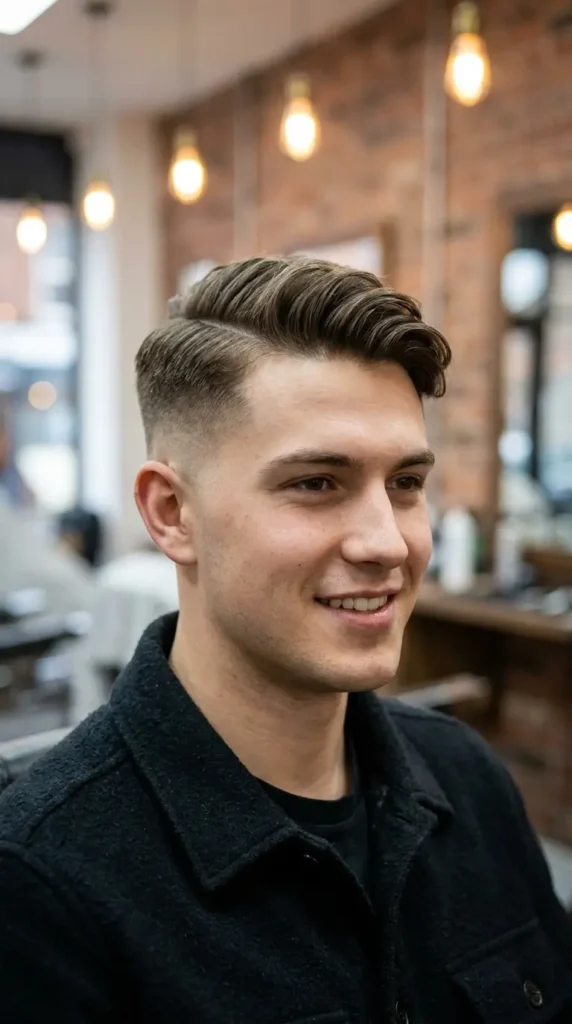
A high fade with natural side part uses the hair’s natural falling point to create a soft parting line. Unlike a hard part, no razor is used; the hair simply divides where it naturally wants to separate.
What you need: 2–5 inches on top, medium-hold pomade or wax, comb Who it suits: All face shapes and all occasions; one of the most versatile options Styling time: 2–3 minutes daily
28. High Fade with Hard Part
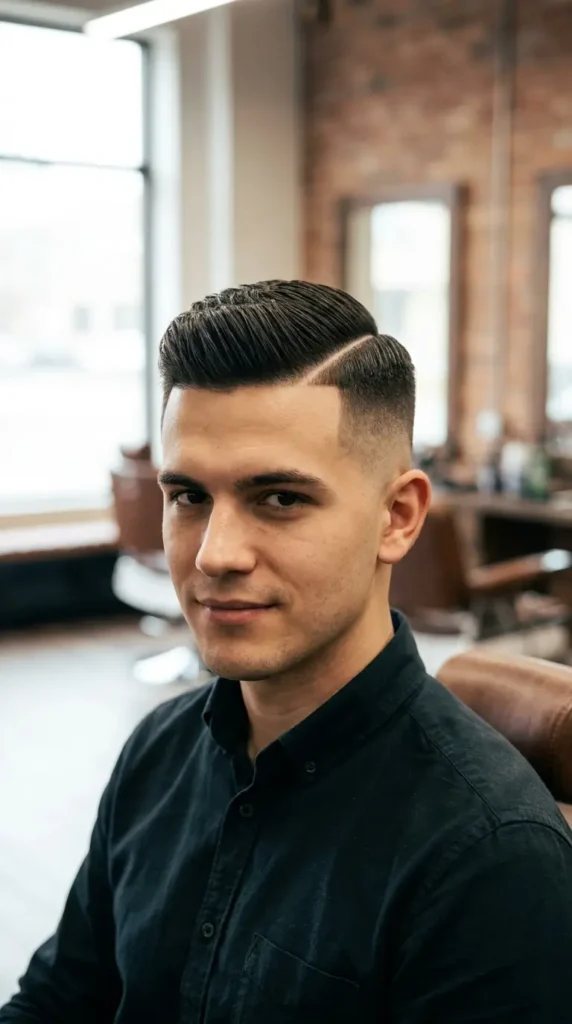
A high fade with hard part features a razor-shaved line cut into the side of the head, creating a crisp, architectural division between the top hair and the faded side. The hard part adds definition that requires zero daily styling to maintain.
What you need: Barber cuts the part with a razor or trimmer; no daily effort to maintain the line Who it suits: Men who want maximum definition and structure; excellent for round faces Styling time: 2 minutes daily (just the top; the part maintains itself)
29. High Fade with Deep Side Part
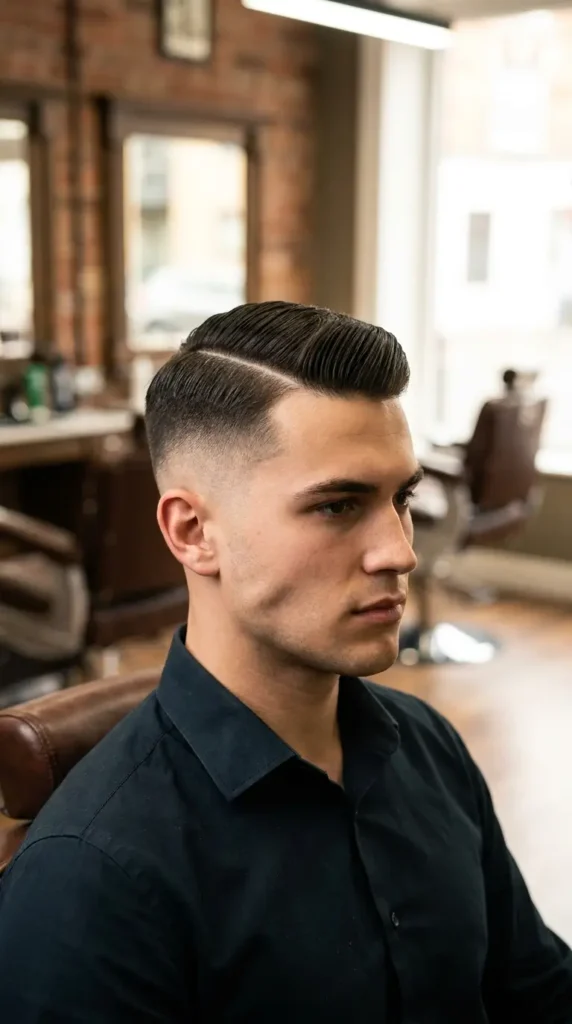
A high fade with deep side part places the parting line further toward the center of the head, sweeping a larger section of hair to one side. This creates more volume and coverage on the dominant side while exposing more of the fade on the short side.
What you need: 3–5 inches on top, pomade or wax, comb for directional styling Who it suits: Men with thin hair (more hair swept one way creates the appearance of fullness) Styling time: 2–3 minutes daily
30. High Fade with Classic Faux Hawk
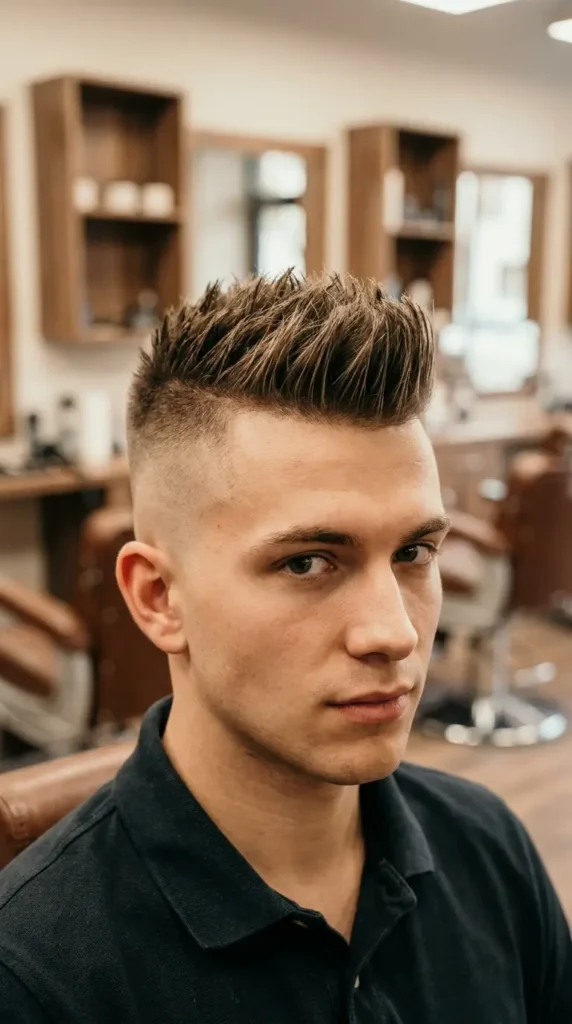
A high fade with classic faux hawk creates a central ridge of styled hair running from the forehead to the crown. It mimics a mohawk silhouette without shaving the sides completely; the high fade provides the contrast while keeping enough length for the ridge shape.
What you need: 2–4 inches on top, strong-hold wax or clay, blow dryer directed inward from both sides Who it suits: Round and oval face shapes (the central ridge adds height and angular structure) Styling time: 4–5 minutes daily
31. High Fade with Textured Faux Hawk
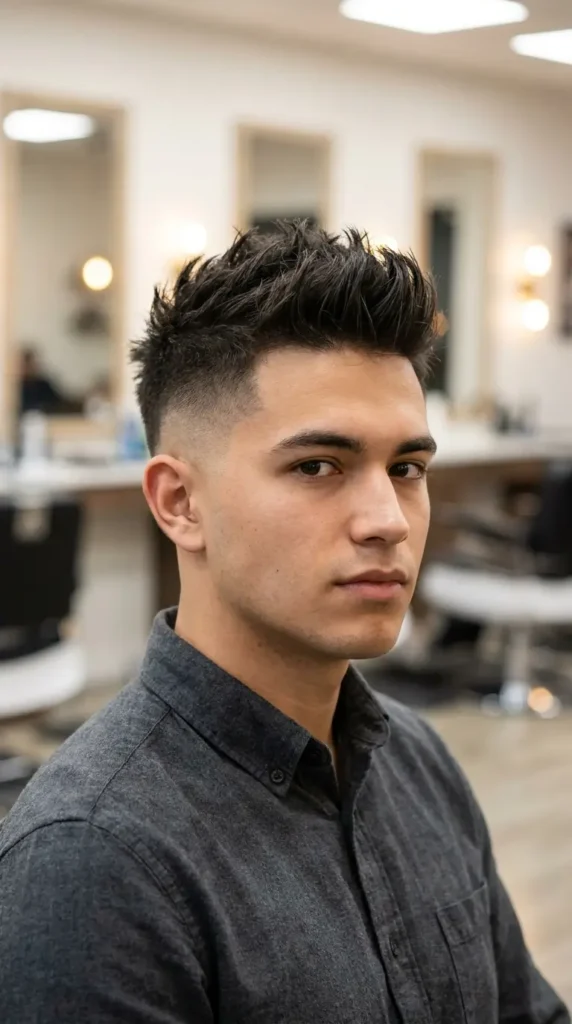
A high fade with textured faux hawk creates the central ridge shape but leaves the surface piece-y, separated, and intentionally imperfect. The texture makes the style look more natural and less like a deliberate mohawk imitation.
What you need: 2–4 inches on top, matte clay applied to dry hair, fingers for shaping Who it suits: All face shapes; more casual than the sculpted version Styling time: 3–4 minutes daily
32. High Fade with Short Faux Hawk
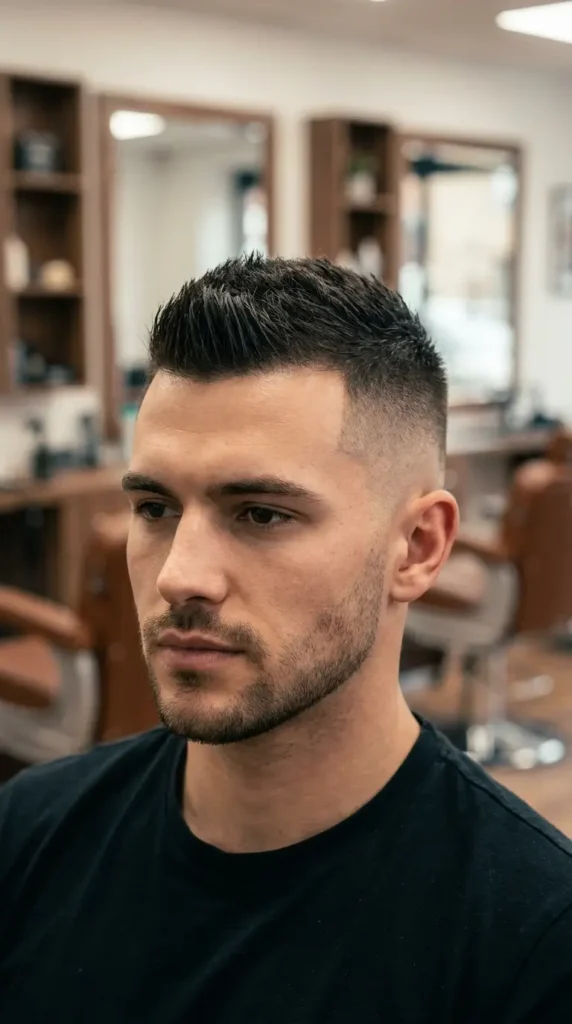
A high fade with short faux hawk keeps the central ridge at 1.5–2 inches: enough to create visible directionality and subtle height without dramatic spiking. This is the work-appropriate version of the faux hawk.
What you need: 1.5–2 inches on top, medium-hold wax, fingers Who it suits: Men who want faux hawk shape without drawing excessive attention Styling time: 1–2 minutes daily
33. High Fade with Curly Faux Hawk
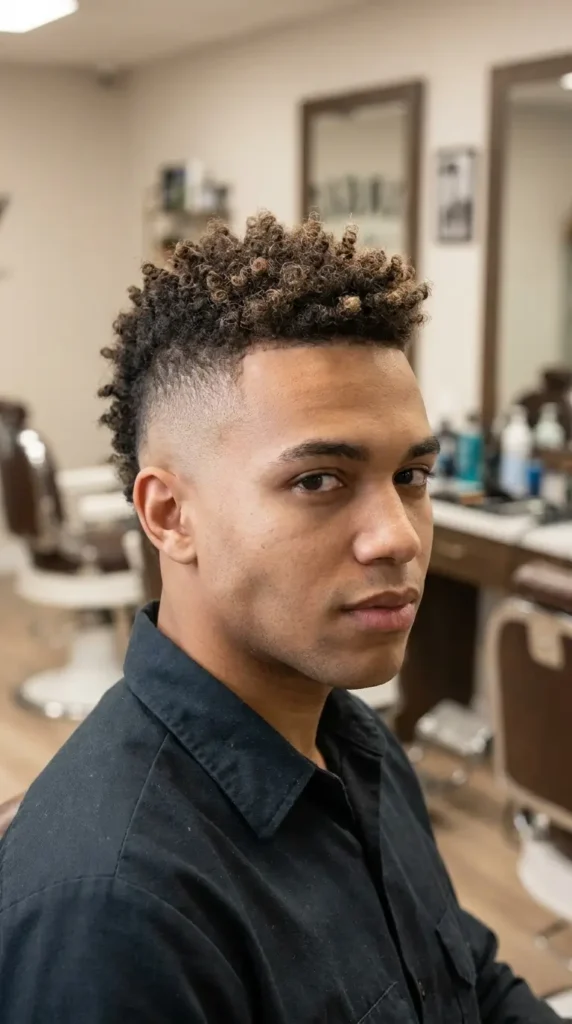
A high fade with curly faux hawk uses natural curl volume to create the central ridge shape without product manipulation. The curls stack naturally toward the center when the sides are faded short enough.
What you need: 2–4 inches of curly hair on top, lightweight curl cream, no heavy sculpting products Who it suits: Men with Type 3 curls who want a bold shape without fighting their texture Styling time: 1–2 minutes daily
34. High Fade with Classic Mohawk
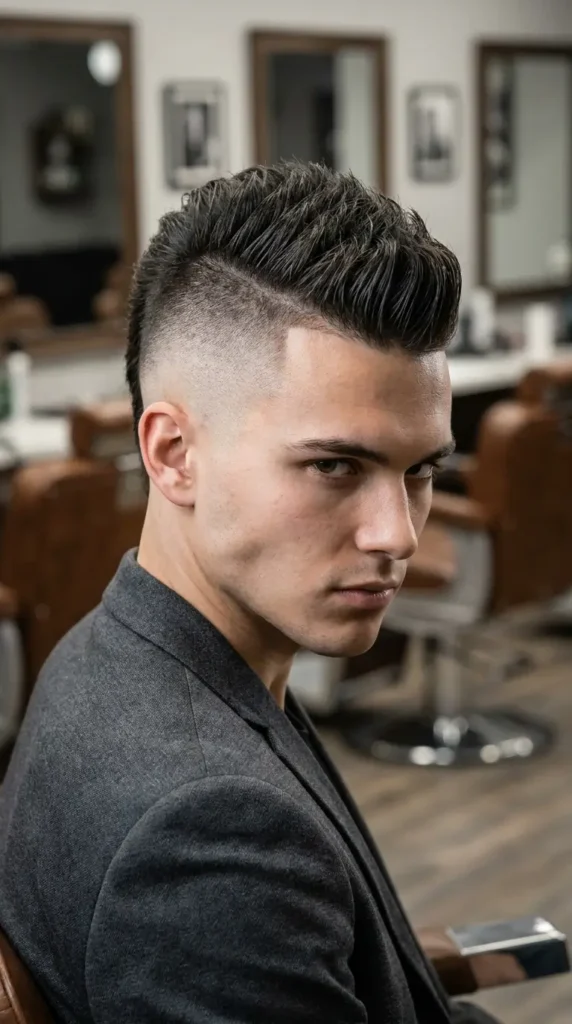
A high fade with classic mohawk features a defined strip of longer hair (1–3 inches wide) running centrally from forehead to nape. The high fade on both sides creates maximum contrast against the central strip, making this the most dramatic combination in men’s barbering.
What you need: 2–6 inches on top (depending on desired height), strong-hold gel or wax, blow dryer for spiked versions Who it suits: Men who want maximum visual impact; not suited for conservative environments Styling time: 5–7 minutes daily (if spiked) or 1–2 minutes (if left natural)
35. High Fade with Curly Mohawk
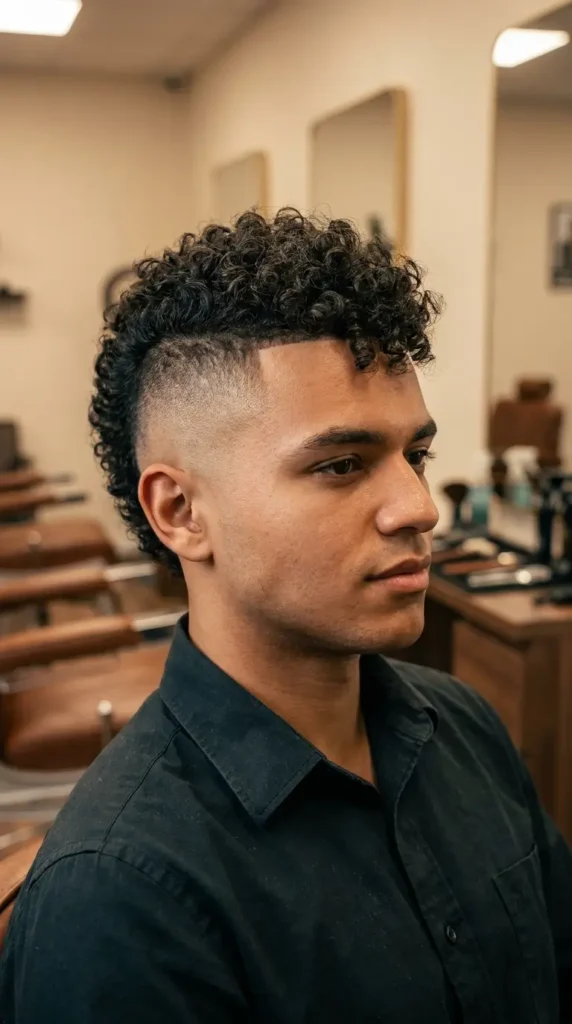
A high fade with curly mohawk lets natural curls create the height and volume of the central strip without needing to spike or sculpt with product. The curly texture produces a softer, more organic mohawk shape compared to the rigid spiked version.
What you need: 3–5 inches of curly hair on top, curl cream for definition, wide-tooth pick for volume Who it suits: Men with Type 3–4 curls who want a bold shape with natural texture Celebrity reference: Odell Beckham Jr. Styling time: 1–2 minutes daily
36. High Fade with Short Mohawk
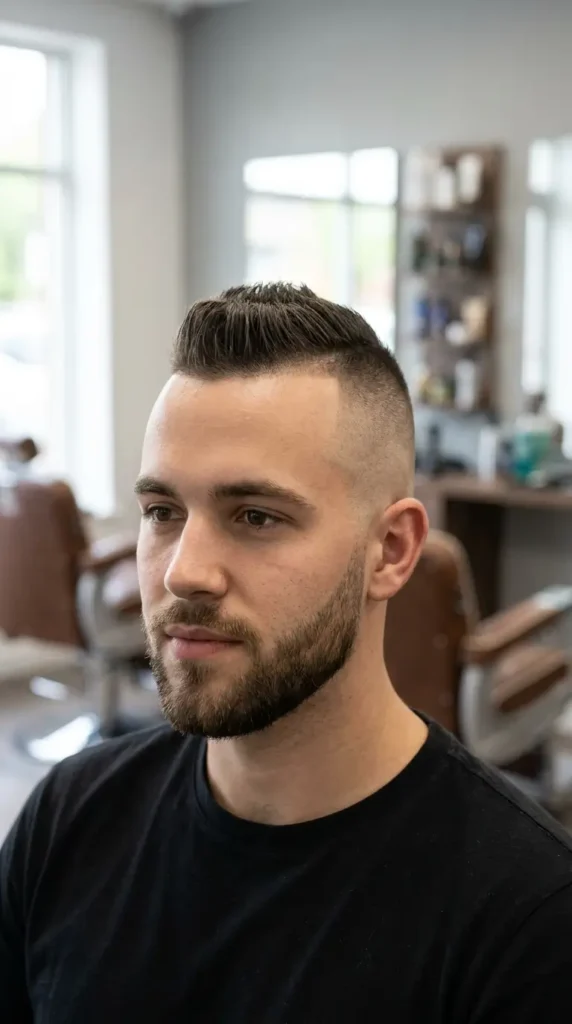
A high fade with short mohawk keeps the central strip at 1–2 inches: enough to read as a mohawk silhouette from the side but short enough to lie flat without product. This is the subtle, understated version.
What you need: No product necessary; the shape speaks for itself Who it suits: Men transitioning into bolder styles gradually Styling time: 0 minutes daily
37. High Fade with Burst Mohawk
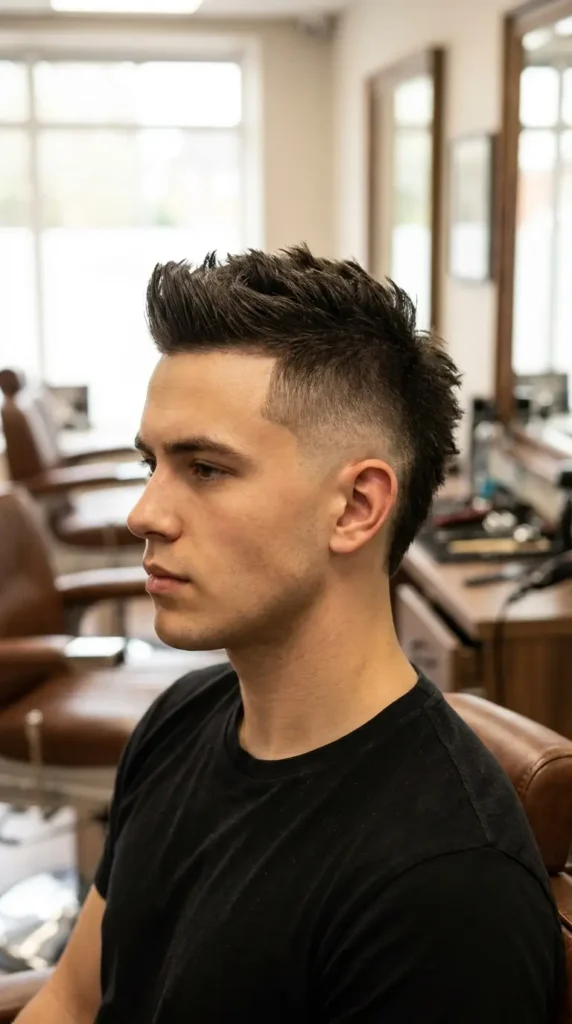
A high fade combined with a burst fade creates a unique hybrid where the fade radiates around the ear in a semicircle rather than going straight up. The central mohawk strip remains, but the fade shape follows the ear’s curvature for a more rounded, flowing profile.
What you need: 2–5 inches on top, shaping product of choice Who it suits: Men who want mohawk drama with a softer, more unique fade shape Styling time: 2–3 minutes daily
38. High Fade with Modern Mullet
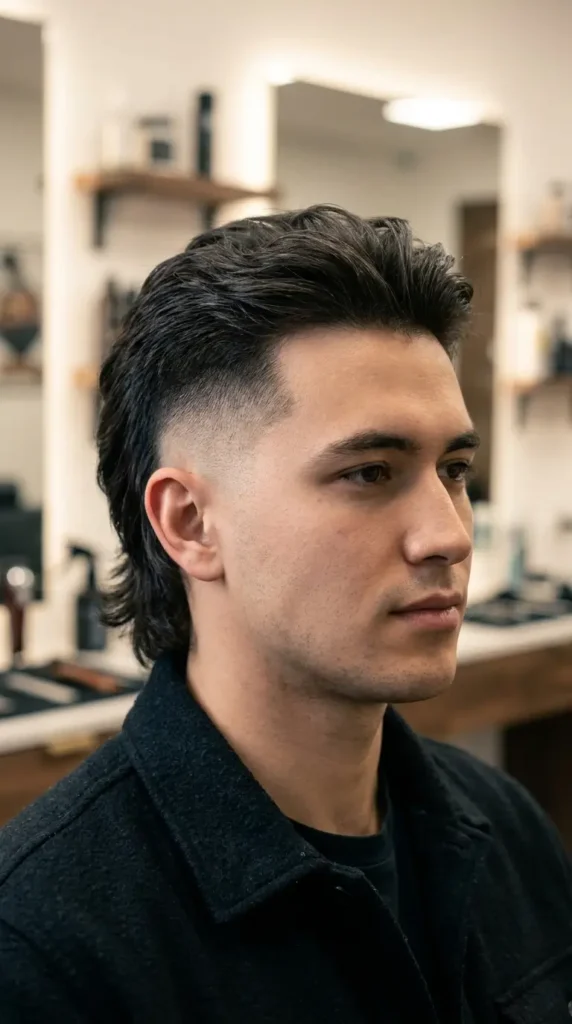
A high fade with modern mullet fades the sides tightly while keeping short-to-medium hair on top and leaving the back to grow long past the neckline. The modern version is textured, intentional, and sharper than the 1980s original.
What you need: 2–3 inches on top, 4–8 inches at the back, texture spray for back movement Who it suits: Gen Z and younger millennials; this is a trend-forward statement cut Celebrity reference: Bad Bunny Styling time: 1–2 minutes daily
39. High Fade with Curly Mullet
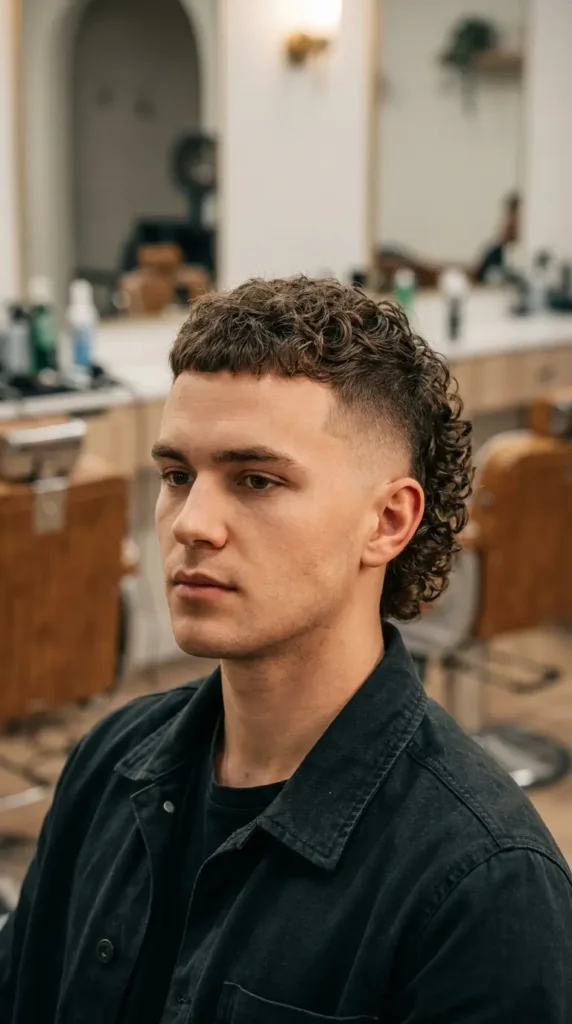
A high fade with curly mullet lets natural curls flow at the back while the sides are faded clean. The curl pattern at the back creates natural movement and bounce that straight-haired mullets lack.
What you need: Curly hair (Type 2B–3C), curl cream for the back, clean faded sides Who it suits: Men with natural curl pattern who want an edgy, trend-driven look Styling time: 1 minute daily
40. High Fade with Wavy Mullet
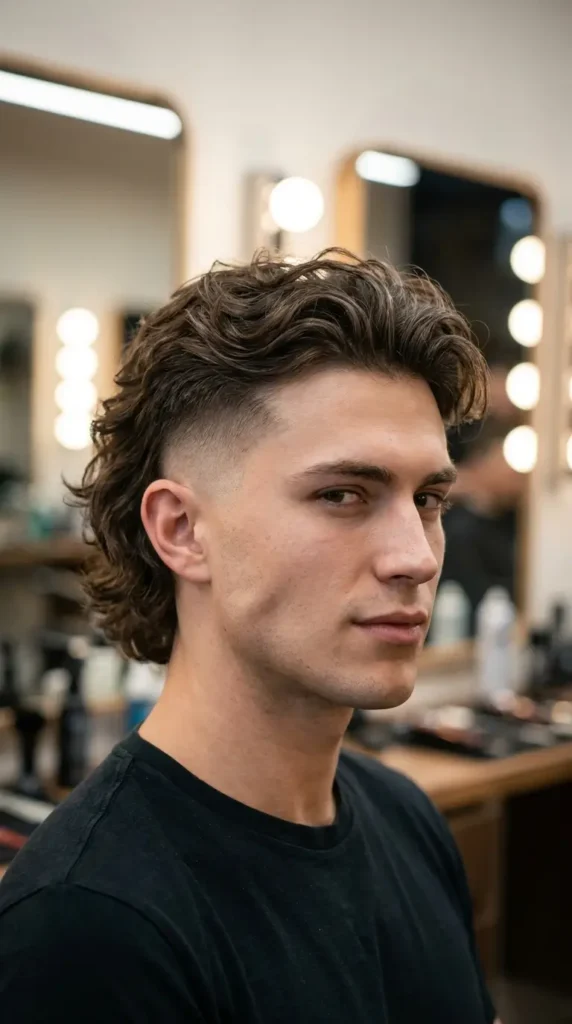
A high fade with wavy mullet uses natural wave texture at the back for relaxed, beachy movement. Sea salt spray enhances the wave pattern and adds volume to the back length.
What you need: Wavy hair at the back (4–6 inches), sea salt spray, no styling on top needed Who it suits: Men with Type 2 waves who want effortless texture at the back Styling time: 1 minute daily
41. High Fade with Man Bun
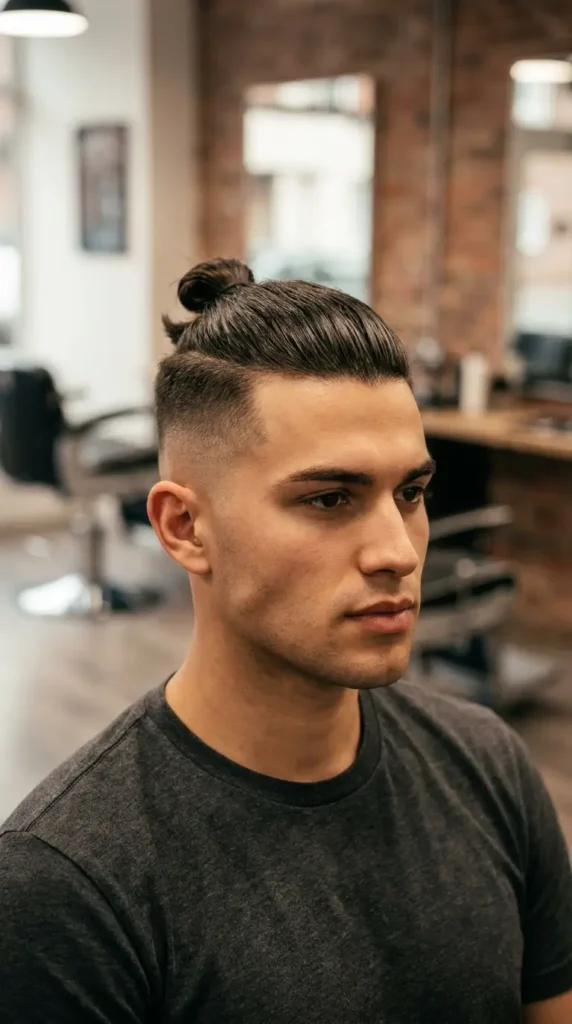
A high fade with man bun ties the top hair back into a rounded bun at the crown or back of the head. The tightly faded sides create a clean disconnected silhouette that prevents the bun from looking unkempt or formless.
What you need: Minimum 6 inches on top (8–12 months of growth), snag-free hair tie Who it suits: Men who want length versatility; can wear it tied up or let it down Styling time: 30 seconds daily
42. High Fade with Samurai Bun
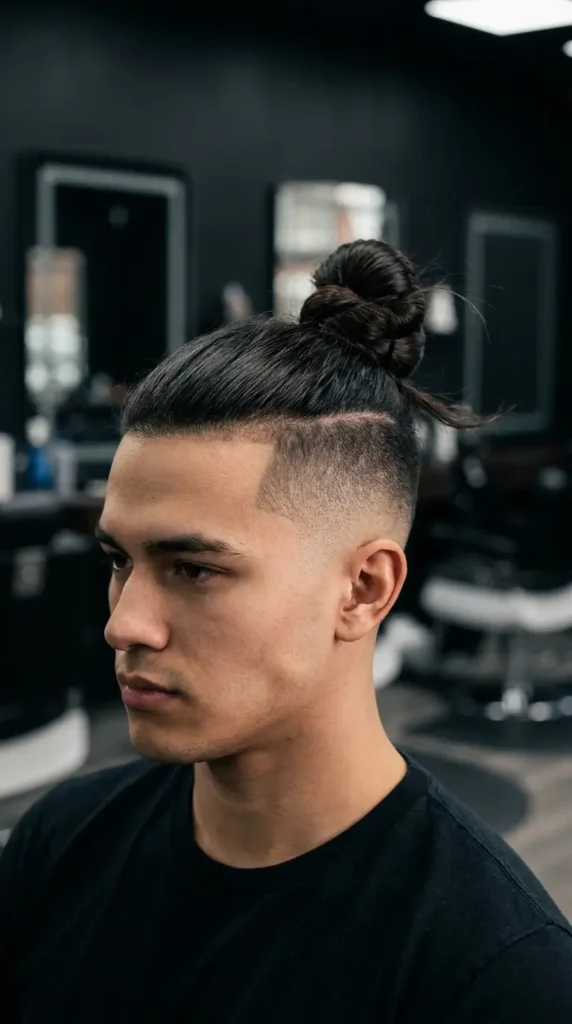
A high fade with samurai bun places the tied bun higher on the crown, closer to the top of the head, creating a more structured, deliberate appearance than a standard man bun positioned at the back.
What you need: 6+ inches on top, hair tie, the bun sits higher than a standard man bun Who it suits: Men who want the man bun shape with more angular, intentional positioning Styling time: 30 seconds daily
43. High Fade with Low Ponytail
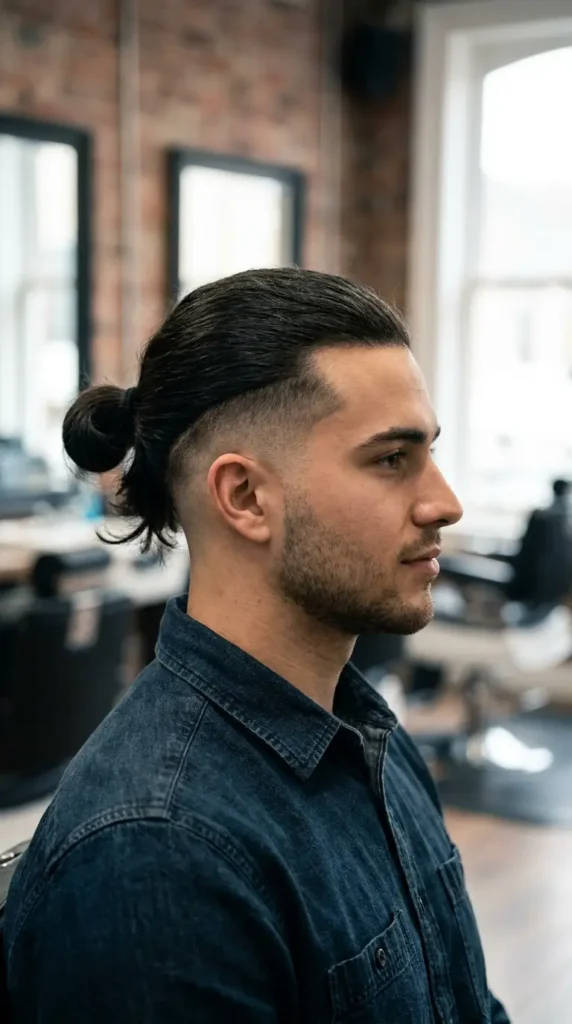
A high fade with low ponytail gathers the top hair and ties it at the back of the head without forming a bun. The hair hangs freely below the tie point, creating a longer, flowing silhouette behind the head.
What you need: 5+ inches on top, hair tie Who it suits: Men growing out their top length who have not reached full bun length yet Styling time: 30 seconds daily
44. High Fade with Top Knot
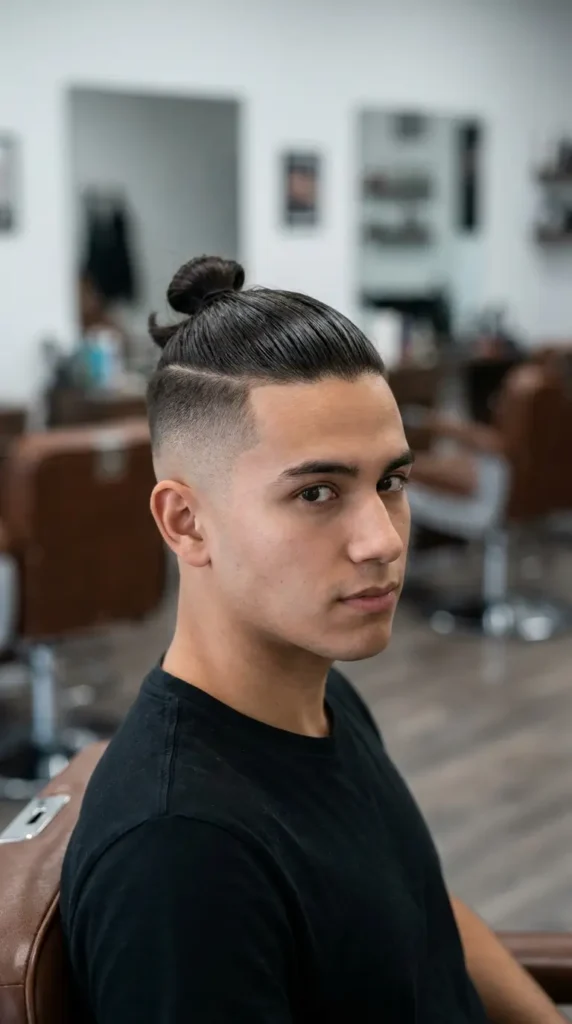
A high fade with top knot is a smaller, tighter version of the man bun: the hair is twisted into a compact knot rather than a full rounded bun. It requires less length than a standard bun and creates a more minimalist tied-back look.
What you need: 4–5 inches on top (enough to twist and tie), small hair tie Who it suits: Men with medium-length top hair who cannot yet achieve a full bun Styling time: 30 seconds daily
45. High Fade with Classic Edgar Cut
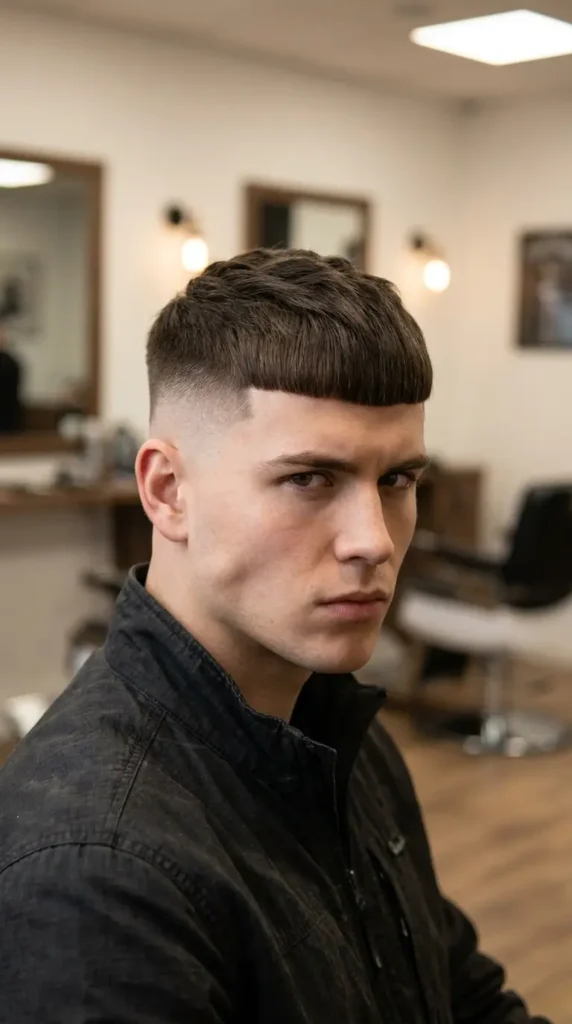
A high fade with classic Edgar cut creates a ruler-straight blunt fringe across the forehead with razor-sharp line-ups at the temples. The combination of the horizontal fringe line and vertical fade creates a bold geometric frame around the face.
What you need: 1.5–3 inches on top, straight thick hair, precise barber work; the line-up must be flawless Who it suits: Extremely popular among Latino men and Gen Z; works best with straight, dense hair Styling time: 0–1 minutes daily
46. High Fade with Textured Edgar
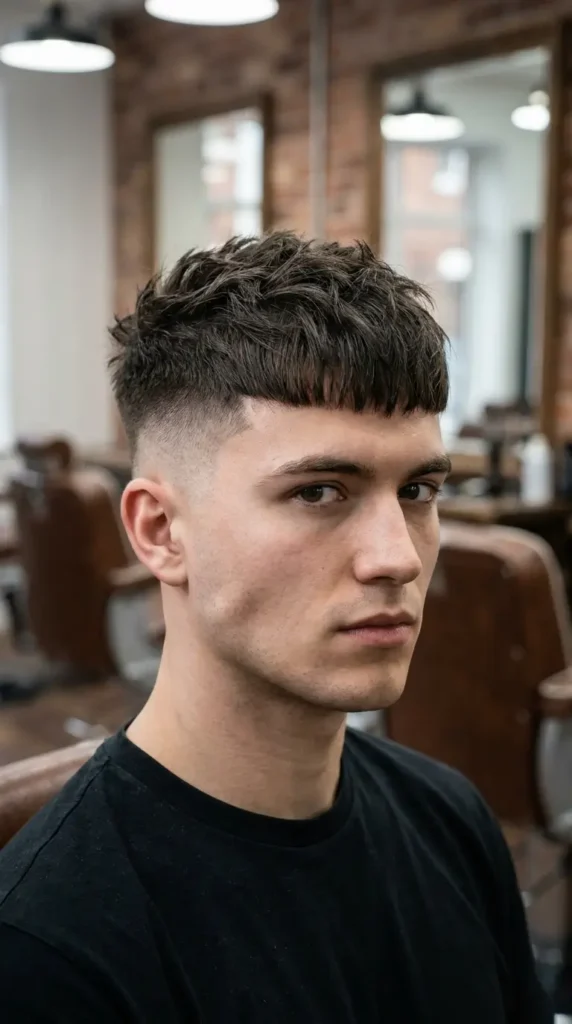
A high fade with textured Edgar keeps the straight-across fringe but adds choppy movement and layering behind it. The fringe line remains blunt at the front, but the hair behind it has visible separation and texture.
What you need: 2–3 inches on top, matte clay for texture behind the fringe Who it suits: Men who want the Edgar shape with more visual interest and dimension Styling time: 1 minute daily
47. High Fade with Disconnected Undercut
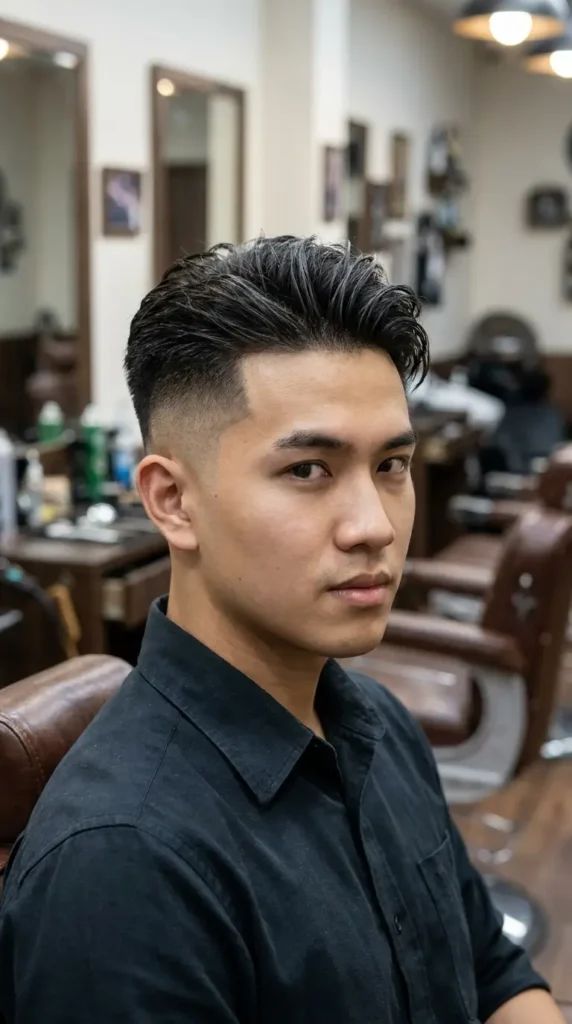
A high fade with disconnected undercut creates an abrupt contrast line between the long top and the faded sides. There is no blending at the junction; the top hair simply stops and the skin fade begins, creating a sharp architectural line.
What you need: 3–8 inches on top (any length works), the disconnection is created by the barber Who it suits: Men who want maximum drama and visible contrast; not a subtle style Styling time: Varies based on top style chosen (2–5 minutes)
48. High Fade with Textured Top
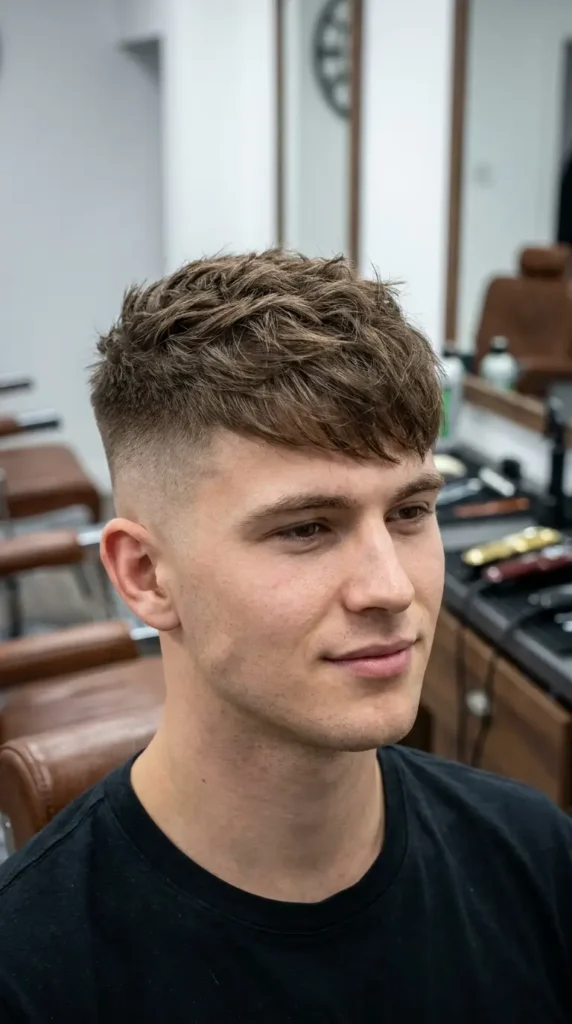
A high fade with textured top uses point-cutting and layering to create choppy, lived-in movement across the entire top section. There is no specific directional styling; the hair falls naturally with visible separation and dimension.
What you need: 2–4 inches on top, matte clay or sea salt spray, fingers for styling Who it suits: All face shapes; one of the most popular everyday high fade combinations Styling time: 1–2 minutes daily
49. High Fade with Messy Top
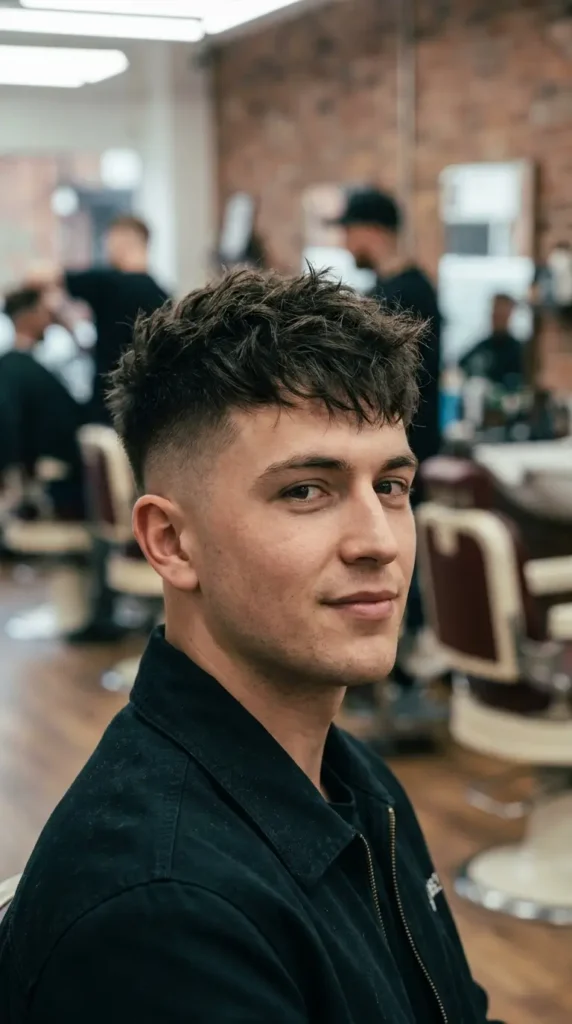
A high fade with messy top is intentionally unstyled on top: the hair is ruffled, undirected, and purposefully imperfect. The contrast between the precise faded sides and the casual messy top creates a modern, effortless aesthetic.
What you need: 2–4 inches on top, optional sea salt spray, fingers for ruffling Who it suits: Men who want zero-effort styling that still looks intentionally put together Styling time: 30 seconds daily
50. High Fade with Brush Up
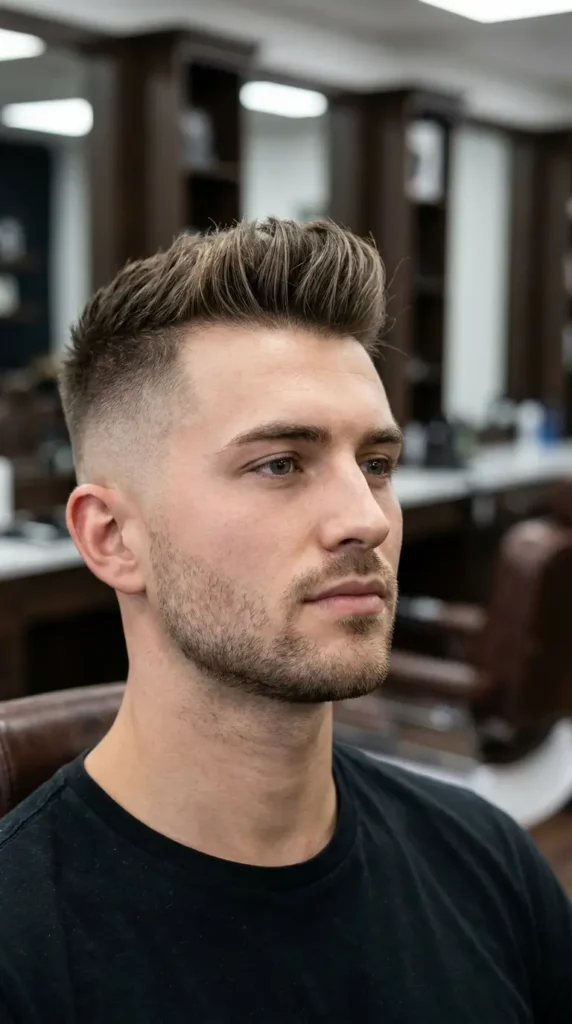
A high fade with brush up directs all the top hair straight upward from the scalp, creating maximum vertical height. Unlike the pompadour (which goes up and back), the brush up goes purely upward for a clean, modern silhouette.
What you need: 2–4 inches on top, strong-hold clay or wax, blow dryer directed upward Who it suits: Round face shapes (the pure vertical direction creates maximum elongation) Styling time: 3–4 minutes daily
51. High Fade with Blowout
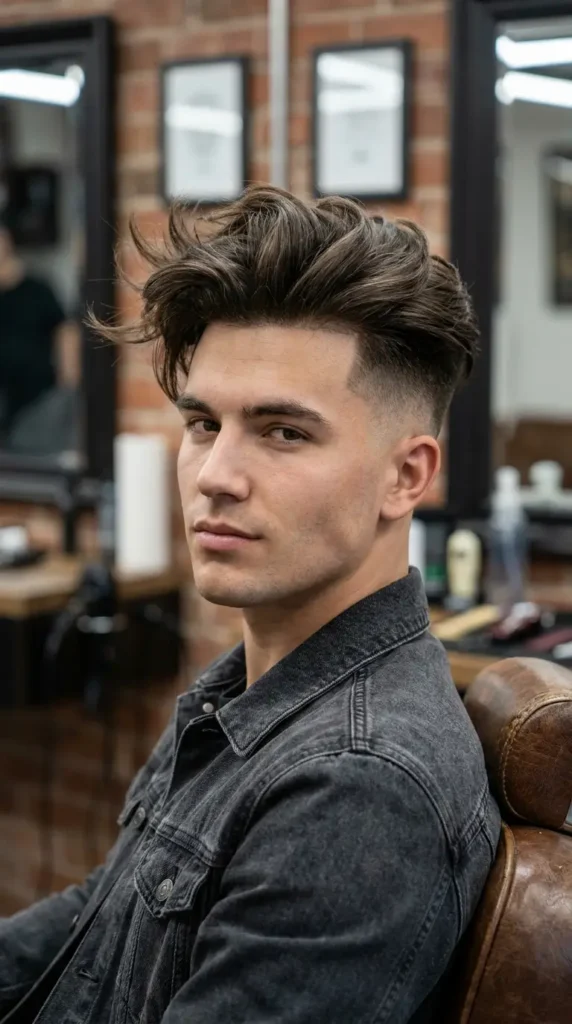
A high fade with blowout uses a blow dryer to create an oversized, voluminous rounded shape on top. The hair has significant body and movement, puffed out and full, creating a large, attention-grabbing silhouette above the faded sides.
What you need: 3–5 inches on top, blow dryer, round brush, volumizing mousse Who it suits: Men with thick hair who want maximum volume and presence Styling time: 5–7 minutes daily
52. High Fade with Flat Top
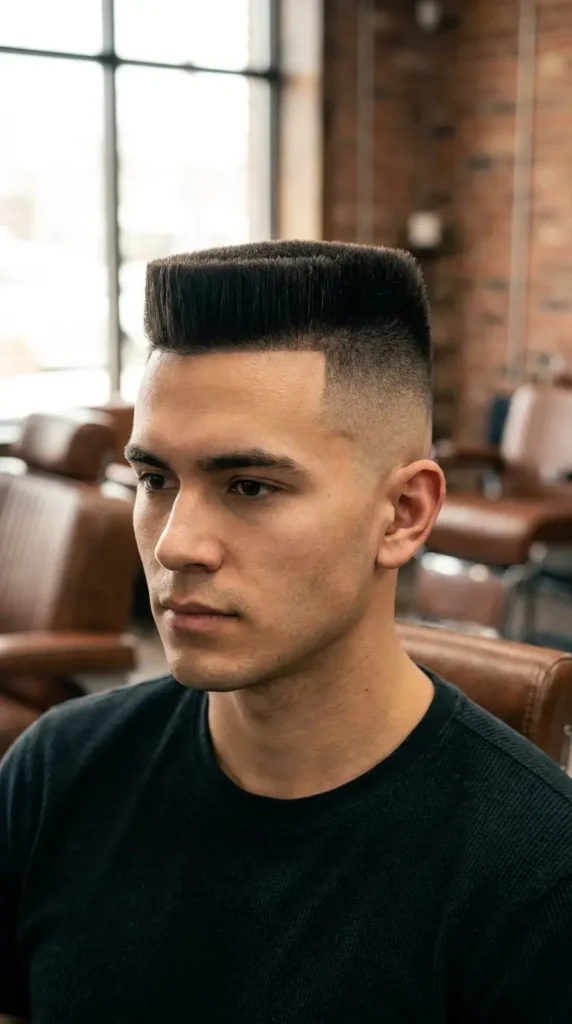
A high fade with flat top creates a squared-off, level horizontal surface on top of the head: the hair stands straight up and is cut flat across the top like a tabletop. This geometric style was iconic in the early 1990s and works particularly well with thick, coily hair.
What you need: 2–4 inches on top, strong-hold gel or pick for shaping, thick or coily hair works best Who it suits: Men with dense, coily Type 4 hair that naturally stands upright; a classic Black barbering style Styling time: 2–3 minutes daily
53. High Fade with High Top
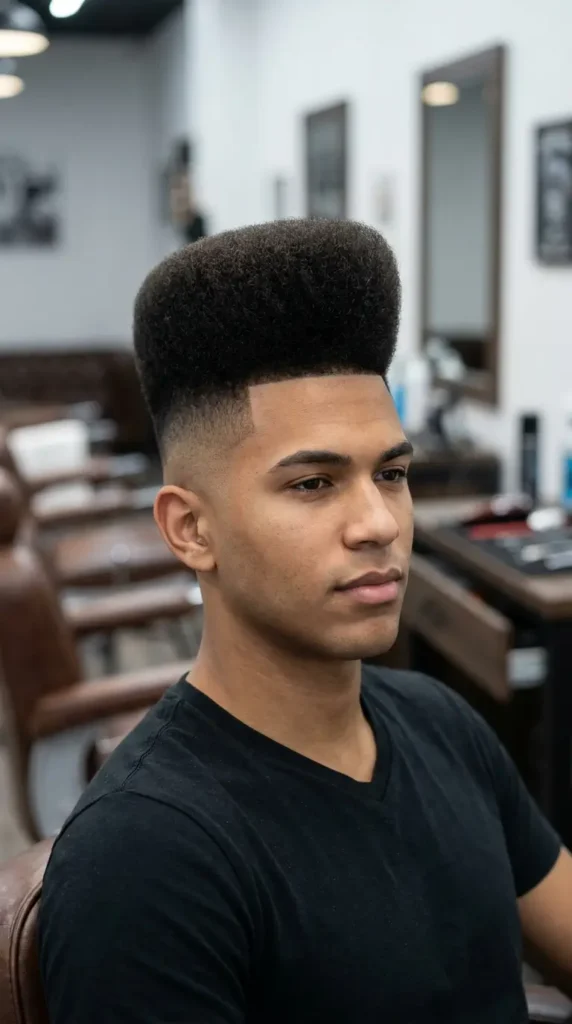
A high fade with high top extends the flat-top concept vertically: the hair stands straight up to dramatic heights (3–6 inches upward). The extreme vertical length creates an iconic, attention-commanding silhouette that was popularized in the late 1980s and early 1990s.
What you need: 4–6 inches of upward growth, strong-hold gel, pick, coily hair texture (Type 4) Who it suits: Men with Type 4 coily hair (the texture supports vertical height naturally) Celebrity reference: The Weeknd (earlier career) Styling time: 3–5 minutes daily
54. High Fade with Caesar Cut
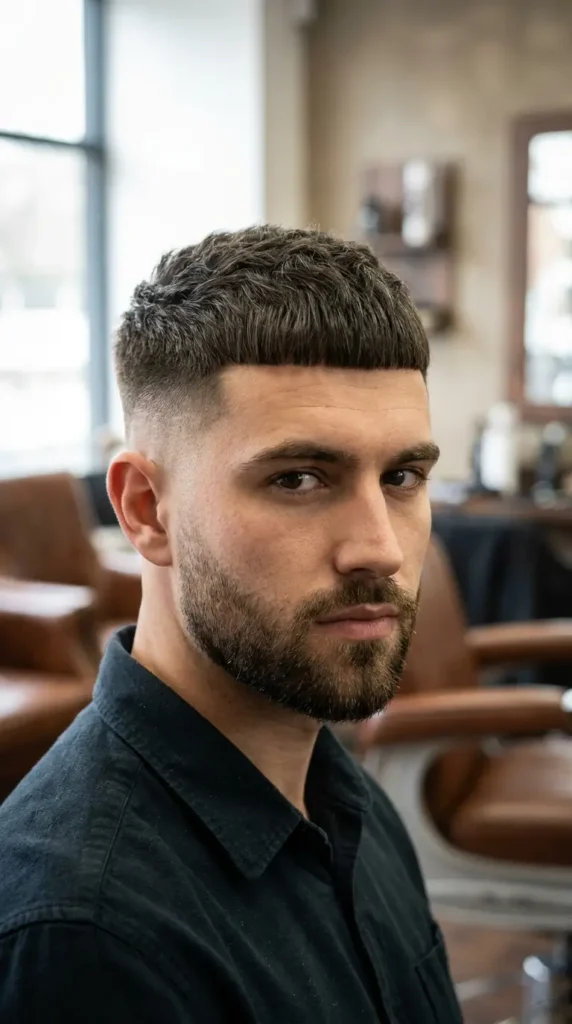
A high fade with Caesar cut keeps the top short (0.5–1.5 inches) with a small, straight-across fringe at the front; the hair sits close to the skull and is layered horizontally. Named after depictions of Julius Caesar, this is one of the most conservative and low-maintenance fade combinations.
What you need: No product required; the cut is the style Who it suits: Men with receding hairlines (the forward fringe creates coverage), men wanting minimal maintenance Styling time: 0 minutes daily
55. High Fade with Curtain Bangs
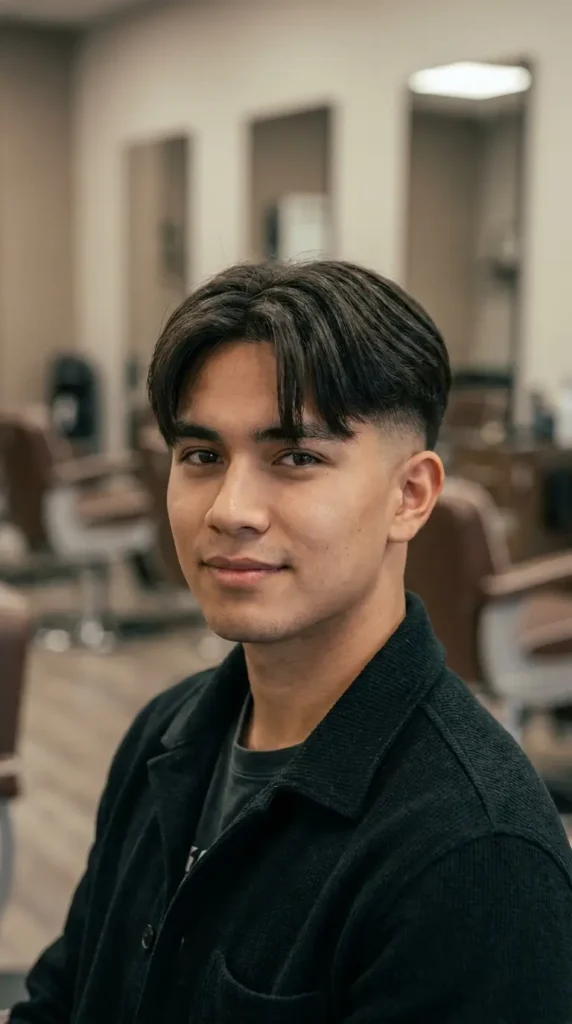
A high fade with curtain bangs features center-parted fringe that falls to either side of the forehead, framing the face symmetrically. This combination is heavily influenced by K-pop and Korean men’s grooming trends.
What you need: 3–5 inches at the front, lightweight styling cream or wax for direction, blow dryer for shape Who it suits: Oval, round, and heart face shapes (the curtains frame and balance the face) Styling time: 3–4 minutes daily
56. High Fade with Middle Part
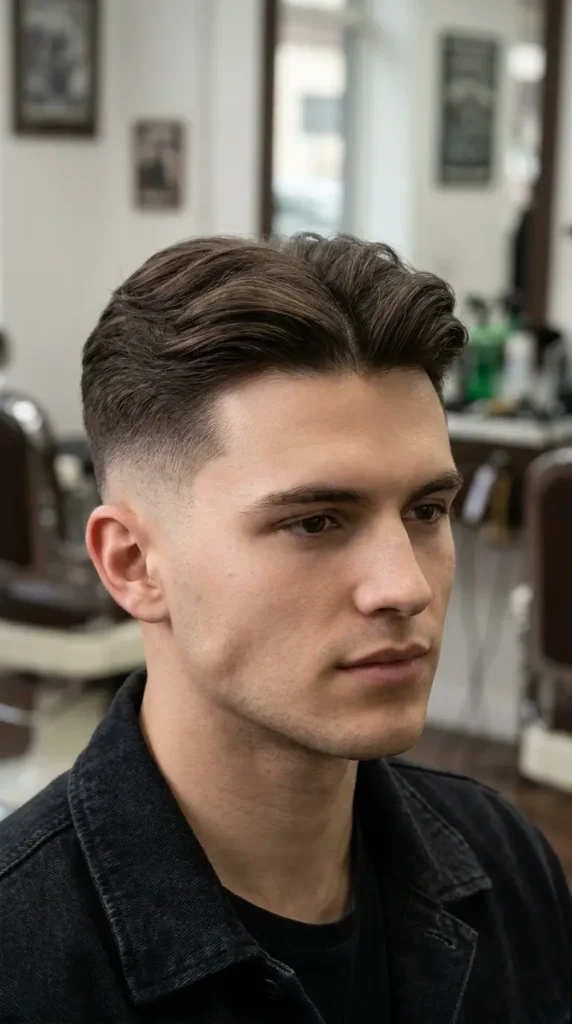
A high fade with middle part divides the top hair at the center of the head, creating symmetrical volume on both sides. This K-pop-influenced style creates a youthful, trendy frame around the face that has become massively popular on TikTok.
What you need: 3–5 inches on top, lightweight wax or cream, blow dryer for volume on each side Who it suits: Oval face shapes primarily (the symmetry works best with balanced features) Styling time: 3–4 minutes daily
57. High Fade with Spiky Hair
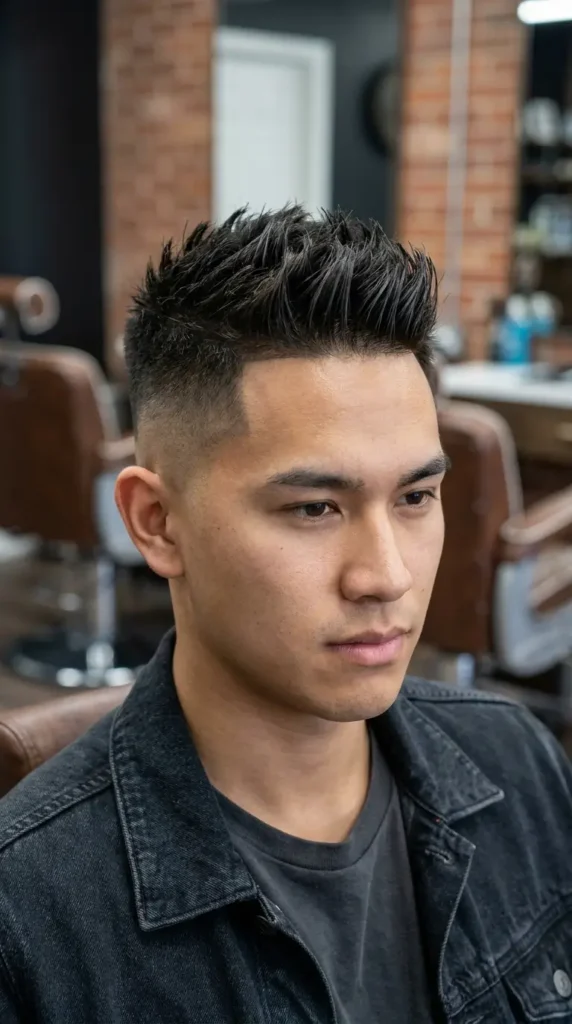
A high fade with spiky hair uses strong-hold wax or gel to create individual pointed spikes standing upward from the top. Each spike is defined separately for a bold, energetic look that was iconic in the early 2000s and has resurged among younger men.
What you need: 1.5–3 inches on top, strong-hold wax (applied to dry hair, pulled upward in sections) Who it suits: Men who want a bold, youthful appearance; best for casual environments Styling time: 3–5 minutes daily
58. High Fade with Afro
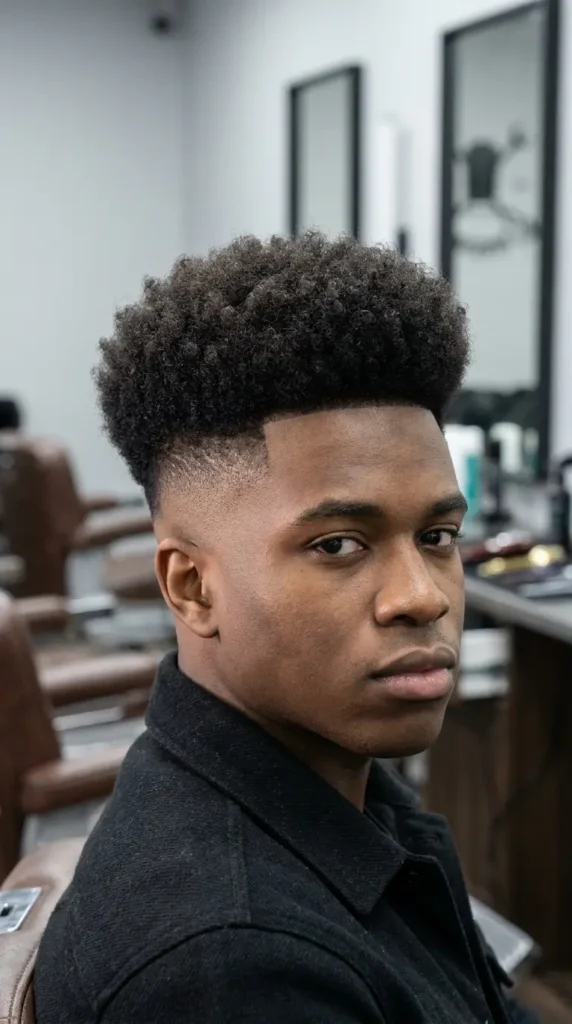
A high fade with afro lets the natural coily texture grow out vertically and outward from the crown, creating a rounded, voluminous shape above the tightly faded sides. The clean fade defines the afro’s shape and prevents it from looking unintentional.
What you need: 3+ inches of natural Type 4 hair growth, pick or wide-tooth comb, leave-in conditioner for moisture Who it suits: Black men with natural Type 4 hair who want to showcase their texture with clean structure Celebrity reference: Marcus Rashford, Khalid Styling time: 2–3 minutes daily
59. High Fade with Braids
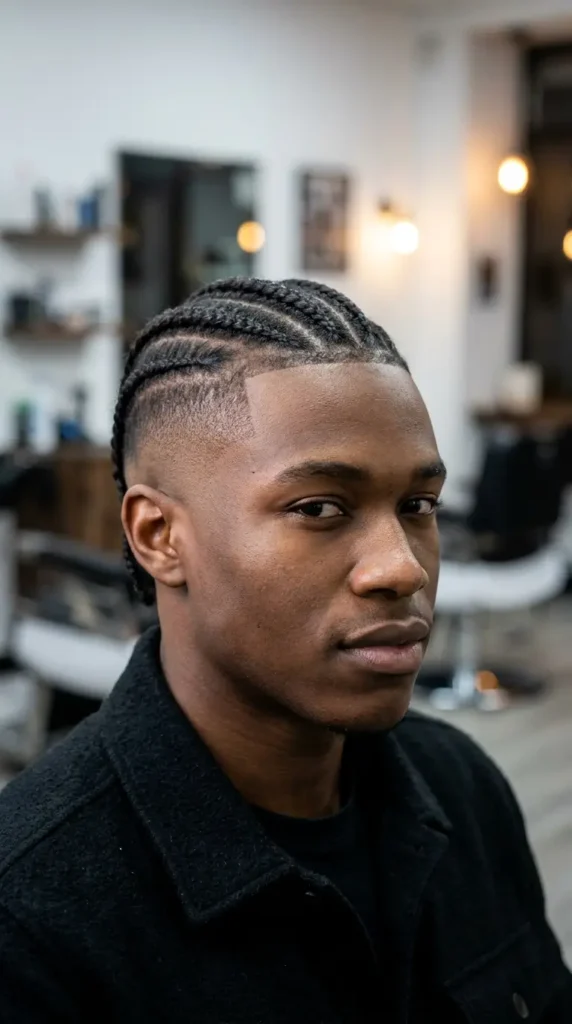
A high fade with braids combines tightly faded sides with braided hair on top, including cornrows, box braids, or French braids. The contrast between the intricate braided pattern on top and the bare faded sides creates a bold, architectural look.
What you need: 3+ inches on top (enough to braid), braiding appointment every 2–4 weeks, moisturizing products for scalp Who it suits: Black men primarily; braids work best with Type 4 coily textures that grip and hold braided patterns Styling time: 0 minutes daily (braids are pre-set; just maintain edges)
60. High Fade with Dreads
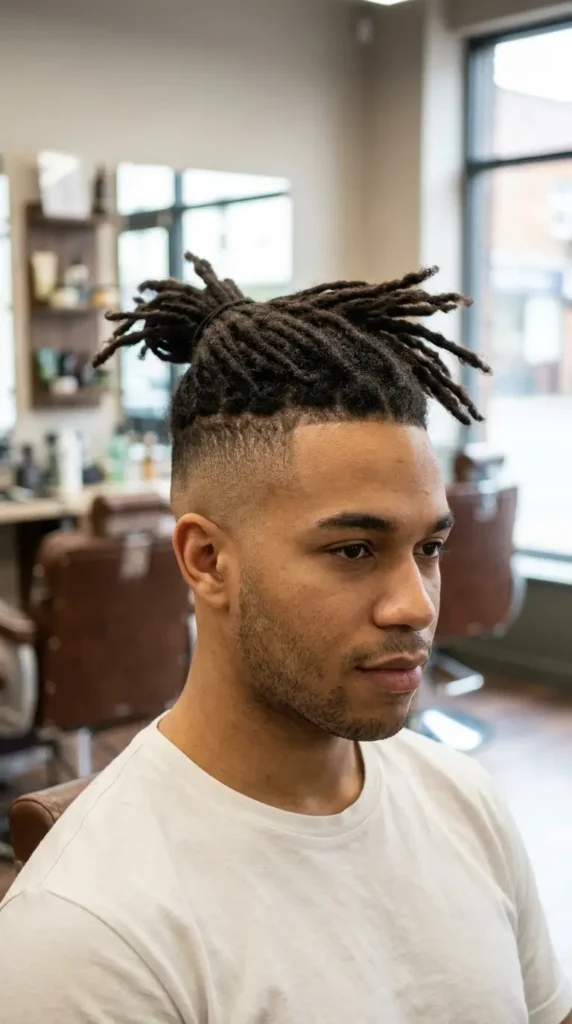
A high fade with dreads pairs tightly faded sides with dreadlocks (starter locs, freeform, or maintained locs) on the top. The locs can be left hanging, stacked upward, or tied back; the fade keeps the sides clean regardless of how the locs are styled on top.
What you need: 4+ inches on top for starter locs, patience (locs take 6–12 months to mature), moisturizing loc spray Who it suits: Men committed to the loc journey; the high fade adds clean structure during the growing phase Celebrity reference: A$AP Rocky (earlier styles) Styling time: 1–2 minutes daily (positioning only)
61. High Fade with Twists
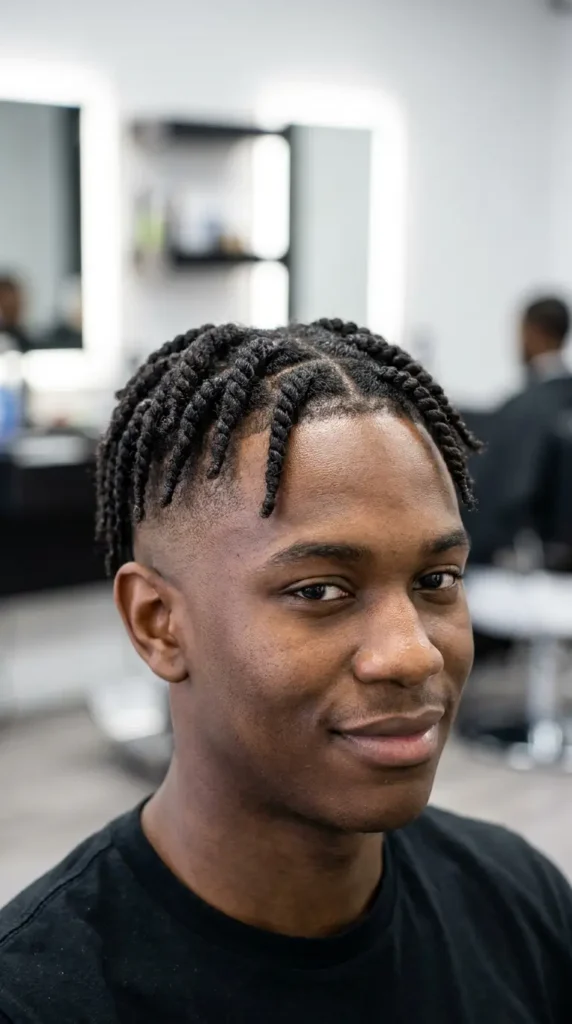
A high fade with twists features two-strand or three-strand twists on the top hair, creating defined, rope-like texture patterns above the faded sides. Twists are quicker to install than braids and can be worn as a standalone style or unraveled for a twist-out texture.
What you need: 3+ inches of Type 3–4 hair on top, twisting cream or gel, patience during installation Who it suits: Black men with coily textures; twists define the curl pattern while adding length and dimension Styling time: 0 minutes daily (twists are pre-set; refresh edges at barber)
62. High Fade with Waves (360 Waves)
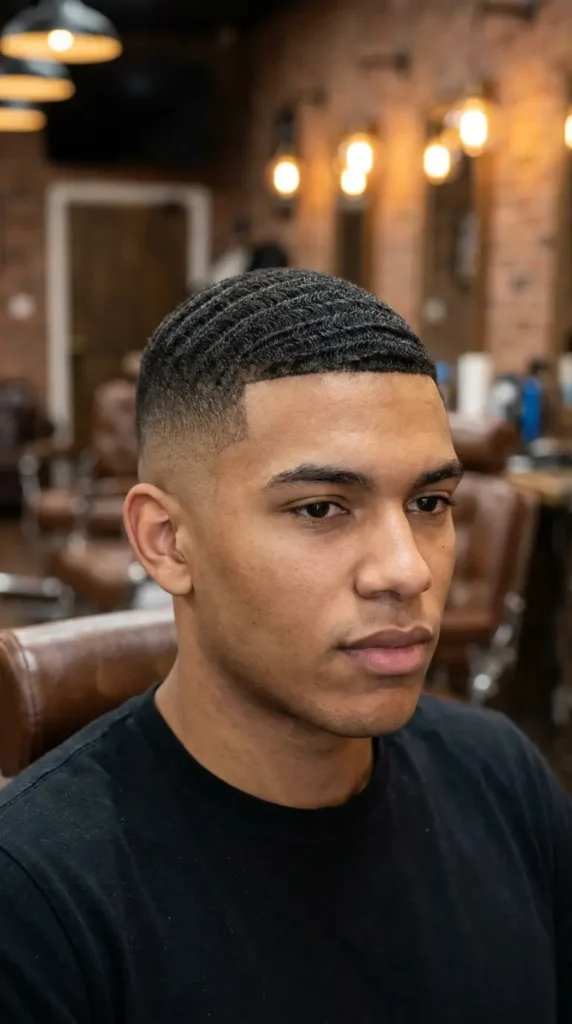
A high fade with 360 waves features a compressed wave pattern on top achieved through consistent brushing and durag compression. The waves create a hypnotic ripple pattern that sits close to the scalp, contrasting against the clean faded sides.
What you need: 1–2 inches on top (waves require short hair), wave brush, durag for compression, wave pomade Who it suits: Black men with Type 3–4 hair who commit to the wave-training process (takes 4–8 weeks to develop) Styling time: 5–10 minutes of brushing daily (wave maintenance is the style)
63. High Fade with Long Fringe
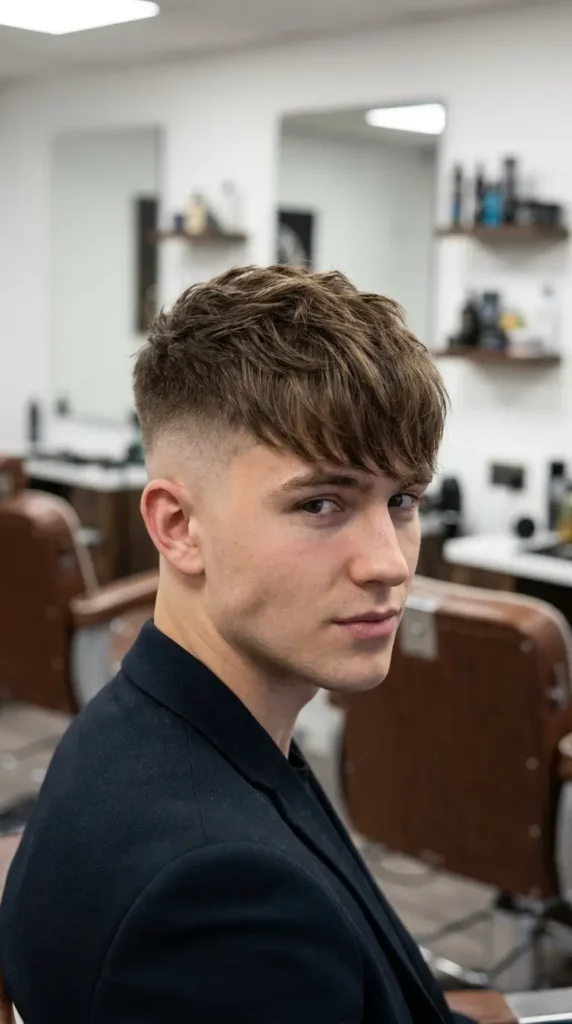
A high fade with long fringe extends the front section to 4–5 inches while keeping the rest of the top shorter. The long fringe can fall forward across the forehead, sweep to one side, or be flipped upward depending on daily mood.
What you need: 4–5 inches at the front, 2–3 inches at the back, lightweight wax or clay for direction Who it suits: Heart and oblong face shapes (the long fringe visually shortens the face and covers the forehead) Styling time: 1–2 minutes daily
High Fade vs. Other Fade Types
The difference between a high fade, mid fade, low fade, and taper fade comes down to one thing: where the gradient starts on your head. Each type begins at a different height, which changes how aggressive or subtle the cut looks.
| Fade Type | Starting Point | Skin Exposure | Contrast Level | Best For |
|---|---|---|---|---|
| High fade | Parietal ridge (2+ inches above ear) | Maximum | High contrast | Bold, modern, dramatic looks |
| Mid fade | Temple line (at the temples) | Moderate | Medium contrast | Versatile, balanced, everyday |
| Low fade | Just above the ear (0.5–1 inch) | Minimal | Subtle contrast | Conservative, professional, classic |
| Taper fade | Gradual length change, never reaches skin | None to minimal | Very subtle | Traditional, gentle, classic barbering |
| Skin fade | Any height; goes to bare skin at bottom | Varies by height | Varies | Sharp, ultra-clean finish |
| Bald fade | Completely to skin using razor/foil shaver | Maximum at base | Very high | Maximum drama, clean look |
| Drop fade | Drops lower behind the ear in an arc | Moderate | Medium | Rounded head shapes, unique profile |
| Burst fade | Radiates around the ear in a semicircle | Moderate | Medium | Mohawks, ponytails, man buns |
Key Point: A skin fade and bald fade describe the lowest point (going to bare skin), while high, mid, and low describe the starting height. You can combine them; for example, a “high skin fade” means the gradient starts high AND goes all the way to bare skin at the bottom. For a deeper side-by-side comparison, see our low fade vs high fade guide.
Tip: If you are unsure which fade height to choose, start with a mid fade. You can always go higher on your next visit once you see how you feel about the contrast level.
Who Does a High Fade Haircut Suit?
A high fade haircut suits most men because it removes bulk from the sides and directs visual attention upward to the top of the head. This creates a balanced, proportional silhouette regardless of your natural head shape. However, your face shape and hair type both influence which specific variation looks best on you. Many high fade haircuts for men can also be customized with textured crops, slick backs, pompadours, curls, or buzz cuts to match different personal styles and grooming preferences.
High Fade by Face Shape
| Face Shape | Suitability | Why It Works | Recommended Styles on Top |
|---|---|---|---|
| Oval | Excellent | Balanced proportions suit any variation | Any top style; you have full flexibility |
| Round | Excellent | Removes width from sides, elongates face | Pompadour, quiff, brush up (add height) |
| Square | Very good | Softens angular jawline with clean gradient | Textured crop, side part, natural texture |
| Heart | Very good | Balances wider forehead with narrower jaw | Fringe styles, French crop (cover forehead slightly) |
| Oblong/Rectangle | Use caution | Can over-elongate an already long face | Buzz cut, crew cut, flat top (keep top short) |
| Diamond | Good | Complements wide cheekbones | Slick back, comb over (adds horizontal direction) |
Key Point: The high fade removes visual weight from the sides of your head, making your face appear slimmer and longer. Men with round or square faces benefit the most from this elongation effect. Men with already-long rectangular faces should keep the top shorter to avoid looking disproportionate.
High Fade by Hair Type
| Hair Type | Suitability | Notes |
|---|---|---|
| Thick hair | Excellent | Removes bulk from sides; creates natural volume on top without product |
| Thin/fine hair | Very good | Faded sides eliminate visual comparison; top appears thicker when sides are short |
| Curly hair (Type 3) | Excellent | Dramatic contrast between textured curls on top and clean sides |
| Coily/afro hair (Type 4) | Excellent | Defines the top shape precisely; a classic combination |
| Wavy hair (Type 2) | Very good | Natural wave adds movement without heavy styling |
| Straight hair (Type 1) | Good | Cleanest, sharpest lines; use product for volume on top |
Tip: If you have thin or fine hair, a high fade is one of the most flattering options available. When there is no hair on the sides for comparison, your top appears fuller and denser by default.
Best Beard Styles with a High Fade Haircut
A high fade haircut pairs effectively with every major beard style. The strongest combinations create a seamless visual flow from the faded sideburns into the facial hair through a technique called a beard fade, where the barber blends the hair fade directly into the beard using graduated trimmer guards.
| Beard Style | Length | Look Created | Best Paired With |
|---|---|---|---|
| Stubble | 1–3mm | Casual, masculine, effortless | Any high fade; the safest universal pairing |
| Short beard | 5–10mm | Balanced, modern, defined | Quiff, textured crop, side part |
| Full beard | 15mm+ | Bold, rugged, statement-making | Buzz cut, slick back, man bun |
| Beard fade (blended) | Graduated | Seamless transition from hair to face | Any high fade; adds professional cohesion |
| Goatee | Variable | Focused, structured, face-framing | French crop, crew cut, Edgar |
| Shadow beard | 0.5–1mm | Subtle definition without commitment | Any clean, minimal style |
| Clean-shaven | None | Youthful, sharp, minimalist | Pompadour, hard part, Edgar |
Key Point: A beard fade connects the high fade into the beard through the sideburns, creating one continuous gradient from the scalp down to the jawline. This single detail transforms the cut from two separate elements (haircut + beard) into one cohesive look.
Tip: When booking your appointment, ask specifically for a beard blend or beard fade if you want the sideburn connection to look intentional. Not all barbers automatically include this, so specify it upfront.
High Fade Haircut with Design Elements
Design elements add personalized artistic detail to a high fade. The most common additions are line-ups, hard parts, and razor-etched patterns that enhance the cut’s sharpness and individuality.
| Design Element | Description | Placement | Maintenance Needed |
|---|---|---|---|
| Line-up (edge-up) | Razor-sharpened hairline creating clean geometric edges | Forehead, temples, sideburns | Every 1–2 weeks |
| Shape-up | Refined version focused on natural hairline shape | Front hairline | Every 1–2 weeks |
| Hard part | Razor-shaved line separating top from sides | Side of head | Every 2–3 weeks |
| Hair tattoo/etching | Geometric designs shaved into the fade area | Sides, back, temple | Every 1–2 weeks (grows out fast) |
| V-shaped neckline | V-point shaved at the nape center | Back of neck | Every 2–3 weeks |
| Curved line-up | Rounded/arched front hairline | Forehead | Every 1–2 weeks |
| Straight neckline | Squared-off back neckline | Nape | Every 2–3 weeks |
Key Point: A line-up is the single most common finishing touch for fade haircuts. The majority of barbers in the United States include it as a standard final step because it frames the face with clean, geometric edges.
Tip: If you get a design or pattern etched into the fade, photograph it immediately after your appointment. You will need the reference photo for your next touchup because designs grow out within 7–14 days and become unrecognizable.
High Fade Haircut for Different Hair Textures
A high fade haircut works with every hair texture, from pin-straight Type 1 hair to tightly coiled Type 4C afro hair. The difference lies in how the top is styled and which products produce the best result for each texture.
High Fade for Curly Hair (Type 3–4)
Curly and coily textures create natural volume and defined patterns on top that contrast beautifully against the clean faded sides. This is one of the most visually striking high fade combinations because the texture does all the work; heavy styling products are unnecessary. For a full breakdown of this combination, see our high fade curly hair guide.
- Type 3 curls (loose-to-tight spirals) can be left natural, defined with lightweight curl cream, or picked out with a wide-tooth comb for extra volume
- Type 4 coils (afro texture) hold shape exceptionally well and create precise, sculpted silhouettes on top
- Use lightweight curl cream or leave-in conditioner; avoid heavy pomades or waxes that weigh down curl pattern
- The defined curl pattern on top with the skin fade below creates a look that requires minimal daily effort once properly cut
Celebrity reference: Michael B. Jordan and Odell Beckham Jr. have both demonstrated how curly high fades create a naturally dynamic appearance without excessive product.
High Fade for Wavy Hair (Type 2)
Wavy hair adds natural movement and dimension to the top without needing extensive product or blow-drying. The waves create visual interest that straight hair requires effort to achieve.
- Sea salt spray enhances the natural wave pattern for a beach-textured finish
- Works particularly well with textured crop, quiff, and messy styles
- Medium-hold matte clay maintains shape without flattening the wave
- Air-drying rather than blow-drying preserves the natural wave pattern better
High Fade for Straight Hair (Type 1)
Straight hair creates the cleanest, sharpest lines of any texture but can appear flat against the faded sides without deliberate styling effort.
- Without product, straight hair often lies flat, which makes the top look thin compared to the fade
- Blow-dry upward at the roots with a round brush before applying pomade or clay
- Styles that require direction work best: pompadour, slick back, side part, comb over
- Straight hair shows razor-sharp hard parts and crisp lines better than any other texture
High Fade for Thick Hair
Thick hair is ideal for high fades because the natural density on top provides volume without needing product to create fullness.
- The fade removes bulk from the sides, preventing the “helmet head” effect that thick-haired men often experience with longer styles
- Thinning shears can reduce excessive weight on top if hair is uncomfortably thick
- Almost any top style works; thick hair has the density to hold pompadours, quiffs, and textured styles effortlessly
- Growth rate may be faster, so budget for touchups every 2 weeks rather than 3
High Fade for Thin or Fine Hair
A high fade is one of the most flattering cuts for men with thin or fine hair because it uses a visual trick: removing the side hair eliminates the comparison point. For more styles designed around lower density, see our full guide on haircuts for men with thin hair.
- When the sides are faded to skin, the viewer has no adjacent hair to compare the top against, so the top appears thicker by default
- Keep top length moderate (1.5–3 inches) to avoid exposing the scalp through longer, sparser hair
- Use volumizing powder or lightweight sea salt spray to add the appearance of thickness
- Avoid heavy pomades, gels, or oil-based products that flatten fine hair against the scalp and make thinning more visible
High Fade Haircut for Different Demographics
A high fade is adapted differently based on ethnicity, age group, and cultural style preferences. The starting height, blending technique, and top style choices vary significantly across different communities, and high fade haircuts for men can be customized accordingly to suit different hair textures, facial structures, and personal style preferences.
High Fade for Black Men
The high fade originated in Black barbershops during the 1980s and remains a foundational style in Black male grooming culture. The fade technique itself was developed specifically to work with Type 4 coily hair textures.
- Works with afro, twists, two-strand twists, braids, cornrows, dreads, waves (achieved with durags and brushing), and defined curl patterns on top
- Line-ups and edge-ups are standard finishing details, not optional additions
- Barbers use specialized curved-blade trimmers for precise hairline shaping on coarser textures
- Waves (360 waves) with a high fade is a signature combination requiring daily brushing and durag compression
- Popular top styles: high top, afro, twists, braids, waves, defined curls
Celebrity examples: Michael B. Jordan (curly top), Drake (buzz with line-up), Odell Beckham Jr. (blonde curly mohawk), The Weeknd (high top afro)
High Fade for Asian Men
Asian hair, typically thick, straight, and fast-growing Type 1, holds fade structure well but grows out faster than other textures, meaning more frequent barber visits are necessary. For more East Asian style inspiration, explore our Korean haircuts for men guide.
- Korean and K-pop styles pair high fades with longer textured tops, middle parts, curtain bangs, or comma hair (a single curved fringe piece)
- Growth rate is among the fastest of any ethnic group; touchups may be needed every 10–14 days rather than the standard 2–3 weeks
- Disconnected styles and textured crops are particularly popular in East Asian men’s grooming
- Matte clay and lightweight wax are the most common styling products for achieving the textured, piece-y look that defines Korean-inspired styles
High Fade for Latino Men
The Edgar cut with high fade has become a defining style in Latino barbering culture across the United States, particularly among younger men.
- The straight-across blunt fringe with razor-sharp line-ups is the signature combination
- High fades paired with designs and razor etchings are more commonly requested in Latino barbershops
- Cultural influence from artists like Bad Bunny has expanded style experimentation (mullet hybrids, colored fades)
- Thick, straight hair (common in Latino men) holds the Edgar cut’s blunt line exceptionally well
High Fade for Teenagers and Kids
High fades are suitable for boys aged 5 and older. Barbers typically adapt the technique for younger clients by using softer blending and avoiding skin-tight fades on small children.
- Popular school-appropriate styles: textured crop, crew cut, or buzz cut with high fade
- Teens often request trend-driven styles from TikTok: Edgar cut, curtain bangs, or textured fringe with high fade
- For children under 10, a #1 guard at the bottom (rather than skin) creates a gentler transition
- Lower maintenance styles are recommended for kids who cannot visit the barber as frequently; buzz cuts and crew cuts grow out more gracefully than textured styles
High Fade Haircut for Every Occasion
A high fade adapts to professional, casual, athletic, and formal settings. The top style and finishing details determine the formality level; the fade itself is appropriate for virtually every context.
| Occasion | Recommended Top Style | Why It Works |
|---|---|---|
| Office/Professional | Comb over, side part, crew cut | Structured, conservative, clean enough for corporate dress codes |
| Casual/Everyday | Textured crop, messy quiff, natural texture | Relaxed, modern, minimal styling needed |
| Wedding/Formal | Pompadour, slick back with line-up | Polished, photograph-ready, holds shape all day |
| Gym/Athletic | Buzz cut, crew cut | Stays in place during movement, dries fast, wicks sweat |
| School/College | French crop, textured top | Stylish but regulation-compliant, easy morning routine |
| Summer | Buzz cut, short crop with bald fade | Maximum airflow, cool in heat, minimal product needed |
| Military | High and tight, induction buzz | Meets grooming standards across all branches |
Key Point: A well-executed high fade is professionally appropriate in virtually every industry and workplace in the United States. The fade itself communicates grooming effort and precision; it is the top length and style that determines whether the overall look reads as formal or casual.
What to Tell Your Barber for a High Fade
Knowing exactly what to say eliminates miscommunication and ensures you leave the barbershop with the cut you actually wanted. You need to communicate 4 specific pieces of information to your barber:
The 4-Part Communication Script
1. Fade height: “I want a high fade starting at the parietal ridge” (or “starting about 2 inches above my ear”)
2. Shortest length at the bottom:
- “Take it down to skin” = skin fade (foil shaver or straight razor finish)
- “Use a #0.5 guard at the bottom” = shadow fade (hint of hair remaining)
- “Use a #1 at the bottom” = soft fade (subtle, less aggressive)
3. Blending style:
- “I want a seamless blend” = smooth, gradual gradient with no visible lines
- “I want a disconnected look” = abrupt contrast between top and sides (no blending at the junction)
4. Top style: “Leave [X] inches on top for a [pompadour/quiff/textured crop/crew cut/etc.]”
Additional Details to Specify
- Line-up: “I want a line-up” (sharp geometric hairline) or “Keep it natural” (soft, untouched hairline)
- Neckline: “Straight across,” “rounded,” or “tapered” at the back
- Hard part: “Put a hard part on the [left/right] side” (specify width: thin razor line vs. wider shaved line)
- Beard connection: “Blend the fade into my beard through the sideburns”
Tip: Save 3–5 reference images on your phone before your appointment. Show your barber the fade you want from the side angle AND the top style you want from the front angle. These are often from different photos; that is completely normal and expected.
Key Point: Always ask your barber for their professional opinion after describing what you want. Experienced barbers assess your head shape, hair density, growth patterns, and cowlicks to recommend adjustments that will make the cut work specifically for your anatomy.
How a High Fade Haircut Is Cut (Technique Breakdown)
Understanding the cutting process helps you appreciate the skill involved and communicate more effectively with your barber. A high fade is created through a systematic guard progression combined with precise blending techniques.
Step-by-Step Process
| Step | Action | Tool Used |
|---|---|---|
| 1 | Establish the fade line: mark where the longest blended point begins (parietal ridge) | Comb + visual assessment |
| 2 | Cut the bottom section to shortest length (#0 guard or foil shaver for skin fade) | Clippers with no guard or foil shaver |
| 3 | Create first guideline: cut at #1 guard up to midway between ear and fade line | Clippers with #1 guard |
| 4 | Blend between #0 and #1 using lever open/closed technique | Clippers with lever manipulation |
| 5 | Cut at #1.5 or #2 guard up to the fade line | Clippers with #1.5–#2 guard |
| 6 | Blend between #1 and #2 using scooping/flicking motion | Clippers with lever + wrist rotation |
| 7 | Blend transition into top length using clipper-over-comb or scissor-over-comb | Comb + clippers or scissors |
| 8 | Cut and style top hair to desired length and shape | Scissors, thinning shears |
| 9 | Detail work: line-up, edge-up, neckline shaping | Trimmer, straight razor |
| 10 | Final check: examine all angles for demarcation lines | Mirror inspection |
Key Technical Terms Explained
- Lever: The metal switch on clippers that adjusts blade proximity. Closed = cuts shorter. Open = cuts slightly longer. Barbers toggle this mid-cut to create half-step lengths between guards.
- Scooping motion: Flicking the clipper outward as it moves upward, creating a gradual gradient rather than a harsh line.
- Demarcation line: A visible line where two lengths meet without proper blending. This indicates a poor-quality fade; a properly executed high fade has zero demarcation lines.
- Guideline: The reference point the barber creates at each length level before blending between them.
- Weight line: Where hair bulk changes noticeably. Skilled barbers eliminate visible weight lines through precise blending.
Key Point: The entire process takes an experienced barber 20–40 minutes depending on style complexity. The sides and back are always completed before the top is cut and styled.
Best Styling Products for a High Fade Haircut
The correct product depends entirely on what top style you are wearing. The fade itself requires no product; only the top hair needs styling.
| Product Type | Hold Level | Finish | Best For | Application |
|---|---|---|---|---|
| Pomade (oil-based) | Strong | High shine/glossy | Slick back, pompadour, comb over | Apply to damp hair, comb into shape |
| Pomade (water-based) | Medium–Strong | Medium shine | Slick back, pompadour | Apply to damp hair, reshapeable all day |
| Matte clay | Medium–Strong | Matte (no shine) | Textured crop, quiff, faux hawk | Apply to dry hair for maximum texture |
| Fiber paste | Medium | Natural/low shine | Messy styles, textured tops | Work through damp or dry hair |
| Hair wax | Strong | Low–Medium shine | Spiky styles, defined pieces | Apply to dry hair for separation |
| Hair gel | Strong | Wet/glossy | Slick back, Edgar, sculptured styles | Apply to damp hair, sets hard |
| Sea salt spray | Light | Matte/textured | Wavy styles, beach texture | Spray on damp hair, air dry |
| Styling cream | Light | Natural | Curly styles, natural texture | Distribute evenly through damp hair |
| Volumizing powder | Light | Invisible/matte | Fine or thin hair | Sprinkle at roots, massage in |
Product Application Tips
- Apply product to towel-dried (damp) hair for maximum even distribution and stronger hold
- Use a blow dryer BEFORE product to create volume and direction at the roots
- Start with a pea-sized amount and add more gradually. You cannot remove excess product without washing
- Matte products suit casual settings and daytime wear; shiny products suit formal and evening settings
- Avoid heavy products (gel, oil-based pomade) on thin hair; they compress fine hair against the scalp
Tip: For a textured crop or messy quiff, apply matte clay to completely dry hair rather than damp hair. This creates more separation, definition, and visible texture compared to applying on wet hair.
How to Maintain a High Fade Haircut
A high fade maintains its clean, sharp appearance for 2–3 weeks before the regrowth softens the gradient. After that point, the fade line becomes visibly blurred and the contrast between sides and top diminishes.
Maintenance Schedule
| Timeframe | Fade Condition | Action Needed |
|---|---|---|
| Week 1 | Fresh, sharp, perfect gradient | No action; cut looks its best |
| Week 2 | Slight regrowth, still presentable | Optional touchup if you want perfection |
| Week 3 | Noticeable growth, fade softening | Barber touchup recommended |
| Week 4+ | Fade line blurred, shape lost | Barber visit necessary to restore the look |
Cost and Frequency
- Average high fade touchup cost in the United States: $25–$45 per visit (varies by city and barber experience level)
- Recommended visit frequency: every 2–3 weeks for a consistently clean appearance
- Men with faster-growing hair (common in Asian hair textures) may need touchups every 10–14 days
- Annual grooming budget estimate for high fade maintenance: $650–$1,170 (26–52 visits per year)
Daily Styling Routine (2–3 Minutes)
- Towel-dry hair after shower (or wet the top with spray bottle)
- Apply preferred product; pea-sized amount to start
- Style top with fingers or comb into desired shape
- (Optional) Set with blow dryer for 30–60 seconds if volume is needed
Between-Visit Maintenance
- Use a trimmer at home for neckline cleanup only; do NOT attempt to blend the fade yourself unless you are trained
- Wash hair 2–3 times per week to maintain scalp health without stripping natural oils
- Use conditioner on the top hair to maintain softness and styling flexibility
- If the fade grows out unevenly, a barber can fix it; do not attempt to self-correct with clippers
Key Point: High fades grow out faster than low or mid fades because the dramatic contrast makes any regrowth immediately visible. A low fade can stretch 4–5 weeks between visits; a high fade looks noticeably grown-out by week 3.
Celebrity High Fade Haircut Inspiration
These 10 celebrities have worn high fade haircuts consistently, each demonstrating a different top style and variation. Use their looks as reference images for your barber.
| Celebrity | Signature High Fade Style | Key Feature |
|---|---|---|
| David Beckham | Pompadour with high fade | Textured volume, often with blonde color |
| Cristiano Ronaldo | Hard part comb over with high fade | Razor-sharp part line, structured and polished |
| Michael B. Jordan | Curly top with high skin fade | Natural texture, defined line-up, minimal product |
| Zayn Malik | Quiff with high fade | Textured, modern, often asymmetrical |
| Drake | Buzz cut with high fade and line-up | Clean, minimal, signature sharp line-up |
| Travis Kelce | Textured crop with high fade | Athletic, modern, often paired with beard |
| Odell Beckham Jr. | Blonde curly mohawk with high fade | Bold color and texture combination |
| The Weeknd | High top afro with high fade | Dramatic vertical height, iconic silhouette |
| Ryan Reynolds | Short comb over with high fade | Professional, subtle, understated |
| Bad Bunny | Mullet/experimental with high fade | Cultural statement, constantly evolving |
Tip: Save your preferred celebrity reference image from a side-angle photo on your phone. Show it to your barber to communicate both the fade height and the top style in one image.
Conclusion
The high fade has earned its place as one of the most requested men’s haircuts because it does something few other cuts can: it works with virtually every hair texture, face shape, and personal style, while still delivering maximum contrast and a sharp, modern finish. With 63 variations covering everything from a classic pompadour to 360 waves, an Edgar cut to a man bun, there’s a version of this fade built for exactly how you want to look.
The core mechanics stay the same no matter which top style you choose: the gradient starts high at the parietal ridge, blends through several guard lengths with zero visible demarcation lines, and hands off cleanly into whatever you’re wearing on top. That’s the frame. The top is the picture, and that’s where you get to make the cut your own.
Walk into your next barber appointment with a reference photo, the 4-part communication script (fade height, shortest guard, blending style, top length), and a clear idea of your face shape and hair type. Budget for a touchup every 2-3 weeks to keep the gradient sharp, since high fades show regrowth faster than lower fades.
The high fade isn’t a passing trend. It’s a foundational cut that barbers have refined for decades, and it remains one of the top-requested styles in barbershops today. Pick your top style, communicate clearly, and own the look.
Frequently Asked Questions
What is a high fade haircut?
A high fade haircut is a men’s hairstyle where the hair on the sides and back gradually blends from skin or near-skin length at the temples upward to longer lengths at the parietal ridge, approximately 2 inches above the ear. The high starting point creates maximum contrast between the faded sides and the styled top, making it the boldest and most dramatic of all fade types.
What is the difference between a high fade and a low fade?
The difference is the starting point of the gradient on the head. A high fade begins its longest blended point at the parietal ridge (2+ inches above the ear), while a low fade starts just 0.5–1 inch above the ear. High fades expose significantly more scalp, creating a more dramatic, modern contrast. Low fades are subtler and more conservative.
What is the difference between a high fade and a taper fade?
A high fade blends hair down to skin or near-skin length (using a #0 or #0.5 guard), while a taper fade gradually reduces length without ever reaching skin. The taper is gentler, more traditional, and less aggressive. A high fade is bolder, showing clear skin at the temples and nape.
Is a high or mid fade better?
Neither is objectively better; the choice depends on how much contrast you want. A high fade is bolder, exposes more skin, and demands touchups every 2–3 weeks, while a mid fade starts at the temple line for a more balanced, versatile look that suits both office and casual settings. Choose a high fade if you want maximum drama and a mid fade if you want an everyday style with slightly easier maintenance. If you are trying a fade for the first time, start with a mid fade and go higher on your next visit.
What is the highest fade haircut?
The highest fade is a high skin fade (also called a high bald fade), where the gradient begins at or just below the crown and takes the sides down to completely bare skin. At this height, only a small cap of hair remains on top, which is why it pairs best with short styles like a buzz cut, crew cut, or textured crop. Anything higher than this effectively becomes a shaved head with a top section, similar to a high and tight or a mohawk silhouette.
Which fade haircut is best?
The best fade depends on your face shape, hair type, and maintenance tolerance. A high fade is best for round and square faces that benefit from elongation and for men who want bold contrast. A mid fade is the most versatile all-rounder for everyday wear. A low fade or taper fade is best for conservative professional settings and men who want to stretch 4–5 weeks between barber visits. If you are unsure, a mid fade with a textured top is the safest starting point.
Is a high fade haircut professional?
A high fade is appropriate for professional and corporate environments when paired with a structured top style like a comb over, side part, or crew cut. The fade itself communicates grooming effort and precision; it is the top length and styling that determines whether the overall look reads as formal or casual. This is one reason high fade haircuts for men remain popular in both office settings and modern everyday fashion.
How long does a high fade last?
A high fade maintains its sharp appearance for 2–3 weeks before regrowth softens the gradient. By week 4, the fade line becomes visibly blurred. The high contrast makes any growth immediately noticeable, which is why high fades require more frequent touchups than lower fades.
How often should I trim a high fade?
Visit your barber every 2–3 weeks for consistently clean results. Men with faster hair growth (growing more than 0.5 inches per month) may need touchups every 10–14 days. Extending beyond 4 weeks causes visible shape loss.
Which hair type suits a high fade?
Every hair type works with a high fade: straight, wavy, curly, coily, thick, and thin. The high fade is the most universally adaptable fade type because it removes side bulk regardless of texture, creating contrast that works with any top style or natural pattern.
Can curly hair work with a high fade?
Curly hair creates one of the most visually striking high fade results. The textured, voluminous curls on top contrast dramatically against the clean faded sides, producing natural dimension and definition without needing heavy product. Type 3 and Type 4 curls both work exceptionally well.
Is a high fade good for thin hair?
A high fade is among the most flattering cuts for thin or fine hair. Removing the side hair eliminates the comparison point; when there is no adjacent hair to judge against, the top appears denser and fuller by default. Keep top length moderate (1.5–3 inches) and use lightweight volumizing products.
What should I tell my barber for a high fade?
Tell your barber 4 specific things: (1) “High fade starting at the parietal ridge,” (2) the shortest guard at the bottom (skin, #0.5, or #1), (3) whether you want a seamless blend or disconnected contrast, and (4) the top style and length. Always bring a reference photo showing the side angle.
Does a high fade need styling products?
Product necessity depends entirely on the top style. Buzz cuts and crew cuts require zero product. Pompadours and slick backs require pomade. Textured crops need matte clay. The fade itself never needs product; only the top hair requires attention.
Is a high fade hard to maintain?
A high fade requires moderate maintenance: barber visits every 2–3 weeks ($25–$45 per visit) to maintain the gradient. Daily top styling takes 2–3 minutes. It demands more upkeep than a basic buzz cut but less than styles requiring daily blow-drying and shaping.
Which beard style looks best with a high fade?
Stubble (1–3mm) is the most universally flattering pairing because it adds masculine definition without competing with the fade visually. A full beard with a blended beard fade creates a bold, cohesive look. Clean-shaven maximizes the sharpness and creates a youthful appearance.
Can I combine a high fade with a pompadour?
A high fade with pompadour is one of the most iconic combinations in men’s barbering. The voluminous, swept-back top contrasts dramatically against the bare faded sides, producing maximum visual impact. David Beckham has demonstrated this combination extensively throughout his career.
Is a high fade popular in 2026?
High fades remain among the top 3 most-requested fade types at barbershops in the United States. The style has maintained consistent demand since gaining mainstream popularity around 2015, driven by social media exposure and celebrity adoption. Barber booking platforms confirm fades continue to dominate men’s haircut requests.
What is a high skin fade?
A high skin fade is a high fade that goes all the way to completely bare skin (no visible hair) at the shortest point, using a foil shaver or straight razor after the #0 clipper guard. It creates the maximum possible contrast between the styled top and the sides.
Can kids get a high fade haircut?
Children aged 5 and older can get high fade haircuts. Barbers typically use softer blending for young children, starting at a #1 guard at the bottom rather than skin to create a gentler, less aggressive gradient. Popular kids’ styles include textured crop and crew cut with high fade.
Does a high fade suit long hair on top?
A high fade pairs well with 6+ inches of top length, creating a disconnected style where the long top contrasts dramatically against the short sides. Man buns, ponytails, samurai buns, and long slick backs all work effectively with a high fade foundation.
Which celebrities have high fade haircuts?
Notable celebrities include David Beckham (pompadour), Cristiano Ronaldo (comb over with hard part), Michael B. Jordan (curly top), Zayn Malik (texred quiff), Drake (buzz with line-up), Travis Kelce (textured crop with beard), and Bad Bunny (mullet variations).