
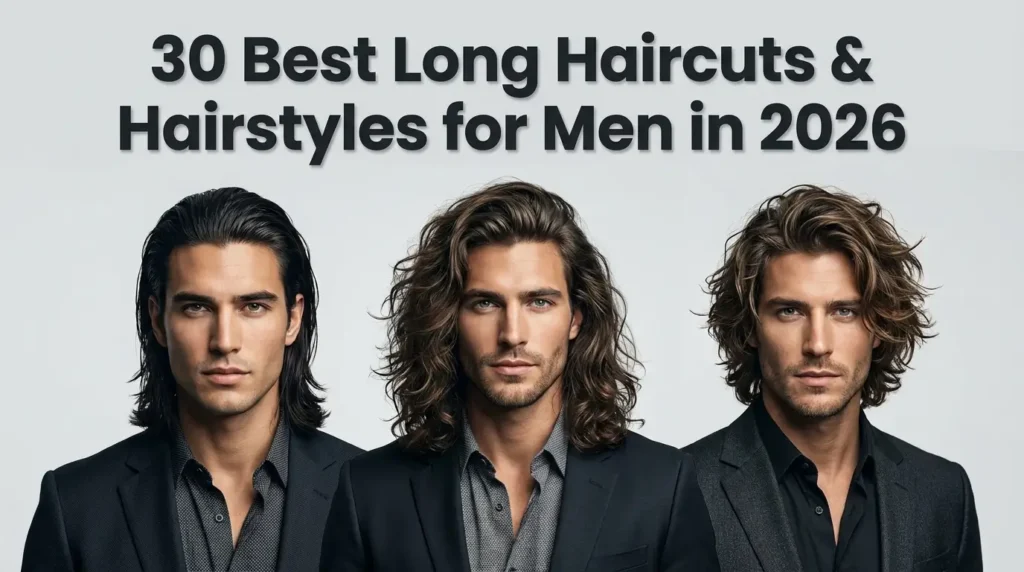
Long hair for men isn’t just back. It has completely taken over.
Walk down any street in New York, Los Angeles, or Chicago and you will see guys rocking everything from shoulder-length waves to messy shags and polished man buns. The days of the boring, short-back-and-sides being the only “acceptable” option are long gone.
Whether you want a sleek professional look, a relaxed weekend vibe, or something bold that turns heads, the right long haircut changes everything. It frames your face differently. It changes how you carry yourself. And honestly, it just looks cool.
If you are new to growing your hair out, do not worry. This guide walks you through the 30 best long haircuts for men in 2026. You will learn which styles work best for your hair type and face shape, exactly how to style each look, and most importantly, how to survive that tricky in-between phase that makes so many guys give up too soon.
Let’s get into it.
30 Best Long Haircuts for Men (Visual Style Atlas)
Below are the most stylish and versatile long haircuts for men right now. Each style includes details on which hair types it suits best and practical tips for making it work.
1. The Bro Flow & Effortless Waves
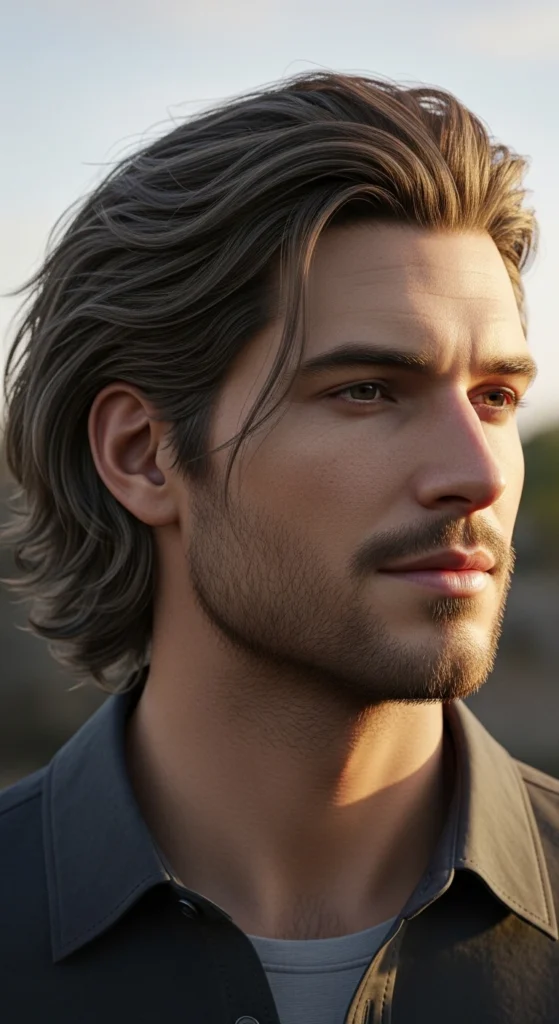
The king of low-maintenance long haircuts. Natural movement, relaxed masculine energy, zero fuss.
What It Looks Like: Hair falling naturally around the ears and neck with a soft, sweeping motion. Volume at the crown, slight flip at the ends. Looks effortless even if you spent ten minutes on it.
Who It Works For: Wavy or slightly curly hair shines here. Straight hair works too but may need a little texturizing product to hold the shape.
Barber Tip: Light layering throughout to remove bulk without sacrificing length. Ends should be soft and blended, never blunt or heavy. See our complete bro flow guide for more.
Styling Routine: Towel-dry and scrunch in a generous amount of sea salt spray. Air dry or diffuse on low heat. Once dry, run a small amount of matte paste through the mid-lengths and ends for separation. Keep it away from the roots.
Celebrity Anchor: Chris Hemsworth off-duty. Brad Pitt in Legends of the Fall.
2. The Modern Mullet & Wolf Cut
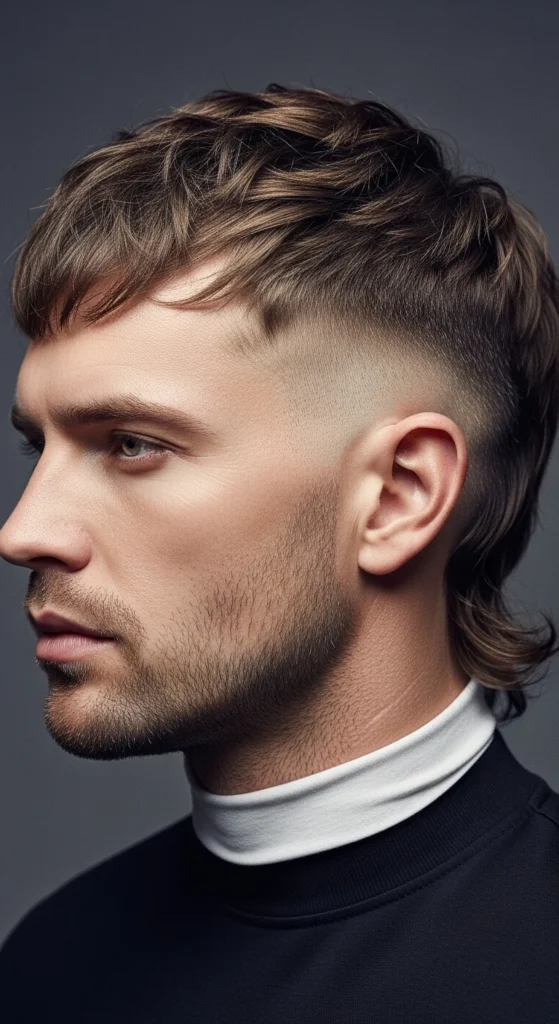
The mullet is back, softer, more blended, and genuinely stylish. Not the eighties version. Not even close.
What It Looks Like: Shorter, textured layers on top and crown with length left through the back. Sides faded or tapered for a clean finish. The wolf cut takes it further, shaggy, choppy layers throughout for a wilder, more voluminous silhouette.
Who It Works For: Thick hair handles the back length best. Wavy and curly textures add natural movement to the shaggy layers. See our modern mullet and wolf cut guides for full inspiration.
Barber Tip: Texturizing shears on the top and crown for that piece-y, separated finish. The back cut with a razor or scissors over comb, never a solid, heavy block.
Styling Routine: Blow-dry the top forward and up with fingers for lift. Work a small amount of molding paste or texture clay through the top layers with fingertips. Let the back air dry or scrunch with sea salt spray for added wave.
3. The Layered Flow (Medium & Long)
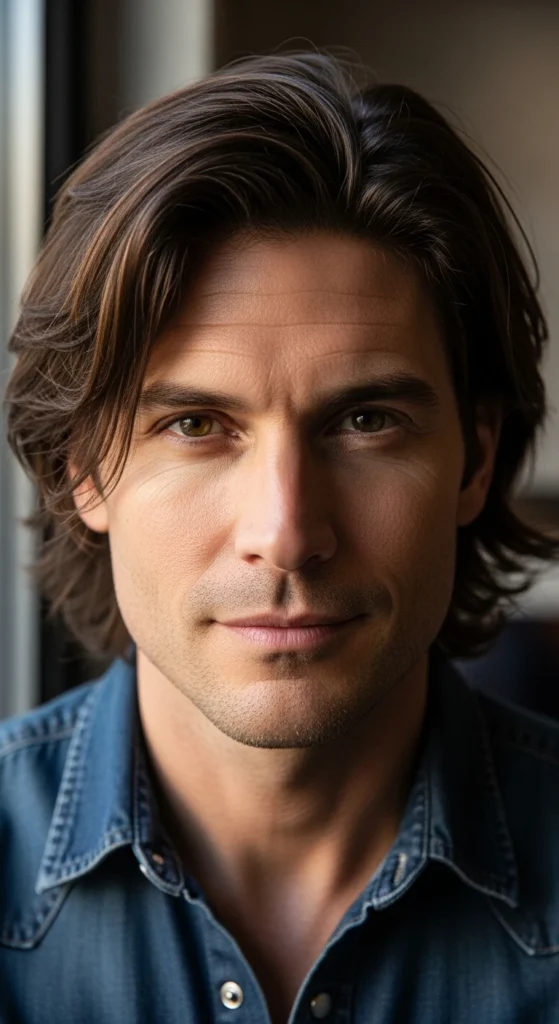
Thick hair getting heavy, poofy, and triangle-shaped? The layered flow solves all of that.
What It Looks Like: Hair that actually moves. Layers cut throughout the interior remove weight and create natural movement. The surface stays smooth while the inside feels light and airy.
Who It Works For: A lifesaver for thick, wavy, or coarse hair. Also works for fine hair by adding the illusion of volume and body. See our layered haircuts for men guide for more inspiration.
Barber Tip: Request long layers using point cutting, the barber cuts into the ends vertically rather than straight across. The result is a soft, feathered edge that blends seamlessly instead of a harsh, blunt line.
Styling Routine: Lightweight volumizing mousse on damp roots. Blow-dry with a round brush to lift the crown. For a relaxed finish, blow-dry with fingers only. Finish with a light texturizing spray or a few drops of hair oil on the ends.
Fact: Internal layering is the secret technique barbers use to create volume without visible steps in the hair. It helps the hair fall more naturally and reduces bulk without compromising your hard-earned length.
4. The Man Bun & Tied Styles

The man bun has not died. It has grown up. Still one of the most practical and polished ways to manage long hair.
What It Looks Like: Hair gathered and secured at the crown or nape of the neck. The modern version is looser and more relaxed than the tight ballet-style buns of the past. The half-up half-down style offers a similar benefit while showcasing more length.
Who It Works For: Any hair type with enough length to reach the back of the head. See our man bun guide for complete styling instructions.
Barber Tip: Tell your barber upfront if you plan to wear your hair up often. They may keep slightly more weight around the crown to prevent the bun from looking too small or skinny.
Styling Routine: Use fingers instead of a brush for a casual bun. Twist into a loose coil and secure with a soft spiral hair tie or cloth-covered elastic. Never use rubber bands, they snag and break the hair shaft. Wrap a small section around the base to hide the elastic for a cleaner finish.
Placement Guide: High crown bun leans trendy and street-style focused. Low nape bun leans professional, refined, and office-appropriate.
5. The Curtain Bangs & 90s Revival
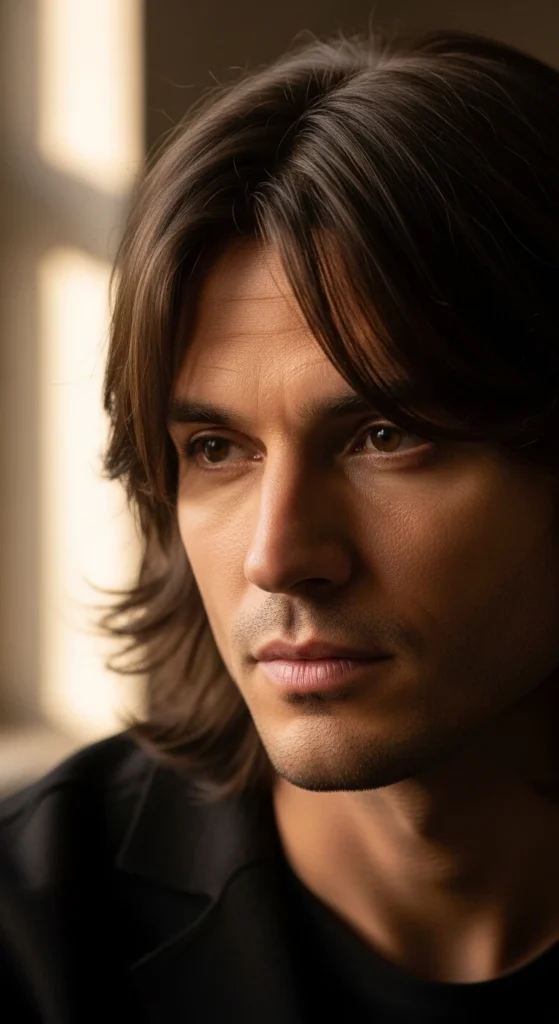
The nineties are back, and curtain bangs are leading the charge. A softer, more romantic alternative to harsh fades.
What It Looks Like: Center part with hair falling to either side of the forehead like curtains. Fringe typically hits between the eyes and cheekbones.
Who It Works For: Incredibly flattering on square faces, the soft fringe balances a strong jawline. Also works well for round faces by adding length and structure. See our curtain haircut and curtain bangs guides for more.
Barber Tip: Center-parted cut with face-framing layers. Fringe cut slightly shorter in the middle and angled longer toward the temples to create the sweeping effect.
Styling Routine: Lightweight smoothing serum on washed hair. Blow-dry with a round brush directing the fringe away from the face for root volume. Separate the fringe with fingers once dry. Small amount of styling cream for hold without stiffness.
6. Long Curly & Textured Styles
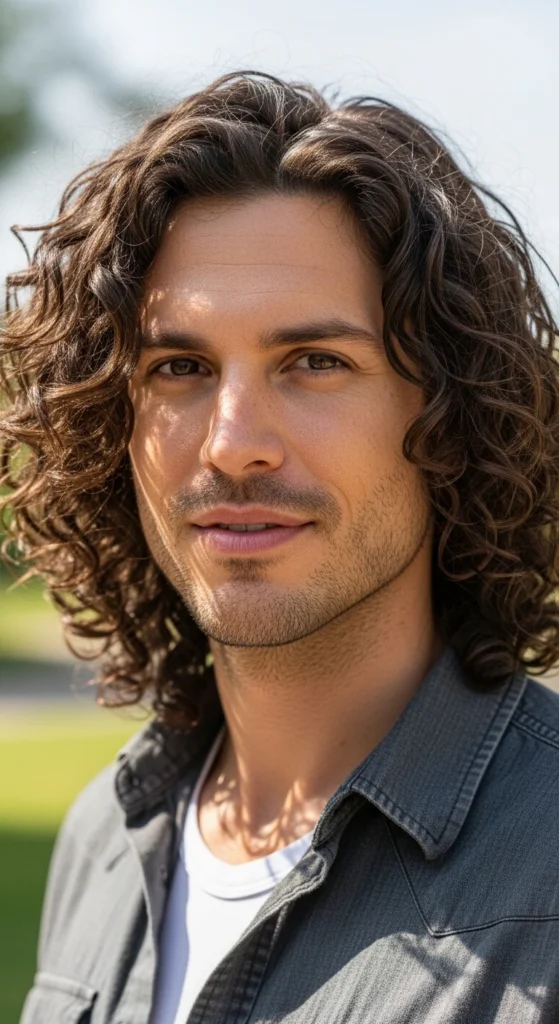
Embracing your natural curls is one of the best decisions you can make. Long curly hair has a presence and personality that straight hair simply cannot replicate.
What It Looks Like: Defined curls or coils cascading past the ears and neck. Without proper layering, long curls become triangular or pyramid-shaped. The key is shape.
Who It Works For: Naturally curly, coily, or wavy hair. See our high fade curly hair guide for short-sided variations.
Barber Tip: Find a curly hair specialist. Request stacked or rounded layers to remove bulk from the bottom and create a balanced, spherical shape. Dry cutting is preferred, it shows how the hair actually sits.
Styling Routine: Ditch the terry cloth towel, it creates frizz. Scrunch wet hair with a microfiber towel instead. Apply curl-defining cream or leave-in conditioner. Air dry or diffuse on low heat. Do not touch while drying.
7. The Sleek & Straight Look
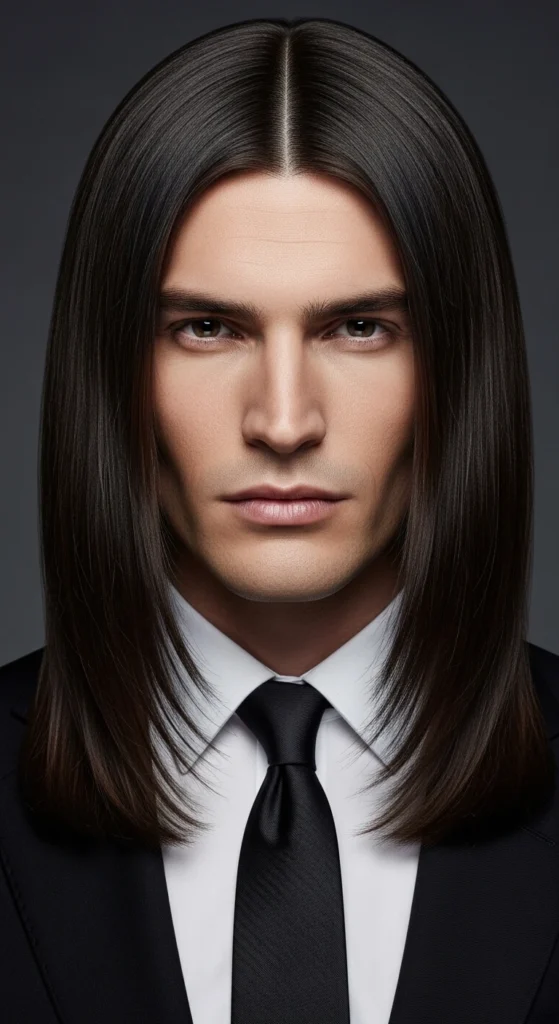
Long straight hair offers a clean, polished canvas that exudes quiet sophistication.
What It Looks Like: Hair falling smoothly past the ears with healthy shine and zero frizz. Center part or slight side part.
Who It Works For: Straight to slightly wavy hair. Works well on fine hair provided it stays clean and conditioned.
Barber Tip: Keep ends blunt or very subtly layered. Too many layers make straight hair look thin and wispy at the bottom.
Styling Routine: Heat protectant and smoothing serum on damp hair. Blow-dry with a paddle brush directing airflow down the shaft from root to tip, this flattens the cuticle and maximizes shine. Finish with a lightweight shine spray or single drop of hair oil on the ends.
8. The Modern Shag & Messy Texture
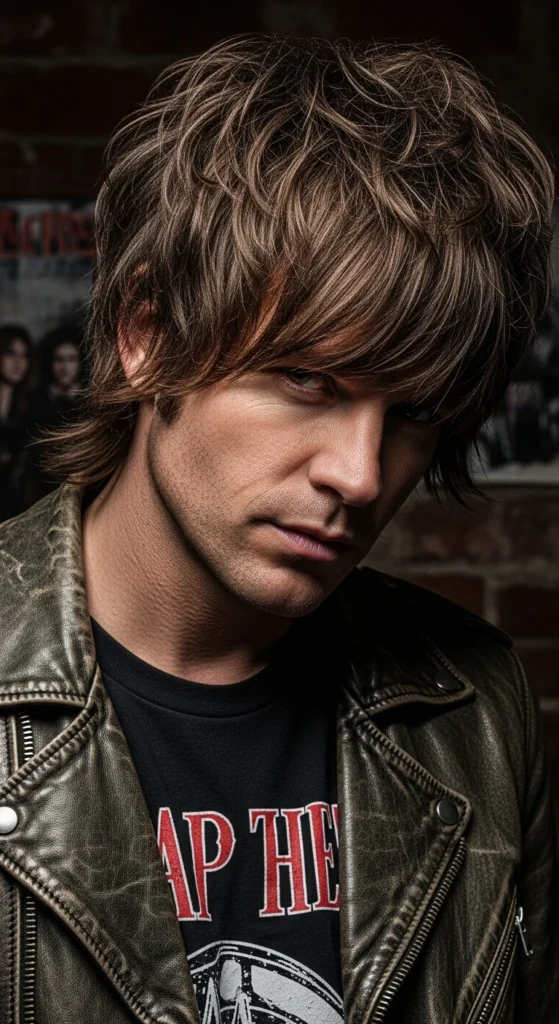
Looks like you just stepped off a rock tour bus. In the best possible way.
What It Looks Like: Choppy, uneven layers throughout with heavy emphasis on texture and volume. Intentionally messy and effortlessly cool.
Who It Works For: Almost everyone. Adds volume to fine hair, removes bulk from thick hair, enhances natural wave in textured hair. Pair with a messy fringe for added style.
Barber Tip: Texturizing shears and slide cutting throughout. Ask for lots of internal texture and choppy ends specifically.
Styling Routine: Less is more. Texture spray or powder on dry hair. Fingers only, shake everything out for a lived-in, disheveled finish. No heavy pomades or gels, they kill the layers instantly.
9. The Slick Back Long Hair
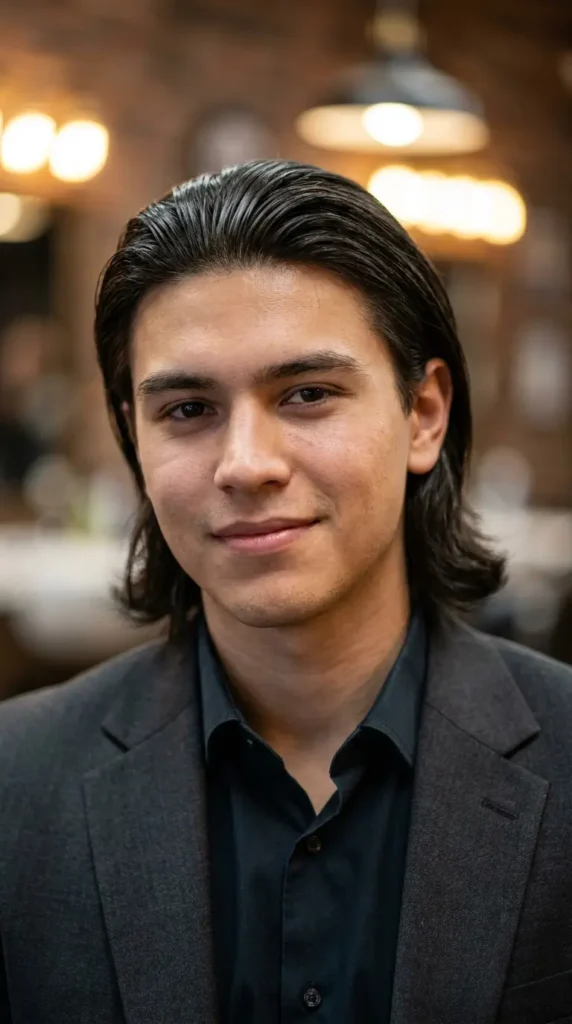
Timeless and powerful. Takes all your length and directs it straight back, exposing the face completely.
What It Looks Like: Hair combed straight back with a clean finish. High shine for formal settings, matte product for a relaxed modern look. Sides faded or tapered depending on desired contrast.
Who It Works For: Straight to slightly wavy hair. Best on men with strong facial features since the entire face is on display.
Barber Tip: Low or mid taper on the sides. Leave three to four inches on top minimum. See our slick back guide for more.
Styling Routine: Pomade on damp hair, comb straight back. For a matte version, use clay and push back with fingers. Finish with light hairspray.
Celebrity Anchor: David Beckham and Leonardo DiCaprio.
10. The Long Undercut
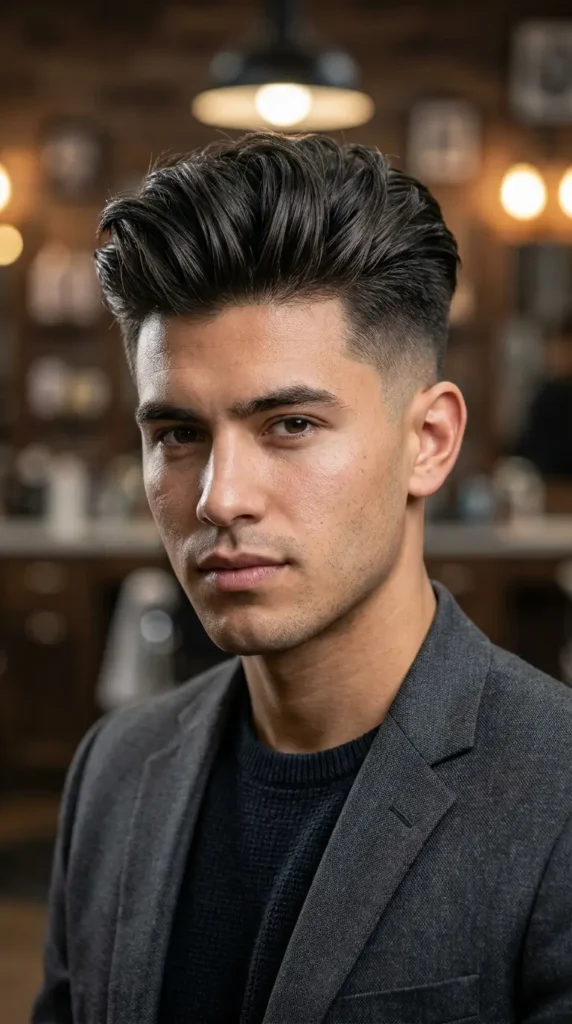
The ultimate hybrid. Long, versatile top. Sharp, cropped sides. Maximum contrast.
What It Looks Like: A clear disconnected line separating the longer top from closely clipped sides. The top can go in any direction, slicked back, swept over, tied up, or flowing loose.
Who It Works For: Almost any hair type. Straight looks sleek. Wavy adds texture. Curly creates a dramatic crown above tight sides.
Barber Tip: Specify your disconnect preference, subtle blend or hard visible line. Ask for skin fade, low fade, or blunt cut on the sides. See our undercut hairstyles guide for more.
Styling Routine: Matte clay on dry hair for texture. Pomade on damp hair for slicked back. Sea salt spray scrunched in for a messy finish.
11. The Long Pompadour
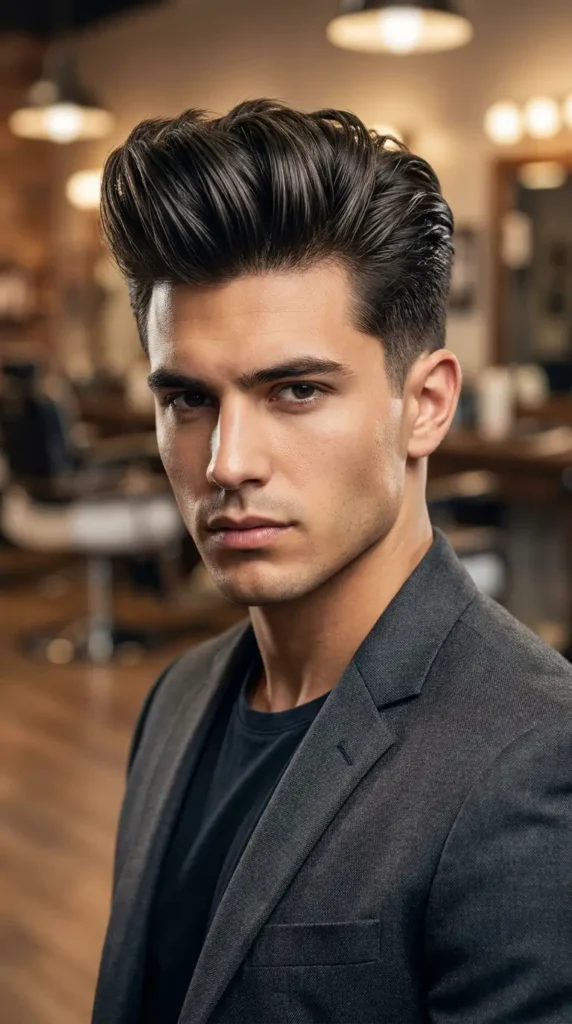
The pompadour at longer lengths becomes genuinely spectacular, softer and more textured than the stiff fifties original.
What It Looks Like: Significant volume at the front and crown sweeping upward and back. Faded or tapered sides emphasize the dramatic height. Longer lengths add natural wave and movement.
Who It Works For: Thick hair handles volume best. Fine hair needs strong product support. See our pompadour haircut guide for more.
Barber Tip: High fade on sides, three to four inches on top. Request internal layers at the crown to prevent a heavy, blocky finish.
Styling Routine: Volumizing mousse on damp roots. Blow-dry upward with a round brush. Finish with medium-hold matte pomade.
12. The Long Side Part
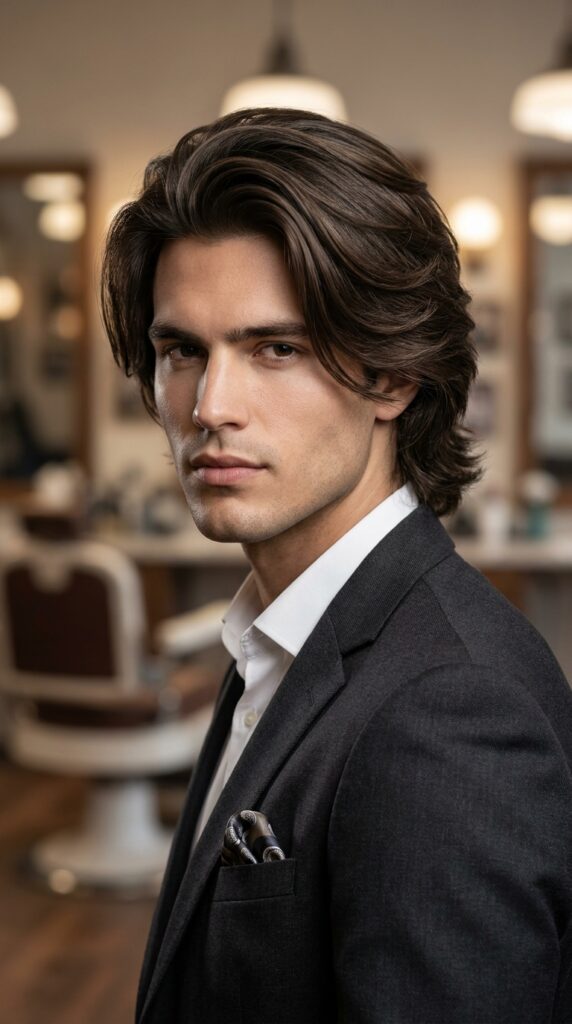
The professional man’s best friend. At longer lengths it takes on an old-Hollywood sophistication that works anywhere.
What It Looks Like: Clean part line on one side with hair sweeping dramatically across. Sides faded or tapered. The longer the hair, the more polished the sweep.
Who It Works For: Straight and slightly wavy hair. Check our side part guide for variations.
Barber Tip: Ask for the part to sit slightly higher than your natural part for a cleaner, more intentional line. Low fade or taper on sides.
Styling Routine: Light pomade on damp hair. Fine-tooth comb to create the part. Blow-dry in the direction of the sweep. Finish with light hairspray.
13. The Long Quiff
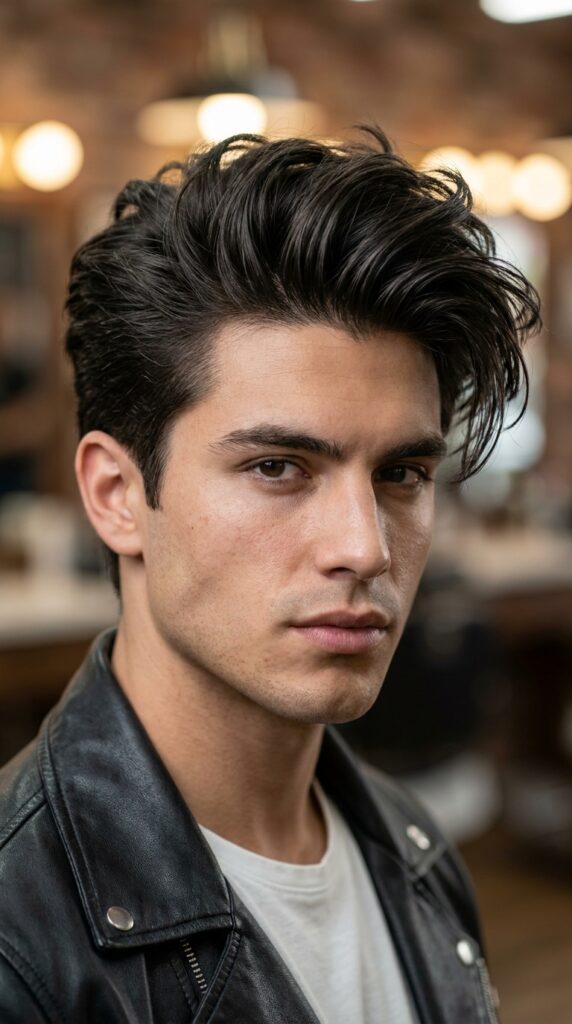
Adds height and drama at the front. At longer lengths the quiff creates a genuinely striking silhouette.
What It Looks Like: Significant lift at the front building upward before sweeping back. Faded or tapered sides create contrast. More volume and movement as length increases.
Who It Works For: Thick and wavy hair. Fine hair needs volumizing products and strong hold. See our textured quiff guide for more.
Barber Tip: Mid or high fade on sides, three to four inches on top. Keep the front section slightly longer for maximum quiff height.
Styling Routine: Volumizing mousse on damp roots. Blow-dry front section straight up with a round brush. Apply matte clay and shape with fingers only, never a comb.
14. The Long Faux Hawk
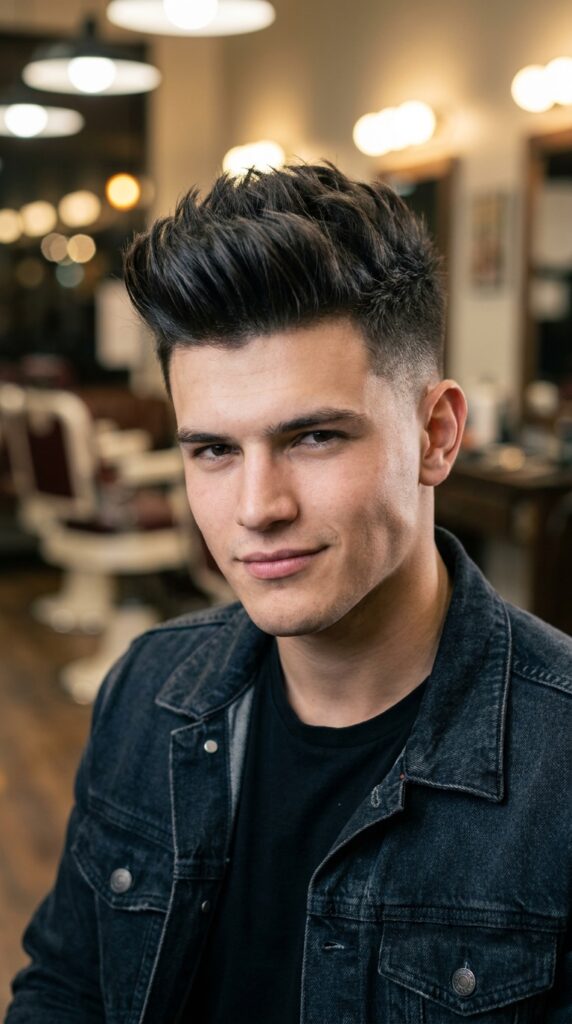
Edgy and rebellious without the commitment of shaved sides. At longer lengths the central ridge becomes dramatically voluminous.
What It Looks Like: A central strip of longer hair from forehead to crown with shorter faded sides. Central section styled upward to create the signature hawk ridge.
Who It Works For: Thick and wavy hair. Works on oval, square, and oblong face shapes. See our faux hawk guide for inspiration.
Barber Tip: High or mid fade on sides, three to four inches on top. Ask for the top sides tapered toward the central strip to guide hair naturally into the hawk shape.
Styling Routine: Strong-hold matte clay on dry hair. Push hair from both sides toward the center with fingers and palms. Blow-dry while shaping for extra hold.
15. The Shoulder-Length Cut
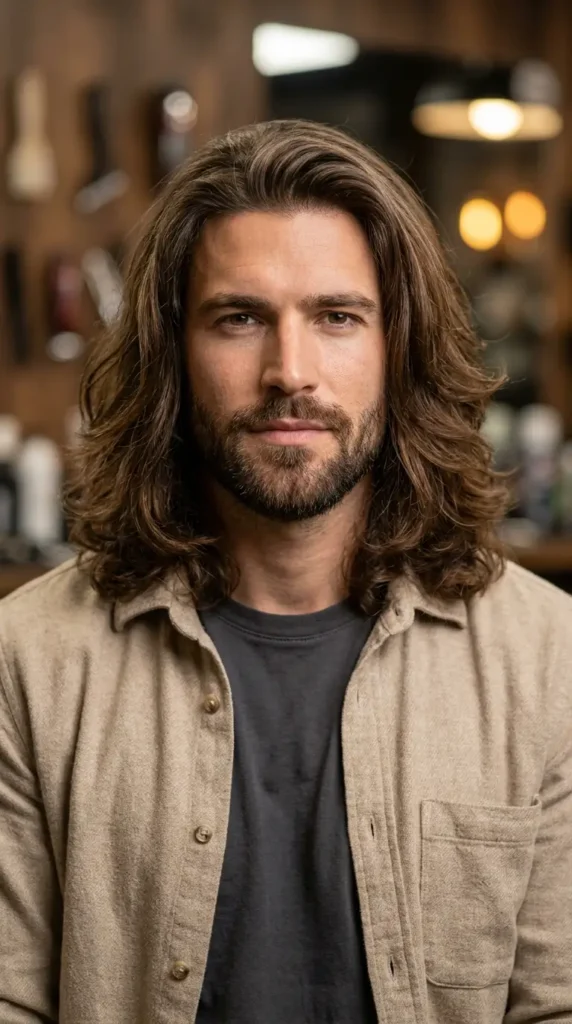
The sweet spot between manageable and genuinely long. Maximum versatility at any occasion.
What It Looks Like: Hair reaching the top of the shoulders or grazing the collarbone. Worn straight, wavy, curly, tucked behind ears, or parted in any direction.
Who It Works For: Any hair type. Straight looks polished. Wavy looks relaxed. Curly creates a full, dramatic frame.
Barber Tip: Long layers throughout. Point-cut ends rather than blunt-cut for a softer, more natural finish. Light dusting of the neckline keeps things tidy.
Styling Routine: Lightweight styling cream or sea salt spray on damp hair. Air dry for a relaxed finish. Paddle brush blow-dry for a more polished look.
16. The Long Comb Over
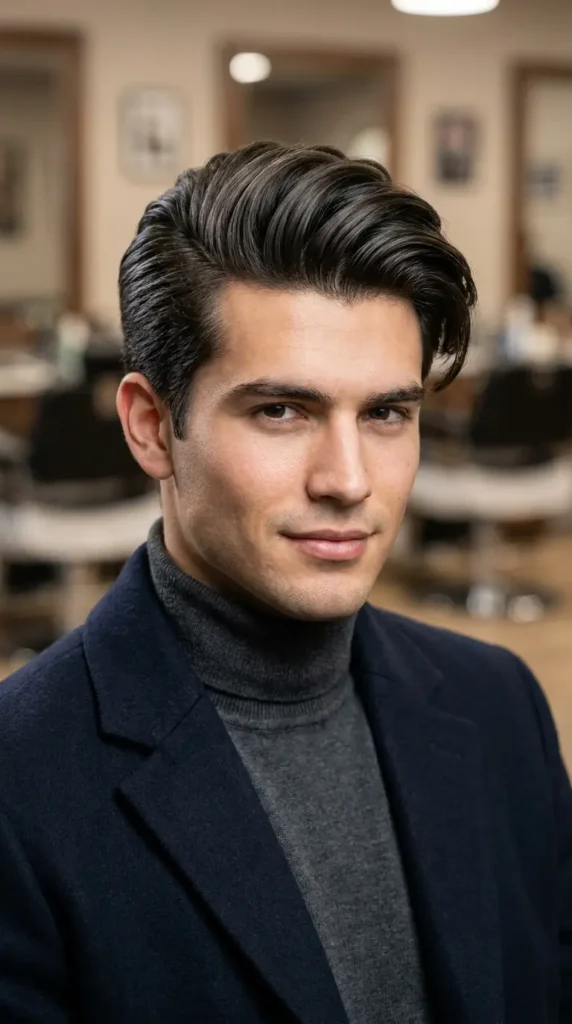
At longer lengths the comb over becomes effortlessly masculine, the natural weight of the hair does most of the work.
What It Looks Like: Hair swept firmly to one side with natural volume and movement. Sides faded or fuller. The longer the hair, the more relaxed and natural the sweep.
Who It Works For: Straight and wavy hair. See our comb over fade guide for modern variations.
Barber Tip: Low or mid fade on the shorter side, more length on the longer side. Point cutting throughout prevents the helmet-like stiffness.
Styling Routine: Light styling cream on damp hair, blow-dry in direction of sweep. Once dry, add a small amount of matte clay with fingers for separation.
17. The Long Ivy League
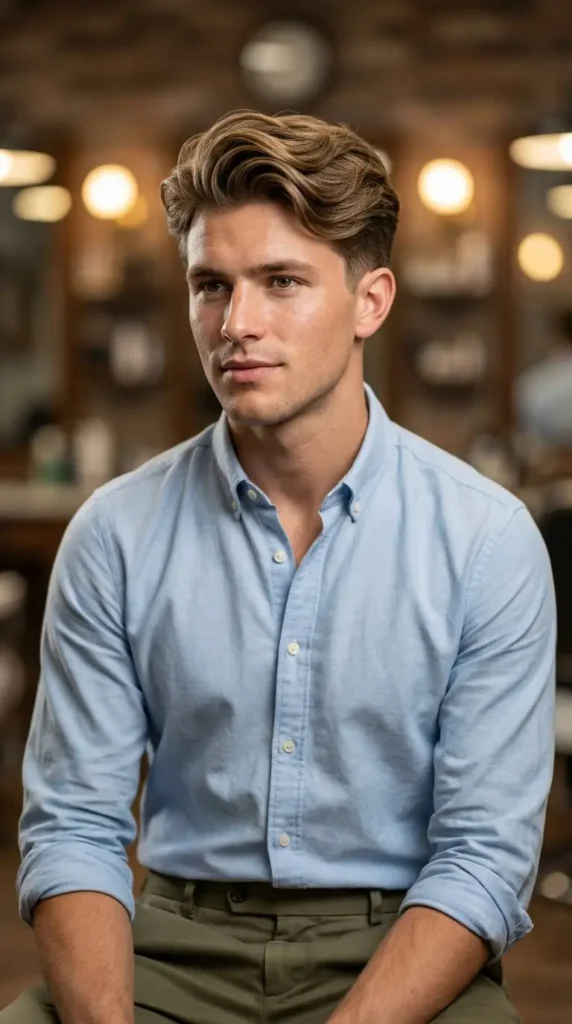
Bridges the gap between classic professional and modern stylish. Works in a courtroom, a startup, or a dinner date.
What It Looks Like: Three to four inches on top for a clean side part and meaningful sweep. Tapered or lightly faded sides. Natural wave shows without going truly long.
Who It Works For: Straight and slightly wavy hair. Ideal for professional settings. See our Ivy League guide for more.
Barber Tip: Taper rather than fade for the most professional finish. Minimum two and a half to three inches on top for a comfortable side part.
Styling Routine: Water-based pomade on damp hair. Fine-tooth comb for the part. Blow-dry in direction of sweep. Light hairspray for all-day hold.
18. The Messy Long Hair
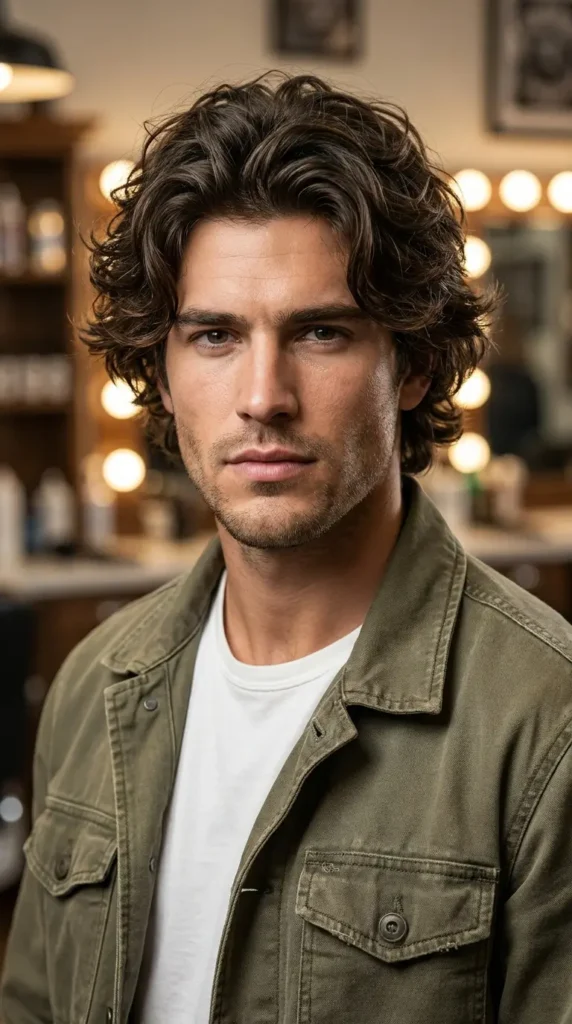
Looks like zero effort, even if you spent ten minutes on it. Approachable, masculine, effortlessly cool.
What It Looks Like: Longer hair loose with a deliberately undone finish. No hard parts, no precise styling. Natural movement with strategic guidance.
Who It Works For: Wavy and curly hair look incredible here. Straight hair achieves a convincing messy look with the right products. See our short messy hairstyles guide for ideas.
Barber Tip: Significant internal layering throughout. Texturized ends using a razor or texturizing shears for a raw, undone finish.
Styling Routine: Rough towel dry. Generous sea salt spray while scrunching. Air dry completely. Run fingers through once dry. Tiny amount of matte clay on the ends.
19. The Surfer Hair
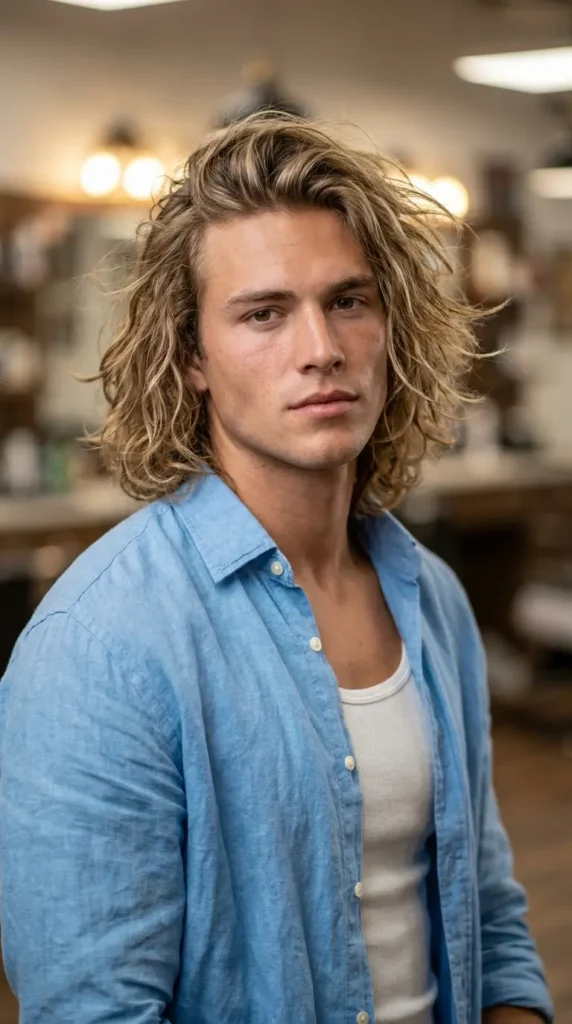
Pure laid-back masculine energy. Salt-kissed, sun-bleached, effortlessly textured.
What It Looks Like: Longer hair with natural wave, light texture, and a relaxed sun-dried finish. Body and volume without looking styled. Moves freely with every head turn.
Who It Works For: Wavy and slightly curly hair. Straight hair achieves this with the right products. See our surfer haircut guide.
Barber Tip: Long layers throughout. Soft, blended neckline. No hard lines anywhere. Avoid heavy fades that make the style look too deliberate.
Styling Routine: Generous sea salt spray on damp hair. Scrunch and air dry or diffuse on low. Run fingers through once dry. The less you touch it, the better it looks.
20. The Long Textured Crop
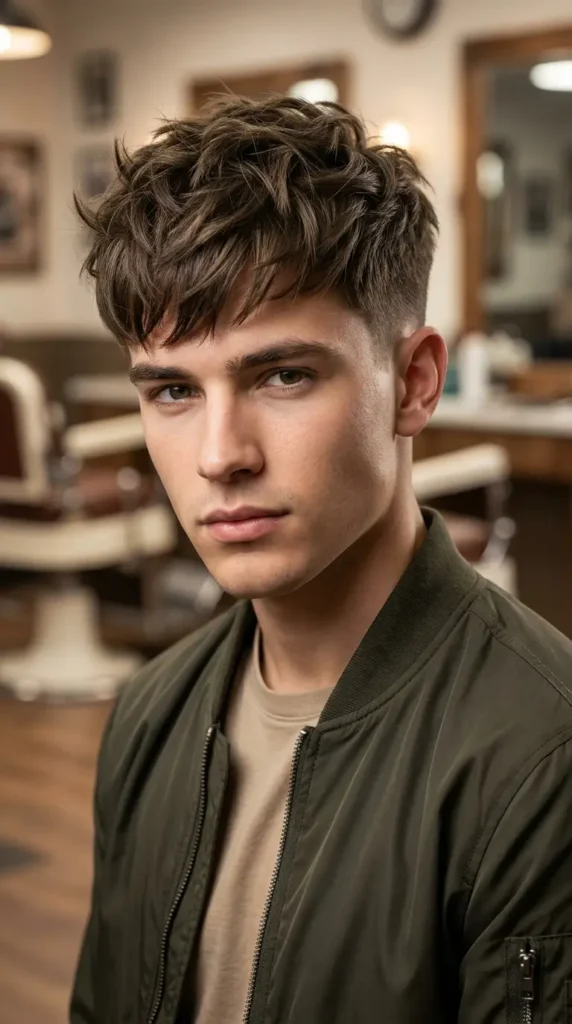
The textured crop at three to four inches, all the modern appeal of the original with more versatility.
What It Looks Like: Textured, choppy top with a forward-falling fringe and faded sides. At longer lengths the fringe has more movement and drama. See our textured crop guide for all variations.
Who It Works For: Almost any hair type and face shape.
Barber Tip: Mid fade on sides, three to four inches on top. Heavy texturizing with point cutting. Fringe cut at an angle, not straight across.
Styling Routine: Texture powder or sea salt spray on dry hair. Use fingers to push the fringe forward and create separation in the top section. Scrunch and tousle for a relaxed, piece-y finish.
21. The Long Flow with Fade
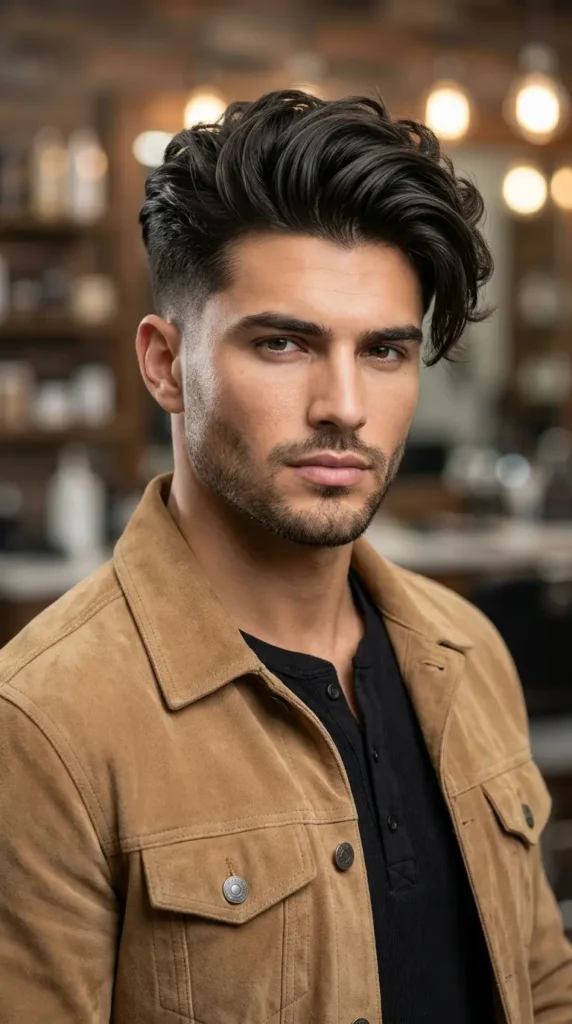
Bro flow meets tight fade. The contrast between precise sides and loose flowing top looks genuinely striking.
What It Looks Like: Hair flowing naturally from a tight, faded base. Sides disappear cleanly into skin while the top grows freely in any natural direction.
Who It Works For: Any hair type with enough top length. Oval, heart, and oblong face shapes particularly. See our low fade vs high fade guide for height choices.
Barber Tip: Specify fade height clearly. High fade for maximum drama. Low or mid for subtler, professional results. Long layers on top, not shortened.
Styling Routine: Sea salt spray or light matte paste on damp top section. Air dry and leave alone. The fade handles the structure.
22. The Long Hair with Beard
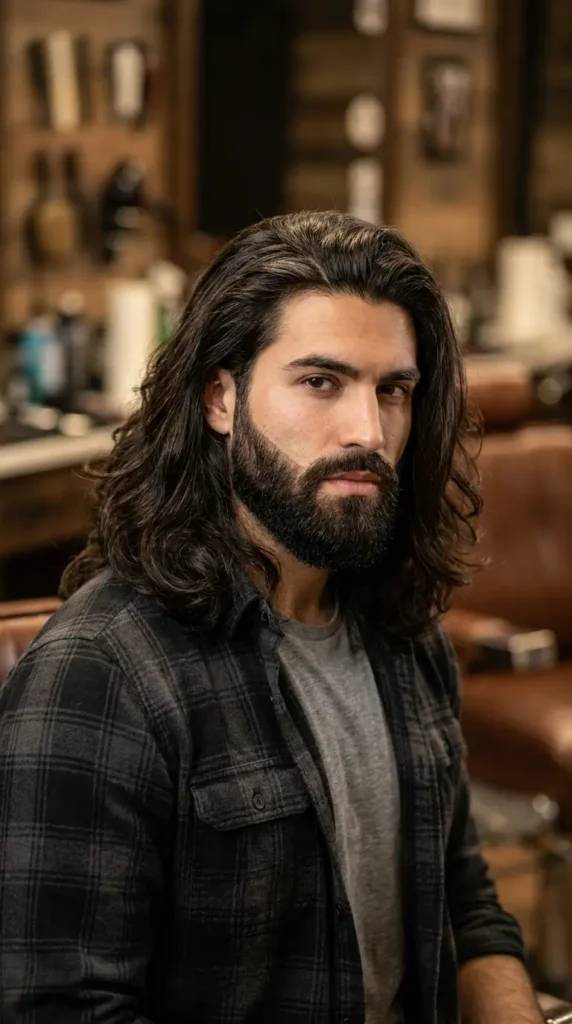
One of the most powerful looks a man can wear. Hair and beard working together to frame the face.
What It Looks Like: Any long style, flow, shag, slick back, bun, paired with a groomed beard. Longer beard with longer hair. Tighter beard with shorter long styles. Proportion is everything.
Who It Works For: Any man who can grow facial hair. Every face shape benefits from a well-matched combination.
Barber Tip: Tell your barber your beard plans before they start cutting. A good barber factors the overall face-framing effect into their decisions.
Styling Routine: Beard oil daily. Style the hair as usual. Both elements must look intentional and groomed, not overgrown and neglected.
23. The Long Hair Middle Part
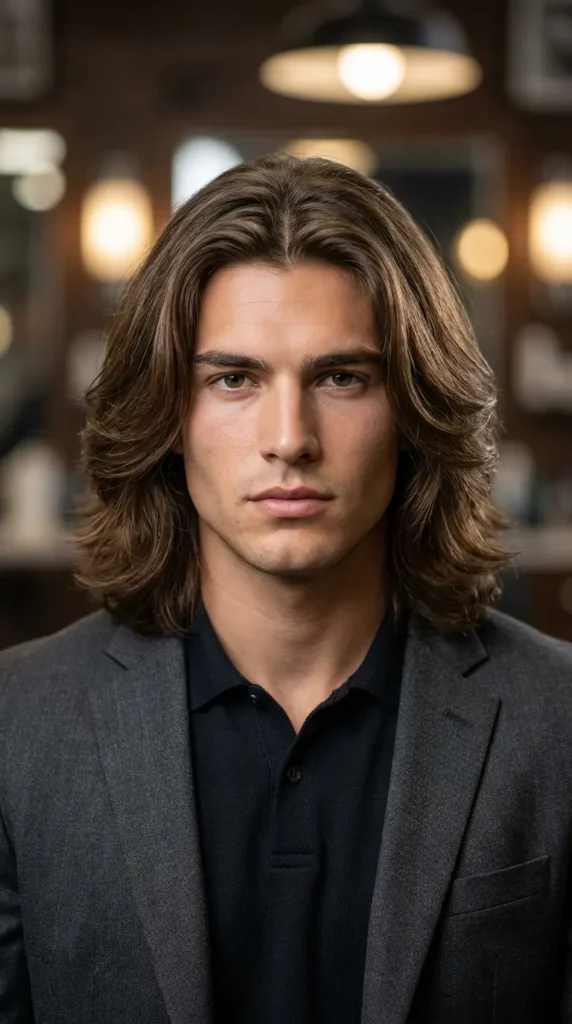
One of the defining hairstyles of the 2020s. At longer lengths it becomes increasingly flattering.
What It Looks Like: Hair parted evenly down the center with equal length falling on both sides. The longer the hair, the more dramatic and face-framing the effect. See our middle part haircuts guide for inspiration.
Who It Works For: Oval, heart, and oblong faces. Square faces should approach with caution, the middle part can emphasize width.
Barber Tip: Face-framing layers around the front sections enhance the curtain effect. Let the part fall naturally rather than forcing it.
Styling Routine: Lightweight styling cream or sea salt spray on damp hair. Create the center part with fingers. Blow-dry each side away from the face with a round brush.
24. The Long Wavy Hair
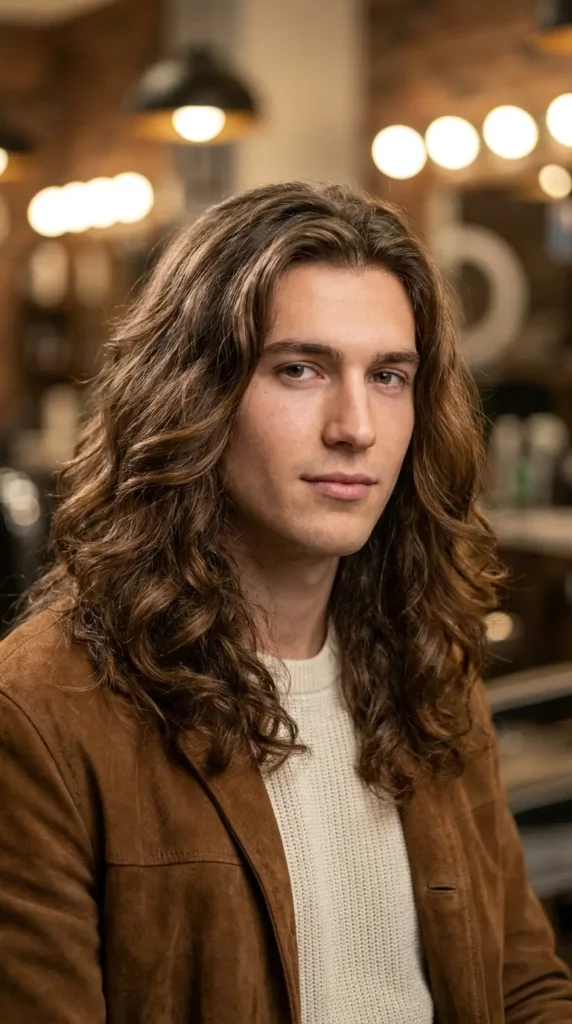
Natural waves make achieving stylish long results almost effortless. One of the most desirable textures for long styles.
What It Looks Like: Natural S-shaped waves flowing from roots to ends. Body and movement without frizz or uncontrolled texture. Healthy shine and soft finish. See our wavy hairstyles for men guide.
Who It Works For: Naturally wavy hair. Straight hair can enhance wave patterns with the right products.
Barber Tip: Long layers throughout. Ask for dry cutting if possible, wavy hair behaves completely differently when wet.
Styling Routine: Curl-enhancing cream or sea salt spray on soaking wet hair. Scrunch upward. Air dry or diffuse on low. Separate waves gently with fingers once dry.
25. The Long Hair Taper Fade
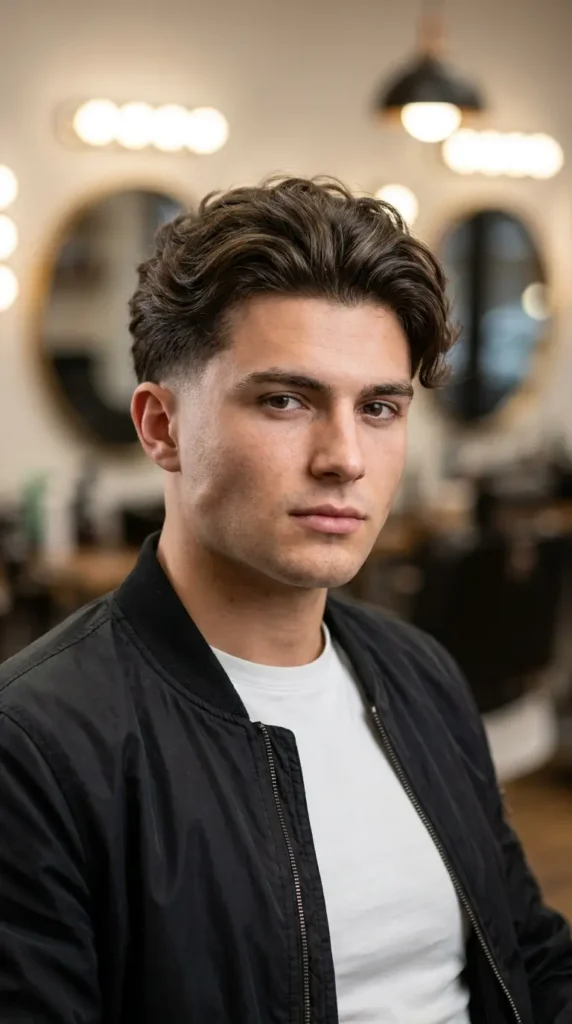
Makes flowing long hair look intentional rather than overgrown. The compromise cut for men who want length that still looks sharp.
What It Looks Like: Clean tapered or faded sides blending into natural length on top. The longer the top gets, the more dramatic the contrast becomes. See our taper vs fade guide for the full breakdown.
Who It Works For: Any hair type. Universally flattering combination.
Barber Tip: Be specific about taper height. Low taper is subtle and professional. High taper with skin fade is bold and modern.
Styling Routine: Style the top section as normal for your chosen look. The taper handles the sides automatically, no daily styling needed.
26. The Long Curly Hair with Layers
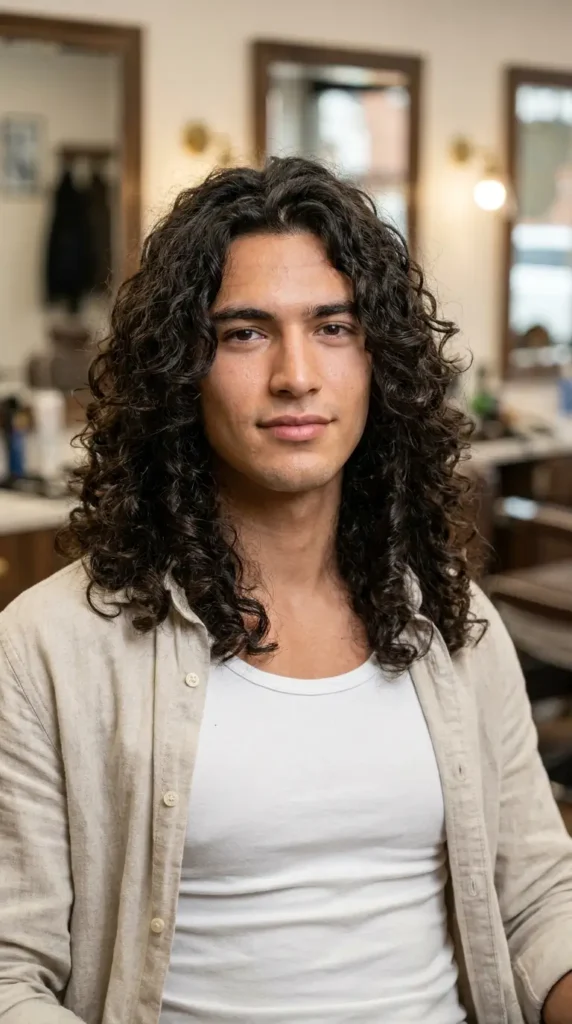
Properly layered long curly hair bounces, moves, and frames the face beautifully. Without layers it becomes heavy and triangular.
What It Looks Like: Long curls maintaining definition and bounce from root to end. Rounded, balanced silhouette rather than triangle-shaped. Face-framing curls add dimension. See our high fade curly hair and low taper fade curly hair guides.
Who It Works For: Naturally curly or coily hair.
Barber Tip: Find a curly hair specialist. Request dry cutting specifically. Ask for stacked layers at the bottom to prevent the pyramid shape.
Styling Routine: Generous curl-defining cream on soaking wet hair. Praying hands technique through sections. Diffuse on low or air dry. Separate gently with fingers once dry.
27. The Long Fringe Styles
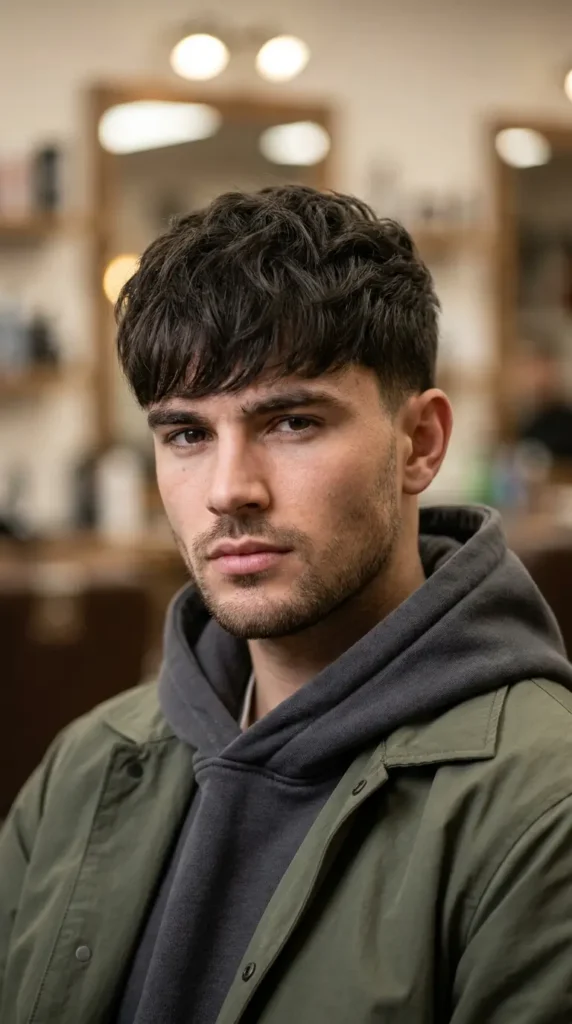
A long fringe adds personality and dimension to any long hairstyle. It changes everything about how the face is framed.
What It Looks Like: Hair extending over the forehead in varying degrees. Heavy fringe creates mystery. Side-swept fringe adds directional movement. Curtain fringe frames both sides simultaneously. See our fringe hairstyles for men guide for all options.
Who It Works For: Long or rectangular faces benefit most, a fringe shortens the apparent face length. Oval faces suit any variation.
Barber Tip: Specify exact length and direction before the barber starts. Eyebrow level is classic. Eye level is bold. Cheekbone level is soft and romantic.
Styling Routine: Blow-dry fringe in desired direction with a round brush. Small amount of matte clay through ends for definition and separation.
28. The Long Hair for Thin or Fine Hair
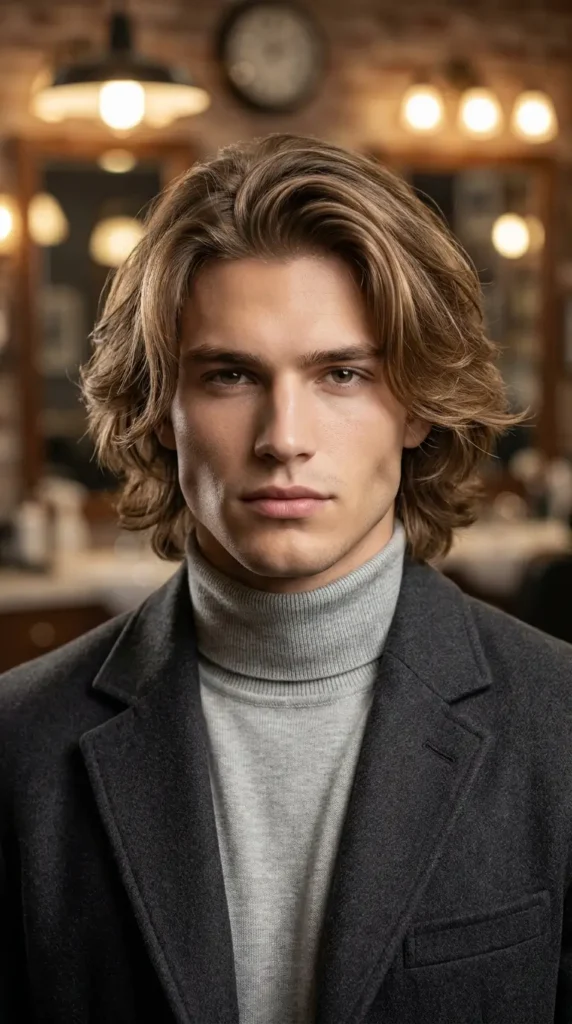
Thin or fine hair and long lengths can absolutely coexist, it just takes the right cut and products.
What It Looks Like: Long hair appearing fuller and more voluminous than its actual density. Layers and technique do all the heavy lifting.
Who It Works For: Men with thin, fine, or low-density hair who want to wear their hair long. See our haircuts for men with thin hair guide for more.
Barber Tip: Long layers throughout for the illusion of volume. No blunt cuts at the bottom, they make fine hair look wispy. Point cutting at the ends for a softer, feathered finish that appears fuller.
Styling Routine: Volumizing mousse on damp roots. Blow-dry upside down for maximum root lift. Texture powder at roots for grip. Avoid heavy oils or creams, they flatten fine hair instantly.
29. The Long Braided Styles
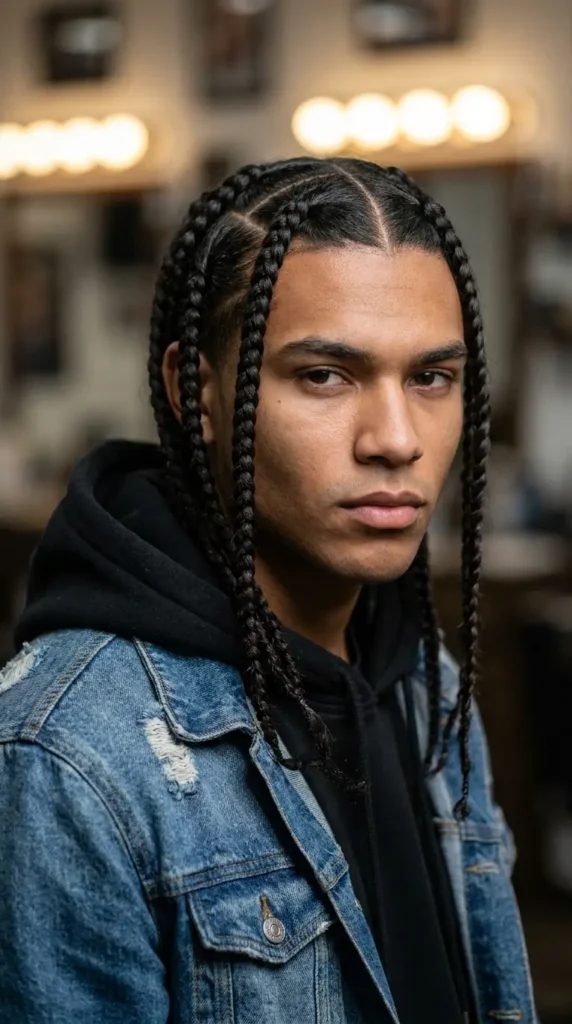
One of the most creative and culturally rich expressions of men’s long hair. Braids protect the hair while creating striking visual patterns.
What It Looks Like: Hair woven into intricate patterns, loose braids worn down, a single braid at the back, braided man buns, or partial braids at the crown with loose hair flowing below. Also pairs well with starter locs for a different textured approach.
Who It Works For: Any hair type with sufficient length. Most common in men with Afro-textured, coily, or thick straight hair. See our starter locs guide for a related option.
Barber Tip: See a braiding specialist rather than a traditional barber. The craft is distinct and requires specific expertise. Arrive with clean, moisturized, and detangled hair.
Styling Routine: Keep braids moisturized with a lightweight braid spray or hair oil. Sleep with a silk or satin sleep cap overnight. Refresh each morning with a light spritz of water and oil.
30. The Classic Long Flow
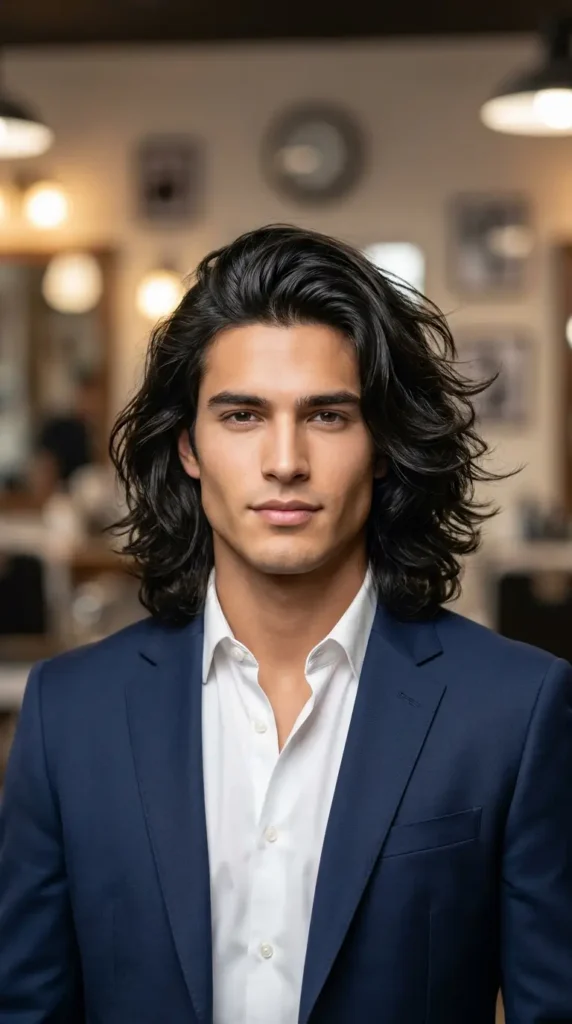
The ultimate destination hairstyle. Past the shoulders, natural, free, and completely effortless.
What It Looks Like: Truly long hair reaching the shoulders, chest, or beyond, worn naturally with minimal styling. Volume, movement, and character that cannot be manufactured.
Who It Works For: Any hair type. Straight hair looks sleek and powerful. Wavy hair has extraordinary natural movement. Curly hair creates a dramatic, commanding presence.
Barber Tip: At this length, trimming is about maintenance, not shape. Get a light dusting every ten to twelve weeks to remove split ends without losing length. Ask for long layers to prevent the weight from becoming oppressive.
Styling Routine: Apply leave-in conditioner to damp hair and air dry naturally. Finish with a few drops of hair oil on the ends for shine and frizz control. Hair this long styles itself.
Celebrity Anchor: Jason Momoa, Jared Leto, and Kit Harington.
How to Choose the Right Long Haircut for Your Face Shape
Oval: The most versatile face shape, almost any long style works. Center parts, slicked-back looks, heavy layers, all fair game. Just avoid covering your face with too much heavy fringe.
Round: Add height and length to create a slimming effect. The layered flow and long quiff work well. Curtain bangs with a center part elongate the face. Avoid blunt shoulder-length cuts that add width at the sides. See our hairstyles for round faces guide for more.
Square: The goal is softening strong angles. Wavy textures, curtain bangs, and the bro flow all work beautifully, the movement contrasts with the structured jawline. Avoid severe slicked-back looks that emphasize sharpness.
Long or Rectangular: Avoid adding height on top, it elongates features further. Shoulder-length cuts with soft layers or a bro flow that adds width at the sides are ideal. A fringe helps shorten the appearance of the forehead.
Heart: Wider forehead, narrower chin. Add volume around the jawline with a textured shag or shoulder-length waves to balance the lower half. A side part and swept fringes work better than harsh center parts.
Surviving the Awkward Stage: A Complete Growth Timeline
The number one reason men give up on growing their hair. Here is how to survive it.
Months 1-3: “It’s Getting Shaggy”
Hair starts touching the ears and collar. It feels bushy and unintentional. Keep the neckline and around the ears clean with a light trim. Tell your barber: “Clean up the edges but do not touch the length on top.”
Months 4-7: “The Puffball Phase”
The hardest stretch. Hair has volume but no direction, it wants to go out, not down. Matte paste or texture clay is essential for giving it shape. Use fingers to twist and separate sections. Hats and bandanas are your best friends right now.
Months 8-12: “Almost There”
Hair finally starts falling due to its own weight. You are tucking it behind your ears and entering flow territory. Get a shaping trim, ask for long layers to help the hair sit better and remove bulk from the back.
The Golden Rule
Never tell a barber “just a trim” when growing your hair out. Be specific. Use this exact script every time:
“I am growing my hair out long. I just need you to clean up the neckline and taper the sideburns a little. Please do not take any length off the top or the back.”
The Holistic Grooming Guide for Long Hair
Long hair demands a different care routine. Here is what actually matters.
Wash Less Than You Think
Over-washing strips the natural oils your scalp produces. For long hair those oils are essential, they travel down the shaft and keep your ends hydrated. Wash two to three times per week maximum. Between washes, use dry shampoo or simply rinse with water.
Conditioner Is Non-Negotiable
The ends of your hair are the oldest part. They need moisture every single wash. Use a hydrating conditioner each time and swap it for a deep conditioning mask once a week.
Protect It While You Sleep
Cotton pillowcases create friction that causes frizz and breakage overnight. Switch to a silk or satin pillowcase, one of the simplest upgrades you can make. Alternatively, loosely tie your hair back with a soft scrunchie before bed.
How to Style Long Hair: Product & Tool Mastery
- Sea Salt Spray: The holy grail for long hair. Adds texture and natural wave without weight or shine. Scrunch into damp hair and air dry. Perfect for bro flows and messy shags.
- Matte Clay or Paste: Best for texture, separation, and hold with zero shine. Warm between palms and work through dry hair. Essential for piecing out layers and taming the awkward stage.
- Styling Cream: Light hold, light shine, zero frizz. Smooth over flyaways on straight hair or use to define curls without crunch. Best as a finishing product.
- Pomade: Shine and hold for slicked-back styles. Always choose water-based, it moves naturally and washes out easily. Essential for the pompadour haircut.
- Hair Oil or Serum: A few drops of argan oil on dry ends adds polish and hides split ends instantly. Keep it away from the roots.
- Diffuser Attachment: Non-negotiable for waves and curls. Disperses airflow gently so curls dry with definition and volume instead of frizz.
What to Tell Your Barber (The Exact Script)
Use these exact scripts to walk in confident and walk out with exactly what you wanted.
Script 1: Layered Flow
“I am growing my hair out and want to keep the length. Add long layers throughout to remove bulk and add movement. Use point cutting or texturizing shears so the ends look soft, not blunt. Just clean up the neckline and around the ears.”
Script 2: Modern Mullet or Wolf Cut
“I want a modern mullet. Keep the top and crown textured and choppy, about two to three inches. Taper or fade the sides. Leave the back long but texturize it so it has movement, not a solid block shape.”
Script 3: Curtain Bangs
“I want a center part with curtain bangs. Fringe hitting around my cheekbones, sweeping away from my face. Add face-framing layers around the front to blend it in.”
Key Barber Jargon:
- Point Cutting: Cutting vertically into the ends to create texture and softness.
- Texturizing Shears: Scissors that remove bulk without losing length.
- Weight Removal: Thinning out thick sections so hair lays flatter and moves naturally.
- Taper: Gradually shortening hair toward the neckline. See our taper vs fade guide for the full breakdown.
Common Long Hair Mistakes to Avoid
Mistake 1: Skipping Trims
Regular trims actually help you grow longer hair. Untreated split ends travel up the shaft and cause breakage, forcing you to cut off more later. Schedule a light dusting every ten to twelve weeks.
Mistake 2: Using the Wrong Towel
Rubbing wet hair with a rough cotton towel causes frizz and breakage. Wet hair is fragile. Squeeze out excess water gently with a microfiber towel or soft t-shirt instead.
Mistake 3: Overloading on Heavy Products
Too much pomade, wax, or oil near the roots makes hair look stringy and greasy. Start with a pea-sized amount on mid-lengths and ends only. You can always add more, you cannot take it away without washing.
Mistake 4: Washing with Hot Water
Hot water strips moisture and opens the cuticle causing frizz. Rinse with lukewarm or cool water to seal the cuticle and boost shine.
Mistake 5: Ignoring Your Neckline
Even with long hair a clean neckline matters. Stray hairs creeping down the back of your neck make an otherwise stylish look appear unkempt. Keep it tidy between full haircuts.
FAQs
Which haircut is best for long hair men?
There’s no single “best” cut since it depends on your hair type and how much effort you want to put in daily. That said, the bro flow and the layered flow are the two most universally flattering options: they work on nearly every hair texture and face shape, require minimal daily styling, and grow out gracefully instead of turning into a shapeless mess. If you want something with more structure, the long undercut or long taper fade give you the length on top with sharper, more intentional sides.
Is a 3 or 4 inch haircut longer?
A 4 inch length is longer than 3 inches. In barber terms, 3 inches on top is enough for a solid side part, a long Ivy League, or a modest quiff, while 4 inches gives you more range for a proper pompadour, a longer swept-back style, or extra length to work with as your hair keeps growing. Most of the longer looks in this guide, like the long quiff and long pompadour, call for the 3 to 4 inch range specifically because it’s long enough to style dramatically but still manageable day to day.
Is long hair on men attractive?
Yes, when it’s well-maintained. Long hair on men reads as confident and low-key rebellious, and it’s one of the few style choices that changes your entire silhouette, not just a small detail. The attraction factor comes down to grooming, not length alone: healthy, conditioned hair styled with intention (even if that intention is “effortless”) consistently reads as more attractive than length by itself. Neglected, frizzy, or unshaped long hair is what people actually object to, not the length.
What is a layer cut for boys?
A layer cut for boys uses the same principle as an adult layered flow, hair is cut at varying lengths throughout instead of one uniform length, which removes bulk and adds natural movement. For boys this usually means shorter layers around the crown and slightly longer pieces framing the face, giving the hair shape and bounce without looking heavy or helmet-like. It’s a popular choice for boys with thick or wavy hair because it keeps things low-maintenance while still looking styled.
Does long hair look good on older men?
Absolutely. Older men can look incredibly distinguished with long hair when paired with proper grooming and confidence. As men age, hair may thin slightly, but layered cuts and subtle volumizing products create the appearance of fullness. The key is keeping it neat and intentional.
Does long hair make you look unprofessional?
Not anymore. A neat man bun, sleek ponytail, or well-groomed flowing hair is now widely accepted in most professional environments, especially in creative, tech, and entrepreneurial fields. Keep it clean and tidy and it works anywhere.
How can I add volume to fine or thin long hair?
Ask your barber for long internal layers to create the illusion of thickness. Sea salt spray is your best friend, it adds grit and texture that makes hair shafts appear fuller. Blow-dry upside down for maximum root lift.
How long does it actually take to grow long hair?
Hair grows about half an inch per month, roughly six inches per year. Going from a short buzz cut to shoulder-length hair takes approximately eighteen to twenty-four months. Patience is the most important ingredient.
What is the best haircut for a man with a round face who wants long hair?
Styles that add height at the crown elongate a round face best. The layered flow, long quiff, and top knot all work well. Curtain bangs with a center part draw the eye vertically. Avoid blunt cuts that end right at the jawline.
Can I combine long hair on top with a fade on the sides?
Yes, and it is one of the most popular ways to modernize long hair. Called an undercut or disconnected cut, it keeps things sharp and edgy while allowing total versatility on top. Wear it down, slicked back, or tied into a small bun.
How do I stop my long hair from getting frizzy?
Frizz is caused by lack of moisture. Switch to a sulfate-free shampoo and always condition. Add a leave-in conditioner or hair oil to your routine. Never brush dry waves or curls, use a wide-tooth comb in the shower while conditioning instead. A silk pillowcase dramatically reduces morning frizz.
What do I do with my long hair at the gym?
A simple ponytail or half-up bun handles most workouts. For high-intensity sessions, a secure man bun keeps hair completely off the face and neck. A soft fabric headband or sweatband is a classic, effective backup.
What is the best long hairstyle for men with straight hair?
The sleek and straight look, long slick back, and long Ivy League all suit straight hair perfectly. For a more relaxed approach, the surfer hair style with sea salt spray creates natural-looking texture even on completely straight hair.
How do I grow long hair without it looking messy during the awkward stage?
Keep the neckline and around the ears clean with regular light trims. Use matte paste or texture clay to give the hair shape and direction. Hats, bandanas, and half-up styles are your best friends. Always tell your barber: “I am growing it out, do not take length off the top.”
What products are essential for men with long hair?
Three core products cover everything. Sea salt spray for texture and natural movement. Matte clay or paste for definition, hold, and taming the awkward stage. Hydrating hair oil or serum for the ends to prevent frizz and split ends.
Can curly hair look good when grown long?
Yes, long curly hair is one of the most striking styles any man can wear. Proper layering from a specialist barber is essential. Without layers, long curls become triangle-shaped and heavy. With stacked layers and a rounded cut, they bounce and move beautifully at any length.
How often should men with long hair get a trim?
Every ten to twelve weeks is ideal. This light dusting removes split ends before they travel up the shaft and cause breakage, without losing meaningful length. Men in the growing-out phase should stick to this schedule faithfully.
Conclusion
Thirty styles. Every face shape. Every hair type. Every length. You now have everything you need.
But here is the one truth that matters more than any of it.
Long hair is not about the cut. It is about the commitment.
The men who pull off long hair best are not the ones with perfect genes or ideal hair texture. They are the ones who decided to see it through, who survived the awkward stage without reaching for clippers, who learned to condition properly, chose the right products, and trusted the process.
The payoff is real. Pull it back for a meeting. Let it flow on the weekend. Style it up for a night out or leave it completely natural. Long hair gives you options that short hair simply cannot.
This is not a trend. The wolf cut dominated global searches. The bro flow became the face of masculine relaxed style. Curtain bangs made a comeback nobody saw coming. Long hairstyles for men have shifted from counterculture statement to mainstream lifestyle choice, permanently.
Your action plan:
Pick two or three styles that match your hair type and face shape. Save the photos. Walk into your barber appointment with the exact script from this guide.
Build your three-product arsenal, sea salt spray, matte clay, and hair oil. Wash only two to three times per week. Switch to a silk pillowcase tonight.
Then grow.
Every man’s hair journey is different. But every man who commits gets somewhere worth going.
The flow is waiting. Go get it.