



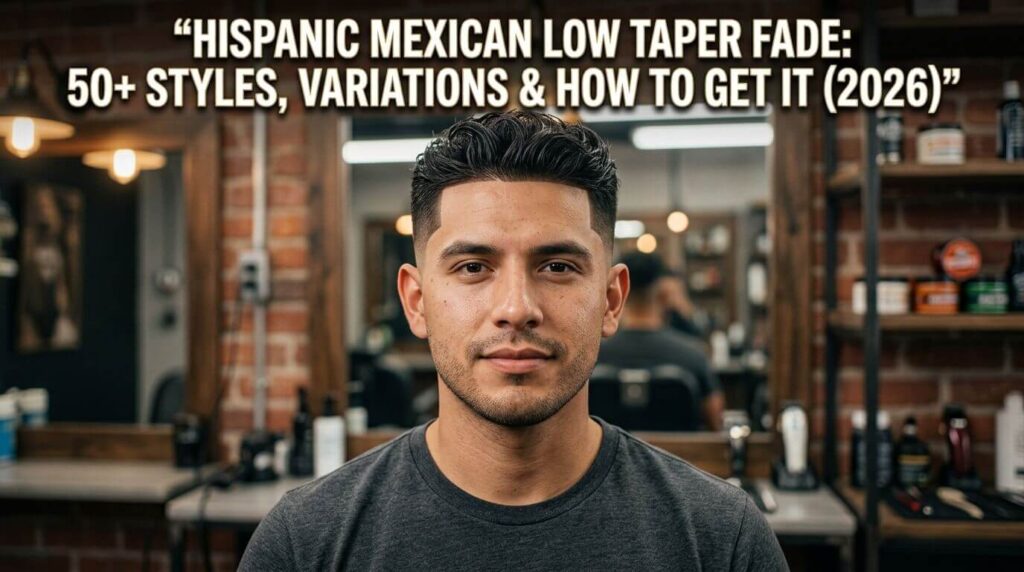
A Hispanic Mexican low taper fade is a haircut where the hair gradually gets shorter from the top down to the sides and back. The fade starts low — right above the ears and neckline — creating a smooth, natural transition. It is softer than a mid or high fade, giving a clean, balanced look that works on all face shapes. Hispanic men love this cut because it works perfectly with thick, wavy, and curly hair textures.
This guide covers everything — every style, every hair type, how to talk to your barber, face shape tips, costs, and the real cultural story behind the cut. Whether you’re going to the barbershop tomorrow or just doing your research, you’ll leave here knowing everything you need.
What Is a Hispanic Mexican Low Taper Fade?
A low taper fade is a barbering technique where the hair blends from a longer length on top down to a shorter length near the ears and neckline. Unlike a mid or high fade, the blending starts low — just above the ears — which keeps the look subtle and clean.
Here’s how the technique works in simple terms:
- The barber uses a #1 clipper guard (⅛ inch / 3mm) near the bottom of the sides
- They blend upward to a #2 guard (¼ inch / 6mm) in the middle
- The top is cut to your preferred length — usually 2 to 6 inches depending on your style
- A T-blade trimmer cleans up the neckline and creates a sharp line-up at the temples and forehead
The result is a smooth gradient — no harsh lines, no dramatic skin exposure — just a natural, polished finish that grows out cleanly over 3 to 4 weeks.
📌 Key Fact: Taper fades originated in the 1940s as part of U.S. military grooming standards. Army Regulation 600-20 (1941) specified hair should be “tapered from zero length at the hairline on the lower portion of the head to the required length at the top of the head,” creating the first standardized taper fade haircut. (Source: taperfadehub.com)
What makes it “Hispanic Mexican” specifically?
The cut itself is a taper fade. But when Hispanic and Mexican barbers get their hands on it, they bring something extra — precision line-ups, hard parts, creative designs, and a deep understanding of thick, wavy, and curly hair textures. Mexican barberías are known for sharp, clean work. Hispanic barbers are known for natural, smooth blending. Together, the Hispanic Mexican low taper fade is the most requested men’s haircut in Latino communities across the United States.
Hispanic vs. Mexican Low Taper Fade — What’s the Real Difference?
A lot of people search this topic thinking the two are the same thing. They’re not. They share the same base technique — a low taper fade on the sides and back — but the finish, the feel, and the details are different.
Here’s the breakdown:
| Feature | Hispanic Low Taper Fade | Mexican Low Taper Fade |
|---|---|---|
| Fade Style | Soft, natural gradient | Sharp, defined, high-precision blend |
| Hairline | Clean but natural edges | Razor-sharp line-up at temples and forehead |
| Overall Feel | Professional, subtle, understated | Bold, fashion-forward, eye-catching |
| Best For | Office, school, daily wear | Social events, fashion-forward settings |
| Barber Skill Focus | Smooth blending technique | High-precision detailing and artistic touch |
| Beard Integration | Optional, soft transition | Seamless beard-to-fade blend is common |
| Creative Details | Minimal to none | Hard parts, designs, etchings frequently added |
Simple rule to remember:
- 🔵 Hispanic style = clean, natural, professional
- 🔴 Mexican style = sharp, bold, detailed
Both look great. The one you choose just depends on your lifestyle, workplace, and personal style preference.
💡 Tip: If you work in a corporate office or professional setting, go with the softer Hispanic style. If you’re heading to a quinceañera, a concert, or just want to look fresh on the weekend, ask for the sharper Mexican style with a crisp line-up.
The Cultural Roots of the Hispanic Mexican Low Taper Fade
This isn’t just a haircut. It carries decades of history. To truly appreciate it, you need to know where it came from.
The Military Origins (1940s)
Taper fades originated in the 1940s as part of U.S. military grooming standards. Army Regulation 600-20 (1941) specified hair should be “tapered from zero length at the hairline on the lower portion of the head to the required length at the top of the head.” Soldiers needed low-maintenance cuts that stayed clean under helmets — and the taper fade delivered exactly that. (Source: taperfadehub.com)
Black Barbershops Elevated It (1950s–1970s)
Black barbers in the 1950s–70s transformed the military taper into an art form. By the 1950s, Black barbershops became cultural epicenters. In cities like Chicago and Detroit, barbers perfected the fade, blending hair from skin to longer lengths. This coincided with the Civil Rights Movement, where a sharp fade signaled pride and resilience. (Source: thetaperfade.net)
Hip-Hop Made It Global (1980s–1990s)
Artists like Big Daddy Kane and Kid ‘n Play sported towering versions, blending sharp sides with bold tops to reflect the genre’s swagger. In the 1980s, the fade exploded in popularity in Black and Latino communities, especially in major cities like New York, Los Angeles, and Chicago. (Source: thetaperfade.net)
Latino Communities Added Their Touch (1980s–1990s)
Latino communities in the 1980s–90s made three key contributions: popularized high-contrast temple fades, combined fades with slicked-back tops (the “cholo fade”), and added razor-sharp creative line-ups that became the hallmark of Mexican barbería culture. (Source: taperfadehub.com)
Latino communities, especially in California, developed the “Mexican fade,” tying it to cholo culture’s clean lines. (Source: thetaperfade.net)
📌 Key Fact: A 2024 cultural study noted that 60% of men in urban communities view their haircut as a marker of cultural identity, with the taper fade leading the pack. (Source: thetaperfade.net)
Today, the low taper fade is worn from the barberías of East Los Angeles and Houston’s Eastside to the streets of Mexico City and San Antonio. It is a symbol of identity, pride, and community — passed from barber to client, from father to son.
Best Hispanic Mexican Low Taper Fade by Hair Type
One of the biggest things competitors get wrong is treating all Hispanic hair the same. It isn’t. Hispanic hair comes in multiple textures — and each one needs a slightly different approach.
Curly Hair (Type 2C to 3C)
Curly hair is one of the most common hair types among Hispanic men — and it pairs perfectly with a low taper fade curly hair style.
The Edgar hairstyle is usually characterized as the front hair having straight fringes, or bangs, along with the sides tapered. The hairstyle can be worn with any hair texture, including more wavy and curly hair. (Source: Wikipedia)
The low taper fade keeps the sides controlled and neat while the curls on top get to stand out and do their thing. The contrast between tight, natural curls and a clean tapered side is one of the sharpest looks in men’s hair right now.
Key Points for Curly Hair:
- Use a curl-defining cream or mousse on damp hair before styling
- Dry curls with a diffuser attachment on low heat — never rough-dry with a towel
- Avoid sulfate-heavy shampoos — use a sulfate-free, hydrating shampoo to preserve your curl pattern
- Apply a leave-in conditioner after washing to maintain moisture
- Ask your barber to leave more length on top (3 to 5 inches) so your curls have room to form properly
💡 Tip: Sleep on a satin pillowcase if you have curly hair. Cotton pillowcases cause friction that breaks the curl pattern and causes frizz overnight. A satin pillowcase keeps your curls defined and your fade looking fresh longer.
Best styles for curly hair: Blowout taper, curly top with low taper, fluffy Edgar
Wavy Hair (Type 2A to 2B)
Wavy hair is the most versatile texture for the Hispanic Mexican low taper fade. The natural movement in wavy hair adds depth and dimension to virtually any style on top.
Key Points for Wavy Hair:
- Use a sea salt spray on damp hair for enhanced wave definition and texture
- Air-dry when possible — blow-drying can flatten waves
- A medium-hold texturizing cream gives definition without stiffness
- Wavy hair works great for slick backs, messy tops, and textured fringe
- Ask your barber to use point cutting on the top to add movement and remove bulk
💡 Tip: Don’t fight your waves. Work with them. Wavy hair looks best when it’s allowed to move naturally on top — resist the urge to load it up with heavy gel that kills the texture.
Best styles for wavy hair: Slick back, textured crop, comb over, medium-length with low taper
Straight Hair (Type 1B to 1C)
Straight hair gives barbers the cleanest canvas to work with. Every blend line shows crisp and clear, and the taper transition looks incredibly precise.
Key Points for Straight Hair:
- Use matte clay for a natural, textured look or pomade for a glossy slick back
- A blowout technique can add significant volume to straight hair — it lifts the roots and creates a fuller silhouette
- Textured fringe pairs exceptionally well with straight-hair low taper fades
- Straight Hispanic hair tends to be thick and coarse, which holds styles all day without much product
- Ask your barber for point cutting or razor work on the ends to add movement to otherwise flat-lying hair
💡 Tip: If your straight hair tends to fall flat by midday, try a sea salt spray as a base before your matte clay. It adds grip and texture that makes your style last 2x longer.
Best styles for straight hair: Pompadour, slick back, spiky top, blowout taper, side part comb over
Thick Hair
Thick hair is a superpower in the barbershop — but it needs the right handling. The low taper fade is actually designed for thick hair. It removes the excess bulk from the sides while keeping the natural volume on top.
Key Points for Thick Hair:
- Ask your barber to use thinning shears on the top to reduce weight without losing length
- The fade creates visual contrast between the thick, full top and the clean sides
- Thick hair holds pompadours, blowouts, and textured styles better than any other hair type
- A strong-hold pomade or fiber paste keeps thick hair in shape all day
- Touch-ups may be needed every 2 weeks because thick hair grows fast and the fade loses definition quickly
Best styles for thick hair: Pompadour, blowout taper, Edgar cut, slick back
20+ Popular Hispanic Mexican Low Taper Fade Styles
This is the section you’ve been waiting for. Below are the most popular variations — with exactly what makes each one work.
1. Edgar Cut with Low Taper Fade (Takuache Cut)
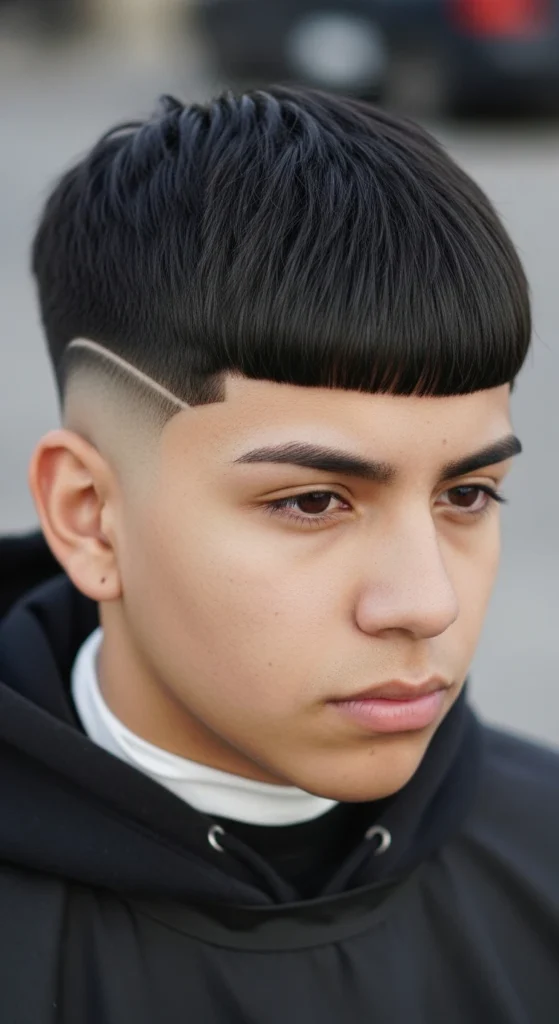
The Edgar cut is the most culturally significant haircut in Hispanic and Mexican youth culture right now. The Edgar cut, otherwise known as the Edgar or the Edgar haircut, is a hairstyle often associated with Latino culture. In the 2010s and 2020s, the haircut became popular with members of Generation Z and Millennials. The haircut first became popular in US border states in the Southwest, such as Texas, New Mexico, Arizona, and California. (Source: Wikipedia)
What makes it unique? It has a blunt, straight-across fringe on the forehead — almost like a bowl cut, but much sharper, cleaner, and more modern. Paired with a low taper fade on the sides, it creates a striking contrast that’s bold without being over the top.
The Indigenous Roots Nobody Talks About
Like almost everything in popular culture, the Edgar has its roots in indigenous traditions. Men of the Jumano tribe, dominant in Texas, New Mexico, and Mexico between 1500 and 1700, wore a similar haircut. (Source: wearemitu.com)
Rachel Cruz, Assistant Professor of Mexican American Studies at the University of Texas at San Antonio, has also pointed out that she has seen hairstyles very similar to the Edgar in some Mexican iconography, particularly in regions such as Tulum and Chichen Itza. (Source: latination.com)
How Did It Get the Name “Edgar”?
The origin for the name Edgar is unconfirmed, although it is often misattributed to having been named after former Seattle Mariners baseball player Edgar Martínez in early 2019. The hairstyle is associated with the Mexican Takuache aesthetic, often also called the Takuache haircut. (Source: Wikipedia)
The Edgar is associated with the modern ranchero aesthetic known as “Takuache,” which actually means “possum” in Spanish, and is a way that young Americans seek to connect with their Mexican roots. (Source: latination.com)
How popular is it really?
An award-winning aspiring barber from Kyle, Texas, told NBC News: “There’s not a day that doesn’t go by that I don’t do an ‘Edgar haircut.'” In fact, the barber does at least seven Edgar haircuts a day. Clients who typically order the Edgar are young people, ranging from 5th graders to high school seniors. (Source: wearemitu.com)
Edgar Variations to Ask For:
- Classic Edgar — blunt fringe, tight low taper, clean and simple
- Fluffy Edgar — the Fluffy Edgar Haircut is a hairstyle that features layers and texture to create a full, voluminous look, typically characterized by short to medium-length hair that is styled to appear fluffy and bouncy, with lots of volume and movement. (Source: edgarhaircut.com)
- Messy Edgar — tousled, relaxed styling on top, more casual than the classic
- Edgar with long hair — longer top with the blunt fringe still intact
💡 Tip: The Edgar cut works on any hair texture. Barbers say it “can be worn with any hair texture.” Curly-haired guys often get a shorter bang and use product to keep the curls in place. Fine hair also works because the strong fade and line-up do most of the visual work. (Source: textured-fringe.com)
2. Blowout Low Taper Fade
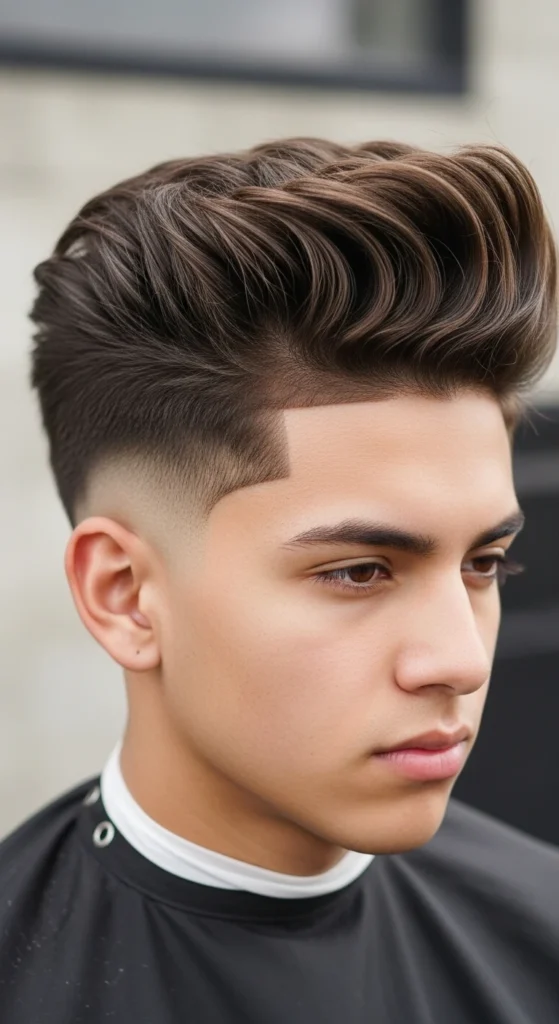
The blowout taper is exactly what it sounds like — your hair on top gets blown out with a blow dryer to maximize volume and lift. Paired with a low taper fade on the sides, the result is a big, bold, eye-catching look.
How to get this style at the barbershop:
- Ask your barber for a low taper fade on the sides
- Tell them you want the top blown out — lifted upward and outward
- They’ll use a blow dryer and round brush (or diffuser for curly hair) to create volume
- Apply mousse or volumizing spray before blow-drying for maximum lift
- Finish with a light hold cream to keep the volume without stiffness
Works especially well with thick, curly, or wavy Hispanic hair. The natural density of the hair holds the volume all day.
3. Slick Back with Low Taper Fade
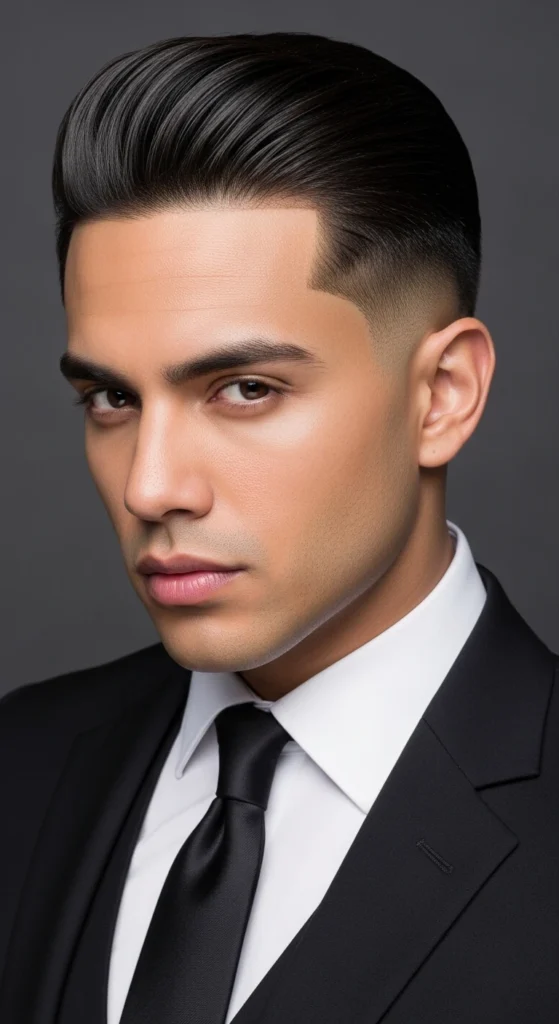
The slick back is one of the most timeless, elegant styles you can pair with a low taper fade. It’s professional, polished, and versatile — works for a date night, a job interview, or a wedding.
How to style it:
- Start with damp hair
- Apply a strong-hold pomade (glossy finish for a classic look, matte for a modern take)
- Comb the top hair backward using a fine-tooth comb
- The hair should lay flat and smooth from the forehead back
- The low taper on the sides frames the slick back perfectly
The natural thickness of Hispanic hair holds the slick back shape all day without needing constant touchups.
4. Buzz Cut with Low Taper Fade
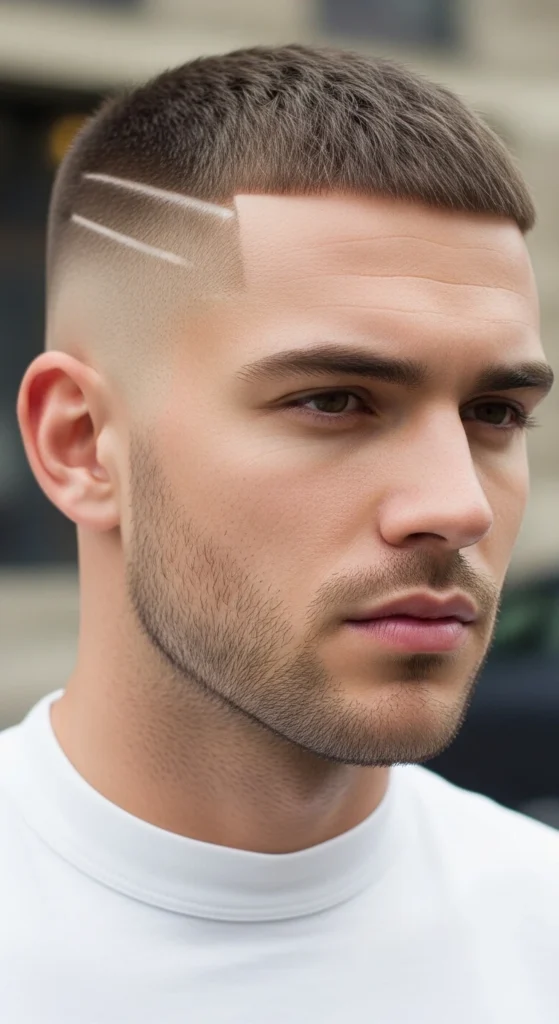
The buzz cut is the most low-maintenance option on this list. The hair is cut uniformly short all over — typically with a #2 or #3 clipper guard on top — and the low taper blends the sides into the neckline.
Key Points:
- Add a sharp line-up at the forehead, temples, and sideburns to elevate a simple buzz cut
- Almost zero daily styling required — wash, dry, go
- Grows out cleanly thanks to the low taper — stays presentable for 3 to 4 weeks
- Works with both a clean-shaved face and a full beard
- Best for men who want a no-fuss cut that still looks sharp and intentional
5. Crew Cut with Low Taper Fade
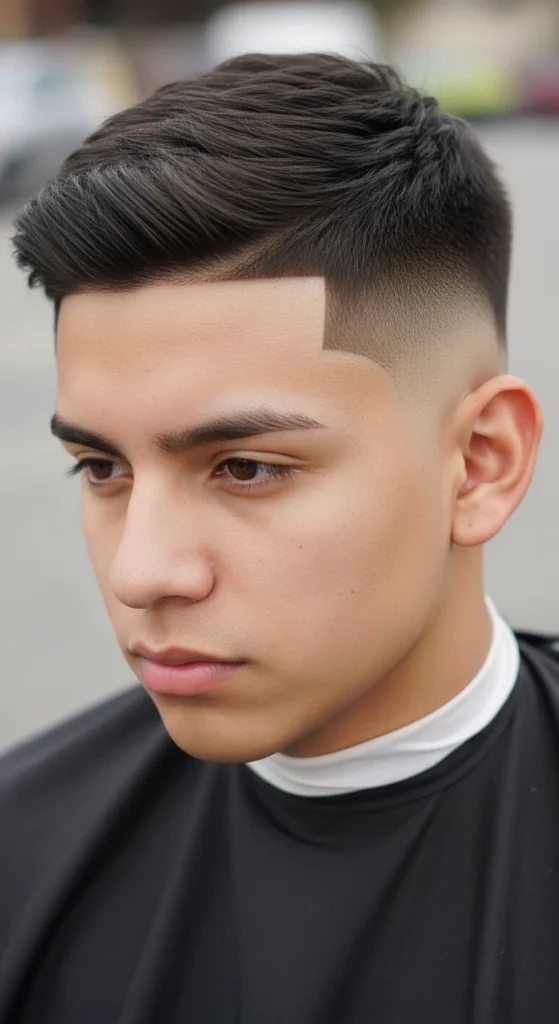
The crew cut is a classic — slightly longer at the front, shorter at the back and sides, with a natural gradient from front to back on top. The low taper fade replaces the old-school hard taper and brings the cut into 2026.
This is one of the most professional, workplace-appropriate styles on the list. Any hair type works. Any face shape works. Minimal product needed.
6. Long Hair with Low Taper Fade
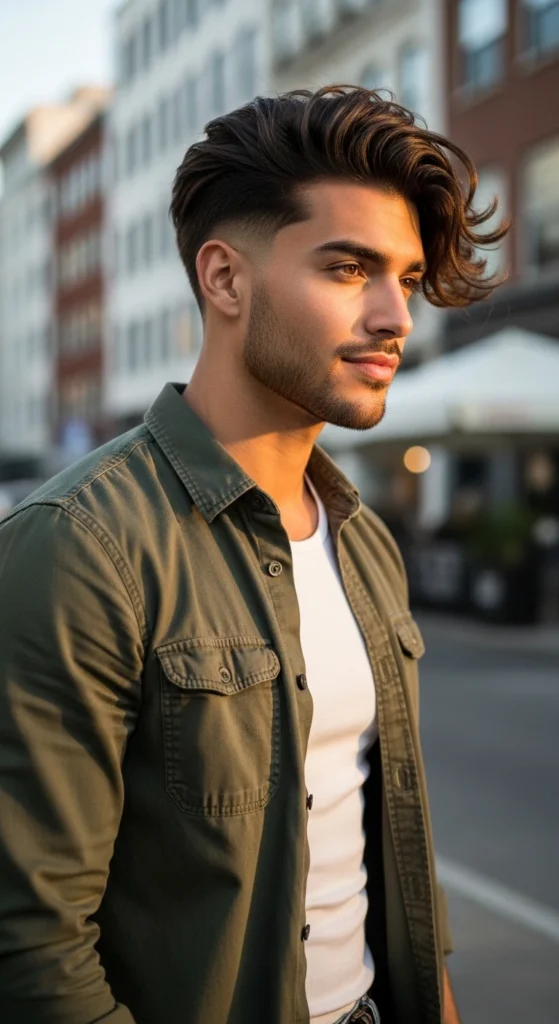
Yes — you can have long hair AND a taper fade. This is a big one. The search volume for “hispanic long hair taper fade” and “long hair mexican taper fade” is massive — over 700 searches per month each — because men with long hair don’t realize this combination exists.
Here’s how it works: the top is left long — anywhere from 4 to 8 inches — while the sides and back are given a clean low taper fade. The contrast between the flowing top and the tight sides is what makes this look work.
Styling options for the long top:
- Man bun — tie the top section back into a bun; the taper sides make it look intentional
- Flowing waves or curls — let the natural texture work for you
- Slick back — use pomade to sweep long hair backward
💡 Tip: If you have long Hispanic hair, use a leave-in conditioner daily. Long hair is more prone to dryness and breakage — especially thick, coarse Hispanic hair. A good leave-in keeps it soft, healthy, and easy to style.
7. Medium Length Low Taper Fade
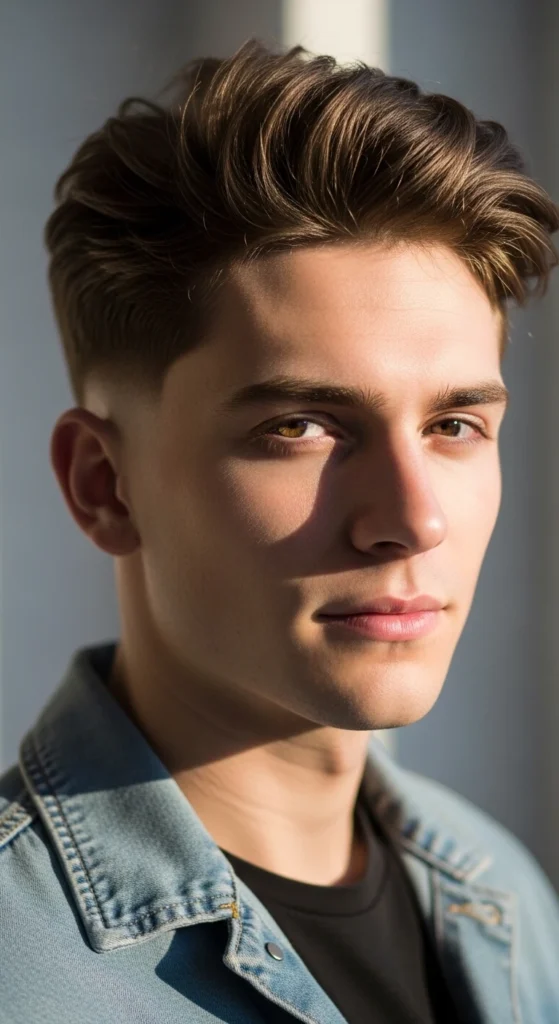
Top hair at 2 to 4 inches — long enough to style in multiple ways, short enough to manage without much effort. This is the sweet spot for most Hispanic men.
You can wear it textured and messy one day, then slick it back the next. The low taper on the sides keeps it looking clean no matter what you do on top. Use a matte clay or light-hold texturizing cream for a natural finish.
8. Short Hair Low Taper Fade
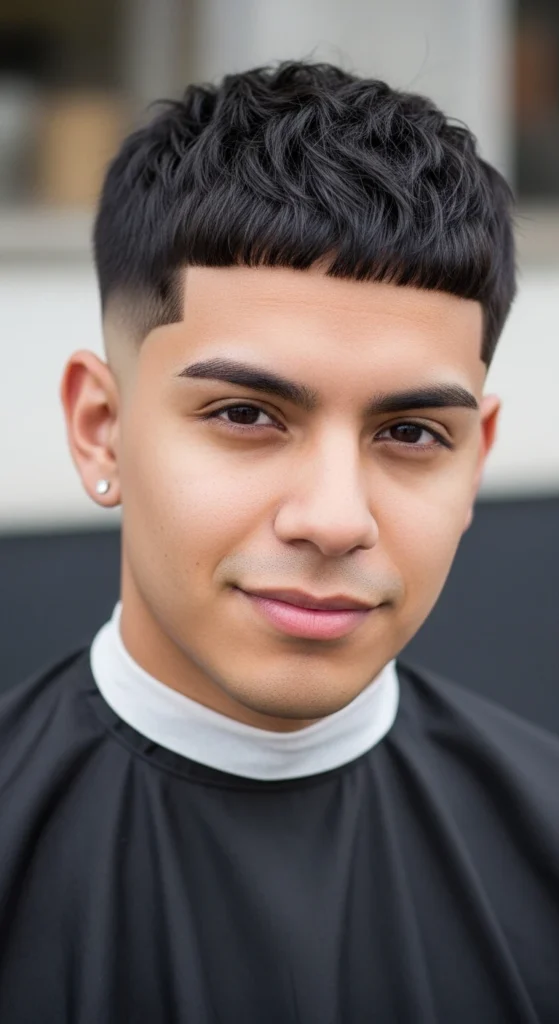
Top hair at ½ to 2 inches — ultra-clean and ultra-low maintenance. The textured crop is the most popular short variation right now. A short, choppy fringe with a clean low taper underneath creates a modern, fresh look with zero styling time.
Perfect for athletes, guys with active lifestyles, or anyone who wants to look sharp without spending time in front of the mirror every morning.
9. Spiky Hair with Low Taper Fade
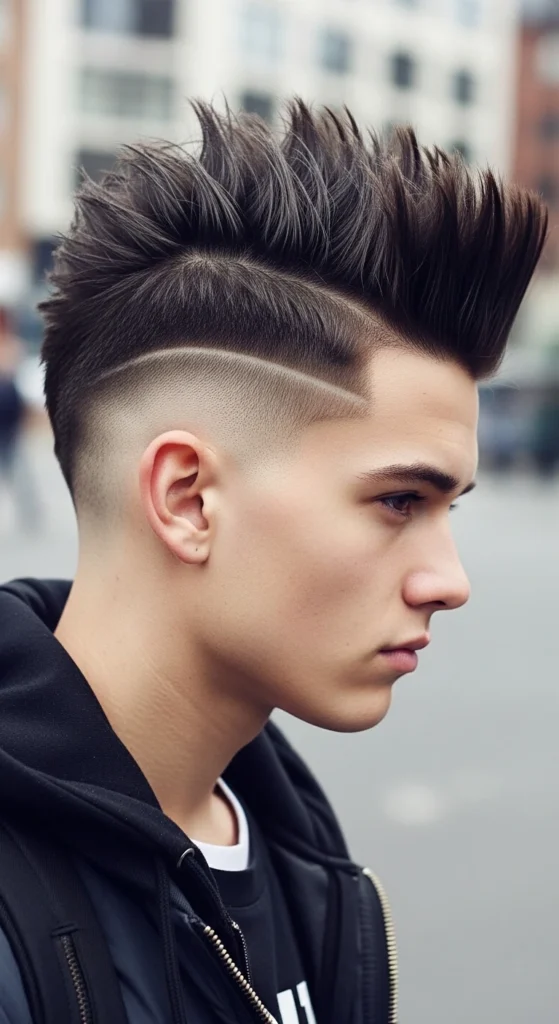
Classic edgy style. The hair on top is spiked upward using strong-hold wax or gel, and the low taper on the sides creates a clean frame for the spikes. Works best with thick, straight Hispanic hair that holds the spike shape all day. Great for casual settings and weekends.
Pro tip: Use a small amount of product — too much wax makes spikes look greasy and wet. A tiny bit goes a long way with thick hair.
10. Mullet with Low Taper Fade
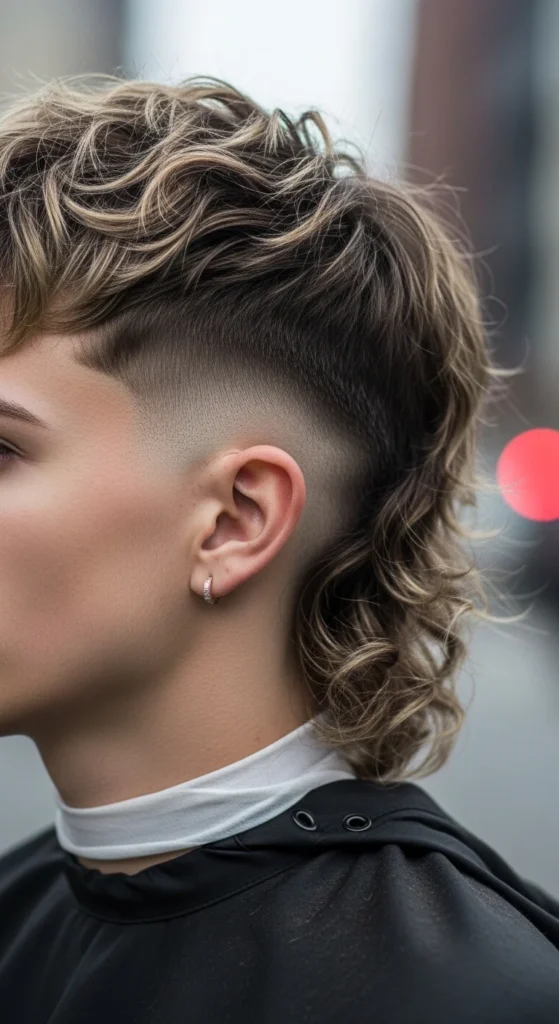
The modern mullet is not your dad’s 1985 mullet. It’s a refined, intentional style where the sides get a clean low taper while the back is left longer — creating that iconic “business in the front, party in the back” silhouette with a 2026 update.
This cut is making a strong comeback among younger Hispanic men who want to stand out. Wavy or curly hair in the back adds a natural, effortless texture that makes the mullet look intentional rather than accidental.
11. Low Taper Fade with Beard Blend
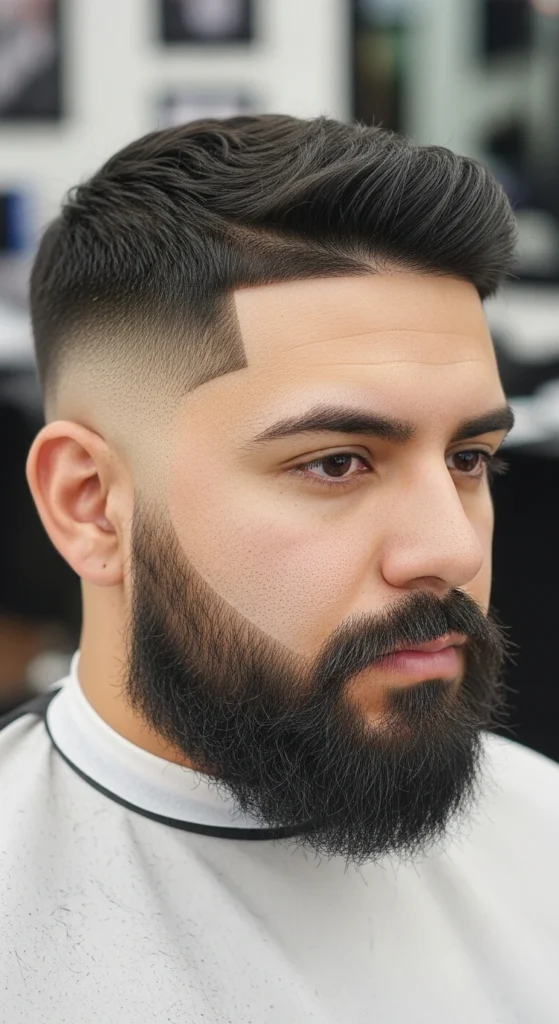
For men with facial hair, this is a must. A beard blend is when the taper fade on the sides continues smoothly into your beard. Instead of a hard line between your haircut and your facial hair, everything connects seamlessly.
Ask your barber specifically: “I want a beard blend — connect the fade into the beard so it all flows together.”
Your barber will use a T-blade trimmer to create the precise connection point between the fade and your beard. This is a skill — not every barber does it well, so make sure you choose someone experienced with Hispanic hair.
12. Low Taper Fade with Design / Etching
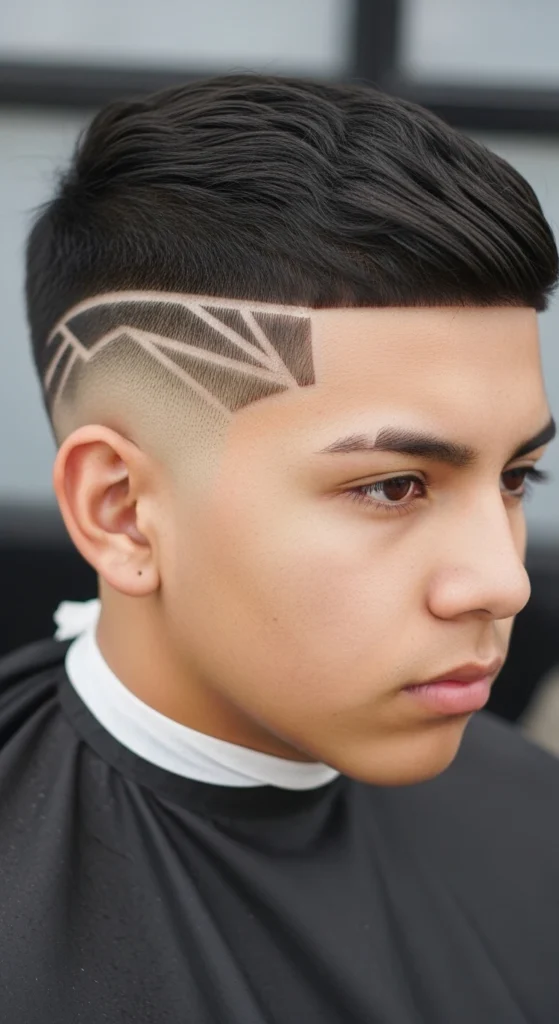
Mexican barbers are especially known for adding creative designs to the fade area. These designs are etched using a T-blade trimmer or a straight razor.
Popular design placements:
- Behind the ear
- Along the temple line
- Above the neckline
- As a hard part (shaved line separating the side from the top)
Design options range from simple single lines to complex geometric patterns, lightning bolts, waves, or cultural symbols. This detail is what separates a good haircut from an incredible one.
📌 Keep in mind: Designs grow out in 1 to 2 weeks. If you want crisp, sharp designs, plan a touch-up appointment sooner than your usual schedule.
13. Temple Fade (Temp Fade) with Low Taper
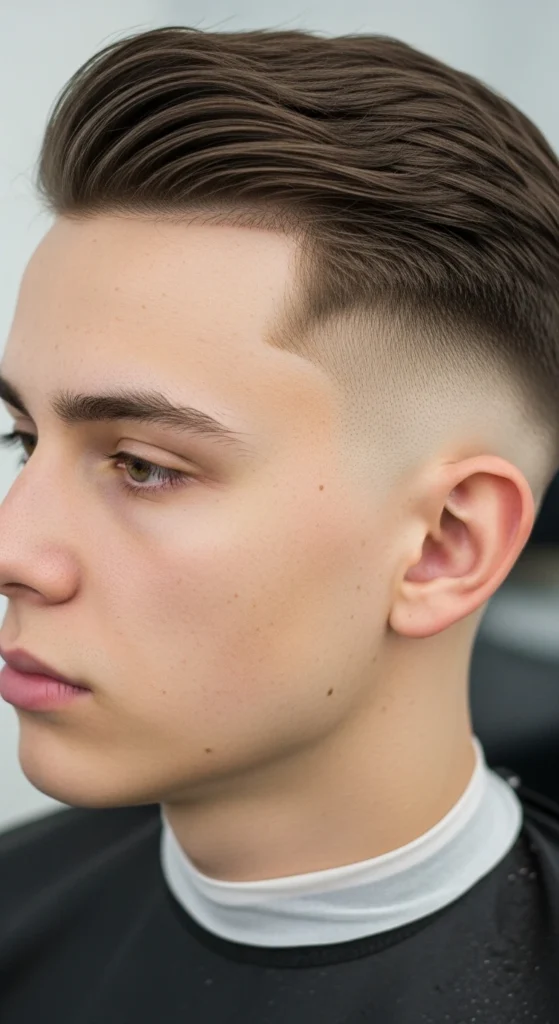
The temple fade — also called a temp fade — concentrates the fade only at the temples rather than the full side. It’s the most conservative, subtle fade type. Great for men who want a slight cleanup without a dramatic change. It’s also the perfect “first fade” for someone new to the style.
14. Textured Crop with Low Taper Fade
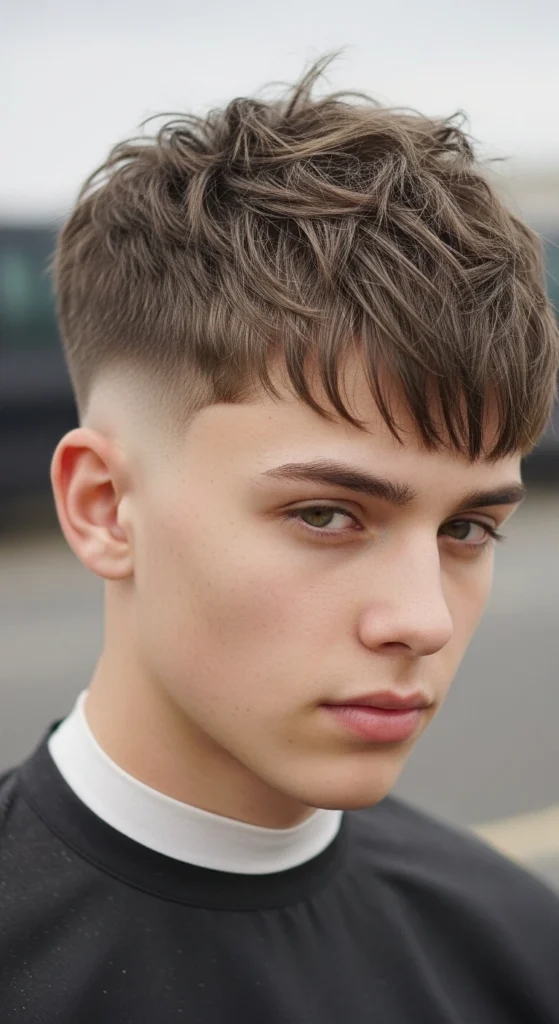
Short, choppy layers on top with a textured fringe that falls slightly forward. The low taper cleans the sides while the crop adds a modern, fashion-forward edge. Apply matte paste or fiber wax for a piecey, separated look that stays flexible throughout the day.
15. Comb Over with Low Taper Fade
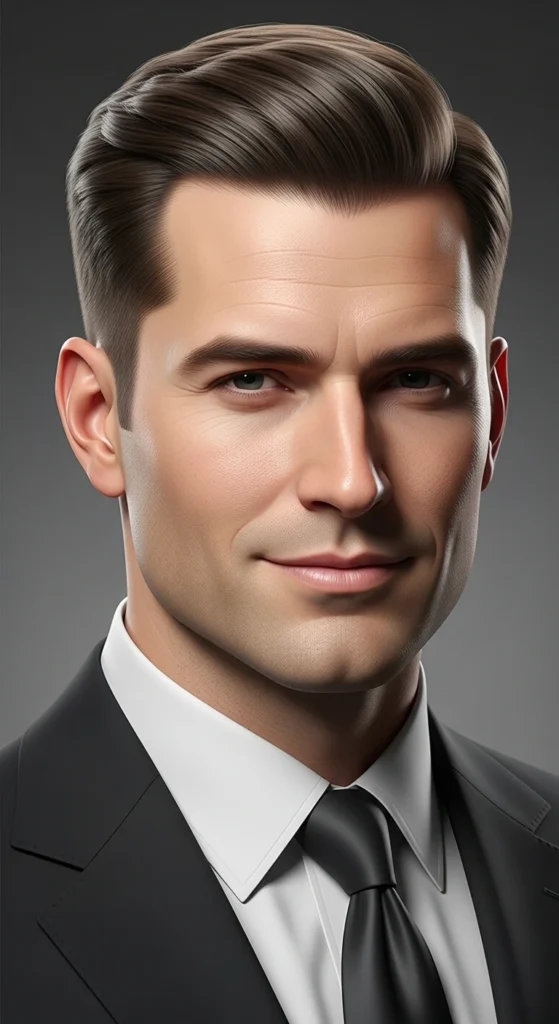
Hair is swept to one side with a defined side part. The low taper keeps the opposite side clean and sharp. Use a medium-hold pomade for a natural, flexible hold. One of the most professional-looking variations — works perfectly for business settings, formal events, and job interviews. For more inspiration, check out the full comb over fade guide.
16. Pompadour with Low Taper Fade
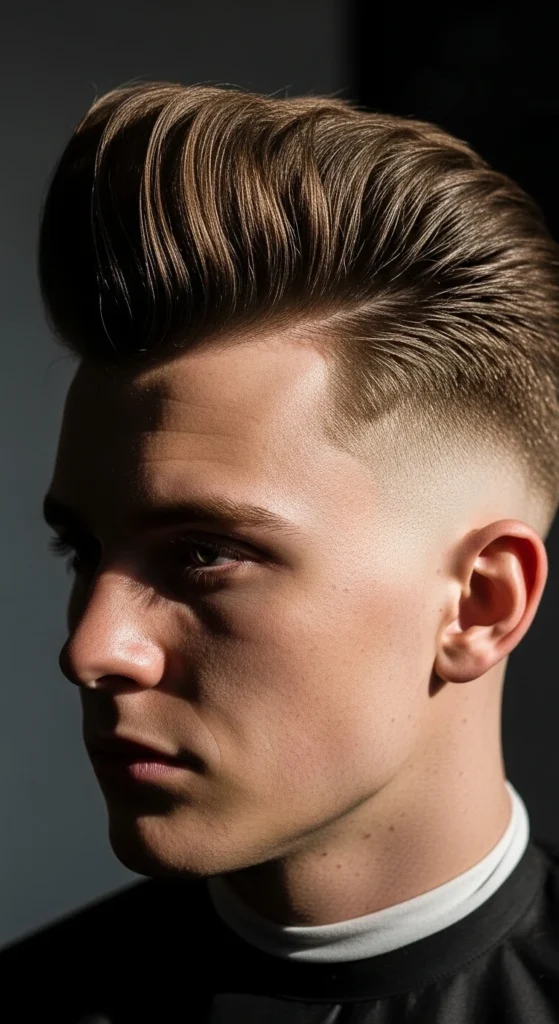
The pompadour pushes hair upward and backward at the front for height and drama. Blow-dry the front section upward with a round brush, then lock it in place with strong-hold pomade. The low taper on the sides balances the height on top. This is a statement cut — confident, bold, and unforgettable.
Best Hispanic Mexican Low Taper Fade for Every Face Shape
Your face shape should influence which variation you choose. Here’s a simple guide:
| Face Shape | Best Style | Why It Works | What to Avoid |
|---|---|---|---|
| Oval | Any variation | Natural symmetry works with every style | Nothing — you have the most versatile face shape |
| Round | Pompadour, blowout taper, high-volume top | Adds height and length to balance round features | Extra width on the sides |
| Square | Textured top, soft taper, medium length | Softens sharp angular jaw features | Razor-sharp line-ups that over-exaggerate the jaw |
| Long / Rectangular | Textured crop, side part, comb over | Adds width without adding height | Pompadour or blowout (makes face look even longer) |
| Heart | Medium length on top, soft edges | Balances wide forehead with narrower chin | Heavy volume at the forehead |
| Diamond | Medium length top, low taper | Balances narrow forehead and sharp cheekbones | Buzz cut (emphasizes narrow forehead) |
💡 Tip: Always bring a reference photo to your barber. Even if you know your face shape, showing a photo of your ideal style makes the communication 10x easier and ensures you walk out with exactly what you wanted.
Hispanic Mexican Low Taper Fade for Boys, Teens & Men
This cut works across every age group — but the right variation depends on how old you are.
Boys (Ages 5 to 12)
Keep it simple and low-maintenance. The best options for boys are the buzz cut with a low taper or a short crop. Avoid razor-sharp line-ups on young skin — it’s sensitive. A soft, natural fade is the right call. Boys’ hair grows fast, so plan a touch-up every 3 to 4 weeks.
Teens (Ages 13 to 19)
This is the Edgar cut age group. A barber from Kyle, Texas, told NBC News he does at least seven Edgar haircuts a day. Clients who typically order the Edgar are young people, ranging from 5th graders to high school seniors. (Source: wearemitu.com) Teens can rock bold styles — the blowout taper, fluffy Edgar, designs/etchings, spiky top, and more. This is the age where personal style really kicks in.
Frank G. Pérez, associate professor of communication at the University of Texas at El Paso, told the Dallas Morning News: “This is a typical case of how each generation creates its own identity with its own tastes and style. It’s their way to say ‘this is who we are, we are the youth and we are the future.'” (Source: klaq.com)
Adult Men (Ages 20+)
Professional options come to the front — the slick back, comb over fade, crew cut, and classic low taper are all workplace-friendly. Men in their 20s and 30s with facial hair should consider the beard blend option. The low taper keeps things sharp without screaming “I’m trying too hard.”
How to Ask Your Barber for a Hispanic Mexican Low Taper Fade — In English and Spanish
This is one of the biggest pain points for guys looking for this cut. Walking into the barbershop and not knowing the right words is frustrating. Here’s everything you need.
In English
Say this to your barber:
“I want a low taper fade. Start the fade just above my ears and blend it down into the neckline. Use a #1 guard near the bottom and blend up to a #2 on the sides. Leave the top [X inches] long — I want it [textured / slicked back / curly / messy] on top. Give me a sharp line-up along the temples and forehead, and taper the sideburns into the fade. If you can add a beard blend, please connect the fade into my beard.”
En Español
Di esto a tu barbero:
“Quiero un degradado bajo (low taper fade). Que empiece justo arriba de las orejas y se degrade hacia la nuca. Usa la guarda número 1 abajo y mezcla hasta la número 2 en los lados. Déjame [X pulgadas] arriba — quiero que el top esté [con textura / peinado hacia atrás / con rizos / desordenado]. Hazme un delineado bien definido en las sienes y la frente, y degrada las patillas. Si puedes, conecta el degradado con la barba.”
Key Spanish Barber Vocabulary
| English | Spanish |
|---|---|
| Low taper fade | Degradado bajo / Corte cónico bajo |
| Fade | Desvanecido |
| Line-up / Edge up | Delineado / Contorno |
| Clipper guard | Guarda de la máquina |
| Blend | Mezclar / Difuminar |
| Sideburns | Patillas |
| Neckline | Nuca |
| Hard part | Raya marcada / Línea |
| Beard blend | Degradado de barba |
| Reference photo | Foto de referencia |
| A little shorter | Un poco más corto |
💡 Pro Tip: Even with perfect words, a photo is always your best tool. Pull up a reference photo on your phone before you sit in the chair. Show it to your barber and say “Something like this.” That one photo does more work than a paragraph of explanation.
What Is the 3:2:1 Rule for Haircuts?
This PAA question comes up a lot — and it connects directly to how a low taper fade is cut.
The 3:2:1 rule refers to the clipper guard sizes used to create a proportional haircut gradient: a #3 guard on top (⅜ inch / 10mm), #2 guard on the sides (¼ inch / 6mm), and #1 guard around the neckline and temples (⅛ inch / 3mm).
This creates a seamless, natural taper that looks sharp immediately and grows out cleanly over time. Because each guard size is proportionally stepped — not randomly chosen — the haircut maintains its shape even as the hair grows.
📌 Key Fact: Cuts that follow the 3:2:1 rule grow out more gracefully than randomly executed cuts, meaning you can go longer between appointments while still looking well-groomed. The proportional relationship between the lengths means that even as hair grows, the overall shape and balance of the cut remain intact for several weeks.
For the Hispanic Mexican low taper fade, a skilled barber will typically start with a #0 or #0.5 at the very bottom near the neckline, blend to a #1, then up to a #2 or #3 — all within the low taper zone just above the ears.
Low vs. Mid vs. High Taper Fade — What’s the Difference?
Before you commit to a low taper, it helps to understand your options. Here’s how all three compare:
| Feature | Low Taper Fade | Mid Taper Fade | High Taper Fade |
|---|---|---|---|
| Fade Starts At | Just above the ears | About halfway up the sides | Near the temples |
| Boldness Level | Subtle, conservative | Moderate contrast | Maximum contrast |
| Best Occasion | Professional / daily wear | Versatile / all occasions | Fashion-forward / bold looks |
| Touch-Up Needed | Every 3–4 weeks | Every 2–3 weeks | Every 1–2 weeks |
| Skin Exposure | Minimal | Moderate | Significant |
| Best Face Shapes | All face shapes | Oval and round | Round (adds length) |
For a more detailed breakdown on choosing between the two most common options, check out this guide on low taper vs mid taper. The low taper fade is the most forgiving and versatile option. If you’re new to fades or want something that works in every setting — low taper is your answer.
Styling & Maintenance Guide
Looking fresh doesn’t stop at the barbershop. Here’s how to keep your Hispanic Mexican low taper fade looking great between visits.
Best Products by Hair Type
| Hair Type | Product | What It Does |
|---|---|---|
| Curly | Curl-defining cream + mousse | Defines curl pattern, reduces frizz, adds flexible hold |
| Wavy | Sea salt spray + light texturizing cream | Enhances natural waves, adds body and movement |
| Straight | Matte clay or pomade | Adds texture, hold, and optional shine |
| Thick | Fiber paste or strong-hold pomade | Controls volume, maintains shape all day |
| All types | Sulfate-free shampoo + leave-in conditioner | Hydrates hair, protects natural oils, maintains health |
Your Maintenance Schedule
- Every 2–3 weeks: Fresh touch-up for a sharp, crisp fade — this is ideal for the sharpest look
- Every 3–4 weeks: The low taper grows out more gracefully than other fades, so you can stretch it slightly
- Between visits: Keep the neckline clean with a trimmer if you have one. Use edge control along the hairline
Key Points:
- Wash your hair 2–3 times per week — not daily. Daily washing strips the natural oils that keep Hispanic hair healthy and hydrated
- Always use a wide-tooth comb on wet hair — never brush curly or wavy hair when dry
- Avoid tight hats right after a fresh cut — they press down the hairline and can cause breakage
- Use a satin pillowcase to protect your fade and curl pattern overnight
- If you have curly hair, apply a leave-in conditioner every morning as a base before styling
- Avoid heavy gel daily — it dries out the scalp and leads to flaking, especially on Hispanic hair that tends toward dryness
How Much Does a Hispanic Mexican Low Taper Fade Cost?
Prices vary depending on where you go and how much detail work is involved. Here’s a realistic breakdown:
| Barbershop Type | Price Range | What to Expect |
|---|---|---|
| Local barbería (Latino neighborhoods) | $20–$40 | Experienced with Hispanic hair textures, culturally familiar with the style |
| Standard barbershop (general) | $35–$65 | Most common price range across the U.S. |
| Premium city barbershop (LA, NYC, Houston) | $65–$95+ | High-demand areas and celebrity barbers |
| Add-on: Designs or etchings | +$10–$25 | Extra time for creative detail work |
| Add-on: Beard blend | +$10–$20 | Seamless fade-to-beard transition |
📌 Budget Reality: If you get a touch-up every 2–3 weeks at $35 per visit, you’re spending roughly $595–$910 per year on maintenance. This is why finding a skilled, reliable barber in your neighborhood is worth the time it takes to look.
💡 Tip: Always tip your barber 15–20% for a quality fade. Precision fade work — especially with designs, beard blends, or detailed line-ups — is skilled craftsmanship. A good tip keeps your barber motivated to do their best work every single time.
Do’s and Don’ts for Your Hispanic Mexican Low Taper Fade
✅ DO:
- Bring a reference photo to your barber appointment every time
- Specify clipper guard numbers when communicating your fade
- Match your style variation to your face shape
- Use products designed for your specific hair texture
- Schedule regular touch-ups every 2–3 weeks
- Sleep on a satin pillowcase to preserve your fade and curls overnight
❌ DON’T:
- Go beyond 4 weeks without a touch-up — the fade loses definition fast
- Use heavy gel every day — it dries out Hispanic hair and irritates the scalp
- Wear tight hats right after a fresh cut — they ruin the hairline
- Wash your hair daily — it strips the natural oils your hair needs
- Brush curly hair when dry — always comb it wet or use your fingers
- Ignore your neckline between visits — a clean neckline keeps the whole cut looking sharp
Frequently Asked Questions (FAQs)
What race started the taper fade?
The taper fade doesn’t belong to any single race — it was built collaboratively across cultures. Taper fades originated in the 1940s as part of U.S. military grooming standards. Army Regulation 600-20 (1941) specified hair should be “tapered from zero length at the hairline.” Black barbers in the 1950s–70s then transformed the military taper into an art form. Latino communities in the 1980s–90s added high-contrast temple fades and combined fades with slicked-back tops. It is a shared cultural achievement. (Source: taperfadehub.com)
What is the Latino haircut called?
The Edgar cut, otherwise known as the Edgar or the Edgar haircut, is a hairstyle often associated with Latino culture. It’s also called the takuache cut, the cuh cut, and the Mexican Caesar. Other popular Latino haircut names include the Mexican taper fade, Hispanic low taper fade, and the blowout taper. Each has its own distinct look but all are rooted in the same Latino barbering tradition. (Source: Wikipedia)
What is the 3:2:1 rule for haircuts?
The 3:2:1 rule is a clipper guard system that creates a perfectly proportional haircut gradient. It uses a #3 guard on top (⅜ inch / 10mm), a #2 guard on the sides (¼ inch / 6mm), and a #1 guard at the neckline and temples (⅛ inch / 3mm). This system creates a natural taper that looks great right away and grows out cleanly over several weeks — perfect for the Hispanic Mexican low taper fade.
What the heck is a low taper fade?
A low taper fade is a men’s haircut where the hair on the sides gets gradually shorter as it goes down toward the ears and neckline — but the blending starts low (just above the ears). It’s the most subtle and conservative fade type, with minimal skin exposure. The top stays longer, allowing for many styling options. It’s cleaner than a standard taper and more subtle than a mid or high fade.
How do I explain this to a non-Latino barber?
Tell them: “I want a low taper fade. Start the fade just above the ears — around a #1 guard at the bottom, blending up to a #2. Keep the top [X inches]. Give me a sharp line-up at the forehead and temples.” Show them a photo. That combination of words + photo will get you the right result at any barbershop, regardless of the barber’s cultural background.
How often should I get a touch-up for this fade?
Plan on a touch-up every 2–3 weeks for a consistently sharp look. The low taper fade is more forgiving than a mid or high taper fade — it can stretch to 3–4 weeks and still look presentable. Hispanic hair grows fast, especially thick and curly textures, so the more dense your hair, the more frequently you’ll want to visit the barbershop.
How much does a Hispanic Mexican low taper fade cost?
Prices range from $20–$40 at local barberías in Latino neighborhoods to $35–$65 at standard barbershops and $65–$95+ at premium city barbershops in places like Los Angeles, Houston, or New York City. Add-ons like designs (+$10–$25) and beard blends (+$10–$20) increase the total. Always tip 15–20%.
Can I get a low taper fade with curly hair?
Absolutely — curly hair is actually ideal for the low taper fade. For more curly-specific guidance, styles, and products, check out the full guide on low taper fade curly hair. The fade keeps the sides controlled and neat while your natural curls take center stage on top. The hairstyle can be worn with any hair texture, including more wavy and curly hair. (Source: Wikipedia) Use a curl cream, diffuser, and sulfate-free shampoo to maintain your curl pattern between visits.
How do you say “low taper fade” in Spanish?
The most common translations are “degradado bajo” (low fade) or “corte cónico bajo” (low taper cut). The word “desvanecido” is used for skin fades. Tell your barber: “Quiero un degradado bajo, que empiece justo arriba de las orejas.” That phrase alone will get you exactly what you’re looking for at any Spanish-speaking barbershop.
Is the Edgar cut the same as a low taper fade?
No. The Edgar cut is a specific style — it features a blunt, straight-across fringe on the forehead. A low taper fade is a technique — it refers to how the sides and back are blended. The two are frequently combined: an “Edgar cut with a low taper fade” is one of the most requested styles among young Hispanic and Mexican men. In the 2010s and 2020s, the haircut became popular with members of Generation Z and Millennials. The haircut first became popular in US border states in the Southwest, such as Texas, New Mexico, Arizona, and California. (Source: Wikipedia)
Final Thoughts — More Than Just a Haircut
The Hispanic Mexican low taper fade is one of those rare things in life that manages to be timeless and trendy at the same time. It walks into boardrooms and barbershops with equal confidence. It looks sharp on a 10-year-old getting his first real haircut and on a 40-year-old heading to a family reunion.
Taper fades, with their gradual blend from longer tops to shorter sides, are more than a haircut; they’re a cultural touchstone, deeply rooted in communities like hip-hop and Latino culture. (Source: thetaperfade.net)
From its military roots in the 1940s to Black barbershop innovation in the 1950s and 60s, to Latino and Mexican-American artistic contributions in the 1980s and 90s, this cut carries history in every blend. It connects generations. It reflects identity. It says something about who you are and where you come from — without you having to say a word.
Walk into your barbería with confidence. Use the scripts from this guide. Show your barber the style you want. And walk out looking exactly the way you imagined.
This content was written for informational purposes and reviewed for accuracy. All facts referenced in this article are sourced from publicly available research, cultural studies, and barbering expertise. Sources referenced include: taperfadehub.com, thetaperfade.net, wearemitu.com, wikipedia.org (Edgar cut), latination.com, klaq.com, thetaperfade.net history, edgarhaircut.com, and textured-fringe.com.