



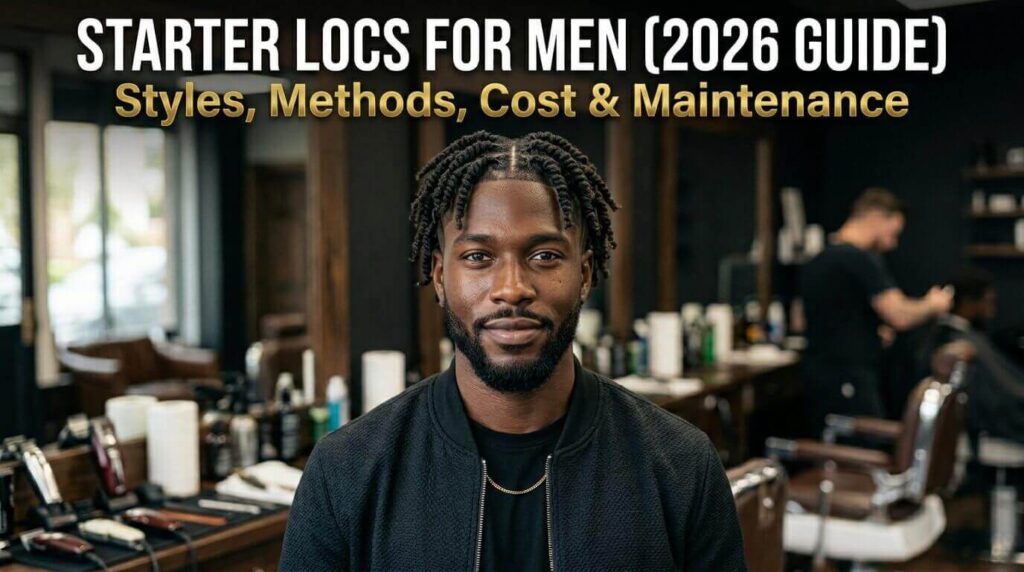
Are you thinking about starting locs but don’t know where to begin? You’re not alone. Many men feel nervous before making this big change. But here’s the truth: starter locs for men are one of the easiest loc journeys to begin because shorter hair makes installation simple and fast.
Starter locs, also called beginner locs or baby locs, are the first phase of your dreadlock journey. During this stage, your hair gets twisted or coiled into sections that will eventually lock together over time. The starter phase typically lasts 3 to 6 months before your locs begin budding and forming a permanent structure.
This complete guide covers everything you need to know, from choosing the right method and style to understanding costs and maintenance. Whether you want two-strand twists, comb coils, or interlocking locs, you’ll find all the answers here.
What Are Starter Locs for Men?
Starter locs are exactly what they sound like, the beginning stage of growing dreadlocks. When you first get your locs installed, they’re called starter locs, baby locs, or tiny locs. At this point, your hair isn’t actually “locked” yet. It’s just twisted or coiled into sections that will naturally mat together over time.
Think of starter locs as the foundation of a house. The stronger your foundation, the better your locs will turn out. That’s why this phase is so important.
| Term | What It Means |
|---|---|
| Starter Locs | First phase of loc formation (0-6 months) |
| Baby Locs | Another name for starter locs |
| Budding | When locs begin to swell and form knots inside |
| Mature Locs | Fully locked locs (18-24 months and beyond) |
For men, starter locs work really well because most guys have shorter hair. This makes the installation process quicker and easier. As one expert notes, “Starter locs for men are pretty easy to install. As men have short hair, so it is no big deal” (Source: dreadextensions.com).
The final look of your locs depends on several things: your hair texture, how you take care of them, and which method you choose to start. Every person’s loc journey is different, so don’t compare your locs to anyone else’s.
Starter Locs Stages: What to Expect on Your Loc Journey
Your loc journey has different stages. Knowing what to expect helps you stay patient and avoid frustration. Here’s a complete timeline from starter to mature locs:
Complete Timeline from Starter to Mature Locs
| Stage | Timeframe | What Happens |
|---|---|---|
| Starter/Baby Locs | 0-6 months | Twists or coils installed, hair still loose and soft |
| Budding Stage | 6-12 months | Hair swells, gets frizzy, and starts knotting inside |
| Teen Locs | 12-18 months | Shape forms, less unraveling, locs hang better |
| Mature Locs | 18-24+ months | Fully formed, permanent, cylindrical shape |
Key Point: The “ugly phase” with extra frizz around months 2-4 is completely normal. This is actually a good sign, it means your hair is beginning to lock. Don’t panic or over-manipulate your locs during this time.
According to loc experts, “Your starter lock phase is really going to set the foundation for how your locks develop and form over time” (Source: YouTube, The Catherine Alexandra). This means taking care of your locs during these first few months is super important.
Everyone’s journey is unique. Some people’s locs mature faster, while others take longer. This depends on your hair type, how often you maintain them, and which starting method you use.
Best Methods to Start Locs for Men (Compared)
Choosing the right method is one of the biggest decisions you’ll make. The best method depends on your hair texture, lifestyle, and the look you want. Let’s break down each option.
Two-Strand Twist Starter Locs (Best for Most Men)
Two-strand twists are the most popular choice for men. Here’s why:
- Best for: Thick, coily hair (4A-4C textures)
- Minimum hair length: 4 inches
- Pros: Stronger foundation, thicker locs, less unraveling, easy to install
- Cons: Twist pattern stays visible in the early months
Expert Tip: “Two-strand twists are among the finest starter locs for men. With as little as 4 inches of hair, it is easy to install, and often this method goes longer than any other locs technique. It gives the locs a stronger foundation and results in thicker locs” (Source: dreadextensions.com).
Comb Coils Starter Locs
Comb coils work great for men with very short hair.
- Best for: Short hair with tight coils (4B-4C textures)
- Minimum hair length: 1-2 inches
- Pros: Clean parting, uniform look, works on really short hair
- Cons: Can unravel easily, especially with looser hair textures
Important: “Comb coils is one of the most common ways of starting your loc journey. This method of starting your locs unravels easily so if you have a looser hair texture do not use this method” (Source: Scribd, Starter Loc Manual).
Interlocking Starter Locs
Interlocking is perfect for active men who swim or work out a lot.
- Best for: Active lifestyles, swimmers, softer hair textures
- Minimum hair length: 2 inches
- Pros: Prevents unraveling, great for maintenance, lasts longer between sessions
- Cons: Less volume early on, can cause thinning if done too often
This method is also commonly used for starting micro locs and sisterlocks.
Freeform Starter Locs
Want a low-maintenance, natural look? Freeform might be for you.
- Best for: Men who prefer minimal manipulation
- Pros: Organic look, almost no effort required, unique results
- Cons: Less control over size and shape, can take up to a year to form
With freeform locs, you simply leave your hair alone and let it lock naturally without creating parts or sections.
Sponge Locs
One of the most popular starter locs for men with very short hair is the sponge method (Source: Laifen). You rub a hair sponge in circular motions to create coils.
Method Comparison Chart
| Method | Best Hair Length | Best Hair Type | Maintenance Level | Unraveling Risk |
|---|---|---|---|---|
| Two-Strand Twist | 4+ inches | 4A-4C | Medium | Low |
| Comb Coils | 1-2 inches | 4B-4C | Medium-High | Medium-High |
| Interlocking | 2+ inches | All types | Low | Very Low |
| Freeform | Any length | 4A-4C | Very Low | N/A |
| Instant Locs | 3+ inches | All types | Low | Very Low |
| Braids | 5+ inches | Looser textures | Medium | Low |
Pro Tip: “If you are someone who exercises or swims a lot, or you are generally a person who does a lot of physical activities, the locs method you start with should be one that would not unravel easily” (Source: Scribd, Starter Loc Manual).
Starter Locs Styles for Men (With Fade Combinations)
Men’s starter locs look amazing when combined with modern men’s haircuts. Here are the most popular styles:
Starter Locs with Taper Fade
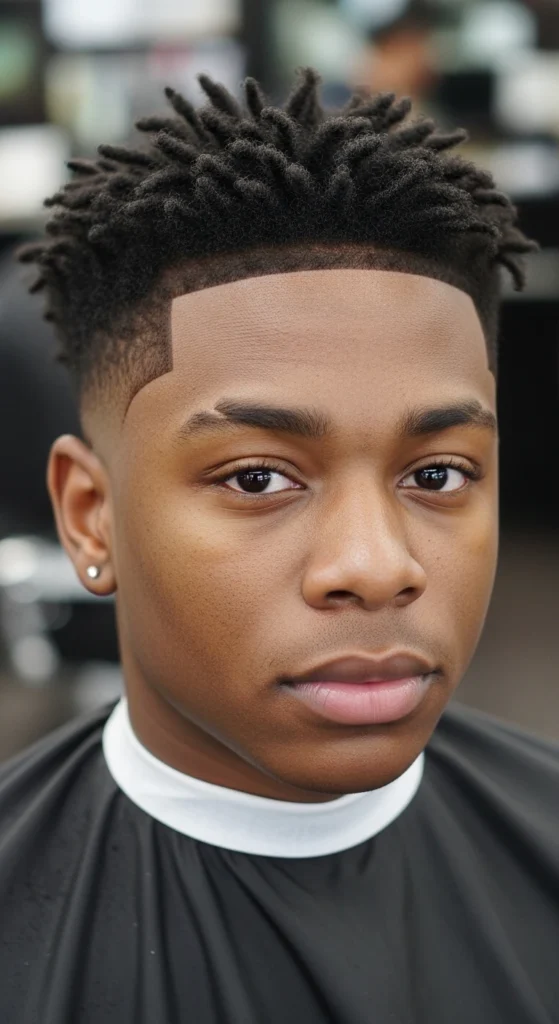
This is the most popular combination. The taper fade gives you a clean, professional look while your locs grow on top. It works with all loc sizes, micro, small, medium, or large.
- Requires barber maintenance every 2-3 weeks
- Perfect for office settings
- Clean edges make your locs stand out
Starter Locs with High Top Fade
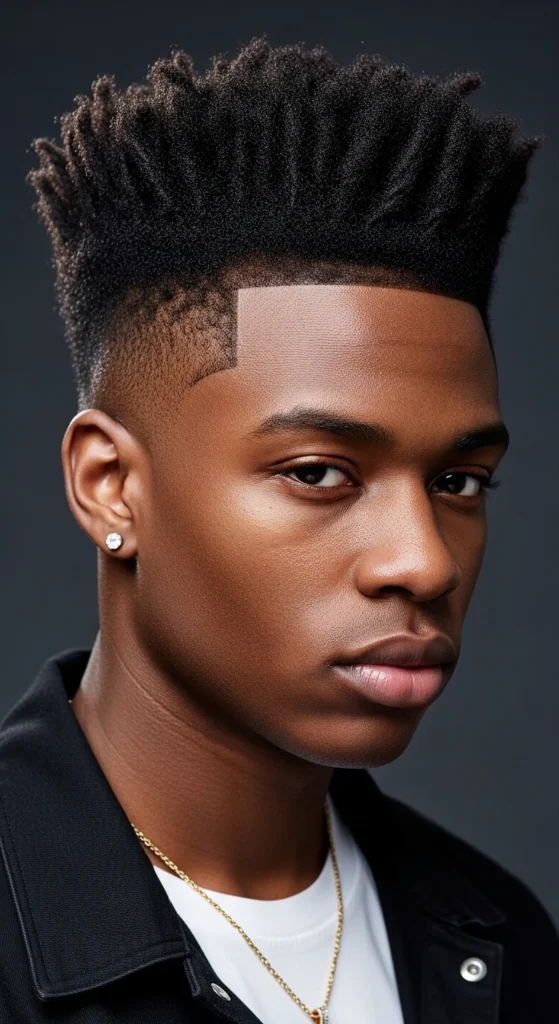
This bold style keeps locs concentrated on top while the sides stay faded short. It’s a statement look that many NBA players and rappers wear.
- Great for men with shorter starter locs
- Shows off your locs prominently
- Popular among athletes and entertainers
Starter Locs with Drop Fade
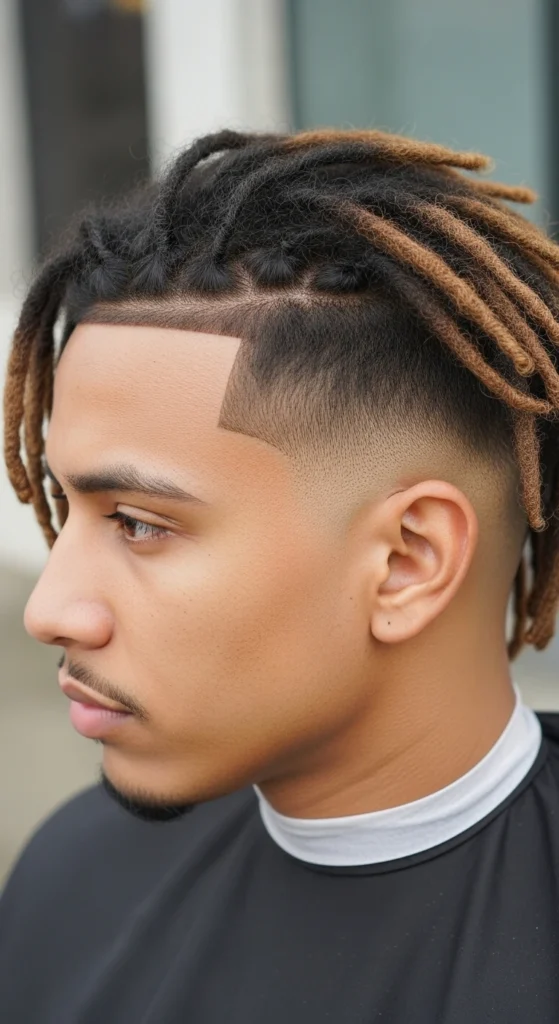
The drop fade curves around your ear for a modern, stylish appearance.
- Works well with medium-length starters
- Trendy and eye-catching
- Good for rounder face shapes
Starter Locs with Temp Fade
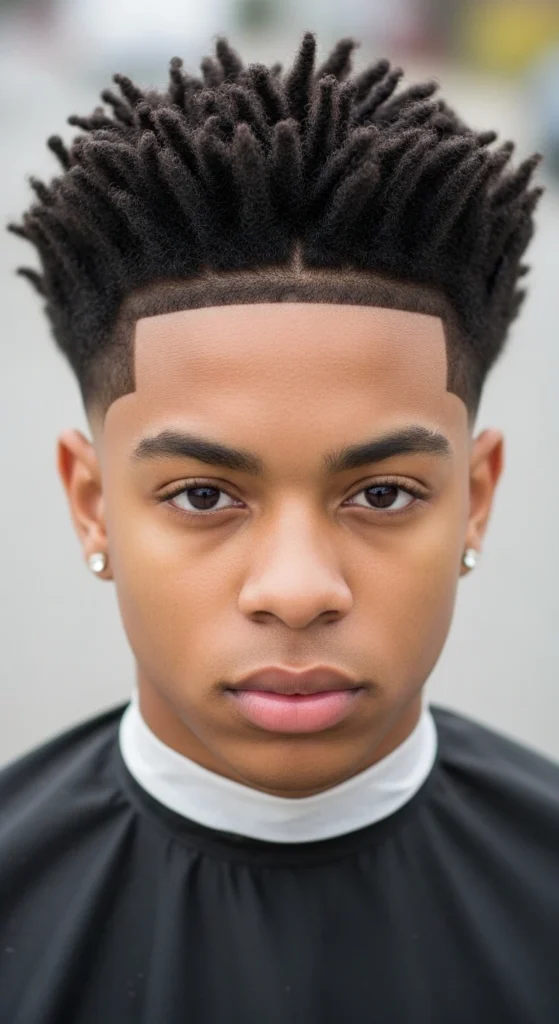
The temp fade (temple fade) keeps your temple area clean while maintaining full coverage on top.
- Low-maintenance combination
- Professional appearance
- Good for all face shapes
Starter Locs with Low Taper
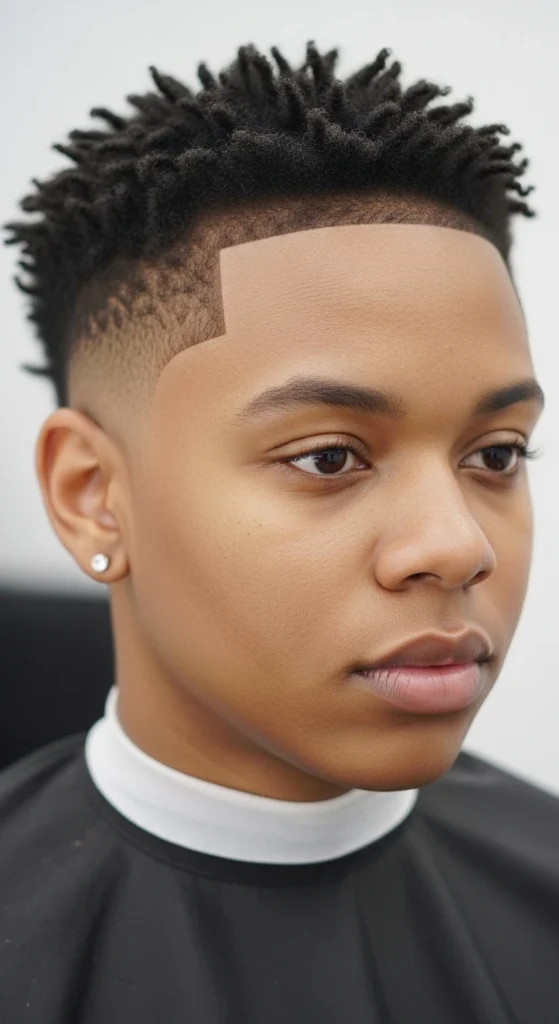
This subtle style offers minimal contrast between your locs and the fade. The low taper fade is the most professional-looking option.
- Ideal for workplace settings
- Understated but stylish
- Works with all loc sizes
Other Popular Style Options
- Middle part starter locs: Clean center parting for a symmetrical look
- Free part starter locs: Natural, organic parting wherever hair falls
- High top starter locs: Locs only on the top section of your head
- Starter locs with shaved sides: Maximum contrast and bold appearance similar to a skin fade
If you’re unsure whether to go with a taper vs fade, consider that tapers offer a more gradual transition while fades provide sharper contrast.
What Size Starter Locs Should Men Choose?
The size of your locs affects everything, from how many locs you’ll have to how much maintenance they need. Here’s a complete guide:
Starter Locs Size Chart for Men
| Size | Diameter | Approximate Loc Count | Maintenance Level | Best For |
|---|---|---|---|---|
| Micro | Pencil-thin | 150-200+ | High | Dense look, intricate styles |
| Small | Pencil size | 100-150 | Medium-High | Neat, defined appearance |
| Medium | Marker size | 60-80 | Medium | Most beginners (recommended) |
| Large | Finger width | 40-60 | Low | Fuller look, easy upkeep |
Tip for Beginners: Medium-sized locs work best for most men starting their journey. They’re easier to maintain than smaller locs and still look full and neat.
Factors to Consider When Choosing Size
- Hair density: Thicker hair can support larger locs
- Face shape: Smaller locs suit longer faces; larger locs work with rounder faces
- Lifestyle: Active men may prefer larger locs (less maintenance)
- Career: Professional settings often suit medium or small locs
Key Point: “It’s better to start off with more locks and combine over time versus starting off with less because you’re probably going to have to cut” (Source: YouTube, Simply Rushell). You can always combine locs later, but you can’t easily split them.
Hair Length Requirements for Starter Locs
One of the most common questions is: “How long does my hair need to be?” The answer depends on which method you choose.
Minimum Hair Length by Method
| Method | Minimum Length | Ideal Length |
|---|---|---|
| Comb Coils | 1-2 inches | 2-3 inches |
| Two-Strand Twist | 4 inches | 4-6 inches |
| Interlocking | 2 inches | 3-4 inches |
| Braids | 5+ inches | 6+ inches |
| Sponge Method | 1/2 inch | 1-2 inches |
| Freeform | Any (with new growth) | Any length |
Important: Starting with hair that’s too short makes installation harder and the locking process takes longer. Be patient and wait until you have enough length for your chosen method.
Tip: Don’t try to lock relaxed or chemically treated hair. The damaged structure causes breakage and frustration. Wait for your natural texture to grow in before starting.
Starter Locs for Different Hair Textures
Your hair texture plays a huge role in which method works best and how fast your locs will form.
4C Hair Starter Locs
4C hair has the tightest curl pattern with lots of shrinkage.
- Best methods: Comb coils, two-strand twist
- Advantage: Locks the fastest of all textures
- Tip: Focus on keeping your hair moisturized to prevent breakage
4B Hair Starter Locs
4B hair has a Z-shaped curl pattern and is very dense.
- Best methods: Two-strand twist, interlocking
- Advantage: Good balance between locking speed and manageability
- Tip: Works well with most starting methods
4A Hair Starter Locs
4A hair has more defined, S-shaped curls in a looser pattern.
- Best methods: Two-strand twist, braids
- Consideration: May take a bit longer to fully lock
- Tip: Interlocking can help prevent unraveling
Key Fact: “Your hair texture plays a very big role in choosing the method you start your loc journey. Looser hair textures thrive with certain starting methods and more kinky hair textures thrive with some starting methods” (Source: Scribd, Starter Loc Manual).
How to Get Starter Locs for Men: Step-by-Step Process
Whether you go to a loctician or do it yourself, here’s what the installation process looks like:
Step 1: Prepare Your Hair
Before anything else, you need clean hair.
- Wash with a residue-free shampoo
- Avoid heavy conditioners before installation
- Completely dry your hair before starting
- Make sure your scalp is clean and lightly moisturized
Step 2: Section and Part Your Hair
Proper sectioning creates the foundation for your locs.
- Divide your head into front, middle, and back sections
- Use a rat tail comb for precise partings
- Choose your parting style: square, diamond, or organic
- Start from the back of the head and work forward
Step 3: Apply Product (Optional)
A little product helps with installation.
- Light application of natural castor oil for moisture
- Avoid heavy products that cause buildup
- Keep hair workable but not greasy
“Castor oil keeps the hair well moisturized while installing the locs” (Source: dreadextensions.com).
Step 4: Install Locs Using Your Chosen Method
For two-strand twist:
- Take a sectioned piece of hair
- Divide it into two equal strands
- Twist the strands around each other from root to tip
- Keep consistent tension throughout
- Repeat for the entire head
Step 5: Secure and Set
After installation, secure your fresh locs.
- Use clips to hold locs in place while they set
- Never use rubber bands, they cause tension, breakage, and even headaches
- Allow locs to set before sleeping on them
DIY vs. Professional Installation
| Factor | DIY at Home | Professional Loctician |
|---|---|---|
| Cost | $20-50 (products only) | $100-150 |
| Time | 4-8 hours | 2-4 hours |
| Precision | Varies by skill | High quality |
| Best For | Experienced, simple styles | Beginners, complex styles |
Pro Tip: “Before beginning the locs, consult an excellent loctician to get an idea about your hair. Get an analysis done if your hair is compatible to get the locs or not” (Source: dreadextensions.com).
How Much Do Starter Locs Cost for Men?
Let’s talk money. Here’s what you can expect to pay for starter locs and maintenance.
Average Starter Locs Pricing
| Service | Price Range |
|---|---|
| Basic Starter Locs | $100-$150 |
| Starter Locs with Extensions | $150-$250 |
| Interlocking Installation | $150-$200 |
| Retwist (maintenance) | $50-$85 |
| Sisterlocks (men) | $400-$800 |
Key Fact: “On average, getting the Starter locs ranges from $100 to $150. The price varies depending on the hair texture, length, and technique used. Men have short hair, so the starter locs for men will be less expensive compared to women” (Source: dreadextensions.com).
What Affects the Price?
- Hair length: Shorter hair = lower cost
- Method chosen: Interlocking usually costs more
- Location: Big cities charge higher prices
- Loctician experience: Seasoned pros charge premium rates
- Loc count: More locs = longer installation = higher cost
Ways to Save Money
- Learn basic maintenance to reduce salon visits
- Find apprentice locticians who charge lower rates
- Stay on a consistent retwist schedule to avoid costly repairs
- Watch YouTube tutorials for DIY tips
How to Maintain Starter Locs for Men
Good maintenance is the secret to healthy, beautiful locs. Here’s everything you need to know.
Daily Maintenance Routine
Keep it simple. You don’t need to do much every day.
- Morning: Light misting with water-based spray if locs feel dry
- Separate locs at the roots to prevent them from joining together
- Avoid touching your locs too much
“Keep it simple. Water, twisting gel, oil, that’s it” (Source: YouTube, Starting your Loc Journey).
Washing Starter Locs (The Right Way)
Yes, you can wash your starter locs! This is a common myth that needs to die.
How often: Once or twice per week
Step-by-step washing process:
- Separate hair into 3-4 sections
- Put on a stocking cap to prevent unraveling (optional but helpful)
- Apply residue-free shampoo from root to tip
- Massage gently, don’t scrub hard
- Rinse thoroughly
- Squeeze water out (don’t wring)
- Dry completely with a blow dryer to prevent mildew
Key Fact: “You can wash your starter locks as long as you put a stocking cap over them so they don’t unravel. Anybody that tells you that you cannot wash your starter locs for 6 weeks, that is a lie” (Source: YouTube, Starting your Loc Journey).
“Completely dry the Starter locs after washing to avoid any moisture buildup that can lead to fungal infections” (Source: dreadextensions.com).
Nighttime Protection
Protecting your locs at night is crucial.
- Use a silk or satin durag (best choice for men)
- Alternative: Satin bonnet or satin pillowcase
- Prevents tangling, frizz, and lint buildup
- Keeps moisture locked in
“The loctician suggests using silk or satin caps or headscarf at night to save your Starter locs from tangling” (Source: dreadextensions.com).
Moisturizing Your Locs
Dry locs lead to breakage. Keep them hydrated.
- Use a water-based spray daily or every other day
- Apply lightweight oil to your scalp 2-3 times per week
- Avoid thick butters and heavy gels in the early stages
- Focus on scalp health, healthy scalp equals healthy locs
“If your hair is dry, spray some water on it. Use some oil. Do something, don’t just sit there. You want to be proactive” (Source: YouTube, The Catherine Alexandra).
What to Do vs. What to Avoid
| Do | Don’t |
|---|---|
| Use residue-free shampoo | Use regular shampoo that leaves buildup |
| Dry locs completely after washing | Leave locs damp (causes mildew) |
| Use silk/satin protection at night | Sleep without protection |
| Be patient with frizz | Over-manipulate or constantly touch locs |
| Use light oils like jojoba or castor | Use heavy wax or beeswax |
| Allow natural locking process | Use rubber bands (causes breakage) |
Warning: “Don’t use any rubber bands on the locs that add extra tension or stress to the scalp. Most people try to secure the locs with rubber bands, resulting in broken hair and additional strain on the scalp. It damages the hair and affects health by triggering migraine or severe headaches” (Source: dreadextensions.com).
Retwisting Starter Locs: Schedule and Technique
Retwisting keeps your locs neat and tidy. But there’s a right way and a wrong way to do it.
How Often to Retwist Starter Locs
Recommended schedule: Every 4-6 weeks
| Hair Type | Retwist Frequency |
|---|---|
| 4C (tight coils) | Every 4-6 weeks |
| 4B | Every 4-5 weeks |
| 4A (looser curls) | Every 3-4 weeks |
Key Fact: “In your starter loc phase, retwist your locs every 4 to 6 weeks. Wash your starter locs every 4 to 6 weeks. Moisturize your locs every 3 to 4 days. Spray your hair with water every day” (Source: Scribd, Starter Loc Manual).
Signs You Need a Retwist
- Visible new growth at roots (1/2 inch or more)
- Locs look fuzzy or puffy at the base
- Locs are starting to join together
- Having trouble maintaining your style
Warning About Over-Retwisting
Don’t retwist too often! This is one of the biggest mistakes people make.
Important: Over-retwisting weakens your locs and causes thinning at the roots. Your locs need time to naturally mat and lock. If you retwist every week, you’re doing too much.
“When your locs start to unravel, do not retwist them, leave them alone. Those locs lock first” (Source: Scribd, Starter Loc Manual).
Best Products for Men’s Starter Locs
The right products make a huge difference. Here’s what you need (and what to avoid).
Essential Products Checklist
| Product Type | Purpose | Good Options |
|---|---|---|
| Residue-Free Shampoo | Cleansing without buildup | Jamaican Mango & Lime, Dollylocks |
| Lightweight Oil | Scalp nourishment | Jamaican Black Castor Oil, Jojoba Oil |
| Hydrating Spray | Daily moisture | Water-based rose water mist |
| Locking Gel (optional) | Setting fresh twists | Aloe vera gel, flaxseed gel |
| Scalp Treatment | Itch relief | Tea tree oil, peppermint oil |
Products to Avoid
- Beeswax: Creates heavy buildup that’s nearly impossible to remove
- Heavy butters: Weighs down locs and attracts lint
- Regular conditioner: Leaves residue that prevents locking
- Products with petroleum: Coats hair and stops the locking process
Budget-Friendly Alternatives
- DIY rose water spray (just mix water with rose water)
- Pure aloe vera gel instead of expensive loc gels
- Diluted apple cider vinegar for clarifying rinses
- Coconut oil for scalp moisturizing
Troubleshooting Common Starter Loc Problems
Every loc journey has challenges. Here’s how to handle the most common issues.
Frizzy Starter Locs
Why it happens: Frizz is a natural part of the locking process. It’s actually a good sign!
What to do:
- Embrace it, frizz means your hair is locking
- Apply light oil to smooth flyaways
- Avoid over-manipulating your locs
- Be patient, frizz peaks around months 2-4, then decreases
“You may experience extra frizz during your loc journey, the locs in the initial phase are known as baby locs” (Source: dreadextensions.com).
Itchy Scalp with Starter Locs
Why it happens: Product buildup, dry scalp, or not washing often enough.
What to do:
- Wash more frequently (up to twice weekly)
- Apply tea tree or peppermint oil to your scalp
- Use scalp-focused treatments
- Don’t scratch with your nails, it damages your locs
Starter Locs Unraveling
Why it happens: Common with comb coils and looser curl patterns.
What to do:
- Choose interlocking method if your hair unravels easily
- Don’t wash too soon after installation (wait 1-2 weeks)
- Wear a durag consistently at night
- Gently retwist only the affected areas
Thinning Starter Locs
Why it happens: Over-retwisting, using rubber bands, or too much tension.
What to do:
- Only retwist every 4-6 weeks
- Never use rubber bands
- Let your locs rest and breathe
- Focus on scalp health with light oils
Starter Locs Smell or Mildew
Why it happens: Not drying your locs completely after washing.
What to do:
- Always blow dry thoroughly after washing
- Do an apple cider vinegar rinse
- Make sure locs are 100% dry before covering them
Quick Troubleshooting Reference
| Problem | Quick Fix |
|---|---|
| Frizz | Light oil application, patience |
| Itching | Tea tree oil, wash more often |
| Unraveling | Gentle retwist, durag at night |
| Odor | Complete drying, ACV rinse |
| Thinning | Less frequent retwisting |
Starter Locs for Men with Short Hair
Got short hair? No problem. You have several good options.
Best Methods for Short Hair (1-3 inches)
- Comb coils: Work with hair as short as 1-2 inches
- Interlocking: Works well with 2+ inches
- Sponge method: Creates coils on very short hair
Tips for Starting Locs with Short Hair
- Be extra patient, shorter hair takes longer to show visible progress
- Avoid methods that need length (like braids)
- Consider waiting until you have 3-4 inches for two-strand twists
- Protect your locs with a durag every night to prevent unraveling
Short Hair Starter Loc Styles
- High top with fade: Locs on top only, sides faded clean with a high taper fade
- All-over micro coils: Small, uniform coils across your whole head
- Temp fade with short starters: Clean temples with locs on top
- Mid taper fade with starter locs: Balanced look that works for any setting
If you’re comparing fade options, check out our guide on low fade vs high fade to see which complements your starter locs best.
Celebrity Starter Locs Inspiration for Men
Need some visual inspiration? Check out these celebrities who’ve rocked starter locs:
Ja Morant: The NBA star shows off medium-sized starter locs with clean edges. His style proves you can have professional-looking locs while playing professional sports.
Lil Durk: The rapper has documented his progression from starter locs to mature locs over the years. His journey shows what’s possible with patience.
Duke Dennis: The popular YouTuber and content creator has shown his loc journey to millions of followers, making him relatable for guys just starting out.
Kai Cenat: The Twitch streamer rocks styled starter locs that appeal to Gen Z audiences.
These celebrities show that starter locs work for athletes, musicians, content creators, and everyday men. No matter your career or lifestyle, there’s a loc style for you.
Frequently Asked Questions
How long do starter locs last?
The starter loc phase lasts 3 to 6 months on average before your locs begin transitioning to the budding stage. Full maturation into permanent, locked locs takes about 18-24 months. Your timeline depends on your hair texture, maintenance routine, and which method you used to start.
How to start locs on men?
Start by washing and completely drying clean hair, then section it using a rat tail comb. Apply a light layer of natural oil like castor oil to keep hair workable, then install your chosen method, two-strand twists, comb coils, or interlocking, working from the back of the head forward. Secure fresh locs with clips rather than rubber bands, and let them set before sleeping on them. See the full step-by-step process above for the complete breakdown.
What are the 7 types of locs?
The seven most common methods for starting locs are two-strand twists, comb coils, interlocking, freeform, sponge locs, instant locs, and braids. Each works best with a different hair length and texture: two-strand twists suit thick, coily hair with at least 4 inches of length, comb coils work on hair as short as 1-2 inches, interlocking prevents unraveling for active lifestyles, freeform requires no parting at all, sponge locs work on very short hair, instant locs and braids need longer starting length. The right one for you depends on your hair type and how much maintenance you want to commit to.
Which starter locs are best?
Two-strand twists are widely considered the best overall choice for most men. They provide a stronger foundation, result in thicker locs, and work for all hair textures as long as you have at least 4 inches of hair. That said, “best” depends on your situation, comb coils are better for very short hair, and interlocking is better if you’re active or swim often.
How long should my hair be to start locs?
You need at least 1-2 inches for comb coils and 4 inches for two-strand twists. The sponge method works with even shorter hair (about 1/2 inch). A professional loctician can look at your hair and tell you which method works best for your current length.
Are starter locs supposed to be itchy?
Some itching is normal, especially during the first few weeks as your scalp adjusts. You can relieve itchiness with light oils like tea tree or peppermint oil. If itching is severe, wash your hair more often with residue-free shampoo. Buildup often causes itching.
Can I wash my starter locs?
Yes! Wash your starter locs once or twice per week with residue-free shampoo. The old advice to avoid washing for weeks is outdated. Just make sure to dry your locs completely afterward to prevent mildew and odor. Using a stocking cap while washing can help prevent unraveling.
How often should I retwist starter locs?
Retwist every 4-6 weeks for best results. Over-retwisting is a common mistake that weakens locs and causes thinning at the roots. Your locs need time to naturally mat and lock between sessions. Be patient!
Why are my starter locs so frizzy?
Frizz is completely normal and actually means your hair is starting to lock. This “frizz phase” usually peaks around months 2-4, then gradually decreases. Don’t freak out, just apply light oil and avoid over-manipulating your locs. Embrace the journey!
Can I workout with starter locs?
Absolutely! Just wear a durag or sweatband during exercise to absorb sweat. Wash your hair promptly after heavy sweating to prevent buildup and odor. Interlocking method is best for active lifestyles.
How much do starter locs cost for men?
Professional installation typically costs $100-$150 on average. Men usually pay less than women because of shorter hair length. Expect to spend $50-85 every 4-6 weeks for retwist maintenance. You can save money by learning basic maintenance yourself.
Can I start locs on relaxed hair?
It’s not recommended. Relaxed hair has been chemically altered, making it structurally weak and prone to breakage. The locking process puts stress on hair, and relaxed strands can’t handle it. Wait for your natural texture to grow in, then start your loc journey on healthy, natural hair.
Conclusion
You now have everything you need to begin your starter locs journey with confidence. Here’s a quick recap of your key decisions:
Choose your method: Two-strand twists work best for most men, but your hair texture and lifestyle should guide your choice.
Pick your size: Medium locs are great for beginners, they’re manageable and look full.
Plan your budget: Expect to spend $100-150 for installation and $50-85 every 4-6 weeks for maintenance.
Commit to care: Use a durag at night, wash weekly with residue-free shampoo, and moisturize regularly.
Remember, everyone’s loc journey is different. Your locs won’t look exactly like anyone else’s, and that’s the beauty of it. The starter phase requires patience, but the results are worth it.
Don’t let fear hold you back. As one loc expert puts it, “The foundation must be strong as your whole journey depends on it.” Take care of your starter locs, stay patient during the frizzy stages, and enjoy watching your locs transform over time.
Your loc journey starts now. Make it a great one.