


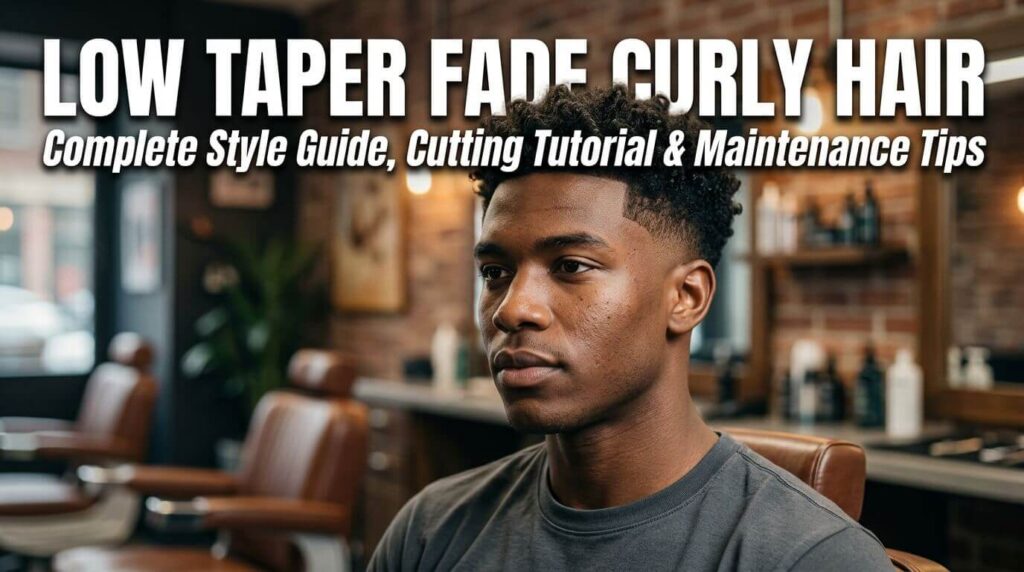
A low taper fade curly hair is a haircut where the sides gradually get shorter starting just above the ears, blending down toward the neckline while keeping your natural curls, coils, or waves on top. This style creates a clean contrast between textured curly hair and neat, faded sides—making it one of the most requested cuts in barbershops today.
Whether you want inspiration for your next barber visit, need to learn how to cut this style yourself, or just want to keep your curls looking fresh between appointments, this guide covers everything you need to know.
What Exactly Is a Low Taper Fade?
A low taper fade keeps the hair longer up top while gradually shortening the sides and back, blending into the skin near the neckline. It’s not as drastic as a skin fade, making it perfect for a softer yet still sharp look. When paired with curly hair, the contrast between the clean sides and the textured top creates a stylish and effortless vibe.
Source: Faith in Curls
The “low” in low taper refers to where the fade begins—approximately one inch above the ear. From there, your barber uses progressively shorter clipper guards (typically moving from a 4 down to a 0.5) to create that smooth gradient effect.
Key Facts About Low Taper Fades:
| Fact | Detail |
|---|---|
| Starting point | Approximately 1 inch above the ear |
| Clipper progression | Guards 4 → 3 → 2 → 1.5 → 1 → 0.5 |
| Maintenance frequency | Every 2–3 weeks for a fresh look |
| Best for | Round and square face shapes |
| Works with | All curl types from 2A to 4C |
This cut works for all curl types, from loose waves to tight coils. The softer transition of a low taper (compared to mid or high fades) complements the natural texture of curly hair without creating too harsh of a contrast.
Low Taper Fade vs. Other Fades: Understanding the Differences
Before you sit in the barber chair, it helps to know exactly what you’re asking for. Here’s how a low taper fade compares to other popular fade styles:
| Fade Type | Where It Starts | Best For | How Often to Maintain |
|---|---|---|---|
| Low Taper Fade | 1 inch above ear | Professional settings, rounder faces | Every 2–3 weeks |
| Mid Taper Fade | At temple level | Oval and diamond faces | Every 2–3 weeks |
| High Taper Fade | Above the temples | Bold statements, all face shapes | Every 2 weeks |
| Skin Fade | Blends to bare skin | Sharp contrast, modern edge | Every 1–2 weeks |
| Drop Fade | Drops behind the ear | Adds depth and unique shape | Every 2–3 weeks |
| Burst Fade | Semicircle around ear | Mullets, mohawks, creative styles | Every 2–3 weeks |
For a deeper comparison, check out our guide on taper vs fade and low taper vs mid taper.
Pro Tip: If you have tight curls (Type 4B–4C), a mid or high fade might give you better contrast. For looser curls (Type 2A–3A), a low taper creates a more natural, effortless look.
Best Low Taper Fade Styles for Curly Hair
Now let’s get into the fun part—the styles. Here are the most popular low taper fade variations for curly hair, so you can find the perfect look for your texture and personality.
Blowout Low Taper Fade Curly Hair
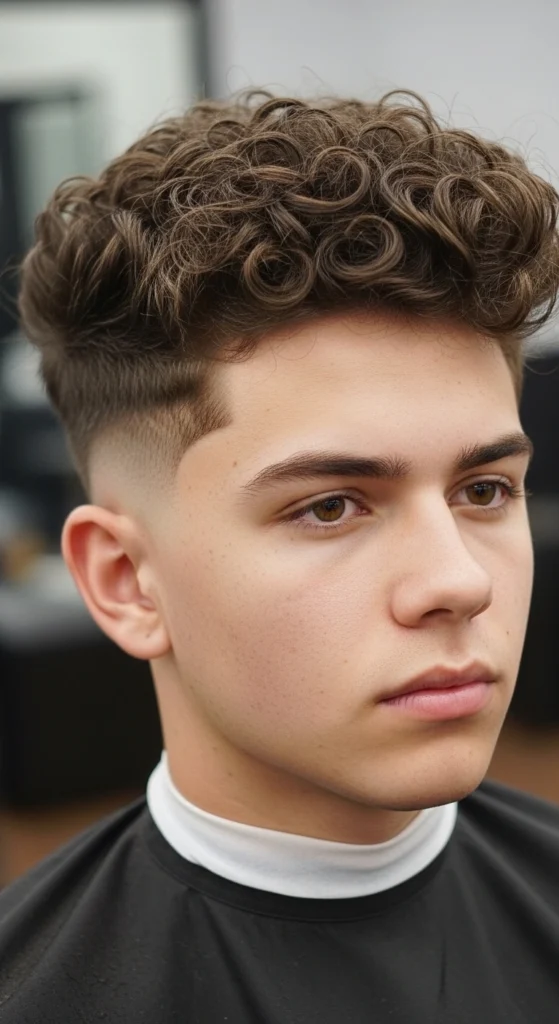
The blowout taper is everywhere right now. This style features voluminous, lifted curls achieved with a blow dryer and diffuser. Your barber or stylist will use a round brush while drying on medium heat to lift curls at the root, creating serious height and fullness.
This look works best with Type 3A–4A curls and medium to thick hair density. You’ll need lightweight mousse, curl cream, and heat protectant to style it at home.
The blowout low taper fade has become especially popular among Hispanic and Black men looking for a statement style that still feels polished.
Low Taper Fade with Textured Fringe
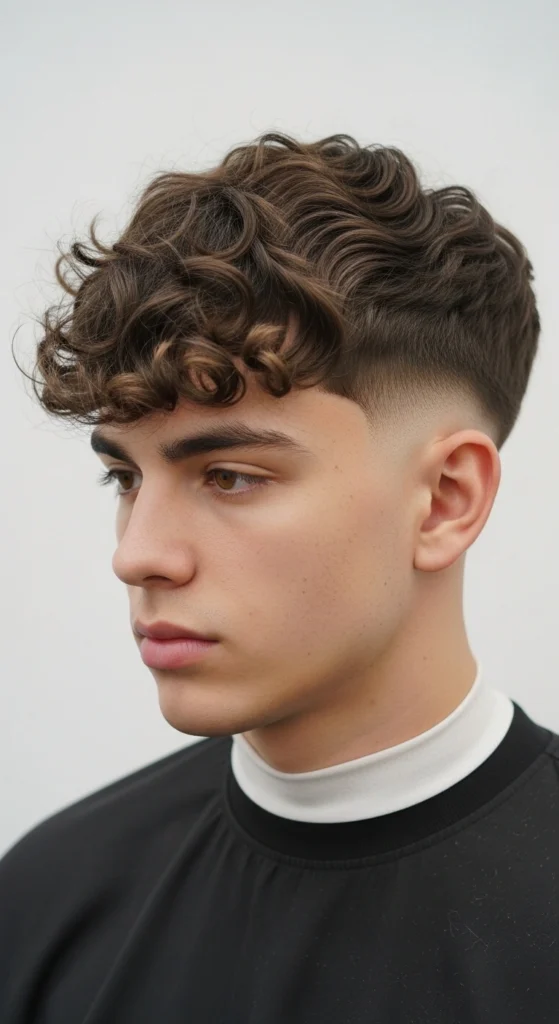
Want something a little more relaxed? A textured fringe features longer curly bangs falling over your forehead with tapered sides. This style suits Type 2B–3B curls and works great for oval, oblong, and heart-shaped faces.
To style it, apply curl-defining cream to damp hair, scrunch your curls upward, and either air dry or use a diffuser on low heat.
Low Taper Fade Mullet Curly Hair
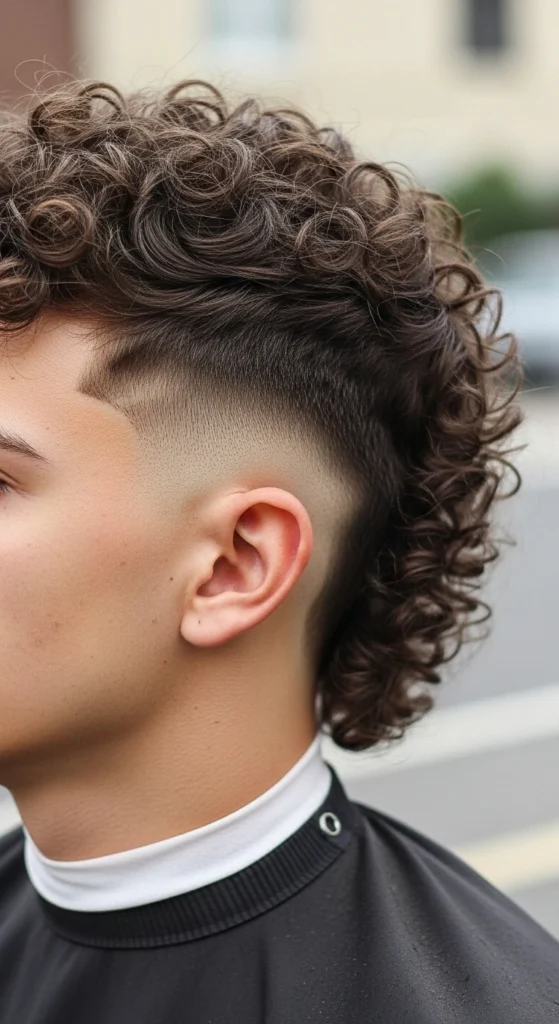
Yes, the mullet is back—but with a modern twist. The modern mullet keeps the sides short and tapered while letting the curly hair grow longer in the back. It’s bold, it’s confident, and it’s growing in popularity among younger guys.
The curly mullet works with all curl types but looks especially striking on Type 3B–4A curls. Just know that this cut requires some confidence to pull off.
Low Taper Burst Fade Curly Hair
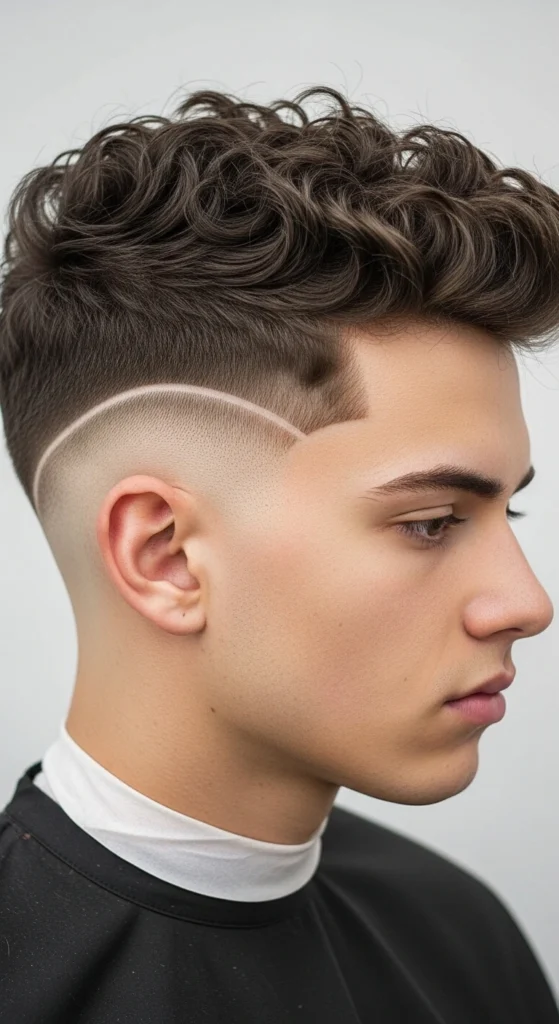
A burst fade creates a semicircular shape around the ear, almost like a sunburst effect. When combined with curly hair on top, it creates a unique visual flow that’s perfect for guys wanting something creative and edgy.
This style pairs well with mullets or mohawk-inspired looks and definitely stands out in a crowd.
Low Taper Fade Curly Hair with Design
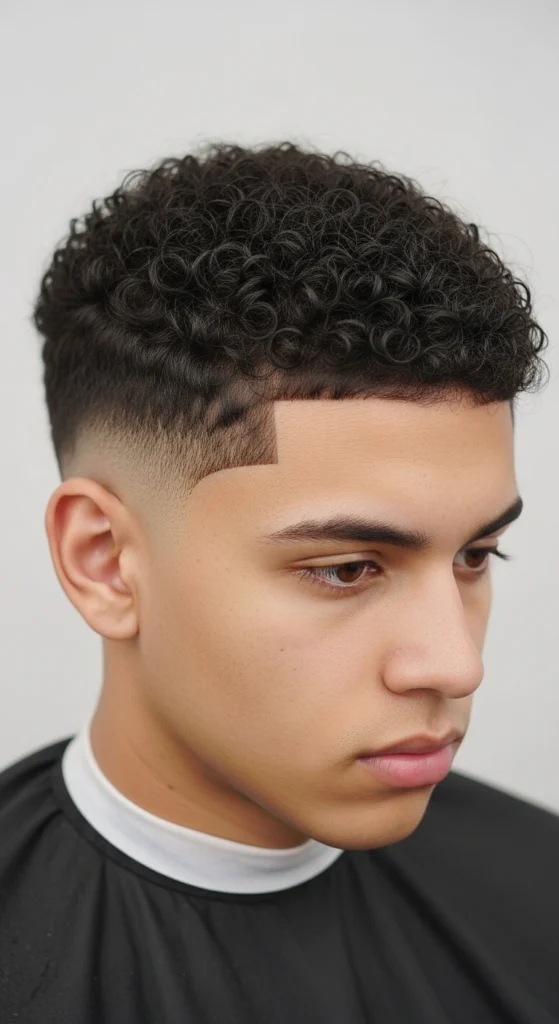
For those who want to make an even bigger statement, hair designs add another level of personalization. Your barber can shave lines, geometric patterns, or even graffiti-inspired artwork into the faded area.
Keep in mind that hair designs need touch-ups every 1–2 weeks to stay crisp, and you’ll need a skilled barber who specializes in hair tattoos.
Low Taper Fade with Curly Top: Short, Medium, and Long
The length of your curly top completely changes the vibe of this haircut:
Short Curly Top (1–2 inches)
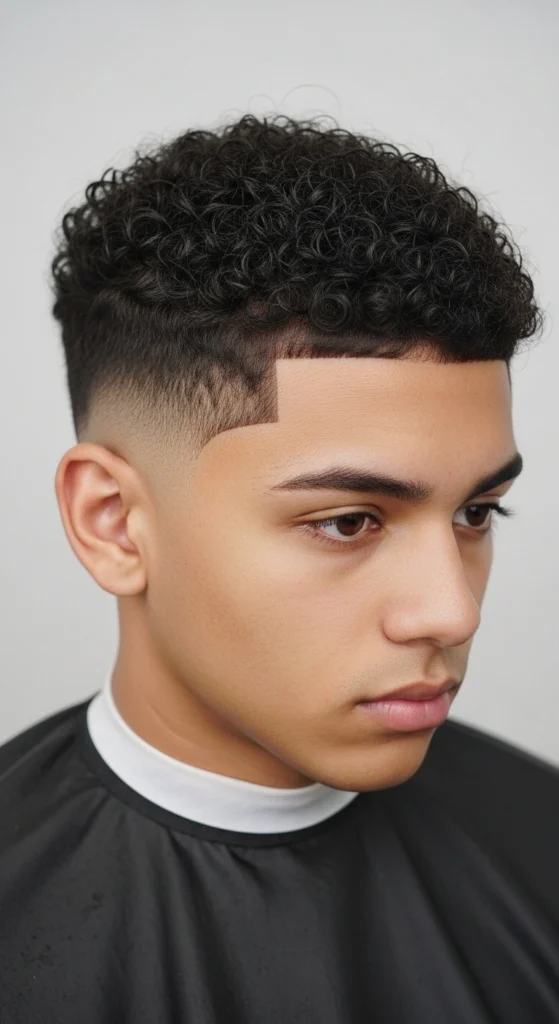
Super low maintenance and professional. Best for Type 3C–4C tight curls. Minimal styling required—just keep it moisturized.
Medium Curly Top (3–5 inches)
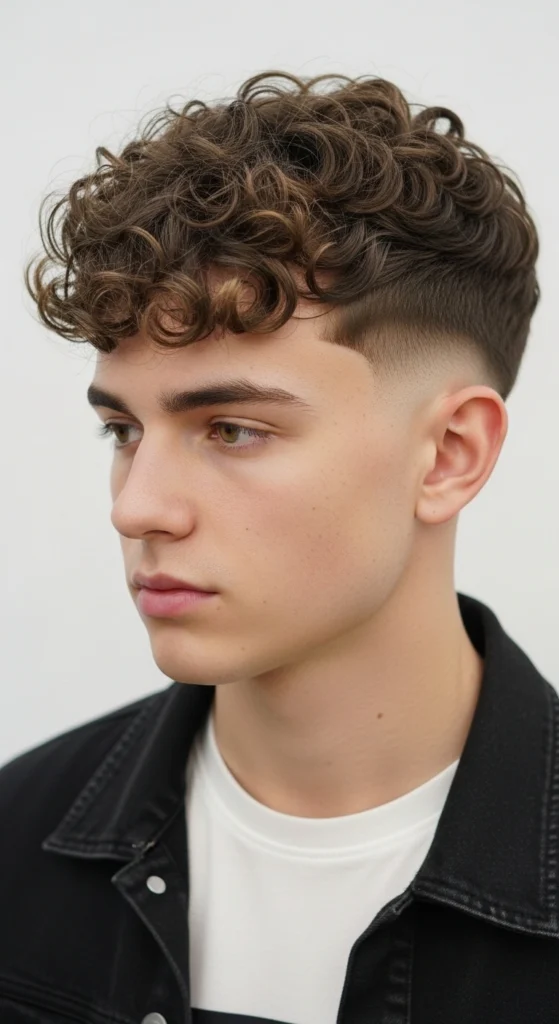
The most popular choice. Works across all curl types and offers the perfect balance between style and manageability.
Long Curly Top (6+ inches)
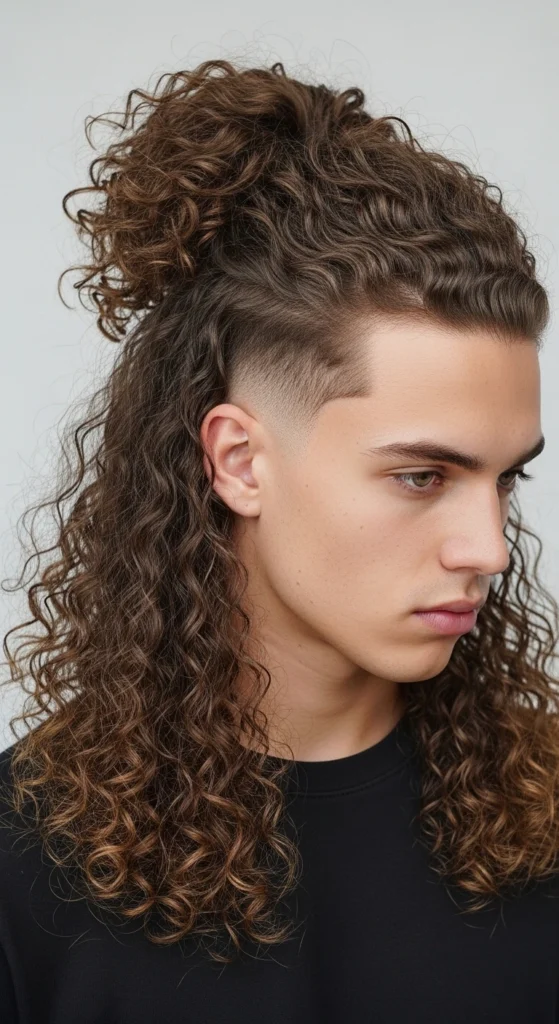
Creates dramatic contrast and makes a serious statement. You can even pull it into a ponytail or man bun. Just know this requires more product and maintenance.
Low Taper Fade with Beard
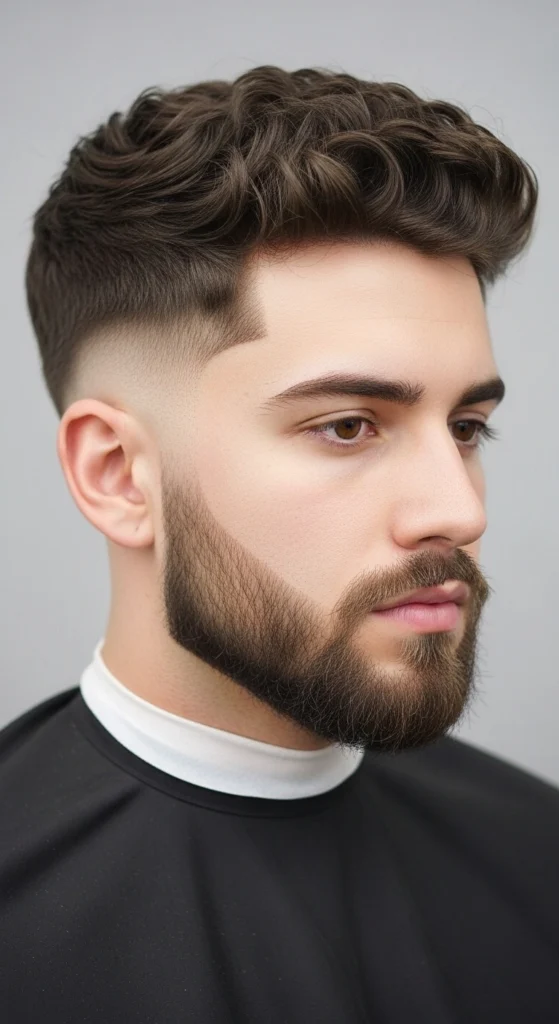
Adding a beard creates masculine balance to the curly volume on top. The best part? Your barber can blend the fade right into your beard line for a seamless transition that frames your face perfectly.
Tip: Ask your barber to connect the taper fade into your beard line for a cohesive, polished look.
Low Taper Fade Curly Hair by Ethnicity
Different hair textures call for slightly different approaches. Here’s what works best based on common curl patterns:
Low Taper Fade Curly Hair Black Male
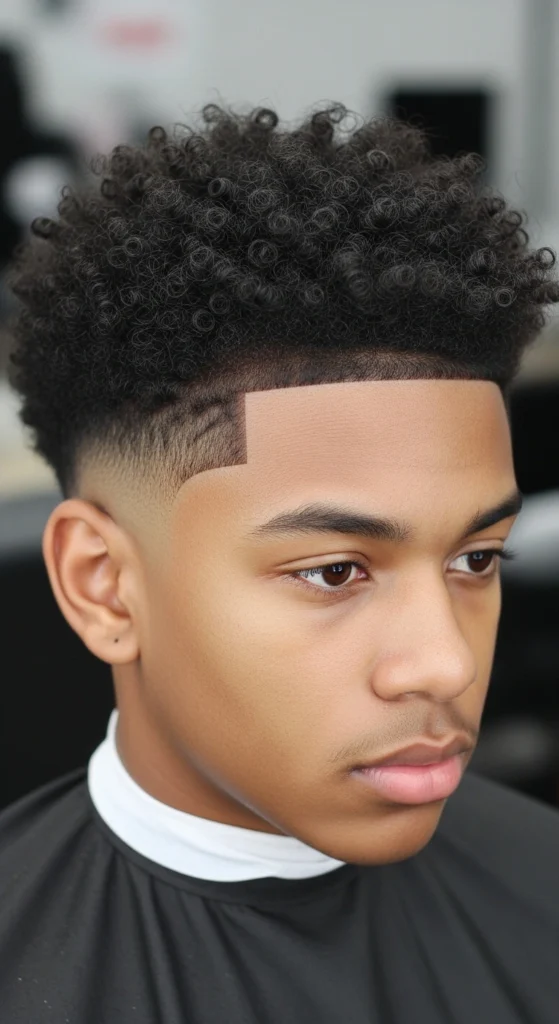
This style works exceptionally well with Type 4A–4C coils. Black men often pair the low taper with a sharp line-up for extra definition. A curl sponge helps create defined coils on top, while moisturizing cream keeps everything hydrated.
Popular variations include the afro taper, curly top fade, and blowout styles.
Hispanic Low Taper Fade Curly Hair
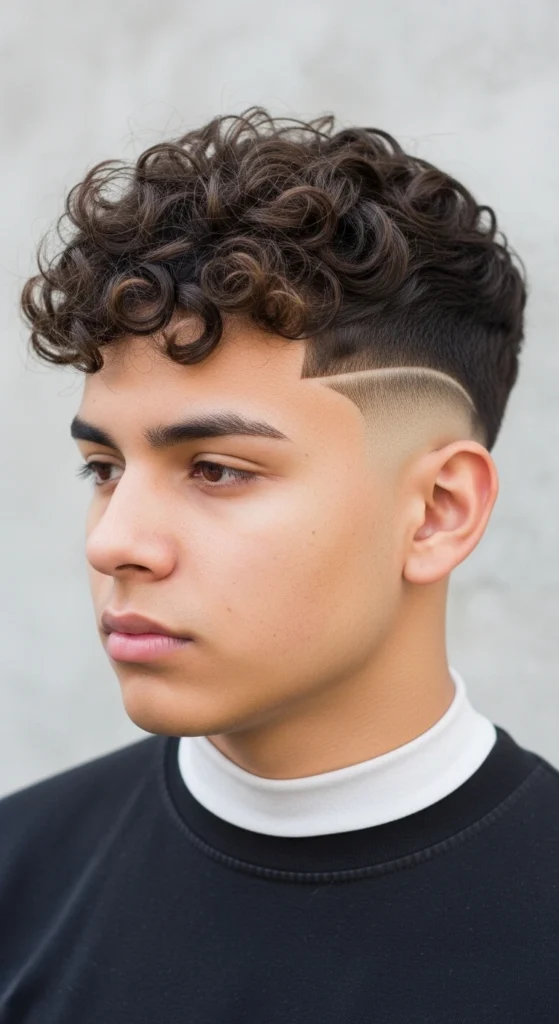
Hispanic men typically have Type 2C–3C curls. The blowout style has become extremely popular in this community, often paired with clean edge-ups and sometimes hair designs.
Gel provides hold while curl cream adds definition without crunchiness.
Low Taper Fade Curly Hair White Male
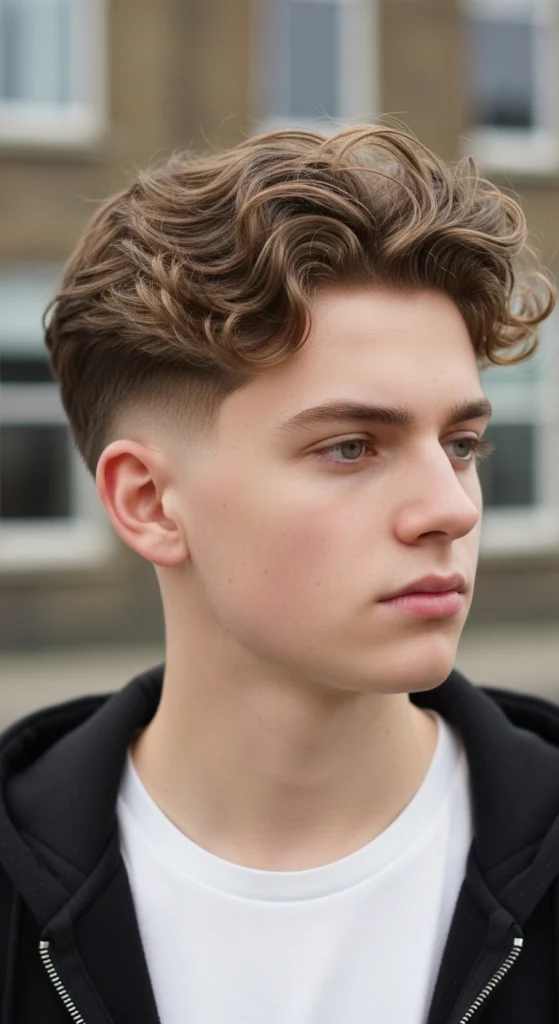
Caucasian men usually have Type 2A–3B curls. The natural, textured look tends to be most popular, with a softer taper rather than an aggressive fade.
Lightweight cream and sea salt spray work great for adding texture without weighing down finer curls.
Low Taper Fade by Curl Type (2A–4C)
Your curl type affects everything—from how your barber should cut it to which products will work best. Here’s a breakdown using the Andre Walker Hair Typing System:
Type 2 (Wavy Hair): 2A, 2B, 2C
- 2A: Loose, barely-there waves. Keep the top longer to enhance natural movement.
- 2B: Defined S-shaped waves. A low taper really enhances this natural texture.
- 2C: Strong waves that almost look like curls. Use lightweight products to avoid weighing them down.
Styling tip: Sea salt spray and lightweight cream work best. Air drying is usually preferred.
Washing frequency: 2–3 times per week.
Type 3 (Curly Hair): 3A, 3B, 3C
- 3A: Loose, springy curls. Most versatile with a low taper fade.
- 3B: Tighter ringlets. Define with curl cream and diffuse for volume.
- 3C: Tight corkscrews. Keep hydrated and use gel for hold.
Styling tip: Curl cream, leave-in conditioner, and diffusing on low heat.
Washing frequency: 1–2 times per week. Refresh with water spray between washes.
Type 4 (Coily/Kinky Hair): 4A, 4B, 4C
- 4A: Defined coil pattern. Use moisturizing products and define with your fingers.
- 4B: Z-pattern coils. Requires deep hydration and the LOC (Liquid-Oil-Cream) method.
- 4C: Tight, densely packed coils. The most fragile curl type—prioritize moisture above all else.
Key Fact: Type 4 hair is the most fragile curl type due to its tight coil pattern, which makes it harder for natural oils to travel down the hair shaft. Deep conditioning every wash day is essential.
Source: American Academy of Dermatology
Styling tip: Curl sponge for definition, butter or cream for moisture, and protective styles when needed.
Washing frequency: Every 7–10 days. Oil scalp between washes.
How to Get a Low Taper Fade on Curly Hair: Step-by-Step Barber Tutorial
This section is for barbers, barber students, and anyone brave enough to try cutting their own hair at home. Curly hair requires specific techniques, so pay close attention.
Important: For best results, we always recommend visiting a professional barber.
Tools and Equipment Needed
| Tool | What It’s For |
|---|---|
| Clippers (Wahl, Andis, or BaByliss) | Main cutting tool |
| Guards (0.5, 1, 1.5, 2, 3, 4) | Creating the gradient |
| Trimmers/Edgers | Line-ups and detailing |
| Wide-tooth comb | Detangling curly top |
| Spray bottle with water | Keeping hair damp |
| Handheld mirror | Checking the back |
| Cape or towel | Protecting clothing |
| Diffuser attachment | Styling the curly top |
Step-by-Step Cutting Guide
Step 1: Prepare the Hair
Start by washing and conditioning the curly hair. Detangle with a wide-tooth comb while the hair is still damp. Section off the curly top using clips if needed—you don’t want to accidentally cut into the length you’re keeping.
Source: YouTube – Curly Low Taper Fade for Beginners — “First thing we’re going to do is create… the sideburn, and the reason is because once the sideburn is shaped up it’s a lot easier to see what area you’re working with.”
Step 2: Establish the Fade Line
Identify your starting point—approximately 1 inch above the ear. Create your initial guideline using a 1.5 or 2 guard. Work around the entire head at a consistent height.
Step 3: Begin the Taper
Start with the longest guard (4) at the top of the fade zone. Work downward using progressively shorter guards: 4 → 3 → 2 → 1.5 → 1 → 0.5.
Use the lever open/closed technique to create seamless gradients. Lever open gives you a slightly longer cut; lever closed gives you shorter.
Source: YouTube – How to Fade Curly Hair Tutorial — “Close the lever, hit and baby tap at the beginning of the guideline… after this step, open it and repeat that same flow until your guideline is completely erased.”
Step 4: Blend Using C-Motion/Flick-Out Technique
This is where the magic happens. Use only the corner of your clipper blade—never the flat edge. Flick outward in C-shaped motions to erase any visible guidelines.
Key Tip: “We’re only using the corners of our clippers on any taper, any fading that we do.”
Source: YouTube – How to Fade Curly Hair
Check from multiple angles to make sure the transition looks seamless.
Step 5: Detail the Edges
Use your trimmers for the hairline, temples, and neckline. Create a clean line-up if the client wants one. Shape around the ears carefully.
Step 6: Style the Curly Top
Apply curl cream or leave-in conditioner to damp curls. Scrunch upward to define the curl pattern. Either air dry or use a diffuser on low heat.
Barber Tips for Cutting Curly Hair
- Always use the corner of your clipper blade when fading—never the flat edge
- Curly hair appears shorter when dry—cut conservatively and check when styled
- Keep tension consistent, especially over the ear area
- Reset the hair by combing after every clipper pass
- Use the lever technique: close for shorter, open for longer—repeat to erase guidelines
- For tight curls (4B–4C), consider a slightly higher starting point for better contrast
How to Ask Your Barber for a Low Taper Fade
Communication is everything when it comes to getting the haircut you actually want. Here’s how to make sure you and your barber are on the same page:
Bring reference photos. Show 2–3 images of the exact style you want. Pictures eliminate confusion.
Be specific with terminology. Say “low taper” instead of just “fade.” Clarify whether you want it to blend to skin (skin fade) or stay softer (traditional taper).
Communicate your curl type. Tell your barber what type of curls you have and how your hair usually behaves.
Specify length on top. Use inches or finger widths to describe how much length you want to keep.
Sample Script for Your Barber
“I’d like a low taper fade starting about an inch above my ears, blending toward the neckline but not down to the skin. Keep the curls on top around 3 inches. I have [your curl type] hair, and I’d like it to look natural and textured. Can you also clean up my hairline?”
Pro Tip: Don’t be afraid to ask questions. A good barber will give advice based on your curl pattern and head shape.
How to Maintain a Low Taper Fade with Curly Hair
A great fade is only half the equation. Your curls on top need to look just as good as those sharp lines. Here’s how to keep everything fresh.
Daily Curly Hair Routine
Morning refresh (5 minutes):
- Don’t brush dry curls—this causes frizz and breakage
- Dampen your hands with water and smooth over any frizzy areas
- Apply a small amount of leave-in conditioner or curl cream
- Scrunch gently to reactivate your curl pattern
- Air dry or use a diffuser on low heat
Key Fact: Curly hair is drier than other hair types because natural scalp oils have difficulty traveling down the curved hair shaft. Daily moisturization is essential.
Source: American Academy of Dermatology
Weekly Wash Day Routine
How often you wash depends on your curl type:
| Curl Type | How Often to Wash |
|---|---|
| Type 2A–2C | Every 2–3 days |
| Type 3A–3B | Every 3–5 days |
| Type 3C–4A | Once per week |
| Type 4B–4C | Every 7–10 days |
Wash Day Steps:
- Cleanse: Use a sulfate-free shampoo and massage your scalp well
- Condition: Apply silicone-free conditioner from mid-lengths to ends, then detangle with a wide-tooth comb
- Deep Condition (weekly): Apply a deep conditioning mask for 5–15 minutes
- Moisturize: Apply leave-in conditioner to damp hair
- Style: Apply curl cream or gel, then scrunch to define
- Dry: Air dry or diffuse on low heat
- Finish (optional): Apply oil to seal in moisture and add shine
Key Fact: Sulfates strip natural oils from curly hair, leading to dryness and frizz. Sulfate-free formulas maintain moisture balance while still cleansing effectively.
Source: Blonde Faith Salon — “Think of sulfates as that friend who stirs up drama—they might get the job done, but at what cost?”
Fade Maintenance Schedule
| Task | How Often |
|---|---|
| Full fade touch-up | Every 2–3 weeks |
| Line-up/edge-up | Every 1–2 weeks (optional) |
| Curly top trim | Every 6–8 weeks |
| Deep conditioning | Weekly |
| Scalp oiling (Type 4 hair) | Every 2–3 days |
Tip: Schedule your barber visit 2–3 days before a special event. This allows any minor irritation to settle while keeping the cut fresh.
Nighttime Hair Protection
What you do at night matters just as much as your morning routine.
Cotton pillowcases cause friction, which leads to frizz and breakage. Switch to a silk or satin pillowcase to reduce friction and keep your curls intact overnight.
Alternatives: Use a satin bonnet or durag while sleeping.
For longer curls: Try the “pineapple” method—gather your curls in a loose ponytail on top of your head.
Key Fact: Silk pillowcases reduce friction compared to cotton, helping preserve curl definition and reduce breakage overnight.
Source: Curlsmith — “Protect curls overnight with silk accessories such as a vegan silk pillowcase, scarf, bonnet, or silk scrunchie.”
Best Products for Low Taper Fade Curly Hair
Using the right products makes all the difference. Here’s what to look for:
Cleansing Products
| Product Type | What to Look For | What to Avoid |
|---|---|---|
| Shampoo | Sulfate-free, moisturizing | Sulfates, harsh detergents |
| Co-wash | Cleansing conditioner | Silicones (cause buildup) |
| Clarifying shampoo | Use monthly for buildup removal | Daily use (too stripping) |
Key Ingredients to Look For
- Glycerin: Draws moisture into hair
- Argan oil: Penetrates the hair shaft for deep hydration
- Coconut oil: Reduces protein loss and adds shine
- Jojoba oil: Mimics natural sebum, lightweight moisturizer
Source: American Academy of Dermatology — “Look for a conditioning product that contains ingredients such as argan oil, glycerin, or a fatty alcohol like cetyl or stearyl alcohol.”
Conditioning Products
| Product Type | Purpose | Best For |
|---|---|---|
| Rinse-out conditioner | Daily moisture, detangling | All curl types |
| Deep conditioner/mask | Intense hydration, repair | Weekly use |
| Leave-in conditioner | Ongoing moisture, styling prep | All curl types |
Styling Products
| Product Type | Hold Level | Best For |
|---|---|---|
| Curl cream | Light | Definition, moisture (Types 2A–3B) |
| Curl gel | Medium–strong | Hold, definition, anti-frizz (Types 3B–4C) |
| Mousse | Light–medium | Volume, lightweight hold (Types 2A–3A) |
| Curl sponge | N/A (tool) | Creating defined coils (Types 4A–4C) |
| Sea salt spray | Light | Texture, beachy waves (Types 2A–2C) |
Key Tip: Start with a small amount of product—you can always add more. Over-application weighs down curls and causes buildup.
Low Taper Fade Curly Hair for Different Face Shapes
The right haircut can enhance your best features. Here’s which low taper fade style works best for your face shape:
| Face Shape | Recommended Style | Why It Works |
|---|---|---|
| Round | Low taper with height on top | Adds vertical length, elongates your face |
| Square | Low taper with textured, softer top | Softens angular jawline |
| Oval | Any low taper variation | Most versatile—almost anything works |
| Oblong | Low taper with side volume | Adds width to balance length |
| Diamond | Low taper with fuller sides | Balances narrow forehead and chin |
| Heart | Low taper with volume at jaw level | Balances wider forehead |
Quick Tips by Face Shape:
- Round faces: Add height on top and avoid too much volume on the sides
- Square faces: Textured, natural curls soften strong jawlines
- Oval faces: You’re lucky—almost any style works
- Oblong faces: Keep sides slightly fuller and avoid excessive height on top
- Diamond faces: Balance narrow areas with strategic volume placement
Common Mistakes to Avoid
Even the best haircut can look bad if you’re making these mistakes:
- Letting curls get dry and frizzy — Moisturize daily. Curly hair craves hydration more than any other hair type.
- Washing too frequently — This strips away natural oils. Stick to washing 1–3 times per week maximum based on your curl type.
- Using heavy products — Thick pomades and waxes weigh down curls and make them look greasy. Stick to lightweight, water-based formulas.
- Skipping barber visits — Fades lose their shape quickly. Touch up every 2–3 weeks to keep things crisp.
- Brushing dry curls — This causes frizz and breakage. Only detangle when your hair is wet and loaded with conditioner.
- Using heat too often — Excessive heat damages your curl pattern. Air dry when possible, and always use heat protectant when you can’t.
- Ignoring scalp health — Healthy hair starts at the scalp. Keep it clean and moisturized.
- Choosing the wrong barber — Find someone experienced with curly hair. Communication is key.
The Number One Mistake? Neglecting the curly top while maintaining the fade. Your curls need just as much attention as those clean lines.
Frequently Asked Questions
Is a low taper fade good for curly hair?
Yes, a low taper fade is excellent for curly hair. The gradual fade creates a clean contrast with textured curls on top while maintaining a softer, more natural look than higher fades. It works well across all curl types (2A–4C) and requires less frequent maintenance than skin fades. The style flatters most face shapes and works in both casual and professional settings.
How often should I get my low taper fade touched up?
Plan to visit your barber every 2–3 weeks to maintain a crisp low taper fade. If you have fast-growing hair or prefer a sharper look, every 2 weeks is ideal. For a more relaxed, grown-out style, you can stretch to 3–4 weeks between visits. For special occasions, book your appointment 2–3 days before the event.
What’s the difference between a low taper and a low fade?
A low taper gradually reduces hair length starting low on the head but may not go all the way down to the skin. A low fade is a type of taper that blends completely down to the skin (skin fade) for a sharper contrast. Both start at the same position (about an inch above the ear)—the difference is the shortest length at the bottom. For more details, see our low fade vs high fade comparison.
Does taper fade suit curly hair?
Absolutely. Taper fades complement curly hair beautifully by creating contrast between clean, structured sides and voluminous, textured curls on top. This combination minimizes frizz on the sides, simplifies daily grooming, and puts the focus on your natural curl pattern. It’s one of the most requested styles for men with textured hair.
What products should I use for a low taper fade curly hair?
Use sulfate-free shampoo, silicone-free conditioner, and leave-in conditioner for cleansing and moisture. For styling, choose curl cream (lighter hold) or curl gel (stronger hold) based on your curl type. Avoid heavy pomades and waxes that weigh down curls. Deep condition weekly to maintain hydration, and consider oils like argan or jojoba to seal in moisture.
How do I keep my curls defined with a low taper fade?
Apply curl-defining cream or gel to damp hair right after washing. Scrunch curls upward to encourage definition, then either air dry or use a diffuser on low heat. Between washes, refresh your curls by dampening them with water and adding a small amount of leave-in conditioner or curl cream. Avoid touching your hair throughout the day to prevent frizz.
Can I get a low taper fade if I have Type 4C hair?
Yes, low taper fades work well with Type 4C coily hair. However, because 4C curls are tightly packed, some barbers recommend starting the fade slightly higher (mid-low position) to create better contrast. Prioritize moisture above all else—4C hair needs regular deep conditioning and daily hydration to stay healthy, defined, and looking its best. You might also consider a high fade curly hair style for even more contrast.
What are 2A, 2B, 2C, 3A, 3B curls?
These are curl type classifications from the Andre Walker Hair Typing System:
- Type 2A–2C: Wavy hair with S-shaped waves, ranging from loose to defined
- Type 3A–3C: Curly hair with springy curls, ranging from loose loops to tight corkscrews
- Type 4A–4C: Coily or kinky hair with tight coils to densely packed Z-pattern curls
Your curl type affects which products work best and how often you should wash your hair. Knowing your type helps you and your barber choose the best approach for your low taper fade.
Final Thoughts
A low taper fade with curly hair is more than just a haircut—it’s a style that celebrates your natural texture while keeping you looking sharp and put together. Whether you prefer a blowout taper, modern mullet, textured fringe, or classic curly top, the key is finding a skilled barber who understands curly hair and committing to proper curl care at home.
Remember the three essentials: choose the right style for your face shape and curl type, communicate clearly with your barber, and maintain your curls with the right products and routine.
When your fade is crisp and your curls are hydrated, you’ll look and feel your absolute best.
Browse more men’s haircuts to find your perfect style.