
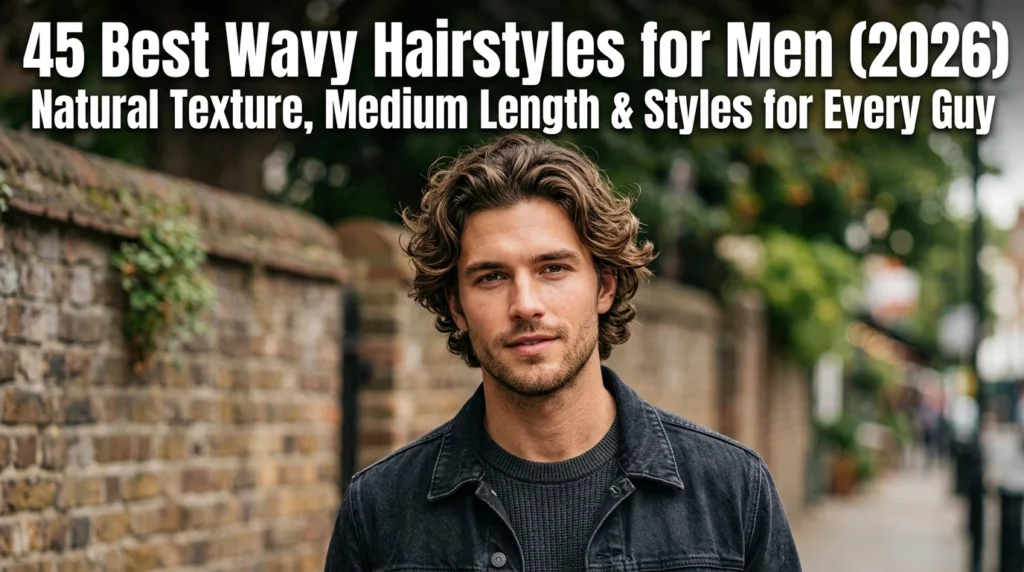
Wavy hair is the middle ground of men’s hair types: not quite straight, not quite curly. Each strand bends into a relaxed, repeating pattern that gives you built-in volume and movement, the kind straight-haired men can only fake with product.
According to hair science experts at Curlsmith, wavy hair is officially classified as Type 2 hair. It divides into three subcategories that explain why your waves might look completely different from your friend’s waves.
The big thing to understand is that wavy hair behaves differently because of how it grows from your scalp. Each strand has overlapping scales called cuticles. When those cuticles lie flat and smooth, your hair looks shiny and defined. When they lift up, moisture escapes and frizz rushes in. This is why wavy hair tends to be drier and more frizz-prone than straight hair. Natural oils from your scalp struggle to travel down those curved hair shafts.
Understanding Your Wave Pattern
- Type 2A (Loose Waves): Gentle bend rather than a defined S-shape. Looks almost straight when brushed dry. Usually fine to medium thickness and loses its wave easily throughout the day. Use lightweight products only: sea salt spray or texture powder. Heavy creams will pull waves flat and leave hair greasy.
- Type 2B (Classic Waves): The wave pattern most people picture. Clear S-shape that holds fairly well with natural root lift. Frizzes easily in humidity. Needs a balance of moisture and hold; styling creams work best here.
- Type 2C (Defined Waves): The most defined wavy type. Tight S-waves, some loose corkscrews, maximum volume and frizz potential. Needs both moisture and hold; combine a curl cream with lightweight gel or mousse for definition without crunch.
Porosity: The Hidden Factor
Two men with identical 2B waves can get completely different results from the same products. The reason is porosity: how easily your hair absorbs and holds moisture.
- High Porosity: Absorbs moisture fast, loses it just as fast. Use products that seal moisture in, like styling creams with shea butter or argan oil.
- Medium Porosity: Absorbs at a normal rate and holds well. The easiest type to manage; most products work without issue.
- Low Porosity: Tight cuticles resist moisture. Products sit on top rather than absorbing. Use lightweight products only. Avoid heavy butters and oils.
- Quick Home Test: Drop a clean strand in a glass of water. Sinks quickly = high porosity. Floats = low porosity. Hovers in the middle = medium porosity.
45 Best Wavy Hairstyles for Men in 2026
Here is the complete visual guide. Each style includes exactly what wave type it works for, which face shapes it flatters, and the specific words to use with your barber.
1. Wavy Textured Crop
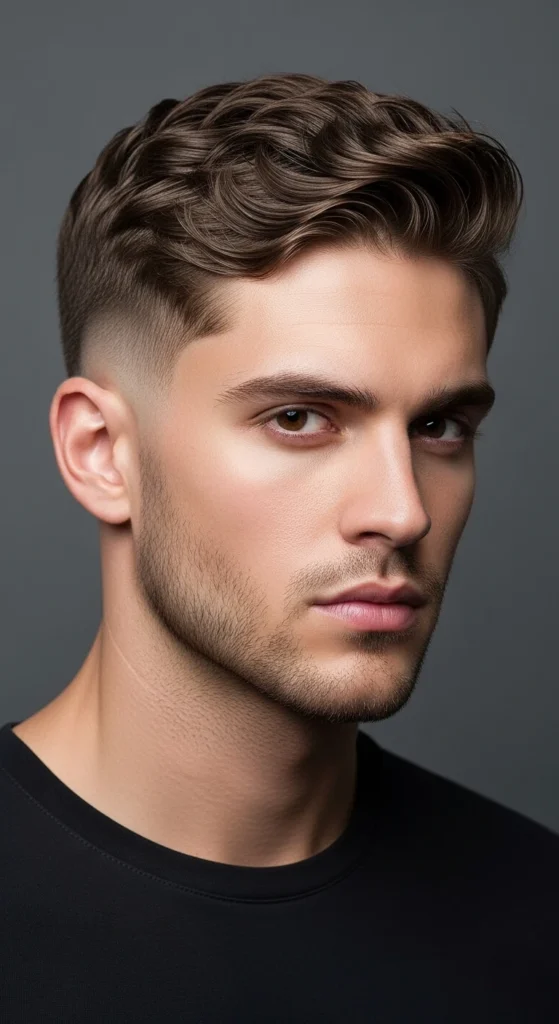
This is the most requested wavy style in barbershops right now. The sides stay short and clean while the top keeps enough length to show off natural wave texture. It works for almost everyone.
Best for wave types 2A and 2B. Works on oval, round, and square faces. Ask your barber for a low taper fade on the sides with a textured crop on top. Tell them you want to keep movement in the front. Style with a small amount of matte paste worked through damp hair. Scrunch gently and let air dry or diffuse on low heat.
2. Wavy French Crop
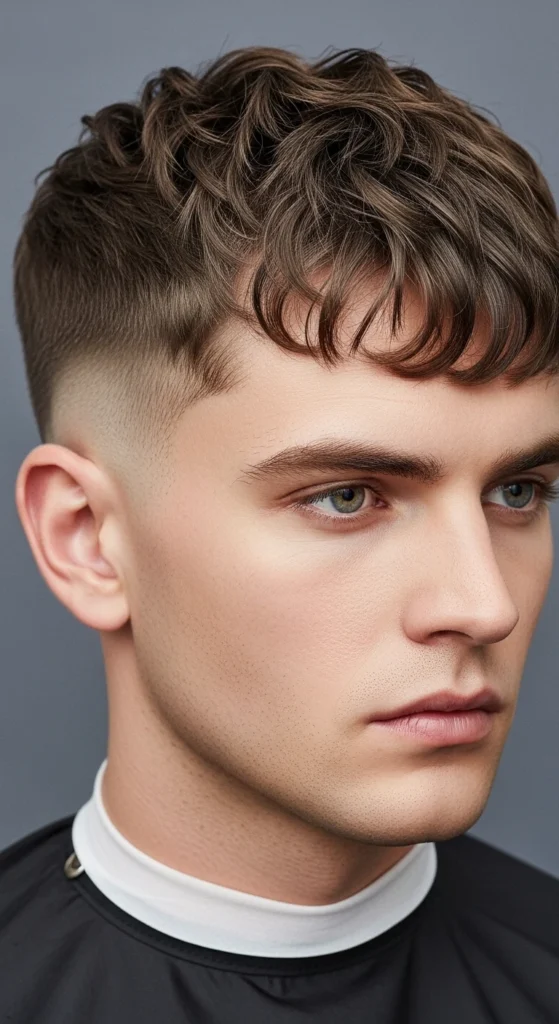
The French crop features a short textured fringe that sits forward on the forehead. The sides stay cropped close and clean. This cut looks sharp but still relaxed. It works especially well for men with higher foreheads or receding hairlines because the fringe provides natural coverage.
Best for wave types 2A through 2C. Works on all face shapes. Ask your barber for a short French crop with textured fringe and a skin fade on the sides. Style by blow drying the fringe forward while lifting at the roots. Finish with texture powder for volume without shine.
3. Wavy Caesar Cut
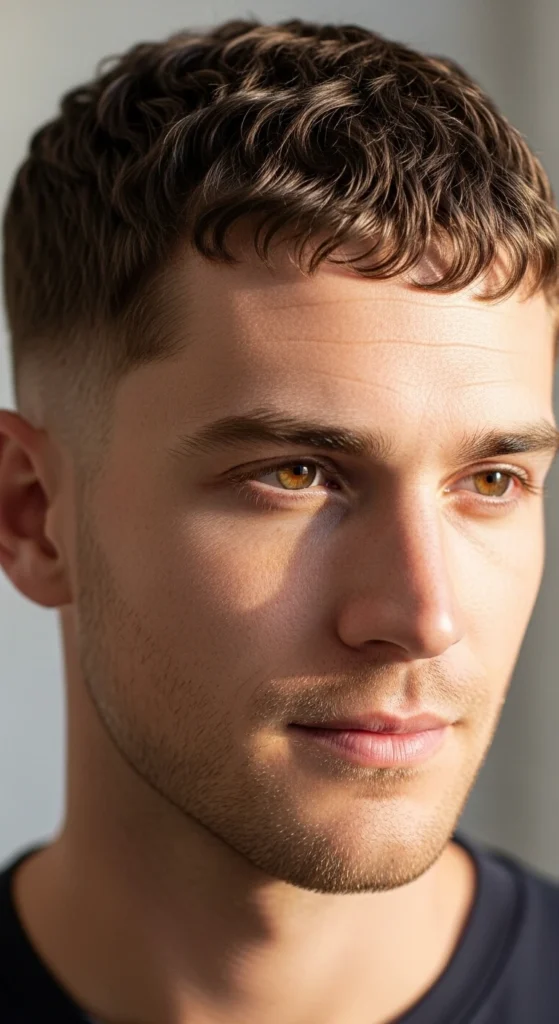
This classic cut features short uniform length all over with a small textured fringe. It requires almost no styling but still shows off wave pattern. Great for active guys who don’t want to fuss with products.
Best for wave types 2A and 2B. Works best on square and oval faces. Ask your barber for a Caesar cut that follows your natural wave pattern. Keep the fringe short and textured. This style is air dry friendly. Just towel dry gently and go.
4. Wavy Buzzcut
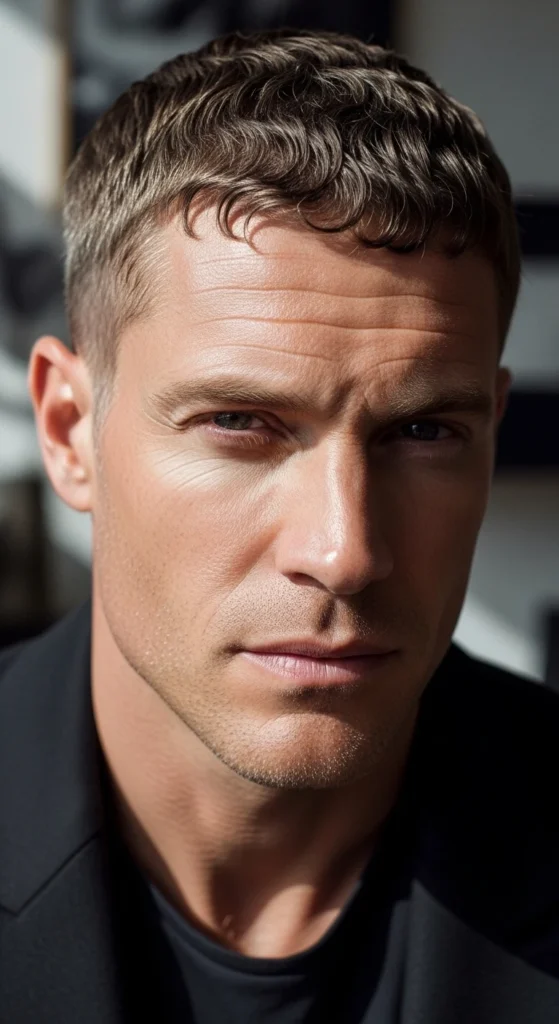
An ultra-short uniform cut that lets your natural wave pattern create visual interest across your scalp. The texture shows through even at very short lengths.
Best for wave types 2B and 2C since tighter waves create more visible texture. Works on all face shapes with the right length adjustment. Ask your barber for a uniform buzzcut at your preferred guard length. Trim every two to three weeks to maintain the clean look.
5. Wavy High and Tight
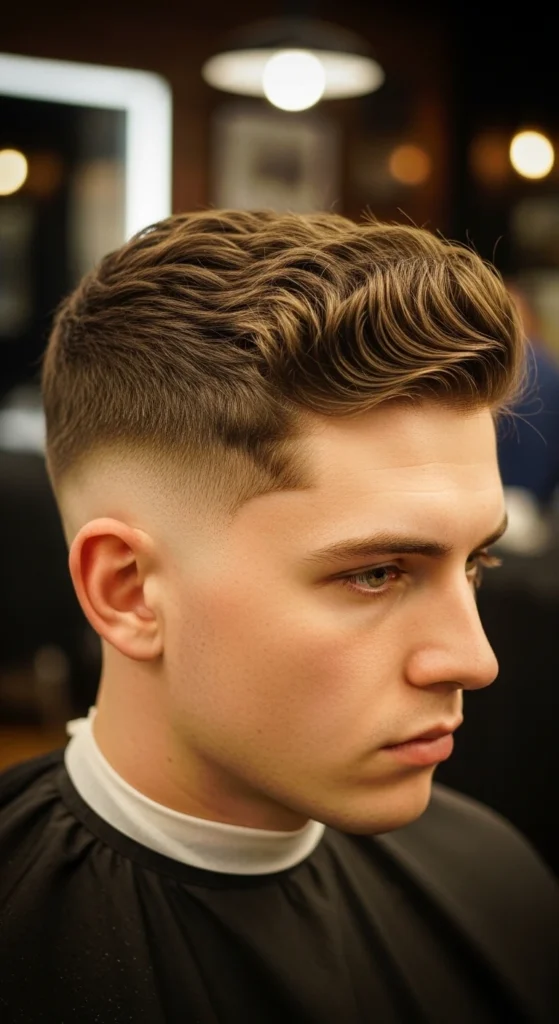
This military-inspired cut features very short or faded sides with slightly longer wavy hair on top. It creates a clean, masculine silhouette that works in professional settings.
Best for wave types 2A through 2C. Works on oval and square faces. Ask your barber for a high and tight with a skin fade on the sides. Keep the top long enough to show wave pattern. Minimal product needed. A touch of matte paste is plenty.
6. Short Wavy Quiff
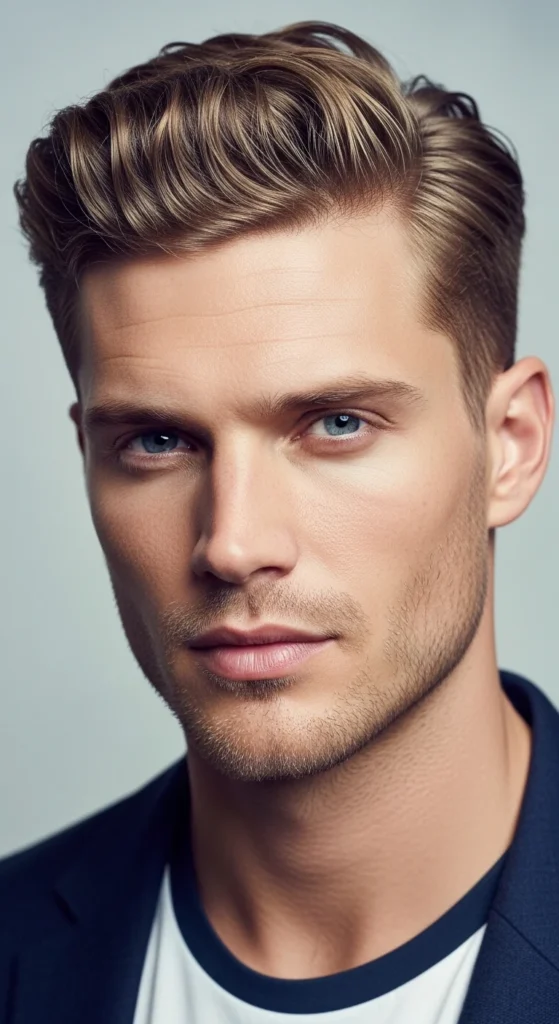
The quiff adds height at the front while keeping the rest relatively short. This style elongates round faces and adds polish to any look. The wavy texture makes the quiff look modern rather than retro.
Best for wave types 2A and 2B. Works especially well on round and oval faces. Ask your barber for a short quiff with tapered sides. Keep the front long enough to lift up. Blow dry the front section upward using a round brush for volume. Finish with a light hold pomade or styling cream.
7. Wavy Ivy League
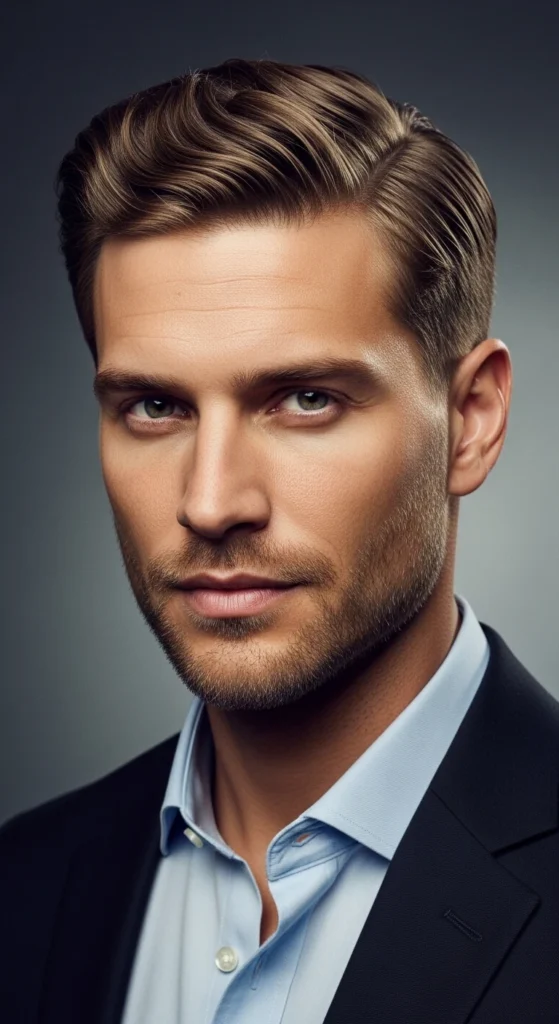
This preppy classic features a side part with slightly more length on top and neatly tapered sides. The wave texture updates the look and keeps it from feeling stiff or old-fashioned.
Best for wave types 2A and 2B. Works on oval and square faces. Ask your barber for an Ivy League cut with a side part. Keep the top long enough to comb over. Style with a light pomade for control and natural shine.
8. Wavy Crew Cut
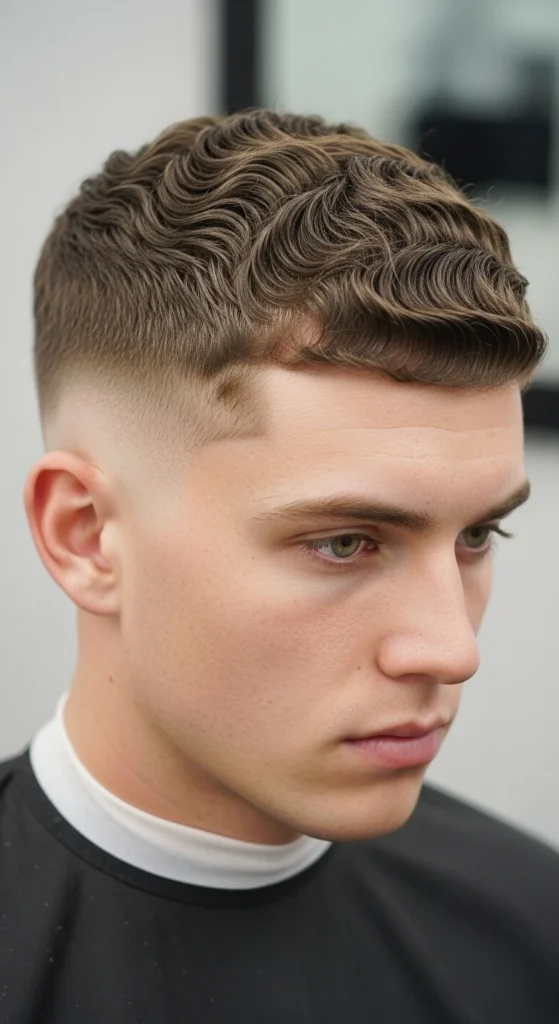
Similar to the buzzcut but with slightly more length on top. The wave texture creates natural volume and movement that straight hair cannot achieve at this length.
Best for wave types 2B and 2C. Works on all face shapes. Ask your barber for a crew cut that leaves enough length to show your wave pattern. Air dry and use a tiny amount of texture cream if needed.
9. Textured Wavy Fringe
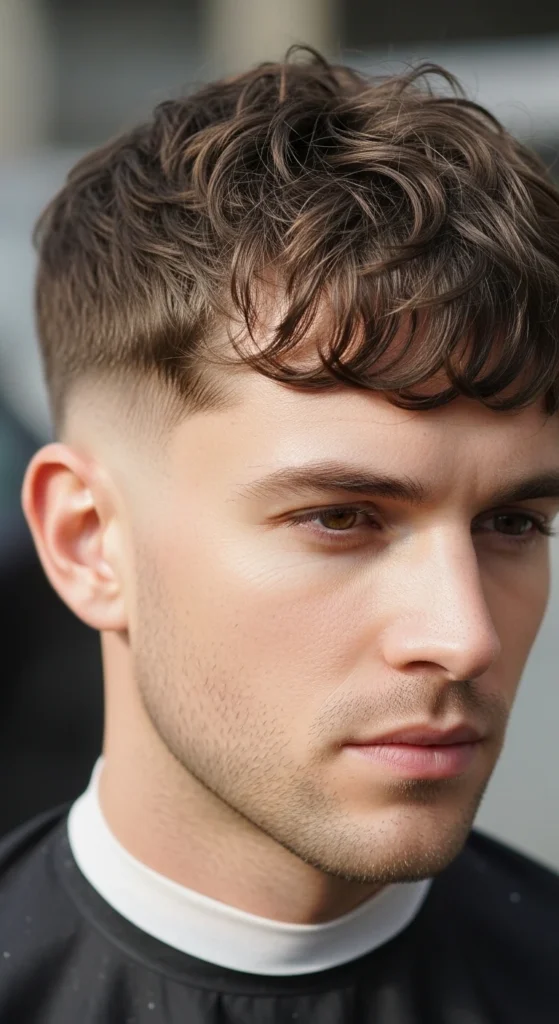
This style keeps the fringe longer and styled forward while the sides stay faded. It frames the face and draws attention to the eyes. The wavy texture prevents the fringe from looking heavy or helmet-like.
Best for wave types 2A through 2C. Works on oval, square, and heart-shaped faces. Ask your barber for a textured fringe with a mid fade on the sides. Keep the fringe point cut for movement. Style forward with sea salt spray on damp hair. Scrunch and let air dry.
10. Wavy Side Part with Short Sides
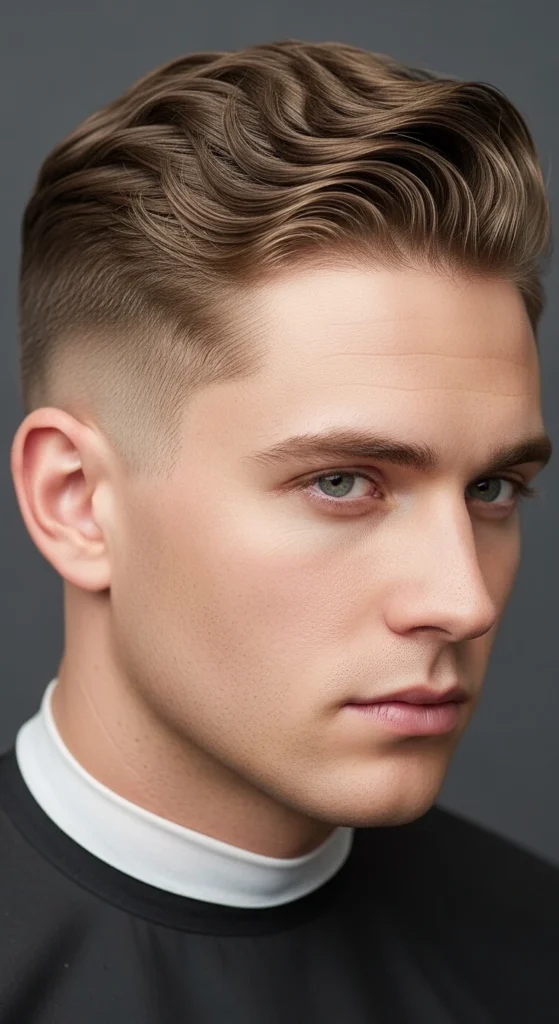
A clean side part with short faded sides creates a polished look that works anywhere. The wave texture adds interest without making the style feel messy.
Best for wave types 2A and 2B. Works on oval and square faces. Ask your barber for a classic side part with a low taper fade. Create the part while hair is damp. Blow dry using a brush to smooth the top while preserving wave pattern.
11. Short Wavy Undercut
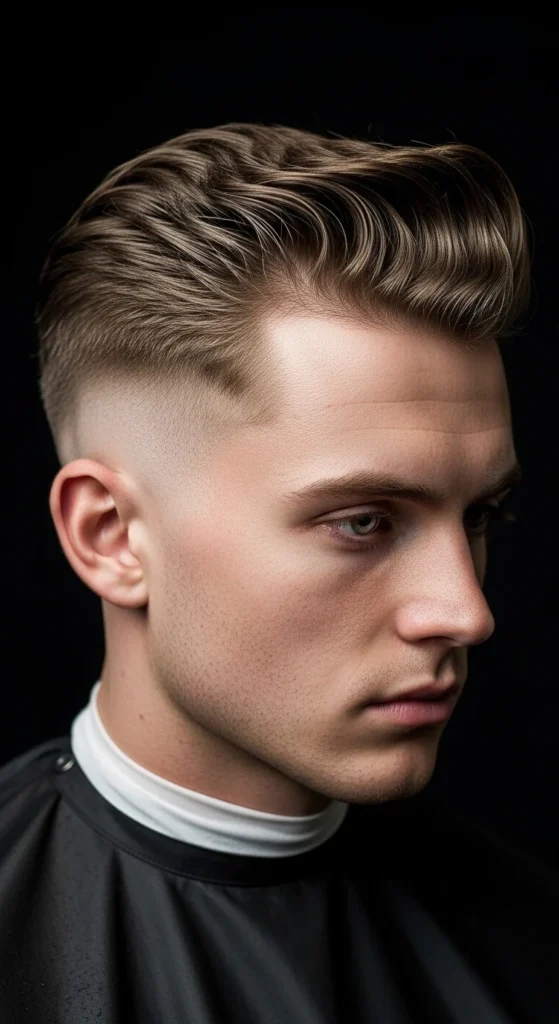
The undercut creates dramatic contrast between longer wavy hair on top and closely shaved or faded sides. This edgy look showcases your natural texture boldly.
Best for wave types 2B and 2C. Works on oval and square faces. Ask your barber for a disconnected undercut with length on top. Keep the sides at a low guard or skin fade. Style with sea salt spray and matte clay for piece-y definition.
12. Wavy Crop with Burst Fade
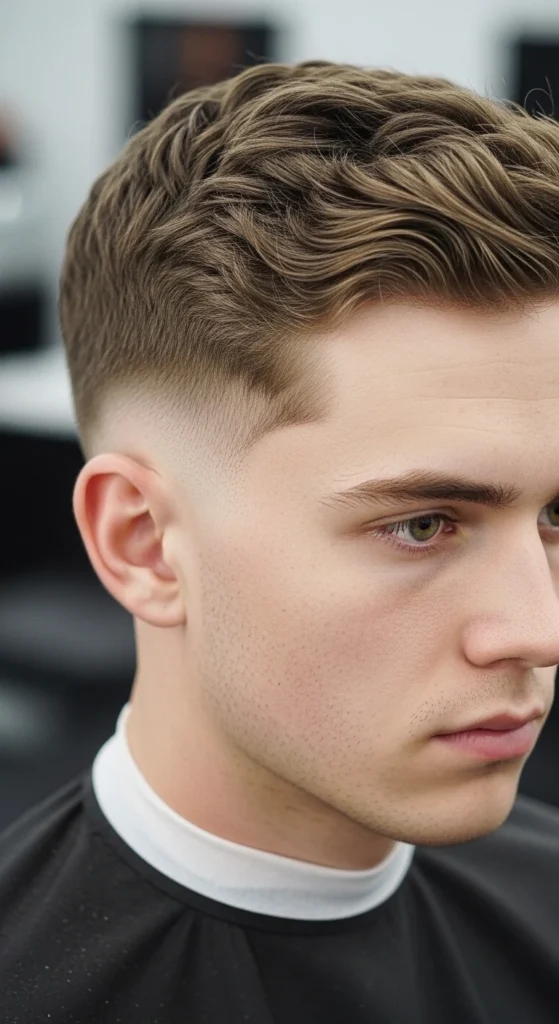
The burst fade curves around the ear in a rounded shape rather than a straight line. Combined with a textured crop on top, this creates one of the most modern looks in barbering right now.
Best for wave types 2A through 2C. Works on all face shapes. Ask your barber for a textured crop with a burst fade around the ears. This fade requires a skilled barber, so check their portfolio first. Style with matte paste worked through damp hair.
13. The Wavy Flow (Bro Flow)
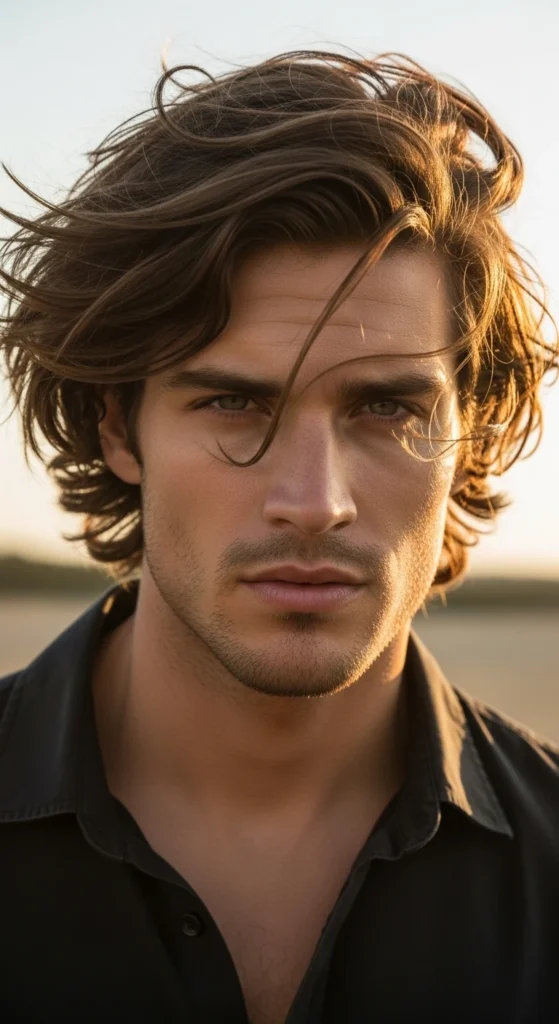
This is the signature medium-length wavy style. Hair falls back and away from the face with natural movement. It looks effortless but actually requires the right cut to work properly. According to trend reports from The Body Optimist, the bro flow and wolf cut are dominating men’s hair trends in 2026.
Best for wave types 2A through 2C. Works best on oval and oblong faces. Ask your barber for a layered flow cut that follows your wave pattern. Keep the sides blended but not faded. Style by applying sea salt spray to damp hair. Scrunch and either air dry or diffuse on low heat while pushing hair back with your fingers.
14. Wavy Curtain Bangs
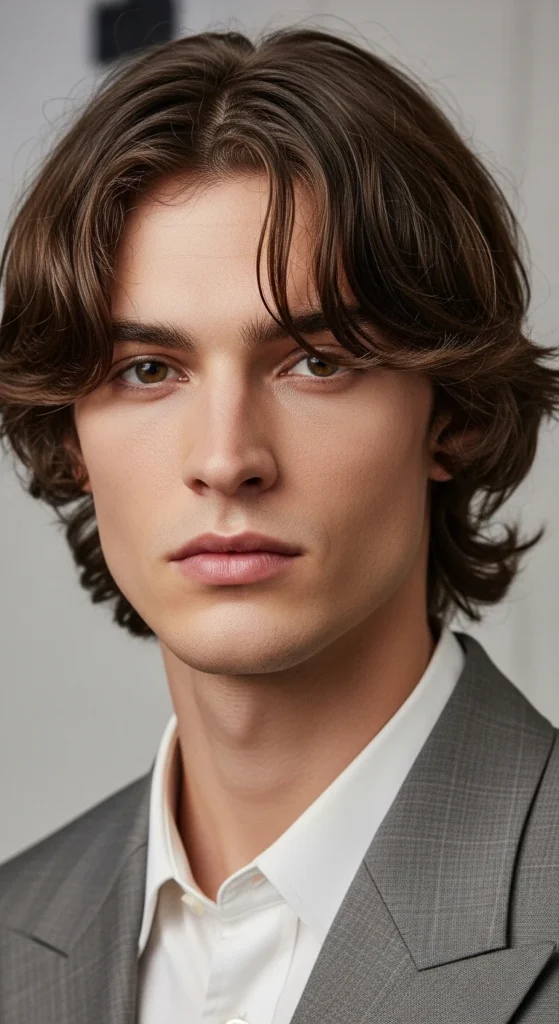
This nineties revival features a center part with hair falling to both sides and framing the face. The wave texture makes curtain bangs look soft and intentional rather than greasy or flat.
Best for wave types 2A through 2C. Works on oval, heart, and square faces. Ask your barber for curtain bangs with a center part. Keep length around cheekbone level. Style by applying leave-in conditioner to damp hair. Create the center part and let air dry, using fingers to guide hair away from the face.
15. Wavy Shag
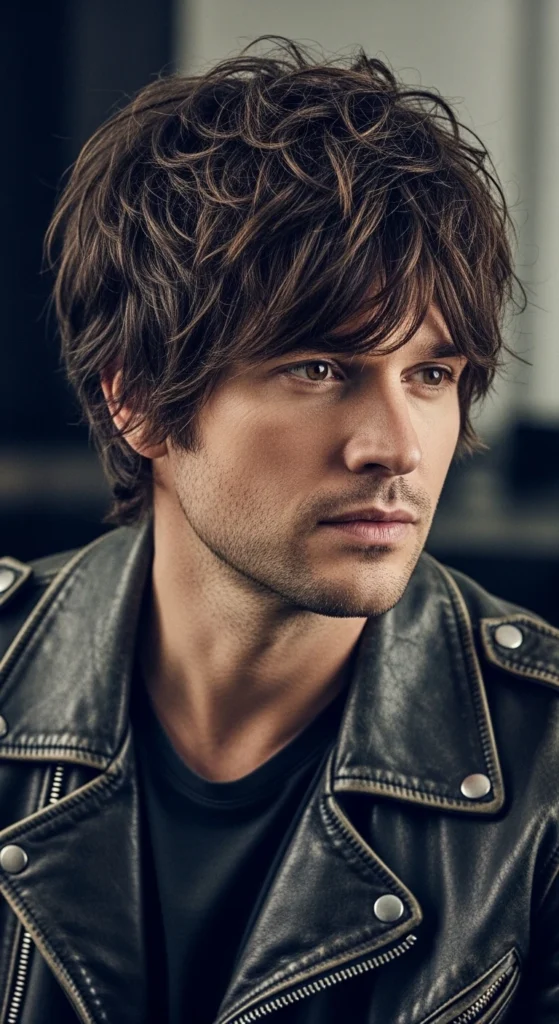
The shag cut uses choppy layers throughout to enhance natural wave patterns. This rock and roll inspired look has tons of movement and texture. It works especially well for thicker wavy hair that needs bulk removal.
Best for wave types 2B and 2C. Works on square and oval faces. Ask your barber for a shag cut with lots of texture and movement. Request point cutting rather than blunt lines. Style by rough drying with fingers, scrunching to enhance waves. Texture spray adds extra definition.
16. Wavy Mod Cut
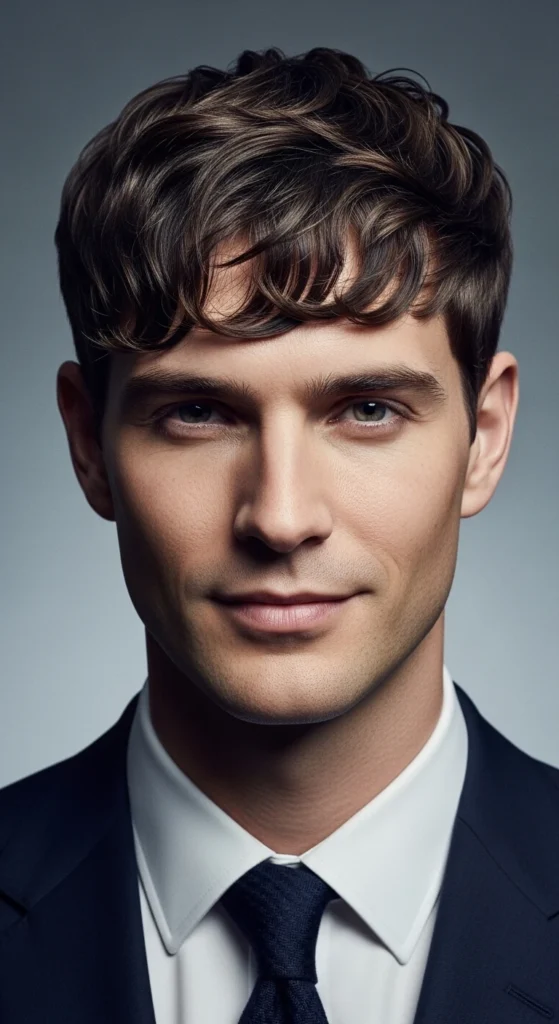
This retro British style features shorter sides and back with longer textured layers on top. The fringe falls forward and splits into soft pieces. It looks clean but has personality.
Best for wave types 2A and 2B. Works on oval and heart-shaped faces. Ask your barber for a mod cut with textured fringe and tapered sides. Blow dry while lifting at the roots for volume. Texture powder at the crown keeps the lift all day.
17. Modern Wavy Mullet
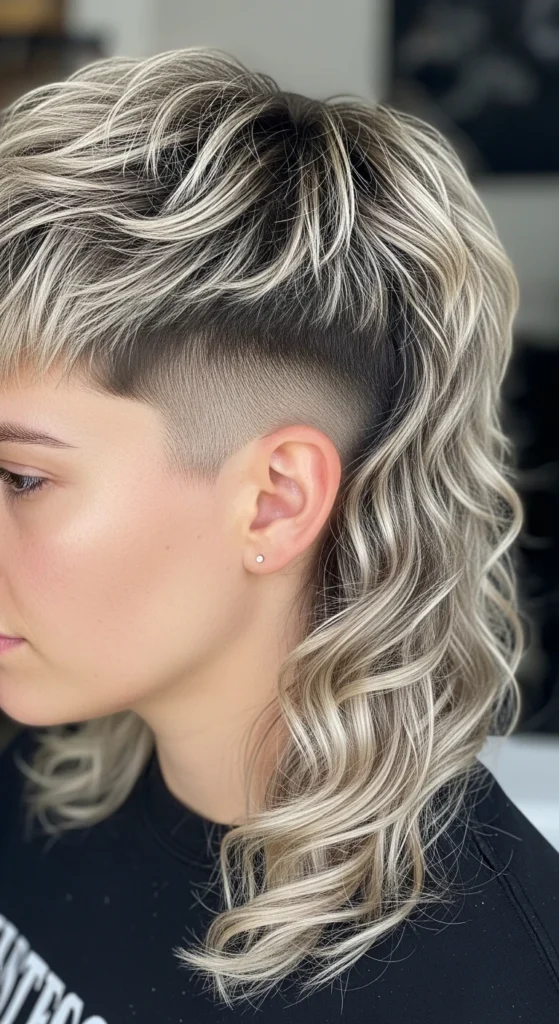
The mullet is back but different. Today’s version features blended sides rather than shaved sides, with texture through the back rather than a blunt shelf. It is more wearable than the eighties version.
Best for wave types 2B and 2C. Works on oval and square faces. Ask your barber for a modern mullet with blended sides and textured back. Keep the transition gradual. Style with sea salt spray scrunched into damp hair. Air dry for natural texture.
18. Wavy Wolf Cut
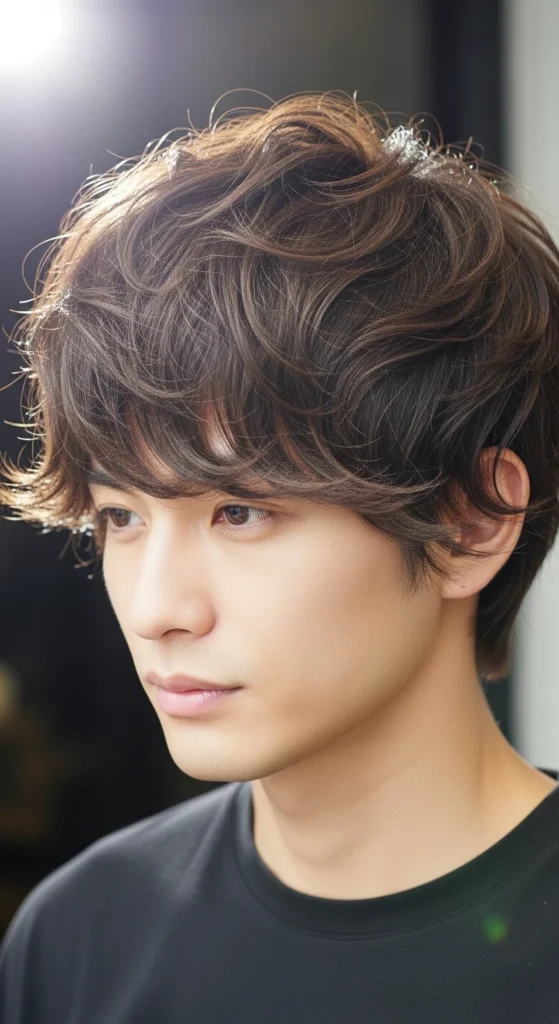
The wolf cut combines elements of the shag and the mullet. It features lots of choppy layers, volume at the crown, and wispy ends that flip outward. This cut is trending heavily on social media and in salon requests for 2026.
Best for wave types 2B and 2C. Works on oval and heart-shaped faces. Ask your barber for a wolf cut with heavy layering and textured ends. This cut requires a stylist comfortable with razor or slide cutting. Style with texture powder for lift at the roots. Scrunch ends outward.
19. Wavy Pompadour
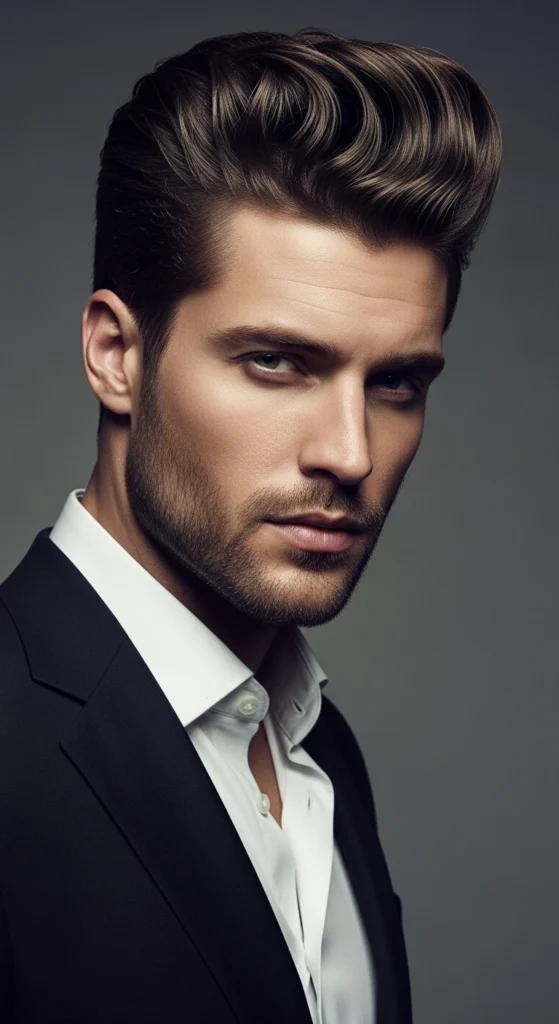
The pompadour creates dramatic height at the front while keeping the sides clean. The wave texture makes this classic style look modern rather than greaser retro.
Best for wave types 2A and 2B. Works on round and oval faces. Ask your barber for a pompadour with tapered or faded sides. Keep significant length at the front. Apply volumizing mousse to damp hair. Blow dry the front upward and back using a round brush. Finish with strong hold pomade.
20. Wavy Slick Back
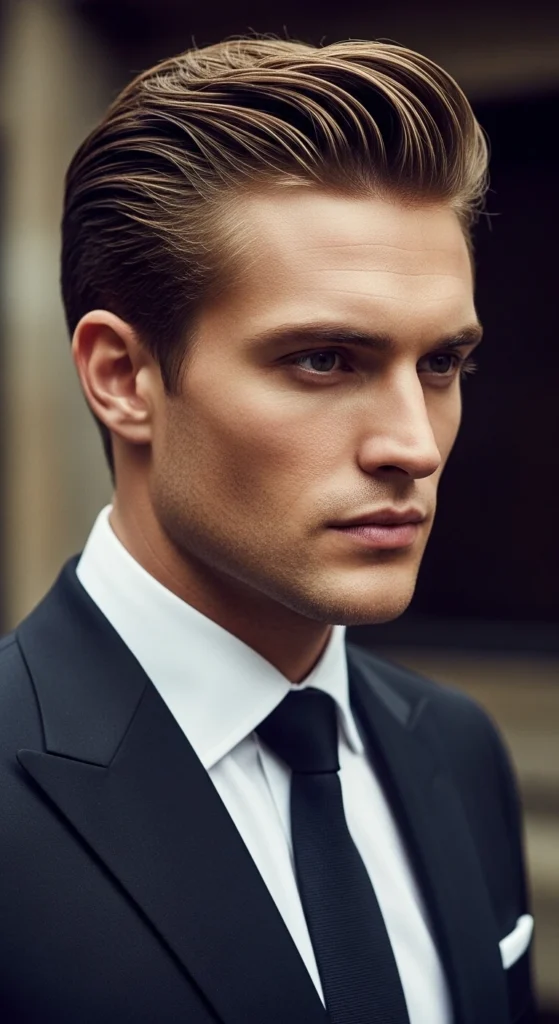
This sophisticated style pulls hair straight back while still showing off natural wave texture. It works for both casual and formal settings. The key is keeping the look sleek without crushing the waves. For the full family of backward-styled looks, see the slick back guide.
Best for wave types 2A through 2C. Works on oval and square faces. Ask your barber for a slick back cut with tapered sides. Keep enough length on top to pull back. Apply smoothing cream to damp hair. Comb backward while blow drying. Finish with light pomade for control and natural shine.
21. Wavy Side Sweep
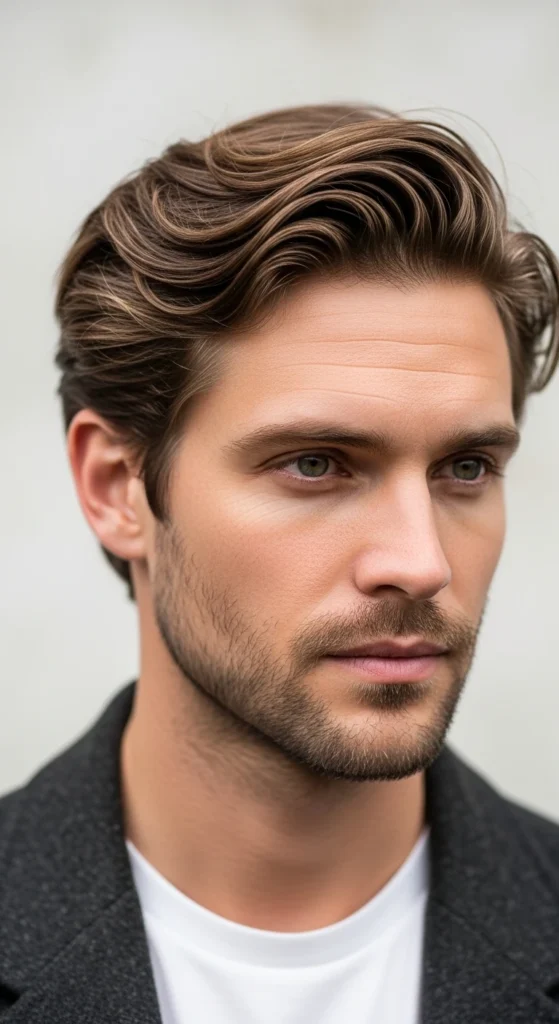
Hair is styled to one side, often partially covering part of the forehead. The wave pattern creates movement and prevents the style from looking flat or severe.
Best for wave types 2A and 2B. Works on oval and heart-shaped faces. Ask your barber for a side swept style with a low fade. Keep length on top to sweep over. Apply sea salt spray to damp hair. Use fingers to direct hair to one side while drying.
22. Wavy Textured Bob
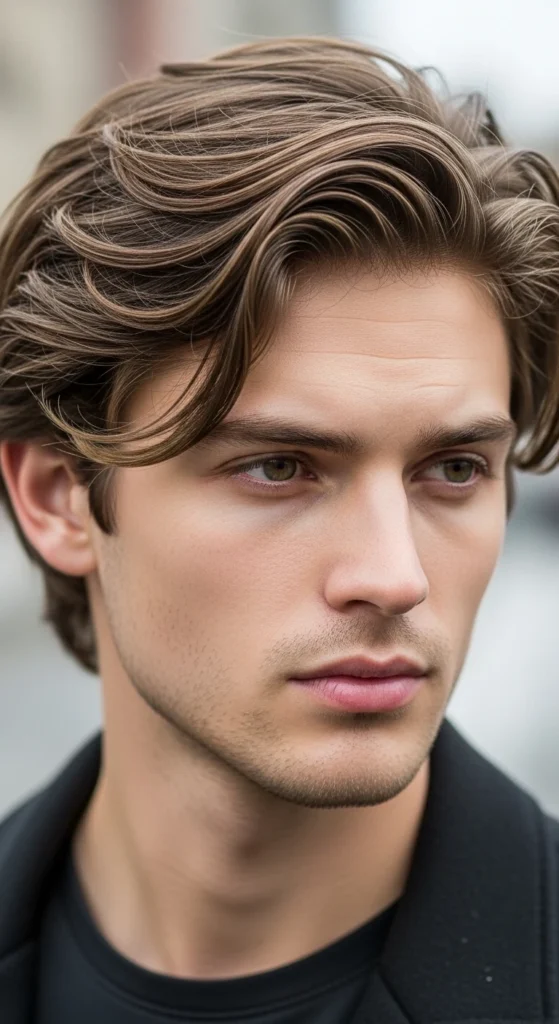
This fashion-forward cut falls between the jaw and chin. Layers throughout enhance wave patterns and add movement. It makes a statement while still being wearable.
Best for wave types 2B and 2C. Works on oval and square faces. Ask your barber for a textured bob length that hits at jaw level. Point cut the ends for softness. Style with styling cream on damp hair. Tousle gently for lived-in texture.
23. Wavy Faux Hawk
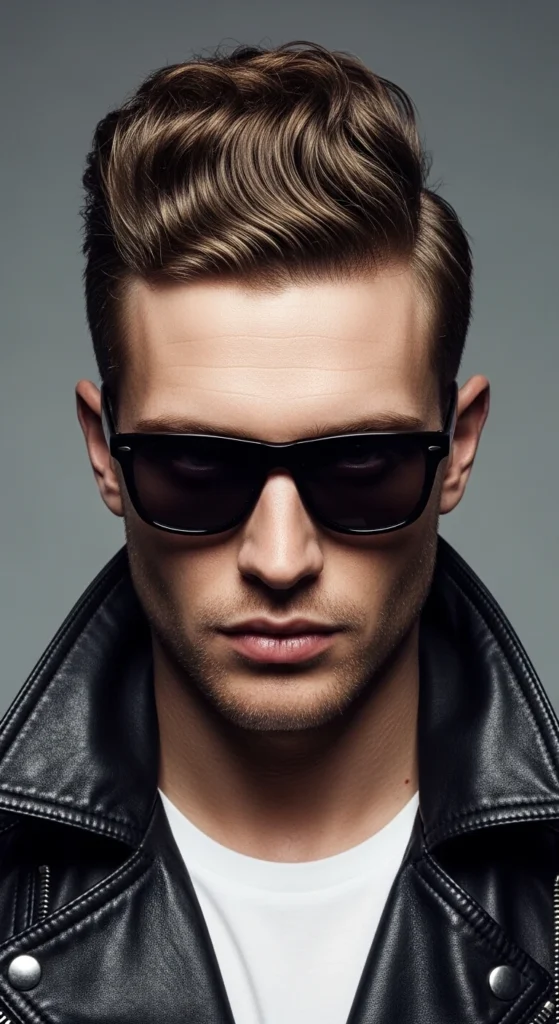
Longer hair on top styled upward toward the center creates a subtle mohawk effect. The sides stay shorter but not buzzed. This style adds height and edge without being extreme.
Best for wave types 2B and 2C. Works on oval and round faces. Ask your barber for a faux hawk with faded sides. Keep the center strip longer. Blow dry hair upward, focusing volume in the center. Use firm hold pomade to shape.
24. Wavy Quiff Fade
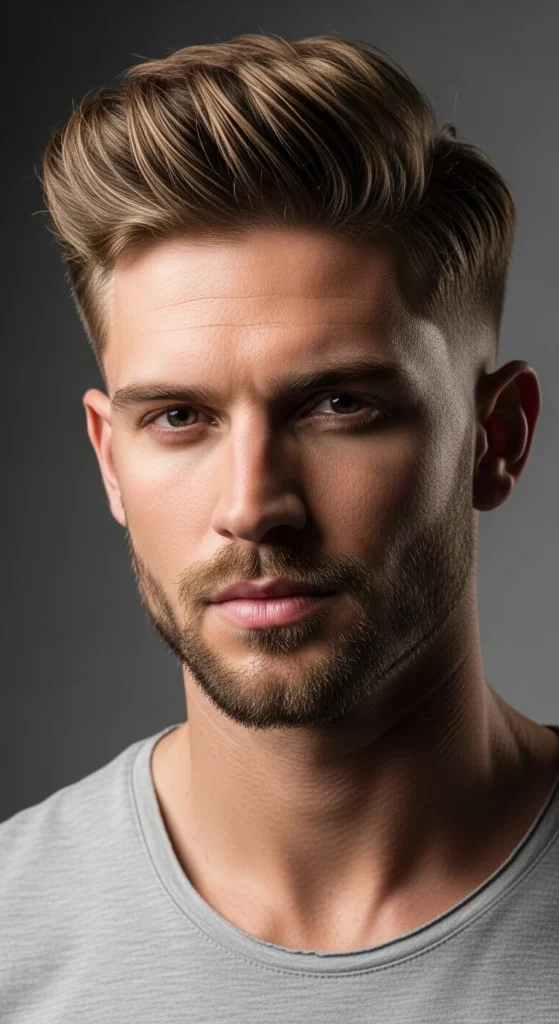
The quiff fade combines a textured quiff on top with faded sides for high contrast. Natural waves add volume and interest to the quiff portion.
Best for wave types 2A and 2B. Works on round and oval faces. Ask your barber for a quiff with a mid or high fade. Keep the front longer. Blow dry upward and backward using a round brush. Work in matte clay for texture and hold.
25. Wavy Messy Fringe
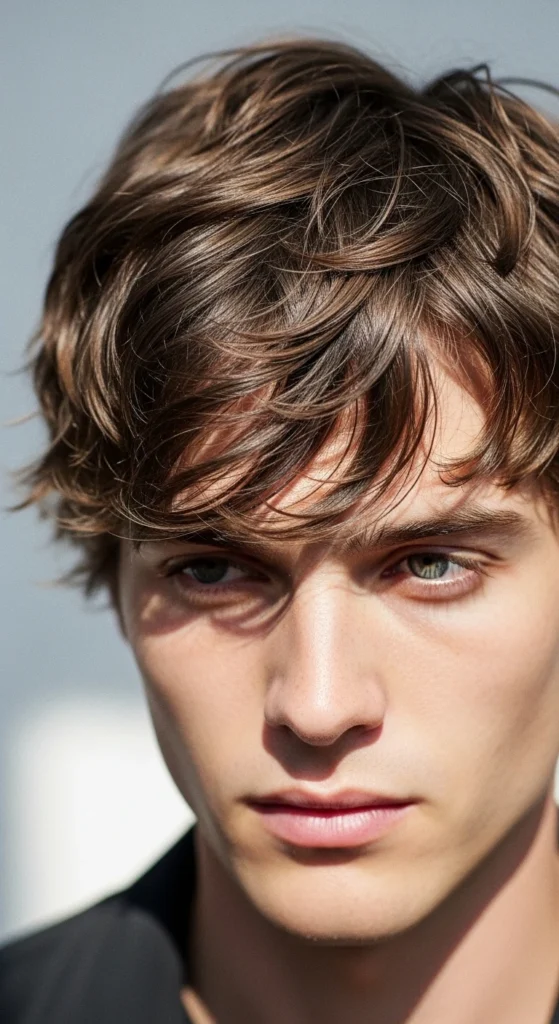
Longer hair on top styled forward creates a tousled fringe. This style embraces the bedhead look intentionally. The wave texture makes it look effortless rather than sloppy. See the full messy fringe guide for more variations.
Best for wave types 2B and 2C. Works on oval and square faces. Ask your barber for a messy fringe with textured top and tapered sides. Enhance texture with matte paste. Tousle and arrange fringe for a messy but intentional finish.
26. Wavy Middle Part
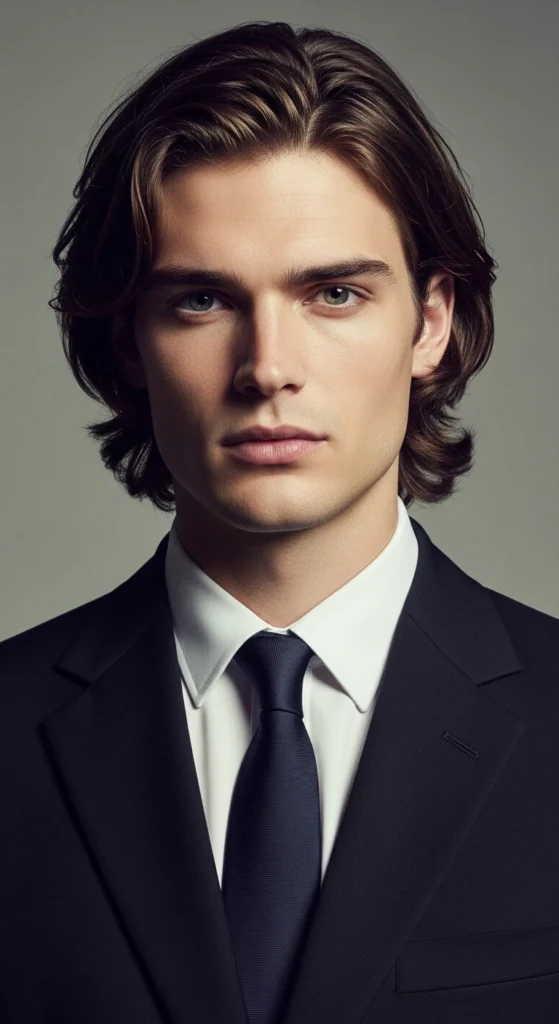
A center part with medium length creates symmetrical framing. The wave texture adds softness and prevents the look from feeling severe or dated. For more center-parted inspiration, see the middle part haircuts for men guide.
Best for wave types 2A and 2B. Works on oval and heart-shaped faces. Ask your barber for a medium length cut with a center part. Keep layers minimal. Create the part on damp hair. Let air dry or diffuse, using fingers to guide hair away from the part.
27. Wavy Mop Top
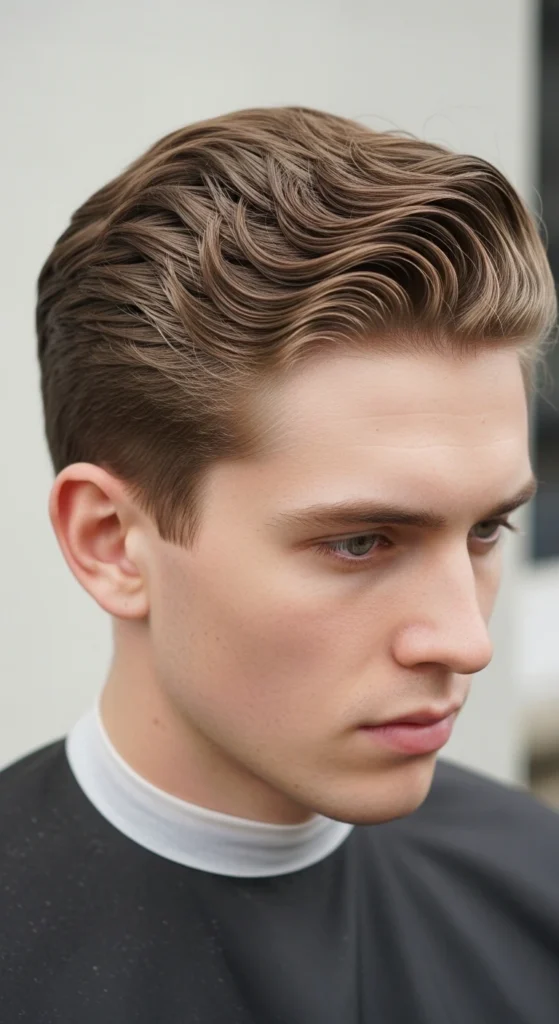
This seventies revival features a full, rounded shape with texture throughout. It works especially well for thick wavy hair that can hold the silhouette.
Best for wave types 2B and 2C. Works on oval and square faces. Ask your barber for a mop top with lots of texture and a rounded shape. Keep the perimeter soft. Style with sea salt spray and scrunch while drying.
28. Shoulder Length Waves
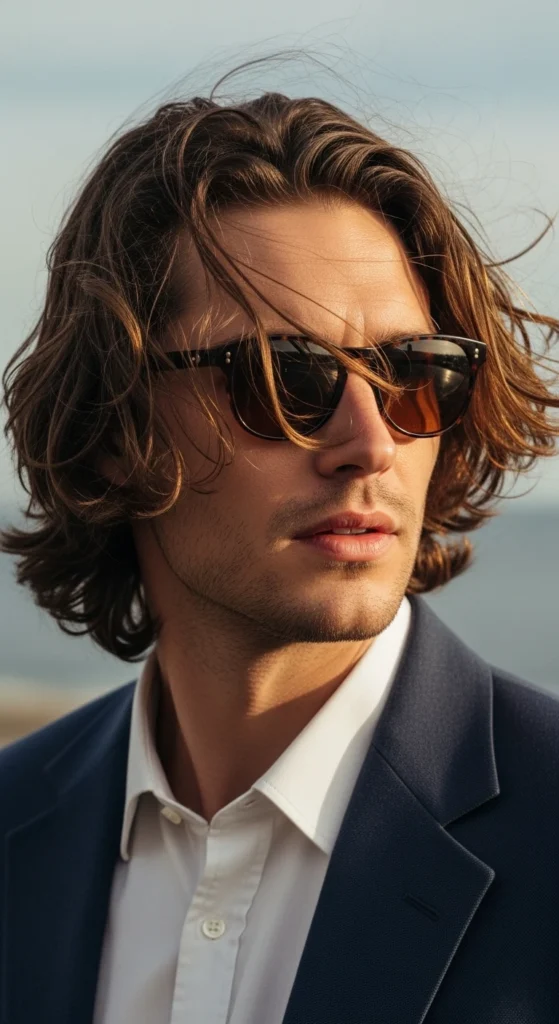
This is the classic long wavy style. Hair falls freely to or past the shoulders, allowing natural wave patterns to flow. It requires patience to grow out but offers maximum versatility.
Best for all wave types. Works on oval and oblong faces. Ask your barber for long layers that remove weight while preserving length. Regular trims every eight weeks prevent split ends. Apply leave-in conditioner to damp hair. Air dry or diffuse on low heat. Consider protective styles like loose braids for sleeping.
29. Long Layered Waves
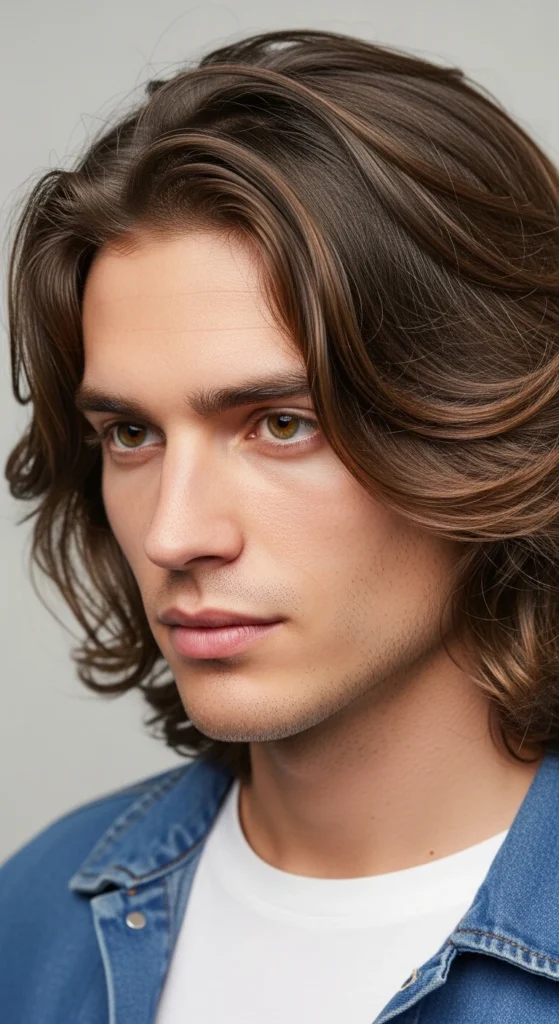
Layers throughout long hair reduce bulk and enhance natural wave patterns. Without layers, long thick wavy hair becomes heavy and pulls waves straight. Layers solve this problem.
Best for wave types 2B and 2C. Works on oval and square faces. Ask your barber for long layers that start around chin level. Keep the overall length. Apply curl cream to damp hair. Scrunch and air dry or diffuse. The layers will spring up and create natural volume.
30. Man Bun with Wavy Texture
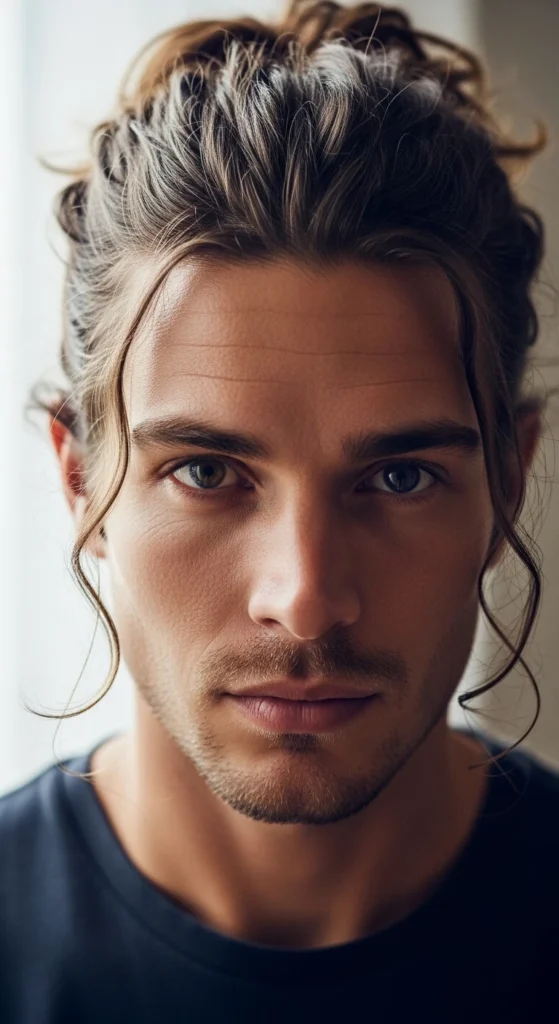
Pulling long wavy hair back into a man bun keeps it off your face while still showing off texture. This practical style works for both casual and formal settings depending on how neat you make it.
Best for all wave types. Works on all face shapes with proper bun placement. Ask your barber to maintain your length while cleaning up the neckline and around ears. Apply smoothing cream to damp hair. Gather at desired height and secure with a fabric elastic rather than rubber bands. Leave a few face-framing pieces out for a softer look.
31. Long Wavy Quiff
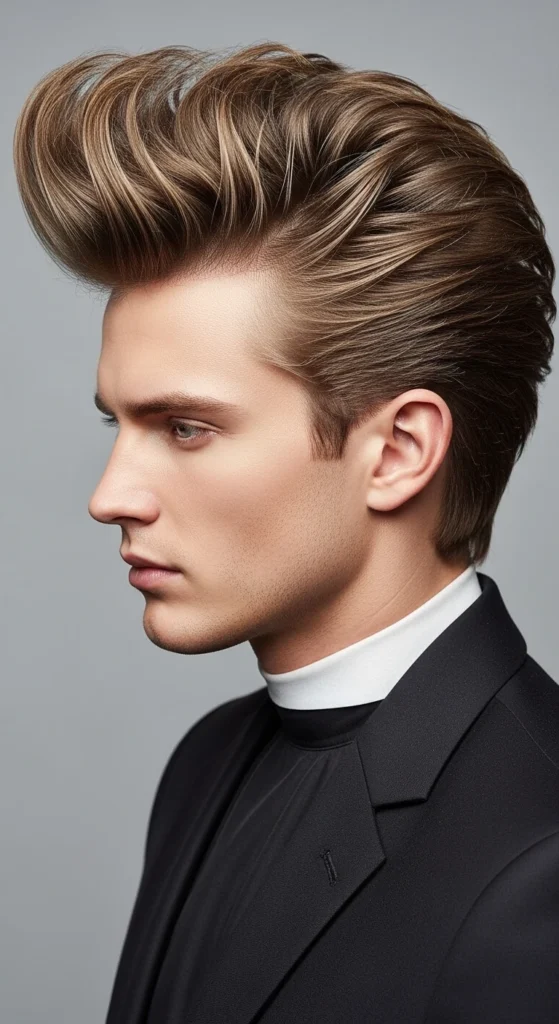
This combines the volume of a quiff with the length of flowing hair. The front section is styled up and back while the rest flows freely. It creates dramatic height and movement.
Best for wave types 2A and 2B. Works on oval and round faces. Ask your barber for long layers with extra length at the front. Blow dry the front section upward using a round brush. Set with strong hold hairspray. The back can air dry naturally.
32. Surfer Waves
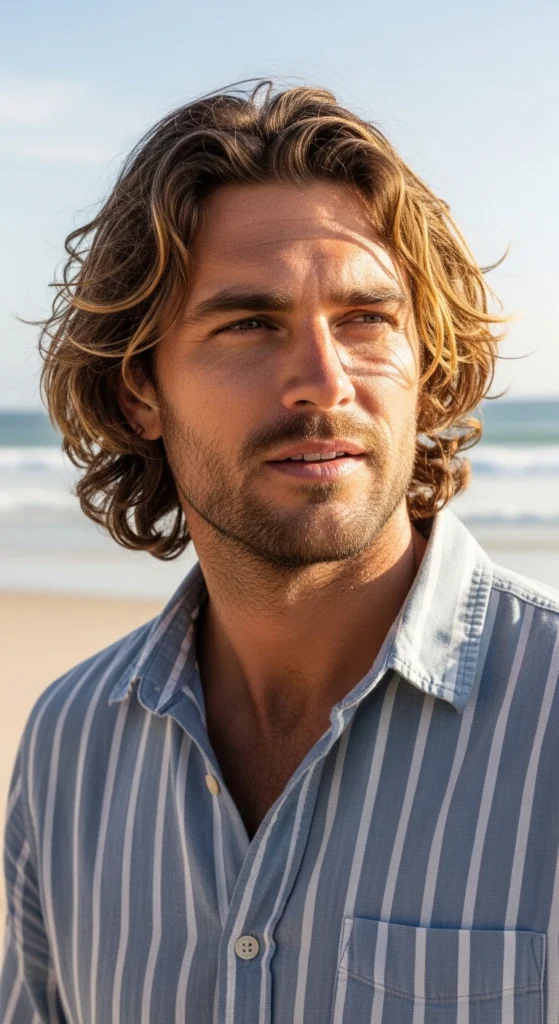
This laid-back style embraces natural texture for a beach-inspired look. Tousled and effortless, it looks like you just came from the ocean. It works best on medium to long hair.
Best for wave types 2A through 2C. Works on oval and square faces. Ask your barber for long layers with texture throughout. Apply sea salt spray generously to damp hair. Scrunch and let air dry completely. A small amount of texturizing paste on the ends adds definition.
33. Long Side Part
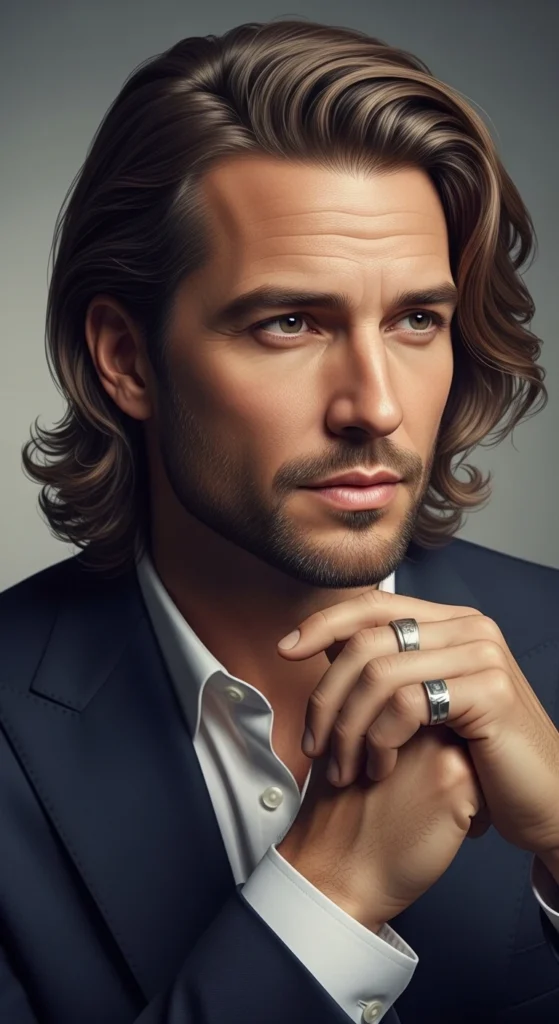
A deep side part with long flowing waves creates a polished look that still feels relaxed. This style works for both professional and casual environments.
Best for wave types 2A and 2B. Works on oval and square faces. Ask your barber for long layers with a defined side part. Keep enough length to sweep across. Create the part while hair is damp. Blow dry using a paddle brush for smoothness. Finish with light hold pomade.
34. Wavy Shag with Curtain Bangs
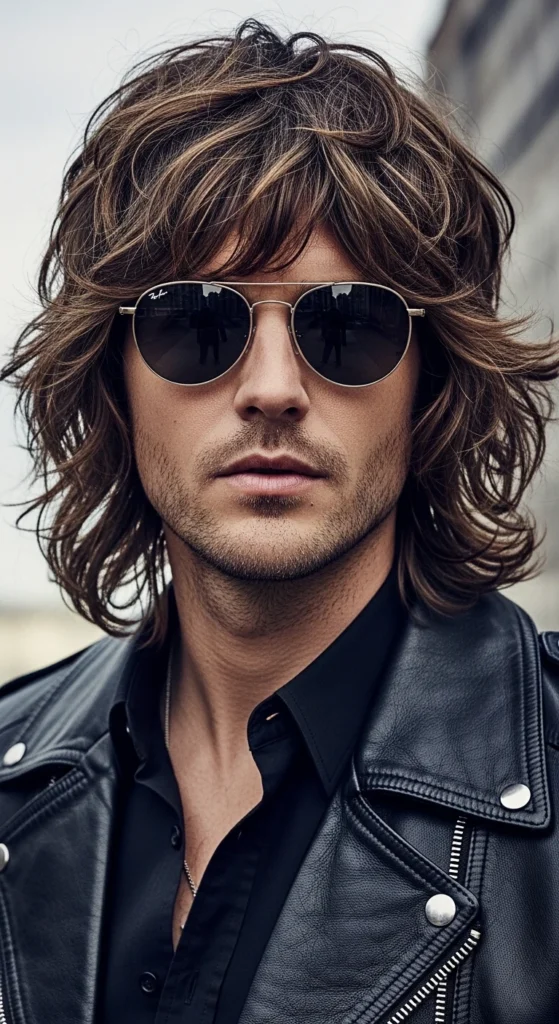
This combines two trending elements. The shag layers create movement throughout while curtain bangs frame the face. It is a very intentional seventies-inspired look.
Best for wave types 2B and 2C. Works on oval and heart-shaped faces. Ask your barber for a shag cut with curtain bangs. Keep lots of texture and movement. Style curtain bangs with a small round brush while blow drying. Scrunch the rest with sea salt spray.
35. Long Slicked Back
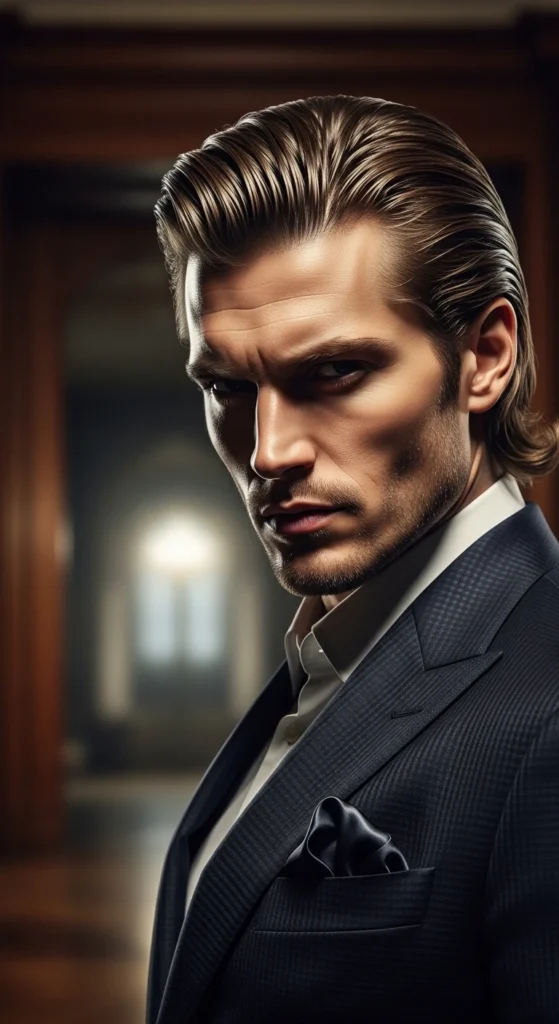
A sleek sophisticated style for formal occasions. Hair is styled backward while still maintaining some natural wave texture for interest.
Best for wave types 2A through 2C. Works on oval and square faces. Ask your barber for a long cut with enough length to pull back smoothly. Apply smoothing serum to damp hair. Comb backward while blow drying. Finish with strong hold pomade for shine and control.
36. Textured Ponytail
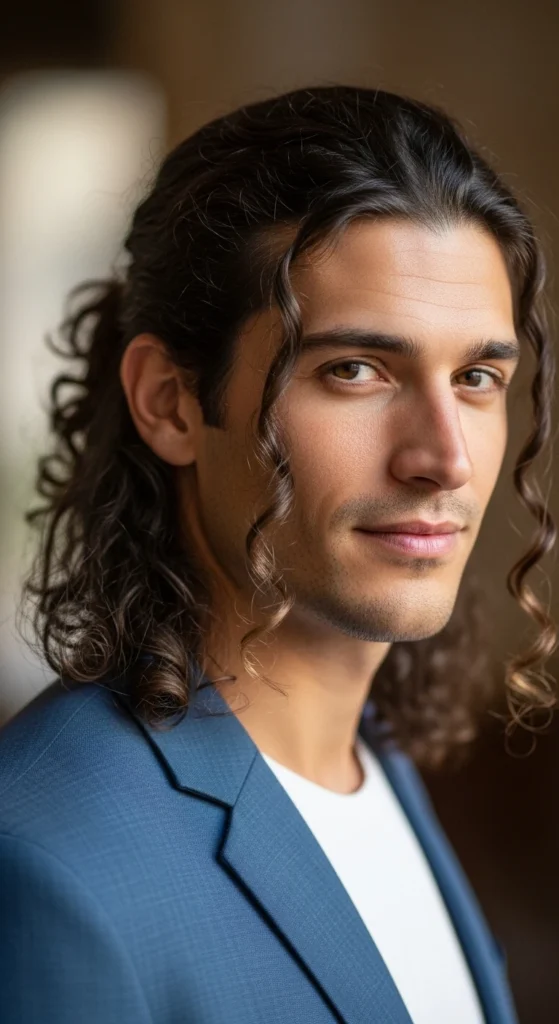
A practical option for long wavy hair that keeps hair secured while showcasing natural texture. It works for the gym, casual days, and even dressed up occasions.
Best for all wave types. Works on all face shapes. Ask your barber to maintain length while cleaning up the hairline. Gather hair at desired height and secure with a fabric elastic. Pull out a few pieces around the face for softness. Texture powder at the roots adds volume at the crown.
37. Long Wavy Undercut
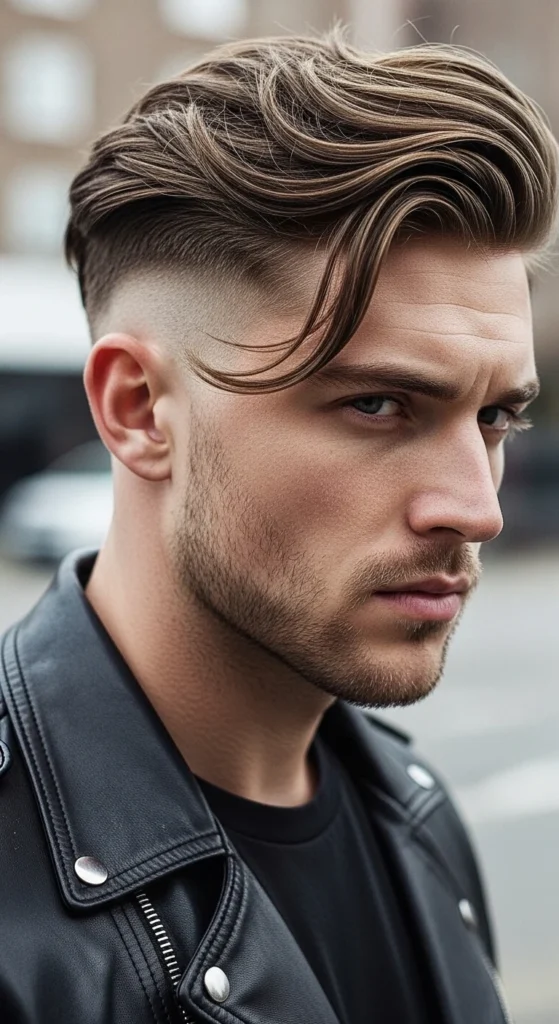
This edgy style features long wavy hair on top with shaved or very short sides. It creates bold contrast and allows for versatile styling of the top section. You can wear it down, in a bun, or half up.
Best for wave types 2A through 2C. Works on oval and square faces. Ask your barber for a disconnected undercut with long length on top. Decide whether you want a hard part or blended transition. Allow the top section to air dry or diffuse for natural texture. Matte paste enhances definition.
38. Messy Half Up Bun
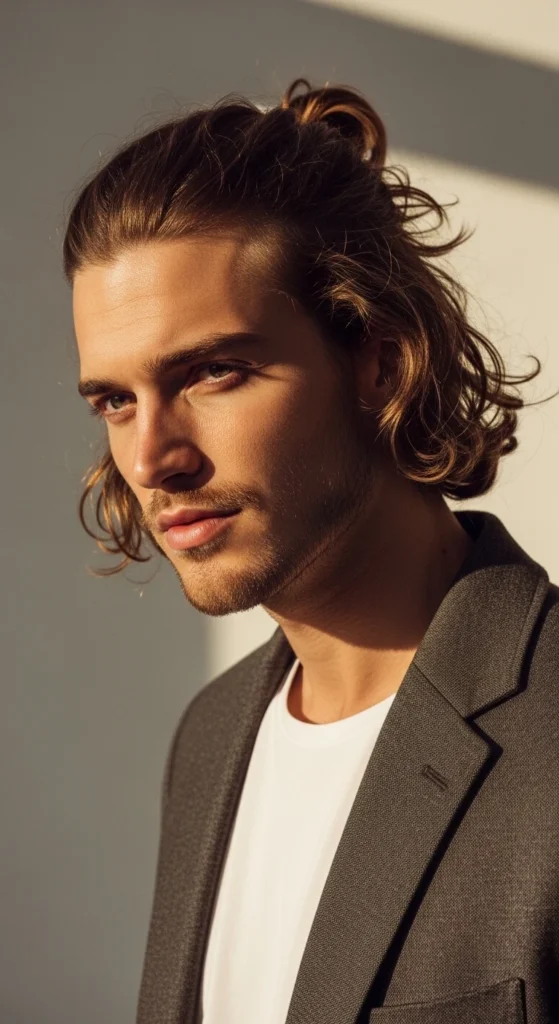
The top section of hair is pulled back while the bottom flows freely with natural wave texture. This style is relaxed but intentional. It keeps hair out of your face while still showing off length and waves.
Best for all wave types. Works on all face shapes. Apply leave-in conditioner to damp hair and let air dry partially. Gather the top section from temples upward. Secure loosely with an elastic. Pull out a few face-framing pieces. The contrast between pulled back and flowing sections looks effortlessly cool.
39. Classic Wavy Side Part (Formal)
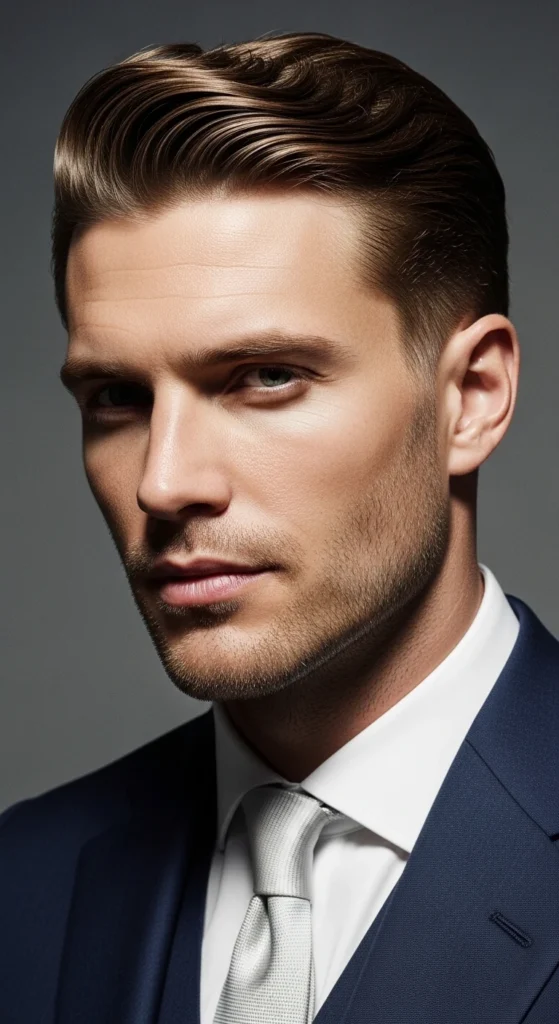
A polished version of the side part with smoothed but visible waves. This is the go-to for interviews, weddings, and any occasion requiring a put-together appearance.
Best for wave types 2A and 2B. Works on oval and square faces. Ask your barber for a classic side part with a low taper. Keep enough length to comb over neatly. Apply smoothing cream to damp hair. Create a defined part with a comb. Blow dry using a brush for smoothness. Finish with medium hold pomade.
40. Slicked Back Waves (Formal)
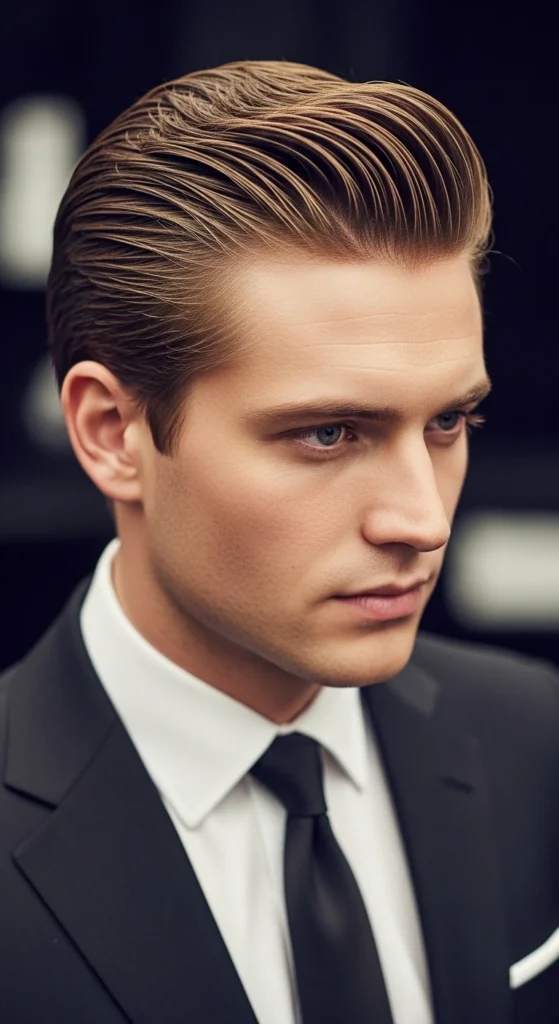
This sleek style maintains wave texture while presenting a formal appearance. It works with suits and ties but also with sharp casual wear.
Best for wave types 2A through 2C. Works on oval and square faces. Ask your barber for a cut with tapered sides and length on top to pull back. Work strong hold gel or pomade from roots to ends. Use a fine-toothed comb to smooth and shape. The waves should still be visible beneath the sleek surface.
41. Formal Wavy Quiff
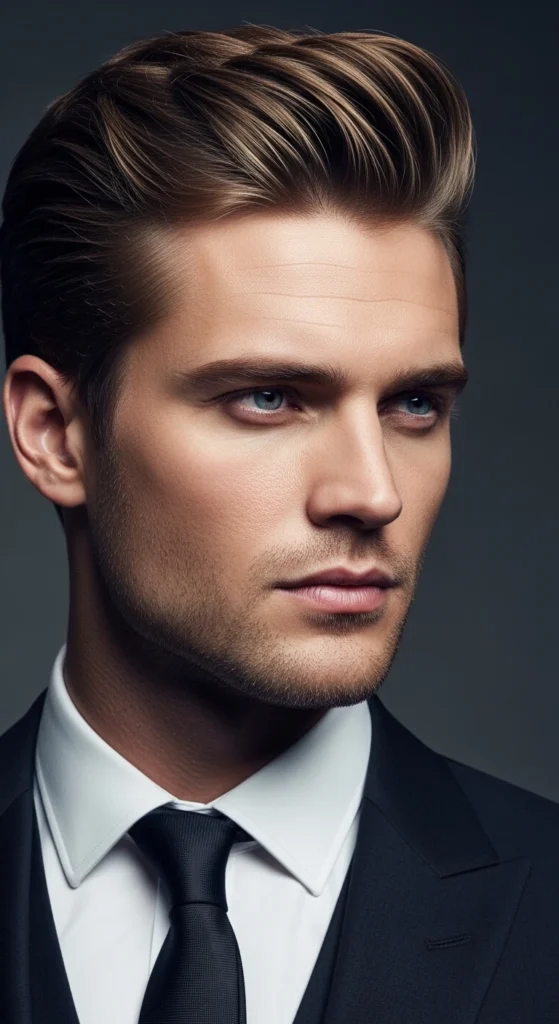
A more structured version of the casual quiff. Height and volume are maintained while keeping a neat, controlled appearance. This works beautifully for formal events where you want some personality without looking messy.
Best for wave types 2A and 2B. Works on oval and round faces. Ask your barber for a quiff with a clean taper on the sides. Apply volumizing mousse to damp hair. Blow dry the front upward using a round brush. Use matte pomade to shape. Finish with medium hold hairspray.
42. Neat Wavy Crop (Professional)
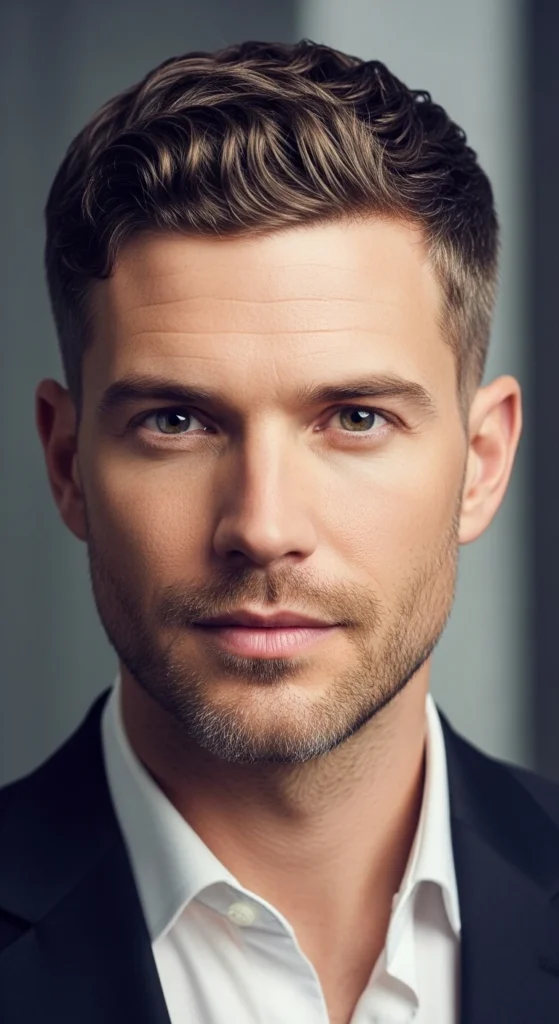
A shorter style that works well in conservative environments. The sides are neatly trimmed while the top keeps textured waves that show personality without being flashy.
Best for wave types 2A and 2B. Works on all face shapes. Ask your barber for a short crop with a low fade. Keep the top long enough to show wave but short enough to stay tidy. Apply light styling cream to damp hair. Blow dry using fingers to enhance natural texture while keeping the overall shape neat.
43. Messy Wavy Crop
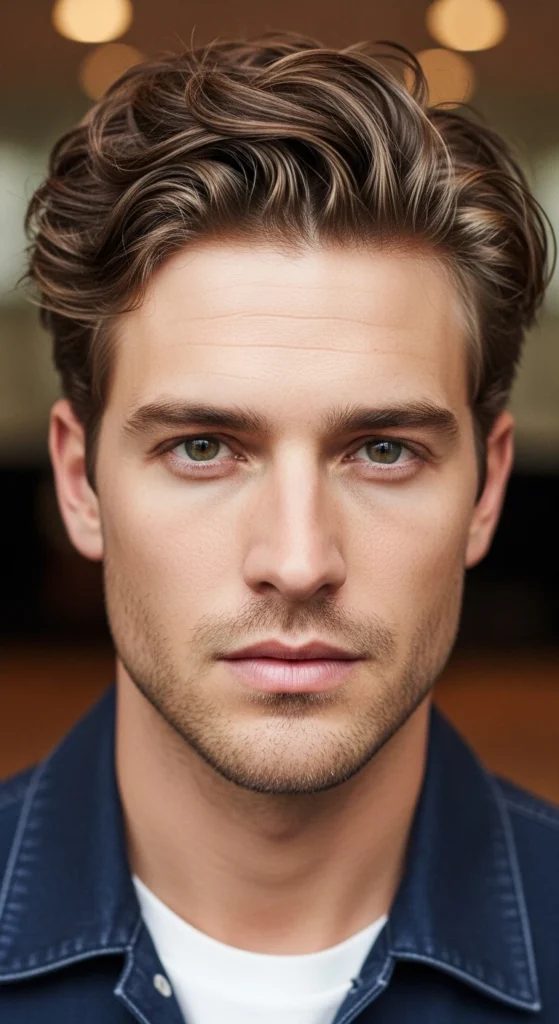
This short textured style embraces natural wave patterns for an effortless tousled look. It says you care about your appearance but not too much.
Best for wave types 2A and 2B. Works on all face shapes. Ask your barber for a textured crop with a low fade. Use a small amount of matte paste. Tousle with fingers for a messy finish. This style looks best when it is not overworked.
44. Relaxed Side Part
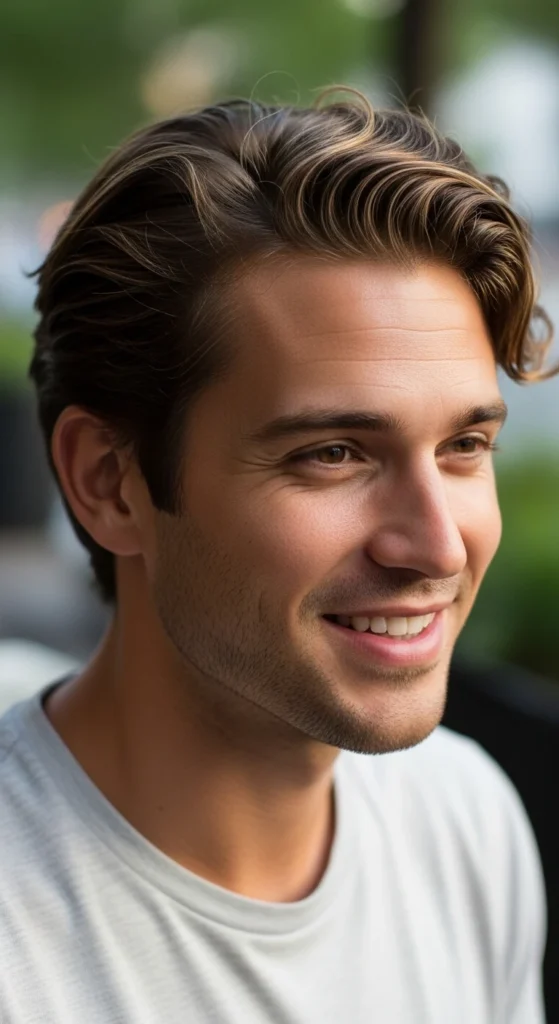
A casual take on the side part. The part is looser and more natural, allowing hair to fall freely while still having some structure.
Best for wave types 2A and 2B. Works on oval and square faces. Ask your barber for a medium cut with a soft side part. Apply leave-in conditioner to damp hair. Create a loose part with fingers rather than a comb. Air dry or diffuse on low heat for natural movement.
45. Tousled Surfer Waves
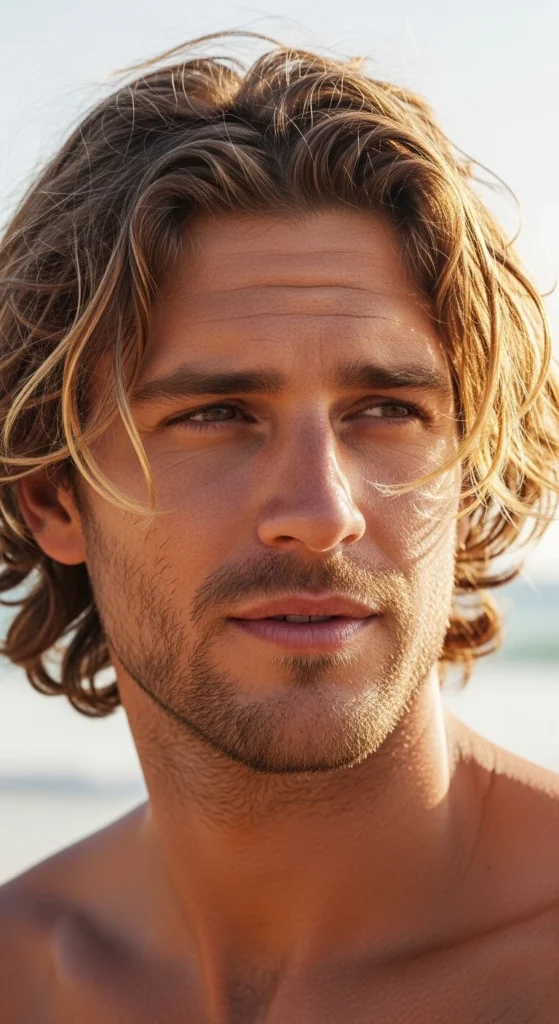
The ultimate casual wavy style. It looks like you spent the day at the beach even if you have been in an office. This works on medium to long hair and requires minimal effort once you have the right cut.
Best for wave types 2A through 2C. Works on oval and square faces. Ask your barber for long layers with lots of texture. Apply sea salt spray to damp hair. Scrunch and let air dry completely. A small amount of texturizing paste on the ends adds definition. Do not overthink this style. Imperfection is the point.
How to Choose the Right Wavy Hairstyles for Men
Before you scroll back through forty-five wavy hairstyles for men options, let’s narrow down what will actually look good on you. The best haircut in the world won’t work if it fights against your face shape or hair density.
Face Shape Guide
- Oval: Most versatile. Almost any wavy style works. Short crops, medium flow, long surfer hair: all fair game. Just avoid heavy fringe that covers the forehead completely.
- Round: Add height on top to create the illusion of length. Textured quiffs, pompadours, and high-volume crops work best. Avoid styles that add width at the sides without tapering.
- Square: Strong angles need softening. Medium-length flow styles, curtain bangs, and shag cuts add the right softness. Avoid super short crops that sharpen the jawline further.
- Heart: Wider forehead, narrower chin. Add fullness around the chin area and keep crown volume moderate. Textured crops with length through the sides work well.
Hair Density
- Thick Wavy Hair: The main problem is bulk. Without layering, thick hair creates the triangle effect: normal at roots, expanding outward at the ends. Ask for thinning shears or point cutting to remove internal weight without sacrificing length.
- Fine Wavy Hair: The main problem is flatness. Waves collapse easily and products weigh everything down. Sea salt spray adds grip without weight. Texture powder at roots creates lasting lift. Avoid heavy creams and pomades entirely.
Lifestyle Considerations
- Under 5 minutes: Low taper fades, textured crops, short Caesar cuts. Air dry or quick scrunch with sea salt spray.
- 5 to 15 minutes: Medium flow cuts, quiffs, slick backs. Requires blow drying and some product work.
- 15+ minutes: Long layered styles, defined pompadours, diffuser drying. Incredible results but genuine daily commitment required.
Fade vs. Taper vs. Undercut: What These Barber Terms Actually Mean
Walking into a barbershop without knowing the terminology is like ordering food in a language you do not speak. You might get something you like, but you probably will not. Here is exactly what these terms mean.
Fade Types
A fade blends hair from very short at the neckline to longer at the top with no visible line.
- Low Fade: Starts just above the ear. Most subtle and professional, great for conservative workplaces.
- Mid Fade: Starts at temple level. Most popular right now, works with almost any style on top.
- High Fade: Starts near the crown. Bold contrast, makes the top look fuller.
- Skin/Bald Fade: Goes all the way to skin. Sharpest finish but needs frequent maintenance.
- Burst Fade: Curves around the ear. Works great with textured crops and modern styles.
Taper vs. Fade
- Taper: Subtle, gradual shortening at sideburns and neckline. Grows out gracefully, less maintenance. Best for professional or versatile looks.
- Fade: Higher contrast, hair blends to very short or skin. Bolder statement but needs a trim every 3 to 4 weeks.
Rule of thumb: Conservative workplace, choose a taper. Bold modern look, choose a fade. For the full comparison, see the taper vs fade guide.
Undercut
Keeps the top significantly longer than the sides with a clear disconnected line and no blending. Variations include disconnected undercut, undercut fade, and slick back undercut. Loses its sharp look quickly, so regular maintenance is a must.
How to Talk to Your Barber
The number one reason men leave the barbershop unhappy is communication failure. You had a picture in your head. Your barber heard something different. Here is exactly what to say.
Use these exact phrases to get what you want:
- “Keep my natural waves. Cut to follow my wave pattern, not against it.”
- “Low taper fade just above the ear. Point cut the top to release the waves.”
- “Light layers to remove bulk, but keep weight at the parietal ridge so it doesn’t collapse.”
- “Texturizing shears on ends only. I don’t want it over-thinned.”
What Not to Say (And Why)
| Instead of This | Say This | The Reason |
|---|---|---|
| Short back and sides | Low taper fade, keep weight on top | Too vague and open to interpretation |
| Just mess it up | Textured piece-y finish with movement | Messy means different things to different barbers |
| Make it thin | Remove bulk with texturizing shears | Thin might mean thinning shears overused everywhere |
| I do not know, whatever you think | Here is what I like about this photo | You are the one wearing the haircut |
The Reference Photo Strategy
Bring two to three photos showing different angles. Front, side, and back views give your barber the complete picture.
Choose photos of models who have similar hair density and wave pattern to yours. Showing a photo of someone with thick 2C curls when you have fine 2A waves sets everyone up for disappointment.
Point out specifically what you like. Say things like “I like how high this fade starts” or “I want this much length on top.” This tells your barber which elements matter most to you.
How to Style Wavy Hair: The Complete Daily Routine
Styling wavy hair is not complicated once you understand a few basic principles. The goal is enhancing your natural texture without creating crunchiness, greasiness, or frizz.
The #1 rule: Always apply products to damp hair, never dry.
Step-by-Step Routine
- Cleanse: Wash only 2 to 3 times per week with sulfate-free shampoo. On other days, rinse with water only.
- Condition: Apply mid-lengths to ends every wash. Rinse with cool water to seal the cuticle and reduce frizz.
- Pre-Styler (on damp hair): Apply sea salt spray or leave-in conditioner. Scrunch upward, don’t rub.
- Dry with Intention: Air dry (scrunch once, then leave it completely alone until dry), diffuse (low heat, cup sections upward, keep moving), or plop (wrap hair in a microfiber towel for 15 to 45 minutes to boost wave formation).
- Finishing Product (on dry hair): Use matte paste for texture, styling cream for frizz control, or texture powder for root volume.
- Scrunch Out the Crunch: If hair feels stiff, flip upside down and scrunch gently to break the cast and reveal soft waves.
Key Don’ts
- Don’t touch hair while it’s drying
- Don’t rub with a regular towel
- Don’t skip heat protectant if diffusing
Best Products for Wavy Hair Men in 2026
The right products make the difference between defined waves and a frizzy mess. Here is what you actually need based on your wave type.
Product Categories
- Sea Salt Spray: Adds texture and volume, apply on damp hair
- Texture Powder: Lifts roots, great for fine flat waves
- Matte Clay/Paste: Flexible hold with natural matte finish
- Styling Cream: Controls frizz, light definition (Type 2B/2C)
- Curl Cream: More moisture, for stronger waves (Type 2C)
- Leave-In Conditioner: Daily moisture and detangling
Good Ingredients
Aloe Vera, Jojoba Oil, Dead Sea Salt, Kelp, Chamomile, Green Tea
Bad Ingredients (Avoid)
Sulfates (SLS/SLES), Heavy Silicones, Drying Alcohols
The Glycerin Rule
- Normal humidity: beneficial
- High humidity: hair swells and frizzes
- Dry weather: hair becomes brittle
Bottom line: Check the weather and switch to glycerin-free formulas when humidity is very high or very low.
How to Maintain Wavy Hair and Prevent Frizz
Good haircuts and products only work if you maintain them properly. Here is the long-term care routine.
The Science of Frizz Prevention
Frizz happens when the hair cuticle lifts and allows moisture to escape or enter unevenly. Every maintenance habit below aims to keep that cuticle smooth and flat.
- Ditch the cotton towel: Swap to microfiber or an old t-shirt. Cotton fibers are rough and lift the cuticle. Microfiber absorbs water without friction.
- Finish with cool water: Hot water opens the cuticle. Cool water seals it flat. This single step alone reduces frizz significantly.
- Switch your pillowcase: Cotton creates friction all night. Silk or satin allows hair to glide rather than catch. One of the simplest upgrades you can make.
Trimming Schedule
- Short and medium styles: Every 4 to 6 weeks to maintain shape and keep fades looking fresh.
- Longer styles: Every 8 weeks focused on removing split ends rather than reshaping.
- Skin or high fades: Touch-ups every 2 to 3 weeks to keep the contrast sharp.
Deep Conditioning
Once a week apply a deep conditioning mask to damp hair after shampooing. Leave on for 10 to 15 minutes. Rinse thoroughly with cool water. Look for masks containing shea butter, argan oil, or keratin; these restore moisture and strengthen the hair shaft.
Humidity Defense
Apply a lightweight gel or mousse to damp hair before leaving the house on humid days; it creates a barrier against moisture. Carry a small anti-frizz serum for midday flyaways; one drop smoothed over the surface is enough. In extreme humidity consider a man bun or half-up style to keep hair contained.
Protein and Moisture Balance
Wavy hair needs both protein and moisture, but the balance matters.
- Too much protein: Hair feels stiff, straw-like, or brittle. Snaps easily when stretched. Switch to moisture-only products until balance returns.
- Too much moisture: Hair feels mushy, limp, and structureless. Won’t hold a wave. Add a protein treatment to restore strength.
Listen to what your hair tells you and adjust accordingly.
FAQs
What is wavy hair male?
Wavy hair in men, officially classified as Type 2 hair, sits between straight and curly. It forms loose S-shapes with natural texture and volume, without the intense maintenance of curly hair. It divides into 2A (loose tousled waves), 2B (defined S-waves), and 2C (tight S-waves with some corkscrews).
What is the best haircut for wavy hair men?
The best haircuts for wavy hair include textured crops, layered flow cuts, and styles with taper fades. Textured crops work for most men. Flow cuts suit oval and oblong faces. Fades keep thick wavy hair controlled while adding modern edge. Specific recommendations depend on your wave subtype and face shape.
How to style wavy hair men?
Apply product to damp hair, never dry. Use sea salt spray or styling cream as a foundation. Scrunch hair upward gently to encourage wave formation. Air dry or diffuse on low heat. Avoid touching hair while drying to prevent frizz. Once completely dry scrunch out any crunchiness from hold products.
How to dry wavy hair men?
Press hair gently with a microfiber towel or soft t-shirt, never rub vigorously. Either air dry completely without touching, diffuse on low heat with a diffuser attachment, or plop in a microfiber towel for fifteen to forty-five minutes. Plopping removes water while encouraging wave formation.
How often should men with wavy hair wash?
Wash two to three times per week maximum. Over-washing strips natural oils that seal the cuticle and prevent frizz. On non-wash days rinse with water and condition ends if needed. Always use sulfate-free shampoo.
What products do men need for wavy hair?
Essential products include sulfate-free shampoo, hydrating conditioner, sea salt spray for texture, and styling cream for frizz control. Optional additions include texture powder for root volume and matte clay for piece-y definition. Avoid heavy pomades and products containing sulfates or drying alcohols.
How to get wavy hair men if hair is straight?
Apply sea salt spray to damp hair, scrunch thoroughly, and plop or diffuse dry. For permanent results consider a professional wavy perm; modern perms create soft natural-looking waves that last three to six months. Braiding damp hair overnight also creates temporary waves without heat or chemicals.
Can you make straight hair wavy permanently?
Yes, through a professional wavy perm. Modern perm technology creates soft natural waves that mimic Type 2 hair patterns. Results are permanent on treated hair but new growth will be straight. Proper wave care products extend the results significantly.
Why do I have wavy hair?
Genetics determine your hair follicle shape. Slightly curved follicles produce wavy Type 2 hair. Perfectly round follicles produce straight hair. Highly curved follicles produce curly or coily hair. Your wave pattern comes directly from the follicle shape you inherited.
Is wavy hair attractive on guys?
Yes. Wavy hair adds natural texture, volume, and movement that straight hair requires significant product to achieve. The 2026 trend specifically favors natural texture and relaxed styling over stiff, over-groomed looks. Wavy hair projects an effortless, confident appearance.
Is wavy hair in style?
Wavy hair is one of the strongest men’s hair trends of 2026. The bro flow, wolf cut, and textured crop, all wave-dependent styles, dominate barbershop requests and social media feeds. The broader shift toward natural texture and away from heavily gelled, over-groomed looks means men with natural waves have an advantage right now rather than something to straighten out.
Is wavy hair better long or short?
Neither is better; they show off waves differently. Short wavy hair (crops, crew cuts) is lower maintenance and highlights texture at the roots, making it ideal for busy routines and hot climates. Longer wavy hair (flow cuts, shoulder length) displays the full S-pattern and offers more styling versatility but demands more conditioning, layering, and drying time. If you are unsure, start with a medium flow cut: it shows real wave movement while staying manageable.
How do I style frizzy wavy hair?
Frizzy waves need moisture first and hold second. Apply leave-in conditioner or styling cream to soaking-damp hair, scrunch, and dry with a microfiber towel instead of cotton. Never brush dry waves; that shatters the pattern into frizz. Seal with a light gel or cream on humid days, rinse with cool water to close the cuticle, and sleep on a silk pillowcase. If frizz persists everywhere, your hair is likely dehydrated: add a weekly deep-conditioning mask.
Conclusion
Work with your texture rather than against it. The biggest hair trend of 2026 is authenticity and natural movement. Your waves are an asset, not a problem to be solved.
Patience pays off. Finding your ideal routine takes experimentation. Give new products at least two to three weeks before deciding if they work. Your hair needs time to adjust.
Less is often more. Wavy hair typically requires fewer products than curly hair. Avoid the temptation to layer multiple stylers. One or two well-chosen products usually outperform a complicated routine.
Stay informed by following barbers and stylists who specialize in textured hair. Techniques and products evolve constantly. What worked five years ago may not be the best approach today.