


What Is a Side Part Haircut?
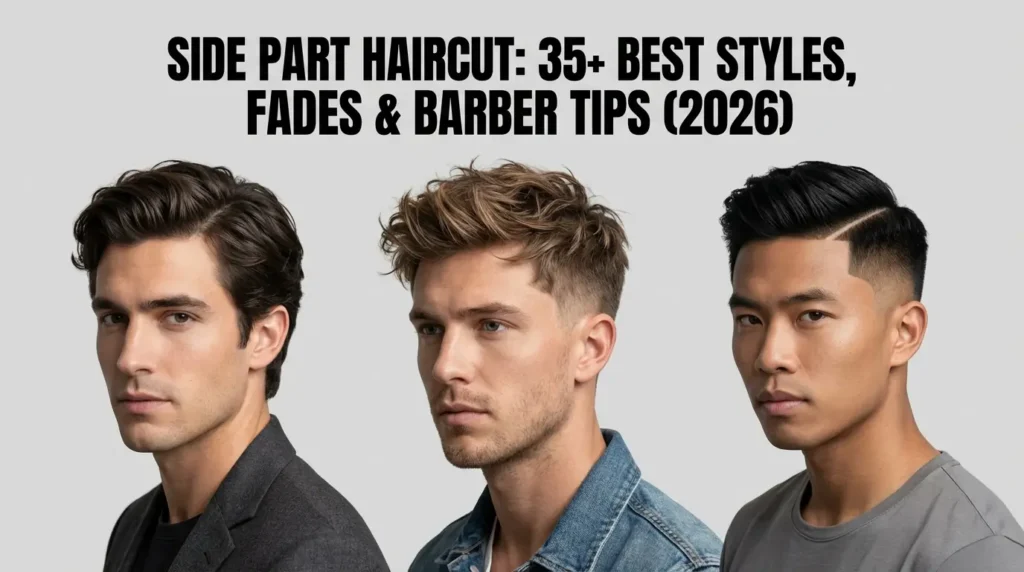
A side part is a classic hairstyle where the hair is divided to one side with a clean, defined parting line. This creates an asymmetrical distribution of hair—more volume on one side (the “heavy side”) and less on the other (the “short side”). The style works beautifully with straight, wavy, or curly hair and complements virtually every face shape.
The side part is also commonly known as:
- Side parting
- Parted hairstyle
- Side-parted hair
- Gentleman’s cut
Related Guide: Men’s Haircuts 2026
Types of Side Part Haircuts: 35+ Variations Explained
The side part is not a single hairstyle—it encompasses an entire family of styles sharing the defining characteristic of asymmetrical hair division.
Classic & Traditional Side Parts
Classic Side Part

The classic side part represents timeless sophistication—clean parting, tapered sides, medium length on top styled smoothly to one side. This is the Mad Men, Don Draper aesthetic that never goes out of style.
Best for: Professional environments, formal occasions, traditional settings
Products: Pomade for shine, styling cream for natural finish
Maintenance: Trims every 3-4 weeks
Gentleman’s Side Part
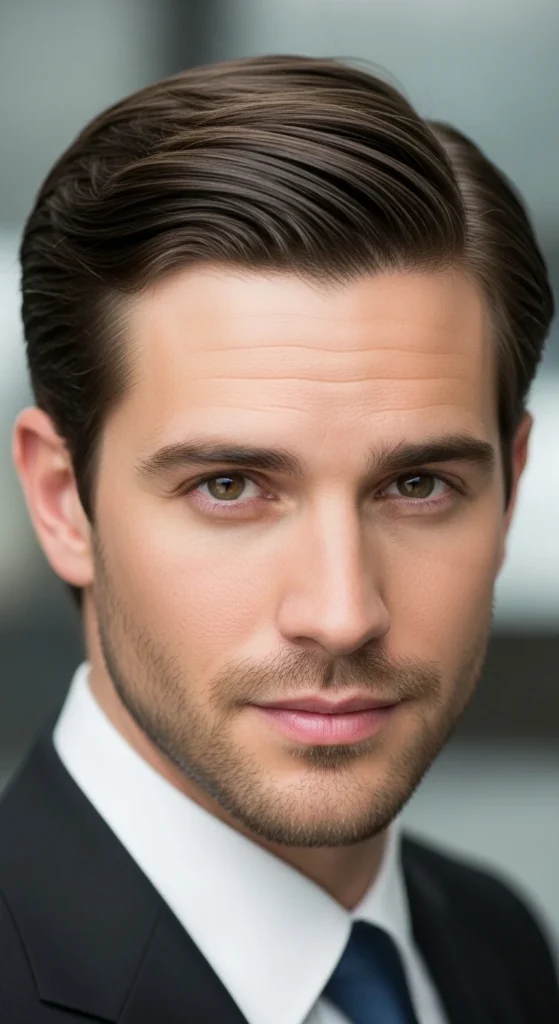
A refined variation emphasizing conservative elegance. Scissor-cut sides (no clippers), longer length throughout, polished finish. This is the boardroom-ready version.
Best for: Executive settings, formal events, mature professionals
Products: High-shine pomade, firm-hold gel
Maintenance: Every 3-4 weeks
Ivy League Side Part
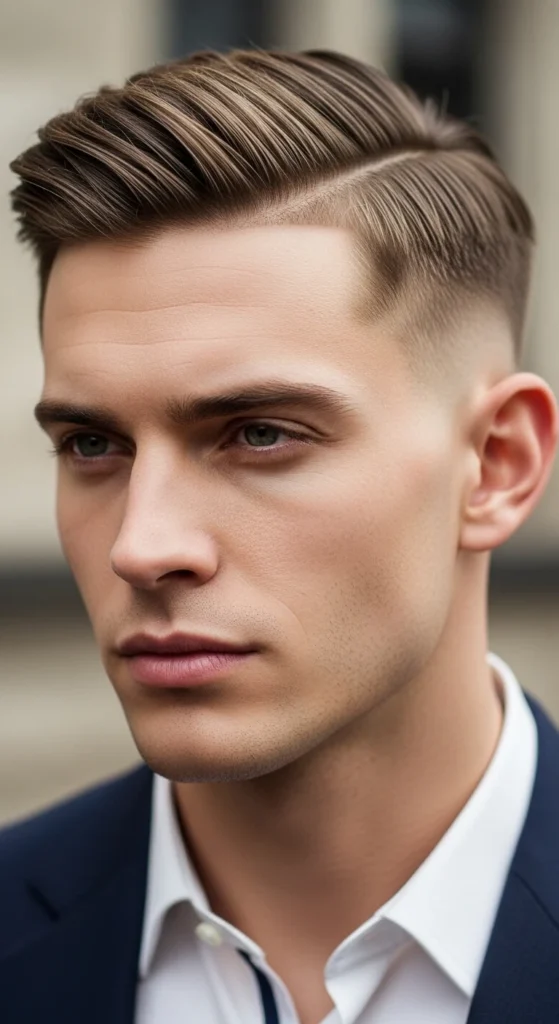
The preppy Ivy League (also called the Princeton) features short tapered sides with just enough length on top for a neat side part. Low-maintenance yet polished.
Best for: Academic settings, business casual, summer
Products: Light pomade, styling cream
Cultural Reference: Cape Cod aesthetic, Northeastern preparatory style
70/30 Side Part
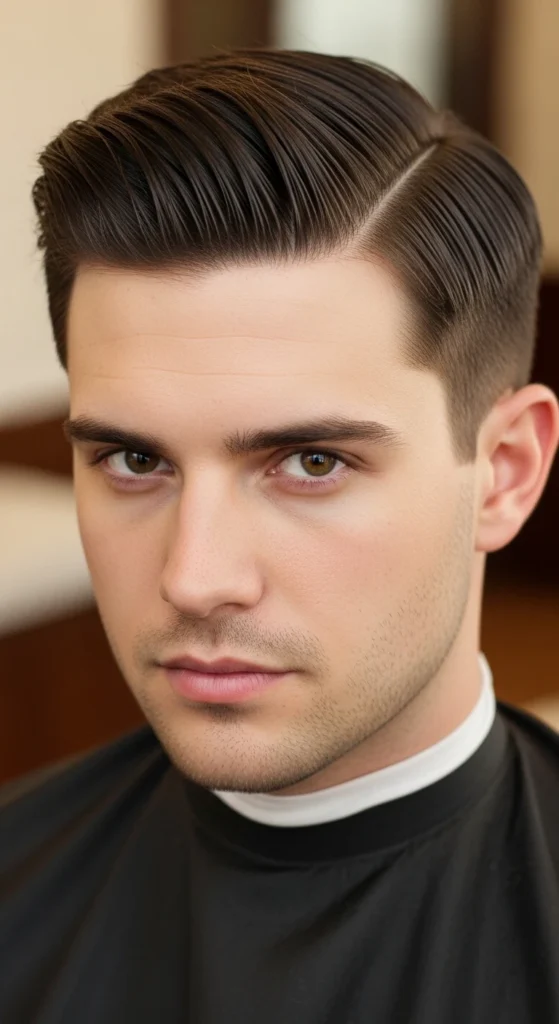
The standard distribution ratio creating balanced asymmetry. Seventy percent of hair on the heavy side, thirty percent on the short side.
Best for: Traditional, universally flattering appearance
Styling tip: Follow natural growth direction for easiest maintenance
60/40 Side Part

More symmetrical distribution for those wanting subtle asymmetry. Creates softer, less dramatic contrast between sides.
Best for: Rounder faces needing balanced volume, conservative settings
Side Part Fade Variations
Side Part Low Fade
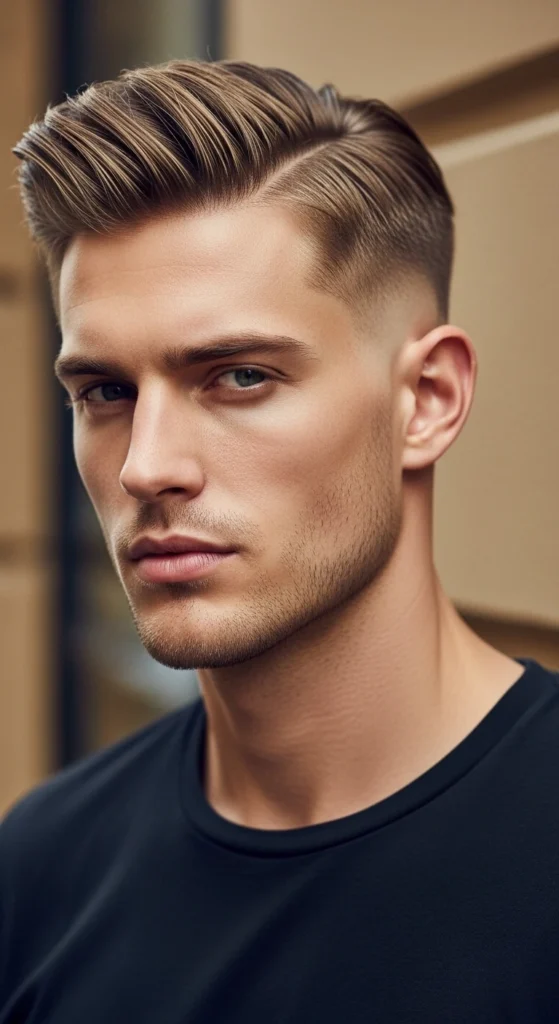
The low fade side part combines conservative fading (starting just above the ears) with the classic parted top. Approximately one inch of graduated skin visible. Professional yet modern.
Clipper Guards: #2-#3 at bottom, blend upward to #4
Best for: Office environments, professional settings
Maintenance: Every 2-3 weeks
Side Part Mid Fade
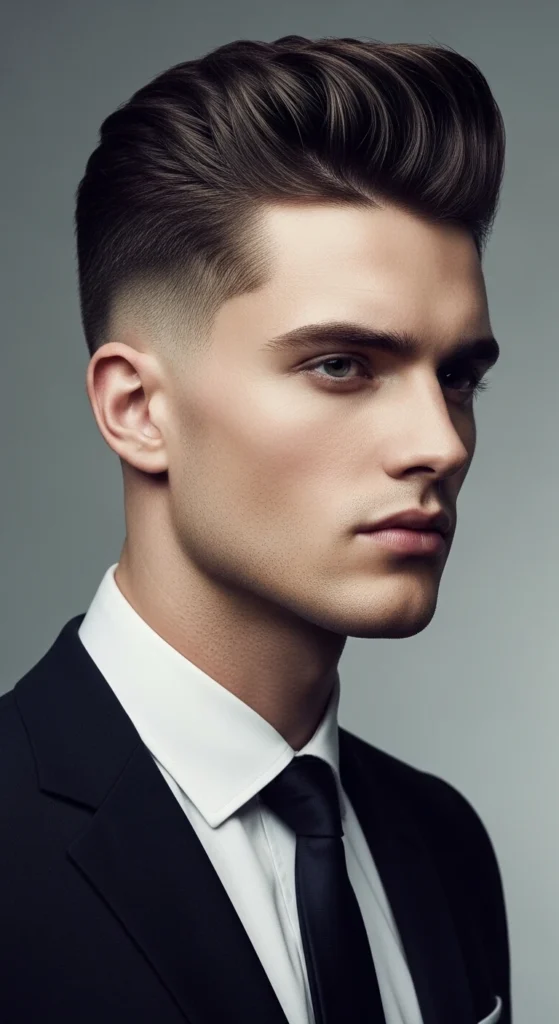
The most versatile option. Fade begins at temple level, creating noticeable but balanced contrast with the parted top. Works for virtually any setting.
Clipper Guards: #1-#2 at bottom, #3-#4 mid-section
Best for: Everyday versatility, most face shapes
Maintenance: Every 2 weeks
Side Part High Fade
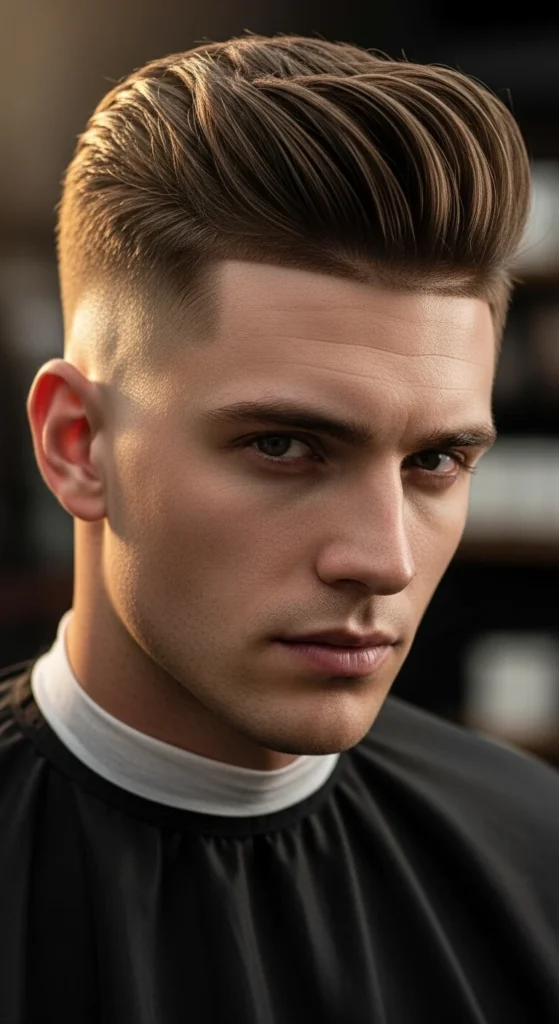
Dramatic contrast with fade starting near the crown. Statement-making style that draws attention and creates strong vertical lines.
Clipper Guards: #0-#1 at bottom, aggressive blend upward
Best for: Fashion-forward environments, round faces needing elongation
Maintenance: Every 1-2 weeks
Side Part Skin Fade (Bald Fade)
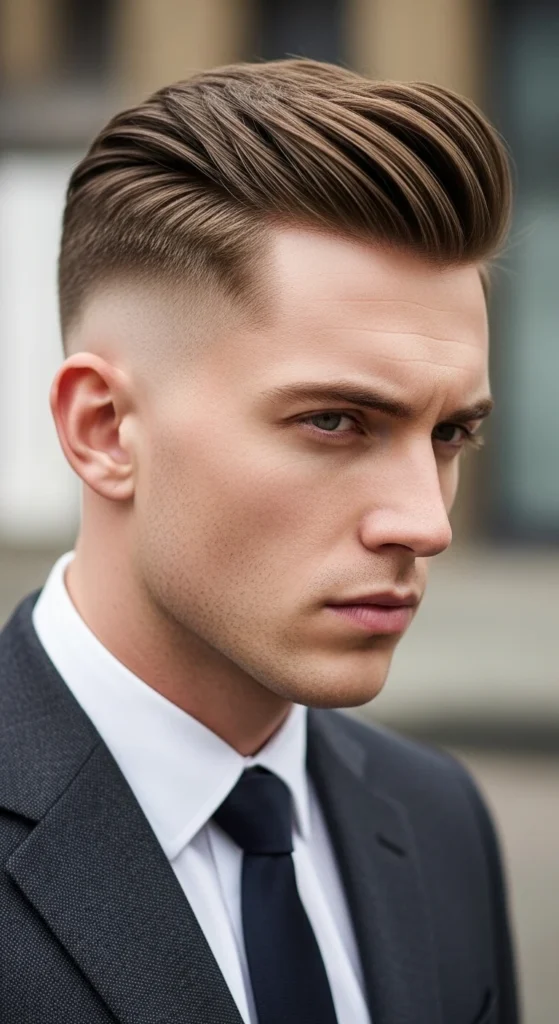
Maximum contrast—fade goes completely to skin before blending into the parted top. Edgy, high-maintenance, undeniably sharp.
Clipper Guards: No guard at bottom, blend with #1
Best for: Bold statements, maximum definition
Maintenance: Weekly touch-ups recommended
Side Part Drop Fade
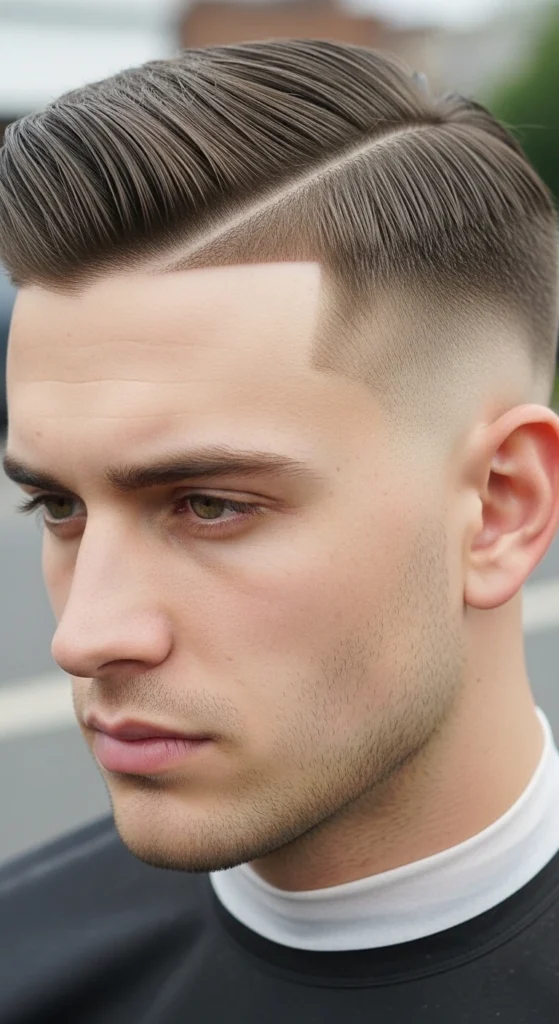
The fade line curves around the ear and drops at the back of the head, following natural head contour. Creates a flowing arc effect.
Best for: Enhancing natural head shape, unique visual interest
Maintenance: Every 2 weeks
Side Part Burst Fade
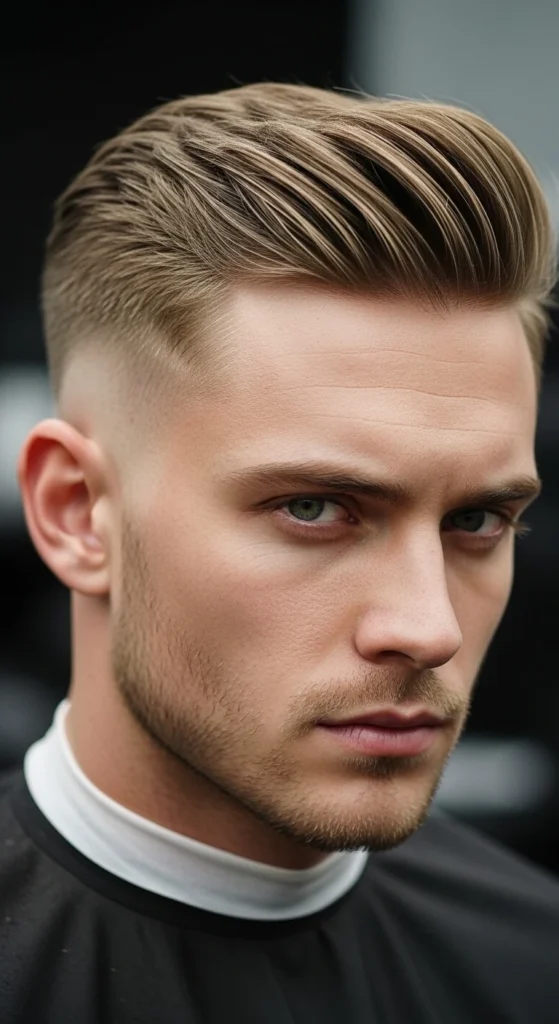
Rounded fade radiating outward from the ear in a semicircular pattern. Artistic, distinctive, works exceptionally well with longer tops.
Best for: Creative expression, fashion-forward styling
Hard Part (Razored Line) Variations
Hard Part with Low Fade
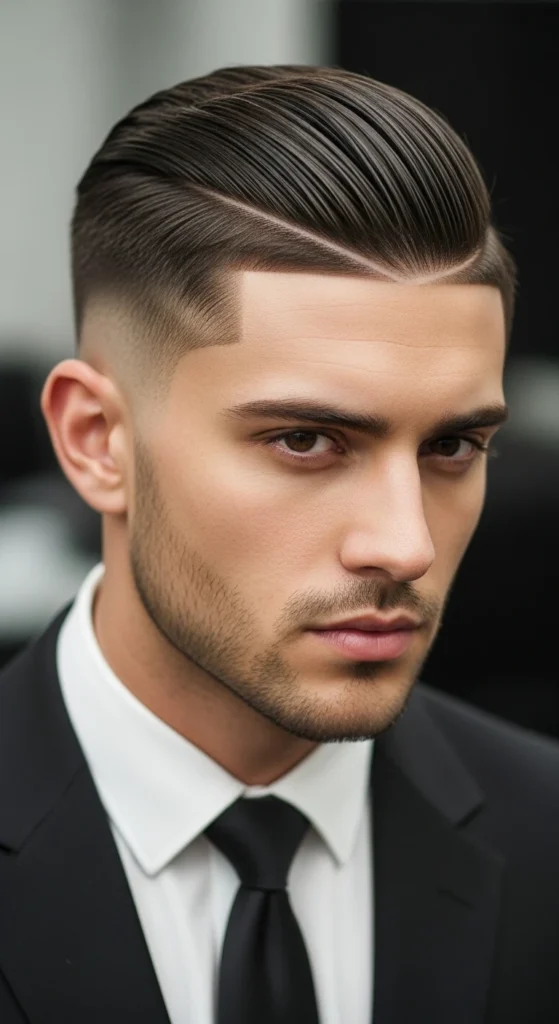
Razor-shaved line combined with conservative fade. Defined structure with subtle sides—the perfect balance of edge and professionalism.
Maintenance: Hard part touch-up every 1-2 weeks
Best for: Modern professionals wanting definition
Hard Part with High Fade
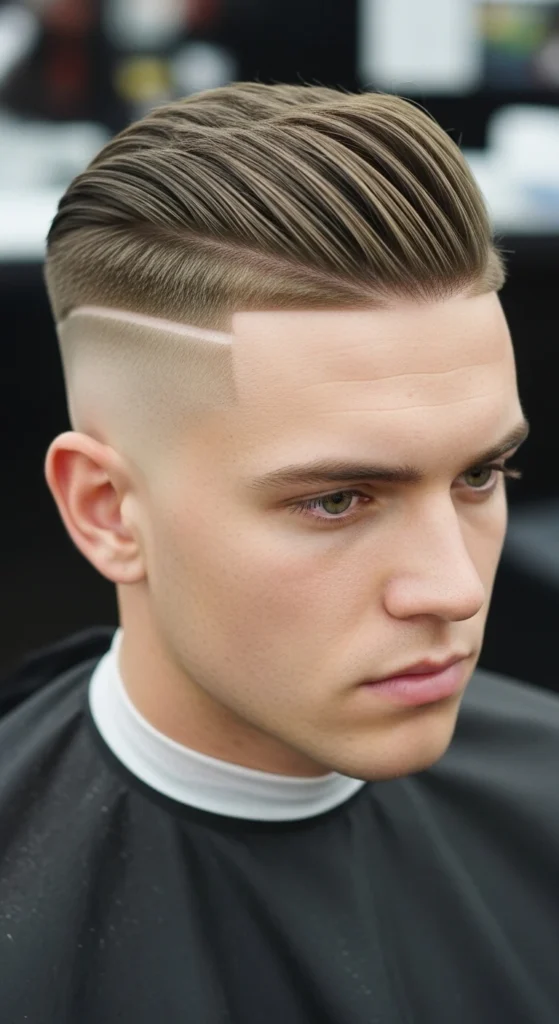
Maximum drama—razored line meets aggressive fade. Bold, fashion-forward, requires confidence to carry.
Celebrities: Cristiano Ronaldo, John Boyega Maintenance: Every 1-2 weeks
Hard Part with Skin Fade
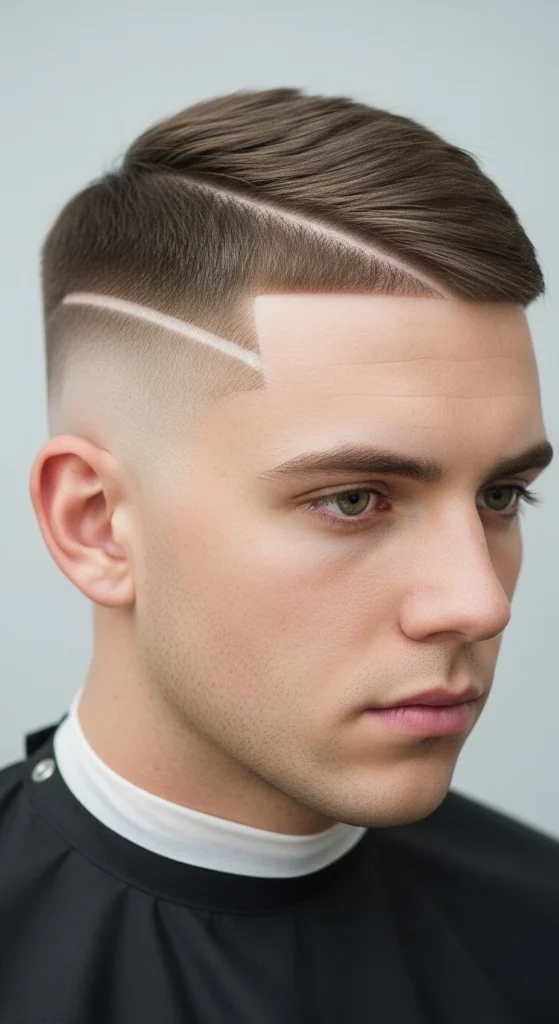
The most dramatic combination—razor line meeting bald fade. Statement-making style for those wanting maximum contrast.
Best for: Bold personalities, fashion-conscious individuals
Maintenance: Weekly touch-ups essential
Hard Part Undercut
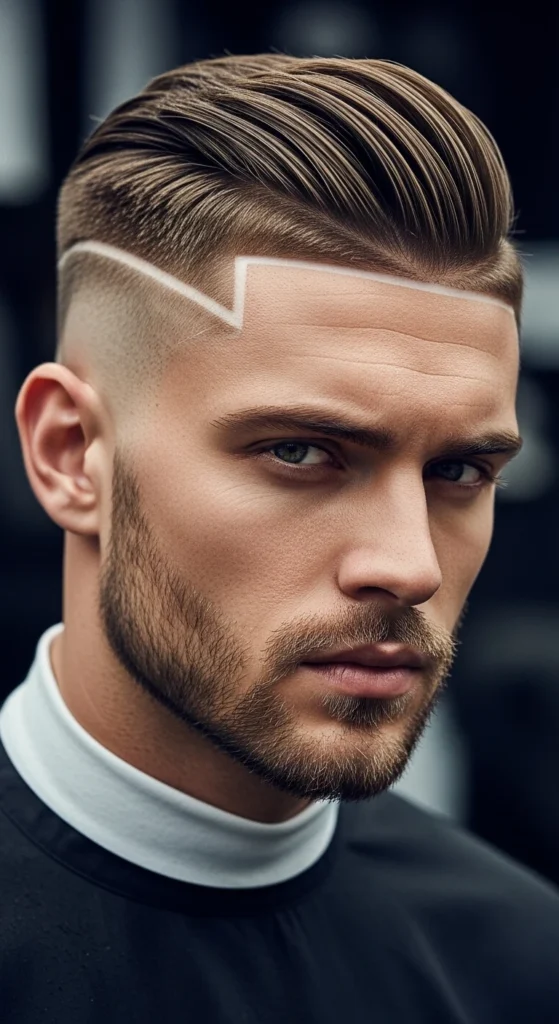
Razored line with disconnected, buzzed sides (no blend). Creates stark contrast between parted top and cropped sides. Associated with the Peaky Blinders aesthetic.
Best for: Maximum drama, fashion-forward settings
Maintenance: Every 2 weeks
Side Part Taper Variations
Side Part Classic Taper
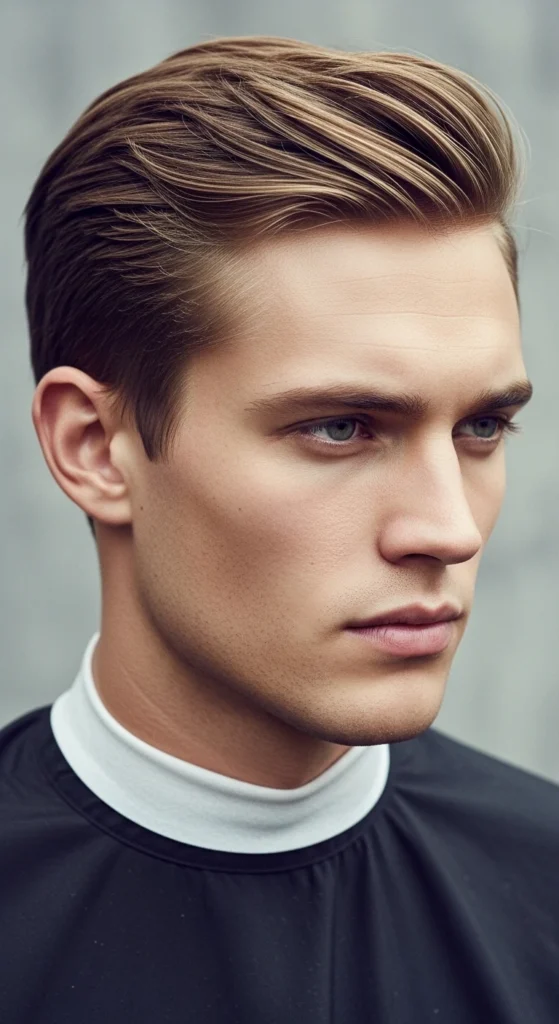
Gradual length reduction on sides that never goes to skin. The most conservative, traditional option for professional environments.
Clipper Guards: #3-#4 at neckline, blend upward
Best for: Conservative workplaces, mature professionals
Maintenance: Every 3-4 weeks
Side Part Low Taper
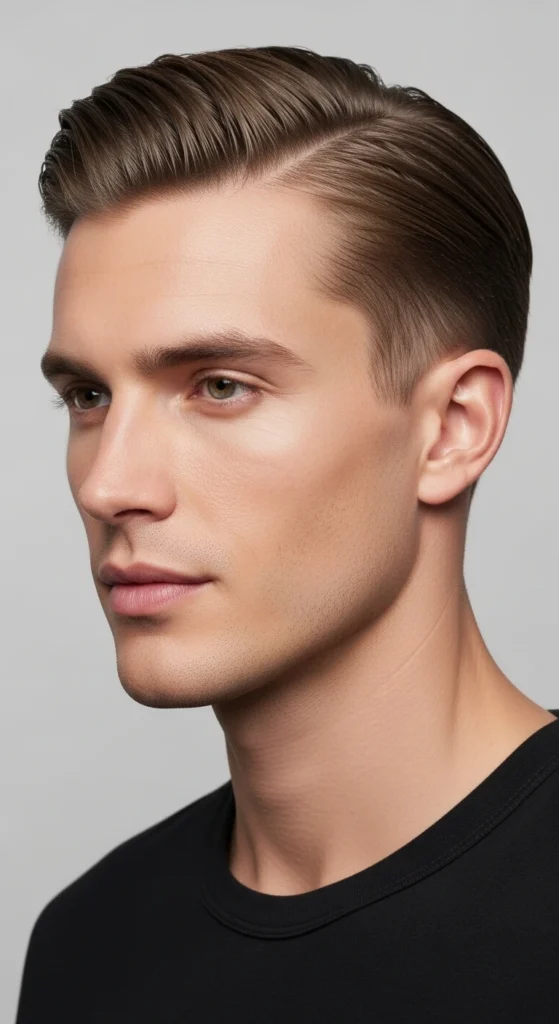
Taper begins at ear level with subtle graduation. Maximum conservation—almost unnoticeable transition.
Best for: Traditional settings, those preferring minimal contrast
Products: Pomade for polish, cream for natural finish
Side Part Taper Fade
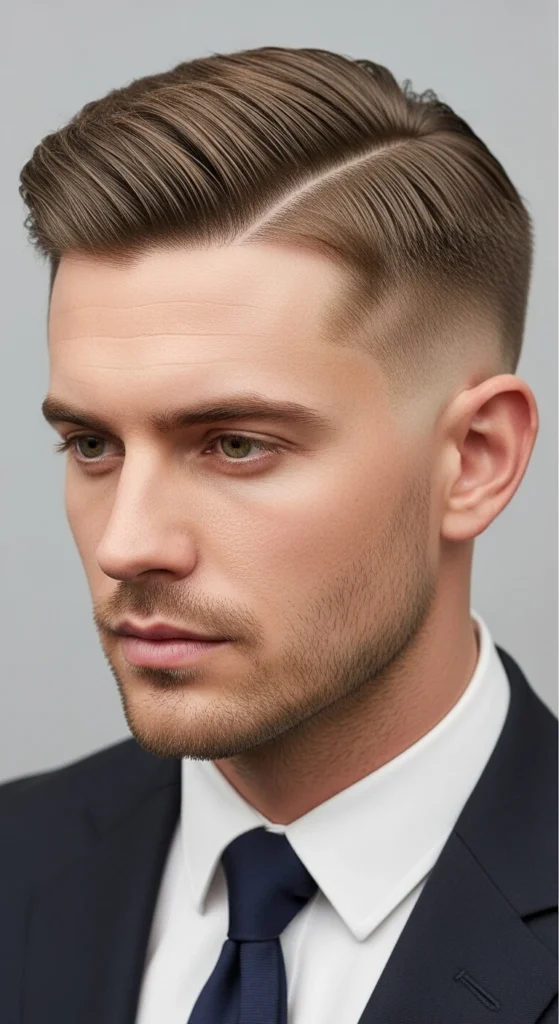
Hybrid combining taper graduation into fade at the bottom. Best of both worlds—soft transition with clean edges.
Best for: Modern sophistication, versatile styling
Maintenance: Every 2-3 weeks
Side Part Undercut Variations
Side Part Undercut
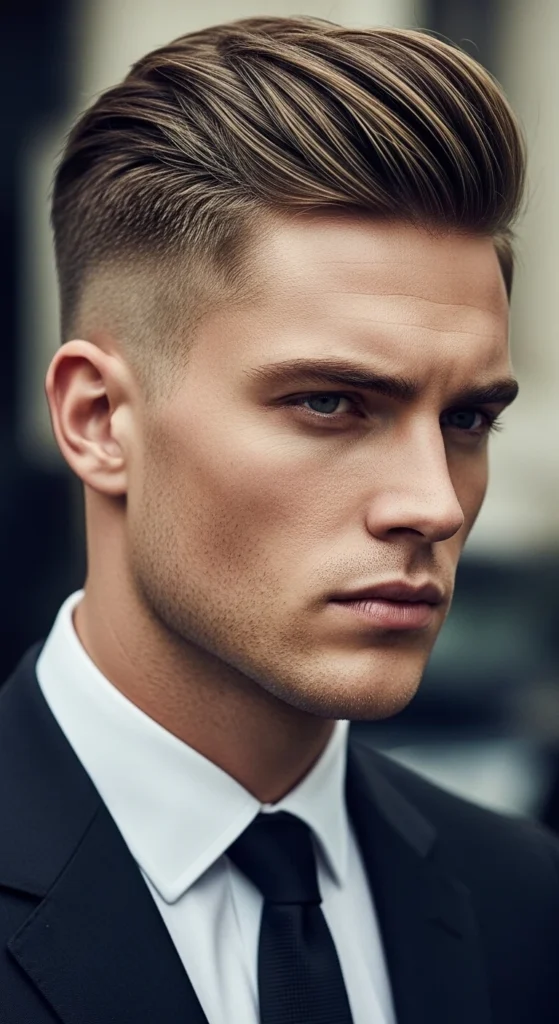
Disconnected buzzed sides with no blend into the longer, parted top. Bold contrast that makes a statement.
Clipper Guards: #1-#2 straight up to part line
Best for: Fashion-forward, confident individuals
Maintenance: Every 2-3 weeks
Disconnected Side Part
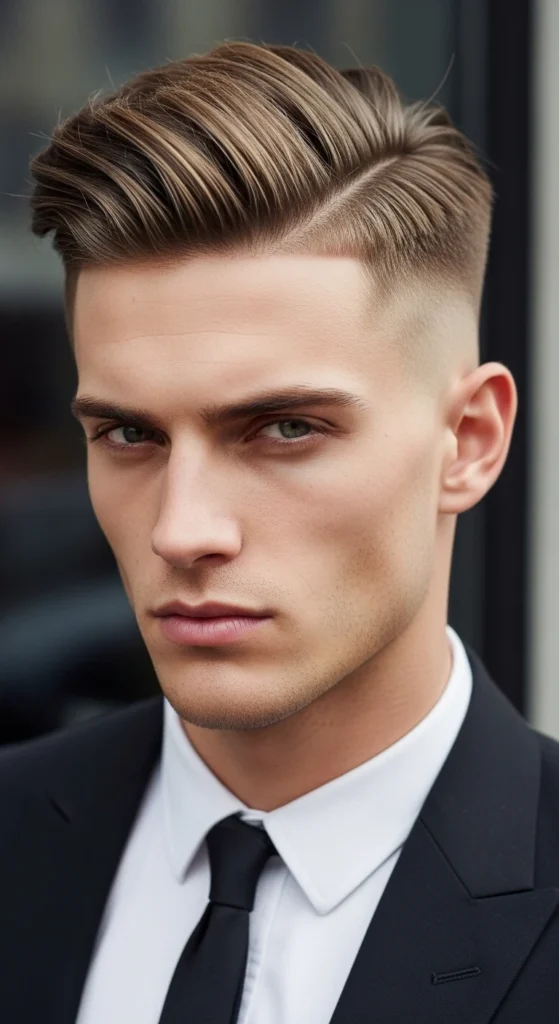
Sharp separation line between top and sides, emphasizing the contrast. Maximum visual impact.
Best for: Those wanting dramatic definition
Maintenance: Every 2 weeks
Textured & Modern Side Parts
Textured Side Part
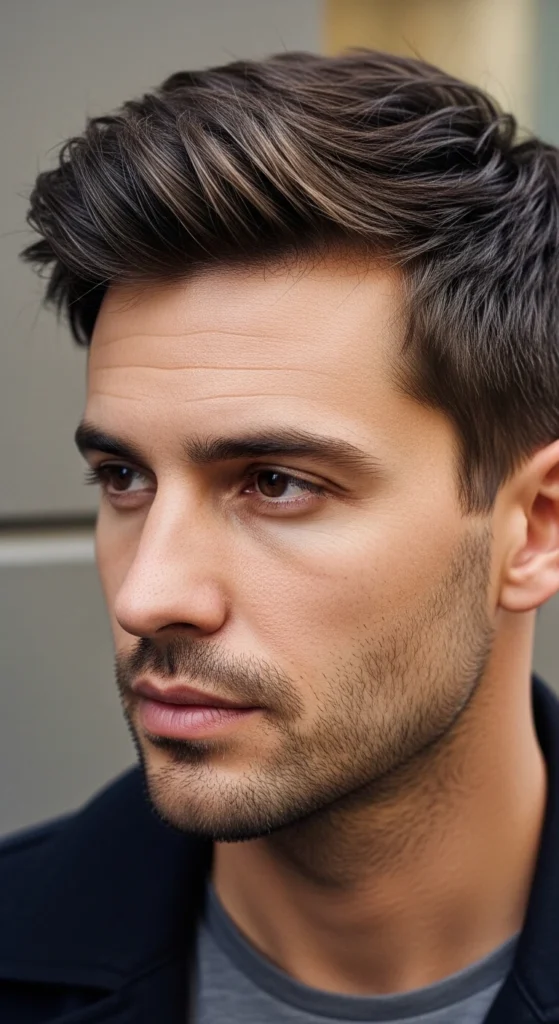
Layered movement with dimensional appearance. Hair shows separation and depth while maintaining the parted structure.
Products: Sea salt spray, texture clay
Styling: Finger-style for natural separation
Best for: Modern, relaxed aesthetic
Messy Side Part

Intentionally undone—part visible but hair tousled and textured. The “I woke up like this” aesthetic with underlying structure.
Products: Sea salt spray, light-hold paste
Styling: Blow-dry, then finger-tousle
Best for: Casual settings, effortless cool
Modern Side Part
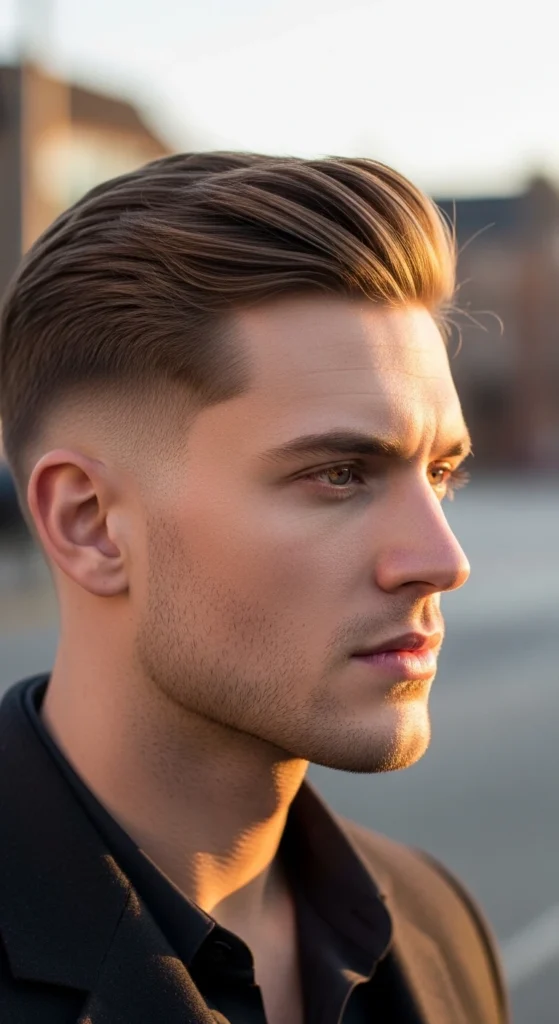
Contemporary interpretation with matte finish and natural movement. Updated classic avoiding the “greaser” look.
Products: Styling cream, texture powder
Best for: Everyday wear, modern professionals
Soft Side Part
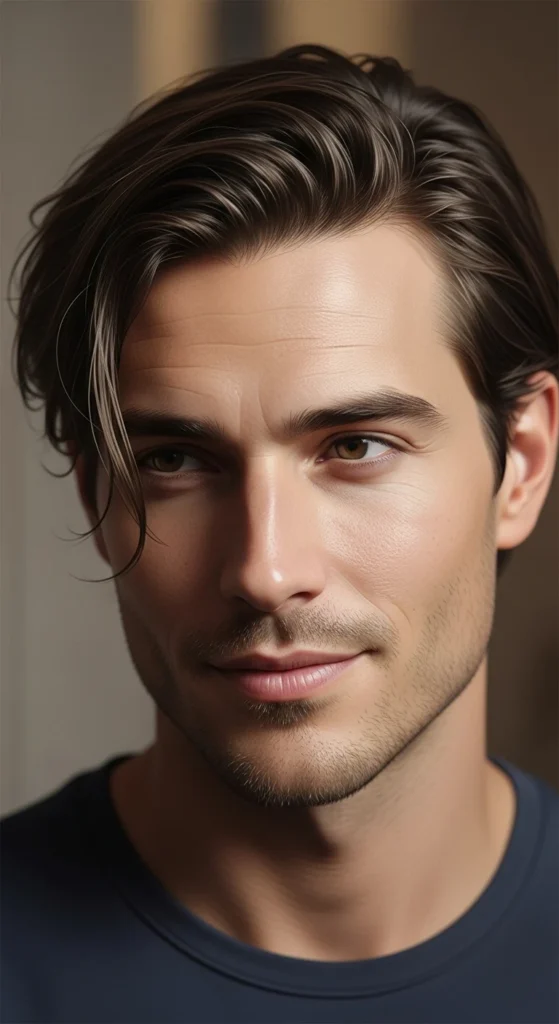
Gentle, natural parting without hard definition. Approachable, relaxed appearance.
Products: Light cream, minimal product
Best for: Those wanting subtle structure
Side Part by Length
Short Side Part
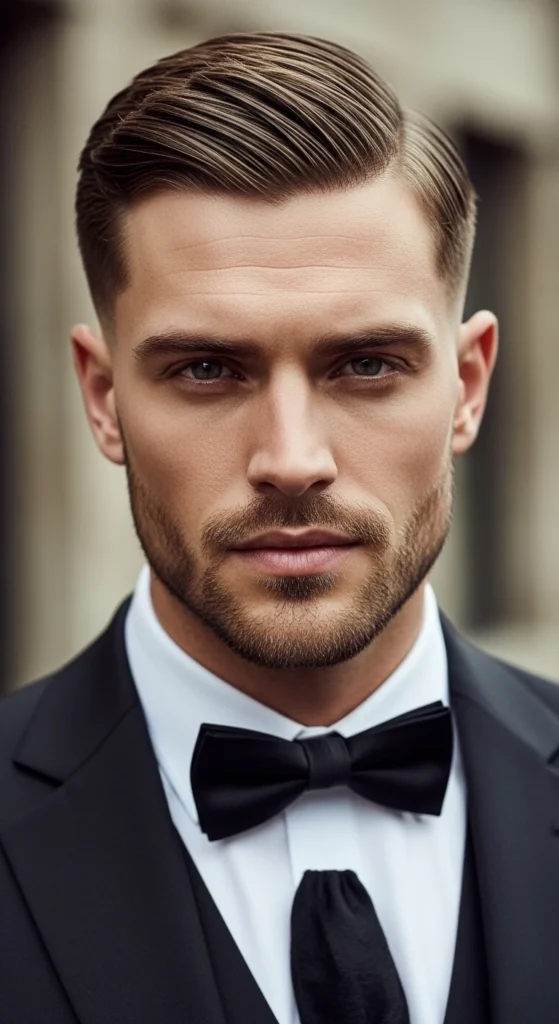
Minimal length on top (2-3 inches), creating a low-maintenance, professional appearance.
Styling time: 2-3 minutes daily
Best for: Busy professionals, active lifestyles
Medium Length Side Part

Optimal versatility with 3-5 inches on top. Supports virtually every variation.
Styling time: 5-7 minutes daily
Best for: Most popular choice; maximum flexibility
Long Side Part
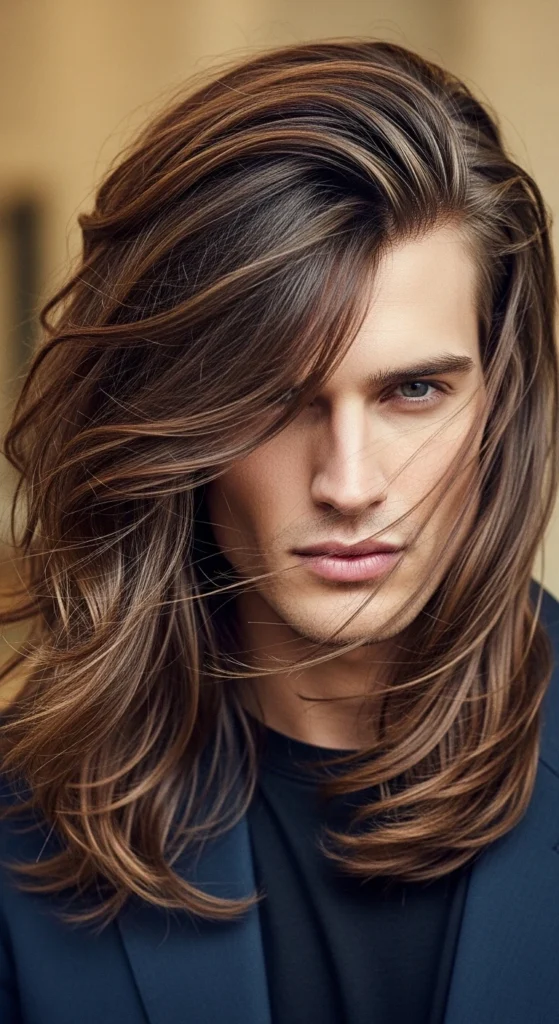
Dramatic flow with 5+ inches on top. Requires more product and styling time but creates impressive presence.
Products: Stronger hold; blow-drying essential
Best for: Fashion-forward individuals, special occasions
Side Part with Volume Styles
Side Part Pompadour
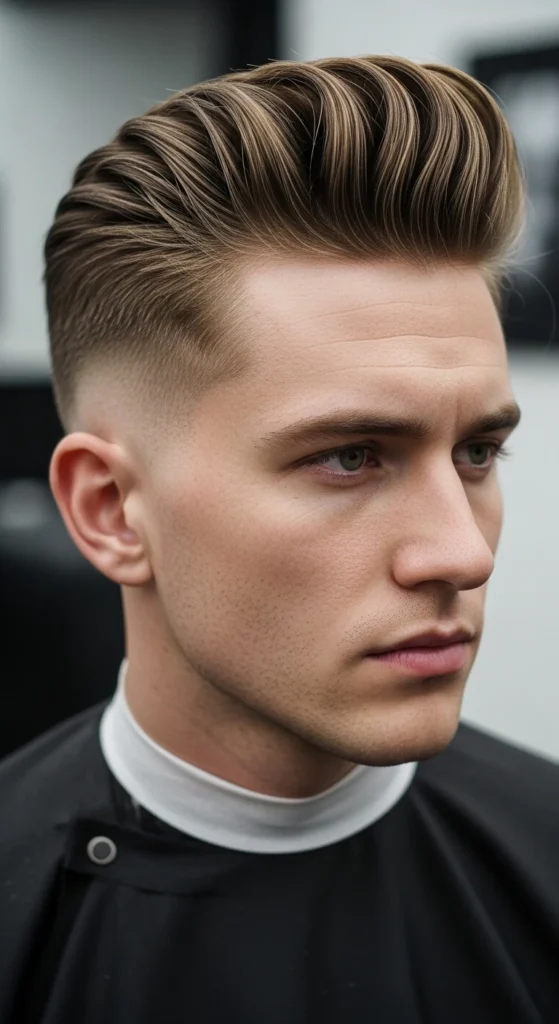
Volume and height at the front before sweeping to the side. Combines pompadour structure with side-parted definition.
Products: Strong-hold pomade, volumizing mousse
Styling: Blow-dry upward at front, sweep back and to the side.
Entities: Elvis Presley influence
Side Part Quiff
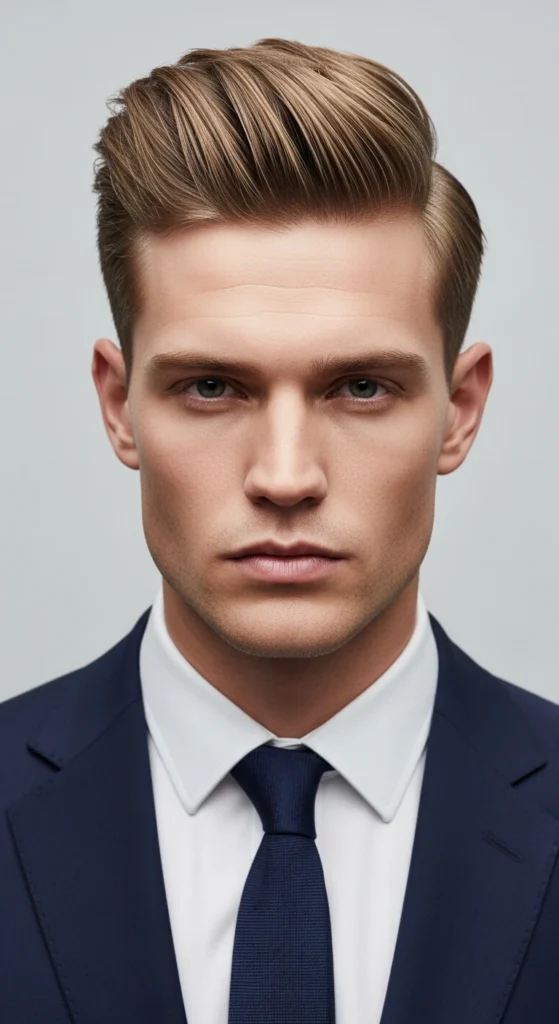
Lifted front section flowing into side part. Modern volume with classic structure.
Celebrities: David Beckham
Products: Texture clay, hairspray for hold
Side Part Comb Over
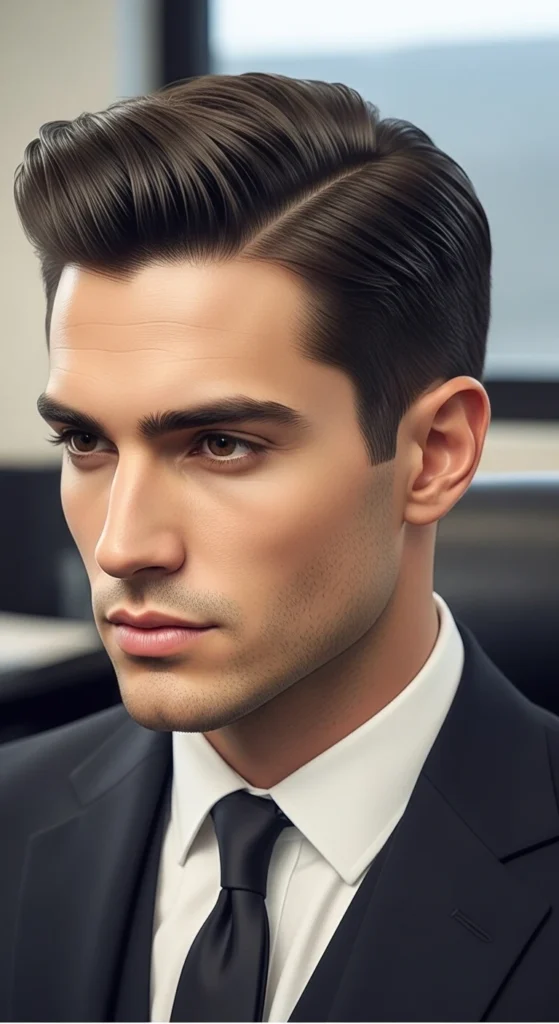
Hair combed across from the part, creating smooth coverage. Classic sophistication.
Products: High-shine pomade, gel
Best for: Formal settings, coverage needs
Side Part for Different Hair Textures
Wavy Side Part
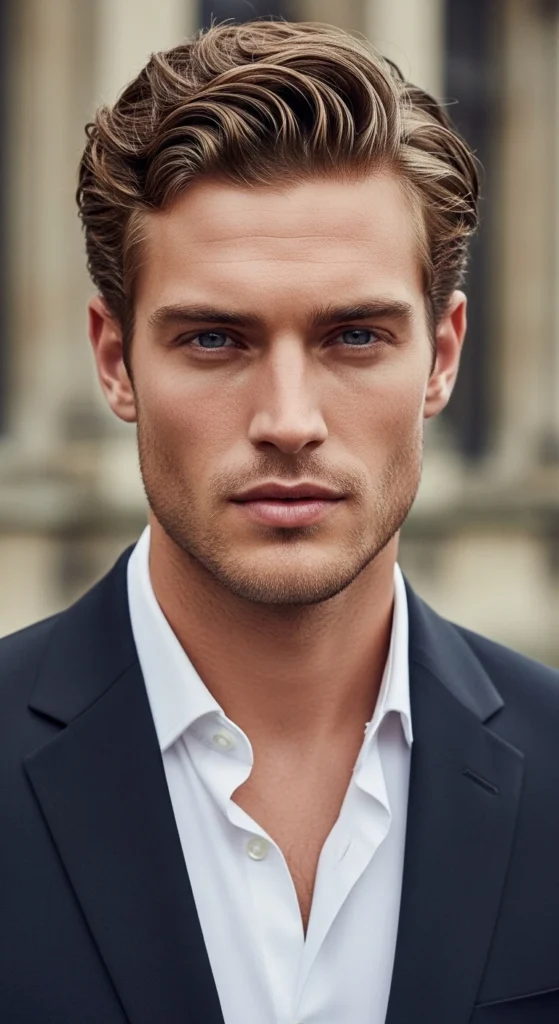
Embraces natural wave pattern with side parting. Waves add texture and movement that straight hair requires product to achieve.
Products: Sea salt spray, curl-defining cream
Styling: Work with natural texture; avoid over-combing
Curly Side Part
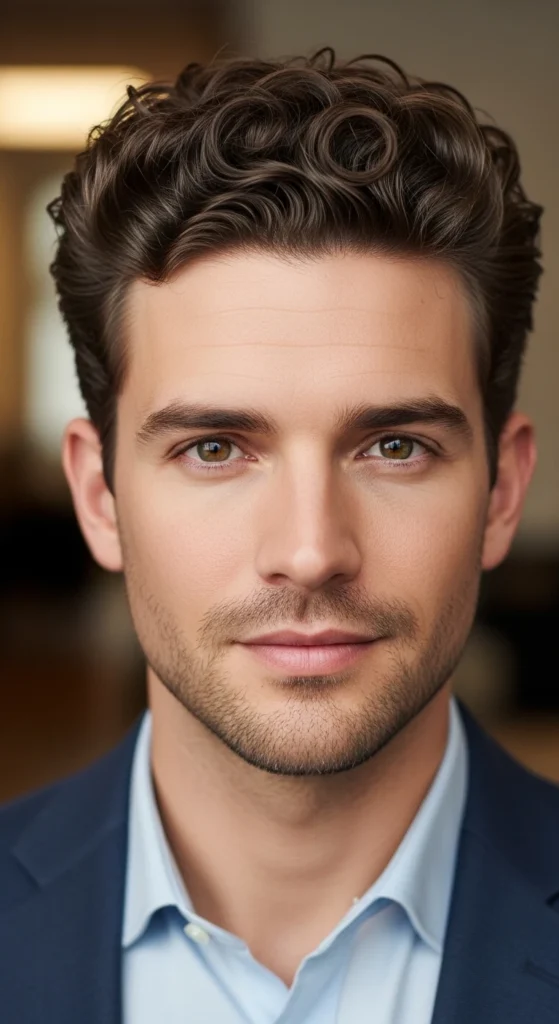
Curls styled from side parting while maintaining texture definition. Requires extra length and proper curl products.
Products: Curl cream, anti-frizz serum
Styling: Create part while wet; diffuse dry
Side Part Straight Hair
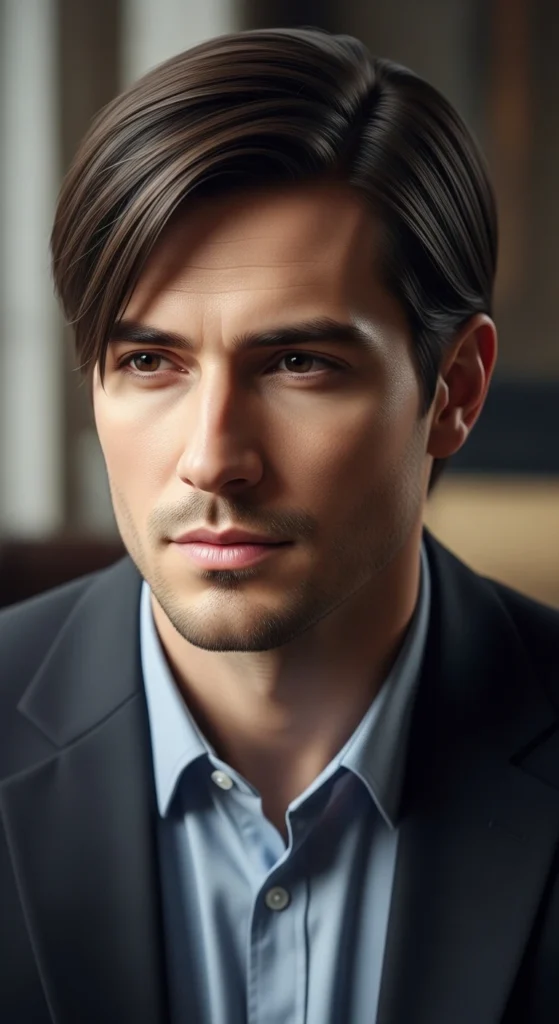
Sleek, defined parting on naturally straight hair. Clean, polished appearance.
Products: Pomade for shine, styling cream for matte
Styling: Blow-dry with a round brush for smoothness
Specialty & Cultural Variations
Korean Side Part

K-pop influenced with softer hold, natural movement, often featuring a center-leaning part or curtain-style framing.
Best for: Asian hair textures, modern aesthetic
Products: Lightweight styling cream
Side Part Slick Back
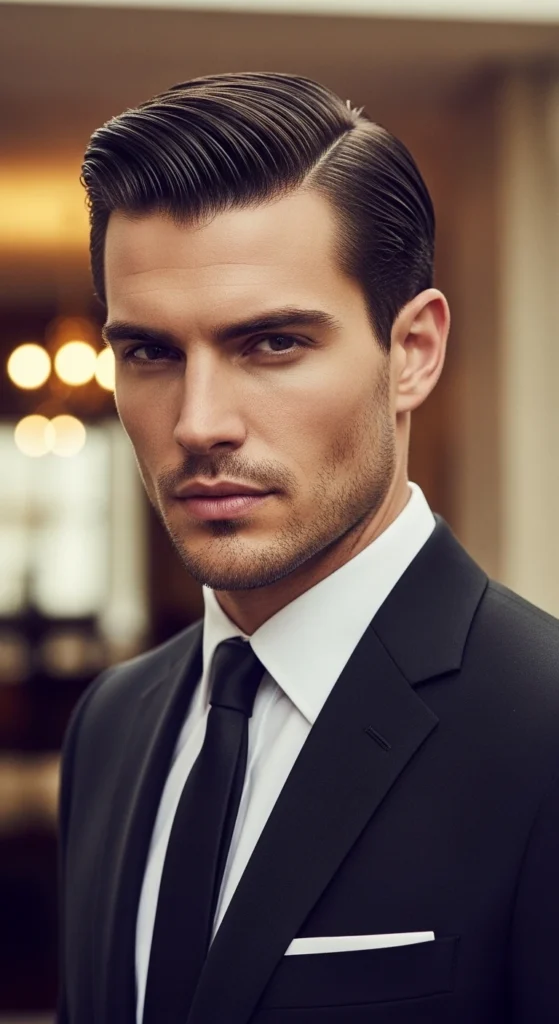
Part defined, then hair swept backward rather than to the side. Formal, sophisticated.
Best for: Black-tie events, formal occasions
Products: High-shine pomade, gel
Side Part with Fringe
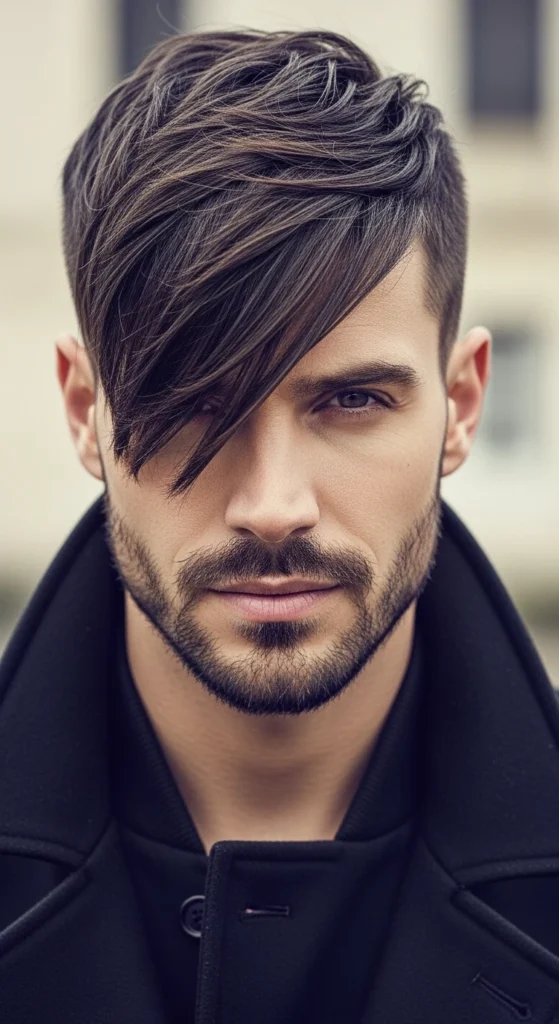
Part with bangs falling across forehead, softening the look.
Best for: Youthful appearance, softer aesthetic
Side Part Mullet
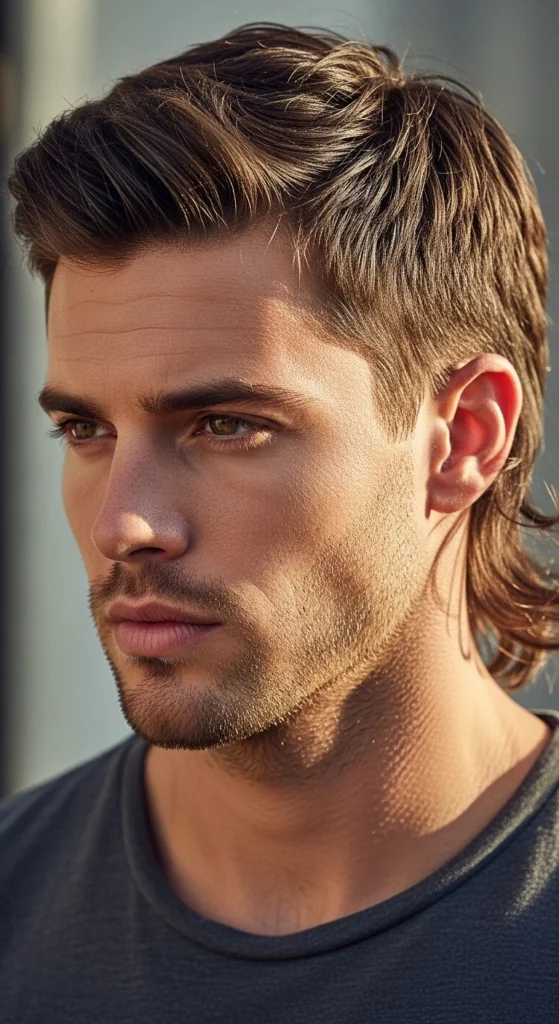
Business front, party back—slicked, parted top with longer length flowing at the back. Retro revival with modern edge.
Best for: Bold statements, creative personalities
Side Part Braids
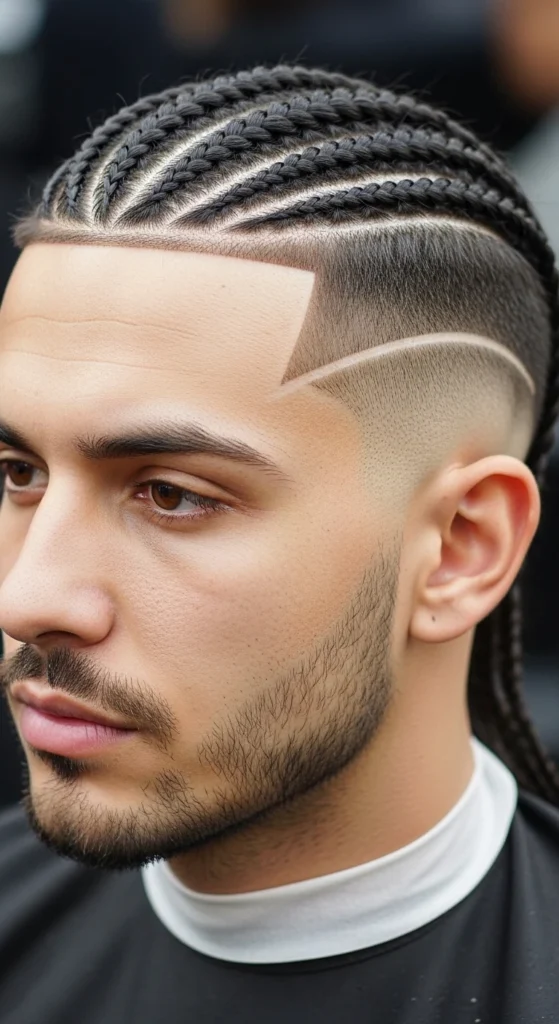
Braided hair styled from side parting. Protective styling with structure.
Best for: Textured hair, protective styling needs
Side Part with Facial Hair
Side Part with Beard
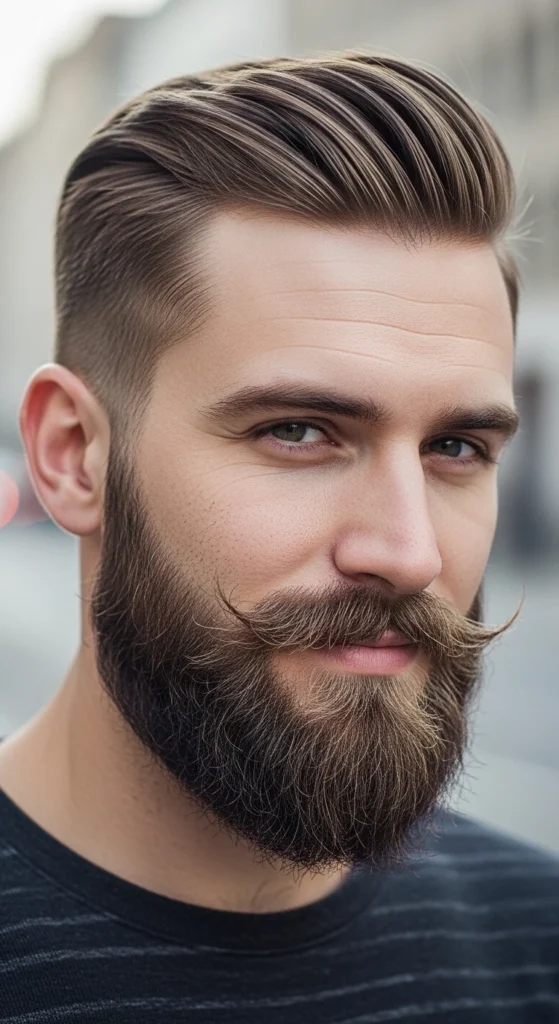
Polished parted top contrasting with full facial hair. Masculine balance combining refinement with ruggedness.
Styling tip: Match grooming levels—neat beard with polished hair, textured beard with relaxed hair
Best for: Mature sophistication
Side Part with Stubble
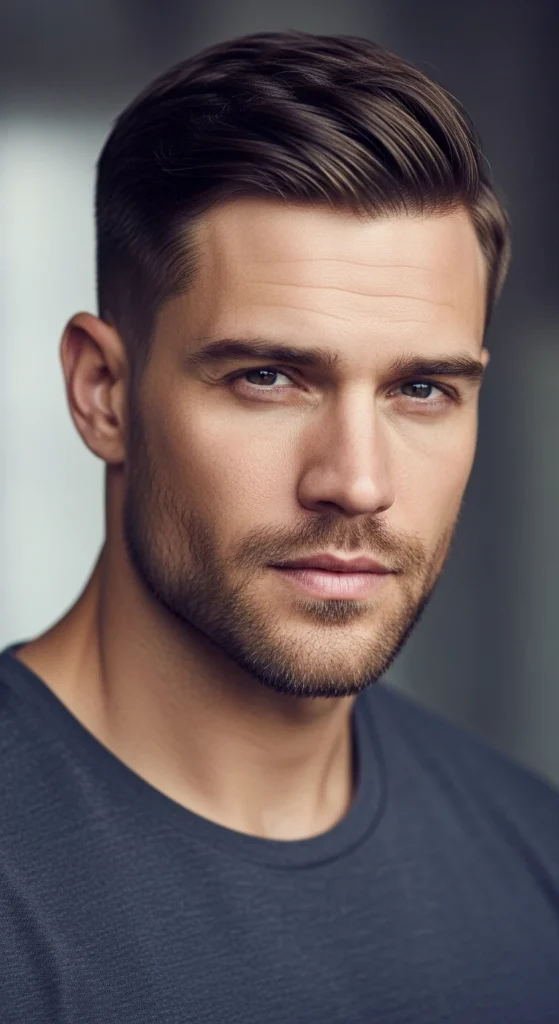
Clean side part with light facial hair. Casual sophistication without full beard commitment.
Best for: Relaxed professional settings
The 70/30 and 80/20 Ratio Explained in Side Part Haircut
One of the most frequently asked questions about side parts involves the hair distribution ratio—a technical detail most guides overlook entirely.
A 70/30 side part refers to how hair is distributed on each side of the part line:
- 70% of hair falls on the heavy side (the larger section you comb away from the part)
- 30% of hair remains on the short side (the smaller section)
This asymmetrical ratio creates the classic side part silhouette that has remained popular for over a century.
Some barbers use an 80/20 ratio for more dramatic contrast, while a 60/40 ratio creates subtler asymmetry for those wanting a more balanced appearance.
Why This Matters: Understanding your ratio helps you communicate precisely with your barber and achieve the exact look you envision. A higher ratio (80/20) creates more dramatic contrast; a lower ratio (60/40) appears more natural and balanced.
Historical Significance
The side part rose to prominence during the 1920s when Hollywood icons like Cary Grant and Clark Gable popularized the sleek, sophisticated look. It became the defining hairstyle of the American gentleman through the 1950s and 1960s, immortalized by figures like James Dean and later by Don Draper (played by Jon Hamm) in the iconic television series Mad Men.
Today, celebrities like Ryan Gosling, David Beckham, George Clooney, and Brad Pitt continue wearing various side part interpretations, proving its timeless appeal transcends generations.
Soft Part vs. Hard Part
The side part divides into two distinct categories:
| Type | Definition | Aesthetic | Maintenance |
| Soft/Natural Part | Combed division; no razor line | Classic, conservative, subtle | Self-maintaining |
| Hard Part | Razor or clipper-shaved line | Modern, edgy, defined | Touch-ups every 1-2 weeks |
How to Find Your Natural Part (Which Side Should You Part?)
One of the most common anxieties about the side part involves determining which side to part. The answer lies in your natural hair growth pattern.
The Cowlick Method
Your cowlick (the hair whorl typically located at your crown) determines your natural parting direction:
- Clockwise growth pattern = Natural part on LEFT side
- Counter-clockwise growth pattern = Natural part on RIGHT side
Following your natural growth direction makes styling significantly easier because your hair naturally falls into place rather than fighting against its grain.
The Wet Hair Test
If you cannot locate your cowlick, try this simple method:
- Wet your hair thoroughly
- Comb all hair forward toward your forehead
- Let your hair fall naturally without direction
- Where your hair naturally splits = your natural part location
Left Part vs. Right Part
Statistically, approximately 60-70% of people naturally part on the left side (hair falls right). However, either side works—the key is consistency and following your natural growth pattern when possible.
Can you override your natural part? Absolutely. With consistent heat-styling and product, you can train your hair to part on the opposite side. However, this requires more daily effort and stronger-hold products.
Part Placement Height
Beyond left vs. right, where you place the part vertically matters:
| Placement | Effect | Best For |
| Temple level | Most common: balanced appearance | Most face shapes |
| Higher placement | Adds perceived height | Round faces |
| Lower placement | More conservative; subtle | Professional settings |
| Diagonal line | Modern, dynamic | Fashion-forward looks |
Side Part Haircut Requirements: What You Need Before Starting
Minimum Hair Length
Unlike some hairstyles requiring extensive growth, the side part is achievable with relatively modest length:
| Top Length | Style Achievable |
| 3-5 cm (1.5-2 inches) | Basic side part; limited styling flexibility |
| 5-8 cm (2-3 inches) | Most variations possible; optimal versatility |
| 8+ cm (3+ inches) | Long side part; dramatic volume and flow |
Pro Tip: Measure from root to tip with hair pulled straight. If your fringe reaches your eyebrows, you have sufficient length for most side part variations.
Hair Type Compatibility
Every hair texture can achieve a side part, though approaches differ:
| Hair Type | Description |
|---|---|
| Straight Hair | The easiest texture for side parts. Hair naturally lies flat, creating clean, defined parting lines. The challenge is adding volume—use lightweight volumizing products and blow-dry with lift at the roots. |
| Hair Type | Description |
|---|---|
| Wavy Hair | Natural advantage for modern, textured side parts. Waves add movement and dimension that straight hair requires product to achieve. Work with your natural texture rather than fighting it. |
| Hair Type | Description |
|---|---|
| Curly Hair | Requires modified technique. Create the part while hair is wet, use curl-defining products, and consider a soft/natural part rather than hard part. Allow extra length to compensate for curl shrinkage. |
| Hair Type | Description |
|---|---|
| Fine/Thin Hair | Use volumizing mousse and texture powder. Avoid heavy pomades that weigh hair down and expose scalp. Matte products create the illusion of thickness better than high-shine formulas. |
| Hair Type | Description |
|---|---|
| Thick/Coarse Hair | Requires smoothing products and thorough blow-drying for control. Strong-hold pomade tames stubborn hair. The benefit is natural volume without additional effort. |
Face Shape Suitability Guide
The side part’s versatility makes it flattering for most face shapes, but certain variations optimize the effect:
The 70/30 and 80/20 Ratio Explained in Side Part Haircut
One of the most frequently asked questions about side parts involves the hair distribution ratio—a technical detail most guides overlook entirely.
A 70/30 side part refers to how hair is distributed on each side of the part line:
- 70% of hair falls on the heavy side (the larger section you comb away from the part)
- 30% of hair remains on the short side (the smaller section)
This asymmetrical ratio creates the classic side part silhouette that has remained popular for over a century.
Some barbers use an 80/20 ratio for more dramatic contrast, while a 60/40 ratio creates subtler asymmetry for those wanting a more balanced appearance.
Why This Matters: Understanding your ratio helps you communicate precisely with your barber and achieve the exact look you envision. A higher ratio (80/20) creates more dramatic contrast; a lower ratio (60/40) appears more natural and balanced.
Historical Significance
The side part rose to prominence during the 1920s when Hollywood icons like Cary Grant and Clark Gable popularized the sleek, sophisticated look. It became the defining hairstyle of the American gentleman through the 1950s and 1960s, immortalized by figures like James Dean and later by Don Draper (played by Jon Hamm) in the iconic television series Mad Men.
Today, celebrities like Ryan Gosling, David Beckham, George Clooney, and Brad Pitt continue wearing various side part interpretations, proving its timeless appeal transcends generations.
Soft Part vs. Hard Part
The side part divides into two distinct categories:
| Type | Definition | Aesthetic | Maintenance |
| Soft/Natural Part | Combed division; no razor line | Classic, conservative, subtle | Self-maintaining |
| Hard Part | Razor or clipper-shaved line | Modern, edgy, defined | Touch-ups every 1-2 weeks |
How to Find Your Natural Part (Which Side Should You Part?)
One of the most common anxieties about the side part involves determining which side to part. The answer lies in your natural hair growth pattern.
The Cowlick Method
Your cowlick (the hair whorl typically located at your crown) determines your natural parting direction:
- Clockwise growth pattern = Natural part on LEFT side
- Counter-clockwise growth pattern = Natural part on RIGHT side
Following your natural growth direction makes styling significantly easier because your hair naturally falls into place rather than fighting against its grain.
The Wet Hair Test
If you cannot locate your cowlick, try this simple method:
- Wet your hair thoroughly
- Comb all hair forward toward your forehead
- Let your hair fall naturally without direction
- Where your hair naturally splits = your natural part location
Left Part vs. Right Part
Statistically, approximately 60-70% of people naturally part on the left side (hair falls right). However, either side works—the key is consistency and following your natural growth pattern when possible.
Can you override your natural part? Absolutely. With consistent heat-styling and product, you can train your hair to part on the opposite side. However, this requires more daily effort and stronger-hold products.
Part Placement Height
Beyond left vs. right, where you place the part vertically matters:
| Placement | Effect | Best For |
| Temple level | Most common: balanced appearance | Most face shapes |
| Higher placement | Adds perceived height | Round faces |
| Lower placement | More conservative; subtle | Professional settings |
| Diagonal line | Modern, dynamic | Fashion-forward looks |
Side Part Haircut Requirements: What You Need Before Starting
Minimum Hair Length
Unlike some hairstyles requiring extensive growth, the side part is achievable with relatively modest length:
| Top Length | Style Achievable |
| 3-5 cm (1.5-2 inches) | Basic side part; limited styling flexibility |
| 5-8 cm (2-3 inches) | Most variations possible; optimal versatility |
| 8+ cm (3+ inches) | Long side part; dramatic volume and flow |
Pro Tip: Measure from root to tip with hair pulled straight. If your fringe reaches your eyebrows, you have sufficient length for most side part variations.
Hair Type Compatibility
Every hair texture can achieve a side part, though approaches differ:
| Hair Type | Description |
|---|---|
| Straight Hair | The easiest texture for side parts. Hair naturally lies flat, creating clean, defined parting lines. The challenge is adding volume—use lightweight volumizing products and blow-dry with lift at the roots. |
| Hair Type | Description |
|---|---|
| Wavy Hair | Natural advantage for modern, textured side parts. Waves add movement and dimension that straight hair requires product to achieve. Work with your natural texture rather than fighting it. |
| Hair Type | Description |
|---|---|
| Curly Hair | Requires modified technique. Create the part while hair is wet, use curl-defining products, and consider a soft/natural part rather than hard part. Allow extra length to compensate for curl shrinkage. |
| Hair Type | Description |
|---|---|
| Fine/Thin Hair | Use volumizing mousse and texture powder. Avoid heavy pomades that weigh hair down and expose scalp. Matte products create the illusion of thickness better than high-shine formulas. |
| Hair Type | Description |
|---|---|
| Thick/Coarse Hair | Requires smoothing products and thorough blow-drying for control. Strong-hold pomade tames stubborn hair. The benefit is natural volume without additional effort. |
Face Shape Suitability Guide
The side part’s versatility makes it flattering for most face shapes, but certain variations optimize the effect:
| Face Shape | Description |
|---|---|
| Oval Face | Universal compatibility. Any side part variation—classic, fade, undercut, textured—complements oval proportions. You have maximum freedom to choose based on personal preference. |
| Round Face | Add height and angles to elongate. Choose high fade or hard part variations that create vertical lines. Avoid flat, sleek styles that emphasize width. A side part with volume on top visually lengthens the face. |
| Square Face | Your strong jawline is an asset. Classic side parts highlight masculine angles beautifully. Both sleek and textured variations work well. Avoid extremely soft styling that minimizes your natural structure. |
| Long/Oblong Face | Avoid excessive height that further elongates. Choose textured, voluminous styles with width rather than height. Keep the part lower; add volume at the sides rather than the crown. |
| Heart-Shaped Face | Balance the wider forehead with volume at jaw level. Avoid high fades that emphasize the forehead. Keep side volume; a soft, natural part works better than dramatic hard parts. |
| Diamond Face | Balance prominent cheekbones with medium volume. Classic tapers work well. Avoid extremes—neither too voluminous nor too tight on the sides. |
Side Part vs. Similar Hairstyles: Key Differences
Understanding distinctions between the side part and related styles helps you communicate precisely with your barber.
Side Part vs. Middle Part
| Feature | Side Part | Middle Part |
| Parting location | Off-center (temple area) | Center of head |
| Symmetry | Asymmetrical | Symmetrical |
| Face shape effect | Adds angles; elongates | Emphasizes symmetry |
| Aesthetic | Classic, professional | Modern, K-pop influenced |
| Best for | Most face shapes | Symmetrical features |
Side Part vs. Comb Over
| Feature | Side Part | Comb Over |
| Direction | Hair parts to side; visible line | Hair combed across; may cover thinning |
| Part visibility | Defined, prominent | May be subtle or hidden |
| Primary purpose | Style choice | Often coverage-focused |
| Aesthetic | Structured, intentional | Can appear natural or deliberate |
Side Part vs. Slick Back
| Feature | Side Part | Slick Back |
| Direction | To one side | Straight backward |
| Parting | Required (defining feature) | No parting |
| Maintenance | Lower (works with gravity) | Higher (fighting gravity) |
| Length needed | 3-5 cm | 10-15 cm (4-6 inches) |
Hard Part vs. Soft Part
| Feature | Hard Part | Soft/Natural Part |
| Creation | Razor/clipper shaved line | Combed division |
| Definition | Sharp, dramatic | Subtle, natural |
| Maintenance | Touch-ups every 1-2 weeks | Self-maintaining |
| Aesthetic | Modern, edgy | Classic, conservative |
How to Get a Side Part Haircut
What to Tell Your Barber (Exact Script)
Clear communication prevents disappointment. Use these specific phrases:
Step 1: Describe the Top
“I want the top left long enough to part—about 3-4 inches. Keep it longer toward the fringe for styling flexibility. Don’t thin it out too much.”
Step 2: Specify the Sides Choose your preference:
“For the sides, I’d like a low fade” (conservative) “Give me a mid fade” (versatile) “I want a high skin fade” (dramatic) “Just a classic taper, no fade” (traditional)
Step 3: Hard Part or Natural Part
“I want a hard part—razored line for sharp definition” OR “Keep it a natural/soft part—I’ll comb it in myself”
Step 4: Part Placement
“Part it on my [left/right] side, starting at the temple and running toward the crown”
Step 5: Neckline
“For the neckline, I prefer it blocked (squared off) / rounded (natural curve) / tapered (gradual fade)”
Essential: Bring 2-3 reference photos showing front, side, and back views. Visual references eliminate ambiguity.
Barber Terminology Glossary
| Term | Meaning |
| Side part | Hair divided to one side with defined line |
| Hard part | Razor-shaved line creating sharp parting |
| Soft/natural part | Combed parting without razor line |
| Fade | Gradual blend from very short (or skin) to longer |
| Taper | Gradual length reduction (not to skin) |
| Undercut | Disconnected; buzzed sides with no blend |
| 70/30 | Hair distribution ratio (70% heavy side) |
| Cowlick | Natural hair whorl determining part direction |
| Blend | Smooth transition between lengths |
Clipper Guard Specifications
| Guard Number | Length | Use For |
| No guard | Skin | Skin/bald fade bottom |
| #1 | 1/8″ (3mm) | Low fade bottom; skin fade blend |
| #2 | 1/4″ (6mm) | Mid fade bottom; low fade top |
| #3 | 3/8″ (10mm) | Conservative sides; taper start |
| #4 | 1/2″ (13mm) | Fuller sides; classic taper |
| #5 | 5/8″ (16mm) | Longer sides; minimal reduction |
How to Style a Side Part Haircut
Step 1: Start with Clean, Damp Hair
Begin with freshly washed hair using quality shampoo, followed by lightweight conditioner for manageability. Towel dry until 70-80% damp—wet enough to comb, dry enough for products to absorb properly.
Step 2: Create the Part Line
- Use a fine-tooth comb
- Start at the temple (corner of your eyebrow serves as a guide)
- Draw a line toward the crown
- Create a slight diagonal (looks more natural than ruler-straight)
- Comb hair on each side away from the part
Step 3: Apply Pre-Styler
Before blow-drying, apply a foundation product:
- Sea salt spray: Adds grip, texture, volume
- Volumizing mousse: Builds body for fine hair
- Heat protectant: Essential when using blow-dryer
Distribute evenly from roots to ends.
Step 4: Blow-Dry into Shape
This step determines whether your style lasts all day or collapses within hours.
Technique:
- Set blow-dryer to medium heat
- Use a round brush or vent brush
- Direct airflow in the direction of your part (away from the line)
- Lift at roots for volume
- On the heavy side: Blow backward and to the side
- On the short side: Blow flat against the head
- Continue until completely dry (any moisture causes collapse)
- Finish with cool shot to lock the shape
Step 5: Apply Finishing Product
| Desired Finish | Product Type | Application Method |
| High shine (classic) | Pomade, gel | Comb through with fine-tooth comb |
| Natural (modern) | Styling cream, fiber | Finger-style for natural movement |
| Matte (textured) | Clay, matte paste | Work through; allow separation |
| Light hold (casual) | Sea salt spray, texture powder | Spritz/sprinkle; tousle |
Application Method:
- Scoop dime-sized amount into palms
- Rub until warm and evenly distributed
- Work through hair from back to front
- Use comb for sleek finish OR fingers for texture
- Define part line with comb edge
Step 6: Set and Finish
- Light hairspray mist for all-day hold
- Drop of argan oil for extra shine (optional)
- Final comb-through for polish
Troubleshooting Common Side Part Problems
My Part Won’t Stay in Place
Causes & Solutions:
- Hair too short: Grow to 3+ inches minimum; use stronger-hold products temporarily
- Fighting natural growth: Switch to your natural part side; follow cowlick direction
- Wrong product: Upgrade hold strength (cream → pomade → gel)
- Not blow-drying: Heat-set the part direction while drying; cool shot to lock
My Part Looks Crooked
Solutions:
- Use eyebrow corner as starting reference point
- Create slight diagonal rather than straight line
- Follow natural growth pattern
- Use fine-tooth comb for precision
- Check from multiple mirror angles
Hard Part Growing Out Unevenly
Solutions:
- Schedule touch-ups every 1-2 weeks
- Use trimmer at home between barber visits
- Ask barber to cut slightly wider for longer maintenance window
Part Line Shows Too Much Scalp
Solutions:
- Part line may be too deep; create shallower angle
- Use texture powder to add fullness along part
- Consider soft/natural part instead of hard part
- Blow-dry hair toward (not away from) part for coverage
“Hair Falls Flat After an Hour”
Solutions:
- Apply pre-styler before blow-drying
- Dry hair completely—moisture causes collapse
- Use volumizing mousse at roots
- Finish with texture powder for lift
- Light hairspray for lasting hold
Side Part Looks Dated/Old-Fashioned
Solutions:
- Add texture instead of sleek finish
- Use matte products instead of high-shine
- Pair with modern fade instead of classic taper
- Try messy/textured variation
- Reduce product amount for natural movement
Best Products for Side Part Hairstyles
By Product Type
Pomade (Water-Based)
- Finish: High shine
- Hold: Medium to strong
- Best for: Classic, polished side parts
- Pros: Easy wash-out; restyle throughout day
- Cons: May not hold in humidity
Pomade (Oil-Based)
- Finish: High shine
- Hold: Strong
- Best for: All-day hold; formal occasions
- Pros: Superior hold; conditions hair
- Cons: Difficult to wash out; builds up
Hair Gel
- Finish: Wet, shiny
- Hold: Extreme
- Best for: Maximum hold; sleek formal styles
- Pros: Strongest hold; affordable
- Cons: Can flake; stiff feel
Styling Clay
- Finish: Matte
- Hold: Strong
- Best for: Modern, textured side parts
- Pros: Natural look; adds texture
- Cons: Can be difficult to distribute evenly
Styling Cream
- Finish: Natural, low shine
- Hold: Light to medium
- Best for: Everyday wear; fine hair
- Pros: Lightweight; no stiffness
- Cons: May need reapplication
Molding Paste
- Finish: Low shine
- Hold: Medium
- Best for: Textured styles; separation
- Pros: Reworkable; natural movement
- Cons: May not hold thick hair all day
Sea Salt Spray
- Finish: Matte, textured
- Hold: Light
- Best for: Pre-styling; messy side parts
- Pros: Adds grip and volume
- Cons: Can dry hair with overuse
Texture Powder
- Finish: Matte
- Hold: Light to medium
- Best for: Root lift; fine hair volume
- Pros: Instant volume; invisible
- Cons: Can look dusty if over-applied
Product Recommendations by Hair Type
| Hair Type | Primary Product | Secondary Product |
| Fine/Thin | Texture powder, volumizing mousse | Styling cream |
| Thick/Coarse | Strong-hold pomade | Smoothing cream |
| Wavy | Sea salt spray | Light pomade |
| Curly | Curl cream | Anti-frizz serum |
| Straight | Any pomade/clay | Based on desired finish |
How to Maintain Your Side Part Haircut
Trim Frequency Schedule
| Style Element | Recommended Frequency |
| Hard part line | Every 1-2 weeks |
| Skin fade | Every 1-2 weeks |
| Regular fade | Every 2 weeks |
| Taper | Every 3-4 weeks |
| Top length | Every 4-6 weeks |
| Neckline cleanup | Every 2-3 weeks |
Daily Styling Routine (5-Minute Method)
- Dampen hair with spray bottle (30 seconds)
- Create part with fine-tooth comb (15 seconds)
- Apply product to palms; work through (30 seconds)
- Blow-dry in direction of style (2 minutes)
- Final comb-through for polish (1 minute)
- Optional hairspray mist (10 seconds)
Between-Wash Refresh
- Day 2-3: Use dry shampoo at roots; re-comb part
- Quick touch-up: Small product amount on fingertips; reshape
- Travel-size pomade for midday fixes when needed
Hair Health Tips
- Use clarifying shampoo weekly to remove product buildup
- Apply hydrating conditioner after every wash
- Use argan oil 1-2x weekly for shine and moisture
- Avoid overwashing (2-3x per week maximum preserves natural oils)
- Get regular trims to prevent split ends
Side Part for Different Audiences
Side Part for Curly Hair
Challenges:
- Curls resist defined parting
- Frizz at part line
- Shrinkage affects length perception
Solutions:
- Grow hair longer than straight-haired counterparts
- Use curl cream + anti-frizz serum
- Create part while hair is wet
- Use diffuser when drying
- Consider soft/natural part rather than hard part
- Embrace curly texture within the parted structure
Side Part for Wavy Hair
Advantages:
- Natural texture adds movement and dimension
- Waves soften the part line appealingly
- Less product needed than straight hair
Styling Approach:
- Enhance waves with sea salt spray
- Use fingers rather than comb for natural finish
- Blow-dry with diffuser to maintain wave pattern
Side Part for Thin/Thinning Hair
Considerations:
- Avoid hard parts that expose scalp
- Use volumizing products religiously
- Create less-defined, softer parting
Recommendations:
- Texture powder at roots for lift
- Matte products (shine emphasizes thinness)
- Lower part placement for better coverage
- Blow-dry with maximum lift for fullness
Side Part for Receding Hairline
Strategies:
- Lower part placement (away from temples)
- Soft/natural part (less scalp exposure)
- Textured styling (creates illusion of fullness)
- Avoid slick/wet-look finishes that separate strands
Side Part for Wedding/Formal Events
Recommendations:
- Classic or gentleman’s side part
- High-shine pomade for polished finish
- Consider hard part for extra sharpness
- Schedule barber visit 3-5 days before event (allows settling)
- Practice styling beforehand
- Bring travel-size product for touch-ups
Is the Side Part Attractive? (Style Validation)
Why the Side Part Remains Timeless
- Structure and symmetry: Creates balanced, proportional appearance
- Professional appeal: Communicates competence and attention to detail
- Versatility: Transitions seamlessly from boardroom to bar
- Universal flattery: Complements most face shapes
- Celebrity endorsement: Continuously worn by style icons for a century
Celebrity Examples
- Ryan Gosling — Modern, textured side part
- David Beckham — Various iterations; quiff combo
- George Clooney — Classic, sophisticated elegance
- Brad Pitt — Relaxed, natural side part
- Chris Hemsworth — Long, flowing variation
- Don Draper (Jon Hamm) — Iconic Mad Men aesthetic
- Cary Grant — Hollywood Golden Age elegance
- Cristiano Ronaldo — Hard part fade
- John Boyega — Modern hard part
When to Wear a Side Part
| Occasion | Recommended Variation |
| Job interview | Classic or Ivy League; polished finish |
| Wedding | Gentleman’s side part; hard part for sharpness |
| First date | Modern, natural finish; not over-styled |
| Office daily | Medium hold; professional but approachable |
| Night out | Textured or messy; relaxed aesthetic |
| Formal event | High-shine pomade; sleek finish |
Frequently Asked Questions
What is the best haircut for a side part?
The best haircuts for a side part include the classic taper for professional settings, low fade for modern sharpness, mid fade for versatility, and undercut for bold contrast. Your choice depends on workplace environment, face shape, and desired maintenance level. The top should be 3-5 inches for optimal parting flexibility.
What is a 70/30 side part?
A 70/30 side part refers to the ratio of hair distribution on each side of the part line. Approximately 70% of hair falls on the heavy side (the side you comb away from), while 30% remains on the short side. This asymmetrical distribution creates the classic side part silhouette. Some styles use an 80/20 ratio for more dramatic contrast or 60/40 for subtler asymmetry.
Which side should I part my hair?
Part your hair based on your natural growth pattern. Find your cowlick (hair whorl at crown): if it grows clockwise, your natural part is on the left; if counter-clockwise, part on the right. Alternatively, wet your hair, push it forward, and let it fall naturally—where it splits indicates your natural part. Following natural growth makes daily styling significantly easier.
How do I style a side part?
- Start with clean, damp hair
- Use fine-tooth comb to create part line from temple toward crown
- Apply pre-styler (sea salt spray or mousse)
- Blow-dry in direction of style, lifting at roots for volume
- Apply finishing product (pomade for shine, clay for matte)
- Use comb for sleek finish or fingers for texture
- Set with light hairspray if needed
What is a hard part vs. natural part?
A hard part is a line shaved with a razor or clipper into your hair, creating sharp, dramatic definition requiring touch-ups every 1-2 weeks. A natural/soft part is simply combed into place without shaving, creating a subtle, classic look that maintains itself between cuts.
What is a side fade?
A side fade refers to any fade haircut on the sides of the head—a gradual blend from very short (or skin) to longer length. A side part fade specifically combines a defined side parting with faded sides. Common variations include low fade (conservative), mid fade (versatile), high fade (dramatic), and skin fade (maximum contrast).
Is the side part still in style?
Absolutely. The side part remains one of the most popular and versatile men’s hairstyles. Modern interpretations include textured finishes, messy variations, and combinations with contemporary fades. Its longevity comes from universal flattery and adaptability—it works for casual and formal settings equally, which is why celebrities continue wearing it generation after generation.
What face shape suits a side part best?
The side part suits most face shapes. Oval faces have universal compatibility. Square faces benefit from angular definition. Round faces should add height and use hard parts to create elongating angles. Long/oblong faces should avoid excessive height; keep volume balanced. Heart-shaped faces should maintain side volume to balance the forehead.
How often should I get my side part trimmed?
- Hard part line: Every 1-2 weeks
- Skin/high fade: Every 1-2 weeks
- Mid/low fade: Every 2 weeks
- Taper: Every 3-4 weeks
- Top length: Every 4-6 weeks
What products work best for a side part?
- Classic shine: Water-based pomade or gel
- Natural finish: Styling cream or fiber
- Matte texture: Clay or matte paste
- Light hold: Sea salt spray + texture powder
Match product to your hair type: fine hair needs lighter products; thick hair requires strong-hold formulas.
Can I get a side part with curly hair?
Yes, curly hair can achieve a side part with modified technique. Grow hair longer for weight, create the part while hair is wet, use curl cream and anti-frizz serum, and consider a soft/natural part rather than hard part. A diffuser when drying helps maintain curl pattern while setting the part direction.
What’s the difference between a side part and comb over?
A side part divides hair with a visible line, styling hair to one side with the part as a defining feature. A comb over combs hair across the head, sometimes to cover thinning areas, with the part line potentially hidden or subtle. The side part emphasizes the parting as intentional styling; the comb over emphasizes the hair sweeping across.