
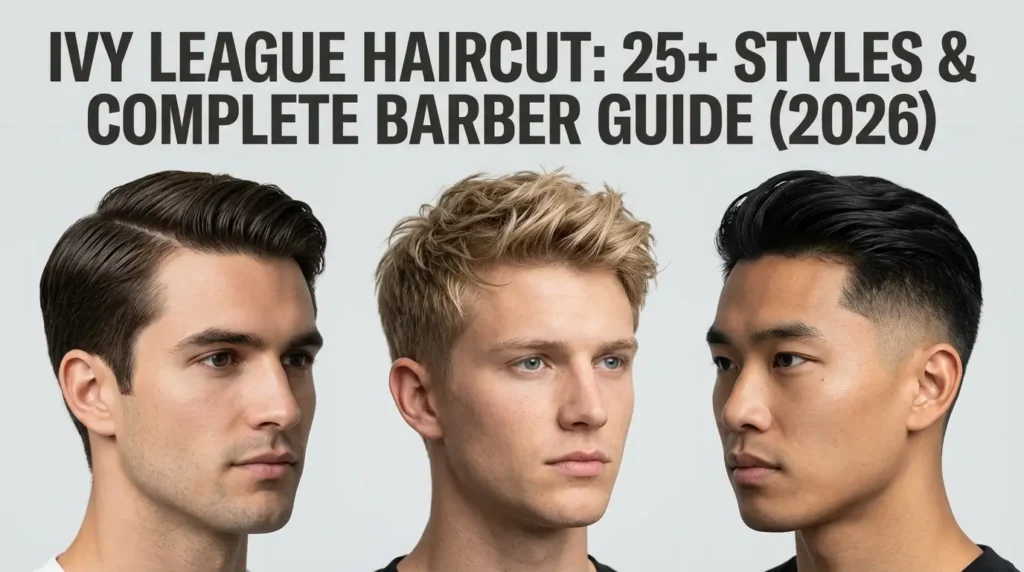
The Ivy League haircut is the definition of refined masculinity – a cut that signals intelligence, professionalism, and timeless style without trying too hard. It’s the haircut that helped define an era of American sophistication and continues to dominate boardrooms, campuses, and red carpets alike.
This classic men’s hairstyle also known as the Harvard Clip, Princeton cut, or West Point, features shorter tapered or faded sides with a longer top that’s just long enough to part. That partability is the defining characteristic that separates it from the standard crew cut.
John F. Kennedy made it iconic. Ryan Gosling modernized it. Matt Damon proved it works in any setting. And in 2026, the Ivy League remains one of the most requested cuts in barbershops worldwide because it delivers something rare: polished versatility.
Whether you want the slicked-back classic or a textured modern variation, this guide covers every style, exact measurements for your barber, step-by-step styling, and maintenance schedules to keep you looking sharp.
What Is an Ivy League Haircut?
The Ivy League haircut is a refined version of the classic crew cut where the hair on the front of the head is long enough to style with a side part (typically 1.5-2 inches), while the crown is cut progressively shorter (0.5-1 inch). The sides are tapered or faded for a clean, polished appearance.
The name tells the story: this cut originated on Ivy League university campuses, Harvard, Princeton, Yale, during the 1950s and 1960s. It fit the preppy, refined aesthetic that defined elite American education and quickly became a symbol of old-school sophistication.
27 Ivy League Haircut Styles for Men
The Ivy League adapts beautifully to different preferences, hair textures, and settings. Here are the most popular variations organized by category:
1. Classic Ivy League Haircut
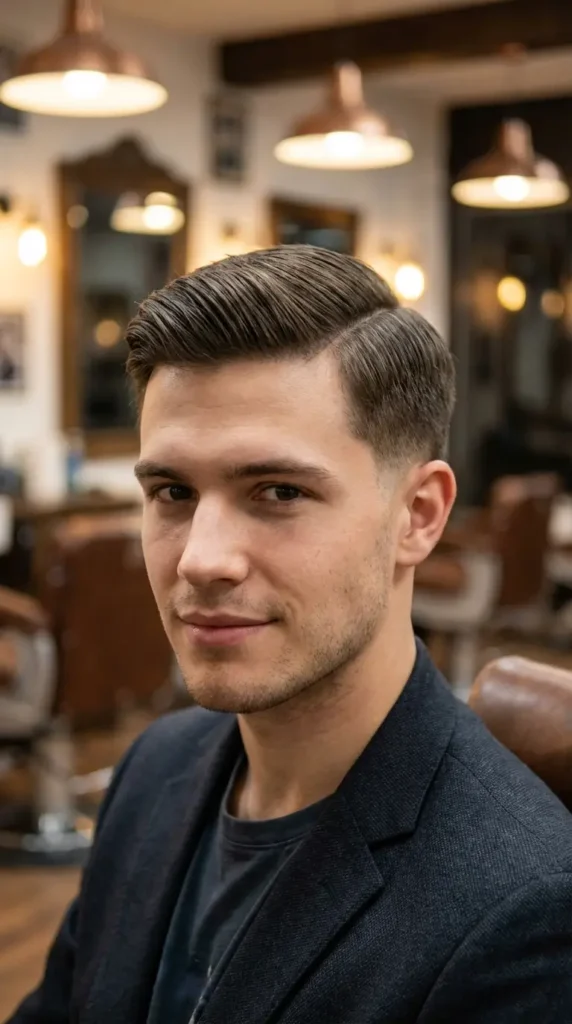
The original. Features a defined side part, tapered sides with no skin showing, and a polished, combed finish. This is the JFK look, the haircut that defined American presidential style. Best achieved with pomade for shine and control, combed into place with precision.
2. Preppy Ivy League
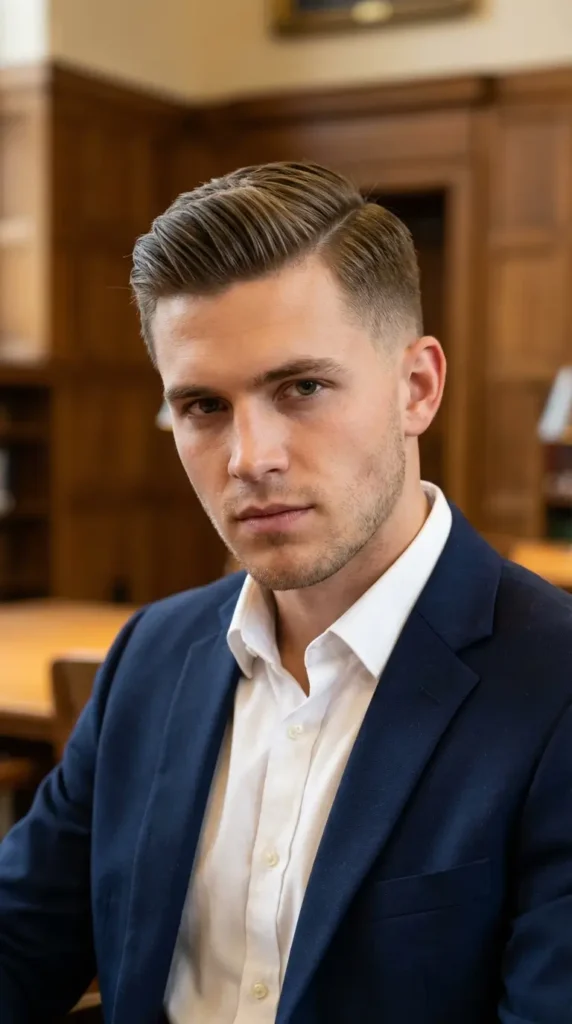
The campus favorite. Elegant and traditional with neat comb texture and just a hint of shine. This variation emphasizes the Ivy League’s academic origins, refined without being rigid. Perfect for formal events, job interviews, or any setting requiring polished professionalism.
3. Side Part Ivy League
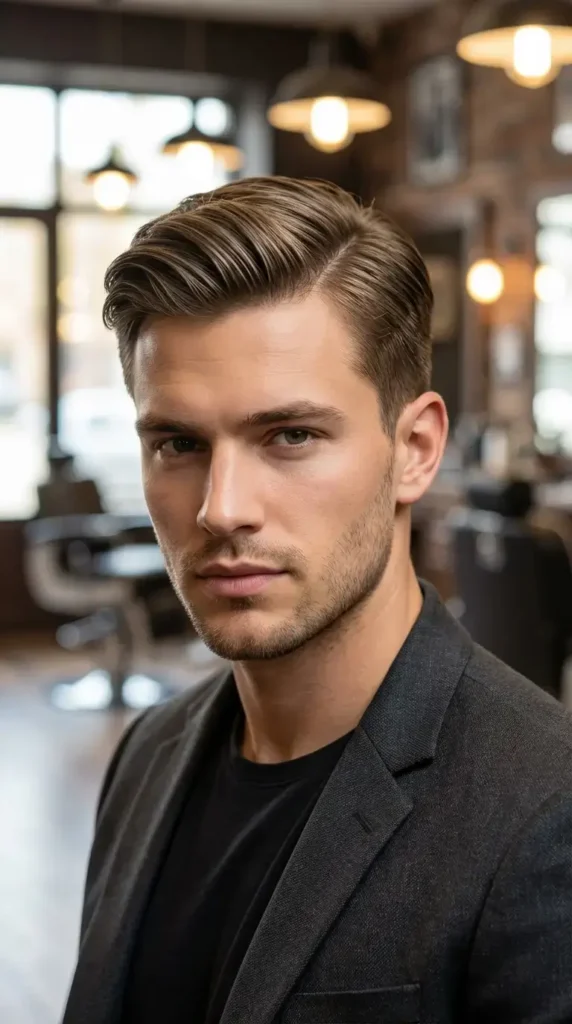
The defined part creates unmistakable structure. The longer top allows smooth flow and subtle volume while tapered sides maintain balance. This is the most versatile classic variation, dress it up with pomade or keep it natural with light cream.
4. Ivy League Comb Over
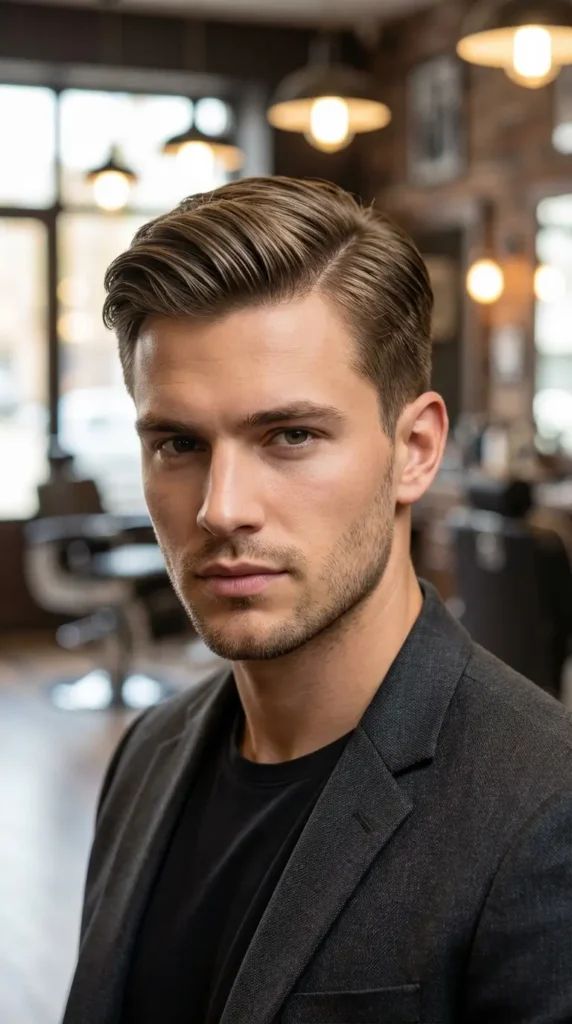
Hair swept perpendicular to a deep side part creates sophisticated directional flow. More structured than the standard side part, this variation requires pomade or styling wax for hold. The comb texture adds visual interest while maintaining professional polish.
5. Modern Ivy League Haircut
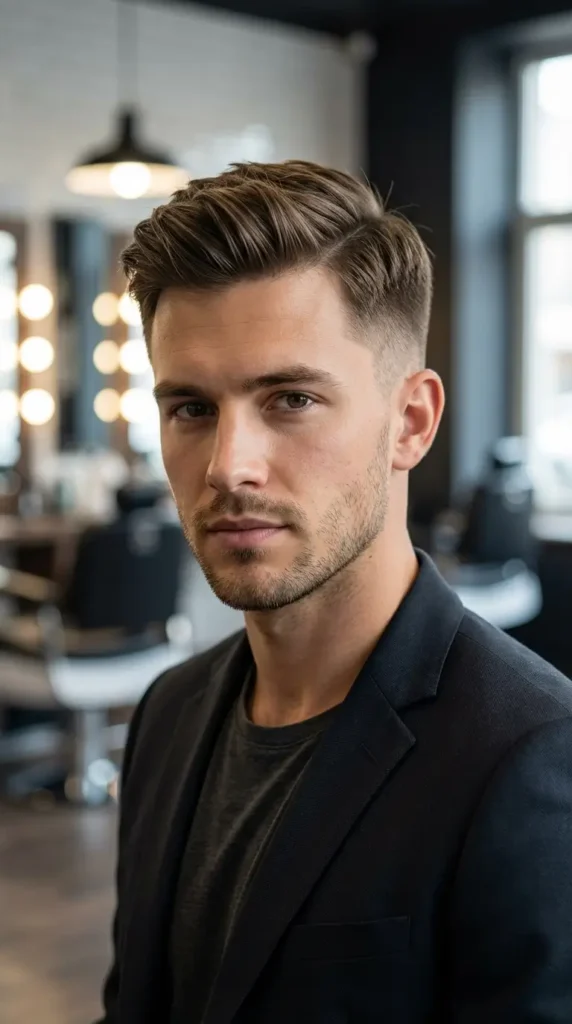
The contemporary evolution. Features faded sides for clean contrast and a textured top with natural movement. This is the Ryan Gosling approach, all the sophistication of the classic with updated, relaxed styling. Use matte clay or molding paste for lightweight control.
6. Textured Ivy League Haircut
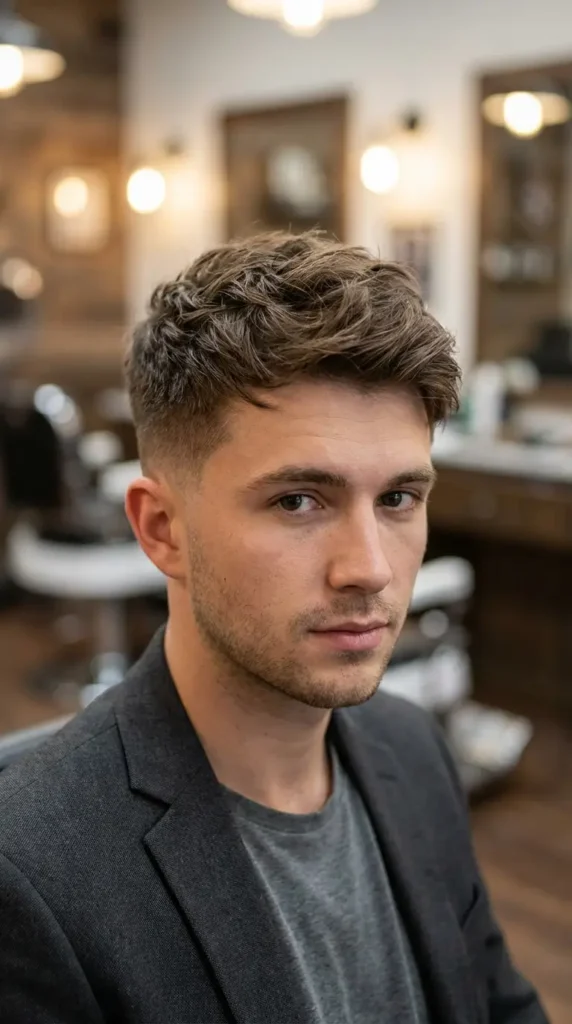
Layered top creates dimension and movement that the slicked-classic cannot achieve. The piece-y, matte finish looks effortlessly stylish rather than “done.” Best for men with thicker hair who want visual interest. Style with texture clay for definition and separation.
7. Messy Ivy League Haircut
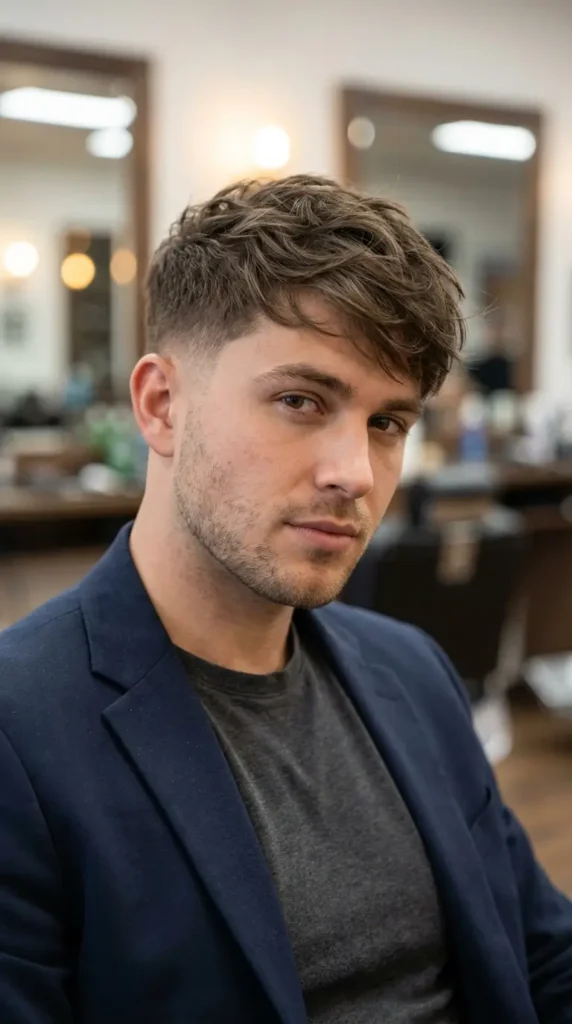
The “I woke up like this” variation. Tousled, finger-styled, and deliberately relaxed while maintaining the Ivy League’s fundamental structure. This works beautifully for weekends, creative workplaces, or anyone who prefers low-effort style. Sea salt spray plus light clay creates the perfect lived-in texture.
8. Ivy League Fade
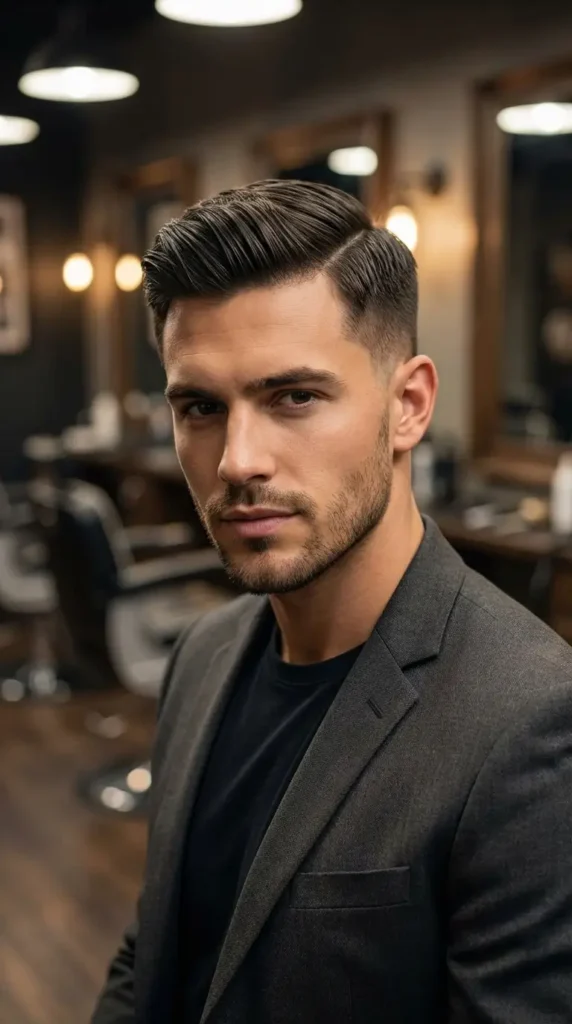
Skin fade sides create maximum contrast with the longer top, a distinctly modern update to the traditional cut. The fade can be low, mid, or high depending on how dramatic you want the contrast. Note: fades require more frequent maintenance (every 2-3 weeks) to stay sharp.
9. Short Ivy League Haircut
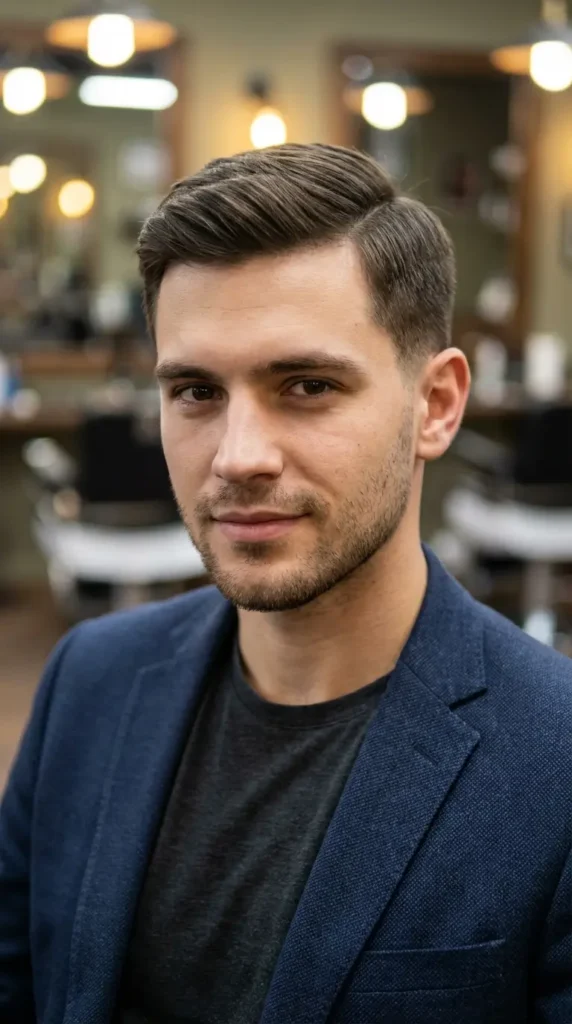
Closer to crew cut territory but with just enough length to create a subtle part. This is the ultra-low maintenance option, minimal styling required, dries quickly, and holds its shape throughout the day. Perfect for active lifestyles, hot climates, or men who prefer simplicity.
10. Medium Ivy League Haircut
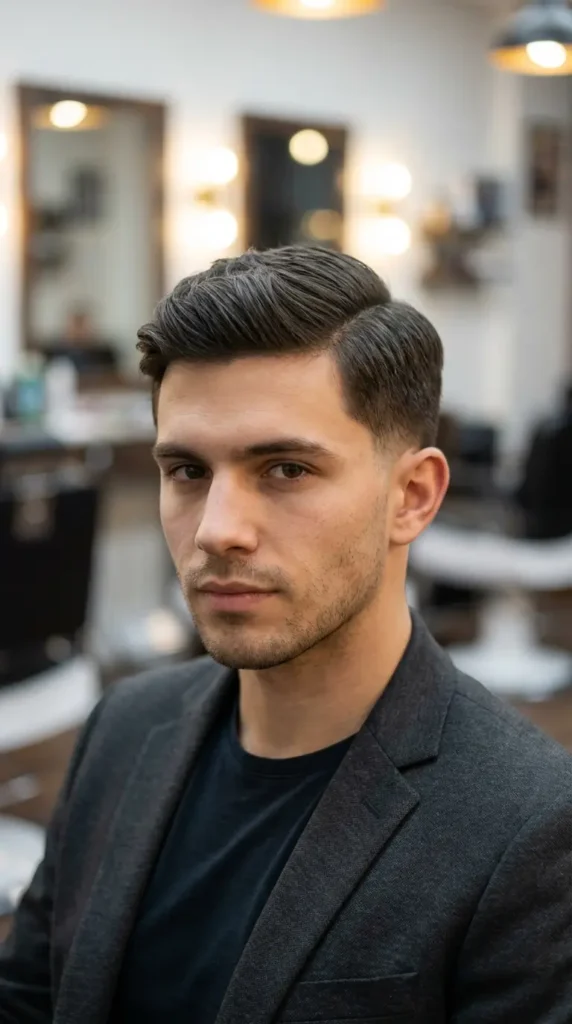
The balanced choice. Enough length for versatile styling without excessive maintenance demands. This variation works for most face shapes and allows you to shift between polished and casual depending on how you style it. The most popular choice for first-time Ivy League wearers.
11. Long Ivy League Haircut
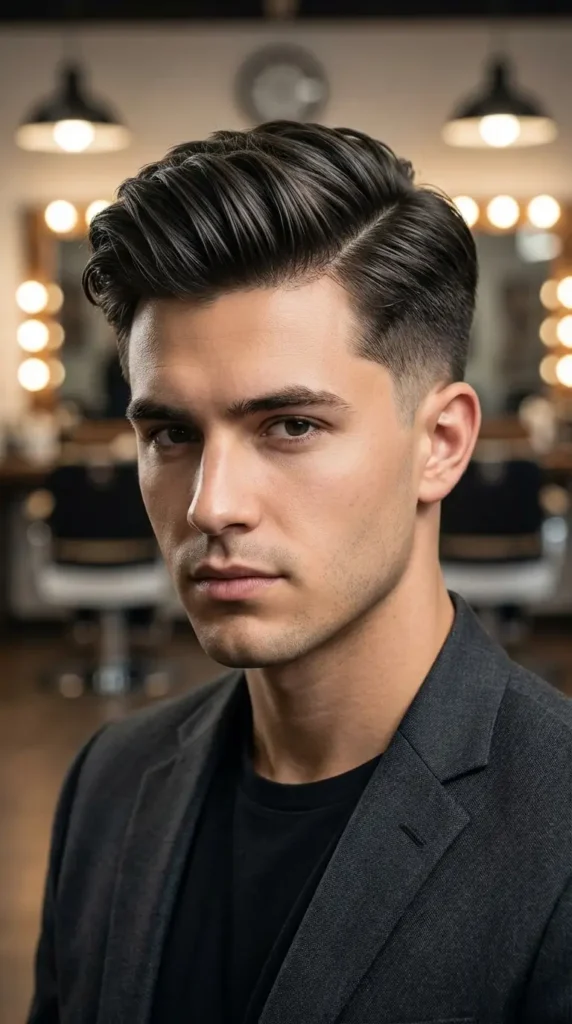
Two or more inches on top creates maximum styling flexibility. This length allows pompadour-like volume, dramatic sweeps, or textured styling that shorter versions cannot achieve. Requires more product and styling time but delivers the most visual impact.
11. Curly Ivy League Haircut
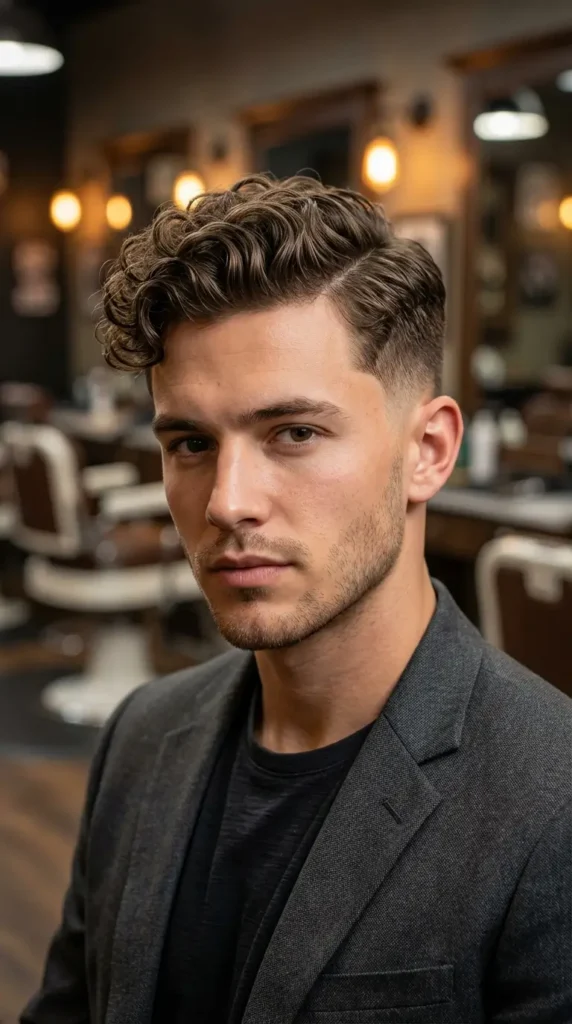
Natural curls on top with short, faded sides. The key is keeping curls slightly longer for textured control rather than fighting the natural pattern. Use curl-defining cream to enhance ringlets while reducing frizz. This variation embraces texture rather than suppressing it.
12. Wavy Ivy League Haircut
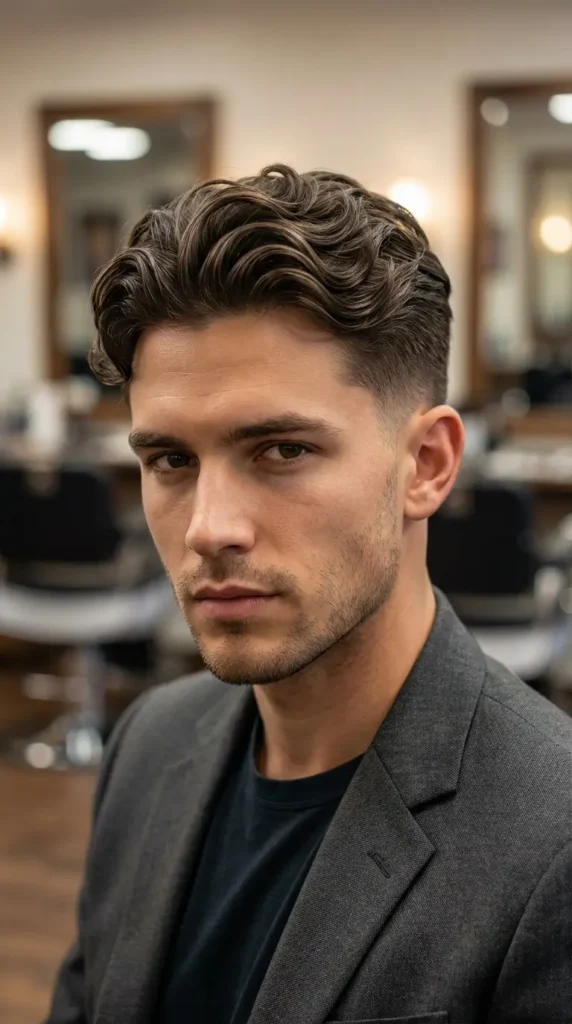
Natural waves enhanced with sea salt spray create effortless texture and movement. This is one of the lowest-maintenance variations because wavy hair provides built-in volume and interest. Light styling cream controls frizz without flattening the natural pattern.
13. Ivy League Haircut Straight Hair
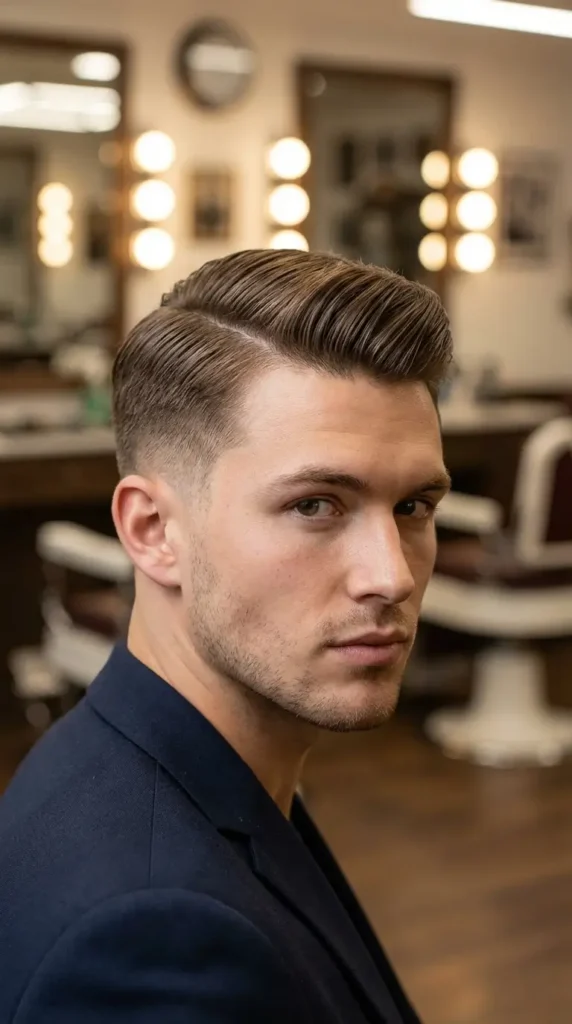
Straight hair creates the sharpest, most polished Ivy League. Clean lines and precise side parts are easiest to achieve with this texture. The challenge is adding volume, use volumizing mousse or sea salt spray before blow-drying to prevent flatness. Pomade creates the classic slick finish.
14. Taper Ivy League Haircut
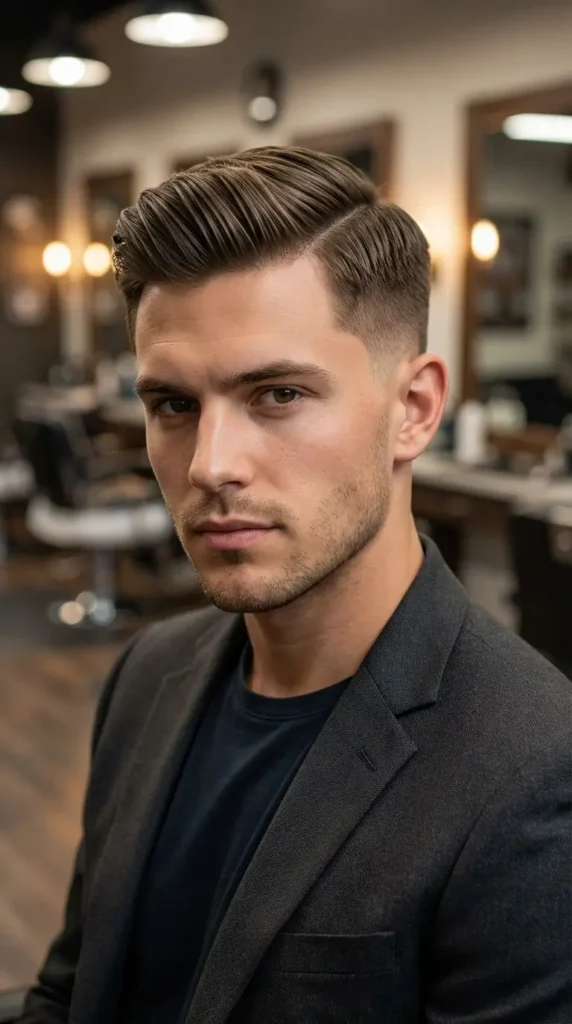
The traditional method. Gradual blend from longer top to shorter sides with no skin showing. This is the more conservative choice, appropriate for formal workplaces and traditional settings. Maintenance is easier because the taper grows out more gracefully than a fade.
15. Ivy League Low Fade
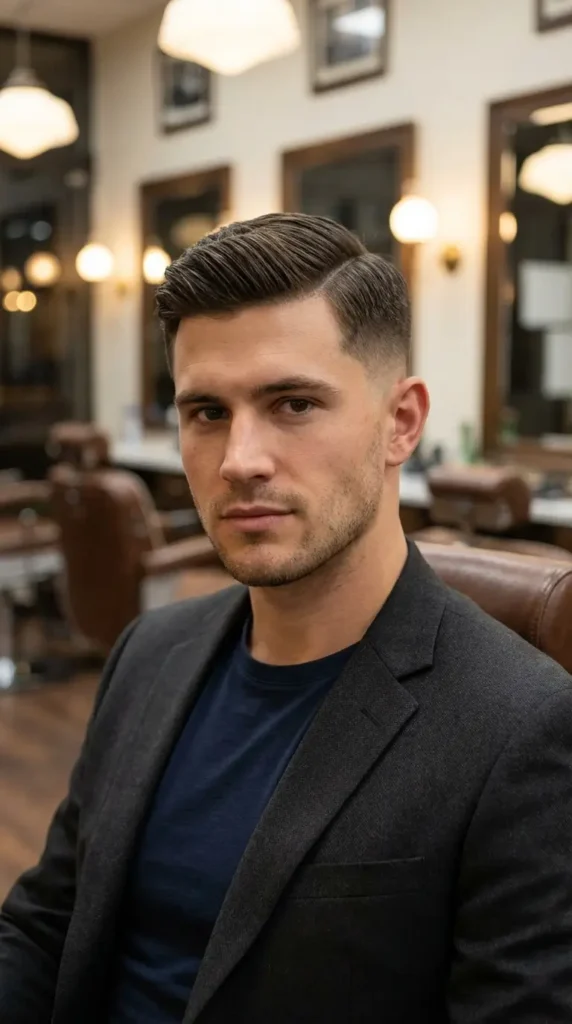
Fade begins just above the ear, creating subtle contrast while maintaining a professional appearance. This is the best “gateway” option for men wanting to try a fade without going too dramatic. Works in most professional environments.
16. Ivy League Mid Fade
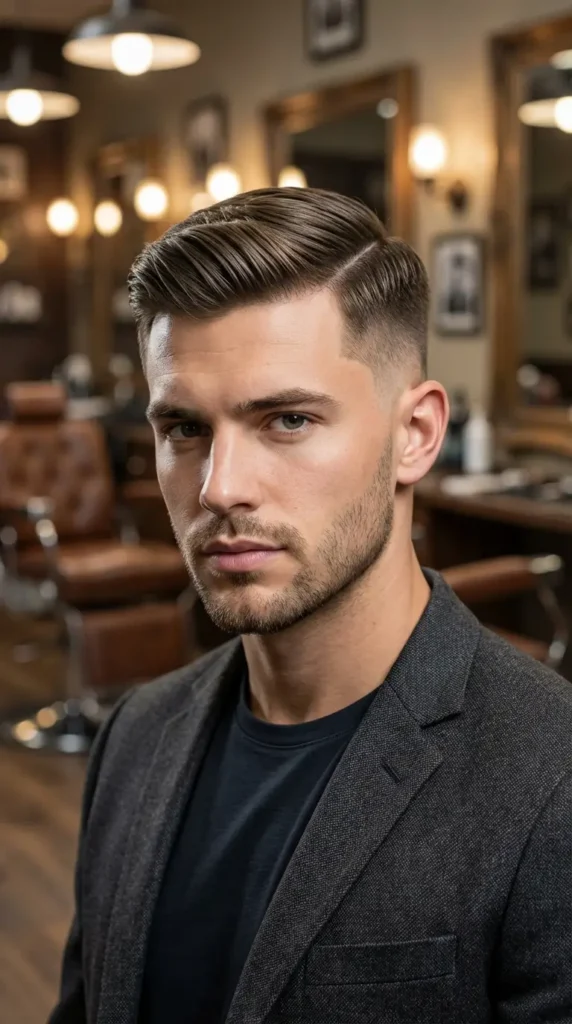
Fade begins at temple level, creating balanced contrast, not too subtle, not too dramatic. This is the “Goldilocks” fade option and the most popular choice for modern Ivy League styling.
17. Ivy League High Fade
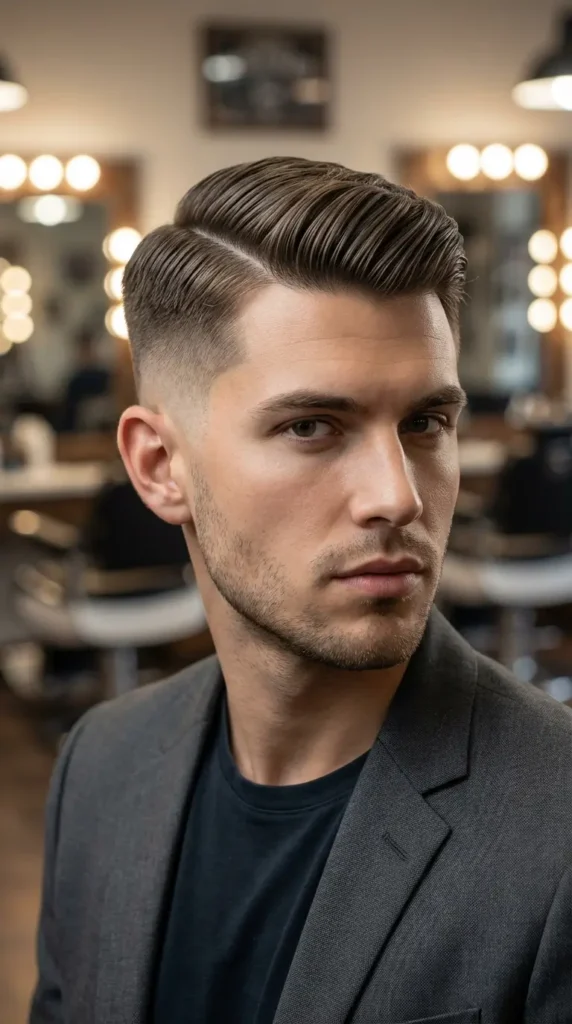
Fade begins high on the head, creating maximum contrast and a bold, youthful appearance. This is the most fashion-forward fade option but may not suit conservative workplaces. Requires touch-ups every 2 weeks to maintain sharpness.
18. Korean Ivy League Haircut
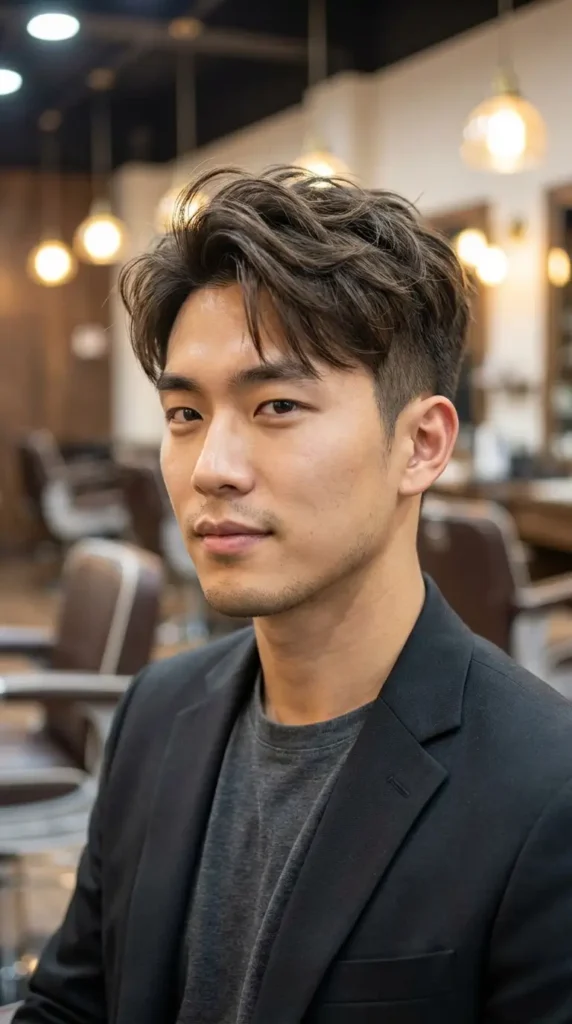
Distinctly different from the Western version. Features soft volume with forward movement rather than a traditional side part. The top is fuller and layered, often styled with a down-perm for controlled texture. This K-style variation emphasizes youthful, natural flow over rigid structure.
19. Asian Ivy League Haircut
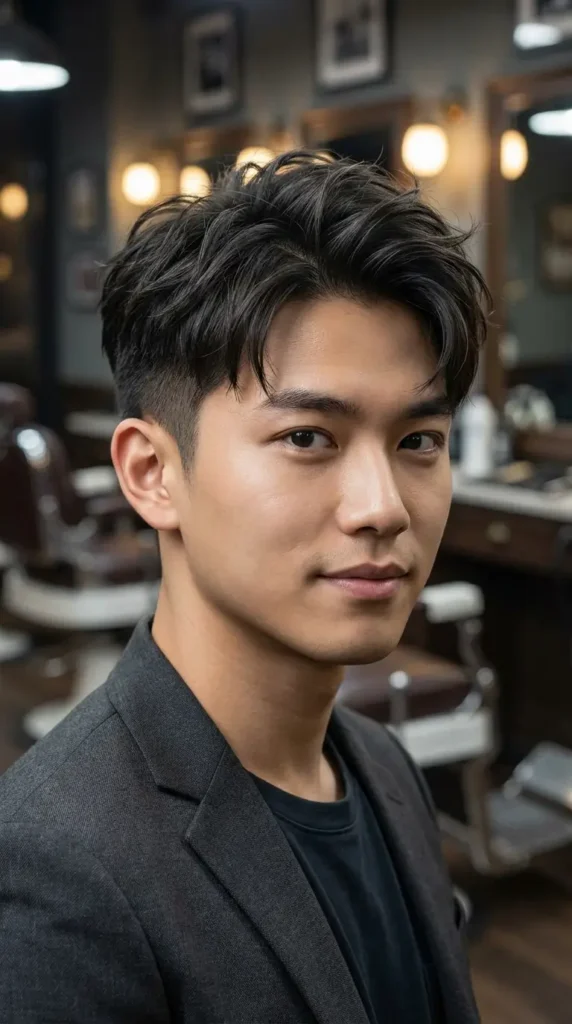
Designed for thick, straight hair that can resist styling direction. Features a fuller layered top with structured silhouette. The key is working with the hair’s natural stiffness rather than against it. Strong-hold clay applied against the growth pattern trains stubborn hair into position.
20. Military Ivy League Haircut
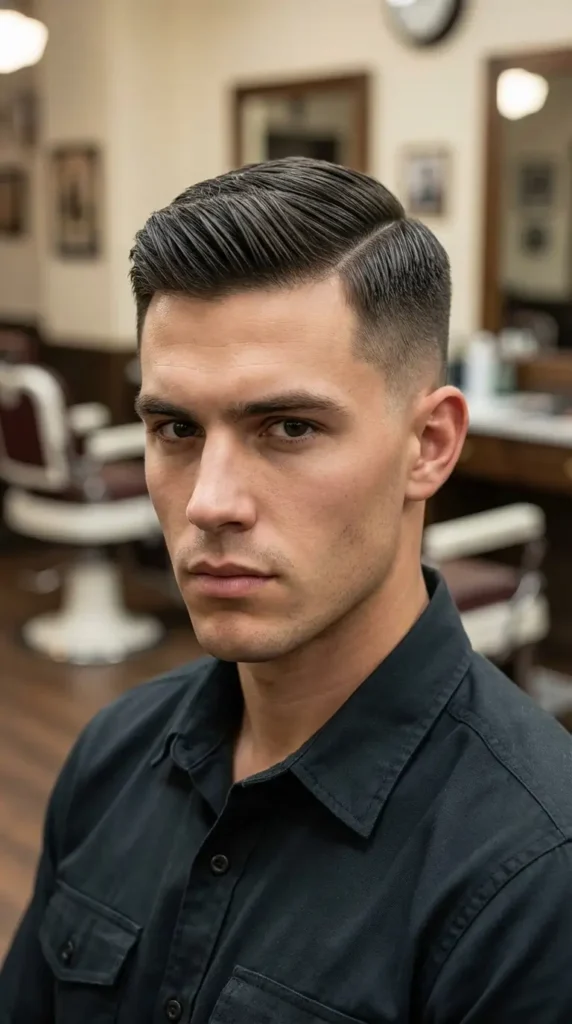
Disciplined, sharp, and practical. Combines Ivy League structure with military-grade cleanliness, tight sides, precise lines, minimal styling required. Perfect for active-duty personnel, veterans, or anyone preferring a no-nonsense approach to grooming.
21. Ivy League Undercut
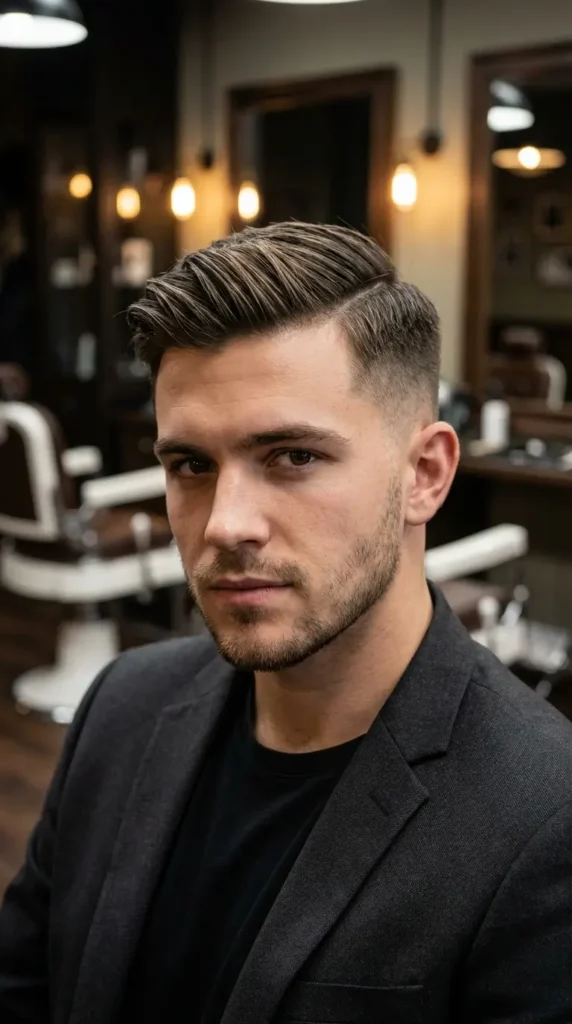
Disconnected sides create bold contrast between the longer top and shorter sides. Unlike the blended taper, the undercut features a distinct line of demarcation. This is the most dramatic Ivy League variation, confident and unmistakably intentional.
22. Ivy League Quiff
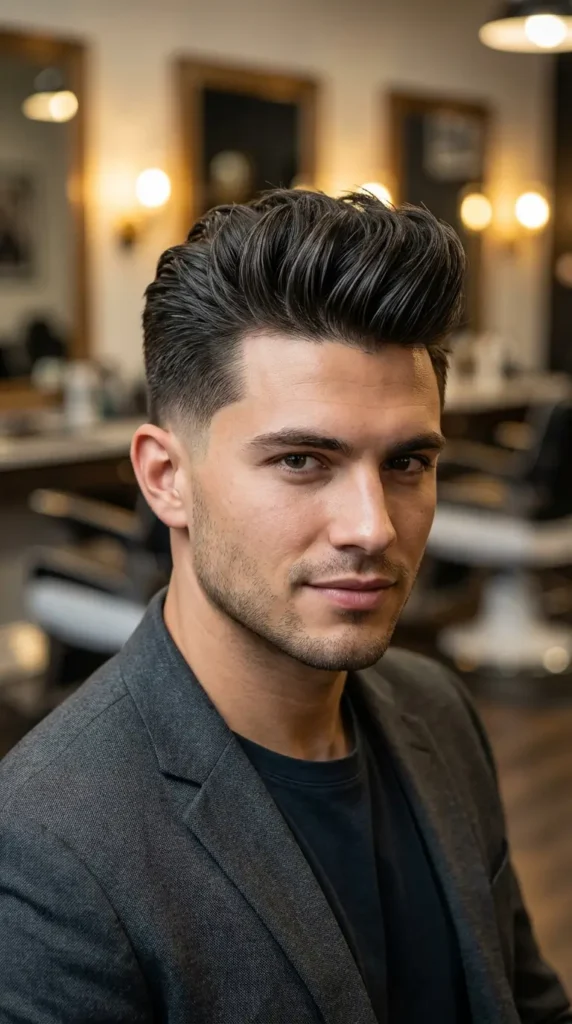
Combines the Ivy League’s side structure with lifted front volume. The front is styled upward and slightly back, creating height that the traditional side part cannot achieve. Requires volumizing mousse and blow-drying technique for proper lift.
23. Brushed Up Ivy League
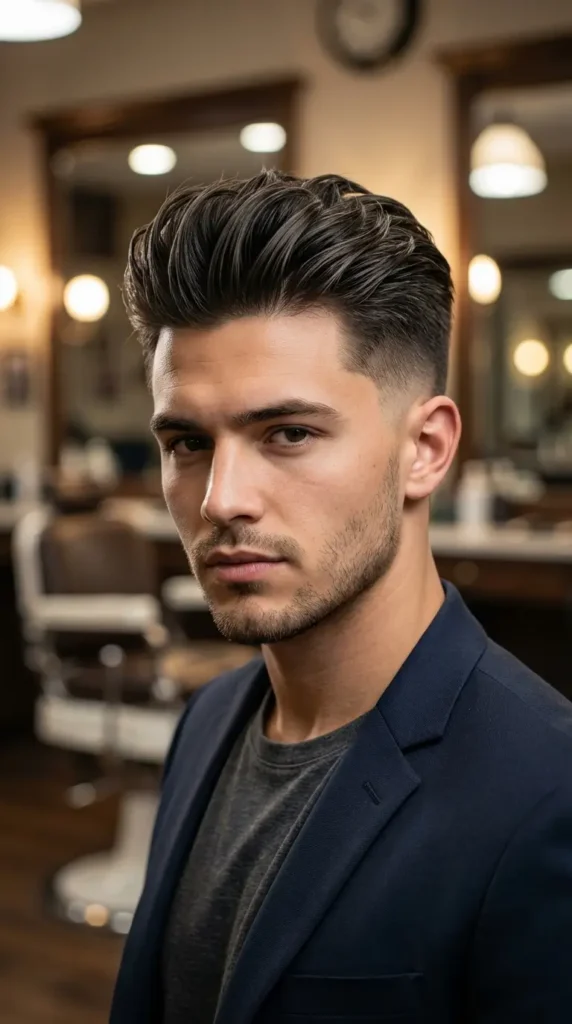
Spiky, feathery finish replaces the traditional combed texture. Matte pomade applied to distinct sections creates intentional separation. Best for thick or coarse hair that holds texture well. More casual than the classic but still professionally acceptable.
24. Side Swept Ivy League
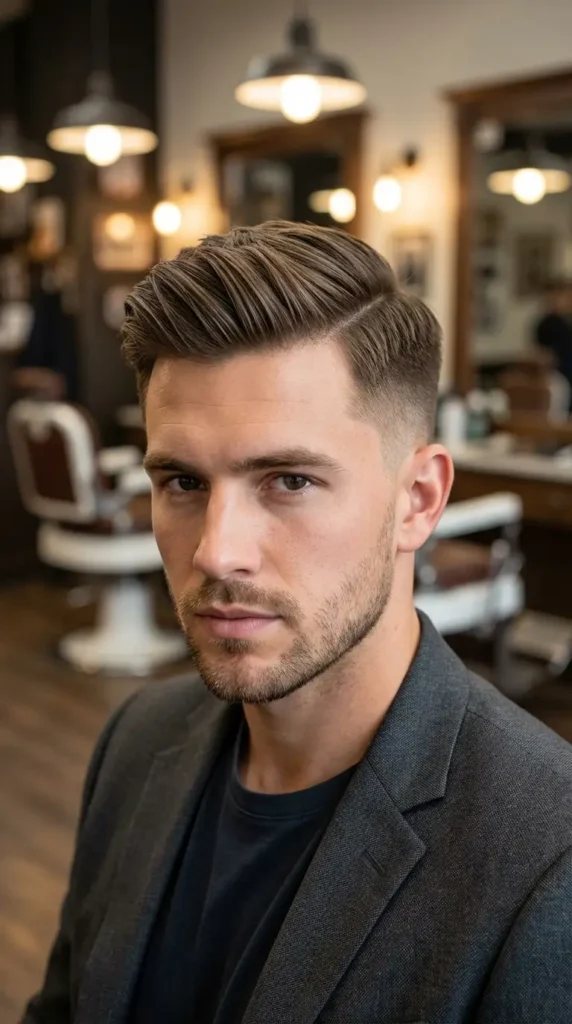
Hair brushed to one side creates natural movement and depth without a hard part. This is softer than the defined side part Ivy League, more relaxed while maintaining structure. Molding paste provides texture and flexible hold.
25. Ivy League with Beard
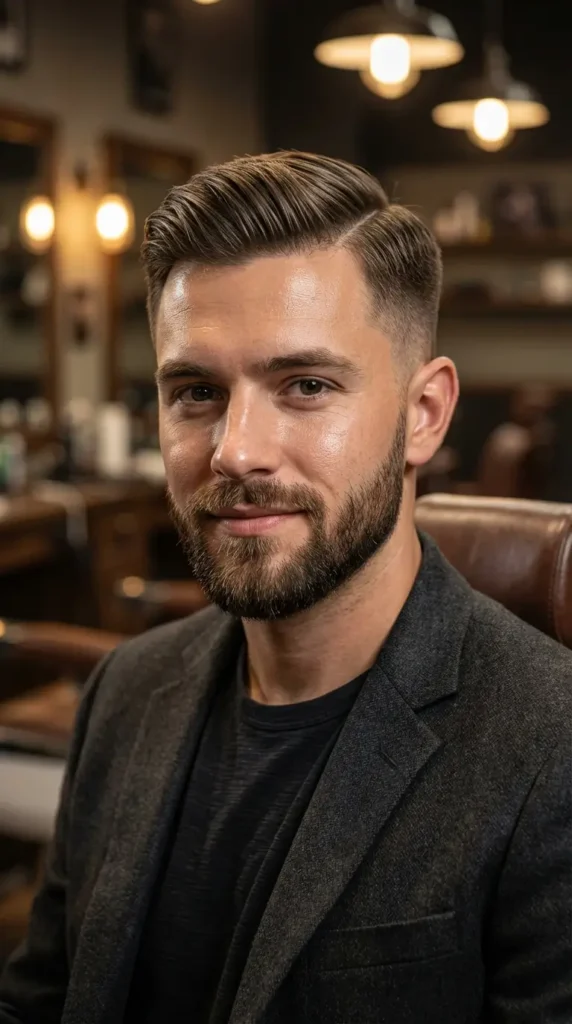
The complete masculine aesthetic. The refined top balanced with full facial hair creates visual interest and rugged sophistication. Key requirement: maintain both on similar schedules so neither looks neglected relative to the other.
26. Low Maintenance Ivy League
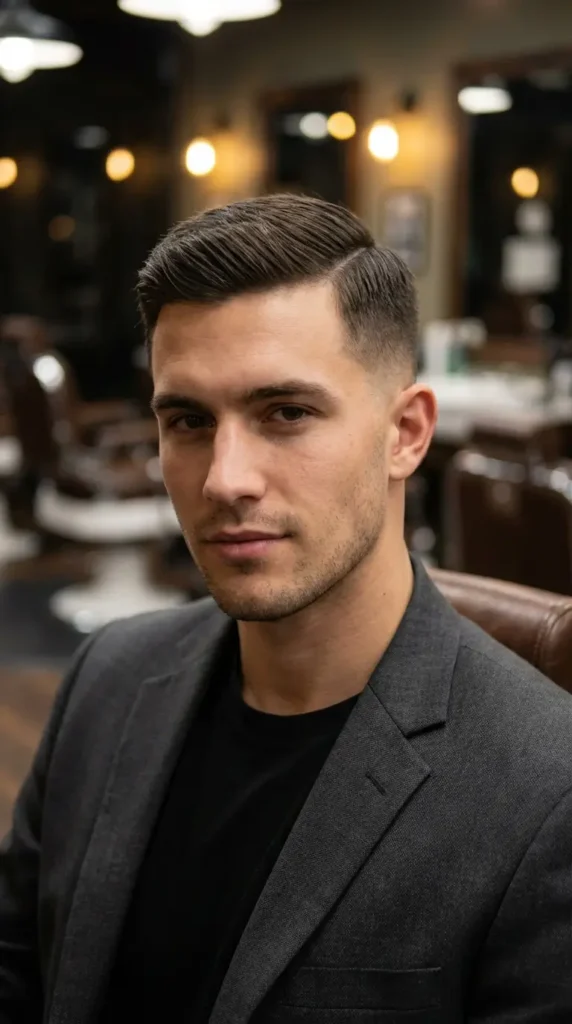
The minimal-effort variation. Shorter length with natural texture requires almost no product. Simply towel-dry and finger-style. Best for busy professionals who want the Ivy League look without the morning routine.
27. Blonde Ivy League Haircut
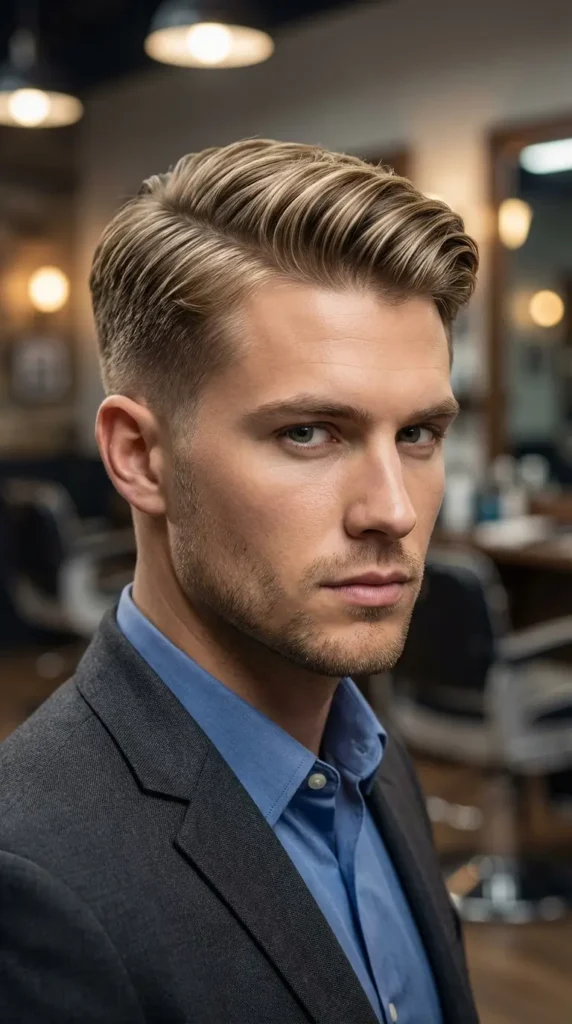
Color-specific considerations apply. Bright blonde tones enhance the cut’s structure by creating more visible contrast between sections. Styling cream helps control potential frizz while maintaining the lighter shade’s natural shine.
The Anatomy of an Ivy League Haircut
Understanding the structure helps you communicate precisely with your barber:
| Component | Description |
| Front/Fringe | Longest section (1.5-2 inches), styled into side part |
| Crown | Shorter (0.5-1 inch), creates graduation effect |
| Sides | Tapered (#2-#5) or faded (#0.5-#2) |
| Back | Matches sides, tapered or faded |
| Graduation | The gradual length change from front to crown |
The graduation effect, where hair transitions from longer at the front to shorter at the crown, creates the signature silhouette. This is traditionally achieved through scissor-over-comb technique rather than clippers alone, giving the cut its refined precision.
The Ivy League, Harvard Clip & Princeton: Are They the Same?
Yes. These names describe the identical haircut with regional or institutional naming variations:
| Name | Same Cut? | Notes |
| Ivy League | Primary term | Most common name |
| Harvard Clip | Yes | Historical synonym |
| Princeton cut | Yes | Regional variation |
| West Point | Yes | Military association |
| Collegiate cut | Related | Broader category |
| Preppy haircut | Related | Style category |
If your barber doesn’t recognize “Ivy League,” try Harvard Clip or simply describe it as “a crew cut with enough length on top to part.”
The History & Origin of the Ivy League Haircut
The Ivy League haircut emerged on American university campuses during the 1950s-1960s, fitting the preppy aesthetic that defined elite institutions like Harvard, Princeton, and Yale. Students wanted something cleaner than longer styles but more sophisticated than military buzz cuts.
The cut became mainstream when John F. Kennedy wore it throughout his presidential campaign and tenure, cementing its association with intelligence, leadership, and American confidence. Actor Dwayne Hickman, who played Dobie Gillis in the popular TV series, also popularized the style, with many calling his look “the definitive Ivy League haircut.”
This historical context matters because it explains why the Ivy League remains synonymous with professionalism and trustworthiness, associations that persist today.
Ivy League Haircut vs Crew Cut: Key Differences
This is the most common comparison, and understanding the distinction helps you choose correctly:
| Feature | Ivy League | Crew Cut |
| Top Length | 1.5-2.5 inches | 0.5-1 inch |
| Partability | Yes, defining characteristic | No, too short to part |
| Styling Options | Side part, comb over, textured, messy | Usually left natural, minimal styling |
| Look | Smart, polished, versatile | Simple, utilitarian, athletic |
| Flexibility | High, multiple styling variations | Low, uniform appearance |
| Maintenance | Trim every 3-4 weeks | Trim every 2-3 weeks |
The Key Distinction: If you can create a side part with your haircut, it’s an Ivy League. If the top is too short to part, it’s a crew cut.
The Ivy League offers significantly more styling versatility. You can slick it back for formal events, finger-style it messy for weekends, or comb it into a precise side part for the office, options the crew cut simply cannot provide.
Classic vs Modern Ivy League: The Critical Distinction
This is where most competitor content fails. The “Ivy League” isn’t one style, it’s a spectrum from traditional to contemporary:
| Aspect | Classic Ivy League | Modern Ivy League |
| Sides | Tapered (#2-#5 guard), NO skin showing | Faded (#0.5-#2), skin visible at temples |
| Top Texture | Smooth, combed, polished | Textured, piece-y, matte |
| Styling Product | Pomade or wax (shiny finish) | Clay or paste (matte finish) |
| Styling Method | Combed into precise side part | Finger-styled for natural movement |
| Vibe | 1950s preppy, JFK, boardroom | 2020s professional, Ryan Gosling |
| Maintenance | Trim every 4 weeks | Fade touch-up every 2-3 weeks |
Expert Insight:
“You want the sides to ideally be somewhere between a #2 and #5 with a taper for the classic Ivy League haircut. Anything shorter, or faded, and you’re going more towards a modern version.”
Which Should You Choose?
- Classic: Conservative workplaces, formal events, traditional aesthetic preference
- Modern: Creative industries, casual professional settings, contemporary style preference
Ivy League Haircut Technical Specifications
Bring these exact measurements to your barber to ensure precision:
Exact Measurements by Section
| Section | Classic Ivy League | Modern Ivy League |
| Front/Fringe | 1.5-2 inches | 1.5-2.5 inches |
| Crown | 0.5-1 inch | 0.5-1 inch |
| Sides (Guard) | #2 to #5 with taper | #0.5 to #2 with fade |
| Back | Tapered, blended | Faded or tapered |
| Graduation | Up to 1 inch (front to crown) | Up to 1.5 inches |
Understanding Guard Numbers
| Guard | Length (mm) | Length (inches) | Best For |
| #0.5 | 1.5mm | 1/16″ | Modern fade bottom |
| #1 | 3mm | 1/8″ | Modern fade |
| #2 | 6mm | 1/4″ | Classic taper or modern fade |
| #3 | 10mm | 3/8″ | Classic taper |
| #4 | 13mm | 1/2″ | Classic taper (conservative) |
| #5 | 16mm | 5/8″ | Longest classic taper |
Pro Tip: The graduation from front to crown is what creates the Ivy League’s signature shape. Ask your barber to take the hair “progressively shorter from the front hairline back to the crown.”
How to Choose the Right Ivy League Haircut for Your Face Shape
The Ivy League’s versatility means it works for most face shapes when proportions are adjusted correctly:
Oval Face
- Goal: Maintain natural balance
- Best Choice: Any variation works, this is the most versatile face shape for the Ivy League
- Celebrity Reference: Matt Damon consistently wears variations of the Ivy League with his oval face
Round Face
- Goal: Add vertical height to elongate the face
- Best Choice: Extra height on top with tighter sides creates the illusion of a longer face
- Styling Tip: Direct hair upward and back rather than flat against the head. Use volumizing products at the roots for maximum lift.
- Avoid: Low, flat styles that emphasize the face’s roundness
Square Face
- Goal: Soften strong angular jawline
- Best Choice: Softer edges and blended taper (not hard fade) create symmetry without competing with your natural bone structure
- Styling Tip: A slightly textured, less rigid style works better than a sharp, geometric side part
Heart Face
- Goal: Balance narrow chin with wider forehead
- Best Choice: Extra height on top creates proportion between the wider upper face and narrower chin
- Styling Tip: Avoid excessive width at the temples; keep the focus on vertical volume
Oblong Face
- Goal: Avoid adding excessive vertical length
- Best Choice: Shorter top variations with more fullness at the sides prevent further elongation
- Avoid: Maximum height styles that make the face appear even longer
How to Ask Your Barber for an Ivy League Haircut
Clear communication prevents disappointment. Here’s exactly what to say:
The Barber Script (What to Say)
Step 1:
“I want an Ivy League haircut.” (If they don’t recognize the term, say “Harvard Clip” or “Princeton cut”)
Step 2:
“I want the top about [1.5-2 inches] at the front, taken progressively shorter toward the crown, about [0.5-1 inch] at the crown.”
Step 3:
“For the sides, I want a [taper/fade] starting with a [#2/#3/#4] guard.”
Step 4:
“I want enough length on top to create a side part.”
Step 5:
“Please add texture throughout so it’s easier to style at home.”
Barber Terminology Cheat Sheet
| Term | Meaning |
| Taper | Gradual blend, no skin showing (classic) |
| Fade | Blends to skin, more contrast (modern) |
| Guard #2 | 6mm / 1/4 inch |
| Guard #3 | 10mm / 3/8 inch |
| Guard #4 | 13mm / 1/2 inch |
| Scissor cut | Hand-cutting with shears (traditional method) |
| Scissor-over-comb | Precision technique for blending |
| Graduation | Length change from front to crown |
| Texturizing | Point cutting for movement and easier styling |
| Hard part | Shaved line to define part (optional) |
Mistakes to Avoid at the Barbershop
- Don’t assume your barber knows “Ivy League,” have alternative names ready (Harvard Clip, Princeton)
- Don’t skip the photos, bring 2-3 reference images showing front AND side views
- Don’t forget measurements, specify inches or guard numbers rather than vague descriptions
- Don’t overlook texture, ask for texturizing if you want easier home styling
- Don’t rush the consultation, a 2-minute conversation prevents weeks of regret
How to Style an Ivy League Haircut at Home
The Ivy League is designed for low-maintenance styling. Once you learn the technique, it takes 3-5 minutes daily.
Step 1 – Wash and Prep Hair
- Wash with lightweight shampoo (avoid heavy conditioners that weigh hair down)
- Towel-dry until slightly damp, not wet, not dry
- Damp hair absorbs product better and responds to blow-drying
Step 2 – Apply Pre-Styler for Volume
For Fine/Thin Hair:
- Sea salt spray (4-6 sprays) creates grip and texture
- Volumizing mousse provides root lift
For Medium/Thick Hair:
- Sea salt spray for natural texture
- Light styling cream for control without weight
Apply from roots to tips, focusing on the crown and front where volume matters most.
Step 3 – Blow-Dry for Shape
This is where Ivy Leagues are made or broken:
- Use medium heat with nozzle attachment
- Direct airflow in the direction of your desired part
- Use round brush for lift or fingers for texture
- Continue until 90% dry (slight dampness helps product application)
The Key Insight: You’re training the hair to fall in your desired direction. Consistent blow-drying technique teaches the follicles where to point.
Step 4 – Style with Product for Hold
For Classic/Polished Look:
- Apply small amount of pomade (dime-sized)
- Comb into side part for structure and shine
- Use fine-tooth comb for precision
For Modern/Textured Look:
- Apply small amount of matte clay or paste
- Finger-style for natural, piece-y finish
- Work from back to front, pinching sections for texture
Step 5 – Refine the Finish
- Comb or brush to refine the shape
- Use fingertips to adjust individual pieces
- Optional: light hairspray for all-day hold (avoid heavy application)
Total Styling Time: 3-5 minutes once you’ve practiced the technique.
Best Products for Ivy League Hairstyles
Product selection dramatically affects your results:
For Classic/Polished Finish
| Product Type | Best For | Hold Level | Finish |
| Pomade | Side part, slick styles, formal events | Medium-Strong | Shiny |
| Light Dressing Cream | Natural shine, medium control | Medium | Natural shine |
Pomade is the traditional choice for the classic Ivy League. Water-based versions wash out easily and allow restyling throughout the day.
For Modern/Textured Finish
| Product Type | Best For | Hold Level | Finish |
| Texture Clay | Definition, layers, piece-y texture | Medium-Strong | Matte |
| Matte Paste | Natural movement, touchable finish | Medium | Matte |
| Molding Paste | Flexible hold, refined appearance | Medium | Natural |
Texture clay is the modern favorite, provides grip and separation without shine.
Pre-Styling Products
| Product Type | Purpose | When to Apply |
| Sea Salt Spray | Volume, texture, grip, wave enhancement | Damp hair before blow-drying |
| Volumizing Mousse | Root lift for fine/thin hair | Damp hair before blow-drying |
| Texture Powder | Instant lift at roots, matte texture | Dry hair for quick volume |
Hair Care Products
| Product Type | Purpose |
| Clarifying Shampoo | Removes product buildup weekly |
| Hydrating Conditioner | Moisture and manageability |
| Hydrating Argan Oil | Shine, frizz control, nourishment |
What to Avoid
- Heavy gel: Creates crunchy, dated “wet look,” avoid entirely
- Excessive product: Weighs hair down, looks greasy
- Wrong finish: Don’t use matte products for polished looks (or vice versa)
How to Maintain an Ivy League Haircut
Proper maintenance keeps your Ivy League looking sharp between barbershop visits:
Trim Schedule by Style Type
| Style Type | Recommended Trim Frequency |
| Classic Taper Ivy League | Every 3-4 weeks |
| Modern Fade Ivy League | Every 2-3 weeks |
| Short Ivy League | Every 2-3 weeks |
| Long Ivy League | Every 4-5 weeks |
Why Frequency Matters: Fades lose their sharpness within 2 weeks as hair grows. Tapers are more forgiving and maintain shape longer. Budget your barbershop visits accordingly.
Daily Care Routine
Washing:
- Shampoo 2-3 times per week (not daily, daily washing strips natural oils)
- Rinse with water on non-wash days
- Use lightweight conditioner on wash days
Styling:
- Re-style daily with product (3-5 minutes)
- Quick comb or finger-style touch-ups as needed
- Keep product accessible at your sink for morning efficiency
Growing Out Your Ivy League
Transition Options:
- To longer style: Let top grow while maintaining side taper
- To different cut: Communicate transition plan with barber over 2-3 visits
- Awkward phase: Usually weeks 4-6 when proportions shift
Strategy: Ask your barber to “soften the contrast gradually” rather than making dramatic changes.
Frequently Asked Questions
What is the Ivy League haircut?
The Ivy League haircut is a refined version of the crew cut where the hair on the front of the head is long enough to style with a side part (1.5-2 inches), while the crown is cut shorter (0.5-1 inch). The sides are tapered or faded for a clean, polished appearance. It originated on Ivy League university campuses in the 1950s-1960s.
What is the Ivy League haircut called?
The Ivy League haircut is also known as the Harvard Clip, Princeton cut, or West Point. These terms describe the same fundamental haircut and are used interchangeably in barbershops. The names reflect the style’s origins at elite American universities and military academies.
What is the difference between crew cut and Ivy League?
The Ivy League leaves more length on top (1.5-2 inches) to allow for a side part and multiple styling options. The crew cut is shorter (0.5-1 inch) and offers minimal styling flexibility. If you can part your hair, it’s an Ivy League; if not, it’s a crew cut.
How do I ask for an Ivy League haircut?
Tell your barber: “I want an Ivy League with about 1.5-2 inches on top, taken shorter toward the crown, with tapered [or faded] sides using a #3 guard. I want enough length to create a side part.” Always bring reference photos showing front and side views.
Is the Ivy League haircut low maintenance?
Yes. The Ivy League is designed to be low maintenance. It requires minimal daily styling (3-5 minutes) and only needs trimming every 3-4 weeks for classic tapered versions. The short length and structured shape make it easy to manage with minimal product.
What face shapes look best with an Ivy League haircut?
The Ivy League suits most face shapes when proportions are balanced correctly. Oval faces suit any version. Round or heart-shaped faces benefit from extra height on top. Square faces look better with softer edges and blended sides. Oblong faces should avoid excessive height.
Is the Ivy League haircut professional?
Yes. The Ivy League is one of the most professional men’s haircuts available. Its clean lines, defined part, and polished appearance make it ideal for business environments, formal events, job interviews, and conservative workplaces. This is why it remains popular among executives, lawyers, and politicians.
Can you get an Ivy League cut with curly hair?
Absolutely. Keep the curls slightly longer on top for textured control while trimming the sides short. Use curl-defining cream to enhance natural texture. The curly Ivy League offers a stylish, low-effort look that embraces rather than fights natural curl patterns.
What is the Ivy League curly haircut?
The curly Ivy League keeps natural curls slightly longer on top while the sides stay short and faded. Curl-defining cream enhances ringlets and reduces frizz, giving textured control without fighting the hair’s natural pattern. It’s one of the lowest-effort ways to wear the cut since curls provide built-in volume.
What products work best for an Ivy League haircut?
For classic/polished looks: Pomade for shine and control. For modern/textured looks: Matte clay or paste for definition. For pre-styling: Sea salt spray for volume and texture.
Avoid gel, which creates a dated, crunchy appearance.
How long does my hair need to be for an Ivy League?
You need 1.5-2 inches at the front/top and about 0.5-1 inch at the crown. The sides can be any length depending on whether you want a taper (#2-#5) or fade (#0.5-#2). If you’re growing into an Ivy League from a shorter cut, expect to wait 4-8 weeks.
What is the Korean Ivy League haircut?
The Korean Ivy League features soft volume with forward movement and a youthful K-style aesthetic. Unlike the Western side-parted version, it’s often styled forward-then-up with a fuller, layered top and natural flow. It’s popular among younger men seeking a refined but contemporary look.
What is the military Ivy League haircut?
The military Ivy League combines the classic side-part structure with tighter, disciplined sides and minimal daily styling. It’s practical and low-maintenance, popular with active-duty personnel, veterans, and anyone who prefers a clean, no-nonsense grooming routine. Also known as the West Point variation.
What is the difference between Ivy League and Harvard Clip?
They are exactly the same haircut. “Harvard Clip” is simply a regional/historical synonym for the Ivy League, referencing the style’s origins at elite American universities. The terms are used interchangeably in barbershops.
Conclusion
The Ivy League haircut has endured for over seven decades because it delivers something rare: effortless sophistication that works equally well in boardrooms and on weekends. Whether you choose the classic side-parted version or a modern textured variation, this cut signals intelligence, professionalism, and timeless style.
Find a skilled barber, communicate clearly using the terminology and measurements in this guide, invest in quality styling products, and your Ivy League will reward you with a look that builds confidence and commands respect, without demanding excessive time or effort.