


What Is a High Fade Curly Hair Cut?
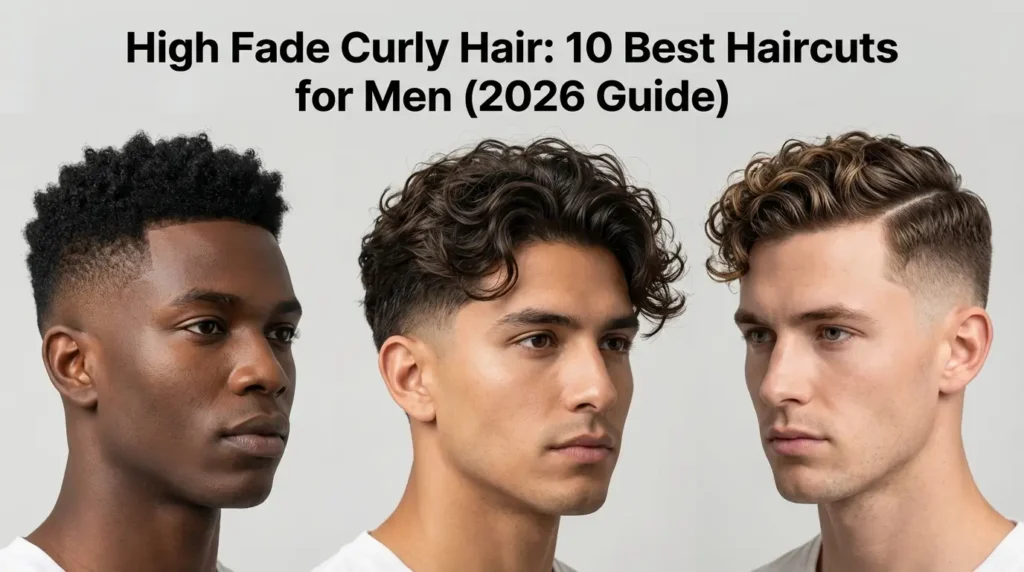
A high fade curly hair cut is a bold, modern hairstyle where the sides are shaved or tapered starting high on the head—typically near the temples or crown—while natural curls remain voluminous on top. This striking contrast between clean-shaven sides and textured curls creates one of the most visually impactful haircuts available for men with wavy, curly, or coily hair.
Whether you have loose waves or tight coils, the high fade amplifies your natural texture by eliminating bulk from the sides and directing all attention to your curls. This guide covers everything you need: style variations, barber communication scripts, curl-type matching, face shape recommendations, maintenance routines, and product selections to keep your high fade looking sharp.
Barbers use the clipper-over-comb technique and wrist-flicking motions to erase harsh lines between different lengths, creating that smooth, seamless transition that defines a quality fade. Many skilled barbers prefer cutting curly hair dry or mostly dry because it allows them to see your natural curl pattern, shrinkage, and how the hair will actually fall—ensuring the final shape complements your texture perfectly.
High Fade vs Low Fade vs Mid Fade for Curly Hair
Choosing between fade heights significantly impacts your overall appearance. Here’s how each option works with curly textures:
High Fade Curly Hair
The high fade starts near the temples or crown, creating the boldest contrast between sides and top. This variation works exceptionally well for men with dense, thick curls or tight coils because it removes weight from the sides while emphasizing volume on top. The dramatic effect suits round faces by adding vertical height and elongating facial proportions.
Maintenance frequency: Every 2-3 weeks for skin fades to maintain crispness
Mid Fade Curly Hair
Starting at the temple level, the mid fade offers a balanced appearance that suits most face shapes and curl types. It provides noticeable contrast without the aggressive look of a high fade, making it popular among men wanting something versatile enough for professional settings while still showcasing their texture.
Maintenance frequency: Every 3-4 weeks
Low Fade Curly Hair
Beginning just above the ears, the low fade creates a subtle, conservative transition. This style maintains more hair on the sides, producing a gentler gradient that pairs well with looser waves or situations requiring a more understated appearance. Low fades suit square and long face shapes by avoiding excessive height.
10 Best High Fade Curly Hair Styles for Men
High Skin Fade with Curly Top
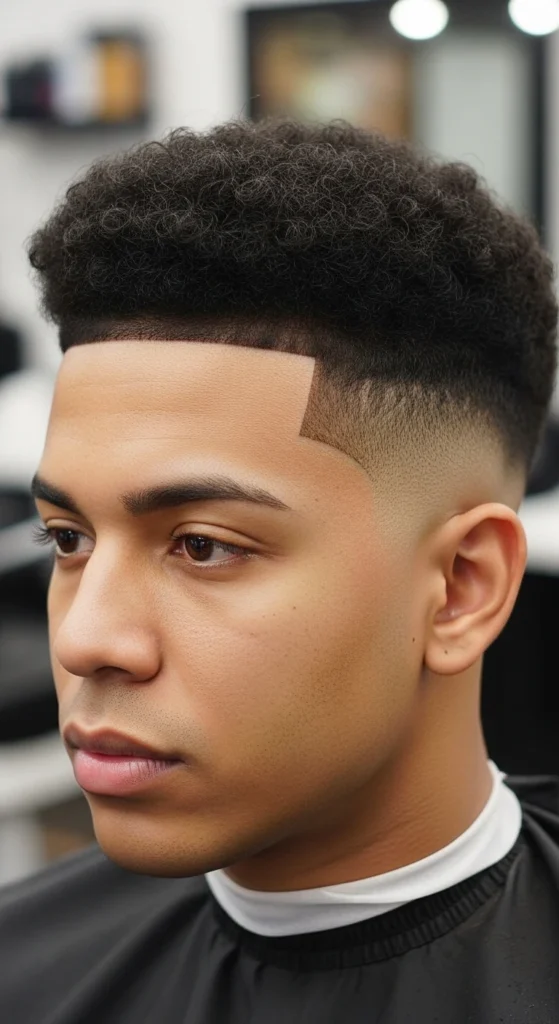
The skin fade (also called bald fade or zero fade) shaves the sides completely down to the scalp before blending into your curls. This creates the sharpest possible contrast—bare skin meeting voluminous texture. The style makes a powerful statement and works brilliantly for men with 3a, 3b, or 3c curl patterns who want their texture front and center.
| Best For | Styling Tip |
|---|---|
| Bold personalities, round faces needing elongation | Apply curl cream to damp hair and scrunch upward to encourage curl formation and enhance definition |
High Taper Fade Curly Hair
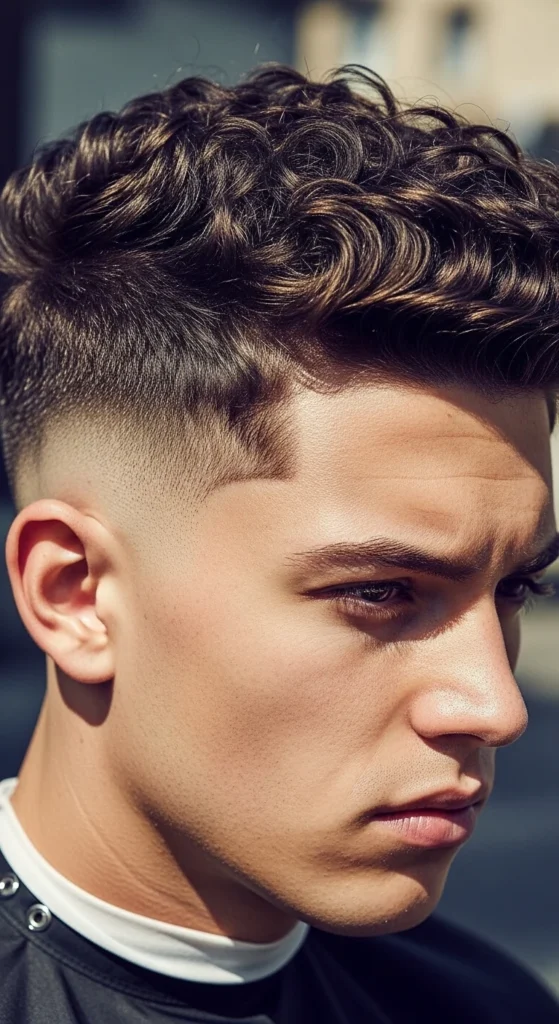
Unlike skin fades, the taper fade gradually shortens hair around the sideburns and neckline without ever reaching the skin. This creates a softer, more conservative gradient that still highlights your curls while remaining appropriate for corporate environments. The taper maintains neat edges without dramatic exposure of the scalp.
| Best For | Styling Tip |
|---|---|
| Professional settings, first-time fades, all curl patterns | Use lightweight styling cream for a natural, polished finish without weighing down your texture |
High Drop Fade with Curls
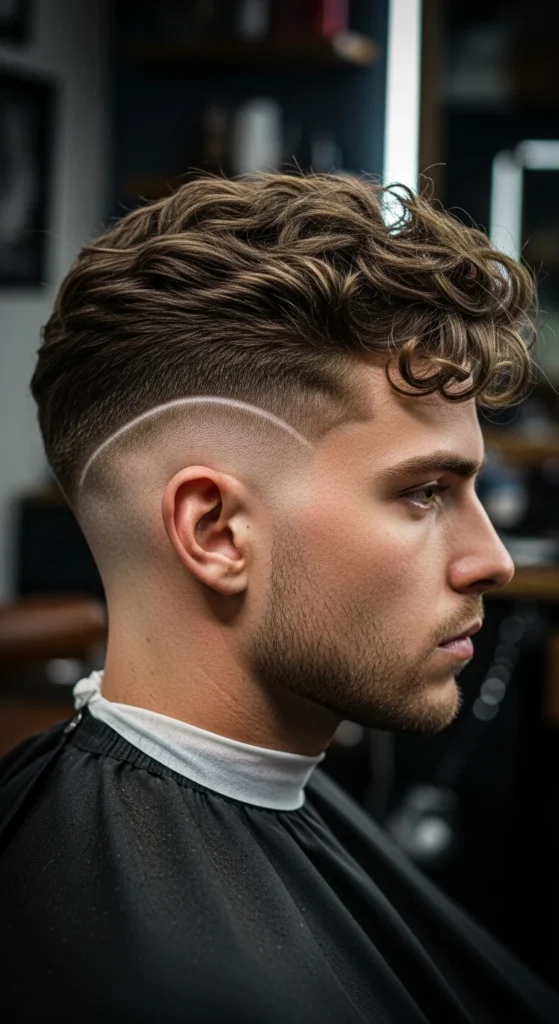
The drop fade curves downward behind the ear, following your head’s natural shape rather than cutting a straight horizontal line. This creates a flowing, dynamic silhouette that complements thicker curls exceptionally well. The curved fade line adds visual interest while maintaining the high-contrast aesthetic.
| Best For | Styling Tip |
|---|---|
| Thicker curls, athletic builds, creative styling | Diffuse on low heat, cupping curls from below to maximize volume while preserving curl pattern |
High Burst Fade Curly Hair
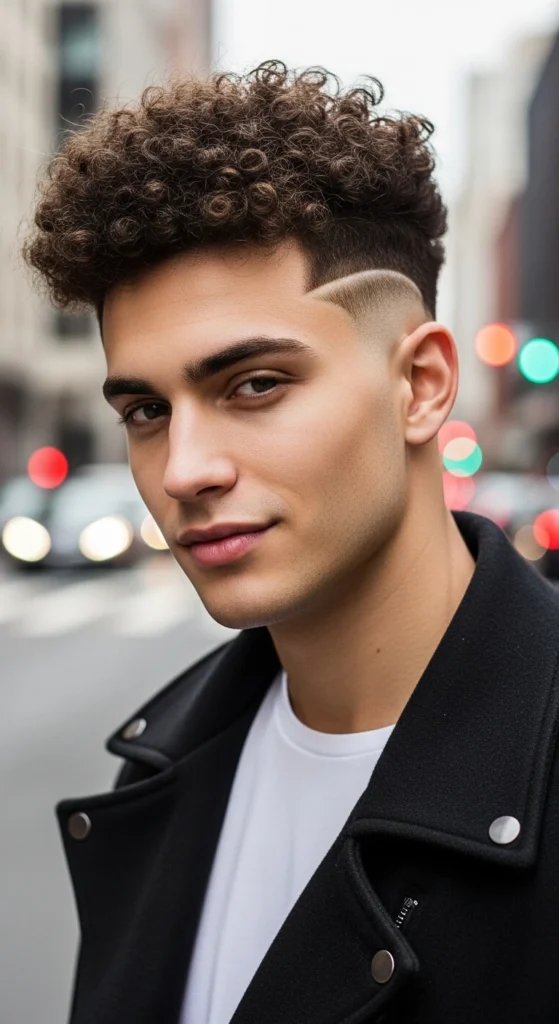
The burst fade creates a rounded, sunburst-shaped gradient radiating around the ears. This edgy variation pairs naturally with curly mohawks or faux hawks, as the circular fade pattern emphasizes the vertical strip of curls running from forehead to nape. It’s inherently fashion-forward and works well with tight, coily textures.
| Best For | Styling Tip |
|---|---|
| Trend-conscious men, creative professionals, tight curls | Use texture clay on dry hair for edge definition and flexible hold without stiffness |
High Fade Curly Hair with Beard
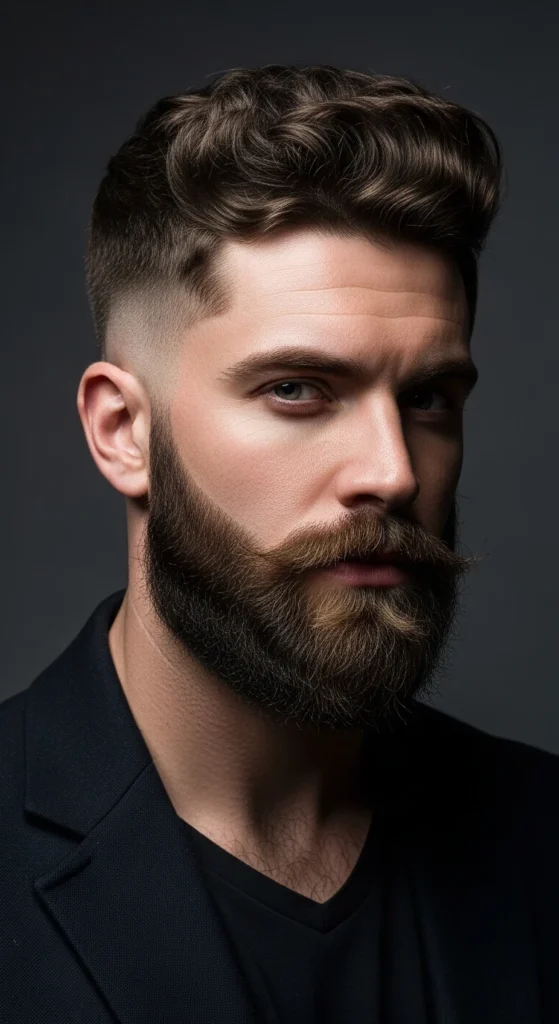
Connecting your high fade to a sculpted beard creates a cohesive, masculine aesthetic that frames your entire face. The sharp fade line can transition seamlessly into your facial hair when properly lined up by your barber. This combination particularly flatters square, oblong, and diamond face shapes by adding structure and definition.
| Best For | Styling Tip |
|---|---|
| Square and oblong faces, men wanting a rugged-refined balance | Apply beard balm to connect the fade-to-beard line smoothly; maintain crisp edges with regular touch-ups |
High Top Fade Curly Hair
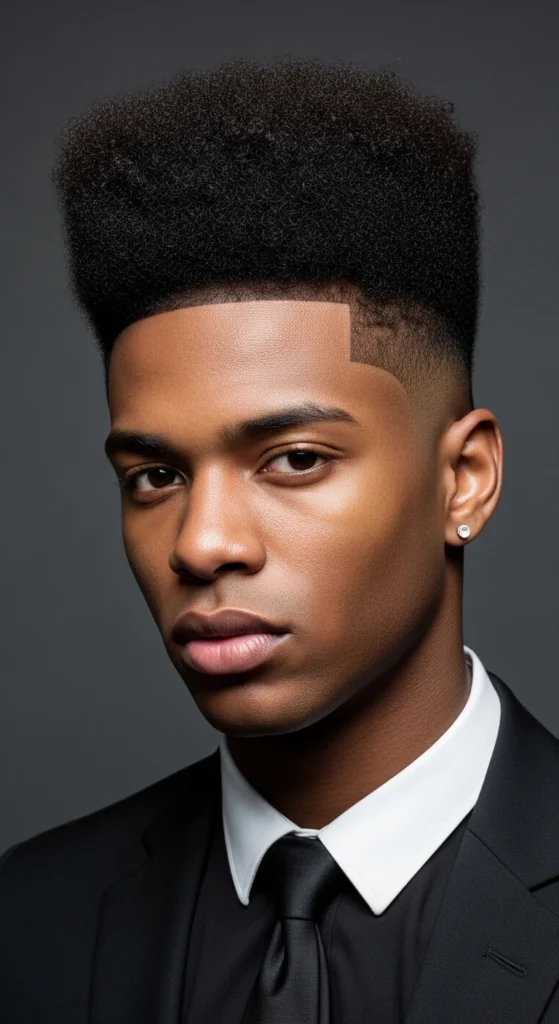
The iconic high top fade features dramatic vertical height on top—often flat or rounded—with sharply faded sides creating powerful contrast. Originally popularized in the 1980s and 90s, this style has seen renewed popularity among men with afro-textured, coily hair (4a, 4b, 4c). The flat silhouette elongates the face while celebrating natural texture.
| Best For | Styling Tip |
|---|---|
| Coily/kinky hair, retro-modern aesthetics | Use a pick to lift coils, then apply strong-hold cream or custard to maintain height throughout the day |
High Fade Curly Fringe
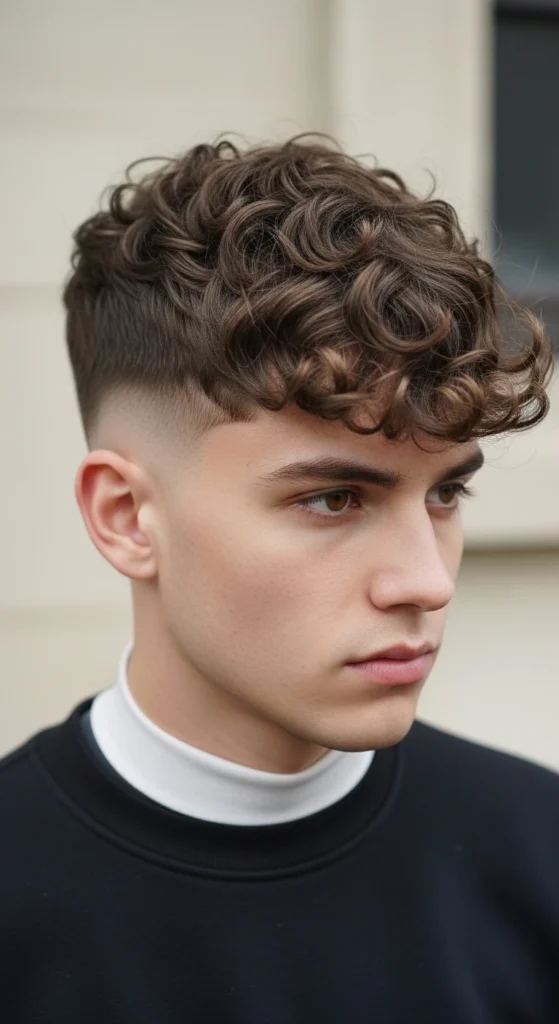
This variation keeps longer curly bangs falling forward over the forehead while maintaining high faded sides. The forward-styled curls frame your face and can soften stronger features or add interest to oval and heart-shaped faces. It’s particularly effective with looser curl patterns (2c, 3a, 3b) that have natural movement.
| Best For | Styling Tip |
|---|---|
| Oval and heart-shaped faces, softer aesthetic preferences | Apply sea salt spray to damp hair before diffusing for textured, piece-y definition |
High Fade Curly Mohawk
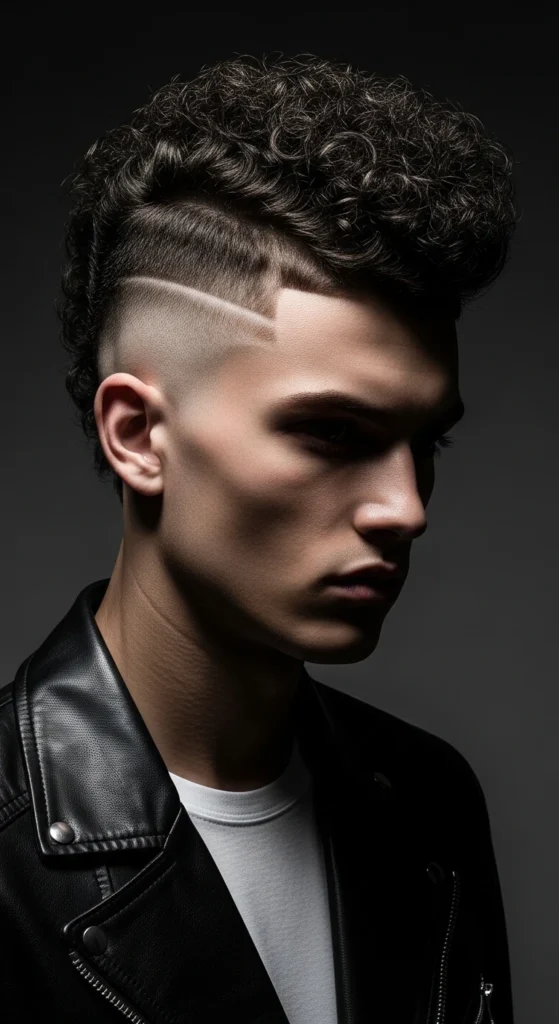
The curly mohawk concentrates all texture into a dramatic strip running from front to nape, with sides shaved clean. This rebellious style suits men comfortable making bold statements. Curly hair actually holds mohawk shapes better than straight hair because the texture provides natural lift and structure without excessive product.
| Best For | Styling Tip |
|---|---|
| Edgy personalities, statement looks, confident expression | Work matte clay through dry curls for flexible hold without crunchiness |
High Fade with Long Curly Top
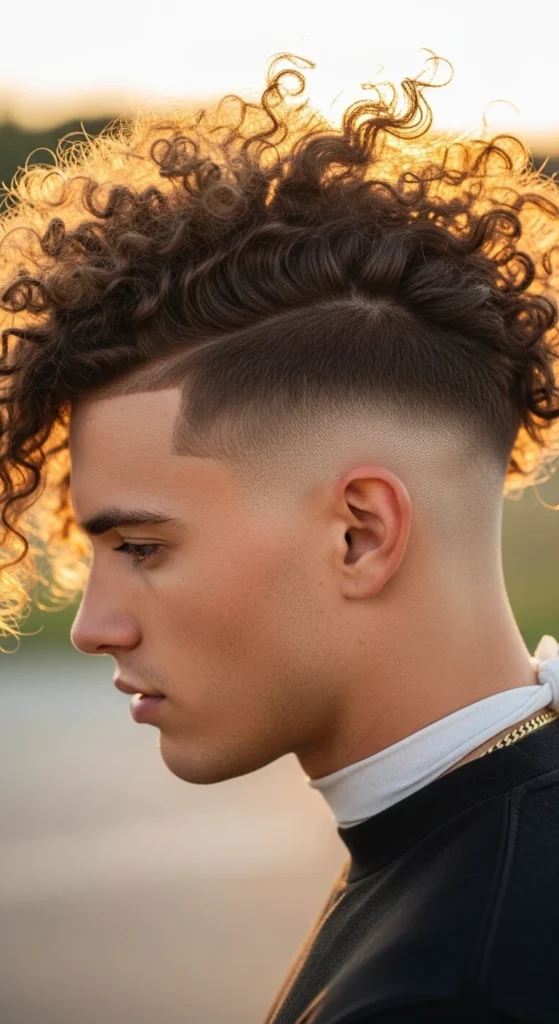
Maximizing length on top (3-6+ inches) while keeping a tight high fade creates the ultimate contrast between your natural curl pattern and clean sides. This style allows your curls to achieve full formation and showcases everything from loose waves to defined ringlets. It requires commitment to curl care but delivers impressive results.
| Best For | Styling Tip |
|---|---|
| Men wanting to showcase their natural curl pattern fully | Layer leave-in conditioner with curl cream, then diffuse or air dry completely—never touch curls while drying |
High Fade Curly Undercut
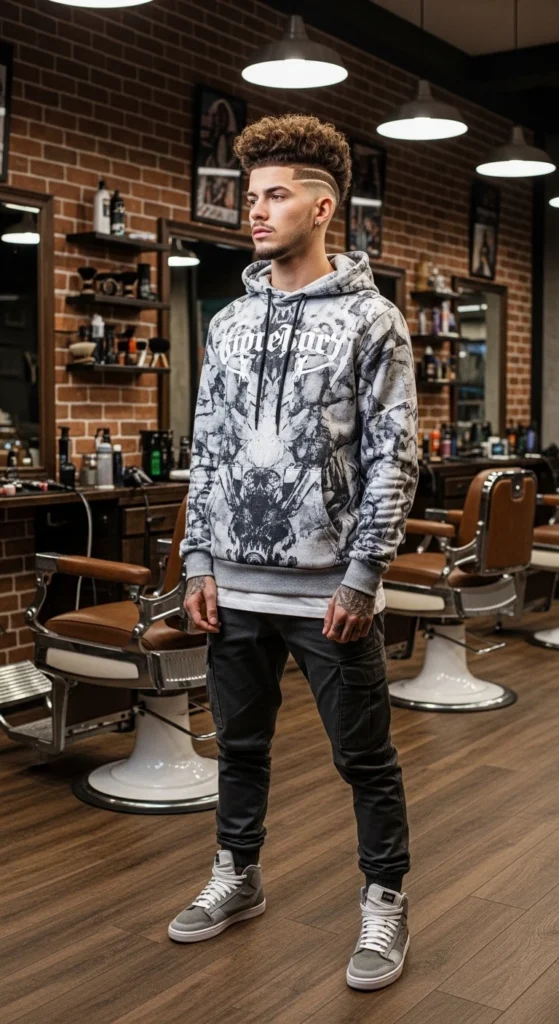
The disconnected undercut creates an abrupt transition between shaved sides and the curly top—no gradual blending. This dramatic separation produces a high-fashion, artistic aesthetic that emphasizes both the precision of the shave and the organic texture of your curls. It’s bold by nature and requires confidence.
| Best For | Styling Tip |
|---|---|
| Maximum contrast, artistic expression, trend-forward styling | Apply volumizing mousse to roots before diffusing for lift and body |
High Fade vs Low Fade vs Mid Fade for Curly Hair
Choosing between fade heights significantly impacts your overall appearance. Here’s how each option works with curly textures:
High Fade Curly Hair
The high fade starts near the temples or crown, creating the boldest contrast between sides and top. This variation works exceptionally well for men with dense, thick curls or tight coils because it removes weight from the sides while emphasizing volume on top. The dramatic effect suits round faces by adding vertical height and elongating facial proportions.
Maintenance frequency: Every 2-3 weeks for skin fades to maintain crispness
Mid Fade Curly Hair
Starting at the temple level, the mid fade offers a balanced appearance that suits most face shapes and curl types. It provides noticeable contrast without the aggressive look of a high fade, making it popular among men wanting something versatile enough for professional settings while still showcasing their texture.
Maintenance frequency: Every 3-4 weeks
Low Fade Curly Hair
Beginning just above the ears, the low fade creates a subtle, conservative transition. This style maintains more hair on the sides, producing a gentler gradient that pairs well with looser waves or situations requiring a more understated appearance. Low fades suit square and long face shapes by avoiding excessive height.
Maintenance frequency: Every 3-4 weeks
| Fade Type | Starting Point | Contrast Level | Best Face Shapes | Best Curl Types | Fade Maintenance |
| High Fade | Near crown/temples | Maximum | Round, thick features | Tight curls, coils, dense hair | 2-3 weeks |
| Mid Fade | Temple level | Moderate | Oval, diamond | All curl patterns | 3-4 weeks |
| Low Fade | Above ears | Subtle | Square, long, oblong | Looser waves, fine curls | 3-4 weeks |
Which High Fade Works for Your Curl Type?
Your curl pattern and hair porosity significantly influence which high fade variation will look best and which products will work for your texture:
Type 2 (Wavy Hair: 2a, 2b, 2c)
Wavy hair features loose, S-shaped patterns without defined spirals. These textures can appear flat or limp if cut incorrectly, but high fades help by removing side weight and directing attention to the top’s movement. Wavy hair tends to have low to normal porosity, meaning products sit on the hair rather than absorbing quickly.
| Category | Details |
|---|---|
| Best High Fade Variations | High taper fade, high drop fade |
| Trim Frequency | Every 8–10 weeks to maintain definition and prevent stretched, frizzy ends |
| Styling Considerations | Use lightweight, water-based products (mousse, sea salt spray, light foams) to avoid weighing down waves. Heavier creams can straighten wave patterns. |
| Porosity Tip | Low porosity wavy hair responds well to humectants like glycerin and honey |
Type 3 (Curly Hair: 3a, 3b, 3c)
Defined curls ranging from loose spirals (3a) to tight corkscrews (3c) respond exceptionally well to high fades. The contrast between clean sides and bouncy, defined ringlets creates the classic curly fade aesthetic most people envision. These curl types typically have normal to high porosity.
| Category | Details |
|---|---|
| Best High Fade Variations | All high fades work beautifully—skin fade, taper, drop, burst |
| Trim Frequency | Every 8–10 weeks to maintain bounce and shape |
| Styling Considerations | Curl cream provides moisture and definition; gel adds stronger hold for frizz control. Use the scrunch technique—gently squeeze product upward into curls. |
| Porosity Tip | High porosity curly hair benefits from protein-rich products and sealing with oils |
Type 4 (Coily/Kinky Hair: 4a, 4b, 4c)
Tight coils and kinky textures have significant shrinkage—hair appears much shorter than its actual length when dry. High fades—especially high top fades and burst fades—celebrate these textures by creating dramatic visual impact. Coily hair is naturally drier because the coil pattern makes it harder for scalp oils to travel down the shaft.
| Category | Details |
|---|---|
| Best High Fade Variations | High top fade, high skin fade, burst fade |
| Trim Frequency | Every 12–16 weeks—coily hair holds shape longer but needs regular trims to prevent tangling and single-strand knots |
| Styling Considerations | Moisture is critical—coily hair needs heavier products, moisture layering, and protective styling. Use rich creams, custards, and butters that coat each strand. Deep condition weekly. |
| Porosity Tip | Coily hair often has high porosity; layer products from lightest to heaviest (liquid, cream, oil) using the LOC method |
| Detangling | Always detangle in the shower with conditioner using fingers or a wide-tooth comb—dry detangling causes breakage at the coil bends |
High Fade Curly Hair for Every Face Shape
Choosing the right high fade variation for your face shape ensures the haircut flatters your features rather than working against them:
Round Face
Goal: Add vertical length and create angles
Best choice: High skin fade with significant volume on top—the height elongates your face while the clean sides avoid adding width
Avoid: Low fades that maintain bulk near the ears, widening your appearance
Oval Face
Goal: Maintain natural balance (this face shape is considered ideal)
Best choice: Any high fade variation—oval faces have the flexibility to wear virtually any style
Flexibility: Experiment freely with different fade heights and curl lengths
Square Face
Goal: Soften the angular jawline and strong features
Best choice: High taper fade with textured, messy curls on top—the organic curl texture balances sharp bone structure
Styling: Avoid overly sculpted or geometric curls; embrace natural movement
Long/Oblong Face
Goal: Add width, reduce the appearance of elongation
Best choice: High drop fade with side volume rather than excessive height
Avoid: Very tall high top styles that further lengthen your face
Heart-Shaped Face
Goal: Balance a wider forehead with a narrower chin
Best choice: High drop fade with a curly fringe—forward-styled curls cover part of the forehead while volume at the sides balances proportions
Styling: Let curls fall naturally forward
Diamond Face
Goal: Complement angular cheekbones and narrower forehead/chin
Best choice: High burst fade with volume—the rounded fade shape mirrors and flatters diamond face angles
Styling: Defined, lifted curls that add fullness above the cheekbones
How to Ask Your Barber for a High Fade Curly Hair Cut
Clear communication with your barber is essential for getting the exact high fade you want. Many disappointing haircuts result from vague requests like “clean it up” or “make it shorter.” Here’s how to communicate effectively:
Essential Terminology to Know
Before your appointment, understand these key terms:
- Fade height: High (near temples/crown), mid (temple level), low (above ears)
- Fade type: Skin/bald (to scalp), taper (gradual, never reaches skin), drop (curves behind ear), burst (rounded around ear)
- Clipper guards: #0 (skin), #0.5, #1, #1.5, #2, #3, #4—lower numbers = shorter length
- Clipper-over-comb: Technique for blending longer hair into fade
- Line-up: Sharp, geometric edges along hairline and temples
- Natural hairline: Leaving your hairline’s organic shape intact
- Disconnected: Abrupt transition without blending
- Blended: Seamless gradient between lengths
The Perfect Barber Script
Use this template when requesting your haircut:
“I want a high skin fade starting near my temples. Keep about 3-4 inches of length on top for my curls. I’d like a sharp line-up on the forehead but want to keep my hairline natural at the temples. Can you cut the top dry so you can see my natural curl pattern?”
For a more conservative look:
“I’d like a high taper fade—no skin showing—with the top blended naturally into my curls. Professional but still showing off my texture.”
For a bold look:
“I want a high skin fade, dropped behind the ear, with maximum contrast. Leave the top as long as possible so my curls really stand out.”
What to Bring to Your Appointment
- 3-5 reference photos showing your desired style from multiple angles
- Photos of your own hair when styled well (shows your barber your curl pattern and shrinkage)
- Information about your daily styling routine (so they can cut for your lifestyle)
- Clear idea of whether you prefer messy/natural or defined/sculpted curls
Questions to Ask Your Barber
- “Which fade height do you think suits my head shape?”
- “How often will I need to come back for touch-ups?”
- “What products do you recommend for my specific curl type?”
- “Can you cut my curls dry so you can see how they naturally fall?”
A skilled barber often prefers cutting curly hair dry or mostly dry because it allows them to see your natural curl pattern, shrinkage, and how the hair will actually fall. Most professional dry cuts follow this protocol: cut the hair dry (expect a slight halo effect), wash with curl-friendly products, dry using proper techniques, then give finishing touches to the layers once fully styled.
High Fade Curly Hair Maintenance Guide
Keeping your high fade looking sharp requires both regular barber visits and proper at-home care for your curls.
Barber Visit Schedule
The fade grows out faster than you might expect. Here’s what to anticipate:
Fade Touch-Up Schedule:
- Skin fade: Visit every 2-3 weeks to maintain the crisp contrast
- Taper fade: Every 3-4 weeks provides adequate sharpness
- Week 1: Your fade looks sharpest and most defined
- Week 2: Slight growth visible but still clean
- Week 3: Noticeable grow-out; a high fade begins looking like a mid fade
- Week 4+: The original high fade shape is lost
Curl Trim Schedule (Top Only):
| Curl Type | Recommended Trim Frequency | Reason |
| Type 2 (Wavy) | Every 8-10 weeks | Prevents stretched, limp ends |
| Type 3 (Curly) | Every 8-10 weeks | Maintains bounce and definition |
| Type 4 (Coily/Kinky) | Every 12-16 weeks | Prevents tangling and single-strand knots |
Cost Expectations
Budget realistically for maintaining a high fade:
- Standard barbershops: $25-$60 per visit
- Premium barbershops: $40-$80+
- Recommended tip: 15-20%
- Annual maintenance cost (every 2-3 weeks): Approximately $650-$1,560+ including tips
Daily Curly Hair Care Routine
Your curls require consistent care to look their best atop your fade.
Morning Refresh Routine (Non-Wash Days):
- Mist curls lightly with water or a water + leave-in conditioner mix
- Apply a pea-sized amount of curl cream to palms
- Scrunch upward into curls—avoid pulling or raking
- Air dry or diffuse on low heat for 2-3 minutes
- Shape final style with fingers once completely dry
Wash Day Routine (2-3 times weekly maximum):
- Pre-shampoo: Apply a hydrating oil or mask to dry hair if needed
- Apply sulfate-free shampoo to scalp only—massage thoroughly to release natural oils
- Rinse, then apply generous silicone-free conditioner to curls (not scalp)
- Detangle while conditioner is in using fingers or wide-tooth comb—work in sections
- Rinse most conditioner out (some prefer leaving a small amount for softer curls)
- Apply leave-in conditioner to soaking wet hair
- Add curl cream or gel for definition and hold—apply from roots to ends
- Scrunch upward to encourage curl formation—tip head forward or sideways
- For extra definition, try finger coiling: wrap small sections around your finger, then release
- Diffuse on low heat/speed or air dry completely—do not touch while drying
- Once 100% dry, “scrunch out the crunch” if using gel to break the cast for soft, defined curls
Weekly Deep Care
- Deep conditioning treatment: Every 3-4 weeks for normal curls; every 1-2 weeks for damaged, color-treated, or high porosity hair
- Protein treatment: Monthly for high porosity or chemically processed hair to rebuild structure
- Scalp exfoliation: Every 1-2 weeks for faded areas to prevent buildup
- Trim check: Monitor for split ends that disrupt curl pattern
Heat Styling Considerations
If you use heat tools above 300°F, expect accelerated damage requiring more frequent deep conditioning (every 2-4 weeks instead of monthly). Heat styling on damp hair causes 3x more damage than on dry strands. Always use heat protectant and keep temperatures below 300°F when possible—the lowest effective setting protects your curl pattern.
Scalp Care for High Fades (What Most Guides Miss)
Your high fade exposes scalp that was previously protected by hair. This creates specific care needs that most style guides overlook:
Sun Protection
Exposed scalp burns easily, especially with skin fades. The shaved areas have no natural UV protection.
- Apply SPF 30+ sunscreen to faded areas before extended sun exposure
- Wear hats for prolonged outdoor activities
- Reapply sunscreen every 2 hours when active outdoors
Preventing Ingrown Hairs
Men with curly and coily hair (especially 4b and 4c textures) are prone to ingrown hairs on faded areas because the curled hair shaft can grow back into the skin.
Prevention strategies:
- Request a foil shaver finish instead of straight razor if you’re prone to irritation
- Apply gentle exfoliating scrub to faded areas weekly
- Use tea tree oil or aftershave balm with soothing ingredients
- Avoid touching or scratching freshly faded skin
Managing Dryness and Flaking
Visible scalp means visible dandruff—any flaking becomes immediately noticeable on a fresh fade.
- Apply lightweight scalp oil (jojoba, peppermint, or argan) to faded areas
- Avoid heavy products that cause visible buildup
- Massage scalp regularly to stimulate circulation and distribute natural oils
- Use a gentle, moisturizing shampoo rather than harsh clarifying formulas
Razor Bump Prevention
Razor bumps (pseudofolliculitis barbae) occur when shaved hair curls back into the skin, causing inflammation.
- Inform your barber about any sensitivity history
- Request shaving with the grain rather than against it
- Apply a cool compress immediately after your cut
- Use witch hazel or aloe-based aftercare products
Best Products for High Fade Curly Hair
Selecting the right products ensures your curls stay defined, hydrated, and styled throughout the day. Layer products from lightest to heaviest for best results.
Curl Definition Products
Leave-In Conditioner
- Purpose: Daily hydration, detangling, styling prep
- Best for: All curl types—non-negotiable for curly hair
- Application: Apply to damp hair as your moisture foundation
Curl Cream
- Purpose: Moisture + soft-to-medium hold + frizz control
- Best for: 3a, 3b, 3c curl patterns; those wanting soft, touchable curls
- Application: Apply to damp (not soaking wet) hair, scrunch upward
- Key ingredients: Shea butter, coconut oil, argan oil
Curl Gel
- Purpose: Strong definition + maximum hold + creates a “cast” that seals in moisture
- Best for: 3c, 4a, 4b, 4c curls; high humidity environments; wash-and-go styles
- Application: Apply to soaking wet hair, scrunch, diffuse or air dry
- Technique: “Scrunch out the crunch” once completely dry for soft, defined curls
Mousse/Foam
- Purpose: Lightweight volume + definition without weight
- Best for: 2c, 3a, 3b waves and curls; fine hair needing volume
- Application: Apply to damp hair, diffuse upside down for maximum volume
Custard/Jelly
- Purpose: Definition + thick, juicy curl clumps + medium-to-strong hold
- Best for: 3c, 4a, 4b, 4c textures wanting defined, elongated curls
- Application: Apply to wet hair, work through in sections
Styling Products for the Top
Texture Clay
- Purpose: Matte finish + strong hold + separation
- Best for: Short curly tops, piece-y definition, mohawk styles
- Application: Work through dry or slightly damp hair
Sea Salt Spray
- Purpose: Texture + grip + beachy, tousled finish
- Best for: Loose curls, waves, natural-looking texture
- Application: Spray on damp hair before diffusing
Pomade
- Purpose: Shine + flexible hold
- Best for: Slicked-back curly styles, polished appearances
- Application: Small amount worked through damp or dry curls
Maintenance Essentials
| Product Type | Purpose | Frequency | Key Features |
| Sulfate-free shampoo | Gentle cleansing without stripping oils | 2-3x weekly max | Low-foam, moisturizing |
| Silicone-free conditioner | Moisture, detangling, elasticity | Every wash | Rich, creamy, with slip for detangling |
| Leave-in conditioner | Daily hydration, styling prep | Daily | Lightweight, water-based |
| Deep conditioner | Intensive moisture repair | Weekly to bi-weekly | Rich emollients, penetrating oils |
| Protein treatment | Structural repair for damaged hair | Monthly | Keratin, amino acids |
| Scalp oil | Fade area moisture, flake prevention | As needed | Jojoba, peppermint, tea tree |
| Wide-tooth comb | Detangling when wet with conditioner | As needed | Prevents breakage |
| Diffuser attachment | Volume, defined drying | Wash days | Low heat, cupping motion |
Product Selection by Porosity
Low Porosity Hair (products sit on top, hard to absorb):
- Lightweight, water-based products
- Humectants like glycerin and honey
- Apply products to very wet hair with heat to open cuticle
High Porosity Hair (absorbs quickly, loses moisture fast):
- Protein-rich products to rebuild structure
- Heavier creams and butters to seal moisture
- Layer products: liquid → cream → oil (LOC method)
Styling Tips for High Fade Curly Hair
Master these techniques to maximize your high fade’s impact:
Achieving Maximum Volume
- Diffuse upside down or sideways—gravity helps create root lift
- Apply volumizing mousse directly to roots before drying
- Do not touch curls while drying—handling causes frizz
- Use clips at the roots while drying for extra lift
- Fluff roots gently with fingertips or pick only after completely dry
Defining Curls Without Crunch
- Apply products to soaking wet hair—not damp, not dry
- Use the “praying hands” method: smooth product between palms, then glide down curl clumps
- Follow with scrunching upward to encourage curl formation
- For extra definition, try finger coiling: wrap small sections around your finger, then release
- Once 100% dry, “scrunch out the crunch” by gently squeezing curls to break the gel cast
- Result: Soft, defined curls with hold but no stiffness
Maintaining Shape Between Washes
- Sleep on a satin pillowcase or use a satin bonnet—cotton absorbs moisture and creates frizz
- Try the pineapple method: gather curls in a loose, high ponytail to preserve shape overnight
- Morning refresh: Mist lightly with water mixed with leave-in conditioner
- Re-scrunch with a tiny amount of curl cream—avoid over-applying
- Never fully rewet hair between wash days unless necessary
Managing Humidity and Frizz
- Use anti-humidity gel or serum as a finishing product
- Avoid touching styled curls throughout the day
- Accept some natural expansion in humid conditions—fighting it causes more frizz
- Carry a small refresh spray for mid-day touch-ups if needed
Drying Methods Compared
| Method | Best For | Pros | Cons |
| Air Drying | All curl types, heat damage prevention | Gentlest, preserves curl pattern | Slow, may reduce volume |
| Diffusing | Volume, faster drying, defined curls | Speeds drying, boosts volume | Requires technique to avoid frizz |
| Microplopping | Removing excess water gently | Reduces frizz, preserves clumps | Extra step in routine |
Diffusing Technique: Use low heat and low speed. Cup curls from below, hold in place for several seconds, then release. Don’t scrunch or move the diffuser around—this creates frizz. Dry roots first by tipping head forward.
How Long Does a High Fade Curly Hair Cut Last?
Understanding the grow-out timeline helps you schedule appointments appropriately:
| Timeframe | Fade Appearance | Curl Top | Action Needed |
| Week 1 | Sharpest, crispest—maximum contrast | Fresh shape | Enjoy your fresh cut |
| Week 2 | Slight growth, still clean and defined | Maintaining shape | Still looking good |
| Week 3 | Visible grow-out, transitioning toward mid fade | May need refresh | Consider scheduling appointment |
| Week 4+ | No longer reads as “high” fade | May feel heavy | Time for touch-up |
Factors affecting longevity:
- Genetics: Some men’s hair grows faster than others
- Fade type: Skin fades show growth faster than taper fades
- Activity level: Frequent sweating and washing can make fades appear grown-out sooner
- Curl type: Tighter coils may camouflage grow-out better than looser waves
Budget recommendation: Plan for barber visits every 2-3 weeks to maintain the high fade’s signature look, with curl trims every 8-16 weeks depending on your texture.
Common Mistakes to Avoid
At the Barbershop
- Not bringing reference photos—verbal descriptions are easily misinterpreted
- Vague communication (“just clean it up”)—be specific about fade height, length on top, and line-up preferences
- Choosing a barber inexperienced with curly textures—curly hair requires specific cutting techniques; ask if they cut curly hair dry
- Waiting too long between appointments—you lose the high fade shape entirely, requiring more aggressive cutting
- Poor communication about your curl pattern—explain your shrinkage, density, and how you style daily
At Home
- Attempting to touch up the fade yourself—leave this to professionals; DIY fades rarely end well
- Using products with harsh sulfates or drying alcohols—these sabotage curl health and definition
- Using heavy products that cause scalp buildup—visible residue on faded areas looks unprofessional
- Brushing dry curls—this destroys curl definition and creates massive frizz
- Not moisturizing enough—curly hair desperately needs moisture; this is the most common mistake
- Skipping conditioner—never skip this step; curls need it for hydration and detangling
- Sleeping on cotton pillowcases—switch to satin to preserve your curls overnight
- Detangling dry hair—always detangle in the shower with conditioner to prevent breakage
Styling Mistakes
- Applying product to dry hair—most curl products work best on wet or damp hair
- Using too much product—start small; you can always add more. Excess makes curls heavy, flat, or crunchy
- Over-diffusing—excessive heat causes frizz; use low settings and don’t over-manipulate
- Touching curls before fully dry—patience is essential; wait until 100% dry before handling
- Rewetting hair completely on refresh days—just mist lightly; full rewetting disrupts curl pattern
- Using products designed for straight hair—curly hair has different needs; choose curl-specific formulas
Frequently Asked Questions
What is a high fade curly hair cut?
A high fade curly hair cut is a men’s hairstyle where the sides are shaved or tapered starting high on the head (near the temples or crown), gradually blending down to the skin or very short length, while leaving natural curls on top for volume and texture. The style creates bold contrast that makes curls the focal point. Barbers typically use clipper-over-comb technique and multiple guard lengths (#0, #1, #2) to create the seamless gradient.
Is a high fade good for curly hair?
Yes, high fades work exceptionally well for curly hair. The short, clean sides create dramatic contrast against textured, voluminous curls on top. This makes curls the star of the style while keeping the overall look neat, modern, and manageable—especially beneficial in warm climates where less hair on the sides keeps you cooler. The fade also reduces bulk and weight, allowing curls to spring up more freely.
How often should I get my high fade touched up?
For a skin fade, visit your barber every 2-3 weeks to maintain crispness. For a taper fade, every 3-4 weeks is sufficient. Letting the fade grow out too much ruins the sharp contrast that makes the style work—regular trims are non-negotiable for maintaining the look. Budget for fade maintenance separately from curl trims, which only need attention every 8-16 weeks depending on your curl type.
What face shape looks best with a high fade curly hair?
High fades are most flattering for round faces because the added vertical height elongates the face. However, they work for most face shapes when styled correctly—oval faces can wear any variation, square faces benefit from textured curls that soften angles, and diamond faces are complemented by the bold contrast. Long or oblong faces should add side volume rather than excessive height on top.
How do I ask my barber for a high fade with curly hair?
Tell your barber: “I want a high fade starting near my temples with a [skin/taper] finish. Keep [2-4 inches] on top for my curls. I’d like a [sharp line-up/natural hairline]. Can you cut the top dry so you can see my curl pattern?” Bring 3-5 reference photos showing the style from different angles, and communicate whether you style your curls messy and natural or defined and sculpted.
Can I maintain a high fade at home?
The fade itself should only be done by a professional barber—attempting DIY fades typically results in uneven, patchy results. At home, focus on maintaining your curls with proper products (sulfate-free shampoo, silicone-free conditioner, curl cream) and keeping your scalp healthy. You can clean up your neckline between visits if you’re comfortable with clippers, but leave the fade work to professionals.
What products should I use for high fade curly hair?
For curls: Leave-in conditioner for daily hydration (non-negotiable), curl cream for moisture and soft hold, and gel for stronger definition in humid conditions. Layer from lightest to heaviest.
For the faded scalp: Lightweight scalp oil to prevent dryness, SPF when outdoors, and aftershave balm for freshly cut skin.
Avoid heavy products that create visible buildup on exposed scalp, and always choose sulfate-free shampoos and silicone-free conditioners to maintain curl health.
How much does a high fade curly hair cut cost?
Prices typically range from $25-$60 at standard barbershops and $40-$80+ at premium establishments. Factor in visits every 2-3 weeks plus a 15-20% tip when budgeting. Annual maintenance costs approximately $650-$1,500+ depending on frequency and location.
Will a high fade work with my tight curls or coils?
Absolutely. High fades look stunning on tight curls and coily textures (4a, 4b, 4c). The dramatic contrast between shaved sides and voluminous top creates a striking silhouette. Iconic styles like the high top fade were specifically designed for coily hair. Coily textures may need fade touch-ups every 2-3 weeks, but can go 12-16 weeks between curl trims since coils hold their shape longer.
What’s the difference between a high fade and a high taper for curly hair?
A high fade goes shorter (often to the skin) and creates more dramatic contrast with an exposed scalp gradient. A high taper is more gradual and conservative, shortening hair near the sideburns and neckline but never reaching the skin. Tapers are better for professional settings requiring a subtle look, while skin fades make bolder statements. Both can be maintained every 2-4 weeks.
How do I keep my curls defined between wash days?
Refresh curls by lightly misting with water mixed with leave-in conditioner, then gently scrunching. Use a satin pillowcase or bonnet overnight to prevent frizz and preserve curl clumps. Try the pineapple method—gathering curls in a loose, high ponytail before bed. Avoid fully rewetting your hair; just target sections that have gotten frizzy. Most people can refresh curls for 2-3 days between washes with this method.