


What Is a High and Tight Haircut?
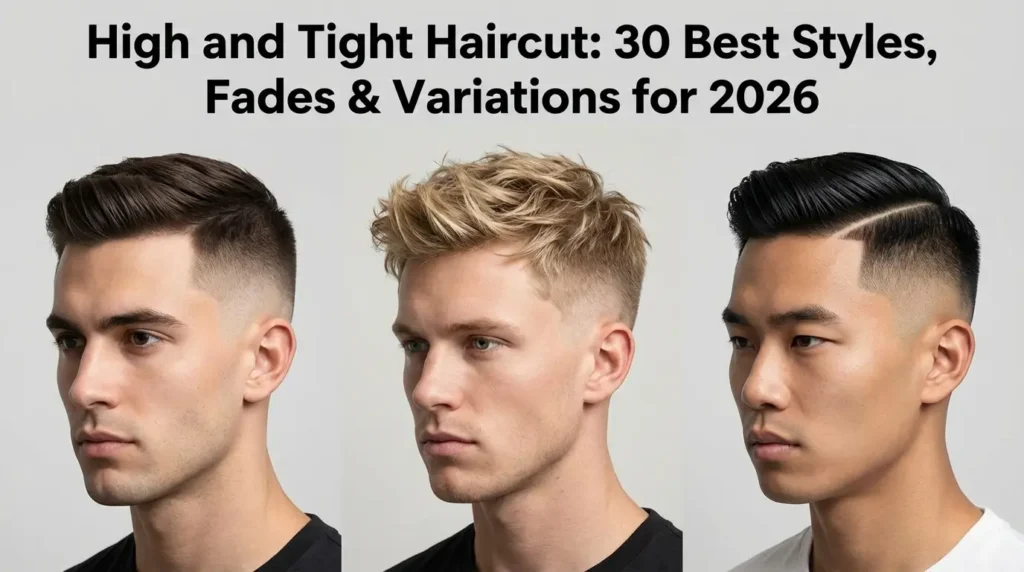
A high and tight haircut is a short, military-inspired men’s hairstyle featuring very short or skin-tight sides and back with a slightly longer patch of hair on top. Originating in the U.S. Marine Corps and U.S. Army, this clean, structured cut emphasizes the jawline and cheekbones while requiring minimal daily maintenance—making it one of the most practical and masculine haircuts available.
If you’ve been searching for a sharp, no-nonsense haircut that projects confidence and authority, the high and tight delivers exactly that. Based on current barbershop trends and search data, requests for high and tight variations have surged in 2026, driven by the return to utilitarian aesthetics and celebrity influence from figures like Ryan Reynolds and Chris Evans. Whether you want the authentic military look or a modern civilian adaptation with fades and texture, this comprehensive guide covers every style, how to ask your barber, and exactly how to maintain your cut.
Key characteristics that define a high and tight:
- Sides and back: Clipped very high on the head (above temples, at or above the parietal ridge) using guards #0 to #2 or shaved to skin
- Top: Short but slightly longer than sides, typically guards #2 to #4 (5-13mm), cut with clippers rather than scissors
- Silhouette: Clean, structured, emphasizes masculine facial features
- Maintenance: Requires trimming every 2-3 weeks to stay sharp
- Styling: Minimal to no product needed for most variations
30+ High and Tight Haircut Styles for Men (and Women)
Choosing the right high and tight variation depends on your face shape, hair type, lifestyle, and how bold you want to go. Here’s every style worth considering, with technical details for each.
Classic Military High and Tight
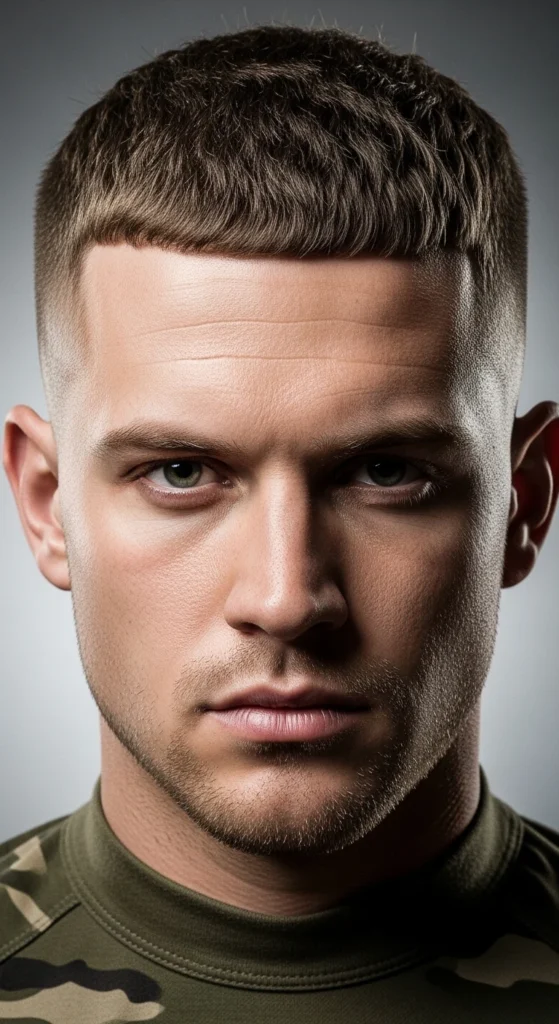
The classic military high and tight represents the authentic Marine Corps and Army standard—ultra-short, minimal blend, maximum discipline.
- Description: Sides and back shaved or buzzed very close (skin to #0-1), with a short patch on top (#2-3)
- Best for: Square and oval faces; straight or coarse hair; active military or those wanting authentic look
- Guard numbers: Sides #0-1 | Top #2-3
- Styling: None required; towel dry and go
- Maintenance: Every 1-2 weeks for regulation sharpness
Short High and Tight (Buzzed High and Tight)
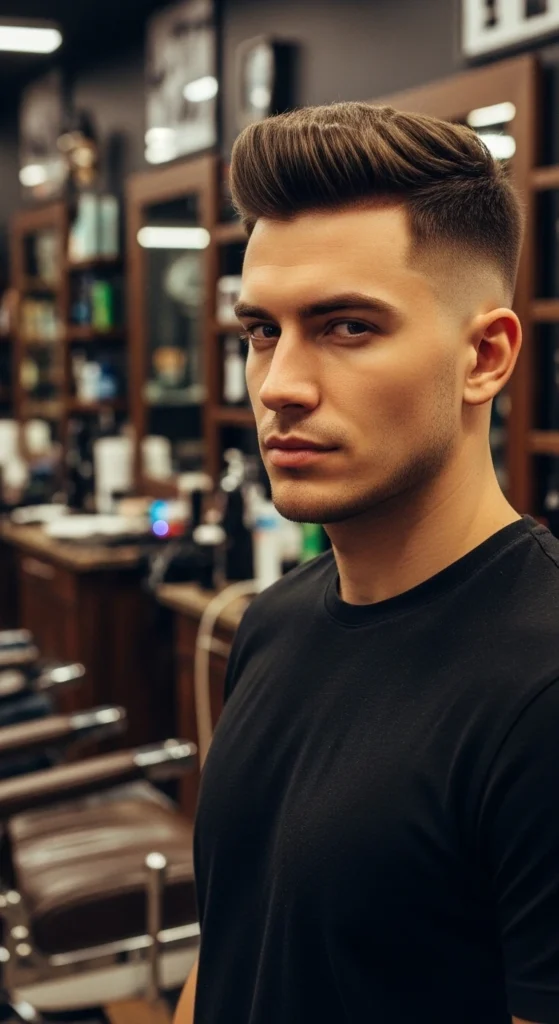
The buzzed high and tight is the most minimal version—top barely longer than sides, creating the “extreme crew cut” effect.
- Description: Very small difference between sides (#1-2) and top (#2-3); uniform, ultra-short appearance
- Best for: All face shapes; any hair type; those wanting absolute lowest maintenance
- Guard numbers: Sides #1-2 | Top #2-3
- Styling: None needed
- Maintenance: Every 2-3 weeks
Medium High and Tight Haircut
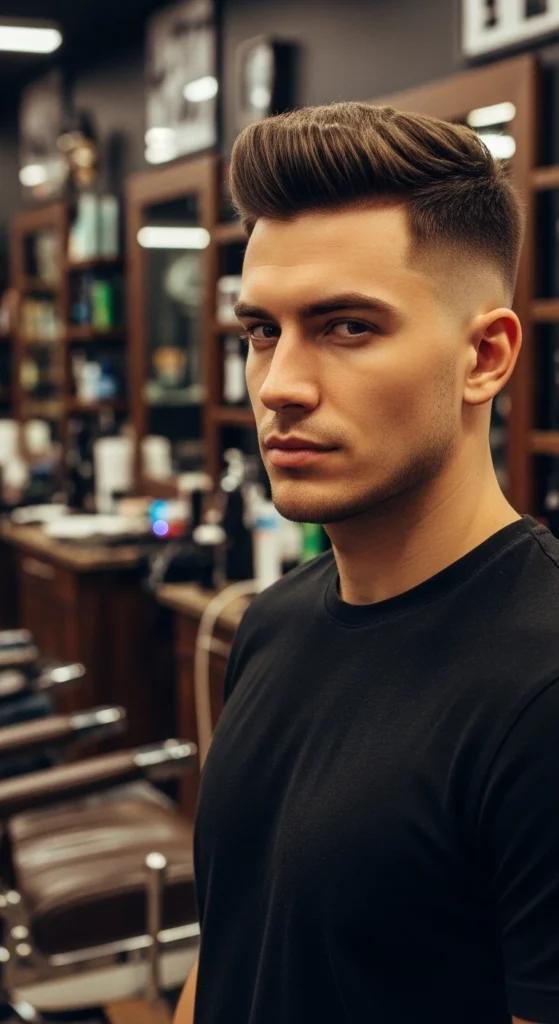
The medium high and tight adds slightly more length on top while keeping the signature short sides.
- Description: Sides remain very short (#0-1), top slightly longer (#3-4) allowing minimal styling
- Best for: Oval and square faces; those wanting military look with slight flexibility
- Guard numbers: Sides #0-1 | Top #3-4
- Styling: Optional light matte paste
- Maintenance: Every 2-3 weeks
Long High and Tight (High and Tight Long on Top)
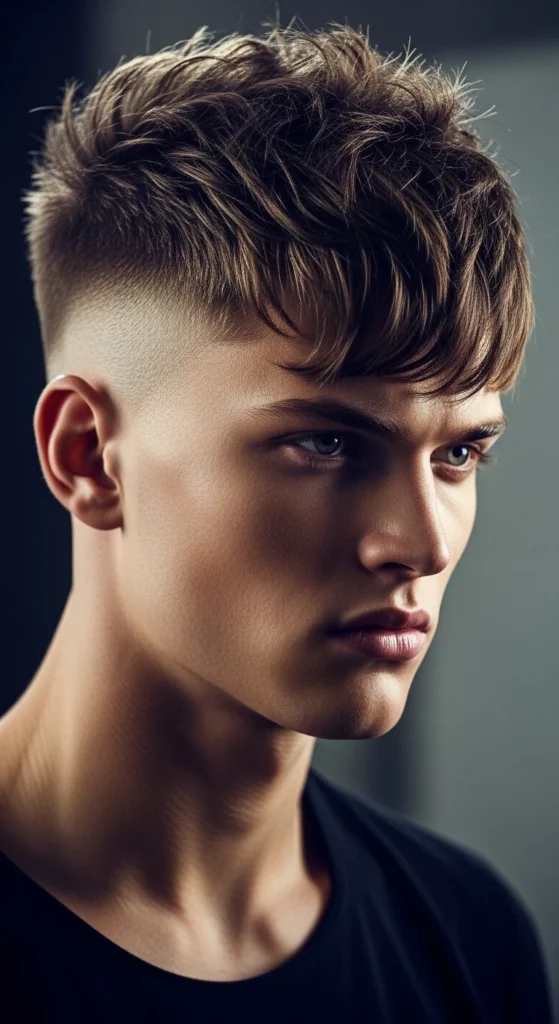
The long high and tight bridges the gap between military severity and civilian versatility by leaving noticeably more length on top.
- Description: Sides shaved or very short (#0-1), top 1-2 inches (#4-6) for styling options
- Best for: All face shapes; those wanting comb-over, quiff, or textured crop options
- Guard numbers: Sides #0-1 | Top #4-6 or scissors for 1-2 inches
- Styling: Matte clay or styling cream; blow-dry optional
- Maintenance: Every 2-3 weeks for sides; every 3-4 weeks for top
High and Tight Fade (Skin, Low, Mid, High)
The high and tight fade modernizes the classic cut by incorporating smooth gradient blending rather than harsh contrast.
Sub-variations:
High and Tight Skin Fade (Bald Fade)
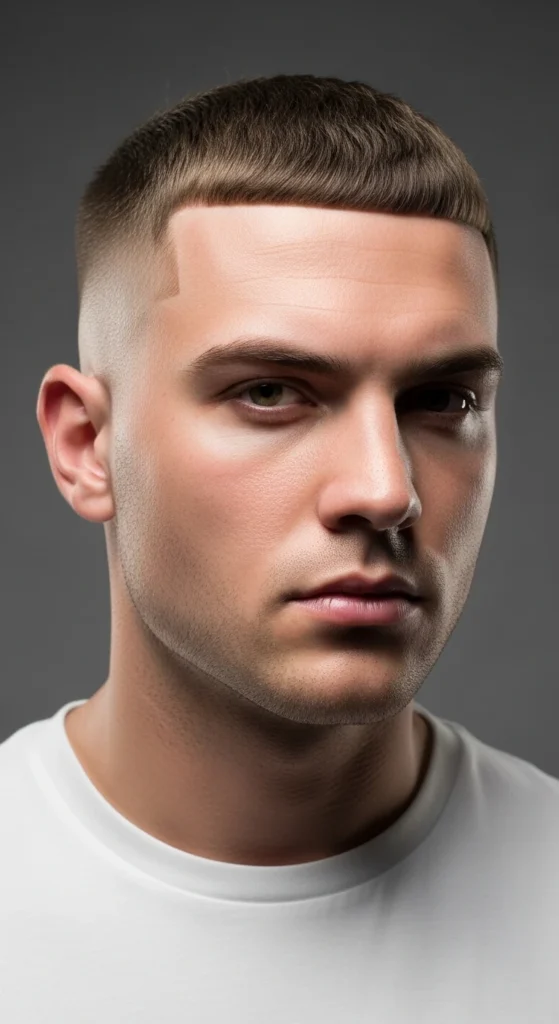
- Sides fade down to bare skin for maximum contrast
- Guard numbers: Foil shaver/skin at base | Blend through #1-2 | Top #3-4
- Best for: Bold style preference; all face shapes
- Maintenance: Every 1-2 weeks (stubble shows quickly)
High and Tight Low Fade
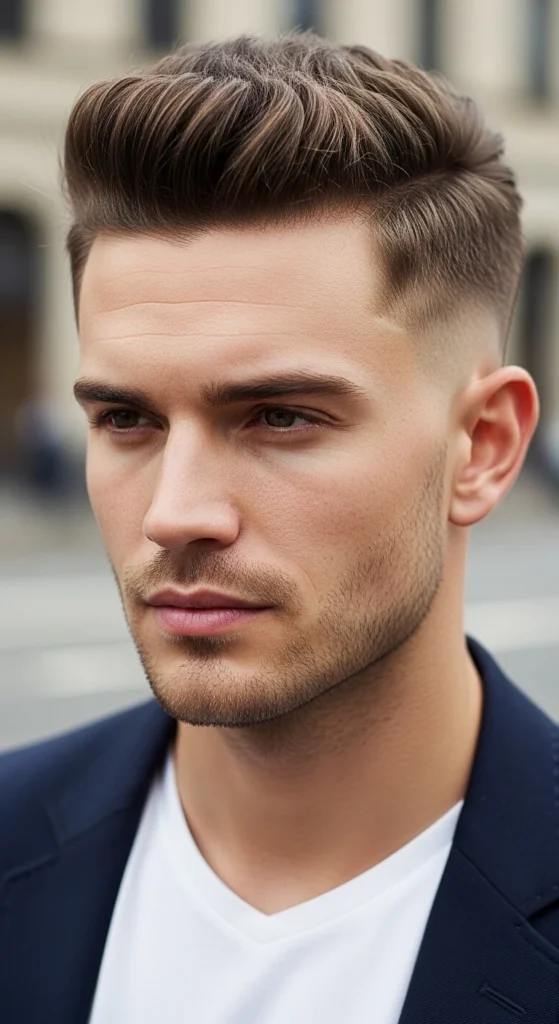
- Fade begins lower (just above ears) for subtler transition
- Guard numbers: #0 at ear level | Blend to #2 | Top #3-4
- Best for: Professional settings; first-time fade wearers
- Maintenance: Every 2-3 weeks
High and Tight Mid Fade
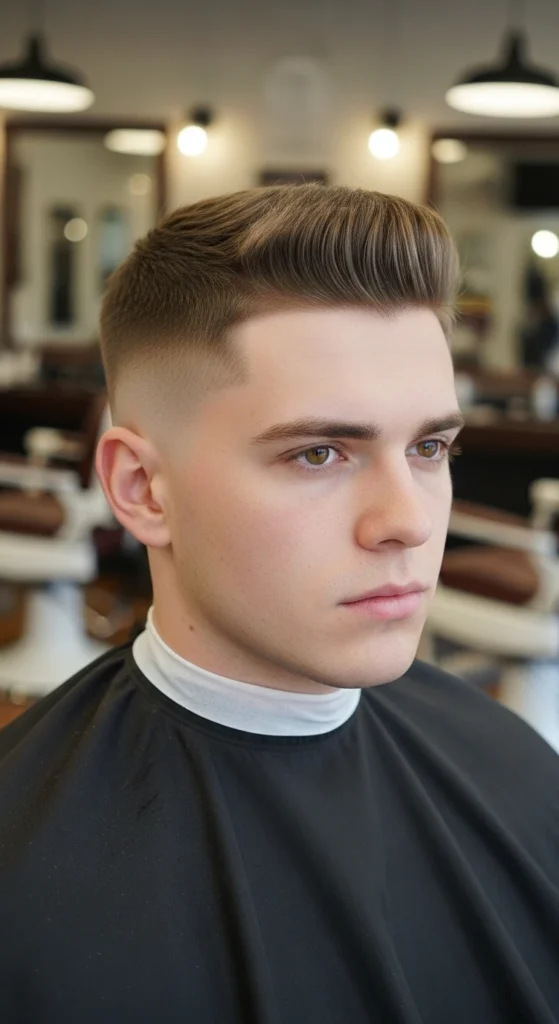
- Fade starts at temple level, balanced contrast
- Guard numbers: #0-0.5 at temples | Blend to #2-3 | Top #3-4
- Best for: Versatile everyday look
- Maintenance: Every 2-3 weeks
High and Tight Taper Fade
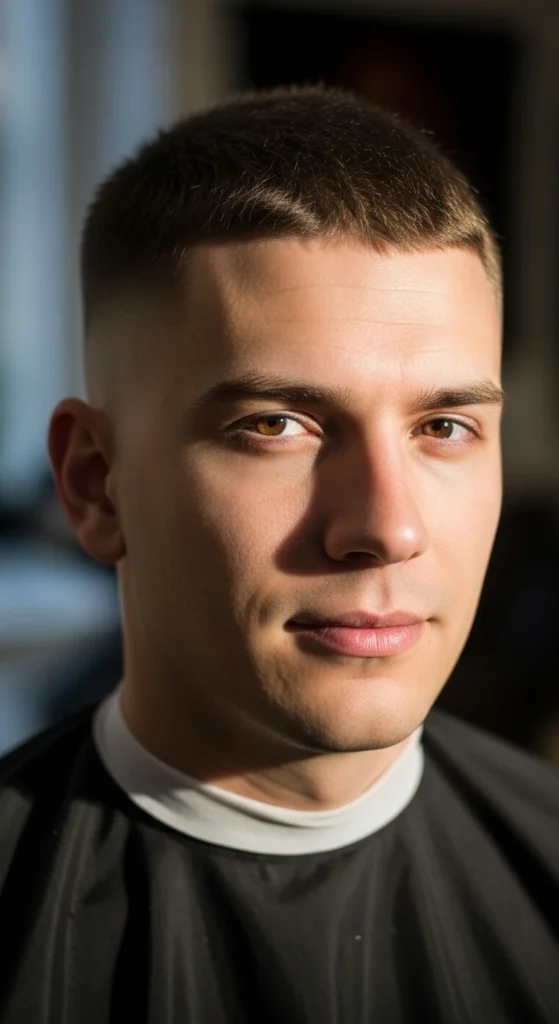
The high and tight taper fade adds refined finishing with tapered neckline and sideburns rather than harsh clipper lines.
- Description: High and tight structure with gradual scissor or clipper taper at edges
- Best for: Office environments; conservative settings; those wanting military flavor with polish
- Guard numbers: Sides #1-2 | Taper at neckline | Top #3-4
- Styling: Light styling cream for top
- Maintenance: Every 2-3 weeks
Recon High and Tight (Extreme Variation)
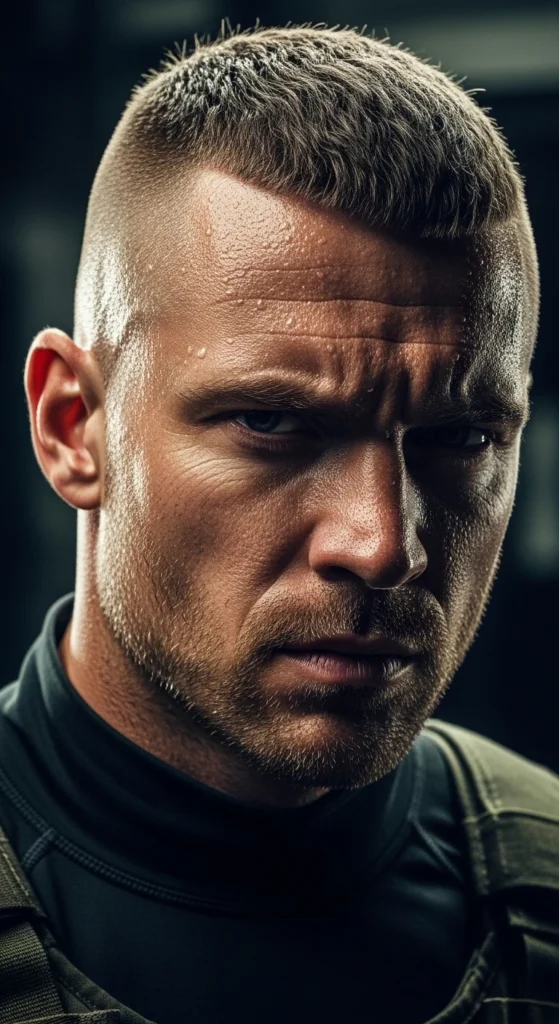
The Recon high and tight is the most extreme variation, associated with reconnaissance units in the Army, Marines, and Navy.
- Description: Sides shaved very high (often to or above the crown), leaving a very narrow strip of hair on top—almost mohawk-like in appearance
- Key distinction: Does NOT fade; creates abrupt, disconnected contrast
- Best for: Bold individuals; not for conservative environments; strong facial features
- Guard numbers: Sides skin/foil shaved | Top #1-2 (narrow strip)
- Styling: None needed
- Maintenance: Every 1-2 weeks
- Note: This is NOT the same as a standard high and tight—it’s significantly more extreme
Low and Tight (Soft Alternative)

The low and tight offers the high and tight’s clean structure with a less aggressive fade line.
- Description: Lower fade line (closer to mid-fade) with short top; gentler overall appearance
- Best for: Professional settings; those wanting military influence without severity
- Guard numbers: Sides #1-2 (starting mid-head) | Top #3-4
- Styling: Optional light product
- Maintenance: Every 2-3 weeks
High and Tight Buzz Cut
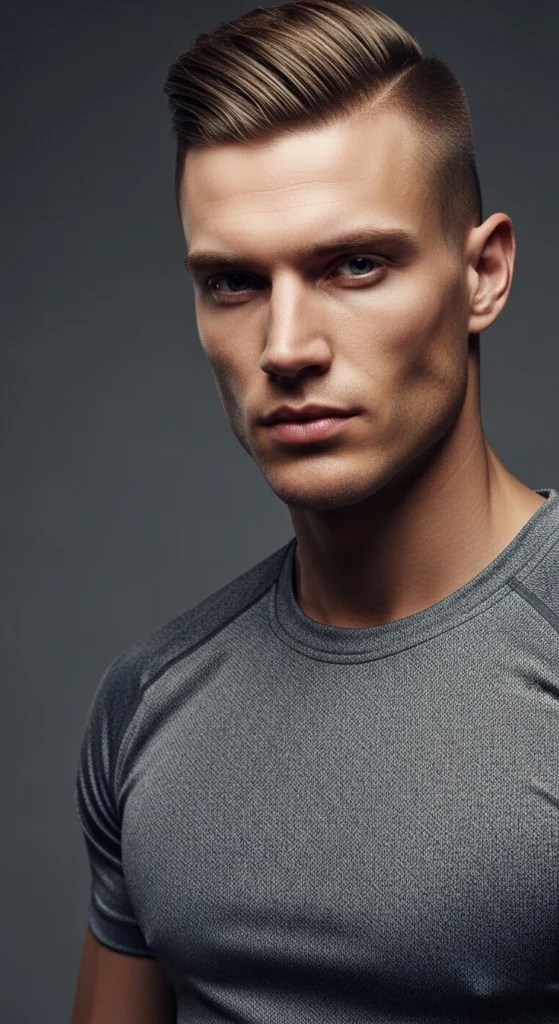
The high and tight buzz cut minimizes contrast between top and sides while maintaining the high and tight silhouette.
- Description: Very small length difference; all hair very short; clean military appearance
- Best for: Thinning hair (creates uniform appearance); hot climates; ultimate simplicity
- Guard numbers: Sides #1 | Top #2-3
- Styling: None
- Maintenance: Every 2-3 weeks
High and Tight Flattop
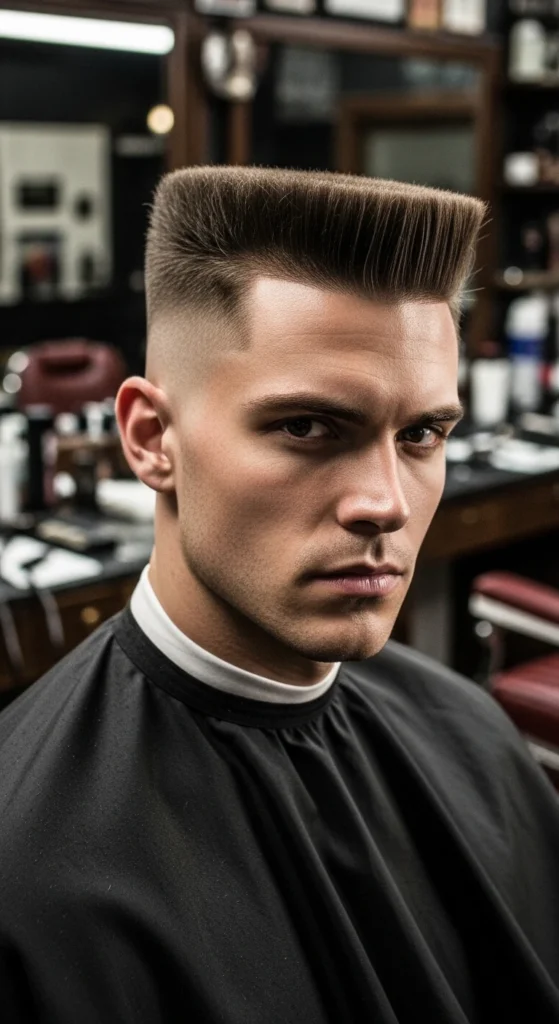
The high and tight flattop combines the high and tight with the iconic squared, leveled top—strong retro military and police aesthetic.
- Description: Sides skin or #0-1; top cut flat and level, creating boxy squared appearance
- Best for: Square faces (emphasizes jaw); strong features; those wanting retro edge
- Guard numbers: Sides #0-1 | Top flat-cut with clippers and comb
- Styling: Strong hold gel or pomade to maintain flatness
- Maintenance: Every 1-2 weeks to maintain geometry
Afro High and Tight (Black Men)
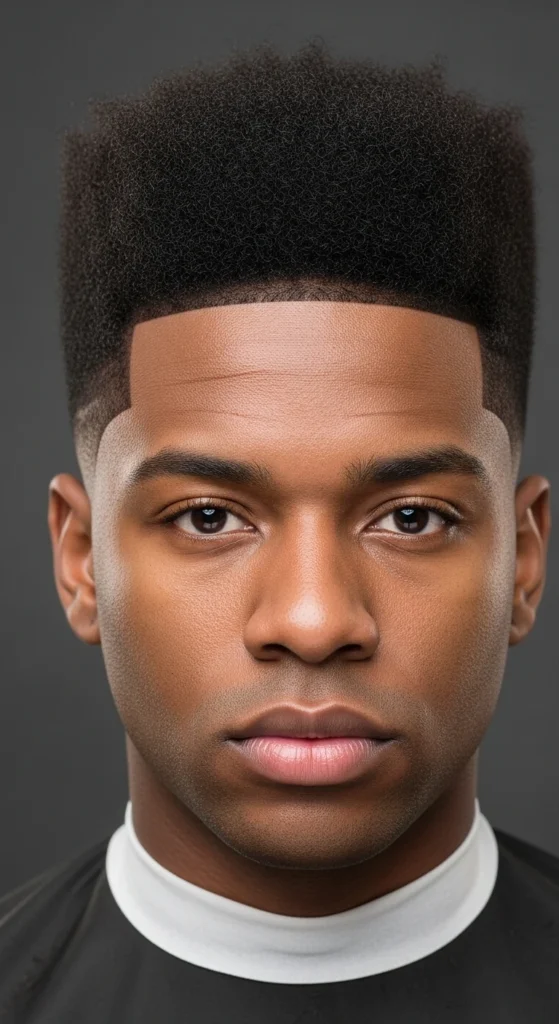
The Afro high and tight showcases natural Afro-textured hair while maintaining crisp edges and controlled shape.
- Description: Tightly faded or shaved sides with short Afro/coil texture on top; often includes sharp line-up (shape-up) around hairline
- Best for: Type 4 coily/kinky hair; all face shapes
- Guard numbers: Sides #0-1 or skin | Top #2-4 depending on desired volume
- Styling: Moisturizing cream or curl-enhancing butter; wave pomade for 360-wave variants
- Maintenance: Every 1-2 weeks for line-up; every 2-3 weeks for overall shape
- Celebrity example: Michael B. Jordan
Curly High and Tight
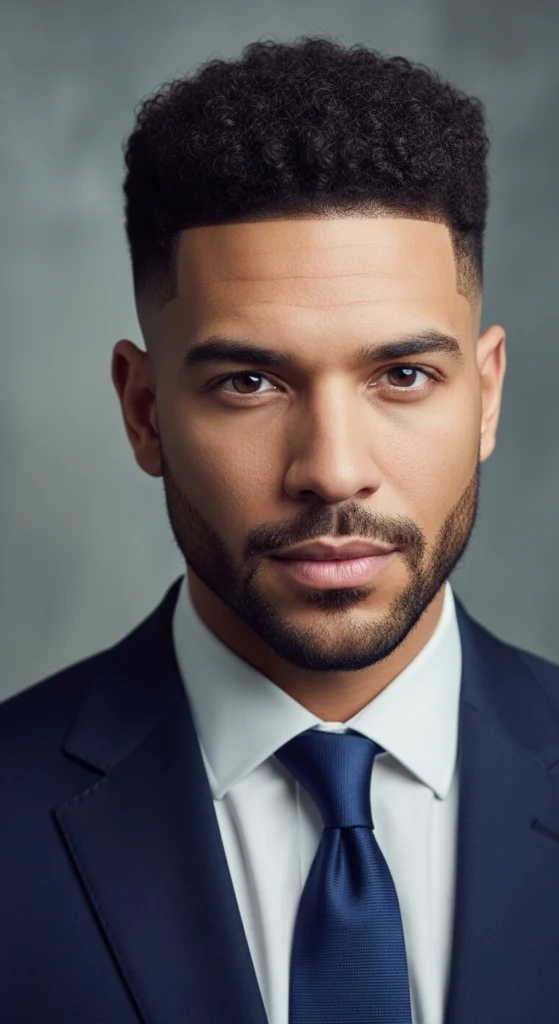
The curly high and tight works with Type 2-3 curly hair, keeping bulk controlled while showcasing natural texture.
- Description: Short curls on top with high faded or buzzed sides; curls tamed but visible
- Best for: Wavy to curly hair; oval and round faces
- Guard numbers: Sides #0-1 | Top #3-4 (curls will appear shorter than straight hair)
- Styling: Curl cream or light gel; diffuser optional
- Maintenance: Every 2-3 weeks
Textured High and Tight
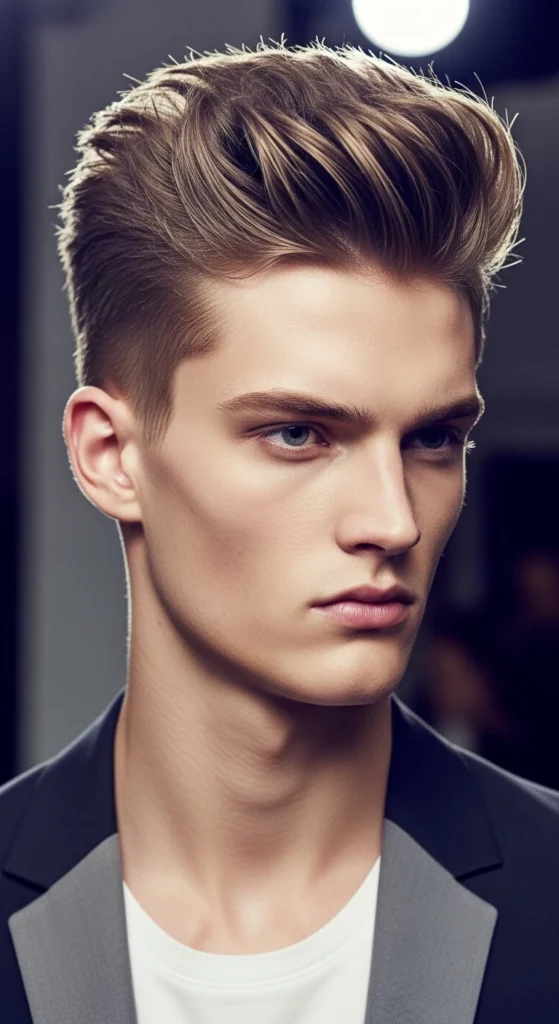
The textured high and tight adds modern, choppy layers to the top, creating a less “strict military” appearance.
- Description: Choppy, textured top with movement; high faded sides
- Best for: Thick straight or wavy hair; modern aesthetic preference
- Guard numbers: Sides #0-1 | Top scissor-cut with point-cutting for texture
- Styling: Sea salt spray as pre-styler; matte clay for definition
- Maintenance: Every 2-3 weeks
Wavy High and Tight
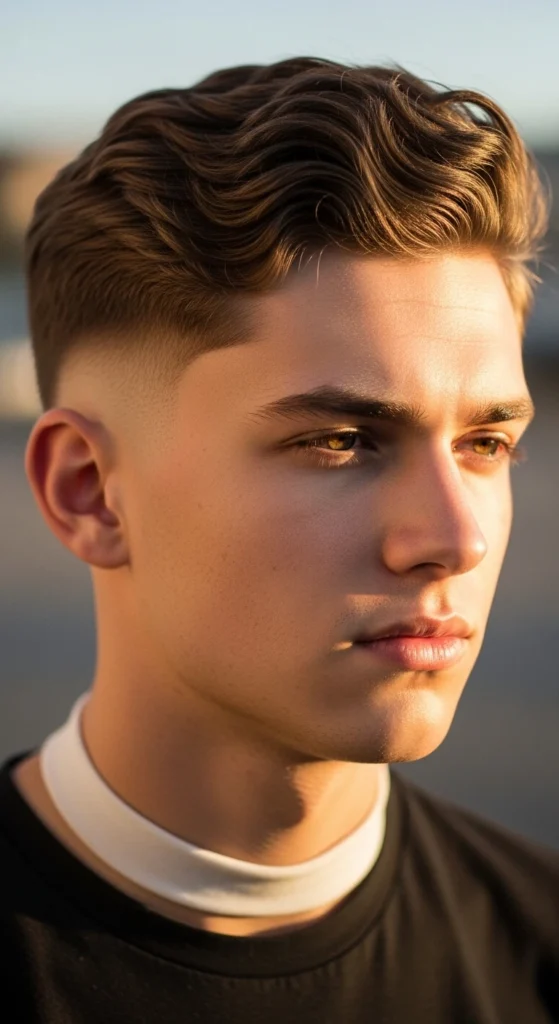
The wavy high and tight emphasizes natural wave pattern on top while keeping sides tight.
- Description: Wave texture visible on short top; high faded sides
- Best for: Type 2 wavy hair; all face shapes
- Guard numbers: Sides #0-1 | Top #3-4
- Styling: Sea salt spray or light mousse to enhance wave
- Maintenance: Every 2-3 weeks
High and Tight with Beard
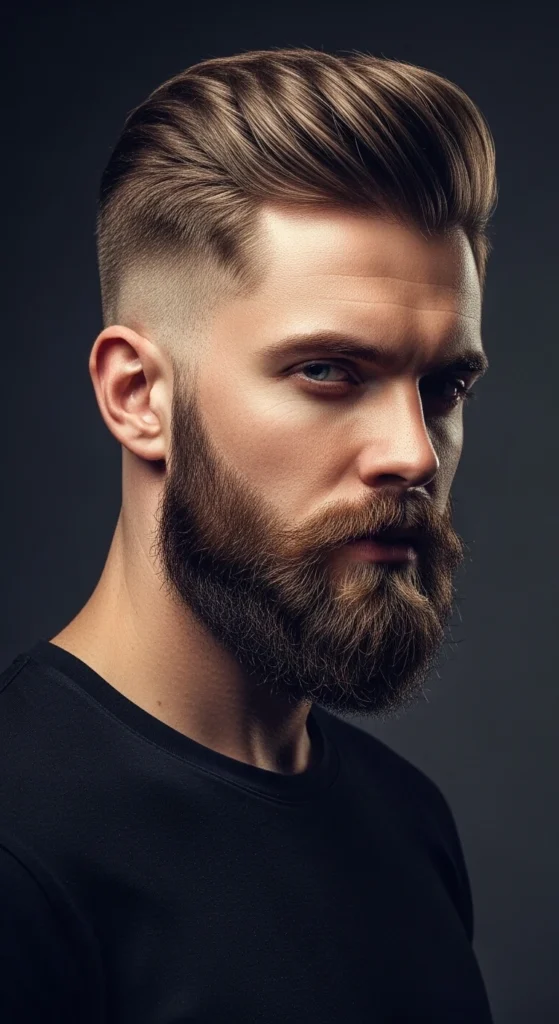
The high and tight with beard creates masculine contrast between the clean-cut head and rugged facial hair.
- Description: Any high and tight variation paired with short boxed beard, full beard, or stubble
- Best for: Men with full beard growth; all face shapes (beard can balance proportions)
- Styling: Matte clay for hair; beard oil or balm for facial hair
- Variation: High and tight fade with beard—fade transitions into beard for seamless cheek/jaw blend
- Maintenance: Haircut every 2-3 weeks; beard trim as needed
High and Tight with Comb Over
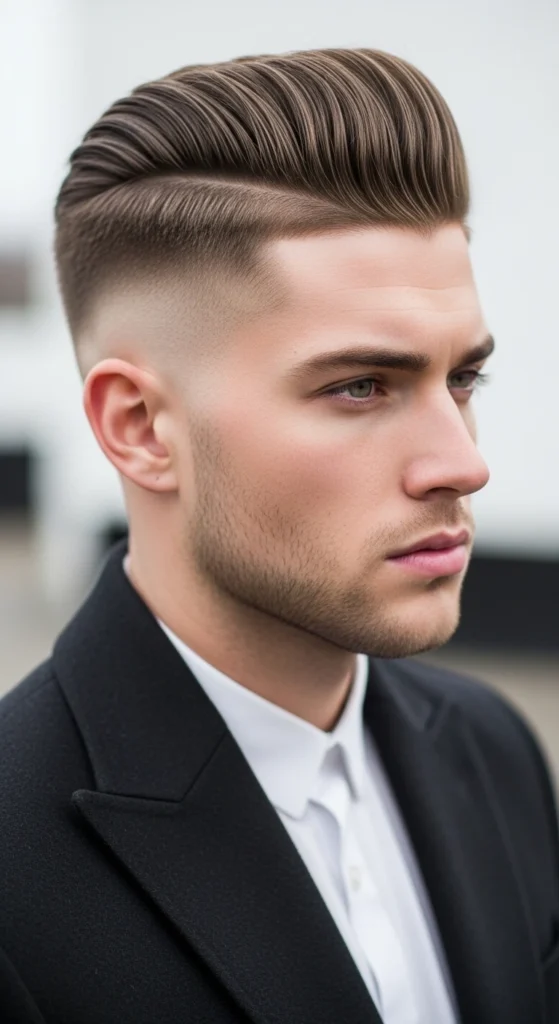
The high and tight comb over leaves enough length on top to sweep hair to one side while maintaining signature short sides.
- Description: Longer top (1-2 inches) swept to side; high faded or buzzed sides
- Best for: Oval, square, diamond faces; professional settings
- Guard numbers: Sides #0-1 | Top #5-6 or 1.5-2 inches
- Styling: Medium-hold pomade or matte paste; blow-dry for volume
- Maintenance: Every 2-3 weeks
High and Tight with Side Part (Hard Part)
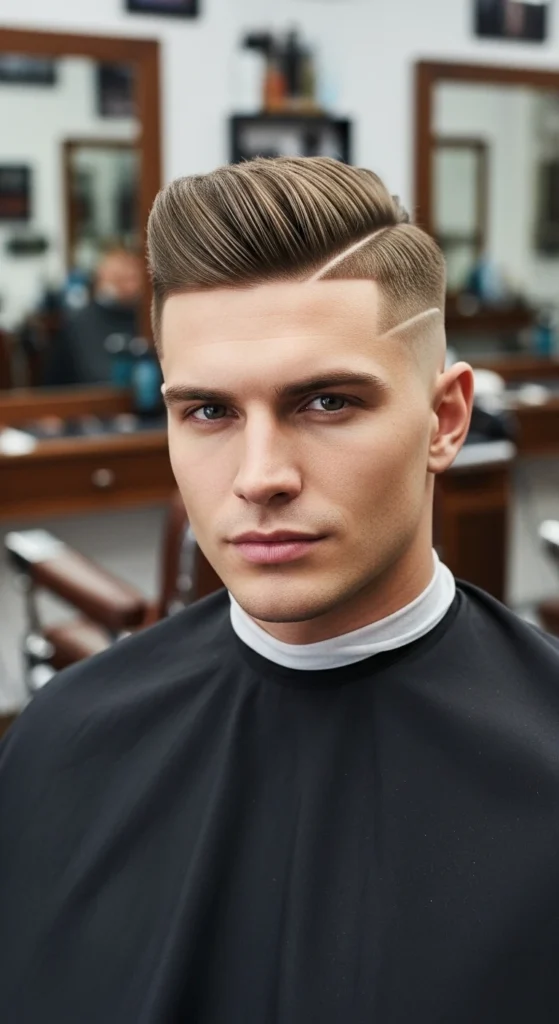
The high and tight side part adds a defined part line—either natural or razored in—for a refined gentleman’s variation.
- Description: Visible part line + high faded sides + short top swept to side
- Best for: Oval and heart faces; office-appropriate styling
- Guard numbers: Sides #0-1 | Top #4-5 | Part line razored or natural
- Styling: Light pomade, brush to side
- Maintenance: Every 2-3 weeks; part line touch-up as needed
High and Tight Undercut
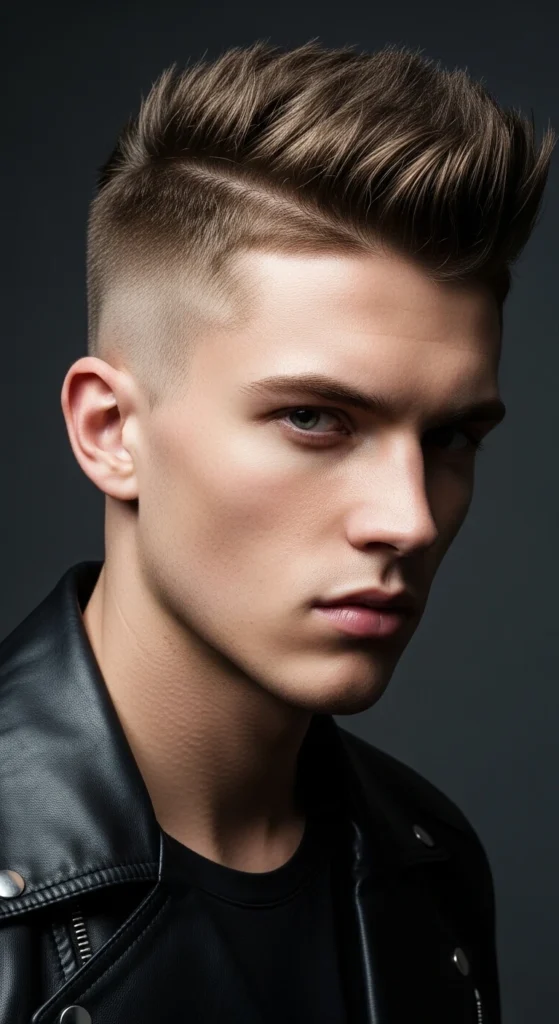
The high and tight undercut creates dramatic disconnect between a longer top and buzzed sides with no blending.
- Description: Longer top (1.5-3 inches), sides buzzed very short with sharp disconnection line—no fade
- Best for: Fashion-forward individuals; strong features; statement style
- Guard numbers: Sides #0-1 (disconnected) | Top scissors 1.5-3 inches
- Styling: Strong-hold clay or pomade for top styling
- Celebrity reference: Brad Pitt in Fury
- Maintenance: Every 2-3 weeks
High and Tight with Shaved Sides and Long Top

The high and tight with shaved sides and long top maximizes contrast between skin-shaved sides and noticeably longer top.
- Description: Sides shaved to skin; top left significantly longer (2-3 inches) for dramatic effect
- Best for: Bold style seekers; strong facial features
- Guard numbers: Sides skin/foil shaved | Top scissors 2-3 inches
- Styling: Strong-hold product; blow-dry for volume and direction
- Maintenance: Sides every 1-2 weeks; top every 3-4 weeks
Long Brushed-Back High and Tight
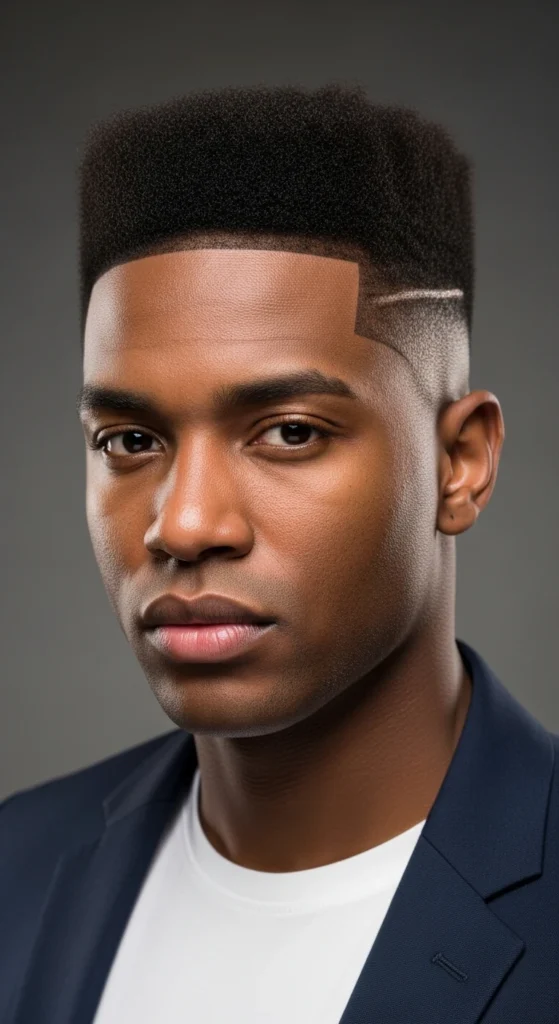
The long brushed-back high and tight features longer top hair (1.5-2.5 inches) styled straight back for a sleek, polished look.
- Description: Longer top brushed back away from face; high faded or shaved sides
- Best for: Oval, square, triangle faces; evening or formal settings
- Guard numbers: Sides #0-1 | Top 1.5-2.5 inches
- Styling: Medium-hold pomade; blow-dry back
- Maintenance: Every 2-3 weeks
Modern High and Tight with Line-Up (Shape-Up)
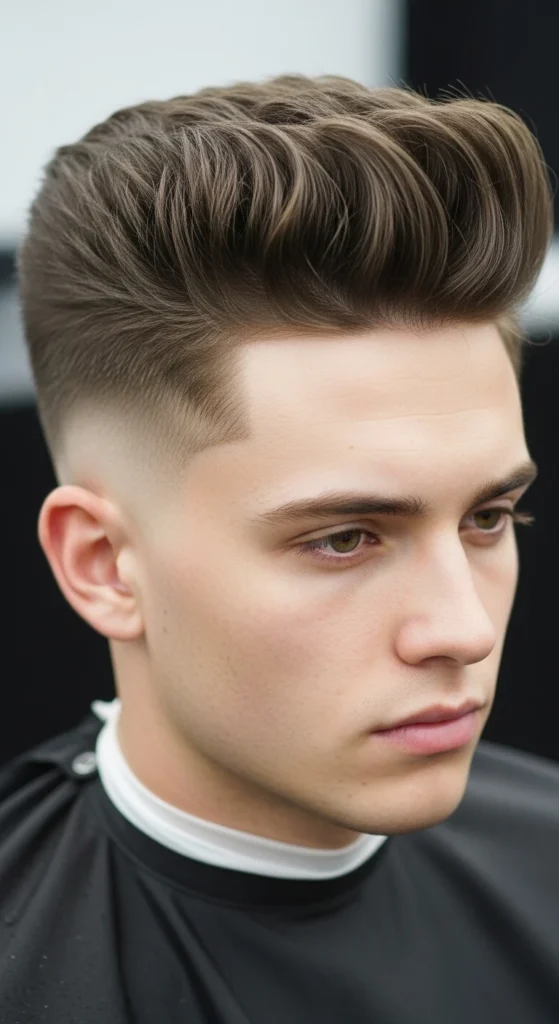
The modern high and tight with line-up adds precision-trimmed edges around the natural hairline for an ultra-crisp appearance.
- Description: Standard high and tight with sharp, straight hairline and temple edges created with trimmer or straight razor
- Best for: All hair types; particularly popular with Black and Latino hair; those wanting maximum definition
- Styling: None required for hair; edge control gel optional
- Maintenance: Line-up every 1-2 weeks; overall cut every 2-3 weeks
High and Tight for Thick Hair
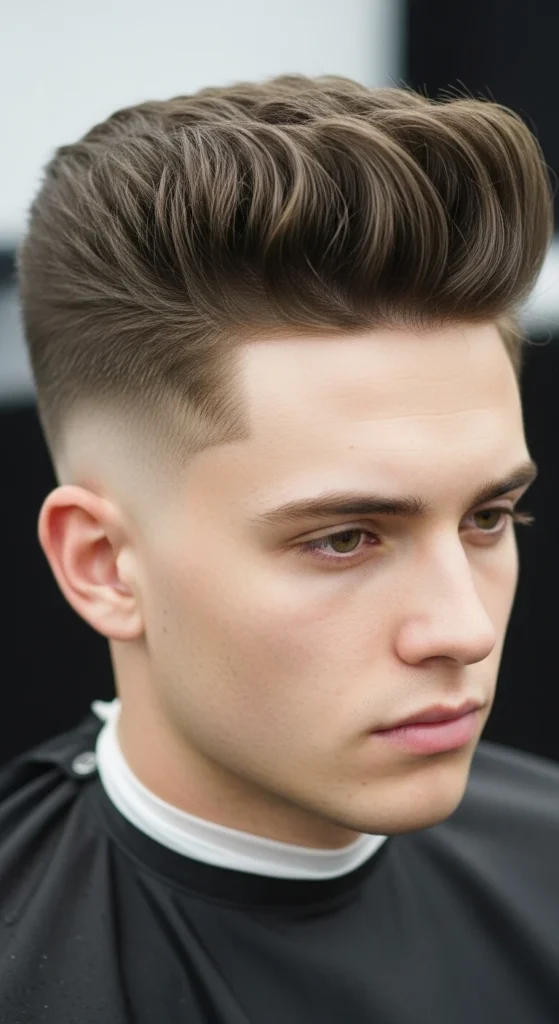
The high and tight for thick hair addresses bulk management while maintaining the signature shape.
- Description: Standard high and tight with additional thinning/texturizing on top to reduce weight
- Best for: Very thick, coarse hair that tends to puff out
- Technique: Thinning shears or point-cutting on top; standard clipper work on sides
- Maintenance: Every 2-3 weeks
High and Tight for Thin or Thinning Hair
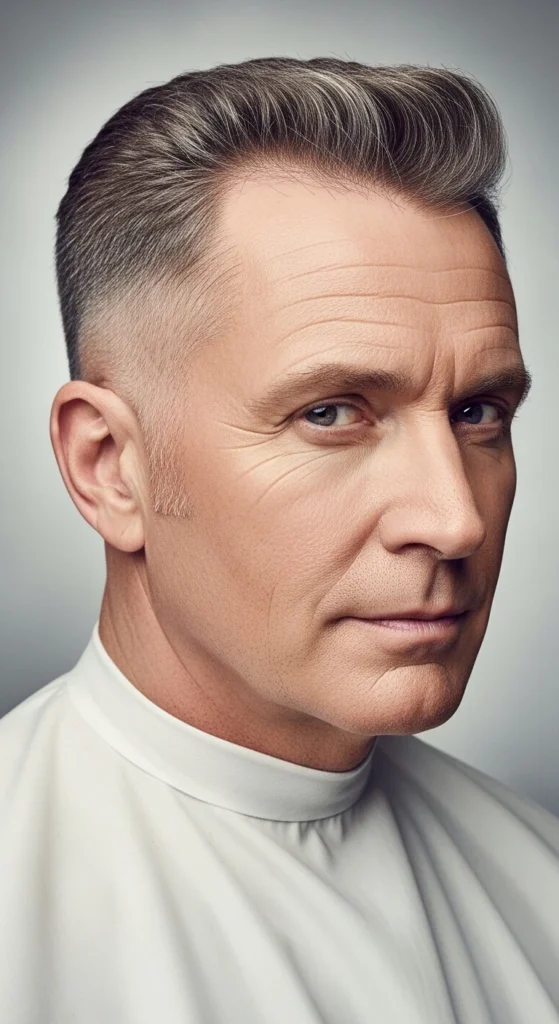
The high and tight for thinning hair creates a uniform appearance that minimizes contrast between thicker and thinner areas.
- Description: Short, uniform clip that reduces visible contrast; sides and top kept closer in length
- Best for: Men experiencing hair loss; receding hairlines; thinning crowns
- Why it works: Short length makes thinning less noticeable; creates illusion of density
- Guard numbers: Sides #1 | Top #2-3
- Maintenance: Every 2-3 weeks
High and Tight for Receding Hairline
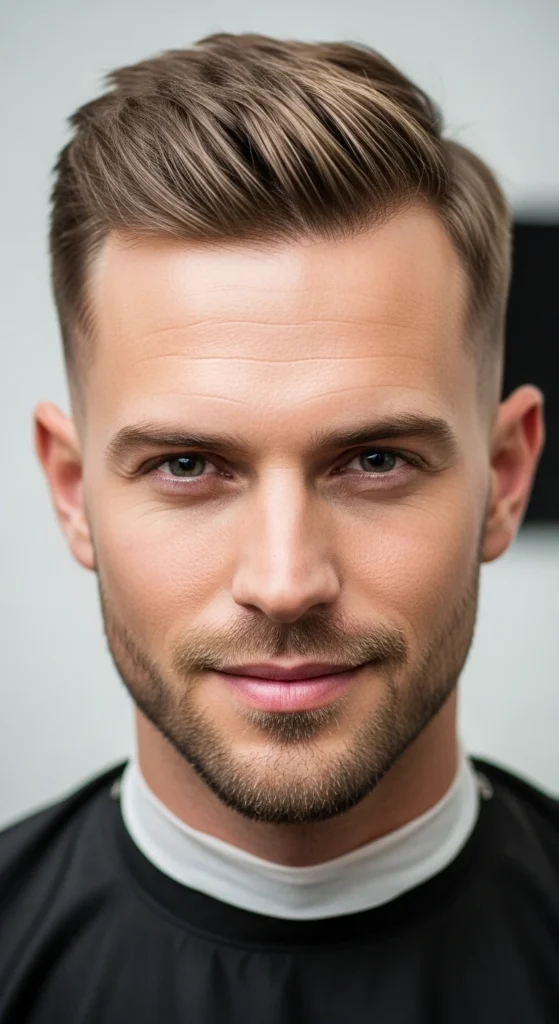
The high and tight for receding hairline adjusts the top patch placement to minimize temple recession visibility.
- Description: Top patch positioned and cut to work with (not against) hairline shape; avoids emphasizing temples
- Best for: Men with M-shaped or U-shaped recession
- Tip: Keep top short enough that length difference isn’t obvious; consider slightly longer fringe if appropriate
- Maintenance: Every 2-3 weeks
High and Tight for Teen Boys
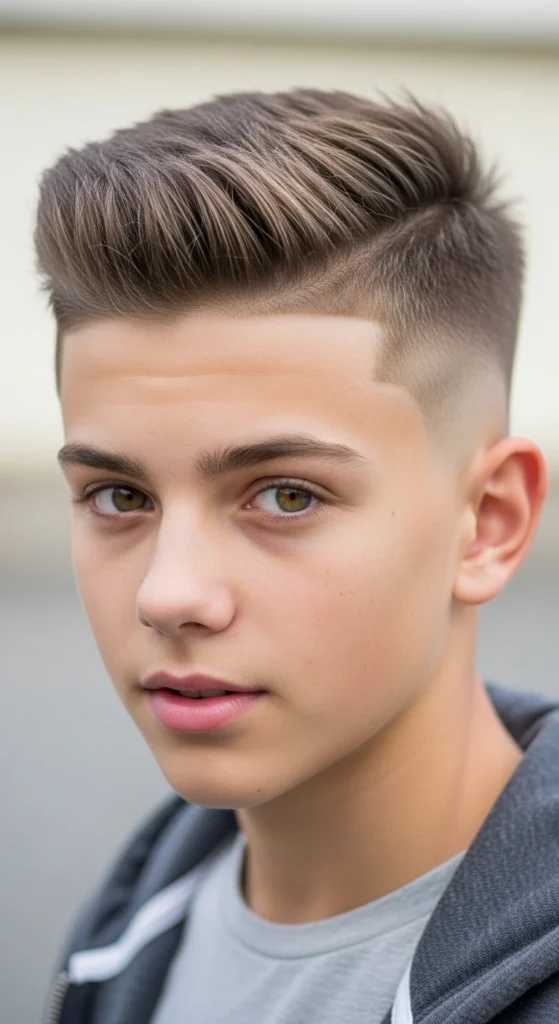
The high and tight for teen boys offers age-appropriate variations suitable for school and active lifestyles.
- Description: Standard high and tight adapted with potentially slightly longer top for less severe appearance
- Best for: Active teens; sports participants; low-maintenance preference
- Guard numbers: Sides #1-2 | Top #3-4
- Maintenance: Every 3-4 weeks
Women’s High and Tight (Female High and Tight)
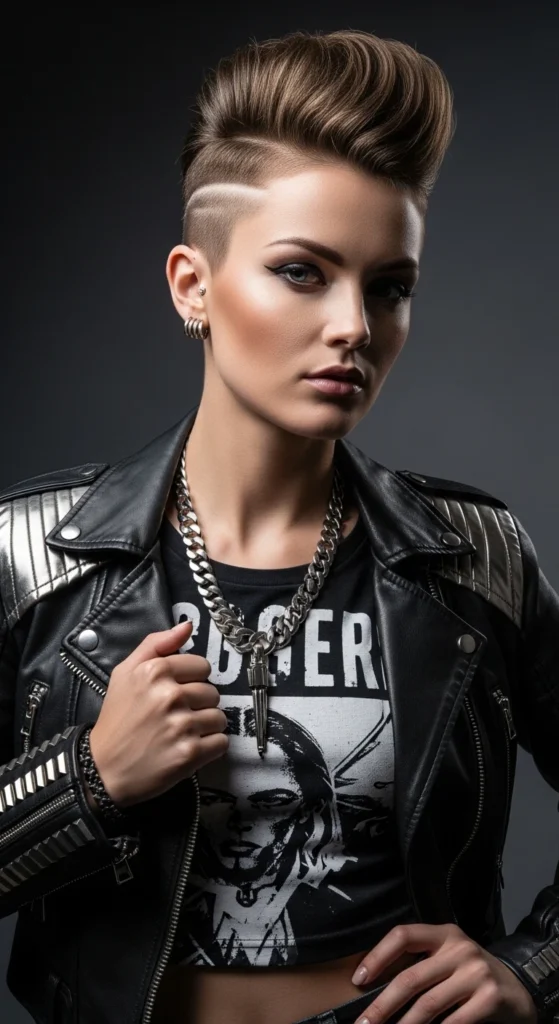
The women’s high and tight adapts the military cut for feminine expression, often incorporating creative elements.
- Description: Same basic structure—short/shaved sides with longer top—adapted with softer transitions, creative designs, color, or pairing with longer fringe
- Best for: Women wanting bold, androgynous, or edgy style
- Variations: Undercut designs shaved into sides; asymmetrical top; color accents; longer fringe option
- Celebrity influence: Ruby Rose, various runway models
- Maintenance: Every 2-4 weeks depending on variation
Military Origins & History of the High and Tight
Understanding the high and tight’s military roots helps explain why this cut looks the way it does and why it continues to project discipline and authority.
The Practical Military Origins
The high and tight emerged from U.S. Marine Corps and U.S. Army grooming standards, where practicality trumped fashion. Several factors drove its adoption:
- Helmet compatibility: Short hair fit properly under military helmets without bunching or causing discomfort
- Gas mask seal: During World War I, the military required clean-shaven faces and short hair to ensure proper seals on gas masks
- Hygiene: In close quarters and field conditions, short hair reduced the risk of lice infestations
- Discipline and uniformity: The standardized cut reinforced military order and unit cohesion
- Low maintenance: Soldiers could maintain the cut with minimal time and equipment
During boot camp and basic training, recruits traditionally receive an induction cut—an even shorter, uniform buzz—before graduating to the high and tight as they progress through training. The regulation cut, a slightly longer and more blended military style, offers an alternative for those wanting a less severe appearance while still meeting grooming standards.
Evolution into Civilian Style
The high and tight began transitioning into civilian fashion during the 1980s, when hip-hop culture embraced and transformed it. Young Black men in the United States put their own spin on the military cut, adding sharp edges, skin fades, and volume to create the iconic high-top fade. This gave the high and tight a “loftier” appearance and made it a staple of hip-hop and B-boy culture.
Since then, the style has been adopted by:
- Law enforcement officers and public safety personnel
- Athletes seeking practical, heat-friendly cuts
- Country and rugged lifestyle enthusiasts
- CrossFit and gym communities
- Fashion-forward men wanting an edgy, masculine look
Today, the high and tight bridges military tradition and modern barbering, offering variations that range from strict regulation cuts to contemporary faded styles.
Why the High and Tight Is Still Popular in 2026
The high and tight isn’t just surviving—it’s thriving. Several factors explain its continued relevance this year.
The Low-Maintenance Lifestyle Appeal
Men increasingly value haircuts that require minimal daily effort. The high and tight delivers exactly that:
- Zero to minimal styling required for most variations
- No blow-drying, no product for short versions
- 2-3 week trim schedule maintains sharp appearance
- Works in any weather—heat, humidity, rain, wind
For busy professionals, active athletes, and anyone who values efficiency, the high and tight eliminates morning hair hassle entirely.
Modern Aesthetic Versatility
The 2026 high and tight has evolved beyond its strict military origins. Modern barbering techniques allow for:
- Skin fades and shadow fades for smooth transitions
- Textured tops for contemporary edge
- Beard pairings for rugged contrast
- Comb-overs and side parts for office-appropriate variations
- Line-ups and shape-ups for crisp, defined edges
This versatility means the high and tight can be adapted from a strict military look to a fashion-forward style depending on personal preference.
Celebrity and Cultural Influence
High-profile figures continue wearing high and tight variations:
- Ryan Reynolds: Modern high and tight with textured short top and subtle fade
- Chris Evans: Clean, classic high and tight / crew cut hybrid that projects timeless masculinity
- Jake Gyllenhaal (Jarhead): Authentic military high and tight for his Marine role
- Michael B. Jordan: Afro high and tight with crisp line-up and fade
- Brad Pitt (Fury): High and tight undercut hybrid showcasing dramatic length contrast
These celebrity examples demonstrate the cut’s range from strict military authenticity to red-carpet polish.
Climate and Athletic Practicality
The high and tight remains the go-to choice for:
- Hot climate residents seeking maximum airflow
- Gym-goers and athletes who sweat heavily during workouts
- Military personnel meeting regulation requirements
- Law enforcement officers maintaining professional appearance
- Outdoor workers in demanding physical conditions
High and Tight vs Other Haircuts: What’s the Difference?
Understanding how the high and tight compares to similar cuts helps you choose the right style and communicate clearly with your barber.
High and Tight vs Crew Cut
Many people confuse these two military-influenced cuts, but they differ significantly:
| Feature | High and Tight | Crew Cut |
| Fade/taper height | Very high (at or above parietal ridge) | Lower, more gradual |
| Top length | Short, uniform patch | Longer front, shorter back (graduated) |
| Blend | Minimal or disconnected | More blended, gradual |
| Overall severity | More extreme, aggressive | More conservative, workplace-neutral |
| Styling options | Minimal | More versatile |
Bottom line: The crew cut is the “softer” option with more blend and styling flexibility. The high and tight is more extreme with higher contrast.
High and Tight vs Buzz Cut
These cuts appear similar from a distance but have key differences:
| Feature | High and Tight | Buzz Cut |
| Length variation | Top longer than sides | Same length everywhere |
| Contrast | Visible difference between areas | Uniform throughout |
| Shape | Defined top patch | Round, uniform |
| Maintenance | 2-3 weeks | 3-4 weeks |
| Styling | Minimal possible on top | None |
Bottom line: The buzz cut is simpler and more uniform. The high and tight adds structure and contrast while remaining very short.
High and Tight vs High Fade
This is the most common source of confusion:
| Feature | High and Tight | High Fade |
| What it is | A specific haircut with defined shape | A fading technique applicable to many styles |
| Top definition | Specific short patch | Can have any top style |
| Origin | Military standard | Barbering technique |
| Versatility | Specific look | Used with pompadours, crops, undercuts, etc. |
Bottom line: A high fade is a technique (where the fade starts). A high and tight is a complete haircut (specific shape and structure). You can have a “high and tight with a high fade,” but they’re not the same thing.
High and Tight vs Regulation Cut
Both are military cuts, but they differ in severity:
| Feature | High and Tight | Regulation Cut |
| Severity | More extreme | More conservative |
| Blend | Minimal | More gradual taper |
| Acceptance | Universal military | Universal military |
| Civilian appeal | Bold statement | Subtle military influence |
High and Tight vs Induction Cut
| Feature | High and Tight | Induction Cut |
| Length | Top slightly longer | Uniform very short |
| When worn | After training | During boot camp |
| Variation | Slight | None |
| Guard | Varies | #0-1 all over |
Who Should Get a High and Tight?
Determining whether a high and tight suits you depends on your face shape, hair type, and lifestyle.
Best Face Shapes for a High and Tight
| Face Shape | Recommendation | Best Variation | What to Avoid |
| Oval | Excellent | Any variation works | None—most versatile |
| Square | Excellent | Flattop, classic military (emphasizes jaw) | None—enhances masculinity |
| Round | Great | High skin fade with slight height on top | Very short top that emphasizes roundness |
| Diamond | Great | Textured top, mid-length variations | Flat, severe tops |
| Heart | Good | Longer top variations | Very high contrast that emphasizes forehead |
| Long/Rectangular | Caution | Low and tight, shorter top variations | Flattop or anything adding height |
Best Hair Types for a High and Tight
| Hair Type | Suitability | Best Variation | Notes |
| Straight | Excellent | Classic, textured, any fade | Clean lines, easy maintenance |
| Wavy | Excellent | Wavy high and tight, textured | Natural movement adds interest |
| Curly | Great | Curly high and tight with fade | Keep top short to control volume |
| Coily/Afro | Great | Afro high and tight, 360 waves | Line-up essential; moisture crucial |
| Thick | Excellent | Any—thinning on top helps | May need texturizing for control |
| Fine/Thin | Good | Buzz high and tight, short variations | Uniform length minimizes contrast |
| Thinning/Receding | Recommended | Short variations, close lengths | Creates density illusion |
Lifestyle Fit
Best suited for:
- Active military personnel meeting regulation requirements
- Law enforcement officers and public safety professionals
- Athletes and gym enthusiasts wanting practical, heat-friendly cuts
- Busy professionals who value zero-maintenance mornings
- Hot climate residents seeking maximum airflow
- Men with active outdoor lifestyles
Variation by setting:
- Corporate/conservative office: Low and tight, taper fade, or long high and tight with comb-over
- Creative/fashion-forward: Recon, undercut, textured variations
- Military/law enforcement: Classic military, regulation variations
How to Ask Your Barber for a High and Tight
Clear communication ensures you get exactly the cut you want. Here’s how to talk to your barber.
Exact Scripts to Use
For classic military high and tight:
“I’d like a classic high and tight: skin or #0 on the sides, high up to the parietal ridge, and a #2 or #3 on top, with minimal blending.”
For modern high and tight fade:
“Give me a modern high and tight fade—high skin fade on the sides starting above my temples, blending into about a #3 or #4 on top with some texture.”
For long high and tight:
“I want a high and tight with longer top—sides faded to skin, but leave about 1.5 to 2 inches on top so I can style it to the side.”
For recon:
“I want a recon high and tight—shave the sides up very high, almost to the crown, and leave just a narrow strip on top, no blending.”
Clipper Guard Guide & Measurements
| Guard Number | Length (inches) | Length (mm) | Typical Use |
| #0 | 1/16″ | 1.5mm | Sides (very short) |
| #1 | 1/8″ | 3mm | Sides (short) |
| #2 | 1/4″ | 6mm | Sides or blending |
| #3 | 3/8″ | 10mm | Top (short) or blending |
| #4 | 1/2″ | 13mm | Top (medium) |
| #5 | 5/8″ | 16mm | Top (longer) |
| #6 | 3/4″ | 19mm | Top (longest clipper) |
Common combinations:
- Military classic: Sides #0 | Top #2
- Short high and tight: Sides #1 | Top #3
- Medium high and tight: Sides #0-1 | Top #3-4
- Long high and tight: Sides #0-1 | Top #4-6 or scissors
Photos, Terminology & Expectations
Always:
- Bring front, side, and back photos of your desired look
- Be clear about blended vs. disconnected preference
- Specify if you want a line-up (shape-up) around the hairline
- Mention if you want a hard part razored in
- Discuss beard fade if pairing with facial hair
Questions to ask your barber:
- “How high should the fade start for my face shape?”
- “Should we blend or disconnect the top from the sides?”
- “How often will I need to come back for touch-ups?”
How to Do a High and Tight at Home (DIY Guide)
With the right tools and technique, you can maintain a high and tight between barbershop visits or cut it yourself entirely.
Tools You’ll Need
- Quality clippers with guard attachments (#0-#6)—Wahl, Andis, or Oster recommended
- Trimmer/edger for detail work around ears and neckline
- Foil shaver (optional) for skin-fade finish
- Fine-tooth comb
- Hand mirror (for viewing back of head)
- Spray bottle with water
- Cape or towel
- Good lighting
Step-by-Step Guide
Step 1: Begin with Damp Hair
Shower or dampen hair with spray bottle. Comb hair down so it lies flat and faces the same direction. This ensures even cutting.
Step 2: Start at the Back and Sides
Attach guard #1 (1/8″) or #2 (1/4″) to your clippers. Starting at the nape, use upward rocking motions to buzz the back and sides. Work from bottom to top, going up to where you want the “high” line to end (typically at or above the parietal ridge—the widest part of your head).
Step 3: Clip the Top
Switch to guard #5 (5/8″) or #6 (3/4″) for the top of the head. Clip evenly across the crown area. You can dampen hair again if needed for smoother cutting.
Step 4: Blend the Transition
Use guard #2 or #3 to blend the transition zone between the short sides and longer top. This area is typically at the “rim” or ridge of the head. Use short, overlapping strokes to avoid harsh lines.
Step 5: Edge and Detail
Use your trimmer (without guard) to clean up around the ears, neckline, and sideburns. Use the inverted clipper technique for precision around curved areas.
Step 6: Check Symmetry
Use your hand mirror to check the back and sides from all angles. Touch up any uneven areas.
Step 7: Finish (Optional)
Apply a fingertip-sized amount of matte paste or clay if you want light texture on top. Otherwise, towel dry and you’re done.
Common Mistakes and How to Avoid Them
- Taking the “high” line too high: Start lower than you think—you can always go higher
- Over-blending: The high and tight should have visible contrast; don’t blend too much
- Using wrong guards: Double-check guard numbers before each section
- Rushing the back: Use your mirror frequently to check symmetry
- Forgetting the neckline: Clean edges complete the look
How to Style a High and Tight (Daily Routine)
One of the high and tight’s biggest advantages is minimal styling requirements.
Do High and Tight Haircuts Need Product?
For most variations, no product is needed. This is the cut’s primary appeal—towel dry and go.
However, longer-top variations benefit from light product:
| Variation | Product Needed? | Recommended Product |
| Classic military | No | None |
| Short/buzzed | No | None |
| Medium | Optional | Light matte paste |
| Long on top | Yes | Matte clay or styling cream |
| Textured | Yes | Sea salt spray + matte clay |
| Comb over | Yes | Medium-hold pomade |
| Slicked back | Yes | Pomade or styling cream |
Styling Short/Classic High and Tight
- Towel dry after shower
- Done
That’s it. This is the beauty of the classic high and tight.
Styling Long/Modern High and Tight
- Towel dry until damp (not dripping)
- Apply sea salt spray for texture (optional)
- Blow-dry in desired direction (back, side, or forward)
- Apply pea-sized amount of matte clay or paste
- Work through hair with fingers
- Shape into desired position
Styling High and Tight for Curly/Afro Hair
- Towel dry gently (pat, don’t rub)
- Apply moisturizing cream or curl-enhancing butter
- Use fingers to shape and define curls
- For 360 waves: apply wave pomade, brush in circular pattern, wear durag overnight
- Maintain edges with regular line-up appointments
Best Products for a High and Tight Haircut
Matte Clay / Texture Clay
Matte clay provides strong hold with a dry, natural finish—ideal for textured or modern high and tight variations.
- Finish: Matte, natural
- Hold: Medium to strong
- Best for: Textured top, messy styles
- How to use: Warm between palms, work through damp hair
Matte Paste / Molding Paste
Matte paste offers flexible hold for comb-over or swept styles without shine.
- Finish: Matte to low shine
- Hold: Medium
- Best for: Side-swept variations, comb over high and tight
- How to use: Small amount, distribute evenly
Styling Cream
Styling cream provides light control for brushed-back or longer top variations.
- Finish: Natural, soft
- Hold: Light to medium
- Best for: Long brushed-back high and tight
- How to use: Work through damp hair, style with brush or fingers
Sea Salt Spray (Pre-Styler)
Sea salt spray adds grip and texture before blow-drying, enhancing natural wave and movement.
- Finish: Natural, beachy
- Hold: Light
- Best for: Pre-styling textured or wavy variations
- How to use: Spray on damp hair, blow-dry for volume
Texture Powder
Texture powder refreshes flat hair and adds volume between washes.
- Finish: Matte, volumized
- Hold: Light
- Best for: Fine hair needing lift; refreshing day-old style
- How to use: Sprinkle at roots, work through with fingers
Beard Oil / Balm (for Beard Combos)
Beard oil or balm keeps facial hair soft and manageable when pairing high and tight with a beard.
- Best for: High and tight with beard variations
- How to use: Apply to beard after showering; comb through
Maintenance & Regrowth Guide
How Often Should You Get a High and Tight?
| Variation | Trim Frequency | Why |
| Military-strict (skin sides) | Every 1-2 weeks | Stubble shows immediately |
| Civilian short | Every 2-3 weeks | Maintains clean shape |
| Longer-top variations | Every 3-4 weeks | Top needs more growth time |
| With line-up | Line-up every 1-2 weeks | Edges grow out fastest |
Scalp and Skin Care
With very short or shaved sides, scalp care becomes important:
- Moisturize: Apply scalp tonic or light moisturizer to shaved areas
- Sunscreen: Exposed scalp can burn—apply SPF when outdoors
- Ingrown prevention: Exfoliate gently if prone to ingrown hairs
Growing Out a High and Tight (Transition Guide)
If you decide to grow your high and tight into a longer style:
Transition path options:
- Into crew cut: Let sides grow while maintaining top; gradually lower the “high” line
- Into Ivy League: Continue growing top longer while slowly blending sides
- Into textured crop: Grow top, add texture, let sides catch up
Managing awkward phases:
- Weeks 3-5: Sides look fuzzy; consider hat or headwear
- Weeks 6-8: Use light product to control direction
- Weeks 9-12: Regular trims to shape growth, not shorten
Reddit Asks: Real-World Questions About the High and Tight
Based on discussions from r/malehairadvice and r/malegrooming, here are common questions real users ask:
“Is a high and tight good if I’m balding?”
Answer: Yes, often excellent. The short, uniform length minimizes contrast between thicker and thinner areas, creating a cleaner appearance than longer styles that expose patchy spots. Many balding men find the high and tight one of their best options.
“Will a high and tight make me look too aggressive?”
Answer: It depends on the variation. A classic military or recon cut can appear severe in certain settings. For a softer look, choose a low and tight, taper fade, or longer-top variation. Pairing with a well-groomed beard also softens the overall appearance.
“Can I pull off a high and tight with a big forehead?”
Answer: Yes, but choose variations carefully. Avoid very short tops that expose more forehead. A medium or long high and tight with slight fringe forward can balance proportions. Discuss with your barber about leaving slightly more length at the front.
“Is the high and tight professional enough for office jobs?”
Answer: Absolutely. The high and tight originated as a professional military standard. For conservative offices, choose taper fade, low and tight, or comb-over variations. Avoid the extreme recon or undercut in very traditional environments.
“How do I maintain a high and tight between barbershop visits?”
Answer: For sides: use clippers with your regular guard (#0-2) to touch up weekly. For edges: careful trimmer work around ears and neckline. For top: generally leave until next barber visit unless you’re comfortable with self-cutting.
Frequently Asked Questions
What is a high and tight haircut?
A high and tight is a short, military-inspired haircut where the back and sides are buzzed very short or to the skin, with a slightly longer patch of hair left on top. The “high” refers to where the short sides end—above the temples—and the “tight” describes how closely the sides are cut. It originated in the U.S. Marine Corps and Army.
Is a high and tight the same as a high fade?
No. A high fade is a fading technique describing where the gradient blend starts (high on the head). A high and tight is a specific haircut with a defined shape. You can have a “high and tight with a high fade,” but they’re different things—one is a technique, the other is a complete style.
What does a high and tight haircut look like from the back?
From the back, a high and tight shows very short or skin-shaved hair from the neckline up to near the crown, with a small patch of slightly longer hair visible only at the very top of the head. The transition line is typically high—at or above the parietal ridge.
What face shape is best for a high and tight?
Oval and square faces are ideal for any high and tight variation. Round faces benefit from high skin fades that add vertical emphasis. Long/rectangular faces should avoid tall flattops and instead choose shorter-top variations to avoid adding more height.
Is a high and tight good for thinning hair or receding hairlines?
Yes, often excellent. The short, uniform length minimizes contrast between thick and thin areas, creating a cleaner appearance. Many men with thinning hair find the high and tight one of their best styling options.
High and tight vs crew cut: which should I get?
Choose crew cut if you want more length, a softer look, and more styling versatility. Choose high and tight if you want a more extreme, lower-maintenance cut with sharper contrast. The crew cut is more conservative; the high and tight is more bold.
High and tight vs buzz cut: what’s the difference?
A buzz cut is the same length everywhere—completely uniform. A high and tight has a slightly longer top with very short sides—there’s visible contrast. The buzz cut is simpler; the high and tight has more structure.
How short is a high and tight supposed to be on top?
The top typically ranges from #2 guard (1/4 inch / 6mm) for classic military versions to #4-6 guards (1/2-3/4 inch / 13-19mm) for longer civilian variations. Some modern styles use scissors for 1-2 inches of length on top.
How often should I get a high and tight trimmed?
Every 2-3 weeks for most variations. If you have a skin fade, every 1-2 weeks to prevent visible stubble. Longer-top variations can go 3-4 weeks between trims.
Can you get a high and tight with curly or Afro hair?
Absolutely. A curly high and tight keeps curls short and controlled on top with tight faded sides. An Afro high and tight showcases natural texture while maintaining crisp edges. Line-ups and shape-ups are commonly paired with these variations.
Can women get a high and tight haircut?
Yes. The women’s high and tight has become increasingly popular, offering a bold, androgynous style. Women’s variations often incorporate softer transitions, creative designs shaved into the sides, color accents, or longer fringe options.
How do I ask my barber for a high and tight cut?
Say: “I want a high and tight with [#X] on the sides and [#X] on top, [blended/disconnected], and [with/without] a line-up.” Always bring reference photos showing front, side, and back views. Specify if you want a fade, hard part, or beard integration.
Is a high and tight professional enough for office jobs?
Yes. Choose conservative variations like taper fade, low and tight, or comb-over high and tight for traditional offices. Avoid extreme variations like recon or heavily disconnected undercuts in very conservative environments.
What’s a recon high and tight?
A recon high and tight is the most extreme variation, associated with military reconnaissance units. The sides are shaved very high (often to or above the crown), leaving only a narrow strip of hair on top—almost mohawk-like. It does not blend and creates very high contrast.
Do high and tight haircuts work with beards?
Yes, excellently. A high and tight with beard creates attractive contrast between the clean-cut head and rugged jawline. For a polished look, consider a beard fade where the haircut transitions smoothly into the beard at the cheeks.
The high and tight has endured for over a century because it solves real problems—low maintenance, practical function, masculine aesthetics—while adapting to each era’s style preferences. Whether you choose a strict military classic honoring its Marine Corps origins or a modern fade variation with textured styling, this haircut delivers disciplined confidence with minimal daily effort.